Analysis of ‘Thrak,’ ‘The ConstruKction of Light,’ and ‘The Power to Believe’

I: Introduction

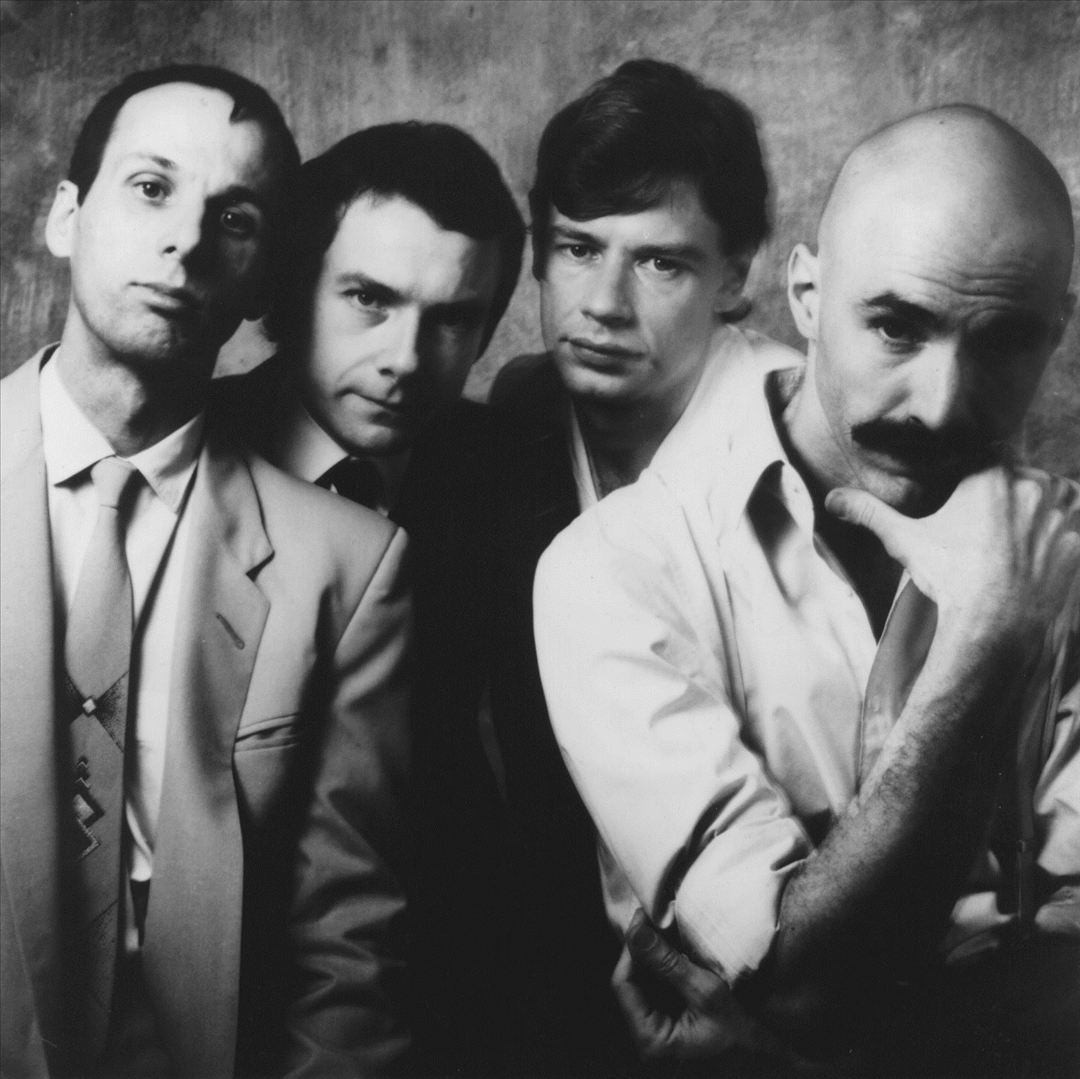
Thrak (1995), The ConstruKction of Light (2000), and The Power to Believe (2003) are the last three studio albums by the progressive rock band, King Crimson. These lineups of the band were getting to be less British and more American since the half-British, half-American lineup of the 1980s: on Thrak, the 80s King Crimson (guitarist/bandleader Robert Fripp, guitarist/singer/lyricist Adrian Belew, bassist/Stick-player/back-up singer Tony Levin, and drummer Bill Bruford) would be augmented by two more Americans, Stick-player/Warr guitarist/bassist Trey Gunn (one of Fripp’s Guitar Craft students) and drummer Pat Mastelotto (previously of Mr. Mister). This sextet would thus be the short-lived “double trio.” After Thrak, Levin and Bruford left the band, Levin returning in the Crimson of the 2010s.

The three albums were generally well-received by critics, though somewhat less so for The ConstruKction of Light, with Fripp himself unhappy with the album; indeed, his own negative assessment of this album is comparable to his feelings about Lizard. For my part, though I prefer the 80s and John Wetton eras of King Crimson, of these three last albums, I’d probably say I prefer ConstruKction over Thrak and (slightly) over Power.

As with the 80s King Crimson, these last three albums show the band reflecting much of the musical climate of the time. The 80s KC incorporated such elements as new wave and minimalism; the 1990s and 2000s KC had more of a heavy, distorted guitar-driven sound that one might associate with grunge, an attempt at a return to the “flying brick wall” sound of the Wetton/Bruford years of such albums as Red, though I’d say not as successfully or powerfully.

Here is a link to the lyrics for the Thrak album, a link to the lyrics for The Construkction of Light, and a link to the lyrics for The Power to Believe. And here are links to the complete albums of Thrak, ConstruKction, and Power (with bonus tracks).

Now, apart from a wish to scrape the bottom of the Crimson barrel here, so to speak (i.e., I’ve done analyses of all of the other albums, which you can find here, if you’re interested, Dear Reader), I am lumping all three of these last albums together into one big analysis because I hear them as yet another trilogy–this time, one suggestive of Dante‘s Divine Comedy. Thrak corresponds to hell, ConstruKction to purgatory, and Power to heaven. “Heaven” vs “hell,” mind you, shouldn’t be taken in a strictly literal sense here; I speak of this opposition in a more dialectical, ironic way. To allude to another classic Christian epic poem, recall Satan’s words in Paradise Lost: “Better to reign in hell, than serve in heaven.”

Indeed, the dystopian picture for the cover design for Power (featuring a detail from Fin de Siècle, a painting by P J Crook, whose work is on a number of more recent King Crimson album covers) hardly looks like paradise, and the loud guitar of Thrak sounds like Satanic fun. Do we prefer an ‘ideal’ world that cannot be, but which is forced on us by such authoritarian forces as the Church or the neoliberal market fundamentalists of today, or will we settle for a messier world of infernal fun, one that hurts a lot, but is freer? Is the whole point that there’s a mix of heaven and hell in everything? Let’s find out.

II: Thrak

Here is the one and only album with the “double trio” of the mid-1990s: two guitarists, two drummers, and two Stick-men (while Levin doesn’t play any Stick on Thrak, leaving that all to Gunn, on the Vroom Vroom live album, we can hear both of them playing Stick together).

VROOM

The first track, an instrumental, opens with one of several passages in which Fripp plays, of all things, a Mellotron. For a band so forward-looking with regards to technology, especially in the 80s (i.e., guitar synthesizers, the Chapman Stick, and electronic drums), why is he, in the 90s, regressing to such an obsolete keyboard, particularly one that had caused him such frustrations when it came to tuning it?

Still, here we are, with the Mellotron strings-tapes opening the track, so reminiscent of the old King Crimson sound of 1969-1974. According to an interview, Fripp explained that the Mellotron used on Thrak, mixed in with Belew’s playing of a guitar synthesizer, was meant “as a homeopathic link from the past.”

“Homeopathic” is an interesting choice of worlds, given the context of “Vroom” on the “hell” album, as I consider Thrak to be. Homeopathy is the pseudoscientific idea that a substance causing symptoms of a disease in healthy people can cure similar symptoms in sick people–“like cures like.” Put in the context of Thrak, the ‘hell’ of a Mellotron can bring about a ‘heaven’ in “Vroom,” or, ‘better to be cured in hell, than sick in heaven.’

“Vroom” was originally recorded and released in 1994, without the Mellotron opening, as part of an EP of the same name. So that version of the instrumental, if you will, didn’t have the ‘hellish’ element: it’s just pure rocking fun.

Indeed, let’s consider how one goes to hell, doing such dangerous things as riding fast on motorbikes: vroom, vroom! It’s wild, uncontrollable desire that leads to sin, and the wages of sin is death. Think of outlaw motorcycle gangs like Hell’s Angels.

Now we can begin to discuss the fun, main riffs of this instrumental. After the Mellotron passage, the heavy part opens with a descending guitar lead in two bars of 6/8, then one of 5/8, then there’s a driving riff in 4/4, in G.

In the bass and Stick, we hear G-G-A♯-B, G-G-F-F♯. The guitars play riffs reminiscent of the main ones in “Red,” in the climactic part of “Fracture,” and the main riff in Fripp’s “Breathless,” those piercing major thirds. It goes down to a dark E, then after a bit of a repeat of the beginning riff (without the drop to E), we come to a bit of a lull.

Fripp is playing softer, arpeggiated chords in 7/8 (subdivided 3+4), with Levin accompanying him by playing melodies up higher on the bass. Then there’s a return to the heavy main riff. Then back to the lull in 7/8. Then with a return to the opening 6/8 and 5/8 guitar lead, “Vroom” segues into…

Coda: Marine 475

Marine 475 was a Lloyd’s of London insurance syndicate of which the owners of Crimson’s and Fripp’s former label, EG records, were members–Sam Alder and Mark Fenwick. A vessel insured under Marine 475 was the Exxon Valdez, which hit a reef in Prince William Sound, Alaska in 1989, spilling 260,000 barrels of crude oil in one of the costliest maritime disasters ever.

Alder and Fenwick, in danger of financial ruin because of the disaster, decided to stop payment of royalties to EG artists like Fripp. A lengthy legal dispute followed going through much of the 1990s, and ending with the collapse of EG (the KC catalogue would then be bought by Fripp and reissued on his Discipline Global Mobile label–DGM).

The numbers spoken in this instrumental, provided by Fripp, are other Lloyd’s syndicates.

What we have in this coda is the hell of capitalism, in more ways than one. As we’ve seen, Marine 475 was associated with both the Exxon Valdez oil spill, an example of one of the environmental consequences–intended or not–of capitalism, and the exploitative, dishonest business practices of EG management (complained of by Fripp) being yet another example of the inevitable consequences the capitalist profit motive. One of the main goals Fripp had in establishing DGM was to bring music into the world without the values of the market, which include exploitation, deceit, theft, and greed.

So, fittingly, the music of this coda essentially involves a chromatic descent…a descent into the hell of capitalism.

Dinosaur

Belew is singing about his past experiences as a singer and musician in bands playing ‘dinosaur rock,’ a term typically used to describe progressive rock and other 1970s bands. Like the dinosaurs, these bands once ‘ruled the world,’ then they all died off–either breaking up because audiences, sick and tired of their ‘overblown, pretentious’ style and preferring the fresh, simpler sounds of punk and new wave (i.e., a return to three- and four-minute pop songs), weren’t listening to them anymore; or the ‘dinosaur bands’ tried adapting to the new musical trends by switching to a simple pop sound (think of Genesis as a trio, or 90125-era Yes), because these bands had to do so in order to survive.

Ironically, it was Fripp himself who first used the word dinosaur to describe the bands who were emulating the very musical style that he himself helped create. When he broke up King Crimson, all of a sudden on the completion of Red in 1974, he lamented having created a monster (to switch from the dinosaur metaphor to a Frankenstein one), and thus didn’t want to be part of a music scene that he correctly saw as doomed to destruction. He would later gladly embrace new wave and its shorter pop songs in the late 70s, producing and/or adding guitar lines to albums by Talking Heads, Blondie, Daryl Hall, Peter Gabriel, the Roches, and David Bowie.

So the wages of prog rock sin is death, too, a consignment to musical hell, and that’s how we can understand the lyric to “Dinosaur.” The song fittingly begins with that old fossil of a keyboard instrument, the Mellotron. The band comes in, playing a chord progression of E7, C7, E♭maj. 7th, and G.

“Long ago,” that is, back in the 1970s and thus “in a different age” from our more ‘sensible’ and ‘enlightened’ one today (or even as of the mid-1990s), when Belew “was just a dumb young guy,” the music of the dinosaurs reigned supreme. Actually, Belew made his professional start with much of the later, simpler music, playing with–after Frank ZappaDavid Bowie and Talking Heads before the resurrection of King Crimson in the 1980s.

Also, it must be understood that Belew has a musical split personality: part of him does avant-garde, experimental music with all those animal and industrial sounds emanating from his guitar; the other part of him likes to write pop songs. We have examples of the former part of his musical personality in songs like “Dig Me”; examples of the latter part are in songs like “Heartbeat” and “Man With an Open Heart,” as well as in the pop songs of The Bears, in “Genius of Love,” by Tom Tom Club (a song he cowrote), and in Belew’s solo albums, such as Inner Revolution. Evidently, as with Fripp, Belew isn’t as much of a dinosaur as he calls himself.

Indeed, the song “Dinosaur” is largely a pop song itself, quite unlike the prog ‘excess’ of the self-deprecating title of the song. Nonetheless, to get back to the lyric, Belew calls himself a prog “idiot savant,” that is, clever with the unusual time signatures, sophisticated harmonies, and experimental soundscapes of prog, but too dumb, apparently, just to write a straightforward pop song and communicate simple, human feelings (something utterly disproven already in the given examples of the previous paragraph). So calling himself “a dinosaur” and “something like a monument” is clearly meant to be taken with a generous grain of salt.

Now, “somebody’s been digging [his] bones,” because the dead prog rock dinosaurs’ fossils are all underground…down there in musical hell. The “idiot savant” prog rocker excels in ignorance, as I said above, excelling at demonstrating technical skill with his instrument, but ignorant of using that skill in the service of music. His “naïveté and pride” come from thinking that playing music is just about showing off, glorifying one’s ego. “Any clever predator” would be a music critic panning the latest ‘self-indulgent’ prog album.

“It’s a wonder [he’s] not yet extinct,” being in a prog band in the mid-1990s. He’s “made [his] fossil bed,” down in the dirt, underground in hell, and he’s tossing and turning, suffering the torments of the damned.

Walking on Air

A song with a title like “Walking on Air” sounds, if anything, like a song about heaven rather than hell. Remember, though, that just as I said above that ‘hell’ is often ironic on Thrak, so can ‘heaven’ be.

Indeed, the line “and the sheltering sky” should be a hint at that irony, if you’re aware enough. The words are an obvious reference to the instrumental on Side Two of Discipline, which is in turn a reference to the novel by Paul Bowles. Now, as I explained in my analysis of that instrumental, what Bowles meant by “the sheltering sky” was that it “hides the night and nothingness behind it; the sky shelters us beneath from the horror that lies above.” ‘Heaven’ hides hell.

Under the surface peace and tranquility of the music lies a melancholy, as heard in Belew’s switch to falsetto when he sings, “come alive, in your eyes,” or in the chords in A minor when he sings, “you don’t have to care.”

To walk on air is to feel extremely happy or excited, yet this music is calm and sedate, suggesting that any excitement or euphoria is of a surface kind only. Heavenly happiness is an illusion. The ‘peace’ of heaven is a reward for servitude to divine or Church authority; hence, “Better to reign in hell, than serve in heaven.” It is in this context that we must understand this song lyric.

FDR once said, “A radical is a man with both feet firmly planted–in the air.” “Walking on air” thus can mean that one is living in a fantasy world of radical idealism, imagining the attainment of a perfect, utopian world without any grasp on reality. Being in the depths of despair and hopelessness, which hell symbolizes here, can result in a delirious state of mind that has delusions of peace and bliss, the mind’s attempt to escape the horrors of reality, using that sheltering sky to hide those horrors. Some people turn to religion as a crutch, as part of that escape attempt into radical idealism. (I’ll deal with ‘heaven’ as symbolic of such ideals of perfection when I analyze The Power to Believe.)

“I,” “standing by your side,” can be read to be God’s voice (or that of the Church), reassuring His flock that He’ll protect them and take care of them. This is a reward for their obedience. Note how Adam and Eve were thrown out of Eden for disobeying and eating the forbidden fruit. Protection has a cost.

Recall, in this connection, Tom, the chimney sweeper of William Blake‘s poem. This little boy is one of many, exploited in child labour in early nineteenth century England. He has a dream of being freed, with other sooty boys, by an angel; and they run in a plain and “rise upon clouds”…rather like Belew’s singing of being “under cover of the fading clouds” of “the sheltering sky.” So if Tom is a good boy, he’ll “have God for his father, and never want joy.” Tom can now be a good, obedient child slave, for the Church authorities have ensured his obedience.

Thus, “walking on air” is hanging out in heaven, experiencing only a superficial happiness while being oblivious of one’s own servitude. Recall what Marx said: “Religion is the sigh of the oppressed creature, the heart of a heartless world, and the soul of soulless conditions. It is the opium of the people.” Religion gives you a heavenly high, to help you forget the hell of the real world around you.

B’Boom

The tense fade-in opening to this instrumental, right after the blissful ending of “Walking on Air,” suggests that the peace of the preceding track has had its illusions removed. The drums come in, playing first in a triple metre, then switching to other metres. The drummers are beating the illusion of peace out of the listener, bringing us back to hell.

This track is clearly a showcase of the drumming abilities of Bruford and Mastelotto, the b’booming on the snare and tom-toms. Since Thrak is the double-trio album, and ever since Belew became a part of King Crimson, double-guitar interplay has been a virtual requirement in the band’s music, we should expect a similar interplay between both drummers and both bassists.

It’s interesting in this respect to compare Thrak with Larks’ Tongues in Aspic, the other King Crimson studio album to have two drummers. First, percussionist Jamie Muir was the master and mentor of Bruford, whose fast paradiddles were deemed “crap” by Muir; while this assessment initially hurt Bruford’s feelings, it ultimately liberated him from playing drumming clichés and helped him to find his own musical voice. Now, on Thrak, Bruford is in Muir’s role vis-à-vis Mastelotto, who became the new ‘Bruford,’ learning from a master to find his own voice, which will be heard on the next two KC studio albums.

THRAK

Fripp has defined King Crimson’s onomatopoeic neologism, “thrak,” as a sudden and precise impact, or the sound of many guitars hitting a chord at once. It can also mean a harsh, heavy crashing noise, like wood or metal breaking.

Such definitions are helpful in describing what one hears when one listens to the title track, a dark, almost violent instrumental. In this title, then, we have an evocation of hell in both its horrifying and ‘fun’ aspects.

It begins in aggressive 5/4 time, with stress on the first and fourth beats. The bass, played by Levin on an electric double bass put through distortion, does a line starting with the tonic (in C), going up to a minor third, then up to the tritone, and going back down by the same intervals to the tonic. In general, the bass line is moving around the notes of the octatonic scale, allowing for an extensive use of the tritone.

The Church identified the tritone as the diabolus in musica, or the “devil in music,” because of its dissonance and (what were felt to be its) uncomfortably ambiguous qualities. Thus, the extensive use of the tritone in the title track of Thrak fits in well with the album’s theme of hell as I’ve identified it.

The middle section tones the intensity down a bit while retaining the dark tone of the instrumental. We hear some guitar synthesizer soundscapes as well as some soloing by Belew and Fripp, the latter of whom does some of his signature dissonant arpeggios, again with a lot of tritone in them (by “signature dissonant arpeggios,” I refer to Fripp’s idiosyncratic guitar work in such music as the middle section and opening, respectively, of “Larks’ Tongues in Aspic,” Parts I and III).

A good live version of “Thrak,” performed at the Warfield Theatre in 1995, can be heard here. It has an extended middle section with more guitar soloing: Belew’s guitar (synthesizer, I assume) imitates a piano, sounding rather like some of that dissonant playing Keith Tippett did on In the Wake of Poseidon. Later, Belew applies a drill to his guitar strings.

There’s a return to the original 5/4 riff to end the instrumental off.

Inner Garden I

This is no Garden of Eden that Belew is singing about. Indeed, the song begins with some mournful guitar arpeggios in 6/8 time and in E♭ minor, which then modulate to other keys.

He sings of autumn coming “in her garden,” that is, bringing (what at least seems to be) an end to the vegetation and life of the plants there. Death…desolation…hell. Autumn has “come to paint the trees with emptiness, and no pardon.”

“She begins to cry” and “doesn’t know why.” “The words…fall through the air” “like the leaves on the ground.” Before, we were “walking on air” in a seeming paradise of bliss, but in this ‘fall,’ this autumn, this paradise lost, we realize that that Garden of Eden was an illusion, propped up by obedience.

Now all that’s left is loneliness and desolation, “her soliloquy, ‘Don’t leave me alone’.” As TS Eliot said in Act I, scene 3 of his play, The Cocktail Party, “Hell is oneself/Hell is alone, the other figures in it/Merely projections. There is nothing to escape from/And nothing to escape to. One is always alone.”

This viewpoint seems the exact opposite of that of Jean-Paul Sartre in his play, No Exit, in which it is famously said that “Hell is other…”

People

By “Hell is other people” (“l’enfer, c’est les autres”), Sartre wasn’t saying that we should all be recluses and avoid human company altogether. He meant that we are condemned to defining ourselves solely through the distorting judgements of other people. Other people are thus bad mirrors of ourselves, making us look ugly; this idea can be seen, in fact, as a dialectical contrast to Eliot’s idea of “other figures” as being “Merely projections” of ourselves, and just as there’s “no exit” from Hell in Sartre’s play, with its Huis clos, or “shut door,” so is there “nothing to escape from” or “to” in Eliot’s play.

Such an understanding of people can help us get a grip on what Belew is singing about in “People.” Musically, it’s a bluesy groove in D minor, “the saddest of all keys,” according to Nigel Tufnel of Spinal Tap. Sad as hell.

In the first two lines of the opening verse, we hear of how “people flee” from responsibility over what they’ve done. Belew puns on the animals people eat, “fish” and “beef,” the second word also meaning that people complain. People are “armed to the teeth,” too, connecting the killing of animals for food with (at least the potential of) killing each other.

People, for good or ill, are everywhere, from “the bottom of the sea” to men “walking on the moon.” We’re “in tombs” and “in igloos.” We “are the main spring, turning the world around,” that is, we think the whole world is all just about us…and that just might be why we’re destroying it, with billionaires today thinking of colonizing space instead of using their wealth to clean up our planet,…we’re “spinning this world upside-down.”

People get heated up in the sun, as the second verse tells us, and we tire in our passions as we destroy ourselves with cigarettes or drugs. We entertain ourselves with rock music and such sports as bowling and boxing…indeed, it’s fun to watch two men hitting each other.

We want others to do things for us in this judgemental hell of other people: we want them to “watch” us and “face” us, speaking favourbly of us, we hope. We’d have people “dress” us and “baby” us, “phone” us and “wire” us…as long as we still have people’s attention. It’s OK even to “bug” us or “fire” us…as long as we have that coveted attention.

There’s a repeat of “Face me, Fire me, Baby me,” to emphasize how we’re all in the thrall of other people’s attention and evaluations, this hell that is other people. There’s a repeat of the chorus, that “people are the main spring,” etc.

With some guitar soloing and polyrhythmic drumming (presumably by Bruford), the song fades out with a repeated progression of D minor, E7, and F.

Radio I

This brief instrumental is a soundscape, devised presumably on Fripp’s guitar synthesizer. Its eerie quality suggests the musical hell that people like Fripp must experience with the pressure to produce radio-friendly pop songs, not allowing musicians like him to have the freedom to experiment. So the experimental nature of this instrumental suggests his defiance of the record companies that continue on their quest for profits: “Better to reign in hell, than serve in heaven.”

One Time

This is another melancholy song, in 6/4 time and in C minor.

“One eye goes laughing,” Belew sings, while the other “goes crying” through life’s tests and hardships. “One hand is tied,” one feels oneself falling behind, and one is dying “in one breath.”

Belew is waiting for hope to return in this hell, “for the sun to come up…for the showers to stop.” He is waiting and hoping for something good to happen, for a change–“one time” for something good. It won’t happen, though: not even once.

The whole point of hell is not just that bad things happen there, but that there’s no hope of anything good ever happening again, not even “one time.” One may hope and hope, but those hopes are always frustrated. That’s why it says, at the entrance of Dante’s hell, “Abandon all hope, ye who enter here.” (Inferno, Canto 3, Verse 9, line 9)

Radio II

This instrumental is another brief soundscape, like the last one, having, as far as I’m concerned, the same meaning.

Inner Garden II

In the first “Inner Garden,” it was the autumn that came into her inner garden, bringing with it melancholy and a feeling as if life was ending. In this second one, it’s Rome that “now comes to sit” there, an image of Italian romance.

Instead of lamenting the present sadness, we remember good old memories, for in hell, happy memories are the only good that we have left.

So the imagery is all of pleasant things: “her room with a view,” “love made a bed of happiness,” “sweet is the voice…that speaks sotto voce,” and there’s “the golden air to quiet the day”–but these are all just memories “from far away.” None of these are enjoyed now.

So there’s no doubt of my interpretation, note how we hear Belew singing against the same lugubrious musical background, with those same mournful guitar arpeggios that we heard in “Inner Garden I.”

Sex Sleep Eat Drink Dream

One of the things that lead us all to a hellish existence is the repetitive life cycle of only satisfying basic human physical drives, as the title and refrain of this song imply. There’s no more to life than that, apparently. That sex, eating, and drinking are some of these drives is so obvious that they needn’t further elaboration.

That sleeping and dreaming are included deserves a closer look. So many of us are asleep, as it were, in our mindless pursuit of physical pleasures like sex and food. It’s so bad now that speaking of being “woke” has actually become a pejorative. In our metaphorical sleep, we dream of a greatness we don’t want to put the work into making a reality.

On a deeper level, though, “sleep” and “dream” can be linked to Hamlet‘s soliloquy, “To die, to sleep,–/No more…To sleep, perchance to dream:–aye, there’s the rub.” (III, i) If death is like sleep, then dreaming is like the afterlife; and as Hamlet has been contemplating suicide (“To be, or not to be”), which is a sin, then the only dreams he’ll have are the nightmares of hell.

My point is that in linking together all of these–sex, sleep, eat, drink, dream–we can see how, as the Buddhists observe, desire leads to suffering. Now we can get a handle on what this song means.

The song starts with a basic guitar riff in E, suggesting the dull, cyclical routine of life, going through the motions to get one’s physical needs and desires satisfied, yet without there being any kind of deeper meaning. To quote Hamlet again, in Act IV, Scene iv, when the Danish prince says, in another soliloquy,

What is a man,
If his chief good and market of his time
Be but to sleep and feed? A beast, no more.
Sure He that made us with such large discourse,
Looking before and after, gave us not
That capability and godlike reason
To fust in us unused.

Belew sings of being “primal” and “tribal,” as if being closer to animal than human–not to disparage tribal societies, but to point out how we, in our ‘modern’ world are, if anything, the real primitive ones, who for all of our modern technology and its supposedly liberating conveniences, are stuck in a mindset of fulfilling only basic physical needs, when we should be able to do much better.

Belew lists off a number of foods: “apple, egg, vegetable, eel,” an example of our preoccupation with just eating, rather than thinking. He has “a new canoe but it does not have a wheel.” This primitive modern man bought a boat, as if it were a status symbol to be shown off in his neighbourhood, but it’s his preoccupation with face, with impressing others, that makes him so backward in his thinking that he’s as “primal” as those who haven’t even invented the wheel yet. He has an “animal Oldsmobile mind.” His obsession with social status is based on his fear of the hell of other people’s judgements of him.

He’s “sitting in the fireplace” of a hell of overstimulation and preoccupation with physical drives, “burning up [his] time.” He’s an “animal” watching an “empty TV,” since there’s nothing but media garbage on it and capitalists trying to sell him stuff.

“Primal tribal chemical digital night” sounds like he wants to go out dancing in the clubs (listening to DJ music like that of the Chemical Brothers?); he has “to get dressed to go out of [his] mind,” that is, dress well for the clubs, take drugs like ecstasy, and flail around like a crazy person on the dance floor.

Speaking of crazy, at two points in the song, it breaks away from the original, laid-back groove I mentioned above, and the music gets chaotic and dissonant, with wild drumming by (presumably) Bruford that’s played much faster than the tempo of the rest of the band. One is reminded of Bruford’s wild bashing of the drums on “Indiscipline.” This chaos we hear is the chaos of hell and of unbridled passions.

VROOM VROOM

After another Mellotron opening, the track begins with a guitar line in 3/4 time, then there’s an aggressive guitar riff reminding us of the one in “VROOM,” the one that, in turn, reminded us of the main guitar riff in instrumentals like “Red.”

Speaking of “Red,” “VROOM VROOM” incorporates a variation on the middle section from “Red”; you might recall, from my analysis of Red, that I considered the main theme of that album to be of illusion, or a distortion of reality, like the danger/distortion levels seen in red when recording something too loud. I’ll return to the significance of this distortion idea later.

The instrumental ends with that opening guitar line of “VROOM” in triple meter, this time doing an extension of it.

VROOM VROOM Coda

This instrumental sounds fittingly like a variation on “Coda: Marine 475,” though instead of hearing the spoken numbers, we hear a lot of guitar noise by (presumably) Belew.

“Guitar noise” is an apt description here, because just like the onomatopoeic titles of “VROOM,” “THRAK,” and “B’Boom,” what we have here is inarticulate sound instead of communication through language. What Jacques Lacan called The Real, an order in which experience cannot be symbolized or expressed in language, is a traumatic world of non-differentiation, one that cannot be emotionally processed, and so it is quite a hell of its own. The distortion of “Red” that I mentioned above in “VROOM VROOM” is thus symbolically such a distortion of communication, like onomatopoeic noise-words.

III: The ConstruKction of Light

With this album, we go from hell to purgatory, which is a kind of temporary hell, purging one of sin and getting one ready for heaven. As such, it is the dialectical Aufhebung of heaven and hell, a midpoint between hopeless suffering and salvation.

In the late 1990s, Bruford and Levin left the band, so that with Fripp, Belew, Gunn, and Mastelotto remaining, Fripp was the sole Englishman among three Americans. The double trio was thus purged, if you will, making a new “double duo” (Was the 1980s King Crimson also a “double duo”? What about the band of Starless and Bible Black?).

With none of the music on TCoL ever performed live prior to the recording of the album, Fripp felt that TCoL failed to convey the power of the music, and so he was unhappy with it. A substantial reworking of the album was done in 2019, called The ReconstruKction of Light, with Mastelotto’s original all-electronic drums replaced with a predominantly acoustic kit.

The album has received mixed reviews: AllMusic largely disliked it, whereas eclipsed considered it one of the 150 best progressive rock albums ever made, and the reviewer on Audiophile Review said the 2019 version was a vast improvement, particularly with better dynamics and the new live drum track from Mastelotto. The ‘purgatory’ album was thus purged of what some deemed a disappointment.

ProzaKc Blues

Belew electronically altered his voice for this track, using a pitch shifter and distortion to make his vocals lower and grittier, like one of those old bluesmen from back in the day. The effect is rather comical.

As the song title implies, the musical structure is more or less 12-bar-blues, but with the usual King Crimson perversions of the form: the tonic in E, the subdominant in A, back to the tonic E, then twice with C7 and the dominant B7, and it’s all in 6/4 time. The guitar riff is single tones of E, E-G-E-B♭-E, E-G-E-B♭-E-B♮-E-G-A-B♭-E, etc.

Prozac, of course, is an antidepressant used for treating such clinical problems as major depressive disorder, among others. So just as purgatory purges one of sin to make one ready for heaven, so does Prozac ‘purge,’ if you will, one of one’s clinical depression, anxiety, OCD, panic disorder, etc. Yet also, just as purgatory’s process of purging the soul of sin is fraught with pain, so does Prozac give Belew the blues, as he sings.

The first verse gives us a parody of that cliché blues line of “I woke up this morning.” Belew the bluesman is “in a cloud of despair.” Now, despair is a sin that, in losing one’s faith in God, can lead to suicide (recall Hamlet’s suicidal ideation above), which in turn sends one straight to hell.

Belew complains about a loss of hair in the next few lines of the first verse, this being a real problem for him that he has attributed to the stress of being in King Crimson. He goes to his physician, who tells him that, apart from his excessive “Elephant Talk chit-chat,” he recommends that Belew get “a bottle of Prozac” for his depression.

The depression Belew is complaining about is clearly linked with his experiences in King Crimson, as the references to hair loss and “Elephant Talk” indicate, and there are other such references elsewhere in the song. These include how “the world…is a circus full of freaks and clowns,” in which we should recall “Cirkus,” the first track off of Lizard, in my analysis of which I discussed as being all about the experience of working in King Crimson. Indeed, the k and c in “Cirkus,” like the K and c in ProzaKc Blues,” “FraKctured,” and “ConstruKction of Light,” are the k and c of King Crimson.

When Belew sings of “a man who has everything,” this would seem to be an ironic reference to how King Crimson (and Fripp in particular) have had all the praise and respect musicians could ever want…though getting far less in terms of money or popularity. As for “giving[ing] him back his edge,” one might hear an attempt at that in the 1990s and 2000s King Crimson opting for a heavier sound, like that of the Wetton era (which seems to be reminisced about on tracks like “Larks’ Tongues in Aspic, Pt. IV” and “FraKctured”), rather than their lighter, 1980s sound.

“Can you make him want to sing?” sounds like a reference to the 1980s Crimson, when Belew tended–instead of singing–to do a lot of spoken word, as heard in songs like “Elephant Talk,” “Indiscipline,” “Thela Hun Ginjeet,” “Neurotica,” and “Dig Me.”

In the final verse, Belew sings of having “shaved off my head,” which could be him considering doing what Levin started to do around the late 1970s, accepting defeat for his own hair loss; the combination of his shaved head and his mustache by the 1980s would result, of course, in the iconic Tony Levin look he has had ever since.

Belew “went to see the gatekeeper who was standing by heaven’s door,” which is where you would go if you’ve had all your sin purged away in purgatory; hence, the gatekeeper tells Belew he’d better have “brought a good supply of…” what else? but Purgatory Prozac.

The ConstruKction of Light

This track, having the same title as that of the album, establishes and presents us clearly with the purgatory theme, if fittingly interpreted. The light is being constructed, built, created, out of the darkness. Note that the cover design of the album is almost all black, with a rectangle of partial blue light against a black background…a little bit of hope in hopelessness. The construction of light here is thus only beginning.

One is reminded here of a few lines in Book II of Milton‘s Paradise Lost: “Long is the way/And hard, that out of hell leads up to light.” (lines 432-433) Satan speaks not specifically of purgatory here, but one can imagine the experience of purgatory to be about the same as in his description.

Musically, we’re hearing essentially the octatonic scale, with a lot of the minor thirds of a diminished 7th chord, particularly in the interlocking guitar lines of Fripp and Belew. The first part of “TCoL” is instrumental, starting with Gunn and Mastelotto playing in 7/4, then in 6/8. After that, the guitar comes in, which bears a resemblance to the ‘gamelan‘ guitar style of the 80s Crimson, though it’s often slower and with a hocket effect of single notes traded back and forth between Fripp and Belew.

As the interlocking guitars are playing, Gunn and Mastelotto are repeating their parts in 7/4 and 6/8, in polymetre to what Fripp and Belew are doing, which is sometimes in 5/8. Other time changes occur during this instrumental section, which include triple metre, a 4/4 moment subdivided 3+3+2, and a bit of 5/4 just before Belew comes in singing.

Andrew Keeling’s analysis of the album points out a movement from pessimism to objectivity and ambiguity towards final optimism in “Coda: I Have a Dream.” Such a conception of the entire album’s theme dovetails well with my ‘purgatory’ interpretation–crawling out of hell, leading up to a gradual construction of light.

In the second part of “TCoL,” the choruses that Belew sings are all lists of single words, ones of either positive meanings (e.g., “day, sky, beauty…joy, love…” etc.) or negative ones (“Pain…die, lack…empty…hate…ache…hurt…rage…anger…dark…”). This combination of positive and negative again suggests the Aufhebung of heaven and hell that purgatory can be thought of as, an in-between point where pain is temporarily felt to prepare the imperfect soul for the joy of heaven, a slow movement from pessimism to optimism.

Hell is perceived as total separation from God, and hence, hopelessness. Heaven is eternal union with God, to be enjoyed forever. In the in-between of purgatory, God’s existence is questioned by the suffering, imperfect soul, as is the basic worth of the doubter also questioned. We can hear Belew singing of such feelings in the first verse, after the first list of positive and negative words. Heaven, seen through the eyes of the doubter suffering in the temporary hell of purgatory, is perceived as merely “a hole in the sky.”

Along with a doubt of God’s existence and of oneself (“if God is dead, what am I?”) comes doubt of one’s own abilities and talents, just as one may doubt the genius of artists like Andy Warhol (the ‘gods’ of culture), deeming them instead to be frauds and con men, cheaply achieving fame without putting in the proper effort themselves.

The surreal line of “a speck of lint on the penis of an alien buried in gelatin beneath the sands of Venus” on the surface means the planet that the alien once visited. Since surrealism expresses unconscious thought processes, however, one could, via free association, link this line with the goddess Venus, having been born after the castration of Uranus, whose severed genitals were thrown into the sea, her arising from the foam of the genitals. The “speck of lint” is “buried in gelatin,” which could in turn be associated with an ejaculation, as could the foam. “The sands of Venus” could be the shore she walks on after leaving the sea on the giant scallop shell as seen in the painting by Botticelli, an artist more universally declared great than Warhol ever was.

After his castration and usurpation, the sky-god Uranus must have felt as worthless as the singer, and also like an alien, one from up in the sky and beyond in space, alienated from the heaven and earth, Gaea, that he once ruled. He’s a god who is dead, to all practical purposes, as the sky-father God of the Bible is to many skeptics of today. “Sky,” recall, is one of the words in the lists of positive and negative ones I mentioned above. Uranus’ usurpation, a reaction against his tyrannical rule of heaven that included hiding his and Gaea’s children–the Titans, Cyclopes, and Hecatoncheiresinside her, in Tartarus (Hell), because he hated them. So, freeing the children from hell, which eventually would lead to the Titanomachy, is in a sense like coming from the hopelessness of hell to painful yet hopeful purgatory, with the purging of Uranus from the heavens.

In the second verse, after the second list of positive and negative words, we contemplate how dinosaurs evolved into birds. Remember the song, “Dinosaur,” in this connection, and thus how King Crimson evolved from a dinosaur prog rock band into its 1980s quasi-new wave form, with Belew the bird, who “can speak” (i.e., those spoken-word moments in the songs of that era, which also included the seagull sounds in “Matte Kudasai”). King Crimson freed Fripp from prog rock hell and brought him into a purgatory of hope for his band, where there would still be tensions–a kind of Titanomachy of giant prog dinosaurs that, when the recording of “Requiem” on Beat was being done, included a spat between Fripp and Belew resulting temporarily in the near end of the band–and so things would be better than hell, but still painful.

“Should it be implausible that a man might supervise the construction of light?” Must we not believe in hope, if there is hope for King Crimson? If Fripp’s band can have hope, surely anyone can! “The construction of light” could be associated with Prometheus giving man fire, to give man hope against the tyrannical gods, who put Prometheus through a hell of his own, with an eagle sent to eat his nightly regenerating liver every day while he was chained to a rock in the Caucasus mountains. He suffers an eternity of hellish torment, so man, though still suffering on earth, can at least have a purgatory of hope through the use of fire.

Into the Frying Pan

Now, I’ve written here of “hope” in purgatory, in that while one suffers there, it is only temporary, to purge one of sin so one can be ready for heaven. None of this, however, is to trivialize or minimize the suffering in purgatory…only to say that it isn’t as bad as hell–it isn’t hopeless.

Recall in this connection how the Ghost of Hamlet’s father couldn’t describe the torments of purgatory to his son, that they would make his hair stand on end if he’d heard of them. Falling into the frying pan isn’t as bad as falling out of it and into the fire of hell, but it’s plenty bad anyway.

The song begins with Fripp and Belew playing leads, one of ascending notes and the other of descending ones; these start and end at octaves (on C), the intervals closing together to reach a unison in the middle (on F♯), then expanding to the second octave at the end. The singing begins in C major, largely in 4/4 time.

Belew sings of “the jaws of life” (as opposed to the jaws of death, leading to hell), which is another name for hydraulic rescue tools, used by emergency rescue personnel to aid in getting accident victims out of their crashed vehicles, or to rescue people from other small spaces. These tools thus could be seen as a metaphor for purgatory, rescuing the sinner from hell by purging him of his venial sins.

“They chew you up and spit you right back into the frying pan.” Just because purgatory rescues you from hell, preparing you for heaven, doesn’t mean it won’t be painful in itself.

“Life unwinds round and round, up and down; you think you’re fine, but then you’re right back in the frying pan.” The ups and downs of life make us think we’re fine one moment (one of the ups), then we’re down again. Purgatory relieves us of the fires of hell, but purgatory’s frying pan burns us plenty as well.

Those ups and downs are well represented by those ascending and descending guitar leads: paradoxically, purgatory is an ascent from hell, leading eventually to heaven, but at the same time, the pain felt in purgatory feels like a descent into hell.

We hear two solos, first by Fripp, then by Belew. Belew sings again about “the jaws of life” and how “life unwinds,” etc. After more soloing by Belew, with his signature use of the whammy bar, the song ends with a guitar synthesizer soundscape, presumably by Fripp.

FraKctured

This instrumental was originally going to be called “Larks’ Tongues in Aspic, Part V,” but it began to sound more like a variation on “Fracture,” the last track off of Starless and Bible Black, hence the name change.

To be fractured is bad, of course, but not as bad as completely broken. So fracture is to purgatory as completely broken is to hell. The first requires the break to be healed in purgatory; the second is a break that is total separation from God.

We hear more of the interlocking guitar parts of the sort that we heard in “TCoL.” Then Fripp awes us with more of his super-fast cross-picking technique, as he demonstrated in that amazing middle section of “Fracture,” that moto perpetuo moment that lasted for about three minutes.

Much of this fast picking is in 7/8 time, Fripp playing very fast sixteenth notes. There is relief in one gentle section of both Fripp and Belew playing slower and softer, in 5/4, in the middle of the instrumental. FraKctured ends with them playing another interlocking part in 5/4, a variation on one we heard at the beginning.

The World’s My Oyster Soup Kitchen Floor Wax Museum

If the world is your oyster, you have endless opportunities, complete freedom to go anywhere, and the power to achieve whatever you want to. Like finding a pearl in any oyster, the world holds great rewards if you seek them.

Sounds rather like heaven, doesn’t it?

Except that the world here is actually a bowl of oyster soup, a soup kitchen, a kitchen floor, floor wax, and a wax museum. We’ve descended from the oyster of joy, freedom, opportunity, and power, to merely some (maybe) tasty soup, then to a place where the hungry and homeless may enjoy the charity of free meals, then down low to a kitchen floor, one made of wax, and finally, to a wax museum. This last one might remind us of that classic old Vincent Price horror film, House of Wax (there is the hope, though, of being saved from the villainous, disfigured Professor Henry Jarrod [Price], just as there’s hope of heaven when in purgatory).

So this series of free associations in the song title can feel like a descent from the heaven the Catholic receives from having been redeemed by Christ, yet having also died with some of his venial sins not confessed and absolved in time, he must go to purgatory for final purification. When Belew sings “get pissed,” and “get it up,” for example, his vulgar language can be heard as a lesser, venial sin, one that won’t break his friendship with God, so if he were to die immediately after saying the bad words, it would only be purgatory that he’d have to suffer.

On the other hand, the way Belew arranged the lyric of this song–with lists of words that pair up with each other, each to make different associated meanings, as in the song title and refrain mentioned above, but also in lines like “Hat bandana graham cracker jackhammer in a nail file suit your self-service man” (i.e., hat-band, bandana, anagram, graham cracker, Cracker Jack, jackhammer, hammer in a nail, nail file, file a lawsuit, suit yourself, self-service, and serviceman)–suggests the psychoanalytic idea of free association.

During psychotherapy, the patient (or analysand) is allowed to speak freely about anything he or she likes, while the therapist (or psychoanalyst) associates, or links up, all the themes that recur in the strands of everything the patient is talking about. In time, the therapist gains insights into the unconscious workings of the patient’s thoughts, and in the therapist’s interpretation of those thoughts, helps the patient to understand him- or herself better, which is a revealing of repressed feelings and traumas. This understanding will lead, in turn, to psychological healing. Hence, free association, as a way of processing trauma, is linked to what has been called “the talking cure.”

So the pairs or groupings of words that Belew is singing, and how they can represent the idea of free association and the talking cure, can thus be linked in turn to the idea of purgatory, since the purging of sin to prepare one for heaven can be compared to the therapeutic purging of repressed traumas to allow a patient to be free to live a healthy life. The patient must confront his or her repressed pain–in Jungian terms, that would be called doing Shadow work–in order to be healed and get better, just like enduring the temporary hell of purgatory to be ready for heaven.

Musically, the song is ambiguous as to whether it’s in G, as the opening guitar riff seems clearly to indicate, or in E, especially when the bass comes in. There’s also a lot of B♭, to give off an overall effect of a diminished triad (E, G, B♭), which in turn can give off octatonic scale associations. Such musical ambiguity is linked with the ambiguity of feelings in the ‘in-between-heaven-and-hell’ state of purgatory.

Belew coughs a couple of times in the song: once at the beginning, and another time before his guitar solo. He needs some cough medicine; the analysand needs a psychoanalyst; the sinner needs salvation. As Jesus said, “They that be whole need not a physician, but they that are sick.” (Matthew 9:12)

“The world’s mine oyster” is from Shakespeare’s comedy, The Merry Wives of Windsor. (Accordingly, it’s fitting that Belew should sing of “Shakespeare fishing gear” in the fourth line of the first verse.) In the play, Pistol says the famous expression in response to Falstaff‘s refusal to lend him a penny. Pistol intends, thus, to use his sword to open the Falstaff-oyster and take the pearl-money that he needs, while Falstaff remains adamant about not lending him any money.

So Pistol, in his willingness to threaten Falstaff with physical violence to get the money he needs, is demonstrating his sinfulness. The “fishing gear” Belew sings of also involves taking by force the fish for food, killing them. When you consider the free association word linking, this force gets all the more violent, with Shakespeare, spearfishing, and fishing gear.

Later on in the song, the lyric makes references to other, older King Crimson songs, as we’ve already seen to be a recurring feature of TCoL. There’s “…happy as a lark’s tongue in cheek” (happy as a lark, larks’ tongues in aspic, and tongue-in-cheek). There’s also “…kitchen door frame by frame (including door frame). And “back talk” was heard after the B-words verse of “Elephant Talk.”

Belew’s ramblings about earlier King Crimson songs in his free associating sounds like him trying to give himself talk therapy as a cure for the traumas and neuroses he suffered in the “absolutely terrifying place” of hellish King Crimson. His talk therapy is thus his purgatory, leading to heaven.

Larks’ Tongues in Aspic, Pt. IV

As I explained in my discussion of parts I, II, and III of the Larks’ Tongues suite in my analyses of the two albums they appear on (links above, in the second paragraph of the introduction), larks’ tongues were an ancient Roman delicacy and a symbol of their wealth. Such preoccupations with wealth and status are examples of the deadly sins of greed and pride, mortal sins that might land the unrepentant in hell. If a Roman Catholic, on the other hand, redeemed by Christ, still indulged in the lesser kind of greed and pride that eating larks’ tongues in aspic might have symbolized, he might end up in purgatory instead.

Now, the Coda to part IV, “I Have a Dream,” suggests the hope of getting out of the fires of purgatory, since the sinfulness Belew sings of there is far worse than the killing of larks to eat their rare, difficult-to-get tongues. I’ll be discussing that sinfulness in detail when I get to the coda below.

Part IV is similar in a number of ways to part II, not least of which for its heavier, more guitar-driven sound. Indeed, the hard-rocking, interlocking rhythm guitar parts that Belew and Fripp play here in E, with a tritone of B♭, remind us of Fripp’s 5/4 to 4/4 riff of stacked perfect fourths in G, as heard at the beginning of part II. In part IV, we have stacked minor thirds, though not all heard simultaneously, instead (E, G, and B♭, as detailed below).

Of course, that tritone of E and B♭, “the devil in music,” reminds us that we’re under the influence of the Evil One, and therefore a cleansing of sin in purgatory, at the very least, will be necessary.

The first section of this instrumental begins with chords in C, B♭, B, over which a guitar lead of E, F♯, D, E, D, E, C, D, A…then it goes into that rhythm guitar riff in E with the tritone B♭. G chords are also thrown into the mix of Es and B♭s, creating that diminished triad, octatonic effect we got from “TCoL,” and the interlocking E/B♭tritones with the Gs are syncopated, the two guitars almost competing with each other.

There are some ascending guitar leads, doubled by Gunn on the Warr guitar, that remind us of the arpeggios of G-D-G♯ (2x), D♭-G♮, and its further development by Fripp, in part II, which in turn was a slower variation of the fast, dissonant arpeggios he plays in the middle of part I (see my discussions of parts I and II for clarification if you don’t get my meaning here, Dear Reader–links for those analyses are above).

After the guitar leads with Gunn’s Warr guitar, the main guitar riff modulates to G, with more of the B♭, but syncopated against the Gs, as the Gs had been to the Es before. Another set of ascending leads, with Fripp and Belew ending with a harmonized major 6th, lead back to the riff in E. Ascending, harmonized guitar leads bring us up to G again. Another set of ascending, harmonized guitar leads–mostly rising in groups of three, but also a couple of groups of two–brings us to harmonized leads in 5/4 that resolve on F♯…then we return to the riff in E.

Since what I’ve written is already very long (and I haven’t even gotten to The Power to Believe yet!), I fear that continuing my analysis of part IV in the same amount of detail will get to be tedious, so I’ll just point out a few highlights here before skipping to the coda.

Mastelotto does some interesting polyrhythms as the instrumental progresses. We hear a guitar riff of perfect fifth power chords that yo-yo a whole tone apart from each up and down (while Gunn is playing something dark and eerie in the background on his Warr guitar); this riff then goes up a minor third to do the same thing there, then back down to the original position, then up a major third, up a minor third from there, down a minor second, up a minor second, down a major second, and ending with those harmonized guitar leads in 5/4.

In the next section, Fripp does his fast cross-picking to Belew’s heavy power chords in the background; Fripp will be doubled by Gunn on the Warr guitar towards the end of this passage. Next, a variation on that yo-yoing riff will be heard, but in major thirds this time, rather than power chord perfect fifths. This section ends with an extended variation on the beginning guitar lead of going up a whole step, down a major third, up a whole step twice, down a major third, etc. (Recall the opening E, F♯, D, E, D, E, C, D, A.)

Next, it’s Belew’s turn to solo, with his so recognizable use of the whammy bar. The mood sustained has been mercilessly dark…purgatory.

Coda: I Have a Dream

The coda musically involves chromatic descensions along four semitones before key changes, each of which go up a semitone to start off the next four-semitone chromatic descension. The feeling the listener gets is of going, step by step, down a stairway to hell, but with one step up in hesitation for each four steps down.

After hearing this for a while as an instrumental, we finally hear Belew sing. He brings up many of the horrors of the twentieth century, mostly those of the latter half, but also a mention of the Holocaust and Hiroshima. He mentions the Kennedy assassinations (JFK and Robert), the AIDS epidemic and the fear surrounding it in the 1980s, the Oklahoma and World Trade Center bombings of the 1990s, apartheid in South Africa, the Vietnam War, the deaths of Princess Diana and John Lennon, and the Columbine shootings.

After mentioning all of these horrors, like suffering in the fires of purgatory, Belew ends on a note of hope, alluding to MLK Jr.’s famous “I have a dream” speech and to Neil Armstrong’s comment on setting foot on the moon: “one giant leap for mankind” to get us out of the purgatory of our hateful world and into a heaven of equality and human progress.

Heaven and Earth

This instrumental, from ProjeKct X, has a title that, in a way, encapsulates the dialectical opposition whose Aufhebung, as mentioned above, is purgatory, since life on our Earth can be a hell all of its own, as the verse Belew sang in “Coda” demonstrates.

It opens with some guitar synth soundscapes. As one hears this opening music, one imagines looking up at the sky and seeing the clouds, those of heaven. One might connect such an image with how, at the very end of Dante‘s Inferno, Canto XXXIV, Dante and his guide, Virgil, leave hell and “make [their] way back into the bright world” to see “some of those things/of beauty Heaven bears. It was from there/that [they] emerged, to see–once more–the stars.” (Dante, lines 134, 137-139)

Next in the music, the rest of the band comes in, with Mastelotto’s drums propelling a beat that gives off the effect of being in transit…from Earth up to heaven, as I hear it. We are leaving the purgatory of TCoL and moving up to the heaven of The Power to Believe.

To add an apt quote from Dante’s Purgatorio, Canto XXV, “these spirits…[in purgatory] are burned by fire: this is/the care and this the nourishment with which/one has to heal the final wound of all.” (Dante, lines 136-139)

Towards the end of the instrumental, the drum propulsion ends, leaving us with more celestial guitar synth soundscapes. We’re arriving at the clouds of heaven, with some leads by Fripp as a soundtrack. One more quote from Dante is fitting here, this one from the very end, Canto XXXIII, of Purgatorio: “[Dante] was/pure and prepared to climb to the stars.” (lines 144-145)

IV: The Power to Believe

This is King Crimson’s very last studio album. It also marks the second time, after the three 1980s albums, that there has been the exact same lineup of musicians on consecutive KC albums, only with Gunn and Mastelotto instead of Levin and Bruford. TPtB was met with generally favourable reviews, with some critical praise for the album’s heavier sound (its original title was to be Nuovo Metal). It was preceded by the 2002 EP, Happy with What You Have to Be Happy With.

The Power to Believe I: A Cappella

This track is the first of a four-part suite that is spread throughout the album. The lyric and title are derived from a song Belew wrote for his 1996 solo album, Op Zop Too Wah, a song called “All Her Love Is Mine.”

The love he sings of doesn’t seem like that of a man in love with a woman: it’s much more spiritual, eternal. She seems to be God, as in the contemporary sense of ‘God is a woman.’

Instead of how his solo song has a full band and his twangy, whammy-bar guitar leads, this version is, as its title indicates, a cappella. His voice is electronically altered, with some reverb and echo; one is reminded of Greg Lake‘s solo voice on “Peace–A Beginning” and “Peace–An End,” from In the Wake of Poseidon. Peace: how fitting for heaven.

Apart from “she” as ‘God is a woman,” “she” could also be heard as Dante’s Beatrice, his guide through Paradiso, and symbolizing Christian grace or revelation. After all, “she carries [Belew] through days of apathy,” like a spiritual guide. “She washes over [him],” the way the blood of Christ washes away one’s sins.

“She saved [his] life, in a manner of speaking” sounds a tad ironic, as if the salvation isn’t absolute, or if it has strings attached to it, such as the requirement “to serve in heaven,” as opposed the preference Milton’s Satan has, which is “to reign in hell.” Recall what I said early on in this analysis, that neither hellish torment nor heavenly bliss is purely so.

In Canto I of Dante’s Paradiso, he sees Beatrice during a sunrise, which “brought morning there…almost/all of that hemisphere was white–while ours/was dark–when I saw Beatrice turn round/and left, that she might see the sun…” (Dante, lines 44-47). She is guiding him from the darkness to the light.

So when Belew sings “she saved my life…when she gave me back the power to believe,” this can be heard as a conferring of salvation by grace through faith (Ephesians 2:8). One might recall those lines from “Amazing Grace”: “How precious did that grace appear/The hour I first believed.”

Level V

This instrumental, significantly as I see it, is the only one of the “Larks’ Tongues in Aspic” pentalogy not to have “Larks’ Tongues in Aspic” in its title. As I explained in my analyses of the other four (links above), there is a sin to be observed in killing larks for their rare tongues to be put in food as a sign of the wealth of the ancient Roman ruling class. So the lack of larks’ tongues in the title of this track can be seen to represent a lack of sin, the natural result of it having been purged in purgatory.

Level V” could also be seen as representing Mars, the fifth of the concentric spheres surrounding the Earth (along with the Moon, Mercury, Venus, and the Sun) as Dante understood them–in a universe then conceived to be geocentric–when Beatrice guided him up through heaven. Since Mars is the Roman god of war, this can help us understand why the music sounds so dark and tense in this instrumental, even though we’re supposed to be in a heavenly state here.

In Cantos XV to XVIII of Paradiso, Beatrice guides Dante through Mars, the home of the warriors of the Faith, who include Joshua, Judas Maccabeus, Charlemagne, Roland, and Godfrey of Bouillon. So the tension in the music of “Level V” can be understood to represent this violent defending of the faith, as when God’s angels fought Satan and his rebel angels, the latter then losing and falling into hell. Onward, Christian soldiers…

One thing to keep in mind, in connection with this notion of “warriors of the Faith,” is that TPtB was released in 2003, two years after 9/11 and the same year that the US, under the Bush administration, invaded Iraq. Despite the denials of Bush et al that the ‘War on Terror’ wasn’t a holy war against Islam, many insist justifiably that it was, given not only the imperialist motives behind these wars in Afghanistan and Iraq, and later in Libya, Syria, and now Iran, but also Bush’s rhetoric, which included saying, “Either you are with us, or you are with the terrorists,” that Iraq, Iran, and North Korea constitute an “axis of evil,” and most significantly, the ‘War on Terror’ was a “crusade.” (Recall Paradiso‘s reference to Godfrey of Bouillon, who was a preeminent leader of the First Crusade.)

The point is that when I speak of Thrak, TCoL, and TPtB as respectively representing hell, purgatory, and heaven, I don’t mean these ideas to be taken literally. ‘Hell’ represents hopelessness on the one hand, and defiant desire and sinning on the other; ‘purgatory’ represents suffering with the hope that it will soon end; and ‘heaven’ represents an ideal of perfection, too lofty to be attained, and not an actual state of perfect bliss (or at least not necessarily so).

TPtB, therefore, in the post-9/11 world can be heard to represent the authoritarian capitalist/imperialist desire to impose its definition of ‘heaven’ (as a neocon imperialist/neoliberalfree market” paradise) on the world. Hence, the dystopian album cover.

I assume by now, Dear Reader, that you’re getting sick and tired of my literary and political digressions, and you’d like me to get back to a discussion of the album, “Level V” in particular. I will do that now.

The instrumental opens with a high-pitched guitar lead that reminds us of the beginning of “Larks’ Tongues in Aspic, Part IV.” It’s a descending line of G♯, G♮, F, E, E♭, D, D♭. Then we hear the main riff, which is lower notes on the guitar playing G, B♭, D♭, and down to E; the E alternating with an upper C. The other guitar is playing the lines a parallel fifth above. Then they play the same nots as indicated in unison, then back to the fifths. This riff is in seven, subdivided 4+3.

Next, a set of ascending leads is also done in seven, but subdivided 3+4. Then it returns to the main riff. At one point, the parallel fifth lead is played an octave higher. Next, the riff is played in a different key, B, with other variations on the riff, but still in seven.

This seven (if you’ll indulge me yet again), could symbolize the seventh day of Creation, when God rested after finishing His work, as the Christian too will rest eternally in heaven, as St. Augustine allegorized Genesis, Chapter One, in his Confessions, Book XIII, 3-38. (Augustine, pages 346-347) So, the Christian soldiers will rest after their ‘work’ (i.e., killing all the ‘infidels’) is done. How heavenly.

There’s a section in the middle, about two minutes into the instrumental, in which we hear Fripp and Belew playing interlocking guitar lines that remind us of the same thing going on in “TCoL,” with a similar, diminished seventh chord, octatonic feel. Remember how this feel is filled up with the tritone, “the devil in music,” just like the main riff, with its G, B♭, D♭, and E below the G, the first and third notes of these, as well as the second and fourth of them, being tritones of each other.

So, with “the devil in music” existing in “heaven,” we see the dialectics of the Divine Comedy. One cannot have a sense of angels without a sense of devils, too. Those who would push on us their ideal of heaven must impress on us the danger of losing paradise to ‘infidels.’ Hence the ‘warriors of the Faith’ on Mars, the “Level V” of Dante’s Purgatorio, those who have fought in the Crusades and other battles against the infidel, and now are at rest in Augustine’s eternal Sabbath.

There’s a restatement of the opening, descending guitar lead, but it’s in five, and it’s lower pitched, in a different key. Then we hear aggressive power chords in seven. The chords are hocketed between Fripp and Belew, similar to the syncopating hocketing between them in the main riff of the first section of “Larks’ Tongues in Aspic, Part IV.” This is alternated with some fast ascending runs by Fripp. After these alternations are some more interlocking guitar leads, but descending this time.

Then there’s a return to the main riff, but in E. Belew solos over it, with his trusty whammy bar. The riff is first in E, then in G, then back to E, then in B, then there’s a return to the power chord riff, all while Belew is soloing. Then we come back to the main riff in E.

The instrumental ends with a return to the ascending leads, those subdivided 3+4.

Eyes Wide Open

This is a song about missed opportunities, and the need to keep one’s “eyes wide open” in order not to miss any new opportunities. The repeated line “here comes another day” and variations on that recall Scarlett O’Hara‘s famous line at the end of Gone With the Wind. Though she is weeping in near-despair over Rhett Butler‘s leaving her, she regains hope at the end and says, “Tomorrow is another day,” that is, another chance to get him back.

So keeping one’s eyes wide open for new opportunities, after the disappointments and frustrations of the lost opportunities of the past, is how one keeps one’s sense of hope, and hope, along with faith and love, is one of the three things that last forever (1 Corinthians 13:13).

Keeping one’s eyes wide open also means, of course, always seeing. And according to the song “Amazing Grace,” when one didn’t believe, one “was blind, but now, [one] see[s],” being a believer. As such, one has the faith to acquire grace, to be saved, and to enter…heaven. The opportunity to receive that grace is always there during life, if one sees it.

So in the first verse, Belew sings of present opportunities, “a knock on the door” (Matthew 7:7). In the second verse, he sings of past opportunities missed. So in the chorus, he’s learned his lesson, and he’s keeping his “eyes wide open all the time, ’cause you never know what you might see.”

The song opens with guitar synth soundscapes from Fripp, and some guitar picking by Belew. Then they’re playing in C♯ minor. When Belew is singing the verses, the key switches to C♮minor. For the chorus, they go back up to C♯ minor. There’s a feeling, when they go down a semitone to natural, of disappointment; when they go up a semitone to sharp, there’s a feeling of realization and renewed hope.

The band is playing mostly in 4/4 time, but at the ends of the second, fourth, and eighth lines of each verse, there’s a bar of 3/4 instead. At the end of the sixth lines, there’s an additional bar of 2/4. The choruses are all in 4/4.

So God is like Rhett Butler, and the sinner is Scarlett O’Hara, the latter having missed opportunities to keep him (in turn, like the Prodigal Son, except Rhett’s leaving her, instead of vice versa), then keeping her eyes wide open for “another day.”

Elektrik

This track is largely instrumental, except for some barely audible or intelligible voices. It opens with guitar synth imitations of oboes playing these intervals: a perfect fifth (C and F, the latter being the tonic), and a minor third, A, below the C, altogether making an F first-inversion major triad; next, a minor third of D♭ and E; the C, F, and A again, but followed by a major third of A♭ and C; the C, F, and A again, followed by a major second of D and E, then the C, F, and A, with the A♭and C again. After hearing the intervals simultaneously, and with descending arpeggios (an augmented triad of A, F, and D♭, a minor triad of A, F, and D♮, and A, F, and E♭), we hear them in succession, then all simultaneously again.

Then, the whole band comes in, with regular guitars playing interlocking lines based on notes from the whole tone scale, with lots of major thirds. These are transposed many times to different keys, but all parallel and based on the whole tone scale. The music here is in seven.

As for the voices heard, I cannot make them out, so I’ll have to rely on what the Genius lyrics website says, as well as a comment from somebody on Reddit (“Waking-Hallow”). The ideas expressed on the “Elektrik” page on Genius, and the idea of the Reddit comment, could be said to be opposing, or complementary, ones.

The Genius page ideas include “At the center of learning…increase the complexity…there’s a tradition of ours,” and “there’s no times” (or should it be, “there’s no time_”?). One gets a sense in these words the complexity and stress of modern life, the noise of the contemporary world, what the title “Elektrik” seems to be referring to.

Such an experience is hardly heavenly, to be sure; but as I said above, we must see “heaven” in a dialectical way, and understand what it is as well as what it is not. Heaven is an ideal, not an actual place of perfect bliss. The sheltering sky protects us from the horrors of real life.

Contrast the Genius lyric page’s idea with what the Reddit comment says: “Silence is an echo of the presence of God” (quoted with my corrections). Instead of the complexity and tension of our world here, there’s the peace, bliss, and silence of God’s presence, in heaven…the abstract ideal, as opposed to reality.

So when we hear that opening “oboe,” it can represent the silence of God, whereas the rest of the instrumental, with its whole-tone-scale guitar interlocking, can represent our tense, modern, electric reality.

Approaching two minutes into the instrumental, the time switches to 4/4, and Fripp and Belew are playing hocketed guitar lines, echoing pairs of notes a major third apart from each other. After that, there’s a return to the main riff idea in seven, then more of the 4/4 guitar hocketing.

Next, there’s a brief section with groupings of 3/4 (mostly 3x) and 2/4 (2x) as Fripp and Belew play more pairings of major thirds. This alternates with softer passages that are a variation on the hocketing idea, but the guitars sound as if volume pedals are being used (or is it guitar synth?), and they’re playing to a 4/4 beat subdivided 3+3+2, with a final 3+3 at the end of each phrase.

After this comes a brief heavy passage in 4/4, at a slower pace, but still with the major third intervals on the guitars. After variations on the main riff in seven, as well as the 3/4 and 2/4 part, the instrumental finally ends with a reprise of the “oboe” passage.

Facts of Life

The intro of this song is an ethereal guitar synth soundscape. One imagines clouds passing overhead: “the sheltering sky” is about to bring on a storm. The instrumental intro ends with some guitar and drum pounding…representative of thunder?…then we go into the song proper.

The song opens with a heavy rock riff and Belew singing in a raspy low voice. “Six billion ants crawling on a plate” are the world’s population, which it was approximately, around the year TPtB was released, in 2003. That the world is represented by a plate could be a reference to the old belief that the Earth is flat, something still believed by some eccentrics in our modern world. The plate therefore is a reflection of man’s foolish beliefs.

Recall Captain Beefheart’s song, “Ant Man Bee”:

All the ants in God’s garden
They can’t get along
War still runnin’ on
It’s that one lump sugar
That they won’t leave each other ‘lone

“None of them give back as much as they take,” Belew sings of the ‘ant-men,’ just as Beefheart did. Man has foolish beliefs, and he tries to hoard as much as he can for himself, without helping others much, if at all (which is especially true of the ruling class today). “Doesn’t mean you should, just because you can.”

The “ants” verse is in E, with alternating bars of 5/4 and 6/4 and mostly ascending guitar leads for each bar. After that verse, the key switches to A, and they’re now playing in 4/4. For the “Doesn’t mean you should…” verse, we’re back to the alternating 5/4 and 6/4 riff, but it’s in C.

“Like Abraham and Ishmael fighting over sand” is a reference to the modern Middle East conflict, with Abraham personifying Israel–since the Jews consider themselves descended from him, their patriarch–and Ishmael personifying the Arabs, who believe themselves to have descended from him. You’ll note in this line the implied liberal stance that ‘There’s bad on both sides’ of the Palestine/Israeli conflict, when it should be clear, especially since the events of October of 2023, which is the far guiltier, if not exclusively guilty, side.

The chorus of “That is a fact of life,” sung twice, is in F. The notion of the “facts of life,” as they relate to the theme of heaven in TPtB, can thus also be related to the concept–in the religions and philosophies of India–known as dharma. Dharma is, on the one hand, the cosmic law or ultimate reality of life, and on the other hand, the understanding of one’s social duties and moral responsibilities. So when one knows the facts of life, one should act accordingly, and with the proper effort and faith, one should thus reach heaven.

At least, theoretically, such is the ideal to be understood.

“Some of us build, and some of us teach,” the good ones, presumably. “And some of us kill what some of us eat.”–the bad ones, especially in the eyes of vegetarians. “That is a fact of life,” that we must be able to differentiate between the good people and the evil ones, to separate the sheep from the goats (Matthew 25:32). To know good from evil is a necessary condition for getting to heaven, a part of dharma.

“Nobody knows what happens when you die,” Belew sings in the final verse. “Believe what you want; it doesn’t mean you’re right.” Indeed, one’s religious beliefs won’t guarantee one’s virtue (Matthew 7:21; also, James 2:14-26).

Please note, Dear Reader, that though I am referencing a lot of Scripture in this analysis, and echoing a lot of Christian doctrine, please don’t mistake my words for ‘preaching.’ In saying these things, I am merely exploring the themes I hear in these three albums of hell, purgatory, and heaven, and what the three realms symbolize as I see them. I’m not ‘defending the faith”; I’m merely analyzing it. As for my own, personal thoughts on the Christ myth

The Power to Believe II

This track has the same lyric as the a cappella first part, so refer back to my analysis of that for its interpretation. To sum up its meaning in a more succinct manner, the lyric is about an idealized notion of salvation and heaven.

The track begins with more guitar synth soundscapes, evoking the ethereal heights of heaven and its clouds. A guitar (synth?) lead, presumably by Belew because there seems to be whammy bar involved, plays an exotic tune. Mastelotto is playing around with electronic drums.

Gunn comes in with a fretless Warr guitar line that is largely in 7/8 time, though with a few rhythmic tricks here and there. The music is in C minor.

After this section, Mastelotto sets his electronic drums to sound like one of those metallophones heard in gamelan music. Once again, King Crimson is alluding back to its 1980s incarnation. This is a beautiful passage, and though Brufurd will always be my favourite Crimson drummer, Mastelotto here has come into his own, showing himself to be Bruford’s worthy heir.

The exotic, otherworldly quality of this music, which includes Belew’s singing of the lyric, perfectly evokes the ideal of heaven, as well as the melancholy felt of never being able to attain it; this is the sheltering sky that hides the horrifying nothingness behind a meaningless ideal of perfection.

The track ends with leads from Fripp, backed by a return to the Gunn Warr guitar line and the ethereal guitar synth soundscapes.

Dangerous Curves

The title of this instrumental track is derived from how the structure of the music is perceived to be winding and turning, as if one is driving up a treacherous mountain road. Since the way to heaven is supposed to be straight and narrow (Matthew 7: 13-14), the twists, turns, and curves that life puts on that road are what is so dangerous–temptations to sin.

Again, we’re talking about an ideal of perfection, as opposed to that reality that one cannot attain such perfection. It is the authoritarian nature of the Church that has such high standards and pressures its flock to come as close as humanly possible to such ideals, punishing them with guilt when the fail…hence, the “dangerous curves,” which incidentally could also refer to the curves of a beautiful woman, tempting a man to sin (Matthew 5:28).

The instrumental opens softly with a guitar synth soundscape, in a gradual crescendo, again evoking the cloudy heavenly heights. Mastelotto comes in with the electronic drums again. They’re playing in a triple metre.

While the ethereal soundscapes continue to be heard, the other guitar is playing consistent, palm-muted phrases of unchanging notes. Such playing suggests the heavenly aspirant’s wish to stay on the straight path and avoid the “dangerous curves” of sin. The triple metre, in this connection, could be heard as symbolic of the Trinity.

After the music reaches a climax, it ends with a loud, dissonant, distorted guitar chord. “Long is the way/And hard, that out of hell leads up to light.”

Happy With What You Have to Be Happy With

This is a song about the process of writing a pop song. As such, there’s a lot of deliberate repetition in the verses, particularly in the chorus. This is meant as a satirical jab at how pop songs are crafted, made to be simple, easily processed, and digestible for the public.

Such preoccupation with simplicity and repetition is, of course, anathema to the very principles of progressive rock. What’s more, far from sounding like a pop song, the musical style is heavy metal; accordingly, Belew sings “through a distortion box.”

Such ironies wouldn’t have been lost on King Crimson, or on Belew in particular, who as I said above, has a musical split personality–sometimes playing prog, other times playing pop. Since he was with Crimson for so long, that prog/pop dichotomy rubbed off on the rest of the band, too, of course. Recall Fripp’s comment about the contrasts between Sides One and Two on Three of a Perfect Pair: “The left side is accessible, the right side excessive.”

The heavy metal aspect is also a self-reference to how King Crimson’s music moved more in a prog metal direction since the 1990s double trio era, as well as to the prog metal leanings of the band during the Wetton years (i.e., Red). This move of the 90s and 2000s KC was also a reaction to the more grunge-oriented music of the time, an attempt to make Crimson relevant then, as the band had done in the 1980s, with the new wave and minimalist influences.

Always, there’s this tension between wanting to go one’s own way musically and to experiment–prog–and needing to make the music conform to trends–pop. Even in Red‘s move toward prog metal, though, Fripp was moving then-in-vogue prog away from the lush, dainty sound of other bands of the genre (Yes, Genesis, etc.)

Sometimes, you have to be “happy with what you have,” and accept the simplicity of pop as against ambitious prog (as many prog bands had to do in the late 1970s, after punk and new wave took over). And sometimes, you have to be “happy with what you have,” and accept the moderate happiness of human life (when it can be happy), as against wanting the ideals of heaven.

The Power to Believe III

The only things Belew sings on this track are “She carries me,” and “She saved my life.” The track begins with him singing the first of these. After that line, there’s a guitar synth soundscape, suggestive again of the ethereal heavens.

So in this version of “The Power to Believe,” we don’t get the ironic qualifier of “in a manner of speaking” after “She saved my life.” It’s as if he’s just been saved and carried by ‘her,’ that is, ‘God as a woman’ or his spirit-guide, Beatrice–whichever.

Instead of the ironic qualification, though, we get eerie music, with a pounding bass motif from Gunn and Mastelotto. Fripp will add to the eerie atmosphere with some of his signature, sustained guitar leads. Mastelotto will rattle on the tom-toms and, towards the end, play a beat with a sped-up and slowed-down tempo, suggesting a sense of instability in heaven.

All of this suggests a salvation only for those willing to “serve in heaven,” like the chimney sweeper in Blake’s poem. So there’s an implied threat of losing that salvation if disobedience is at all suspected.

The Power to Believe IV: Coda

This one opens with yet another guitar synth soundscape. We hear Belew sing the entire four-line verse of the a cappella first part, with the soundscape continuing in the background. So we have that ethereal, celestial atmosphere throughout, as if Belew has finally found true salvation.

There seems to be no conflict, no fear of punishment, “…in a manner of speaking.” Just as Winston Smith loved Big Brother, so does Belew love God here, or so it would seem.

V: Conclusion

As I’ve said previously, notions of ‘hell,’ ‘purgatory,’ and ‘heaven’ are meant to be taken neither literally nor as absolute, fixed states of being here. Rather, they are metaphorical and dialectical, ironic.

Hell, in a manner of speaking, is defiant despair, as well as a willingness to be “happy with what you have to be happy with.” So, thrak away with that rebellious guitar noise, and reign in hell.

Purgatory, in a manner of speaking, is suffering with a hope of ending that suffering; so be “happy with what you have to be happy with.” Carry on constructing the light.

Heaven, in a manner of speaking, is a servile safety. So be “happy with what you have to be happy with,” and recognize that “the power to believe,” the faith that grants us grace, is only a limited power.

Analysis of ‘The Last House on the Left’

I: Introduction

The Last House on the Left is a 1972 rape and revenge film written and directed by Wes Craven, his directorial debut. It was produced by Sean S Cunningham, who helped create and who directed the first Friday the 13th film. TLHOTL stars Sandra Peabody and Lucy Grantham, with David Hess, Fred J Lincoln, Jeramie Rain, Marc Sheffler, and Martin Kove.

The movie is a kind of modern retelling of Ingmar Bergman‘s Virgin Spring, which in turn is based on the Swedish ballad “Törres döttrar i Wänge.” TLHOTL was cut many times for the MPAA to get an R rating; as a result, there are many different versions of the film on DVD and VHS reissues, and it’s difficult to get a completely uncut version of the film. Some incomplete scenes include a forced lesbian sex scene between the two victim girls in the woods, Mari (Peabody) in her room naked while reading birthday cards, and Mari raped by Sadie (Rain) in the woods. As we can see, TLHOTL is a rather “vulgarized” version of Bergman’s film, as the Christian Science Monitor News Service called it.

TLHOTL got largely negative reviews on release, but its critical reputation improved somewhat over the years, with some praising the narrative and Peabody’s and Hess’s performances. It’s now considered a cult film, and it was nominated for AFI’s 100 Years…100 Thrills in 2001. A remake was made in 2009, though it’s generally considered inferior to the original.

Here is a link to quotes from the film, and here is a link to the full movie.

You might be wondering, Dear Reader, why I have chosen to do an analysis of this film rather than of The Virgin Spring, TLHOTL‘s inspiration, and artistically a far superior film. The fact is that it is the very vulgarity of TLHOTL that I find important to discuss, as well as the sadism of it, not only in the sexual abuse of the two girls, Mari and Phyllis (Grantham), but also in the violent revenge that Mari’s parents take on the gang who rape, degrade, and murder Mari and Phyllis.

The reason that I am so intrigued by this vulgarity and sadism is that I see a way to watch so unsettling a film, a way that makes it relevant to some of the horrors we’ve been learning of in recent years. Just as films like Salò and Eyes Wide Shut have been related to the Epstein crimes, so can TLHOTL in a way, and this latter film can also galvanize us, if watched in the right frame of mind, to push for justice for, if not outright revenge on, the rapists of those then-underaged girls whom the Epstein criminals had (Mari, while played by an older actress, has just turned 17 in the story).

It should be infuriating to all of us that so little has been done about the Epstein scandal, so watching Mari’s parents, normally mild-mannered, bourgeois people, carrying out as violent and sadistic a revenge against a gang of sadists could help galvanize us to do what’s necessary to get justice for Epstein’s victims.

II: Comparing TLHOTL, The Virgin Spring, and the Epstein Crimes

TLHOTLThe Virgin SpringEpstein Crimes
Mari and Phyllis go to the city to attend a rock concert.Karin and servant Ingeri take candles to church.Underage girls go to, and are groomed by, the Epstein criminals.
Sadie assists “Weasel” and Krug in their degradation of Mari and Phyllis.Ingeri, envious of Karin, “wills” her to be raped. Ghislane Maxwell, Naomi Campbell, and Hillary Clinton are involved, in one way or another with (i.e., grooming for, winking at, if not outright participating in), the Epstein crimes.
Phyllis is gang-raped by “Weasel,” Sadie, and Krug, then Mari is raped by Sadie and Krug. Both are murdered. Junior watches and does nothing.Two herdsmen rape and murder Karin. A boy who’s with the herdsmen watches and can do nothing.Epstein, Trump, et al sexually abuse the underage girls. There are also killings, including by cannibalism, allegedly. Most others who personally knew Epstein and about the crimes have generally done nothing to help the victims find justice.
Two incompetent cops can do nothing to help the girls or Mari’s parents.No law enforcement involved.Law enforcement so far has been pretty much slack, if not useless, in seeking justice for the victims.
Mari’s parents brutally kill the rapists/murderers.Karin’s father, Töre, kills the herdsmen and the boy.What is to be done? Revolution is not a dinner party.

III: The Opening Act of TLHOTL

A postman notes all the birthday cards being sent to Mari, who is then seen taking a shower. Her mom and dad are uncomfortable about her going to the big city at night with only Phyllis to accompany her, and especially with Mari not wearing a bra; still, they let her go.

Their house is way out in the woods, isolated, hence the name of the film. We see the two girls out there for a while, enjoying themselves; our sense of sympathy for them is being established. We also get a sense of Mari’s budding sexuality, too, which will be turned into something tragic and horrifying soon enough.

In the city that night, Mari and Phyllis hope to buy some marijuana. Meanwhile, Krug Stillo (Hess), his illegitimate son, Junior (Sheffler), Fred “Weasel” Podorowski (Lincoln), and Sadie are on the lam from the cops after Krug and Weasel broke out of prison. The girls have heard a news report about the criminals on the car radio, but they don’t show much concern. They meet Junior by the building where the gang is hiding out for the moment; he promises he can get them some weed if they go up to his room with them. Once inside the room, the girls are abducted.

IV: Juxtapositions of Good and Bad

What’s interesting at this point in the movie is how scenes of the gang terrorizing the girls in that room alternate with scenes of Mari’s mom and dad preparing her birthday party (decorations, birthday cake). The hideous and the innocent are so closely juxtaposed here. This is significant given how later, the girls will be further abused and murdered in the very same woods that lead to Mari’s parents’ house, where the killers will later go for accommodations, since their car broke down, the telephones often aren’t working, and Mari took the family car into town. It’s a small world, isn’t it?

The point is that there’s a kind of providential proximity of the ‘heaven and hell,’ as it were, in this movie. As a result, karma comes swiftly.

There is, however, an odd incongruity between the film and its musical soundtrack…from time to time, at least. This incongruity was intentional, apparently, as a conscious break from conventional horror movie music scores. The writers of the music, Stephen Chapin and Hess (who also plays Krug, recall), used a mix of folk rock and bluegrass for the movie. Synthesizer noises tend to be used during violent moments, though.

The incongruity between the narrative and the music is at its sharpest in the scene when we see the gang take the girls, bound and gagged, from the apartment and into the trunk of their getaway car. While this is happening, we hear what sounds like an inappropriate choice of music: an upbeat, bluegrass instrumental called “Baddies Theme.” During what should be a great moment of terror, we hear music that, if anything, sounds flippant in attitude to the situation. A hint to the intention is in the music’s title: from the point of view of a psychopath, one who regards people as mere toys to play with, this moment of terror is sheer fun.

Indeed, there are many examples of a juxtaposition of good and bad, including extremes of these. Mari is a sweet, innocent 17-year-old virgin, yet she isn’t wearing a bra (to the consternation of her parents), and she and Phyllis hope to score some weed before going to a rock concert, the band having the name of “Bloodlust.” It’s an ill omen for them.

Her parents are the typical “nice” people, even willing to accommodate a group of strangers; then, when these strangers turn out to be the murderers of their daughter, the parents immediately plan a vicious revenge, and thus become murderers themselves. Their home is by a beautiful, serene forest, yet here is where Mari and Phyllis are degraded, raped, and murdered.

The house is a place of safety for Mari, but a place of death for her killers. The killers are perfectly safe to kill her and Phyllis in the forest, but they’re anything but safe in the house.

The cops are supposed to protect the community, but the two in question are so incompetent, they can’t even arrive at the house on time to stop Mari’s parents from killing the gang.

V: Doublings

Apart from these juxtaposed opposites, there are also a number of doublings in TLHOTL. Two girls are raped and killed, rather than the one in The Virgin Spring. Two parents avenge their daughter, rather than the one father in TVS. There are two bumbling cops.

We see Mari naked in the shower at the beginning, then she’s naked and victimized later. After her murder, we see Sadie washing the blood off of herself in the lake, then she’s killed at the end of the film. Both Mari and Sadie, when killed, are seen floating head up in water (the lake, and the family’s swimming pool, respectively).

The girls can’t find any weed and Junior never gets a “fix” for his heroin addiction. There are two families: Mari and her parents, and Junior and his abusive father, Krug.

VI: The Middle Act of TLHOTL

To get back to the story, the gang is going in their car with the girls in the trunk, but they have car trouble, and they have to stop it on the side of the road by the forest near Mari’s house. They can’t fix it, so they take the girls out of the trunk and go into the woods.

Meanwhile, Mari’s parents at home are talking with the two cops (the sheriff played by Marshal Anker and the deputy by Kove) about how Mari is missing and their worries about her. The juxtapositions of good and bad continue when Mari, though terrified and crying over what’s to happen to her and Phyllis, also sees her family’s mailbox and therefore knows she isn’t far from home, thus giving her hope. Also, when the cops leave Mari’s home, they drive past the mailbox and the gang’s abandoned car. The deputy suggests they find out whose car it is and help them, but the sheriff says they have more important things to do (helping Mari, in all irony!), so they drive away–so close to saving the day, yet so far away from it.

When the gang gets the girls out of the car, Phyllis bites Krug’s hand, making him want to hurt “that bitch.” With the girls in the middle of the forest now, Krug wants to get his revenge by humiliating Phyllis. He tells her to piss her pants right in front of the laughing gang. After seeing Weasel cut Mari’s finger with his switchblade for not doing as she’s told, Phyllis pisses her pants with a frown. Then they make her take her soiled pants off in front of them and make her hit Mari. Then the two girls are forced to get naked and engage in lesbian sex in front of them, Mari weeping the whole time.

VII: TLHOTL and Epstein

The degradation that Mari and Phyllis are being subjected to can be compared to what Epstein’s victims were put through. Mari is only 17, reminding us of the underage Epstein victims. There is the sexually perverse nature of what both the fictional and the real victims have suffered. There’s also the impotent law enforcement, who have the crimes practically before their eyes, yet they are either unable or unwilling to do virtually anything about it.

There is, however, one crucial difference between the gang in the movie and the Epstein perpetrators: the former are common criminals, lacking in money and political power, while the latter have these in abundance. Small wonder the law enforcement today cannot or won’t properly investigate and prosecute the wealthy offenders, for to do so would have to be so extensive as to bring down so many, if not virtually everybody in power, that the entire system would come crashing down like a house of cards.

I mentioned above that one of the lost scenes was of Sadie raping Mari. (Ghislaine Maxwell not only enabled the Epstein sexual abuse, grooming the girls, but also participated in the sexual abuse herself.) We may frown on the use of such language today, but–during the scene of Phyllis’s attempted escape from the gang, and upon Sadie’s catching of her, she’s hit by Phyllis with a rock–Phyllis’s calling Sadie a “stupid dyke” is understandable.

VIII: Two Shakespeare Allusions

There’s one moment in the film with a possible Shakespearean allusion, and another one with a definite allusion to the Bard. The possible one is from Othello, and the definite one is from Hamlet.

While Phyllis is running from Weasel and Sadie, and Krug has gone away to the car, Mari is left alone with Junior, who is being trusted to keep her from escaping. She hopes he’ll help her get away, though, to her nearby home, and even promises him he’ll get a “fix” (some Methadone, since her dad is a doctor). Trying to win his friendship and trust, she starts calling him “Willow.”

This sounds to me like an allusion to the “Willow scene” in Othello, in which Desdemona tells her maidservant, Emilia, about her mother’s maid, Barbary, who was in love with a man who went mad and forsook her. Barbary would sing “a song of willow” to express her heartbreak, and she would die singing it. The song is full of imagery from nature, including “a sycamore tree,” “a green willow,” and “the fresh streams,” all fitting imagery to be associated with Mari in the woods.

As for Junior, or “Willow,” he could be seen as analogous to the man Barbary loves, for “Willow” is going mad from his heroin withdrawal (to say nothing of his intimidation from being constantly bullied by his father, Krug), and he–in not sufficiently helping Mari to escape out of fear of Krug killing him–will forsake Mari, too.

She will die from a gunshot in the back from Krug as she walks in the lake, dazed in her trauma from having just been raped by him (as well as having his name carved into her chest). She’ll float head up, her body surrounded by plants, like Ophelia in Hamlet. She, too, was forsaken by the Danish prince, who also, it seemed, proved mad. If I’m right about the Othello allusion, then these two allusions are yet another doubling in TLHOTL.

IX: Bionian Psychoanalysis and TLHOTL

Please indulge me, Dear Reader, while I go off on a tangent for a moment. I’ll relate this tangent to TLHOTL soon enough.

Object relations psychoanalyst WR Bion had an application of Melanie Klein‘s notion of projective identification in which it’s not just about projecting feelings and manipulating others into embodying those feelings. For Bion, projective identification is a primitive, pre-verbal form of communication.

Such communication–originally between a baby and its mother, and later, between a (psychotic) patient and his psychoanalyst–is Bion’s theory of containment, which is normally about the mother or analyst (the container) soothing and processing the unbearable agitations of, respectively, the baby or patient (the contained). It’s normally a positive experience, helping the baby or mental patient to grow in the ability to think, learn from experience, and build a stable identity.

Bion’s notion of container/contained, represented by the female/male symbols of ♀︎/♂︎, implies a sexual symbolism of phallus (the contained) in yoni (the container), or the act of coitus. I find this symbolism extremely useful in analyzing TLHOTL, for sometimes the container/contained relationship is a negative one, -♀︎/♂︎, in which the container cannot process or manage the projections, a problem represented in the movie with the rapes, stabbings, carving of Krug’s name in Mari’s chest, him shooting her in the back, and later, with her parents’ revenge–her mother biting Weasel’s dick off and slitting Sadie’s throat, as well as Mari’s dad shooting Krug in the shoulder and finishing him off with the chainsaw.

Because of the psychopathic nature of the gang, their pain cannot be soothed or processed–it cannot be contained. Here, containment is not the quietening of a baby’s crying and soothing it to sleep; containment isn’t a psychiatrist soothing and helping to process the ranting and raving of a mentally ill man.

With the gang, the contained is a raping phallus, a switchblade stuck in Phyllis’s back, the knife cutting Krug’s name in Mari’s chest, and a bullet in her back. The container is the violated yoni of either girl, the stab wound in Phyllis’s back, the knife wounds on Mari’s chest, and the bullet wound in her back. The same goes for her parents’ revenge: the phallic contained is her mother’s teeth on Weasel’s dick, the switchblade going through Sadie’s throat, the bullet from Mari’s dad’s shotgun, and the chainsaw blade entering Krug’s flesh. The wounds that the gang received were all the yonic containers. These are all negative, destructive forms of containment, -♀︎/♂︎, for no one can process or manage such painful projections.

That we can see two perfectly straight, bourgeois parents immediately consumed with violent hate for their daughter’s murderers demonstrates projective identification utterly, even if the gang never intended to project their violence onto the doctor and his wife. The parents have become as violent and murderous as their daughter’s attackers.

X: The Final Act of TLHOTL

I said it above, and I’ll say it again: it is most extraordinary to see two straight, nice people transformed into not only killers, but bloodthirsty ones, and so quickly.

It is emphasized from the beginning of the film how straight, conservative, and nice Mari’s mom and dad are. They are uncomfortable with her wearing no bra, saying “tits,” and going to a rough area of town to attend a rock concert by a band called “Bloodlust.” Still, they’re laid-back enough to let her go.

We later see the two innocently preparing her birthday party in scenes alternating with those of Mari and Phyllis being terrorized by the gang in that apartment. They’re full of worry as they trust the two incompetent cops to find their daughter.

Mari’s parents are so nice and straight that they even give accommodations to a group of strangers, not knowing they’re Mari’s rapists and killers. They provide a nice dinner for them, Sadie gluttonously drinking their wine. They’re given Mari’s bedroom to sleep in; here, naturally, is where the gang sees photos of the girl they’d just raped and killed, and they know they must be careful of what they say with her parents potentially in earshot…though they’ll fail to be careful enough.

First, Mari’s mother picks up on clues: Junior is wearing a Peace necklace Mari’s dad bought and gave her as a gift at the beginning of the film; Junior’s heroin withdrawal and bad dreams of the murders cause him to shout out “Sorry!”, which causes more suspicion; then, her mom finds the gang’s bloody clothes in their luggage; then, she overhears the gang talking in Mari’s room about her body floating in the lake, prompting her mom and dad to go outside and find it there.

As I said above, what must be emphasized here is the sadism of the revenge that the parents get on Mari’s killers. The father doesn’t just get a shotgun and shoot all four of them, then plan to tell the cops he did it in self-defence. His and the mother’s revenge is out of unmitigated rage…stemming, ironically, from a deep love of their daughter.

The father sets up an electrocution booby trap by the back door of the house, having sprayed a slippery white cream on the floor by the door of Mari’s room, where the gang is sleeping. The mother pretends to seduce Weasel by taking him outside by the lake, and she even deliberately catches his penis in his zipper and calls it “little,” before beginning oral on him and biting it off, then leaving him to bleed to death there.

Krug fights with the father and has the upper hand until still-remorseful Junior threatens his dad with a pistol. Just to get a sense of how psychopathic Krug is, we see him manipulating his own son into pointing the gun at himself and blowing his brains out, which Junior does. Meanwhile, Mari’s father sneaks away to the basement and gets the chainsaw.

As explained above, the mother slits Sadie’s throat with the switchblade after a brief scuffle outside by the swimming pool, and the father kills Krug with the chainsaw, the cops having arrived too late to stop him. The film ends with the grieving parents knowing there’s no way they can pretend that their revenge was out of self-defence. Surely, though, they regret nothing.

XI: Conclusion

TLHOTL is a disturbing film to watch–no doubt. Knowing what the Epstein criminals did is even more disturbing, especially when we consider what little, if anything substantive, has been done about it (Were Epstein and Maxwell apprehended, or was that faked to placate us all?).

I think that a good use can be made of this movie by watching it while thoroughly identifying with 17-year-old Mari’s parents. We must imagine the Epstein victims as if they were our own daughters in order to build up the kind of rage we need to have to fight for justice (and this is just after International Working Women’s Day, as of the publication of this article)–instead of just passively accepting the crimes, imagining nothing can be done about them because the criminals in question are too rich and powerful to stop.

Just as Mari’s parents were just two ordinary people filled with rage over what was done to their daughter, driven to revenge without a thought as to how much stronger the killers were, so should we, on watching TLHOTL, be filled with a sufficient rage to rise up against the much more powerful pedophile ruling class, overthrow them (not necessarily in a sadistic manner, of course, but in a decisive one), and establish a just society.

For our law enforcement is little better than those two incompetent cops.

The Tanah–Beginnings, Chapter Two

[The following is the third of many posts–here is the first, and here is the second–about a fictitious discovery of ancient manuscripts of a religious text of narratives and magic spells. Its purpose for my readers and me is to provide a cosmology and mythography on which I am basing much, if not most, of my fiction–short stories and novels. If anyone is interested in reading this fiction, he or she can use these blog posts as references to explain the nature of the magic and universe in my fiction.]

  1. The worlds breathe out through their pores in all directions. The air inside is fiery hot; as it flows outwards, it slowly cools. When the breath reaches its farthest and coldest, it is inhaled, and it gradually heats again.
  2. The contents of the exhalations are fiery orbs that turn with imperceptible slowness, the heat tempering eventually. They are red, glowing balls, titanic in size to man, yet infinitesimal to the vastness of space. One of them has cooled, turning from red to blue.
  3. All of this, from breaths to orbs to our blue sphere, is in and of an endless sea of nothingness, where nothing and everything meet. Every drop of the eternal sea is an atom, and the waves undulate forever.
  4. The seas of our blue orb receded to give green to us. Creatures, great and small, extinct and extant, have inhabited both blue and green. Simple life progressed to compound forms, some that swim and others that crawl.
  5. Some skin has scales, and other skin has hair. Some limbs are legs, others, wings. Some made arms of their front legs, and straightened their backs. Their brains rose with their backs.
  6. The animals had two sexes, as did the final one: humanity.
  7. The male begets life in its first stage, then the female houses and nurtures that life in its growing stages in the womb. At the beginning, one didn’t know of the father’s role in giving life, but honoured only the mother in this; only later was the father acknowledged in this. Still, the mother is always seen as the seat of life.
  8. Man sees all things in pairs of opposites, therefore if woman is life, then man is death. Since man loves and honors life, he loves and honors woman, even facing death to preserve her life, and the lives she bears.
  9. Just as every body is ruled by a brain, and every family is ruled by parents, so has society been ruled by kings and queens from the beginning. Just as old inhalations and exhalations are replaced by new ones, and when old rotations of the orbs end, to be replaced by the beginnings of new rotations, so must old rule be replaced the the rule of the young. This is why new ideas replace old ones, and daughters leave their mothers and fathers to start their own families, and young kings replace old ones.
  10. Since woman is life, and man loves and honours woman, old queens may extend their rule while they replace their old husbands with young ones. Since woman is life and man is death, old kings are killed by young ones. This has been an ongoing, unending tragedy from the beginning, always remembered and dramatized.
  11. It would happen thus: a triumphant procession ushers in the king, who is accompanied by his queen. Among the crowd of admirers is the queen’s young paramour, who waits for a moment to be alone with her.
  12. The moment arrives, and he lies with her. Later, he walks in the garden in the evening, waiting to find the king alone. Soon he is alone with the king, and he kills him. The queen seems to mourn the dead king with an excess of tears, but she soon marries the young man, and he is the new king. Death follows copulation quickly, and more copulation ensues soon after.
  13. Thus life quickly begins, ends and begins again, as each orb’s cycles of rotation slowly do, and as the worlds’ breaths–in and out–do even slower. These are the rhythms of everything.

Commentary

While much of the cosmology of the manuscripts collectively known as The Tanah describes a flat Earth in a geocentric universe, every now and then one finds writings that seem to have an uncanny ability to anticipate, however vaguely, scientific ideas and theories millennia in advance of the time when these manuscripts are dated. These verses are an example of such an anticipation.

That said, though, those looking for scientific accuracy in this vague and poetic ‘retelling,’ as it would seem, of the Big Bang Theory (as a cyclical, endless series of big bangs and big crunches, in the context of a multiverse) and of evolutionary theory will be frustrated. These writings are far from being science; they’re meant to be understood as religious revelation. More accurately, though, they are part of a speculative system, a philosophical one, told in metaphors.

What should be focused on, instead of whether or not the ideas constitute an anticipation of modern science, is the reality of cycles in everything: breathing in and out, orbs turning on their axes, heat cooling and cold getting hot again (recall Nevil and Drofurb, Hador and Calt, as discussed in Chapter One). These cycles help us understand the true dialectical relationship between each pair of opposites.

We think in dualist opposites all the time, because it is so difficult to think in terms of a series of gradations from one opposite to another. Still, all is relative. One must not lose sight of how something seen one way can seem its opposite from another perspective, like the size of a planet to us as opposed to its size compared to the universe. All of our opposites, red heat and cold blue, everything and nothing, the blue sea and the green land, great and small, living and dead, male and female, must be known in this broader way.

We see evolution in animals, usually as progress upward: it is better to fly than to crawl, it is better to walk upright than to go on all fours. Reason seems superior to instinct. Is this necessarily so? Reason tends to be a weapon more than a comfort. Though things do advance, an apex is reached and the advancement must stop. If one dares climb higher than this, one falls to the bottom. Hence new rulers replace old ones.

In the sexes we see what seem to be two mere opposites; yet it is easy to see in many males considerable effeminacy, and in many females strikingly masculine attributes. Thus, between the black feminine and the white masculine edges, we see a vast grey area of grey humanity. The nuances of the original language of the manuscripts reflect this, though it’s virtually impossible to reflect this in English translation, hence my mention of this ‘grey area’ here. Furthermore, note the patrilineal assumptions of a daughter leaving her parents when marrying, yet also the matrilineal assumptions of a queen replacing her older, dead husband with a new king.

Indeed, a recurring nightmare throughout history, especially in ancient times, was that of regicide. When societies were commonly organized in a matrilineal fashion, a queen could replace her aged lord with a young one, as a tanist. This was when human sacrifice was customary. This butchery was as abominated then as now, but it was deemed equally necessary. The abhorrent practice abated over time, but the stories relating this horror stubbornly continued to be told. These terrible tales were recounted as myths and legends, in the garb of allegory and metaphor, not as history; hence the details were distorted.

Many of the greatest stories ever told are garbled versions of one of those ancient acts of ceremonial murder. The deaths of Osiris, Dionysus, Orpheus, Adonis, Tammuz, and even Christ bear an eerie similarity to those primordial regicides. These legends are like a bell ringing the peal of this unconscious memory.

Two of the greatest dramas ever written, Oedipus Rex and Hamlet, are about regicide. We love any great work of art through the centuries because it arouses our sympathy in a powerful way, unlike any other creative opus. Such masterpieces were these Sophocles and Shakespeare tragedies. The tanist, kinsman to the king, kills him and takes his place: thus did Oedipus kill his father, King Laius (however unwittingly), and thus did Claudius murder his brother, old King Hamlet. Two things are observed in these regicides–their necessity and their horror; Sophocles stressed the former and Shakespeare stressed the latter. Oedipus’s fate was preordained by the gods; it was ineluctable, though the family tried to circumvent it. Young Hamlet abominated his uncle for committing the crime, and was paralyzed with inaction because he would have to commit the same crime to avenge his father, so great was the prince’s horror in contemplating the bloody deed.

Along with the extreme horror of the killing of the king is, on the other side, extreme lewdness. Here we see extreme birth (resulting from orgiastic sexual unions) happening with extreme death (regicide). Sex and murder are juxtaposed as two extremes meeting each other. The extreme sexual aspect of this is seen in the lewdness of Oedipus committing incest with his mother, Iocaste (however unwittingly), and the birth of his sons/brothers and daughter/sister, Antigone. In Hamlet, the lewdness is in Claudius’s incestuous seduction of Hamlet’s mother, Gertrude, and their marriage “within a month” of the murder of old King Hamlet.

Necessity, horror, and cycles of birth, life, death, and rebirth. These are the eternal rhythms of the world.

The following fragment is a poem that expresses the same basic content as the opening verses just commented on. We have made an attempt to recreate the verse form: expanding and contracting orbs as represented in each word, as it is in the original language–a dazzling anticipation of concrete poetry! Unfortunately, rendering the verses in this fashion in English inevitably looks clumsy here. We beg the readers’ indulgence in our admittedly faulty presentation of the verses.

Hot,……………………………..burning………………………fire


blasted,……………………………………broke,……………………………..blew
compact………..matter,……………tightly……..compressed…………….into……..numberless
fragments………………………………….The………………………………pieces

flew……………………………outwards,…………………….expanding

in………………every………..direction…………They………cooled………as

they……………………………split…………………………….apart.

They……………………………….will………………………..return
to………….their…………….centres,…………….and……….heat…………up
while…………………………..closing……………………….together.

Red,…………..flaming……………sparks

are…………………………..these………………………fragments
of………..hot,………compact…….matter,…………These………balls
slowly…………………………turn,…………………………..seem

gigantic……………………..to…………………………….man,

who…………………sits…………on……………..an…………..orb…………cooler

and……………………….blue;…………………………yet

compared……………………….to………………………..wide,
infinite………..space,………….they……………are…………..no……………more
than…………………………….glistening…………………..molecules.

Small,…………………..empty,……………………infinite

nothingness………………..endlessly………………..grows
and…………expands………from…………our………..ball………of
blue…………………………..to…………………………..the

vast……………………………reaches……………………………of

everything…………………….This…….is………………….where…….all…………………..that

is……………………………..great…………………………….and

eternal…………………………meets………………………..everything
small,……………in…………………….a………..sea………………of……………naught–
nothing,…………………………….the………………………………void.

Home,………………………….blue…………………….Earth,

covered………………………………..in…………………………………..sea–
like…………………….the…………..ocean…………..where……………..nothing…………….and
everything……………………….meet,……………………………….our

vast…………………………………universe–…………………………….is

a………………………………..huge,………………….watery…………….ball……………….The

deep……………………………….seas……………………………….of

our……………………………….world…………………………….would
recede…………..and…………..give………………..green…………….to…………..this
small,…………………………..infant…………………………..planet.

Small,………………………..simple…………………animals

first………………………lived………………………here.
Life………..would…………evolve:………it………..would………..grow
into…………………..complex……………….forms.

Titanic………………………..lizards………………………….and

mammals…………..would………dominate………….air,……sea,…………….and

land……………………………..Then…………………………they’d

die,……………………………………or……………………………would
slowly…………….transform…………….into……………..birds……………or…………..today’s
smaller,………………………..humbler……………………..beasts.

Small,………………….simple……………………simians

straightened……………………………their………………………………backs,
and……………………..their………………..thinking………..grew…………..clever……………Front
feet………………………………..became…………………………….hands.

Men……………………………………..made………………………..societies,

civilizations………………..of……………….lasting………….grandeur…………………….His

achievements…………………………were………………………..glorious.

Hubris…………………………resulted………………………….in
decadence,………..and…………….the………….sad…………….gradual…………..demise
of………………………………..great………………………………..cultures.

Man,……………………………….woman,…………………child:

man…………………………….begets………………………………….life,
then………….woman……………gives………….shelter……………….to………..it
and………………………………….it…………………………………..grows

in…………………………………..her……………………………….womb.

We……………………..exalt…………..her……………..as………………giver……………….of

life:…………………………mother…………………………..goddess!

The…………………………………male………………………………..role
in……………….giving…………………life……………..not………………yet…………..known,
man……………………………….thus……………………………..retreats.

Woman……………………………is……………………………life,

Man…………………………………..is……………………death.
He………..loves…………..life,……………thus……….his………..heart
swells………………………..with……………………….love

for………………………….his………………………..lady

so………………….grand…………….He’ll……………protect……………..her,

preserve………………………her,……………………..and

honour…………………………….her………………………….till
he…………..retreats………..from…………life,……….crawling………..his
way……………………..toward………………………..death.

Minds……………………control………………….bodies,

fathers……………………..and………………..mothers
have………..sway………..over……….all…………….of…………….their
daughters………………………and…………………….sons,

thus………………………….societies’…………………governments

are……………………..in…………….the……………..thrall…………of………….their

kings………………………….and………………………queens.

New………………………….rule………………………replaces
the…………old,…………….for…………old………….kings…………….must
retreat……………………towards…………………….death.

New…………………………breaths……………………..blow

out,………………………………..all……………………………..the
orbs……………start…………..new………..cycles,…………..the…………….new
takes…………………………..the………………………place

of………………………………the……………………..old,

and…………………the………..rule………………of……..young………………kings

must……………………….commence……………..when

old………………………………….men,…………………………………old
rotations,……………and…………..breaths……………..can…………….no………………longer
continue…………………………………their…………………………….lives.

Woman…………………………….is……………………………life,

man……………………………….is…………………………death,
so…………the…………..rule………..of………….a………..queen
may…………………………go……………………….on

and…………………………….her…………………….glory,

like………………….that……………….of……………all…………goddesses,…………thus

is…………………………..extended…………………forever;

her………………………..husband,………………….however,
must………..die…………..like………….all…………..plants………………in
the……………………..autumn……………………….cold.

King,………………………..queen,…………………..youth:

enter……………………………the……………………………king,
and……….a………..handsome……….young…………man…………eyes
his…………………….beautiful………………………..queen.

He……………………………seduces………………………her,

and…………….she………….makes……………love…………….with……………..her

dashing,………………………….strong…………………paramour.

Cuckolded,…………………….castrated,………………….killed,
the…………..old……………….king………………..is………..lamented……………..by
whom?……………………..these………………………………..are

life’s…………………………..rhythms,…………………….always.

Analysis of ‘Un Homme Qui Dort’

Un homme qui dort (“The Man Who Sleeps,” or “A Man Asleep”) is a 1974 French film directed by Bernard Queysanne and Georges Perec, based on Perec’s story of the same name. It stars Jacques Spiesser.

The film’s script is taken completely from the text of Perec’s prose, though in a condensed form. The text is in the second person singular, as though the narrator (recited by Ludmila Mikaël in the original French, and by Shelley Duvall in English translation) were speaking to Spiesser’s character.

The black-and-white film was almost lost, but it was restored on DVD in 2007. It received some critical acclaim, winning the Prix Jean Vigo in 1974.

Here is a link to quotes from the film in English translation, here is a link to an English translation of Perec’s story (or is it the script for the film?), and here is a link to the film with English subtitles. Here is a link to the English language version.

A twenty-five-year-old Parisian university student (Spiesser), whose name is not given (thus making him a kind of everyman), lives in a one-room chambre de bonne. His feelings of alienation have risen to such a pitch that he no longer wishes to participate in social life. “…you discover, without surprise, that something is wrong, that you don’t know how to live and that you never will know.”

The notion that he is “a man asleep” is metaphorical. Actually, he wanders the streets of Paris instead of going to school and hanging out with friends. He’s living the life of an automaton, devoid of human interaction; it’s an attempt at indifference as a way of alleviating suffering. Self-isolation, he hopes, is a way to nirvana.

He’s as passive as can practically be achieved: “…it’s not action at all, but an absence of action…”

He imagines that someone else, his twin, his double, will get out of bed, wash, shave, dress, go out, and attend school for him. This idea of a double is significant, for it is expressed in other forms: the narrator, addressing him as “you,” is the rambling of his own thoughts in a kind of unwritten diary; also, there’s his cracked, Lacanian mirror, the specular image of which he is alienated from, too.

Finally, there’s the reproduction of René Magritte‘s 1937 surrealist painting, La reproduction interdite, showing a man standing in front of a mirror, his back to us and facing it; but instead of seeing the man’s face reflected back to us, we see the back of his head just as we do of the actual man in front of the mirror. About fifteen minutes into the film, when the student has gone into a theatre to see a movie, we see a surreal variation of this picture, but it’s the student, and the images show him repeatedly facing away from his ‘reflection.’ More self-alienation.

All of these doublings of himself indicate his having left the social and cultural world of the Symbolic Order in order to regress into the narcissistic, dyadic world of the Imaginary. In time, the horrors of the Real will jolt him out of his isolation, and force him to reintegrate into the Symbolic.

It’s also significant that the movie is in black-and-white, when colour film was easily available, and when, by the early 70s, virtually all movies were in colour. I see the choice of black-and-white to be symbolic of black-and-white thinking, or psychological splitting, part of the cause of this young man’s psychological problems.

According to Melanie Klein, the paranoid-schizoid position causes us to split people into being perceived as all-good or all-bad, the bad ones being projected outward and split off from us. This is what the student is doing, though he seems to feel that virtually all elements of society are bad, so he splits them off, including his internal objects of them, and projects them outward, imagining himself to be safe without them.

But of course, he won’t be safe without them, because the internal objects are a part of himself; hence, towards the end of the film, when the tension is raised and he realizes he can’t just cut himself off from the world, we see the black-and-white film in negative images.

Still, for the time being, anyway, he feels a sense of peace and bliss from no longer engaging with the world. Wouldn’t we all love to break away like this?! To give up on all responsibilities, to let Freud‘s death drive kick in, and be at rest, no longer suffering with the rest of the world.

Pleasure, for Freud, consists in the relaxation of tension, which in the form of death, is the ultimate relaxation of it; hence, the death drive as being merely the other side of the same coin as that of the libido, part of Eros. We sense that the young student is aiming for just such a relaxation of tension, though, like Hamlet, he’s too chicken to go through with suicide.

So life as a passive, indifferent automaton seems a reasonable compromise. Indifference, in this regard, is like that of the Buddhist avoiding gratification of desire, or attachment to the world…but without the Buddhist’s hard discipline, of course. The non-existence of nirvana, no-thing-ness, the escape from existence as pain, dukkha, is the death-paradise the student seeks.

We’re reminded of Hamlet’s soliloquy:

“…to die, to sleep
No more; and by a sleep, to say we end
The heart-ache, and the thousand natural shocks
That Flesh is heir to? ‘Tis a consummation
Devoutly to be wished. To die, to sleep…” (III, i)

It is in this sense that we should understand the young student to be “the man who sleeps.”

Recall that the narrator, his anima mirror-double, says, “You have no desire to carry on […] the fleeting and poignant desire to hear no more, to see no more, to remain silent and motionless. Crazy dreams of solitude.”

At one point, in the middle of this solitude, he imagines he has reached this point of nirvana, for the narrator says the following to him:

“As the hours, the days, the weeks, the seasons slip by, you detach yourself from everything.
You discover, with something that sometimes almost resembles exhilaration, that you are free, that nothing is weighing you down, nothing pleases or displeases you.
You find, in this life exempt from wear and tear and with no thrill in it other than these suspended moments, an almost perfect happiness, fascinating, occasionally swollen by new emotions.
You are living in a blessed parenthesis, in a vacuum full of promise, and from which you expect nothing.
You are invisible, limpid, transparent.
You no longer exist…”

His friends have stopped over to say hello, but he ignores the knocking on his door and the paper messages slipped under it. He wants no contact with others, for he has come to understand that hell is other people; he doesn’t want to bear their judgemental gaze…yet the narrator, his internalized Other, addressing him with a judgemental “you,” ensures that he will never escape the hell of judgemental others. Therefore, there is no exit for him, not even in indifferent solitude.

(We hear, almost an hour into the film, “Il n’y a pas d’issue,” that is, “There is no way out,” or “There is no exit”; now, Sartre‘s play is named Huis clos–“Closed Door”–in the original French, but English translations of the play with titles like No Way Out and No Exit would have been well known by the time Perec began writing his story. Besides, the student, when in his chambre de bonne, typically has his door closed, anyway.)

When we see him wandering the streets of Paris, we usually see few if any other people there. This can be seen in the middle of the day, when the streets presumably would be far busier: could he be dreaming during these moments, experiencing wish-fulfillment?

Alone, in his chambre, he smokes, drinks Nescafé, looks up at the cracks on his ceiling (easily associated with the cracks in his mirror, all symbols of his fragmented self), and plays a game of cards similar to solitaire. This escape from the social world, into one of solitary play and contemplation, is not too far removed from the maladaptive daydreaming of traumatized people, or the self-isolation of sufferers of stress from Adverse Childhood Experiences.

His room–small, hot, claustrophobic, and with those cracks in the ceiling and on the mirror–is nonetheless “the centre of the world” for him. The room thus in many ways represents himself: fragmented, narcissistic, a place to hide himself in sleep, and a place to escape from when he can no longer stand himself. He’s as passive as that dripping tap, or those six socks soaking in the pink plastic bowl–sharks as indolent as he is.

With his loss of interest in social life comes also his loss of interest in time, whose passing he barely notices. Similarly, when during his wandering of the Parisian streets, two twin boys in identical clothes are running past him from behind while rattling a ruler against the palings of a fence he’s walking beside, he isn’t at all irritated by the noise. The boys’ duality parallels his duality as against his alienated self, his image in the mirror, the man twice seen in the Magritte picture with his back to us, his imaginary double replacing him in going about his normal daily routine, and his anima narrator…except that the boys are, in their energetic, enthusiastic participation in life, his dialectical opposite–what he still could be if he weren’t so alienated from everything and everyone.

In the Luxembourg Garden, he watches the pensioners playing cards, comparable to his own playing of his solitaire-esque game in his room. Such a comparison suggests a unity of self and other vis-à-vis him and the pensioners…also a dialectical unity between the elderly and his young self.

In a development of this theme of self and other, young vs. old, we see him watching an old man sitting on a bench staring into space “for hours on end,” as if mummified, “gazing into emptiness.” The young man, admiring the elder, would like to know his secrets, for the latter seems to have attained the ideal of detached indifference for which the former has been striving. (One is reminded of Prince Siddhartha seeing a holy man, and thus being inspired to find enlightenment himself.) He looks at the old man as if staring into a mirror, gazing at his ideal-I…so much better than his reflection in his cracked mirror in his room.

At one point, while reading the business news in Le Monde, he imagines himself to be some important businessman or politician smoking a cigar and getting out of a car. Ending the narcissistic fantasy of him identifying himself with important men, he is seen as his ordinary self, playing pinball.

When playing his solitaire-like card game, he removes the aces, so he has no ‘ace in the hole,’ or ‘ace up his sleeve.’ Accordingly, he rarely succeeds at the game, yet winning doesn’t matter to him, for what would winning mean to him, anyway? The card game, after all, is like life: if he’s indifferent to life, why would he care any more about winning at some card game? He goes through the motions like an automaton, all meaninglessly, just as he does through life.

We’ve noticed, by now, that he’s been biting his nails.

As I mentioned above, he reaches a point when his ‘mastery,’ as it were, of the indifferent life has allowed him to attain a kind of bliss. He seems as indifferent as the dripping tap, as the six socks soaking in the plastic pink bowl, as a fly, as a tree, as a rat.

He speaks no more than is absolutely necessary: in this disengagement with language, and therefore with society, he is leaving the Symbolic. “Indifference dissolves language and scrambles the signs.” Though he’d seem to be blissfully regressing to the narcissism of the Imaginary, before long, he’ll experience the trauma of the undifferentiated Real.

In this sense of non-differentiation, he finds himself with a series of choices of ‘you do, or you don’t do.’ These include:

You walk or you do not walk.
You sleep or you do not sleep.
You buy Le Monde or you do not buy it.
You eat or you do not eat.

A little later, the narrator says, “You play pinball or you don’t.” All of these ‘do or not do’ expressions remind us of Hamlet’s “To be or not to be” soliloquy. Just as Hamlet suffered from an inability to act, whether in killing his uncle Claudius or in killing himself, so does the young Parisian student feel incapable of acting, hence his automaton-like passivity and indifference. Still, in the end, like Hamlet, he must act.

Tense music can be heard playing in the background, suggesting that he is reaching the limit of how long he can continue to live the ‘indifferent’ life. Though I mentioned above the black-and-white film as representing his black-and-white psychological splitting, there’s also the preponderance of grey, for he is “a grey man with no connotation of dullness.” Indeed, his life has grown so dull that he’s forgotten what excitement is.

In his narcissism, in his imagined mastery of the indifferent life, he fancies himself “the nameless master of the world.” Buddha-like, he has seen that motionless old man the way Prince Siddhartha saw the impressive holy man (after having seen the old, sick, and dead men, as you’ll recall from his legendary life story), and now he imagines he has attained enlightenment. “All you are is all you know.” Total, narcissistic solipsism…nirvana? I think not.

So in his ‘mastery’ of the indifferent, he’s “inaccessible, like a tree, like a shop window, like a rat.” We again see a shot of him watching the motionless old man, as if he were looking in a mirror at his ideal-I, or like the Buddha seeing the holy man. We see a shot of that indifferent dripping tap, too, as well as shots of a walkway with trees, benches, and fences on either side, yet devoid of any people…the misanthropic young man’s ideal world.

But he soon comes to realize all of the ways that he is not at all like the ‘enlightened’ and ‘indifferent’ rat; for rats don’t have sleepless nights, they don’t bite their fingernails, they don’t wake up bathed in sweat, they don’t dream, against which the young man has no protection.

We come back to Hamlet: “to sleep, perchance to dream.”

Just as Hamlet couldn’t use the “sleep of death” as an escape from his problems, for he’d then have the nightmare of hell to deal with after having committed the sin of suicide, so can’t this young student use the sleep of indifference as an escape from his alienating world, for his nightmares are the return of repressed pain that he’ll never be able to project onto the world and be rid of.

Such an understanding “makes us rather bear those ills we have, than fly to others that we know not of”.

To get back to the biting of his fingernails, we learn that he bites them so violently that they bleed and are in unbearable pain. This violent biting is an example of his excessive attempts at splitting off and projecting those ‘black’ parts of himself that he doesn’t accept. The biting represents his alienation from himself, his refusal to integrate his Shadow.

Rats don’t play pinball, either, and when he plays, for hours on end, he’s in a rage…hardly indifferent. No, he isn’t much of a Buddha. But like Hamlet, he “can play or not play.” He can’t start up a conversation with the pinball machine, though, and this incidentally would seem to be his reason for preferring pinball to people. At the same time, a pinball machine cannot give him the human response, the love, that he so obviously needs.

It is in this very retreat from human company, replacing it with things that will never satisfy, that we can all relate to the young man; for don’t we all, in our own way, attempt a sleep of indifference to the world?

The narrator says repeatedly that he drifts around the streets, an odd behaviour for someone who has supposedly ‘found the answer’ to his problems. He goes back to his room and tries to go to sleep, but he can’t; instead, he would “calmly measure the sticky extent of [his] unhappiness,” and he goes out again and wanders the streets at night.

It is around this point that we start noticing a switch to negative film, back and forth between this and regular black-and-white film. We also hear the first of a series of references to “monstrous” things, or to “monsters”–in this case, “the monstrous factory gates.” We also hear of “impatient crowds,” which I believe are the “monsters” he’s been trying so hard to rid himself of.

Now, unhappiness hasn’t come to him all of a sudden: it’s gradually appeared to him, as if without his knowing until it was fully formed. Unhappiness has been in the cracks on his ceiling, and on his mirror, in the dripping tap, in those things in which he saw blissful indifference. All of his wandering has been meaningless.

As we see him biting his fingernails again, there’s a rapping, percussive sound in the background, reinforcing the sense of his agitation. He keeps playing his absurd card game, having removed the aces, but it offers no way out of his malaise…the same as with his wandering.

By now, an hour into the film, the narrator is speaking faster, with more urgency in her voice. We see negative film again, with crowds of people on the street. That rapping noise is still being heard. “The monsters have come into your life,” the narrator says, “the rats, your fellow creatures, your brothers. The monsters in their tens, their hundreds, their thousands.” These crowds of people are the ones he’s been trying to get away from…but can’t. This is also one of the first references to “rats” that is negative…interesting that this is happening now.

As we see more of the negative film, we hear the narrator say, “You follow their shadows [i.e., those of the “monsters,” the crowds of people], you are their shadow [i.e., you are the very thing you see in them that you won’t accept].” As the rapping sound continues, we also hear the narrator speaking faster, and we hear a dissonant chord played on a keyboard.

We see more shots of crowds of people walking on the streets, we hear more rapping, and the dissonant keyboard chord. Images of condemned, torn-down buildings, too. More references to “monsters,” all those people he hates. The juxtaposition of all these jarring images, sounds, and words is, of course, deliberate. The narrator’s voice is getting more and more agitated. The film alternates between normal black and white and negative film during this climactic moment.

The narrator mentions “…all the others who are even worse, the smug, the smart-Alecs, the self-satisfied…” These people seem suspiciously like projections of himself as the would-be indifferent Buddha. Again, he’s trying to split off and throw away what it is inside himself that he doesn’t like–the Shadow he needs to integrate.

After more repetitions of “monster,” the wanderer in his ongoing bitter meditation starts tossing around the word “sad” through his narrator mouthpiece: “sad city, sad lights in the sad streets, sad clowns in sad music-halls, sad queues outside the sad cinemas, sad furniture in the sad stores.”

His heavenly bliss of indifference has become the hell of a most non-gay Paris.

He feels like a prisoner in his cell, like a rat trying to escape its maze. Again, how odd it is that only now is a rat being used as a simile for something negative. He’s starting to realize that his retreat from the world has never been anything good.

The narrator has finally calmed down. Among the shots of rubble, we see a surrealist image of a sink standing alone; instead of containing water, though, we see a flame on it. Should we interpret this rubble of torn-down buildings, and his flaming sink, as representative of his chambre de bonne, in turn representative of himself, torn apart, fragmented, burning, in a psychotic break with reality, in the traumatic agony of Lacan’s Real Order?

“You are afraid,” the narrator says as he looks at all of the rubble, the home he meant to return to. We see a shot of his cracked mirror again, in between the shots of him looking at the rubble. He runs away, another attempt to run away from himself and his problems. We see the burning sink collapse.

Next is a shot of him calmly walking down a street between parked cars. He is calm, and it seems that he has come to accept the necessity of returning to a life in the real world. We hear an eerie tune played on an organ: a repetition of D to G on the right hand (and variations thereof), a descent in the bass from G to F, then to E-flat and to D-flat. A female voice accompanies the organ by singing a high G.

The young man is no wiser from his detachment from the world. “Indifference has not made you any different.” The nirvana of indifference has led back to the samsara of involvement with the world. Still, he won’t be judged for his failed experiment, for he has done nothing wrong. “No, [he is] not the nameless master of the world.” He’s no Buddha. He is afraid, waiting for the rain to stop…as we all are.

The film ends with the same shot of the buildings of the city that we saw at the beginning. The film has come full circle; he’s back where he began. He’s woken up from his metaphorical sleep, ready to go back into the world with the rest of us. We must all wake from our sleep of death, of indifference, and be involved in life again.

Analysis of ‘Wozzeck’

I: Introduction

Wozzeck (pronounced ‘votsek’) is Alban Berg‘s first opera. Composed between 1914 and 1922, and first performed in 1925, it is based on an unfinished drama by Karl Georg Büchner (which in turn was based on the real-life case-history of Johann Christian Woyzeck, a soldier executed in 1824 for the murder of his mistress while suffering from paranoia and hallucinations). When Berg saw the first production of the play in 1914, he immediately knew he wanted to set it to music.

Büchner’s play is actually called Woyzeck (after the historical man mentioned above), but due to an incorrect transcription made from a barely legible manuscript, the correct title wouldn’t be known until 1921. Selecting fifteen scenes from Büchner’s unordered fragments, Berg adapted the libretto himself, with three acts of five scenes each, and retaining the essential character of the play.

With its themes of militarism, callousness, social exploitation, casual sadism, alienation, class antagonisms, and madness, Wozzeck is especially relevant for our troubled times today. The opera’s free atonality, dissonance, and use of Sprechstimme (also used in Pierrot lunaire, the song cycle by Berg’s musical mentor, Arnold Schoenberg) vividly evoke the dark atmosphere of the story. When Franz Wozzeck says, “Still, all is still, as if the world died,” and his friend Andres shows little interest in his words (Act I, scene ii), Glenn Watkins said that this was “as vivid a projection of impending world doom as any to come out of the Great War.”

When first performed, Wozzeck was a succès de scandale and received mixed reviews. Since then, it did, however, get a string of productions in Germany and Austria until the Nazis condemned it as “degenerate art” after 1933. Now, it is considered one of the most important operas of the 20th century.

Here is a link to Berg’s libretto (including both the original German and an English translation), a link to Büchner’s play, a link to a 1970 film version of the opera, and here are links to a performance of it, conducted by Claudio Abbado, in Acts I, II, and III. Here is a link to a recording with the score. Notes and text from the booklet of this CD recording were also used in the research for this analysis.

II: General Points About the Music

Of the three famous members of the Second Viennese School–which, in its early twentieth century’s avant-garde abandoning of tonality and eventually making use of Schoenberg’s twelve-tone technique, was comprised of Schoenberg, Berg, and Anton Webern–Berg was actually the most conservative. Schoenberg, the second most conservative of the three, nonetheless also wrote of the experimental technique he called Klangfarbenmelodie (“sound-colour melody”), which both he and Webern used extensively in their music. Webern’s music also tended to be more concise and melodically pointillistic, with wide leaps of, often, over an octave to create a sense of melodic fragmentation.

Berg, on the other hand, achieved a paradoxical fusion of the experimental Expressionistic techniques of Schoenberg with the flowing, lyrical orchestration of 19th century Romanticism. The emotional intensity of this old style, combined with the discordant brutality of musical modernism, is effective in bringing out the bleak world of Wozzeck, fittingly based on a play left unfinished with Büchner’s death in 1837.

Because Berg composed the opera in a free atonal style, he had to use other methods of controlling pitch to direct the harmony, as well as use a variety of other musical techniques to achieve unity and coherence. The most important of these is the use of the leitmotif, of which there are prominent ones for such characters in the opera as the Captain, the Doctor, and the Drum Major. Wozzeck has a motif for when he rushes on and off the stage, and another to express his misery and helplessness. Marie, his beautiful but unfaithful wife, has motifs to express her sensuality.

Elsewhere, we hear the tritone B-F, representing Wozzeck and Marie, the conflict in their bedeviled relationship fittingly expressed through the diabolus in musica. The relationship of Marie and their son is represented with the minor third, B-flat and D-flat; this is an interval commonly expressing sadness, which is fitting given her difficulties as a poor woman raising a child scandalously born out of wedlock. One notable motif is a pair of chords heard at the end of each act, oscillating and almost blurring into each other.

III: Act One

The opera begins with Franz Wozzeck shaving the Captain, who nags and taunts him with talk of going slower (langsam!) and of being “a good man” (ein guter Mensch). The Captain is clearly indicating his bourgeois disposition. It’s far easier to take things one at a time and to be a good man when one has money to give charitably and leisure time with which to take things slowly, and when one doesn’t have to sell one’s labour to survive, as Wozzeck must.

But all he can do is say, “Yes, Captain” (Jawohl, Herr Hauptmann!), because as a mere soldier, Wozzeck the proletarian has no power. [Berg was no revolutionary, of course (in fact, the financial success of this opera allowed him to live comfortably off the royalties); but his writing of an opera, whose subject matter clearly manifests the problems of class conflict, during revolutionary years (1914-1922, when the Russian Revolution and its ensuing Civil War happened; also, when the failed Spartacist uprising happened, and when the Italian fascists came to power in 1922 after having crushed socialist movements in the country) makes it impossible not to take note of the political implications of the story.] All Wozzeck can do is suffer in silence at the taunts of his superiors.

The Captain heightens his provocations by mentioning Wozzeck’s illegitimate son, “a child without the blessing of the Church.” Thus, Wozzeck has no morals!

He reminds the Captain of what Jesus said in Mark 10:14, “Suffer the little children to come unto Me.” Wozzeck’s bastard son is also a child of God, and God is always willing to forgive sinners. The Captain, with his bourgeois mentality, finds this Bible quote to be a strange answer; his attitude thus shows us the hypocrisy of the bourgeoisie, who see morals only in terms of social status and outward appearance, and who ignore the stresses and pressures that drive the poor to behave in ways that society disapproves of.

Wozzeck tries to get the Captain to understand what these stresses and pressures do to the poor when he begins with “We poor people!” (Wir arme Leut!) This introduces a particularly important leitmotif, D-sharp, B, E, G, the notes of an E minor/major 7th chord, expressive of the deepest despair.

Of course, his words go in one ear of the Captain and out the other, so having finished shaving him, Wozzeck is dismissed and told to go slowly. This first scene has been in the form of a suite.

In the next scene, Wozzeck is in a field with his friend, Andres, cutting sticks. The musical form is a rhapsody: the freer form of such music, with its highly contrasted moods and colour, is fitting as an expression of Wozzeck’s unstable, troubled state of mind at the moment.

He speaks of the cursed earth; one might be reminded of God cursing the earth as punishment on Adam and Cain (Genesis 3:17; 4:11). Andres seems oblivious to what Wozzeck is saying (as was the Captain), and, eyeing rabbits, he speaks cheerfully of wanting to be a hunter. He sings a hunting song.

Wozzeck’s premonitions and catastrophizing get worse: he makes a vague reference to the Freemasons, which sounds like a common form of paranoid conspiracy-oriented thinking similar to anti-semitic ranting. Apparently, it’s always the Jews or the Freemasons who are ruling the world and ruining it for the rest of us, rather than it simply being the capitalist class who is doing this evil. It’s clear that Wozzeck is suffering from mental illness, a growing problem today in relation to the plight of the poor, wir arme Leut!

He speaks of how hollow everything is, a maw, a chasm. One is reminded of the first few verses of Ecclesiastes, that in a world of vanity, futility, meaninglessness, uselessness, and emptiness (or, if you prefer, hollowness), one gains nothing from one’s labour, toiling under the sun, as Wozzeck and Andres do in that field.

As the sun is going down, Wozzeck sees a fire that roars like trumpets, reminding us of the seven trumpets of the Apocalypse, when the first angel “sounded his trumpet, and hail and fire mixed with blood were hurled down upon the earth. A third of the earth was burned up, along with a third of the trees and all the green grass” (Revelation 8:7). Wozzeck is having visions of the end of the world…”as if the world was dead.”

Many of us proletarians today, as we see the Western imperialists continue to antagonize nuclear-armed Russia and China, and as we see our financial prospects worsening, similarly are having premonitions of the end of the world, and can see the world burning down from wildfires and other problems related to climate change.

In Wozzeck’s case, though, the end of the world is coming about in Scene Three, with Marie, the mother of his child, being tempted into flirting with the handsome and socially higher Drum Major. Naturally, the scene begins with a march, so we’ll hear, specific to this scene, a marching band including woodwinds, brass, and percussion.

Marie, with her son at the window of their home, watches the Drum Major marching with his men on the street. Both she and Margret express their admiration for the man, though the latter taunts the former for her loose ways with the soldiers. Annoyed with Margret’s slut-shaming, Marie calls her a “bitch” (Luder) and shuts the window.

No longer do we hear marching music. She sings a lullaby to her son after putting him in bed (at crucial points in the melodic contour of the lullaby, we can hear the B-flat and D-flat that I mentioned above as representing her relationship with him). She feels the shame of having a reputation in town for being a whore, but again, as with Wozzeck, the stresses and pressures of being poor can drive people to act in ways that society disapproves of. Her eyeing of the Drum Major may be lewd on a superficial level, but on a deeper level, she has hopes that uniting with him will raise the financial status of herself and the boy, the only way a woman during that more patriarchal time could achieve such a social ascent.

The boy falls asleep, and after a brief moment of her being lost in thought (with a flurry of descending and ascending notes played on the celesta), she hears a knock on the window–it’s Wozzeck. He briefly tells her of his troubling visions, but he has no time to stay; he doesn’t even look at their son, which dismays her. She says the line, “Wir arme Leut,” though not in the notes of the minor-major 7th chord mentioned above. We can see here the connection between poverty and alienation within a family, the one causing the other.

The next scene, a passacaglia, has Wozzeck visiting the Doctor, who has him on a bizarre, experimental diet of beans (and later, mutton). As does the Captain, the Doctor bullies Wozzeck, berating him for pissing on the street, thus wasting what could be useful urine samples for the Doctor’s study. He pays Wozzeck a meagre three groschen a day for these urine samples and other forms of cooperating with the experiments.

As does the Captain (with his exhortations to take things slowly and to be “a good man”), the Doctor pressures Wozzeck to have better self-control in regulating his bladder. The Doctor is thus another example of a bourgeois imposing his sense of virtue on a proletarian who, in his poverty, finds such virtue difficult to live up to.

The Doctor brags of his self-control, including the control of his temper. Nonetheless, in his experimentation on Wozzeck, we see a sadism in the Doctor that, if we were to look ahead a few decades after the completion of this opera, would remind us of Doctor Mengele. Wozzeck’s doctor has a fascistic, disciplinarian authority about him, and he speaks gleefully about a revolution in the science of diet.

When Wozzeck tells the Doctor of his visions, the Doctor is delighted to see Wozzeck’s descent into madness. For his declining mental health, he’ll get a raise…of one extra groschen. The Doctor believes he’ll become famous for his theories, thanks to the deleterious effects of his research on Wozzeck!

Scene Five is a rondo. Marie is out on the streets, and her temptation to have an affair with the Drum Major is growing. She sees him approach and shows her admiration for him. He returns the flirting.

He aggressively comes on to her, causing her at first to resist, externally playing hard to get, and internally feeling conflicted over her loyalty to Wozzeck as against her desire for this far more manly Drum Major. The music gets particularly discordant during their struggle, but she gives in to him in the end.

Act One ends with those oscillating chords I mentioned above, played faster and faster until they seem to blur into each other. The notes of the first of the two chords are, from top to bottom, C-flat/G-flat/E-flat/A-natural; and those of the second chord are, again from top to bottom, D-flat/A-natural/F-natural/B-natural. Three quarters of these groups of notes are thus rising and falling parallel major seconds, and the remaining quarter of them are rising and falling parallel minor thirds, undulating like ripples in water.

The speeding up in time starts with eighth and quarter notes, then eighth notes, then eighth notes in triplets, then sixteenth notes, then sixteenth notes in sextuplets, then thirty-second notes, and finally it ends with tremolos. All of this occurs with a crescendo beginning at piano.

It’s significant that this music should have a rippling, wave-like effect, for it can be understood to foreshadow Wozzeck’s fate in the pond towards the end of Act Five.

IV: Act Two

Act Two, Scene One (in sonata-allegro form) begins with a solo cello playing an ascending stack of perfect fifths: C-natural, G-natural, D-natural, and A-natural; then B-natural, F-natural, and C-sharp. After the cello, we hear flute and celesta play that rippling theme of rising and falling (mostly, as last time) major seconds, only now the notes alternate between, from top to bottom, B-natural/F-sharp/D-sharp/A-natural and C-sharp/A-natural/E-sharp/B-natural. These oscillations are in sextuplets and triplets, then in tremolo half notes, with eighth rests between these groupings. This watery, wave-like tune reinforces the foreshadowing mentioned above, since Marie has succumbed to temptation.

She’s back at home with her “Bub,” admiring earrings that the Drum Major has given her. She puts the boy to bed, then Wozzeck suddenly walks in and sees the earrings before she can hide them. These earrings are like the handkerchief that jealous Othello learned was in Cassio‘s possession; the difference here, though, is that where Desdemona was innocent of having an affair with Cassio, Marie really did receive the earrings from the Drum Major, with whom she has had an affair. In any case, Wozzeck will go as mad from his actually unfaithful woman as Othello went mad with jealousy over his only seemingly unfaithful wife.

This time, unlike before, he looks at his sleeping son. He sings, “Wir arme Leut!” again, to the notes F-natural, D-flat, F-sharp, and A-natural…the intervals of that minor-major 7th chord motif. As I said above, this chord has a despairing quality to it, and now Wozzeck has even more to despair about. His whole world is coming to an end, because Marie’s infidelity, which will be most public, will cause him such a humiliation that he’ll fall to pieces.

Still, like a dutiful husband, he gives her the four groschen he made from the Doctor. He leaves, and Marie, though guilty of the sin that Desdemona was only slandered with, has at least a bit of her goodness, in that Marie is consumed with guilt over her infidelity. She ends the scene singing of how “Everything goes to the Devil: man and woman and child [Kind]!” On this last word, she sings a high B-natural descending to an F-natural, that tritone, the diabolus in musica representing her relationship with Wozzeck, which resulted in their Bub.

In Scene Two, a fantasia and fugue on three themes, we see the Doctor rushing by the Captain on the street, the latter, true to his character, urging the former to slow down, like “a good man.” Nonetheless, the Doctor is in a hurry and cannot slow down.

They taunt each other with names: the Captain addresses “Doctor Coffin-Nail” (Herr Sargnagel), and the Doctor addresses “Captain Drill-angel” (Herr Exercizengel). The Doctor begins finding fault with the Captain’s health, as a way to scare him. The Captain is “Bloated, fat, thick neck, apoplectic…” As we can see here, the bourgeois can trouble each other as much as they do the proletariat. Recall Marx’s words: “One capitalist always strikes down many others.” (Marx, page 929)

Then Wozzeck appears before them, and so these two bourgeois steer their taunts away from each other and on to him. They insinuate that they know of Marie’s infidelity to him. Now, he’s not only a cuckold, but a public cuckold. His already fragile mental stability is about to crack even more!

He says that he’s a poor devil, and that she is all he has in the world. So, to lose her to the Drum Major would be to lose everything.

The Drum Major, being like the Doctor and the Captain, that is, of a higher social position than that of Wozzeck, in taking Marie away, is symbolic in his actions of the capitalist who takes from the worker the full fruits of his labour. The capitalist’s surplus value is that stolen value, in the form of unpaid labour, money not given to the worker, here personified by Marie.

A worker’s labour is the only commodity he can give in exchange for money, and his unpaid labour, in the form of surplus value, is stolen from him, just as Marie, all Wozzeck has in the world, is stolen from him.

Feminists might be offended at my referring to Marie as Wozzeck’s stolen commodity, his stolen property; but think of my reference here as a comment on his patriarchal use of her, not as a defence of that use. For one of the many ways the ruling class keeps the proletariat divided and mutually alienated from each other is the perpetuation of sex roles.

So the Captain’s and Doctor’s taunting of Wozzeck, their knowing of Marie’s dalliance with the Drum Major, is like Iago fueling Othello’s jealousy, except that unlike Iago, Wozzeck’s two superiors are being truly honest with him.

Wozzeck thus rushes away in a jealous rage.

Scene Three, largo, brings us back to Wozzeck’s and Marie’s house, on the street in front of it. He confronts her with her infidelity. To his direct accusation, “You–with him!”, that is, with the Drum Major, she brazenly replies, “What if I was?”

He is about to slap her, but she defiantly says he wouldn’t dare touch her. Her own father wouldn’t have dared hit her when she was ten years old. (Othello dared to slap Desdemona in public, though, and she was innocent.) During this argument, though, she says something truly dangerous to herself, something to inspire Wozzeck’s eventual revenge on her: “Rather a knife in me that a hand on me.”

Scene Four is a scherzo, in which Wozzeck sees Marie dancing a waltz with the Drum Major in a crowd, in an inn where people are drinking and partying late in the evening. In other words, her infidelity with the Drum Major is shamelessly public. Wozzeck sees his humiliation right before his eyes!

A special set of musicians is reserved for this scene, a tavern band made up of a clarinet in C, a  bombardon in F (or tuba, if it can be muted), an accordion, a guitar, and two fiddles (with steel strings).

Artisans and soldiers are singing about dancing and the joys of hunting, just as Andres, who is here at the inn, too, was singing of hunting while he and Wozzeck were cutting sticks in the field in Act One, Scene Two. All of this festivity is going on while Wozzeck is losing his mind, while his world is coming to an end. Hunting and drinking, for the artisans, soldiers, and Andres, are manic defences against facing one’s suffering. As we will see, Wozzeck will do some hunting and drinking of his own…but these won’t help him escape his suffering.

As Wozzeck sits there fuming all alone, the “village idiot” (Der Narr), as it were, approaches him. He vaguely senses the joy about him, something he’s too simple to understand; yet he paradoxically can sense something about Wozzeck that the others cannot–he smells blood on Wozzeck. This is more foreshadowing, of course: we all know what Wozzeck is going to do…with a knife.

Scene Five is a rondo. Wozzeck is in his bed, a bunker in the soldiers’ barracks at night. Andres is sleeping nearby, but Wozzeck cannot sleep, for obvious reasons. A chorus singing softly and wordlessly represents the sleeping soldiers.

When Wozzeck complains to Andres about not being able to sleep, the latter, annoyed to have been woken, tells the former to go back to sleep.

To make matters worse, though, the drunken Drum Major enters the barracks and brags of his sexual conquest of so fine a woman as Marie, thus compounding Wozzeck’s public humiliation. The usurper of her bed rubs it in further by picking a fight with Wozzeck, who has no hope of beating such a strong man, and one of such high social and military rank.

It would be easy to judge Wozzeck as a weak and cowardly man, but the point is that there is a power imbalance here–him as a poor soldier, and the Drum Major of so much higher rank–that the former can do nothing about it. Wozzeck’s low military rank is symbolic of the proletarian’s low social rank, just as the Drum Major’s high military rank, as that of the Captain and the higher social status of the Doctor, is symbolic of the ruling class.

Wozzeck cannot hurt the Drum Major, but there is someone of his low social caste whom he can hurt…Marie! Indeed, part of the reason he can’t sleep is that he’s thinking of the knife that she’s put in his mind, the temptation to murder her that he’s been struggling to resist.

Receiving no sympathy from his fellow soldiers for his beating and humiliation, Wozzeck can only repeat the Captain’s words: “One after the other.” Wozzeck, however, doesn’t use the Captain’s meaning, to take things slowly, one at a time, but rather that he suffers one injury after another; for such is the difference between the bourgeoisie’s experience of life, and that of the proletariat.

This is the end of Act Two, which musically has been structured like the movements of a symphony: sonata form, slow movement, scherzo, and rondo. Act Three, however, will be in the form of a series of inventions.

V: Act Three

Scene One, with Marie and the boy at home at night, is an invention on a theme. Plagued with guilt, she is reading her Bible, wishing Jesus would forgive her as He did Mary Magdalene and the woman taken in adultery (John 8:3).

With the boy near her, she tells a story of a poor boy whose parents are dead, and he’s now hungry and weeping day and night. Obviously, this story foreshadows the heartbreaking ending of the opera, where we have full knowledge of the fate of Wozzeck’s and Marie’s child.

She is worried that Franz hasn’t come home in the past couple of days. Next, she reads Luke 7:38, about Mary Magdalene’s repentance before Christ. Marie would be like Magdalene, to anoint Jesus’s feet and be forgiven.

Sadly, she will get no such forgiveness…not from Wozzeck, anyway. For in Scene Two, an invention on a single note (B), he has taken her into a forest by a pond, where he plans to murder her.

She senses the danger she’s in, and she tries to leave, but he won’t let her. As Othello did to Desdemona, Wozzeck kisses Marie before he kills her…she who, redeemed through faith in Christ’s crucifixion, could be seen to have been made as innocent as Desdemona always had been.

They notice how red the moon is, and I assume that it’s a quarter or half moon, because Wozzeck compares it to the “blood-stained steel” of the blade of a knife, right when he draws his, in preparation to stab Marie. The notion of a blood-red moon is associated with the end of the world (Joel 2:31, Acts 2:20, Revelation 6:12). As I said above, his loss of Marie is the end of the world for him, for she is all that he has. He stabs her, she screams and dies, and he runs away fearfully.

The scene ends with two crescendi, from ppp to fff, in octaves of B, in keeping with it being an invention on B. I wonder: why B, of all notes? Given that this moment can be felt to be the emotional reaction to the actual committing of the murder, that point of no going back, B–as the leading tone of the most basic scale, C major, the white keys on the piano–is thus symbolic of the greatest tension, without resolving up to C.

In Scene Three, an invention on a rhythm, Wozzeck is back in the tavern. We hear an out-of-tune piano playing a fast and jaunty polka while he drinks wine and pretends he’s enjoying himself and forgetting his guilty act, a manic defence against his deep sadness. It’s significant that the piano is out of tune, for it represents the pain he feels that he’s hiding behind his fake festivities.

He imagines he’s completing his revenge on Marie by groping Margret. She notices blood on his hand, though, right up to the elbow. He tries to hide his guilt by claiming he must have cut himself, but no one in the tavern believes him. Terrified of being found out, he runs away.

Scene Four is an invention on a hexachord. Wozzeck is back in the forest by the pond, where Marie’s body is still lying. The blood-red moon is still out.

He wishes to erase all evidence of his guilt, first by tossing the knife into the pond; then, thinking he hasn’t thrown it far enough and fearing it will be easily found, he wades into the water to find it and throw it farther in. What’s more, he must wash the blood off of himself in the water, so he wades in deeper.

He imagines the blood-red moon is reflecting his guilt from on high, incriminating him to the town. In his growing madness, he thinks the whole pond he’s bathing in is blood. He submerges himself in this “blood” and drowns himself.

What’s fascinating about this moment is the combination of Shakespearian associations that can be made. First, as mentioned above, Wozzeck is like Othello, killing his love out of jealousy, then killing himself. Second, he’s like Lady Macbeth, mad with guilt and unable to wash the blood from his hands, and committing suicide. Finally, he’s like Ophelia, mad with heartbreak over his love, mad and drowning himself out in nature.

For no apparent reason, the Captain and the Doctor happen to be strolling in the area just after Wozzeck’s suicide. They’ve heard the ghastly sound of Wozzeck’s cry before his death, and the Captain curses: “Jesus, what a noise!” Knowing they’ve heard human moans from the pond, the two bourgeois shudder at the implications (as well as at the blood-red moon), and rush away.

The juxtaposition of two proletarian deaths with two bourgeois witnesses of one of them, the latter two then rushing off to safety, represents the disturbing contrast between the suffering of the former and the privilege of the latter. This scene ends with an invention on…yes…a key (D minor)! It’s ironic how we have here an atonal opera in which–as with those crescendi of B notes–of all moments for there to be a surprising return to tonality (however dissonant it remains), it’s at the realization of the deaths of the two most sympathetic characters in the story, leaving the remaining sympathetic character, the boy, parentless.

We hear a mournful adagio in 3/4 that builds up to a despairing fortissimo climax starting on a D minor chord with an added ninth: two sets of eighth notes playing, top to bottom, E-natural/D-natural/A-natural/F-natural; then all these notes go down by parallel major seconds to give us two sets of eighth notes playing a C minor chord with an added ninth, then a B-flat minor chord with an added ninth. This climax softens to pianissimo, then an upward arpeggio played on the celesta leads us to the final scene.

Scene Five is an invention on an eighth note. The next morning, children are playing “ring-a-ring-a-roses” outside in the sun. Marie’s son is there, too, riding a hobby-horse. One child comes to tell them the news that Marie is dead.

One of the children makes sure to tell Marie’s boy that his mother is dead. He isn’t processing the horrifying news yet, so the other kids run off to the pond to see the body, while he continues riding for the moment, calling out “Hopp! Hoop!” Finally, he snaps out of it and goes after the other children, and the opera ends without our seeing his reaction to the sight of his mother’s corpse.

VI: Conclusion

Whether or not Berg unconsciously intended it, his opera dramatizes the social consequences of class conflict: poverty, alienation, mental illness, the breakdown of family, violence against one’s fellow proletarians (instead of the revolutionary kind against the ruling class), and suicidal despair. The red-blooded end of the world as depicted in this WWI setting is all the more relevant to our late capitalist world, which is looking with dread at a possible WWIII.

Daggers

This
dagger
which
hovers
before
me will be used to kill a king.
Is he a kind and gentle king,
or has
this
king
worked
hard
to get
each
stab
in

his
back
and
guts?
Good kings should not be
invited to eat, then betrayed.
Bad
ones
are
not
fed
and
bled
to

bring
about
reigns
which
renew
past tyrannies. To resurrect
him who was pierced is no
different
than
let-
-ting
his
son
sit
on
a

gold
seat
that’s
good
as new.
Kill the Duncan-killer,
let Malcolm mend our wounds,
and
all
our
red
can
be
a

poured
liquid
in
a
cup,
not spilled.

Stages

When
kids
make
their
entrances on the world that’s all a stage, they may lose
themselves within the roles they play to please Mom and Dad.

They
strut
and
fret,
but if they protest too much, their drama-critic parents
will pan their poor performances, and they’ll be heard no more.

Yet,
when
they
play
too well, the line between actor and character is unseen,
and they exit the stage at death, never knowing who they are.

Kites

The
toy-kite
was named
after all of those
hovering
birds
of
prey
in
the
sky.

The
tyrannical
king, Macbeth–he
who’d killed
the wife
and
babes
of
the
Thane
of
Fife,

all
done in one
fell swoop–he
was likened to
a hell-kite
by
the
Thane
who
would
hack
off
his
head.

A
few fools
are out there,
admiring the wealthy
hell-kites
of
our
time;
they’d
fly
such
toys
in
the
sky.

The
fools will
try to identify
with their flying
toys, for they
imagine,
one
day,
they’ll
be
up
there,
too.

But
all of today’s
flying predators
up in the clouds
are swooping
down
on
the
wives
and
babes
of
our
age.

The
time has
finally come to
stop worshipping
all of those
birds
in
the
sky.
Instead,
let’s
cut
off
their
heads.

Analysis of ‘One Flew Over the Cuckoo’s Nest’

I: Introduction

One Flew Over the Cuckoo’s Nest is a 1962 novel by Ken Kesey. Set in an Oregon psychiatric hospital, the story is a critique of psychiatry and, in a larger context, of all tendencies to impose social control.

It was adapted into a Broadway and off-Broadway play by Dale Wasserman in 1963, starring Kirk Douglas as Randle Patrick McMurphy, with Gene Wilder playing Billy Bibbit. Danny DeVito, who played Martini in the 1971 off-Broadway play, would reprise his role for the 1975 film, which starred Jack Nicholson as McMurphy.

I’ll be focusing on the novel and the film, which–though following the novel fairly closely–was actually based on the play. The supporting cast of the film, which was co-produced by Douglas’s son Michael and directed by Miloš Forman, includes Louise Fletcher as the manipulative and subtly domineering Nurse Mildred Ratched (Fletcher won a Best Actress Oscar for the role, named the fifth greatest villain in movie history according to the AFI), Will Sampson, William Redfield, DeVito as mentioned above, Sydney Lassick, and Christopher Lloyd and Brad Dourif in their film debuts.

The film won all five major Academy Awards (Best Picture, Actor, Actress, Director, and Screenplay), the second film to achieve this (after It Happened One Night in 1934), and the third to do so not until 1991 with The Silence of the Lambs. It also won numerous Golden Globe and BAFTA Awards, and in 1993, the film was deemed “culturally, historically, or aesthetically significant” by the United States Library of Congress. AFI lists it #20 on its list of the greatest films of all time in 1998, demoted to #33 in 2007.

Here is a link to quotes from the film, here are some quotes from the novel, and here is a link to a performance of the play.

II: Background to the Novel

To get back to the novel, it’s useful to know some of the historical context and background to its creation. It was published in the midst of the Civil Rights Movement, so there was already a growing sense of antiestablishment thinking in the collective consciousness of the US at the time. There was also a controversial move towards deinstitutionalization in the 1960s, something that would have affected the characters in Kesey’s novel.

Kesey worked the graveyard shift as an orderly at a mental health facility in Menlo Park, California, an experience that, through his interactions with the patients and the staff there, obviously inspired his novel. He also experimented with such psychoactive drugs as LSD and mescaline there, as part of Project MKUltra. These mind-expanding experiences led not only to his advocacy of using the drugs recreationally, but also freed his mind in a way that influenced the antiestablishment attitude championed in his novel.

III: A ‘Mute’ Narrator

The arrangement of the main characters in One Flew Over the Cuckoo’s Nest is strikingly contrary to what one would assume them to be normally, in terms of who wields authority and who cows under it, and who is central versus who is marginalized. Almost all of the patients–except for “Chief” Bromden (Sampson in the film), a half-Native American–are white men who are dominated, bullied, and controlled by, most of the time, women and blacks: Ratched and Nurse Pilbow, and the “black boys,” aides Washington (played by Nathan George), Williams (Miller in the film), and Warren. Though McMurphy’s the protagonist, Bromden narrates.

Bromden fakes being deaf and dumb in the hospital, which allows him to be privy to many of the machinations of the staff, who chat around him while assuming he can’t hear what they’re saying. His muteness is also symbolic of how the aboriginals of North America have been silenced by the establishment, the white settler colonial state that is embodied in, for example, the US and Canada.

…and yet, ironically, this ‘mute’ is the narrator of the novel.

His narrative style is noteworthy in itself, often switching back and forth between present and past tenses, as well as expressing himself ungrammatically in such ways as saying, “They should of knew better’n to…” (Kesey, page 4). This informal, non-standard English gives us a vivid sense of how Bromden is, in spite of having been a college student, just an ordinary, common man, as opposed to being a higher-ranking member of society. This proletarian-like commonness will be important in how he will eventually rise up and free himself, in a quasi-revolutionary way, from the societal prison that the mental hospital represents.

IV: An Upside-down World

That the white men are bullied by “the Big Nurse” (Ratched, of course) and the other nurses reflects another issue Kesey was concerned with: the emasculation of modern men in society. I see something broader than that in this, if you will, ‘matriarchal’ hospital with its “black boys” also pushing around the white male patients: as a reversal of the normal social hierarchy, life in the mental hospital, the ‘loony bin,’ “the Cuckoo’s Nest,” is a fittingly upside-down world, comparable in a sense to that of King Lear, in which a king is reduced to a mad beggar. Such an inversion of the normal…and equally deplorable…state of affairs in our society can be seen as a way to let our white male rulers know how it feels to be ruled by others. Both the normal and inverted worlds are mad worlds.

The nature of the hospital’s ‘matriarchal’ rule is aptly given in the maternal form of nurses telling the male patients what to do (Dale Harding–played by Redfield in the film–literally calls it a matriarchy–page 63). These men, in their afflicted mental states that are even further afflicted by the nurses’ manipulations, are thus reduced to the role of children. This is best seen in the whining and temper tantrums of Charlie Cheswick (Lassick), in his noisy demands for his precious cigarettes.

V: When ‘Helping’ is Harming

Psychiatry and psychotherapy are supposed to serve in healing patients so they can return to society in a healthy state and become happy, productive contributors to that society. The critique of this novel, however, is that far too often, the psychiatric profession is used rather to control the patients. Far too often, confronting the mentally ill is about treating them with contempt and condescension instead of with empathy and compassion.

I know from personal experience in my life how people in the role of ‘nurse’ can speak of one as ‘ill,’ pretending to be concerned about that person’s well-being, but really using the label of ‘ill’ to justify treating the person as an inferior to be controlled. Instead of giving the person the help he or she needs, as is the stated intention of the ‘nurse,’ this ‘nurse’ causes the patient’s sense of worth and autonomy to be gradually eroded.

Now, the bogus treatment of illness as a guise for social control can be of mental illness, as dealt with in this story, or it can be of physical illness, as many have suspected of the covid pandemic. Furthermore, there’s social control, disguised as ‘treatment,’ on the individual or local level, as seen in One Flew Over the Cuckoo’s Nest, and there’s such social control on the national and even international, imperialist level, of which the novel and film can be seen to be an allegory.

Having Bromden as the novel’s narrator is thus useful for the purpose of such an allegory. In some ways, such an allegory works in the film, too, even without Bromden as a voiceover narrator (an omission Kesey was most unhappy about in the film adaptation), as I’ll try to show.

VI: Beginning of the Film

The film begins with a shot of a scene in nature, with mountains, grass, and a car going down the road (presumably McMurphy being taken to the mental hospital) during a sunrise. The film will end with Bromden having escaped the hospital and going off into a similar natural background–with trees, mountains, and the sunset.

Throughout the middle, of course, has been life in the prison of the hospital, a metaphor for our sick civilization. We start out in the beauty of nature, whose life is interrupted by our oppressive, man-made civilization, and we’ll ultimately liberate ourselves and return to the beauty of nature.

That Bromden, our half-Native American, half-white narrator, is doing the liberating from that civilization is significant; for that very civilization is the white settler colonial state that robbed the North American aboriginals of their natural home, and it must be returned to them if full liberation for all–white, black, Latino, Asian, and aboriginal–is to be achieved.

VII: McMurphy, the Bad-but-good Guy

To achieve that liberation, though, a revolutionary agent needs to be introduced…and this is where McMurphy comes in. He may be a criminal, someone who “fights too much and fucks too much” (page 14), but it’s his gregarious, free-spirited, and rebellious nature that is just what the intimidated other men need to inspire them to fight for their own freedom.

The fact that our hero is deemed a psychopath and a statutory rapist, one who’s faking insanity to escape the prison work farm and, as he hopes, coast his way through his sentence in the mental hospital, is yet another example of the upside-down world of this story. A violent bad guy is actually the good guy.

One manifestation of this bad-but-good guy is when he meets Bromden. In the film, McMurphy mocks Bromden with an aping of the stereotypical greeting of “How,” then with the hand-over-mouth war cry stereotype. On the surface, McMurphy is indulging in childish, tasteless racist ‘humour,’ but he and Bromden will soon develop a close friendship.

Similarly, there’s ambivalence in calling Bromden “Chief.” On the one hand, it’s a racial slur; on the other, his father was the leader of his tribe, so handing down the title of “Chief” is perfectly legitimate (page 24), as explained by Harding. Yet another upside-down ambivalence is in how Bromden, weeping over McMurphy’s lobotomy at the end, lovingly smothers him to death with a pillow to free him from his wretched fate.

Now, in the novel, it’s towards the “black boys” that McMurphy at one moment shows a racist attitude, calling one of them a “goddamned coon” and a “motherfucking nigger.” He’s mad at them for forcibly delousing George Sorensen, one of the “acute” patients who has mysophobia and is visibly upset over the forced delousing (page 273). Even in this scene, McMurphy’s surface nastiness is obscuring a deeper compassion for the disadvantaged.

So, with every bad thing about McMurphy, there’s also something good; and the good things about him are far more noteworthy. As I said above, he is the one who will inspire the others, waking them all up from their psychological torpor–even Bromden–with his defiant, oppositional example.

VIII: The Combine

To repeat another point I made above, the mental hospital is a metaphor for the whole sick society we all have to live in. In the novel, Bromden has a special name for this repressive world exemplified by the hospital: he calls it the Combine. “McMurphy doesn’t know it, but he’s onto what I realized a long time back, that it’s not just the Big Nurse by herself, but it’s the whole Combine, the nationwide Combine that’s the really big force, and the nurse is just a high-ranking official for them.” (page 192)

Yet another example of the upside-down world of the novel is how Bromden is in full realization of the evil of “the Combine”–which combines capitalism, white-settler colonialism, imperialism, and social repression–yet he has been diagnosed with clinical depression and schizophrenia, this latter involving psychotic breaks from reality. As with King Lear‘s “poor Tom” o’Bedlam, a homeless madman (as Edgar pretends to be) whom Lear, in the depths of his own madness, regards as a “Noble philosopher.” It’s the mad who are truly wise in this kind of world.

IX: McMurphy vs the Nurse

McMurphy takes an immediate disliking to “the Big Nurse” and her subtly domineering ways. He bets with the other patients that in a week, he “can get the best of that woman…without her getting the best of [him]” (page 73).

Getting the best of her won’t be easy, for part of how she maintains control over the ward is by exercising her authority through a near-perfect control of her own emotions, which we see fully in Fletcher’s brilliantly understated performance in the film. She rarely loses her temper, and in her self-control we see her confidence, a narcissistic False Self which in turn commands respect. With this command of respect for her as “the Big Nurse,” Ratched is able to effect a mother transference on all the male patients (on Bibbit in particular), which infantilizes them, ensuring her control over them.

Her power over them is so complete that McMurphy can’t even get the obnoxiously ‘peaceful’ music on the record player turned down a little bit, so he and the others can hear each other talking as they play cards. When he tries to get a majority vote so they can watch the World Series on the ward TV, she manipulates matters to include all the ward patients who know nothing of the vote; and by the time he gets Bromden to raise his hand and secure a ten-to-eighteen majority, Ratched has already adjourned the meeting and invalidated the majority. Ratched thus personifies the fake democracy of the dictatorship of the bourgeoisie.

One of McMurphy’s more successful ways of getting to her is by taking note of her figure and large breasts. He is thus defying that maternal transference that she uses to subordinate the other men, defying the Non! du père that reconciles most boys with society’s rules.

Now, this defiance of le Non! du père is also understood, through Lacan‘s pun, as les non-dupes errent. That is, those people who are non-dupes err because, paradoxically, by not being duped by society’s phoney rules (represented by Ratched’s rules of the ward), the non-dupes go astray and mess things up (as McMurphy will for everyone during the drunken party at the story’s climax).

X: The Tub Room Scene

McMurphy’s determination to watch the baseball game is seen in the tub room scene, with the control panel that he foolishly imagines he’ll lift up and throw crashing through the window, then he’ll leave the hospital with Cheswick and watch the game on a TV in “any bar downtown.”

Significantly, during the tub room scene, we see Harding playing, of all games, Monopoly with some of the others (in the novel, the game is mentioned on page 114). Monopoly was derived from The Landlord’s Game, and both games essentially teach the players, if they’re paying attention, about the evils of private property, of capitalism, and of the suffering involved in paying up every time you land on someone else’s property. So symbolically, we see the connection of the hospital and capitalism with Bromden’s idea of the Combine.

…and if the hospital, capitalism, and the Combine are the prisons from which these men (and, by extension, all of us) need to be freed, then McMurphy’s attempt, however doomed to failure, to lift the control panel and bash it through the window, to liberate everyone, is representative of socialist revolution. This brief and failed attempt is thus like that of, say, the Paris Commune. Well, McMurphy tried, didn’t he? As with the Communards, at least he did that. Of course, at the end of the story, Bromden tries and succeeds, as the Soviets would succeed…for at least several decades, anyway, before the post-Stalin revisionists began the USSR’s decline.

XI: McMurphy, Therapist

Now, I’ve described McMurphy as liberator on the socialist revolutionary level of symbolic interpretation. There’s also him as liberator in terms of, if you will, psychotherapy. He inspires the others to defy Nurse Ratched’s authority, and he helps them to be more social, through card games, basketball, the push to watch the World Series on TV, the fishing trip, and getting timid Billy Bibbit (Dourif) laid with the help of Candy (played by Marya Small), one of McMurphy’s prostitute friends.

Getting Bromden to speak, to ditch his deaf-and-mute act, is perhaps McMurphy’s greatest therapeutic achievement, one that makes his racist mocking of Bromden, near the beginning of the film, fade into insignificance. As I said above, Bromden’s deaf/mute act symbolizes the silencing of the aboriginals by the white settler colonial state, which for him would be the most significant aspect of “the Combine.” McMurphy’s goading him to speak is thus a revolutionary helping of Bromden to regain his voice and his sense of self, a therapeutic cure as well as a remedy for anti-aboriginal racism. McMurphy is, in effect, achieving the ‘talking cure.’

XII: Bromden’s Silencing

From pages 210 to 215 of the novel, Bromden explains how he came into his habit of acting like a deaf mute: “It wasn’t me that started acting deaf; it was people that first started acting like I was too dumb to hear or see or say anything at all.” (page 210)

His act, this silencing of him, began long before the hospital. It was already happening when he was in the Army. It happened in grade school. It happened when he, ten years old, saw a car with white people arrive at his home, then inform his family of the government’s plan to put up a hydroelectric dam there, putting an end to their fishing. The white people would force it on the aboriginals one way or another. The Combine would force it.

My connection of the Combine with capitalism may seen tenuous or even made up to some readers, but what must be understood is that there’s a lot more to capitalism than just markets, as right-wing libertarians ingenuously (or rather disingenuously) try to reduce it to. As Marx explained, the social relations between the owners of the means of production, of capital, or private property, and the workers, who have only their labour as a commodity to sell, these relations are but the base. On top of this base is the superstructure: the capitalist state, the arts, the media, science (of which psychiatry can be seen as a part), religion, culture, the law, and education. The mental hospital can be seen as a part of, or as symbolic of, that superstructure. The Combine combines both the base and the superstructure.

An essential part of maintaining this Combine, the ideology of the base and superstructure, is racism, which keeps the proletariat divided and hating each other instead of working together in solidarity to overthrow the ruling class. Presenting “the black boys” and the nurses as bullying the mostly white male patients (granted, there are also the male psychiatrists, like Dr. Spivey [played by Dean Brooks], and the white male attendants, but these men intervene more occasionally in the story; in fact, Spivey seems to be ruled over by Ratched, too) is an ironic twist that nonetheless maintains the divide-and-rule aspect of the Combine.

Capitalism also expresses itself in the form of white settler-colonialism, an internal form of imperialism (i.e., within the territorial limits of the United States) that has affected Bromden his whole life, as mentioned above. Colonialism and imperialism, like religion, media manipulation, the law, the state, and education, are all forms of social control. The worst aspects of psychiatry, such as its use of drugs, are also forms of social control rather than of therapy. Anyone who tries to defy authoritarian psychiatry is looked down on as “ill” in order to deny him a voice, to deny him power.

XIII: Ratched’s Gaslighting

Hence, when Taber (Lloyd) doubts the validity of the medication he’s given by the nurses, Ratched says he’s chosen “to act like a child” (page 34) rather than listen to him, show him empathy, or validate his legitimate concerns (the film’s approximate equivalent of this scene substitutes McMurphy for Taber). Accordingly, Miss Ratched is “just like a mother,” according to a Public Relations man (page 37). Small wonder, as Bromden observes, “The ward is a factory for the Combine.” (page 40)

Part of Nurse Ratched’s way of dealing with rebellious McMurphy is to call him “McMurry,” something she does a number of times early on in the novel, and as I suspect, this isn’t a mistake. Her changing of his name sounds like a manipulative form of control, a gaslighting comparable to Petruchio‘s renaming of Katherina as “Kate” in The Taming of the Shrew. Ratched would tame McMurphy in a similar way.

XIV: Alienation

Since capitalism breeds alienation, we shouldn’t be surprised to see the ward, as symbolic of the superstructure, the Combine, also breeding alienation. We can see it in Taber’s taunting and antagonizing of Harding. Indeed, the discussion of Harding’s sexual problems with his beautiful wife, implying his repressed homosexuality, is more of a ganging-up on him and a bullying of him than any kind of therapy (page 56). Taber’s bullying of Harding, significantly, is resumed in the tub room scene, during the Monopoly game.

There’s alienation between people, and there’s also alienation within, the psychological fragmentation of people with psychotic mental states, people like Martini and Bromden, with their many hallucinations. During the basketball game, for example, when Martini has the ball, he tosses it to nobody, thinking he sees a teammate receiving it. Then there’s Bromden with his notion of the fog machine.

XV: Fog

He imagines that the fog machine, “bought from Army Surplus and hid in the vents” (page 131), is controlled by the hospital staff. Sometimes Bromden finds the fog to be frightening: “I’d wander for days in the fog, scared I’d never see another thing” (page 131). Such a fear sounds like an extension of his faked deaf/muteness, since this fog-induced blindness is something he’s mentally imposed on himself.

Actually, this fog is just a symbol of the bullying authority of the nurses and “black boys.” Just as his deaf/mute act is a result of the Combine silencing him, so is the fog machine a result of the Combine blinding him to his own worth, size, and strength.

The fog, like the deaf/mute act, isn’t a completely bad thing, though. Just as the deaf/mute act allows him to hide and listen to the staff’s secret schemes, so does the fog give him a safe place to hide from painful reality. And just as one might dismiss his fog machine and the Combine as loony conspiracy theories, they actually represent how perceptive he is of the power structures all around him.

XVI: Unity of Opposites

Remember that in the upside-down world of the mental hospital, opposites are united, so loony conspiracy theories are actually perceptive assessments of reality. Bromden is muted, weakened, and shrunken to insignificance, yet he’s also the narrator, a towering giant, and strong enough to lift that control panel in the tub room.

Similar paradoxes, as noted above, include bad boy McMurphy, who is ultimately the story’s hero, even Christ-like (more on that below). White male patients are dominated primarily by nurses and “the black boys,” when we know how things really are outside the mental hospital. And of course the hospital itself, though ostensibly a place to be cured of one’s mental demons, is actually a kind of prison–a worse one, in fact, than the work farm McMurphy came here to escape, for as he’ll find out, far from being released at the end of his original sentence, he’ll be kept here for as long as Ratched deems fit.

He is truly trapped in the mental hospital…potentially for the rest of his life, while he’s mentally the freest of everyone here. Most of the other patients–except for Bromden, Taber, and some of the Chronics–are voluntary, free to leave the hospital whenever they wish…yet mentally, they’re all too afraid to leave and face the real world outside, since Ratched is manipulating that fear.

XVII: Jesus McMurphy!

McMurphy therefore is, in many ways, a Christ figure in spite of his sinfulness. Just as Christ was crucified when he, as Pilate observed (Luke 23), had done nothing wrong, so is McMurphy trapped in this hell of a mental hospital when he’s the only healthy, if badly-behaved, one here.

In keeping with the theme of the unity of opposites in this story, we’ll explore other ways in which McMurphy is a bad-boy Christ. One obvious way is in his blatant, open sexuality, as contrasted with Christ’s saying, “You have heard that it was said, ‘Do not commit adultery.’ But I tell you that anyone who looks at a woman to lust after her has already committed adultery with her in his heart.” (Matthew 27-28)

Now, McMurphy looks on women lustfully all the time…including at Ratched, whose breasts he appraises by wondering, “did she wear a B cup…or a C cup, or any ol’ cup at all?” (page 208) In fact, his very effective therapy for Bibbit, in curing the boy–if only temporarily–of his mother-induced gynophobia, is to have him lose his virginity with Candy.

And just as Jesus suffered, so does McMurphy, first with the electroshock therapy, which he endures (lying on a “table shaped like a cross”–pages 131-132) as bravely as Christ endures the flagellation and the crown of thorns. And though McMurphy, in attacking Ratched in revenge for her having driven Bibbet to suicide, is doing the opposite of Christ’s loving His enemies and turning the other cheek, his ‘death,’ as it were, by lobotomy ends up being a sacrificial death that drives Bromden to pick up the control panel, smash it through the window, and show the way to freedom for all the patients.

McMurphy has the patients go fishing with him, an event that happens far later in the novel than in the film (Part 3, pages 208-256). This event, too, has far greater therapeutic value for the patients than all of Ratched’s manipulative efforts. In keeping with the Christ analogy, recall Matthew 4:18-20. ‘As Jesus was walking beside the Sea of Galilee, He saw two brothers, Simon called Peter and his brother Andrew. They were casting a net into the sea, for they were fishermen. “Come, follow Me,” Jesus said, “and I will make you fishers of men.” And at once they left their nets and followed Him.’ Remember also the ichthys, the fish symbol of Christ.

Just as the historical Jesus, as a number of modern scholars have argued, was a political revolutionary trying to free the Jews of Roman imperialism (not the watered-down peace-lover meant to appease the Romans), so is McMurphy a revolutionary trying to free Bromden et al of the Combine. Furthermore, some Christian leftists believe “Jesus was a socialist”: I wouldn’t go that far, but certainly there are passages in the New Testament that are anti-rich. Consider Mark 10:25, Matthew 25:41-46, and 1 Timothy 6:10. So if McMurphy is like Jesus, his anti-establishment antics can be, in these ways, likened to socialist agitation.

XVIII: White Whale Underpants

McMurphy’s Moby-Dick shorts (page 84), a literary friend’s gift that he displays after undressing, are full of symbolism related to all I’ve said above about him as a sexual, bad-boy Christ. As I (and others) have pointed out, the white whale is a huge phallic symbol, a fact emphasized by its appearance on McMurphy’s underwear.

McMurphy’s link with Moby-Dick manifests itself in other ways. The whale represents wild, untamed nature, as McMurphy does. Indeed, as one uncorrupted by the mind-numbing social conformity that Ratched is imposing on the other patients, white McMurphy is more of a noble savage than Bromden could ever be stereotyped as–another example of the subverting of expectations of the novel’s upside-down world.

As a result of McMurphy’s unwillingness to be tamed, Ratched’s Ahab-like attempts to catch him ultimately bring violence on herself, as Ahab’s quest brings on his own self-destruction. In my Moby-Dick analysis (link above), I wrote of Ahab’s narcissism, his overweening pride and its mad refusal to accept how unconquerable the whale is; Ratched’s wish to control the patients and turn them against each other is similarly narcissistic in nature…malignantly so.

McMurphy is also like the whale in that he represents, as I argued in my analysis of Melville‘s book, the beyond-good-and-evil nature of ultimate reality, an ever-elusive, deep knowledge one can never decisively grasp. As such a personification of this ultimate reality, McMurphy is, like the white whale, God-like, and therefore Christ-like. Now, this God-like whale embodies evil as well as divinity, just like McMurphy as a bad-boy Christ. In these ways, we see again the unity of opposites in One Flew Over the Cuckoo’s Nest.

XIX: McMurphy–Socialist or Capitalist?

Now, when I associate McMurphy with socialist revolution, I’m sure I’ll get objections from readers who will cite the passage when Harding defends McMurphy’s “capitalistic talent” (page 266) at “making a little profit” from his gambling and the fishing trip. Nurse Ratched brings up McMurphy’s profiting as one of her many schemes to divide the patients and thus control them better.

It’s best to understand Harding’s defence of McMurphy’s ‘capitalism’ by emphasizing that it’s only the former’s interpretation of the latter’s intentions. In that passage, Harding’s defence of McMurphy’s “good old red, white, and blue hundred-percent American” capitalism is based on his not yet having been fully liberated psychologically from the prison of the hospital; he is still experiencing a kind of Stockholm syndrome as a result of the ongoing influence of, as he (ironically?) describes her, their “Miss Angel of Mercy Ratched”, who “is absolutely correct in every assumption she made…about McMurphy.” (page 266)

Furthermore, to use McMurphy’s ‘capitalism’ to debunk his socialism fails to think dialectically about the two opposing economic systems, as such assumptions mean forgetting about the upside-down nature of this story. McMurphy, recall, does bad things to promote good. He’s a bad-boy Christ figure, so it should be predictable that he’d promote socialist liberation through capitalism. As Harding notes, “We’ve all certainly got our money’s worth every time he fleeced us, haven’t we?” (page 266) Recall that McMurphy’s efforts have all been far more therapeutic than anything Ratched has done for the patients, regardless of the money he’s made off of it.

The promotion of socialism through capitalism is far from unheard of: the USSR did it through the NEP in the 1920s, and China and Vietnam brought back the market in the 1980s; indeed, China’s state-regulated use of capitalism, intended to boost the productive forces of the country, has lifted millions of Chinese out of extreme poverty, a feat achieved far quicker than the economic development of the “free market” has done for the global poor elsewhere. And the only meaningful liberation is the kind that ensures people are all fed, sheltered, employed, educated, and given healthcare.

XX: Menial Work

Remember that the mental hospital, with its staff’s subtle manipulations, bullying, and enforced conformity, is a metaphor for society in general. A part of this prison of a society is the menial jobs given to the patients, a proletarianizing of them, such as Bromden with his mopping of the floors (page 3), and McMurphy’s cleaning of the toilets (pages 159-160). He’s escaped the work farm only to end up doing latrine duty.

As a punishment for McMurphy’s gambling and ‘profiteering’ as discussed above, Ratched rations the patients’ cigarettes, which can be seen to symbolize low wages. So Cheswick’s protests about his cigarettes, escalating to McMurphy breaking the glass to the nurses’ station, taking a box of them, and giving it to Cheswick, is like a workers’ strike. The “black boys” taking the two men and Bromden to get electroshock therapy is thus like the police rounding up the strikers.

XXI: A Fog of Words

When Bromden hears, during a therapeutic meeting, talk “about Bibbit’s stutter and how it came about” (page 133), the words come out like a fog as thick as water. Normally, therapy is supposed to heal a psychiatric patient through the talking cure, as noted above; and Bibbit’s stutter is a symptom of his psychiatric problems, his inability to talk, with its origins in his relationship with his mother. As Bibbit tells Ratched, “The first word I said I st-stut-tered: m-m-m-m-mamma.”

Ratched’s therapy, of course, is the opposite of a talking cure; instead, it’s a talking infection. Small wonder Bromden experiences the discussion as a fog. It’s just another manipulation of the Combine.

XXII: The Oedipal Basis of Ratched’s Matriarchal Rule

Within all patriarchy, including the patriarchal family, there’s a small nucleus of matriarchy. I don’t mean to promote MRA thinking here; I’m just discussing the dialectical nature of sex roles and the power systems revolving around them. The father bosses around the family, while the mother more directly bosses around the kids. A transference of such a relationship has occurred between the nurses and the patients.

Such a transference has been most potently achieved in Billy Bibbit, a thirty-something with the psychological development of a little boy. As part of McMurphy’s therapy for the young man, it’s been arranged for him, during their naughty party at the story’s climax, to lose his virginity with Candy and thus ‘make a man of him.’

When he’s been discovered in bed with Candy and he has to explain himself to Ratched, he briefly loses his stutter: a temporary cure of his gynophobia–brought on by his domineering mother, who’s presumably as narcissistic as Ratched–has become his talking cure.

…but that fog of words comes back as soon as Ratched brings up how much the boy’s mother will disapprove of his little sexual indiscretion, which the Big Nurse, his mother’s close friend, will assuredly tell her about.

The power Bibbit’s mother has over him–extended by transference over to Ratched–is based on his Oedipal need for her to love him back. Normally, a mother’s authority over her children is expressed in a benign, loving way…not so if she has pathologically narcissistic traits.

The boy, already prone to suicide and hence his being in the hospital, is so fearful of losing his mother’s love that, knowing Ratched will never refrain from telling her of what he’s done with Candy, he slits his throat in Dr. Spivey’s office.

XXIII: Conclusion–Big vs Small

In the upside-down world of this story, physically big people are often psychologically small, and vice versa. Bromden is, of course, the primary example of this paradox. As he explains to McMurphy, whom he regards as psychologically huge despite his smaller physical size, Bromden speaks of his physically big father who was shrunken down to size by Bromden’s white mother and the Combine. They worked on his father, they’ve worked on him…and now they’re working on McMurphy (page 220).

Why do some people have confidence (i.e., are big), and others lack it (are small)? Not so much because of innate abilities, or lack of them, but because as I argued here, there are people (emotional abusers, white supremacists, the bourgeoisie, colonialists, imperialists, etc.) who work on the small. Such working on is what One Flew Over the Cuckoo’s Nest is all about.

Sometimes we fight back, as when McMurphy chokes Ratched for driving small Bibbit to suicide. McMurphy’s violent act is a revolutionary one, since revolution is of necessity a violent act. When revolutions fail, though, the insurrectionists are sternly punished, as is McMurphy.

Ratched isn’t left unscathed: her injury from the choking leaves her unable to speak; instead, she communicates by writing on a pad, which of course is far less effective for manipulating the patients (page 321). Most of the voluntary patients have left the hospital; of those who went on the fishing trip, only Martini, Scanlon (played by Delos V Smith Jr in the film), and Bromden remain. The others left because Ratched no longer has power over them. She has been silenced, as Bromden was; she has shrunken from big to small.

As I said above, though, her reduction to smallness hasn’t been left unpunished. For his scurrilous behaviour, McMurphy has been lobotomized, a punishment compared by Harding to castration: “Frontal lobe castration.” (page 191)

Since the Lacanian phallus is a signifier, McMurphy’s symbolic castration is a silencing of him, too. As a new ‘vegetable,’ he no longer speaks. He’s forever in the fog.

He’s been made small, but Bromden, touched by his Christ-like sacrificial act, is inspired to “feel big as a damn mountain.” Bromden can’t bear to see his friend in a state of living death, so he smothers McMurphy to death with his pillow. McMurphy must come with him out to freedom, if not in body, then in spirit.

Bromden’s picking up of the control panel and smashing it through the window is his revolutionary act of liberation. He’s breaking free not just of the hospital, this metaphor for conformist society, but also of the Combine. At the end of the film, we see him going off into a background of nature. He’s freed himself of the white settler colonial state, and so the world around him looks as it did when the aboriginals were the only ones living there.

Now, this symbolic liberation is not just for the Native Americans, but for all of us together. Recall that McMurphy is coming with Bromden in spirit; also, Bromden is white on his mother’s side. The true liberation of the US, Canada, Australia, New Zealand, Israel, etc., is a liberation from capitalism, imperialism, and white settler colonialism…the Combine, the combination of all of these. To fly over the cuckoo’s nest, we must replace the Combine with federations of post-colonial states that, while allowing equal civil rights for people of all colours, are also acknowledged as belonging to the indigenous peoples of those places.

To be big, we must sometimes let others be big, and let ourselves be smaller.

Ken Kesey, One Flew Over the Cuckoo’s Nest, New York, Berkley, 1962

“Staring at a cloud,” a New Poem by Jason Ryan Morton

My poet friend, Jason Ryan Morton, has written a new poem with the first line, “Staring at a cloud,” which I’m using as a tentative title, for practical purposes as far as distinguishing this one from my many posts on his other poems is concerned.

This one is a pleasant departure from so many of his other poems in that it is more positive and hopeful; not that there’s anything wrong with the others, of course, but I’m always in favour of variety. As usual, I’ll put his poem in italics to distinguish his writing from mine.

Staring at a cloud
I watched the sun fold
Into tiny pockets of light
Like the third eye
Of a blind man
Came the wisdom of the age
Focus on today
Relax and play
Let all the darkness slip away

Ware though my friend
Where goes the end
Peeking round the corner
Will only make you bend
But seek thyself
Find the truth
The only person who deserves your loyalty
Is you
Tis true in a way the day is born for you

Just staring at a cloud
As the sun sang a sonnet
Awaiting the moon for a kiss of purity
Today and tonight belong only to me.
The moon embraced me
Wiped the tears from my face
Tears of joy not tears of sorrow
Kissed Luna goodnight in my prayers
Awaiting another tomorrow

And now, for my analysis.

“Staring at a cloud” can be seen to represent a ruminating over past sorrows, or a grieving over trauma. Such contemplation of pain is a common theme throughout Morton’s poetry, as I’ve observed in my previous posts about it; but here, something surprising happens, and pleasantly so. He continues: “I watched the sun fold/Into tiny pockets of light.” Light has come to replace the darkness of the cloud. When grieving over trauma is completed, happiness can return.

The theme of the contrast of dark and light continues, though in a different form, when he says, “Like the third eye/Of a blind man.” The third eye, like that of Shiva, a mystical eye that gives a kind of illumination beyond that of physical sight, replaces the pitch-black, physical darkness a blind man can only see. Sometimes in our darkness and sorrow, a special kind of light and happiness arises.

The “wisdom of the age” is that of our age today, not the ages of times past; for he advises himself to “Focus on today/Relax and play”. Only in the here and now, the eternal NOW, or the Unity of Time as I described it here, can we experience true joy and happiness, then we can “Let all the darkness slip away”.

We get a few archaic expressions in the second verse, a link to the past that contrasts the first verse’s “Focus on today”. These include the use of “Ware” (an archaic form of aware), “thy,” and “Tis.” To focus on the present, one must also reconcile oneself with one’s painful past.

“Ware” makes a pun on “Where” in the following line; one is aware of what’s going on, yet unaware of such things as “the end.” There is a dialectical relationship between knowing and not knowing; to know the truth, one must accept one’s lack of knowing. Therefore, one shouldn’t go “Peeking round the corner”, which “Will only make you bend” (i.e., twist your mind and make you believe falsehoods, untruths).

Instead of trying to find knowledge from out there, one should “seek thyself” and “Find the truth”. We find the truth within, not through trying to gain the validation and approval of others. Don’t seek the light outside, which will often lead to darkness; find the light within.

The contrast of light and darkness continues with a refrain of “Just staring at a cloud/As the sun sang a sonnet,” this being my favourite line in the poem. One is reminded of Shakespeare’s Sonnet 18 (lines 5 and 6 especially). The paradox of dark and light is given again in the switch from the sun to the moon, which he awaits “for a kiss of purity.” Again, the juxtaposition of light and dark is achieved with “Today and tonight belong only to me.”

We begin to see Morton’s leanings towards pagan mysticism and spirituality when he says, “The moon embraced me/Wiped the tears from my face.” Here, the personified moon is his goddess, even a lover, whose love causes him “Tears of joy not of sorrow,” for She has helped him heal from so much of his past pain. Therefore, in gratitude, he “Kissed Luna tonight in [his] prayers/Awaiting another tomorrow.”

I await another poem of this spiritually uplifting sort from my literary friend.