‘Creeps,’ an Erotic Horror Novel, Chapter Five

[Some sexual content.]

“Guy, can I talk to you upstairs alone for a minute, please?” Thea called down to the basement from the first floor of their house. “Sorry, Bill and John, I need to talk to him in private.” 

“OK, I guess we’ll meet you at my house later,” John said, getting up from the couch with Bill. “See you then.” 

“Yeah, sorry guys,” Guy said as his friends went up the stairs. “I’ll be up in a minute, Thea.” 

“This is important,” she said. “Don’t take your time.” 

Two minutes later, Guy and Thea were alone in the kitchen. 

“I couldn’t help overhearing what you said about Petunia LeBar,” Thea said, frowning. 

“You were eavesdropping on me again?” Guy said, frowning back at her. “Don’t I deserve privacy? Don’t I have any rights?” 

“What about her rights? What about her privacy?” 

“Look, she’s lowered herself to that lifestyle, she’s gotta take responsibility for her bad choices.” 

“How about your lowering yourself to being a whoremonger, you creep! You take some responsibility. She’s my friend; you know that! And you raped her for money!” 

“What the fuck?! I never raped anyone! She agreed to it. She was smiling the whole time.” 

“I don’t believe you, Guy. She couldn’t possibly have consented. I’ve known her for years. We shared that apartment together, when you used to visit all the time, before I moved out to support you after Dad died. Petunia would never have become a prostitute willingly. Someone’s exploiting her desperation, giving her drugs, or something, to make her smile at you.” 

“She didn’t look high.” 

“She must have been. She would never do that kind of work, even if desperate for money. She’d have considered other options.” 

“People change, Thea.” 

“Not that much in a mere year, Guy. Where is she? In Capitol? They’re controlling her, somehow. We’ve got to get her out of there.” 

“We?” Guy asked. “Why do I have to help?” 

“To redeem yourself, to her and to the world. You fancied her once, didn’t you? That’s why you visited our old apartment so many times, not so much to talk to me about stuff, but as excuses to see her, though you were too shy to go out into the garden, where she was watering her flowers, and talk to her. But you weren’t too shy to fuck her when she couldn’t say no, eh? You coward! Well, now you can help me help her. Let’s go.” 

*************** 

The following night, Petunia lay on her cot and ruminated over how she’d gotten mixed up in Capitol. Memories flashed before her mind’s eye in fragments, made all the more incoherent, and even surreal, by the drug she’d been given to make her go to sleep. Indeed, as with the night she tried to escape, the drug made it difficult for her to distinguish conscious thought from dream. 

Thea walked out the door with a suitcase in each hand…What was I going to do?…No one to replace her as a roommate…Rent too expensive…Landlord kicked me out…No way was I going to go back to Vancouver and live with my mom and dad, I hate them…Found a cheap place…lots of cockroaches, awful place, but no other affordable one…I was just a waitress, really stressed out, yelled at a customer one day…spilled coffee on another…I got fired…Didn’t know what else to do…Walked into Ricardo Davis’s office…His sign outside said they’d give me full training…I’m a high school dropout…money was running out…I took a chance on Davis’s job offer…figured my tits and ass would make him like me, was wearing a tight red dress, wore heavy makeup, I looked like a whore…got the job, later learned what a bad mistake I’d made…What he saw wasn’t the real me, but it was what he wanted…too much of what he wanted…Give him what he wants, give him what he wants…maybe he’ll pay me better…not… 

I answered a questionnaire for him…no ‘right’ or ‘wrong’ answers, just had to be honest…no questions of work experience, but mostly personal questions…strange…Was I close to my family? No, didn’t want to be…How was my financial situation? Terrible, desperate…How many boyfriends had I had? More than five…questions like that, didn’t seem relevant to any kind of job…I sat across from him, uncrossed my legs and spread them a bit…He looked down, could see my white panties…I’d intended that…Give him what he wants…give him what he wants… 

On my first day, I wore a tight-fitting brown wool jumper dress…went only half-way down my upper legs…I sat across from him, let the dress ride up my legs…he could see my purple lace panties…thought about my cockroach-infested apartment…Ricardo saw me frowning…told me to come over to him…I sat on his lap, could feel his hard-on under my ass…I cried on his shoulder, rubbed by ass on his cock (Give him what he wants)…told him about my money problems…he promised to help…he paid me only enough to afford the nasty apartment I was in… 

But I was in bed with him…he fucked my pussy, fucked my ass…I sucked his cock, let him come on my face…I was his whore and his secretary…would walk about his office in my underwear, sometimes even naked, just to please him (Give him what he wants, give him what he wants)…He didn’t pay me any better, though… 

He’s fucking me in the ass…is it him, or someone else?…No, it’s someone else…I’m sucking Guy’s cock, aren’t I?…or is it someone else?…Wait, Ken Maynard’s curvy, big-titted maid, Rosa is beside me, as naked as I am…she has three men fucking her, too, just as I have…All the men are in suits, only Rosa and I are naked…she has three men’s cocks in her, in her mouth, in her pussy, in her ass…I have three men, too, fucking me in the same way…Six men in suits, with their flies open and their cocks in us…is that Ricardo fucking Rosa’s ass?…I can’t tell…she’s blowing her boss, Ken Maynard, I think…I’m so high, I don’t know if I’m awake and stoned, or dreaming…I hope I’m dreaming…I hope I wake up from this nightmare soon… 

‘Creeps,’ an Erotic Horror Novel, Chapter Four

Two hours later, Guy came home. Two of his friends had arrived and were watching TV in his basement den. 

“Hey, there you are,” one of them said. “Your sister let us in and told us you’d probably be back soon. Where were you?” 

“In Capitol,” Guy said as he hurried down the stairs to meet them on the couch. “You’ll never believe who’s hooking there.” 

“You went to the whorehouse?!” his second friend shouted. 

“Hey, not so loud, John, you idiot,” Guy said. “My sister’s upstairs.” 

Too late: Thea heard them, and she was now eavesdropping. 

“OK, so who’s working there?” John asked. 

“Remember that girl I had a crush on, the one who used to share an apartment with my sister?” Guy asked. “Petunia LeBar, or Petunia Walker, as she calls herself now. Petunia Streetwalker’s more like it. She’s a whore over there now.” 

“No way!” the first friend shouted. “Petunia’s sucking dick over in Capitol?” 

“Yeah, Bill, that, and taking it in the pussy and in the ass,” Guy said. “She served me with a smile, the dirty little whore.” 

I can’t believe it, Thea thought. I won’t believe it. 

“How was she?” Bill asked with a lewd smirk. “I mean…her body…her skills.” 

“Oh, better than I’d ever imagined,” Guy said. “Such a nice, tight little body. And can she ever suck dick! I’m actually kind of disappointed, though. I thought she was a better person than to be doing that kind of work.” 

I know she’s better than that, Thea thought. 

************** 

That night, Petunia lay on her cot, weeping, as were a number of other ‘Commodities’ (as the staff of Capitol referred to them) in the bedroom they shared. Even the mind-controlling Creep that had just been put into them to help them sleep, which was just starting to take effect, hadn’t prevented them from expressing themselves on at least some level. 

Oh, Guy, she thought as she sobbed, I’m sure you think of me as nothing better than a lowly whore, with that fake grin on my face, tricking you into believing I enjoy my ‘work’. If only you knew that you were seeing, hearing, and feeling a false me; my true self was weeping the whole time, and though you may have been disappointed with me, I was much more disappointed with you. You didn’t know that I was being forced to have sex with you, but were you being forced to have sex with me? 

************** 

The next morning at breakfast, she sat with the talkative man and the woman who’d kept shushing him again. Normally, everyone was randomly assigned seats at different tables for every meal, to prevent the development of friendships; but by fluke these three were put together again. She couldn’t eat from her bowl; she just sat and frowned. The green Creep put in all of them kept them docile, but it didn’t force her to eat. 

In fact, she even found the will to talk with the others, if in that typical, sleepy way. “Have any of you…,” she began, her tired eyes flapping, “ever had to…service a client…who is someone…you know…personally?” 

“Yeah,” the woman whispered. “There’s this one…asshole who’s always…hated me…He’s come here…regularly…to fuck me, ever since he learned…I was here…He ass-fucks me…and comes on my face…Spanks my ass…all just to…humiliate me…Bastard.” 

“A gay man…fucks and blows me…regularly,” the man said. “But not because…he knew me before…He just likes me…Still, I’m not gay, and I hate…having to…service him.” 

“A guy…I used to know…and like…just had me…in all three holes,” Petunia said, tears rolling down her cheeks. “I feel so…trashy.” 

“Don’t show…too much feeling, sweetie,” the woman whispered. “I used to…cry like that…Then, when I…tried to escape…with two…other women, I saw her…dying…in front of me…They used those…killer worms…on her…They kill us sometimes…we have to be…careful…They’re watching.” 

“I can’t…hold it in…anymore,” Petunia sobbed. 

“Try to stop…feeling anything,” the woman whispered. “I’ve gone through…this bullshit…for so long, I don’t…feel anything anymore…I’ve turned off…all my emotions…That way, it doesn’t hurt anymore.” 

“I wish…I could do that,” Petunia said, now trying to stop crying. 

“So do I,” the man said. Then he whispered, “What’s your name?” 

“Petunia.” She picked up a bread roll and bit into it. 

“I’m Sam.” 

“We shouldn’t…be doing this, but I’m Wendy…They’ll hear…They don’t like…for us…to get close.” 

“What difference…does it make?” Sam asked. 

“They’ll kill us,” Wendy said. 

“I know,” Sam said. “The way things are, I’d rather die.” 

“Shut up,” Wendy whispered. “I don’t want…you to die.” 

“I’ve got to get out…of here,” Petunia said. “I’m going crazy.” 

“You’re not alone…in that feeling,” Sam said. “But it’s…so fuckin’ difficult…It’s impossible…They’d never…let us go.” 

“That Frank guy…got out,” Wendy whispered. “They announced it.” 

“I think…they were lying,” Sam said. “To give us hope.” 

“I think…they were lying, too,” Petunia said. 

“Why lie?” Wendy asked. “Why give us…false hope?” 

“To keep us…from despairing,” he said. “If we lose hope, it’ll affect…our physical health, and we won’t be…desirable…as Commodities anymore.” 

“Still, we have…to try to get out,” Petunia said. I can’t…live like this…If only…someone outside…would help us.” 

“I’ll try…to get out, or be killed,” he said. “Both options are…OK with me…I’m straight…Sucking dick…isn’t OK with me.” 

Suddenly, a voice boomed from the intercom: “Stop the chatter down there. Eat. You’re having your showers in ten minutes.” 

Again, they all kept quiet for the rest of their meal. 

If only someone outside would help us, Petunia wished again; Guy, I wanted you to help me, not to hump me. 

‘Creeps,’ an Erotic Horror Novel, Chapter Three

[WARNING: sexual content]

Guy Cummings tossed the come-stained tissues in the trash can, pulled up his pants, and zipped up his fly. He looked at the girl’s face on his computer monitor. “Petunia Walker?” he whispered. “That isn’t really Petunia LeBar, is it? Could ‘Walker’ be a phoney name?” 

In the picture, she was naked and on all fours on a bed in what looked like a hotel room, her ass pointing at the camera so Guy could see her anus and vulva in every detail. With her face also revealed from looking back at the camera, she looked exactly like the Petunia he knew about a year back, her body being even more beautiful than he’d ever imagined. And according to the ad, she was working as a prostitute for Capitol, a brothel in downtown Toronto, just a short drive from his home in Mississauga. Since consensual sex work, including brothels, had recently been legalized in Canada and the US, all Guy had to do was get on a bus and go over to Capitol to see if she really was Petunia LeBar. 

For $200, he could enjoy her for an hour, too. 

I want that to be her, for the sake of my cock, he thought; but for the sake of my heart, I don’t want that to be her. I’ll find out soon enough, anyway. 

He turned off his computer, left his room, then washed his hands in the bathroom. He checked his wallet: he had only $50 there, but his bank card was also there. Off to the ATM. 

“Where are you off to, all of a sudden?” his older sister, Thea, asked as she saw him rushing to the front door. 

“I’m just going to the ATM, then to meet with a friend,” he said as he went outside. “Bye.” 

************** 

An hour and a half later, he was walking through the front door of Capitol. A number of men were there, looking at computer screens with pictures of naked women, a few with pictures of naked men. He approached an unused computer. 

“Can I help you find anyone in particular?” an approaching staff member in a tuxedo asked him with a smile. 

“Yes,” Guy said, flipping through the pictures of young blonde women. “On one of your ads, there was a beautiful thin blonde girl who looked familiar to me. I can’t believe she’s a prostitute.” 

“Let me help you,” the man said, setting the computer menu to Young, Thin, Blonde Women. He started flipping through the pictures. “Stop me when you see her.” 

“It says her name is Petunia Walker, though she looks like a girl I once knew called Petunia LeBar,” Guy said. 

“The girls change their names here, to avoid being bothered during their free time,” he lied, still flipping through the pictures. 

“Stop!” Guy said, recognizing Petunia’s face in a frontal nude picture of her standing on a balcony. “That must be her. Guy Cummings, you sure are one lucky guy.” 

“That’s your name?” the man asked. “Guy?” 

“Yeah.” 

“Well, Guy, just wait a few minutes, and you’ll be reunited with her.” He left to get her ready for Guy. 

Indeed, just five minutes later, Guy was in a small, white room, with a bed in the far-right corner, and steel hooks on the two doors, for hanging clothes. He’d come through the first door; and she, completely naked, came through the second door, which was to the left of the bed from his point of view. 

“Petunia?” he asked, his eyes unable to resist the temptation to look down at her firm, little breasts, shaved pussy, and bare feet. 

“Guy?” she said in what he hadn’t noticed was a forced voice and an even more forced grin. My God, she thought; not him. Not naked before him. And I can’t even control my body to cover myself or control my words. “Long time, no see.” 

“Never seen this much of you, till today.” 

He hadn’t noticed a thin tear running down her right cheek. 

“What would you like to do with me?” she asked, in a robot-like way. I’ve got to tell him that I’m being forced into prostitution, she thought; but I can’t say anything other than what they make me say! 

“Well, since this is the life you’ve chosen for yourself, I guess we’ll fuck,” he said, unzipping his pants. 

Another tear ran down her cheek, unnoticed by him. He sat on the corner of the bed with his pants down to his ankles and his hard cock pointing up. She got on top and aimed it into her pussy, which had been lubricated by a Creep. 

As she was bouncing up and down on his cock, he was thinking, This can’t be Petunia. I never knew her to be this easy with her body. She must have gotten financially desperate to be doing this kind of work. This can’t be the real Petunia…but I guess it is. 

She, too, had thoughts racing through her brain: This is beyond humiliating! Oh, God, Guy must think I’m the lowest trash to be doing this! But how could he know that I have no control over my body or my words; the thing that slithered in my ear—it must have taken control of my brain functioning, or almost all of it, anyway. I must fight to use what little of my body I can control to tell him that this whore he sees and is touching isn’t the real me. She strained to make the finger of her right hand, which was on his arm, write a message on it. 

She’d managed to write H-E-, but he didn’t like how it tickled, so he brushed her hand away and continued fucking. She tried again, writing an H, but he decided he’d fucked her pussy long enough. 

I’d like to fuck him, she thought as she continued going up and down on him; because he’s cute, and I’ve always liked him…but not like this! Not fuck under these circumstances! 

He said, “OK, I think I want to fuck you in the ass now.” She got off of him, then got on the bed on all fours. Still hard, he got behind her. Looking at her asshole, he said, “Wow, you’re already lubed.” 

It was the worm-thing they put in my ass, she thought as he slid his cock inside. Oh, Guy, why didn’t you let me finish writing my message on your arm? I’d let you fuck me if only we weren’t here, though since you now think I’m a whore, I wish we weren’t fucking. I used to like you, though I don’t think I do anymore, knowing what you think of me. But, how could you think otherwise? 

How could she lower herself to this? he thought as he fucked her ass. I really thought she was better than this. My hard-on is loving this…but my heart is hating it. 

She looked back at him, hoping he’d see the tears of shame in her eyes, tears he still hadn’t noticed. She reached back to his right hand, which was on her right thigh, and tried to write a message with her finger on his hand again. 

She managed to write H-E-L-, but he didn’t like the tickling. “Why do you keep tickling my hand?” he said. “Stop it!” He brushed her hand off again. She looked away from him, and down at the pillow, on which several teardrops had fallen. 

After sliding in and out of her ass for about five minutes, he said, “OK, how about a blow job to finish me off? I still can’t seem to come.” He pulled out. 

“OK,” she sighed, then got off the bed and knelt on the floor. He sat on the side of the bed, with her head between his knees. She looked up into his eyes as she began kissing and licking the tip of his cock. 

He looked down into her teary eyes as she took him halfway into her mouth. He assumed her tears were from the pleasure from the sex, so much of a slut did she seem to him. 

Please, see the pain in my face, she thought as her lips continued to slide up and down his shaft. I hate it here so much. If no one will help me get out…oh, someone just kill me, quickly.

‘Creeps,’ an Erotic Horror Novel, Chapter Two

Petunia woke up in bed, in a large, shared bedroom with about a dozen other naked, thin young women like her, as well as two naked men. Most of them were either black, southeast Asian, Latin American, or aboriginal. She still felt a little doped-up, as all the others felt, but the drugs used on all of them the night before, to help them sleep, were wearing off.  

When they all got out of bed, they were made to stand beside their beds, bent over and with their legs wide apart. A green Creep was on the floor between the feet of each person, who then felt it race up his or her leg and into her vagina, or his anus. They all got a jolt from this intrusion, and continued shaking for about half a minute, then the drug inside the Creep had its effect, and they all calmed and became docile and passive. They felt a lulling, massaging effect throughout their bodies; what they saw before themselves seemed wavelike, the colours tending toward turquoise. It was like walking at the foot of the ocean. They seemed to breathe water. 

A pretty, twenty-year-old blonde with hair just over her shoulders, Petunia had creamy, smooth skin, blue eyes, and small but firm breasts. She’d had her pubic hair removed just before being taken here, to Capitol. She was a sexy little pixie, but she’d never wanted to be sexy for the staff of this hell of a whorehouse. 

Capitol was set up by the captors of all these naked women and men, about five women for each man. Petunia and the others left their bedroom and went into a large cafeteria for breakfast, eating with a few dozen other naked women and men. She sat at a table with three men and four other women. She didn’t know any of them; she had to sit at a seat with her name on it. No one ever sat in the same place with the same people; the Capitol staff didn’t want them to develop strong friendships with anybody. 

The people at her table, nonetheless, were engaged in a conversation; they were fighting against the lulling effects of the drug they’d just been given. Still, as energetic as they tried to be, they had to keep their voices down, for microphones and cameras were picking up on everything they said and did; and if any of them said something the Capitol staff heard, one of those killer Creeps might crawl inside her or him…as with Frank. 

“Did anyone…try to escape…last night?” a woman asked in a droning voice, her eyes half closed. 

Petunia was too afraid to say anything. Also, she was peaking from the high of the Creep drug. 

“I heard…a few screams,” a man sitting beside the woman said, in a similar monotone, and with similarly heavy eyes. “Maybe I was dreaming, but I also heard…some shuffling overhead, in the tunnels. Somebody…did try to get out. But, I think, only tried.” 

Petunia shuddered at the memory his words evoked, but she still wouldn’t say a word; even if she hadn’t been high, she wouldn’t have said anything. She just pretended to ignore what he said. 

“Have any of you…ever wondered…about the colours…of those things?” another woman asked, one sitting beside Petunia. “I’ll bet…the different colours…have a meaning.” 

“Like, the blue ones…are a drug…to knock us out…and the yellow ones…kill you?” the man asked. “That’s what I think…The yellow ones…are the lethal ones. Watch out…for those.” 

“Keep your voices down,” a woman sitting on the other side of Petunia said. “Remember, they’re listening…to everything…we say.” 

Suddenly, an announcement was made over the intercom: “Well, one man got lucky last night. Frank Bender escaped.” 

Frank? Petunia thought; the guy crawling in back of me, the one who got killed by the Creeps—wasn’t his name Frank? Was what happened last night a dream, were there two Franks escaping with me, or am I hearing lies? 

“What makes you think…the colours…of the Creeps…have a…special meaning?” the first woman asked. 

“I tried escaping…about a month ago,” the man whispered. “I looked…behind me…when I heard…the screeching sound…they make…I saw…blue and yellow ones…A woman…crawling in front of me…got a yellow one…up her asshole…I saw her shaking…as if she were…burning inside…She fell…I touched her chest…No heartbeat…I heard no breathing…she was dead…Then a blue one…got in my ear…I felt high, then lost consciousness…The next morning, I was eating breakfast…like right now, still as high…as we all are now.”  

“Did anyone here…try to escape…last night?” the first woman asked. 

“Yeah,” Petunia said. “But I’m not…trying that again.” 

“Maybe not,” he said. “But we should…all organize…a union…of some kind, and plan…to break out of here.” 

“Shut up!” whispered the woman who told him to be quiet before. “They’ll hear!…You’ll get…us all killed…They’ll sic…the yellow ones on us…one of these nights.” 

“They’ll kill us all…sooner or later…anyway,” he whispered. “When we get too old, and we no longer…make a profit for them.” 

“Keep quiet,” she warned again. 

“Stop the chatter!” the voice over the intercom said. 

Petunia remained quiet, as did the others, for the rest of mealtime. If only some people outside could organize a union of some kind, and plan to break us all out of here, she thought. 

‘Creeps,’ an Erotic Horror Novel, Chapter One

The tunnel was claustrophobic, stuffy, and dark, except for occasional glowing circles of light that dotted the sides. There was a rank smell of burned corpses.  

Sometimes the walls of the tunnel felt, and even looked, like human flesh, with almost psychedelic lights, which flashed around the eyes of the naked man and woman who were crawling through, lighting their way, yet also confusing them. At other times, the walls their hands, knees, and feet thumped against felt like steel, with only a faint light far, far ahead, suggesting a way outside. The light dosage of drugs that had been put into their bodies, to put them to sleep earlier that night, made it difficult to distinguish between dream and reality. All they knew was that they had to get out of this place. 

When they’d been knocked out by the drugs, the man had been dreaming about swimming deep in the dark sea at night, seemingly able to breathe water. The woman had been dreaming about crawling through a giant intestine. Then they both heard the sound of a door sliding open, and they woke up…or had they? They crawled in, her not sure if she was still crawling through a giant intestine, or through a steel-walled tunnel, and him not sure if he was still swimming in an ocean, or crawling through a transparent plastic tunnel, surrounded by the sea. 

The dream-like state of their consciousness, what they saw, heard, and felt in their bodies and brains, seemed to shift from consciousness to unconsciousness like the waves of the ocean. Her sense that the tunnel would shift back and forth from intestine flesh walls to those of metal, and his sense of crawling in a tunnel of transparent plastic, or of swimming in the sea at night, would similarly shift back and forth, again, like the waves of the ocean. Like crests and troughs, undulating up and down: that’s how the back-and-forth shifting from the surreal to the real felt for them. They both almost felt as if they were breathing water. 

Speaking of wetness, only their soaking sweat covered their total nakedness as they shuffled through, banging their elbows and knees against the sides of the tunnel. The desperate urge to escape made Petunia LeBar and the man crawling behind her forget their fatigue, as well as the unbearable heat. 

“How much longer, do you think?” the man asked in gasps, seeing transparent plastic walls around him. 

“I think…I see a tiny…dot of light…up ahead,” she panted, now crawling faster in what seemed like a giant’s intestine. “We’re almost there.” 

“Thank God,” he said, now seeming to swim. “We’ll be free…of those bastards.” 

“The light…is getting bigger,” she said, seeing metal walls around her. “This is it.” 

They started crawling faster, in eager anticipation of their soon-to-come freedom. The shifts from intestine-to-metal-to-intestine-to-metal were speeding up for her, as were the back-and-forth shifts from transparent plastic walls to ocean water for him. 

Then, from behind, they heard the squealing sounds…like a million screeching violins in a crescendo. 

“Oh, no,” she said with shaking breaths. 

An electric shock of adrenaline neutralized the stupor they’d felt from the drugs, a reaction that came every time all escapers heard those sounds in the tunnels. Now, they recognized the steel walls of the tunnel all around them, and they saw only that. 

“Let’s hurry…before they get us…Be brave!” he said. Suddenly, though, he felt an army of short, thick worm-like things crawling up his legs. “Oh, God! They’re on me!” 

“Oh, my God! Frank! No!” 

She looked back and saw the short, glowing Creeps, wiggling in colours of blue, yellow, green, and orange, some crawling past him and towards her, others crawling all over his body, aiming for his ass and head. 

Before he could close his buttocks in time, one of those things slithered inside his anus. He screamed and jerked his whole body, banging against the walls, roof, and floor of the tunnel, as the Creep slid deep inside his rectum, then into his intestines as fast as mercury. It wiggled inside, tickling him; then other Creeps made their way inside, one in his right ear, one up his left nostril, two in his mouth, and another up his ass. 

He kept banging his head and limbs against the walls of the tunnel in all helplessness as he endured the unbearable tickling…so unbearable that he ignored the pain of his bruised and bloody toes and fingers. 

Then the first Creep settled in his intestines… 

…and the burning began. 

“Oh! Oh! It’s hot!” he groaned. 

“Frank! Frank! Oh, God, don’t die on me!” she bawled, slowing her crawling, confused over whether to go back and help him or flee the approaching Creeps. 

He moaned in pain at first, then the ball of fire he felt inside himself grew, burning holes in his internal organs. He felt the fire cut into his stomach. 

“Ah! It’s burning!” he screamed, then coughed blood, his body now shaking and writhing with as much violence as that of the burning Creep. Then his body went limp and he lost consciousness, falling on the floor of the tunnel. 

So horrified was she by his death, always sobbing and shaking, that she hadn’t noticed the Creeps crawling up her legs. 

Then she snapped out of it. 

“Oh, God!” she shrieked, trying to close her legs; but one of those things was too fast for her, and it slid inside her vagina. 

Her whole body shook. She screamed, putting two fingers inside to try to scoop it out, then two other Creeps slinked in. They got past her flickering fingers and joined the first, deep inside her now. Then one of those wigglers crept inside her anus. 

“Oh!” 

The three inside her vagina melted. She felt the ooze permeating her body within seconds, passing through the mucous membranes of her internal organs. The other one snaked up her rectum and into her intestines. As she continued shaking all over, banging against the tunnel walls as Frank had, she softly sobbed. 

Am I going to die, too? she wondered. 

That worm melted inside her, too, in about the same area of her body as the one that killed Frank, and she could feel its substance pass into her bloodstream and spread throughout her body. 

But, what was it? 

Would it burn her insides, too? If it was going to do that, she figured it would have already begun burning. It had to be something else. But what? Part of her would have preferred the burning and a quick death to her forced life of prostitution in this hell of a house. She trembled as she waited for it to take effect, for she knew these worm-like Creeps were how her enslavers kept her and all the other nude women and men here under their control. 

Soon enough, she began to feel the effect of a drug. She grew light-headed, her body swaying left to right. It almost felt like ecstasy, but it was a depressant rather than a stimulant. That ocean of dark waves she’d been seeing before her grew darker, and wavier, now. She now had no sense at all of being in a smelly, hot tunnel: it really felt as if she were breathing deep underwater like a fish swimming about at night, among a school of glowing jellyfish. 

Her eyes grew heavy, and the glowing multi-colour Creeps surrounding her grew foggier before her eyes. Her limbs and head grew even heavier, and within a minute she slumped onto the floor of the tunnel and passed out.

Analysis of ‘Scanners’

Scanners is a 1981 Canadian science fiction/horror film written and directed by David Cronenberg and starring Stephen Lack, Michael Ironside, Jennifer O’Neill, and Patrick McGoohan. It is about people with mind powers (empathy, telepathy, telekinesis, etc.) who are wanted by a company, ConSec, that hopes to exploit their powers. Elsewhere, there’s a rogue scanner (Ironside) who also wants scanners to build an army and rule the world; any scanner who won’t join him…he kills, as he does any other enemies.

Here are some quotes from the film:

Cameron Vale: You called me a scanner. What is that?

Paul Ruth: Freak of nature, born with a certain form of ESP; derangement of the synapses which we call telepathy. […]

“My art… keeps me sane.” –Benjamin Pierce, gesturing at plaster head

“You are 35 years old, Mr. Vale. Why are you such a derelict? Such a piece of human junk? [pause] The answer’s simple. You’re a scanner, which you don’t realize. And that has been the source of all your agony. But I will show you now that it can be a source of great power.” –Paul Ruth

Darryl Revok: This was a test campaign used in 1947 to market a new product. The product was a drug, a tranquilizer called ‘Ephemerol’. It was aimed at pregnant women. If it had worked it would have been marketed all over North America. But the campaign failed and the drug failed, because it had a side effect on the unborn children. An invisible side effect.

Cameron: It created Scanners. […]

[striking at Cameron with scanner abilities] “All right. We’re gonna do this the scanner way. I’m gonna suck your brain dry! Everything you are is gonna become me. You’re gonna be with me Cameron, no matter what. After all, brothers should be close, don’t you think?” –Darryl Revok

“I’m here, Kim. We’ve won, we’ve won.” –Cameron Vale, in Revok’s body

What is particularly interesting about this film is the relationship between inner, psychic reality and outer, socioeconomic and political reality. There’s also how politics and economics affect family life, and vice versa.

ConSec, as a private security firm that wants to capitalize on scanners as a potential weapon, is a representation of capitalist, imperialist war profiteering, reminding one of Lockheed-Martin et al. That Vale’s and Revok’s father, Dr. Paul Ruth (McCoohan), has few qualms about using his sons for profit shows how politics and economics damage family life.

Ruth is the inventor of ephemerol–a drug he put on the market for pregnant women back in the 1940s, but which also had the surprising side effect of creating scanners. He gave his pregnant wife the strongest doses of ephemerol, making his two sons the most powerful scanners.

Ruth seems to know that Vale and Revok are his sons, but it doesn’t seem to matter much to him, for shows little fatherly attitude to them–he just wants to use Vale to hunt down Revok; and what’s more to the point is why he abandoned his sons when they were little, leaving Vale to become a derelict, and leaving Revok to become a psychopath. His fear of the ‘Ripe’ program creating new scanners gives him a jolt, but until this realization, he’s been content to use scanners like his sons for the sake of ConSec profiteering.

It’s often hell enough being an empath of the ordinary kind, always intensely feeling the emotions of others, especially their pain. But Vale’s sensory overload, his agony from hearing the whispers of others, from further off in a shopping mall, where two middle class women at a table look down on him as a ‘bum’…that’s excruciating. So connected to others he is, yet so alienated. So close to others…yet, so far away.

The point is that scanners are extremely sensitive, gifted people. The trauma of being separated from their parents and any normal, loving human contact is unbearable for them. It’s easy to see how Vale and Revok would go mad with their powers, though in almost opposite ways.

Revok went so insane he tried to kill himself by drilling a hole in his head. The mark is like a third eye of Siva; in fact, black-and-white video of him, interviewed by a psychiatrist, shows an eye drawn on the bandage where the drill mark is. His pain is his higher mystical knowledge, as it were. Later, instead of trying to destroy his own mind, he succeeds in destroying that of another scanner in the famous head explosion scene.

This scene perfectly exemplifies, in symbolic form, projection of Revok’s death drive onto someone else. All of his fragmentation and psychological falling apart, all of his inner pain thrown at another scanner.

ConSec staff try to control Revok by giving him a shot of ephemerol, the very drug that has given him his powers in the first place. (Vale has been calmed down with the same drug when Dr. Ruth has him in his custody.) A pun on ephemeral, the drug temporarily inhibits scanning ability; this paradox of giving and inhibiting the psychic powers exemplifies the dialectical relationship between opposites that I symbolize with the ouroboros. From the serpent’s biting head of maximum scanner powers, we shift to the serpent’s bitten tail of their suppression.

Similarly, there’s a dialectical relationship between the extreme sensitivity and empathy of scanners and their psychopathic opposite, as seen in Revok. When younger, he must have felt the agonizing of that extreme sensitivity and empathy, and the pain drove him to put that hole in his head. This self-injury was him crossing the serpent’s biting head of empathy over to its bitten tail of psychopathic lack of empathy.

Benjamin Pierce (played by Robert A. Silverman) was similarly violent to his family because of the torment that scanner empathy gives him; now, he uses his art to stop the pain from driving him mad. When Cameron Vale learns how to control his scanner powers, he too can function without going mad; but Pierce knows that, apart from his art, the only way to avoid pain is to avoid contact with people–that closeness, in a world of alienation, causes his empathy to torment him. The serpent’s head of closeness, what we would normally find an emotionally healing thing, for Pierce too easily slips over to the serpent’s bitten tail of new wounds.

While ConSec’s exploitation of scanners as human weapons for profit is easily allegorized as capitalist commodification, Revok’s building up of a scanner army, not only to rival ConSec, but also to rule the world, can be allegorized as a form of fascism (i.e., the superiority of scanners, a new master race). Note how Revok’s company, Biocarbon Amalgamate, is a rival, not the opposite, of ConSec; Revok is also running his ‘Ripe’ program through ConSec. Note what this ‘love-hate relationship,’ if you will, between the rival companies also implies, symbolically, about the relationship between capitalism and fascism.

The real opposition to this pair of rivals is a group of scanners led by Kim Obrist (played by O’Neill), who meet in private. When Vale finds them, though, he unwittingly leads Revok’s assassins to them, too…as he had led them to Pierce.

Obrist’s group of scanners sit together in a circle, in a meditative state, and use their powers to connect with each other. The scene is proof of how empathy doesn’t have to be painful; when used among friends, it can cause a sense of communal love to grow. Indeed, the sight of them together meditating in that circle, looks almost like a mystical experience for them. Closeness to others can be a good thing, after all.

So, if ConSec represents capitalism, and Revok and his assassins represent fascism, then Vale and Obrist’s group of scanners can be seen to represent socialism…though, it must be emphasized, a libertarian, anarchist, form of socialism, since their group is poorly protected. Indeed, Revok’s assassins come in and kill everyone except Vale and Obrist; it’s like when Franco‘s fascists took over Spain and crushed the communists and anarchists within a mere three years.

Vale and Obrist learn of Revok’s rival company, whose ‘Ripe’ program is giving pregnant women ephemerol to make new scanner babies. Revok also has a corporate spy, Braedon Keller (played by Lawrence Dane), who is giving Revok information about ConSec, as well as trying to stop Vale and Obrist. Revok even has Keller kill Ruth: this goes to show you how capitalist success makes a failure of one’s home.

The whole point of the contrast between the communal oneness of Obrist’s scanners, as against ConSec and Revok, is to see how empathy should be used to hold us together, not drive us mad and tear us apart. Cooperation and mutual aid, not competition and destruction of perceived enemies, are what will move humanity forward.

We see how, in ConSec’s profit motive, capitalism manipulates our feelings to make us enemies of each other; here sensitivity is distorted into feelings of persecutory anxiety, a move from the ouroboros’s head of empathic feeling to the serpent’s tail of psychopathic lack of feeling. When the ConSec security guards try to apprehend Vale and Obrist, she makes the man pointing a gun at her think he’s threatening his mother with it; he breaks down and weeps. Here again we see the tense relationship between upholding the capitalist system and one’s family relations.

(Recall what Marx, in The Communist Manifesto, had to say about the family in relation to capitalism: “Abolition of the family! Even the most radical flare up at this infamous proposal of the Communists.

“On what foundation is the present family, the bourgeois family, based? On capital, on private gain. In its completely developed form this family exists only among the bourgeoisie. But this state of things finds its complement in the practical absence of the family among the proletarians, and in public prostitution.

“The bourgeois family will vanish as a matter of course when its complement vanishes, and both will vanish with the vanishing of capital.

“Do you charge us with wanting to stop the exploitation of children by their parents? To this crime we plead guilty.” [Marx, page 52])

Back to the movie. When Revok has Vale and Obrist in his custody, he hopes to make a last gasp at connection with someone, his own brother. Of course, his plan to dominate the world with his future scanner army is too insane an idea for Vale to accept, so Revok feels as betrayed by him as by all the others.

The ensuing final confrontation between the two most powerful scanners is symbolically a sublation of opposing ideologies–socialism and fascist domination–and thus it is, in a way, comparable to the USSR’s Great Patriotic War against Nazi Germany.

The war ended in a victory for communism over fascism, but a costly and even ambiguous one; for those on the west of divided Germany still had ex-Nazis in their government, and the US incorporated some ex-Nazis in their government, too, via Operation Paperclip. Small wonder Dr. Strangelove was a Nazi stereotype in Kubrick’s satirical 1964 movie, and small wonder East Germany called the Berlin Wall the “antifascist protective rampart.” When opposing forces come that close together, there’s bound to be tension.

Similarly, with Vale and Revok, we feel a chilling tension when the latter says, “brothers should be close, don’t you think?” as he begins sucking the former dry. This feeling of intense closeness, in a hostile world full of alienation, is the central theme of Scanners. This is why the scanners’ heightened empathy, with the attendant sensory overload, is so agonizing for them.

As Revok continues to “suck [Vale’s] brain dry,” pulling Vale into him, we see the dialectical resolving of contradictions. In this particular case, we see not only the symbolic sublation of fascism vs. socialism, but also of self vs. other, for it is through Revok’s introjection of Vale, and Vale’s projection of himself into Revok, that one sees oneself in others, and vice versa. This is Bion‘s container/contained, dramatized; it’s also apparent in the logo used for ephemerol.

At first, Revok seems to have the upper hand: Vale is cringing, his veins are popping out blood, and he even tears a gory scar on his cheek. Revok is grinning maniacally.

Then, Vale regains his composure, even as he’s covered in blood and set on fire psychically by Revok. Vale’s eyes explode in splashes of blood, while Revok’s show only the whites. By the end of the confrontation, we’re not sure who’s won.

Indeed, when Obrist wakes up and comes into the room, she sees Vale’s body lying in a silhouette of ashes, yet her scanning ability seems to detect Vale’s presence. Crouching in a corner and with a coat covering him, Revok is seen; but with Vale’s eyes instead of Revok’s dark ones, and without Revok’s forehead mark (his ‘third eye of Siva,’ as I like to call it), he says in Vale’s voice, “We’ve won.”

Obviously, Vale and Revok are one…but who won? Whose personality is dominating Revok’s body? Is that really Vale’s voice we’re hearing, or is Revok psychically forcing Vale to say he and Obrist have won, to trick her?

Revok is Siva, the destroyer. Ruth is Brahma, the creator (of all scanners). Vale is Vishnu, the preserver, the sustainer of his life throughout the film, in all his struggles to survive. By dying and resurrecting, with his mind put into Revok’s body, Vale is also a Christ figure, the spirit conquering the flesh. I, however, am a materialist, and I see mostly Revok’s body. So who won?

And as far as my political allegory for the film is concerned, who were the real postwar winners, the political left, or the right? Hitler, Mussolini, and Hirohito were defeated, but many fascists survived 1945. Only some Nazis went on trial at Nuremberg. Francoist Spain carried on unchecked until Franco’s death in 1975. Pinochet’s authoritarian, right-wing government, with the help of the CIA, replaced Allende’s in 1973. Israel, irony of ironies, has become a racist apartheid state. And fascism in Europe and Brazil has been on the rise in recent years, as against a largely impotent left.

And even if Vale is in control of Revok’s body, he and Obrist will still have to deal with ConSec, which hopes to make weapons out of that new generation of scanners about to be born. So, if that’s Vale’s real voice saying, “We’ve won,” what justification does he have to be so overconfident?

Dialectical thinking mustn’t be reduced to the cliché triad of thesis/negation/sublation, as even I’ve done in other posts, for the sake of brevity. With every sublation comes a new thesis to be contradicted, for the idea of dialectics is to give us all a sense that reality is a fluid, ever-changing thing, not permanent blocks of stasis. The sublation of socialism defeating fascism had merely lead to a new contradiction, the Cold War, which was resolved in the dissolution of the USSR and the rise of neoliberalism. If we’re lucky to triumph over this new variation in class war, there will be new contradictions to resolve under the dictatorship of the proletariat, such as the danger of a resurgence of capitalism.

The microcosm of such contradictions is in the family situation, where so much alienation is spawned, as we see in Ruth’s so troubled sons. He cared so little about the monsters he’d created, and their fusion in one body, one mind, could very well be a new battleground, all inside one body. Will Obrist be able to accept it? Will Vale and Revok be able to?

With the end of Siva/Revok, is Vishnu/Vale’s reincarnation the start of a new cycle of creation/preservation/destruction, a new thesis to be negated and sublated? It seems that way. Vale considers Revok to be a reincarnation of Brahma/Ruth: could Vale’s judgement be a projection, now that he’s reincarnated in the Ruth-reincarnation of Revok? The cycle of dialectics spins round and round, forever, it seems, with not only irresolution of class conflict, but also irresolution of family conflict.

And this irresolution in the family, who “should be close,” is the true horror symbolized in this film.

Analysis of Aeschylus’ ‘Persians’

The Persians is a historical tragedy Aeschylus wrote, and which won first prize in the dramatic competitions in 472 BCE. It is his earliest surviving play, and the only one we have of his based on historical sources, rather than on Greek myth. It tells the story of Xerxes‘ disastrous invasion of Greece, Persia’s second humiliating defeat after the failed attempt by his father, Darius I, to invade Greece.

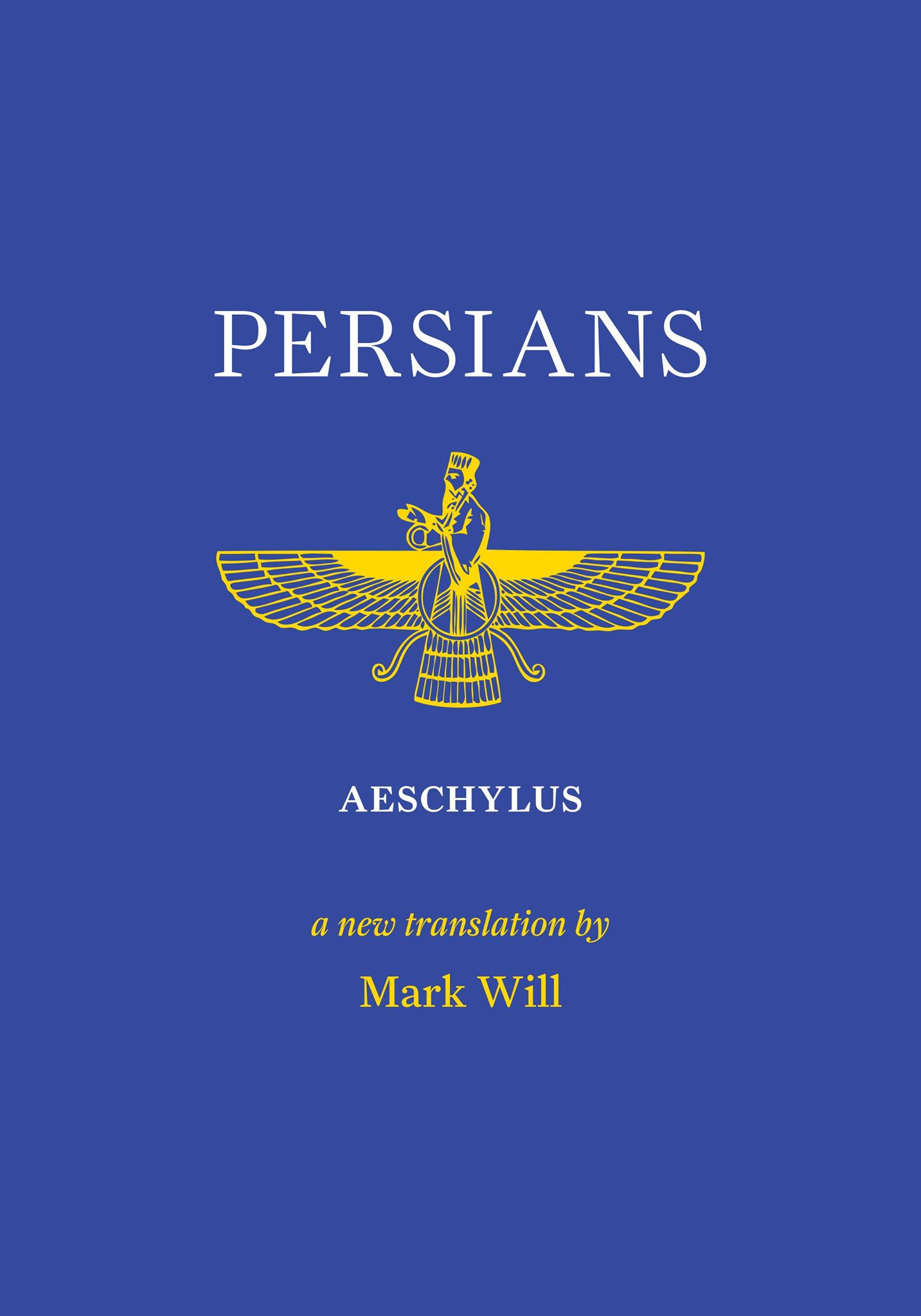
The translation I’ll be basing this analysis on is a brand new one by Mark Will, which can be found here on Amazon. It’s a literal translation that comes as close as possible to paralleling the poetry of the original Greek. It also includes an excellent introduction that not only explains the historical background of the play, but also, in a timely way, relates imperial Persia’s losses to contemporary concerns, making it a kind of cautionary tale about what the US’s current imperialist excesses will most likely lead to.

Here are some of Will‘s translated lines:

“Oh, wretched me, having met/this loathsome, obscure fate/because a demon savage-mindedly trod upon/the Persian race!” –Xerxes, beginning of Episode 4, page 68, lines 909-912

“My son found sharp the vengeance/of famous Athens, for they did not suffice,/the barbarians whom Marathon destroyed before./Intending to make retribution for them, my son/has caused so great a plethora of calamities.” —Atossa, Episode 1, page 45, lines 473-477

“Groan and mourn,/cry heavy and/heavenly distress!/Strain the sadly wailing,/clamorous, wretched voice!

“Torn by the whirlpool,/they are mangled by the voiceless,/by the children of the undefiled sea!

“And the deprived house mourns/the man of the family, and childless fathers/are demonized by distress,/and old men bewailing/everything perceive pain.” –Chorus, Choral Ode 2, page 49, lines 571-583

Structurally, the play can be divided into four parts: 1) premonitions and fears for the Persian army, as felt by the Chorus of Persian Elders and by Atossa, Darius’ widow queen and King Xerxes’ mother; 2) the calamity of the Persian army’s defeat at the Battle of Salamis, as told by a messenger; 3) the Ghost of Darius’ report of further Persian woe, and counsel not to attempt an invasion of Greece again [lines 790-792]; and 4) Xerxes’ despair when he returns to Susa, his clothes in tatters.

[Bear in mind that my four-way division of the play differs from Will’s, whose Episode 1 combines my parts one and two, as described in the previous paragraph, and his Episode 2 is a speech by Atossa, just before his Episode 3 and my part three, with Darius’ ghost. Each of his Episodes is preceded by a Choral Ode, with strophes, antistrophes, and epodes; whereas I’m dividing the play in terms of thematic contrasts I’ve seen.]

The choral poetry comments on the fortunes of the Persian empire, past and present. We hear of the great glories of Persia’s imperial past, her conquest of Ionia, and the achievements of Darius the Great (Choral Ode 4, pages 66-67).

While it’s more typical in Greek tragedy to start the play with a hubristic character who experiences a sudden reversal of fortune (peripeteia) and a realization (anagnorisis) of some terrible truth, both of these elements propelling the action towards tragedy (e.g., a fall of pride); there seems to be very little of such contrast in The Persians. The flowing of the plot, from beginning to end, seems a sea of undifferentiated sorrow.

Xerxes’ hubris is felt offstage, while he’s creating the pontoon bridges for his army to cross the Hellespont (lines 65-72; also lines 743-750), and when his troops commit sacrilege (lines 809-812) by destroying the images of Greek gods at their temples. This hubris is described by the characters in Susa, where the whole play takes place. Instead of seeing a boastful king, we hear the Chorus expressing their fears, for the Persian army, who at the beginning of the play (lines 8-15, 107-139) have not sent any reports on the progress of the invasion. The Chorus’ pride is only in Persia’s past.

This fear morphs into sorrow from the messenger’s report; then further sorrow from what Darius’ ghost knows of the army’s other misfortunes, coupled with his not-so-comforting advice not to invade Greece again; and finally despairing sorrow on shamed Xerxes’ return. Fear, woe, more woe, and the worst. The whole play is a continuous descent into sadness.

As I’ve said above, Mark Will parallels this Persian woe to the predicted fate of the US’s near future, with–as I would add–the ascent of China and Russia as against American imperialist overreach, with its absurd military overspending and over trillion-dollar debt, a ticking time bomb that will destroy the US sooner than the military-industrial complex expects. Will also asks us to use this play to help us sympathize with Iran (Translator’s Preface, page 11), the modern Persia threatened with invasion from, ironically, the American Persia of today.

While I affirm Mark Will’s parallels to contemporary events as perfectly true and legitimate, I see another parallel between The Persians and the recent past: the decline in Persian might, and its military humiliations, can be compared to those of the Soviet Union in the 1980s and early 1990s.

Hamartia in political leaders should be understood as a warning to them that “missing the mark” can lead to political catastrophes for the nation. Xerxes’ foolish overconfidence in his army and navy leads to missteps and his huge losses. This missing the mark is easily seen in the military misadventures of the US over the past twenty years, as Will observes. I’d say that a missing of the mark (quite an understatement, given the growing treason in the USSR, especially from Khrushchev onwards) is also attributable to Gorbachev‘s mismanagement of Soviet affairs.

A series of woes befell the USSR that parallel those of Xerxes and his army. The US lured the USSR into a war with Afghanistan, a war that was a major factor in the weakening of the socialist state (this is rather like Xerxes being manipulated into planning “this voyage and campaign against Hellas” by “evil men” [lines 753-758]). The USSR’s loss against the mujahideen, who were proxy warriors (including Bin Laden) for the US, was a humiliating defeat comparable to that of Xerxes.

Furthermore, Xerxes’ listening to the Greeks’ plans to flee at night, and taking them at their word (lines 355-371), is comparable to Gorbachev thinking he could negotiate with the US and NATO over whether to open up the Soviet economy to the West, and to allow the reunification of Germany, breaking down the anti-fascist protection Wall. Xerxes’ gullibility caused his humiliating loss at Salamis, as Gorbachev’s caused not only the USSR’s dissolution, but also the eastward advance of NATO.

The Persian loss is considered a momentous turn of events in Western history; for if the Persians had won, the West, some argue, would likely have been inundated with Persian, rather than Greek, culture. Their loss is assumed to have been a good thing, with Greek democracy triumphing over Persian despotism. Certainly Hegel thought so in his Philosophy of History:

“The World-Historical contact of the Greeks was with the Persians; in that, Greece exhibited itself in its most glorious aspect…In the case before us, the interest of the World’s History hung trembling in the balance. Oriental despotism–a world united under one lord and sovereign–on the one side, and separate states–insignificant in extent and resources, but animated by free individuality–on the other side, stood front to front in array of battle. Never in History has the superiority of spiritual power over material bulk–and that of no contemptible amount–been made so gloriously manifest.” (Hegel, pages 256-258)

On closer inspection, however, it can be argued that the Persians under the Achaemenid Dynasty were closer to real democracy than the Greeks. Achaemenid-era Persians had far fewer slaves than Greeks, and Persian women enjoyed far better rights than their Greek counterparts.

This point is especially salient when we parallel it with the propagandistic portrayal of American “democracy,” with its history of racism, slavery, genocide of Native Americans, income inequality, and mass incarceration, as against the USSR‘s having considerably fewer of these evils. Certainly, Paul Robeson felt far more at home in the USSR than in his native US.

Paralleled with the end of Persian hegemony over the region, and thus the liberation of Greece, is the notion that the USSR’s dissolution meant the triumph of American capitalist democracy and “the end of history.” Consider how the rise of neoliberalism under the Clintons, coupled with the near ubiquity of American imperialist war, have shown the lie of this democracy.

With the end of the Achaemenid Dynasty came the rise of Alexander the Great, whose imperialism–justified as a spreading of Greek culture and civilization to the barbarians of the East–parallels American neoconservative arrogance.

The Ghost of Darius advising the Persians not to invade Greece again seems to me like the ghost of Stalin wishing to advise the Soviets of the 1980s to revert to Socialism in One Country, rather than attempt to bring it about in other countries like Afghanistan.

The Messenger, by his own admission, describes only a fraction of the misfortunes that have befallen the Persian army and navy. Though they outnumbered the Greeks, they’ve been mostly destroyed. Most of the survivors have perished on their journey back home, through hunger or thirst (lines 482-491).

Darius’ Ghost also informs the Chorus and Atossa of newer woes. This piling up of one misfortune after another is, on the one hand, a warning of the karmic future of US imperialist overreach, as Will maintains; but on the other hand, as I am arguing, this accumulation of woe is also something that can be paralleled with the growing suffering in the Soviet Union in the late 1980s and throughout the 1990s.

The US and NATO were scheming at how they could bring about the USSR’s downfall. There were shortages of food, which was Gorbachev‘s responsibility. Through the establishment of “free market” economic policies, the traitors in the Russian government privatized and seized state-owned assets, and removed the Soviet social safety net, throwing millions of Russians into poverty and starvation, and allowing the ascendance of Russian oligarchs; and when the people tried to bring back socialism, not only did the US’s puppet, Yeltsin, use violence to stop them, but the US also helped Russia’s extremely unpopular leader get reelected in 1996.

Some have called the suffering of Russians in the 1990s an “economic genocide.” This woe after woe after woe is easily paralleled with Persian suffering in the play. Russians have consistently, in poll after poll, regretted the end of the Soviet system, especially recently. Apart from the lost social services, Russians are nostalgic of when their country was once a great world power; as the Chorus, in their lamentations, reminisce of Persia in Choral Ode 4. Putin is well-known for having said that the fall of the Soviet Union was “the greatest geopolitical catastrophe” of the 20th century.

So when we get to Xerxes’ return to Susa, with his clothes in tatters, we see the final amalgamation of Persian suffering and despair. Back and forth between him and the Chorus, we hear “Ototototoi!” [Philip Vellacott, page 151], “Ay, ay!” [Will, page 76], and “Woe!” during their exodos from the stage. This quick cutting back and forth of brief one-liners, as opposed to the long speeches heard before, symbolically suggests the psychological fragmentation and disintegration each Persian is experiencing.

We may wonder what the ancient Greek response was to Xerxes’ humiliation. For many, it must have been Schadenfreude to see their oppressors finally brought so low, knowing it really happened: remember Xerxes’ words, line 1034, “Distressing, but a joy to our enemies.” (page 76) Similarly, many on the left, including American socialists, are eagerly awaiting the downfall of the American empire, which some experts say may happen by the 2030s.

There’s also a sympathetic reading of the play, though, in which one pities the Persians; and after all, the whole point of tragedy is to arouse pity and terror, as well as to bring about the catharsis of those emotions. At least some Greeks in the audience must have felt that pity for Xerxes and Atossa, or else how could the play have won first prize in 472 BCE?

Certainly, we leftists can pity the Russians, who lost their great Union of Soviet Socialist Republics. Neither I nor many leftists agree with Reagan’s projection that the USSR was an “evil empire”; though Maoists, during the time of the Sino-Soviet split, thought it was an empire. I see the USSR rather as a check against imperialism, though a flawed one.

In the end, we can see my paralleling of the play with modern problems, in a dialectical sense, with Will’s paralleling. And his thesis, with my negation, can undergo a sublation to give a deeper message about US imperialism: it destroys any attempts to end its evil, causing oceans of woe; then it will destroy itself, bringing karmic woe on itself.

Evil empire, indeed.

Aeschylus, Persians, a new translation by Mark Will, Cadmus and Harmony Media, 2018

Analysis of ‘The French Connection’

The French Connection is a 1971 crime thriller directed by William Friedkin (who did The Exorcist two years later), and starring Gene Hackman, Roy Scheider, Fernando Rey, and Tony Lo Bianco. The film is a fictionalized dramatization of The French Connection: A True Account of Cops, Narcotics, and International Conspiracy, a 1969 book about a famous 1962 drug bust.

In fact, Eddie “Popeye” Egan (whose fictionalized counterpart was played by Hackman–Jimmy “Popeye” Doyle) plays a supporting role as Doyle’s supervisor, Walt Simonson. Egan was also a technical supervisor for the film, as was his real-life partner, Sonny “Cloudy” Grosso (the film’s counterpart for whom was played by Scheider–Buddy “Cloudy” Russo). Grosso also appeared in the film, playing a federal agent named Klein.

Widely considered one of the best films ever made, The French Connection also boasts one of the best car chase scenes ever filmed, a deliberate–and successful–attempt to outdo the famous car chase scene in Bullitt. Indeed, chasing…pursuit…is a major theme in this film.

Here are some famous quotes:

“All right! You put a shiv in my partner. You know what that means? Goddammit! All winter long I got to listen to him gripe about his bowling scores. Now I’m gonna bust your ass for those three bags and I’m gonna nail you for picking your feet in Poughkeepsie.” –Doyle, to black perp […]

Jimmy ‘Popeye’ Doyle: You dumb guinea.

Buddy “Cloudy” Russo: How the hell did I know he had a knife?

Jimmy ‘Popeye’ Doyle: Never trust a nigger.

Buddy “Cloudy” Russo: He could have been white.

Jimmy ‘Popeye’ Doyle: Never trust anyone! […]

“Yeah, I know Popeye. His brilliant hunches cost the life of a good cop.” –Bill Mulderig […]

[analyzing drug shipment] “Blast off: one-eight-oh.” [as thermometer keeps rising] “200: Good Housekeeping Seal of Approval. Two ten: U.S. Government certified. Two twenty: lunar trajectory, junk of the month club, sirloin steak. Two thirty: Grade A poison.” [when the thermometer tops at 240] “Absolute dynamite. Eighty-nine percent pure junk. Best I’ve ever seen. If the rest is like this, you’ll be dealing on this load for two years.” –Chemist

There are three distinct groups of people in this film: the wealthy French/US heroin dealers led by Alain Charnier (played by Rey, and based on Jean Jehan), whom Popeye charmingly calls “Frog One,” as well as Americans Boca and Weinstock; the New York City Police, including Popeye, “Cloudy” (Scheider), Bill Mulderig (played by Bill Hickman), and Simonson; and there are the black drug dealers and junkies who are bullied by the cops.

These three groups can be seen to symbolize the upper, middle, and lower classes of society. The wealthy French drug dealers, along with their American counterparts (such as upwardly-mobile Sal Boca [Lo Blanco], Joel Weinstock [Harold Gary], etc.) are, of course, mafia…and mafia are capitalists, as I’ve dealt with elsewhere.

The cops represent the middle class that envies the ruling class and wants to supplant them, while they also despise the poor, as symbolically made clear in the cops’ racism against blacks and Latinos. The conflict between cops and mafia on the one side, and between cops and blacks on the other, thus symbolizes class conflict in general.

After a brief opening scene in Marseilles, in which an undercover French cop has been seen trailing Charnier, then is killed by Pierre Nicoli (played by Marcel Bozzuffi), Charnier’s bodyguard/hitman; we go over to Brooklyn, where Doyle is dressed as Santa, and Cloudy is pretending to be a hot dog vendor. They’re outside a bar filled with blacks, at least some of whom are drug addicts/pushers.

Doyle, as Santa, is entertaining a group of little black boys, singing ‘Jingle Bells’ with them. Given what he and Cloudy are about to do regarding the black junkies in the bar, we should note the phoniness of Doyle’s attitude towards these kids.

Blacks and other racial minorities know better than anybody about the cruelties of police brutality, rooted in racial prejudice. Although “Popeye” was originally Eddie Egan’s nickname, and it had nothing to do with the cartoon character; his counterpart in the film is fictional enough to allow the false association with the cartoon hero, a false association especially justified when seen in light of Doyle’s introduction to us dressed as another children’s hero, Santa Claus.

When we see the cops as representatives of the middle class, or the upwardly-mobile petite bourgeoisie, we can see Doyle’s avuncular phoniness in its proper light. He pretends to be kind to the black boys because it’s part of his job; later, he’ll make no secret of his racism against blacks, Italians, Jews, the French, and Latinos (listen for his racial/ethnic slurs against all of these groups throughout the film).

Bourgeois liberals pretend to be kind to the less fortunate as long as their own class status isn’t threatened; when it is, though, they show their true colours, and the hero costuming is thrown aside, as it is when Doyle and Cloudy chase the knife-swinging black junkie, who slashes at them only in self-defence.

Only people as naïve as children would be fooled by the fake kindness of a petite bourgeois who ultimately keeps the class structure of society intact through force. This Popeye, this Santa, is no hero.

Doyle and Cloudy catch the guy, a representative of the proletariat and lumpenproletariat, and they engage in a kind of word salad to disorient him and manipulate him into confessing his crimes: “picking your feet in Poughkeepsie.” We see and hear this manipulation of our feelings with language all the time in the media, which distracts us with nonsense, so we won’t see the true nature of class relations around us.

Don Ellis‘s dissonant music for the film perfectly captures this sense of class conflict, as well as the seedy, slimy underbelly of New York.

Let’s now consider the drugs themselves, and what they mean in the context of this movie. Whether they’re heroin, pills, or marijuana, it doesn’t matter: they’re a commodity, representative of all commodities–use-values for all of us who need them or are addicted to them (in whatever way they may be addictive–literally as drugs, or a necessity or craving of some other kind), and exchange values for those who sell them, ultimately the ruling class of capitalist mafias.

Speaking of exchanges–and remember that in our imperialist, modern world, these exchanges often happen between countries–an exchange is being planned between Charnier’s heroin dealers in France and the American dealers in New York, including Sal Boca and Joel Weinstock.

These capitalists are the middle men who produce nothing, but make a huge profit in the exchange. They make a fortune exploiting the drug addicts with their commodity, while whoever makes the commodity is, in all probability, paid little in proportion to the value of the commodity they make–in this film’s case, some of the best quality heroin of the time.

Of all the people to be judging and attacking the black junkies, Popeye Doyle and cops of his ilk are the last who should be doing it. Doyle has a drug of his own–alcohol–and on top of that, he’s a womanizer, chasing pussy as much as he chases perps. The juxtaposition of these two pursuits should help us understand his real reason for doing it…desire.

He’s hardly stopping the “bad guys,” for he’s hardly any better than they are. Apart from his addiction to alcohol and women, he’s trigger happy, his violent excesses resulting in the needless deaths of his fellow cops, and he’s willing to shoot perps in the back. Some would call that murder, save for the police’s licence to kill.

As a cop, and as a womanizer, Doyle is a predator. A deleted scene shows him in his car, going after a pretty girl riding a bicycle (about 12 minutes into this video); as part of his plan to seduce her, he accuses her of breaking the law on her bike. He also takes her bicycle to ride around backwards on it, to harass her for the fun of it, as well as to manipulate her into bed. Some would say his behaviour borders on, if not lapses into, sexual assault.

So when we see him eyeballing, following, and chasing perps, whether by foot or by car, his pursuing shouldn’t be so naïvely misconstrued as a “good guy” going after the “bad guys.” I would compare Doyle to a character in Buddhist myth, namely, Ańgulimāla.

Having already killed almost a thousand victims, Ańgulimāla wanted his thousandth kill to be either the Buddha or–egad!–his mother. He chose the former, whom he chased after. Odd thing, though: the Buddha walked slowly while his would-be murderer raced after and could never catch up to him. Instead, the Buddha got further and further away from him!

Charnier’s calm elusiveness, if not his morality, can be compared to that of the Buddha. Doyle’s rage and frustration–as well as his immorality–from racing after and never catching “Frog One” is easily comparable to that of Ańgulimāla. Doyle is the archetypal “bad cop” to Cloudy’s “good cop.” Cloudy follows the rules, Doyle disregards them. Still, Cloudy supports his partner, just as bourgeois liberals, despite their “progressive” stance, defend the capitalist system. (Consider “progressive” Elizabeth Warren’s support of Hillary Clinton in 2016.)

Since I consider the cops to be an allegorical representation of the middle class, this lawful “good cop” and lawless “bad cop” can also be seen to represent two different kinds of capitalist: respectively, the liberal who advocates a ‘kinder, gentler’ capitalism (Cloudy), and a deregulated “free market” capitalism (Doyle), the neoliberal kind that not only fails to stop the ruling, haute bourgeoisie (Charnier), but actually reinforces neoliberalism‘s brutality and cruelty (Doyle’s violence).

What is Doyle’s reason for taking Cloudy to the Copacabana, a bar with rich mafiosi at one table, beginning the chain of events that lead to the heroin bust? Doyle wants to go there because of desire, his wish to get drunk and chase skirt. Here we see, in a symbolic sense, the root cause of his hunger to catch “Frog One”: Doyle is projecting, onto Charnier et al, his own desire for power over others. There’s a fine line between cop and criminal.

To be fair, there are always some individual good cops out there who honestly, though misguidedly, wish to do their part to make the world a better place by fighting crime. Nonetheless, this doesn’t change the fact that the purpose of law enforcement (outside the militsiya of the USSR and Soviet Bloc countries) is to protect the private property of the capitalist class. Doyle’s predation on Charnier is just a symbolizing of how capitalists, big or small, sometimes step on each other as well as on the poor.

Drug addiction should be considered a health issue rather than an excuse to lock people up. Junkies should be put into rehab—not behind bars, then exploited as prison slave labour. That cops like Doyle and Cloudy go after both the sellers and the buyers of dope shows they aren’t interested in doing what’s right: they only want to have power over others, then after (hopefully) successful busts, they can climb up the ranks of the police force.

By catching Charnier, Boca, et al, Doyle hopes to mend his shattered reputation as a cop. He’s accidentally caused the death of another cop, something about which federal agent Bill Mulderig won’t stop taunting him. Doyle’s wish to improve his social status is the motivation behind any bourgeois, from petite to haute.

Many in the middle class, be they left-leaning liberals or right-wing libertarians, despise the ruling class; but they hate the elite for the wrong reasons (feeling envy and indignation that the elite got to the top unfairly, while thinking that having a top-down society is still defensible), and/or their approaches to ending the inequality are hopelessly wrongheaded.

Doyle’s and Cloudy’s failure to catch Charnier, coupled with the largely minimal punishments meted out to the other criminals, symbolizes how the middle class’s conflict with the upper classes ends in failure every time. The global proletariat, united in solidarity, is the only hope in defeating the rich.

As Doyle and Cloudy are eyeing the mafia patrons at a table in the Copacabana, The Three Degrees are singing Jimmy Webb‘s “Everybody Gets to Go to the Moon.” Everybody enjoys the electric performance of this black female trio, Angie Boca–in a blonde wig–clapping and shouting, “More!” In mostly white bourgeois society, being talented performers is just about the only way blacks can be included. Everybody fantasizes that he can get up as high as the moon, a lunatic land of filthy lucre, but few really get to go there in the real world. We’re just stuck down here on the Earth.

Sal Boca is upwardly-mobile, too, and with a dirty past (like Doyle); and he hopes that with this heroin deal, he and Angie can rise up to the ranks of the ruling class. Envious Doyle will do all he can to thwart Boca’s and Charnier’s hopes; Doyle is envious Cassius, Cloudy is well-meaning Brutus, Boca is rising Mark Antony, and Charnier is all-powerful Julius Caesar.

Doyle and Cloudy go into another bar frequented by black dope addicts, whom the two men bully, then they ruin their drugs. Since, as I’ve argued above, the black junkies represent the oppressed proletariat, and their drugs represent commodities in general, the ruining of them by the cops–who represent the middle class/petite bourgeoisie–represents capitalism’s depriving of the poor of the necessities of life. Addiction in this movie symbolizes hunger.

A black informant, who pretends to be another junkie bullied by Doyle (yet receives real punches and shoves), tells the cop about a major shipment of heroin to come in a week. The informant thus represents class collaboration.

All the local addicts have been going through a relative dry spell, with very little, if any, junk to enjoy; but when this heroin arrives, their troubles will be over…or so they hope. This lack of drugs, again, represents hunger and starvation, especially the kind suffered in the Third World. So, again, the drug bust, from the point of view of the addicts, represents every thwarted attempt developing countries make to improve their lot, i.e., through electing leftist governments overthrown by the US.

Charnier and his heroin business, however, must not–through the analogy of the above three paragraphs–be confused with any kind of liberation movement. Their profiting off of the addictions of the blacks represents the capitalist system’s enslaving of all of us to the need for commodities as exchange values. The junkies’ addiction is just commodity fetishism, which is also symbolized by the chemist’s assessment of the quality of the heroin about to be sold to the American dealers. We’re in awe of the value of the final product, but we pay no attention to the process of creating that value…which has come from workers.

Allied to this fetishizing of the commodity of heroin is how it can be compared to soma in Brave New World. The high is a religious-like ecstasy, and as we know, “Religion is the sigh of the oppressed creature, the heart of a heartless world, and the soul of soulless conditions. It is the opium of the people.”

Charnier, the supplier, is thus like a false spiritual leader, a fake Buddha, if you will, who calmly eludes the racing, raging Ańgulimāla that is Doyle in the subway. Like the cops, Charnier only seems good, that is, from the junkies’ point of view, since they so crave his ‘soma.’ (<<Every junkie gets to go to a moon of a different kind.) People at the top of any hierarchy–political, religious, etc.–can fool the masses into thinking they make good leaders.

Note how oppressors of the lower classes can be as masochistic as they are sadistic. Doyle seduces the girl on the bike, but she uses his handcuffs to chain him to his bed. He seems rather amused when he calls her a “crazy kid.” Similarly, there’s a deleted scene (starting at about 5:40 here) in which Nicoli pays a prostitute to whip him; nonetheless, he threatens her by grabbing her at the throat when she complains that he’s fifty dollars short. The upper classes always cheat the working class, including sex workers.

Recall the corrupt ones in power in Sade‘s erotic writing, who enjoy receiving as well as giving pain. Many examples can be found in Juliette. Recall also Freud’s words, “A sadist is always at the same time a masochist” (Three Essays on the Theory of Sexuality). Finally, recall Hegel’s master/slave dialectic, which can be symbolized by these ‘sadomasochistic’ scenes.

The sadist in Nicoli comes out again when he opts to shoot Doyle, even when it seems unnecessary and even dangerous to Charnier. After the failed attempt in a sniper shooting, which kills a mother standing near Doyle just outside his home, it’s the cop’s turn to display his sadistic tendencies in the famous car/train chase scene.

While catching the sniper before he can have a chance to strike again is understandable, the lengths Doyle is willing to go to in order to catch Nicoli are far beyond reasonable. He knows perfectly well how outrageously he’s breaking the law in his pursuit, but he does it anyway.

Beeping the car horn in an endless ostinato, he drives through red light after red light, cutting other drivers and pedestrians off, and speeding like a maniac. He’s the classic case of a driver who thinks he ‘owns the road.’ This is reckless driving in the extreme, endangering people’s lives on every inch of the road he’s going over in the car he’s commandeering.

What he’s doing isn’t about the cops catching a perp–this is a personal vendetta. The hunter and hunted have simply switched roles: it isn’t ‘the good guys’ going after ‘the bad guys.’ This chase symbolizes, as does the rest of the movie, the class conflict between the rising petite bourgeoisie (Doyle et al) and the haute bourgeoisie (Charnier et al), while the proletariat (the junkies) gain nothing in the exchange.

That Doyle is no less a criminal than Nicoli is clear when the former shoots the latter in the back. At such close range, from the bottom to the top of a staircase, Doyle could have shot Nicoli in the leg or the arm; he chooses the back because he wants to kill him, just as he wants to kill Charnier (which he does at the end of French Connection II), and just as he doesn’t care at all if he kills or injures anyone during the car/train chase.

Police advisers on the set objected to Doyle’s shooting of Nicoli precisely on the grounds that it’s murder, but Friedkin defended the shooting, knowing that such a move is exactly what the real Popeye, Egan, would have done…and this should tell you something about real cops.

Note how, throughout this movie, we never see the production of the heroin, nor the use of it by the junkies; we only see the circulation process of the commodity, an issue focused on in Capital, Vol. II, something the capitalist would prefer to get through as quickly as possible, to bring about the turnover and put his capital back into production. A speed-up of the “switch” is what Charnier wants, surely not only for his own safety from the predatory cops, but also to keep his business moving.

This circulation process of exchanging a commodity for money (C-M), or money for a commodity (M-C), is the focal point of capitalism. So we learn of the heroin smuggled into the US in the car of French TV personality Henri Devereaux (Frédéric de Pasquale), hidden in the rocker panels, as well as the plan to sell it to Weinstock and Boca.

When the “switch” happens, we see the full explosion of class conflict, of “one capitalist always strikes down many others” (Marx, page 929), as symbolized in the shootout in the abandoned factory between the cops and the American and French mafiosi. Cloudy shoots Boca, and Doyle follows Charnier into a filthy, abandoned warehouse.

Mulderig–who, recall, has been taunting Doyle about having killed a cop–is also looking around the filthy place, its filthiness symbolic of the destruction and decay caused by the ownership of private property. Trigger-happy Doyle hears Mulderig and, thinking he’s Charnier, shoots him. Feeling not even the slightest remorse, and probably glad he killed him (Was the shooting a kind of Freudian slip?), Doyle continues hunting Charnier, whom he never catches.

A gunshot is heard offscreen, presumably Doyle’s, since he so badly wants to kill Charnier. This is the way the film ends, not only with a bang, but also a whimpering horn. The French Connection is thus, in a way, like the French Revolution: the middle class (symbolized by Doyle et al) takes on the aristocracy (symbolized by Charnier et al), but the bourgeoisie (be they petite or above), by their very nature, never create the justice they claim to fight for…since they never really wanted it, anyway.

The French Revolution removed the monarchy, but ended up, after a bloodbath, in the dictatorship of Napoleon. Similarly, Charnier is never caught, and is presumed to be back in France; so he can continue running his heroin empire. And though Doyle and Cloudy are taken out of the narcotics bureau, cops will still go around busting junkies instead of helping to end the problem of addiction in general. This symbolizes how the same class structure stays intact, regardless of whether the bourgeoisie or the aristocracy is at the top.

Ask the Communards, or the gilets jaunes, what they think of the ‘liberal democracy’ that replaced the French monarchy, with Macron as the new Napoleon. The new boss is essentially the same as the old boss…because he is a boss. Violence is always there, too. Hence the bang, and the whimper.

The Psychoanalysis of Capital

In order to overcome the hegemony of the capitalist, we must cultivate an understanding of his inner mental state. I believe that psychoanalysis can help us gain insight into the mind of not only the bourgeoisie, but also all of us who are in their thrall.

I discussed much of this already in such posts as The Self/Other Dialectic, The Narcissism of Capital, and The Psychoanalysis of Narcissistic Parental Abuse; if you read those posts, this one will be easier to follow. Here, I will reorganize and add to those three posts’ ideas by directly following the course of history of psychoanalytic developments, starting with Freud (dwelling only a little on him, though, since he was wrong much more often than he was right, and since his theories are of little help in promoting socialism, for which he had little more than criticism), and ending with Lacan (again, briefly dwelling on him, since his obscurantism and verbosity are of little help to anyone, especially the working class).

Of Freud’s ideas, the superego is probably the most useful, if not the only useful one; for in the superego, we find the cruel, unforgiving inner critic, an internalized object representing our parents, teachers, religious leaders, and other authority figures who berate us and chide us for failing to measure up to the unattainable ego ideal.

The shame that we feel from our failures, be they moral, financial, or career ones, drives us to over-compensate by an appeal to shame’s dialectical opposite: pride. If that pride can’t be felt through success and having power over others, which is the goal of the capitalist, it can be felt through ego defence mechanisms (fully systematized by Freud’s daughter, Anna). If these mechanisms won’t give the capitalist pride, he can at least use them to fend off feelings of shame, often by simply shaming others.

Freud and his daughter, Anna, who both elaborated on defence mechanisms.

Feelings of moral pride can be felt by the capitalist in the form of reaction formation: he won’t admit that his preferred economic system results in unaccountable private tyranny, including prison slave labour in the US; instead, he’ll prate about how capitalism promotes ‘freedom‘ (i.e., the deregulation that frees Big Business to overwork and underpay labourers, and to accumulate more and more wealth for himself, at everyone else’s expense), contrasting this ‘freedom‘ with the spurious history of ‘tyrannical’ socialist states.

The capitalist often takes pride in his identification with authority figures. The fascist–a hyper-capitalist, really–narcissistically identifies with leaders like Hitler and his in-group, a regime propped up by Big Business; as I’ve said many times before, associating the Nazis (just because of their name, ‘National Socialist’) with the left is sheer idiocy. As we can see, Anna Freud’s notion of identification with the aggressor can be seen as one of many capitalist defence mechanisms.

The capitalist may engage in fantasy, using, for example, his religious beliefs to give him a false sense of moral pride. He may imagine that all his sins have been washed away by the blood of Christ, and that his rigid faith in a fundamentalist interpretation of Christianity (as opposed to those ‘wishy-washy liberal,’ or–egad!–Marxian interpretations, like liberation theology) makes his ‘moral’ position all the more justified.

The fantasy of this Christian faith could be Catholic or conservative Protestant, whose work ethic, clearly in the service of capitalism, results in a financial success strongly implying God’s favour and reward with grace. Thus, instead of helping “one of the least of these my brethren,” he can rationalize his abandoning of the poor by saying their ‘failure’ in life comes from a slothful loss of faith, and thus proves their non-elect status.

The capitalist can further rationalize his class status by giving to charity, which, apart from giving him a sweet tax break, also gives him an illusory cleaning of his conscience. Oh, he gave a little money to the poor…what a kind philanthropist! Never mind that the scraps given to charity do little of substance to pull the starving millions in the Third World out of poverty.

The capitalist routinely engages in denial about how his pet economic system leads to terrible wealth inequality, political corruption, and imperialist war. He claims that “taxation is theft” (i.e., taxing the bourgeoisie to give financial aid to the poor), but denies that overworking and underpaying labourers (which includes paying less than the minimum wage) is actual theft. Similarly, he blames political corruption and war on the state, ignoring the bourgeoisie’s role in maintaining the state apparatus.

Part of this denial expresses itself in displacement, as we could see in the above paragraph, by shifting the blame for the world’s woes from capitalism–the rightful blaming of which would cause him unbearable cognitive dissonance–onto the state alone. He could, however, displace the blame onto other scapegoats: immigrants, Jews, Muslims, Freemasons, or anyone else seen as opposing his interests, or those of Church orthodoxy.

Another part of this blame-shifting is expressed in projection, a pushing out of inner guilt onto other people, other organizations, or other political institutions. The capitalist is responsible for the millions who die every year (especially children under five) of malnutrition and starvation, when the entire world could be fed, provided we disregard the profit motive and spread the food around properly while keeping it fresh; yet the capitalist blames communism for ‘creating‘ famines in the Ukraine, China, and Cambodia, without properly researching the history behind those problems, or examining how Bolshevism largely ended Russian famines.

The capitalist projects his hunger for power onto communists by falsely equating them with fascism, an ideology not only far closer to capitalism than it could ever be to the left, but also a menace defeated far more by Stalin‘s Red Army than it was by the Western Allies, who joined in the fight only at the last minute, and sacrificed far fewer lives. Communists, on the other hand, want the power to end hunger.

The fundamentalist Christian capitalist will project his hunger for global domination onto any group (not just the communists) who deny that his world vision is exclusively the correct one. A large part of the motive for European countries to colonize the world in previous centuries was to make the whole world Christian, by force if necessary. They also wanted to dominate the global market. Therefore, losing such dominance, both religious and economic, is most upsetting to them.

Groups like the Jews, Freemasons, and the Illuminati denied the ‘exclusive truth’ of the Church, whose black-and-white worldview considers such an inclusive position to be anti-Christian, therefore Satanic. It isn’t a far leap to go from these ‘Satanic’ beliefs to a paranoid fear that these groups wish to spread this ‘Satanism’ worldwide. The secrecy of the Freemasons, coupled with the spread of secularism over the past two hundred years, makes it easy for the paranoid fundamentalist Christian conspiracy theorist to project his own wish for global domination onto these ‘Devil worshippers.’ Ditto for the imagined leftist global dominance.

This projection is coupled with the defence mechanism of splitting into absolute good (i.e., fundamentalist Christians and ‘free market’ capitalists) and absolute evil (i.e., ‘Devil worshippers’ and socialists). With their black vs. white worldview, people with right-wing thinking can’t deal with ambiguity, or the possibility of a grey area in between.

Melanie Klein, who wrote much about splitting.

This dichotomous thinking is psychologically, unconsciously rooted, according to Melanie Klein, in the baby’s relationship with its mother, when she is perceived only as a part-object, namely, the breast. When it gives milk, it’s the “good breast“; when it doesn’t, it’s the “bad breast.” This part-object is perceived to be an extension of the baby.

Later, the baby comes to realize the breast is part of a complete human being, separate from the baby–a whole object, its mother. When she satisfies the baby’s needs and desires, she’s the “good mother”; when she frustrates the baby, she’s the “bad mother.” The same applies to its father in his good and bad aspects.

The baby’s irritation with the “bad mother” causes it to use splitting as a defence mechanism, resulting in the paranoid-schizoid position. The baby’s hostility makes it want to harm its mother in unconscious phantasy. Later, if the baby doesn’t see its mother for a lengthy time, it wonders if its hostility has either killed its mother or provoked a vengeful attitude in her. Now, it’s in the depressive position, longing for reparation with her, and soon seeing the “good” and “bad mother” merged into one person.

These two positions aren’t experienced only in infancy. They reappear again and again throughout life; we feel a swinging back and forth between the two, like a pendulum, all the way to our deaths, but instead of feeling them only for our parents, we can feel them for anybody or any organization of people we encounter in life.

The paranoid-schizoid position, or splitting as a defence mechanism, is like the confrontation of the thesis with its negation, where the ouroboros bites its tail on a circular continuum at which extreme opposites meet. The depressive position, where one learns to appreciate ambivalence, is the sublation of the dialectical contradictions, the circular middle of the serpent’s body, every intermediate point on the continuum, between the extreme opposites. This middle area is where contradictions are reconciled.

With their dualistic theology, fundamentalist Christians can’t grasp any reality other than where the serpent’s teeth are biting into its tail: God vs. Satan. Consequently, any belief system other than their own is seen as being of the Devil: “But though we, or an angel from heaven, preach any other gospel unto you than that which we have preached unto you, let him be accursed.” (Galatians 1:8) Furthermore, any capitalism (Keynesian, social democratic, New Democrat-oriented) other than that of the “free market” variety is really just a variation, it would seem, of socialism! You’re with us, or you’re the enemy.

We Marxists, on the other hand, aren’t so black and white in our thinking as the average Christian fundamentalist or neoliberal capitalist. For, as opposed to capitalism as we are, we nonetheless acknowledge its place in our materialist conception of history. The bourgeois French Revolution, for example, was a necessary development away from feudalism, though its results were far from our communist ideal.

Similarly, Lenin’s NEP was an acknowledgement of the need for a temporary “state capitalism” to resolve the problems of the USSR in the 1920s. Yugoslavia’s Titoism was also a market socialism. China‘s and Vietnam‘s bringing back of the market, albeit in a heavily state regulated form, is yet another example of the socialist’s ambivalent attitude towards capitalism; and while I have my doubts about the validity of the extent to which this attempted reconciliation of the market with Marxism-Leninism has gone, we must nonetheless acknowledge that many Marxist-Leninists are capable of such ambivalence about what we’re ideologically opposed to.

Capitalists, on the other hand, don’t have the same level of ambivalence towards socialism. While such social democratic systems as the Nordic Model have adapted their market economies to accommodate the needs of workers, and have free education and healthcare, they are nonetheless forms of capitalism, they have retained the class character of society, and they plunder the Third World as rapaciously, if not so much in a military sense, as the more overtly capitalist countries. Their concessions to the poor are meant to stave off communist revolution, not to encourage it.

WRD Fairbairn, who replaced Freud’s drive-oriented id/ego/superego personality structure with an object-seeking one.

WRD Fairbairn made a more systematic study of splitting. He replaced Freud’s id/ego/superego personality structure with one in which libido is object-directed, not drive-directed. For Fairbairn, Freud’s ego became the Central Ego, linked to an Ideal Object, since having relationships with real people is the ideal for mental health. (Here, ‘object‘ = other people.)

Inevitably, though, and in varying degrees, depending on the severity of our parents’ lack of empathy for us, we feel portions of our Central Ego/Ideal Object break off and split into a Libidinal Ego, which is linked to an Exciting Object (approximately paralleling Freud’s id), and an Anti-libidinal Ego, linked to a Rejecting Object (vaguely corresponding to Freud’s superego).

With the Libidinal Ego/Exciting Object configuration, we find ourselves replacing relationships with friends and family, with mere pleasure-seeking (drugs, sex, money, etc.). The Anti-libidinal Ego/Rejecting Object configuration causes us to be nasty, alienating, and rejecting of other people. The viciousness and rudeness in today’s world seems an epidemic.

Herein we can see a link with capitalist alienation. The lack of kindness and empathy in the early family situation inhibits the development of proper human relationships, the Central Ego and its Ideal Object, which are replaced by internal ego/object relations that are divorced from reality.

Fairbairn pointed out that explicit pleasure-seeking indicates a failure of object-relationships, since for him, the libido is aimed at relationships with people, not things like money [Fairbairn: “…from the point of view of object-relationship psychology, explicit pleasure-seeking represents a deterioration of behaviour…Explicit pleasure-seeking has as its essential aim the relieving of the tension of libidinal need for the mere sake of relieving this tension. Such a process does, of course, occur commonly enough; but, since libidinal need is object-need, simple tension-relieving implies some failure of object-relationships.” (p. 139-140)].

I’ve written in other posts about characters in fiction and film whose social alienation results, on the individual level, in either miserliness or violence…on the social level, we find it ballooning into extreme income inequality and imperialism.

Heinz Kohut, who investigated and treated narcissism.

The lack of empathic parenting can also lead to pathological levels of narcissism as a defence against fragmentation. Heinz Kohut did a systematic study of narcissistic personality disorders, as well as how to treat them with empathy in the idealizing and mirror transferences. Treatment of narcissism is important for socialists, as this pathology attracts its sufferers to positions of corrupting power.

The lack of empathic parents to look up to as idealizing role models, coupled with a lack of empathic mirroring of a child’s own narcissism, causes the child to fail to develop mature, restrained narcissism, which is supposed to be let down in bearable, gradual steps. Instead, narcissism balloons into a bloated, unhealthy state, and the afflicted individual looks for others to idealize, such as political demagogues with similar narcissistic tendencies. A narcissist identifying with another of his ilk will feel narcissistic injury and rage if his idealized leader is criticized.

I’ve been subjected to such rage whenever my readers come across passages in which I point out Trump’s narcissism, a point so obvious it hardly seems controversial. Added to the narcissistic identification with, and idealization of, Trump, is the black-and-white thinking of splitting. And the Trump supporters aren’t the only ones who have that problem: he’s God-appointed (absurdly) to his supporters; and to the liberals who oppose him, he’s the Devil incarnate (also an absurd position–his faults are of the standard bourgeois type), and Hillary is idealized instead (even more absurdly).

Again, we communists have a more nuanced, ambivalent take on Trump. Yes, he’s awful, but we can give credit where credit is due: he opposes war with Russia, which should be a no-brainer for liberals. His pulling American troops out of Syria (and maybe Afghanistan) is something we see as in itself a good thing, though I question his motives for doing so (boosting his popularity, saving government revenue by having other countries–and mercenaries–do the fighting for the US…in other words, the wars are not ending!…while having kept military spending needlessly bloated [does he mean it when he calls this spending ‘crazy‘?] instead of using that money to help the American poor).

Liberals refuse to acknowledge him doing anything right for the same narcissistic reasons that Trump conservatives refuse to admit he’s ever done anything wrong. Thus, pussy-hat-wearing liberals support equally narcissistic Hillary Clinton, whom they idealize instead. It’s all splitting, and identifying with him or with his antithesis.

So, as I’ve said, the cure to all of this alienating and splitting is to cultivate more empathy in the family situation, and in our interpersonal relationships in general. That will mean focusing on what unifies us over what divides us.

Such unifying thinking is perfectly harmonious with Marxist thought, as dialectical materialism is all about reconciling contradictions. Part of reconciling the contradiction between rich and poor will involve reconciling psychological splitting, replacing the black-and-white mentality, or us vs. them thinking, with WE thinking, replacing alienation with solidarity.

D.W. Winnicott.

I believe an understanding of object relations theory can help us in this regard, for Klein, Fairbairn, and DW Winnicott–among the other theorists in this psychoanalytic school–demonstrated how our relationships with others are based on our original relationships with our early caregivers. Whatever is going wrong in our current relationships is probably based, at least to a large extent, on our faulty relationships with our parents; for the faults in those early experiences create a kind of blueprint for what ensues.

Authoritarian parents, especially religious ones, tend to cause us to choose authoritarian leaders and forms of religion, as well as authoritarian economic systems like the boss vs. wage slave hierarchical relationship in capitalism. This latter relationship causes one to have what Erich Fromm called the “having” (as opposed to “being”) way of living.

This “having” mentality causes one to base one’s happiness on how much stuff one owns, gaining narcissistic supply (and thus, a False Self, too) from conspicuous consumption; whereas a “being” way of life focuses more on how to be happy by being one’s own True Self, with a happiness coming from enjoying object relationships (family, friends, community, etc.). Togetherness with others is how we all were meant to be, not living just to help a boss make profits.

We’ll go from capitalist materialism (via dialectical materialism) to this state of community life by, as I’ve argued elsewhere, going beyond the pairs of opposites, noting the unity between self and other, and putting all the pieces together by realizing how everything flows from one dialectical opposite to the other.

Erich Fromm.

On the ‘having mode of existence,’ in Fromm’s own words: “[The] dead, sterile aspect of gold is shown in the myth of King Midas. He was so avaricious that his wish was granted that everything he touched became gold. Eventually, he had to die precisely because one cannot live from gold. In this myth is a clear vision of the sterility of gold, and it is by no means the highest value…” (Fromm, p. 61)

And, Fromm on the ‘being mode of existence’: “There is more: this being-in-the-world, this giving-oneself-to-the-world, this self-transformation in the act of life, is only possible when man loses his greediness and stinginess and abandons his self as an isolated, fixed ego that stands opposed to the world. Only when man abandons this self, when he can empty himself (to use the language of mystics), only then can he fill himself entirely. For he must be empty of his egotistical self in order to become full of what comes to him from the world.” (Fromm, p. 65)

Furthermore: “Joy, energy, happiness, all this depends on the degree to which we are related, to which we are concerned, and that is to say, to which we are in touch with the reality of our feelings, with the reality of other people, and not to experience them as abstractions that we can look at like the commodities at the market. Secondly, in this process of being related, we experience ourselves as entities, as I, who is related to the world. I become one with the world in my relatedness to the world, but I also experience myself as a self, as an individuality, as something unique, because in this process of relatedness, I am at the same time the subject of this activity, of this process, of relating myself. I am I, and I am the other person, but I am I too. I become one with the object of my concern, but in this process, I experience myself also as a subject.” (Fromm, pages 66-67)

Finally: “In this state of experience, the separation of subject from object disappears, they become unified by the bond of human active relatedness to the object.” (Fromm, p. 67)

To raise children in this healthier way needn’t require anything even approaching ‘perfect’ parenting–after all, what is ‘perfect parenting‘ anyway? All that’s needed is what Winnicott called good enough parenting, to help infants make the transition from the paranoid-schizoid position, one also where the baby makes no distinction between self and other, to the capacity for concern, as Winnicott called it, where the baby recognizes both good and bad in its parents (and, by extension, both good and bad in all people), as well as acknowledging the parents (and, by extension, all other people) as not an extension of itself (realizing ‘me’ vs. ‘not-me’).

We paradoxically recognize our togetherness, yet also our individual integrity, so that we’re united enough to feel mutual empathy, yet also distinct enough from each other to realize we don’t have the right to exploit others, out of a misguided belief that others are extensions of ourselves.

So, by fixing the psychological splits, alienation, and fragmentation in ourselves, we can begin to fix what’s broken in society. By not narcissistically identifying with an idealized, but illusory and self-alienating, mirror (as Lacan observed), and replacing these false images (including idealized self-images projected onto demagogues) with the communal symbols of language (i.e., real, meaningful communication), we can cultivate mutual love.

…and from love, we can create a revolutionary situation, toppling the narcissists and psychopaths at the top of the social and economic hierarchy, and thus create a community of equals. As Che Guevara once said, ““The true revolutionary is guided by a great feeling of love. It is impossible to think of a genuine revolutionary lacking this quality.”

Erich Fromm, The Essential Fromm: Life Between Having and Being, Continuum, New York, 1995

Analysis of ‘Viridiana’

Viridiana is a 1961 Spanish-Mexican film by Luis Buñuel, loosely based on the novel Halma by Benito Pérez Galdós, and starring Silvia Pinal in the title role, as well as Fernando Rey, Margarita Lozano, and Francisco Rabal. As usual, Buñuel criticizes the Church and bourgeois society in this film. It is about a novice soon to take her vows as a nun, but who finds it increasingly difficult–due to external pressure, or internal?–to reconcile herself with the moral ideals of the Church.

Viridiana was the co-winner of the Palme d’Or at the 1961 Cannes Film Festival.

Here are a few quotes in English translation:

Viridiana: I know my own weakness, and whatever I do will be humble. But, however little it is, I want to do it alone.

Jorge: I always knew that you and I were going to end up playing cards together!

Verdiana was the name of a generous, charitable saint who secluded herself for 34 years to focus on her faith. The Viridiana of this film is similarly, if not so extremely, reclusive, but just as generous and charitable. Her name comes from a word meaning ‘green’: I think of an old meaning of green, from back in Shakespeare’s time, meaning ‘youthful, inexperienced, immature’; but also, ‘fresh, recent, new’ (Crystal and Crystal, page 205), strongly implying ‘pure.’ There is, indeed, a strong sense that this novice embodies all of these definitions, in more ways than one.

She also happens to be a beautiful young blonde, most desirable to men; her choice to become a nun seems to be, at least in part, motivated by a fear of sexually predatory men. Her virgin purity makes her all the more attractive to her uncle, Don Jaime (Rey), who finds that she reminds him of his late bride, who died before he could even consummate their marriage.

His preoccupation with her beauty and purity reminds me of Heinrich Heine‘s poem:

Du bist wie eine Blume,
So hold und schön und rein;
Ich schau’ dich an, und Wehmut
Schleicht mir ins Herz hinein.

Mir ist, als ob ich die Hände
Aufs Haupt dir legen sollt’,
Betend, dass Gott dich erhalte
So rein und schön und hold.
You are like a flower,
So lovely, fair and pure;
I gaze at you and wistful
Melancholy slips into my heart.

It’s as though I ought to place
My hands upon your head
And pray God to ever keep you
So pure, fair, and lovely.

This notion of extreme purity leads to an exploration of the themes of modesty, humility, and every other point on the circular continuum I symbolize with the ouroboros, including the dialectical opposites of pride (the serpent’s biting head) vs. shame (the bitten tail). Viridiana is so particular about her maidenly modesty, it’s a source of narcissistic pride for her. Thus, even the mere suggestion of male physical closeness feels like a violation to her.

This excessive modesty comes from her stern Catholic upbringing, once again Buñuel’s satirical target. She has no interest in visiting her Uncle Jaime, whom she’s met only once; but she’s pressured into visiting him by her mother superior. She’d rather stay secluded and cloistered, suggesting she regards the Church as more of a family than her biological one. I suspect she had an unhappy family upbringing, driving her to the Church for a replacement.

The Virgin Mary seems to be an idealized parental imago for Viridiana, the perfect mother who represents an ego ideal to which she aspires. We get a sense of this when she prays the Angelus with the homeless people. Mary is “full of grace” (κεχαριτωμένη), which the Catholic Church interprets as a kind of purity existing from birth, the Immaculate Conception. Viridiana would thus want to identify with Mary, for narcissistic reasons.

Any man even making a pass at her threatens this purity she so covets, causing her narcissistic injury. Viridiana, I suspect, has transferred her feelings of maternal love to Mary, just as Don Jaime, admiring Viridiana’s beauty and purity, transfers his love of his deceased bride onto her, especially since the two women look so alike. Indeed, transference is a major theme in this Freudo-Marxist film.

Normally, one thinks of transference in the psychoanalytical setting; the patient transfers the feelings of a powerful emotional bond, especially one from childhood, onto the therapist. Viridiana has made this kind of transference onto Mary, her ‘therapist.’ Similarly, Viridiana has become, however unwittingly, Jaime’s ‘therapist.’ They are using their transferences in an attempt to heal, though these attempts ultimately fail.

On the first night of Viridiana’s visit, we see her in her bedroom, taking off black stockings to reveal her delicious legs; Buñuel’s lustful camera does a closeup on them, another example of his irreverence towards Church authority. She unpacks a large wooden crucifix and a crown of thorns. She’s so devoted to her faith, she’d rather sleep on the hard floor, as Jaime’s servant, Ramona, notes.

Now, Ramona is an interesting character to compare and contrast with Viridiana. Jaime’s servant is dutiful, bashful, and modest, but also lacking in the novice’s religious pretensions. This is another of Buñuel’s jabs at the Church. And who, I’m curious, is the father of Ramona’s naughty, nosy daughter Rita? Jaime has been kind enough to take mother and daughter in: is the girl an illegitimate child, as Jaime’s son, Jorge, is? Again, we see Buñuel’s alternative morality to the hypocritical one of the Church.

I suspect that Ramona has a secret love for Jaime, an Oedipal feeling, perhaps, transferred from her father onto her master, but a feeling she’s too shy to express openly. In any case, after he hangs himself and she meets Jorge, she transfers her love from father to handsome son…and feels that love more overtly, this time.

The morning of the second day of Viridiana’s visit, she goes to a servant milking a cow. She tries pulling on one of the cow’s teats; but they are long, even phallic in length. She can’t bring herself to handle them, as doing so, it seems, far too much resembles masturbating a man to orgasm (i.e., the squirting out of the milk). Her pious modesty is so extreme, she cannot do anything even vaguely redolent of sexuality.

Then, naughty Rita agitates her by saying she saw her in her nightgown the night before, having sneaked a peek from a nearby terrace. Viridiana blenches at even having been spied on by a pre-teen girl.

That night, Jaime has been fetishizing the bridal clothes of his deceased wife; he puts his too-large foot into one of her high heels (symbolic intercourse wish-fulfillment), then stands before a mirror while almost trying on her girdle. Apart from the erotic overtones of these actions, we sense his pathetic yearning for his lost love, his unfulfillable wish to be at one with her.

Then he sees Viridiana sleepwalking in that white nightgown, with her pretty bare feet and lower legs exposed. She is doubly vulnerable before him, in a relative state of undress, and unaware of it. The thought of his predatory eyes on her will terrify her when he tells her what he’s seen the next morning.

During her sleepwalking, she’s also psychologically naked and vulnerable, for her unconscious is let loose, expressing her hidden desires, if only symbolically. Kneeling at his fireplace, she empties a basket of yarn and needles into the fire, representing an unconscious wish to be rid of clothing, the antithesis of a nun’s modesty. She has a bad habit, it seems.

Then she gathers ashes in the basket and takes them to his bedroom, then sprinkles them on his bed; the ashes, we learn the next day, are a symbol of penitence…and death. What has she to repent of…secret, repressed sexual desires? Death associated with his bed suggests once again the marriage of the life (e.g., sex) and death drives.

The next day, Don Jaime, so captivated by Viridiana’s beauty, her purity (So hold und schön und rein), and of course her resemblance to her deceased aunt, asks her to dress up in her bridal gown, another shocking thing to do, in Viridiana’s view. The deceased bride, having worn white to the wedding, was in all probability a virgin (especially given the conservative mores of the time); but Viridiana–though complying–still feels uncomfortable doing it, as she feels like a sex object.

She of course is being objectified and ogled by her uncle, who has Ramona drug Viridiana’s coffee. Ramona, wholly devoted to her master, will do whatever he wants her to do, even as wicked a thing as helping him take advantage of his unconscious niece! Why? I suspect because Ramona secretly wishes Jaime desired her in the same way…also, allowing Viridiana to be deflowered–and thus, shamed–would serve Ramona because of sexual jealousy. Hence, she doesn’t mind telling Viridiana of Jaime’s shameful wish to marry his niece. Still, he’s a good man, in Ramona’s mind.

Viridiana is already uneasy enough knowing her uncle is the father of an illegitimate child (Jorge), for such is her lofty moral ideal. Her purity is part of what makes her so attractive to him; she looks so sexy in that virginal white dress…and she knows exactly how he feels about her.

Being in that dress with him at night is, of course, a reenacting of his wedding night with her aunt, when she died of a heart attack before he could consummate the marriage. This lonely, reclusive man has yearned to have that night given back to him, and now he can have it back through Viridiana.

Even before Ramona has given her the drugged coffee, Viridiana can sense her uncle’s lust; wearing that bridal gown strongly implies a soon-t0-be-lost virginity, which is anathema, horrifying to her. By helping Jaime satisfy his desire, though, Ramona can satisfy hers vicariously through Viridiana. Meanwhile, little Rita is frightened by a bull she claims entered her bedroom; the animal represents a sexually predatory male…is this an omen of what’s to come between Jaime and Viridiana?

While sexual assault (of anyone, woman, man, or child) is of course never defensible, especially to a communist like Buñuel, Viridiana’s predicament can be seen unconsciously, symbolically as a wish-fulfillment in that it desecrates the Catholic ideal of sexual purity in a woman. Destroying this impossible ideal by demonstrating its unattainability can liberate women sexually, by making them give up on it. Indeed, Viridiana will be so liberated at the end of the film.

Note that Jaime never carries out his plan to deflower her. While she’s unconscious, and Mozart‘s Requiem Mass is playing (symbolizing a fusion of the libido and death drive), he kisses her on the lips, unbuttons her top to reveal her creamy cleavage, then kisses her there (and naughty Rita spies on them); but moral scruple makes him come to his senses, and he stops. He mustn’t stain such divine purity.

So hold und schön und rein.

The next morning, when he tells her he took advantage of her while she was out cold, even when he later insists he never actually penetrated her, she can’t be certain of which statement is the truth, and which the lie–has he, or has he not raped her? So she, “for mere suspicion in that kind, will do as if for surety,” and imagine the worst. But how can she be unsure of what’s happened? Surely she knows that she will feel vaginal soreness, pain from a ruptured hymen, that there will be blood, if he’s had her.

He lies about having intercourse with her while she slept (later admitting he’s lied) so she’ll think her ‘stained’ body will make her unworthy of being a nun, then she’ll have nowhere else to go but to live with him. She’s afraid of male sexual predation to a far greater degree than the average woman, religiously devoted or not—why?

I don’t think we’re supposed to believe she was sexually abused at an earlier period of her life (though she, in all likelihood, has endured men’s leers and groping hands on many occasions throughout her life); for if she was raped, given the strict Catholic morality of her world, she surely would have already considered herself too ‘unclean’ to be a nun.

Now, for her, the meaning of sexual assault is expanded to mean “that whosoever looketh on a woman to lust after her hath committed adultery with her already in his heart.” (Matthew 5:28) Furthermore, given the way rape victims tend to be slut-shamed, especially in Viridiana’s prudish world, she will feel as guilty, however unjustifiably, of having ‘tempted’ her attackers as they are of attacking her.

So her fears about whatever Don Jaime has done while she’s been unconscious are not based on a fear of possibly having been penetrated, nor do they seem to be a kind of PTSD reliving of what may have happened to her sometime before the beginning of this film. His having touched her, kissed her, and partially undressed her are rape enough. 

And how far did he undress her? She has no idea. We know he only unbuttoned her top: he saw her cleavage, but not her whole breasts. Still, how does she know he didn’t undress her further? Does he know what her whole naked body looks like? Did he fondle her nakedness? Taste it? How many of her anatomical secrets does he know of?

Even the few of those secrets that Don Jaime knows would be enough to make any woman cringe, because they have been divulged without consent (consider the complaints against lecherous Bill Cosby to see my point). But for a woman as proud of keeping her secrets hidden as Viridiana is, her uncle’s–however slight–‘breaking and entering,’ as it were, is all the more outrageous and unbearable.

She feels the shame, but don’t forget that he does, too. After all, he’s the sinner, not she…and no one is more aware of his exclusive guilt than he is. He’s so tearfully desperate to get her forgiveness that, when he doesn’t get it, he hangs himself.

What we must remember is that he doesn’t merely lust after her–he’s fallen in love with her (which is not to excuse him for his scurrilous scheming), out of her resemblance, in her looks, her walk, her voice, in every way, to his beloved late bride. He’s transferred that deep passion onto Viridiana.

Buñuel has been said to have valued sex over love: this seems to be a vulgar, bourgeois interpretation of his frank depiction of sexuality in his films, and it’s utter nonsense. Buñuel uses sex to enhance love, to free it from the bourgeois chains of Church morality.

Another theme in this film is that of solitude. Viridiana prefers being cut off from the larger society: if not hidden from it in the convent, then in the outbuilding section of late Jaime’s estate, which he’s left to her and Jorge. Her religious solitude, as I’ve said above, echoes that of the saint who shares her name; but is this solitude out of spiritual conviction, or social alienation?

Jaime’s solitude is certainly out of alienation, for he, as a bourgeois, rentier capitalist, is inevitably affected by the estrangement that capitalism causes. He has some goodness, though, as all the characters in Viridiana are each a mix of good and bad. For example, Jaime has taken in Ramona and Rita, and he even saves a bee from drowning.

His illegitimate son, Jorge, has a sexual interest in Viridiana that bothers both her and his jealous, live-in girlfriend, Lucia, who soon leaves him; but he isn’t the type to rape a woman. The worst he does is to walk into Viridiana’s bedroom without her permission. He kisses Ramona on the lips only because he knows, from the longing in her eyes, that she is aching for his kiss.

Still yearning to be a good Christian even though she feels unworthy of being a nun, Viridiana takes in a group of beggars to live in the outbuilding part of the house. As pitiable as these wretches are, though, they’re far from virtuous; they make one of them, a bald fellow without his upper front teeth, into a pariah because his varicose veins seem to them to be a symptom of leprosy.

Out in the field with Viridiana, they pray the Angelus with her while Jorge’s hired workers are renovating the house and surrounding area; in other words, the first group is engaging in faith, while the second group is actually working. Here is another example of Buñuel taking a jab at the Church, which values grace through faith over good works. She and the beggars are praying a useless prayer to her idol, Mary, while Jorge’s men are making themselves useful–working, because il faut cultiver notre jardin.

One of the beggars, El Cojo (‘the lame one,’ played by José Manuel Martin), fancies himself a faithful Catholic and not only helps Viridiana in leading the Angelus prayer, but also paints a portrait of the Madonna; still, he’s a bad, even violent fellow, for he threatens the ‘leper,’ and later Jorge, with a knife, and even tries to rape Viridiana toward the end of the film. Again, Buñuel demonstrates the emptiness of faith as against good works.

When she, Jorge, Ramona, and Rita leave the house on business (the servants have also left, out of disgust with the beggars), the beggars decide to go in the house and have a party. They’ll clean up after, and no one will be the wiser…or so they imagine.

This party symbolizes a proletarian seizing of the means of production…though it’s a poorly planned ‘revolution,’ more like anarchist Catalonia, or the Ukrainian Free Territory under Makhno, than anything like the Bolshevik takeover of Russia. Accordingly, their ‘insurrection’ doesn’t last.

During their dinner, they take a group photo at the long table. Buñuel deliberately has the actors pose in a manner parodying Leonardo DaVinci’s Last Supper, with the blind Don Amalio (played by José Calvo) in the middle, in Christ’s place. When Enedina (played by Lola Gaos) takes the photo, her lifting up of her dress is the ‘flash!’

After that, the ‘leper’ puts on a record of Händel‘s Hallelujah Chorus, and he dresses up in some of Jaime’s bride’s clothing, repeating the suicide’s cross-dressing, though in a comical, rather than pathetic, way.  His dancing around to the music is more of Buñuel making fun of religious piety. He tosses to the floor the feathers of a dove, symbolic of the Holy Spirit, he found earlier.

Furthermore, this juxtaposition of these would-be lumpenproletariat revolutionaries with Christian music and iconography represents how the infantile disorder of ‘left’ communism is as unrealistic as is Viridiana’s idealization of Marian Catholicism. Just as there is no way to be a morally perfect woman, there is also no way to have a perfect communist revolution, all in one fell swoop. The beggars have no vanguard to educate and organize them, so their ‘revolution’ is practically still-born.

And so, because these people are, in varying degrees, degenerates, their party degenerates, too. A man takes Enedina behind the sofa and has her. An older beggar, Manuel, who has a penchant for gossip, tells Don Amalio about the screwing around, but he won’t lead the jealous blind man over to the sofa to beat the man for taking his woman; so Don Amalio smashes his cane on the dinner table, destroying the dishes.

As we can see, their ‘revolution’ is a bit too Makhnovist for comfort. Jorge, Viridiana, Ramona, and Rita return early to find out what’s been happening. El Cojo and the “leper” subdue Jorge while Ramona goes off in the car to get the police; this leaves Viridiana to the mercy of El Cojo’s lust. She fights the good fight to get him off of her.

All her efforts to be a good Christian, to show charity and compassion to the beggars and to give them moral instruction, have been for naught. Jorge, however, promises money to the “leper” if he’ll beat El Cojo on the head with a small shovel to stop him from raping her. Though El Cojo is stopped, she, overwhelmed with trauma, faints…just as she was unconscious when Jaime–almost–had her.

Note how, only when unconscious, will she allow any man to touch her. This shows how, only in her unconscious mind, will she allow herself any expression of sexuality. The conscious wish to be an imitator of Christ, of Mary, is clearly a reaction formation against her deepest, most repressed desires, expressed when she was sleepwalking.

The wish to lead a life of chastity rubs against its dialectical opposite, the secret wish to be sexual. Jorge, in contrast, is neither extreme: he accepts the ephemeral nature of sexual relationships, and is none too upset when Lucia leaves him. At the same time, he doesn’t force sex on anyone, unlike El Cojo, the ‘good Catholic.’

Viridiana’s trauma from the attempted rape has, for what it’s worth, one good side effect: she’s been liberated from her attachment to an impossible moral ideal–perfect chastity. As painful as this has been for her, at least she can now get off her high horse and join humanity…and become truly humble, not affectedly so.

She looks at herself in a small mirror, Lacan‘s mirror, as a tear runs down her cheek. That nun she’s seen in the reflection was an illusion, not the real her, but an idealization that has alienated her from herself. Her ability to be ‘pure’ cannot be eternal and unchanging. She must accept this painful truth.

She joins Jorge and Ramona in the main part of the house. He’s pleasantly surprised to see Viridiana at the door. Since Ramona is already his lover, Viridiana’s involvement is implying a ménage à trois, surely to the chagrin of the Francoist censors, but this ending was allowed nonetheless. Instead of listening to pompous religious music, the three would rather hear some fun popular music, Ashley Beaumont’s Shimmy Doll. 

Their sitting at table together to play cards suggests an equality the beggars couldn’t attain: that of male and female, of master and servant. Jorge’s moderate ‘socialism,’ if you will, is rather like Dengism; one incrementally moves from capitalism to communism, as Xi Jinping‘s government is doing. His sexuality is similarly neither prudish nor overly licentious. No idealistic rushes to extremes here, but rather a cautious creeping ahead.

Jorge doesn’t like the degenerate beggars any more than the other workers in his home. He considers Viridiana’s charitable duties to them pointless; he does, however, tolerate them for a while…until they commit their crimes on him and her. He also takes compassion on a dog, Canelo, and he offers money to the “leper” to stop lustful El Cojo. Though Jorge, representing industrial capitalism, is the bourgeois owner of the house given to him by his father, he’s clearly more generous than the average capitalist.

So, Jorge’s morality is a comfortable middle ground between Viridiana’s Catholic idealism and the reckless anarchism of the beggars. It’s like a Marxist sublation of the Christian thesis of an unattainable moral perfection, and its Makhnovist negation. This is the alternative morality Buñuel is proposing, and it’s a refreshing alternative to all the rubbish we’ve had thrown in our faces for so long.