
Please don’t forget this novel I wrote a few years ago.

 Here is a link to my vampire erotic horror novel, ‘Vamps.’ http://www.amazon.com/Vamps-An-erotic-horror-novel-ebook/dp/B00XLX9SE2/ref=pd_rhf_pe_p_img_1

Please don’t forget this novel I wrote a few years ago.
Here is a link to my vampire erotic horror novel, ‘Vamps.’ http://www.amazon.com/Vamps-An-erotic-horror-novel-ebook/dp/B00XLX9SE2/ref=pd_rhf_pe_p_img_1
[Trigger Warning: some sexual content of a disturbing nature.]
Ayumi Suzuki shouldn’t have been driving. She was about to peak on a combination of ecstasy, ketamine, and acid as she, naked, drove out of the front yard of the country home where the party was still in full swing that summer night. The other partiers, her associates in the porn industry, were too wasted themselves to notice her having sneaked out after a trip to the bathroom…not that they cared. ‘Yummy Sucky’— her stage name—was important to them only insofar as she made money for them. The waves of her thoughts rose and fell like this:
I’ve got to get out of there! I’m just too high. I love to party, but they just don’t know when to stop. All those pills. All that snorting. All that fucking. I’ll die if I keep doing drugs in there. I washed the come off my face and left immediately after. I didn’t even bother to get my clothes. I’m surprised—and lucky—none of Phil’s musclemen stopped me from leaving. I may be naked and stoned, but at least I got away from them. It’s safer to leave now, and to risk it on the road, than to stay, and risk letting them just get crazier and crazier with me, till they kill me. Gotta escape…escape…Drive, drive far away…just keep driving…
She was driving alone down a gravel road lined with trees on both sides. Besides what little light the half moon and stars were giving overhead, her high beams were augmented by the dazzle the drugs were flashing in her eyes.
Are those trees I’m driving past…or are they people, blacks with their hair dyed green? They all look like punk rocker clones of Leon, one of the porno studs who were just fucking me in that bedroom. Man, am I ever stoned!
Her little car was swaying left to right, but mostly staying on the gravel. The tires crushed the bordering grass during the extremes of three sways. Her head was swaying all the more from the mental massage of the high she was now peaking on.
Great party! A way-too-crazy one, but a great one! I’m really fucking high. Now that I’m away from all those fuckers, I can just relax and enjoy my high. Leaving them was kinda like leaving home in Sacramento. I’m so glad I left my parents’ home to live this party life, here in Washington State. I don’t always know which way I’m going, but I’m glad I left that hell of a house back in California last year. Escape…the great escape…I just drove and drove…got far, far away from them…I just kept on driving…
Going through the forest, she took a wrong turn to the right, and then went down an inclining dirt road. She thought she was still on the right path, even though it was a bumpy, downhill one. The descent made her want to slow down, which of course was a good thing. If only she’d been willing to stop.
The road doesn’t seem level anymore. I don’t remember going up or down any hills on the way to Phil’s house. Must be the drugs making me think I’m going downhill.
She was tingling all over from the ecstasy, and the drugs made her vision too blurry to see the difference in roads. The tingles cancelled out the bumpy feel of the road so well that she hadn’t noticed the end of the smoothness beneath her tires, either; the drugs she was on were better than the best of shock absorbers. The darkness of the overhanging trees was beginning to envelope her. There was a small spot of light at the bottom of the incline, where the dirt road was leading to God-knew-what, a kind of light at the end of the tunnel.
Is this a straw I’m looking through, with pure, white cocaine at the bottom, waiting to be sniffed up my lucky nose, or am I driving through a tunnel? Yes, it’s a tunnel! How did I get from the forest to a tunnel? I don’t remember there being a tunnel anywhere on the road from my place to Phil’s house.
Indeed, her high was making her think she was driving through a tunnel at the moment, with a grey glow at the far end. The trees—or the greenish-brown curved tunnel walls, as they looked to her—were rippling like the waves of a serene lake, a peaceful escape from the smut business.
So I’m doing porn now: so what? As a twenty-year-old who didn’t finish college (I’m so glad I dropped out—I’m sick of school!), I didn’t have many other options after running away from home; but even if I had, why should I be ashamed of fucking in front of a camera? I’m freely exploring my sexuality: what’s wrong with a girl doing that? At least I’m not chained to a desk anymore, always pressured to get next-to-perfect grades for my parents. I do whatever I want now. I get high whenever I want. I escaped from home…I just need to escape from the partying and the sex, for a while…Just keep on driving, far, far away…
She drove down to where that light was, and came out from the trees. Dots of blurry light flashed in her eyes: was it the stars, or was it the drugs? Still peaking on her high, every inch of her body sizzling with pleasure, she didn’t notice how the road had ended, and she was now driving slowly on a long wooden pier, one wide and sturdy enough to support the weight of her car, but leading into the middle of a lake—one with as many cans, plastic bags, and chocolate bar wrappers as there were dead fish. For a moment, she stared at the dark spaces between the planks of wood on the pier. The spaces were going straight ahead, in the direction she was driving.
The dirt road looks different. Why are there straight, black lines on the light brown dirt? Are they lines of black cocaine, all chopped up for me to snort on a wooden table? Is there such a thing as black cocaine? I’ll bet black blow gives a freaky buzz. Still, no way! No more drugs for me, thank you. Is that dirt I’m driving on, or is it wood? The sides are black and wavy: where’s the grass? Wait a minute: everything is wavy. Where’s the road?
The car swayed left and right, almost going off the side at one point. To her eyes, that sturdy pier seemed to be as wobbly as the waves of the lake, as did the swaying trees. Everything seemed to be an ocean, as if she were underwater: there was no sense of separation or distinction between her and her environment, or between anything around her…it was almost primordial Chaos, a dark world of death, before the creation of the universe, before the pain of life had even begun, as waste and void as her mind was wasted and void. It was beautiful. Her spirit was about to hover over the face of the waters. No, everything already was water, and she was in it, Ayumi, a drop of water mixed in with her surroundings, indistinct from them.
I’m free now, I’m out of the darkness and into the light: it’s like having found Jesus, and dying with Him on the wooden rood, the Word at the beginning of time; unlike in Mom’s and Dad’s church, those hypocrites and their phoney, conniving pastors. The family preacher never helped me when I complained about Mommy’s and Daddy’s coldness when I was a child, always pushing me to slave away at school, and never letting me have any fun.
Though she was driving slower and slower, she was too stoned to notice how the edge of that pier was getting close.
Well, I’m twenty years old now, and I can go wherever I want, do whatever I want. Neither Mom nor Dad can stop me. No one can stop me. I hate the family’s posing as ‘respectable’ Japanese-Americans, the way they carry on the social lie about us as the good, Christian, Suzuki family, with their religion, a drug for the masses, and my only drug to ease my suffering when I was still living with them. Oh, what bullshit! But I got far, far away from them. I have much better drugs now. I just need a break from Phil and the porn moviemakers, and from the sex, for the moment. I just have to keep driving, driving to safety…
She didn’t even notice herself drive off the end of the pier: it was as if she were going down another dirt road incline. Her car plunged into the lake. The water, fanning out in all directions around the front of her car, was like a great flash of light blinding her. Because everything had been waves in front of her eyes, the sight of undulating water outside her car wasn’t a surprise to her.
Am I being baptized? Yes! I’m being bathed in holiness and redemption.
The car sank diagonally into the water as if it were quicksand, for there was such a mountain of junk dumped into the lake, it managed to slow the car down. The window to her car door, to the left of the driver’s seat, was open by an inch or so. As the dirty water poured through and splashed all over her, she turned her head towards it, letting it splash all over her face. She smirked as she got soaked.
It’s like my last bukkake film. I had so much come all over my face, my mouth, my nose, it was hard to breathe. My director, Phil, got so mad at me for ruining the scene when I asked for help, instead of giggling like the little slut he wanted me to act like. Why couldn’t he just help me? Nobody helped me. I thought I was going to die!
She moved her head back to the front to face the windshield, and took a breath while looking through it. It was so dark out there. She couldn’t see any kind of road. Instead, the outside looked like a forest of giant fungi, dark green mushrooms the size of trees, swaying left to right. She blinked her eyes, still too dazed to be thinking about the water filling up in her car, already a pool with her feet submerged.
What are those orange things floating about? They look like…are they dead fish? No, they can’t be. This is one intense high. Am I no longer driving? Am I dreaming? Am I in an aquarium? I sure am far, far away now. My head is swimming: is my body swimming? What’s with all this water? Why is it so dark outside?
The car thudded against something and stopped moving. Her head jerked forward, almost hitting the dashboard. It was a good thing she had her seatbelt on.
Did I hit something? What is that in front of me?
Some dark, thick mass had bumped against the windshield, cracking the glass slightly. For a second, the thick mass looked like a giant, fidgeting, black octopus, about to wrap its swaying tentacles all over her.
Are those Leon’s hands on my arms? Are we filming another fuck scene? No!
Then she looked again, and saw what looked like a large tree stump. Actually, it was a thick branch, and another, thicker and stronger branch, one parallel to the first, was under the car, holding it in its diagonal position. More dead fish, and the corpses of one or two frogs, were floating by the ajar window, through the top of which the water was pouring in like a waterfall. The water in the car had risen to her knees now.
I’m cold. Now I wish I’d grabbed my dress. Why am I so wet?
She looked to her left, and felt the dirty water splashing on her face again. As it went all over her nose and mouth, she looked out the ajar window and saw a frog’s corpse almost slipping in: its front limbs, having slipped past the glass, were fluttering at her, as if wanting to touch her face. The limbs were inches away from her nose. She could see the frog’s face seeming to stare right into her eyes. She blinked her eyes, and for a second she thought she saw…
Are those my father’s hands reaching out to slap me, the way they did whenever he saw me not studying?
She jerked her head away, shook it for a few seconds, and looked back at the windshield.
No, that can’t be Daddy. I’m far away from him now. This trip is getting just too intense for me. I’m seeing things.
She looked back at the window, blinked and tried to focus. She saw the frog. She sighed with relief, swatted at it to make it float away, and looked back to her front.
I knew it. It wasn’t Daddy. When will that bastard get out of my head? Can’t I just enjoy my high in peace?
The water was a swirling mix of turquoise, brown, orange, and yellow. The face of a large, grey, dead fish approached the windshield, its wide-open mouth kissing the glass. For a second, it looked like a shark about to attack: she saw huge, sharp teeth shining from its widening jaws. She jerked her head, looked again, and saw just the fish. She let out a heavy sigh, and waited for her pounding heart to slow down. As she calmed down, she focused on the waves of pleasure her high’s massage was giving her brain.
Please, no more scary sights. Just let me enjoy my high.
Indeed, her whole body was vibrating, undulating with her high. Had it not been for the scary surroundings, it would have been the best feeling she’d ever had in her life. It was as if she were at one with the water: the boundary between her and her soaking surroundings was as blurred as her vision. It was like death, an annihilation of her ego, but it was also a beautiful oneness. It was peaceful, an end to her suffering. She was one with the waves of the world.
Am I taking a shower? This is like that time three months ago, when we did that film and I fucked that white stud, Jim Johnson, in the shower. I was on really good ecstasy the day we filmed that scene, too, almost as good as the ecstasy I’m on now.
She saw that fish head again, and for a second, it looked like her father’s face. She shook at the sight of it.
Oh! Wait, no, it isn’t Dad yelling at me. That reminds me of when Mom and Dad caught me with a small bag of marijuana in my purse, which my nosy aunt found. I’m so glad I don’t live with my family anymore. I’m safe now, far away from them. It’s good to drive away, to escape from the pain.
The pressure against the windshield caused it to crack into longer crooked lines. The crack was like a giant, emaciated, white spider, wanting to crawl inside the car and onto her face. She thought she saw glowing eyes in the center of the crack, the ‘head’ of the spider.
Ooh! That isn’t a spider, is it? I hate spiders, especially big ones.
Her mind was taken off of the ‘spider’ when a set of six-pack rings, whose plastic had disintegrated somewhat, leaving only two distinct rings, darkened by dirt, slipped through the window crack and landed on her hands. She looked down at them. They looked like grey handcuffs.
Am I doing another bondage film? Phil promised me he’d never make me do that again! Well, he makes a lot of promises he doesn’t keep…bastard. He—Phil Sakamoto—kind of looks like my Dad.
The six-pack rings were washed off her hands by the continuous influx of filthy water, which she was way too stoned to give serious thought to. She looked back down at her hands.
Oh? The handcuffs are gone. Good. Wow, I guess Phil does keep his promises sometimes. Hey, what’s that slapping me?
A few skinny dead black fish slipped through the opening in the side window and slapped against her left cheek as the water continued to pour in. She was up to her waist in water now.
Is that a tree branch in front of me? Where am I? What keeps swatting my left cheek? Something long and black. Is it Leon’s dick slapping my face after I blew him? It sure feels that way. He was doing that at the party tonight, wasn’t he? I hate it when he does that during filming, but when Phil tells us to do a scene a certain way, we have to do as we’re told. I’ll bet Leon likes swatting my face with his cock. Asshole!
The windshield cracked again. That ‘spider’ was growing into a monster, looking like a nuclear mutation. The acid she was peaking on made the ‘spider’ seem to move. For a second or two, the spider seemed to be crawling a bit, then stopping and watching her. Those glowing grey eyes she saw seemed to be staring right into her soul. She jumped at the sight of them, then looked again, and realized the ‘spider’ was just a crack in the glass. The relief wasn’t reassuring, though, for the darkness and freaky visuals were ruining what could have been an amazing buzz.
Oh, shit! I hate spiders. I really didn’t need that hallucination.
The water was up to her belly now. Was she vibrating from her high, or shivering from the cold? The dead black fish were floating in a circle around her, almost touching her skin. She looked down at them, and thought she was wearing some kind of chain around her waist, links of black rotating around her.
Has Phil chained me to a wall? I guess I’m doing a bondage film again, after all. I hate him. What’s that pouring on my head? Is he having someone piss on me again?
She looked back up at the windshield, then back down at her waist. The black fish had floated away.
Oh, wait, I’m not chained up—good. But what’s that smell? Piss? Dead animals? I’m really fuckin’ high, like that time I was snorting cocaine at that other party last week, and I heard Phil and Jim talking about climate change. Jim was warning about the dangers of pollution and shit like that. Phil ignored him, said it’s a liberal myth made up so the government can tax us and interfere with our lives more. I tend to agree with Phil. My dad never believed what the environmentalists say: I hate Phil and Daddy, but I agree with them about that.
Some of the filthy water got in her mouth. She spat it out and coughed.
Did Jim just piss in my mouth?
She looked to her left, but didn’t see Jim’s dick.
No, it isn’t him; but fuck him and his green politics, anyway. Fuck Mother Nature. She’s a whore, like the whore my misfortunes made me into. My mother’s nature was never any kinder to me than Daddy was; she always ignored my childhood need for hugs and love, instead barking at me to finish my homework. Fuck Mother Nature. Fuck everything. We’re all going to die one day, anyway. Death is beautiful. Death is escape. Getting away, far away. Finding peace of mind. We’re all polluted, and we can never un-pollute ourselves. There’s no hope for redemption. Just die, and escape from it all.
The windshield cracked again, making a small hole through which water sprayed like a shower nozzle on her face.
What’s that? More bukkake? Or another shower fuck scene we’re filming? Damn, why am I so wet? This is such good ketamine! It’s as if something terrible is happening to me, but I feel perfectly safe from it. It’s like I’m shielded in armor, or in an electric field of energy, or something. Flashing rays of light are shooting out in all directions around my eyes. Nothing can hurt me, though everything is trying to. I see horrors before my eyes, death everywhere, but a bubble of protection will keep me safe. I’m too high to care, anyway.
The water level was up to her breasts now. Her nipples were freezing and erect.
Am I in a swimming pool? I did a porno shoot in a swimming pool a month ago. I was swimming around, then Leon walked by the poolside naked, his big black dick pointing at me, then I came out of the pool, as naked as he was. Then we fucked. His dick is too big, but I was high on ketamine, so I didn’t feel the pain during the filming. I sure was sore afterwards. Still, I’m not complaining. Fun times!
The water was up to her neck now.
As bad and Phil and his boys get, at least it’s not like life at home in Sacramento, being repressed by my parents after they’d taken me to church services, when the preacher warned of the kind of sins that led to the Great Flood, sinning that Daddy ignored in himself–with his hands on me–even as he punished me for my imperfections, and the pastors ignored my cries for help. Bastards! And when I complained to the preachers about my parents’ strictness, they said that potheads deserve to be treated with strictness! And they all talk of God’s love and forgiveness. Hypocrites, all of them!
The glass of the windshield finally broke. Shattered pieces of glass flew at her face, cutting tiny holes in her cheeks. Tiny pieces of plastic, like scattered rice, but glowing because of the drugs, were flying at her face, too. The tree branch’s jagged front hit her in the face like a fist, giving her a nosebleed. All her blood got diluted in the water that was enveloping her, swirling about her face like fumes from marijuana cigarettes, only they were red.
Who punched me? Was it Daddy, after he caught me in my room smoking pot, the day before I left home? Was it Leon, after I finished blowing him? I remember Phil wanting him to do that, but I refused to let him. Phil is such an asshole sometimes. My jaw gets so sore from blowing Leon’s big cock. Speaking of blow, is this cocaine going up my nose, or is it more bukkake? Sometimes it feels like a glass powder, sometimes it feels like…water…water turned to red wine by Jesus…
She blacked out. Deep black. A far, far away kind of black. It was a bottomless pit of black, like Jonah going into the mouth of the great fish. She phased into unconsciousness, a place where the border between unconsciousness and death was blurred…a peaceful place, beyond the pairs of opposites, those of life and death…shifting back and forth between those opposites…like…waves…
Am I awake? Am I…dreaming? I can’t breathe. The water…is beautiful. Red. Is it wine? Are those…dead, pink fish…floating about me, or are they…severed cocks, Jim’s and Leon’s, after I…bit them off, with their blood…flowing everywhere? I’d sure…like to bite them off. Phil’s, too. I had to…get away from them, far away. Too many drugs, too much fucking, too much sucking, too much partying. It was fun, but it was…dangerous fun. I ran out…of the house, completely naked, with…only my car keys…I had to…get out…of there. I thought I’d…die there.
The line between life and death was, for her, like the surface of the ocean, rippling up and down, up and down…
But out here, dying is better. It’s beautiful…to die. It’s like sleeping. Dreaming. Escaping. No more abuse. No more being…exploited by Phil. No more pain, no more filth…polluting my body. No more drugs…to fuck my head up. If my…body isn’t…getting fucked…my mind is…This is better…Just sleeping, forever. Escaping the world. Getting away…from the filth. The Great Flood, washing away…the sin of the world. With the end…comes a new beginning…a new creation. I’ve found…redemption…through blood…Christ’s blood. Peace. Feeding me…with fish, the Jesus fish. All I’ve…ever wanted…to do…is to get away…to drive away, far away from all the…
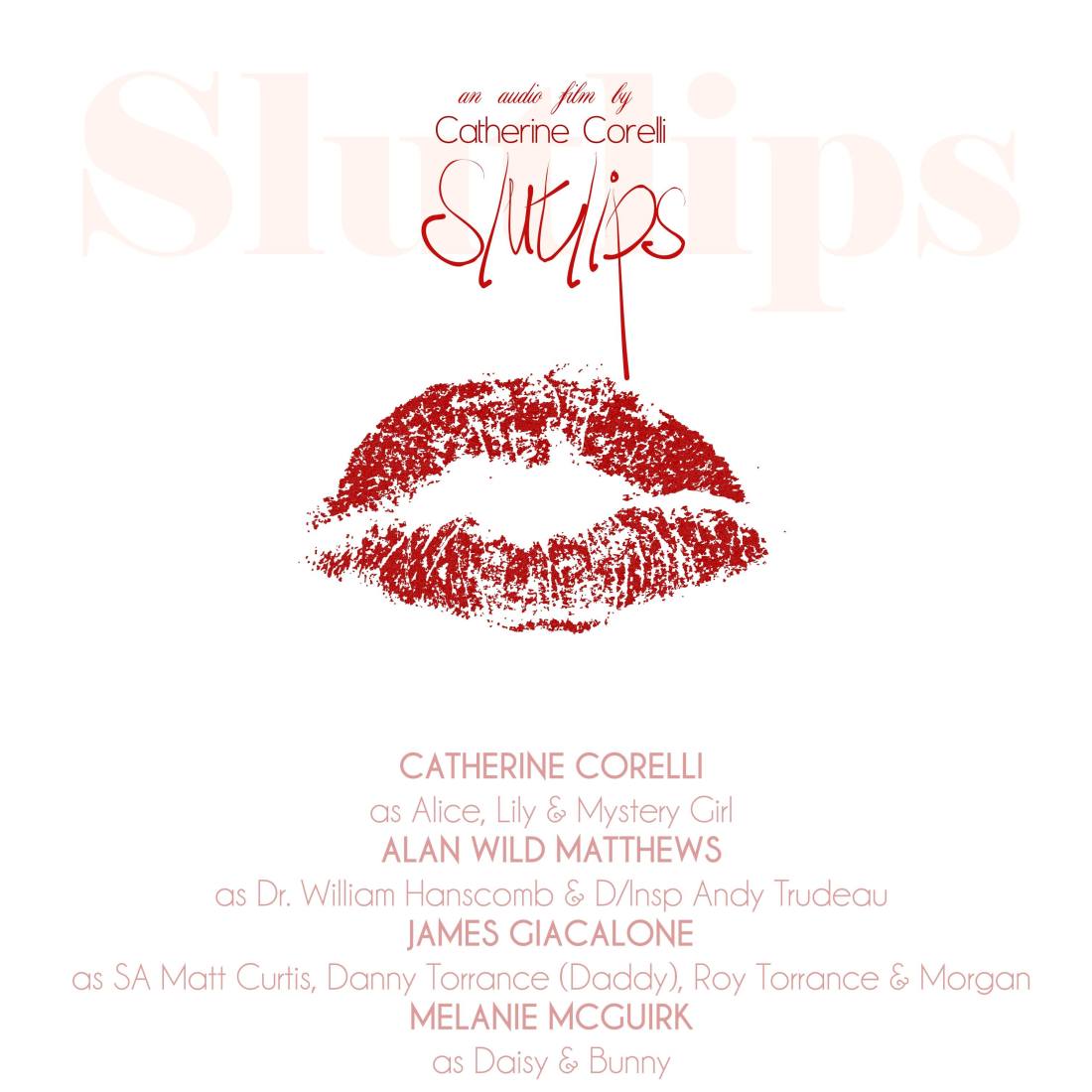
[NOTE: this is the concluding chapter (click here for the first, here for the second, here for the third, here for the fourth, here for the fifth, here for the sixth, here for the seventh, and here for the eighth) of a psychological horror story based on an audio film of the same name by my musician friend, Cat Corelli, something I wrote up an analysis for; you can learn more about that here. Before you begin reading, though, TRIGGER WARNING: as a horror story, this one has some graphic content of a violent and sexual nature; so if you’re one of my readers with C-PTSD or other forms of psychological trauma, you may want to skip this one. As for you braver souls, though, read on…]
The following are excerpts from the True Dakotan on the crime bust of the Donald and Wanda Terence child pornography ring.
“The shocking discovery of the dismembered body parts of children and teens floating in the waters of the Pacific Ocean, just off the Californian coast, was quickly traced to Wessington Springs residents Donald and Wanda Terence, the husband and wife producers of a series of child pornography videos, either emailed to and uploaded by their customers, or sent to them as DVDs.”…
“Inspector Jeffery Trudeau and Agent Kevin Curtis, who investigated and made the bust, commented: ‘These two have to be two of the dumbest and most depraved perps we’ve ever busted,’ Curtis said. ‘What made them think dumping off the bodies in California waters wouldn’t be traced back to South Dakota? Frankly, I’d say they’re as idiotic as they are sickos!’
“‘Similarly, the kiddie porn films they made are as tacky and tasteless as they are disgusting,’ Trudeau added, holding a DVD of Salon Kittens, meant as a parody of Tinto Brass’s Salon Kitty. ‘In this video, Donald Terence, a second-rate actor going by the stage name of Daniel Torrance, plays a Nazi who enjoys the charms of a number of male and female child and teen prostitutes in Salon Kitty, one of them played by none other than the man’s teenage daughter, Lily, dressed in a dirndl and going by the stage name of Alice Wunderbar! How sickening!’…”
“‘We asked the husband and wife why they made their videos as parodies of famous films,’ Curtis said. ‘They explained that they meant the videos to be considered higher art–can you believe that?’…”
“‘When Donald explained that he chose his stage name out of a wish to be identified with the psychic boy in the movie The Shining,’ Trudeau said, ‘I told him he should have chosen the first name Jack, instead.’
“‘We asked Wanda how she could do what she allowed to be done to those kids, and to her own daughter,’ Curtis said. ‘She said that she herself had been abused as a child, as had Donald and his late brother, Ray Terence. She said that the world is a monstrous place: either you’re a monster to others, or they’re monsters to you. I can’t even…’
“‘They obviously have no shame, yet they pretend to,’ Trudeau said. ‘I asked Donald why he drove so far to get rid of the bodies, since it did him no good. He said dully that he couldn’t risk his reputation. I told him that he has just cemented his reputation.'”
[NOTE: this is the eighth chapter (click here for the first, here for the second, here for the third, here for the fourth, here for the fifth, here for the sixth, and here for the seventh) of a psychological horror story based on an audio film of the same name by my musician friend, Cat Corelli, something I wrote up an analysis for; you can learn more about that here. Before you begin reading, though, TRIGGER WARNING: as a horror story, this one has some graphic content of a violent and sexual nature; so if you’re one of my readers with C-PTSD or other forms of psychological trauma, you may want to skip this one. As for you braver souls, though, read on…]
Lily’s head was submerged in the water now. She panicked, trying to swim up to the surface and bring her head above water…but now, there wasn’t even a surface.
The heavy rain above was no more: everywhere was just an underwater universe.
She held her breath for as long as she could.
Daisy? she wondered. Where are you? I need a mirror to look into.
Don’t be afraid, Daisy’s voice said in her mind. Just let go.
Just let go? Lily thought. Don’t be afraid? How can I? I need a mirror, to remind me I’m still here!
She saw dismembered body parts floating past her, including Daisy’s decapitated head, which stayed there for the moment. Blood from the cut neck was mixing with the water.
How can I not be afraid, Daisy? Lily wanted to scream out. I’m gonna die!
“You’re already dead, remember?” Daisy’s head said, the mouth opening and closing as if still attached to her body.
I don’t feel dead. This feels too real!
“That’s because you’re hanging on to the illusion of life,” the head said, bubbles flowing out of the mouth, the words as audible as if they were travelling through air.
A mirror! I need to see Alice’s face in the reflection!
“I told you,” the head said. “You aren’t Alice. You never were Alice. There is no Alice. There never was an Alice. She was a lie, an illusion. You are Lily, and you’re already dead. You must accept that. Let go of the physical world, and you’ll be free. You’ll be at peace. Now, breathe in the water. Don’t be afraid.”
I’d might as well breathe it in. I’m not getting out of here alive.
Lily breathed in the water, took it all the way through her nostrils and down into her lungs…but she didn’t pass out.
What the fuck? she wondered, her eyes and mouth widening.
A strange, vibrating feeling took over her body. It didn’t hurt, but she felt her body begin to merge with the water.
It began with the outer edges of her body: they seemed to be melting away and becoming one with the surrounding water!
Oh, my God! she thought. I’m disintegrating! I need a mirror!
You don’t need a mirror, Daisy’s voice said, for the head was gone, as were all the other floating body parts. Don’t be afraid. Just let go.
Lily’s leg came off, the one her father told her she didn’t have. It floated away in the direction of the other body parts. The further away it went, the more it melted and became one with the water.
Her other leg came off and floated away in the same way, as did her arms. Then her neck melted and became one with the water, severing her head from her torso. As they floated away, they too melted and became water.
Lily’s consciousness was still intact, but it was merging with the collective unconscious surrounding her. Visions of memories flashed before her eyes, images of Donald and Ray raping either her or other children while Wanda filmed the disgusting spectacle.
Don’t be afraid? Lily wondered. How can I not be afraid as I re-experience my trauma?
The only way you can heal it is to feel it, Daisy’s voice echoed in Lily’s mind’s ear. It’s OK. You’ll be OK. We have to get you through this purgatory before you can have peace.
Lily saw her mother watching videos on TV, videos of movies like Mulholland Drive, Pulp Fiction, The Shining, etc. Lily heard the voices of her father and uncle: “We’re the sons of God, mating with the daughters of men. Your sin brought about the Flood.”
She saw stacks of kiddie porn DVDs with their stage names–Danny and Roy Torrance, and Alice–on the labels. The names of the movies, typically tasteless parodies of literary or film classics, read, Great Flood of Come, Alice Through the Fucking Ass, Muff-hole and Drive, Pump Fucktion, Ride ‘Er, Cowboy, The Shagging, and Norman Frigman. Lily was thankful she saw only the names of the awful movies, and not any scenes in them.
The visions grew darker and darker, until she saw waves of black, then a spiral of black. She went down that dark spiral: it was like falling down a giant black anus…going down the rabbit hole.
Now, she saw only black. Infinite, indistinct black.
She was nothing.
She was no more.
…and just when she’d acquiesced to her disintegration, there was a tiny dot of white, a light that grew into a larger and larger white circle.
Then the white light enveloped her.
Oneness.
Connection with the All.
Rest.
To sleep.
No more.
Invasion of the Body Snatchers is the name of the first two of four films based on Jack Finney‘s 1955 science fiction novel The Body Snatchers. Though the writers of the novel and the first film vehemently denied any allegory or political subtext surrounding the “pod people,” one finds it irresistible to read such meaning into the story; for however one may insist that the story was just meant as an entertaining thriller, there are subtle, if unconsciously given, meanings to be gleaned from it.
According to the Wikipedia article on the novel (sadly, without a source to verify it, so I have to take it on faith), a “pod person” tells a human that the latter’s race is no less parasitic than the former, what with man’s using up of resources, wiping out indigenous populations, and destroying ecosystems in order to survive. Assuming Wikipedia is accurately referencing the novel, is this not a clear political subtext?
Then, in the 1956 movie, Dr. Miles Bennell says, “In my practice, I’ve seen how people have allowed their humanity to drain away. Only it happened slowly instead of all at once. They didn’t seem to mind… All of us — a little bit — we harden our hearts, grow callous. Only when we have to fight to stay human do we realize how precious it is to us, how dear.” Such a line doesn’t seem necessary in a mere thriller without any sense of, at least some, social commentary.
Here are some more quotes.
From the novel:
“I saw my father’s wooden filing cabinet, his framed diplomas stacked on top of it, just as they’d been brought from his office. In that cabinet lay records of the colds, cut fingers, cancers, broken bones, mumps, diphtheria, births and deaths of a large part of Mill Valley for over two generations. Half the patients listed in those files were dead now, the wounds and tissue my father had treated only dust.”
“Why do you breathe, eat, sleep, make love, and reproduce your kind? Because it’s your function, your reason for being. There’s no other reason, and none needed.”
“If we believe that we are just animals, without immortal souls, we are already but one step removed from pod people.”
The 1956 film:
“It started — for me, it started — last Thursday, in response to an urgent message from my nurse, I hurried home from a medical convention I’d been attending. At first glance, everything looked the same. It wasn’t. Something evil had taken possession of the town.” –Dr. Miles Bennell (voiceover)
“Sick people who couldn’t wait to see me, then suddenly were perfectly all right. A boy who said his mother wasn’t his mother. A woman who said her uncle wasn’t her uncle.” –Bennell (voiceover)
“Keep your eyes a little wide and blank. Show no interest or excitement.” –Bennell
“Look, you fools, you’re in danger! Can’t you see?! They’re after you! They’re after all of us! Our wives, our children, everyone! THEY’RE HERE, ALREADY! YOU’RE NEXT!” –Bennell
“I want to love and be loved. I want your children. I don’t want a world without love or grief or beauty. I’d rather die.” –Becky Driscoll
“It’s like the first impression that’s stamped on a coin. It isn’t finished.” –Jack Belicec, describing a body he’s found.
“A strange neurosis, evidently contagious, an epidemic mass hysteria. In two weeks, it spread all over town.” –Dr. Kauffman
“You say it as if it were terrible. Believe me, it isn’t. You’ve been in love before. It didn’t last. It never does. Love. Desire. Ambition. Faith. Without them, life is so simple, believe me.” –Kauffman, as a pod man
…
Ambulance Driver: We had to dig him out from under the most peculiar things I ever saw.
Dr. Hill: What things?
Ambulance Driver: Well, I don’t know what they are, I never saw them before. They looked like great big seed pods.
Dr. Hill: Where was the truck coming from?
Ambulance Driver: Santa Mira.
The 1978 film:
Elizabeth: I have seen these flowers all over. They are growing like parasites on other plants. All of a sudden. Where are they coming from?
Nancy: Outer space?
Jack: What are you talking about? A space flower?
Nancy: Well, why not a space flower? Why do we always expect metal ships?
Jack: I’ve NEVER expected metal ships.
…
Elizabeth: I hate you.
Dr. Kibner (Leonard Nimoy), as a pod man: We don’t hate you – there’s no need for hate now. Or love.
Matthew: There are people who will fight you, David.
Elizabeth: Will stop you.
Dr. Kibner: In an hour you won’t want them to. Don’t be trapped by old concepts, Matthew, you’re evolving into a new life form.
…
“We came here from a dying world. We drift through the universe, from planet to planet, pushed on by the solar winds. We adapt and we survive. The function of life is survival.” –Kibner, as a pod man
“It’s like there’s some kind of a hallucinatory flu going around. People seem to get over it in a day or two. All I can do is treat the symptoms.” –Kibner
Now, as far as political interpretations go, liberals see the 1956 film as an allegory about the excesses of McCarthyism and conformity to American values during the Cold War. Continuing with the Cold War theme, conservatives see an allegory on Stalinism.
As for the 1978 film, which I’ll be focusing on the most, I’ll examine the story from my more decidedly left-wing stance, as such a position, to my knowledge, seems lacking in any interpretation of the films.
The anti-McCarthyist and anti-communist interpretations of the 1950s were fitting, what with the realities of the Cold War and the Red Scare. It is also fitting that the novel has a happy (if unconvincing) ending, and the 1956 film has a hopeful ending, with the defeat of McCarthyism, the rise of the radical 60s as a cure for the bland conformity of the 50s, and (from the capitalist class’s perspective) the substantial end of communism by the early 1990s.
The 1978 film, however, has not only a pessimistic but outright frightening ending, which I find fitting for the political allegory I propose: the metastasizing of neoliberalism, which substantively began around the time of the film’s release, and which has continued unabated to this day.
This idea of metastasizing–of growth, spreading (as of a disease) is important when we consider an important motif, developed the most in the 1978 movie: pods–plants–flowers…Just as seeds spread out over the land, and themselves grow into plants; just as a contagion spreads and infects more and more people–so do pods replace more and more humans with unfeeling automatons, comparable to Winnicott‘s False Self.
How can this idea of a contagion be related to our world, especially since the late 1970s? I normally find little inspiration in Richard Dawkins (i.e., his anti-Muslim attitude), but he had one good idea–how ideas spread in the form of memes.
One of the memes that started spreading from around the mid-twentieth century was the ‘philosophy‘ of Ayn Rand. Government involvement in the economy should be minimized, or at any rate only used in the service of capitalism. ‘Rational’ self-interest has a way of benefitting everyone. The individual will outweighs collective needs in importance. (The individual would never, ever subordinate the needs of the many, causing them to conform to the dictates of the individuals in the ruling class! No, no!)
Rand’s ideas, combined with those of Murray Rothbard, Ludwig von Mises, and Friedrich Hayek, resulted in a hijacking of libertarian thinking, changing an originally left-wing ideology into a right-wing one. Pods, all four of them.
Doctors and departments of health do all they can to stop the spread of contagions, and the Doctors Bennell of both films (Miles Bennell, played by Kevin McCarthy in the 1956 film; and Matthew Bennell, played by Donald Sutherland in the 1978 film) do all they can to resist the pods.
One of the ill effects of ‘small government’ right-libertarian policies is cuts to healthcare coverage, with a risk of thousands of poor people acquiescing to sickness and death annually. Single-payer healthcare is just something the rich don’t want to pay for.
As a health inspector doing a thankless job searching for health violations in a fancy restaurant, Matthew finds “a rat turd” in a pot; the owner of the restaurant insists it’s just a caper. Matthew suggests he eat the “caper,” which of course, he won’t.
As a capitalist, the owner hates Matthew, a man working for the government in the Department of Health in San Francisco; the restaurant employees, dependent on the restaurant’s survival and without a sense of class consciousness, also hate the health inspector, showing their hate by smashing the windshield of his car.
Those promoting health go against capitalism, forcing regulations on bosses, which limit their ability to make profits; those supporting capitalism, including workers without class-consciousness (i.e., workers who are asleep) tolerate the spread of germs…of pods…
Recall that the pods come from a dying alien world, adapting to Earth and taking over for the sake of their survival. This, an invasion, is akin to the capitalist form of imperialism: the tendency of the rate of profit to fall endangers the survival of the capitalist, and when markets dry up in his native country (the “dying world“), he must seek out new markets in other countries, steal their resources to enrich himself, and either take over or kill off the locals, as the pods do on Earth.
The pods “adapt and [they] survive”…as does capitalism: ‘Capital is not a fixed magnitude! Always remember this, and appreciate that there is a great deal of flexibility and fluidity in the system. The left opposition to capitalism has too often underestimated this. If capitalists cannot accumulate this way, then they will do it another way. If they cannot use science and technology to their own advantage, they will raid nature or give recipes to the working class. There are innumerable strategies open to them, and they have a record of sophistication in their use. Capitalism may be monstrous, but it is not a rigid monster. Oppositional movements ignore its capacity for adaptation, flexibility and fluidity at their peril. Capital is not a thing, but a process. It is continually in motion, even as it itself internalizes the regulative principle of “accumulation for the sake of accumulation, production for the sake of production.”’ –David Harvey, A Companion to Marx’s Capital, page 262
A well-known ill effect of capitalism is alienation, not just that of workers, but of society and of one’s species-essence. This alienation is vivid, even literal, in this story. People are made alien: alien to each other, and alien to themselves.
The pod replicas’ creation causes the disintegration of the original humans. On the other side of the coin, Miles and Matthew destroy the pods about to replicate them. As we can see, the feeling of alienation is mutual.
Little Jimmy Grimaldi, in the 1956 film, is crying because his mother isn’t really her; in the 1978 film, Elizabeth Driscoll (Brooke Adams) complains that her boyfriend (Art Hindle) is no longer himself. Characters constantly complain about imposters at the beginning of both movies…then many of the original complainers stop complaining, because they’ve become pods themselves who, like capitalists, deny any evil intent.
By a strange (dialectical?) irony, it’s plants in the 1978 film that destroy humanity, instead of vice versa, as in real life; or, more accurately, the invasion of alien imperialism poisons the environment, which in turn destroys humanity–like Monsanto, Agent Orange, or land mines; then there’s what Jair Bolsonaro wants to do to the Amazon rainforest…
So with this invasion, instead of people bonding together in love, they exist merely to survive–just like the ‘sleeping’ proletariat (i.e., those without class consciousness); and as those ‘woke’ proletarians who fight to end this scourge of imperialism are hunted down and destroyed, so are Miles and Becky Driscoll (Dana Wynter), or Matthew and Elizabeth. Furthermore, they are branded as crazy (as how left-leaning people may be labelled ‘nut-bars,’), extreme, or conspiracy theorists…how familiar. Paranoia about neoliberalism is as justified as it is about pod people.
Recall Kevin McCarthy, both as Miles and as the ‘running man’ in the 1978 movie, frantically yelling to all the drivers passing by, “They’re coming!” and “You’re next!” In the first film, drivers shout at him to “Get outta here!,” and call him “crazy,” “idiot,” and “drunk”; in the second, Matthew and Elizabeth lock their car doors. This is the average person’s response to such desperate warnings.
When the ‘running man’ is hit by a car and killed, pod people surround the body and stare at it with unfeeling faces, yet they’re satisfied that the threat to their ascending hegemony is removed. This is like the ruling class’s response to warnings about the growth of neoliberalism.
Outwardly as replicas of the humans whose bodies they’ve ‘snatched,’ the pods have all their memories, and can even mimic emotion on a superficial level, causing us often not to know for sure when the switch to pods has happened. This is the case with Nimoy’s character, Dr. David Kibner, who, a third to halfway into the movie, still shows some emotion, but has no sympathy for Matthew’s fears about the pods at all. As a celebrity pop-psychologist, pre-pod Kibner represents the capitalist tendency to exploit people’s emotional problems by selling them happiness in the form of self-help books, so the blurred line between him as human and as pod makes sense.
So many of the ‘left’ are pods, people who are publicly known as progressives, but who are actually, directly or indirectly, helping the neoliberal agenda. George Soros is one: he helped with the demise of the USSR, yet he pretends to be concerned with the excesses of contemporary capitalism. Slavoj Zižek critiques capitalism, but doesn’t offer any real solutions. I’ve written about how the Clintons, in ‘left-leaning’ guise, have caused enormous damage to the lives of ordinary people, as have Obama and Tony Blair. Justin Trudeau is doing this in Canada, though he’s seen as ‘progressive.’ Pods, all of them.
Neocons like Christopher Hitchens and Richard Dawkins have pretended to be progressives, too, in their opposition to religion; yet they were and are content to let imperialism in the Middle East carry on unabated. Pods, pods, and more pods.
The memes that people such as these have spread–“socialism doesn’t work,” “communism killed 100 million people,” “the freer the markets, the freer the people,” “TINA,” ‘only the state is the enemy of the people,’ etc.–continue to infect the entire world in a pandemic. No matter how loudly we yell to warn people about neoliberalism and growing fascism, we aren’t listened to…or we’re struck down and killed, like Kevin McCarthy’s frantic runner in the street, in the 1978 film.
Matthew, Elizabeth, and Nancy Bellicec (Veronica Cartwright) learn that they can fool the pods by hiding their emotions whenever they have to walk among them. This is like how crypto-communists have had to hide their sympathies about the Comintern…yet it seems left-leaning George Orwell turned into a pod when he helped the IRD compile a list of those people.
Becky, or Elizabeth, can hide her humanity for only so long before something shocks her–like a dog hit by a car, or a busker sleeping too close to his dog, causing a pod to merge the man’s head with the dog’s body.
Note how the pods don’t care if an animal is killed, or if a dog-man monster is created, symbolic of the bestial nature man is reduced to by neoliberalism. Similarly, the pods don’t bat an eye, or make that ugly shriek, if a pod is walking about naked outside…but they will react if a human is still among them, as chagrined Nancy learns.
I’ve argued elsewhere that–citing Shakespeare’s use of the word in Hamlet—naked can be used to mean ‘without any possessions or means.’ Pod-Elizabeth’s nakedness can thus be seen to represent those deprived of basic necessities by neoliberalism. Many of the deprived, like her, would rather rat out (or ‘squeal out’) those unlike them, as working-class supporters of fascism do, instead of banding together with other workers in solidarity against the ruling class. Neoliberal capitalists, like the pods, don’t care about the deprivation of the naked, such as those suffering in Yemen or Palestine.
The pods are spread by boat from San Francisco (or by truck from fictional Santa Mira in the 1956 movie) to the rest of the world, just as the contagion of neoliberalism spread from Austria to the US and UK, and then to the rest of the world.
And how do humans turn into pods? By falling asleep. What a powerful metaphor for how one’s liberty…one’s very humanity…dies. Only through endless vigilance–indefatigable class consciousness–can we prevent our dehumanization, our mutual alienation.
So, to recap, the contagion of the pods can be seen to represent the spread of capitalist imperialism, in its neoliberal form, through tax cuts to the rich, deregulation, and pro-capitalist/anti-socialist propaganda in the form of memes spread in a market-friendly, corporate media. We lose our humanity to wage slavery, with soulless False Selves that are alienated from each other.
We’ve allowed this to happen because we’ve lost our sense of awareness–we’ve fallen asleep. What had been a thriller with a happy ending–due to the tireless efforts of humanity to repel the pod people in Finney’s novel–grew into an increasingly pessimistic story in these two movies (even the 1956 film originally had a dark ending–that is, before the studio wanted the framing story with the psychiatrist [Dr. Hill, played by Whit Bissell] listening to Miles tell his story, to add a hopeful ending).
But such is the nature of a contagion: to cause a problem to be more and more desperate. Such has been the metastasizing of neoliberalism, to bring the problem of capitalist imperialism from a formidable struggle–in which at least there had been hope of victory–to one in which defeat seems almost a foregone conclusion.
In the 1978 movie, we go from a vigorous Department of Health, with human Elizabeth and Matthew aggressively trying to find out where the flowers and pods came from, to one with pod-Elizabeth and pod-Matthew sitting around lazily at their desks, doing nothing of importance. No one is interested in healing the sick, or stopping the spread of disease. The 1956 film would have ended with Miles shouting his hysterical warning to the drivers on the highway, and perhaps–after the film’s end–hit and killed by a car, as he is in the near-sequel 1978 movie…a dire prognosis for the world.
Can we, our bodies snatched by neoliberalism, find a way back to Finney’s ending?
[NOTE: this is the seventh chapter (click here for the first, here for the second, here for the third, here for the fourth, here for the fifth, and here for the sixth) of a psychological horror story based on an audio film of the same name by my musician friend, Cat Corelli, something I wrote up an analysis for; you can learn more about that here. Before you begin reading, though, TRIGGER WARNING: as a horror story, this one has some graphic content of a violent and sexual nature; so if you’re one of my readers with C-PTSD or other forms of psychological trauma, you may want to skip this one. As for you braver souls, though, read on…]
Alice woke up…or did she?
She found herself in the hotel room again. The radio was off.
I don’t remember turning off the radio last time, she thought.
She got up, saw herself in the mirror, and the waves of her ego’s uncertainty flattened–somewhat–when she saw her image in the reflection. She sighed in relief at it.
She turned on the radio. Agent Curtis and Inspector Trudeau were chatting…again, why on a radio program, instead of in a crime lab, or something?
“It seems to be a dead end, Agent,” Trudeau said.
“I wouldn’t be too sure about that,” Curtis said. “I’ve got a feeling the killer will show up again.”
“Dropping bodies,” Trudeau said.
Dropping bodies, she thought. Bodies, dropping down rabbit holes, dropping into seas of dismembered body parts, dropping into black, downward spirals…
“Still, we’ll get out of this dead end only if there is another killing,” Trudeau said.
“There will be,” Curtis said. “Killers always drop bodies. That’s what they do.”
“But what if the killer isn’t quite a killer?” Trudeau asked.
Yeah! she thought. Maybe I never killed anyone. Maybe the drugs made me hallucinate the whole thing.
“Interesting theory, Inspector,” Curtis said.
“Right,” Trudeau said. “Very strange world.”
“Whew,” she sighed. “I’m safe.”
“.ecilA, pu ekaW,” a familiar female voice said.
“What?” Alice said with a jolt going through her body. “Am I still dreaming?”
“.ecilA er’uoy kniht llits uoY”
“But I am, aren’t I?” Alice’s vision blurred, then faded. Her body began dropping into that black spiral again.
“.t’nera uoy ,oN”
As those black coils spun around her dropping body, she saw a hole in the left side, a kind of window looking into a mental hospital. She saw Daniel Torrance, strapped to a bed, receiving a sedative from a nurse. He was struggling to break free of his bonds. He was screaming.
“Stop it!” he screamed in his faux German accent. “Stop it!” His body switched back and forth between his and Goebbels’. “Please, stop it! Please!” Then he slumped down on the bed.
“The sedative doesn’t work that fast,” the nurse said to a psychiatrist standing next to her. “Could he have had a heart attack?”
“Could be,” the psychiatrist said. The hole in the side of the spiral closed up.
Alice smiled as she continued falling. Daddy, she thought. Daddy, you bastard, I’m through.
“.thgir lla, hguorht er’uoy ,hO”
Lily suddenly woke up, crying. She was lying on a raft with endless water all around her, as far as the eye could see…no land in sight. The waves moved in gentle rises and falls. A fog hovered over her, greying the sky everywhere. She was in her pyjamas, with a blanket over her.
“I’m sorry,” she sobbed. “I…”
“What is it, Lily?” a familiar female voice echoed from the depths of the fog.
“I thought sleep would do it,” Lily said. “To die, to sleep…would help me escape.”
“What’s wrong?” asked the voice.
“I don’t know who I am.”
“You’re Lily.”
“No, I’m not. I’m Alice. I’ll show you. It’s in my purse…wait, where is it?” She looked down at her body, recognizing that of a flat-chested girl instead of that of curvy Alice. “Why…why am I in Lily’s body?”
“Because you are Lily.”
“What about Alice?” Lily looked at herself in the water. She saw Lily’s face distorted in the moving waves.
“There was no Alice. There never was an Alice. She was just a role you played. A false self. You’d played that part for so many years, you forgot it was just a role. You thought you liked being a ‘slut’…to protect yourself from the pain. But you were always Lily.”
“I don’t understand.”
“Yes, you do, Lily. Deep, deep down inside. You’ve just repressed it for so long. But here’s the thing: you can’t keep the truth away, no matter how hard you try. All of your attempts to present yourself as a ‘metal chick’ and a ‘slut’ are just armour to keep the truth from you.”
“And what is this ‘truth’?”
“‘Alice’ is a role your parents and uncle forced you to play in the series of child pornography videos they were making and selling.”
Lily’s eyes and mouth widened. She shuddered.
“You mean, my…mom…made me do it, too? I don’t remember her at all.” She got dizzy.
“I know,” the Mystery Girl said. “Her betrayal of you was so painful, you had to blot all memory of her out of your mind. The only trace of her remaining was a likeness to the Queen of Hearts in Alice’s Adventures in Wonderland.”
Lily broke down and cried. “Oh, my God!”
“Your tormentors all played roles, too, in those awful movies,” the Mystery Girl said. “Your father sometimes dressed up in lederhosen with you in a dirndl, sometimes he wore a Nazi uniform while doing a bad imitation of a German accent, sometimes he dressed as a Protestant minister while blaming you for tempting him into sin. Your Uncle Ray sometimes wore a cowboy hat and did an even worse imitation of a southern accent; sometimes he wore blackface and pretended he was Morgan Freeman. It would have been laughable, had it not been so horrifying, what they did to all of us.”
“To all of us?” Lily sobbed. “You mean, you were a part of it?”
“Well, yes and no.”
“Who are you?”
“I’m Daisy, or I used to be Daisy, the girl you saved. I’m her spirit.”
“Wait; if I ‘saved’ you, why are you a ghost?”
“Well, you saved me and you didn’t.”
“What do you mean?”
“You saved me from being used in their porno films, but they murdered me. Still, you had me die a virgin rather than raped, so that’s saving me enough, as I see it.”
“Wait…it’s all coming back to me…”
A flurry of memories flashed by Lily’s eyes: Donald and Ray Terence (for those were their real names) making teenage Lily get tattoos, dye her hair a devil red, and wear ‘metal chick’ clothes to make her look ‘Satanic’ in the porn films; Donald and Ray becoming ‘born again Christians,’ but keeping their underage porn business alive, as Donald’s wife, Wanda, insisted on keeping the money rolling in from their pervert clients; the ‘born again Christians’ reconciling their would-be faith to their crimes by making scapegoats of Lily and the other boys and girls they raped as Wanda filmed it on her smartphone.
“I remember now,” Lily said with a waterfall of tears soaking her cheeks. “Mommy found you chatting with Bunny about Stan in a café. She said you looked like ‘actress material.’ I know because I was there. Because you and I were classmates at school, I wanted to warn you and stop her, but I couldn’t–they had that much power over me.
“I gave Uncle Roy–er, Ray an overdose of sleeping pills in his bourbon one night several years ago; I wrote a suicide note, imitating his handwriting (for I’d practiced writing in his hand many times on scrap paper, then hid the drafts, for I didn’t dare throw them out; Mommy watched everything going in and out of the house like a hawk).
“In my wish to save your innocence, I now decided to use the same fake suicide plan on Daddy…but Mom found all my drafts, and realized what I’d done and was planning.”
“Yes,” Daisy’s ghost said. “Wanda found all those scraps of paper, with imitations of Donald’s as well as Ray’s handwriting. Your mom and dad were so infuriated, they went wild with thoughtless rage, and got a murderous revenge on you.”
“They gave me a choice: let Daddy rape you on camera, or he’d kill both of us. I figured him raping you was like murder, as I’d died every time he and Uncle Ray raped me,…”
“You chose death for us, your mom shouted, “Off with their heads!”, and we were killed, our bodies dismembered, driven all the way from South Dakota to the Oregon and California coasts, then thrown into the ocean, with the body parts of a few other boy and girl victims.”
“Yes,” Lily sighed, noting a leak in her raft. It started to rain. “I can sense the whole thing now, as if I’d witnessed it in life…I’m in the spirit world with you, aren’t I?”
“Of course,” Daisy said. “You’ve been here the whole time, since your dream about going from your ‘apartment’ to the dance club. Here, in the dreamland of the collective unconscious, where ghosts have access to all the knowledge–however garbled it may be shown to us–of the world, including knowing what happened to us after we were killed.”
“No wonder everything I’ve seen is so fucked up,” Lily said. “It’s all been like a dream.”
“Yeah, and I have to comment frankly on your parents,” Daisy said. “Dumping our bodies in the Pacific Ocean was such a stupid thing to do. The police could easily trace the murders to your parents. In fact, Donald and Wanda are being arrested as we speak.”
“Daddy always was a moron,” Lily said. Her body began dropping slowly into the water. The rain was coming down harder. “So, I’m dead?”
“Yes, Lily. You have to face the facts. It’s time to let go. Let go of your ego, and your suffering will end.”
“I’m afraid.” She was up to her waist in water. The rain was coming down so heavily, there seemed to be more rain than air.
“Don’t be afraid, Lily. The pain will go away as soon as you fully let go of your desire to be alive. Let go, be one with everything, and you’ll finally have peace.”
The water was approaching her shoulders now.
[NOTE: this is the sixth chapter (click here for the first, here for the second, here for the third, here for the fourth, and here for the fifth) of a psychological horror story based on an audio film of the same name by my musician friend, Cat Corelli, something I wrote up an analysis for; you can learn more about that here. Before you begin reading, though, TRIGGER WARNING: as a horror story, this one has some graphic content of a violent and sexual nature; so if you’re one of my readers with C-PTSD or other forms of psychological trauma, you may want to skip this one. As for you braver souls, though, read on…]
[Second note: all excerpts of song lyrics quoted here are by Cat Corelli {with a few minor modifications of mine}. Click on the link above to my ‘Analysis of Slutlips’ to find links to the music and lyrics.]
“Off with her head!” was the next thing Alice heard ringing in her ears. Now she went up the rabbit hole, as it were, and it seemed she found herself in the hotel room again.
The radio was on. Hadn’t she turned it off? She couldn’t remember.
She felt those waves of an unsure ego all around her and going through her. She got up and saw herself in the mirror on the dresser drawer. Alice! That felt better.
She listened to the men talking on the radio. Inspector Trudeau was talking to a psychiatrist about the case.
“Hi, Inspector Trudeau?” the psychiatrist said, it seemed, on one end of the telephone, for she never heard the voice of the inspector.
How odd, Alice thought, hearing one side of a phone call on a radio broadcast. Am I high?
“I’ve read about his murder in the papers…Yes. that murder. Ray Terence…I’m his brother’s therapist. His name is Donald Terence…His is an odd case, indeed. Since his brother Ray got killed, he’s been hallucinating more and more…No, sir. We have it all under strict control…Yes, I will call you back later.”
I must have heard the names wrong, she thought. Surely the shrink said, ‘Daniel Torrance’ and ‘Roy Torrance.’ I’m still fucked up from last night’s partying. Have I been dreaming all this time? Surely the e I took in the bar has worn off by now.
She smiled at the thought of Roy being dead, and of her father having had what must have been a complete mental breakdown.
Good, she thought. Karma is finally fucking Daddy back.
She slumped down onto the floor, those mental waves of hers returned, and she went into another oceanic reverie.
The voice of Inspector Trudeau was now heard. “Fingerprints and saliva were found on the victim’s body,” he said. “We have a match on them: Lilian Alice Torrance committed the murder. We have our men searching for her right now, as we speak. We have a feeling that the killer will strike again.”
“Oh, fuck me!” she gasped. I can’t be Alice anymore, she thought. But I can’t be Lily, either. I can’t endure the memory of any more of those rapes. Who can I be, to be safe?
Daisy!
The current of the sea of Alice’s psyche brought Daisy’s head up to her. Her consciousness entered it.
Daisy, nineteen, was now in a noisy bar. People all around her were impatient to hear a band perform. One drunk young woman, Laura, was especially loud in her complaints.
“C’mon!” she shouted in slurred syllables. “Let’s hear some fuckin’ music!”
Laura kept shouting and staggering around near the stage. It was hurting Daisy’s ears.
“C’mon, Laura!” she said. “Shut your damn pie-hole!”
Finally, Laura was quiet, but not because of Daisy; because the band finally came onstage. Fronting the band was none other than…Alice.
Through Daisy’s eyes, Alice saw herself begin performing.
Relaxing now as the beat pounded away, Daisy mumbled to herself, “Santa’s in town. Bunny’s in the Un…” she hiccuped “…Underworld…Alice… in Wonderland…” she giggled, then looked around the bar. “Where’s Stan?”
The lyrics of each song flew by Daisy’s ears in a flurry:
“Yo! My name is Alice, and I remember everything…It’s all a tape recording…It’s all hidden in my head in a memory/Kinda creepy stuff there but yet it’s me/It’s me in this. It’s this debris…There is no band, but the monsters are real…It’s all beneath my skin, it’s tightening within…And the pines stood tall, to watch me fall…I own the night…And what I don’t own, I take…”
Daisy took a pill, then Alice–in Daisy’s consciousness–felt herself growing…to the size of a giant. In Daisy’s body, she got on the dance floor and danced in the crowd of the band’s worshippers. Her feet crushed the other dancers, who didn’t seem to notice their deaths.
The last song of the band’s set was one called “Churchpunk.”
As the pill kicked in, Daisy could hear church bells, as if in the distance. She wasn’t sure if it was a sound from the band’s synthesizer player, or if it was the drugs she’d taken. Alice, through Daisy’s ears, heard herself singing:
“Oh my fucking god!
And now he’s gonna drag this little girl into church
And blame it on her, blame it on her
‘cuz she’s the source of all original sin, yeah!
It’s all fucked up in your head, man
The top is the bottom in your head, man
What a religious fanatic!
Perverted tactic
A dickhead with no balls to admit
He’s the only one and motherfucking guilty. Shit!”
The drugs were enveloping Daisy like a thick fog. Through her ears, Alice could hear the voice of her father.
“Thou hast disobeyed thy father, Lily!” he shouted, in an absurdly melodramatic and fake imitation of King James Bible-era English, as he dragged her into the local church. “Great is thy sin and dark is thy evil trickery, for thou hast lured me into lechery and fled from Jesus! Therefore thou shouldst be punished and purified by fire and iron, and prayer. Here is my iron, Lily; with my iron rod, I shall spoil the child in a new way!” He unzipped his pants.
No matter how hard Alice tried, she couldn’t escape the terror of her memories.
Daisy collapsed on the floor, crushing everyone else in the bar. She lay there in a pool of collective blood. She took another pill, and shrank down to normal size.
She passed out.
When she opened her eyes, Daisy, now sixteen, was in a café with Bunny, one of her friends. Bunny had just finished chatting with someone on her cellphone, then after putting it away, she smiled at Daisy.
Daisy asked her, “So you’re like still with that other guy?”
“Nooo… You silly!” Bunny said. “He’s Stan’s friend.”
“Mmm…” Daisy hummed, with obvious admiration. “Stan’s sweet!”
Bunny laughed, then said, “Forget it, Daisy. He’s hanging out with that metal chick.”
“Oh, she looks creepy… She looks like Abaddon in Slipknot merch, all tattooed. Her name is Alice, isn’t it?”
“Yeah, yeah. She looks like a slut.” (These words stung Alice’s heart, and Daisy’s lack of empathy hurt even more.)
“Gross,” Daisy said with a sneer. “He’ll dump her.”
“You just have a thing for Stan,” Bunny said with a taunting smirk.
“No, no-no-no!” Daisy said with the exaggeration of reaction formation. Then she laughed when she saw how Bunny wasn’t buying any of her denials, and said, “OK, I do have a thing for him. But he’s not as cute as Cas.”
“Quit watching TV shows or you won’t be graduating this year.”
“But Cas is gorgeous!”
“He isn’t as hot as Dean!” Both of them laughed at that.
“We can’t go to the cabin this weekend,” Daisy said. “There’s this cop sneaking around. He’s been asking questions about that murder.”
“I fuckin’ hate cops!”
“Yeah. Cops are assholes.”
“Totes!” Bunny said with a grimace. “And creepy. I had a few near me once with roving hands when they were raiding a rave I was at five months ago. I’m sixteen, for fuck’s sake!”
The girls noticed a familiar face, one of their female classmates, approach their table with a frowning woman in her forties…the classmate’s mother, presumably.
Alice couldn’t bear it. Her head began spinning…
Alice felt that dark spiral twirling all around her. As she got more and more enveloped in the coiling black, she ruminated on the conversation.
They don’t understand, she thought. Daisy’s innocent. She was never sexually assaulted as I…Lily…was.
Alice was being pulled down into a whirlpool of reddish black. Submerged in it, she continued her rumination.
I cannot be Alice…I cannot be Lily…I cannot escape the rapes…I cannot escape being blamed for the rapes, for not resisting enough…but I couldn’t…I wasn’t physically strong enough…I was just a child…
I cannot be Daisy, either, because she’s too innocent, there’s no connection between us…I cannot be me…I cannot be anyone, and feel safe…Who can I be?…Who am I?
She looked down at herself. She had only one leg. The stump was pumping her blood out into the black water all around her. In her blood, she could see what looked like millions of dead fleas floating in it.
She looked closer. Those fleas all had the miniature heads of Daniel and Roy, pairs of them, cloned over and over again.
Those perverted vermin drifted away from her body…but still she felt no purification…no peace…no catharsis…
Then she heard a familiar voice: “…pu ekaw, ecilA, pu ekaW…”
[NOTE: this is the fifth chapter (click here for the first, here for the second, here for the third, and here for the fourth) of a psychological horror story based on an audio film of the same name by my musician friend, Cat Corelli, something I wrote up an analysis for; you can learn more about that here. Before you begin reading, though, TRIGGER WARNING: as a horror story, this one has some graphic content of a violent and sexual nature; so if you’re one of my readers with C-PTSD or other forms of psychological trauma, you may want to skip this one. As for you braver souls, though, read on…]
The next thing Alice (still in Lily’s consciousness and feeling herself having gone, so to speak, further and further down the rabbit hole) heard was an elegant piano waltz. The notes were punctuated with such crisp precision, one would think Glenn Gould had risen from the grave.
Still, there was an eerie sadness in the melody.
Lily opened her eyes and saw herself in the middle of a playground in that Austrian grassland, with the Alps not too far away. The skies were a cloudless blue. Her father was in lederhosen again. She, in the dirndl, was physically about nineteen years old, though in her cute pigtails and childlike manner, she psychologically seemed to be about six.
The piano player was a man in a cowboy hat, plaid collared shirt, and jeans. He seemed charming to her. She felt an urge to get up.
“Daddy, I wanna dance,” she said.
“Darling, sweetheart,” Danny said in his fake German accent. “You can’t be doing that.” He, back in the Nazi uniform, pushed her back onto her swing.
“But why, Daddy?”
“This dance requires both legs, darling.”
She looked down at herself, and saw only one leg. She began sobbing, then said, “But, who cares?”
“Well, people will be watching.”
“Tell them it’s OK,” she said, stopping her crying. “They have to understand it’s OK.”
“I can’t risk my reputation,” he said.
“Daddy, you’re a moron.”
He looked down at her with threatening eyes.
The piano man stopped playing, got up, and walked over to her and her father, who was now in lederhosen again.
“Hey, howdy, man,” the pianist said, in a southern accent so overdone it could only have been fake. “I’m Morgan.” He reached out his hand to shake her father’s.
“Howdy to you, Morgan,” her father said, shaking his hand and genuinely pleased to meet him. “Nice to meet you. I’m Dan. Daniel Torrance.”
“Nice to meet you, Danny Torrance. May I call you ‘Danny’? Like The Shining Danny?”
“What’s The Shining?” Torrance asked.
“Oh, forget it,” the would-be southerner said. “You don’t have it anyway.” He paused, looking down at Lily. “I want to ask you something, man.”
“Talk to me.”
“I’ve been playing that waltz for years. Kids always dance to it. Ha! My lil’ Jack and Jill over there…” he pointed to his twins, his ten-year-old son and daughter “…were dancing to it just now. Dancin’ ’til they done got dizzy, that’s how they danced.”
“Those two blondes?” Danny asked, eyeing the two kids lewdly.
“Yeah,” Morgan said. “Sweet kids. I love them, man.” He paused and looked at them with a similarly eerie lewdness, then back at Lily the same way. “Your lil’ girl didn’t dance. Why? All kids have fun dancing to my waltz.”
“Well…” Danny began.
“Tell me,” Morgan almost commanded.
“There’s a problem. She thinks she has only one leg.”
“Jesus Christ! How come?” Morgan looked down at Lily and ogled her two legs.
She also looked down at herself; she smiled to see both of them there again. Then she thought, Wait a minute: I have one leg if Daddy says I have only one?
“I don’t know, man,” Danny said. “I keep saying she’s wrong, but she won’t listen.”
“Strange world,” Morgan said. “Do you play the banjo by chance, Danny? You seem like the type who might.”
“Why would I play the banjo, of all the low-class instruments?” Danny said, offended. “It’s the kind of instrument a nigger would play. I’d be risking my reputation if I played that.” He was in his SS uniform again.
“Daddy, you’re a moron,” Lily said.
“One more word of lip from you, young lady, and you’ll wish you’d kept your mouth shut!” He scowled down at her with Goebbels’s face again. She recoiled, shaking.
“Well, I gotta say you know jack about niggers and banjos,” Morgan said, now a black man. “And you’d better change your attitudes, Danny. ‘Cause you don’t wanna mess with niggers in the South.”
“Says who?” Danny said, in lederhosen again and looking like himself.
“Says Morgan Freeman,” Morgan said, now looking like the actor, but still with the ridiculously fake southern accent. “But you don’t have The Shining thing anyways, so you won’t get it.”
Lily looked up at him, excited to see him looking like the movie star in the cowboy hat and jeans. “Oh! That’s coool! So you’re, like, Morgan Freeman from the movies?”
“Yeah, pretty girl,” ‘Freeman’ said, eyeing her lewdly again.
“So, maybe you can give me two legs so I can dance to your waltz…could you?” She pawed at her legs, to feel only one.
Her father, in the SS outfit again and looking like Goebbels, scowled at her, “Lily! You can’t be doing that! You’re supposed to have only one leg!”
“What is the problem with you, Danny?” ‘Freeman’ asked. “Why can’t you let your kid have both legs? I thought you said she only thought she had one leg. She really don’t!”
“Yeah! Please, Daddy!”
“Well,…” her father said, then leaned over to whisper in ‘Freeman’s’ ear, “Because if she has both, she’ll misuse them.”
“Oh, but how?” Morgan asked, white again, and smirking.
Her father whispered again, softer, “By spreading her legs before other men!”
Now both men smirked while looking at her…who had both legs again.
“So, why can’t I have both legs, Daddy?” she asked, feeling her leg shrink away yet again.
“Strange world, indeed,” Morgan said.
“I just can’t risk my reputation,” Danny said again.
Moron, she thought.
“Oh, that’s too bad,” Morgan said. Lily looked up at him. Now he looked like Donald Trump in that cowboy hat. “You know, if you weren’t his daughter, I’d probably be dating you.”
She cringed at the sound of those words.
“You know, maybe we could allow her to have both legs,” Danny said, smirking.
They all looked down at her, and indeed, she had both legs again.
The men grabbed her.
She had a dizzy spell. She felt herself falling down that rabbit hole. Further and further down. It was pitch black all around her.
Then, an ever-so-slight amount of light allowed her to get a sense of her surroundings.
She looked up at the sky. Now it was night. The sky was starless and black, for there was a new moon, and the pine trees were so tall all around her that they blocked out any possible starlight. The pines stood tall…then she did fall.
She shook as she felt Danny and Morgan on top of her, tearing off her dirndl.
They’re both beneath my skin, she thought as she felt them entering her.
As the men were panting and having her, she heard a familiar voice call out to her.
It hissed, “!yliL, yliL…yliL”
As the men shook and stabbed inside her, she looked around, trying to find the source of the voice.
“.doog od uoy fi emit erom eno em raeh lliw uoY”
Lily’s head swung left and right, following the voice as spectators would watch a tennis ball in play. The men’s sweat and saliva were dripping on her skin.
They’re both beneath my skin.
“.dab od uoy fi semit erom owt em raeh lliw uoY”
Am I doing bad now? Lily thought, since she felt no pain with the men inside her. Numbness was a protective shield, as she’d learned years ago.
The Mystery Girl ended with “.thgin dooG”
Lily lay there, catatonic on the grass, as the men zipped up their pants.
“As you can see,” Danny said, smiling, “she does have her uses.”
With her eyes closed, she felt a man’s foul beer breath by her face.
“Time to wake up, pretty girl,” that familiar, fake southern accent grunted in her left ear again.
She opened her eyes and saw Roy Torrance in the cowboy hat, standing next to Nazi Danny.
[NOTE: this is the fourth chapter (click here for the first, here for the second, and here for the third) of a psychological horror story based on an audio film of the same name by my musician friend, Cat Corelli, something I wrote up an analysis for; you can learn more about that here. Before you begin reading, though, TRIGGER WARNING: as a horror story, this one has some graphic content of a violent and sexual nature; so if you’re one of my readers with C-PTSD or other forms of psychological trauma, you may want to skip this one. As for you braver souls, though, read on…]
As Alice drifted back into unconsciousness, she remembered a dream of Lily’s, when the girl was thirteen years old. She was in Danny’s car, going along the Oregon coast on a vacation. She looked out the car window and sighed with a smile as she watched the peaceful ocean waves flowing by her side. Some Sixties saxophone lounge music, like something from a noir film, was playing on the car radio.
Alice heard a voice say, “It’s all beneath your skin,” as she felt herself returning to Lily’s head in that dark, mental ocean. Coming back into Lily’s consciousness, Alice wondered, What is all beneath my skin?
Now as Lily, she sat in the passenger’s seat, trying to ignore Daddy’s Dan’s non-steering, right hand on her knee. The sentence repeated in her mind over and over again, like a mantra: It’s all beneath your skin.
Lily herself was drifting off to sleep, and and in Lily’s dream, that mantra grew into a song.
The Mystery Girl’s voice said, “.ecilA, pu ekaw ot emiT”
Lily got scared, and the wind blew heavier, howling against her slightly-opened car window. Her consciousness, merged with that of Alice, sank deeper into farther removed states of unconsciousness…beyond repressed memories, and into dreams within dreams.
It was like going into a dark basement cellar, then opening a secret door in the floor and entering a second basement cellar below, even darker than the first, then going down into a third, even darker cellar, and so on, and so on…
Finally, fully as Lily, she saw herself as a teen with Danny somewhere in the country, near the Alps. The June sun was shining in an ocean of blue skies, with only occasional white islands for clouds. Cows and sheep could be heard grazing on the grass.
Danny was wearing lederhosen, and she, sixteen, was in a dirndl. Her hair was in pigtails, each arching cutely over her ears.
He looked down at her, with lustful eyes thinly disguised as loving. She looked up at him and frowned.
“How lovely you are,” he said in a badly-mimicked German accent. He put his arm around her and tried to pull her up close to him. She resisted.
“Daddy, no,” she said in a trembling voice.
“I can’t let go of such a treasure,” he said, still in the faux German accent.
She avoided his eyes and looked at his legs. No longer in lederhosen, he now wore black pants and black leather shoes.
“Please, Daddy, let me go,” she said, struggling to pull free from his tight grip. She looked up and saw him in a uniform of the SS.
He looked down at her with cruel eyes. No longer in Danny Torrance’s body, her father now had the form of Joseph Goebbels, the Nazi Minister of Propaganda.
“You must obey your father, you little bitch!” He slapped her.
She drifted still further into a deeper, darker level of unconsciousness. Lily was swimming on waves of pitch black…or trying to swim, for she looked behind herself and saw only one leg! The bloody stump where the other leg should have been was dying the black water red.
She struggled to keep her head above water. She panted in desperation for air. She felt her face often sink below, the reddish-black water rising to her eyes.
Soon, she found herself swimming in nothing but red. Only the sky was black. She could hardly see anything.
She passed out, and fell into an even deeper level of unconsciousness.
Now she found herself in a brightly-lit hotel lobby. The elevators were directly in front of her, about ten metres away.
Blood started pouring through the side openings of the elevator doors. The red filled the lobby like the Great Flood.
What is this? Alice thought. The Overlook Hotel?
She felt that blood gushing out of her leg-stump like a cascade of red. Lily’s skin grew lighter and lighter. She looked like a living corpse.
It’s all beneath my skin, Lily thought, over and over again.
Then she heard the voice of a man by her left ear. He said, in a badly imitated southern accent, “Time to wake up, pretty girl.”
[NOTE: this is the third chapter (click here for the first, and here for the second) of a psychological horror story based on an audio film of the same name by my musician friend, Cat Corelli, something I wrote up an analysis for; you can learn more about that here. Before you begin reading, though, TRIGGER WARNING: as a horror story, this one has some graphic content of a violent and sexual nature; so if you’re one of my readers with C-PTSD or other forms of psychological trauma, you may want to skip this one. As for you braver souls, though, read on…]
Alice woke up at about two o’clock in the afternoon. Her whole body was in throbbing agony from the hangover she’d worked so hard the night before to drink herself into.
She seemed to be drowning in the seas of her feeble ego-state; then, with effort, she rose from the carpet she’d been sleeping on and looked at herself in the mirror on the hotel room’s dresser.
“There I am,” she gasped. “Thank God.”
Then she looked down and saw blood stains by her feet.
What are those drops on the carpet? she wondered, then the memory of the night before faded back into her mind. “Oh, yeah…”
She turned on a radio on the bedside table and set it to the local news-station. As the news played, she went into the bathroom and washed the rest of her victim’s blood off her face. The stains on her dress would have to wait ’til she got back home (if she’d be safe from the cops there). Besides, the red and black stripes on her dress obscured the blood well enough for cleaning it not to be urgent.
The news continued playing as she scrubbed the stains off the carpet with an old rag she found in the bathroom. By the time she’d almost finished getting those red drops off, she–in spite of her relatively dissociative state–heard the radio announcer say, “The search is ongoing for the murderer of Ray Terence, a man found with his throat cut in the alley between the NRG Club and the Eden.”
Alice heard the announcer say, ‘Roy Torrance,’ ‘Energy Club,’ and ‘The E-Den.’
“Oh, my fucking God,” she whispered, eyes agape, then she put her hand on her mouth. Looking away from the mirror, but still half-listening to the news report, she felt those ocean waves carrying her off into another ego-less reverie.
She heard the voices of two men investigating the case. It sounded as if they were…maybe…being interviewed by the radio announcer. She saw dark waves enveloping her in a vortex of darker and darker grey, fading into that black spiral.
Inspector Trudeau said, “The slash on Roy’s neck. It looks big enough to be the slash of a machete.”
FBI Agent Curtis spoke in a gravelly near-Brooklyn accent; it sounded cheesily stereotypical of crime investigators in noir novels or films. He said to Trudeau, “So…the report says there were teeth marks on his skin, as if he was bein’ sucked by a vampire, or a psycho who thinks he…or she…is a vampire. Barely distinguishable from the goddamn machete cut, if that was the murder weapon, but still, there…That’s not quite a typical case, is it?”
“Pretty far from typical, agent,” Trudeau said.
“Do ya figure the killer has any connections to Satanic sects, devil worshippers, maybe?”
“None so far that we can see.”
“Do you know know anything about who the killer might be?” Curtis asked. “Anything that could lead to him…or her? Background? Occupation? Family members?”
Every time Curtis referred to the killer as possibly female, Alice felt a chill go through her. Just this once, she thought, it would be great to hear a sexist use of pronouns.
“Well, the victim’s name is…Terence…or Torrance…something like that–I don’t have the file with me,” Trudeau said. “But this killing happened outside a bar, so I doubt there’s any family connection with the killer, or close friendship, or anything like that.”
Alice breathed a sigh of relief.
“In any case,” Trudeau continued, “our Winchester boys in South Dakota are on the case. They’re informing the victim’s brother…one Donny, or is it Danny? I don’t remember. If you like, I’ll tell them to ask if there’s a possibility of anyone in the victim’s family wanting to kill Roy. Anyway, that’s all for now.”
“Thank you, inspector,” Curtis said.
Alice turned off the radio and shuddered to hear the name Danny.
He was Roy’s brother…and her father.
But…was he Alice’s father…or Lily’s?
Still spinning down that black spiral, Alice couldn’t remember.
“Lily,…Lily,…” she whispered in the darkness. The waves returned, the undulating shifting from absolute black to a dark grey.
The current of waters surrounding her brought Lily’s head near. Alice’s consciousness entered the head…
…Lily, eighteen, was on all fours on a large bed with wrinkled blue sheets. As the bed creaked and jerked back and forth with Roy on top of her, the sheets looked like rolling ocean waves.
Beside them on the bed were Lily’s father Danny, and a girl about Lily’s age, who was getting doggy-style from him, just as Lily was getting it from Roy. Also as in the case with Lily, the other girl’s face was hidden by her hair and her tears.
As the men were invading them, Danny chanted, “We’re…the sons of God, coming into…the daughters…of men!”
All the girls could hope for was a quick end to the ordeal.
“The sons of God…are good…men of God,” Roy grunted between thrusts. “We’re…the descendants…of Seth!”
“You daughters…of men,” Danny panted, “are descended…from Cain…You’re wicked…you tempted us…you look…like sluts!”
“Your hot…slut-lips,” Roy moaned, “make us want…your slit-lips.”
“You’ve earned,” Danny sighed, “God’s wrath.”
I wish God’s wrath would cause the Great Flood to wash you two away, Lily thought. An endless ocean to purify me of your filth. Envelop us, ocean.
The pain of the men’s stabbing was getting overwhelming. The girls felt more and more blood coming from their insides.
Suddenly, the queen’s voice was heard: “Off with their heads!”
A Great Flood, indeed, came and enveloped them all. Alice’s consciousness left Lily’s head, which Alice could barely make out rolling away under the water. She saw other dismembered body parts whisk past her like hurrying schools of fish being chased by a shark.
As the dark waves continued to flow around her, Alice heard an unintelligible voice repeat something to her.
A female voice said, “ecilA ,pu ekaw ot emiT.”
I’ve heard that weird woman’s voice before, Alice thought. Who is she? She feels so close to me, yet so far away, too. Is she a part of me,…or am I a part of her?
“lrig ytterp ,pu ekaw ot emiT,” the Mystery Girl said again.
The dark waves were getting a bit lighter, and Alice rose to her feet, saw herself in the mirror again, and tried to ignore her pounding hangover. She looked down.
“Fuck,” she hissed. “I’ve still got some drops on the carpet.”
Too exhausted and still too much in pain, she collapsed on that spotty carpet.
She heard a voice–it sounded like Daisy’s–say, “Lily…It’s all beneath your skin.”
The waves grew darker again. She lay there, hovering between consciousness and unconsciousness…


You must be logged in to post a comment.