Everything flows, like the rippling waves of a river.
[NOTE: please read the second and third paragraphs from this post before continuing. Important–don’t skip reading them!]
As I’ve written before here on this blog, in the middle of our healing journey we have a tendency to backslide when times are good (crests of the waves of life), and forget to be mindful in our need to keep on working on our self-care, writing therapy, meditations, etc. Then the bad times flow back, those troughs on life’s waves, and we’re unprepared.
Just as the bad times don’t last, neither do the good times. The good flow into the bad, then the bad into the good, like the waves of the ocean. We have to embrace change, as it exists everywhere, at all times.
Heraclitus, famous for saying, “Everything flows,” was one of many philosophers throughout history, across cultures, who recognized change as an inevitability, as well as the unifying shift from any one opposite to the other.
“Bad fortune is what good fortune leans on,/Good fortune is what bad fortune hides in,” said Lao Tzu in the Tao Te Ching (58). “Blessed are they that mourn: for they shall be comforted,” (Matthew 5:4) says Jesus in the Beatitudes. Fortune and misfortune flow back and forth into each other in a cyclical Unity of Action, as do health and ill health.
Opposites are unified, like yin and yang. The one flows into the other.
I discussed impermanence, and the crests of good luck flowing into the troughs of bad luck, in my analysis of Moby-Dick. As we try to heal our pain, we must guard against the sentimentality of thinking that there will ever be a flow from sadness to everlasting happiness. There is a never-ending dialectical swing back and forth between all things, including good and bad luck.
There’s also a dialectic between health and ill health. About a week before the publishing of this post, someone read this post of mine and, apparently misunderstanding my meaning when I wrote of being ‘a little too healthy,’ thought what I’d written made no sense. (Another reader stopped at about the third paragraph because she had no idea what I was talking about. I admit, that post was a little too abstract for its own good.)
The quotations around ‘too healthy’ were put there on purpose, for I never meant the idea to be taken at face value. By ‘too healthy,’ I meant the smug overconfidence, complacency, and sense of entitlement we may feel when things are going a little too conveniently for us.
True health is a proper balance of bliss and pain. We all have pain: even the healthiest of people do. Happiness isn’t the absence of pain; it’s having the emotional tools, if you will, to deal with pain. People who are ‘too healthy,’ that is, too comfortable, often aren’t emotionally prepared when the bad times come–then they slip into suffering.
“Misery!–happiness is to be found by its side! Happiness!–misery lurks beneath it!” (Tao Te Ching, 58)
So as all opposites are in some sense combined or intermixed, so are emotional health and ill health. The healthiest of people experience pain, sorrow, and unresolved frustrations. The mentally unhealthy also use their delusions to shield themselves from greater pain: this is not to say that using their delusions in this way is a good idea, of course, but just that their disconnect with reality is an attempt–however foolish–to protect themselves; it serves a psychological purpose, however dysfunctional it may be.
To use an example from fiction, Norman Bates deludes himself from the overwhelming, unbearable pain of confronting his murder of his mother, by imagining she’s still alive…even to the point of giving her half of his life, speaking for her, dressing up as her, having her personality in his mind. This delusion in no way cures him of his madness, of course–it only intensifies it in the long run; but the delusion does allow him, at least in the short term, to be able to function socially. In this way, we can see the admixture of ‘health’ (<<note the quotes, please) into ill health.
Sigmund Freud and his daughter, Anna, who both wrote about ego defence mechanisms.
We suffer pain because we imagine states of being to persist in more or less permanent forms. We need to be mindful, as the Buddhists are, of the one and only permanent state of being: change. Happiness and sorrow flow into each other like the waves of the ocean.
People indulge in porn, drinking, sexual promiscuity, and drugs as a way to experience a brief high of ‘happiness’ to stave off dealing with their real problem: sadness–loneliness. People gain “neurotic dividends,” as (if I remember correctly) Wayne W. Dyer called them in Your Erroneous Zones, by engaging in dysfunctional behaviour because that’s easier than coping with life. This is the ‘health’ in ill health, the ‘happiness’ in sadness.
I’d like to propose another idea for coping with sadness, an idea I got from Richard Grannon in his “Silence the Inner Critic” course: just make yourself feel good for absolutely no reason whatsoever. Do we need to have a reason for feeling good?
I know, I know: at first glance, this sounds like a silly idea. Hear me out, please.
Say the quote below to yourself regularly, regardless of your actual mood, and say it with vigorous body movements, to help you feel it–because you have to try to feel it as well as say it: “I am assuming control of my physical, mental, and emotional state…and I feel good! I feel good…because I should! I feel good because being in a good psychological state helps me to function better in life, to handle my difficulties and challenges better. Indeed, I feel good for absolutely no reason whatsoever. I feel good because, even though I could be going through the worst of calamities now, feeling good can help me pull out of the trough I’m in, and bring me up faster to a crest of good times. And if I do have reason to feel good now, well, that’s all the easier for me.”
Striving to go from a long face to a smile, from troughs of sadness to crests of happiness.
Again, I know what you’re thinking, Dear Reader: easier said than done. I sympathize with you, especially if you’re going through Hell right now, and I agree that it’s hard to do this if, say, you’re in hospital, sick as a dog, depressed, going through emotional flashbacks, crying because someone verbally abused you, etc. I’ve been in many bad situations when, had I heard such sunny advice, I’d want to tell the speaker to f— right off, too.
But consider the more habitual reaction to such troubles: seriously, will moping in hopelessness help you any better? Will escaping into drugs, drinking, or porn?
When I say, ‘feel good for no reason whatsoever,’ I’m not talking about deluding yourself into thinking that everything’s fine when it so obviously isn’t; I’m talking about how you choose to react to your troubles. A hopeful mindset will help you deal with those very real sorrows much better than a pessimistic one will, because you’ll be in a better emotional state to think–with clarity–of a solution to your problems.
Consider the philosophy of Epictetus: we cannot control what happens outside of us (including our bodily ailments), but we can control how we choose to feel about it (i.e., we must give up our attachment to material possessions, a good reputation, a reliance on fortunate events, etc.). I’m not saying that by affirming happy feelings, we’ll make all our sorrows magically go away, in the blink of an eye; I’m saying that we can learn to bear what we suffer better by focusing on what we can control–our feelings.
Epictetus.
As I’ve conceptualized this issue before: the problem is the thesis; the solution is the antithesis, or negation of the problem; and the long and winding road from the problem to the solution is the sublation, the resolution of the contradiction, the unity between the opposites of problem/solution that shows there’s no difficulty that’s utterly cut off from a way out of it.
We cannot solve our problems by getting upset. The best thing to do–to express my proposed solution in another way–is first to regather our forces (what I’d consider to be those good, encouraging internalized objects I wrote about having been put inside our minds through self-hypnosis), then to take a deep, relaxing breath, then to work out a rational solution to our problem (thesis/negation/sublation).
So, the waves go down into a trough (the problem, or thesis), then they rise (sublation) into a solution (the negation of the problem). Now, that sublated solution will dip into a new problem to be sublated again…and this will happen again and again, ad infinitum. These cycles can be compared to the rolling ocean’s waves, or to the cycle of eternity that is the ouroboros, as I’ve written about so many times before.
The point is that whatever is troubling you now–your current trough–is something that will flow upwards into a crest…of some kind or another. So even if this thought experiment (‘feel good for no reason whatsoever’) doesn’t work for you, at least remember that whatever your problem is, this, too, will pass. All troubles come and go, as do moments of joy. Watch those moving waves of fortune, be patient, endure, and in one form or another, the troughs will change back into crests…which in turn will become troughs, then crests, troughs, crests…
[NOTE: please read the second and third paragraphs from this post before continuing. Important–don’t skip reading them!]
I’m shouting out to any bloggers out there who might be interested in creating a kind of collective website/blog page, to which we can all contribute articles on the subjects of narcissistic abuse, including topics on narcissistic parents/ex-boyfriends/ex-girlfriends/spouses, golden children, scapegoats/identified patients, complex PTSD, flying monkeys, triangulation, smear campaigns, and anything on helping survivors to heal from the pain. I got this idea from the creator of the Emerging from the Dark Night page.
I was wondering if she and I, as well as the writers on such pages as the Cynthia Bailey Rug,Narcissists, Sociopaths, and Flying Monkeys–Oh My!, Parenting Exposed, Dr. Perry, PhD, on MakeItUltra, the creator of Surviving to Thriving on YouTube, etc., would be interested in us all pooling our resources and presenting all our divergent perspectives on one page…not only for how it can help us get our own messages out to a wider audience, but also to help survivors have an easy-to-find resource where they can find lots of articles, videos, etc., of varying viewpoints, and find them all quickly.
Another possible idea is to have a shared Facebook page.
If any of you are interested, please let me know in the comments section here, or contact her at deborahallin@hotmail.com. Thanks.
[NOTE: this is the sixth chapter (click here for the first, here for the second, here for the third, here for the fourth, and here for the fifth) of a psychological horror story based on an audio film of the same name by my musician friend, Cat Corelli, something I wrote up an analysis for; you can learn more about that here. Before you begin reading, though, TRIGGER WARNING: as a horror story, this one has some graphic content of a violent and sexual nature; so if you’re one of my readers with C-PTSD or other forms of psychological trauma, you may want to skip this one. As for you braver souls, though, read on…]
[Second note: all excerpts of song lyrics quoted here are by Cat Corelli {with a few minor modifications of mine}. Click on the link above to my ‘Analysis of Slutlips’ to find links to the music and lyrics.]
“Off with her head!” was the next thing Alice heard ringing in her ears. Now she went up the rabbit hole, as it were, and it seemed she found herself in the hotel room again.
The radio was on. Hadn’t she turned it off? She couldn’t remember.
She felt those waves of an unsure ego all around her and going through her. She got up and saw herself in the mirror on the dresser drawer. Alice! That felt better.
She listened to the men talking on the radio. Inspector Trudeau was talking to a psychiatrist about the case.
“Hi, Inspector Trudeau?” the psychiatrist said, it seemed, on one end of the telephone, for she never heard the voice of the inspector.
How odd, Alice thought, hearing one side of a phone call on a radio broadcast. Am I high?
“I’ve read about his murder in the papers…Yes. that murder. Ray Terence…I’m his brother’s therapist. His name is Donald Terence…His is an odd case, indeed. Since his brother Ray got killed, he’s been hallucinating more and more…No, sir. We have it all under strict control…Yes, I will call you back later.”
I must have heard the names wrong, she thought. Surely the shrink said, ‘Daniel Torrance’ and ‘Roy Torrance.’ I’m still fucked up from last night’s partying. Have I been dreaming all this time? Surely the e I took in the bar has worn off by now.
She smiled at the thought of Roy being dead, and of her father having had what must have been a complete mental breakdown.
Good, she thought. Karma is finally fucking Daddy back.
She slumped down onto the floor, those mental waves of hers returned, and she went into another oceanic reverie.
The voice of Inspector Trudeau was now heard. “Fingerprints and saliva were found on the victim’s body,” he said. “We have a match on them: Lilian Alice Torrance committed the murder. We have our men searching for her right now, as we speak. We have a feeling that the killer will strike again.”
“Oh, fuck me!” she gasped. I can’t be Alice anymore, she thought. But I can’t be Lily, either. I can’t endure the memory of any more of those rapes. Who can I be, to be safe?
Daisy!
The current of the sea of Alice’s psyche brought Daisy’s head up to her. Her consciousness entered it.
Daisy, nineteen, was now in a noisy bar. People all around her were impatient to hear a band perform. One drunk young woman, Laura, was especially loud in her complaints.
“C’mon!” she shouted in slurred syllables. “Let’s hear some fuckin’ music!”
Laura kept shouting and staggering around near the stage. It was hurting Daisy’s ears.
“C’mon, Laura!” she said. “Shut your damn pie-hole!”
Finally, Laura was quiet, but not because of Daisy; because the band finally came onstage. Fronting the band was none other than…Alice.
Through Daisy’s eyes, Alice saw herself begin performing.
Relaxing now as the beat pounded away, Daisy mumbled to herself, “Santa’s in town. Bunny’s in the Un…” she hiccuped “…Underworld…Alice… in Wonderland…” she giggled, then looked around the bar. “Where’s Stan?”
The lyrics of each song flew by Daisy’s ears in a flurry:
“Yo! My name is Alice, and I remember everything…It’s all a tape recording…It’s all hidden in my head in a memory/Kinda creepy stuff there but yet it’s me/It’s me in this. It’s this debris…There is no band, but the monsters are real…It’s all beneath my skin, it’s tightening within…And the pines stood tall, to watch me fall…I own the night…And what I don’t own, I take…”
Daisy took a pill, then Alice–in Daisy’s consciousness–felt herself growing…to the size of a giant. In Daisy’s body, she got on the dance floor and danced in the crowd of the band’s worshippers. Her feet crushed the other dancers, who didn’t seem to notice their deaths.
The last song of the band’s set was one called “Churchpunk.”
As the pill kicked in, Daisy could hear church bells, as if in the distance. She wasn’t sure if it was a sound from the band’s synthesizer player, or if it was the drugs she’d taken. Alice, through Daisy’s ears, heard herself singing:
“Oh my fucking god!
And now he’s gonna drag this little girl into church
And blame it on her, blame it on her
‘cuz she’s the source of all original sin, yeah!
It’s all fucked up in your head, man
The top is the bottom in your head, man
What a religious fanatic!
Perverted tactic
A dickhead with no balls to admit
He’s the only one and motherfucking guilty. Shit!”
The drugs were enveloping Daisy like a thick fog. Through her ears, Alice could hear the voice of her father.
“Thou hast disobeyed thy father, Lily!” he shouted, in an absurdly melodramatic and fake imitation of King James Bible-era English, as he dragged her into the local church. “Great is thy sin and dark is thy evil trickery, for thou hast lured me into lechery and fled from Jesus! Therefore thou shouldst be punished and purified by fire and iron, and prayer. Here is my iron, Lily; with my iron rod, I shall spoil the child in a new way!” He unzipped his pants.
No matter how hard Alice tried, she couldn’t escape the terror of her memories.
Daisy collapsed on the floor, crushing everyone else in the bar. She lay there in a pool of collective blood. She took another pill, and shrank down to normal size.
She passed out.
When she opened her eyes, Daisy, now sixteen, was in a café with Bunny, one of her friends. Bunny had just finished chatting with someone on her cellphone, then after putting it away, she smiled at Daisy.
Daisy asked her, “So you’re like still with that other guy?”
“Nooo… You silly!” Bunny said. “He’s Stan’s friend.”
“Mmm…” Daisy hummed, with obvious admiration. “Stan’s sweet!”
Bunny laughed, then said, “Forget it, Daisy. He’s hanging out with that metal chick.”
“Oh, she looks creepy… She looks like Abaddon in Slipknot merch, all tattooed. Her name is Alice, isn’t it?”
“Yeah, yeah. She looks like a slut.” (These words stung Alice’s heart, and Daisy’s lack of empathy hurt even more.)
“Gross,” Daisy said with a sneer. “He’ll dump her.”
“You just have a thing for Stan,” Bunny said with a taunting smirk.
“No, no-no-no!” Daisy said with the exaggeration of reaction formation. Then she laughed when she saw how Bunny wasn’t buying any of her denials, and said, “OK, I do have a thing for him. But he’s not as cute as Cas.”
“Quit watching TV shows or you won’t be graduating this year.”
“But Cas is gorgeous!”
“He isn’t as hot as Dean!” Both of them laughed at that.
“We can’t go to the cabin this weekend,” Daisy said. “There’s this cop sneaking around. He’s been asking questions about that murder.”
“I fuckin’ hate cops!”
“Yeah. Cops are assholes.”
“Totes!” Bunny said with a grimace. “And creepy. I had a few near me once with roving hands when they were raiding a rave I was at five months ago. I’m sixteen, for fuck’s sake!”
The girls noticed a familiar face, one of their female classmates, approach their table with a frowning woman in her forties…the classmate’s mother, presumably.
Alice couldn’t bear it. Her head began spinning…
Alice felt that dark spiral twirling all around her. As she got more and more enveloped in the coiling black, she ruminated on the conversation.
They don’t understand, she thought. Daisy’s innocent. She was never sexually assaulted as I…Lily…was.
Alice was being pulled down into a whirlpool of reddish black. Submerged in it, she continued her rumination.
I cannot be Alice…I cannot be Lily…I cannot escape the rapes…I cannot escape being blamed for the rapes, for not resisting enough…but I couldn’t…I wasn’t physically strong enough…I was just a child…
I cannot be Daisy, either, because she’s too innocent, there’s no connection between us…I cannot be me…I cannot be anyone, and feel safe…Who can I be?…Who am I?
She looked down at herself. She had only one leg. The stump was pumping her blood out into the black water all around her. In her blood, she could see what looked like millions of dead fleas floating in it.
She looked closer. Those fleas all had the miniature heads of Daniel and Roy, pairs of them, cloned over and over again.
Those perverted vermin drifted away from her body…but still she felt no purification…no peace…no catharsis…
Then she heard a familiar voice: “…pu ekaw, ecilA, pu ekaW…”
[NOTE: this is the fifth chapter (click here for the first, here for the second, here for the third, and here for the fourth) of a psychological horror story based on an audio film of the same name by my musician friend, Cat Corelli, something I wrote up an analysis for; you can learn more about that here. Before you begin reading, though, TRIGGER WARNING: as a horror story, this one has some graphic content of a violent and sexual nature; so if you’re one of my readers with C-PTSD or other forms of psychological trauma, you may want to skip this one. As for you braver souls, though, read on…]
The next thing Alice (still in Lily’s consciousness and feeling herself having gone, so to speak, further and further down the rabbit hole) heard was an elegant piano waltz. The notes were punctuated with such crisp precision, one would think Glenn Gould had risen from the grave.
Still, there was an eerie sadness in the melody.
Lily opened her eyes and saw herself in the middle of a playground in that Austrian grassland, with the Alps not too far away. The skies were a cloudless blue. Her father was in lederhosen again. She, in the dirndl, was physically about nineteen years old, though in her cute pigtails and childlike manner, she psychologically seemed to be about six.
The piano player was a man in a cowboy hat, plaid collared shirt, and jeans. He seemed charming to her. She felt an urge to get up.
“Daddy, I wanna dance,” she said.
“Darling, sweetheart,” Danny said in his fake German accent. “You can’t be doing that.” He, back in the Nazi uniform, pushed her back onto her swing.
“But why, Daddy?”
“This dance requires both legs, darling.”
She looked down at herself, and saw only one leg. She began sobbing, then said, “But, who cares?”
“Well, people will be watching.”
“Tell them it’s OK,” she said, stopping her crying. “They have to understand it’s OK.”
“I can’t risk my reputation,” he said.
“Daddy, you’re a moron.”
He looked down at her with threatening eyes.
The piano man stopped playing, got up, and walked over to her and her father, who was now in lederhosen again.
“Hey, howdy, man,” the pianist said, in a southern accent so overdone it could only have been fake. “I’m Morgan.” He reached out his hand to shake her father’s.
“Howdy to you, Morgan,” her father said, shaking his hand and genuinely pleased to meet him. “Nice to meet you. I’m Dan. Daniel Torrance.”
“Nice to meet you, Danny Torrance. May I call you ‘Danny’? Like The Shining Danny?”
“What’s The Shining?” Torrance asked.
“Oh, forget it,” the would-be southerner said. “You don’t have it anyway.” He paused, looking down at Lily. “I want to ask you something, man.”
“Talk to me.”
“I’ve been playing that waltz for years. Kids always dance to it. Ha! My lil’ Jack and Jill over there…” he pointed to his twins, his ten-year-old son and daughter “…were dancing to it just now. Dancin’ ’til they done got dizzy, that’s how they danced.”
“Those two blondes?” Danny asked, eyeing the two kids lewdly.
“Yeah,” Morgan said. “Sweet kids. I love them, man.” He paused and looked at them with a similarly eerie lewdness, then back at Lily the same way. “Your lil’ girl didn’t dance. Why? All kids have fun dancing to my waltz.”
“Well…” Danny began.
“Tell me,” Morgan almost commanded.
“There’s a problem. She thinks she has only one leg.”
“Jesus Christ! How come?” Morgan looked down at Lily and ogled her two legs.
She also looked down at herself; she smiled to see both of them there again. Then she thought, Wait a minute: I have one leg if Daddy says I have only one?
“I don’t know, man,” Danny said. “I keep saying she’s wrong, but she won’t listen.”
“Strange world,” Morgan said. “Do you play the banjo by chance, Danny? You seem like the type who might.”
“Why would I play the banjo, of all the low-class instruments?” Danny said, offended. “It’s the kind of instrument a nigger would play. I’d be risking my reputation if I played that.” He was in his SS uniform again.
“Daddy, you’re a moron,” Lily said.
“One more word of lip from you, young lady, and you’ll wish you’d kept your mouth shut!” He scowled down at her with Goebbels’s face again. She recoiled, shaking.
“Well, I gotta say you know jack about niggers and banjos,” Morgan said, now a black man. “And you’d better change your attitudes, Danny. ‘Cause you don’t wanna mess with niggers in the South.”
“Says who?” Danny said, in lederhosen again and looking like himself.
“Says Morgan Freeman,” Morgan said, now looking like the actor, but still with the ridiculously fake southern accent. “But you don’t have The Shining thing anyways, so you won’t get it.”
Lily looked up at him, excited to see him looking like the movie star in the cowboy hat and jeans. “Oh! That’s coool! So you’re, like, Morgan Freeman from the movies?”
“Yeah, pretty girl,” ‘Freeman’ said, eyeing her lewdly again.
“So, maybe you can give me two legs so I can dance to your waltz…could you?” She pawed at her legs, to feel only one.
Her father, in the SS outfit again and looking like Goebbels, scowled at her, “Lily! You can’t be doing that! You’re supposed to have only one leg!”
“What is the problem with you, Danny?” ‘Freeman’ asked. “Why can’t you let your kid have both legs? I thought you said she only thought she had one leg. She really don’t!”
“Yeah! Please, Daddy!”
“Well,…” her father said, then leaned over to whisper in ‘Freeman’s’ ear, “Because if she has both, she’ll misuse them.”
“Oh, but how?” Morgan asked, white again, and smirking.
Her father whispered again, softer, “By spreading her legs before other men!”
Now both men smirked while looking at her…who had both legs again.
“So, why can’t I have both legs, Daddy?” she asked, feeling her leg shrink away yet again.
“Strange world, indeed,” Morgan said.
“I just can’t risk my reputation,” Danny said again.
Moron, she thought.
“Oh, that’s too bad,” Morgan said. Lily looked up at him. Now he looked like Donald Trump in that cowboy hat. “You know, if you weren’t his daughter, I’d probably be dating you.”
She cringed at the sound of those words.
“You know, maybe we could allow her to have both legs,” Danny said, smirking.
They all looked down at her, and indeed, she had both legs again.
The men grabbed her.
She had a dizzy spell. She felt herself falling down that rabbit hole. Further and further down. It was pitch black all around her.
Then, an ever-so-slight amount of light allowed her to get a sense of her surroundings.
She looked up at the sky. Now it was night. The sky was starless and black, for there was a new moon, and the pine trees were so tall all around her that they blocked out any possible starlight. The pines stood tall…then she did fall.
She shook as she felt Danny and Morgan on top of her, tearing off her dirndl.
They’re both beneath my skin, she thought as she felt them entering her.
As the men were panting and having her, she heard a familiar voice call out to her.
It hissed, “!yliL, yliL…yliL”
As the men shook and stabbed inside her, she looked around, trying to find the source of the voice.
“.doog od uoy fi emit erom eno em raeh lliw uoY”
Lily’s head swung left and right, following the voice as spectators would watch a tennis ball in play. The men’s sweat and saliva were dripping on her skin.
They’re both beneath my skin.
“.dab od uoy fi semit erom owt em raeh lliw uoY”
Am I doing bad now? Lily thought, since she felt no pain with the men inside her. Numbness was a protective shield, as she’d learned years ago.
The Mystery Girl ended with “.thgin dooG”
Lily lay there, catatonic on the grass, as the men zipped up their pants.
“As you can see,” Danny said, smiling, “she does have her uses.”
With her eyes closed, she felt a man’s foul beer breath by her face.
“Time to wake up, pretty girl,” that familiar, fake southern accent grunted in her left ear again.
She opened her eyes and saw Roy Torrance in the cowboy hat, standing next to Nazi Danny.
[NOTE: this is the fourth chapter (click here for the first, here for the second, and here for the third) of a psychological horror story based on an audio film of the same name by my musician friend, Cat Corelli, something I wrote up an analysis for; you can learn more about that here. Before you begin reading, though, TRIGGER WARNING: as a horror story, this one has some graphic content of a violent and sexual nature; so if you’re one of my readers with C-PTSD or other forms of psychological trauma, you may want to skip this one. As for you braver souls, though, read on…]
As Alice drifted back into unconsciousness, she remembered a dream of Lily’s, when the girl was thirteen years old. She was in Danny’s car, going along the Oregon coast on a vacation. She looked out the car window and sighed with a smile as she watched the peaceful ocean waves flowing by her side. Some Sixties saxophone lounge music, like something from a noir film, was playing on the car radio.
Alice heard a voice say, “It’s all beneath your skin,” as she felt herself returning to Lily’s head in that dark, mental ocean. Coming back into Lily’s consciousness, Alice wondered, What is all beneath my skin?
Now as Lily, she sat in the passenger’s seat, trying to ignore Daddy’s Dan’s non-steering, right hand on her knee. The sentence repeated in her mind over and over again, like a mantra: It’s all beneath your skin.
Lily herself was drifting off to sleep, and and in Lily’s dream, that mantra grew into a song.
The Mystery Girl’s voice said, “.ecilA, pu ekaw ot emiT”
Lily got scared, and the wind blew heavier, howling against her slightly-opened car window. Her consciousness, merged with that of Alice, sank deeper into farther removed states of unconsciousness…beyond repressed memories, and into dreams within dreams.
It was like going into a dark basement cellar, then opening a secret door in the floor and entering a second basement cellar below, even darker than the first, then going down into a third, even darker cellar, and so on, and so on…
Finally, fully as Lily, she saw herself as a teen with Danny somewhere in the country, near the Alps. The June sun was shining in an ocean of blue skies, with only occasional white islands for clouds. Cows and sheep could be heard grazing on the grass.
Danny was wearing lederhosen, and she, sixteen, was in a dirndl. Her hair was in pigtails, each arching cutely over her ears.
He looked down at her, with lustful eyes thinly disguised as loving. She looked up at him and frowned.
“How lovely you are,” he said in a badly-mimicked German accent. He put his arm around her and tried to pull her up close to him. She resisted.
“Daddy, no,” she said in a trembling voice.
“I can’t let go of such a treasure,” he said, still in the faux German accent.
She avoided his eyes and looked at his legs. No longer in lederhosen, he now wore black pants and black leather shoes.
“Please, Daddy, let me go,” she said, struggling to pull free from his tight grip. She looked up and saw him in a uniform of the SS.
He looked down at her with cruel eyes. No longer in Danny Torrance’s body, her father now had the form of Joseph Goebbels, the Nazi Minister of Propaganda.
“You must obey your father, you little bitch!” He slapped her.
She drifted still further into a deeper, darker level of unconsciousness. Lily was swimming on waves of pitch black…or trying to swim, for she looked behind herself and saw only one leg! The bloody stump where the other leg should have been was dying the black water red.
She struggled to keep her head above water. She panted in desperation for air. She felt her face often sink below, the reddish-black water rising to her eyes.
Soon, she found herself swimming in nothing but red. Only the sky was black. She could hardly see anything.
She passed out, and fell into an even deeper level of unconsciousness.
Now she found herself in a brightly-lit hotel lobby. The elevators were directly in front of her, about ten metres away.
Blood started pouring through the side openings of the elevator doors. The red filled the lobby like the Great Flood.
What is this? Alice thought. The Overlook Hotel?
She felt that blood gushing out of her leg-stump like a cascade of red. Lily’s skin grew lighter and lighter. She looked like a living corpse.
It’s all beneath my skin, Lily thought, over and over again.
Then she heard the voice of a man by her left ear. He said, in a badly imitated southern accent, “Time to wake up, pretty girl.”
[NOTE: this is the third chapter (click here for the first, and here for the second) of a psychological horror story based on an audio film of the same name by my musician friend, Cat Corelli, something I wrote up an analysis for; you can learn more about that here. Before you begin reading, though, TRIGGER WARNING: as a horror story, this one has some graphic content of a violent and sexual nature; so if you’re one of my readers with C-PTSD or other forms of psychological trauma, you may want to skip this one. As for you braver souls, though, read on…]
Alice woke up at about two o’clock in the afternoon. Her whole body was in throbbing agony from the hangover she’d worked so hard the night before to drink herself into.
She seemed to be drowning in the seas of her feeble ego-state; then, with effort, she rose from the carpet she’d been sleeping on and looked at herself in the mirror on the hotel room’s dresser.
“There I am,” she gasped. “Thank God.”
Then she looked down and saw blood stains by her feet.
What are those drops on the carpet? she wondered, then the memory of the night before faded back into her mind. “Oh, yeah…”
She turned on a radio on the bedside table and set it to the local news-station. As the news played, she went into the bathroom and washed the rest of her victim’s blood off her face. The stains on her dress would have to wait ’til she got back home (if she’d be safe from the cops there). Besides, the red and black stripes on her dress obscured the blood well enough for cleaning it not to be urgent.
The news continued playing as she scrubbed the stains off the carpet with an old rag she found in the bathroom. By the time she’d almost finished getting those red drops off, she–in spite of her relatively dissociative state–heard the radio announcer say, “The search is ongoing for the murderer of Ray Terence, a man found with his throat cut in the alley between the NRG Club and the Eden.”
Alice heard the announcer say, ‘Roy Torrance,’ ‘Energy Club,’ and ‘The E-Den.’
“Oh, my fucking God,” she whispered, eyes agape, then she put her hand on her mouth. Looking away from the mirror, but still half-listening to the news report, she felt those ocean waves carrying her off into another ego-less reverie.
She heard the voices of two men investigating the case. It sounded as if they were…maybe…being interviewed by the radio announcer. She saw dark waves enveloping her in a vortex of darker and darker grey, fading into that black spiral.
Inspector Trudeau said, “The slash on Roy’s neck. It looks big enough to be the slash of a machete.”
FBI Agent Curtis spoke in a gravelly near-Brooklyn accent; it sounded cheesily stereotypical of crime investigators in noir novels or films. He said to Trudeau, “So…the report says there were teeth marks on his skin, as if he was bein’ sucked by a vampire, or a psycho who thinks he…or she…is a vampire. Barely distinguishable from the goddamn machete cut, if that was the murder weapon, but still, there…That’s not quite a typical case, is it?”
“Pretty far from typical, agent,” Trudeau said.
“Do ya figure the killer has any connections to Satanic sects, devil worshippers, maybe?”
“None so far that we can see.”
“Do you know know anything about who the killer might be?” Curtis asked. “Anything that could lead to him…or her? Background? Occupation? Family members?”
Every time Curtis referred to the killer as possibly female, Alice felt a chill go through her. Just this once, she thought, it would be great to hear a sexist use of pronouns.
“Well, the victim’s name is…Terence…or Torrance…something like that–I don’t have the file with me,” Trudeau said. “But this killing happened outside a bar, so I doubt there’s any family connection with the killer, or close friendship, or anything like that.”
Alice breathed a sigh of relief.
“In any case,” Trudeau continued, “our Winchester boys in South Dakota are on the case. They’re informing the victim’s brother…one Donny, or is it Danny? I don’t remember. If you like, I’ll tell them to ask if there’s a possibility of anyone in the victim’s family wanting to kill Roy. Anyway, that’s all for now.”
“Thank you, inspector,” Curtis said.
Alice turned off the radio and shuddered to hear the name Danny.
He was Roy’s brother…and her father.
But…was he Alice’s father…or Lily’s?
Still spinning down that black spiral, Alice couldn’t remember.
“Lily,…Lily,…” she whispered in the darkness. The waves returned, the undulating shifting from absolute black to a dark grey.
The current of waters surrounding her brought Lily’s head near. Alice’s consciousness entered the head…
…Lily, eighteen, was on all fours on a large bed with wrinkled blue sheets. As the bed creaked and jerked back and forth with Roy on top of her, the sheets looked like rolling ocean waves.
Beside them on the bed were Lily’s father Danny, and a girl about Lily’s age, who was getting doggy-style from him, just as Lily was getting it from Roy. Also as in the case with Lily, the other girl’s face was hidden by her hair and her tears.
As the men were invading them, Danny chanted, “We’re…the sons of God, coming into…the daughters…of men!”
All the girls could hope for was a quick end to the ordeal.
“The sons of God…are good…men of God,” Roy grunted between thrusts. “We’re…the descendants…of Seth!”
“Your hot…slut-lips,” Roy moaned, “make us want…your slit-lips.”
“You’ve earned,” Danny sighed, “God’s wrath.”
I wish God’s wrath would cause the Great Flood to wash you two away, Lily thought. An endless ocean to purify me of your filth. Envelop us, ocean.
The pain of the men’s stabbing was getting overwhelming. The girls felt more and more blood coming from their insides.
Suddenly, the queen’s voice was heard: “Off with their heads!”
A Great Flood, indeed, came and enveloped them all. Alice’s consciousness left Lily’s head, which Alice could barely make out rolling away under the water. She saw other dismembered body parts whisk past her like hurrying schools of fish being chased by a shark.
As the dark waves continued to flow around her, Alice heard an unintelligible voice repeat something to her.
A female voice said, “ecilA ,pu ekaw ot emiT.”
I’ve heard that weird woman’s voice before, Alice thought. Who is she? She feels so close to me, yet so far away, too. Is she a part of me,…or am I a part of her?
“lrig ytterp ,pu ekaw ot emiT,” the Mystery Girl said again.
The dark waves were getting a bit lighter, and Alice rose to her feet, saw herself in the mirror again, and tried to ignore her pounding hangover. She looked down.
“Fuck,” she hissed. “I’ve still got some drops on the carpet.”
Too exhausted and still too much in pain, she collapsed on that spotty carpet.
She heard a voice–it sounded like Daisy’s–say, “Lily…It’s all beneath your skin.”
The waves grew darker again. She lay there, hovering between consciousness and unconsciousness…
[NOTE: please read the second and third paragraphs from this post before continuing. Important–don’t skip reading them!]
We sufferers of C-PTSD have been psychologically shattered into pieces. We’re broken inside, we’re broken off from the outside world, and we’re broken off from our relationships with other people because our bad internal objects have torn us up.
Our sense of time is fractured, too. We dwell too much on the past, or worry too much about the future. If a problem occurs in the present, we make a catastrophe out of it, imagining this present hell to be a permanent state of affairs, and thinking it can never cyclically flow out of the present bad and into a future good. The waves of our fortunes seem in a permanent trough, never moving up into a crest.
Finally, our sense of how things happen, act, or move is broken into pieces. We imagine difficulties and their solutions to be separated and impossible to be relinked. Solutions thus seem unattainable.
The whole world seems to be like shattered glass to us. Everywhere, we see, hear, feel, and imagine lives of fragmentation. There’s the shattered glass of our personalities, and of our relations with others, those of our immediate, interpersonal relationships, and those on the geopolitical scale especially, blinding us to the idea of an infinite ocean of a Brahman-like unity of all of humanity.
Our psyches, our relationships, our sense of time and of the dynamics of life, are all broken, like shattered glass.
There’s the shattered glass of time, fixating us on either the past (rumination), the present (ignoring, and failing to learn from, history), or the future (worrying/anxiety), and making us ignore the cyclical nature of time, the eternal NOW.
And there’s the shattered glass of all phenomena around us, making us see disjointed activity everywhere instead of the circular continuum (symbolized by the ouroboros) that unifies all action.
Abusive parents and bad early influences cause this fragmentation and psychological disintegration in us, firing up hostility in us and numbing our empathy. The paradox of relationships is in how, by denying children proper boundaries, they grow up to be especially insular; yet if they’d had their boundaries respected, they’d grow up feeling much more connected with, and more trusting of, other people. The symbolism of the ouroboros, where one opposite (the biting head) meets the other (the bitten tail) can explain the dialectical meaning behind how paradoxes exist as extremes meeting on a circular continuum; that is how seemingly irreconcilable opposites can be unified.
So, how can we put all the pieces back together?
The ouroboros, which I use as a symbol of the dialectical relationship between opposites, a circular continuum. The head and tail represent the thesis and its negation, and the length of its body represents the sublation, every intermediate point on the continuum between the meeting extremes.
Inpreviousposts, I’ve written up meditations on how we can repair our inner psychological fragmentation by replacing our bad internal objects (i.e., the imagos of such people as our abusive parents, which haunt our minds as ghosts would a house) with imagined good objects, meditated on while in the more suggestible state of auto-hypnotic trance. This healing will result in a cohesive self (like Atman, in a way) comparable to Kohut‘s ideas of a healthy personality.
Once that cohesive self is reasonably well-established, we can find it easier to heal our ability to have relationships with others, to end our sense of alienation. As things are inside, so are they outside, and vice versa, as we understand from the effects of introjection, projection, and projective and introjective identification, which all create our internal objects, be they good or bad. We are all one, whether we know it or not.
This leads to my ‘oceanic meditation,’ if you will. We meditate on the idea that ourselves, our very bodies, are part of the waters of an infinite ocean, like Brahman, in a way–interconnected with everyone and everything around us. The rising and falling waves represent our rising and falling fortunes: as we sense them rise and fall, over and over again, we begin to realize that our problems are never permanent.
The infinite ocean that is the universe.
As we meditate on these undulating, universal waves that we are a part of, we practice mindfulness, focusing on the eternal NOW; this can discipline our minds to stop dissociating, ruminating on past pain, and worrying about futures that usually aren’t half as frightening as they seem.
I would like now to put all of these meditations I’ve written about together in a large, auto-hypnotic session, going into detail about meditations that I gave only sketchy descriptions of before. It’ll read like a narration. Find somewhere quiet and comfortable to sit or lie down, without anyone or anything to distract or bother you. As you sit or lie there, close your eyes and relax.
Take long, slow, deep breaths, and forget about all your troubles for the moment. As you continue slowly and deeply inhaling and exhaling, take notice of what your body is doing, starting with your toes, heels, and ankles; then, move up to your calves and shins.
Imagine this awareness of your body to be like rising water, as if you were standing in a small room filling up with water. This ‘water of bodily awareness,’ so to speak, continues rising up to your knees, then to your upper legs, thighs, and waist. Your awareness of your lower half should vibrate with relaxation.
The value of meditation.
The ‘water’ continues rising to your stomach, chest, hands, wrists, forearms, elbows, upper arms, and shoulders. Then to your neck: you now should feel a relaxing, vibrating awareness of your whole body from the neck down. Finally, the ‘water’ covers your face and head…but you can breathe it as if you had gills, so you can feel the vibes inside now.
You’re now vibrating all over in peace and perfect comfort.
Still slowly and deeply inhaling and exhaling, count slowly from ten to one, then zero: with each passing number, allow yourself to get more and more relaxed; so when you reach zero, you’re in a state of maximum relaxation. In this state of auto-hypnotic trance, you’ll be most responsive to the following suggestions. (Remember: any time you get distracted, gently and firmly bring yourself back into concentrating on the visualization below; with time and repeated practice, your concentration will improve.)
Now, imagine yourself waking up from a coma, as Christopher Sly was duped into thinking he was in the Induction to The Taming of the Shrew. Your loving, good family (that is, your imaginary new family of good internal objects, who will replace the abusive family of your past) are all around your hospital bed, thrilled to see you revive!
Imagine waking up with those who love you nearby (instead of waking up feeling alone).
(The narration that follows below is how I do this meditation for myself: if you, Dear Reader, choose to do it, you will naturally change the details as they’re appropriate for you.)
I’m surprised and a bit agitated to see four strangers at my bedside: an older man and woman to the left, and a younger man and woman to the right. The older man calms me, saying, “It’s OK, it’s OK. You’re going to be OK.” (He’s like Bruce Wayne’s father in Batman Begins.) Still agitated, I try to get up, but he gently stops me, saying, “It’s fine. Don’t be afraid.”
The older woman, overjoyed and teary-eyed, calls for the doctor. The younger woman says, “Welcome back, Mawr!” The younger man says, “You had quite a fall, didn’t you, bud?”
“And why do we fall, Mawr?” the older man asks, making me look back over at him in pleasant surprise, for I vaguely remember being asked that question before. “So we can learn to pick ourselves up.” I remember that kind advice from sometime in the past…but from where?“
“I don’t understand,” I say. “Who are all of you?”
Their eyes and mouths open. “We’re your family, Mawr,” the older woman says, her face a mix of surprise and slight hurt. “I’m your mother. Don’t you remember us?”
“I’m your father,” the older man says, then gestures to the younger man and woman. “They’re your older brother and sister.”
“That can’t be,” I say. “My parents died years ago. They were mean and abusive, not kind like you. I have two older brothers–bullies, the both of them. My sister–not her–“I gesture to the younger woman “–was also a bully, always trying to make me into someone other than myself, someone she wanted me to be.”
“You must have hit your head hard when you had your accident,” says my ‘brother’. “You must have amnesia.”
What a shock such words would be…but a pleasant one, all the same, for they come from such kind people.
“Accident?” I say, trying to rise, but ‘Dad’ stops me gently. “Amnesia? That’s nonsense. I have a lifetime of memories of being raised in a house of five people: a bad-tempered, bigoted father; a narcissistic mother who manipulated me into thinking I’m autistic, self-absorbed, ‘retarded,’ and self-centred; and who stirred up division and hate between my bullying siblings and me. This went on for years and years.”
“That sounds like a bad dream you had,” my ‘sister’ says.
“It’s too long a series of memories to have been a dream,” I say.
“Yeah, it was a long, long dream,” she says. “You’ve been out of it for a long time.”
“I don’t understand.”
“Mawr,” ‘Mom’ says, “you’ve been in a coma for the past five years.”
My jaw drops. My eyes bug out.
“It doesn’t matter, though,” says ‘Mom’. “You’re back now, and we’re here for you. That ‘family’ you were talking about was just a bad dream. None of that was real. We are your real family. Now is your reality, not that ‘past’ you were dreaming about. We are here for you, we love you, and we’re going to help you.”
The mother we wish we had: not a ‘perfect’ mom, but a much better one.
“A ‘bad-tempered, bigoted father’ is not who our dad is, Mawr,” my ‘sister’ says, gesturing to ‘Dad’.
“I can’t say I never get angry, because being angry is part of being human,” ‘Dad’ says…and his kindness and gentleness are making me really want to believe he’s my real dad. “But as I’ve always tried to teach you guys, getting angry is no solution to life’s problems. Instead, when life gets tough, collect yourself, take a deep breath, and work out a rational solution to your problems.”
I want him to be my real dad soooooooo badly.
“Remember,” he continues, “the problem is the thesis, the solution is the antithesis, or negation of the problem–and remember that there’s a unity linking all opposites together, so always know that there’s a solution…of some kind or other…for every problem. You work out the contradiction between the problem and the solution with the sublation of them. The solution may not be what you thought it would be; you may not completely like the solution you get; but a solution is always attainable with enough persistence and determination.”
“Well said,” ‘Mom’ says…and I’m really wanting to believe she is my mom.
“As for bigotry,” ‘Dad’ goes on, “know that bigotry, a bad temper, and closed-mindedness are the way of fools. But tolerance, an easy-going nature, treating people fairly, and open-mindedness are the beginning of wisdom.”
This man is the negation, the antithesis, the opposite of my dad.
Our fathers should share wisdom, not ignorance and mean-spiritedness, with us.
‘Mom’ is next to speak. “I want you to know that I would never try to make you believe you’re less than you really are, and I’d never willingly set you or your brother and sister against each other. I’ve always done the best I could to raise you three up, to encourage you, to help you build self-confidence, and to promote harmony in this family. I don’t always do a good job of that, I grant you…”
“You’ve done a very good job, Mom,” my ‘sister’ says.
“Thank you,” Mom says…and I’m getting vague feelings these people really are my family–the amnesia is wearing off. “Now, I don’t want your brother Hector, or your sister, Shawna, to feel jealous over the attention I’m giving you, Mawr…”
“You go ahead,” Hector says. “You’ve propped Shawna and me up many times over the years. He needs it now.” Shawna nods in agreement.
Mom gives them an appreciative smile, and continues. “I want you to know, Mawr, that whatever the ‘mother’ of your bad dream said to you, you are none of those things. You are special. You’re beautiful inside and out. You can expand your blog readership. You can write a book that sells. You just have to believe in yourself. We believe in you; why can’t you?” The other three nod in agreement with her.
“If you don’t believe in yourself, you won’t have a life,” Dad says.
“I’d never bully you, Mawr,” Hector says. “I protected you from bullies when we were kids. I confess that when we were kids, Shawna and I bullied you a couple of times…”
“…and I nipped that in the bud, fast,” Mom says.
“I’m glad you did, Mom,” Shawna says.
“Yes,” Hector says. “We’re all better off as friends than as enemies.”
Family should be friends, not the enemies they way too often are.
“And I’d never try to make you into someone other than who you really are,” Shawna says to me. “Don’t you change one thing about yourself. There are a few things I wish you’d do differently, but that’s normal in any relationship. Never change who you are.”
“You love me as I am?” I ask, her nodding. “Even my eccentricities?”
“They’re part of your charm,” Shawna says with a grin.
“As I said, Mawr, you are none of those awful things your ‘mother’ said you were,” Mom says. “You’re kind, you’re compassionate, thoughtful, giving, and empathetic; and you’re a whistleblower when you see bad things going on. I’d never call you ‘autistic’, or ‘self-absorbed’, ‘self-centred’, or ‘retarded’. You’re bright, you’re smart, you’re intelligent. You have an amazing ability to learn a wide variety of subjects in detail, in a relatively short period of time. You’re knowledgeable, you’re a walking encyclopedia! You composed a symphony–I’m so proud of you!”
[My purpose, Dear Reader, in imagining receiving these compliments is not to indulge in egotism; rather, it’s meant to offset the years of insults, verbal abuse, emotional neglect, and gaslighting I endured from those five in the house where I grew up. That emotional abuse was the thesis; these imagined compliments are the dialectical negation of the abuse, as are all these loving words the new family is saying in this visualization/narration; a sublation of these opposing conceptions of me will give me a realistic sense of my actual strengths and weaknesses. In your meditations, Dear Reader, I suggest you do a sublation of the verbal abuse you suffered, a contrasting meditation on the words of kindness you wished you’d heard–and should have heard–instead.]
We need to give ourselves constant affirmations of our worth…in order to counterbalance all the verbal abuse we suffered.
“You’re creative,” Mom continues, “you’re imaginative–your imagination is limitless! You’re an original thinker. You can use your knowledge and intelligence to create something beautiful, something that’s fire, something magical. All you have to do is put in the work…and you have been putting in the work! Just keep on trying and don’t give up, and eventually you’ll get there. You can do it…”
Now she, Dad, Hector, and Shawna are chanting, “You can do it,” over and over while clapping their hands. The chanting grows louder, faster, and more enthusiastic. I feel flooded with the feeling of their love and support, all through my body. I’m tingling with happiness.
The chant changes to, “Go, Mawr, go! Go, Mawr, go!…”, over and over, louder and faster as before, with the rhythmic clapping. Finally, the chant changes to just, “Mawr! Mawr! Mawr!…,” still louder and faster, ’til the crescendo ends with a “Yay! You can do it!” with applause and hugs from each of them in turn.
Suddenly, in my explosion of joy, I feel a breakthrough in my consciousness: these people really are my family! I remember myself as a child of three or four being held up by Dad when he was a younger man. We’re in a park. He holds me up in the air with a loving smile, then he brings me down to hug me. I say, “Daddy!”
Next, I remember Mom picking me up over her head in the same way, grinning lovingly, then bringing me down to her face for a kiss, a rubbing of our noses together while staring lovingly into each other’s eyes, then as we cuddle, I say, “Mommy!”
Good internal objects to replace the bad ones.
Then I have a memory of being in that park with Hector and Shawna; we’re all around the ages of three to six. He and I walk up to each other, kiss and laugh. Then Shawna and I kiss and laugh, and I fall on my bum in the grass. We laugh louder.
A family of friends: what a wonderful thought!
I remember walking to the park, still as a child of three or four, with these new, good parents behind me. I look up to the left and see Dad; then I look to the right and see Mom. Looking down at me and smiling, they encourage me to go ahead and not to be afraid, for they are right there behind me, supporting me and caring for me.
[This encouragement “to go ahead…not to be afraid,” symbolizes an encouragement for me to do whatever I need to do in my life now, as it can for whatever you need to do.]
I now feel the spiritual presence of these new, good internal objects buzzing pleasurably in my mind and all over my body, an encouragement that everything is going to be OK.
As for the old, bad internal objects of the five I grew up with? I combine images from two movies: The Exorcist and Superman; specifically, Father Merrin expelling (successfully, in this case) the evil spirit of the bad objects, and those bad objects (the five I grew up with, as well as any other bullies who added to my inner critic) in the glass rhombusGeneral Zod, Non, and Ursa were in when sent by Jor-el to the Phantom Zone.
I visualize Merrin shouting, “I cast you out, unclean spirit!” (For that’s what the bad objects–the inner critic–are, Pazuzu, the demon to be exorcized.) The glass rhombus holding all those bad people flies up to the clouds, twirling as they scream inside it. “Be gone!” Merrin shouts. Now the twirling rhombus has flown through the clouds and disappears into space, shrinking as it goes further and further away, among the stars.
Banish the demons of the inner critic out into space.
The people of the bad dream, the bad objects of my past, are gone, never to return. I’ve exorcized the inner critic demon; I’ve replaced the bad internal objects with good ones, who vibrate and glow inside me, guiding me, supporting me, and giving me love and encouragement.
With my inner fragmentation healed, I now have a cohesive self, my Atman. With a healed inside, I can feel encouraged to heal my relationships with those around me, to feel at one with them, a union of Atman with Brahman.
Remember, at the beginning of this auto-hypnosis/meditation/visualization, how we imagined being covered from head to toe with water in a small room; even inhaling the water as if we were fish? Now, let’s imagine our bodies are some of that water, at least that part of the water where our bodies have been standing. Now, the surrounding water flows through us in waves, for we are that water. There’s no more ego boundary (symbolized by our bodies) separating us from our surroundings.
There’s no more small room, either: there’s only the infinite ocean, the dialectical waves of the wave-particle duality that is all the matter in the universe, and we are all at one with it.
Unity in duality. Ocean waves. A putting of all the pieces back together.
As we imagine those waves passing through us and around us (the Unity of Space, as I call it), going up and down in dialectic undulations of all the contradictions in life to be sublated (the Unity of Action), we continue breathing in and out, slowly and deeply, focusing on the present, the Eternal Now (the Unity of Time), and counting to forty with each inhalation and exhalation.
A contemplation combining what I call the Three Unities (of Space, Time, and Action) will, with repeated practice over a long period of time, bring us closer and closer to that nirvana of no more pain, a putting of all the pieces back together.
[NOTE: please read the second and third paragraphs from this post before continuing. Important–don’t skip reading them!]
I: Introduction/Freud
The insights of psychoanalysis have a lot to offer in cultivating an understanding of narcissism. In fact, Freud himself began the modern research into narcissism with his paper, “On Narcissism” (1914), in which he distinguished between the infantile self-love of narcissism (ego-libido/primary narcissism), on the one hand, and object love (i.e., love of other people–object-libido), on the other. In his view, when the transition between primary and secondary narcissism (when object-libido is withdrawn for a return to ego-libido) is fraught with problems, narcissism becomes pathological in adulthood.
My main concern here is how psychoanalytic ideas can help us understand how and why narcissistic family abuse happens. We need to examine not only how and why the narcissistic parent causes the abuse, but also how the parent develops pathologically narcissistic traits. We also need to examine how the sons and daughters react to parental narcissism, either caving into/joining in on the abuse, or rebelling against/being victimized by it.
Who are the perpetrators? Who are the victims? And who plays the combined role of victim and perpetrator?
The Oedipus complex, or the love/hate relationship the child has for his or her parents, can be exploited by a narcissistic parent; perhaps, for example, to manipulate the child’s love of the narcissist parent and hate of the other parent; that is, to make a scapegoat of the non-narcissistic parent. By Oedipally loving the narcissist parent, the child could be groomed into becoming a golden child.
Sigmund Freud, who wrote about narcissism.
Narcissistic parents will instil a cruel, over-judgemental superego into their children, a harsh inner critic that maximizes conflict between the children’s natural desires (from the id), their need for safety (from the ego) from parental abuse, and a demanding ego ideal that makes the children feel unworthy if they fail to measure up to it.
II: Ego Defence Mechanisms/Anna Freud
Defence mechanisms are used by both the abusers and the abused. Wearing a False Self to present a parent of virtue to the world, the abuser will rationalize his or her abusiveness to create the illusion of having good reasons for it. Maintaining that False Self also requires the abuser to project his vices onto his kids.
Narcissists can take projection a step further in their manipulation of their sons and daughters, and use projective identification on them. Here, parents not only project onto their kids, but also manipulate them into manifesting, in their own behaviour, what is being projected onto them. The projections can be of good or bad character traits.
When the projections are of the negative aspects of the narcissistic parent’s personality, the child projected onto becomes a scapegoat, or an identified patient. When the projections are of the parent’s idealized version of him- or herself, the son or daughter becomes a golden child.
Freud and his daughter, Anna, who elaborated greatly on the ego defence mechanisms.
Other common defence mechanisms used to maintain the narcissistic parent’s False Self include simple denial of the abuse (often in the form of gaslighting–projective identification is also a form of gaslighting). The parent may engage in reaction formation, a pretence of having a virtuous, opposite attitude to his real, ignoble attitude (e.g., claiming to love a son or daughter dearly, when really, the parent–apart from using the child to get narcissistic supply–would usually rather be rid of him or her).
Whatever is felt to be left of the narcissistic parent’s True Self, the inadequate self he or she loathes, it will be repressed so deeply into the unconscious that the narcissist ‘honestly’ doesn’t even know it’s there. Indeed, the narcissist often believes his or her lies, which isn’t to say that he or she is ‘mistaken’ in reporting the untruths (i.e., lying less), but rather that, in lying to himself as well as to the victims and flying monkeys, he’s lying more.
Many, if not all, of these ego defence mechanisms are used by the narcissistic parents’ flying monkeys and enablers, typically the golden child(ren), who will do anything not only to protect and preserve the undeservedly good reputation of the parents, but also to keep the scapegoat in his miserable place. For the only way this kind of dysfunctional family can survive is if its illusions are maintained and unchallenged. After all, the scapegoat is typically the empathic whistle-blower of the family.
The flying monkeys have other defence mechanisms not used by the narcissistic parent (unless one were to count the parental/environmental influences of the parent for his or her earlier life, of course). Anna Freud discovered a defence mechanism she called identification with the aggressor, (Anna Freud, pages 13-23). I find it easy to see a flying monkey sibling identifying with a narcissistic parental aggressor.
Melanie Klein, early object relations theorist, wrote about projective identification.
“Here, the mechanism of identification or introjection is combined with a second important mechanism. By impersonating the aggressor, assuming his attributes or imitating his aggression, the child transforms himself from the person threatened into the person who makes the threat.” (Anna Freud, page 17)
My older brothers and sister–having been subjected to not only the aggression of our narcissistic mother, but also to that of our bad-tempered, ultraconservative father–used that very same aggression on me, in the form of bombardments of verbal abuse, with the rationalization that they were trying to make me ‘straighten out and fly right.’ Actually, they were just bullying me, in imitation of our parents’ having bullied them when they were little. Growing up, I felt as if I were being raised by five abusive parents instead of just by two.
Victims of narcissistic parental abuse also have ego defence mechanisms: we must have them, for our battered egos are most in need of defence. We must deny, project, and rationalize all the faults our abusers impose on us, or else we’d go mad. We have other defence mechanisms, too–some good, some bad.
We may turn our pain and frustration into art, music, writing, etc. This rerouting of prohibited feelings into creative outlets is called sublimation. In much of the prose, poetry, and songwriting I’ve produced, the themes of bullying and emotional abuse are there, somewhere. I urge you, Dear Reader, to use your creativity in this way, to let out your pain. It is very therapeutic.
W.R.D. Fairbairn, who replaced Freud’s id, ego, and superego with his own object-relations-based, endopsychic structure (see below)
There are more dysfunctional defence mechanisms we victims have used, though. These include fantasy, in the form of dissociating, or maladaptive daydreaming, to escape our painful reality. I did this a lot as a kid. Intellectualization involves shutting off our feelings to examine our pain as a scientist or philosopher would investigate something; but we can only heal by feeling our pain. By processing it, we can get rid of it.
Regression is another defence mechanism victims of emotional abuse may engage in to lessen anxiety. We sufferers of C-PTSD often develop a rather silly communication style, redolent of childish behaviour: this regressing to an earlier, more carefree, childlike state can temporarily soothe our anxieties, though it won’t solve our problems.
Then there’s turning against oneself, where–in the context of narcissistic abuse–one may blame oneself for all the abuse one suffers, instead of putting the blame on the abuser, where it belongs. This may sound like a masochistic way to defend the ego from anxiety, but consider the alternative: a child or teenager confronting the horrifying reality that his narcissistic family doesn’t love him. Better to believe they love him, and are hurting him to ‘help’ him, than to know they mean only harm to him, and he has no financial means to escape and take care of himself.
Later on in life, though, when he is old enough to have those financial means, he still turns against himself by habit, because confronting the truth about his family is far too painful. Small wonder it usually takes until one is in one’s forties or fifties before one is finally forced to see that truth.
D.W. Winnicott, who first wrote of the False Self and True Self (though he didn’t apply the terms to narcissists).
This dysfunctional thinking is the result of bad internal objects (in the basic form of a severe superego–the inner critic) that have been introjected during early childhood. Melanie Klein paved the way for object relations theory, which explains how our early relationships with our primary caregivers (parents, older relatives and siblings, etc.) create a kind of mental blueprint for all our future relationships. If those early relationships create an atmosphere of kindness and love for us, we assume the rest of the world to be mostly kind. If those early influences are cruel, however…
These internal objects of our early caregivers reside in our heads like ghosts. WRD Fairbairn developed Klein’s object relations theory further; he even went as far as to replace S. Freud’s drive theory and personality structure (id/ego/superego) with a more relationally-based endopsychic structure, consisting of a Central Ego related to an Ideal Object, or anyone in the external world (this Central Ego roughly corresponds to Freud’s ego), a Libidinal Ego linked to an Exciting Object (rather like Freud’s id), and an Anti-libidinal Ego (originally, the Internal Saboteur, vaguely corresponding to the superego) and its Rejecting Object. The Libidinal/Anti-libidinal Ego/Object configurations are, to some extent at least, inevitable deviations from the Central Ego/Ideal Object configuration; for ideally, people should always have relationships with real people in the external world (hence, the ‘Ideal’ Object).
Instead, the more children are raised by non-empathic or even abusive parents, the more pronounced an influence will children’s Libidinal Ego/Exciting Object and Anti-libidinal Ego/Rejecting Object configurations have on their personalities. This leads to the defence mechanism of splitting people into absolute good and bad, rather than seeing people as they really are, a mixture of good and bad. These two dysfunctional Ego/Object configurations form part of the children’s internal, fantasy world of objects (like imaginary friends or enemies), cut off from the real world outside.
The Libidinal Ego relates to the Exciting Object in the form of such idealized people as celebrities, rock stars, sports heroes, or people in porn (these objects could also be alcohol, drugs, video games, etc., since such is the result of a failure in developing proper object relationships). The Anti-libidinal Ego relates with hostility to the Rejecting Object, which is in the form of anyone hated or feared. Needless to say, this splitting in the mind of people into those either idealized or loathed is neither realistic nor healthy, but emotionally abusive parents can drive their children to such pathology.
What is needed is neither an idealized parent nor an abusive one, of course, but rather a good enough parent, as DW Winnicott proposed. A good enough, holding environment will help a child to grow up healthy and happy, with a fully-functioning, True Self.
Heinz Kohut, who made an in-depth study of the nature and origins of narcissistic personality disorders.
It was Heinz Kohut, though, who really made a thorough examination of the causes of narcissistic personality disorders, as well as gave an elucidation of the personality structure of a narcissist. His writing on the subject (in his two books, The Analysis of the Self and The Restoration of the Self) is rather dry, as well as tortuously verbose and long-winded (in a manner far removed from the dryness, verbosity, and long-windedness of my own writing, I assure you, Dear Reader!).
The essence of Kohut’s message, in any case, was that insufficient empathy in parenting generally leads to the child’s infantile grandiosity never being properly transformed into the more mature, restrained narcissism of healthy people.
Children need essentially two things from their parents: someone to idealize, a parental imago (internalized object) in their inner personality structure as a kind of role model; and mirroring–that is, a parent to reflect back onto the child his feelings and experience of the world. In other words, kids need their parents to be heroes and validators.
When they fail to get this idealization and mirroring, Kohut says their narcissism won’t mature properly; childhood grandiosity must be let down and disappointed in bearable amounts, what’s called optimal frustration, because as minimal levels of the frustration that’s unavoidable in life, these least amounts are the best that parents can do.
Non-empathic parenting, which frustrates children in overwhelming amounts, causes their personalities to split in two ways, according to Kohut: a horizontal split results from repressing the grandiosity, so a False Self is shown to the world, while the narcissistic True Self is hidden from the world and from the narcissist himself; also, a vertical split in the personality of the narcissist comes from disavowing the narcissism. I believe this disavowal is sometimes achieved by projecting the grandiosity onto other people.
V: The Probable Origins of My Mother’s Pathologies
Bomb damage from the Blitzkrieg in London, during the early days of the WW2 bombing campaign. I wonder how close my mother, as a small child, was to this horror.
I believe this kind of two-way split is how my late mother kept a grip–however tenuous–on reality. Born in August, 1938, in London, she’d have been an infant during the Blitzkrieg. Even if she hadn’t been exposed directly to the Nazi bombings (that is, if she wasn’t in a bombed city or town at the time), she’d have been surrounded by stressed-out caregivers. Babies sense terror around them, even if they don’t know what’s happening.
This terror and strain, everywhere around her, would have been intolerably disorienting for such a tender child. Added to this, her father died several years after; he’d have been her idealized parent, and now he was gone. All she had left was a mother to mirror her feelings, to empathize with her.
She and her mother left England some time soon after World War II, to live in Canada: this, again, would have been seriously disruptive for her emotional development as a child of around seven to ten years of age. I speculate that her single, widowed mother was far too stressed taking care of her to do the needed mirroring.
So, let’s put all of these traumas together: an infancy surrounded by the terrors and stresses of the Second World War; the death of a beloved father, depriving her of her parental ideal; leaving her beloved England for a strange country she’d never identified with; and a mother who was–more than likely–too stressed and preoccupied with everyday troubles to give her a decent amount of empathic mirroring. With neither an idealizing parent nor a mirroring one (meaning she lacked both sides of the needed bipolar self, as Kohut called it), my mother would have had to resort to narcissism to keep from spiralling down into psychological fragmentation.
So her emotional abuse of not only me, but also my siblings and father–including all her gaslighting, triangulating, smear campaigns against my cousins and me, and her other manipulations–all these were her ‘normal,’ in terms of having relationships. War, fighting, emotional neglect, isolation, and abandonment were her childhood; they were also her parenting style, for good or ill.
Idealized and mirroring parents are essential if a child is to develop a healthy and cohesive Self, as Kohut argued. With neither of those, the disruptive moments that are inevitable in life will be too much for anyone to bear, especially a sensitive child. When those disruptive moments are as severe as those my late mother must have endured, the danger of a disintegration of the personality, its falling apart and lapsing into a psychotic break with reality, is so great that narcissistic pathology would seem a cure in comparison.
Jacques Lacan, who wrote about the Imaginary, Symbolic, and the Real (see chart below for links to explanations).
Now, we can sympathize with the sufferings of a child almost torn apart by trauma, and we can recognize that a resorting to pathological narcissism is an understandabledefence against fragmentation (as Otto Kernberg would say); but none of this gives narcissists any special right to manipulate their victims the way they do.
VI: My Own Personal Contributions, for What They’re Worth
Not everyone accepts the effectiveness of Kohut’s transference techniques of activating the idealized parental imago, of mirroring, twinship, and merging (fusion) transferences to bring about a cure, through transmuting internalization in the working-through process. But a cure for narcissism must be sought, and certainly Kohut’s insights can be used as a contribution to a cure.
Psychoanalysis alone won’t effect a cure to narcissism, of course. It does, however, offer a lot of helpful insights. For my part, as an admittedly untrained, rank amateur, I like to modify these ideas and add my own wherever I find it useful and fit to do so.
Intheseblogposts, I’ve offered my own suggestions, for survivors of narcissistic abuse, on how to heal. I’ve also devised my ownpersonalitystructural theories. I link the different aspects of the personality to different positions on the body of the ouroboros, which I see as symbolizing the dialectical relationship of opposites. The structuring and comparisons can be seen in the chart below, for the sake of clarity and simplification:
Ouroboros’s Biting Head (towards one extreme)
Length of Serpent’s Body (the median points of the circular continuum)
‘too much’ health <<<<<<<<<<<toward better health>>>>>>>toward worse health
As the chart shows, greater mental health is associated with a realistic assessment of the external world, as the middle column shows; with neither a world of dissociations and the split, internal objects of phantasy (to the right), nor a self-absorbed world of unrestrained, indulged grandiosity (to the left).
We need to be with real people, not the nightmare people in our heads. To free ourselves of the bad objects (thesis), though, we’ll need to replace them with good internal objects (antithesis), for only then will we begin to trust the world (synthesis) by having that realistic assessment of other people, who are a combination of good and bad.
In previous posts (links above, in the paragraph before the chart), I discussed how to do this sublation of the good and bad objects (good and bad people we meet in life, our conceptualizations of them, and how we relate to those conceptualizations in our unconscious).
The ouroboros. I use it as a symbol of the dialectical relationship between opposites: the bitten tail can be seen as the thesis; the biting head as the anti-thesis, or negation; and the length of the body can represent the synthesis, or sublation of contradictions to form a higher truth.
One extreme opposite can phase into another (biting head/bitten tail); hence, the ‘too healthy’ extreme of the excessive self-love of the narcissist is a defence against the extreme self-hate that comes from abusive or non-empathic parenting; without the narcissistic ego defence, that False Self and its attendant repression/disavowal/projection of the hated True Self, the narcissist could descend into fragmentation, a psychotic break with reality.
For these reasons, a path of moderation, symbolized by the length of the ouroboros’s body, is recommended for a healthy mental life, a life of neither excessive self-love (‘too much health’) or self-hate.
I believe the meditations I described inthesepostscan lead to a cohesive Self, rather like the Atman the Hindus wrote about (incidentally, Dear Reader, if you find that a discussion of mysticism seems out of place in a post on psychoanalysis, consider Wilfred Bion‘s concept of O–see also Avner Bergstein’s paper, “The Ineffable,” in Civitarese, pages 120-146). Then, my oceanicmeditation, if you will, can help the abuse survivor feel reconnected to the humanity he or she has felt isolated from. This reconnection can build a sense of calm, peace of mind, and empathy for others, what could be compared to a link of Atman with Brahman, the infinite oceannirvana of peace and love.
The oceanic oneness of peace and connection with everyone.
In our alienating world, we all tend too often to label each other, describing each other in absolute terms, or to accept such labels from others. In thus labelling others, we expect them to conform to the stereotyped behaviour associated with those labels. Also, in accepting such labelling from others, we often unconsciously adopt the stereotyped behaviour and attitudes of the labels we’ve received, thus making a self-fulfilling prophecy of this labelling.
Apart from how unhealthy all this describing of ourselves and others is, it’s also simply unrealistic. Part of the Buddhist concept of anatta (or anatman, “no self”) is the idea that we people are as changeable as everything else in the world. The personality of each and every person out there is not some block of rigid matter that stays essentially the same from birth to death; rather, it’s like the waves of the ocean, the crests and troughs tend to rise and fall to approximately the same highs and lows over a certain period of time in life, but eventually, those highs and lows will be different; in any case, the matter that is ourselves is in constant, dialectical, wavelike motion.
Our personalities move like the waves.
We know the above to be true, but we forget this truth far more often than we remember it. Part of the reason we forget, I believe, is because those who drilled into our brains the ‘rigid block’ idea of the personality are people who want to control us by limiting our sense of self. I havewrittenelsewhere of ways we can free ourselves of this dysfunctional kind of thinking.
Those up-and-down waves of water that are our personalities are interconnected with the adjacent waves of those personalities nearest to, and therefore most influential with, ourselves. Projection, introjection, identification, and projective identification are the winds that blow the waves, causing personality traits and habits to be traded around and moved from person to person. We become what other people are, and vice versa.
If other people have hurt you with negative labels, never believe for a second that you have to accept them. Even if you did conform to such a bad label at the time of your receiving it, remember that your conforming to it was only a temporary state of affairs, a momentary blowing of the wind to make the waves of your personality rise or sink to that undesirable place…then the wind blew your waves to a different place–perhaps a desirable opposite.
Influences change us like the wind on the water of our personalities.
Emotionally abusive parents can force us into taking on a rigid label, or permanent role, such as the scapegoat or the golden child, if they’re not making their kids trade these roles back and forth over time. In the case of the former, unchanging version of the labelling, we can try all we want to free ourselves from the role assigned to us, but our abusers will insist on our staying put, and they’ll manipulate us, through projective identification, into acting in exact, unvarying accordance with that straitjacket of a role.
This happened to me whenever I tried to get out of the role of identified patient with regards to my (probably) narcissistic late mother. If I tried to show thoughtfulness, kindness, or generosity to anyone in the family, she would figure out a way to sabotage my good intentions and manipulate me into changing from a loving to a bitter son.
Similarly, if my golden child sister, J., stepped out of her prescribed role, she would feel the terror of Mom’s wrath so quickly and intensely that her head would spin.
Poverty is a trap the rich won’t let the poor free themselves from.
In other areas, we can see society forcing us into permanent roles. Any time people in Third World countries try to pull themselves out of poverty, as has been demonstrated many times in, for example, Latin America, imperialism puts them right back in ‘their place,’ as has been seen in the coups against such countries as Guatemala and Chile.
Also, as the sexes try to free themselves from their traditional roles, in particular, as women try to achieve political equality with men, forces in capitalist society prevent these necessary changes from being fully realized. A variety of manipulative factors are used, including the reassertion of fundamentalist religion (e.g., Pence) and its promotion of the traditional patriarchal family; but also such things as requiring men to ‘man up,’ and even more liberal ideas like divisive identity politics.
We need to be freed from the chains of ‘identity,’ not attached them all the more rigidly! Human liberation in all its forms–racial, class, sexual, etc.–will be achieved through solidarity, not through dividing the people against each other via ‘identity.’
As for my own personal ‘identity,’ it mustn’t be assumed to be an unchanging state of affairs, either. I have grown and evolved politically, in sweeping ways over the past few years, causing many of the things I’ve said in past blog posts to be no longer accurately representative of my current beliefs. (I won’t, however, update those old posts, and for two reasons: 1) there are far, far too many changes to be made, and I’d rather not hassle with such a large amount of work; and 2) I find it interesting to look back to those old posts sometimes, and see how I’ve grown and changed over the years.)
The dawn of a new day means new waves for a new personality.
So, if you read something in one of my posts that you find objectionable, check the date that it was published. The older the post is, the further away it will probably be from my current belief system. If I discuss subject matter similar to that of an older post, but demonstrate a different attitude in the more recent post, use the newer post to get a more accurate idea of how I now think on that matter, not the older one.
For example, in my earlier posts, I took on a strictly anarcho-communist position, with a stridently anti-Lenin, anti-Stalin, and anti-Mao position. After more carefully researching the history of the USSR and China under Mao, though, I now realize how much my thinking was influenced by Western capitalist and CIA–orientedpropaganda, the sameCIA and Western capitalism that hasswayed so many of us into accepting all these needless imperialist wars of the past two to three decades, since the USSR’s dissolution.
Accordingly, I’ve grown less and less libertarian in my leftism, and more and more patient in my waiting for the realization of stateless communism. With that, I recognize and accept the need for a temporary proletarian state to help facilitate the transition from today’s neoliberal nightmare to the final goal: communist society–no class differences, a withered-away state, and a gift economy to replace money.
The dawn of a new day of freedom we all hope, one day, to have.
That workers’ state, needed for as long as it will take to defend itself from imperialism until capitalism is no more, will also be needed to help in the transformation of society to rid it of racism, sexism, anti-LGBT bigotry, and all the other evils capitalist society uses to divide us all.
This transformation will include, for example, social programs to provide day care, freeing women from the burden of childcare so they can focus on careers and pursue their dreams. This will help eliminate the glass ceiling. Socialist states have provided such programs, and thus done a muchbetter job of achieving equality of the sexes than capitalist societies ever have.
Better still, a society that produces commodities as use-values to provide for everyone, rather than produce exchange-values to generate profit, will do away with landlords and provide universal housing, thus eliminating the homeless, most of whom are men. This reorienting of society can have both sexes do an equal mixture of both traditional roles (breadwinning vs. homemaking), thus achieving sexual equality.
Having a home is a right, not a privilege.
I never thought out these ideas so thoroughly in my otherwise prolix posts, so I hope this brief revision will suffice, at least for the moment. Just know that I have changed a lot in my political views, as I have from those earlier years, when my family had far too much influence in my life.
In sum, we must always remember that who we are changes and moves like the waves of the ocean. The winds of change ensure that we never are who we were, and we won’t be who we are. Those who would have us believe otherwise do so for themselves, not for the sake of the truth.
[NOTE: please read the second and third paragraphs from this post before continuing. Important–don’t skip reading them!]
In our healing journey, trying to recover from C-PTSD as a result of narcissistic, emotional abuse, we may make some progress, but then backslide into our old ways. That is, we at first are growing calmer, more at peace, and more patient in dealing with life’s irritations; then, pleased with our progress, we get complacent and lazy, skipping our planned meditations and other forms of self-care. Finally, those inevitable, difficult situations arise again, and we react in our former, emotionally dysregulated way…then the shaming inner critic comes back!
What can we do? We want to get back on track, we have to get back on track, but discouragement daunts us, and tempts us to give up.
We must remember that progress in healing is neither a steady ascent to a clearly visible mountain peak, nor is it a case of jumping out of a black square of complex trauma and into a white square of blissful mental health. We, of course, know this on an intellectual level, but emotionally speaking, this sobering truth is easy to forget.
Instead, we should regard our healing process as being more like the waves of the ocean: up, down, up, down, up…Instead of absolute black and white, we should see light reflected on the crests of the waves, and shadow on the troughs. Finally, the progress of our healing state is always in motion, like those waves; it isn’t a permanent, static state of either permanent neurosis or everlasting health.
Again, we know these truths in our brains, but our hearts forget, especially when we’re upset.
We must remember the dialectical nature of all of reality, that all opposites, all contradictions, phase in and out of each other in a wave-like unity. Such yin and yang-like opposites include the dialectic of illness and health. We encounter the problem, the thesis of C-PTSD and all of its attendant symptoms; we visualize the negation of our trauma, which is the peace and happiness we crave; then we work out the sublation of the contradiction of illness and health, the long and winding road to wellness.
This sublation, however, isn’t the end of the story, for it becomes a new thesis to be negated and sublated, and that new sublation gets negated and sublated, again and again, in endless cycles. We’re talking about an ongoing process, not a one-way trek to a clearly defined, permanent destination of ideal emotional health.
I’ve used the ouroboros as a symbol for this dialectical, cyclical process. It can be applied to any pair of contradictions: political ones between the rich and poor, as well as philosophical issues between the self and other, and psychological issues of complex trauma vs. healing.
The serpent’s bitten tail is the thesis, our original proposition. The biting head is the negation of that thesis, and the length of the serpent’s body, representing a continuum coiled into a circle, is the sublation, a working-through, or resolving, of the contradiction of the thesis and negation, where the serpent’s head bites its tail.
One more thing should be noted before we move on to my proposed solution to the problem of backsliding. On the body of the ouroboros, where the bitten tail of trauma meets the biting head of health, there is a constant, if slow (to the point of being almost imperceptible), sliding in the clockwise direction from health to ill health. This is the backsliding we must be constantly aware of, which leads me to my discussion of the solution to our problem–vigilance, alertness, awareness…mindfulness.
I’m no Buddhist, but Right Mindfulness–part of the Buddha’s Noble Eightfold Path from Samsara to Nirvana, the cessation of suffering–is worthy of discussion here. In my discussion of meditations inpreviousposts, I’ve covered another part of the Eightfold Path, Right Concentration (or Meditation). Dr. Kristin Neff‘s writing on self-compassion incorporates elements of Buddhism that are useful for survivors of emotional abuse, including recognizing the universality of suffering, as well as mindfulness.
[Now, by ‘mindfulness,’ I don’t necessarily mean the idea of mindfully focusing, in a non-judgemental way, on such things as the traumatic moments in life, which–though effective for some–can be counterproductive or even harmful to other victims of trauma, such as those with C-PTSD. I just mean that we should never forget the goal of carrying on with the healing work until we are, by any reasonable measure, finished with it. At the same time, ‘vigilance’ doesn’t mean never taking needed rests from the therapy, either.]
Recall inpreviousposts how I wrote up meditations/self-hypnoses on cultivating positive inner objects, an imagined new family, residing in your mind like friendly spirits, to replace the bad family you were originally stuck with. I also described meditations you can do on exorcizing the demon inner critic, and on how to focus on the present as your real life, putting away your painful past, and rejecting it as irrelevant to your NOW.
We must practice being mindful of these new, good imagos, and mindful of the rejection of bad imagos. We must get in the habit of constantly reminding ourselves of this needed replacement of the bad with the good. If we don’t, the bad internal objects will return.
Get into the habit, at any and every free moment you have during the day, of reviving those good feelings in your mind (i.e., the feelings you got from meditating on the good internal objects I mentioned above and in those meditations I described in previous posts [links above]).
With my imagined new family, I hear–in my mind’s ear–Father’s soothing words, “It’s OK, you’re going to be OK, don’t be afraid.” Also, I’ll replay in my mind a ‘video,’ if you will, of Mother looking at me with kind eyes and a loving smile, saying, “We’re right here with you. Don’t worry. We love you, and we’re going to help you.” These two weren’t my biological parents, of course, but I consider these two new parents to be more real than the original two could have ever been, because they are what all real parents should be.
So, to sum up, in addition to your usual therapy–regular meditations and auto-hypnoses on replacing bad inner objects with good ones, replacing bad self-talk with kind self-talk, doing all your inner child work, your therapeutic writing and other forms of self-care–always be mindful of your goal, replacing the inner critic with an inner friend.
Find brief but effective ways to remind yourself of what your healthy thoughts need to be (“It’s OK, don’t be afraid, we [your new, inner parental system] are right here with you, right behind you all the way,” etc.). Exercise this mindfulness especially when you’re about to face a stressful situation (driving, dealing with difficult people at work, etc.).
Remember: don’t let yourself slide clockwise along the body of the ouroboros from the head of health back to the tail of trauma. That clockwise tendency is ever-present, and you must work against it by using mindfulness.
If you’ll indulge me in another metaphor: when a train is racing towards a cliff where the bridge to the other side is out, just sitting at your seat is madness; you must race in the opposite direction to the back and jump out.
Finally, don’t worry about finding ‘perfect’ or ‘ideal’ emotional health. What is ‘perfect,’ after all? Wherever you are on the body of the ouroboros, health and ill health are all relative, anyway. What matters is that you’re making significant progress towards better and better health, and maintaining that progress through mindfulness.





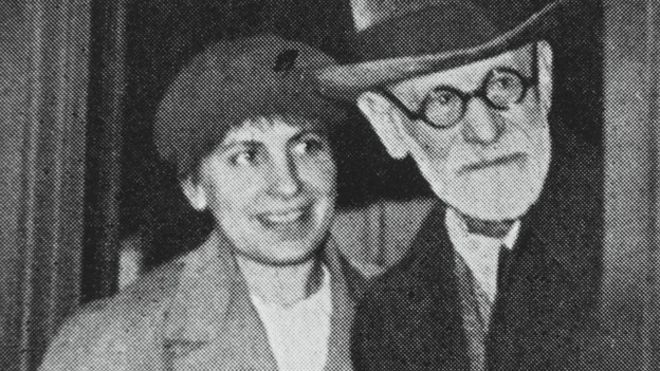

















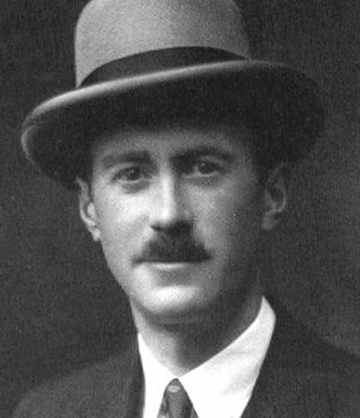
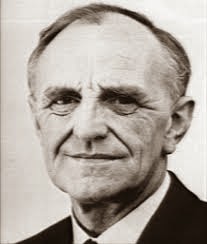

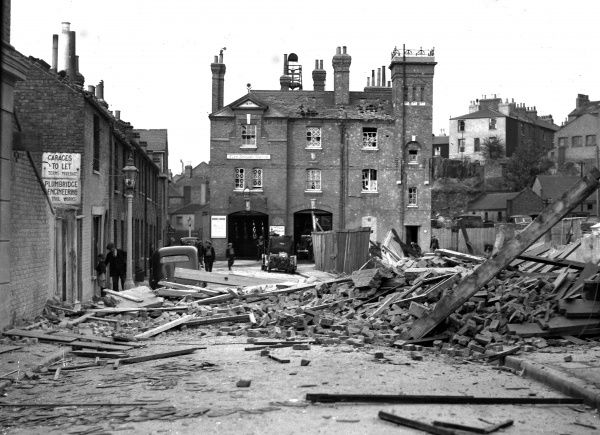












You must be logged in to post a comment.