Fellow blogger, Mawr Gorshin has approached me with an idea to start a group blog or website of sorts or perhaps a Facebook support page for adult survivors of emotional neglect, narcissism and emotional abuse. We are unsure yet as to what form this would take. On my own blog I have posted many posts over the years on narcissism and emotional neglect. I had hoped at one time to have a website where the articles were not just embedded in chronological order but could be accessed from the home page but since I am only marginally web literate am not entirely sure how to go about this.
At this stage we would just like to call for expression of interest from others. Are there favourite posts that you have written about your experiences and recovery that you feel would help others? Would others out there have such…
[NOTE: please read the second and third paragraphs from this post before continuing. Important–don’t skip reading them!]
I’m shouting out to any bloggers out there who might be interested in creating a kind of collective website/blog page, to which we can all contribute articles on the subjects of narcissistic abuse, including topics on narcissistic parents/ex-boyfriends/ex-girlfriends/spouses, golden children, scapegoats/identified patients, complex PTSD, flying monkeys, triangulation, smear campaigns, and anything on helping survivors to heal from the pain. I got this idea from the creator of the Emerging from the Dark Night page.
I was wondering if she and I, as well as the writers on such pages as the Cynthia Bailey Rug,Narcissists, Sociopaths, and Flying Monkeys–Oh My!, Parenting Exposed, Dr. Perry, PhD, on MakeItUltra, the creator of Surviving to Thriving on YouTube, etc., would be interested in us all pooling our resources and presenting all our divergent perspectives on one page…not only for how it can help us get our own messages out to a wider audience, but also to help survivors have an easy-to-find resource where they can find lots of articles, videos, etc., of varying viewpoints, and find them all quickly.
Another possible idea is to have a shared Facebook page.
If any of you are interested, please let me know in the comments section here, or contact her at deborahallin@hotmail.com. Thanks.
[NOTE: this is the sixth chapter (click here for the first, here for the second, here for the third, here for the fourth, and here for the fifth) of a psychological horror story based on an audio film of the same name by my musician friend, Cat Corelli, something I wrote up an analysis for; you can learn more about that here. Before you begin reading, though, TRIGGER WARNING: as a horror story, this one has some graphic content of a violent and sexual nature; so if you’re one of my readers with C-PTSD or other forms of psychological trauma, you may want to skip this one. As for you braver souls, though, read on…]
[Second note: all excerpts of song lyrics quoted here are by Cat Corelli {with a few minor modifications of mine}. Click on the link above to my ‘Analysis of Slutlips’ to find links to the music and lyrics.]
“Off with her head!” was the next thing Alice heard ringing in her ears. Now she went up the rabbit hole, as it were, and it seemed she found herself in the hotel room again.
The radio was on. Hadn’t she turned it off? She couldn’t remember.
She felt those waves of an unsure ego all around her and going through her. She got up and saw herself in the mirror on the dresser drawer. Alice! That felt better.
She listened to the men talking on the radio. Inspector Trudeau was talking to a psychiatrist about the case.
“Hi, Inspector Trudeau?” the psychiatrist said, it seemed, on one end of the telephone, for she never heard the voice of the inspector.
How odd, Alice thought, hearing one side of a phone call on a radio broadcast. Am I high?
“I’ve read about his murder in the papers…Yes. that murder. Ray Terence…I’m his brother’s therapist. His name is Donald Terence…His is an odd case, indeed. Since his brother Ray got killed, he’s been hallucinating more and more…No, sir. We have it all under strict control…Yes, I will call you back later.”
I must have heard the names wrong, she thought. Surely the shrink said, ‘Daniel Torrance’ and ‘Roy Torrance.’ I’m still fucked up from last night’s partying. Have I been dreaming all this time? Surely the e I took in the bar has worn off by now.
She smiled at the thought of Roy being dead, and of her father having had what must have been a complete mental breakdown.
Good, she thought. Karma is finally fucking Daddy back.
She slumped down onto the floor, those mental waves of hers returned, and she went into another oceanic reverie.
The voice of Inspector Trudeau was now heard. “Fingerprints and saliva were found on the victim’s body,” he said. “We have a match on them: Lilian Alice Torrance committed the murder. We have our men searching for her right now, as we speak. We have a feeling that the killer will strike again.”
“Oh, fuck me!” she gasped. I can’t be Alice anymore, she thought. But I can’t be Lily, either. I can’t endure the memory of any more of those rapes. Who can I be, to be safe?
Daisy!
The current of the sea of Alice’s psyche brought Daisy’s head up to her. Her consciousness entered it.
Daisy, nineteen, was now in a noisy bar. People all around her were impatient to hear a band perform. One drunk young woman, Laura, was especially loud in her complaints.
“C’mon!” she shouted in slurred syllables. “Let’s hear some fuckin’ music!”
Laura kept shouting and staggering around near the stage. It was hurting Daisy’s ears.
“C’mon, Laura!” she said. “Shut your damn pie-hole!”
Finally, Laura was quiet, but not because of Daisy; because the band finally came onstage. Fronting the band was none other than…Alice.
Through Daisy’s eyes, Alice saw herself begin performing.
Relaxing now as the beat pounded away, Daisy mumbled to herself, “Santa’s in town. Bunny’s in the Un…” she hiccuped “…Underworld…Alice… in Wonderland…” she giggled, then looked around the bar. “Where’s Stan?”
The lyrics of each song flew by Daisy’s ears in a flurry:
“Yo! My name is Alice, and I remember everything…It’s all a tape recording…It’s all hidden in my head in a memory/Kinda creepy stuff there but yet it’s me/It’s me in this. It’s this debris…There is no band, but the monsters are real…It’s all beneath my skin, it’s tightening within…And the pines stood tall, to watch me fall…I own the night…And what I don’t own, I take…”
Daisy took a pill, then Alice–in Daisy’s consciousness–felt herself growing…to the size of a giant. In Daisy’s body, she got on the dance floor and danced in the crowd of the band’s worshippers. Her feet crushed the other dancers, who didn’t seem to notice their deaths.
The last song of the band’s set was one called “Churchpunk.”
As the pill kicked in, Daisy could hear church bells, as if in the distance. She wasn’t sure if it was a sound from the band’s synthesizer player, or if it was the drugs she’d taken. Alice, through Daisy’s ears, heard herself singing:
“Oh my fucking god!
And now he’s gonna drag this little girl into church
And blame it on her, blame it on her
‘cuz she’s the source of all original sin, yeah!
It’s all fucked up in your head, man
The top is the bottom in your head, man
What a religious fanatic!
Perverted tactic
A dickhead with no balls to admit
He’s the only one and motherfucking guilty. Shit!”
The drugs were enveloping Daisy like a thick fog. Through her ears, Alice could hear the voice of her father.
“Thou hast disobeyed thy father, Lily!” he shouted, in an absurdly melodramatic and fake imitation of King James Bible-era English, as he dragged her into the local church. “Great is thy sin and dark is thy evil trickery, for thou hast lured me into lechery and fled from Jesus! Therefore thou shouldst be punished and purified by fire and iron, and prayer. Here is my iron, Lily; with my iron rod, I shall spoil the child in a new way!” He unzipped his pants.
No matter how hard Alice tried, she couldn’t escape the terror of her memories.
Daisy collapsed on the floor, crushing everyone else in the bar. She lay there in a pool of collective blood. She took another pill, and shrank down to normal size.
She passed out.
When she opened her eyes, Daisy, now sixteen, was in a café with Bunny, one of her friends. Bunny had just finished chatting with someone on her cellphone, then after putting it away, she smiled at Daisy.
Daisy asked her, “So you’re like still with that other guy?”
“Nooo… You silly!” Bunny said. “He’s Stan’s friend.”
“Mmm…” Daisy hummed, with obvious admiration. “Stan’s sweet!”
Bunny laughed, then said, “Forget it, Daisy. He’s hanging out with that metal chick.”
“Oh, she looks creepy… She looks like Abaddon in Slipknot merch, all tattooed. Her name is Alice, isn’t it?”
“Yeah, yeah. She looks like a slut.” (These words stung Alice’s heart, and Daisy’s lack of empathy hurt even more.)
“Gross,” Daisy said with a sneer. “He’ll dump her.”
“You just have a thing for Stan,” Bunny said with a taunting smirk.
“No, no-no-no!” Daisy said with the exaggeration of reaction formation. Then she laughed when she saw how Bunny wasn’t buying any of her denials, and said, “OK, I do have a thing for him. But he’s not as cute as Cas.”
“Quit watching TV shows or you won’t be graduating this year.”
“But Cas is gorgeous!”
“He isn’t as hot as Dean!” Both of them laughed at that.
“We can’t go to the cabin this weekend,” Daisy said. “There’s this cop sneaking around. He’s been asking questions about that murder.”
“I fuckin’ hate cops!”
“Yeah. Cops are assholes.”
“Totes!” Bunny said with a grimace. “And creepy. I had a few near me once with roving hands when they were raiding a rave I was at five months ago. I’m sixteen, for fuck’s sake!”
The girls noticed a familiar face, one of their female classmates, approach their table with a frowning woman in her forties…the classmate’s mother, presumably.
Alice couldn’t bear it. Her head began spinning…
Alice felt that dark spiral twirling all around her. As she got more and more enveloped in the coiling black, she ruminated on the conversation.
They don’t understand, she thought. Daisy’s innocent. She was never sexually assaulted as I…Lily…was.
Alice was being pulled down into a whirlpool of reddish black. Submerged in it, she continued her rumination.
I cannot be Alice…I cannot be Lily…I cannot escape the rapes…I cannot escape being blamed for the rapes, for not resisting enough…but I couldn’t…I wasn’t physically strong enough…I was just a child…
I cannot be Daisy, either, because she’s too innocent, there’s no connection between us…I cannot be me…I cannot be anyone, and feel safe…Who can I be?…Who am I?
She looked down at herself. She had only one leg. The stump was pumping her blood out into the black water all around her. In her blood, she could see what looked like millions of dead fleas floating in it.
She looked closer. Those fleas all had the miniature heads of Daniel and Roy, pairs of them, cloned over and over again.
Those perverted vermin drifted away from her body…but still she felt no purification…no peace…no catharsis…
Then she heard a familiar voice: “…pu ekaw, ecilA, pu ekaW…”
[NOTE: this is the fifth chapter (click here for the first, here for the second, here for the third, and here for the fourth) of a psychological horror story based on an audio film of the same name by my musician friend, Cat Corelli, something I wrote up an analysis for; you can learn more about that here. Before you begin reading, though, TRIGGER WARNING: as a horror story, this one has some graphic content of a violent and sexual nature; so if you’re one of my readers with C-PTSD or other forms of psychological trauma, you may want to skip this one. As for you braver souls, though, read on…]
The next thing Alice (still in Lily’s consciousness and feeling herself having gone, so to speak, further and further down the rabbit hole) heard was an elegant piano waltz. The notes were punctuated with such crisp precision, one would think Glenn Gould had risen from the grave.
Still, there was an eerie sadness in the melody.
Lily opened her eyes and saw herself in the middle of a playground in that Austrian grassland, with the Alps not too far away. The skies were a cloudless blue. Her father was in lederhosen again. She, in the dirndl, was physically about nineteen years old, though in her cute pigtails and childlike manner, she psychologically seemed to be about six.
The piano player was a man in a cowboy hat, plaid collared shirt, and jeans. He seemed charming to her. She felt an urge to get up.
“Daddy, I wanna dance,” she said.
“Darling, sweetheart,” Danny said in his fake German accent. “You can’t be doing that.” He, back in the Nazi uniform, pushed her back onto her swing.
“But why, Daddy?”
“This dance requires both legs, darling.”
She looked down at herself, and saw only one leg. She began sobbing, then said, “But, who cares?”
“Well, people will be watching.”
“Tell them it’s OK,” she said, stopping her crying. “They have to understand it’s OK.”
“I can’t risk my reputation,” he said.
“Daddy, you’re a moron.”
He looked down at her with threatening eyes.
The piano man stopped playing, got up, and walked over to her and her father, who was now in lederhosen again.
“Hey, howdy, man,” the pianist said, in a southern accent so overdone it could only have been fake. “I’m Morgan.” He reached out his hand to shake her father’s.
“Howdy to you, Morgan,” her father said, shaking his hand and genuinely pleased to meet him. “Nice to meet you. I’m Dan. Daniel Torrance.”
“Nice to meet you, Danny Torrance. May I call you ‘Danny’? Like The Shining Danny?”
“What’s The Shining?” Torrance asked.
“Oh, forget it,” the would-be southerner said. “You don’t have it anyway.” He paused, looking down at Lily. “I want to ask you something, man.”
“Talk to me.”
“I’ve been playing that waltz for years. Kids always dance to it. Ha! My lil’ Jack and Jill over there…” he pointed to his twins, his ten-year-old son and daughter “…were dancing to it just now. Dancin’ ’til they done got dizzy, that’s how they danced.”
“Those two blondes?” Danny asked, eyeing the two kids lewdly.
“Yeah,” Morgan said. “Sweet kids. I love them, man.” He paused and looked at them with a similarly eerie lewdness, then back at Lily the same way. “Your lil’ girl didn’t dance. Why? All kids have fun dancing to my waltz.”
“Well…” Danny began.
“Tell me,” Morgan almost commanded.
“There’s a problem. She thinks she has only one leg.”
“Jesus Christ! How come?” Morgan looked down at Lily and ogled her two legs.
She also looked down at herself; she smiled to see both of them there again. Then she thought, Wait a minute: I have one leg if Daddy says I have only one?
“I don’t know, man,” Danny said. “I keep saying she’s wrong, but she won’t listen.”
“Strange world,” Morgan said. “Do you play the banjo by chance, Danny? You seem like the type who might.”
“Why would I play the banjo, of all the low-class instruments?” Danny said, offended. “It’s the kind of instrument a nigger would play. I’d be risking my reputation if I played that.” He was in his SS uniform again.
“Daddy, you’re a moron,” Lily said.
“One more word of lip from you, young lady, and you’ll wish you’d kept your mouth shut!” He scowled down at her with Goebbels’s face again. She recoiled, shaking.
“Well, I gotta say you know jack about niggers and banjos,” Morgan said, now a black man. “And you’d better change your attitudes, Danny. ‘Cause you don’t wanna mess with niggers in the South.”
“Says who?” Danny said, in lederhosen again and looking like himself.
“Says Morgan Freeman,” Morgan said, now looking like the actor, but still with the ridiculously fake southern accent. “But you don’t have The Shining thing anyways, so you won’t get it.”
Lily looked up at him, excited to see him looking like the movie star in the cowboy hat and jeans. “Oh! That’s coool! So you’re, like, Morgan Freeman from the movies?”
“Yeah, pretty girl,” ‘Freeman’ said, eyeing her lewdly again.
“So, maybe you can give me two legs so I can dance to your waltz…could you?” She pawed at her legs, to feel only one.
Her father, in the SS outfit again and looking like Goebbels, scowled at her, “Lily! You can’t be doing that! You’re supposed to have only one leg!”
“What is the problem with you, Danny?” ‘Freeman’ asked. “Why can’t you let your kid have both legs? I thought you said she only thought she had one leg. She really don’t!”
“Yeah! Please, Daddy!”
“Well,…” her father said, then leaned over to whisper in ‘Freeman’s’ ear, “Because if she has both, she’ll misuse them.”
“Oh, but how?” Morgan asked, white again, and smirking.
Her father whispered again, softer, “By spreading her legs before other men!”
Now both men smirked while looking at her…who had both legs again.
“So, why can’t I have both legs, Daddy?” she asked, feeling her leg shrink away yet again.
“Strange world, indeed,” Morgan said.
“I just can’t risk my reputation,” Danny said again.
Moron, she thought.
“Oh, that’s too bad,” Morgan said. Lily looked up at him. Now he looked like Donald Trump in that cowboy hat. “You know, if you weren’t his daughter, I’d probably be dating you.”
She cringed at the sound of those words.
“You know, maybe we could allow her to have both legs,” Danny said, smirking.
They all looked down at her, and indeed, she had both legs again.
The men grabbed her.
She had a dizzy spell. She felt herself falling down that rabbit hole. Further and further down. It was pitch black all around her.
Then, an ever-so-slight amount of light allowed her to get a sense of her surroundings.
She looked up at the sky. Now it was night. The sky was starless and black, for there was a new moon, and the pine trees were so tall all around her that they blocked out any possible starlight. The pines stood tall…then she did fall.
She shook as she felt Danny and Morgan on top of her, tearing off her dirndl.
They’re both beneath my skin, she thought as she felt them entering her.
As the men were panting and having her, she heard a familiar voice call out to her.
It hissed, “!yliL, yliL…yliL”
As the men shook and stabbed inside her, she looked around, trying to find the source of the voice.
“.doog od uoy fi emit erom eno em raeh lliw uoY”
Lily’s head swung left and right, following the voice as spectators would watch a tennis ball in play. The men’s sweat and saliva were dripping on her skin.
They’re both beneath my skin.
“.dab od uoy fi semit erom owt em raeh lliw uoY”
Am I doing bad now? Lily thought, since she felt no pain with the men inside her. Numbness was a protective shield, as she’d learned years ago.
The Mystery Girl ended with “.thgin dooG”
Lily lay there, catatonic on the grass, as the men zipped up their pants.
“As you can see,” Danny said, smiling, “she does have her uses.”
With her eyes closed, she felt a man’s foul beer breath by her face.
“Time to wake up, pretty girl,” that familiar, fake southern accent grunted in her left ear again.
She opened her eyes and saw Roy Torrance in the cowboy hat, standing next to Nazi Danny.
Martin Mathias (John Amplas) is a vampire…or is he? He lacks the fangs, using razor blades to cut the wounds from which he drinks the blood. Sunlight bothers his eyes a little, and neither crucifixes nor garlic have any effect on him.
Still, he insists that he needs to drink blood; he also maintains that he’s eighty-four years old, though he looks like a teen, or at the oldest, a man in his mid-to-late twenties (i.e., Amplas’s age at the time of shooting the film). Finally, his “cousin”?/great-uncle, Tateh Cuda (Lincoln Maazel), following the superstitions of the family, is as convinced…
Mocha Dick, the real-life whale that inspired Melville’s tale.
I) Introduction and Quotes
Moby-Dick; or, The Whale, is a novel by Herman Melville, published in 1851. The story is about Captain Ahab‘s mad quest for a huge albino whale, which bit off his leg in a previous attempt to kill it by his crew of harpooners. The story is narrated by a young man, the orphan Ishmael, the sole survivor of Ahab’s second attempt to kill the white whale.
Though the novel got a mixed reception on its original publication, its critical reputation grew over the 20th century, and it’s now considered the preeminent American novel, and one of the greatest works of literature of all time. Moby-Dick deals with such profound philosophical issues as epistemology and the nature of ultimate reality, evil, nature, etc., as symbolized by the whale and the ocean.
Here are some famous quotes:
Loomings (1)
“Call me Ishmael.”
“Yes, as every one knows, meditation and water are wedded for ever.”
“Why did the old Persians hold the sea holy? Why did the Greeks give it a separate deity, and own brother of Jove? Surely all this is not without meaning…we ourselves see in all rivers and oceans. It is the image of the ungraspable phantom of life; and this is the key to it all.”
The Spouter-Inn (3)
“Better sleep with a sober cannibal than a drunken Christian.”
The Sermon (9)
“…all the things God would have us do are hard for us to do…if we obey God, we must disobey ourselves; and it is in this disobeying ourselves, wherein the hardness of obeying God consists.” –Father Mapple
The Mast-Head (35)
“…lulled into such an opium-like listlessness of vacant, unconscious reverie is this absent-minded youth by the blending cadence of waves with thoughts, that at last he loses his identity; takes the mystic ocean at his feet for the visible image of that deep, blue, bottomless soul, pervading mankind and nature; and every strange, half-seen, gliding, beautiful thing that eludes him; every dimly-discovered, uprising fin of some undiscernible form, seems to him the embodiment of those elusive thoughts that only people the soul by continually flitting through it. In this enchanted mood, thy spirit ebbs away to whence it came; becomes diffused through time and space; like Cranmer‘s sprinkled pantheistic ashes, forming at last a part of every shore the round globe over.
“There is no life in thee, now, except that rocking life imparted by a gently rolling ship; by her, borrowed from the sea; by the sea, from the inscrutable tides of God. But while this sleep, this dream is on ye, move your foot or hand an inch; slip your hold at all; and your identity comes back in horror. Over Descartian vortices you hover. And perhaps, at mid-day, in the fairest weather, with one half-throttled shriek you drop through that transparent air into the summer sea, no more to rise for ever. Heed it well, ye Pantheists!”
The Quarter-Deck (36)
“All visible objects, man, are but as pasteboard masks. But in each event — in the living act, the undoubted deed — there, some unknown but still reasoning thing puts forth the mouldings of its features from behind the unreasoning mask. If man will strike, strike through the mask! How can the prisoner reach outside except by thrusting through the wall? To me, the white whale is that wall, shoved near to me. Sometimes I think there’s naught beyond. But ’tis enough. He tasks me; he heaps me; I see in him outrageous strength, with an inscrutable malice sinewing it. That inscrutable thing is chiefly what I hate; and be the white whale agent, or be the white whale principal, I will wreak that hate upon him. Talk not to me of blasphemy, man; I’d strike the sun if it insulted me. For could the sun do that, then could I do the other; since there is ever a sort of fair play herein, jealousy presiding over all creations. But not my master, man, is even that fair play. Who’s over me? Truth hath no confines.” –Ahab
“Aye, aye! It was that accursed white whale that razeed me; made a poor pegging lubber of me for ever and a day!” Then tossing both arms, with measureless imprecations he shouted out: “Aye, aye! and I’ll chase him round Good Hope, and round the Horn, and round the Norway Maelstrom, and round perdition’s flames before I give him up. And this is what ye have shipped for, men! to chase that white whale on both sides of land, and over all sides of earth, till he spouts black blood and rolls fin out.” –Ahab
Moby-Dick (41)
“All that most maddens and torments; all that stirs up the lees of things; all truth with malice in it; all that cracks the sinews and cakes the brain; all the subtle demonisms of life and thought; all evil, to crazy Ahab, were visibly personified, and made practically assailable in Moby-Dick.”
The Whiteness of the Whale (42)
“What the white whale was to Ahab, has been hinted; what, at times, he was to me, as yet remains unsaid.”
“Though in many natural objects, whiteness refiningly enhances beauty, as if imparting some special virtue of its own, as in marbles, japonicas, and pearls…with whatever is sweet, and honorable, and sublime, there yet lurks an elusive something in the innermost idea of this hue, which strikes more of panic to the soul than that redness which affrights in blood.”
“Is it that by its indefiniteness it shadows forth the heartless voids and immensities of the universe, and thus stabs us from behind with the thought of annihilation, when beholding the white depths of the milky way? Or is it, that as in essence whiteness is not so much a color as the visible absence of color; and at the same time the concrete of all colors; is it for these reasons that there is such a dumb blankness, full of meaning, in a wide landscape of snows — a colorless, all-color of atheism from which we shrink? And when we consider that other theory of the natural philosophers, that all other earthly hues — every stately or lovely emblazoning — the sweet tinges of sunset skies and woods; yea, and the gilded velvets of butterflies, and the butterfly cheeks of young girls; all these are but subtile deceits, not actually inherent in substances, but only laid on from without; so that all deified Nature absolutely paints like the harlot, whose allurements cover nothing but the charnel-house within; and when we proceed further, and consider that the mystical cosmetic which produces every one of her hues, the great principle of light, for ever remains white or colorless in itself, and if operating without medium upon matter, would touch all objects, even tulips and roses, with its own blank tinge — pondering all this, the palsied universe lies before us a leper; and like wilful travellers in Lapland, who refuse to wear colored and coloring glasses upon their eyes, so the wretched infidel gazes himself blind at the monumental white shroud that wraps all the prospect around him. And of all these things the Albino whale was the symbol. Wonder ye then at the fiery hunt?”
The Fossil Whale (104)
“To produce a mighty book, you must choose a mighty theme. No great and enduring volume can ever be written on the flea, though many there be who have tried it.”
Ahab and Starbuck in the Cabin (109)
“Let Ahab beware of Ahab.”
The Pacific (111)
“There is, one knows not what sweet mystery about this sea, whose gently awful stirrings seems to speak of some hidden soul beneath.”
The Chase–Third Day (135)
“Towards thee I roll, thou all-destroying but unconquering whale; to the last I grapple with thee; from hell’s heart I stab at thee; for hate’s sake I spit my last breath at thee. Sink all coffins and all hearses to one common pool! and since neither can be mine, let me then tow to pieces, while still chasing thee, though tied to thee, thou damned whale! Thus, I give up the spear!” –Ahab
Epilogue
“The drama’s done. Why then here does any one step forth? — Because one did survive the wreck.”
“On the second day, a sail drew near, nearer, and picked me up at last. It was the devious-cruising Rachel, that in her retracing search after her missing children, only found another orphan.”
II) Search for Truth
Ishmael’s extracts, supplied by a sub-sub-librarian.
There is a preoccupation with acquiring knowledge of everything in Ishmael’s narrative, as we can see from his discussing all matters pertaining to the whale (a pun on whole; and Moby Dick can be seen as a symbol of the more terrifying aspects of ultimate reality). Recall ‘Etymology,’ which gives a list of whale in various languages, including Hebrew, Greek, Latin, Anglo-Saxon (WHOEL), Danish (HVALT), Dutch (WAL), Swedish (HWAL), etc. Note also “Cetology,” chapter 32, as well as Ishmael’s many digressions into philosophical matters.
I believe this search for truth is his reason, in a symbolic sense, for tiring of the land and wanting to return to the sea; for the waves of the ocean represent that fluid reality of rises and dips (i.e., in fortune) that we all experience everywhere in life. Reality isn’t in the things in the water, like the whales that are caught: it’s in the water itself. The preoccupation with catching those things is what causes our suffering…as it does Ahab.
III) Ishmael and Queequeg: From Foes to Friends
Ishmael has to share a room, at the Spouter-Inn, with Queequeg, a Polynesian pagan harpooner. Their meeting at night, with Ishmael sleeping in Queequeg’s bed, is hostile at first, since the latter isn’t expecting a roommate.
Soon, the two become good friends (Chapter 10, ‘A Bosom Friend’), the two even sharing in each other’s form of worship; for Ishmael bows with Queequeg before the latter’s idol (Chapter 10–“A Bosom Friend”, pages 67-68), and Queequeg attends Father Mapple‘s church service with Ishmael (Chapter 7–“The Chapel,” page 52; though Queequeg leaves some time before the benediction–Chapter 10–“A Bosom Friend,” page 64).
Christian Ishmael and pagan Queequeg are opposites who, though clashing at first, soon learn not only to accept each other’s differences, but even participate in the opposite’s ways. Their relationship thus demonstrates the dialectical relationship between opposites, something Ahab can never learn to do with Moby Dick.
IV) Mapple’s Sermon
The Chapel
During Father Mapple’s sermon, which the preacher gives on a pulpit designed like a ship (for his sermons are his way of edifying his “shipmates,” his steering of the boat on the ocean of life, so to speak), he discusses the events written of in the Book of Jonah.
“Now the LORD had prepared a great fish to swallow up Jonah” (Jonah 1:17), for he didn’t want to obey God and preach to the sinful people of Nineveh. We tend to think of the “great fish” as a whale, though of course a whale–being a mammal–is no fish. Melville’s narrative, while acknowledging Linnaeus‘ reference to, among other distinctions, the whale’s “feminam mammis lactantem,” still insists that a whale is a fish (Chapter 32–“Cetology,” pages 139-140), linking Jonah’s story thematically with Moby Dick; for Ishmael calls upon “holy Jonah” as his authority on the matter.
Jonah’s “three days and three nights” of terror “in the belly of the fish” transform him from a rebellious sinner into an obedient servant of God, a dialectical shift from the hell of the bitten tail of the ouroboros to the heaven of its biting head. Transformative moments like these, like a harrowing of hell, make saints out of sinners. Ahab will never make that change, for he forever hates the white whale, even in death.
V) Melville’s Critique of Emerson
Ralph Waldo Emerson
When Father Mapple says that in obeying God, we must disobey ourselves, Melville is using the preacher as his mouthpiece to criticize the Transcendentalists, and Ralph Waldo Emerson in particular, with his essays “Self-Reliance” and “The Over-Soul.” In the former essay, Emerson wrote of the apparent divinity of the individual soul, which should be relied upon to the exclusion of accepting any advice from the all-too-conforming community.
The danger of such self-reliance is how it can lead to egotism, narcissism, and contempt for the rights and feelings of others. Ahab personifies self-reliance taken to such foolish extremes, for he ignores Starbuck’s warnings and criticisms, and gets his whole crew killed (save Ishmael) at the end.
Emerson’s “Over-Soul” gives a philosophical, quasi-mystical rationalization of this self-reliance, for this “self” is seen as divinely similar to Atman. Emerson had read translations of such Hindu texts as the Bhagavad-Gita; texts such as these include such doctrines as Atman being equal to Brahman, Emerson’s “Over-Soul,” the unifying soul in all life and in all things.
The problem with Emerson’s interpretation of these Hindu ideas is in how, addled by Western tradition’s preconceptions (i.e., Plato’s idealism, the good soul vs. the sinful flesh, etc.), he Christianizes the “self” (i.e., Atman, the individual soul), and imagines individuality to be all good. Such a sentimentalizing was never intended by the Hindus.
Because divinity in Eastern mysticism encompasses everything–or conversely, it’s described in terms of what it’s not (for to describe the divine in terms of what it is would qualify it, and thus limit it)–it mustn’t be thought of as merely ‘good.’ It has both alluring and terrifying aspects. Bion‘s mystical O, for example, is seen as having traumatic qualities. The divine is everything and nothing, both good and evil…and neither/nor.
But Emerson came from a Christian tradition that sees God as all-good; Western translations of Hindu texts often clumsily render Brahman, or the divine, as God, which is misleading; for God is a monotheistic concept, whereas concepts like Brahman are monistic. Not even ‘pantheism‘ really covers what something like Brahman is.
VI) Pantheism, the Ocean, and the Ouroboros
The ocean as a dark, frightening place.
When one thinks of pantheism, one often thinks of the peacefulness of walking about in the woods, or dwelling dreamily in places like Wordsworth‘s ‘Tinturn Abbey‘, feeling “a sense sublime/ Of something far more deeply interfused,/ Whose dwelling is the light of setting suns” (lines 95–97) and the immanence of “A motion and a spirit, that impels/ All thinking things, all objects of all thought,/ And rolls through all things” (lines 100–103).
Melville, on the other hand, uses the tempestuous ocean as his preferred image of nature to warn us of the danger of sentimentalizing pantheism (see ‘The Masthead’ quote above). I prefer the image of the ocean as a symbol of the dialectical monism that I subscribe to, for the rising and falling waves suggest our ongoing shifts between good and bad fortune.
When I wrote of how a “contemplation combining what I call the Three Unities (of Space, Time, and Action) will, with repeated practice over a long period of time, bring us closer and closer to that nirvana of no more pain, a putting of all the pieces back together,” I never meant that to be some kind of feel-good, New Age sentimentality. “Closer and closer” are the key words there: “no more pain” shouldn’t be misinterpreted as an absolute state.
Indeed, the smug excess of sentimentality is the biting head of the ouroboros, where one is “too healthy,” as I’ve written about elsewhere; this emotional state is one of narcissistic overconfidence, a False Self delusion that can lead, if one isn’t careful, to the madness of fragmentation. This is the danger Captain Ahab is throwing himself into, a danger of slipping past the serpent’s biting head to its bitten tail.
You see, the symbolism of the ouroboros as a unifying of opposites (the serpent’s head biting its tail) shows how we should properly understand ultimate reality: a marriage of heaven and hell, a union of knowledge and ignorance, a fusion of good and evil.
VII) Character Pairings: Unified Opposites
We see pairings of opposites throughout Moby-Dick. We’ve already seen the pairing of pagan Queequeg and Christian Ishmael; we’ve touched on the opposition of wise, cautious chief mate Starbuck vs. mad Captain Ahab; let’s now consider some others.
Other parings include retired Captains Peleg and Bildad, two Quakers who own the Pequod and sailed in it before giving the helm to Ahab. “Like Captain Peleg, Captain Bildad was a well-to-do, retired whaleman. But unlike Captain Peleg–who cared not a rush for what are called serious things, and indeed deemed those selfsame serious things the veriest of all trifles–Captain Bildad had not only been originally educated according to the strictest sect of Nantucket Quakerism, but all his subsequent ocean life, and the sight of many unclad, lovely island creatures, round the Horn–all that had not moved this native born Quaker one single jot, had not so much as altered one angle of his vest.” (Chapter 16–“The Ship,” page 87)
On the next page, “…old Bildad…seemed absorbed in reading from a ponderous volume.
“‘Bildad,’ cried Captain Peleg, ‘at it again, Bildad, eh? Ye have been studying those Scriptures, now, for the last thirty years, to my certain knowledge. How far ye got, Bildad?’
“As if long habituated to such profane talk from his old shipmate, Bildad, without noticing his present irreverence, quietly looked up, and seeing me, glanced again inquiringly towards Peleg. […]
“‘He’ll do,’ said Bildad, eyeing me [Ishmael], and then went on spelling away at his book in a mumbling tone quite audible.
“I thought him the queerest old Quaker I ever saw, especially as Peleg, his friend and old shipmate, seemed such a blusterer.” Yet, in spite of Bildad’s apparent Bible-perusing piety, as opposed to Peleg’s “irreverence” and “impenitent” nature, Bildad’s the “stingy” one, offering Ishmael an exceedingly small share of the ship’s profits (the 777th lay), as opposed to “generous” Peleg’s offer of the three hundredth lay (Ishmael has been hoping for the 275th lay). Here we see the mingling of opposites in Peleg and Bildad, the antitheses of pious parsimony and impious generosity. (pages 89-91)
Another pairing is of Stubb, the cheerful, laughing, happy-go-lucky second mate, as contrasted with Flask, the mean, grumpy, nasty third mate. For all of Stubb’s cheerfulness, though, he feels such a hostility to Fedallah, the Parsee who has an evil influence on Ahab, that Stubb imagines the Parsee “to be the devil in disguise,” with a tail he hides in his pocket; and he’d like to throw Fedallah overboard. (Chapter 73–“Stubb and Flask Kill a Right Whale; and Then Have a Talk Over Him”, pages 315-317) And for all of Flask’s surliness, and his own suspicion of the Parsee, he isn’t sure of Stubb’s equating of Fedallah with the devil.
In one way, grumpy Flask can be seen as the double of mad, scowling Ahab: “Flask…who somehow seemed to think that the great Leviathans had personally and hereditarily affronted him; and therefore it was a sort of point of honor with him, to destroy them whenever encountered” (Chapter 27–“Knights and Squires,” page 125); and Stubb–in his fear that “Fedallah wants to kidnap Captain Ahab”–can be Starbuck’s double. Yet in his wish to rip off Fedallah’s “tail,” Stubb’s rather like Ahab in his wish to get revenge on evil; for ripping off the Parsee’s “tail” is a symbolic castration, as is Ahab’s loss of his leg to Moby Dick. Again, characters with opposing personalities find their traits intermingling.
A pairing of particular importance is Ishmael vs. Ahab. Both men are seeking something, obsessively questing for the deepest knowledge. Ishmael demonstrates this in his near-encyclopaedic display of knowledge of all things cetacean. With Ahab, though, there’s only one whale he seeks.
VIII) Knowledge and Ignorance, Black and White
The whiteness of the whale.
A major theme of Moby-Dick is epistemology, or the philosophy of knowledge and how it is attained. Whales symbolize this knowledge that is sought, for knowledge, like whales, is elusive to its hunter; when you come at it, knowledge can hurt, as when whales smash up whalers’ boats.
The white whale is that ultimate knowledge: its whiteness is like the divine light of perfect knowledge…but that white light can also be terrifying (Chapter 42–“The Whiteness of the Whale”). Ahab is mad to want to confront such dangerous knowledge. Ishmael, in contrast, can adapt and change in his search for knowledge; he can flow and shift with the waves of the ocean. Ahab’s monomania keeps him as rigid and hard as Moby Dick’s powerful body; the captain projects his own evil onto the white whale.
We normally think of darkness and blackness as evil; consider the bigoted Spanish Sailor who taunts Daggoo, the African harpooner (Chapter 40–“Midnight, Forecastle,” page 178). These two are another pairing of opposites who are also alike in crucial ways, for while the Spanish Sailor calls Daggoo “devilish dark,” provoking a fight, consider the swarthiness of the average Spaniard compared to whites of North European descent. And when a flash of light in the dark is said by the Spanish Sailor to be “Daggoo showing his teeth,” we see a mixture of black and white in him, another mixing of opposites.
So as we can see, both black and white can be evil…and good. Both knowledge and ignorance can be evil, too…and sometimes ignorance is better–and safer–than knowledge; since some knowledge simply cannot be found or mastered. Ishmael can accept this reality. Ahab can not.
IX) Marine Masculinity and Narcissism
The sperm whale: a giant phallus in the ocean.
Yet another pairing is Moby Dick, or sperm whales in general, and the ocean. While Melville’s whales are overwhelmingly masculine (more on that below), la mer est la mère. Now, the feminine is conspicuously absent in this novel, or at the very least minimized, even for a story about men at sea. Even on land, all of the significant characters are male: apart from those already mentioned, there are Peter Coffin, owner of the Spouter-Inn, and Elijah, who prophesies the doom of the Pequod.
The sperm whales, whether male or female in reality, are all male by symbolic association. Though there’s no evidence earlier than the 1880s of dick being used as a slang word for penis, it had been used to mean man, fellow, for centuries. Moby Dick is a giant white phallus spouting water (symbolic ejaculation) swimming in Oceanus, a male god of the ocean. Consider also, as Camille Paglia did (Paglia, page 587), “that unaccountable cone,” “the grandissimus,” that is a sperm whale’s penis being lugged by three sailors (Chapter 95–“The Cassock”).
Moby Dick is the rigid thing Ahab wants for having bitten off his leg (a symbolic castration causing him narcissistic injury), whereas the ever-shifting, ever flowing ocean is a nirvana of no-thing-ness, of anatta (no self). Ahab’s peg leg is made of whale bone, his revenge on ‘castrating’ whales. Phallic harpoons stab into the phallic sperm whales, the piercing a kind of circumcising of them, and a rite of passage for novice Ishmael.
Lacan‘s phallus is a signifier, bringing us into the world of language, the Symbolic Order, uniting us with community through communication. Symbolically castrated Ahab is thus cut off from community, from an ability to communicate in a truly human way, in a way that connects with others and exchanges empathy, hence his solipsistic madness and his never heeding Starbuck’s warnings. Intact Ishmael, however, is so linguistically complete that he gives the words of whales in various languages (“Etymology,” page 9), and he quotes Linnaeus’ Latin in “Cetology,” page 139.
Ahab’s narcissism is apparent in his willingness to “strike the sun if it insulted” him. His egotism is the result of too much self-reliance, as Melville warns us all against. Recall “Narcissus, who because he could not grasp the tormenting, mild image he saw in the fountain, plunged into it and was drowned. It is the image of the ungraspable phantom of life; and this is the key to it all.” (Chapter 1–“Loomings,” page 23)
X) Zoroastrian Dualism, and the Deluge
Fire: Fedallah’s Sacredness, Ahab’s Hell of Desire and Suffering, which can be extinguished only by nirvana, a giving-up of his self.
Next, we must consider Fedallah, the Parsee. His influence over Ahab has been seen as Satanic, if you’ll recall what Stubb has to say about him in chapter 73. In this connection, it’s interesting to note Melville’s allusion to the beginning of chapter six in Genesis (fittingly, in a dialectical sense, at the end of Chapter 50–“Ahab’s Boat and Crew. Fedallah”).
Melville calls the sons of God (or sons of the gods, depending on the translation of b’nei ha-elohim) angels, who “consorted with the daughters of men,” which in turn led to the wickedness that caused Yahveh to bring about the Great Flood, which in the ancient, pre-scientific cosmology meant a bringing together of the previously separated waters of the heavenly firmament and the oceans below, a return to the formless Chaos of the beginning of Creation.
Melville also mentions devils having “indulged in mundane amours,” suggesting such a close relationship between Fedallah (a prophetic, heathen ‘son of the gods’) and Ahab (a wicked ‘daughter of men’–i.e., he’s been symbolically castrated), which will result in a deluge-like drowning of everyone (save Noah-like Ishmael) at the end of the novel.
Fedallah, as a Parsee, adheres to the Zoroastrian religion, which has a dualistic understanding of good vs. evil. The religion has an optimistic eschatology, believing Ahura Mazda (Ohrmazd), God and principle of light, goodness, wisdom, and order, will so thoroughly defeat the devil Angra Mainyu (Ahriman), the principle of darkness, evil, destruction, and chaos, that even sinners suffering in Hell will eventually be redeemed, liberated, and brought into heaven.
Such a consummate ‘happy ending’ to sacred history is the kind of thing Melville would have been suspicious of, as we’ve seen in his assessment of Emerson’s ‘self.’ Ahab, in his hopes of killing Moby Dick–the symbol of all that is evil in his world–is searching for that Zoroastrian happy ending, a thorough (Thoreau?) wiping out of all evil–and Fedallah is helping him do that.
So, is Fedallah an angel or a devil…the Hegelian thesis, or its negation? Or is Fedallah a fallen angel…the Hegelian synthesis? Again, we see the merging of opposites, as was the Great Flood a merging of water above and water below, a return to Chaos. And as a Zoroastrian, is Fedallah an agent of Ohrmazd, principle of order, or one of Ahriman, principle of chaos? Is he both principles at once?
Is the deluge-like killing of the crew an evil horror, or is it a purging of evil, like the temporary Hell of the Parsees? Is the infinite ocean of Brahman, the sea of primordial Chaos, a terrifying watery grave one may fall into because of one false step (as traumatized Pip experiences it to be when he jumps ship the second time; Chapter 93–“The Castaway,” pages 395-397; remember also “The Mast-Head” quote above), or is it the painful but necessary purging of the world, creating a purity like the sacred fire and water of the Zoroastrians (hence, Pip’s trauma is also his mystical experience)?
The Zoroastrians would dualistically separate good and evil; as Yahveh Elohim separated the waters above and below, as He separated the divine and human worlds later reunited by the union of the sons of God with the daughters of men. Emerson would keep good and evil so separate as to suggest evil doesn’t even exist in his holy Over-Soul and its immaculate Atman, the individual self. Melville was saying we cannot separate good and evil. The evil of the whales’ painful knowledge will always swim in divine Oceanus; the strongest of these evils–like Moby Dick–will never be defeated.
Noah-like (or rather, Deucalion-like) Ishmael, floating on the arc-like coffin built for Queequeg (comparable to the chest Deucalion and Pyrrha were in to protect themselves from Zeus’s deluge), understands the inseparability of good and evil, of life and death, of black and white, of ignorance and knowledge, or of any pair of opposites; and clinging to a wooden symbol of death, he is the only one of the crew who lives in the end.
XI) The End, But No Surcease of Suffering
Death: Ahab’s Gift to His Crew
“AND I ONLY AM ESCAPED ALONE TO TELL THEE.” (Epilogue)
This quote is from Job, chapter one, repeated in verses 15, 16, 17, and 19, spoken by messengers to Job, a good servant of God, all of them telling him misfortunes that have befallen him. The Book of Job‘s purpose is to reconcile how evil afflicting good people can exist in a world ruled by a good God. In other words, it’s a theodicy in allegory…as, in a way, Moby-Dick can be seen to be.
God, the receiver of blessings and praise, can be seen as the thesis, to which Satan (ha-satan, “the accuser,” or “the adversary”) can be seen as the antithesis, or negation, since Job’s Satan offers the counter-argument that Job would curse God if all his good fortunes were to be taken from him. Theodicy is an attempt at a synthesis, or sublation, of the opposing contradictions of good and evil.
As I’ve said above, only Ishmael survives because only he can figure out this sublation. He, after the death of his shipmates, is an orphan: alive, but floating on a coffin.
It is significant that Ahab dies being tied by his harpoon to Moby Dick, and being dragged out into the water with the whale. “Sink all coffins and all hearses to one common pool! and since neither can be mine, let me then tow to pieces, while still chasing thee, though tied to thee, thou damned whale! Thus, I give up the spear!” (Chapter 135–“The Chase–Third Day,” page 534) He dies because of his undyingattachment to the white whale.
One could describe Ahab’s madness in Buddhistic terms, namely, the Three Poisons of delusion/ignorance, attachment/craving, and aversion/hate. The hard, firm, strong body of Moby Dick–as opposed to the rolling, shifting, changing waves of the ocean–represents Ahab’s delusion of permanently existing things, and thus his ignorance of impermanence, or no-thing-ness.
His monomaniacal craving for the whale, to find and catch it to the exclusion of all other considerations, is of course not out of desire for, but out of hatred of Moby Dick. His wish to kill, to annihilate the white whale leads to his self-destruction because of his delusion of the separateness of self and other, and of the seeming absoluteness of being and non-being; he fails to see the interconnectedness of all things, including self and other.
And in trying to kill Moby Dick, his own evil projected onto the whale, he kills himself. The egotism of the narcissist is actually a ‘pasteboard mask’ hiding his secret self-hate. Though Narcissus, having fallen in love with his reflection in the water, fell in and drowned (“Loomings,” page 23); Ahab, hating the image of the white whale in the water, failed to see its face as a pasteboard mask of himself–thus he fell in and drowned, too.
Herman Melville, Moby-Dick, Penguin Popular Classics, London, first published 1851
[NOTE: this is the fourth chapter (click here for the first, here for the second, and here for the third) of a psychological horror story based on an audio film of the same name by my musician friend, Cat Corelli, something I wrote up an analysis for; you can learn more about that here. Before you begin reading, though, TRIGGER WARNING: as a horror story, this one has some graphic content of a violent and sexual nature; so if you’re one of my readers with C-PTSD or other forms of psychological trauma, you may want to skip this one. As for you braver souls, though, read on…]
As Alice drifted back into unconsciousness, she remembered a dream of Lily’s, when the girl was thirteen years old. She was in Danny’s car, going along the Oregon coast on a vacation. She looked out the car window and sighed with a smile as she watched the peaceful ocean waves flowing by her side. Some Sixties saxophone lounge music, like something from a noir film, was playing on the car radio.
Alice heard a voice say, “It’s all beneath your skin,” as she felt herself returning to Lily’s head in that dark, mental ocean. Coming back into Lily’s consciousness, Alice wondered, What is all beneath my skin?
Now as Lily, she sat in the passenger’s seat, trying to ignore Daddy’s Dan’s non-steering, right hand on her knee. The sentence repeated in her mind over and over again, like a mantra: It’s all beneath your skin.
Lily herself was drifting off to sleep, and and in Lily’s dream, that mantra grew into a song.
The Mystery Girl’s voice said, “.ecilA, pu ekaw ot emiT”
Lily got scared, and the wind blew heavier, howling against her slightly-opened car window. Her consciousness, merged with that of Alice, sank deeper into farther removed states of unconsciousness…beyond repressed memories, and into dreams within dreams.
It was like going into a dark basement cellar, then opening a secret door in the floor and entering a second basement cellar below, even darker than the first, then going down into a third, even darker cellar, and so on, and so on…
Finally, fully as Lily, she saw herself as a teen with Danny somewhere in the country, near the Alps. The June sun was shining in an ocean of blue skies, with only occasional white islands for clouds. Cows and sheep could be heard grazing on the grass.
Danny was wearing lederhosen, and she, sixteen, was in a dirndl. Her hair was in pigtails, each arching cutely over her ears.
He looked down at her, with lustful eyes thinly disguised as loving. She looked up at him and frowned.
“How lovely you are,” he said in a badly-mimicked German accent. He put his arm around her and tried to pull her up close to him. She resisted.
“Daddy, no,” she said in a trembling voice.
“I can’t let go of such a treasure,” he said, still in the faux German accent.
She avoided his eyes and looked at his legs. No longer in lederhosen, he now wore black pants and black leather shoes.
“Please, Daddy, let me go,” she said, struggling to pull free from his tight grip. She looked up and saw him in a uniform of the SS.
He looked down at her with cruel eyes. No longer in Danny Torrance’s body, her father now had the form of Joseph Goebbels, the Nazi Minister of Propaganda.
“You must obey your father, you little bitch!” He slapped her.
She drifted still further into a deeper, darker level of unconsciousness. Lily was swimming on waves of pitch black…or trying to swim, for she looked behind herself and saw only one leg! The bloody stump where the other leg should have been was dying the black water red.
She struggled to keep her head above water. She panted in desperation for air. She felt her face often sink below, the reddish-black water rising to her eyes.
Soon, she found herself swimming in nothing but red. Only the sky was black. She could hardly see anything.
She passed out, and fell into an even deeper level of unconsciousness.
Now she found herself in a brightly-lit hotel lobby. The elevators were directly in front of her, about ten metres away.
Blood started pouring through the side openings of the elevator doors. The red filled the lobby like the Great Flood.
What is this? Alice thought. The Overlook Hotel?
She felt that blood gushing out of her leg-stump like a cascade of red. Lily’s skin grew lighter and lighter. She looked like a living corpse.
It’s all beneath my skin, Lily thought, over and over again.
Then she heard the voice of a man by her left ear. He said, in a badly imitated southern accent, “Time to wake up, pretty girl.”
Gore Vidal produced a screenplay for the film, for which Tinto Brass was the original director, but both of them disowned the film after constant fighting and a falling out. Guccione added hardcore pornographic content, which with the violence of many scenes resulted in a film that created a storm of controversy on its release. Accordingly, the uncut movie was, and still is, banned in many countries.
Here are some quotes from the film:
“I have existed from the morning of the world and I shall exist until the last star falls from the night. Although I have taken the form of Gaius Caligula, I am all men as I am no man, and therefore I am a god.” –Caligula (McDowell)
Caligula: Tell me, how is the emperor?
Nerva (Gielgud): Old, like me.
Caligula: I mean, how is his mood?
Nerva: Like the weather.
Caligula: The weather is good today!
Nerva: Changeable.
*********
Caligula: You are a god, lord.
Tiberius (O’Toole): No I’m not, not even when I am dead.
Caligula: Julius Caesar and Augustus Caesar, they are gods.
Tiberius: So say the senate, and so the people prefer to believe. Such myths are useful.
*********
Nerva: For a man to choose the hour of his own death is the closest he will ever come to tricking fate, and fate decrees that when you die, Macro will kill me.
Tiberius: I’ll arrest him and have him executed.
Nerva: You can’t. He controls you. [Looks at Caligula] Anyway, even with Macro dead, how could I go on living with this reptile?
*********
“If only all Rome had just one neck!” –Caligula
“You see how I have exhausted myself to make your wedding holy. My blessings to you both.” –Caligula, after raping Livia and fisting her groom, Proculus
“As if there ever could be an antidote against Caesar!” –Caligula, after having Gemellus arrested for treason (because the boy’s breath smelled of medicine…a poison antidote?)
*********
Caesonia (Mirren): They hate you now.
Caligula: Let them hate me, so long as they fear me.
Caesonia: They are senators and consuls. They are important men.
Caligula: So important that they approve all I do? They must be mad. I don’t know what else to do to provoke them.
Despite Caligula now being a cult classic, as well as the performances of McDowell, O’Toole, Gielgud, and Mirren being praised, it always has been critically derided…which leads me to my next point…
Why Analyze Caligula, of all Films?
Normally, I write up film or literary analyses of classics, or works otherwise considered ‘great’ in some sense. Now, I’m about to analyze something of the (dialectical?) opposite: a film widely considered among the worst ever made.
Why? Have I, like the Gaius Caesar of legend and rumour, flipped my lid? Am I ascribing immortal, divine status to a film generally deemed a monstrous travesty, like the man the movie’s about? I’ll answer the last two questions in reverse order: no, and I certainly hope not.
As for the first question, here is my answer. There’s something about the movie, in spite of (or rather, because of) its many flaws, that makes it a perfect representation of today’s political world.
I’m going beyond the obvious theme of the corruption of power, as well as beyond a rationalization that the pornographic aspects of the film symbolize the obscenity of all this political corruption. My point is that this movie is a sensationalization of the crueller moments of history for the sake of titillation, the same way much of the reporting of current events is meant more to entertain than to inform. These shocks are a distraction from the real evil of class antagonisms, past and present.
You’ve heard of ‘fake news.’ Now, let’s read about fake history.
An Ahistorical Historical Drama
Any serious historian knows that Tiberius and Caligula, as bad and hated as they were during and immediately following their reigns, were nonetheless nowhere near as depraved, perverted, or mad as they are portrayed in the writings of Tacitus and Suetonius, the latter’s Twelve Caesars especially being, in my opinion at least, little more than glorified gossip. So when Guccione (in the documentary ‘Making of Caligula‘) tried to justify the excesses in his film as necessary to give an “historically accurate” portrayal of the wickedness of these two emperors, you know he was being as ignorant as he was being pretentious.
Now, this Penthouse production was of course not the first one to take Tacitus and Suetonius at their word. The author of I, Claudius, Robert Graves, was known for his scholarly but mischievous renderings of historical events; when he wrote the historical novel (and its sequel, Claudius the God), while he tried his best to remain true to the narrative of Tacitus, Suetonius, and Cassius Dio, he also felt free to invent wherever the historical record was doubtful. The dramatically superb (though low-budget) BBC miniseries of 1976 that was based on his books sometimes played fast and loose with the history in ways that went beyond even Graves’s own indulgences (compare Graves, page 342, to the end of thisI, Claudius episode).
Let’s now consider the excesses that Caligula and Tiberius have been accused of. First, the notion that Caligula committed incest with his sisters, especially Drusilla, is highly doubtful. Roman historians often slandered the emperors they hated with claims of sexual perversity or madness.
Young Gaius grew up watching his family members taken from him, one by one: his father, Germanicus, died when Caligula was a boy; his mother, Agrippina, was banished by Tiberius to the island of Pandateria, where she starved herself to death (G.P. Baker, page 277); his brother, Nero, was also banished (to Ponza), and his brother, Drusus, was imprisoned for treason and left there to starve to death, reduced to chewing the stuffing of his bed (Baker, page 276). Gaius’ sisters were all he had left of his immediate family–it’s only natural that he’d have been more than usually close to them, but in the normal, loving sense. Anything beyond such closeness is gossip.
“With his brothers and parents dead, and without a compatible wife, it might be expected that Caligula would have looked for affection from histhreesisters. The enormous favours that he heaped on them at the beginning of his reign had a political purpose, but they also suggest considerable affection within the family. It was doubtless this affection that led to the stories of incest with all three sisters. Such reports are to be treated with scepticism. Suetonius claims that Caligula was actually caught with Drusilla when they were staying at Antonia‘s house, but admits that the story was hearsay. Neither Seneca nor Philo, contemporaries of Caligula who both adopt a highly moral tone, make any mention of incest. Also when Tacitus deals with Agrippina‘s incestuous designs on her son, the emperor Nero, he makes no hint of any improper relationship with her brother–although the context was certainly appropriate–and attributes her moral corruption to her association with Lepidus. The charge of incest has been traditionally levelled against despots, from antiquity to Napoleon.” (Barrett, page 85)
Tiberius was accused of being a lecherous old goat of a man, yielding to such vices as child molestation. Again, it’s mere rumour, with Suetonius giving all kinds of salacious details (Suetonius, ‘Tiberius’ 43-45). The fact is, old Tiberius lived out the remainder of his years on the isle of Capri, unmarried (Augustus forced him to divorce his beloved Vipsania to marry Julia [Baker, page 51], from whom he later separated [page 66]) and alone, brooding over his son Drusus‘ murder by two-faced Sejanus (Baker, pages 268-269), among the few people whom Tiberius had once trusted; the emperor even called Sejanus “the partner of my labours” (Tacitus, pages 157-197). He should have been in Rome, managing the affairs of state: what was the old man doing on Capri? Behaving as some lechers do with underage girls in Thailand and Cambodia today?
Was Caligula’s claim to be a god evidence of madness? A man speaking of himself in such a way today would have been such proof, but not so much a king or emperor in the ancient pagan world. It was a fairly common practice to deify ‘good’ emperors, even to have temples dedicated to them when they were alive. (See Barrett, Chapter 9, ‘Divine Honours,’ pages 140-153; in particular, “Among the Romans the distinction between man and god was not a sharp one. While this blurring is usually associated with the phenomenon of emperor worship in the Imperial age, its origins go back to the republic.”–page 140)
What of his making his horse, Incitatus, a senator? Again, a mere legend. If he did so, he may have meant it as one of his many insults to the senate, not out of a mad belief that his horse had a senator’s abilities.
And Caligula’s occasional cross-dressing? Did that indicate madness? Apart from how offensive such a judgement is today in light of the experience of the transgender community, Barrett notes, “Caligula certainly did have a predilection for dressing up, as Alexander, as a triumphator, even as a woman. To dress up as a god was a natural progression. Suetonius mentions his dressing up as gods or goddesses in the general context, not of his religious ideas, but of his exotic costumes, and Dio notes that dressing up as Jupiter was a front adopted to seduce numerous women. Such behaviour was not unique to Caligula.” (Barrett, page 146) Furthermore, Josephus claimed that Caligula’s apparent devotion to the goddess Isis involved dressing up in women’s clothing and a wig…to perform as a priest of Isis (Barrett, page 220).
Then there was Caligula’s bizarre invasion of Britain, apparently to collect seashells. Again, Barrett notes, “This episode has provided much grist for the scholarly mill. Most scholars assume that a real invasion was planned, but cancelled at the last minute. [One scholar suggested]…that the Britons united in the face of attack, while…[another scholar claimed, perhaps] the soldiers were simply afraid to undertake the crossing of the Channel, and that the emperor ordered them to pick up the shells as a form of humiliation, which, to say the least, would have been a courageous gesture on Caligula’s part.” (Barrett, page 135)
Anyway, to make a long story short (if it’s not too late), the corruption in power in ancient imperial Rome wasn’t all that much more shocking than it is today: the rich and powerful oppress and exploit the poor. As Marx said in The Communist Manifesto, “The history of all hitherto existing society is the history of class struggles.”
In today’s world, that class contradiction is between the bourgeoisie and the proletariat, the oppression being in the form of wage slavery. In the ancient world, class conflict was between masters and their slaves. Though the forms of class war have changed over the centuries, the basic material conditions remain the same: the land-owning rich get away with the enslavement, rape, and murder of the poor. This contradiction must be seen beyond the veil of sensationalism seen in Caligula.
The Beginning of the Movie
It’s ironic that such a sinful film should begin with a quote from The Gospel According to Mark, 8:36: “…what shall it profit a man, if he shall gain the whole world, and lose his own soul?”
We see Caligula and Drusilla (Savoy) openly displaying their incestuous love out in the country, near a shepherd and his sheep. Apart from what I said above, about the dubiousness of the classical sources on this brother/sister relationship, given the particularly strong taboo against incest in the ancient world (consider the Oedipus story, for example), we should find it most unlikely that they would risk revealing their forbidden love to anyone they know fortuitously passing by the scene.
In all likelihood, these famous themes (from two of the most famous of the Soviet composers, incidentally) were chosen only for the emotional force of the music, and without any thought for their programmatic content. Indeed, that programmatic content seems diametrically (or dialectically?) opposed to the content of the movie’s story. Still, I find it irresistible to find some kind of connection–however consciously unintended, however dialectically antithetical–between the music and the movie.
The Spartacus ballet is about the lawful love between its title character, the once King of Thrace, and his once queen, Phrygia, who have been conquered and enslaved by Crassus. Antithetically, there’s the taboo love between Caligula and Drusilla, he originally being a prince fearful for his life–because of Tiberius’ caprices–then ascending to absolute power. Finally, while at the end of the ballet, Spartacus dies (having tried to free the slaves) and Phrygia mourns him, Drusilla dies and Caligula mourns her (but rather than try to free the slaves, he just insults and offends the other men in power until they get sick of him and kill him).
The “Montagues and Capulets” theme is meant to dramatize the tension and hatred between the two feuding families in Romeo and Juliet, as well as that hate between Caligula and the Roman senate. If, Dear Reader, you’ll indulge and forgive my deforming of the Bard’s immortal opening verses, you’ll see how one can relate the thematic content of the greatest love story with, arguably, one of the most outrageously depicted (if not simply one of the worst) love stories.
“Two classes, both alike in dignity,/In fairest Roma where we lay our scene…” By classes, here I refer to the conflict between the imperial family (i.e., the Julio-Claudian dynasty) and the senatorial class.
Another reading (and another butchering of the Bard, if again you’ll pardon me, Dear Reader) could be, “Two classes, both unlike in dignity,/In fairestRoma where we lay our scene…” By classes, I now refer to the conflict between the masters (i.e., imperial family, consuls, senate, patricians, plebs) and their slaves. This second conflict, often bobbing up to the surface from the hidden depths, is the one I urge you to pay more attention to.
Classes Unlike in Dignity
Just as I argued in my Analysis of The Omen, the violence in Caligula (as well as the sex) can be seen to symbolize the material contradictions between master and slave in the ancient world, contradictions as apparent as those between the bourgeoisie and the proletariat today. The slaves in the film, typically naked, are exploited in sexual situations, beaten, or subjected to other forms of sadism. Caligula is like Salò (in which Paolo Bonacelli also appeared) in this respect, except for the problem of the clashing visions of feuding Guccione, Vidal, and Brass, among so many other obvious issues.
Nakedness for the slaves represents their vulnerability and utter lack of possessions. I recall Act IV, Scene vii of Hamlet, when the Danish prince has returned, surprisingly, from a boat trip to England, and in a letter to his uncle Claudius, Hamlet says he’s “naked.” He doesn’t mean he isn’t wearing any clothes; he means he hurried off the boat without belongings or means, for a pirate ship has attacked his boat, and the pirates are holding him for ransom. (See Crystal and Crystal, page 292)
When Caligula arrives in Capri, we see a row of male slaves with hammers breaking rocks into smaller pieces–these men are all naked. At first glance, we’d assume that seeing all these musclemen frontally nude is just one of many examples of the film’s soft-core, indulgent titillation; but consider what I said above about naked slaves.
This observation is especially true of the naked slaves Tiberius uses as his “speaking statues,” who “do more than speak…they do.” What they “do” is engage in all the acts of debauchery that the classical sources spuriously accuse the emperor of indulging in.
Then, there are Tiberius’ “fishies,” the naked swimmers–with shaved pubes–in his large swimming pool; his “minnows,” as Suetonius claimed the emperor called them, are supposed to be the children he molested. Again, as history, there’s no reason to believe this sexual abuse was true of Tiberius in particular; but in a world where masters could do anything they wanted with their slaves–including getting sexual favours from them and getting away scot-free without even an investigation to be then acquitted of–there is merit in using the myth of Tiberius the pervert in a metaphorical sense.
Classes Alike in Dignity
As the emperor–covered in welts, sores, and scabs from all of the sexually transmitted diseases he’s said to have been covered in (another obvious symbol of his moral corruption–Howard, page 57)–talks with Caligula and corrupts his mind with a tour of his speaking, screwing statues, he warns the prince of the wickedness of the senate. Recall the many treason trials in which Tiberius had men executed on trumped-up charges from Sejanus; this is where the emperor got his cynicism about Roman politics.
Of course, slaves weren’t the only sufferers of the whims of those at the top. Wrongly-convicted senators suffered, as did soldiers (in the film, consider loyal Proculus, or the misfortunes of Roman virtue; also consider the guard Tiberius kills for being suspected of drinking wine while on duty).
Finally, even the men at the top suffer. In the movie, Macro strangles Tiberius in his bed (other versions have the emperor smothered with a pillow by Macro [<<<John Rhys-Davies] or Caligula [<<<John McEnery…at 36:00). Caligula was assassinated in a conspiracy led by Cassius Chaerea (Bonacelli), Claudius was fed poisoned mushrooms by Agrippina, and Nero committed suicide when he fell from power.
The fall from power of those at the top reminds us of Hegel‘s master/slave dialectic. Caligula, with Macro’s help, rose against his master to become the new master, as Spartacus attempted to do. Caligula’s constant provocations of the senate and army represent the power struggle between them and his family, ultimately leading them to kill him, as Spartacus was killed.
My point is that, in spite of the emperor’s ‘absolute’ power, there’s always a dialectical tension between the ruler and the ruled, the latter struggling to be free of the former, and the former struggling to be free of the danger of assassination. Hence, once Caligula becomes emperor, he must be rid of Macro, then Gemellus…even if they don’t actually pose a threat to him, for always is the emperor paranoid.
‘Uneasy lies the head that wears a crown’. —King Henry IV
(Incidentally, the film’s depiction of Macro decapitated by a kind of giant lawnmower, so to speak, is more fake history: Macro, having been falsely promised the governorship of Egypt, committed suicide after falling out of favour with Caligula. See Graves, page 341.)
Drusilla’s Death, Caligula’s Despair
With Drusilla’s death ends Caligula’s own will to live, so everything he does after his mourning of her is to provoke the wrath of the senate, the army, and the Praetorian Guard in so blatant a way that it must be the expression of a death wish comparable to that of Camus‘ Caligula (“Les hommes meurent et ils ne sont pas heureux.“–Men die and they aren’t happy. [Act I, Scene iv]). His wife, Caesonia (Mirren), warns him not to provoke those powerful men, but her words fall on deaf ears…or rather urge him further.
Devastated by his loss, he disappears from the sight of the Roman nobility, as does the Caligula of Camus’ play (Act I, Scenes i-ii). He wanders among the common people in a blue robe, looking as if he were one of them.
He watches a group of actors putting on a show, standing on a triangle representing the social classes of Rome: the slaves, the people, the army, tribunes, senate, and emperor. None of this display offends Caligula, because he of course benefits from the hierarchy; but when an actress portraying Drusilla mockingly sings of her wish to make love with Caligula, the grieving emperor is infuriated. He shoves the actors off the triangle, making them fall to the ground.
His mingling with the poor, including sharing a jail cell with them (where he meets the ‘giant’ [Osiride Pevarello]), suggests his sympathy for them, but it shouldn’t. As emperor, Caligula only feels antipathy for the other powerful men of Rome, as Tiberius did. Beware of politicianswho, however hated they may be by the establishment, only pretend to care for the people.
Fatal Provocations
When Caligula returns and appears before the senate, he begins his fatal string of provocations by declaring himself to be a living god and requiring the unanimous support of the senate, annoying Longinus (Steiner) and Chaerea. His next insult is to make cuckolds of the senators by making whores of their wives.
The soundtrack of the Imperial Bordello, again with naked slaves dancing about, includes an amusingly ironic use of an excerpt from, of all pieces, Prokofiev’s Cinderella ballet! At the moment in the music when the clock strikes midnight, and Cinderella must go home, in the movie we approach the money shot!
I can’t help thinking this choice of music was a private joke of the film’s producers. Hearing music programmatically representing the ending of the traditional girl’s fantasy is juxtaposed with seeing the ending of the prurient man’s fantasy: one of the many ways the ruling class divides us is to promote male and female fantasies that are diametrically opposed to each other.
And just as the slaves and senators’ wives are degraded, so were the Penthouse Pets in the pornographic scenes in the movie. Consider the sad fate of “Anneka Di Lorenzo” (playing Messalina) to see my point. Consider also how Proculus (and the actor who plays him) is degraded: cuckolded before his eyes, then fisted, on his wedding day (in Howard’s novelization, Caligula sodomizes Proculus [pages 154-155]); stripped frontally naked before laughing Messalina and Agrippina (Lori Wagner), then stabbed to death slowly and sadistically; then after he passes out, he’s pissed on and emasculated.
Caligula’s provocations continue with the ‘invasion’ of Britain; he has his soldiers run naked (i.e., he degrades them to slave-like status) into some water and make war…with papyrus. Later, at a banquet, he displays the spoils of his ‘conquest’ of Britain: oysters and pearls placed in naked slave-women’s genitalia are presented by slave men carrying the women.
Caesonia warns Caligula that the “important men” of Rome now hate him; he replies, “Let them hate me–so long as they fear me.” In a provocation comparable to that of Camus‘ Caligula, he confiscates “the entire estates of all those who have failed Rome.”
He then discusses, with Longinus and Chaerea, a conspiracy against him that he’s heard of; he and Caesonia laugh when he brings it up. Caligula finds the notion of a plot against his life amusing because he no longer cares whether he lives or dies. Life is painful, absurd, and meaningless, because happiness–even as lord of the whole world–is impossible to attain. Camus’ Caligula is cruel to everyone for the same reason: even emperors are Spartacus-slaves in life, liberated only by death.
Caesonia still fears for him, and when she sees a bird flying about their bed one night, she screams at the omen–while Caligula looks at it and gives a slight smirk. He’s glad his death is coming soon, for he can then join Drusilla in Tartarus…a happy hell for them, since at least they’ll be able to suffer together.
Finally, Chaerea assassinates the emperor, who defiantly says, “I…live” as Chaerea’s sword cuts into him. He falls down dead, as do Caesonia and their daughter when the latter has her brains dashed on the steps. In death, Caligula is finally happy, as were Cleobis and Biton (Herodotus’ Histories, 1.31), and as Tiberius claimed was the soldier he killed for drinking wine while on duty.
The idea that Longinus and Chaerea choose Claudius (Giancarlo Badessi) to be the next emperor is more fake history, for it was the Praetorian Guard who chose to make him Caesar (as the last man living in the Julio-Claudian dynasty, Claudius as emperor was the only way to avert civil war). Claudius would have Chaerea executed for the killing of not only Caligula, but also Caesonia and the child.
In any case, we see–in replacing Caligula with Claudius–the unchanging reality of the contradiction of master vs. slave. Even if Tiberius and Caligula weren’t the depraved madmen/perverts that Suetonius claims they were, they were still masters oppressing their slaves, as ‘virtuous’ Claudius would also be: this latter evil is the one we should be paying attention to…but we don’t.
Conclusion
My original curiosity in this film (as I suspect is the case with many, if not most, other viewers) came in spite of–or rather, because of–its bad reputation. I had a morbid fascination with the thought…just how bad is this movie? How outrageous is it? How shocking? How disturbing? How revulsive? I sure learned how much. (Furthermore, I’d be dishonest if I were to claim that I had no interest in the sexual content in the movie, having written much erotic fiction myself.)
Having already been familiar with other dramatizations of imperial Rome under the Julio-Claudians (the I, Claudius and A.D.–Anno Domini TV miniseries), as well as writings on that period of history (Tacitus, Suetonius, Dio, and Robert Graves’s Claudius novels), I assumed the depravity of the emperors was true. Then, after reading such writers as G.P. Baker and Anthony A. Barrett, I learned otherwise.
Therefore, I have concluded that if we’re to take a serious look at the wickedness of imperial Rome (and, by extension, of the ancient world in general), the best way to look at it is in the class antagonisms of the time…just as we should focus on the class antagonisms of today. The masters’ brutal exploitation of their slaves is what should be focused on, not dubious reports of sexual perversity or madness in individual emperors.
However virtuous Augustus, Claudius, or Marcus Aurelius may have been in the eyes of their fellow nobiles, and however vile Tiberius, Gaius Caligula, Nero, or Domitian may have been in the ruling class’s opinion, what the ‘good’ and ‘bad’ emperors had in common is far more important than what was different between the two groups.
History would have been kinder to Tiberius–who had been an excellent general, and never wanted to be emperor–had he died around AD 23, for that was before the treason trials. Caligula, far from being the ‘anarchist’ that McDowell portrayed him as, actually strengthened and enlarged the personal power of the emperor, as opposed to the power of such men as those of the senate, directing much attention to construction projects and beginning the building of twoaqueducts in Rome.
What must be emphasized is that the ‘bad’ emperors were vilified for injuries to the senate and other powerful men in Rome; both ‘bad’ and ‘good’ emperors kept the practice of slavery going unabated, with at best, only minor reforms to address the issue of the slaves’ oppression. We must learn to ignore the sensationalist narratives, the fake history, and focus on the banal evil that really happened, just as we should turn our heads away from the sensationalist fake news of today (i.e., what naughty things did Trump say last week?) and focus on the real wickedness committed all the time, year after year, regardless of who’s the leader or which political party is in power…a harsh reality that is largely ignored by the mainstream media.
We rightly condemn the Nazis for the roughly 11,000,000 people they murdered, but wrongly forget King Leopold II of Belgium, whose regime was responsible for the killing of up to ten or fifteen million black Congolese. We remember the former killers, because their victims were white; we forget the latter killers, because their victims were black. Similarly, we remember the wickedness of Tiberius and Caligula because their victims were fellow members of the upper classes; we forget the wickedness of all emperors and the other upper classes because their victims were slaves.
The sensationalism of Caligula is tasteless in the extreme, but in a way, appropriately so; for it reminds us of how unhelpful sensationalism and fake news are in understanding the true, everyday, unchanging reality of oppression in the world.
[NOTE: this is the third chapter (click here for the first, and here for the second) of a psychological horror story based on an audio film of the same name by my musician friend, Cat Corelli, something I wrote up an analysis for; you can learn more about that here. Before you begin reading, though, TRIGGER WARNING: as a horror story, this one has some graphic content of a violent and sexual nature; so if you’re one of my readers with C-PTSD or other forms of psychological trauma, you may want to skip this one. As for you braver souls, though, read on…]
Alice woke up at about two o’clock in the afternoon. Her whole body was in throbbing agony from the hangover she’d worked so hard the night before to drink herself into.
She seemed to be drowning in the seas of her feeble ego-state; then, with effort, she rose from the carpet she’d been sleeping on and looked at herself in the mirror on the hotel room’s dresser.
“There I am,” she gasped. “Thank God.”
Then she looked down and saw blood stains by her feet.
What are those drops on the carpet? she wondered, then the memory of the night before faded back into her mind. “Oh, yeah…”
She turned on a radio on the bedside table and set it to the local news-station. As the news played, she went into the bathroom and washed the rest of her victim’s blood off her face. The stains on her dress would have to wait ’til she got back home (if she’d be safe from the cops there). Besides, the red and black stripes on her dress obscured the blood well enough for cleaning it not to be urgent.
The news continued playing as she scrubbed the stains off the carpet with an old rag she found in the bathroom. By the time she’d almost finished getting those red drops off, she–in spite of her relatively dissociative state–heard the radio announcer say, “The search is ongoing for the murderer of Ray Terence, a man found with his throat cut in the alley between the NRG Club and the Eden.”
Alice heard the announcer say, ‘Roy Torrance,’ ‘Energy Club,’ and ‘The E-Den.’
“Oh, my fucking God,” she whispered, eyes agape, then she put her hand on her mouth. Looking away from the mirror, but still half-listening to the news report, she felt those ocean waves carrying her off into another ego-less reverie.
She heard the voices of two men investigating the case. It sounded as if they were…maybe…being interviewed by the radio announcer. She saw dark waves enveloping her in a vortex of darker and darker grey, fading into that black spiral.
Inspector Trudeau said, “The slash on Roy’s neck. It looks big enough to be the slash of a machete.”
FBI Agent Curtis spoke in a gravelly near-Brooklyn accent; it sounded cheesily stereotypical of crime investigators in noir novels or films. He said to Trudeau, “So…the report says there were teeth marks on his skin, as if he was bein’ sucked by a vampire, or a psycho who thinks he…or she…is a vampire. Barely distinguishable from the goddamn machete cut, if that was the murder weapon, but still, there…That’s not quite a typical case, is it?”
“Pretty far from typical, agent,” Trudeau said.
“Do ya figure the killer has any connections to Satanic sects, devil worshippers, maybe?”
“None so far that we can see.”
“Do you know know anything about who the killer might be?” Curtis asked. “Anything that could lead to him…or her? Background? Occupation? Family members?”
Every time Curtis referred to the killer as possibly female, Alice felt a chill go through her. Just this once, she thought, it would be great to hear a sexist use of pronouns.
“Well, the victim’s name is…Terence…or Torrance…something like that–I don’t have the file with me,” Trudeau said. “But this killing happened outside a bar, so I doubt there’s any family connection with the killer, or close friendship, or anything like that.”
Alice breathed a sigh of relief.
“In any case,” Trudeau continued, “our Winchester boys in South Dakota are on the case. They’re informing the victim’s brother…one Donny, or is it Danny? I don’t remember. If you like, I’ll tell them to ask if there’s a possibility of anyone in the victim’s family wanting to kill Roy. Anyway, that’s all for now.”
“Thank you, inspector,” Curtis said.
Alice turned off the radio and shuddered to hear the name Danny.
He was Roy’s brother…and her father.
But…was he Alice’s father…or Lily’s?
Still spinning down that black spiral, Alice couldn’t remember.
“Lily,…Lily,…” she whispered in the darkness. The waves returned, the undulating shifting from absolute black to a dark grey.
The current of waters surrounding her brought Lily’s head near. Alice’s consciousness entered the head…
…Lily, eighteen, was on all fours on a large bed with wrinkled blue sheets. As the bed creaked and jerked back and forth with Roy on top of her, the sheets looked like rolling ocean waves.
Beside them on the bed were Lily’s father Danny, and a girl about Lily’s age, who was getting doggy-style from him, just as Lily was getting it from Roy. Also as in the case with Lily, the other girl’s face was hidden by her hair and her tears.
As the men were invading them, Danny chanted, “We’re…the sons of God, coming into…the daughters…of men!”
All the girls could hope for was a quick end to the ordeal.
“The sons of God…are good…men of God,” Roy grunted between thrusts. “We’re…the descendants…of Seth!”
“Your hot…slut-lips,” Roy moaned, “make us want…your slit-lips.”
“You’ve earned,” Danny sighed, “God’s wrath.”
I wish God’s wrath would cause the Great Flood to wash you two away, Lily thought. An endless ocean to purify me of your filth. Envelop us, ocean.
The pain of the men’s stabbing was getting overwhelming. The girls felt more and more blood coming from their insides.
Suddenly, the queen’s voice was heard: “Off with their heads!”
A Great Flood, indeed, came and enveloped them all. Alice’s consciousness left Lily’s head, which Alice could barely make out rolling away under the water. She saw other dismembered body parts whisk past her like hurrying schools of fish being chased by a shark.
As the dark waves continued to flow around her, Alice heard an unintelligible voice repeat something to her.
A female voice said, “ecilA ,pu ekaw ot emiT.”
I’ve heard that weird woman’s voice before, Alice thought. Who is she? She feels so close to me, yet so far away, too. Is she a part of me,…or am I a part of her?
“lrig ytterp ,pu ekaw ot emiT,” the Mystery Girl said again.
The dark waves were getting a bit lighter, and Alice rose to her feet, saw herself in the mirror again, and tried to ignore her pounding hangover. She looked down.
“Fuck,” she hissed. “I’ve still got some drops on the carpet.”
Too exhausted and still too much in pain, she collapsed on that spotty carpet.
She heard a voice–it sounded like Daisy’s–say, “Lily…It’s all beneath your skin.”
The waves grew darker again. She lay there, hovering between consciousness and unconsciousness…
[NOTE: please read the second and third paragraphs from this post before continuing. Important–don’t skip reading them!]
We sufferers of C-PTSD have been psychologically shattered into pieces. We’re broken inside, we’re broken off from the outside world, and we’re broken off from our relationships with other people because our bad internal objects have torn us up.
Our sense of time is fractured, too. We dwell too much on the past, or worry too much about the future. If a problem occurs in the present, we make a catastrophe out of it, imagining this present hell to be a permanent state of affairs, and thinking it can never cyclically flow out of the present bad and into a future good. The waves of our fortunes seem in a permanent trough, never moving up into a crest.
Finally, our sense of how things happen, act, or move is broken into pieces. We imagine difficulties and their solutions to be separated and impossible to be relinked. Solutions thus seem unattainable.
The whole world seems to be like shattered glass to us. Everywhere, we see, hear, feel, and imagine lives of fragmentation. There’s the shattered glass of our personalities, and of our relations with others, those of our immediate, interpersonal relationships, and those on the geopolitical scale especially, blinding us to the idea of an infinite ocean of a Brahman-like unity of all of humanity.
Our psyches, our relationships, our sense of time and of the dynamics of life, are all broken, like shattered glass.
There’s the shattered glass of time, fixating us on either the past (rumination), the present (ignoring, and failing to learn from, history), or the future (worrying/anxiety), and making us ignore the cyclical nature of time, the eternal NOW.
And there’s the shattered glass of all phenomena around us, making us see disjointed activity everywhere instead of the circular continuum (symbolized by the ouroboros) that unifies all action.
Abusive parents and bad early influences cause this fragmentation and psychological disintegration in us, firing up hostility in us and numbing our empathy. The paradox of relationships is in how, by denying children proper boundaries, they grow up to be especially insular; yet if they’d had their boundaries respected, they’d grow up feeling much more connected with, and more trusting of, other people. The symbolism of the ouroboros, where one opposite (the biting head) meets the other (the bitten tail) can explain the dialectical meaning behind how paradoxes exist as extremes meeting on a circular continuum; that is how seemingly irreconcilable opposites can be unified.
So, how can we put all the pieces back together?
The ouroboros, which I use as a symbol of the dialectical relationship between opposites, a circular continuum. The head and tail represent the thesis and its negation, and the length of its body represents the sublation, every intermediate point on the continuum between the meeting extremes.
Inpreviousposts, I’ve written up meditations on how we can repair our inner psychological fragmentation by replacing our bad internal objects (i.e., the imagos of such people as our abusive parents, which haunt our minds as ghosts would a house) with imagined good objects, meditated on while in the more suggestible state of auto-hypnotic trance. This healing will result in a cohesive self (like Atman, in a way) comparable to Kohut‘s ideas of a healthy personality.
Once that cohesive self is reasonably well-established, we can find it easier to heal our ability to have relationships with others, to end our sense of alienation. As things are inside, so are they outside, and vice versa, as we understand from the effects of introjection, projection, and projective and introjective identification, which all create our internal objects, be they good or bad. We are all one, whether we know it or not.
This leads to my ‘oceanic meditation,’ if you will. We meditate on the idea that ourselves, our very bodies, are part of the waters of an infinite ocean, like Brahman, in a way–interconnected with everyone and everything around us. The rising and falling waves represent our rising and falling fortunes: as we sense them rise and fall, over and over again, we begin to realize that our problems are never permanent.
The infinite ocean that is the universe.
As we meditate on these undulating, universal waves that we are a part of, we practice mindfulness, focusing on the eternal NOW; this can discipline our minds to stop dissociating, ruminating on past pain, and worrying about futures that usually aren’t half as frightening as they seem.
I would like now to put all of these meditations I’ve written about together in a large, auto-hypnotic session, going into detail about meditations that I gave only sketchy descriptions of before. It’ll read like a narration. Find somewhere quiet and comfortable to sit or lie down, without anyone or anything to distract or bother you. As you sit or lie there, close your eyes and relax.
Take long, slow, deep breaths, and forget about all your troubles for the moment. As you continue slowly and deeply inhaling and exhaling, take notice of what your body is doing, starting with your toes, heels, and ankles; then, move up to your calves and shins.
Imagine this awareness of your body to be like rising water, as if you were standing in a small room filling up with water. This ‘water of bodily awareness,’ so to speak, continues rising up to your knees, then to your upper legs, thighs, and waist. Your awareness of your lower half should vibrate with relaxation.
The value of meditation.
The ‘water’ continues rising to your stomach, chest, hands, wrists, forearms, elbows, upper arms, and shoulders. Then to your neck: you now should feel a relaxing, vibrating awareness of your whole body from the neck down. Finally, the ‘water’ covers your face and head…but you can breathe it as if you had gills, so you can feel the vibes inside now.
You’re now vibrating all over in peace and perfect comfort.
Still slowly and deeply inhaling and exhaling, count slowly from ten to one, then zero: with each passing number, allow yourself to get more and more relaxed; so when you reach zero, you’re in a state of maximum relaxation. In this state of auto-hypnotic trance, you’ll be most responsive to the following suggestions. (Remember: any time you get distracted, gently and firmly bring yourself back into concentrating on the visualization below; with time and repeated practice, your concentration will improve.)
Now, imagine yourself waking up from a coma, as Christopher Sly was duped into thinking he was in the Induction to The Taming of the Shrew. Your loving, good family (that is, your imaginary new family of good internal objects, who will replace the abusive family of your past) are all around your hospital bed, thrilled to see you revive!
Imagine waking up with those who love you nearby (instead of waking up feeling alone).
(The narration that follows below is how I do this meditation for myself: if you, Dear Reader, choose to do it, you will naturally change the details as they’re appropriate for you.)
I’m surprised and a bit agitated to see four strangers at my bedside: an older man and woman to the left, and a younger man and woman to the right. The older man calms me, saying, “It’s OK, it’s OK. You’re going to be OK.” (He’s like Bruce Wayne’s father in Batman Begins.) Still agitated, I try to get up, but he gently stops me, saying, “It’s fine. Don’t be afraid.”
The older woman, overjoyed and teary-eyed, calls for the doctor. The younger woman says, “Welcome back, Mawr!” The younger man says, “You had quite a fall, didn’t you, bud?”
“And why do we fall, Mawr?” the older man asks, making me look back over at him in pleasant surprise, for I vaguely remember being asked that question before. “So we can learn to pick ourselves up.” I remember that kind advice from sometime in the past…but from where?“
“I don’t understand,” I say. “Who are all of you?”
Their eyes and mouths open. “We’re your family, Mawr,” the older woman says, her face a mix of surprise and slight hurt. “I’m your mother. Don’t you remember us?”
“I’m your father,” the older man says, then gestures to the younger man and woman. “They’re your older brother and sister.”
“That can’t be,” I say. “My parents died years ago. They were mean and abusive, not kind like you. I have two older brothers–bullies, the both of them. My sister–not her–“I gesture to the younger woman “–was also a bully, always trying to make me into someone other than myself, someone she wanted me to be.”
“You must have hit your head hard when you had your accident,” says my ‘brother’. “You must have amnesia.”
What a shock such words would be…but a pleasant one, all the same, for they come from such kind people.
“Accident?” I say, trying to rise, but ‘Dad’ stops me gently. “Amnesia? That’s nonsense. I have a lifetime of memories of being raised in a house of five people: a bad-tempered, bigoted father; a narcissistic mother who manipulated me into thinking I’m autistic, self-absorbed, ‘retarded,’ and self-centred; and who stirred up division and hate between my bullying siblings and me. This went on for years and years.”
“That sounds like a bad dream you had,” my ‘sister’ says.
“It’s too long a series of memories to have been a dream,” I say.
“Yeah, it was a long, long dream,” she says. “You’ve been out of it for a long time.”
“I don’t understand.”
“Mawr,” ‘Mom’ says, “you’ve been in a coma for the past five years.”
My jaw drops. My eyes bug out.
“It doesn’t matter, though,” says ‘Mom’. “You’re back now, and we’re here for you. That ‘family’ you were talking about was just a bad dream. None of that was real. We are your real family. Now is your reality, not that ‘past’ you were dreaming about. We are here for you, we love you, and we’re going to help you.”
The mother we wish we had: not a ‘perfect’ mom, but a much better one.
“A ‘bad-tempered, bigoted father’ is not who our dad is, Mawr,” my ‘sister’ says, gesturing to ‘Dad’.
“I can’t say I never get angry, because being angry is part of being human,” ‘Dad’ says…and his kindness and gentleness are making me really want to believe he’s my real dad. “But as I’ve always tried to teach you guys, getting angry is no solution to life’s problems. Instead, when life gets tough, collect yourself, take a deep breath, and work out a rational solution to your problems.”
I want him to be my real dad soooooooo badly.
“Remember,” he continues, “the problem is the thesis, the solution is the antithesis, or negation of the problem–and remember that there’s a unity linking all opposites together, so always know that there’s a solution…of some kind or other…for every problem. You work out the contradiction between the problem and the solution with the sublation of them. The solution may not be what you thought it would be; you may not completely like the solution you get; but a solution is always attainable with enough persistence and determination.”
“Well said,” ‘Mom’ says…and I’m really wanting to believe she is my mom.
“As for bigotry,” ‘Dad’ goes on, “know that bigotry, a bad temper, and closed-mindedness are the way of fools. But tolerance, an easy-going nature, treating people fairly, and open-mindedness are the beginning of wisdom.”
This man is the negation, the antithesis, the opposite of my dad.
Our fathers should share wisdom, not ignorance and mean-spiritedness, with us.
‘Mom’ is next to speak. “I want you to know that I would never try to make you believe you’re less than you really are, and I’d never willingly set you or your brother and sister against each other. I’ve always done the best I could to raise you three up, to encourage you, to help you build self-confidence, and to promote harmony in this family. I don’t always do a good job of that, I grant you…”
“You’ve done a very good job, Mom,” my ‘sister’ says.
“Thank you,” Mom says…and I’m getting vague feelings these people really are my family–the amnesia is wearing off. “Now, I don’t want your brother Hector, or your sister, Shawna, to feel jealous over the attention I’m giving you, Mawr…”
“You go ahead,” Hector says. “You’ve propped Shawna and me up many times over the years. He needs it now.” Shawna nods in agreement.
Mom gives them an appreciative smile, and continues. “I want you to know, Mawr, that whatever the ‘mother’ of your bad dream said to you, you are none of those things. You are special. You’re beautiful inside and out. You can expand your blog readership. You can write a book that sells. You just have to believe in yourself. We believe in you; why can’t you?” The other three nod in agreement with her.
“If you don’t believe in yourself, you won’t have a life,” Dad says.
“I’d never bully you, Mawr,” Hector says. “I protected you from bullies when we were kids. I confess that when we were kids, Shawna and I bullied you a couple of times…”
“…and I nipped that in the bud, fast,” Mom says.
“I’m glad you did, Mom,” Shawna says.
“Yes,” Hector says. “We’re all better off as friends than as enemies.”
Family should be friends, not the enemies they way too often are.
“And I’d never try to make you into someone other than who you really are,” Shawna says to me. “Don’t you change one thing about yourself. There are a few things I wish you’d do differently, but that’s normal in any relationship. Never change who you are.”
“You love me as I am?” I ask, her nodding. “Even my eccentricities?”
“They’re part of your charm,” Shawna says with a grin.
“As I said, Mawr, you are none of those awful things your ‘mother’ said you were,” Mom says. “You’re kind, you’re compassionate, thoughtful, giving, and empathetic; and you’re a whistleblower when you see bad things going on. I’d never call you ‘autistic’, or ‘self-absorbed’, ‘self-centred’, or ‘retarded’. You’re bright, you’re smart, you’re intelligent. You have an amazing ability to learn a wide variety of subjects in detail, in a relatively short period of time. You’re knowledgeable, you’re a walking encyclopedia! You composed a symphony–I’m so proud of you!”
[My purpose, Dear Reader, in imagining receiving these compliments is not to indulge in egotism; rather, it’s meant to offset the years of insults, verbal abuse, emotional neglect, and gaslighting I endured from those five in the house where I grew up. That emotional abuse was the thesis; these imagined compliments are the dialectical negation of the abuse, as are all these loving words the new family is saying in this visualization/narration; a sublation of these opposing conceptions of me will give me a realistic sense of my actual strengths and weaknesses. In your meditations, Dear Reader, I suggest you do a sublation of the verbal abuse you suffered, a contrasting meditation on the words of kindness you wished you’d heard–and should have heard–instead.]
We need to give ourselves constant affirmations of our worth…in order to counterbalance all the verbal abuse we suffered.
“You’re creative,” Mom continues, “you’re imaginative–your imagination is limitless! You’re an original thinker. You can use your knowledge and intelligence to create something beautiful, something that’s fire, something magical. All you have to do is put in the work…and you have been putting in the work! Just keep on trying and don’t give up, and eventually you’ll get there. You can do it…”
Now she, Dad, Hector, and Shawna are chanting, “You can do it,” over and over while clapping their hands. The chanting grows louder, faster, and more enthusiastic. I feel flooded with the feeling of their love and support, all through my body. I’m tingling with happiness.
The chant changes to, “Go, Mawr, go! Go, Mawr, go!…”, over and over, louder and faster as before, with the rhythmic clapping. Finally, the chant changes to just, “Mawr! Mawr! Mawr!…,” still louder and faster, ’til the crescendo ends with a “Yay! You can do it!” with applause and hugs from each of them in turn.
Suddenly, in my explosion of joy, I feel a breakthrough in my consciousness: these people really are my family! I remember myself as a child of three or four being held up by Dad when he was a younger man. We’re in a park. He holds me up in the air with a loving smile, then he brings me down to hug me. I say, “Daddy!”
Next, I remember Mom picking me up over her head in the same way, grinning lovingly, then bringing me down to her face for a kiss, a rubbing of our noses together while staring lovingly into each other’s eyes, then as we cuddle, I say, “Mommy!”
Good internal objects to replace the bad ones.
Then I have a memory of being in that park with Hector and Shawna; we’re all around the ages of three to six. He and I walk up to each other, kiss and laugh. Then Shawna and I kiss and laugh, and I fall on my bum in the grass. We laugh louder.
A family of friends: what a wonderful thought!
I remember walking to the park, still as a child of three or four, with these new, good parents behind me. I look up to the left and see Dad; then I look to the right and see Mom. Looking down at me and smiling, they encourage me to go ahead and not to be afraid, for they are right there behind me, supporting me and caring for me.
[This encouragement “to go ahead…not to be afraid,” symbolizes an encouragement for me to do whatever I need to do in my life now, as it can for whatever you need to do.]
I now feel the spiritual presence of these new, good internal objects buzzing pleasurably in my mind and all over my body, an encouragement that everything is going to be OK.
As for the old, bad internal objects of the five I grew up with? I combine images from two movies: The Exorcist and Superman; specifically, Father Merrin expelling (successfully, in this case) the evil spirit of the bad objects, and those bad objects (the five I grew up with, as well as any other bullies who added to my inner critic) in the glass rhombusGeneral Zod, Non, and Ursa were in when sent by Jor-el to the Phantom Zone.
I visualize Merrin shouting, “I cast you out, unclean spirit!” (For that’s what the bad objects–the inner critic–are, Pazuzu, the demon to be exorcized.) The glass rhombus holding all those bad people flies up to the clouds, twirling as they scream inside it. “Be gone!” Merrin shouts. Now the twirling rhombus has flown through the clouds and disappears into space, shrinking as it goes further and further away, among the stars.
Banish the demons of the inner critic out into space.
The people of the bad dream, the bad objects of my past, are gone, never to return. I’ve exorcized the inner critic demon; I’ve replaced the bad internal objects with good ones, who vibrate and glow inside me, guiding me, supporting me, and giving me love and encouragement.
With my inner fragmentation healed, I now have a cohesive self, my Atman. With a healed inside, I can feel encouraged to heal my relationships with those around me, to feel at one with them, a union of Atman with Brahman.
Remember, at the beginning of this auto-hypnosis/meditation/visualization, how we imagined being covered from head to toe with water in a small room; even inhaling the water as if we were fish? Now, let’s imagine our bodies are some of that water, at least that part of the water where our bodies have been standing. Now, the surrounding water flows through us in waves, for we are that water. There’s no more ego boundary (symbolized by our bodies) separating us from our surroundings.
There’s no more small room, either: there’s only the infinite ocean, the dialectical waves of the wave-particle duality that is all the matter in the universe, and we are all at one with it.
Unity in duality. Ocean waves. A putting of all the pieces back together.
As we imagine those waves passing through us and around us (the Unity of Space, as I call it), going up and down in dialectic undulations of all the contradictions in life to be sublated (the Unity of Action), we continue breathing in and out, slowly and deeply, focusing on the present, the Eternal Now (the Unity of Time), and counting to forty with each inhalation and exhalation.
A contemplation combining what I call the Three Unities (of Space, Time, and Action) will, with repeated practice over a long period of time, bring us closer and closer to that nirvana of no more pain, a putting of all the pieces back together.





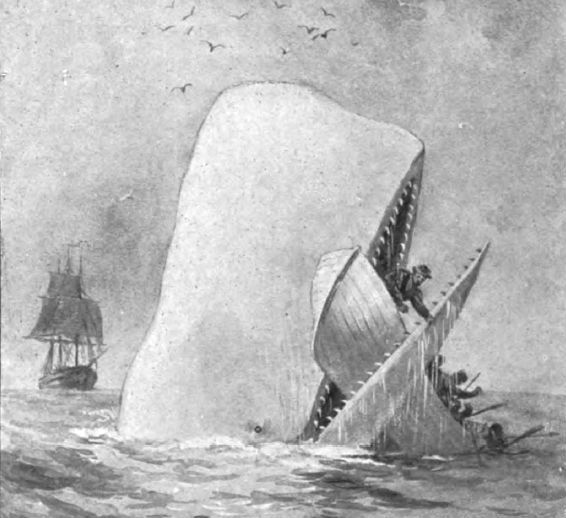

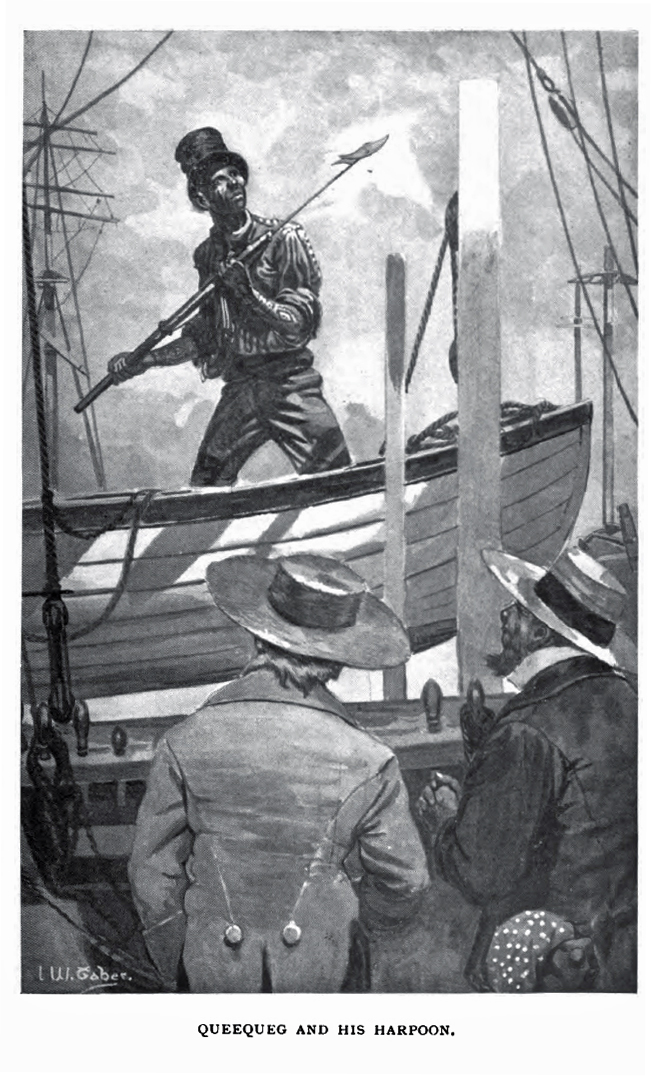

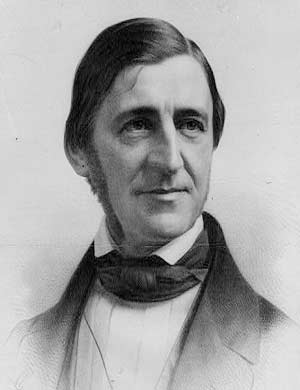


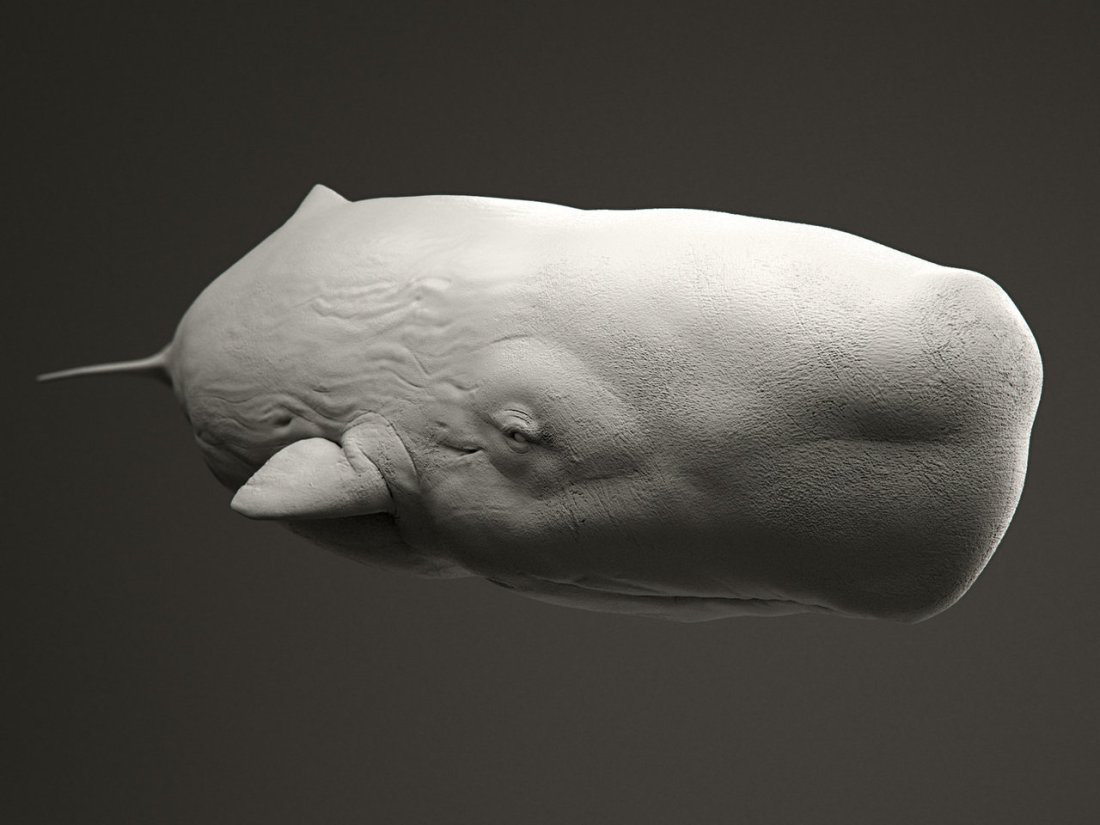


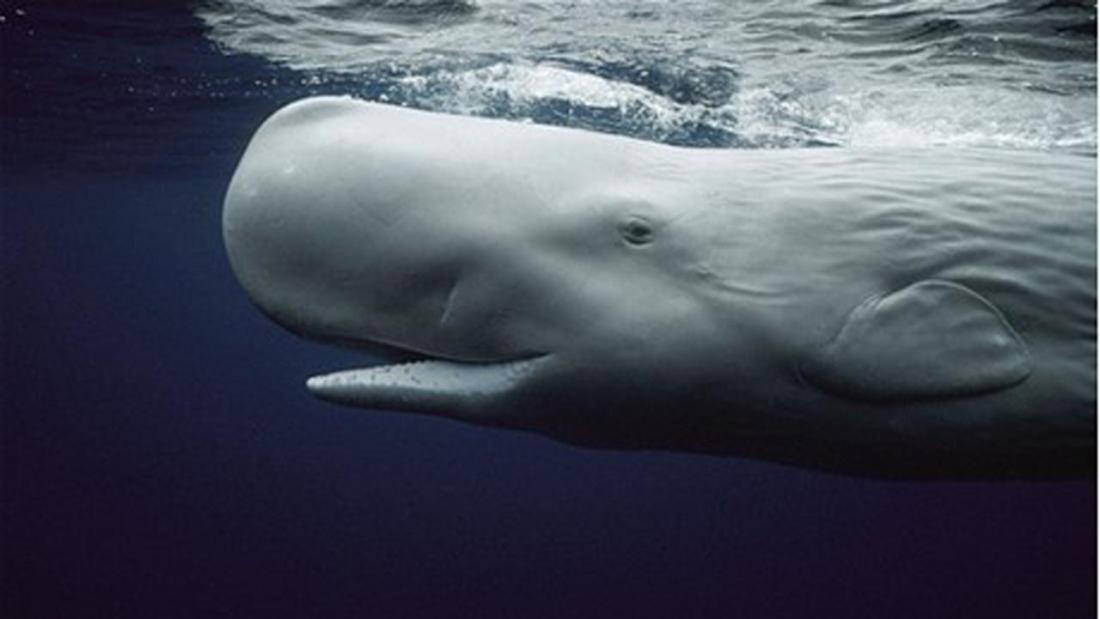













 Infinite Ocean
You must be logged in to post a comment.