Stairs

The wealthy, monied aristocracy

causes those of the petite bourgeoisie

to be afraid of those in poverty,

to whom those in the economic centre

may, one unhappy day, have to descend.

Those in the lower social echelons

dream, one day, of ascending to the top;

but those already there would have them stop

for fear that they would, one day, them usurp.

Still, the rich promote the American dream.

In their deceptiveness, they’d make it seem

that anyone financially can rise,

to make them work more tirelessly…what lies!

for their employers; yet, nothing comes of

this extra work. Hence, this misguided love

of all things monetary blinds us all

from the reality that there’s a wall

that separates each step on this stairway.

All walls of glass, invisible, but they

will stay there always, until we, as one,

decide to break them down. Then, we will run

up to the top, and tear the structure down.

Then we will have a world for all the people, not one of rising claimants to the crown.

Trees

Once, trees
were everywhere,
a green Eden
that grew
up
out
of
the
ground, surrounded in grass.

Then, people
gained knowledge of evil,
learned to exchange
wood
for
a
bit
of
cash,
and they traded green for green.

The lust
for profit made all trees
of equal height,
by
axe
and
saw,
and left just the green of the grass.

Now,
not
only are there just brown stumps on the green,

but
the
orange of fire has been killing the brown and the green

’til
no
more brown or green can be seen.

Now, there’s a whole lot of black and grey on our stony Earth.

Who Is to Blame?

One of the popular motivational videos you can find on YouTube is a scene from Rocky Balboa, when Rocky steps outside with Robert, Rocky Jr. (played by Milo Ventimiglia), his adult son, to discuss why Rocky, now in his fifties, wants to go back in the ring and fight Mason “The Line” Dixon, a young fighter in his prime. Robert tries to talk his father out of fighting Dixon, complaining that his ambitions in life have been stifled from living under his father’s shadow, and that this fight will make it all worse; but Rocky retorts with the advice that, to succeed in this harsh world, “it ain’t about how hard you hit. It’s about how hard you can get hit and keep moving forward; how much you can take and keep moving forward.” He, significantly, also tells his son that blaming others won’t help him.

I must say that I have mixed feelings about Rocky’s speech. While it is true that our ability to overcome difficulties is based on how much we “can get hit and keep moving forward,” and that when we go and get what we’re worth, we have to be prepared “to take the hits,” I don’t think it’s necessarily cowards who point the finger and say that they aren’t where they want to be “because of him, or her, or anybody.”

Sometimes pointing the finger at others is just plain telling it like it is.

And while sometimes it is true that “Life” is what hits the hardest (i.e., bad luck), it shouldn’t be used as a sweeping generalization to which all our troubles can be reduced. Often, indeed quite often, we really aren’t where we want to be because of other people’s evil-doing. Very often, it’s other people who are hitting us the hardest…literally hitting us, even. Blaming our woes on an abstraction like “Life” is often an evasion of personal responsibility on the part of our abusers.

Indeed, abuse victims are traumatized not by “Life” but by other people, their abusers. Bullies often like to make their victims feel as if it’s their weakness that has put them where they are, but that’s nonsense. It’s the bullies who are the real cowards and weaklings, by taking advantage of their victims’ meekness instead of solving their own problems.

The Jews suffered pogroms, discrimination, hate, and a genocide not because of “Life,” but because of other people…European Christians in particular. On the other side of the coin, the Palestinians aren’t suffering oppression because of some abstract notion called “Life,” but because of the Zionists who are occupying their land, and making life there unliveable for the Palestinians.

The aboriginals of North and South America, as well as Australia, suffered the theft of their land, the rejection of their culture, systemic racism, and a genocide not because of “Life,” but because of other people…whites in particular.

Blacks were enslaved, abused, scorned, lynched, and have to this day suffered police brutality not because of “Life,” but because of other people…whites in particular.

And the global proletariat have been ruthlessly exploited and kept in either poverty or near-poverty not by mere bad luck, but by other people…the ruling class.

(The above examples are, of course, far from exhaustive. I’ve failed to mention the many, many other examples of victimization not out of a wish to trivialize or minimize them, but because I simply need to carry on with my argument.)

Yes, other people cause our misfortunes all the time, and there is nothing wrong with pointing this out. In fact, pointing this out is a crucial first step towards ending the misfortune that these other people keep causing for us.

The idea that “cowards” go around blaming other people for their woes is in line with the neoliberal agenda that those in power, and those with sky-high levels of wealth, needn’t take any responsibility for the toxic effect they have on the world. Instead, apparently, those who are down on their luck are unsympathetic ‘losers,’ or are people who just need to pull their socks up.

A recent manifestation of how the obscenely wealthy have risen even higher, while the poor have been plunged into even worse poverty, has been the global response to the coronavirus epidemic. My focus here isn’t so much on how much of a danger covid is, but rather how the global capitalist class is using this pandemic to further their own nefarious agenda.

Millions of people have lost their jobs (I, myself, have gone from employed to underemployed) and/or have been at least in danger of losing their homes, or are food insecure, while the likes of Bezos and Musk have seen their wealth skyrocket. The common people are being made to wear masks while the wealthier don’t seem to need to all that much.

Bill Gates, a man with no education in medicine whatsoever and therefore no authority on medical matters, has been treated like a health guru in the media, pushing the vaccine mandate. A look into the Bill and Melinda Gates Foundation’s history with imposing vaccines on their Third World guinea pigs in India and Africa should give us all pause. This, recall, is the same man who has bought up huge areas of American farmland, who has far too much influence over the media, and over organizations like the WHO through the money he’s given them, and who had an unsavoury business relationship with Jeffrey Epstein…not someone we should be trusting.

I’m no “anti-vaxxer,” but I do believe vaccines should be given a longer testing period than these new ones have been given. I’m definitely opposed to the mandate on them that is being pushed. When people who don’t want the jab are being denied work, re-entry into society, etc., only for refusing an experimental vaccine that doesn’t prevent transmission of covid, that at best gives some protection against more serious symptoms, and at worst could worsen one’s medical condition (due to ADE, something the medical establishment dismisses, but which many of us, not trusting the politics of that establishment, don’t dismiss)–all against a virus where, if you catch it, your chances of survival are at least 99%–this is a potential recipe for totalitarian repression. This is other people hurting us, not “Life.”

Now, some might think the use of the term “totalitarian” to describe vaccine mandates, coronavirus immunity passports, and the like is alarmist. We must, however, think about what all of this is leading to, if we sit back like those unthinking beasts in Animal Farm and passively accept all of this piecemeal chipping-away at all of our rights.

Covid is being exploited by the global capitalist class to usher in not only vaccine mandates, but also to goad everyone into having digital vaccine ID passports, which will further erode our privacy. Governments will be able to surveil and monitor everything we do, everywhere we go, in spite of paying lip service to protecting our privacy. Total tech, that is.

Cashless economies will spring up soon enough, making it possible to take us off the online grid, as it were, and deny us access to the purchasing of anything, if we say or do anything considered a threat to the power of the global elite. Sometimes people are denied access to crucial necessities simply through an online glitch from these biometric ID systems, as has happened to many impoverished Indians unable to get their monthly rice rations…these people starved to death. “Life” didn’t do this to them; other people are to blame–the ruling class.

To get back to the covid controversy, the problem with masks, social distancing, and lockdowns is that it aggravates the already devastating alienation that has grown over the past forty years. Solidarity, worker unity, and organizing aren’t sufficient conditions to bring about a revolutionary situation leading to socialism, but they are necessary conditions.

Adding to all this divisiveness is how the media has portrayed the compliant side vs. the resistant side in the covid debates. The former are portrayed as not only ‘mature,’ ‘reasonable,’ and ‘responsible,’ but also as the bulk of the left…and by ‘left,’ the media presents them as liberals. As for the resistant side, not only are they seen as crybabies, irrational, and selfish, they’re also portrayed as largely right-wing (i.e., libertarians, Christian fundamentalists, NWO/Illuminati conspiracy theorists, and/or Trump supporters).

My resistance, on the other hand, as well as the resistance of many others out there to the repressive measures being used on us, is based on solid leftist principles. More and more of the working class is getting fed up with extreme income inequality, long hours with poor wages, food and housing insecurities, and the like; not only are workers striking, but they’re outright quitting en masse. Add to this the worst economic collapse (predicted before covid) we’ve seen in decades (along with inflation), and it isn’t hard to see how the global ruling class is getting nervous.

Just as, a century ago, the capitalist class used fascism to circumvent socialist revolution, so are they now using these authoritarian measures to rein us in. This current predicament is why revolution is so urgently needed. These months and years could be our last chance before not only these authoritarian measures are implemented and irreversible, but also the ecocide of climate change and the threat of nuclear war between the US, China, and Russia could be realized.

Again, these evils that loom over our heads aren’t to be blamed on some impersonal force called “Life,” or “bad luck.” There are real people to be blamed for all these ills.

With a socialist revolution, we could also settle the covid controversies once and for all by taking all the relevant medical information and putting it in the hands of the people. A big part of the reason that so many of us don’t trust how the medical establishment is presenting the ‘facts’ on the ‘rona is with all the censorship and ‘fact-checking’ going on.

The mainstream media lied about Iraq, Libya, Syria, ‘Russia-gate,’ and is currently lying about China and the Uyghurs. And we’re supposed to trust the same media establishment, paid for and controlled by such oligarchs as Gates and Bezos, to be telling us the truth about the ‘rona? Hearing the likes of Fauci, the top mouthpieces of the medical and political establishment, flip-flop and lie–time and again–over the past two years, doesn’t encourage trust.

A revolution could result in the people gaining control over the narrative. With all the information available, uncensored and free of the undue influence of the wealthy, we the people could scrutinize and thoroughly debate the evidence on the effectiveness of vaccines and masks, the seriousness of covid on people of all ages, and all the other relevant issues. Whichever way the pendulum ultimately swings, and how far it swings one way or the other (i.e., the compliant side vs. the resistant side), we would all have an answer we could trust.

We’d also have a decent chance to solve all the other problems of our world: the endless wars, ecocide, income inequality, homelessness, healthcare, education, racism, alienation, and bullying.

If, given this post-revolutionary chance, we fail to solve these problems, we really will have only ourselves to blame.

‘Bite,’ A Children’s Story

[The following is a story I hope one day to have published as a children’s book. I originally intended to add illustrations to this blog post, drawings that I made myself, but they were so awful-looking that I decided not to use them. So instead, what you have here is an unillustrated children’s narrative in verse. As dull as it may look, at least it doesn’t have pictures so badly done that they distract from the story. Maybe in the future I can find an illustrator who can do artistic justice to my verse narrative, and then I can find a publisher for it.]

In the land of Asu, where the people were hungry,
One bit other people to live.
Because Mr. Lone Skum, who had all of the money
And food, never wanted to give.

Mr. Skum was a big, greedy, selfish old man
Who made everyone work like a slave.
For their work, he would never feed any more than
They all needed: that’s all that he gave.

So the poor, hungry people would bite one another
To get any food that they could.
Every girl bit her sister, each boy bit his brother,
And hurting became the new good.

Now, the weakest of them, who were bitten so much
That they crawled about, barely alive,
Had to get out of Asu, and search for a touch
Of food elsewhere–so they hoped to thrive.

Some found the land Bacu, where people were kind,
Where they helped the weak regain their health.
Bacus helped all the weak Asus that they could find
Even though they lacked Mr. Skum’s wealth.

And they even let Asus bite them for their food,
And they didn’t, in anger, bite back;
For they knew that in fighting an unending feud,
You will never regain what you lack.

But instead, they would hug the weak Asus with love,
And this caused all their bite marks to heal.
With their newly-found strength, these Asus rose above
The need only cruel hatred to feel.

Then the Asus and Bacus were one! Hand in hand,
They combined to become all one giant.
Then, this giant left Bacu and returned to the land
Of Asu, where it would stand defiant

Against Mr. Lone Skum and his army of guards.
But the biters of Asu, still wanting
The food of flesh, saw the giant, and they tried hard
To climb it and eat, however daunting

They found its size. Though it was bitten, it held
Them all in one big, loving embrace.
The hug weakened their anger, which from them was felled
Like a tree, and with love was replaced.

Then they merged with the giant, and together, grew big
As a mini-moon, rolled like a ball
To the mansion of Skum, that mean, greedy old pig–
From his throne of power, he had to fall.

But first, it had to face Skum’s great army of men,
Who were pointing their guns at the sphere.
It rolled over them, flattened, absorbed them, and then
It proceeded to Skum without fear.

At dinner, his table all covered with dishes–
Pork, turkey, wine, rice, beans, and cake–
He ate all the food that any great glutton wishes
For, and cooks in his kitchen must bake.

The ball crashed through the walls of his opulent house
With a fearful noise, rumbling like thunder.
Then he saw it: so big, it made him seem a mouse,
And he quivered in terror and wonder.

It rolled over him, flattened him, made him a sheet.
The people, at last, were all freed!
And the ball came apart where their hands all did meet,
For the people were all free to feed

On the food at the table. And that kitchen now
Makes food for the Asus, not for money.
And the Asus, together in friendship, would vow
No more biting each other when hungry.

They gave thanks to the Bacus for giving them aid,
And the Bacus went back to their land,
Being glad to have helped, for Lone Skum once had made
Them his slaves, too, bound each Bacu’s hand.

So, the lesson that we all must learn from this fable
Is never to fight with each other.
When the rich people won’t let you sit at their table,
Fight them, not your sister or brother.

Analysis of ‘Le Amiche’

Le Amiche (“The Girlfriends”) is a 1955 film directed by Michelangelo Antonioni, written by him, Suso Cecchi D’Amico, and Alba De Cespedes, and adapted from Tra donne sole (1949), a novel by Cesare Pavese. The film stars Eleonora Rossi DragoGabriele FerzettiFranco Fabrizi, and Valentina Cortese, with Yvonne Furneaux (who was also in Repulsion), Ettore Manni, and Madeleine Fischer. It was shot on location in Turin, Piemonte, Italy.

Le Amiche received the Silver Lion award in 1955 from the Venice Film Festival; it also won the Italian National Syndicate of Film Journalists Silver Ribbon Award for Best Director (Antonioni) and Best Supporting Actress (Cortese).

The name of the film is ironic and somewhat deceptive, since Nene (Cortese), Momina De Stefani (Furneaux), Rosetta Savoni (Fischer), and Mariella (played by Anna Maria Pancani) are girlfriends in little more than a superficial sense. There’s actually a considerable amount of conflict between them, at varying levels of intensity, due to jealousies over their rivalries over men, as well as their varying degrees of vanity and narcissism.

Indeed, jealousy, envy, vanity, and pride are major themes in Le Amiche. A few minor comparisons between this film and Othello can be made, as far as the themes of jealousy and envy are concerned. Rosetta can be seen as the Othello of the film (Nene, too, in an opposing way); her doomed, jealous love of Lorenzo (Ferzetti) leads to a failed suicide attempt at the beginning of the film, and a successful suicide towards the end, just as the Moor kills himself at the end of Othello. Momina, cynical and envious of others’ happiness in love, is the scheming Iago: she encourages Rosetta’s pursuit of Lorenzo, leading to a conflict she finds most amusing to watch, just as Iago enjoys watching the Moor go insane with jealousy.

In a way, a vague comparison can be made also between Le Amiche and Romeo and Juliet, since the film involves pairs of lovers from incompatible worlds. The pairings of Clelia (Drago) and Carlo (Manni), and of Rosetta and Lorenzo, are incompatible not because of feuding families, though, but because of conflicting class relations and sex roles.

Clelia, as the manager of a new fashion salon opening in Turin, is–like her boss (played by Maria Gambarelli)–as an Italian woman in the conservative 1950s, a career woman ‘before it was cool.’ Thus, Clelia is a bourgeois. Carlo, her love interest, on the other hand, is a worker. The sex-role assumption of the time was that, were they to marry, he’d be supporting her financially, not vice versa…a rather hard thing for him to do, with the lower amount of money he’s making than she is. She’d also suffer an unacceptable lowering of social rank in such a marriage.

Similarly, Rosetta is from a well-to-do family, while the man she’s in love with is a struggling artist, one struggling so much that Nene, his fiancée, is actually more successful as an artist than he. Again, the sex-role assumption is that Lorenzo is supposed to be the more successful of the couple, and therefore the more monied one, not Nene or Rosetta. Neither of these women care that he is of modest means (nor should they, of course), but his pride and male chauvinism make him envy Nene’s success, just as she and Rosetta are jealous of each other with regards to him.

Though Clelia is as bourgeois as Momina, both women are on the opposite ends of the narcissism spectrum. We can see this contrast early on in the film, when we are introduced first to Clelia, who is unassuming and, with a smile, tells the hotel maid either “signora” or “signorina” is an acceptable way to address her; then later on, we’re introduced to Momina at the front desk of the hotel, where she treats the man working there contemptuously, saying he’s “ridiculous” to think her friend, Rosetta, has already left the hotel, then orders him to call her room. We see the contrast in their attitudes towards workers, and towards class differences.

Clelia may walk around in a beautiful fur coat, but she does so not out of narcissistic ostentation; as the manager of the new fashion salon, she has an image to maintain, hence the nice clothes. Similarly, her annoyance with the workers’ slow progress in getting the salon ready isn’t out of a condescending attitude to them, but from the pressure she feels from her boss to have everything ready on time.

In Clelia and Momina we can see the Venn diagram, as it were, where narcissism and capitalism overlap. In Momina, both are apparent, since she uses the class hierarchy of capitalism as one of a number of rationalizations to demonstrate her ‘superiority’ to others. In Clelia, we just see the pressures of capitalism making her dress and act with an air of superiority, but narcissistic tendencies are minimal in her: her looking at herself in mirrors, for example, is brief. Momina, in contrast, will look idolatrously at her reflection with that of Cesare Pedone (Fabrizi) in a window in her home, idealizing the image as one of a ‘perfect couple,’ when actually, she’s married–though temporarily separated from her husband–using Cesare as one of many lovers.

A recurring issue in this film is various characters’ preoccupations with such superficialities as what dress to wear, what facial lotion to use, how is one’s reputation or social status, etc. Note again that this preoccupation with one’s public image is directly related to one’s social class, where narcissism and capitalism meet.

The big mystery early on in the film is why Rosetta has tried to kill herself by taking an overdose of sleeping pills. On the train ride back from the girlfriends’ disastrous get-together at the beach, Rosetta confides in Clelia about her reasons for her suicide attempt: namely, she speaks of the emptiness of, for example, wondering what dress she’ll wear; soon after, she confesses the more central reason–she can’t have Nene’s Lorenzo. Still, that earlier reason carries considerable weight, and in fact it bears a relationship with the second reason.

She loves Lorenzo because she sees in him a gruff honesty that doesn’t exist in such superficial friends as Momina and the pretty, but air-headed Mariella, the latter’s preoccupations being little more than how beautiful others see her, and who will be her man. Rosetta doesn’t care whether Lorenzo is successful or not: she loves him for how he’s made her feel, in the portrait he’s painted of her.

Though Momina predictably doesn’t think much of the picture, Rosetta is touched by Lorenzo’s efforts. It felt to her as if, with his brush painting her face, he was caressing her. To look at her portrait is, for her, to look in a metaphorical mirror: in painting her, he’s created an idealized version of her to which she cannot measure up if she can’t have him. Hence, when she tries phoning him prior to taking the overdose of sleeping pills, she wishes he’d destroy the painting, as she’s destroyed all her photographs, other metaphorical mirrors of herself. She’d wipe out all traces of herself prior to her suicide.

Of course, Lorenzo being by his own admission much too vain to destroy his painting, also sees it as a kind of metaphorical mirror (i.e., of his painting ability), since apart from having painted it, he sees, in her face, her love reflected back on him, titillating his vanity. Indeed, he looks at her smiling at him, and he feels she has ‘the most beautiful smile in the world.’ His narcissism isn’t of Momina’s malignant kind (i.e., he doesn’t consciously intend to hurt Rosetta or Nene, whereas Momina finds it amusing to stir up drama in this love triangle), but it is sufficient to make him enjoy an affair with Rosetta, enjoying her charms and flattery while leading her on and causing Nene to suffer.

Now, Momina is eager to find any insights related to Rosetta’s suicide attempt, including whom she tried to phone prior to taking the pills. Momina acts as though she only wants to help, but her real agenda is to find out the truth about Rosetta and Lorenzo, in order to exploit it.

Other examples of Momina’s superficiality, narcissism, and general meanness are seen in the early scene when she asks Clelia, in her hotel room, about whom Rosetta phoned. Momina gives Clelia a backhanded compliment about how well she dresses, as good publicity for her salon, when also pointing out how, apparently, ‘fashion designers usually dress like tramps.’ She then asks about Clelia’s facial cream, Clelia getting the hint that Momina is implying how cheap it is. Clelia, lacking Momina’s narcissism, doesn’t judge a product’s worth by its price.

Now, Clelia’s unassuming, but her sense of social class nonetheless must exclude Carlo, as much as she likes him. Workers are typically talked down to by not only Momina, but also Cesare, who is condescending to Carlo in the diner scene when he’s with Clelia; though Mariella acknowledges Carlo is a ‘hunk.’ Clelia tries to be kinder to workers, as I pointed out with her interaction with the hotel maid, as well as with her accommodation of the vagabond in the trattoria scene, when Lorenzo fights with Cesare.

Clelia, therefore, represents the liberal capitalist, who would like to be kinder to the poor, but the pressures of her social class won’t allow her to go beyond a few token gestures of generosity. Hence, she enjoys Carlo’s company in the diner, as well as during their walk to look at furniture for the fashion salon…but marriage with him is out of the question. Just compare her coat with his to see why.

During their walk, she shows him the poor area of Turin where she lived as a little girl. Yes, she was once poor, and was able to rise out of it, so she lacks the snobbishness of Momina and Cesare. Carlo, nonetheless, can feel her airs of superiority, however much Clelia tries to minimize them, and he cannot hide his annoyance with her.

At the end of the film, when Clelia is to leave Turin by train and return to Rome, Carlo wants to be there when she leaves, but he is too ashamed of his lower social class to show himself to her. As he follows her to the train she gets on, he hides behind a vendor’s tall cart. Note how this carrier of things to sell, a symbol of capitalism, is a barrier separating Carlo from Clelia.

Rosetta similarly would love Lorenzo with all her heart, and not care that he has less money than the wealth of the snobbish family she feels little affection for. (Indeed, when her mother visits her in the hospital and is scandalized by her suicide attempt, instead of focusing on her daughter’s pain, she steps aside and looks at herself in her compact. Her narcissistic preoccupation with her own looks, her image, is a more pressing concern than Rosetta’s health and happiness.) She sees herself and Lorenzo in a large mirror while he’s lying on a bed; seeing their reflection together is her idealizing of their relationship, but for the opposite reason of Momina’s idealizing of her time together with Cesare, seeing their reflection in the window in her home. Momina loves the status of having a man like Cesare; Rosetta sincerely loves Lorenzo for himself.

It isn’t Rosetta who sees the class divide between herself and Lorenzo as a problem, though: it is he who does. His masculine pride won’t allow him to marry up, as Clelia’s pressure from the capitalist world won’t allow her to marry down (she wouldn’t want to give up her career and be a housewife/mother for a wealthy husband, but she especially won’t do so for a working-class husband–Carlo…Couldn’t she continue to work, and he be a househusband?).

In these contradictions, we see how career women rising in the context of capitalism will never assure equality of the sexes. A wiping out of sex roles–including the assumption that men are supposed to be more successful (recall Momina’s comment in this connection, during the scene in her home, something with which Rosetta vehemently disagrees), more monied, and generally ‘superior’ to women–is indispensable to such an attainment of equality…and it must be achieved in a socialist context, with a wiping-out of class differences, since sex roles, along with such things as racism, are among the many things the ruling class uses to keep the working class divided among each other.

Lorenzo, however, has internalized the social expectation of masculine preeminence, and his pride won’t let him let go of it. Hence, his fight with Cesare, whose taunts about Nene’s artistic success over Lorenzo’s failures push him beyond endurance in the trattoria scene. Cesare, of course, pretends he’s just joking around, an obvious falsehood, but one of the main themes of Le Amiche is the keeping up of appearances.

As I mentioned above, “The Girlfriends” is an ironic, deceptive name for this film. These women (and their men) largely go about keeping up the appearance of friendship, all for the bourgeois sake of saving face. Actually, all manner of animosity and hostility abound, coming to a head in the three fight scenes–first, at the beach with Momina slapping Mariella, then in the trattoria, with Lorenzo and Cesare trading punches, and finally, between Clelia and Momina in the fashion salon.

Mariella, always opening her mouth without thinking, speaks of how only Rosetta doesn’t have a man, and not noticing that Rosetta has just walked by and heard her. Wishing to avoid losing face and to keep up the appearance of them all bearing no gossipy ill will toward Rosetta, Momina scolds Mariella for speaking so foolishly. When Mariella tries to defend her choice of words and repeats the tactless remark, Momina slaps her. Rosetta, however, prefers Mariella’s tactlessness to Momina’s hypocrisy. As another manifestation of animosity thinly veiled with phoney friendship, Mariella gets even with Momina for the slap by hugging and kissing Cesare in the sand, he being Momina’s boyfriend of the moment, then confessing her motive of revenge before hugging Momina in a pretence of reconciliation with her.

Clelia’s job as manager of a fashion salon is her participating in the business of keeping up appearances, producing glamorous clothes that allow their women wearers to maintain the illusion of exquisite beauty. Capitalism is compelling Clelia to reinforce women’s socially-induced need to hide behind the illusion of beauty, reinforcing this insecurity for the sake of making a profit. Her relationship with Carlo cannot last, him wearing that dull, scruffy coat as against her fur coat, because her association with him would tarnish her glamorous image–it’s bad for business. She even has to hide a love note between the two of them from her models, one of them finding it and laughing at her boss’s expense.

The two women among the girlfriends whom one would assume to be the most mutually rancorous are actually mutually empathic–Rosetta and Nene. The former has stolen the latter’s man; Nene has seen the proof from a sketch she knows Lorenzo did of Rosetta on a matchbox, then given to Rosetta. But instead of privately fighting with her while publicly smiling with her, to keep up appearances among their girlfriends, Nene has a sad, candid conversation with Rosetta about him in private. Rosetta can’t deny being in love with Nene’s man, yet she’s also remorseful about causing Nene’s suffering.

These two, ironically, are the most like friends of all the women.

The final moment of animosity that comes to a head is between Clelia and Momina after Rosetta’s successful suicide. Weeping, Clelia calls Momina a murderess for having goaded on Rosetta to continue her doomed relationship with Lorenzo, all for Momina’s narcissistic, cynical entertainment. That Clelia has blown up at Momina right in front of her boss, a scandalous loss of face in the salon, means Clelia assumes she will lose her job. Fortunately, her boss forgives her and offers her a job in a salon back in Rome, which Clelia accepts.

The boss actually envies Clelia for having been able to get her pain off her chest. The boss, always pressured to keep up appearances, has had to bottle up all of her feelings, a suppression she jokingly claims must be causing her some kind of gastrointestinal problem.

Le Amiche is a movie all about social hypocrisy, narcissism, pressure to keep up appearances, and punishment for those who dare to break society’s rules. It’s also about how class and sex roles divide us all. One hopes that those who watch this film will learn, by example, how not to be friends.

Analysis of ‘A Tale of Two Cities’

A Tale of Two Cities is an 1859 historical novel by Charles Dickens, set just before and during the French Revolution, the two cities being London and Paris. The story is about the intersecting lives of Doctor Alexandre Manette, his daughter Lucie, and Charles Darnay in France, and Sydney Carton in England.

A Tale of Two Cities is Dickens’s most famous work of historical fiction, and it’s one of the best-selling novels of all time. It has been adapted for film, TV, radio, and the stage, and it continues to influence popular culture.

Here is a link to famous quotes from the novel.

Of all the themes in this novel, the dominant one seems to be duality, expressed in many forms: London/Paris, feudalism/capitalism, light/darkness, Darnay/Carton (two men so fortuitously similar in appearance as to seem twins), Lucie Manette/Madame Defarge (personifications of light and darkness, respectively), and life/death…or death/life, as manifested in symbolic resurrections in the story.

The famous beginning of the novel establishes this theme of duality: “It was the best of times, it was the worst of times,…” The dualistic paradoxes continue with this famous long opening sentence: wisdom/foolishness, belief/incredulity, Light/Darkness, hope/despair, everything/nothing, Heaven/”the other way,” and good/evil.

These juxtaposed opposites represent their dialectical unity, the clash of contradictions. Though the above opposites are of the Hegelian dialectic of ideas, they refer to an epoch famously discussed by Marx as of the historical, materialist dialectic. The novel begins in 1775, just fourteen years before the French Revolution, when the old feudal system would be violently replaced by the capitalist mode of production.

Another duality is seen when Dickens compares the French Revolution to politically radical activity going on in England around the time of the novel’s publication. He fears that a similar bloodbath to that of the Reign of Terror may occur in England, though by the end of the novel, things seem more hopeful for England, even to the point of a tinge of nationalistic pride (recall patriotic Miss Pross‘s defiant words to Madame Defarge: “I am a Briton”–Book Three, Chapter 14, page 407).

The duality of death/life becomes apparent in Book One, Chapter 2, when it is learned that someone has been “RECALLED TO LIFE.” This enigmatic phrase, we later learn, refers to Doctor Manette, who in his 18-year incarceration in the Bastille–a kind of death–has been freed, a kind of resurrection. Other symbolic resurrections, two of them, will occur for Darnay, thanks to his look-alike, Carton.

The trauma of Doctor Manette’s incarceration stays with him after his release, when we find him still making shoes, his work in the Bastille, in the darkness, something he no longer needs to do, but a task he feels psychologically compelled to continue doing. His union with Lucie, the daughter he’s never known and who until now has thought him dead, will bring him back into the light. ‘Lucie‘ literally means ‘light.’

She is so shocked to learn that her father is actually alive that she faints. Symbolically, father and daughter have exchanged the states of life and death, unified opposites like so many others in this story.

Another example of duality is that of two spilled reds: wine, and blood. In Chapter 5 of Book One, a large cask of wine is dropped on the ground by the wine shop of M. Ernest and Mme. Thérese Defarge, in the Faubourg Sainte-Antoine, a suburb of Paris. The poor people of the area rush over to have as much of a drink of the spilled wine as they can. One of them smears BLOOD on a wall with the muddy wine (page 32).

This eagerness of the poor to drink wine off the filthy ground is a reflection of their desperation, want, and hunger. “Hunger. It was prevalent everywhere. Hunger was pushed out of the tall houses, in the wretched clothing that hung upon poles and lines; Hunger was patched into them with straw and rag and wood and paper; Hunger was repeated in every fragment of the small modicum of firewood that the man sawed off; Hunger stared down from the smokeless chimneys, and started up from the filthy street that had no offal, among its refuse, of anything to eat. Hunger was the inscription on the baker’s shelves, written in every small loaf of his scanty stock of bad bread; at the sausage-shop, in every dead-dog preparation that was offered for sale. Hunger rattled its dry bones among the roasting chestnuts in the turned cylinder; Hunger was shred into atomies in every farthing porringer of husky chips of potato, fried with some reluctant drops of oil.” (page 33)

Soon after, Dickens relates Want to violent imagery: “The trade signs (and they were almost as many as the shops) were, all, grim illustrations of Want. The butcher and the porkman painted up only the leanest scrags of meat; the baker, the coarsest of meagre loaves. The people rudely pictured as drinking in the wine-shops, croaked over their scanty measures of thin wine and beer, and were gloweringly confidential together. Nothing was represented in a flourishing condition, save tools and weapons; but, the cutler’s knives and axes were sharp and bright, the smith’s hammers were heavy, and the gun-maker’s stock was murderous.” (Dickens, page 34)

This juxtaposition of red wine and blood with hunger and want, and with references to “sharp and bright” knives and axes, heavy hammers, and with the “murderous” gun-maker’s stock, is altogether a foreshadowing of the violence in the impending revolution, when the poor and hungry will finally have their revenge on the rich.

Later in this chapter, we meet not only the Defarges, but also the three “Jacques.” These revolutionaries name themselves after the Jacquerie, a popular peasant revolt in northern France back in the 14th century. The nobles of the time derided these peasants as “Jacques” for the padded surplice, called “jacques” that they wore. The term jacquerie became synonymous with peasant uprisings in both France and England thereafter.

I don’t know if there’s a direct connection in meaning between the kind of Jacques the French nobility were scorning in the 14th century and the “sly, insinuating Jacks” (I, iii, 53) that Richard III was railing against in Shakespeare’s play, but there’s an interesting association that can be made in the “Jacques” of Dickens’s novel trading positions of power with the 18th century French nobility and the Duke of Gloucester’s contempt for such people of low birth when he famously says, “The world is grown so bad/That wrens make prey where eagles dare not perch./Since every Jack became a gentleman/There’s many a gentle person made a Jack.” (I, iii, 70-73).

Meanwhile, Madame Defarge is typically seen knitting (see Book Two, Chapters 15 and 16 in particular). She will be a tricoteuse during the guillotine executions, doing her knitting there. This knitting symbolically suggests an association with the Fates, who in their spinning determined everyone’s life and death. Since Defarge is also seen knitting long before the revolution and its Reign of Terror, this early knitting is a foreshadowing of the violence to come.

She encrypts the names of those to be executed into her knitting, again connecting her with the Fates, but also, in a way, with Penelope, who wove a shroud while waiting ever so patiently for her husband, Odysseus, to come home and kill all of her suitors, who were eating her out of house and home. Madame Defarge, as she knits, is also waiting ever so patiently for the violent overthrow of those who, like Penelope’s suitors, have done violence of one form or another to her home (more on that later).

To jump ahead in Dickens’s story, we encounter the first time Carton saves Darnay, who is on trial for treason against the British Crown, by simply demonstrating to the court his uncanny physical resemblance to the accused. The witnesses, two spies, claim that they could pick Darnay out from any man; but their testimony is undermined by Carton’s likeness to him.

The doubles share more in common than just their looks. They share some sense of shame, Darnay’s by his association with his uncle, the wicked Marquis St. Evrémonde, and Carton by his life as a drunken wastrel. Both men redeem themselves: Darnay, by renouncing his uncle’s family and changing his name from Evrémonde to an Anglicizing of D’Aulnais (his mother’s maiden name); and Carton, by taking Darnay’s name and place in La Force Prison, from which he’s to be taken and guillotined, the former thus sacrificing his life to save that of the latter.

Yet another duality is to be found in the two systems of class oppression portrayed in A Tale of Two Cities–namely, the outgoing feudalist one and the incoming capitalist one. Though the revolutionaries, the left-wingers, were hoping for a genuinely new society based on the principles of liberté, égalité, fraternité, this was a bourgeois, not a socialist, revolution. It was good that feudal France was no more, but a new form of class struggle was about to be born.

The despicable decadence of feudal times is personified in the unnamed aristocrat known as “Monseigneur.” In Chapter 7 of Book Two, we learn that he needs no less than four men, in “gorgeous decoration,” to get his morning’s chocolate into his mouth (Dickens, page 114)

The cruelties of feudalism, however, are personified in the marquis, whose carriage runs over a little boy, killing him. The marquis’s reaction to the death he’s caused is beyond insensitive: to compensate Gaspard, the dead boy’s grieving father, the marquis tosses him a gold coin and drives on. Gaspard will kill him in revenge, hide out for a year, then be hanged for murder.

The chateau of the marquis is vividly described in terms of the wickedness of the man who lives in it. The first paragraph of Book Two, Chapter 9, “The Gorgon‘s Head,” repeatedly uses the word “stone” or “stony” to describe so much of the marquis’s property as to suggest that Medusa‘s head had turned everything to stone two hundred years prior. This emphasis on stoniness, of course, reflects the marquis’s stony heart, just as the petrifying ugliness of the Gorgon’s head is a mirror to his moral ugliness.

It is this ugliness of feudal France that is the context in which the ugliness of revolutionary violence must be understood. Dickens’s tone, during his narration of all of the events from the storming of the Bastille to the Reign of Terror, gives the clear impression that he considered the actions of the revolutionaries to be no less evil than those of their former feudal oppressors.

As with A Christmas Carol, the Dickens who was otherwise thoroughly sympathetic to the poor is in this novel showing what we today would call peak liberalism.

For my part, I’m ambivalent about the wrongs the revolutionaries committed. Their main fault resides in ultimately leaving France with a new system of economic exploitation–capitalism–to replace the old system. The Defarges, after all, are the petite bourgeois owners of a wine shop. As for the violence of the revolutionaries, what can I say? Recall Mao’s words: “A revolution is not a dinner party.”

Were there excesses of violence? Undoubtedly. But revolutions are by definition chaotic, bloody, and messy. The oppressing class can’t be voted or legislated away…they can only be violently overthrown, for they will undermine every attempt to tax them or rein in their power over us. French revolutionary violence was, properly understood, a reaction to centuries of violence done to a starving, wretched populace of peasants.

As for Madame Defarge, her violent excesses may be wrong, but they’re perfectly explicable. Her sister was raped by Darnay’s uncle; her brother confronted the uncle about the rape and was run through with the uncle’s sword. Both her brother and sister died after the best, though failed, efforts of Dr. Manette, who was imprisoned for attempting to report the crimes, and who wrote of them in a manuscript in his cell. Having found the manuscript, which denounces the whole Evrémonde family, Madame Defarge uses it to avenge her dead siblings by trying to destroy not only Darnay, but his whole family, too.

She was “imbued from her childhood with a brooding sense of wrong, and an inveterate hatred of a class, opportunity had developed her into a tigress. She was absolutely without pity. If she had ever had the virtue in her, it had quite gone out of her.

“It was nothing to her that an innocent man was to die for the sins of his forefathers; she saw, not him, but them.” (Book Three, Chapter 14, page 402)

One set of excesses tends to lead to an opposing set of excesses, like the teeth of the ouroboros biting into its tail, a symbol of the dialectical relationship between opposites that I’ve used many times. Since we don’t like riots, we should recall MLK’s words: “A riot is the language of the unheard.” Similarly, if you don’t like revolutionary bloodshed, you should bear in mind that such bloody excesses are the words of those who have hitherto been silenced by their oppressors, often spoken in gory fashion.

Madame Defarge is motivated by revenge, personified in one of the other revolutionary women, known literally as The Vengeance. She is the “shadow” of Madame Defarge, a darkness within darkness. All of those who have suffered under feudal rule have been in darkness, such as Doctor Manette in his shadowy prison cell, and in the garret of the Defarges’ wine shop where he is found obsessively making shoes (Chapter 5, The Wine Shop). So when the revolutionaries have their revenge, they put men like Darnay in the darkness of cells in La Force, too. Indeed, his second arrest occurs at night.

Lucie’s light is in dialectical contrast to Madame Defarge’s darkness. The former says of the latter, “that dreadful woman seems to throw a shadow on me and on all my hopes.” (Book Three, Chapter 3, The Shadow, page 298) Her light, symbolized by each golden thread of her hair, pulls her father out of the dark. (Book One, Chapter 6, The Shoemaker, pages 47-49)

Elsewhere, we have Jerry Cruncher, the “resurrection man” who raids graves in the darkness, and is thus a dark parody of the real resurrection man, Carton, who by taking on Darnay’s identity recalls him to life, bringing him out of that dark cell and into the light, to be reunited with the light of his life, Lucie.

Thus Jerry, a nasty fellow who abuses his wife early on in the story, is the darkness to Carton’s light. Before he is to be guillotined, Carton compares his fate to that of Christ. He quotes the Gospel according to John: “I am the Resurrection and the Life.” (John 11:25) Carton, as a Christ-figure, dies so Darnay can live. In this we see the dialectical relationship between life and death in Dickens’s novel. Recall in this connection another important quote from John: “I am the light of the world: he that followeth me shall not walk in darkness, but shall have the light of life.” (John 8:12)

Though Carton loves Lucie, he knows he can never have her. After all, light doesn’t sit with light, but rather with its dialectical opposite: darkness. Carton will go into the darkness of Darnay’s cell so the latter can go out into Lucie’s light.

And while darkness and light are intertwined, so are life and death. Having approached the guillotine, Carton imagines a future world, one long after his death, in which Darnay and Lucie will name a son after Carton. He can “see the lives for which [he] lay[s] down [his] life,” (Dickens, page 417) and in his prophetic visions, as well as the son, Carton has his own resurrection, his own recalling to life after death.

Speaking of ‘resurrections,’ though, another resurrection can be seen today as compared with what was going on back in Dickens’s day and before: the exacerbated immiseration of the poor. A Tale of Two Shitties: the shittiness of Dickens’s time, and the shittiness of our world ever since the dissolution of the socialist states. In this, we see yet another duality: class conflict then, and class conflict now.

Dickens, sympathetic to the plight of the poor but horrified at revolutionary violence, was using this novel to warn the rich of the danger of aggravating class conflict to the point of provoking such violence. When one considers the extremes of income inequality today, as well as all these unending imperialist wars, climate change, and how fear of disease is a distraction from the contemplation of revolution, one would think the ruling class would be heeding Dickens’s warning.

Instead, would-be leftists virtue signal in such ways as AOC wearing a dress with the message “TAX THE RICH” (of which Dickens would have approved) while ignoring protestors outside the Met Gala. In some photos of that dress, the T in TAX isn’t really showing, a kind of fortuitous prophecy. Then there was that small guillotine set by the front door of Bezos’s mansion.

May the Evrémondes everywhere in the world watch out.

The modern-day Madame Defarge is doing her knitting.

Charles Dickens, A Tale of Two Cities, Collins Classics, London, 1859

The Ouroboros of Philosophy

I: Introduction

My concern here is not with presenting an encyclopedic understanding of philosophy and its history; I am in no way qualified even to attempt that. Instead, I will look at selected examples of philosophical ideas as manifestations of what I see the ouroboros as symbolizing.

As I’ve explained in a number of posts, I use the ouroboros to symbolize the dialectical relationship between opposites. The serpent, coiled in a circle and biting its tail, represents a circular continuum whose extreme opposites meet and phase into each other, the biting head being one extreme, and the bitten tail being its opposite. The coiled middle of the serpent represents all the intermediate points on the continuum, the moderate points between the extremes.

The dialectic, often being a dialogue of two disagreeing philosophers presenting their opposing opinions in a back-and-forth debate, has been the basis of so much of the history of Western philosophy that I find it illustrative to use my ouroboros symbolism to systematize the dialectic. Such a systematization is what I will attempt here.

II: Ancient Greece, and the Ancient East

Thales, interestingly, conceived of the universe as having originated in water. He believed this origin to be literally true, as Aristotle explained it in his Metaphysics:

“Most of the first philosophers thought that principles in the form of matter were the only principles of all things. For they say that the element and first principle of the things that exist is that from which they all are and from which they first come into being and into which they are finally destroyed, its substance remaining and its properties changing…There must be some nature–either one or more than one–from which the other things come into being, it being preserved. But as to the number and form of this sort of principle, they do not all agree. Thales, the founder of this kind of philosophy, says that it is water (that is why he declares that the earth rests on water). He perhaps came to acquire this belief from seeing that the nourishment of everything is moist and that heat itself comes from this and lives by this (for that from which anything comes into being is its first principle)–he came to this belief both for this reason and because the seeds of everything have a moist nature, and water is the natural principle of moist things.” (Aristotle, Metaphysics 983b6–11, 17-27…Barnes, page 63)

I, on the other hand–and as anyone who has read enough of my blog knows–interpret the water origin metaphorically, hence the name of my blog, Infinite Ocean. The rising and falling of the waves symbolize the opposing sides of the dialectic, the movements up and down each being a sublation of thesis (crest) and negation (trough).

It is from this notion of water that we move on to Heraclitus and his notion of endless movement. I discussed his ideas here. Diogenes Laërtius, in his Lives of the Philosophers, had this to say about the beliefs of Heraclitus: “All things come about through opposition, and the universe flows like a river. The universe is finite, and there is one world.” (Barnes, page 107)

To make a temporary digression from ancient Greece to ancient India, the endless, watery flow of everything in the universe has been used to describe Brahman, Atman being but a drop of this water. Furthermore, this universal Oneness, this monism that has been attributed to Thales, Heraclitus, and the Hindus is described as flowing and moving; yet this monism, pushed to its extreme, from its flowing to its extreme opposite, a Oneness of motionless stasis, is found in the philosophy of Parmenides and Zeno.

Parmenides insisted that notions of motion and plurality are illusions, the maya of the Hindus. All is one according to him; the universe has always been, is now, and always will be, an unmoving, unchangeable sphere. This Oneness is a reaction against Heraclitus (or vice versa) and against the philosophical pluralists, movements from the bitten tail of the ouroboros to its biting head, shifts from one extreme to their dialectical opposites.

In fact, Parmenides’ young pupil (and lover), Zeno, went so far as to defend his teacher’s rigid monism by devising a number of paradoxes to show the illusory nature of motion, change, and divisibility. His paradoxes, again, were a reaction, a dialectical shift from bitten tail to biting head, against the pluralists. Zeno’s point, as understood by Plato, was that if his paradoxes–for example, of infinitesimally divided walking distances precluding the possibility of getting anywhere, or Achilles never catching up to the tortoise, or a never-moving arrow in flight–are absurd, so much more absurd are the pluralists’ ideas.

As Plato expressed Zeno’s meaning: “My book attacks those who say that several things exist, aiming to show that their hypothesis, that several things exist, leads to even more ridiculous results, if you examine it properly, than the hypothesis that only one thing exists.” (Plato, Parmenides…Barnes, page 152) It isn’t about the ideas in themselves; it’s about ideas in dialectical opposition to others.

Parmenides’ and Zeno’s unchanging monism can, in a way, be compared to the eternal soul of Atman in Brahman, which in turn was reacted against in Buddhism’s adoption of the doctrines of anattā (or anātman) and impermanence. Again we see the dialectical movement of one doctrine, felt to have been pushed too far (e.g., Atman is believed to exist despite a lack of empirical evidence), over to its opposite (no soul or permanent self), a shift from the biting head to the bitten tail of the ouroboros.

The dialectical relationship between opposites, as I symbolize with the serpent’s head and tail, can also be seen in the yin/yang symbol of Taoism. The white dot in yin, and the black dot in yang, are like the teeth of the head stabbed into the tail. One opposite is experienced in the other.

III: From Doubt to Certainty

Another example of the ouroboros of philosophy can be found in the radical doubts of René Descartes. His doubting of the certainty of any kind of existence, including his own, found him passing beyond the bitten tail of extreme doubt to the biting head of cogito, ergo sum, which given more fully is dubito, ergo cogito, ergo sum: “I doubt, therefore I think, therefore I am.”

His very doubting, brought to such an extreme of doubts of existence, becomes the very existence, his own existence since he’s the one doing the doubting, that gives him a certain foundation for knowledge on which he can at least hope to build further certainties.

IV: Hegel and Marx

A few centuries later, we come to Hegel, who systematized the dialectic as a confrontation of, and resolution of, contradictions simplified in Fichte‘s triad of “thesis, antithesis, and synthesis,” a formula Hegel neither used nor liked. For my part, I prefer the terms thesis, negation, and sublation, which instead of being in the simplified form of a triad, go round and round in a circle of endless manifestations of contradictions to be clashed together and sublated, over and over again.

A simple but convenient example of Hegel’s dialectic can be found in his Science of Logic. He opposes being and nothing, which I would represent respectively as the serpent’s biting head and bitten tail. Then, his sublation of these contradictions, becoming, I’d represent as the coiled middle of the ouroboros.

Another example of the ouroboros of philosophy, as seen in Hegelian thought, can be found in his master/slave dialectic. Two men confront each other: a struggle ensues, and one attains mastery over the other. In my ouroboros symbolism, the master is the serpent’s biting head, and the slave is its bitten tail.

Over time, the slave’s creative efforts build up his sense of worth and usefulness to his master, as well as his own recognition of self-consciousness, a moving along the coiled body of the serpent from its tail to its head, to the point where his master finds himself utterly dependent on the slave for recognition of the master’s existence, and for the products the slave makes. Now the slave reaches the serpent’s biting head, and he trades places with his master. The other way to see this trading of places is to imagine the slave going in the opposite direction: right from the bitten tail over to the biting head, an excess of servitude phasing into its dialectical opposite, mastery.

The master/slave dialectic was a great inspiration for Karl Marx, who saw the Labour Theory of Value as the mechanism whereby the proletariat would one day overthrow the bourgeoisie. The workers need to know how it’s the total amount of their socially necessary labour time, not their bosses’ management, that creates value in commodities; and armed with this knowledge, they will be inspired to get organized and bring on a proletarian revolution.

Now, another dialectical shift from the biting head to the bitten tail can be found in Marx’s materialist reaction to Hegel’s philosophical idealism. Marx’s reversal of the notion that the world of ideas, of the spirit, brings about the physical world–typical of religious thinking–and making it instead that it’s the physical (i.e., having a brain) that creates the world of ideas (thinking), was him turning Hegel upside-down, standing him “on his head.” Though as Marx would have had it, Hegel’s dialectic was already “standing on its head,” and Marx simply put the dialectic back on its feet (Marx, pages 19, 102-103).

For Marx, the dialectic presents itself in physical manifestations throughout history, going from the ancient master/slave contradiction to that of the feudal landlord vs. the poor peasant. Within feudalism, though, a growing mercantile class, the first capitalists, would eventually overthrow their feudal lords and become the next ruling class, the bourgeoisie.

The suffering and struggling of those held down by the feudal lord, those including the rising capitalists, are thus symbolized in my system as those moving from the bitten tail of the ouroboros, along its coiled body in the middle, up to its biting head, where they would replace feudalism with capitalism. Such a bourgeois revolution was vividly depicted in Dickens’s Tale of Two Cities.

The bourgeoisie, now the head biting the tail of the proletariat, are no longer revolutionary. The working class has attempted revolution in, for example, the Paris Commune, the USSR, the Eastern Bloc, and Afghanistan‘s attempts at modernization in the late 1970s, but counterrevolution ruined all their hopes. We’ll have to see if a new socialist movement will rescue us all from late stage capitalism, and will sustain itself by repelling all future attempts at counterrevolution.

V: Schopenhauer

Schopenhauer‘s pessimism was inspired by the reading of translations of ancient Buddhist and Hindu texts. Interestingly, his idea of the thing-in-itself, the essence of everything as understood without the deceiving senses, is will, the striving to be alive (“On the Antithesis of Thing in Itself and Appearance,” 1; Schopenhauer, page 55). This conception is in contrast to the Eastern idea that the Oneness of everything, Brahman, Tao, etc., is the source of peace and bliss.

Now, this contrast I speak of is a dialectical one, for Atman, the soul of the willing individual, is to be identified with Brahman, the peaceful Oneness of the universe. The world is will, but it’s also representation, maya, a deception of the senses that, in its illusory nature, causes suffering. One ends suffering by negating the will-to-life, and thus tranquilizing it. When one understands Atman to be the same as Brahman, and to see plurality as an illusion, the ego is neutralized, the selfish desires of the will are extinguished, and one attains nirvana.

So life, for Schopenhauer, is essentially not worth living; being trapped in a body, with all its aches, pains, and ageing, is like being in a penal colony (“On the Suffering of the World,” 9, Schopenhauer, page 49). The extreme sadness such a realization engenders, though–the reaching of the serpent’s bitten tail–isn’t necessarily so bleak. One can pass the tail to the biting head of bliss by, paradoxically, extending one’s suffering, by suffering not all alone, but with other sufferers. Compassion is the basis of moral edification, according to Schopenhauer, and in compassion we find liberation from suffering, since compassion will drive us to end our suffering by ending that of those others we identify with in our pity for them.

The dialectical reaction against Schopenhauer’s pessimism can be seen in Nietzsche’s affirmation of the will-to-life, and his existentialism leads us to the next topic.

VI: From Absurdity to Meaning

In existentialism, one confronts the meaninglessness of life, the bitten tail of the ouroboros, by giving life meaning, one’s own personal purpose, a shift over to the serpent’s biting head. In Kierkegaard‘s Christian existentialism, this giving of meaning to life, as an escape from meaninglessness, is in the form of a leap of faith in God, believing in Him despite a lack of proof of His existence.

With the atheistic existentialism of such writers as Nietzsche and Sartre, though, one lacks the crutch of a leap of faith in God, so one must create one’s own, personal meaning in life. This, after Kierkegaard’s counsel has failed us, means a revolution around the body of the ouroboros, from the biting head after our leap of faith from the tail, going all the way back to that tail the long way, then to go past to the biting head again.

With Camus‘s absurdism, though, even the making of one’s own meaning rests on flimsy ground, since the contradiction between unescapable meaninglessness and man’s need to find meaning is equally unescapable. Camus’s advice, therefore, is to act in defiance against meaninglessness, to strive for flashes of meaning, however evanescent such flashes may be, since one must accept meaninglessness along with our defiance of it.

Just as Sisyphus must endlessly roll that boulder up the hill, only to see it roll back down and to have to roll it up again…and again, and again, and again, so must we go in endless cycles along the coiled body of the ouroboros, shifting past the biting head to the bitten tail, and back around the body to the head again…and again, and again, and again…

Small wonder the ouroboros is a symbol of eternity, Nietzsche’s myth of the eternal recurrence.

VII: Conclusion

So this absurdist advice can be seen as a variation on much of what I reviewed before: Zeno’s paradoxes of walking and getting nowhere, of swift Achilles never catching up to the tortoise, and of a flying, yet motionless arrow. Similarly, one is only certain of one’s existence through one’s extreme doubting; the sublation of two contradictions leads only to a new thesis to be negated and sublated, again and again and again. Will a socialist revolution lead to a classless, stateless, and money-less society? I continue to hope for it, in spite of the miserable state the world is in right now.

In Schopenhauer’s pessimism, the way to blessedness is through compassion, or suffering on a larger, more magnanimous scale; this in a way is strikingly similar to Kierkegaard’s leap of faith (i.e., a faith coupled with deeds of Christian charity), which is odd given Schopenhauer’s atheism…an atheism coupled with the inspiration of Eastern religion! And finding meaning is the solution to the impossibility of ever finding meaning? Again, it sounds like the bitten tail of atheism shifting over to the biting head of theism!

Reflecting on these observations, I find that the unchanging unity of all that Parmenides and Zeno insisted on is actually the ever-changing fluidity of Heraclitus. Parmenides’ stony sphere is really Thales’ water.

Atman = Brahman = anātman

Analysis of ‘Déserts’

I: Introduction

Déserts is a 1950-1954 piece by avant-garde composer Edgard Varèse, scored for fourteen winds (brass and woodwinds), five percussion players (including tympani, xylophone, snare drum, and woodblocks), one piano, and magnetic tape. Deserts, according to Varèse, refer to “not only physical deserts of sand, sea, mountains, and snow, outer space, deserted city streets… but also distant inner space… where man is alone in a world of mystery and essential solitude.”

He elaborated by saying that what he meant by deserts are these: “All those that people traverse or may traverse: physical deserts, on the earth, in the sea, in the sky, of sand, of snow, of interstellar spaces or of great cities, but also those of the human spirit, of that distant inner space no telescope can reach, where one is alone.”

The piece was originally meant to be the soundtrack to a modernist film that was never finished, a film of images of the deserts of the Earth, the underwater sea, and outer space, but most importantly, the deserts of the human mind: his loneliness and alienation, especially after the terrors of the decade that preceded Déserts‘s composition: concentration camps, the dropping of the atomic bomb on Japan, etc.

The piece is divided into seven sections, an alternation of four “Episodes” of music performed live by the ensemble of winds, piano, and percussion, with one of three “Interpolations” of magnetic tape recordings coming between each pair of “Episodes.” So Déserts is structured thus:

1st Episode
1st Interpolation of Organized Sound
2nd Episode
2nd Interpolation
3rd Episode
3rd Interpolation
4th Episode

Déserts is one of Varèse’s most radical pieces of music (and that says a lot, given the already experimental nature of the music he’d already composed before the 1950s). For in this piece, he introduces the use of pre-recorded sounds, a result of an anonymous gift of a tape recorder, which revived his musical inspiration, allowing him to compose music that would further advance its frontiers and experimental potential.

Until the 1950s, Varèse had been frustrated with the limitations of the technology of the time to produce the kind of new music he’d wanted to create. He was tiring of using the instruments of the orchestra, particularly the string section, which he’d used only sparingly (Amériques, Arcana, Offrandes, or the double bass in Octandre). The use of two ondes Martenots (or theremins, depending on the version) in Ecuatorial was something of an advance, but he needed more.

Hence, when Varèse should have been at the height of his creative powers, he actually composed very little, that is, in the 1940s. There was an ambitious idea, Etude pour Espace, that was never finished (<this arrangement of part of Espace was done in 2009). There was the Dance for Burgess (i.e., for Burgess Meredith), and Tuning Up (which was only sketched by Varèse, and completed by Chou Wen-chung in 1998).

But the totally new sound possibilities given to him through the tape recorder gift brought Varèse back. He regained his Muse, and created not only Déserts, but also Poème electronique in 1957-1958, for magnetic tape exclusively.

To understand Déserts, one must understand Varèse’s music in general, and for the uninitiated, such a general understanding is especially urgent, given how daunting this music will sound when heard for the first time. Frank Zappa was one of Varèse’s biggest and most famous fans, and he himself (also a composer and conductor of orchestral music) admitted that he couldn’t give “any structural insights or academic suppositions” as to how Varèse’s music works or why he liked it. As a teen, Zappa liked it simply for how ‘weird’ it sounded. Varèse’s music, Zappa says, is “completely unique.” If a fan like Zappa couldn’t explain Varèse’s music, the uninitiated will need insights far more desperately.

So I’ll try my best to give those insights myself.

II: Varèse’s Musical Language

To begin by painting with large brushstrokes, Varèse’s music is characterized by huge, dissonant sonorities and an extensive use of percussion, which isn’t generally used to punctuate rhythm, but rather to exploit and explore all the varieties of timbre it can provide. The dissonant sonorities are usually given through stentorian horns and shrill, sustained notes on woodwinds.

Varèse radically redefined music to mean “organized sound,” with a foreword-looking disregard for traditional notions of flowing, lyrical melodies, tonality, classical forms (sonata-allegro, binary, ternary, rondo, etc.), rhythm, or conventional groupings of instruments. Those huge, dissonant sonorities that I described above have come to be termed “sound masses.”

These sound masses of loud, dissonant brass and woodwinds tend to be contrasted with softer sections of individual, or small groupings of, percussion instruments (snare drum rolls, the quick tapping back and forth between differently pitched wood blocks, etc.) or solo woodwinds (flute, piccolo, or clarinet) playing long, sustained notes before the next loud, dissonant outburst. This shifting, from the softer passages of individual instruments to the large, loud groupings of horns and woodwinds, has been compared to natural processes of crystallization.

Varèse had an interest in science, and this interest naturally had an influence on how he chose to structure his compositions. So in the softer passages, the individual sounds can be likened to atoms and molecules; and the large, dissonant sound masses can be likened to the solids, the crystals formed out of those atoms and molecules. Smaller groupings of instruments can be seen to represent the middle phases of the solidifying process.

Varèse conceived of music as “sound as living matter.” So when we hear the crystallization of his sound masses, we can think of them as his intention to create living beings, so to speak. We should remember this when we look into Déserts specifically, a work about deserts of the mind, of people who are alone.

The basic parameters of Varèse’s music are duration, intensity, frequency, and timbre (sometimes space is considered, as in Espace, though the full exploitation of spatial effects in music has been the domain of such successors of Varèse as Karlheinz Stockhausen: listen to a live performance of Gruppen to get my point). For Varèse, these four parameters are all given equal importance.

Duration for Varèse isn’t subservient to traditional notions of rhythm or metre. One doesn’t usually tap one’s foot to Varèse. Instead, duration is more about holding notes at varying, sustained lengths. A note may be held, or repeated in short dots of sound, over a period of many seconds, rather than played to a beat–be this the regular beat of conventional music, or the asymmetric rhythms of, say, Stravinsky. As with the other three parameters, Varèse’s use of duration is generally divorced from conventional notions of ‘expressivity,’ which is not to say that his music lacks expressiveness, but rather that Varèse expresses himself in an entirely different way from the expression of the past.

Intensity for Varèse is his use of soft and loud dynamics. Interestingly, changes in dynamics on an instrument also result in changes in that instrument’s timbre. Don’t assume Varèse never toyed with the interrelation between intensity and timbre.

Frequency for Varèse is much more than just pitch. Sounds can be anything from the lowest to the highest frequencies, not necessarily with definite pitches. Sounds are made up of complex wave forms with multiple frequencies (i.e., the fundamental and overtone series), not just a single wave form. So in frequency, just as in intensity, we can find an overlap with timbre, something Varèse was deeply interested in exploiting to the maximum.

But frequency in terms of pitch alone in Varèse’s music leaves plenty to elaborate on. There is melody in Varèse–not nearly as much as in the music of his contemporaries, much less than that of those before him–but there is some. Varèse’s use of melody is unconventional, of course, using wide leaps and such dissonant intervals as minor 9ths, major 7ths, and minor 2nds. He also sometimes made use of the idée fixe, as in Arcana and Amériques.

Harmonically, Varèse’s music is obviously not tonal. It isn’t necessarily always atonal, either, though. There are ever-so-brief occasions when a melody or harmonic combination may seem tonic…then a cluster of dissonances will remind us we’re listening to Varèse. Consider the opening clarinet melody in Intégrales, which sounds like the 3rd, 7th, and upper tonic notes of a dominant 7th chord; then dissonances in the brass and woodwinds quickly dispel the aural illusion.

The fact is that Varèse didn’t conform to any harmonic system, traditional or non-traditional: not tonality, not Schoenberg‘s twelve-tone system, not Bartók‘s axis system, not Messiaen‘s modes of limited transposition, not the polytonality of Stravinsky or Milhaud–nothing remotely like any of these. Varèse seemed to be content to let the notes fall in any old way, because he’d always been more interested in frequency as an expression of timbre than of pitch. His use of sirens, as representations of a continuum pitch beyond twelve-tone equal temperament, should help us better to know how to think about his choices of pitch, rather than any use of scales or chords.

And finally, we come to what was perhaps Varèse’s favourite musical parameter, timbre. His fascination with timbre is why he used such an extensive number of percussion instruments in his works. Recall that one of Varèse’s most famous pieces, Ionisation, is to be played only by percussionists; these instruments are supplemented by such noisemakers as high and low sirens, two anvils, and a whip. Piano is also used, but not in its conventional, melodic way: it’s used as just another percussion instrument.

In his Densité 21,5 for solo platinum flute, again, though we hear monophonic melody throughout, the focus is on intensity and timbre. He was exploiting all the sound possibilities to be produced on the instrument, including tapping effects on the low finger keys about a third of the way into the piece.

Finally, as can be heard in Poème électronique and the three interpolations of organized sound in Déserts, Varèse uses electronically altered sound recordings on tape as an example of his love of exploiting timbre to maximum effect. Always remember that for Varèse, music is the organization of sound. Don’t listen for pretty, lyrical melodies (though that sort of thing can appear from time to time in his work–there is, after all, that one early work of his, written in a Romantic idiom, that he didn’t destroy, Un grand sommeil noir for voice and piano); listen instead for fascinating and imaginative manipulations of sound.

III: Déserts

Varèse’s discussion, in the above quotes, of deserts on the earth, in the sky, of sand, of snow, of interstellar space, etc., all seem to be metaphors for the deserts of the lonely human mind. On some level, this being alone could be manifested in the solitude of hermits and mystics; but the connotations of deserts suggest emptiness, lifelessness, purposeless stasis, and a sadness from being alone. The mystic’s solitude could be seen as an attempt to escape that sadness.

I will attempt, in my personal interpretation of Déserts, to find symbolism for this loneliness, as well as for mystical attempts to attain peace, in the musical structure of the piece. To begin with, note how there is no integration of the ensemble playing with the three interpolations of musique concrète. Such a division between these two ways of producing organized sound symbolically suggests a mutual alienation between people…and there’s nothing like alienation to provoke feelings of loneliness.

Déserts is probably Varèse’s most radical example of experimental music, of a break from almost every conceivable notion of tradition in music. Apart from the by-now-typical unorthodox instrumentation (no string section, extensive percussion as an integral part of the soundscape), as well as the introduction of tape recordings, he breaks even further with tradition here.

There is virtually no melody in this piece, except for a few ever so brief moments of rising and falling notes, including the lead-ups to those discordant fanfares, as Samuel Andreyev so aptly calls them. If melody is musical line, that is, curvy contours of notes going up and down in diatonic or chromatic steps or leaps, then the musical lines in Déserts were mostly drawn with a ruler, so to speak. We constantly get notes sustained or repeated in one pitch. Once again, his main interest is exploring timbre, durations, and intensities, not musical themes in the conventional sense.

Granted, there are a number of moments in the piece when we hear a woodwind or brass instrument play an alternation of notes a half-step from each other, going up and down several times (for example, the B-flat clarinet in bar 205). There are also two moments, in bars 45-46 and later in bars 50-58, when notes of an octatonic scale are heard in two separate transitions: first, G, B-flat, C-sharp, D, B-natural, and F; then, A-flat, G, and B-flat. But such moments as these are far more the exception than the rule in Déserts.

So, with single notes sustained or repeated on individual instruments making up most of the thematic material (except for the percussion sections and the fanfares, which will be dealt with later), we can see in each of these individual notes a symbol of aloneness.

Added to these lonely notes is a number of mirror chords, that is, chords whose notes reflect the same intervallic relationships among them. One example occurs in the first twenty bars of Déserts: in the bass clef, there is a stack of perfect fifths–D, A, and E; then, in the treble clef, there’s another stack of perfect fifths–F, C, and G. These six notes are static, unmoving during the beginning, except for the later addition of a B-flat, a B-natural, and a C-sharp. The diatonic mirror chord–opening the piece with Fs and Gs in the tubular bells (or chimes), xylophone, piano, piccolo, and B-flat clarinet, and later adding the other notes–symbolizes the lonely person looking in a mirror, seeing only himself instead of looking at others.

IV: Conscious vs Unconscious Varèse

Now, Varèse’s musical philosophy was such that one didn’t need to compose pieces with traditional notions of melody, harmony, rhythm, or conventional orchestration to move one’s listeners emotionally. Nonetheless, there’s the listener’s perspective on the matter as well as that of the composer, and the latter cannot realistically be expected to be oblivious to the attitude of the former.

Varèse may have consciously been dismissive of the idea that only conventional musical arrangements will move the listener in the desired, intended way; but there’s conscious intent and unconscious intent, too. Varèse may have been consciously unruffled by the vehemently negative reactions to his works when premiered before conservative audiences (and Déserts received one of those sadly typical responses); but this doesn’t mean he wasn’t at least unconsciously affected by that negativity.

There must have been something in his unconscious mind reacting with a ‘screw you’ attitude to the rejections he was getting from his audiences during those early performances of his work. Such mutual feelings of alienation between composer and audience, however unconscious and repressed for him, must have come out in its culmination in Déserts, through its extreme experimentation, even by Varèse’s standards, in its paucity of melody and gentle lyricism. He as an avant-gardist must have been in a mental desert of his own, which influenced how he wrote the piece.

Those sound masses of loud, dissonant fanfares are his crystallizations of “sound as living matter.” They are the children he’s sired, so to speak. They come into being between the quieter sections (for the most part), and therefore each sound mass, as a ‘living being,’ stands alone, in solitude, in a state of loneliness, surrounded by relative quiet on either side in musical time, a relative silence suggesting desolation. The fanfares are loud, dissonant sound masses because, experiencing the birth trauma of their crystallization, they’re screaming in pain. Existence is pain, as the Buddha observed.

Varèse surely didn’t consciously have this meaning for the sound masses; they’re just ‘organized sounds.’ Indeed, he once said that his music doesn’t tell any kind of story or have any kind of programmatic meaning; it’s just his music. Still, my interpretation, or something at least similar to it, surely is what the listener is imagining when hearing the sound masses in Déserts. Varèse, having grown accustomed to violent reactions against his musical experimentation, must have been sensitive to, and been anticipating, such reactions. All the same, he persisted in composing as he did, not just for the sake of experimenting, as he consciously conceived it, but as I suspect, unconsciously as an act of defiance against his conservative critics. This must, at least in part, have been what he meant when he famously said, “the present day composer refuses to die.”

V: Mystical Varèse

The quieter sections for percussion, especially those at the end of the third and fourth episodes, give a most vivid sense of loneliness and isolation, the deserts of desolation. On the other hand, there are also moments that seem to allude to a sense of mystical solitude, an urge to rise to a higher spiritual plane of existence. This surely is what the All Music Guide means when it says of Déserts, “The orchestra part expresses the gradual advance of mankind toward spiritual sunlight.” I’ve noticed several passages that suggest such an interpretation.

First, there are the opening tubular bells in F and G. They suggest church bells, ringing to summon the faithful but lonely to enter and receive edification. Then, there’s the association one can make of those horn fanfares with the arrival of the nobility. Their dissonance suggests pain, as I mentioned above, yet pain and suffering are also ennobling.

Finally, there’s the slow, gradual ascent of the following notes (mentioned in this video at about 12:05), buried in the first mirror chord mentioned above and the first two fanfares: C-sharp, D, E-flat, E-natural, F, F-sharp, and G. The burying of these rising notes symbolizes the mystery of spiritual ascent. In fact, the video linked above also mentions (at about 11:45) this chromatic rising as within the second fanfare, whose pitches are also all rising together.

Added to this idea of rising spiritually is how certain instrumentation, especially at the beginning, all play the same notes (if in different octaves), and at the same time, or at similar times. I’m thinking of the opening F and G notes in the tubular bells, xylophone, piano, B-flat clarinet and piccolo. Later, in bars 48-49 (see 15:26 of this video), we hear trombones and tympani playing major third intervals together (D-flat and F) in 5/4 time. This playing of the same notes by different instruments, when understood in relation to the notion of spiritual ascendance, can be seen to symbolize compassion and sympathy, which Schopenhauer deemed to be the basis of all morality.

VI: the Interpolations

The three musique concrète sections make use of sounds derived from factory noises and percussion instruments. The electronic alterations of these sounds seem to consist of a heavy use of reverb, echo, and distortion.

The sounds can be described, for the most part, as abrasive, percussive, and glissading. All three interpolations have at least a few manifestations of all three of these kinds of sounds, while the first has predominantly abrasive sounds, the second has more of the percussive kind than the other two sounds, and the third has more glissandi than the other two. A considerable number of abrasive sounds can be heard in all three interpolations, even if that sound isn’t always dominant.

That many of the sounds are derived from factory noises is thematically significant, given the context that Déserts is about the ‘deserts of the mind,’ a world of being alone. I mentioned alienation above, which is an especially modern problem considering the experience of workers in the world of industrial capitalism. Think of all those lonely, alienated workers in factories: hearing factory noises in Déserts is thus poignantly appropriate.

The abrasiveness of the sounds in all three interpolations, especially the first, is also significant in terms of what it can be seen to symbolize. The scratching, scraping, screeching metallic sounds evoke the harsh life of the factory worker, compounding his lonely misery. Such observations make me understand Varèse’s use of dissonance as more than just a transcending of the limitations of conventional harmony: the discords of the instrumental music shriek pain, just as these scraping sounds do in the interpolations.

The abrasive sounds are drawn out and sustained; when the instruments return in the second episode, we hear an abundance of sustained, dissonant combinations of notes played on the woodwinds and brass. So the second episode begins with a continuation of sustained, harsh sounds; this continuation of sustained harshness from the first interpolation to the second episode suggests the emotional effect of factory life on all the lonely people, whom I’ve described above as being symbolized by the crystallizations of loud, screaming fanfares of brass and woodwinds. Indeed, the loudness is sustained for quite a while in the first half of the second episode, before a substantial moment of relative quiet. That pain from factory life persists in one’s mind.

The second interpolation starts with much of the abrasive sound of the first, before the percussive sounds predominate. These sounds, presumably electronically altered xylophone and wood blocks, among other instruments, suggest again the toil of the workers hammering nails, anvils, etc. So we have a continuation of the theme of the plight of the lonely worker. These hammering sounds are carried on in the beginning of the third episode by the percussionists, with loud banging on the tympani, then later tapping on the xylophone.

The third interpolation seems, to a great extent, to be a fusion of the abrasive, percussive, and glissading sound effects, these last of the three coming more into prominence later on. The electronically altered glissandi seem like screams and wails of pain and suffering, the pain of the factory worker who is alienated from his work, from his coworkers, and from his species-essence. The very use of the then-new technology of magnetic tape, to produce harsh sound effects, is itself symbolic of how new technology can be, and often is, used to cause suffering, as in factories, with bombs, and modern surveillance.

VII: Conclusion

The fourth and final episode has a few more screams of fanfare pain in between moments of relative quiet, those quiet moments representing, as I mentioned above, isolating spaces between each crystallization of a lonely person shouting in agony. This continuation of ‘screams’ from the third interpolation and the fourth episode again suggests the emotional effect of factory life on the workers.

The piece ends with a long passage of quiet, using soft, sustained notes in the woodwinds and brass with intervals reminding us of the opening ninths and fifths in the first episode. These similarities between the beginning and ending of Déserts mean that the work has come full circle: the attempt to overcome the static, purposeless, lonely life through mysticism and religiosity seems to have failed (i.e., no chiming tubular bells are to be heard at the end–no ‘church’ to give guidance to the lonely).

This sustained softness, of relative silence, emphasizes the sense of aloneness, the empty deserts of the mind. Varèse composed Déserts not long after the devastation of WWII, so its horrors would not have been far from his thoughts. During this time, he complained about the conformist, conservative, money-oriented world he was living in.

These themes of loneliness, emptiness, and alienation make Déserts an especially relevant piece of music for our times in the 2020s, when we’re all being made to wear masks, practice social distancing, endure lockdowns, receive vaccinations that many fear haven’t been sufficiently tested, and–as many suspect–aren’t effective against new variants, and to risk losing our work and our homes. Whether one supports or is opposed to these new measures is irrelevant to my point, which is that the controversy is dividing us and alienating us from each other even more. Late stage capitalism is a desert all of its own.

May music like Déserts, Varèse’s appeal for a purer world, inspire us all to end our loneliness, and come back together as a global, human community.

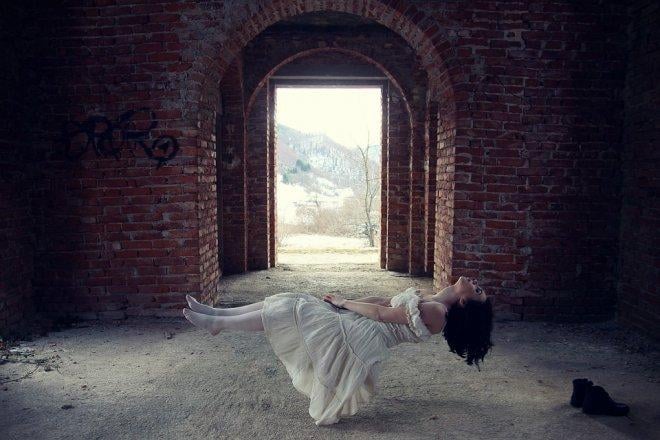
‘The Last Breath,’ a Poem by Rusty Rebar

‘The Last Breath’ is a poem by Rusty Rebar, a Facebook friend of mine. I gave it a quick read the day before and found it full of meaning, which I’d like to examine below. First, here’s his poem (I’m setting it in italics to distinguish his writing from mine, as always):

the last breath

1.
the way a door slammed
rattles the whole house
or how the wrong word
scorches an open heart
shoes without soles
a torn pair of pants


a moment that breaks
every second after
& you seemingly unable
to put it back together
the terror hidden in
a corner of your fears

like a shy thief lurking
afraid to risk capture
but happy to hurt you
wounds inflicted on
you powerless to stop
what keeps happening

2.
pain an offering then
a solace for all that is
no surprise whatsoever
you sit with your demons
in front of the television
mesmerized by action

quick millionaires running
around in their underwear
tights or pajamas depending
joyful endorphins popping
fulfilling safe anticipations
same play — played night

& day — over & over
spinning endless tomorrows
out of imaginary yesterdays
& what is wrong with that
a world of wonderful rules
& magically infinite chances

bread & circus the holy
flesh of brainwash — firm
faith in the glory of private
property & money as the
measure of all things held
tighter when you have neither

3.
with drugs — the effect
wears off — larger doses
needed to deaden nerves
& block the bad feelings
get back to work before
the rent check comes due

escape from a prison
inside the mind impossible
the illusion of freedom ends
& you find yourself back
in your dark lonely cell
more trapped than ever

luckily — your story also
ends — there is no such thing
as forever & no problem
death cannot solve — best
treasure what you do remember
the last breath of a lost friend

And now, for my analysis.

We have three sets of verses, the first set of which centres around pain, broken or torn things, things with holes in them. The second set centres around forms of escape from the pain: television, the American Dream, bread and circuses, distractions. The third set centres around how the forms of escape, including drugs, don’t work–one cannot escape from one’s prison, since one has to go back to work before the rent is due. Still, there is one last escape…death.

So the three verse sets can be seen as the thesis (pain), negation (escape from the pain), and sublation (return to, and ultimate escape from, the pain). It’s the dialectic, but a very physical one, a materialistic one. Marx is turning Hegel right-side up.

The first set of verses is full of the imagery of violence: slammed doors, verbal abuse, the torn pants and the soleless shoes of a soulless world that doesn’t care for the poor. Moments that break, and you can’t put them back together. Thieves are afraid to get caught, but happy to hurt you: this is a world of alienation. We feel powerless to stop the pain.

The second set of verses deals with what Klein and Winnicott called the manic defence, or any attempt to avoid dealing with the painful, depressive sides of life, and to plunge instead into the manic, or exciting, sides of life (drugs, porn, etc.). One sits a mesmerized zombie in front of the idiot box, following the latest media nonsense, or one tries to identify with the rich, fantasizing that one day, the American Dream will come true for oneself…when of course there’s a snowball’s chance in hell of that ever happening.

One sees millionaires in the media dancing around in their underwear, because only they have the financial freedom to act as inanely as they like. Perhaps they’re wandering about in their pyjamas, like Hef. This empty worship of wealth goes on day after day, a hiding away from one’s secret sorrows. Those sorrows, however unacknowledged, go on “spinning endless tomorrows…”–reminding us of Macbeth‘s “Tomorrow, and tomorrow, and tomorrow” speech (Act V, Scene v)–“…out of imaginary yesterdays,” reminding us in turn of Macbeth’s words “And all our yesterdays have lighted fools/The way to dusty death.”

Life is as meaningless for us today, with our “faith in the glory of private/property” (note the enjambment between the two words, indicating how split a concept that one is, as is so much of our psychological fragmentation, symbolized by all the other examples of enjambment in this poem), as it was for the Scottish tyrant of Shakespeare’s play. One believes in such empty capitalistic concepts especially when one doesn’t benefit from the wealth of the 1%.

The third set of verses deals with the coming down, as it were, from the high one felt in the escape of the second set. One now feels even worse than before, unable to escape the reality one keeps coming back to. Still, there’s one last escape…death. “To die, to sleep,/No more…” (Act III, Scene i) Unlike the Dane, though, we in today’s secular world don’t generally worry about “the dread of something after death, —/The undiscovered country,” so “the last breath of a lost friend,” death, is a soft breeze on our faces, and gives us hope in our despair…the hope of despair.