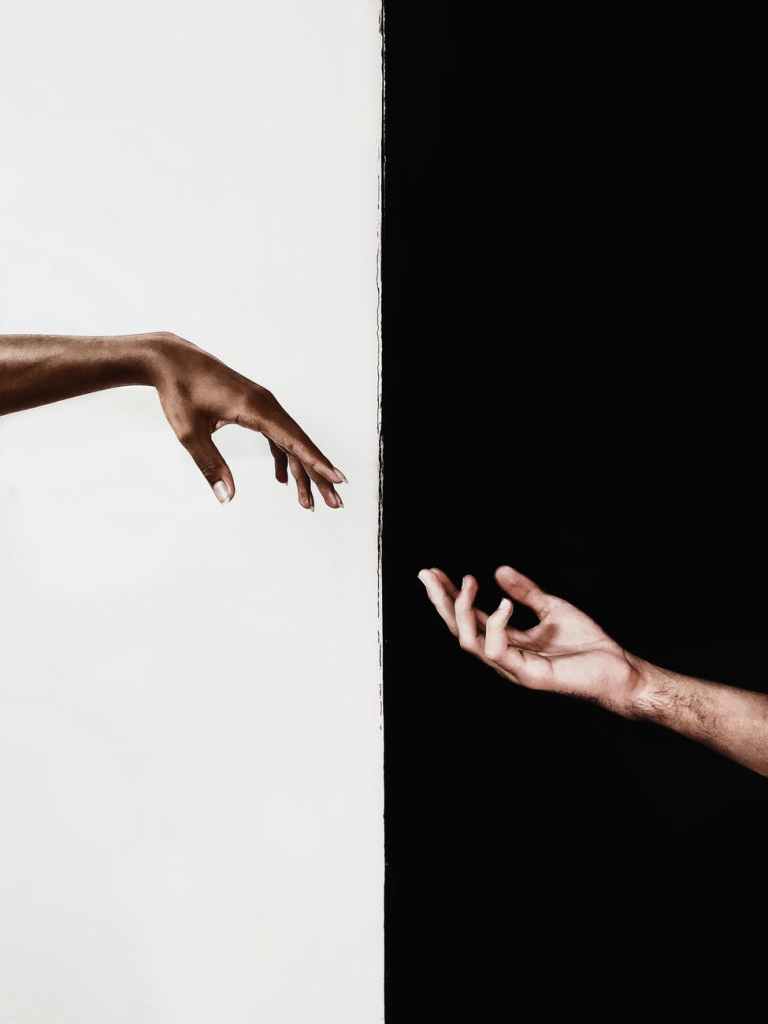
Analysis of “It’s a Wonderful Life”

It’s a Wonderful Life is a 1946 film directed by Frank Capra and starring James Stewart, Donna Reed, Lionel Barrymore, and Henry Travers. It’s traditionally watched on the TV by the whole family at Christmastime, even though only about one hour of the two-hour, fifteen-minute film takes place at that time of the year (it wasn’t even originally intended as a Christmas film), and Christmas is only peripherally depicted during that time.

It is one of the most loved films of all time, even though it was viewed with suspicion by the likes of the FBI, the House Un-American Activities Committee (HUAC), and Ayn Rand, who regarded it as subtle communist propaganda for its vilifying of Mr. Potter (Barrymore) as an example of the quintessential, greedy capitalist.

Though Capra had left-leaning scriptwriters like Dalton Trumbo and Clifford Odets write drafts (which weren’t used) for the screenplay, he was actually an anti-FDR conservative who was using It’s a Wonderful Life to appeal to people to strengthen their Christian faith. In Capra’s own words, he was trying “to combat a modern trend toward atheism.”

Here are some quotes:

Mary: What’d you wish, George?

George: Well, not just one wish. A whole hatful, Mary. I know what I’m gonna do tomorrow, and the next day, and the next year, and the year after that. I’m shakin’ the dust of this crummy little town off my feet and I’m gonna see the world. Italy, Greece, the Parthenon, the Colosseum. Then, I’m comin’ back here and go to college and see what they know… And then I’m gonna build things. I’m gonna build airfields, I’m gonna build skyscrapers a hundred stories high, I’m gonna build bridges a mile long…
*************

“What is it you want, Mary? What do you want? You want the moon? Just say the word and I’ll throw a lasso around it and pull it down. Hey. That’s a pretty good idea. I’ll give you the moon, Mary.” –George

*************

George: Mary… [picks up Mary’s robe, which is lying on the ground] Okay, I give up. Where are you?

Mary: Over here in the hydrangea bushes.

George: Here you are. Catch. [He is about to throw her the robe, but reconsiders mischeviously] Wait a minute. What am I doing? This is a very interesting situation! (This line was repeated by Jimmy in the 1940 film “No Time for Comedy”).

Mary: Please give me my robe.

George: Hmmm…A man doesn’t get in a situation like this every day.

Mary[Getting annoyed] I’d like to have my robe.

George: Not in Bedford Falls, anyway.

Mary[thrashing around in the bushes] Ouch!

George: Gesundheit. This requires a little thought here.

Mary: George Bailey! Give me my robe!

George: I’ve heard about things like this, but I’ve never thought I would be in one…..not in Bedford Falls anyway.

Mary: Shame on you. I’m going to tell your mother on you.

George: Oh, my mother’s way up the corner there.

Mary: I’ll call the police!

George: They’re way downtown. They’d be on my side, too.

Mary: Then I’m going to scream!

George: Maybe I could sell tickets.

**********

“Now, hold on, Mr. Potter. You’re right when you say my father was no business man. I know that. Why he ever started this cheap, penny-ante Building and Loan, I’ll never know. But neither you nor anybody else can say anything against his character, because his whole life was…Why, in the twenty-five years since he and Uncle Billy started this thing, he never once thought of himself. Isn’t that right, Uncle Billy? He didn’t save enough money to send Harry to school, let alone me. But he did help a few people get out of your slums, Mr. Potter. And what’s wrong with that? Why…Here, you’re all businessmen here. Doesn’t it make them better citizens? Doesn’t it make them better customers? You…you said…What’d you say just a minute ago?…They had to wait and save their money before they even ought to think of a decent home. Wait! Wait for what? Until their children grow up and leave them? Until they’re so old and broken-down that they…Do you know how long it takes a working man to save five thousand dollars? Just remember this, Mr. Potter, that this rabble you’re talking about…they do most of the working and paying and living and dying in this community. Well, is it too much to have them work and pay and live and die in a couple of decent rooms and a bath? Anyway, my father didn’t think so. People were human beings to him, but to you, a warped frustrated old man, they’re cattle. Well, in my book he died a much richer man than you’ll ever be!” –George

**************

Mr. Potter: George, I am an old man and most people hate me. But I don’t like them either, so that makes it all even. You know just as well as I do that I run practically everything in this town but the Bailey Building and Loan. You know, also, that for a number of years I’ve been trying to get control of it. Or kill it. But I haven’t been able to do it. You have been stopping me. In fact, you have beaten me, George, and as anyone in this county can tell you, that takes some doing. Now take during the depression, for instance. You and I were the only ones that kept our heads. You saved the Building and Loan, I saved all the rest.

George: Yes, well, most people say you stole all the rest.

Mr. Potter: The envious ones say that, George. The suckers.

**************

“Strange, isn’t it? Each man’s life touches so many other lives. When he isn’t around he leaves an awful hole, doesn’t he?” –Clarence Odbody

“You see, George, you’ve really had a wonderful life. Don’t you see what a mistake it would be to throw it away?” –Clarence

[Inscribed in a copy of Tom Sawyer] “Dear George, remember no man is a failure who has friends. Thanks for the wings, Love Clarence.”

**************

Zuzu[after a bell on the tree rings] Look, Daddy. Teacher says, every time a bell rings an angel gets his wings.

George: That’s right, that’s right. Attaboy, Clarence!

What the film is really about is how humble people often achieve things far more important than the pretensions with which the rich and powerful impress us. The film begins with the recruitment of a rather bumbling, slow-witted angel (Travers), Clarence Odbody, who must convince George Bailey (Stewart) not to kill himself by making him realize that his humble life, fraught with difficulties as it may have been, is still a life that has achieved terrific things and touched many hearts.

We will see that Clarence, as simple as he is, also achieves a great thing by saving George from his despair. Small people can, and often do, do big things: this is the real message of the movie. In contrast, the rich and powerful big shots often, if not typically, do very little good for the people. These are the Potters of the world, who do much more harm than good.

It’s these Potters that the right-wing ideologues want to defend from ‘vilification.’ What people like J. Edgar Hoover and Ayn Rand didn’t want to admit to is how easy it is to see capitalists like Potter as selfish and mean-spirited: all one has to do is see the effects of their selfishness and greed when they lobby to privatize healthcare, when they support imperialism in the Middle East, when landlords jack up the rent and make housing unaffordable, throwing people out on the streets, only then to put up spikes and criminalize feeding them. One doesn’t have to be a communist to see what’s wrong with the Potters of the world. But I digress…

Back to the movie. Ever since he was a boy, George Bailey has dreamed of doing great things: traveling the world, building things, etc. But he knows the danger of letting his small, humble, and boring, but beloved town of Bedford Falls be taken over by Potter, so he cannot leave and pursue his dreams…especially not when his father dies.

He has a close, affectionate relationship with his family and friends. As a boy in winter, he saves his younger brother, Harry, from drowning in a lake, losing the hearing in his left ear in the process. George is always losing things of his own so he can give to others.

I’m impressed with the kindness and gentleness of his father, who never yells when his sons act inappropriately or wish to do so. (I wish my own, Potter-like father could have been more like George’s.) When the boy gets mad at mean old Potter, his dad deals with his anger in all patience; years later, when Harry is about to go to a party, their dad firmly tells him not to have any gin…but in a gentle voice.

In spite of the Baileys’ harmonious household, though, there’s the stereotyping of the black housemaid, Annie (Lillian Randolph), as a “mammie” (recall, in this connection, the racial stereotyping of Sam in Casablanca). Paul Robeson would hardly have approved, so it becomes harder and harder to link this film with communism. This all goes double for George twice wishing he had a million dollars, then saying, “Hot dog!

Much of the right-wing ire against this movie is centred around Mr. Potter as a banker; yet the Bailey Building and Loan is also a kind of financial institution, a kind of bank. The contrast isn’t between capitalism and communism–it’s between big, but unethical business and small, but ethical business.

Real communist sympathy would have been represented with a crushing of Potter’s banking empire, a symbolic revolution; but he isn’t even charged with theft of the Baileys’ $8,000 after George’s dim-witted Uncle Billy (Thomas Mitchell) foolishly leaves the money wrapped in Potter’s newspaper. This theft is an unresolved injustice that somehow escaped the notice of the strictly moralistic Production Code, the members of which always insisted on showing good prevailing over evil in cinema, to edify the audience.

No threat to the existing capitalist order is even implied in this movie. The closest that the Bailey Building and Loan comes to being anything like socialism–in providing cheap homes for people like Mr. Martini (William Edmunds) and his family in Bailey Park, so these poor people don’t have to live in Potter’s slums–is, if anything, that compromise between socialism and capitalism known as social democracy…and recall that Capra didn’t even like FDR’s New Deal.

So the right-wing opposition to this film should be seen not in the light of the film itself, but in the light of the attitude of the right-wingers themselves. No form of capitalism is capitalistic enough for them; the ‘free market’ is never ‘free’ enough for them. So any act of generosity from the Building and Loan is deemed ‘communist’ in their tunnel vision.

Many attempts, typically disingenuous ones, have been made by capitalists to present a ‘kinder, gentler’ version of their economic system. One can debate the merits or demerits of their efforts (such as Ocasio-Cortez‘s Green New Deal, or Elizabeth Warren‘s attempts to create a ‘more ethical’ form of capitalism), but the point is that they’re still working within a capitalist framework. Private property remains intact in their systems; commodities are produced to make a profit; capital is still accumulated. All of these things are preserved in It’s a Wonderful Life. The Building and Loan isn’t even remotely socialist, so when right-wingers complain about the film’s ‘communist propaganda,’ they are being dishonest.

The whole point of the film, rather, is to see value in humble things, and to enjoy oneself even in humbling situations. At the high school graduation dance, two Othello and Iago-like boys–the former annoyed that Mary (Reed) would rather talk with George than listen to his endless prating–play a prank on Mary and George while they’re dancing the Charleston: the boys open a crack in the dance floor to expose the swimming pool underneath. When the two dancers fall in the water, instead of getting upset, they just laugh and continue dancing in the water. Their unbreakable high spirits inspire all the others, even ‘Othello’ and ‘Iago,’ to jump in the pool, too.

As George and Mary are walking home in their neighbourhood, they pass by a dilapidated old house. They make wishes and throw rocks, the breaking of windows supposedly making their wishes come true. Mary loves the house, in spite of (or perhaps because of) its terrible state of disrepair. She’d love to live in the house with a family and fix it up. (In fact, this is what she’s wished for: to marry George and raise a family in that house, which of course is a wish come true).

This love of what is low and modest, a wish to redeem it and make it into something good, is a Christian message: “But God has chosen the foolish things of the world to confound the wise; and God has chosen the weak things of the world to confound the things which are mighty” (1 Corinthians 1:27).

While it is true that communists also wish to raise up what is base and humble, it was never Capra’s intention to spread socialist ideas, for the reasons I mentioned above. Recall that anti-communists complain about the “totalitarian” tendencies of the Soviet Union, not what it did to help the poor, because the capitalist is notorious for not caring about the poor.

Mr. Potter’s greed and meanness can be seen in Christian, and not so much anti-capitalist, terms, too. Recall what it says in 1 Timothy 6:10, “the love of money is the root of all evil.” Also, “It is easier for a camel to go through the eye of a needle, than for a rich man to enter into the kingdom of God.” (Mark 10:25)

So, the battling between George and Potter, from Capra’s religious and conservative point of view, is not a battle between socialism and capitalism, but between the materialist atheist and the Christian who cares about his community. In his despair, George prays, even though he hasn’t normally been a religious man. The ultimate answer to his prayer, in the form of Clarence, gives George the faith in God that Capra was hoping to inspire in people.

That people like J. Edgar Hoover and Ayn Rand (she who considered selfishness to be a virtue [OK, she called it “rational egoism,” but let’s be honest, that expression was always just a euphemism for rationalized selfishness], and who was an atheist), were opposed to this film–when its perceived communism was actually altruism–is an indication of how strong the link actually is between capitalism and selfishness. Recall in this connection a quote on capitalism that is often attributed to John Maynard Keynes.

Still, Capra’s film isn’t trying to make the capitalist seem evil and selfish. Consider Sam Wainwright (Frank Albertson), the fellow who always says, “Hee-haw!” He’s a well-loved character throughout the film, and he becomes a successful businessman. His success is envied by George, who wants to leave his dead-end Building and Loan (even if not to join Sam’s company “on the ground floor”), but Sam is in no way portrayed as an evil capitalist.

The right-wing critics of the film, being of the Gordon Gekko type, just don’t like seeing greed and selfishness, as personified in Potter, portrayed in a truthful manner. While many Christians are of the right-wing sort that defend the depredations of the “free market” and of imperialism, including the Israeli oppression of the Palestinians, other Christians are of the genuinely altruistic sort that recognize the evil of greed (see the Bible quotes above), the Church having included it among the seven deadly sins.

When a bank run almost ruins the Building and Loan, which happens right at the beginning of George’s and Mary’s honeymoon, the couple is forced to sacrifice their money to prevent their customers from going over to Potter in desperation and get only 50 cents on the dollar. George saves his bank at the end of the working day with only $2 left. Once again, the humble triumph, and proud Potter loses.

Instead of going on a beautiful vacation for their honeymoon, George and Mary have it in their crummy, leaking house during a heavy rainfall. Cabbie Ernie (Frank Faylen) and Police Officer Bert (Ward Bond) do their best to make the newlyweds’ dinner as sweet and romantic as possible, even singing a kind of serenade by the window, out in the rain. Again, modest resources are used to make the honeymoon the best it can be.

When World War II breaks out, it’s George’s younger brother Harry who wins the glory by saving the lives of men on a troop transport by shooting down kamikaze planes; but the contributions of George, Mary, and their mothers, as humble and unenviable as they are, still matter. Potter tempts George with a nice, high-paying job, which would grant him his dream of traveling in Europe, etc., but he quickly comes to his senses and won’t betray the Building and Loan.

When Christmas is approaching, and George loses the $8,000, he has to grovel before bitter old Potter, who–noting George’s life insurance–says he’s worth more dead than alive. Thus begins his suicide ideation. By focusing on his problems rather than his successes (i.e., all the friends he’s made by helping them), George takes his frustrations out on the very people whose happiness he should be most concerned with…his family. Later, he’s at the bridge, ready to jump, and Clarence saves him from suicide by, ironically, faking a suicide attempt of his own. By being saved by George, Clarence saves George.

Then, Clarence has George see a world in which George has never existed. Bert and Ernie don’t know him. Bedford Falls, taken over by Potter, is now “Pottersville,” a sin city littered with strip joints, bars, etc. (In this transformation of the town, we see not only how small people can do great things, that is, we feel the absence of those humble people and their achievements, but we also see the rotten fruits of the greed of rich big shots like Potter. So much for “rational self-interest.”)

Alienation permeates the town. Nick (Sheldon Leonard), the bartender/owner of the pub that was originally his boss Martini’s, is mean not only to George and Clarence, but also to former druggist Mr. Gower (H.B. Warner), a panhandler now, since George as a boy never stopped him from accidentally putting poison in a prescription. Finally, George’s own mother doesn’t recognize him, and Mary, a spinster at the local library, faints when he calls her his wife.

At the end of the ordeal, he sees the value in his life, and wants to live again. In spite of all his misfortunes, he’s thrilled to see “Pottersville” changed back to Bedford Falls. He doesn’t care that he’s going to jail: he just wants to see his family again.

And the movie ends not with an uprising against Potter and his business empire (which, by the way, would have been soooooooooo gratifying!), but with all of George’s friends and neighbours donating money to compensate for the $8,000 that Potter could easily have given back.

This isn’t a socialist ending: it’s an outpouring of charity. In fact, it’s an example of liberal thinking, that is, as liberalism was understood to be back in the mid-1940s. It’s a case of Christian, family values.

It isn’t communism; it’s just a kinder, gentler conservatism.

The irony in all these right-wingers’ attempts to smear the movie as socialist is that they have managed only to smear themselves. Only a Potter would see Potter as slandered.

Bringing Us All Together

The ego, understood as a separate, isolated entity that develops apart from others, is an illusion. The human personality is constructed only through its relationships with other people. These relationships can be of the two-way kind, that is, a narcissistic, dyadic relationship in which two people mirror each other (Jacques Lacan‘s other with a lower-case o); or they can be a communal sort (Lacan’s Other), involving many people who interact and share, but also respect each other’s autonomy.

Everyone who is healthy goes from the dyadic, one-on-one relationship (i.e., parent/child) to the communal sort, with varying levels of success, depending on how well one can get over the traumatic transition from the child’s primary narcissism (ego love) to object love, or love of other people. Those who fail to get over this trauma are in danger of developing secondary narcissism (the pathological kind that upsets so many of us), or they suffer a psychotic break with reality, a fragmenting of the personality. These failures, in their mild to severe forms, are part of the basis of social alienation.

In previous posts, I have written about the problem of social alienation, in its socioeconomic and psychological forms. I have also written about how the development of the personality is based on its relations with other people, and that there is a dialectical relationship between self and other.

I have compared the healthy and unhealthy relationships between self and other (or Other), as well as the traumatic, fragmentary state of alienation, to different points on a circular continuum that I symbolize with the ouroboros. The biting head and bitten tail of the serpent represent the meeting extreme opposites on the circular continuum, while the coiled length of the snake’s body represents all the intermediate points on the continuum, the moderate tints and shades of grey between black and white.

The unhealthy relationship between self and other, placed at the biting head of the serpent, is of the Oedipal, dyadic, one-on-one sort commonly seen between parent and child, who look lovingly into each other’s eyes as if no one else existed. Their looking and smiling at each other is like a mirror reflection, for both of them are narcissistic extensions of each other. This is Lacan‘s Imaginary, a world of literal and metaphoric mirrors, respectively the mirror stage and the dyadic parent/child mirroring.

The healthy self/other relationship is that of the individual with society in general, where the individual acknowledges, recognizes, and respects the individuality and autonomy of every other person he or she encounters. Here, the Other is not a mere extension of one’s narcissistic self. This healthier area is represented all along the coiled length of the body of the ouroboros; the healthier the relationships, the closer one comes to the head (without reaching the narcissistic biting teeth), while the more dysfunctional they are, the closer one comes to the bitten tail. The whole length of the serpent’s body, preferably towards the head, of course, is Lacan’s Symbolic register, the realm of language, culture, and society.

The most dysfunctional realm, the traumatic one, is at the bitten tail, where reality is too painful to bear, and one attempts to escape the pain through a psychotic break from reality and enter a world of fantasy. This is the undifferentiated world of Lacan’s notion of the Real, a state of being that cannot be processed because it cannot be symbolized or put into words; there are no differential relations in the Real, as there are in the Symbolic. The healthy escape from this traumatic state is through talk therapy, a putting of trauma into words, a moving from the bitten tail along the length of the serpent’s body towards its head.

Note how this traumatic realm is right next to the narcissistic, dyadic realm, where the serpent’s head bites its tail; this is where, originally, parent and child mirrored each other, a kind of Oedipal Garden of Eden, if you will, as I’ve described that mental state elsewhere. My point in describing all of this, metaphorically in terms of places on the ouroboros’ body, is that there is a point where happiness, pleasure, and ‘good health’ go too far. Sometimes, happiness is too happy, and fulfilled is too fulfilled. It’s Spenser‘s bower of bliss.

To be truly happy, one has to allow oneself to be at least a little unhappy. Happiness and sadness must be allowed to coexist, to be brought together, to flow into each other like the waves of the ocean; if we don’t allow this unity, this intermingling of opposites, they will come together in another way, typically one for which we aren’t prepared; for one way or the other, the serpent’s head is always biting its tail.

The excess of pleasure that one gets in the dyadic, narcissistic relationship comes from enjoying the self-other dialectic in the form that Heinz Kohut described as the grandiose self mirrored by the idealized parental imago, which is the original, Oedipal parent/child relationship, but whose idealized aspect can also be transferred onto a lover, a spouse, a therapist, or even a political demagogue. One wishes to see, mirrored in the other, an idealized version of oneself.

Needless to say, it isn’t healthy to use another person to reflect one’s grandiosity onto oneself, to use another as an extension of oneself, as narcissists do in order to defend themselves against the fragmentation that is so dangerously close to the narcissistic state. This perilous proximity is symbolized where the snake’s head (narcissistic, illusory paradise) bites its tail (Sartre‘s hell of other people, whose critical glances and remarks imprison one’s self-concept in a never-ending need for external validation and approval).

The ego is formed through illusory mirror reflections, literal ones or metaphorical ones as described above. One strives to be the ideal-I one sees in the reflection, an ideal that one loves and hates at the same time, precisely because it’s an unattainable ideal. Through all of this striving, though, one forgets that the ideal isn’t a real representation of oneself–it’s an illusion.

Similarly, the idealizing of the metaphorical mirror reflection–that of, say, the parent a child smiles at and who mirrors the smiles back at him or her–the idealization of this parent, or the objet petit a (as manifested in the lover, spouse, therapist, political demagogue, movie, sports, or pop star, or the pornographic model) who is a transference of the originally, Oedipally-desired parent, is also an illusion, a projection of the ego’s narcissism.

When both poles of Kohut’s conception of the child’s self–the grandiose self and idealized parental imago as described above, these two poles that say, “I am great, and I need you, O perfect Mom and Dad, to validate my greatness”–break down because the parents and general social environment fail to empathize with the child’s needs, he or she is at that dangerous area of fragmentation, symbolized by the bitten tail. The child either builds a narcissistic False Self to be protected from psychological disintegration, or the person falls apart emotionally.

Children need their parents’ love and empathy to help them grow and thrive in the social world, but they need to have their narcissistic sense of omnipotence let down and frustrated in tolerable amounts, too. This gradual, bearable letting down is symbolized by a sliding down from the Edenic head of the ouroboros to the upper middle of its coiled body. Traumatic, extreme disappointments will make the child slide in the other direction, from biting head to bitten tail.

A crucial part of this tolerable frustration of the wish to fulfill the dyadic, Oedipal parent/child relationship is what Lacan called the nom, or Non! du père, that is, the demand of the other parent for the child to end his or her fantasy of eternally having the Oedipally-desired parent all to him- or herself. This frustration, if dealt with well, brings the child out of the dyadic, narcissistic, one-on-one relationship and into the larger social world of interacting with many people, who aren’t seen as mere extensions of the self, but who are recognized as independent entities in their own right. This is a shift from the unhealthy to the healthy self-other dialectic.

My point in describing all of this, if my overbearingly academic choice of words isn’t giving you too much of a headache, Dear Reader, is that we must promote as much societal togetherness as we can. This may be a point so obvious as not to need making, but the purpose of the psychoanalytic concepts used in this post (click here for a fuller explanation of them) is to explain the psychological mechanisms that can shed light on how relationships go sour, how people revert to narcissism, become alienated, or lapse into psychosis instead of resolving their conflicts.

The narcissistic, dyadic relationship leads to envy and jealousy if a third party interferes with the duo; if not resolved properly (i.e., if the Name of the Father, in its literal or metaphorical senses, isn’t accepted by the child), we can have, at worst, the kind of scenario depicted in Psycho when Norman poisons his mother and her lover (a symbolic father). To avoid facing his guilt over the matricide, Norman has his internal object of his mother take over half, if not all, of his personality. He never escapes the one-on-one, parent/child relationship; she may be physically dead, but she lives on in his mind.

Part of the building up of a healthy personality in a child is encouraging his or her wish to seek out knowledge (Wilfred Bion‘s K) in the social context of interacting with people, or in making links (hence, Bion’s K, L, and H-links, standing for Knowledge, Love, and Hate–K being the most important link). Attacks on linking are a major problem to be resolved, for the resulting -K, a stubborn refusal to grow in knowledge through connecting with other people, when taken to extremes, leads to psychosis, as does Lacan’s notion of foreclosure, a refusal to let the non/Non! du père take one out of the dyadic relationship and into society.

Bion states that a thought is an emotional experience, something a baby doesn’t yet have the thinking apparatus (alpha function) for processing, so its mother must do its thinking for it, until it has built up its own thinking apparatus and can thus do its own thinking. Thoughts, understood as emotional experiences, start off as external stimuli (beta elements) that assail the consciousness; if they can’t be processed and used for thought (beta elements transformed, by alpha function, into alpha elements), they are ejected.

A baby ejects these overwhelming beta elements, and its mother receives and contains them for it; as a container of her baby’s agitated response (the contained) to the rejected beta elements, the mother soothes her baby through her capacity for reverie. Her comforting communication with the baby is a sending back of those elements, now alpha elements that are tolerable for the baby to receive.

This sending back and forth of beta and alpha elements between baby and mother is done through projective identification, which goes beyond projection‘s mere imagining of one’s own traits to be in another person, but involves actually pushing those traits and elements that are inside oneself onto the other, making him or her manifest them in reality.

Not only do babies and their primary caregivers engage in projective identification‘s trading back and forth of psychic energy, but so do patients (especially psychotic ones) and their therapists, respectively in the roles of baby and mother; for psychotics, as Bion observed, lose their grip on reality by rejecting beta elements to such an extreme extent, such an extreme level of -K, that they lose their ability to process external information properly. Their ejection of beta elements creates a beta screen that blocks off reality.

It’s this blocking off of the external, social world that is the source of mental ill health, willful ignorance (-K), and social alienation. A bringing together–union, integration–is the solution.

The blocking off is a characteristic of splitting into absolute good and bad objects, what Melanie Klein called the paranoid-schizoid position (PS). The integrating tendency, and bringing together of the good and bad aspects of an object, is characteristic of the depressive position (D). One tends throughout life to waver back and forth between splitting and integration, or as Bion notated it, PS<->D.

Since everything is interconnected, whether we like it or not, this means that whatever goes on without goes on within, too, in one way or another. So if we split external objects and reject the bad parts, we split their internalized equivalents, too, and eject these split-off bad parts. Hence, the attacks on linking, -K, and ejection of beta elements, leading to the erection of a beta screen.

The social isolation resulting from this splitting results in the kind of psychosis seen in Pink in The Wall, the wall he builds around himself being essentially a giant beta screen.

The beta screen that refuses to let in any new experiences, knowledge, or social connections, and the fragmentation that results from the ejected, split-off parts of the self, results, in turn, in the creation of bizarre objects, which are hallucinatory projections of those split-off parts. What we look at or listen to seems to be watching and hearing us, too. This is another example of the psychotic break with reality that is caused by the breakdown of society.

A shifting back and forth between PS and D is inevitable, to an extent. The unity of everything will always be qualified by duality, hence dialectical monism, yin and yang. One must nonetheless strive to minimize PS, which is situated where the serpent’s head bites its tail, and try to maximize D, along the coiled middle of the body of the ouroboros.

As selfish as desire is, even it is oriented towards objects, or other people. WRD Fairbairn replaced Freud‘s drive theory with an object-seeking libido, or a desire to have relationships with other people, as over mere pleasure-seeking. Lacan said that desire is of the Other, a desire to be recognized by the Other, a desire for what (one thinks) the Other desires. So again, even in selfish desire, we exist in relation to others.

We never exist in isolation, as isolated as we may want to be from others. If we reject others, as Fairbairn‘s Anti-libidinal Ego reacts to the Rejecting Object (Fairbairn‘s replacement and approximation of Freud’s superego), we’ll still fantasize about imaginary, internalized people, as the Libidinal Ego does with the Exciting Object (approximating Freud’s id). We need to get out of this splitting mindset, and get back into the real world, engaging the Central Ego with the Ideal Object (approximating Freud’s ego), since being in real relationships with real people is the ideal of mental health.

We must allow the flow of energy in and out of ourselves, to grow in K, to contain beta elements and turn them into alphas. We must tear down the walls, or beta screens. We must replace narcissistic, dyadic, mirrored relationships with social ones. We must regard the ego as a drop in an infinite ocean of humanity, not a separate, walled-off entity.

The Long Road to Healing from C-PTSD

[NOTE: please read the second and third paragraphs from this post before continuing. Important–don’t skip reading them!]

We sufferers of complex post-traumatic stress disorder have to remind ourselves that there is no quick path to recovery. We mustn’t see sickness and health in terms of black and white, but rather as a long progression with a lot of dark to light grey in between.

In fact, impatience in healing can lead to an even worse feeling of emotional sickness. Impatience leads to frustration, which in turn leads to self-blame, meaning the inner critic makes us feel worse for not improving. In failing to recognize the dialectical relationship between illness and health, as between all opposites (which I, in a number of blog posts, have symbolized with the biting head and bitten tail of the ouroboros), we make ourselves sicker.

We know intellectually, of course, that we must be patient as we tread that long, grey path from the darkness to the gradually brighter light, but our emotions won’t accept this reality easily. What can we do to comfort ourselves in the meantime?

Reality isn't so black and white.
Reality isn’t so black and white.

Apart from the usual forms of self-care that I and others have recommended (psychotherapy, art therapy, writing, hypnosis, ASMR, etc.), we should consider such things as a daily routine to start off our day in as positive a way as possible. Michele Lee Nieves recommends starting off the day with these five things:

  1. Do 2-3 diaphragmatic breaths
  2. Trace your meridians (look into kinesiology)
  3. Meditate for at least about 10-15 minutes every day
  4. Read things you find uplifting, and
  5. Write in a journal for a brief time (less than 5 minutes)

Why does one tend not to stick to such a routine? Is it laziness? Poor motivation? More likely, it’s because one’s self-esteem is so low that one doesn’t consider oneself worth the effort to do the healing work.

The road to wellness is NOT a straightforward one.

Of her five recommendations, I tend towards doing only the first two, to be honest (I suppose that means my own self-esteem is that limited). My application of #5 seems to be my blogging, to some extent. Instead of doing #4, I’ve begun the habit of using what Kati Morton calls “bridge statements,” which are the next thing I want to discuss.

As we know, attempts to recover by switching immediately from black to white don’t work. The same can be said about positive affirmations. If one is feeling down about one’s looks, intelligence, and talents, for example, merely saying, “I’m super beautiful and smart, and I’m amazingly good at (subject),” over and over again, won’t lift one out of the depths of one’s low self-esteem, it should go without saying.

Here is where “bridge statements” come in, which occupy that grey area of moderately comforting words between the cruel, black self-reproaches and the too-good-to-be-true white words. So, instead of replacing the usual negative self-talk (“I’m fat, stupid, ugly, and talentless.”) with its felt-to-be implausible extreme opposite, we find an in-between self-description (“I’m actually not as fat, stupid, ugly, and talentless as I’ve been led to believe.”), which balances kindness with believability.

A bridge from the darker to the lighter.

Over time, the belief in this kinder, yet realistic, self-assessment can encourage one to improve one’s looks and abilities. Then, one can move further along the bridge, away from the black side, and closer to the white side. Here, at about the middle of the bridge, one can say, “Hey, I’m actually OK-looking. I may not be a beauty queen, but I’ve lost some weight, make-up really does make me look rather pretty, my passion learning about (subject) has proven that I’m actually pretty smart, and I’m growing my talents in this field.”

Later, one goes even further along the bridge, about three quarters of the way across, say, and one reaches the light-grey area. Now, one can say, “Wow, I’ve lost even more weight! I’m still a little big around the butt, but a shapely figure is within reach. I’ve learned a lot about (subject), and in a fairly short time, too, considering how difficult it is to learn. I’m actually a lot smarter and more talented than I used to believe! Why did I ever believe those lies my emotional abusers told me?”

Now, do we ever get all the way to the other side, the absolute white side of immaculate self-love? To be frank, I have my doubts. Even if we neutralize the abusive words our bullies said to us by 100%, the reality is that there will always be new critics, new trolls, new unreasonable nay-sayers, and new narcissistic bullies out there. In fact, wanting too much of the white, the biting head of the ouroboros, leads to the black, the serpent’s bitten tail.

Photo by Craig Adderley on Pexels.com

But to that sobering reality, I say…so what? Who needs to be perfectly happy? When I wrote in previous posts of coming “closer and closer to that nirvana of no more pain,” and of achieving “a lasting cure for complex trauma,” I wasn’t talking about a state of literally perfect happiness (even if it may have sounded that way). I meant that happiness is a process, a moving ever closer towards the white.

“Closer and closer to…no more pain” is nirvana enough for me.

Analysis of “Eraserhead”

Eraserhead is a 1977 experimental body horror film written, produced, and directed by David Lynch. It stars Jack Nance as Henry Spencer, the otherwise titular character (due to a surreal dream sequence in which his decapitated head is taken to a pencil factory and made into erasers).

Filmed in black and white, the film presents a bleak, lonely cityscape expressive of extreme social alienation and violent, disturbing unconscious phantasy. It has been preserved in the National Film Registry by the United States Library of Congress as “culturally, historically, or aesthetically significant.”

Here are some quotes:

Mrs. X: It’s Henry isn’t it? Mary tells me you’re a very nice fellow. What do you do?

Henry: Oh, I’m on vacation.

Mrs. X: What did you do?
***************

Mr. X: I thought I heard a stranger. We’ve got chicken tonight. Strangest damn things. They’re man-made. Little damn things, smaller than my fist – but they’re new!…… I’m Bill.

Henry: Hello. I’m Henry.

Mrs. X: Henry’s at Lappell’s factory.

***************

Mr. X: Well Henry, what do you know?

Henry: Oh, I don’t know much of anything.

***************

Mrs. X: Henry, may I speak to you a minute? Over here. Did you and Mary have sexual intercourse?

Henry[stammering] Why?

Mrs. X: Did you?

Henry: Why are you asking me this question?

Mrs. X: I have a very good reason, and now I want you to tell me.

Henry: I’m, I’m very… I love Mary!

Mrs. X: Henry, I asked you if you and Mary had sexual intercourse!

Henry: Well, I don’t… I don’t think that’s any of your business!

Mrs. X: Henry!

Henry: I’m sorry.

Mrs. X: You’re in very bad trouble if you won’t cooperate… [nuzzling at his neck]

Henry: Well, I… Mary!

Mary X: [grabbing her away] Mother! [sobs]

Mrs. X: Answer me!

Henry: I’m too nervous.

Mrs. X: There’s a baby. It’s at the hospital.

Mary X: Mom!

Mrs. X: And you’re the father.

Henry: Well that’s impossible! It’s only been…

Mary X: Mother, they’re still not sure it is a baby!

***************

Mary X[to the crying baby] Shut up! [Baby continues to cry] I can’t take it anymore! I’m going home!

Henry: What are you talking about?

Mary X: All I need is a decent night’s sleep!

Henry: Why don’t you just stay home…

Mary X: I’ll do what I want! And you better take good care of things while I’m gone!

***************

[the Baby is going into violent convulsions and has broken out in spots] “Oh, you are sick!” –Henry

“In Heaven, everything is fine.
In Heaven, everything is fine.
You’ve got your good things, and I’ve got mine.
In Heaven, everything is fine.
You’ve got your good things, and you’ve got mine.
In Heaven, everything…is fine.” –The Lady in the Radiator, singing

The film begins with the Man in the Planet moving levers, Henry’s head floating in space with his mouth wide open, and a large, snake-like spermatozoon coming out of his mouth.

This seems to be a dream, or fantasy, of his. Henry doesn’t want to be the father of a baby, and so he imagines the Man in the Planet to be a kind of sky-father god impregnating his girlfriend Mary X, making her like one of those pretty maidens that Zeus ravished and impregnated in Greek myth.

We note that the Man in the Planet has a deformed face, just as the Lady in the Radiator and the baby are deformed. Unattractiveness in general is a recurring theme in the movie, reinforcing the sense of alienation.

Henry is unattractive in how absurdly geeky he looks, with that hair and those clothes (with the pens in the pocket, and the too-short pants), to say nothing of his awkward pouting. The X family are unattractive in how odd their manner is, always making Henry feel uncomfortable. Even the Beautiful Girl Across the Hall is unattractive in how society would disapprove of her promiscuity.

Lynch’s own fear of fatherhood is apparently what inspired the story (other influences being Kafka‘s Metamorphosis and Gogol‘s short story, “The Nose“), for his daughter Jennifer had been born with “severely clubbed feet.” Hence, the deformed baby with the snake-like head, no limbs, and no skin covering its internal organs.

The fear of fatherhood is extended in the film through Henry’s own conflicted feelings about sex. Part of him wants the Beautiful Girl Across the Hall, though her ‘whorishness’–as he seems to sense it–repels him. His coitophobia is demonstrated in his reaction to Mary X’s mother bluntly asking him if he’s had sexual intercourse with her daughter: he retorts that it’s none of her business. Her kissing him embarrasses and agitates him all the more.

Since so much of this film is surreal, it isn’t always easy to distinguish fantasy from reality. So, as with my analysis of mother!, I’ll be assuming that the more bizarre and hallucinatory moments are figments of Henry’s imagination.

Such fantastic moments, apart from the obvious ones, would include Mary’s mother nuzzling on his neck (a narcissistic projection of his own sexual disgust and desires onto her), the bleeding, small “man-made” (!) chicken on his plate (symbolic of his hated baby), and the baby itself, whose hallucinated (as I see them) deformities make it easier for him to rationalize killing it at the end of the movie.

His real reason for hating his baby–however repressed that hate may be–is his Laius complex, a father’s desire to commit filicide out of a fear that his child will grow up to supplant him one day, as evinced in his dream of being decapitated, the baby’s snake-head appearing from the cut in his neck to replace his head.

In Greek myth, Laius wanted baby Oedipus exposed out of fear of the fulfillment of the prophesy that he’d grow up to kill and replace Laius and marry Iocaste. Uranus, disgusted with the ugly children he had by Gaea (the twelve Titans, the three Cyclopes, and three Hecatoncheires), imprisoned the youngest of them in Tartarus. Cronus would rise up against his father and castrate him. Cronus himself was afraid one of his children, the Olympians, would one day supplant him, so he ate them. Zeus, in turn, feared his unborn child, by then-pregnant Metis, would one day supplant him, so he ate her and the baby!

The Man in the Planet (these two could be seen to represent, respectively, Uranus and Gaea–i.e., he is inside her in an act of copulation), moving the phallic levers and causing the spermatozoon to emerge from Henry’s mouth, is thus a figment of Henry’s imagination, a key role in his fantasy that he isn’t the true father of his deformed baby. He is thus projecting his hatred of his baby onto the Man in the Planet, who could also be seen as representing Henry’s hated father.

Henry fears that the baby will supplant him in an act of revenge by the Man in the Planet (an internal object of Henry’s father–recall the close proximity of the planet to Henry’s floating head, and their overlapping, in the opening dream-sequence), whom Henry–in his unconscious phantasy–imagines to be the father he himself supplanted.

In that opening surreal dream sequence, we see Henry’s unconscious mind let loose. We see his head floating in space, so close to that planet, a barren, lifeless spherical rock. The planet suggests the desolation of his inner mental life. Thus, the Man in the Planet, whose deformed face symbolizes an abusive nature, allied with those phallic levers he manipulates, is an internal object residing in Henry’s mind like a ghost haunting a house.

Hard rock suggests death, and pools of water suggest the primordial soup out of which life emerges; so when we see the spermatozoon drop into the liquid, this suggests conception.

Henry walks home alone, carrying a bag of groceries in a bleak, desolate cityscape of essentially lifeless industrialization. We see hills of dirt by a building; he has to pass them to get to where his apartment building is. In fact, his apartment also has piles of dirt and lifeless vegetation in it.

He works in “Lappell’s factory,” but he’s on vacation: that he isn’t going anywhere special, or doing anything interesting, tells us two things about him: his salary must be too low for him to afford going on a trip somewhere, and/or he’s too dead emotionally even to be able to enjoy himself on such a trip, so why go anywhere?

In all of the above observations–filicide fantasies, bleak industrial landscapes bereft of plant life, and a lonely life without human bonding–we see a theme of death over life. Given the increasing urgency in today’s world to resolve the climate change crisis, we can see Eraserhead as prophetic.

David Lynch called this his “most spiritual film,” an odd statement to make about a wish to commit infanticide. In exploring this “spiritual” interpretation, we can see a kind of perverse, morbid, and dark version of the Christ myth: the Man in the Planet is God the Father, the deformed baby is the Christ Child (and Christ, like the baby, must die for us to live), Henry is Joseph (since he’d rather not be the biological father), and aptly-named Mary X is the Virgin Mary, her surname suggesting the Cross, or X as in Xmas.

After learning from the Beautiful Girl Across the Hall that Mary’s family has invited him over for dinner, Henry goes into his apartment, takes off his socks, and lays them on his radiator to heat them. He seems to fetishize this radiator, for he stares at it often. It gives him heat in a cold world, though it’s an artificial, electric heat. He has no use for the natural warmth of human companionship. The Lady in the Radiator, as deformed as she is, seems to be Henry’s ideal of beauty. At least she has a pleasant, if odd-looking, grin.

He takes out a photo of Mary, torn in two, from his dresser drawer; it’s torn at the neck, suggesting a wish to decapitate her, more of his preference of death over life. Recall his later dream of being decapitated, the baby’s snake-head emerging from the cut in his neck, a symbol of the baby supplanting him. His fears of being destroyed are projected onto other people: better that they die than he.

The awkward conversations he has with the X family underscore the ubiquity of alienation in this film. He denies the possibility that he’s the baby’s father, preferring the fantasy of a virgin birth and a Uranus for the real father. Still, he must marry Mary.

Having moved in with Henry, she tries to feed the baby, which won’t eat anything. It is the most revulsive baby…conceivable–with its snake-like head, lack of limbs, and what seems a bandage instead of swaddling clothes. Her mother says the baby is just prematurely born, and as I mentioned above, I suspect its deformity is just a hallucination that Henry–in his obvious psychotic tendencies–is having to make it easier for him to kill the child one day. When Mary says one can’t be sure if it even is a baby, Henry could be imagining her saying that, too.

Cuteness in children has been recognized as a factor inspiring parental affection, making caregivers want to love a child, thus motivating them to care for it as best they can. This spermatozoon-child, however, inspires loathing and revulsion, not just in its appearance, but also in its unwillingness to cooperate during feeding, and in its irritating bawling.

Because the parent/child relationship here isn’t the normal, healthy kind (the occasional smiling at it from the parents, especially from Henry, should be seen as reaction formation), we don’t see what Wilfred Bion would have called the soothing containment of the baby’s agitated reaction to external stimuli.

Instead of using maternal reverie to soothe her baby, Mary engages in the negative version of the container/contained relationship (Bion, pages 95-99), shouting at the bawling baby to “Shut up!” (Click here for a full explanation of Bion‘s and other psychoanalytic concepts that I use throughout this analysis.) Instead of being soothed, the baby experiences aggravated agitation, turning it into a nameless dread.

Here we can see the foundation of so much of the alienation of society: if one can’t feel empathy for a baby (which, outside of Henry’s hallucinatory perception of it, probably isn’t half as repellant or deformed as he, and we, imagine it to be), for whom can we feel empathy?

Mary leaves the apartment in frustration, and Henry is left to take care of the baby alone. At first, he plays the role of the dutiful father, doing his best to attend to the baby’s needs. But his sudden discovery of sores on its skin, and its difficulty breathing, suggest that he has imagined the sickness, as a wish-fulfillment.

Bion explained that people learn from experience through a social connection with people, what he called the K-link, K standing for Knowledge. But in this film, no one really wants to connect with anyone else in a meaningful way, so just as there is the negative container/contained relationship, so is there one of -K, the avoidance of, and refusal to gain, Knowledge: recall Henry saying, “I don’t know much of anything,” to Mary’s father.

Attacks on linking are seen in Henry’s and Mary’s revulsion towards the baby, or, to use Bion’s terminology, ‘parents -L baby’ (i.e., they don’t Love it), or even, ‘parents H baby,’ that is, they Hate it (Bion, pages 42-43). The baby’s growing sickness thus reflects how it can sense this lack of parental love, so it cannot thrive and grow in K. Instead, the baby can only self-destruct in states of -K, -L, and H, because it has been born into a world of extreme alienation.

Henry’s dream/fantasy about the Lady in the Radiator reveals his true, if unconscious, feelings about the baby. He sees her shuffling from right to left on a stage, grinning that weird grin and seeming pretty in spite of her deformed cheeks, with their bulbous, sideburn-like protrusions.

As she shuffles from side to side, we see spermatozoa fall on the floor of the stage. She steps on a couple of them, squishing and destroying them. See seems to be telling Henry that she condones his future killing of his baby.

Since I consider the Man in the Planet to symbolize Uranus, as well as to be Henry’s father as an internal object, I see the Lady in the Radiator, in spite of her deformity, to symbolize both Aphrodite and to be Henry’s objet petit a, the unfulfillable object of his desire, rooted in possible Oedipal feelings his father has frustrated.

Consider the phallic association, if not the shape, of the spermatozoa. They fall on the stage as if from the sky, like the severed genitals of Uranus, which fell into the sea and foamed up, Aphrodite then emerging from the foam. Just as the baby’s relationship with the Man in the Planet, Henry, and Mary X can be seen as a perverse variation on the Christ myth, so can the Lady in the Radiator’s relationship with the Man in the Planet and the spermatozoa–which I believe came from him (in Henry’s unconscious phantasy)–be seen as a morbid variation on Aphrodite’s birth.

Henry’s disgust with his baby is further demonstrated when he wakes in the middle of the night next to Mary (whom we never see again), and finds spermatozoa between him and her. They droop like flaccid penises, and he throws them against the wall; they splatter on impact, a symbolic castration, just like the Lady in the Radiator’s stepping on them.

Note how Cronus supplanted Uranus by castrating him, then Cronus was afraid of being supplanted himself (Freud noted how Zeus supplanted Cronus by castrating him, too–Freud, page 469; Robert Graves found, in John Tzetzes, a source that confirms how castration was part of Zeus’ usurping of Cronus).

So in Henry’s hallucinated fantasies, we can find the unconscious root of his fear of being supplanted by a son: his own taboo wish to eradicate his father. The ugliness of the deformity of the Man in the Planet seems to represent Henry’s father’s brutal, bullying, authoritarian nature; whether or not Henry has had Oedipal feelings for his mother may be a moot point, but I suspect at least that when he was a little boy, his father caught him enjoying a guilty pleasure like masturbating, and he brutally beat little Henry for it. Hence, his extremely uptight attitude towards sex.

While we don’t know for sure if Henry’s objet petit a (the Lady in the Radiator) is based on an Oedipally-desired mother, we can see that his wish to fulfill his sexual desires (in his lovemaking fantasy with the Beautiful Girl Next Door) is something he feels his father will punish him for (recall that brief flash we see of the Man in the Planet, eyeing him maliciously, just before we see Henry’s head popping off, his baby’s snake-head then emerging from the cut in the neck).

I’ll acknowledge Henry’s desire to have the Beautiful Girl Next Door, and I believe she really offers herself to him when saying she’s locked herself out of her apartment; but I insist that he’s fantasizing about being in bed with her, both of them sinking in that hot tub, if you will, of life-creating primordial soup (pardon the mixed metaphors). I believe he’s rebuffed her sexual advances, while fantasizing (if not hallucinating) having sex with her; it’s the only way he could resolve his conflict between wanting sex and being afraid of it. Similarly, he can’t quite face his revulsion towards his baby, so he projects that disgust onto her when he imagines her look of horror at the sight of the baby as they’re having sex in his fantasy.

His lovemaking fantasy with her culminates in another vision/dream of the Lady in the Radiator, who sings, “In heaven, everything is fine…” three times, then, “You’ve got your good things, and I’ve got mine.” She repeats this verse, but ends it with, “You’ve got your good things, and you’ve got mine.” (My emphasis.)

“Heaven” can be interpreted as Henry’s procurement (however fleeting) of his objet petit a: he has come to possess her “good things” (i.e., her genitals) as well as his own “good things” (i.e., there’s the sexual union of both people’s genitals).

Now, in capitalist heaven, “You’ve got your good things…” (your private property) “…and I’ve got mine” (my property). Then, “You’ve got your good things, and you’ve got mine” (You, the capitalist, have taken my good things, through wage slavery/theft, mergers and acquisitions, and/or imperialist conquest.). Since alienation is such an important theme in this movie, Marx’s conception of it shouldn’t be overlooked. (I’ll later resume a discussion of capitalism as a factor in the film’s sense of bleak social estrangement.)

Henry, in his dream, comes on the stage and stands before the Lady in the Radiator, who holds out her hands invitingly to him. He looks at her awkwardly and fearfully, wanting to claim his objet petit a, but afraid of the consequences–this is, the cruel look on the face of the Man in the Planet, symbol of Uranus (who is heaven, incidentally), and of Henry’s father. He touches her hands, and there’s a bright flash of light, along with a typhoon of white noise. This black-and-white film is the black-and-white thinking of splitting; since she is his objet petit a, his idealization, we momentarily see all white…and hear all ‘white.’

Henry retreats behind a black curtain when a leafless tree stuck in a rock emerges from the backstage curtains. This tree and rock symbolize a giant phallus and testicles. Henry is terrified, for this lifeless tree represents the father’s punitive castration, as does his head’s popping off of his shoulders, to be replaced by his baby’s bawling snake-head.

If Henry’s decapitation and supplanting by his snake-headed baby is a symbolic castration of the Cronus-vs-Uranus, or Zeus-vs-Cronus type, then phallic-headed Henry’s frizzy hair, standing up on end to indicate his eternal state of horror, is his symbolic pubic hair.

His head falls into a lake of blood, and then falls from the sky, just like those penile spermatozoa that land on the stage and are stepped on by the Lady in the Radiator, and just like the severed genitals of Uranus, god of heaven, that landed in the sea. Henry fears the humiliation of being emasculated by his child, just as he has feared being castrated (literally or symbolically) by his father as punishment for having sexual feelings.

It’s significant that, in his dream, Henry sees a boy (symbolic of his baby) picking up his phallus-head and taking it to a pencil factory, where an employee named Paul frantically buzzes to alert his boss of the arrival. The boss, who shouts at Paul, is a transference of Henry’s intimidating, bullying father; he even calls the boy with Henry’s head, “Sonny,” suggesting a symbolic link with Henry’s fantasied notion that his baby is actually the son of the Man in the Planet, Henry’s symbolic father.

Here, we see how the traumas of family translate into the conflicts inherent in capitalism. Bosses are as authoritarian and bullying as fathers and governments can be. Bits of Henry’s head are shaved into erasers to be attached to pencils, then sold by the boss for a profit. This is how capitalism cuts off a bit of the worker every day, castrating him symbolically, making him less and less of an existing thing.

And here is where we can come to a fuller understanding of the meaning of the film’s title. An eraser removes words, drawn lines, etc., either erroneous or deemed to be so (it removes information); in the process, bits of eraser are eliminated, too.

Since Henry is the “Eraserhead,” we can now understand what such a concept means, that is, in terms of Bion’s notion of -K, the adamant rejection of Knowledge through links with other people. Henry’s alienation is so severe that he’d rather ‘erase’ knowledge through human interaction than absorb it. As I’ve discussed in other analyses, when this rejection of external stimuli is taken to extremes, it can lead to psychosis, hence Henry’s bizarre, surreal, hallucinatory visions.

His brain’s ‘erasures’ of ejected, unwanted external stimuli, what Bion called beta elements, have accumulated over time, building up a beta screen (symbolized by the brick wall just outside the window of his apartment, the one above the radiator), which rejects all access to new Knowledge (-K) for Henry’s inner mental life. These ‘erasures’ are also split-off parts of himself that are projected outward and become hallucinatory phenomena that Bion called bizarre objects. This was Bion’s explanation of the origin of psychosis (and incidentally, I’m not the only one linking bizarre objects with David Lynch’s movies).

Henry’s unconscious hostility to his father, a hostility displaced onto his baby, forms the basis for the Lacanian explanation of the origin of psychosis, too: foreclosure. In not wanting to give up the dyadic mother/son Oedipal relationship (here transferred to Henry’s imaginary relationship with his objet petit a, the Lady in the Radiator), he is rejecting the nom/Non! du père, which would introduce him to society. Hence, Henry’s alienation drives him mad.

Symbolic castration is the lack, or manque, that originates desire, which Lacan says is of the Other, or the people of the world, to be recognized by them, and to desire what one thinks they desire. But Henry is afraid of his desires, and he wants only the dyadic, lower-case other (the objet petit a of his fantasied relationship with the Lady in the Radiator, who isn’t even a real person). So his inability to relate to others leads to his madness.

He wakes up, and remains in his apartment for most of the remaining time, at one point hearing his baby laugh, as if at his inadequacies, and at another point seeing two people fighting outside another of his windows; this is the kind of hostility and unpleasantness that makes him want to reject the world. Sometimes, he wants to reach out, though. On two occasions, he hopes to connect with the Beautiful Girl Across the Hall: the first time, she isn’t at home; the second time, he sees her with another man, one almost as ugly (though not deformed) as the Man in the Planet, and so he can be seen as another substitute for Henry’s hated father.

That this trio of people in the hall can symbolize the Oedipal relationship is also seen in how she is a manifestation of his Oedipally-based objet petit a, who looks back at him scornfully, and she sees–in his hallucinatory projection–the baby snake-head on his shoulders, symbolizing his feeling of having been reduced to an infant that cannot be the phallus for Mother (symbolized by the Beautiful Girl Across the Hall; by ‘phallus,’ I’m referring to it in the Lacanian sense of being a signifier of lack, not the literal male genital organ).

Crushed, Henry retreats back into his apartment. The Beautiful Girl Across the Hall’s scornful look at him was probably because–his hallucinated lovemaking with her notwithstanding–he actually rebuffed her advances before. Still, he feels humiliated, symbolically castrated…and so he looks in hatred at his baby.

He gets some scissors and approaches the baby. I believe he’s hallucinating the bandage wrapped around the baby’s body: imagining the bandage makes it easier for him to cut it open, when he’s really cutting a long incision along the naked baby’s belly and chest, hence, we see its internal organs.

Some of those internal organs are black; those dark organs, taken as a whole, have the shape of that “man-made” chicken that Henry stabbed into at the dinner table with the X family. This is why I say that chicken represents a baby; for I suspect that Henry was already fearing he’d impregnated Mary at the time he’d learned of the invitation–hence his awkward meeting of the family. All it takes is the sex act, one time, to get him nervous.

Anyway, Henry takes those scissors and stabs his baby. He recoils in horror at what he’s done; there’s no way he’ll escape the consequences of his filicide…except in hallucinatory fantasy. The electric lights flicker on and off, suggesting he’s descending into darkness. The baby’s neck elongates, and its head grows to a gigantic size; both of these sights symbolize Henry’s fear of the baby growing up, coming of age, and taking revenge on him, to supplant him, like castrating Cronus dethroning Uranus, only to be dethroned himself by Zeus.

In the narcissistic imagination of the sufferer of the Laius complex, there can be only one man in the family: neither Henry’s father, nor his son, may exist with him. In reality, of course, the baby won’t do anything to harm Henry, but he’ll be socially shamed and arrested for murder. In his psychotic state, though, reality doesn’t matter. Only a fantasy world will protect him, so he indulges in it.

He imagines the giant snake-head to have transformed into the planet, one side of which then bursts apart. The phallic levers of the Man in the Planet emit sparks; they seem damaged, for he struggles with them (this symbolizes castration, and therefore the thwarting of Henry’s oppressive Uranus-like father).

Henry watches this symbolic thwarting with a look of amazement, his head surrounded by a billowing cloud of those eraser shavings we saw in the pencil factory, those which were made from his head. As I mentioned above, the shavings represent split-off portions of his ego, projected outwards and now made into bizarre objects. He is at the height of his psychosis in -K, in an arrested state of the paranoid-schizoid position, for there can be no reparation with the bad father; his paranoid fear of a reprisal from his father internal object will ensure no repairing of his damaged internal world.

His only escape from this fear and pain is an escape into fantasy, where, having finally defeated his father, he can enjoy the love of his objet petit a, the Lady in the Radiator, without fear of paternal punishment. The bright light and white noise return, she appears, and they embrace. On his face, we finally see a look of peace of mind.

Henry has finally found love…in a hallucinatory world of fantasy.

Another Poem about Trauma, Written by a Friend

I have another poem, an improvised one about the writer’s experience of trauma and the painful memories associated with it. Translated from Dutch and written by my friend, Gerda Hovius, it’s called “Be Mindful of the Superego”:

I can be so anxious about grief. 
A mess of feelings that throw me back into old pain and shame. 
I can sometimes feel sad and that is a natural feeling, 
as a child I was always alone with my sadness 
and was rejected and reviled for it.
So what did I do, keeping the grief in out of fear,
until it floods and then that feeling came back 
of not being good enough that nobody cares about me, 
that I have to do everything alone. 
Now after 41 years I know that if I am sad and that voice comes
up, that is the inner criticism 
the superego that has formed in my small developing child’s
brain, and then I can name it, 
emotions are of course nothing that need to be feared, 
I may cry that is not wrong,
a natural process of the body, 
there is no shame in sorrow.

And now, my analysis of her writing.

Trauma, grief, and anxiety sure do make up “a mess of feelings,” a mess that’s hard to process and clean up. We sufferers of childhood trauma by definition tend to find ourselves alone with our sadness, “rejected and reviled” whenever we try to give voice to our pain. What else can we do, but cope by “keeping the grief in out of fear”?

We cannot keep the pain inside forever, though, or else “it floods.” We have to let it out somehow, and that’s why I encourage everybody out there to write something like this, and I’ll read it, publish it, and analyze it to help you process those feelings as best I can. We all have those feelings when we think we aren’t good enough, and that nobody cares for us, so in these posts, I’ll try to help mitigate those bad feelings for you. You don’t have to feel you must do everything alone.

What makes us still feel these bad feelings, even years after getting away from our abusers? Our inner critic, that harsh superego that is an amalgam of all those internal objects of our abusive caregivers from our early years. When we can “name it,” that is, find the right words to express our trauma, we won’t need to be so afraid of those feelings.

As Gerda says, “there is no shame in sorrow.” What you write doesn’t have to be of Shakespearean, high literary quality. Just let out your feelings in writing, and if you like, I’ll share it here and give you validation by interpreting your meaning. Peace and love! 🙂

Analysis of “Dawn of the Dead”

Dawn of the Dead is a 1978 zombie film written and directed by George A. Romero. It is, in a way, a sequel of sorts to his 1968 film, Night of the Living Dead, though it has none of the original cast or setting. Instead, it stars David Emge, Ken Foree, Scott Reiniger, and Gaylen Ross, with Tom Savini (who also did the gory make-up effects). Music for the Italian version of the movie (Zombi) was by Goblin (named “The Goblins” in the credits), in collaboration with Dario Argento.

Zombies are swarming the urban centres, and Stephen “Flyboy” Andrews (Emge), Francine “Fran” Parker (Ross), and two men from SWAT teams (Foree and Reiniger) escape in a helicopter and use a shopping mall as a kind of sanctuary, until a biker gang led by “Blades” (Savini) breaks in and brings in more zombies.

With his first zombie film, Dawn of the Dead is considered not only one of Romero’s best films, but one of the best horror films ever made, too.

Here are some quotes:

“Every dead body that is not exterminated becomes one of them. It gets up and kills! The people it kills get up and kill!” –Dr. Foster

“How the hell come we stick these low-life bastards in these big-ass hotels, anyway? Shit, man! This is better than I got!” –Wooley

*********

[coming across a Zombie storage room]

Roger: Why did these people keep them here?

Peter: ‘Cause they still believe there’s respect in dying.

*********

“We’re still pretty close to Johnstown. Those rednecks are probably enjoying this whole thing.” –Stephen

*********

Francine Parker: They’re still here.

Stephen: They’re after us. They know we’re still in here.

Peter: They’re after the place. They don’t know why; they just remember. Remember that they want to be in here.

Francine Parker: What the hell are they?

Peter: They’re us, that’s all, when there’s no more room in hell.

Stephen: What?

Peter: Something my granddad used to tell us. You know Macumba? Voodoo. My granddad was a priest in Trinidad. He used to tell us, “When there’s no more room in hell, the dead will walk the Earth.”

************

[Fran and Stephen are observing from the roof of the mall]

Francine Parker: What are they doing? Why do they come here?

Stephen: Some kind of instinct. Memory of what they used to do. This was an important place in their lives.

************

“The normal question, the first question is always, are these cannibals? No, they are not cannibals. Cannibalism in the true sense of the word implies an intra-species activity. These creatures cannot be considered human. They prey on humans. They do not prey on each other – that’s the difference. They attack and they feed only on warm human flesh. Intelligence? Seemingly little or no reasoning power, but basic skills remain and more remembered behaviors from normal life. There are reports of these creatures using tools. But even these actions are the most primitive – the use of external articles as bludgeons and so forth. I might point out to you that even animals will adopt the basic use of tools in this manner. These creatures are nothing but pure, motorized instinct. We must not be lulled by the concept that these are our family members or our friends. They are not. They will not respond to such emotions.” [the gathered crowd starts arguing] “They must be destroyed on sight!” –Dr. Millard Rausch, scientist

*************

Roger: Aww, God! Oh, Jesus Christ!

Peter: What is it?

Roger: My bag! I left my goddamn bag in the other truck!

Peter: [stops driving the truck] All right, trooper, you better screw your head on.

Roger: [hyped tone] Yeah, yeah, yeah; c’mon, c’mon c’mon, let’s go!

Peter: [grabbing him by the collar] I mean it! Now you’re not just playin’ with your life, you’re playin’ with mine! Now… are you straight?

Roger: [subdued tone] Yeah.

*************

[looking at the approaching bikers]

Peter: Just three of them, huh?

Stephen: Holy shit!

Peter: They’ll get in. They’ll move the trucks.

Stephen: There’s hundreds of those creatures down there.

Peter: Come on, man, that’s a professional army. Looks like they’ve been surviving on the road all through this thing. Well, let’s not make it easy for them.

*************

[about to whack a zombie in the head with a machete] “Say goodbye, creep!” –Blades

*************

[Peter and Francine are flying off of the mall rooftop]

Peter: How much fuel do we have?

Francine Parker: Not much.

Peter: All right. [last lines]

People in a TV studio in Philadelphia are arguing on air over what to do about the zombie menace. (One of the workers behind the scenes is played by Romero himself.) Martial law has been declared in the city, requiring all residents to give over any killed zombies to the National Guard.

The residents of a housing project haven’t been complying with the martial law requirement to give over their dead, so SWAT teams have been sent there to get the zombies and punish the lawbreakers. The SWAT teams’ aggression reminds us of a truism from the first movie: the zombies aren’t the only mindless killers; in fact, since the housing project is full of Puerto Rican and black residents, Wooley, a member of one of the SWAT teams, imagines he has the right to hurl racial slurs at the residents while brandishing his gun.

Amid the explosion of violence, a black woman is horrified to see her man having become one of the undead. Not wanting to accept his horrible fate, she tries, in all futility, to communicate with him; his only replies are bites on her shoulder and arm, tearing off huge chunks of flesh, leaving her screaming in pain.

As we know, zombie bites turn a victim into another zombie. This process of turning the normal (who, recall, are often hardly less murderous themselves to begin with) into the undead can be seen to symbolize what Melanie Klein called projective identification, which goes beyond mere projection (imagining others to have one’s own personality traits) by actually manipulating others into embodying what one projects onto them.

Wilfred R. Bion‘s extension of projective identification is normally applied to preverbal communication between mother and infant, in which the baby–without a thinking apparatus to process the external stimuli that agitates it–projects its frustrations onto the mother, who then soothes the baby by containing its agitated reaction to the stimuli; she processes its harsh feelings, and sends a tolerable form of those feelings back to the baby. In therapy, an analyst may also play this maternal role for a patient, who is in the infant’s role.

Sometimes, however, this containment can be a negative experience, causing one’s agitation to become worse, instead of the soothing a baby gets from its mother. This aggravation of the agitation, a nameless dread, is what’s happening with the infecting bites of the zombies.

Bion used a feminine symbol for the container, thus making it into a yonic symbol; he used a masculine symbol for the contained, making it phallic. In the movie, the yonic bite wounds can be seen to represent a negative container, and the phallic zombie teeth can symbolize the negative contained. Zombie bites are a rape of the flesh, as it were. So this negative container/contained relationship, originally a preverbal form of communication between mother and infant, has now been regressed to in the zombies (i.e., a fixation at the oral stage), who have lost the ability to use language.

They cannot speak or respond to verbal communication because the trauma of being bitten by other zombies, or of being exposed to radiation, has plunged them into the fragmentary, undifferentiated world of Lacan‘s Real Order, where experience cannot be expressed in language or symbol. [Click here for more information on psychoanalytic concepts.]

The above description is the psychology behind why zombies are mindless killers who can’t communicate or connect with each other, or with anybody, for that matter. Their growing presence has resulted in a breakdown of the social order, because one cannot have communities of people who don’t relate to one another. The root cause of such breakdown is psychological trauma.

Trauma results in even greater breakdowns in society because people communicate only by killing, in the gruesome, cannibalistic form of the negative container/contained relationship described above. The urge to kill has become epidemic, and it’s not just among the zombies.

Racist SWAT team members like Wooley delight in killing Puerto Ricans and blacks; “rednecks” (as “Flyboy” Stephen calls them) in the rural areas make zombie-hunting into a sport. When one speaks of the fight-or-flight response to traumatic experiences, in these people we can see an example of the former response.

As for “Flyboy,” Francine, and SWAT team members Roger and Peter, however, we see the flight response; for at least in Peter, we see a look of reluctance on his face when he has to shoot zombies…especially if they’re children.

The four find a shopping mall, and even though it’s crawling in zombies, they decide to make it their sanctuary. The sight of zombies wandering about the inside of the mall is an amusing one; it’s an example of how Romero put social commentary in his zombie films.

Mindless zombies plodding about in a shopping mall represent how we are all too often more interested in buying things than in connecting with each other. (Recall what George Carlin once said about Americans in shopping malls.) Zombies’ only form of communication is cannibalism (in the negative container/contained form discussed above), just like how we all too often communicate only in ‘biting’ remarks. We fetishize commodities, never contemplating the sweat of workers who make the things we covet, and we snap at servers because of the slightest inconvenience.

(Dr. Millard Rausch denies that the zombies engage in cannibalism because the zombies never eat each other, but eat only ‘normal’ people. This, of course, misses the point: the message of Romero’s movies is that we ‘normal’ people aren’t fundamentally different from the zombies, in spite of appearances. Therefore, it is cannibalism when zombies eat the ‘normal.’)

This inability to communicate outside of biting (whether it’s literal biting, or it’s cutting remarks), fetishizing commodities at workers’ expense, and wanting things more than people (except in wanting people to destroy in order to aggrandize oneself)…these problems are all symptoms of alienation, which itself is the social sickness that results from the capitalist mode of production.

That the zombie menace can be related to capitalism leads us to another issue: the epidemic nature of the menace, spreading everywhere, is symbolically a global spread, and it can thus be related to the imperialism of late-stage capitalism.

Zombies kill mindlessly. “Rednecks” hunt and destroy zombies mindlessly. Racists like Wooley shoot and kill mindlessly. Similarly, soldiers in imperialist wars shoot and kill mindlessly, too, their victims often civilians.

“Flyboy,” Francine, Roger, and Peter just want to get away from all the killing and dying. Once the shopping mall is secure from zombie infiltration (e.g., the entrances have been blocked with trucks), they’ll be able to live reasonably normal lives again.

If we can associate a potentially global zombie apocalypse with imperialism, then we can associate this shopping mall oasis with the notion of socialism in one country. Any country in the world whose government refuses to comply with contemporary US/NATO global neoliberalism (such countries include Cuba, the DPRK, Venezuela, and pre-coup Bolivia) are targeted for regime change. The zombie-like opposition in those countries will wreak havoc and destruction…unless the countries (i.e., Cuba and the DPRK) have a sufficient defence.

Our four protagonists want just such a level of assured protection from external dangers, not just zombie dangers, but also disapproving humans who might find out about their set-up. When the four of them seem to have got that assured protection, they start to enjoy the use of the commodities in the shopping mall.

It may seem that their enjoyment of these things, for free, makes them as much a target of Romero’s social commentary as are the zombies, “rednecks,” and trigger-happy SWAT team members. Perhaps Romero intended it that way, but I beg to differ. The four protagonists enjoy the stuff, but not in a mindless, zombie-like way, so why not? They’ve been through hell: let them enjoy themselves. Besides, they see the commodities as use-values, the way a communist society would, not as exchange-values, as in capitalist society.

It’s only when two of them, Roger and “Flyboy,” lose their nerve and get the killer instinct themselves that they have their downfall, get bitten, and become zombies. The trauma of a close call or two happening to Roger, that is, when a zombie just about bites him before being shot in the head by Peter, spraying blood all over Roger’s face (which is like projective identification), makes him act wildly, recklessly, and forgetful of his bag (his fight-or-flight response)…hence, he gets bitten.

When “Flyboy” is on the roof with Francine, teaching her how to fly the helicopter, they’re spotted by a biker gang led by “Blades” (Savini). The violent and destructive nature of this gang shows how easily it can be associated with fascism. In fact, one of the gang members is even wearing an SS helmet.

So, the gang’s attack on the mall, removing the shield of trucks and letting all the zombies in, can be seen to represent such things as the Nazi invasion of the USSR in June, 1941, Mussolini’s fascists attacking Italian leftists in the early 1920s, and, in current events, Michel Temer and Jair Bolsonaro replacing Dilma Rousseff in Brazil, and the far right-wing coup in Bolivia…along with similar attempts made by the Venezuelan opposition, led by US puppet Juan Guaidó.

Whenever there’s a crisis in capitalism, as symbolized in this film by the social breakdown from the zombie pandemic, there can be two responses: a socialist, progressive one (symbolized by the efforts of “Flyboy,” Francine, Peter, and Roger), and a violent, destructive, fascistic one (represented by the biker gang).

That some bikers and zombies kill each other doesn’t invalidate my allegorizing: establishment capitalists and fascists fought each other, too, in WWII (i.e., Churchill vs. Hitler). The ultimate goal of both sides, however, was and is the same–the destruction of an alternative to a society of alienated, mindless killers and destroyers.

So, the zombie apocalypse, or “dawn of the dead,” is the beginning of the end: allegorically speaking, it’s late stage capitalism succumbing either to socialism or barbarism. There’s no third way–choose wisely from the only two options.

The Ouroboros of Psychoanalysis

In a number of posts, I have used the ouroboros as a symbol for the dialectical relationship between opposites. The serpent’s biting head is one extreme, its bitten tail is the other extreme, and every point on the length of its body, coiled into a circle, represents a median point on a circular continuum between those dialectically related opposites. Therefore, any extreme can phase into its opposite, and vice versa.

I believe such a dialectical relationship between opposites can be demonstrated in the field of psychoanalytic theory. I will make such a demonstration below. I have already done so, to an extent, in my post, The Psychoanalysis of Narcissistic Parental Abuse. I’d like here to expand on that.

The extremes of frustration and hostility felt by a baby towards its non-breastfeeding ‘bad mother‘ during the paranoid-schizoid position (PS), which is at the biting head/bitten tail area of the ouroboros (i.e., the extreme opposites, side by side, indicate the black and white, all or nothing, thinking behind splitting), lead to a fear that the baby has annihilated its ‘good mother’ in unconscious phantasy, or has provoked a retaliation in the ‘bad mother.’

The seeming destruction of an external object results in a fear of the destruction of the internal equivalent of that object, for there is a dialectic of the self and other, too. There’s a bit of the other in the self, and vice versa.

For these reasons, the baby passes over the biting head/bitten tail of the ouroboros (as manifested in PS) and, passing over the head to the serpent’s upper body, the baby reaches the depressive position (D), wanting reparation with the mother (and the internalized object representing her) that it now realizes is both good and bad. The thesis (‘bad mother,’ that is, the ouroboros’ bitten tail) and negation (‘good mother,’ or the biting head) are sublated (the good and bad aspects are integrated into one complete human being, represented by the serpent’s coiled middle body).

The self-other dialectic, as seen, for example, in the Kleinian concepts of introjecting objects and projecting unwanted, split-off portions of the subject (via projective identification), was expanded on by Wilfred R. Bion in his description of the mother/infant relationship. He saw that the establishment of a baby’s thinking apparatus was made through this dyadic relationship, through a mother’s containing of her baby’s ejections of intolerable external stimuli.

For Bion, thoughts are emotional experiences coming from the outside world–“thoughts without a thinker.” These stimuli (beta elements) assail the baby, who doesn’t yet know how to cope with them. It needs its mother to do its thinking for it; so when it ejects the intolerable beta elements, she receives and contains them, and through using the alpha function the baby hasn’t yet learned how to use, she converts the agitating beta elements into tolerable alpha elements, and sends these latter elements back to the baby.

[Click here for a more thorough explanation of psychoanalytic concepts.]

This process (maternal reverie) of a mother helping her baby to process unacceptable external stimuli, this trading back and forth of energy through projective and introjective identification, is how an infant gradually develops an ability to do the mental processing by itself. In other words, this is how an infant learns how to think.

The use of alpha function to convert beta elements into alpha elements is something we do all the time, because our mothers helped us acquire this skill when we were infants. The agitating beta elements, hitting us from the outside world, are the emotional experiences of being at the ouroboros’ bitten tail. When we process the feelings, we slide along the coiled length of the serpent’s body, using alpha function, until we reach the biting head, when the experiences have been fully assimilated and have become alpha elements.

Babies cannot do this yet, so their mothers do the processing for them, then send the fully-converted elements back to their babies. The babies are thus able to go from bitten tail straight over to biting head, without any trauma.

If, however, a mother doesn’t do this containing properly for her baby, or if other agitations occurring later in life, for some reason, cannot be processed and converted into alpha elements by the affected person, he or she may be stuck in the ‘bitten tail’ area of the ouroboros for an unacceptably long period of time, and the agitation may turn into a nameless dread.

This nameless dread may, because of the lengthy experience of PS, result in the affected person splitting off large chunks of his or her bad internal objects, projecting them outward and creating hallucinatory bizarre objects. In other words, the affected person has a psychotic break with reality.

For there to be mental health, PS must shift over to D. The process of developing alpha function for oneself, that sliding along the length of the serpent’s coiled body, from its tail to its head, is done through the K-link, a growing of knowledge through object relationships, the self-other dialectic of inter-personal communication.

So, mental growth and learning comes from tolerating and processing unpleasant emotional experiences, and such growth is best done in an exchange of feelings between people. This exchange of feelings is done through empathic mirroring. This mirroring is originally between a mother (or primary caregiver, male or female) and her infant.

When I speak of the self-other dialectic, I refer to the close bond between two people, the blurred boundary between them, since projections and introjections of psychic energy are passing back and forth between them. Since a young child is going through primary narcissism, and one hopes he or she will soon mature past ego-libido into object-libido, empathic mirroring between the child and his or her parents, at least one of whose internalized objects will be an idealized parental imago, is vital for the child’s health.

These mirrored relationships and idealized parental imagoes are what Heinz Kohut called self-objects, or internalized relationships a child has with his or her primary caregivers that help the child to build stable and healthy psychological structure. If the child’s narcissism isn’t dealt with tactfully by his or her parents, if the child’s fantasied omnipotence isn’t let down in small, tolerable amounts, the lack of needed empathy will result in a split sense of narcissism, of repressed and disavowed narcissism vs. a feeling of low self-worth, a placing at the biting head/bitten tail of the ouroboros.

In other words, healthy people have a proper mix of pride and humility, somewhere in the middle of the serpent’s body, between the extremes. Pathological narcissists, on the other hand, have wild grandiosity as a mask to hide self-hate, where the head bites the tail.

So, during these early years, a child uses his or her parents as both an ideal and a mirror for him- or herself. Parents are seen, to at least some extent (the depressive position, D, notwithstanding), as extensions of the child’s self.

And here is where the Oedipus complex fits in.

The child’s relationship with his or her idealized parent–be this the opposite-sex parent of the classical Freudian version, or the same-sex parent of the negative Oedipus complex–is a narcissistic one, a dyadic, one-on-one mirroring that coincides more or less with such things as the establishment of an illusory ego in the mirror stage. The idealized parent corresponds to the ideal-I in the specular image.

The clumsy child sees him- or herself in the idealized specular or parental image looking back…but that other person isn’t really the child. He or she is alienated from the image, from him- or herself, from the idealized parent looking back. The biting head of the ouroboros is connected…united…with the bitten tail, but the two are opposite ends.

The tip of the serpent’s tail can be seen as symbolically phallic, as the ouroboros’ mouth can be seen as yonic. The union of the two can thus be seen as symbolizing the unconscious phantasy of incestuous union between parent and child. The union needn’t be literally lustful; it can simply represent the wish to have that one parent all to oneself…not shared with siblings, or, God forbid!…the other parent. Hence, this is a narcissistic love.

Before the other parent comes along and breaks up this dyadic, mutually mirroring relationship, the child feels him- or herself to be in an Oedipal paradise of jouissance, that transgressive excess of pleasure that leads to pain (going past the ouroboros’ biting head to its bitten tail), though the receiver of these paradoxical sensations still wants them.

I like to allegorize this Oedipal state with the myth of the Garden of Eden. In this scenario, Adam represents the child, Eve is the mother rather than the wife (for she is “the mother of all living,” Genesis 3:20), the serpent is the ouroboros of the growth of Bion’s K, and Yahweh Elohim is the father. (I touched on this allegorizing in the psychoanalytical aspect of my analysis of mother!)

Please note that I’m assigning these roles in a metonymic sense: the child (Adam) could be male or female; the mother (Eve) could be either parent, as long as he or she is the Oedipally desired one; and the father (God) could be either sex, as long as he or she is the one breaking up the Oedipal union.

The rib coming out of sleeping Adam, which is then shaped into Eve, represents how the child sees the parent as an extension of him- or herself. No sense of the difference between what Winnicott called me and not-me has yet been made by the child. Adam wakes, sees her, and says, “bone of my bones, and flesh of my flesh.” (Genesis 2:23)

Bion saw (pages 45-49), in the Oedipus myth, the importance of the growth of knowledge (K). Oedipus would know the truth even if it destroyed him, while Tiresias, who already knew, warned Oedipus not to seek it out. Knowledge is desired, but having it can be painful.

Similarly, Yahweh Elohim warns Adam and Eve not to eat of the Tree of Knowledge: this is the Name of the Father (le nom, or le Non! du père), the nom suggesting the nomos, or law, and the Non! being the prohibition against enjoying the (often understood to be carnal) knowledge that the forbidden fruit offers.

Nevertheless, the serpent, subtler in K than all the other animals, tempts Eve to eat of the fruit. Her offering of it to Adam, and eating it with him, represents the container/contained relationship between mother and child, the building up of a thinking apparatus for the infant, its ability to use alpha function, its growth in K.

Bion used a feminine symbol for the container, suggesting a yoni, and a masculine symbol for the contained, a phallus; so container/contained symbolically suggests copulation. I’ve already associated the yoni with the ouroboros’ mouth, and the phallus with its tail. This is how the subtle serpent in the Garden represents the ouroboros’ growth in K.

In enjoying the taste of the forbidden fruit (Genesis 3:6), Adam and Eve are experiencing the transgressive pleasure of jouissance. The child is enjoying the Oedipally-desired parent’s love and attention, but this one-on-one relationship can last only so long. Even the child can feel surfeited by the pleasure, and want to escape it. No wonder Lacan called the excess “plus-de-jouir,” a kind of surplus-value of pleasure that is beyond what is acceptable.

Remember, the yonic serpent’s mouth has teeth. Its union with the phallic tail leads to the threat of castration. The expulsion from the Garden of Eden is the dissolution of the Oedipus complex. The child has gone from the excess of pleasure (jouissance) of the ouroboros’ head to the extreme of pain in the bitten tail.

The dyadic, mirrored relationship of the Imaginary must be transcended to allow entry into the social world of the Symbolic. The other (who was Mother) must now be the Other of all people, who cannot be narcissistic extensions of the self; they must be understood as independent subjects in their own right. The pain of paradise lost is the endless search for someone to satisfy the objet petit a, a replacement for Mother.

The objects that are found to satisfy the objet petit a can do so only temporarily, for there is never a complete fulfillment of desire. Desire stretches beyond need; it always wants more…there is never enough. Desire is also the desire of the Other: one wants what others are seen to want; so again, we see a manifestation of the dialectic of the self vs. the Other.

One begins with manque, the lack that is the cause of desire, symbolized by castration at the bitten tail of the ouroboros; one seeks out an object to satisfy the desire, a movement from the tail along the coiled middle of the serpent’s body; and when one finds a temporary satisfaction, one reaches the head…but the satisfaction results in a moving past the biting head back to the bitten tail of lack, and the cycle must begin again. It thus goes round and round, ad infinitum.

The realm of communication parallels the cycles of desire in how each word in a signifying chain only temporarily holds meaning, the signified. No one word can decisively contain a meaning, since a word can house many meanings, whichever meaning it may house, at a given moment, depending on the context, or on whatever words are positioned before and after it in the signifying chain.

The flow of meaning can be compared to a river whose current moves under a continuous plane of broken ice, this ice being all of the signifiers. One follows the current, passing by each crack in the ice which represents the space between words. Meaning is fully grasped only if one continually reads or hears word after word, never stopping. The ultimately unfulfillable search for absolute, complete meaning is thus like the never-ending quest to satisfy desire.

My ouroboros metaphor can also demonstrate this idea. One seeks meaning by beginning to read, or to hear a speaker utter, the first word (the bitten tail). One reads/hears that word, grasping its meaning (the biting head). Then one leaves that word to come to the next (the coiled length of the serpent’s body, or the Aufhebung of the previous thesis and negation).

Lacan literally used the word Aufhebung in describing the experience of each signifier. I prefer to translate the German noun as “sublation,” but he translated it as “cancellation.” Such is the transitory nature of how meaning is held in a word: it’s here one moment, gone the next, as we move on to the next word in line.

Understanding grows in this cyclical manner, through communication in society’s shared signifiers, culture, and customs. It’s the growth in K, but here it’s in the Symbolic Order rather than the dyadic, mirrored mother/infant relationship of the Imaginary.

K grows through pain, originally in the form of receiving beta elements that a baby needs its mother to help it cope with, helping the baby develop the ability to think. The child recognizes him- or herself as a distinct ego in the mirror reflection, and le nom/Non! du père breaks him or her away from Mother and introduces him or her to developing the K-link through a shared language. K continues to grow through pain, in the seeker of an object to replace Mother (objet petit a) finding people to communicate and bond with. Temporary satisfaction, returned manque, and resumed seeking.

A similarly cyclical process happens with repression, which doesn’t involve burying anxiety-provoking feelings in the unconscious forever, because those emotional experiences bounce back into consciousness, only in a new form, safely unrecognizable to the person agitated by those feelings. Such anxiety-provoking feelings are thus new beta elements being ejected.

There’s the anxiety-provoking feeling (the bitten tail), the repression of that feeling (the biting head), and the transformation and resurfacing of that feeling in a manner unnoticed by the person feeling it (the movement along the length of the serpent’s coiled body).

The above are but some of the many ways that the dialectical nature of reality, as symbolized by the ouroboros, can be manifested in psychoanalytical concepts. It’s further proof of the unity in duality, and of the dynamic, wave-like swaying between only seemingly contradictory phenomena.

This oneness that is experienced behind the veil of language’s differential relations, known only when one abandons memory, desire, and understanding, is Bion’s O, and Lacan’s Real Order. It can be traumatic, but it can also lead to a kind of mystical state. It’s the marriage of heaven and hell, the giving up of the fraudulent ego of the Imaginary, and the embracing of intuition that transcends the ever-elusive meaning behind the signifiers of the Symbolic.

Properly accepted, this terrifying Moby-Dick in a transcendent, mystical infinite ocean of Brahman can put an end to the quest to satisfy desire, which only leads to more suffering. It’s like the bodhisattva who, having attained nirvana (the ouroboros’ tail), returns to samsara (the biting head) to help sufferers, for he has sublated the two (the middle of the serpent’s body).

I make the comparisons to Buddhism and mysticism because psychoanalytic technique is used to help us better understand the mind, in the hopes of healing various forms of mental illness and emotional pain. Lacan spoke of unfulfillable desire, and Buddhism and mysticism aim at ending desire and the suffering it causes.

I’m no Buddhist or mystic, and I’m certainly no expert in psychological matters of any kind. But I like to write about such matters, relating them to dialectics, in the hopes that I can make some kind of contribution, however small and amateurish, to an understanding of ourselves, our desires, our suffering, and how to end the latter two. Perhaps someone better educated than I am on such matters can find a use in what I’ve written here, and apply it in a way far better than the one I’ve so cryptically expressed.

Living Well Is the Best Revenge

[NOTE: please read the second and third paragraphs from this post before continuing. Important–don’t skip reading them!]

Among the symptoms of those suffering from C-PTSD are a preoccupation with the abuser(s), a feeling that they are somehow ‘all-powerful,’ and an urge to get revenge on them. I find myself ruminating over all the times that members of my family emotionally abused me, and the thought that they got away with all of that just makes it hurt all the more.

There’s a terrible feeling of defeat that one gets from contemplating how one’s abusers and bullies never got theirs, that they’ve never even had an inkling that what they did was wrong. Their blissful ignorance (willful ignorance, actually) seems to suggest that the victim got what he or she deserved. Doubtless, the bullies want their victim to think that. No fun for them, otherwise.

The problem with trying to get even with them in some way is that it leads to escalation. The abusers are known for their viciousness when it comes to getting their way, so if you try to hurt them, they’ll hurt you back far worse than they ever did before. You can’t pull a “Cask of Amontillado” on them, so how are you supposed to punish with impunity?

Constant rumination and fantasizing about getting them back is the opposite of satisfying, yet thinking about it, over and over again, is addictive. Added to this problem is the ongoing experience of intrusive thoughts. One never has peace of mind as a result of all this brooding.

We want to put the pain outside of ourselves, but we can’t.

So, what can we do to heal ourselves, and also to get some kind of satisfaction over all of the wrongs done to us? One little bit of inspiration comes from a collection of quotes called the Jacula Prudentum, compiled by the 17th century Welsh-born poet, George Herbert. Number 520 gives this little nugget of wisdom: “Living well is the best revenge.”

“How does one live well, when one is soaking in trauma?” one might ask. Well, we can consider many possible ways, taken in combination: we can work extra hard on healing, that is, psychotherapy, meditation, self-care, writing therapy, art therapy, and mindfulness; and, as I see it, we can try to be as happy as possible.

Derive great pleasure from the idea that your tormentors of the past, those narcissists who gain supply from contemplating how miserable they’ve made you, would be furious to know that you’re actually happy without them! It doesn’t matter if they, living far from you and blocked online, don’t know that you’re happy…you’re the only one who needs to know.

I’m not saying that this is the only thing you need to do to get better. Obviously, you cannot escape from your pain and lie to yourself about being happy, as a kind of manic defence. As I said two paragraphs above, you have to work hard on healing in the various forms I gave as examples, among many others.

Smile, though your heart is aching…

But whenever you can, try to feel good, and let that good mood expand into an even better mood when you contemplate how your abusers wouldn’t want you to feel that way. Enjoy your revenge; imagine them going crazy. Indulge in a little Schadenfreude.

This little piece of advice, like all my others, is only meant to be one of many things you can do to help yourself. My auto-hypnoses on removing the inner critic, treating the painful past as if it were just a bad dream (i.e., no longer relevant to your life now), introjecting positive internal objects, and seeing the good and bad of the world as flowing into each other, not a permanent state of bad, etc., are all meant only as parts of the healing process, to be combined and used with other writers’ ideas. No individual one of them is meant to be a total cure in itself.

People often think of happiness as something way out there in the future, as something we’ll have only once we’ve either achieved something or reached a certain level of spiritual attainment. First, we’re at A (misery), then we go through a process of B (the spiritual or healing journey) in order to arrive at C (happiness). But I think dialectically: sadness and happiness can flow back and forth into each other, like the waves of the ocean. Sometimes we first have to make conditions better in order to be happy, and at other times, we have to decide to be happy first in order to make conditions better.

But for now, here’s a little tip: just imagine those narc jerks seeing you walking around with an ear-to-ear grin. Imagine them stewing over your happiness. That alone should make you feel good.

Revenge is a dish that is best served glad.

Analysis of ‘mother!’

I: Introduction

mother! is a 2017 psychological horror film written and directed by Darren Aronofsky (who also did Black Swan). It stars Jennifer Lawrence in the title role, with Javier Bardem, Ed Harris, and Michelle Pfeiffer. It is about a wife (mother) and husband (Him–Bardem) whose idyllic home is intruded on by increasing numbers of guests, whose outrageous behaviour drives the agitated wife into madness and despair, causing her to burn down the house that the guests are treating more and more disrespectfully.

The story is an allegory of how the human race is slowly destroying our ability to live on Earth. The house represents the Earth, mother is the goddess of the Earth, and Him (the only character whose name is capitalized) is God. The Biblical parallels continue with man (Harris) representing Adam, woman (Pfeiffer) representing Eve, their two adult sons representing Cain (Domhnall Gleeson) and Abel (Brian Gleeson), and the infant son of Him and mother representing the Christ child.

These two allegories resulted in a polarized reaction from audiences, some of whom praised the environmental message, while others found the Biblical parallels and violence offensive.

II: Quotes

“Baby?” —mother, after waking up (first line of the movie)

“I wanna make a Paradise.” —mother

“My wife *loves* having company.” —Him

mother: Stop, they’re ruining everything!

Him: These are just things. They can be replaced.

[to Mother] “The inspiration! Where have you been hiding?” [to revolutionaries] “Finish her.” –herald

“Make them go!” —mother, to Him

Him: I’m his father.

mother: And I’m his mother!

[to the followers of Him] “Murderers!” [to Him] “Murderer! It’s time to get the fuck…” [scratches his face as his followers gasp] “…out of my house!” —mother

mother: *What* are you?

Him: Me? I, am I. You? You were home.

mother: Where are you taking me?

Him: The beginning. [pause] It won’t hurt much longer.

mother: What hurts me the most is that I wasn’t enough.

Him: It’s not your fault. Nothing is ever enough. I couldn’t create if it was. And I have to. That’s what I do. That’s what I am. And now I must try it all again.

“Baby?” –next mother, after waking up (last line)

III: So Much Allegory and Symbolism

Since the ecological allegory has been discussed so many times before, I don’t have all that much to add to it. Instead, without denying the ecological interpretation, I’ll be doing a different one, since this movie is so rich in symbolism that many overlapping, intersecting, and even contradictory interpretations can coexist. And if you, Dear Reader, are familiar with my writing, you’ll know of my dialectical treatment of contradictions, making all interpretations valid, since any one interpretation can flow into the other, then back again.

Because the characters’ generic-sounding names will make the distinction between them difficult, I’ll usually be calling them by different names, those indicative of who the characters represent. Hence, mother is “Gaea,” Him is “Yahweh,” man is “Adam,” woman is “Eve,” the oldest son is “Cain,” the younger brother is “Abel,” and the baby is “Jesus.” This renaming will remind us of the original allegories, helping us see how those ones intersect with mine to uncover new meanings.

IV: In the Beginning

“Yahweh” smiles as he places a crystal object on a mantel, which causes his and “Gaea’s” home, previously burned down by his ex-wife, to be instantly and miraculously restored. “Gaea” wakes up in bed, noting that he isn’t lying beside her. She calls out, “Baby?”

What’s interesting about her saying this, referring to Him (the first and last word said in the whole film), is how it contrasts with their ages. “Yahweh” is old enough to be her father; “Adam” (who, incidentally, is just barely old enough to be the father of Him) later will mistakenly think she is “Yahweh’s” daughter.

Yahweh is a storm and sky-father god like Zeus and Uranus, the latter being Gaea‘s son and husband. Uranus was also castrated, which corresponds with “Yahweh’s” sexual impotence early in the film, a symbolic castration that prevents Him from getting “Gaea” pregnant.

This symbolic swapping of the ‘parent/child’ relationship introduces the theme of the dialectical unity of opposites in the film. Another example of this swapping can be seen in how, usually, the sky is a father god and the earth is a mother goddess; but in ancient Egyptian myth, Nut is the sky goddess and Geb is the earth god. Since, in Biblical myth, God will destroy all life on Earth when the apocalypse comes, and “Gaea,” having already spoken of preparing for the apocalypse, burns down the house at the end of the film, mother can thus be seen in this way as a sky mother goddess.

“Gaea” looks around the house for Him, reaching the front door, opening it, and looking out at the Edenic scenery surrounding the house. She’s wearing see-through bedclothes, with her nipples showing; this suggests Eve’s unashamed nakedness, which leads me to my next point about the swapping of opposites.

Since this married couple are the first man and woman we see in this Edenic setting, “Yahweh” and “Gaea” can also be seen to represent Adam and Eve, every bit as much as man and woman do. The creators swap roles with the created. This parallel between the two married couples continues when we see the sons of both violently killed. “Abel” is killed by jealous “Cain,” and “Jesus” is an Abel in his own right, killed by the Cains of the crowd of “Yahweh’s” fanatical followers; were they jealous of the love of Him toward his newborn baby, and in ingesting its mutilated body in a ghoulish variation on the Eucharist, are they hoping to be similarly loved…by being “Jesus”?

V: Hell is Other People

When “Gaea” is startled by Him, behind her at the front porch, we can see a foreshadowing of her anthropophobia, her fear and intense dislike of people. She would be only with Him and their future baby, not with anyone else.

Her anthropophobia leads to the central conflict of this movie, something sidestepped in the ecological interpretation. Her life with Him is Eden, a paradise…heaven; but as Jean-Paul Sartre observed, hell is other people. In this movie, Sartre’s dictum applies in both its correct and incorrect interpretations. The popular misconception of Sartre’s meaning is shown in how, the more that people intrude on “Gaea’s” life, the more hellish it is; but the correct meaning, the hell of never escaping from how others’ perceptions of us shape our self-concept, is present in the film, too.

People throughout the movie say disparaging or invalidating things to “Gaea,” and they give her dirty looks, all to depreciate her worth. They don’t listen to her or respect how she feels. This makes her dislike herself so much that she burns herself with the house and all the other people. The split external object becomes the introjected split internal object.

VI: The Other as a Mirror of the Self

Her growing dislike of herself is necessarily linked to her dislike of the others, because other people looking in our faces are metaphorical mirrors of ourselves. As I’ve argued elsewhere, the structural growth of the personality is relational with other people; there is a bit of the other in the self, and vice versa.

“Gaea” would rather remain in a one-on-one, dyadic relationship with Him than engage with society in general, because her interactions with Him–that is, she and “Yahweh” looking into each other’s eyes lovingly–are, metaphorically, a narcissistic mirroring of each other that she can’t replicate with the world.

She is stuck in the Imaginary Order with Him; “Yahweh” is her symbolic mirror, a (non-visual) kind of counterpart for her who reflects her narcissism back to her (and his narcissistic vanity, as we know, is off the charts!). Since he’s old enough to be her father, her relationship with Him can be seen as symbolically Oedipal.

VII: The Need for More People

This symbolic Oedipus complex can be seen in reverse, too, since “Gaea” calls out to her son/lover Uranus at the beginning and end of the film, saying, “Baby?”; but “Yahweh” wants to break free of the limitations of the dyadic relationship with her, since he can’t use language and write poetry while stuck in the Imaginary. He must enter the Symbolic Order‘s world of language, its shared signifiers, customs, and societal laws.

To do so, he must bring people into the house.

So, with this idea that characters’ roles can be reversed–the ‘parent/child’ relationship between “Gaea” and “Yahweh” (or Uranus), and the creator/created relationship between ‘the gods’ in the house and the “Adam” and “Eve” visitors–now we can see that the arrival of man not only symbolizes God creating Adam, but also that man represents Yahweh “walking in the garden in the cool of the day” (Genesis 3:8), beginning the chain of events that will bring about the Fall, symbolized by the coming mayhem in the movie.

So “Adam,” whose stories inspire Him, is also in this context the Name of the Father (le nom, or Non! du père–recall that man is just old enough to be the father of “Yahweh”), whose nom gives “Yahweh” the words he needs to write again, but whose Non! forbids “Gaea” to keep “Yahweh” all to herself.

Lacanian psychoanalysis explains how the Name of the Father dissolves the Oedipus complex, taking boys out of the one-on-one relationship with Mother (and girls out of the dyadic relationship with Father) as symbolized with the ‘parent/child/marital relationship,’ if you will, of “Gaea” and “Yahweh”/”Uranus,” and thus freeing them of the constraints of the Imaginary to bring them into the social world of the Symbolic. [For a more thorough explanation of Lacanian and other psychoanalytic concepts, click here.]

VIII: Rejecting Society Leads to Madness

“Gaea,” however, doesn’t want to leave the dyadic, symbolically Oedipal world of the Imaginary. In her refusal to accept the Symbolic, its society, signifiers, and language, she expels, or forecloses, the fundamental signifier of the Name of the Father, and this Lacanian foreclosure will lead to her having a psychotic break with reality. Her psychosis explains the increasingly surreal, hallucinatory attacks on her house that we see later on in the film. We see them because, in seeing the film entirely from her perspective (camera shots show either her face, her point of view, or what’s seen over her shoulder), she hallucinates them.

Before any serious disruption of her peaceful life with Him by all those people has even begun, we see hints that she is already mentally disturbed. She notices a heart beating within the wall: it’s the heart, we eventually learn, of the previous “Gaea” who burned down the house at the beginning of the film. Her identification with her predecessor in the wall suggests a connection between mother! and Charlotte Perkins Gilman‘s “Yellow Wallpaper,” a first-person-narrated short story about a Victorian-era woman slowly going mad.

Environmentalist and Biblical allegories aside, mother! shouldn’t be taken too much at face value. One should give serious consideration as to how much of what we see is just “Gaea’s” imagination running wild. After all, this isn’t the first of Aronofsky’s films to feature a woman going insane. “Gaea” may be upset about all of the damage being done to her house, but she’s also the one who burns it down to the ground.

Sometimes, in her growing social anxiety, “Gaea” drinks a yellow powder mixed in water, which gives at least some relief to the shakiness and nausea that result from her anthropophobia. I’m guessing that this medicine is, or at least represents, a kind of psychiatric drug that, while not outright eliminating her hallucinations, at least makes them manageable.

When she knows she’s finally pregnant, she seems to think she doesn’t need the drink anymore, so she flushes it down the toilet. As we soon learn, though, when all those people arrive to celebrate “Yahweh’s” new poem, her hallucinations fly out of control.

IX: Eve

Having “Adam” sleep in their home makes “Gaea” uneasy enough as it is, but the arrival of “Eve” makes her all the more agitated. It doesn’t take long for “Eve” to reveal herself as nosy, prying, and obnoxious.

Still, let’s reconsider woman‘s personality in light of what we know about “Gaea,” whose perspective is all we have telling the story. We sympathize with “Gaea” because all the events are given from her point of view, making her into the main victim; but the increasingly surreal nature of what we see through her eyes must be hallucinations and delusion, thus making her an unreliable narrator.

So, objectively speaking, is “Eve” really as irritating as “Gaea” perceives her to be? The same legitimate question can be asked of mother‘s perception of Him, “Adam,” “Cain,” “Abel,” and all the other intruders of her home. I’m not saying that “Gaea” is completely in the wrong, and that all the others are beyond reproach; it’s just that she must be exaggerating what’s wrong with them in her mind, as well as portraying herself as blameless.

X: Knowledge

So, with all these considerations in mind, we can now see “Eve” in a whole new light. Since the Biblical Eve was tempted by the serpent to eat of the Tree of Knowledge (“Good and Evil”tov wa-ra, being a merism reflecting everything from the best to the worst; therefore, it’s a tree of the knowledge of, potentially, everything), and she in turn tempted Adam with the forbidden fruit of the tree, we can see not only “Eve’s” nosiness, but also her giving “Gaea” the glass of lemonade (the forbidden fruit drink, if you will) as instances of her wanting to share knowledge and have knowledge shared with her.

Recall in this context the swapping of ‘parent/child,’ or ‘creator/created’ roles: “Eve” is old enough to be “Gaea’s” mother, just as “Yahweh” and “Adam” are old enough to be her father. With this mother/daughter roleplay in mind, we can see how “Eve” is like a mother to “Gaea,” seeking to give and receive knowledge (Wilfred Bion‘s notion of the K-link) by connecting socially with her ‘daughter,’ so to speak. “Gaea,” however, rejects such a communal exchanging of knowledge (-K) because she doesn’t like socializing.

“Gaea” says she’s uncomfortable talking to “Eve” about her relationship with Him, which on the surface seems like a perfectly reasonable objection, given “Eve’s” forward, prying questions; but how much of this questioning is truly inappropriate, and how much of it is hallucinated, a product of “Gaea’s” paranoid imagination?

According to Bion’s expansion of Kleinian object relations theory (again, click here for more info on Bion‘s, Klein‘s, and other psychoanalytic concepts if you’re unfamiliar with them), a baby develops an ability to think by learning how to process emotional experiences with its mother, who (through maternal reverie) processes the agitating external stimuli (beta elements) first, then sends them back to her baby in a tolerable form (alpha elements). The baby thus gradually grows in K, learns how to process and relate to the external world for itself, and grows to be a mentally healthy person.

But if–either through bad parenting, or through one’s aggravated refusal to accommodate external excitations–one won’t accept this indispensable need to grow in K through linking with society (a problem explained, in Lacanian terms, as foreclosure–see above), external stimuli are projected outwards with split-off pieces of one’s personality; and these pieces become what Bion called bizarre objects, hallucinatory projections of one’s psychotic inner state. This degenerative process explains what’s happening to “Gaea”: the hostility and violence she sees all around her is a projection of her own misanthropy.

XI: The Fall

“Eve’s” meddling in the private affairs of the house extends to “Adam” when they enter “Yahweh’s” room and accidentally cause his crystal to fall from the mantel and break. He is so upset that he yells, “Quiet!” at the chattering couple. Since this crystal, we later learn, was in the heart of the previous “Gaea,” we realize that “Yahweh,” being as upset as he is about the broken crystal, must have really loved her. She was more than someone he was merely using; which is not to say he never mistreated her (or that he isn’t mistreating the current “Gaea”), but that he isn’t as wicked as he seems. In spite of his obvious flaws, “Yahweh” sincerely loves the current “Gaea,” too, as he will love future “Gaeas.”

She opens a door and, to her embarrassment, stumbles upon “Adam” and “Eve” making love. Since they are her symbolic parents, seeing them this way represents the childhood trauma that Freud called the primal scene. Later, “Gaea” returns to tell them they have to leave, but uncooperative “Eve” opens the door to reveal herself in her bra; like Biblical Eve, she is “naked…and…not ashamed” (Genesis 2:25)

XII: The Downward Spiral

So far, we have seen a slipping-away from “Gaea’s” paradise, which–understood in the terminology of Hindu cosmology–would be called the Satya Yuga, a Golden Age from which would begin a decline to progressively corrupt and wicked ages, ending in the Kali Yuga, in which–according to Hindu thinking–our sinful world is now, close to total destruction and a cyclical rebirth to a returned Golden Age.

I would describe this cyclical decline, from Edenic paradise to fiery Armageddon, in the symbolism of the ouroboros, as I’ve done many times before. The serpent’s biting head is the Satya Yuga, its bitten tail is the Kali Yuga, and “Gaea” and “Yahweh” are, as of this point in the movie, just behind the serpent’s head, at the end of the Satya Yuga. They will continue to slide down the length of the ouroboros’ slippery circular continuum of a body, till they get to that bitten tail…then to the biting head again, at the very end.

XIII: Brotherly Hate

The shit really hits the fan when “Cain” and “Abel” barge into the house, fighting over what “Cain” believes is “Adam’s” unfair will favouring “Abel” over him. “Cain” hysterically shouts that “Adam” and “Eve” don’t love him. The brothers fight, and we all know who kills whom.

This sibling rivalry and jealousy parallels the jealousy “Gaea” feels whenever “Yahweh” neglects her in favour of their guests. As I’ve said above, “Yahweh”–about twenty years older than her–can be seen as a symbolic father of hers. Her jealousy of the guests can thus be seen as Oedipal. She wants Him all to herself, and doesn’t want to share. “Cain” feels the same way about “Adam” (as Biblical Cain felt about God and His favouring of Abel’s sacrifice over his), and he is so upset about what he perceives is a favouring of his younger brother that he kills him. “Gaea,” at the end of the film, will kill all the “Abels” in the house.

The Oedipal Eden is the dyadic parent/child relationship: one child and his or her opposite-sex parent, or, in the case of the negative Oedipus complex, one child and his or her same-sex parent. The point is that one wants to live in an ideal world of oneself with one idealized other as a mirror of one’s own narcissism, this other being an extension of oneself in the Imaginary Order.

“Yahweh,” however, wants the radical alterity of the Other, or a society of many other people in the Symbolic Order. So he leaves the house with “Adam,” “Eve,” and the corpse of “Abel,” while “Cain” leaves the area alone with a bloodied forehead.

“Gaea” is traumatized from having witnessed the murder, and she’s terrified of being alone in the house, without Him. On the surface, it appears that “Yahweh” is being insensitive to her by leaving her alone; she later accuses Him of having “abandoned” her. But without “Cain” around to help carry the body (he would be too ashamed even to show his face), “Yahweh” feels obligated to help. He is being negligent to her, to be sure, but she is exaggerating his negligence in her mind.

With her alone in the house that night, there is a moment of relative calm. “Cain” briefly returns, frightening her (after all, he “did the first murder”–Hamlet, Act V, Scene i). “Yahweh” returns, and things seem better for the moment.

XIV: The Treta Yuga

The second quarter of the movie begins, representative of the Treta Yuga, a decline from the Satya Yuga. These Yugas may not be paralleled point for point with their four counterparts in the film, but neither are the Biblical parallels. That things are clearly changing for the worse, quarter by quarter, until there begins a repeat of the cycle at the end (as a previous cycle ended at the very beginning of the movie), is justification enough to compare the four quarters of mother! to the Yugas.

A kind of funeral gathering is held in the house for grieving “Adam” and “Eve.” “Yahweh” tries to comfort them with a poetic speech, saying that, in a way, one never really dies. He says, “there’s a voice crying out to be heard, loud and strong. Just listen.” [The guests, especially “Adam,” weep out loud.] “Do you hear that? Do you hear that? That is the sound of life. That is the sound of humanity. That is your son’s voice.” He means that their weeping is “Abel’s” weeping…thus, he is still alive.

The growing number of guests entering the house makes “Gaea” extremely uncomfortable. A young man and woman plan to use “Gaea’s” and “Yahweh’s” bedroom to have sex, reminding us of when the sons of God lay with the daughters of men. “Gaea” kicks the lovers out of her room.

“Gaea” has her yellow-powder drink, and tells some other guests not to occupy the upstairs to chat. The man and woman who were going to have sex in her bed are now painting the walls of the first floor of the house; “Gaea” tells them to stop. A man tries to pick her up, and calls her “an arrogant cunt” when she rejects him. She begs guests not to sit on the unstable kitchen counter by the sink.

How much of the above is really happening and how much is hallucination, is hard to say (her yellow drink seems less effective; perhaps, because of overuse, she’s building a tolerance to it?). Presumably the more outrageous things that happen are more her imagination than reality. In any case, the sink breaks down because those sitting on the counter won’t respect her wishes; the spraying of water everywhere symbolizes the Great Flood. “Gaea” can’t take the guests anymore, and screams at all of them to leave the house.

She argues with “Yahweh” over how he’s been neglecting her in being over-accommodating to the guests. He insists he needs them to help Him write, as I’ve explained above with the Lacanian interpretation. She taunts Him over his impotence; this symbolic castration is their shared manque (recall, in this connection, how she, as Gaea, is symbolic mother to Him as her lover, Uranus). Her taunt drives Him to grab her, and they finally have sex.

Thus ends the Treta Yuga, and we have another moment of temporary calm. She soon discovers that she is pregnant, with no need of any tests: she just knows, and she’s right. “Gaea,” the earth mother goddess has become the Mother of God; for with “Yahweh” as the baby’s father, her intuitive prescience of her pregnancy suggests an Immaculate Conception, a coming miraculous birth.

XV: The New Testament–New Words, New Desires

So, with “Gaea” as Mary, we begin the Dvapara Yuga, or the New Testament, as it were. And the New Testament is symbolized by the new poem that “Yahweh” writes; and since their baby symbolizes Jesus, “Yahweh” can now be seen as God the Father. He has an explosion of inspiration: the words just flow from his pen.

Since there isn’t the limitation of a two-person relationship anymore, that of the mutually mirroring world of the Imaginary, but now a three-person relationship (that three being representative of all of society’s people in general, the many-peopled Other instead of the two-person other), “Yahweh” can exploit the language of the Symbolic. He can finally write.

Now, the signifier (i.e., the word) takes precedence over the signified (the meaning) because one cannot express meaning without something visual or auditory to represent it (think of looking up an obscure word in the dictionary, only to find it defined by other obscure words that now have to be looked up, too!). The chain of signifiers is like a long surface of cracked ice over a flowing river of signifieds; meanings (and potential future meanings) flow under that chain of signifiers that we’re compelled to follow. This following is expressive of human desire, because we always want more…we’re never satisfied.

The urge to keep that meaning flowing, from signification to new signification, is the basis of the idolatry of the many followers of “Yahweh.” A kind of priest representing Him blesses them, saying, “His words are yours.” In the beginning was the Word, and the Word was with Him, and the Word was Him. Accordingly, “Yahweh” blesses his followers with a mark, a brown smudge on their heads, that mark being a kind of signifier.

XVI: The Beginning of the End

With idolatry comes zealous loyalty to Him, hence the religious wars that are symbolized by the fighting, violence, and destruction we see when the next group of guests comes. Before they come, “Gaea” reads the new poem and weeps, knowing the tragedy that is prophesied; when the writing ends, the signifier chain of desire ends, with nothing more to fulfill it, and that’s the end of the world. Before even reading the poem, she has already said that she’ll prepare for the Apocalypse…and recall her flushing the yellow powder down the toilet, the only thing that will keep her hallucinations under control.

Her embrace of fatalism shows that something much larger than “Yahweh” merely manipulating “Gaea” is happening. He must do what he’s doing, or else he can’t write. She must have a baby, or she won’t be mother; also, she must allow herself to lose her mind, for such is the drama of history as set in the poem. Creation must be for there to be destruction, and vice versa; the same goes for life and death. All opposites are dialectically linked.

Marx once said, “The philosophers have only interpreted the world, in various ways. The point, however, is to change it.” As we see our world dying from the ravages of imperialist war and global warming, do we want to sit back and be fatalists, or do we want to do something about it?

Since “Yahweh” is a poet, a writer of verses with a large, fanatical following, we can see Him not so much as representing God, but as representing the manipulative religious authorities who pretend, with their pretty writing, to have the moral answers to all our spiritual problems.

XVII: If I May Digress for a Moment…

Similarly, “Gaea” doesn’t so much represent our mother Earth (that would be the house and surrounding trees and grass, which she burns to a crisp at the end) as she does the liberal Hollywood establishment that preaches about the dangers of climate change, but does little, if anything, about it. These green capitalists don’t have the answers.

I’m sure that Greta Thunberg is a sweet girl with a good heart and the best of intentions; but the green capitalists are leading her by the nose. The greatest pollutant threatening our ecology is imperialist war…all those bombs being dropped. The green capitalists have nothing to say about this problem, because they need to continue generating profits to build, for example, electric cars using the lithium they can steal from Bolivia.

The liberal rails away about how insane the business leaders are when they pollute the air, water, and land. A radical Marxist analysis, however, recognizes the diabolical logic, the evil intentions, behind these businessmen’s schemes. Knowing this logic leads to a real answer to our problems, that will to change history instead of merely interpreting it: not with the violence of war, but of socialist revolution.

XVIII: Gaea’s Baby, Gaea’s Madness

Back to the movie. “Gaea’s” pregnancy, her preparations for the birth, and her growing paranoia about the new flood of guests to come into her house remind us of Rosemary Woodhouse and her nosy neighbours, the Castevets, who drive her to near madness with their conspiracy over her baby. Recall how the heartbeat of the previous “Gaea” through the wall, as well as the ‘bleeding’ yonic mark on the wooden floor, agitates her, suggesting the growing madness of the woman in The Yellow Wallpaper. “Gaea” is having a psychotic breakdown. We sympathize with her, but we mustn’t rely on her perception of events.

When I say we she’s an unreliable narrator, am I saying that the environmental allegory is invalid? Am I agreeing with the right-wing climate change deniers? Of course not. I’m simply saying that the bourgeois liberal reaction to the problem is hopelessly wrong-headed: in fact, her burning down of the house at the end implies that even Aronofsky knows that the liberal reaction is wrong. This is why, in spite of its wrong-headed nihilism, I still consider mother! to be a great film. As I’ve argued in a number of my other film analyses, there is an undercurrent of truth to be discovered in these films…if one looks carefully enough behind the bourgeois Hollywood covering.

XIX: Narcissism

Narcissism expresses itself in a number of ways throughout this film, not just in the overt way in which we see “Yahweh” basking in the adulation of his fans, while generally neglecting “Gaea.” It’s also expressed in the group narcissism of his fans, who idealize and identify with Him. He displays the grandiose self, while they have done a transference, making Him, “Yahweh” as God the Father, into their symbolic idealized parental imago.

Then there’s the third manifestation of narcissism: the timid, covert form exhibited by “Gaea” herself. She wants “Yahweh” to mirror her narcissism back to her in a dyadic relationship; when she gives birth to “Jesus,” she’ll want to replace Him with the child. As Robert Graves once said, “Woman worships the male infant, not the grown man: it is evidence of her deity, of man’s dependence on her for life.” (Graves, page 110)

Covert narcissists often make themselves out to be victims, and this self-pity is much of the basis for “Gaea’s” hallucinatory exaggerating and catastrophizing of the presence of “all these people.” To be fair to her, “Yahweh” is ego-tripping and focusing on his fans at her expense…to an extent. Similarly, at least some of the guests are probably doing some inappropriate things…again, to an extent. But I am convinced that her paranoid imagination is making up the rest of the problems.

XX: Hallucinations and Trauma

Allegory aside, are we really supposed to take seriously the idea of police and army raids on the house, with gunfire, explosions, tear gas, and flames everywhere? Are we expected to believe that a religious cult will grow around a popular poem? “Gaea” is hallucinating!

Speaking of religion, I suspect that the real reason she is seeing and hearing all these Biblical references is that she, as a child or teenager, was sexually abused by Catholic priests, maybe even gang-raped by them, in the manner described in Sade‘s Justine. This would provide the traumatic basis of her social anxiety. After all, the environmentalist allegory is about the rape of the Earth.

All those people pouring through the doors–front, back, and sides–and breaking through the windows symbolizes a gang rape of the house she identifies with, multiple penetrations of the vagina, mouth, and anus. Her hallucinating of such aggressive entries suggests a reliving of PTSD trauma.

XXI: I Am Not What I Am

She identifies with the house, but she isn’t the house. This méconnaissance is symbolically an example of the self-alienation felt in the mirror stage (i.e., the house walls and bleeding floors, where she senses the presence, the heartbeat, of the previous “Gaea,” are a metaphor for her reflection in a mirror, her self-perception through externality), the disparity between the ideal-I that she is facing and her imperfect self facing the ideal.

“Yahweh,” of course, has his méconnaissance, his narcissistic ideal-I, too, as the God-like poet, versus his real, imperfect, vain self, whose neglect of his wife is precipitating her growing madness. He does show some caring for her, though, even if it is woefully inadequate. He helps her find a place alone and safe, his boarded-up study, where she can go into labour, and she does, ending the Dvapara Yuga. We have another moment of calm.

She holds and guards baby “Jesus” like the Madonna. Now that she has her son, he can fulfill her need for a one-on-one, mirrored relationship. As an extension of herself, “Jesus” is all-important to her…”Yahweh,” not so much now. In fact, “Yahweh” is becoming inimical to her, especially since he wants to show “Jesus” to all his loyal followers, whom she so intensely fears and hates.

In their arguing over whether or not he can take the baby and show it to his followers, his appeal to her as the baby’s father is easily rebuffed by her far more sacred status as his mother, so “Yahweh” must respect this…at least while she’s awake. His taking of “Jesus” from her arms while she sleeps, and taking him out of the study to show to his cult thus begins the most horrifying Yuga of them all: the Kali Yuga, named after the demon, not the consort of Siva (who is also known as the Divine Mother, and the Mother of the Universe)…though the mother goddess’s burning down of the house is certainly in keeping with Siva‘s and Kali’s destructiveness.

XXII: Eli, Eli, lama sabachthani?

“Gaea” wakes up and frantically races after “Yahweh,” demanding to have “Jesus” back. The hallucinatory nature of this scene is obvious in how absurd it is to imagine a religious cult passing around a baby over their heads, the way fans at a rock concert would carry a rock star after he did a stage dive.

Probably what has really happened is that “Yahweh” wanted to show their baby to some guests, a perfectly reasonable thing that any proud new father would want to do; but “Gaea’s” anthropophobia forbids it, and so she hallucinates the horrific scene that we see. Perhaps, in reality, a guest has been clumsy with the baby, dropping him, his death caused by his head having hit the hard floor; but instead, “Gaea” hallucinates an act of cannibalism, a gory parody of Holy Communion…and she explodes.

After she attacks a few of “Yahweh’s” followers, she’s hit on the head by the priest (who has echoed the words of the eulogy “Yahweh” gave for “Abel”: “a voice still cries out to be heard,…” etc., thus further paralleling his death with that of “Jesus”). Then the crowd of fanatical “Yahweh” worshippers beat on “Gaea” in such an obscene way, tearing at her clothing and exposing her breasts, that it can be symbolically associated with a gang rape.

Again, I see this attack as another hallucination, a reliving of the gang-rape trauma I speculate as the basis of her fear and hatred of large groups of people. That the priest hits her with the first blow reinforces my speculation that priests were her gang-rapists, hence the association of Biblical concepts with the rape-like attacks on her house/Earth.

“Yahweh” intervenes and stops her attackers. I believe he is feeling sincere, though feebly expressed, love for her in his tears, apologies, and angry demand, “What are you doing?”. His Christian wish for her to forgive them for the–as I speculate–accidental killing of “Jesus” pushes her over the edge, given how she has hallucinated about the cannibalistic eating of their baby. She sees Him now as being as evil as all of them: she projects her psychosis onto all of them.

XXIII: Apocalypse

After burning down the house, as he carries her, she says that what hurts her the most is how she can’t be enough for Him. Such is Lacanian desire, to have the recognition of others: one wants what one imagines others must want, out of a wish to be acknowledged by them. Desire is of the Other. This is true of “Yahweh,” too: he, wanting their recognition, desires what his readers desire, so he gives to them as best he can, giving “Adam” and “Eve” accommodations, helping carry “Abel’s” body, and eulogizing him.

This desiring what others desire, recognition, something ultimately unfulfillable, is linked to Sartre’s dictum, “hell is other people.” We cannot fulfill our desire in fulfilling theirs, we won’t get the recognition we want, and so their judgement of our inadequacies is our hell, our fiery inferno, for we can’t escape judging ourselves based on their judgements.

Desire is the fire that Buddhists blow out with nirvana. Our endless quest to satisfy that unfulfillable desire, however, spreads the fire that ultimately destroys everything.

“Yahweh” removing the crystal from her heart–which I believe is a continuation of her hallucinating, even to the point of being a wish-fulfilling dream (i.e., she wants to die, and the green capitalism that she personifies leads to more destruction, not less)–is the ultimate evil of the ending of the Kali Yuga. “Yahweh” at this moment is like those capitalists who tear up the Earth to enrich themselves with her natural resources.

His toothy grin, seen when he puts the new crystal on the mantel, looks wicked in the extreme, given the context of what just preceded. But this is the beginning of the next Satya Yuga, the superlatively joyful beginning of a new Golden Age: what else would “Yahweh” be doing but smiling?

The restoration of the house, and the appearance of a new “Gaea,” waking and calling out “Baby?” is really the same woman reliving the trauma all over again, what Freud called “the compulsion to repeat” what is painful, a manifestation of the self-destructive death drive. She doesn’t look like the previous “Gaea” because she is alienated from herself, with her heart buried in that wall.

XXIV: Alienation and Capitalism

She is alienated from herself, just as she is alienated from humanity, hence her fear and hate of all those around her. This alienation is something most, if not all, of us share, because the real root of the problem of ecocide is the same as that of alienation: capitalism.

Those liberals who think we can solve the problem of climate change merely by ‘reforming’ capitalism are fooling themselves, and they are doing so at everyone’s–and the planet’s–peril. War is the greatest polluter of them all; the green capitalists ignore this. When Thunberg meets and greets Obama, whose administration was responsible for bombing seven countries in 2016, that should tell you something. Trump has been even worse.

War is big business, making profits for Lockheed Martin, Boeing, Raytheon, etc. If you want to solve climate change, end all these wars. Defund the Pentagon. The powers-that-be, of course, won’t let the people do that, which is why the US can never get even a moderate progressive to have a shot at being elected president. We can’t legislate the super-rich out of their wealth. Only revolution will stop them from destroying the planet.

Conservatives, of course, ignore the ecological problem entirely, imagining that all the fuss is just part of an agenda to bring more ‘intrusive government’ into our lives, while they cheerfully and hypocritically support right-wing governments that do plenty of intruding into people’s lives. It doesn’t occur to the climate change deniers (assuming they aren’t outright lying) that the real political agenda is to avoid paying taxes and taking responsibility for the mess that their endless quest for profits has caused.

XV: Conclusion

At the same time, though, we’ll never solve the ecological crisis in a spirit of misanthropy. “Gaea” is no more in the right, when she rejects people and pushes them away, than “Yahweh” is, in his narcissistic addiction to being worshipped by his fans, all the while ignoring her emotional needs.

We must acknowledge a mixture of good and bad in both “Gaea” and “Yahweh,” to see them both as basically well-intentioned, but also as seriously flawed; not to see one as all-good and the other as all-bad, which is the essence of splitting, an inhibiting of healthy object relationships that is the cause of alienation. First, we must mend our relationships with others, having a healthy sense of ambivalence in people (that ability to see both good and bad in everyone); then we can all rise up in solidarity and defeat the capitalist class, who always put profits over people and the planet.

Only then can we save our home from the fire.

Words Cannot Be Chosen Too Carefully

Even though, on this blog, I express opinions that are controversial for some (I am an unapologetic Marxist), I try my best to choose words that not only accurately convey my meaning (which qualifies itself in so many theses, negations, and sublations, it’s like a pendulum swinging perpetually between opposites), but that also convey it as persuasively and fairly as possible.

By “persuasively,” I mean that I try my best to find reliable sources to back up my arguments, which is easier said than done, given that bourgeois Google is bloody awful. (I don’t have time to sift through fifty pages in a search of an appropriate online article, no matter how hard I try to refine my keywords.)

By “fairly,” I mean I try to minimize bias (something never 100% eliminated by anyone), and I try to avoid promoting prejudiced attitudes against any disadvantaged group. Again, I cannot do a perfect job at that, but I try my best.

As a socialist, I want freedom from unfair advantages (often crudely defined as “equality,” but more accurately defined as, “from each according to his or her ability, to each according to his or her needs“), across the board. Social justice isn’t symbolized by a straight, flat line; it’s symbolized by the gentle, up-and-down flowing waves of an infinite ocean.

Still, even my best efforts are opposed by people who won’t read me as carefully as I try to express myself. I’ve had readers who troll me on the basis of only one paragraph, or even just one sentence I’ve written (or even just a part of one sentence!); they have chosen, instead of staying with me and seeing that one problematic passage in context, to jump to conclusions and judge the entire post, or everything on my blog, on that one little fragment.

I’ll give a few examples of such misrepresentations of my writing, starting with some people on the Facebook pages supporting victims of narcissistic and emotional abuse, where I used to share blog posts of my own experiences of that problem…before the ultra-offended began a cowardly campaign of reporting me and putting me in Facebook jail for days, or even a week’s length in time.

What were the usual reasons for this? My occasional criticisms of Trump, for one. My second post on my personal experiences with emotional abuse, which I suffered from my family, titled Narcissism In the Family, while liked by a lot of people, has also generated a lot of criticism, generally from brief comments I made in passing about the Donald, not from the overall content of the post.

Most of this criticism seems to have been centred around my use of Trump as an example of overt narcissism. Now, criticizing him has, for obvious reasons, become a tad political, to put it mildly, and I know we’re not supposed to share political opinions on those Facebook support group pages; so sharing that post–as well as Absence Makes the Mind Go Fonder, which also includes a brief criticism of the Trump administration–is a no-no. Still, let’s be reasonable: is there anything controversial about acknowledging Trump’s most obvious narcissism? In mentioning it, am I going off topic or something?

But even beyond that, let’s consider the politics. How can there be survivors of narcissistic and emotional abuse, in significant numbers, supporting Trump? Do these worshippers of right-wing authoritarianism have Stockholm Syndrome? Why do they think a billionaire narcissist actually cares about them, when they aren’t even in his economic league?

Just because he isn’t part of the Republican/Democratic duopolistic establishment doesn’t make him one of ‘the good guys.’ Trump supporters have no sense of historical materialist, class analysis, something that has been sorely missing in political discourse ever since the rise of neoliberal capitalism and the disastrous dissolution of the Soviet Union.

Trump is merely a dissident member of the ruling class; he’s part of its more nationalistic faction. Like all members of the capitalist class, though, be they conservative or liberal, their main concern is to protect and preserve their class interests, not to care about the common people. One must be willing to acknowledge how narcissistic capitalists are.

Trump speaks out against the wars to gain popularity with the anti-war right, and to be reelected in 2020, not because of his convictions (assuming he has any). His bloated military budget, interventions in other countries’ affairs, expansion of imperialism, bombings, and starvation sanctions are consistent with those of his predecessors.

One doesn’t have to be a pussy-hat wearer, talking nonsense about “Russian collusion,” to oppose him. All one has to do is see him do all the things that the American political establishment approves of him doing. What he says means nothing (except in how it displays his narcissism and lechery); what he does is everything, the same as with other politicians, past and present.

If he truly wanted to “drain the swamp” of corruption, he would never have appointed former Exxon-Mobil CEO Rex Tillerson as Secretary of State, who has hoped for a coup in Venezuela (and has been replaced by the far more charming Pompeo–sarcasm); nor would he have appointed Steven Mnuchin, formerly of Goldman Sachs.

Some survivors of narcissistic and emotional abuse turn to Christianity to give them comfort, which is no one’s business but their own, of course; but some of these will have a more conservative, fundamentalist-leaning faith. With this inclination, they may imagine that God appointed the obviously sinful Trump to the Oval Office, justifying their absurd convictions by citing where Scripture has given instances of God choosing sinners as kings before (“The Lord moves in mysterious ways,” apparently), instead of these fundamentalists just acknowledging how cognitive dissonance has blinded them, and how the real reason they support him is for his pro-capitalist, authoritarian, right-wing policies (e.g., his support for Israel).

I wonder if God has appointed the corrupt popes and hierarchy of bishops in the Vatican for the same mysterious, divine reason? Have the anti-Catholic evangelicals ever thought of that? I doubt it.

Have these Trump-supporting abuse survivors considered the abuse dished out by ICE at all the Latin American families being torn apart, children separated from parents, and put in cages before being deported? The fact that Obama was the deporter-in-chief of “illegal” immigrants (just so we’re clear, people are not illegal in my opinion; I don’t believe in nations or borders–I believe in people, and these people are often apprehended for minor offences, if any) doesn’t make Trump’s continuation of this injustice more acceptable.

If Trump supporters are so infuriated with the influx of Mexicans and Central Americans across the border and into Texas, have they given any thought as to the cause of this influx? The US government has thwarted most of the attempts of Latin American countries to elect left-wing governments and pull themselves out of poverty, violence, and despair; and these frustrations go right back two hundred years, starting with the Monroe Doctrine and the dwindling of the Spanish Empire’s hegemony over the region, continuing with the Roosevelt Corollary, and fully blossoming with American interference with the governments of such countries as Chile and Guatemala.

American overturning of democracy in their “backyard” has continued unabated to the present administration, with such interventions over the years, successfully or not, to remove Noriega, Chavez, Zelaya, Maduro, and currently…Evo Morales!

The purpose of all of these coups, whether successful or not, is not to promote “democracy” (the US does business with the head-chopping Saudi kingdom, for fuck’s sake!). It is done in the interests of capitalist imperialism: Venezuela has the largest oil reserves in the world, and Bolivia has lithium, whose production Morales wanted to nationalize to help his people, which would have stopped German and other nations’ companies from profiting from it.

With so many Latin Americans languishing in poverty and hopelessness, forcing women and children into prostitution, is it any surprise that many Latinos try to build a future for themselves and their families by crossing the Texan border, and trying to stay for as long as they can? Do the abuse survivors who support Trump have the empathy to consider Hispanic suffering?

The same applies to the ban against Muslims till we “can figure out what the hell is going on?” To stop terrorism and the influx of Muslim refugees into the West, we could start by acknowledging the American creation of Al Qaeda and ISIS, and not “bomb the shit out ofMiddle Eastern countries. Abuse survivor supporters of Trump, how about some of that good ol’ empathy?

Finally, let’s consider Trump’s friendship with such abusers of power as the Clintons and sex offender Jeffery Epstein, who no intelligent person believes committed suicide. Now, to be fair to the Donald, we can’t technically prove if he’s guilty of forcibly raping a 13-year-old girl at one of Epstein’s parties, nor can we be sure if he’s guilty of the many, many sexual misconduct allegations he’s been accused of over the years; but given his manifest lechery, the pussy-grabber is probably guilty of many, if not most, or even all, of those allegations.

And yet there are Trump defenders, many female, who comment on those Facebook support group pages. It truly boggles the mind how these people remain wilfully ignorant of the facts.

Of course, it is possible that many, or most, of those Trump supporters aren’t actually victims of narcissistic and emotional abuse, but are just trolls who seek out anyone online who criticizes their beloved leader, and thus found my writing on those Facebook pages. Erich Fromm wrote much about the mentality of group narcissism, and the identifying with and admiring of the authoritarianism of the idealized leader.

One of these haters of mine actually made a baseless accusation of racism on my blog posts. (No, readers, my quoting of racial slurs used in the movies I do analyses of does not indicate an encouragement or endorsement of their use, let alone the offensive attitude behind them; my quoting of them is meant as a commentary on the problem of racism. I don’t censor the words, just as I don’t censor four-letter words, because I don’t believe in censorship. It’s as simple as that.) I soon learned that my accuser was yet another Trump supporter who didn’t like my criticisms of him. Talk about the pot calling the kettle black!

But enough of Trump. On the other side of the political coin, and ironically so, since this next case is also a reaction from Narcissism in the Family, a woman blogger who, from her writing, was clearly in a bad mood, got upset about this passage I wrote: “Though the narcissistic father is a formidable bully, I suspect the narcissistic mother is, in many ways, often much worse, if for no other reason than that she can cunningly exploit the stereotype of the angelic, saintly mother who criticizes her victim only out of ‘concern’.”

If I remember correctly, she quoted “narcissistic mother…much worse” in boldface. She ended her snarky response by most eloquently calling me a “muthafucka.” I gather from her response that she believed my passage was a sexist generalization (her whole blog post was an extended rant about every blogger she found who made remarks she didn’t like about females).

To be fair to her, she quoted my passage in context; but she didn’t seem very interested in that context. I did not say that all narcissistic mothers are worse than all narcissistic fathers because the former are women, as she had implied was my meaning. By saying “in many ways, often much worse,” I was implying that narcissistic fathers are also, in many other ways, often much worse than their maternal counterparts (though I hadn’t bothered to mention how). I imagined my qualification would be sufficient in avoiding a dangerous, sweeping generalization. Apparently, I was wrong.

The “many other ways” qualification included the narc mother’s ability to “exploit the stereotype of the angelic, saintly mother.” This wasn’t meant as a promotion of sexual stereotypes; it was just an acknowledgement of the problem. A narcissistic father, on the other hand, could use the stereotype of the ‘paternal authority figure who must never be questioned, only obeyed,’ making him, in that sense, much worse than a narc mother.

My own father had an authoritarian, conservative mentality that did him little credit; but he didn’t exploit it to play mind games on my siblings and me the way my mom did, so I can’t say I know the experience of being raised by a narcissistic father. He was a grumpy, mindless, bigoted old fool, but he was no narc. For these reasons, and not sexism, my blog post focused on narc moms instead of narc dads.

I suppose I should be grateful to that woman blogger for adding a link to my post, as it may bring me some more readers, who I hope will be open-minded enough to scan for the full context of what I was writing about, and thus realize I wasn’t being anywhere near as unreasonable as she was portraying me. I, however, won’t provide a link to her vituperative post, one she herself in her introduction admitted would be an unpleasant read. She can thus consider my omission of a link a favour I’m doing her.

It’s curious: my blog post criticizes a known narcissistic male chauvinist, and people (many of them women) are offended; a few paragraphs down from my brief critique, and I make another brief comment on narcissistic mothers, and it is I who am the male chauvinist. No matter how carefully you try to choose your words, you just can’t please some people.

To end off, I must discuss a recent reaction to my analysis of Belle de Jour, which is about a woman with masochistic fantasies who decides to become a prostitute by day. The reaction was one of offence, since the commenter believes it is utterly impossible that a woman would ever create such a story, let alone ever choose to be a prostitute herself, outside of poverty and exploitation.

Now, I wholeheartedly agree that the great majority of prostitutes in the world, especially in the Third World, are terribly brutalized and degraded (recall my words above about impoverished Latin American women and children, as well as the girls Epstein paid to be raped); in fact, in my analysis of the film, I emphasize the problem many times!

The socialist society I espouse would transform material conditions so thoroughly that everyone–man, woman, and child–would be adequately employed and provided for, thus reducing prostitution to a near 0%. Furthermore, the lack of alienation caused by capitalism would mean that men would no longer be treating women as objects, but as human beings.

That said, well…I’ll just leave these links here in response to what my commenter deems an utter impossibility. Not that I aim to endorse or promote such ideas, but, well…in the parlance of our time…just sayin’.

Seriously, people are way too easily offended these days. How carefully do I have to choose my words to avoid upsetting people?