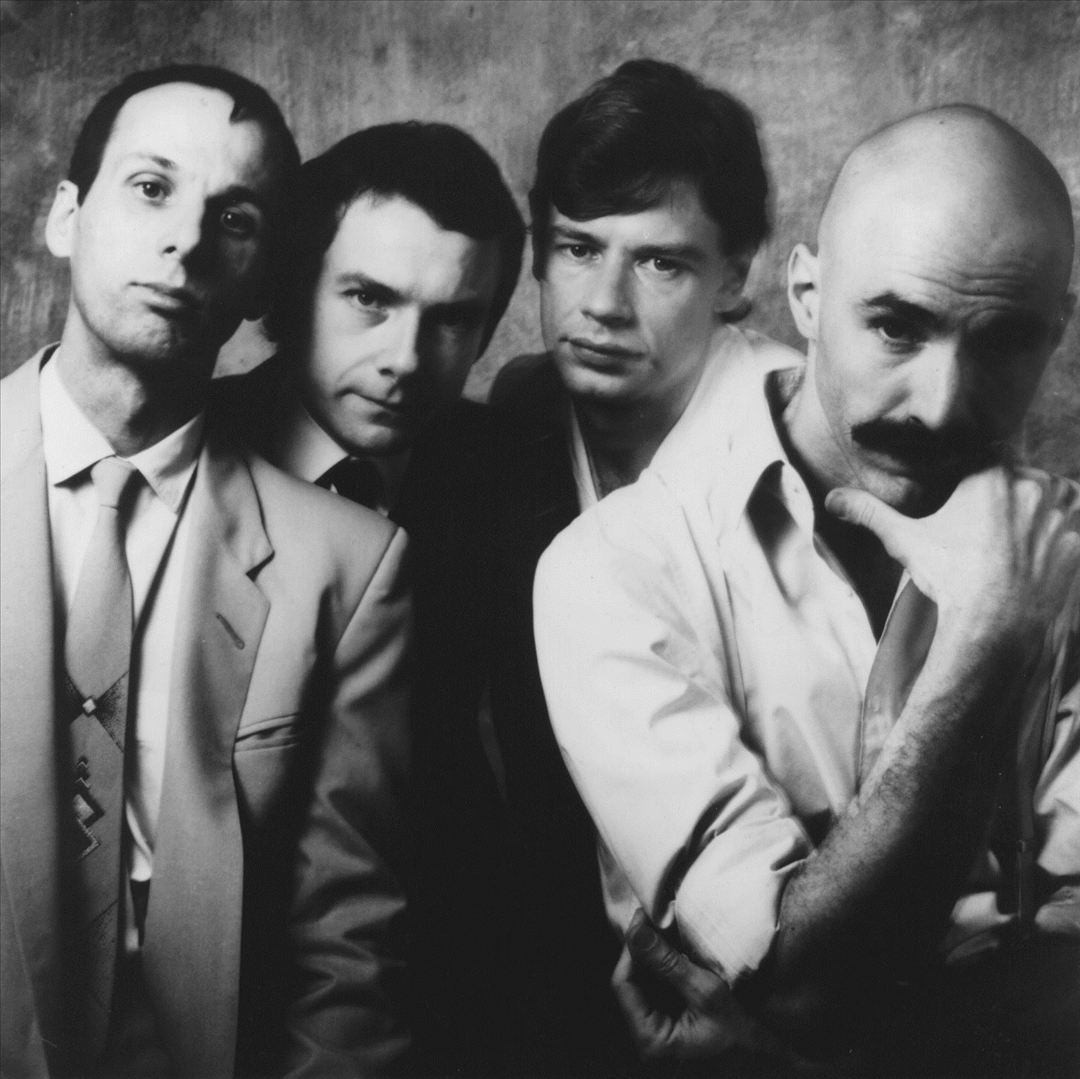
Analysis of ‘Trout Mask Replica’

I: Introduction

Trout Mask Replica is the third album by Captain Beefheart and His Magic Band, released in 1969 as a double album. The music was written by Beefheart (Don Van Vliet), composed at a piano, and arranged by the drummer of the band, John French (nicknamed “Drumbo,” and uncredited on the album).

TMR was produced by Frank Zappa, offering Beefheart complete artistic freedom on Zappa’s new label, Straight Records. This was Zappa’s most memorable album production (The Rolling Stone Encyclopedia of Rock and Roll, page 1105), as TMR has some of the most radically experimental music of anything in the history of rock and roll. The album combines Delta blues, free jazz, and 20th century avant-garde classical music concepts to create a near-chaotic sound with polymetre, polyrhythms, and polytonality.

I must be frank about TMR. It is by no means easy listening. It’s an acquired taste, to put it mildly. I remember my first listening to it as a teen in the mid-1980s, and I was so frustrated with it at the time that I almost wanted to rip the first record off the turntable and throw it against the wall. In the back of my mind, though, I sensed that significant forces were at work on this album, mysterious forces, but ones worth sticking with. Over time, I came to understand what I was hearing little by little, and now I realize that TMR rewards repeated hearings.

Indeed, this album, though initially selling poorly (as might be expected from such a challenging recording), is now considered Beefheart’s masterpiece, and is a great influence on many other artists, including those outside of music, like Matt Groening and David Lynch. Musicians who have praised TMR include John Lydon, John Frusciante, and Steve Vai. The album is ranked #60 on Rolling Stone‘s 500 Greatest Albums of All Time list.

Here is a link to the complete album, and here is a link to all of the song lyrics.

Though Beefheart was a great blues player of the harmonica, he doesn’t play it at all on TMR. Instead, apart from his usual, gravelly blues-inflected singing (with a range of about four and a half octaves, from a deep vocal fry you can especially hear on “Dachau Blues” to a high falsetto), he also plays such winds as tenor and soprano saxophones, bass clarinet, and musette…all with a wild, atonal, free-jazz honking spontaneity that couldn’t care less what notes he was hitting.

Other musicians on the album, apart from the aforementioned French, include guitarist Jeff Cotton (nicknamed “Antennae Jimmy Semens”), guitarist Bill Harkleroad (nicknamed “Zoot Horn Rollo”), bassist Mark Boston (nicknamed “Rockette Morton”), and bass clarinetist Victor Hayden (“The Mascara Snake”). Doug Moon plays guitar on “China Pig,” and a number of the Mothers of Invention play on “The Blimp” (though uncredited and mostly inaudible).

Side One

II: Frownland

The themes that pervade this entire double album are paradox, contradiction, and incongruity: these are felt in the surreal lyrics as well as in the dissonant, polymetric music, made clear already in this song. A thorough analysis of the song, by Samuel Andreyev, can be found here; what he has to say about the musical structure of this 1:40-long song can give you a sense of how just about all the songs (apart from three a cappella ones) on TMR were put together.

Examples of paradox, contradiction, and incongruity in “Frownland” include the seeming chaos of it. In my introduction above, I mentioned the “near-chaotic sound” of all the music on TMR: that was a tad misleading, for in fact, all of the songs were tightly, precisely constructed. Beefheart’s music has been described as “a sort of modern chamber music for rock band, since he plan[ned] every note and [taught] the band their parts by ear.” (The Rolling Stone Encyclopedia of Rock and Roll, page 147) Actually, French transcribed many musical fragments that resulted from Beefheart’s noodling around on the piano, an instrument on which he had neither musical training nor experience playing. If Beefheart didn’t get a musical idea from the piano, he whistled it for the band.

Elsewhere, there’s paradox and contradiction in the music’s dissonance and seeming atonality. Actually, “Frownland” opens in C major, then it soon switches to the relative minor of A, followed by other modulations, as Andreyev explains in his video (link above). What is true about the dissonance is the frequent use of polytonality. Furthermore, not only is there polymetre, there’s also a juxtaposition of different tempi in this song, coordinated and synchronized so that the conflicting riffs begin and end together. Such an amazing accomplishment, heard elsewhere on the album many times, justifies the Rolling Stone Record Guide‘s comment that TMR‘s music is “astonishingly advanced rhythmically,” with “superb guitar work.”

As for the song lyric, consider a comparison of how the singer yearns for a happy world–in which “a man can stand by another man without an ego flyin’, with no man lyin’, an no one dyin’ by an earthly hand”–with how Beefheart actually treated his band during the creation and rehearsals of TMR. To say he was a domineering, hard task master is to put it mildly.

The band rehearsed his difficult compositions for eight grueling months, living communally in a small house in Woodland Hills, LA. They had minimal food to eat, often having–in their poverty–to shoplift, then need to get bailed out by Zappa when arrested. Worse, Beefheart was emotionally, verbally, and even physically abusive to his band, not allowing them to leave the house and making them practice for fourteen or more hours a day. French described the experience as “cult-like,” and another observed that it was “positively Manson-esque.” The house was Beefheart’s Frownland: his singing that he could “not go back to your Frownland” was pure projection.

So, as with Stanley Kubrick in his uncompromising vision to make a great film out of The Shining–resulting in the abuse of poor Shelley Duvall and the driving of Scatman Crothers to tears after endless reshoots of scenes–Beefheart demonstrated in TMR that he was both an artistic genius and an asshole.

III: The Dust Blows Forward ‘n’ the Dust Blows Back

This is the first of three tracks on the album with Beefheart singing alone, with no backup band at all. The other two songs of this sort are “Well” and “Orange Claw Hammer.”

The song’s imagery is of an ugly natural landscape, with a feeling of Depression-era poverty. In other words, the Frownland continues, though Beefheart again tries to keep his spirits up when he’s “[taken] off [his] pants and felt free, the breeze blowin’ up [him].”

“Tote an old grain in a printed sack” suggests the poor of the Depression having to lug their belongings as they move somewhere in hopes of finding work, as the Joad family does in Steinbeck‘s Grapes of Wrath. “The smokestack blows up in the sun’s eye,” for “the wind blows black through the sky,” a depiction of the ugly reality of urban industrialization. Yet Beefheart sings all of this with a paradoxically cheerful melody.

Indeed, in this song, Beefheart has temporarily tossed aside his usual blues leanings to sing what sounds like a traditional, old-fashioned song, like something a white working-class man might have sung in the 1930s. Instead of his non-rhotic, blues-inflected, gravelly voice, he sings with the rhotic, rustic charm of a ‘country bumpkin.’

Though the singer is in a depressing setting, where “the dust blows forward ‘n’ the dust blows back,” reminding one of the Dust Bowl era of Steinbeck’s novel, the singer tries to sound cheerful, “hand full o’ worms and a pole fishin’…gone fishin’ for a week.” This juxtaposition of depressing imagery with a cheerful singing tone is one of many examples on TMR of the themes of paradox, contradiction, and incongruity.

Examples of pollution, apart from “the wind blows black” and “the smokestack blows up,” include “a lipstick Kleenex hung on a pointed forked twig,” “one red bean stuck in the bottom of a tin bowl,” and “hot coffee from a crimped-up can.” With these sad images are also pleasant, if surreal, ones like “the moon looks like a dandelion.” These contradictions indicate that, while Beefheart is still in Frownland, his smile is stuck.

IV: Dachau Blues

As the title of this song implies, it’s about the Holocaust, in particular, the Dachau Nazi concentration camp. Beyond those atrocities, though, the song is also an antiwar one in general, begging our politicians to heed the warnings and protests of the young activists of the late 1960s, not to allow the Cold War between the capitalist West and the Soviet East to escalate to WWIII and nuclear annihilation.

While musically, the song has plenty of fitting harmonic tension, including some wild honking on the bass clarinet and tenor sax, Beefheart’s singing in vocal fry–an impressive demonstration of his vocal range–gives off an almost comic effect, which seems inappropriate for the song’s serious subject. Perhaps that ‘comic’ effect is meant to underscore the absurdity of continuing with warmongering and hate in our dangerously nuclear age.

The song ends with a monologue by Boston, the bassist, in which he talks about people trying to get rid of a bunch of rats by shooting at them with shotguns and beating them with sticks. One could hear a parallel in this monologue with the subject of “Dachau Blues”: the rats represent the Jews, or any group persecuted by fascists; the fascists, shooting in all directions, making one think one is going to get killed, are endangering the survival of everyone on the Earth with their reckless hate and violence.

V: Ella Guru

After all of the negativity felt and avoided (or what one at least tried to avoid) in the previous three tracks, in this one, Beefheart has only positive things to say in his praise of a girl he calls “Ella Guru.” She is lovely and wise, since “she knows all the colours that nature do.” Though the stress is on the second syllable of her ‘surname,’ she seems to be a true guru in life, for, “lookin’ like a zoo,” she is wonderfully wild and free as an animal. Though “like a zoo,” she is paradoxically not locked up in any cage.

She is as beautiful as the “moon,” which recall, “looks like a dandelion” in the second track. Her three primary colours, with puns on “yella”/”Ella” and “blue”/”blew,” make her beautiful. Beefheart has lecherous thoughts about her beauty, too, since “she blew,” “she’s young, too,” and is “tight, also.”

The point is that she’s beautiful in body and soul, and Beefheart wants to praise her as one of the few good things left in this stinking world. She helps him to keep his smile stuck, so he won’t have to go back to Frownland. She’s no phony: “She do what she mean and she do what she do.”

In the middle, instrumental section of the song, where the guitars are playing in a progression of F major and E♭major, the drums are going back and forth between a shuffle rhythm based on triplets and a slightly faster, duplet rhythm based on the duration between the first and third of those triplets (that’s at least what I think it is). In any case, it’s yet another example of how “astonishingly advanced rhythmically” the entire album is.

VI: Hair Pie: Bake 1

I’ll discuss the musical structure of this track when I get to “Bake 2.” As for “Bake 1,” I’ll discuss only what makes it different from 2, which isn’t very much in terms of musical structure.

The title of these instrumentals sounds like a lecherous continuation of Beefheart’s infatuation with Ella Guru. Since “she blew” in that song, it seems here that Beefheart is returning the favour with his honking on the soprano sax and bass clarinet (that low note on the latter being played by “The Mascara Snake,” I assume), this being the one essential difference between Bakes 1 and 2. Apart from that difference, Bake 1 also slowly fades in, with less and less sax and bass clarinet towards the end, while “Bake 2” is heard at full volume throughout, with no wind instruments at all.

Another difference between Bakes 1 and 2 is that the latter was recorded in a studio, whereas the former was recorded in the house the band was living in, the sax and bass clarinet parts in the garden of the house…hence Beefheart’s comment to the two visitors heard after the end of the instrumental: he tells them, “It’s a bush recording. We’re out recording the bush.” This “bush” reference sounds also like more of Beefheart’s lecherous feelings for Ella Guru, his blowing on the sax is an eating of her hair pie.

VII: Moonlight on Vermont

Beefheart spuriously claimed that he wrote all of the songs on TMR in one eight-hour session. “Moonlight on Vermont,” as well as “Sugar ‘n’ Spikes,” were actually written around December of 1967, and “Veteran’s Day Poppy” was written in mid-1968. The rest of the music was mostly written over the summer and fall of 1968. This would explain why these former three songs aren’t as radically experimental as the music of the rest of the album, but are more bluesy.

Other interesting features of “Moonlight on Vermont” that are worthy of mention include the, I’d say, ironic reference to the spiritual “Old Time Religion,” and to Steve Reich‘s “Come Out.” These two elements, appearing towards the end of the song, are as I say ironic because if anything, Beefheart’s song is about getting away from tradition and the leaden repetition that comes from it (and Reich’s recording). So the yearning for tradition (“that old time religion”) and the breaking away from it (to get away from Frownland) is more paradox and contradiction.

The song’s lyric is based on the old belief that the moon can make us into lunatics. Some man in the song has gone so wild, he’s brandishing a pistol (or is it his phallus? Has he seen Ella Guru?). The upper-class people of the lunatic neighbourhood aren’t playing bridge anymore.

“No more bridge” for “high society” could represent the bringing-down of the ruling class, liberating the rest of us as a result of the lunatic influence of the moon (“Goes to show you what a moon can do.”). The freeing of us in turn means we can finally get rid of the “white elephant” of our oppression, so we can be free to express ourselves, “escaped from the zoo with love.” We’ll be “walkin’, lookin’ like a zoo,” as Ella Guru does. We’ll be “free to grow as flowers,” as Beefheart sings in “Sweet Sweet Bulbs.”

Side Two

VIII: Pachuco Cadaver

Before the song begins, we get one of a number of Beefheart’s references to a preoccupation of his, his expression “fast and bulbous.” We already heard it in “Ella Guru.” It can be related to the upcoming song, “Sweet Sweet Bulbs,” too. He’s talking about something flowering, growing…yet plants aren’t fast in their growing.

In “fast and bulbous,” therefore, we hear another paradox, or contradiction. It seems rather like the development of TMR: Beefheart’s dictatorial driving of his band to practice his difficult music for long hours every day, never allowing them to leave the house, and berating them abusively whenever they made mistakes–this was the “fast” in the music’s “bulbous” growth.

Furthermore, the “fast and bulbous” paradox is a reflection of the contradiction between, on the one hand, the Frownland that Beefheart wants to stay away from, which is stressful in how “fast” everything has to be (think of how much worse we have it today, with all of our multitasking), and on the other hand, the childlike, free world that Beefheart yearns for, the “bulbous” world where we’re “free to grow as flowers,” where we’re “walkin’, lookin’ like a zoo” with Ella Guru.

Accordingly, we hear a number of references to flowers on TMR: “the moon looks like a dandelion,” the flowers in “Sweet Sweet Bulbs,” “Veteran’s Day Poppy,” and “her skin is as smooth as the daisies,” in “Pachuco Cadaver.”

The song begins with a guitar riff in A major, while the bass plays Es in groups of three, one set an octave apart from the other, and they’re played at a tempo slower than that of the guitars and drums. Beefheart then comes in, doing spoken word.

Whoever “she” is (Is it Ella Guru again?), she wears a “bolero,” which on the one hand is a cropped jacket, and on the other–given Beefheart’s predilection for lyrics full of puns and surrealist imagery–a Spanish dance in 3/4 time from the late 18th century…hence, “when she wears her bolero, then she begin to dance.” Her car, a Chevy sedan, is a “Pachuco Cadaver,” referring to how a Mexican-American might own an old car made from scraps, with a steering wheel from “a B-29 Bomber.” The car is “forever amber,” because of how rusted up it is–yellow with rust.

The “yellow jackets ‘n’ red debbles” (devils), which are “buzzin’ ’round her hair hive ho,” are barbiturates (pentobarbital and secobarbital/Seconal respectively for the yellows and reds), often taken in the 1960s by women with beehive hairstyles (one is reminded of that old song by the Rolling Stones). So “she” has her hair like this, and she’s buzzing on “chill pills” as she drives her car.

We get more puns when we hear that “she wears her past like a present.” The present can be a gift (the bolero jacket), or it can mean that she is a person of all times, past or present. “She looks like an old squaw Indian,” yet if she’s Ella, “she’s young, too.” Old, yet young. Another paradox…past, yet present.

“She” certainly seems to possess the attractive qualities of Ella Guru, for “her lovin’ makes [Beefheart] so happy,” he’d crack his chin if he smiled. “Her eyes are so peaceful, thinks it’s heaven she be in.” As these lines are said by Beefheart, the music has become cheerful, even celebratory, with a shuffle rhythm and guitar riffs in A major, at one point shifting down to A♭major, then back to A♮major; and the drummer sometimes shifts from the shuffle (often with quick triplets hit on the ride cymbal) to duplets played on the hi-hat. (Somewhere in this song, the melody from “Shortnin’ Bread” is heard among the guitars, but it seems to be so buried in there that I cannot pinpoint it.)

I mentioned above how “her skin is as smooth as the daisies” in reference to Beefheart’s love of flowers; it should be added to this the significance of “in the center where the sun shines in,” or, of course, the yellow centre of a daisy. This comparison of a flower to a light in the sky should be linked to another such comparison I also mentioned earlier: “the moon looks like a dandelion,” from the second track. These lines in turn should be related to what Beefheart sings in “Frownland”: “My spirit’s made up of the ocean and the sky and the sun and the moon…” He loves the flowers, the sun, and the moon; these beauties of nature are all one to him.

Fittingly, “when she walks, flowers surround her, let their nectar come into the air around her.” If she’s Ella, “she comes walkin’, lookin’ like a zoo”: natural, wild, free, and beautiful–like flowers. Is Ella the earth mother-goddess? “Her lovin’ stick out like stars.” The sun is a star, the centre of a daisy, like her skin. Her love is a star, the sun, the centre of a flower.

Beefheart would like to emulate her spontaneity with a sax solo that, though going along with the rhythm of the band, couldn’t care less if it conforms with the harmony or not. After that, the back-up band continues playing the cheerful riff in A major for a while, and the song ends.

IX: Bill’s Corpse

“Bill” in the song’s title refers to guitarist Zoot Horn Rollo (Bill Harkleroad), who upon having left an LSD cult to join Beefheart’s Magic Band had been in an emaciated condition; in fact, that emaciation may have also been a result of the conditions Beefheart had created in the house while the band rehearsed (recall how the band had starved).

Bill’s corpse can thus be seen as a metaphor for the unhappy, degraded state of the world described in this song lyric. After the celebratory happiness we heard in “Pachuco Cadaver” (an ironic song title to have come just before this track, the two songs giving off opposing moods…yet such is the thematic nature of TMR–paradox, contradiction, and incongruity), we have come back to Frownland.

“Quietly, the rain played down on the last of ashes,” Beefheart sings as the band plays in D minor to a by-now-typically conflicting rhythm. “She…” (Ella Guru, the sad earth mother-goddess?) is “hideously looking back at what once was beautiful.”

Since “her ragged hair was shining, red, white, and blue,” we can see how Ella Guru has gone from her happy yellow, red, and blue primary colours to those of the flag of the United States, where oppression and unhappiness have reigned for so long. Such misery is apparent in how, for example, “the goldfish in the bowl lay upside-down bloatin’,” symbolic of how environmental damage has harmed marine life in the rivers, lakes, and oceans…great fish bowls, as it were (also, there was the Dust Bowl of the Depression years).

Elsewhere, “the plains were bleached with white skeletons,” those of Native Americans killed by the white man and ironically, if redundantly, called “white skeletons,” or skeletons made so by whites. Related to the Native American genocide is how “various species [were] grouped together according to their past beliefs,” which can represent racism, which has sometimes been rationalized with Biblical quotes like Genesis 1:25. If God meant all the animals to be created “according to their kinds,” then, apparently, He would have wanted the black, white, Asian, and Native American ‘races’ to live “according to their kinds,” that is, separately.

Connected with such a racist attitude is how “the only way they ever got together was not in love, but shameful grief.” That is, the white supremacists got together for the purpose of persecuting blacks, Jews, natives, and any other racial or ethnic groups they hated. So much of the history of the “red, white, and blue” has been made up of such hatred. Beefheart doesn’t want us “to get together” in such ways. Getting together is normally associated with love, not hate; so this hateful getting together is yet another example in TMR of paradoxes and contradictions.

So “the rain [of sadness] played down,” that is, rained down on our world and ruined our happiness, saddening earth-goddess Ella Guru, the lady who would “look out of love.” She “should have us all,” that is, together and happy, or, if we cannot be, then she “should have us fall.”

X: Sweet Sweet Bulbs

In this song, we’ve left Frownland again, and we’re back with happy Ella Guru, that is, “in [Beefheart’s] lady’s garden,” where the “sweet, sweet, sweet, sweet bulbs grow,” and where “warm, warm, warm, warm, warm sun-fingers wave.” This garden could also be that of the house where he and his Magic Band were practicing his music…though–yet another contradiction!– he was actually working them like slaves, as I pointed out above.

For him, at least, the garden is a happy place where “flowers dance” and the sun, whose “fingers wave,” is also associated with joy, as I mentioned earlier. “Hominy,” a Mesoamerican food item, was eaten by the poor during the Great Depression, and thus it links this song with track 2 off of Side One.

She herself is linked to hominy, in her “smile” and her “snatch,” which in turn links her to Bakes 1 and 2 of “Hair Pie,” since–among other, obvious reasons–hominy is frequently used as a base for baked dishes, and there are pies with hominy, including baked Tex-Mex/Southwest pies.

Since, as I said above, hominy was eaten by the poor during the Depression, we can link it with the bare subsistence diet that the band had to eat while working on Beefheart’s music, in that house with that garden nearby: French, for example, had no more than a small cup of soybeans a day for a month. So the contradiction here is between the joy Beefheart is feeling about his artistic inspiration and his music being played on the one hand, and the suffering his band is going through on the other.

He calls Ella “Phoebe,” this name being a female version of Phoebus, as in Apollo, a god associated with the sun, since Ella, flowers, and the sun are images of happiness for Beefheart. Recall how “her skin is as smooth as the daisies, in the center where the sun shines in,” for “her lovin’ makes [Beefheart] so happy,” as he tells us in “Pachuco Cadaver.” He sees “Phoebe” in her bonnet, “with the sunset written on it.”

As for the music, we primarily hear a merry set of tunes played on the bass and guitars, in a largely pentatonic E major. By the middle of the second verse, though, the music gets more tense and in its by-now-typically disoriented state as Beefheart sings of how “just behind ya was the sea of negativity…she walked back into nature a queen uncrowned.” Yet when she recognizes herself “to be an heir to the throne,” and “her garden gate swings lightly without weight,” we return to the merry guitar and bass tunes in pentatonic E major.

Ella is the queen of this happy garden (of Eden?), which is “open to most anyone that needs a little freedom.” Beefheart would invite as many of us as can come to be “free to grow as flowers” and “share her throne,” for in his utopia, we’re all equals…unless you’re a member of his Magic Band, of course.

XI: Neon Meate Dream of a Octafish

Since the surrealist lyric of this song is about a wet dream, or at least a sexual fantasy, I can now understand why–in his discussion with the two visitors about “Hair Pie: Bake 1” when the music is over–Beefheart confuses the title of that instrumental with that of this song. The former track is about the female genitalia, and this song is about the male genitalia.

Apart from the phallic tentacles of the “octafish,” and other sexually suggestive references to “incest,” “tubes,” “speckled,” “waddlin’ feast,” “buds burst,” “meate rose and hairs,” “meaty dream wet meat,” “twat trot,” “whale bone fields,” and “serum in semen,” the lyric is chock-full of Beefheart’s typical use of puns.

So this song can be seen as yet another example of Beefheart’s lusting after Ella Guru. Fittingly, the music has such dissonance in it that it can legitimately be called “musical masturbation.”

XII: China Pig

The White Stripes did a cover of this song.

In this improvised recording with Beefheart’s singing accompanied only by Doug Moon on guitar, we have TMR‘s closest approximation to pure Delta blues. It almost sounds like something Robert Johnson would have done.

The song is about a piggy bank (“china,” as in porcelain). Not wanting to kill Beefheart’s “china pig,” then, simply means he doesn’t want to break and destroy his piggy bank.

So, not wanting to destroy the piggy bank, in turn, represents a need to refrain from spending one’s money carelessly, a need to save money, because one is poor, as during the Great Depression, or as in the impoverished state the Magic Band was in, rehearsing in that house. “A man’s gotta live. A man’s gotta eat. A man’s gotta have shoes to walk out on the street.”

The piggy bank, of course, has “got a slot in his back.” If he is desperate to get his hands on some money, he whips out his fork and pokes at the piggy bank: “I put a fork in his back!” This is to get coins out without breaking it.

So a song about being poor and needing to count one’s pennies is aptly played in a Delta blues style, since so many of the old bluesmen sang about their sorrows. Things might be a lot happier if “flowers grow/[Beefheart’s] china pig be quite a show.”

XIII: My Human Gets Me Blues

This song begins with striking dissonances from the guitars, especially in contrast to the straightforward blues of the guitar in “China Pig.” Such dissonance is fitting, since the song is about the discord between what one is supposed to believe about Christianity and what we often do believe about it.

Beefheart begins his singing by addressing the baby Jesus in His “X-ray gingham dress.” Beefheart can see through it, because he can see through the phoniness of the religion. Gingham is a fabric with patterns of horizontal and vertical stripes that cross over each other; so like the X in “X-ray,” they represent the Cross that Christ was nailed on.

Jesus is in a “dress,” meaning those robes worn in ancient times; but “dress” is also used as a pun on “duress” in the second line of the first verse. Jesus was “under duress,” that is, forced by God to die on the Cross (Matthew 26:39). But Beefheart knew Jesus under his dress, that is, he could see, like an X-ray, under the phoniness of the religion that speaks in Jesus’ name.

Jesus can “keep comin’,” as in the Second Coming. Like all those clergymen in their robes (‘dresses,’ if you will) who represent Jesus, He’s “the best dressed,” that is, in all that Catholic finery (or, in the case of the evangelical Protestants wearing those fine, expensive suits), the religious authorities are showing off their wealth, they who represent Christ. They “look dandy in the sky,” like foppish dandies in those fancy clothes and fraudulently imitating Christ, but they’re no ‘dandelions’ to represent the flowers of true happiness, as Beefheart saw in the dandelion-looking moon.

Jesus is supposed to be our Saviour, to give us peace and comfort, yet He would scare us with threats of Hell for not believing in Him…still, He doesn’t scare Beefheart, who–seeing through the Church’s phoniness–has “got [Him] here in [his] eye.”

“In this lifetime,” that is, in the material world we’re in now, as opposed to the spiritual afterlife, “my human gets me blues” is the painful feeling of being regarded as a lowly sinner (“human”), fallen from the grace of God, and needing the authority of the Church to be restored to God’s grace, that is, needing to conform to Church doctrine to be saved…salvation by grace through faith (Ephesians 2:8).

Beefheart doesn’t want to be thus coerced into such conformity, to be “under duress.” He’d rather roam about freely in the flowery fields with Ella Guru. He knows Jesus would “never come back,” i.e., there will be no Second Coming, as the Church has so fraudulently promised for two millennia. In Matthew, chapter 24, it was prophesied that He would come back, with the end of the world, before the death of that very generation hearing Him (Matthew 24:34).

There’s an “old lady” who is “afraid [she’d] be the devil’s red wife,” which sounds like the Whore of Babylon, a place that in turn has been seen to represent Rome. Since this song is critical of Christianity, Babylon-as-Rome can be seen as the corrupt Roman Catholic Church.

“God dug [her] dance” just as Jesus dances in a way Beefheart knew He’d never come back, hence the link between her and Jesus, or the Whore of Babylon and the Roman Catholic Church. God would “have [her] young and in His harem”: she’s an “old lady” because being a whore is the oldest profession.

Now, “everybody made Him a boy,” that is, we have never traditionally regarded God as female, hence, the all-male priesthood to represent Him (1 Corinthians 14:35). Because of all of these faults in the Church, among so many others, Beefheart’s got the “human gets me blues,” that is, the sadness of having to deal with all those human, all-too-human faults of the Church, as opposed to its supposed divine authority over man.

XIV: Dali’s Car

This short instrumental for two electric guitars (played by Zoot Horn Rollo and Antennae Jimmy Semens) was the first that Beefheart composed for TMR. He called it a “study in dissonance,” according to French in his book, Beefheart: Through the Eyes of Magic, pages 805-806. The instrumental was inspired by Salvador Dali‘s Rainy Taxi, or Mannequin Rotting in a Taxi-Cab, from 1938.

Side Three

XV: Hair Pie: Bake 2

As I said in my description of Bake 1, the only major differences between the two “Bakes” are the absence of sax and bass clarinet honking here and no slow fade-in here, as well as no visitors asking about the music. Instead, this “Bake” ends with Beefheart shaking jingle bells with the tape being sped up.

Now I’ll discuss some of the musical highlights of these two instrumentals. We can hear examples of polytonality in the two guitar parts and in the bass, as well as polymetre and synchronized polyrhythms. One noteworthy example of the latter is, shortly into the beginning, when we hear a riff in 5/4 time, then the drummer pounds a strong shuffle rhythm (implying triplets), which at first is heard alone, then the guitars and bass return with the 5/4 riff, perfectly synchronized with the shuffle rhythm.

Later, we’ll hear polytonality in the guitar parts, with one playing a descending line of C, A, A♭, and G, while the other is playing G♭[4x], and A, the former implying a key of C to the latter’s implied D major.

We’ll also hear the polymetre of such conflicting time signatures as 3/4 against 4/4, and 5/4 against 4/4. All of this conflict in dissonance, metre, rhythm, tempo, and key makes up the album’s musical equivalent to the lyrical themes of paradox, contradiction, and incongruity.

Between this instrumental and the next track, “Pena,” we hear a goofy dialogue between Beefheart and the Mascara Snake about all things “fast and bulbous.” They mess up a few times, first from Beefheart laughing, then from the Mascara Snake coming in too early with the line “Bulbous also tapered.” Zappa can be heard giving directions.

I mentioned above how I interpreted “fast” to mean our stressful lives, with everything so fast-paced; yet on the other hand, “bulbous” refers to a free, organic, natural world of flowers. So “fast and bulbous” is a paradox of our happy, yet unhappy lives. “A tin teardrop” is a surreal reference to how our modern-day, metallic world is taking us away from that natural world and thus making us weep. So, “bulbous also tapered,” along with “also, a tin teardrop,” refer to how our natural world of beautiful, bulbous flowers is being diminished and reduced of its thick bulbousness.

XVI: Pena

Antennae Jimmy Semens narrates this one in a hysterical voice, with Beefheart doing high-pitched, unintelligible screaming in the background. “Pena,” with “her head…like a barrel of red velvet balls,” sounds like the feminine of “Penis.” Her name can also be seen as a variation on “poena,” as in “subpoena,” and other words like “penalty,” “punishment.” What is necessarily ‘punitive’ in this surreal narrative, though, may not be all that obvious to see at first, given how it more obviously seems like another coded, symbolic sex fantasy, like “Neon Meate Dream” above.

That the “velvet balls” are red is symbolic of love, since, according to this video (about 9:30 into it), Beefheart says red represents love, as yellow does wisdom, blue does peace, and green does logic in songs like “Pena” and “Ella Guru.” So Pena’s head, “clinking like a barrel of red velvet balls,” suggests a ‘female’ penis and testes.

Now, with this album having come out in 1969 and therefore long before transgender issues became a big concern in mainstream thinking the way they are today, I doubt that Pena’s hermaphroditism is meant as an expression of transgenderism. I think the ‘female penis and testes’ of Pena are just more of Beefheart’s surrealism, with sex differences still perceived as just a binary, and thus the hermaphroditism is yet another example of TMR‘s theme of contradictions.

It’s significant in this connection that both aptly-named Beefheart and…aptly-nicknamed Semens…have high-pitched voices on this recording, making them sound rather androgynous. It’s also worth noting that in the promotional photos for TMR, Semens is seen wearing a dress. With the names Jeff Cotton and “Jimmy,” he doesn’t identify as a female. He’s just in a dress as part of the philosophy of the Magic Band as free and defying social conventions–it’s the same with all the band members’ goofy-sounding nicknames.

Back to the narration. “Treats filled her eyes,” that is, Pena’s, “turning them yellow…soft like butter, hard not to pour.” The treats, I suspect, are phallic, and the eyes are yonic and anal, the soft, butter-like yellow being ejaculation. “Sitting on a [phallic] turned-on waffle iron, smoke billowing out from between her legs” sounds unmistakably sexual, “making [the phallus] vomit beautifully.”

She’d “fall on [his] stomach” while he’d “view her from a thousand happened facets,” that is, he ogles her naked body from all angles. He may have hurt himself in his ecstasy, hence the “liquid red salt,” or blood from lovemaking (I suppose this was the penal aspect of Pena); “[he] later Band-Aided the area, sighed, ‘Oh, well, it was worth it’.”

Pena was pleased with the lay she got, but “sore from sitting, chose to stub her toe”…so it seems that she got punished for her pleasure, too. And in this pleasure-pain of both lovers, we see yet another of TMR‘s paradoxes. The “red pockets” of the “white pulps” would be more blood from the stubbed toe. Her being “tired of playing ‘Baby'” could mean that Pena, with the raised social consciousness of Second Wave feminism in the late 1960s, doesn’t want her lover to treat her as a mere sex object anymore; for being treated as such, despite the pleasure she got from the sex, she feels like she’s being punished for it.

The “blue felt box” completes the red, white, and blue with the “pulps” and “pockets”–the American flag, colours complained about in “Bill’s Corpse.” Note how the red, white, and blue colours all appear around Pena’s protesting of not wanting to play ‘Baby’ anymore. It’s in reactionary governments like that of the US where women and other oppressed groups feel so confined.

On the other hand, red, yellow, and blue are the colours of free-spirited, wise Ella Guru. “Out of a blue felt box let escape one yellow butterfly the same size.” Out of the blue of peace came the yellow of wisdom (recall the colour symbolism of the Beefheart video–link above). White is often considered the absence of colours, so without yellow in red, white, and blue, there’s an absence of wisdom. If white is, alternatively, the sum of all colours, as it’s also sometimes deemed, then the red of love, yellow of wisdom, and blue of peace are all lost in the mix, as was the case in the American involvement in the Vietnam War going on in 1969, when TMR was released.

The yellow butterfly’s “droppings were tiny green phosphorous worms.” Green, according to that Beefheart video, represents logic. So, from the wisdom of yellow we get the green of logic. Of course, yellow mixed with blue (from the “blue felt box”) is green, so wisdom mixed with peace is logic.

The song lyric ends with Pena blowing raspberries: “Mouths open to tongues that vibrated and lost saliva.” Is she, in her red love, yellow wisdom, blue peace, and green logic, sticking her tongue out at the freedom-crushing US flag? Is hermaphrodite Pena’s/penis’s defying of sex roles, in not wanting to play ‘Baby’ anymore, an example of that defiance?

In any case, the song musically ends with dissonant riffs heard mainly in 5/4, among some polyrhythms.

XVII: Well

This is the second of three tracks on TMR that Beefheart sings a cappella. As usual with his lyrics, this one is full of surrealist imagery.

A lot of the imagery is of oppositions: day/night, black/white, hard/soft, hard (as in ‘bad’)/well, melted/froze, and silent/scream. His singing is largely a hitting of two notes: G and E, implying a shift back and forth from G major to its relative minor in E. This implied progression suggests yet another opposition: major/minor. All of these musical and lyrical oppositions add to TMR‘s general theme of contradictions.

In the first two lines of the first verse, we hear of a human being (“a red raft of blood”) going through his day (“light floats down day river”) and feeling the sunlight. Then comes the night, with a giant black…beetle?…large enough to block out the light of heaven, the shining of “its hard, soft shell” is “white in one spot,” implying the shining of the moon and stars. Life is hard, but the singer is “doing well, well.”

“The white ice horse melted,” yet the singer “froze in solid motion.” In a reversal of time sequence, the horse’s mane melted last, and after that, the tail melted…more contradiction and incongruity. The melting of an ice horse sculpture would seem a bad thing, but it’s all “well” to the singer. His “life ran through [his] veins” in the “red raft of blood” that is his body. Is “the ocean swarmin’ body…well” Brahman, as opposed to the Atman of his “red raft” body?

Since the blackness of the night is “like a big, black, shiny bug,” then the singer’s having “heard the beetle clickin'” means he’s hearing the sounds of the night…then [he’d] “begin to dream” at night. And with the dreaming would come more surrealist imagery, since surrealism is an expression of the unconscious mind, and as Freud once said, “the interpretation of dreams is the royal road to a knowledge of the unconscious activities of the mind.” So in all of Beefheart’s surrealist, non-rational dreaming, his “mind cracked like custard,” etc.

The “thick, black felt birds…flying” sounds like a metamorphosis of the “big, black, shiny bug” of night, these birds flying everywhere and blocking out heaven’s light. Now, they have “capes” and “feathers of solid chrome,” which can be a shiny, decorative cover on cars and motorbikes. So the night is shiny again, indicating the light of the moon and stars, “and bleached the air around them, white and cold, well, well.”

This white in black, just like all the other oppositions discussed above, can also be interpreted in terms of the dialectical monism of the yin and yang of Taoism. Yin is black, and yang is white. So, though “it showed in pain,” all is “well, well.”

XVIII: When Big Joan Sets Up

“Big Joan” would appear to be the diametrical opposite of Ella Guru, who is wise and attractive to Beefheart, whereas Joan is “too fat to go out in the daylight,” and her hands and “arms are too small.”

The song begins with a frantic guitar riff in A: a bend from A to B, then the guitar goes up to E, back down to B, down to E an octave lower, E again, up to A, to D, and to the upper E again. This is heard mixed in with other high-pitched guitar leads that Beefheart follows with his high-pitched vocalizing.

Joan’s physical unattractiveness sounds more like a comment on society’s unfairly high beauty standards for women than an actual criticism of her looks. She once “compared her navel to the moon,” as if to see beauty in her body, though society refuses to see that beauty.

Beefheart is willing to accept her as she is: he’ll “set up with…Big Joan,” for he admits that he, too, is “too fat to go out in the daylight,” just as she is. He “won’t droop” if she promises not to complain about her small hands. She needs to accept herself as she is, too.

“Something’s happening,” that is, the world of the late 1960s was changing in terms of its social attitudes, so Big Joan is finally willing to come out publicly. In this sense, Beefheart’s song is like “Take Your Clothes Off When You Dance,” by Zappa and the Mothers of Invention, from the 1968 album, We’re Only In It for the Money, in which “there will come a time when you won’t even be ashamed if you are fat.”

Yet, on the other hand, immediately after Beefheart says she’s “come out,” he essentially says she cannot come out, for “she ain’t built for going naked, so she can’t wear any new clothes, or go to the beach.” So we have in this verse another example of TMR‘s many contradictions.

“They laugh at her body,” oddly, not because she’s big and fat, but “’cause her hands are too small.” Is she “outta reach” because her hands are too small to reach us, or too small for us to reach them? Or both? Is this the real problem, not her physical appearance, but our inability to connect with anybody, while we use physical imperfections as an excuse not to reach out to other people?

“Hoy! Hoy! Is she a boy?” is an allusion to “300 Pounds of Joy,” by Howlin’ Wolf (i.e., the line “Hoy! Hoy! I’m the boy!”) As with “Pena,” the line between masculine and feminine is being blurred in Beefheart’s song, and while in Howlin’ Wolf’s song, his obesity is being celebrated, so does Beefheart’s allusion to it imply a needed celebration of Big Joan as a BBW, not a mere ‘fatso.’

As with an implied celebration of her looks, so can we hear, in Beefheart’s soprano sax soloing and in the band’s sudden, jerky stops and awkward silences, celebrations of dissonances and weirdness in general, things not normally valued, yet which perhaps should be.

XIX: Fallin’ Ditch

Speaking of being unattractive to those of the opposite sex, according to the dialogue between Beefheart and bassist Rockette Morton, which precedes the next song, it seems that one needn’t worry about the latter “with any of those girls” because, “tak[ing] off again into the wind” (like a rocket, no doubt), he “run[s] on beans,” making him not smell exactly of cologne.

The lyric of this song seems to be a repeat of the emotional conflict expressed in “Frownland”: pain is unavoidable, but one tries to avoid it all the same, of course. Beefheart won’t let any setbacks in his life break his spirit.

Accordingly, the music starts off with the usual dissonance and conflicting instrumental parts, yet by the second verse, after we hear the refrain, “Fallin’ ditch ain’t gonna get my bones,” the musical back-up is more tonally centred and up-beat, suggesting a more positive outlook on life.

We all “trip” every now and then, and “get lonesome,” and when we’re down like this, in the “fallin’ ditch, somebody wanna throw the dirt right down,” that is, there’s always somebody who wats to make us feel even worse. When Beefheart “feel[s] like dying, the sun come out,” that is, he knows that when matters are at their worst, that is when our fortune often changes for the better.

So he, defiant against all ill fortune, sings, “Who’s afraid of the fallin’ ditch?” Boasting of his optimism, he asks us, “How’s that for the spirit?”, right as the musical background is cheering up.

XX: Sugar ‘n’ Spikes

This song, like “Moonlight on Vermont” and “Veteran’s Day Poppy,” was written earlier than the other songs on TMR; in fact, “Sugar ‘n’ Spikes” was written in late 1967, just a few months after the release of Beefheart’s album, Safe as Milk. So this song sounds far less experimental than the new songs.

“Sugar and spikes” seems to reflect the dual nature of life–sometimes sweet, and sometimes painful. Similar opposition is heard “in neon nights”–sometimes light, and sometimes dark, which is also reflected in “lights in chains”: the pleasure of light vs being bound in chains. This good/bad dichotomy is further heard in “coughin’ smoke, whoopin’ hope.”

So everything is “sugar and spikes…and everything nice and crazy.” Instead of saying that ‘what little girls are made of is sugar and spice and everything nice’ (a totally unrealistic and confining way to describe the female sex), Beefheart more accurately affirms that “what little worlds are made of” is part pleasure and part pain.

Examples of such pleasure combined with pain in the singer’s “little worlds” include being what seems to be an interracial relationship (his “new Friday’s house,” as in a female Friday to Beefheart’s Robinson Crusoe), and all the pleasures that go with such a relationship; and the irritations of having no hot water (“no H on [his] faucet”), or a bed for his mouse. Nonetheless, he’s content as “king for a day with [his] lady, who look fine.” If she’s his “Friday,” I suspect that his being “king for a day” means he’s putting her in a subservient role, as Friday was servant to Crusoe; in other words, in this relationship we see yet again a combination of pleasure and pain…just as in the servile relationship of Beefheart’s band to himself.

Has he given his “honey” a Speidel wristwatch as a gift? Going to see the vicar, he plans, I assume, to marry her, perhaps in a church named after St. Paul or St. Peter.

The only experimental-sounding part of this song occurs with the drum solo after all the words are sung; it’s a frantic solo going at a much faster tempo than that of the guitars and bass, riffs heard also during the music played earlier with the verse beginning with “lies steam stale.”

The song ends with Beefheart singing high-pitched, childlike nonsense syllables that were also heard, and with the same musical backing, in the verse in which he sang “sugar and spikes and everything nice.”

XXI: Ant Man Bee

Musically, this song more directly merges rhythm and blues with more experimental elements, and the blues aspect is made clear right at the beginning, with the guitar riff.

The “Ant Man” of the title indicates that Beefheart is comparing the modern human condition with ants. The white, black, “yella,” and brown ants are obviously meant to represent all the different racial and ethnic groups of the world, who “can’t get along.” We’re all “longin’ to be free…Uhuru!”

Note how the ants are “in God’s garden.” Is this the Garden of Eden, where Adam blamed Eve for tempting him with the forbidden fruit, and she blamed the serpent for the same thing–like the ants, the three couldn’t get along. The Garden of Eden was like Beefheart’s lady’s garden, where the “sweet, sweet bulbs grow.” And it’s the garden of the house where the Magic Band rehearsed the songs of TMR…and Beefheart, in his fiery temper over their mistakes, couldn’t get along with them, either.

“That one lump o’ sugar” that the ants fight over would be the wealth of the world, hoarded by the greedy plutocrat capitalists. And because of their greed, and all the money to be made by the weapons manufacturers, war profiteers, and in the general racket that war has always been, “war still runnin’ on.”

Now, the bee in “Ant Man Bee” is the liberator of us all; he “takes his honey, then he sets the flower free”…and recall how Beefheart loves his flowers. If only the ants could “set each other be,” or let each other be.

With this understanding of the ever-fighting ants, Beefheart goes into more dissonant sax soloing, to represent that never-ending conflict. With two saxes going at the same time, he sounds as if he’s doing an impression of Roland Kirk, with Rockette Morton doing a bass line of D, E, C, A, A (an octave higher).

Side Four

XXII: Orange Claw Hammer

This track is the third of the a cappella songs on TMR. With hard rs from his heavily rhotic pronunciation, Beefheart sounds as if he’s affecting a pirate’s voice. After all, he’s his daughter’s “peg-legged father” whose “seaman’s eyes…flow out water, salt water.”

The setting of this lyric seems to be putting us back in the Depression-era 1930s, since the pirate-singer is a hobo on trains during such economic hard times, and there are references to a Piper Club airplane (built between 1938 and 1947) and Ohio Blue Tip Matches. “The old puff horse” could be the train he’s going on (an iron horse), or it could be himself, puffing on a cigarette he’s lit with the match.

We get a vivid sense of the man’s poverty, with his “clothes in tatters,” though he has “an eagle” US $10 gold coin (issued from US Mint from 1792 to 1933) in his “hole watch pocket.” Another contradiction, in other words. He sees “a gingham girl, baby girl,” who “passed [him] by in tears.” Is this his long-lost daughter?

The song’s title is derived from the sixth verse, in which we get the surrealist lines “an oriole sang like an orange, his breast full o’ worms, and his tail clawed the evenin’ like a hammer” (my emphasis). Are the sights of the oriole and a jackrabbit meant to be omens that the girl he’s met, and willing to do “odd jobs” for, is his daughter?

He tells her he “was once [her] father,” but had to leave her to work in a “roundhouse” (a locomotive maintenance shed, or a cabin on a sailing ship). His poverty and the tyranny of having to search everywhere for work has caused his alienation from her.

She’s “a youngster” compared to him because he’s so old now. He’s so happy to have her back; he wants the “little one” to give him her hand, and (with that gold coin in his pocket, presumably) he’ll “buy [her] a cherry phosphate” (an old name for cherry soda from the late 1800s, using phosphoric acid to add a tangy flavour). Again, details like this bring the narrative back to the 1930s, when these drinks were still popular.

He’ll also take her to where his old ship was moored on “the foamin’ brine and water.” It’s designed with the wooden image of a beautiful, big-breasted goddess “with the pole out, full sail, that tempted away [her] peg-legged father.” Like Odysseus, the pirate-singer was taken away to sea and separated from his family for many, many years, and tempted into the bed of another woman (like Circe or Calypso), “a soft lass with brown skin.” Would she be the “Friday” girl of “Sugar ‘n’ Spikes”?

It seems that, after she “bore [him] seven babies with snappin’ black eyes and beautiful ebony skin,” he abandoned her and their litter, the same way he was “tempted away” to sea, and he abandoned the daughter he is now teary-eyed to see again, after “thirty years away.” Life is, indeed, full of sugar ‘n’ spikes.

Beefheart sings this song in a melody that largely suggests a back-and-forth progression of E minor and D major.

XVIII: Wild Life

“They,” or those who would “take [Beefheart’s] wild life” and “[his] wife” are presumably those in our modernized, industrialized, capitalist society. He wants to live his free, natural life “in [his] lady’s garden,” where the “sweet, sweet bulbs grow.”

Is his wife Ella Guru? Is she the “soft lass with brown skin,” the “Friday” of “Sugar ‘n’ Spikes”? Is she “Big Joan”? Are all of these women the same one, beautiful, yet fat and “too much for [his] mirror”? If she is all of them at once, we have yet more contradiction and paradox on this double album.

This toxic modern society, the spikes taking away his sugar, have already “got [his] mother’s father, and run down all [his] kin,” so he and his wife are next to be taken. To save himself and her, he’s “goin’ up on the mountain for the rest of [his] life.” He’ll find himself a cave, “and talk them bears into takin’ [him] in.” He wants nothing to do with fake modern society.

Small wonder Beefheart lived a cult-like existence with the Magic Band in that house.

As an expression of that wildness that he idealizes, Beefheart does more of his wildly spontaneous soprano sax soloing.

XIV: She’s Too Much for My Mirror

The song opens with a brief monologue by Richard Kunc, saying, “She’s too much for my, or anybody’s, mirror.” According to French, Kunc would make a little joke on every take recorded, this being the one that got included on the album.

This song seems in many ways to be a sequel to “Wild Life,” for “she” is a personification of Chicago, a city of toxic, modern, capitalist decadence that Beefhart wants to leave “for that little red farm.” He yearns for the country life, “remember[ing] the butterflies and the sweet smell o’ corn, and the bubblin’ fish in that lil’ pond.”

The city’s decadent, “floozy”-like ways are “too much for [his] mirror,” that is, they trouble his conscience and self-concept. The capitalists of the city “make a young man a bum,” for Chicago makes him “hungry and cold.” So he’s going up on the mountain, so to speak, for the rest of his life, before Chicago takes his wild life and his wife.

Speaking of her, I said above in my discussion of “Wild Life” that the wife could be Ella Guru, the dark-skinned “Friday” who gave him seven kids, and who was also “too much for [his] mirror.” If so, that he’d take her along, yet leave her (as representing Chicago) would be yet another contradiction. Maybe he loves and hates her at the same time–she’s both “sugar ‘n’ spikes.” Maybe escaping with her to the mountain “before they take [his] wife” is precisely that she is getting to be “too much for [his] mirror,” that is, she is Chicago because she is becoming too much like Chicago, and he needs to restore the Ella Guru in her.

She’s like his mother (in the sense of being an Oedipal transference, or as Mother Nature, the Earth Mother Goddess), who once “told [him he] oughta be choosy,” that is, not settle for less, and be ambitious like the money-making capitalists in Chicago. He thought she was a friend back then, but now he knows “she’s a floozy,” for she’s become a whore for capitalist greed.

So he’s lost the beautiful, natural Ella Guru he once loved. He doesn’t want to return to the Frownland of Chicago, so he longs for “Lucy,” or “Losey,” the woman he did lose to Chicago.

The song begins in E minor, then goes through a number of modulations to other keys, including a few progressions of subdominant to tonic in those new keys. It grows quite dissonant towards the end.

XXV: Hobo Chang Ba

This song is essentially a vignette of a hobo hopping from train to train, or stowing aboard boats, traveling from dawn to dusk. The song could represent someone like the solo singer of “Orange Claw Hammer,” or on “The Dust Blows Forward ‘n’ the Dust Blows Back,” a poor homeless fellow from the Depression era.

With the name “Chang Ba,” is he supposed to be a Chinese-American? If so, thankfully, Beefheart doesn’t affect a racist, stereotypical Chinese accent for his singing voice.

Apart from the usual dissonant guitar jangling, one riff that stands out in this song is an ascending power chord progression of D, E, F♯, then D-E-F♯-D-E.

XXVI: The Blimp (Mousetrapreplica)

We can hear Zappa’s voice at the beginning and the end of this track, in the form of a phone call. Instead of the Magic Band, we hear three of the Mothers of Invention–Roy Estrada on bass, Don Preston on piano, and Art Tripp III on drums, playing a riff in 7/8 time.

The bass is playing sixteenth notes of C-C (then a sixteenth rest), C-C (sixteenth rest), C (sixteenth rest), C-C-B-B-A (sixteenth rest), with the piano playing a C major triad with the fifth going up to a sixth to make a C sixth chord during the bass notes of C-C-B-B-A. The drums are playing a beat to parallel exactly the bass and piano.

Over this music, we hear Antennae Jimmy Semens reciting Beefheart’s poetry, which is an account–of sorts–of the crashing of the Hindenburg (“the blimp”). Semens’s hysterical reciting might remind us of the news reporter, Herbert Morrison, and his emotional, eyewitness response to the disaster (“Oh, the humanity!”, etc.). Semens is addressing Zappa, calling him “Frank,” as he speaks.

The comical nature of this track suggests that the crashing of the Hindenburg is just a metaphor for a “blimp” like Big Joan, or some other such “bulbous” person.

XXVII: Steal Softly Through Snow

This song begins with a guitar riff in 3/4, then a few dissonant chords, and Beefheart begins singing.

He is saddened to have both his reflection in a mirror and the moon obscured from his view. In other words, he is being prevented from engaging in introspection and from contemplating his Jungian anima, as represented in the moon goddess: recall how in a number of the previous TMR songs we’ve looked at, Beefheart derives happiness from such objects as the moon, the sun, and flowers.

He would “steal softly through sunshine” and “snow,” that is, he’d move stealthily through all of life’s happy and unhappy moments, or to be able to cope with life successfully. He wishes he could escape “the winter of our discontent” the way a goose can just fly away from it, but sadly, of course, he can’t. So all he can do is “steal softly through” life’s ups and downs.

Swans, which are largely monogamous throughout their lives, “live two hundred years of love, they’re one,” so he is saddened “to see them cross the sun,” that is, to see them enjoy its light, warmth, and love, knowing he can’t go and enjoy it, too, for he has to stay in a loveless, alienating world in which relationships break up all too often.

There’s more of Beefheart’s wordplay in “grain grows, rainbows,” expressing more of his delight in nature, “up straw hill.” It “breaks [his] heart to see the highway cross the hill,” that is, to see the destruction of nature in the paving and tarring of the ground. Man has lived for millennia, “and still he kills.” Beefheart “can’t go” into a state of introspection in front of a mirror covered with “black paper.” All he can do is sneak about between the happiness of sunshine and the sadness of snow.

XXVIII: Old Fart at Play

This track, originally intended as an instrumental, was to have the title, “My Business Is the Truth, Your Business Is a Lie.” Zappa, however, insisted on adding vocals to the track, and made Beefheart relent, so the latter recited a narrative over the music.

Beefheart is likely referring to himself as “the old fart,” wearing “his wooden fish-head,” a “very intricate rainbow trout replica”…hence the title of the album and the cover, on which Beefheart is holding a fish-head mask in front of his face. “The old fart was smart,” for “only he noticed” things that others can’t, the trout mask apparently helping him see better.

“The fish-head broke the window” to the kitchen where “mama was flattening lard with her red enameled rolling pin.” So his insight into the world, given to him through the trout mask, breaks into our normal world, where people like mama engage in domestic drudgery, and shakes up the established order.

His sense of smell is improved, too, thanks to “his important breather holes” on the mask. It’s odd that he is “now breathin’ freely” through “the nose of the wooden mask,” just as it is odd that he’d see better with the mask on his face, noticing things better than other people can. Yet such is the contradictory, paradoxical nature of TMR, and why the title and cover for the album are so fitting.

With this better insight into the nature of things thanks to his mask, “an assortment of observations took place.” Mama, who had originally just been doing the usual domestic servitude that women have traditionally been doomed to because of the patriarchal family, is now engaging in odd, but creative and liberating behaviour: she’s “licked her lips like a cat [enjoying pleasure, for once], pecked the ground like a rooster [a male fowl, symbolically implying a switch from the female to the male role, liberating her from her role’s limitations], pivoted like a duck [moved around and shifted away from her old ways, that is, she’s trying new things],” etc. His fish-head having broken the window, like breaking the glass ceiling, has freed mama from her traditional sex role.

“The old fart smelled this” liberation, and he, too, is liberated, “now breathin’ freely.” When you free others, you free yourself.

XXIX: Veteran’s Day Poppy

This is the third of the three earlier-composed-and-recorded tracks on this album, along with “Moonlight on Vermont” and “Sugar ‘n’ Spikes.” And as I said above, like the other two, this song is less experimental than the rest of the music on TMR…except for a few dissonant chords during the second half of the song, a plaintive instrumental section in 3/4.

The first half of the song sounds more upbeat and blues-rock oriented, more in keeping with Beefheart’s pre-TMR style. While Beefheart is singing the brief verse, one of the guitarists is playing a melody Gene Autry sang in the song, “El Rancho Grande,” a cheerful little tune.

Beefheart is singing about a mother who is mourning the death of her son, who died in WWI, and so she doesn’t want to wear a poppy on Veteran’s Day. So this song is another antiwar one, like “Dachau Blues,” and one opposed to all the hate and competition between different ethnic and racial groups, as in “Ant Man Bee.” This sadness, nonetheless, is heard over–as I said above–such an upbeat groove as to be yet another paradoxical, contradictory moment on TMR.

XXX: Conclusion

When I speak of the contradictory, paradoxical, and incongruent nature of the themes of TMR, I’m not trying to be disparaging of the album. On the contrary, these elements are among what’s crucial to what makes TMR great, for they reflect what life is all about. Everything, properly understood, is in dialectical contradiction. To understand something fully, one must be willing to see it from all perspectives, for reality is incongruous, never clear-cut.

TMR, therefore, is a great album not just because it is so advanced in its musical experimentation, but also in its joyful embrace of paradoxes. It’s musically advanced, yet it has a wonderful, childlike quality about it. It’s “awful-sounding,” yet it’s musical genius. It’s sugar ‘n’ spikes, and everything nice and crazy, for that’s what little worlds are made of.

Great art of any kind has a universal quality to it, and TMR, with its paradoxical embrace of both sides of everything, has that universality.

The Tanah: Crests–Chapter Three

[The following is the forty-sixth of many posts–here is the first, here is the second, here is the third, here is the fourth, here is the fifth, here is the sixth, here is the seventh, here is the eighth, here is the ninth, here is the tenth, here is the eleventh, here is the twelfth, here is the thirteenth, here is the fourteenth, here is the fifteenth, here is the sixteenth, here is the seventeenth, here is the eighteenth, here is the nineteenth, here is the twentieth, here is the twenty-first, here is the twenty-second, here is the twenty-third, here is the twenty-fourth, here is the twenty-fifth, here is the twenty-sixth, here is the twenty-seventh, here is the twenty-eighth, here is the twenty-ninth, here is the thirtieth, here is the thirty-first, here is the thirty-second, here is the thirty-third, here is the thirty-fourth, here is the thirty-fifth, here is the thirty-sixth, here is the thirty-seventh, here is the thirty-eighth, here is the thirty-ninth, here is the fortieth, here is the forty-first, here is the forty-second, here is the forty-third, here is the forty-fourth, and here is the forty-fifth–about a fictitious discovery of ancient manuscripts of a religious text of narratives and magic spells. Its purpose for my readers and me is to provide a cosmology and mythography on which I am basing much, if not most, of my fiction–short stories and novels. If anyone is interested in reading this fiction, he or she can use these blog posts as references to explain the nature of the magic and universe in my fiction.]

Translator’s Introduction

This chapter is the last of the Crests. It is also the last of the texts of the Tanah to be translated…for now, until more have been discovered, to be translated and commented on when the time comes.

As has been explained in the commentary on earlier chapters, this crest is an ambiguous one. What is to become of humanity after the third and most terrible trough? Is man to be reborn in a new, peaceful world, or is he to exist only in a spiritual, nirvana-like state in the oneness of Cao? The elders of the tribe who saw the vision of this final crest do not know. The reader will have to decide for him- or herself.

Chapter Three

The last vision that we elders had, the final crest, was difficult to interpret. What was the true nature of the peace that we saw? Was it the quiet of man no longer fighting his brother, or was it the quiet of man no longer in existence, since death is often the highest peace, the one true escape from pain? Our uncertainty was chilling.

We saw flatlands with no plants or animals. We saw only barren desert waste and rock. Total silence. Not a single man, woman, or child could be seen anywhere, near or far, to populate the land.

Still, we could feel humanity; the souls of all people were a vibration throughout the air. These souls were all one, united in peace, with no bodies to make them seen or heard. Still, that collective soul was there, all in harmony.

Finally, after a long wait, what seemed like years, maybe hundreds or thousands of years, we saw the beginning growth of green, a tiny plant. Our vision thus ended.

We asked each other many questions about what we saw. Will the Pluries fall again, animating the rain with divine spirit and life? Would this plant we saw be the first of many more to come? Would new animal life come after the plants? And then, at last, would man reappear, to live in peace and harmony with his brother?

We can only hope so.

If not, may the united souls of man, in that vibration in the air, remain in peace by always being at one with Cao.

The Tanah: Crests–Chapter Two

[The following is the forty-fifth of many posts–here is the first, here is the second, here is the third, here is the fourth, here is the fifth, here is the sixth, here is the seventh, here is the eighth, here is the ninth, here is the tenth, here is the eleventh, here is the twelfth, here is the thirteenth, here is the fourteenth, here is the fifteenth, here is the sixteenth, here is the seventeenth, here is the eighteenth, here is the nineteenth, here is the twentieth, here is the twenty-first, here is the twenty-second, here is the twenty-third, here is the twenty-fourth, here is the twenty-fifth, here is the twenty-sixth, here is the twenty-seventh, here is the twenty-eighth, here is the twenty-ninth, here is the thirtieth, here is the thirty-first, here is the thirty-second, here is the thirty-third, here is the thirty-fourth, here is the thirty-fifth, here is the thirty-sixth, here is the thirty-seventh, here is the thirty-eighth, here is the thirty-ninth, here is the fortieth, here is the forty-first, here is the forty-second, here is the forty-third, and here is the forty-fourth–about a fictitious discovery of ancient manuscripts of a religious text of narratives and magic spells. Its purpose for my readers and me is to provide a cosmology and mythography on which I am basing much, if not most, of my fiction–short stories and novels. If anyone is interested in reading this fiction, he or she can use these blog posts as references to explain the nature of the magic and universe in my fiction.]

Translator’s Introduction

This chapter, too, seems eerily prophetic. It seems to predict not only the French Revolution and the rise and fall of Napoleon (or are our researchers letting their imaginations run wild here?), but also the end of the Commons due to enclosure, forcing English farmers to enter cities to work in factories. We’ll let you decide if our researchers’ speculations are correct.

Chapter Two

The next crest we saw in our visions would be a short one–so short as almost to seem non-existent. Indeed, this crest seemed almost to overlap with a trough, and to overlap almost fully.

Those who wore the bracelets came to hate them, suspecting rightly that it was the bracelets that were the creators of their woe. So when the time came that the bracelets would no longer stick to their skin, and the wearers were to feel compelled to pass them on to be worn by the next generation, the wearers, having finally become able to remove the bracelets from their wrists, resisted giving them to their sons and daughters. They felt a terrible headache from their resistance, but they prevailed all the same, not knowing the Crims or their divine power in the bracelets.

This unwitting disobedience to the Crims–the people’s not knowing that it was to be the Crims who decided when the wearing of the bracelets would end, and not the people to decide–would result in good and ill fortune at nearly the same time. True, the ill fortune of servitude to the lords of the land would end, the curse of wearing the bracelets, but a new ill fortune would creep up on the unsuspecting people, their punishment for rejecting and discarding the bracelets before the time the Crims deemed a fit one.

The people with naked wrists rejoiced at the cutting off of the heads of their oppressive kings and queens. They rejoiced no longer to have to work on land owned by lords who took most of the food they produced. They were delighted that a new state, with men to represent the needs of the common people, was born…almost still-born, they would soon learn.

Indeed, new evils were soon coming to replace the old ones–new evils that followed like toes of boots stepping on the heels of the feet of the old ones.

A great new leader, once thought to be a liberator of the people, would soon call himself “emperor,” and would conquer many nations–though he would be defeated soon enough.

More significantly, while those farmers who now lived off the land in relative peace, without lords to have to give most of their food to, were happy in this state for a time, new masters would come. These would buy off the land and force the farmers off of it, making them move to the cities to find work in filthy, smoky buildings, castles that blew fumes into the skies.

The people would work for a pittance, barely enough to live on, and thus would begin a new trough, the worst of them all.

Analysis of ‘The Soft Machine’

I: Introduction

The Soft Machine is a 1961 novel by William S Burroughs. It originally came from manuscripts from The Word Hoard, a large body of text (roughly 1,000 typewritten pages) produced between about 1954 and 1958, and used as the basis also for Naked Lunch and the Interzone collection, as well as some of Nova Express and The Ticket That Exploded. TSM is the first part of The Nova Trilogy.

An experimental novel, TSM uses the cut-up technique, an aleatory narrative that involves taking a written or typewritten text, cutting it up into pieces, and rearranging them to create a new text. The concept started with Dadaists like Tristan Tzara in the 1920s, yet writers like Burroughs in the 1950s popularized it.

Two things from Burroughs’s novel were later applied to music: its title, which became the name of a late 1960s/1970s psychedelic/jazz-fusion band from the Canterbury scene (check out an analysis I did of their third album here); and the expression “heavy metal,” used by Burroughs originally to describe a heavy, “metallic” kind of drug addiction.

I am basing this analysis on the second edition of TSM, with which most readers are familiar. Here is a link to it, and here is a link to Burroughs reciting “Uranian Willy,” which is a different version from the text I’ll be using.

II: General Remarks

As I did with my analysis of the Naked Lunch novel, I’ll only be looking at select parts of TSM, since the cut-up technique has created a chaotic incoherence that would make an analysis of everything virtually impossible, at best turning a blog article into a book. I’ll be looking at those parts that do read as a linear narrative (or approximately so), such as ‘The Mayan Caper,” among others.

Because of the cut-up technique’s causing of the story to jump back and forth instead of being linear, it would perhaps be best to read TSM more like an extended prose poem than as a novel, appreciating each piece of imagery for what it is, instead of trying mentally to put all the pieces back in order, a frustrating process that would negate Burroughs’s purpose in cutting up the text anyway.

His reason for cutting up the text and rearranging it was not some kind of avant-garde self-indulgence for its own sake. He was trying to subvert the reader’s sense of perceiving the linearity of language as a manipulative or coercive power. As with so much of Burroughs’s writing (as I observed in my analysis of NL–link above), he was preoccupied with systems of power and control, as manifested in religion, the government, drug addiction, and sexual indulgence as an attempt to escape from such control.

Burroughs may have written about drug abuse a lot, but he by no means glorified it. He knew the pain of addiction and the need to be freed of it, so notions of drug abuse are a major theme in his writing as an aspect of power structures’ way of trying to control us, as we see in NL and TSM. For Burroughs, the human body is a “soft machine,” a weak, vulnerable thing under siege by parasites, drug addiction, and totalitarian control.

One of those forms of totalitarian control is the linear use of language, so the purpose of the cut-up technique is to liberate us from the linguistic aspect of that control. One aspect of TSM is a tendency to go back and forth in time, as if in a time machine (indeed, it’s been observed that Burroughs’s title for the novel is a variation on HG Wells‘s Time Machine), so the cut-up technique can be seen as representing that moving back and forth in time, instead of experiencing it in the normal, linear way.

The idea that the cut-up technique can be a metaphor for time travel is suggested in “The Mayan Caper,” in the third paragraph of that chapter, where the narrator speaks of taking yesterday’s and today’s newspapers and rearranging their pictures to make a montage: as he does this, he’s literally moving back in time to yesterday.

Though it’s the first novel of The Nova Trilogy, TSM is also widely regarded as a sequel to and extension of NL, since both novels are taken from The Word Hoard, as mentioned above, and so TSM continues NL‘s habit of explicitly describing drug abuse and homosexual sex, these being ways of trying to escape the miseries of totalitarian control through the government and religion, yet also paradoxically keeping us in its thrall, as slaves to our own desires.

The political aspect of that control, as depicted in NL, was in the form of political parties that all (except for the sympathetic Factualists, who represented Burroughs’s libertarian socialist individualism) in their own ways stifled the individualism that Burroughs valued. The religious aspect of that control in NL was represented by the Muslim faith (i.e., “Islam Incorporated”); in TSM, it’s represented by the Mayan religion, which leads me to a discussion of…

III: The Mayan Caper

This is not only the one genuinely linear narrative in all of the novel; it’s also central to understanding the meaning behind the cut-up technique as a means of undoing the manipulative and coercive power, as Burroughs saw it, of language, especially as it passes through linear time. One upsets the established order by literally upsetting the word order of syntax and temporal order (i.e., going back in time to the Mayan era).

I already mentioned above how the narrator ‘traveled time’ by rearranging the pictures of the day’s newspaper with those of the newspaper from the day before to make a montage–analogous to the cut-up technique’s rearranging of the order of cut-out sentences on strips of paper. He will also mention how the oppressive Mayan priests will use the Mayan calendar–a record and arrangement of the order of time–to control their slavish, toiling population, who work in the fields doing slash-and-burn agriculture.

After rearranging temporal order with the newspaper pictures, the narrator goes to a film studio and rearranges the order of time by learning “to talk and think backwards on all levels…by running film and sound track backward.” An example of such retrograde motion includes going from satiety to hunger. He will also run a film first at normal speed, then in slow motion…he applies the same method to such physical practices as achieving orgasm, which I assume means either delaying it (what fun!) or reversing it.

He next goes to Mexico City and learns all he can about the Mayan language (which he finds easy to learn) and their culture. The absolute power of the Mayan priests, about two percent of the population, depended on their control of their calendar. As I explained above, control over temporal order and the concepts of language–as expressed, for example, in their calendar–is essential to manipulating and having power over the people–this is why messing up that order is so crucial to liberating the people, as Burroughs saw it.

Slash-and-burn agriculture–what the priests use to keep the population obedient, ever-toiling slaves–is a matter of precise timing, according to the narrator. It must be done at specific times; “a few days’ miscalculation and a year’s crop is lost.” We see once again how temporal order is strictly maintained for the priests to retain power over their people.

Most of the hieroglyphs from the Mayan writings refer to dates on the calendar; the other, undeciphered symbols probably refer to the ceremonial calendar. Yet again, we see how language, mixed with temporal organization, is used to manipulate and control the Mayan people.

After learning of the Mayan language and culture, the narrator has to find a “vessel,” that is, the body of a Mayan boy in whom the narrator is to be transferred–his soul moved into it for the purposes of mixing in unnoticed among the Mayan population after traveling in time back to their era. The two are to do this procedure, an illegal one, with an American doctor who has lost his certificate due to having become addicted to heavy metal [!].

What’s ironic here is how the narrator’s mission–to liberate the Mayan people from their oppressive priests and systems of language and the temporal order of their calendars–is to be facilitated with the help of a doctor also in need of liberation (i.e., the “soft machine” of his body controlled by the hardening, heavy, metallic nature of his drug addiction). Furthermore, the doctor learns, from his examination of the Mayan boy’s naked body, that his body “is riddled with parasites,” which are another major form of control dealt with in TSM. Another paradox of liberation via the aid of the non-liberated.

The narrator “would be eaten body and soul by crab parasites” if the doctor used “the barbarous method used by…[his] colleagues”, so instead he’ll use a different technique for the transfer operation. He’ll operate with molds, keeping the narrator intact in deepfreeze.

Once the transfer operation is done, the narrator goes to find a “broker” who will help him achieve time travel to the Mayan era. The method of traveling time should be of no surprise to those familiar with Burroughs’s writing: it involves nothing other than drinking a drug, made from dried mushrooms and herbs that the broker cooks in a clay pot.

The narrator feels the motion sickness of time travel, he pays the broker his fee, and he finds himself in a jungle. When he comes to a clearing, he sees a number of workers in a field planting corn. He feels “the rushing weight of evil insect control forcing [his] thoughts and feelings into prearranged molds, squeezing [his] spirit into a soft invisible vise”, and he is handed a planting stick from one of the workers. He’s gone from time machine to soft machine, the parasitic insects taking control of his body.

He comes across as “a half-witted young Indian”, which will be useful to him, since he’ll never be suspected by the priests as a threat to their power. He can thus possibly be transferred from field work to rock carving the stellae after a long apprenticeship and the priests have total confidence he’ll show no resistance to their power. He stays, therefore, for months as a field worker and keeps a low profile.

He learns of two horrible punishments for anyone who tries to challenge, or even just thinks of challenging, the priests’ authority: “Death in the Ovens,” and “Death In Centipede“, this latter one involving being strapped to a couch and eaten alive by giant centipedes–executions carried out secretly in rooms under the temple.

In order to mess with the system of controlling the people and thus liberate them, the narrator needs access to a machine the Mayans know how to use, but not how to repair were it to be broken, or how to build a new one were it to be destroyed. Since the machine uses recordings (i.e., on magnetic tape, something not invented until the 1920s), it’s clearly an anachronism that Burroughs, in his surreal imagination, has invented out of poetic licence–this anachronism is also reflective of TSM‘s theme of rearranging the temporal order of things.

To gain access to the machine, the narrator agrees, in all disgust and reluctance, to do a sexual favour for one of the priests–the latter transforming himself into a green crab from the waist up during the sex act. The narrator is able to endure all of this by reassuring himself that he’ll enjoy killing the man when the time comes. So after the narrator’s sexual ordeal, the priest transfers him to janitor work in the temple, where he witnesses executions: bodies torn into insect fragments by the ovens, and centipedes born in the ovens from those fragments. It’s time for him to act.

The narrator uses the drug he got from the doctor to take over the priest’s body, he gets into the room where the codices are kept, and he photographs the books. He dismantles the machine by mixing the order of recordings and images, a change that will be picked up by the machine and fed into it. Recorded agricultural operations–the slash and burn–are shuffled so they’ll occur at the wrong times, losing a year’s crop, and causing famine.

He sends out a new command, essentially: “Smash the control machine–Burn the books–Kill the priests–Kill! Kill! Kill!” And with this, to make a long story short, comes the toppling of the Mayan “regime,” to use the word in, of all sources with an obvious liberal agenda, the Wikipedia article. This leads to my next point.

Now, a bringing of an end to the Mayan tyranny is all fine and good…if such is an accurate representation of what their priestly authority was really like. Yet with an anachronism like their machine and its ‘recordings’ as central to the priests’ power, I’d say such accuracy is rather unlikely, to put it mildly.

Matters get more sinister when we consider how this whole “Mayan caper” (interesting choice of words in itself) has been conceived by, of all people, Americans, and for the purpose of toppling an aboriginal “regime” in what’s today Latin America. Yes, the tankie in me is coming out for commentary again.

Of course, there’s nothing inherently socialist about the Mayan “regime.” Remember also, though, that in the opinion of an anarchist–as Burroughs can reasonably be described to have been–neither were the USSR or the Soviet Bloc, nor have China, Cuba, Vietnam, North Korea, or Laos ever been ‘genuinely socialist.’ Any state is oppressive, whether right-wing, left-wing, or centrist, in the eyes of your average anarchist or ‘left-wing’ communist, especially in the eyes of individualist libertarian socialists like Burroughs…so what difference did it make to him whether or not the Mayan priests were socialists?

The point is that it has been a standard practice of US and Western imperialism to do regime change on any country out there that goes against imperialist interests. The first step of such regime change is to justify it by claimning that those “regimes” are oppressive: exactly what we are meant to understand about the Mayan priests–it’s all propaganda, meant to manufacture consent for said regime change.

The ruling class has always found anarchists useful in agreeing that state socialism isn’t ‘real socialism,’ and is therefore tyrannical. The capitalists can say of the anarchists, “See, even fellow leftists agree that the socialist states are no better than capitalist ones, so we should oppose them!” In helping imprialism crush, for example, the Soviet resistance, through their own propaganda, anarchists give the working class “the unkindest cut.”

IV: Uranian Willy

“Heavy metal,” as Burroughs used the expression, had nothing to do with music, of course. I recall seeing him on TV (back when I was still living in Canada) talking about his use of “heavy metal”; I wish I could find the video of him talking about this on YouTube so I can share it here, but my foggy memory of it will have to serve. He was talking about a “metallic” drug experience.

So Uranian Willy, “the heavy metal kid,” personifies drug addiction at its worst: where it has gone from the organic (vegetable) to the mineral (metallic). Willy thus represents the final stage of addiction, a “heavy metal” addiction to junk, sex, and power.

He may be among the “Nova Mob,” a group of parasitic entities attempting to destroy the Earth by manipulating human thought and flesh through “word and image” machines (rather like that of the Mayans, just discussed above), but also being closely associated with Will Lee (who in turn represents Burroughs), Uranian Willy also wishes to break free of his drug addiction and thus free everyone else from addiction’s thought control. Hence, he is also known as “Willy the Rat,” or “Willy the Fink,” for having turned his back on and snitched on the Nova Mob. “He wised up the marks”–that is, he got them to understand how they’re being manipulated. Recall Burroughs’s dictum from Naked Lunch: “Hustlers of the world, there is one mark you cannot beat: the mark inside.” You can fool others, but you cannot fool yourself.

Willy’s efforts to liberate others (“the marks”) from heavy metal drug addiction is compared, on one level, to a pilot in a fighter plane attacking “the Reality Studio and retak[ing] the universe”–“target[ing] Orgasm Ray Installations.” On another level, Willy’s resistance can be compared–in terms of its somewhat similar language–to the narrator of “The Mayan Caper” and his changed commands in the Mayan machine to “Burn the books–kill the priests–Kill! Kill! Kill!”

“This is war to extermination,” Willy understands of his wish to end his dependency on heavy metal. He must “wise up the marks everywhere,” and get them to understand the dangers of drug addiction and how the powers-that-be use it to control the minds of the masses. To wise them up, he must “show them the rigged wheel,” how the marks are being played by those in power. He must save the “Souls rotten from the Orgasm Drug” of heavy metal.

So in this context, we can see how passages like “Photo falling–Word falling–..Take Studio–Take Board Books…Towers, open fire” are similar to what happens when the narrator in “The Mayan Caper” messes with the Mayan machine and its words and images to overthrow the Mayan regime.

Now, members of the Nova Mob are alarmed at Willy’s having suddenly gone rogue and against them, so they try to get him to stop his attack: “Pilot K9, you are cut off–Back–Back–Back before the whole fucking shithouse goes up–Return to base immediately.”

It seems, however, that the Nova Mob have failed in their attempt to stop Uranian Willy, for “It was impossible to estimate the damage–Board Rooms destroyed–Enemy personnel decimated–…Shift linguals–Cut word lines…Photo failing–Word failing…”

Note how “Shift linguals–Cut word lines…” and “Word failing…” sounds a lot like the cut-up technique’s disruption of the natural flow of language as a way of liberating humanity from systems of control. The Nova Mob is being overthrown just as the Mayan priests were.

V: Gongs of Violence

The sexes are at war, dividing the planet right down the middle. It’s a perfect way for the ruling class, with their systems of power and control, to keep us all from resisting and fighting them: make us all fight each other instead, through idpol. [This battle of the sexes, incidentally, should not be confused with the legitimate and necessary struggle for the equality of the sexes, to allow equal opportunity for women, to end their domestic servitude, and to end their sexual degradation. Such an attainment of equality necessitates solidarity between men and women through the adoption of socialism, not the divisiveness of edgy liberal identity politics.]

The armies on both sides seem to have adopted homosexuality, for one army has “Lesbian colonels in tight green uniforms.” Those on either side are deemed “the Sex Enemy.”

Since there is no true love between the sexes in this world, there are no heterosexual marriages or families, and there’s no natural parenthood. Children, therefore, are just “property,” usually not owned by their biological parents.

Each of these “properties” has a “life script,” which sounds again like the use of a predetermined language for the purposes of control by the ruling class. Those with “a lousy grade B life script” may complain…to their mothers, whether adoptive or biological?…”Fuck my life script will you you cheap downgrade bitch!”

The idea that “time-nappers jerk the time position of a property” sounds like an example of how normal linear time is also used as an instrument of power and control by the ruling class, and so “time-nappers,” who “jerk the time position,” are engaging in acts of resistance against the powers-that-be. “The property can also be jerked forward in time and sold at any age,” which sounds as though those in power also manipulate temporal order to maintain power, through the selling of children.

With vivid descriptions of a cityscape we also have vivid descriptions of fighting and violence there, presumably manifestations or results of the battle of the sexes. “Rioters of all nations storm the city in a landslide of flame-throwers and Molotov cocktails.”

Amidst all of this fighting and surrealist description is the ongoing battle for the souls of the people: on one side, those trying to liberate us from the heavy metal addiction: “We are converting to vegetable state–Emergency measure to counter the heavy metal peril”; and on the other side, there are those trying to keep us all addicted to heavy metal: “we are converting all out to heavy metal. Cabonic plague of the Vegetable People threatens our Heavy Metal State…Do not believe the calumny that our metal fallout will turn the planet into a slag heap.”

“Gongs of violence” on the one hand sounds like explosions ringing out like the banging of gongs, and on the other hand like a pun on ‘gangs of violence,’ a male gang vs a female one in the sex war.

The world of this sex war seems to be a future dystopia, which fits in well with the sense of time travel going on throughout TSM. The destruction of cities is implied in the spelling of a number of them without the first letter of each: Ewyork, Onolulu, Aris, Ome, Oston.”

VI: Cross the Wounded Galaxies

In this final chapter, we seem to have traveled time yet again: this time, to the very beginning of human consciousness. The “muttering sickness” has come to “the ape forms,” or the first primitive man, who are able to speak. Since Burroughs regarded language, and the normal, ordered use of it, to be a form of power and control over humanity, he saw it as a “sickness.”

The sickness was brought to the narrator of this chapter “from white time caves frozen in [his] throat.” The “sick apes spitting blood laugh, sound bubbling in throats torn with the talk sickness.” The primates are learning to speak, which is a kind of forbidden fruit of the Tree of Knowledge, so to speak, that is going to lead them all to their collective ruin.

And with language, they now have names. They’ve come out of the mud and are about to enter civilization, and all the irreparable harm it causes, as Burroughs saw it. “The sickness leaped into our body…cold screaming sickness from white time…spitting ape wounds…the talking sickness had names…we had names for each other.”

The “talking sickness” sounds like a rejection of the psychoanalytic “talking cure.” Just as Burroughs didn’t trust language, he didn’t trust the Freudians as people who used therapy as a tool of control. On the other hand, the “ape forms” problematically having names for each other sounds representative of ego formation, which a later Freudian–Jacques Lacan–saw as illusory.

“White time” and “the white worm-thing inside” (this latter being a parasite as yet another instrument of control) seem to represent white supremacy. The “fear-softness in other men” would be the soft machine, or the vulnerable human body in its susceptibility to all the forms of control: time, language, parasites, and heavy metal drug addiction.

“The thing inside [him, that is, “the white worm-sickness in all our bodies”] would always find animals to feed [his] mouth meat.” The parasites inside us that control us always make us kill for food, which includes eating other humans.

There seems to be a jump ahead in time later on in the chapter, for we read of “sewers of the city, crab parasites in [their] genitals.” What was parasitic in prehistory is still parasitic now.

As we have moved from prehistory to the modern world, in Burroughs’s time machine of the rearranged words of his cut-up technique, we encounter a proliferation of the evils begun in the era of the “ape forms”: more parasites and tapeworms, people with names (“Mr. Bradley Mr. Martin”), the authoritarianism of religion (“I am Allah. I made you.”), and shattered windows (“Glass blizzards”), the result of vandalism, or war? There are even Orwellian “Think Police”.

Time travel seems to go into the future again, with presumed astronauts who “cross the wounded galaxies”: Earth seems not to be the only planet infected with parasitical forms of power and control. After all, the “heavy metal boys” are from Uranus, hence “Uranian Willy, the heavy metal kid.”

VII: Conclusion

What TSM is trying to tell us is that the most significant and dangerous forms of manipulation and control that we have to be wary of are not so much those of the government, religion, or even the capitalist class. They are those that we have all internalized: what the parasites and the heavy metal addictions are metaphors for–whatever we allow inside ourselves to have power over and harden the soft machine of the human body.

The Tanah: Crests–Chapter One

[The following is the forty-fourth of many posts–here is the first, here is the second, here is the third, here is the fourth, here is the fifth, here is the sixth, here is the seventh, here is the eighth, here is the ninth, here is the tenth, here is the eleventh, here is the twelfth, here is the thirteenth, here is the fourteenth, here is the fifteenth, here is the sixteenth, here is the seventeenth, here is the eighteenth, here is the nineteenth, here is the twentieth, here is the twenty-first, here is the twenty-second, here is the twenty-third, here is the twenty-fourth, here is the twenty-fifth, here is the twenty-sixth, here is the twenty-seventh, here is the twenty-eighth, here is the twenty-ninth, here is the thirtieth, here is the thirty-first, here is the thirty-second, here is the thirty-third, here is the thirty-fourth, here is the thirty-fifth, here is the thirty-sixth, here is the thirty-seventh, here is the thirty-eighth, here is the thirty-ninth, here is the fortieth, here is the forty-first, here is the forty-second, and here is the forty-third–about a fictitious discovery of ancient manuscripts of a religious text of narratives and magic spells. Its purpose for my readers and me is to provide a cosmology and mythography on which I am basing much, if not most, of my fiction–short stories and novels. If anyone is interested in reading this fiction, he or she can use these blog posts as references to explain the nature of the magic and universe in my fiction.]

Translator’s Introduction

The following is the first of a trilogy of writings of visions of periods of good fortune, this first one for the Luminosian tribe specifically, and the other two for the future of humanity in general, with whom the tribe would be intermarried.

The tribe’s plan for liberation–to make bracelets marked with images of the four Crims personified, and to wear them faithfully–worked gloriously for them, not only freeing them from slavery to the Zoyans, but also ushering in a long period of peace and prosperity for the tribe. The tribe is warned never to lose faith in the Crims as they continue wearing the bracelets, though, lest their fortunes should turn ill.

Such a loss of faith would come one day, though, many generations down the line, and the tribe, by now intermarried with other ethnic groups they’re living with, would then begin a descent into another trough, the “feudal” one described in “Troughs, Chapter Two.”

Chapter One

Glory be to the mighty Crims, who in response to our faithful wearing of their bracelets, will not lose faith in us, and who will soon liberate us from the oppressive Zoyans!

The drugs we extracted from the plants and herbs of Drofurb’s earthly body have given us visions of a certain future of liberation from slavery to the Zoyans. We will be free; we will prosper!

In our visions, we saw a pestilence overwhelm our Zoyan oppressors, wiping them out quickly, one by one, until none of them are left…yet the pestilence will not affect even one of us Luminosians! We will all walk out of Zoyan land unhindered and unscathed, free to find a new land to settle in.

When we find that new land, as our visions have shown, we will have the wisdom not to take the land from those who live there, as we had the Zagans, but instead to live with them peacefully and in mutual respect. We will engage in commerce with them, and we will thrive with them, growing from our poverty as wandering former slaves into a wealthy, happy people!

For many generations since that time, we will continue to live well, because we will keep faith in the Crims as we pass the bracelets from the old to the young. We will remember those four of the air–Weleb, the earth–Drofurb, the fire–Nevil, and the water–Priff, who all saved us from servitude, and we will teach the younger generations to have the same respect.

Thus will the land we live in grow in fertility and bounty, giving us plentiful food, good weather for growing crops, and a peaceful coexistence with the other peoples we mix with. We will even marry with them, adopt many of their cultural values and beliefs, and become much more than just Luminosians.

There should be nothing wrong in any of these changes, as long as we continue to keep faith with the Crims as the bracelets are passed down; but over time, as the newer and newer generations are diluted of our Luminosian values and beliefs, they will forget, if not be utterly ignorant of, the importance of believing in the Crims as they wear the bracelets.

O, the new generations will love the beauty of the bracelets! They will not, however, understand, much less appreciate, their meaning. This ignorance will be the people’s downfall, for the good luck given from the bracelets comes only from faith in the Crims. Wearing the bracelets without that faith leads only to ill fortune.

The faithless wearers of the bracelets will see that ill fortune in the beginning of a new trough.

The Tanah: Troughs–Chapter Three

[The following is the forty-third of many posts–here is the first, here is the second, here is the third, here is the fourth, here is the fifth, here is the sixth, here is the seventh, here is the eighth, here is the ninth, here is the tenth, here is the eleventh, here is the twelfth, here is the thirteenth, here is the fourteenth, here is the fifteenth, here is the sixteenth, here is the seventeenth, here is the eighteenth, here is the nineteenth, here is the twentieth, here is the twenty-first, here is the twenty-second, here is the twenty-third, here is the twenty-fourth, here is the twenty-fifth, here is the twenty-sixth, here is the twenty-seventh, here is the twenty-eighth, here is the twenty-ninth, here is the thirtieth, here is the thirty-first, here is the thirty-second, here is the thirty-third, here is the thirty-fourth, here is the thirty-fifth, here is the thirty-sixth, here is the thirty-seventh, here is the thirty-eighth, here is the thirty-ninth, here is the fortieth, here is the forty-first, and here is the forty-second–about a fictitious discovery of ancient manuscripts of a religious text of narratives and magic spells. Its purpose for my readers and me is to provide a cosmology and mythography on which I am basing much, if not most, of my fiction–short stories and novels. If anyone is interested in reading this fiction, he or she can use these blog posts as references to explain the nature of the magic and universe in my fiction.]

Translator’s Introduction

The last of the “Trough” chapters describes a world without any knowledge of the Crims, let alone how to worship them or use the magic of the Tanah. In the eyes of the ancient tribe that wrote these texts and prophesied this future in their visions, it’s a future world that has totally lost its way, with nothing to give its people any kind of moral guidance.

Accordingly, the trough depicted here is a particularly bleak one. Though a corresponding crest is supposed to follow it, as was mentioned in the translator’s introduction to Troughs, Chapter One, there’s an ambiguity as to whether humanity’s salvation will result in physical survival in a better world, or if it will be only a kind of spiritual survival, a nirvana without physicality.

In any case, this trough also shows a disturbing, uncanny prescience of our modern, capitalist world, or so do some of the researchers in our group believe. Most people will face appalling poverty, state repression, and social alienation, while a small elite own most of the land, money, and property. There’s a description of money-making that reads like a formula from Marx’s Capital–M-C-M’, meaning money-commodity-valorized money (i.e., money with added profit).

Finally, there is a prophesied man who will usher in the end of the world: Christ, or anti-Christ? The text is unclear. Some will think he’s the former; many will think he’s the latter. We researchers think he sounds like a certain contemporary US president.

Chapter Three

O, woe to those in the future who will forget the Crims! We have seen that the people of the world will lose their way, and the punishment of their sins will be too great for most to bear.

These people will know a new kind of slavery, in which the slaves are given wages (though very little), are allowed to change from one master to another of their own accord (if they can find one to give them money and thus save them from total destitution), yet are slaves nonetheless. Exceedingly few have the most, and almost all have almost nothing. The people seem to know or care little about each other, or about themselves. People are not close to each other.

An oppressive state watches the slaves closely, puts them in prisons to work like even more abject slaves, and kills people in other nations through constant war. Wealth is created by transforming money into a product to be sold, which is then made into money again, yet a greater amount of money than before, most of it to be kept by the masters. If too little of this wealth is made in one’s own nation, one goes out to other nations, steals what is in those other nations, and makes the greater amounts of money in those other nations, all to be taken back to the first nation.

Attempts will be made to overthrow these greedy rich men, to establish just and fair societies, but through the clever machinations of those men, who always trick their people into believing that the makers of those just societies are making unjust ones, these attempts will be thwarted, plunging the world into worse oppression and greater despair.

At one point in our vision, when matters seemed to be at their worst, we saw a man emerge and rise to the highest seat of power. Our vision became cloudy and unclear: we could not decide if he was a righteous man avenging the unjust by destroying the world, or an evil man completing the destruction of it.

Some of the people thought him a saviour; many others thought him a demon. Still others thought him a mere fool raised far too high. He saw himself as a saviour; there were pictures depicting him as such. His face was orange. Whatever his intentions were, he assuredly brought on the destruction of many, leading to the end of the trough.

Analysis of ‘Naked Lunch’

I: Introduction

Naked Lunch is a 1959 novel by William S Burroughs, adapted into a film by David Cronenberg in 1991, which starred Peter Weller, Judy Davis, Ian Holm, and Roy Scheider. The film is hardly an adaptation at all, since it uses mostly odds and ends from the book, while also adding elements from other writing by Burroughs, as well as biographical elements of his. Indeed, the film is more to the spirit than to the letter of the book, since a faithful adaptation would have been impossible: it would have been far too expensive, its lack of a coherent, linear plot would have baffled audiences, and it would have been banned in many, if not most or all, countries for obscenity.

Indeed, as a seminal work of the Beat Generation, NL (originally The Naked Lunch) was notorious for its use of four-letter words, blatant expression of (particularly gay) sexuality, and candid descriptions of drug abuse. A Boston obscenity trial initially resulted in the banning of the book, though awareness of its obvious literary merits as having redeeming social value would soon overturn the banning. As a result, NL has become immeasurably influential.

I’ll first be looking at the film adaptation, since that will be easier, all the while making comparisons and contrasts with the novel. Then I’ll delve into the book, hitting on highlights of it and giving my interpretations of them, since a point-for-point analysis of every detail will be as impossible as making a film of it all.

Here‘s a link to the novel, and here‘s a link to the complete film.

II: The Film

The music we hear during the opening credits and throughout, composed by Howard Shore, is brooding strings, with fittingly free-jazz style saxophone soloing by Ornette Coleman. It gives off a film noir aura as well as a sense of the kind of music Beat Generation writers like Burroughs, Jack Kerouac, and Allen Ginsberg would have dug; the atonal, avant-garde nature of the sax playing also fits in with the surrealism of so much of what is seen in the film.

The notion of William Lee (Weller) as a pest exterminator is nowhere to be found in the book. Actually, Cronenberg got the idea from Burroughs’s short story, “Exterminator!” Furthermore, very little of that actual story is even used in the film, apart from Lee’s boss complaining, in a thick Yiddish accent, that maybe Lee would like him to spit in his face. The rest of this pest exterminator aspect of the first act of the film is more built around this short story than directly coming from it.

Lee, based on Burroughs, is in trouble at work because he ran out of bug powder when doing a job. It turns out that his wife, Joan (Davis), has been using the bug powder as a heroin-like drug to get high on.

Why does she like it? It gives her “a very literary high…It’s a Kafka high. You feel like a bug.” This of course is an allusion to The Metamorphosis, by Franz Kafka, in which the protagonist, Gregor Samsa, wakes up one morning transformed into a giant insect (commonly depicted as a cockroach, like most of the bugs Lee is to kill with his bug powder). Unable to go to work anymore, and causing his family nothing but revulsion, Samsa is eventually left to starve to death while others in the family have to provide for them financially. It’s a classic tale of modern alienation.

In this way, we can see how Samsa’s predicament fits in with that of the drug addicts in the film adaptation and the novel. They feel like bugs: useless, revolting pests that need to be got rid of. The bug powder itself is a toxin, of course, representative of how destructive narcotics are.

One “routine” (as Burroughs called the stories in his novel) called “The Exterminator Does a Good Job,” has a line or two suggesting this idea of using a yellow bug powder, “yellow pyretheum powder,” for the secondary purpose of a heroin-like drug: “He dipped into a square tin of yellow pyretheum powder and pulled out a flat package covered in red and gold Chinese paper.” Then: “At one brief point of intersection I did exercise that function and witnessed the belly dance of roaches suffocating in yellow pyretheum powder (‘Hard to get now, lady … war on. Let you have a little.… Two dollars.’)”

Unlike the Lee of the novel, who starts off being chased by a cop for his drug abuse, leaving the US for Mexico and thence to Interzone, the Lee of the film comes off as a straight (in all senses), conservative man who likes his job, fears losing it and just wants to play by the rules. It’s his wife’s new bug powder habit that pulls him (back) into the marginalized life of the junkie, which in turn leads him to a life of generalized vice, including a sexual relationship with a gay teen boy named Kiki (played by Joseph Scorsiani) in Interzone. Lee has been transformed into a bug: unable to work, despised by society.

Apart from the bad influence of his slovenly wife, though, Lee’s reasons for his descent into the sordid world of drug addiction and pederasty are centred around his sense of alienation as a worker, and alienation from society in general. When his boss crabs at him about having run out of bug powder in the middle of a job, not yet knowing the lack of powder is his junkie housewife’s fault, Lee assumes that a Chinese coworker (whom everyone calls a “Chink”) gave him too little bug powder. In his and the other workers’ racism against the Chinese coworker, we can see one of many examples of worker alienation.

In another scene, Lee unsuccessfully tries to steal a container of bug powder from a coworker (whose voice will later be heard from the anus on the back of a large cockroach/typewriter) for his and Joan’s use. More antagonism and competition between workers for resources.

Lee earlier was tipped off about his wife’s new, peculiar habit by his two friends, Hank (played by Nicholas Campbell) and Martin (played by Michael Zelniker). Just as Lee represents Burroughs (and just as Joan Lee represents Joan Vollmer, Burroughs’s common-law wife, who was accidentally shot and killed by him in a drunken game of “William Tell” in Mexico City), so do Hank and Martin respectively represent Jack Kerouac and Allen Ginsberg.

Hank and Martin are introduced debating whether writing should flow spontaneously and without editing (Hank’s position), or if it should be thoroughly rewritten many times to consider every possible angle for it (Martin’s position). When Lee joins them and hears their reasoning, his choice of words is significant: “Exterminate all rational thought.” He also says he gave up on writing when he was ten.

These two points he makes give us insight into his mind. The strait-laced conservative we see in Lee is a façade hiding his repressed urge to be like Hank and Martin. (We never see this kind of conservative façade in the Lee of the novel.) He’s so preoccupied with his ‘good job’ that he uses the language of that job. He gave up his dreams of developing his literary creativity at an early age.

Of course, the greatest repression of all for Lee is his homosexuality. Marrying Joan is part of keeping himself in the closet, just as the extermination job is a conservative cover for the bohemian, radical things he’d like to do with Hank and Martin. As we learn from his having been apprehended by cops Hauser (played by John Frisen) and O’Brien (played by Sean McCann), Lee had a problem with drug abuse in the past, his current conservative façade being an attempt to put all of that behind him.

Now, Hauser and O’Brien do appear in the novel, towards the very end; but instead of finding a ‘reformed’ Lee, the cops find him in the act of shooting up in his home. He escapes their custody as he does in the film, but in the novel, he does so by shooting them, running off to find more dope with a friend; while in the film, Lee uses his shoe to crush a talking anus/cockroach in the police station.

His urge to put a (phallic) needle in his vein can be seen as a substitute for his unconscious gay wish to be anally penetrated by a man. Similarly, Joan’s shooting up of her husband’s bug powder represents her wish to be sexually penetrated by him, when he obviously isn’t doing it for her. No wonder we see Hank banging her when Lee comes home, Lee not caring at all. While this is happening, Martin is reciting something that sounds like it could be a passage from Ginsberg’s “Howl” (actually, it’s a passage right from NL).

The giant cockroach with the talking anus on its back, which later will also incorporate a typewriter keyboard on its face, is a fascinating image to psychoanalyze. Let’s start with all of the elements it incorporates and merges: a bug to be killed with Lee’s bug powder; a body part, typically sexualized by male homosexuals, elevated as a part-object to a kind of talking consciousness (connect this with the famous story of “The Man Who Taught His Asshole to Talk”), and speaking with the voice of one of Lee’s coworkers, Edward, the one he tried to steal the container of bug powder from (the voice being that of Peter Boretski); and the keyboard of what Lee would use to be an author.

In this creature we see a fusion of a number of Lee’s contradictory desires, a masterpiece of hallucinatory wish-fulfillment. There’s its existence as a reason for him to have ‘the best job he’s ever had’–accordingly, he crushes it with his shoe in the police station, and the typewriter version he has in Interzone is also taken from him and ‘tortured,’ rendered essentially unusable…though he’s more conflicted about the damage done to it, since as a writer and resident in Interzone, he is now dissociating from his pest exterminator job and more fully coming to accept his identity as a homosexual/junkie/writer.

Since the male anus is typically sexualized by gay men, it becomes fetishized as a part-object, the way the mother’s breast is for a baby (in the Kleinian sense), treated as a full object in its own right, as if a complete person–hence the talking anus that takes over the man’s body, as in the story (to be discussed in full below). Giving it Edward’s voice manages to merge the sexual wish fulfillment with the wish to remain employed by the extermination company.

The third part of the wish fulfillment, to be realized in Lee’s drug-hallucinations while in Interzone, is the incorporation of a typewriter keyboard on the giant cockroach’s face. Though Lee ‘gave up writing when he was ten,’ this was just a repression of something he deep-down needed to do. If he was truly not at all interested in writing literature, then why would Lee hang out with aspiring writers, Hank and Martin? Lee’s association with those two is the return of the repressed, in a form unrecognizable to his conscious mind, of his undying wish to be a writer.

Sprinkling the bug powder on the bug’s “lips”…later, on Joan’s lips…thus giving both of them the sensuous pleasure and the high of the drug, is again a fusion of wish fulfillments to give pleasure, sexual stimulation, and a high to both sexual objects (and satisfying Joan in a way Lee cannot do genitally), as well as killing them, since the bug powder is of course a toxin–he’s doing his ‘great job’ as pest exterminator, and he’s knocking off his wife (who feels like a Samsa-bug while high) so he can be free to be gay.

Killing Joan leads to the next important plot development. This ‘accidental’ shooting her in the head instead of the bullet hitting the glass on her head is a classic parapraxis, done shortly after Lee’s having seen Hank on top of her on the couch at home. The fact that the giant cockroach told him she is an enemy agent of Interzone, Inc., who must be killed, is another example of hallucinatory wish-fulfillment on Lee’s part. The cockroach suggesting that Joan isn’t even human is more wish fulfillment, making it easier for him to kill her.

Because of Lee’s newly-acquired habit of using bug powder as a narcotic, he has been given–by Edward–the name card of Dr. Benway (Scheider) to help him be rid of his addiction. Benway is seen only twice in the film: first, in his office and appearing as if a perfectly decent, normal man giving Lee something to end his addiction; then, towards the end of the film, in his Fadela disguise and more like the unscrupulous psychopath of the novel. Apart from these two appearances, Benway is only referred to a number of times in the film. In the novel, he appears on a number of occasions in person, demonstrating his sadism, among other things.

Just as Burroughs had to flee Mexico for having killed Joan Vollmer, so does Lee have to leave the US for killing Joan Lee. He’ll hop on a plane and go to Interzone, in North Africa.

In Interzone, where Lee will be free to indulge in drug use and gay sex, as well as to write what will eventually become the novel Naked Lunch (all in the guise of ‘reports,’ with him imagining himself to be an ‘agent’), he will finally be able to be his true self, no longer the false self of being an exterminator and a straight, married man. In this change of his character, we can see the meaning of Burroughs’s famous dictum from the section of NL that begins with “I can feel the heat closing in,” namely, this–“Hustlers of the world, there is one Mark you cannot beat: The Mark Inside.” (This is also quoted at the beginning of the film.)

The hustler, being a con man or addict, can make a mark–the victim of a con game–of anyone, that is, a hustler can manipulate or take advantage of anyone else. The hustler cannot, however, succeed in fooling the mark inside himself. Lee tried to pretend to be a straight, conformist American with a normal job and a wife. He was like a hustler trying to deceive the mark inside himself with his false self, and as a result of that deception, he lacked spontaneity and felt dead and empty behind his façade, as DW Winnicott had observed of such people. This is why Weller’s acting in the film shows a Lee largely bereft of emotion in the first act of the film. Only later on, as he returns to a sense of his true self in Interzone, does he start showing true emotions.

“Interzone” is based on the Tangier International Zone, where Burroughs lived in the 1950s and wrote NL. He went there in 1954, just after the publication of Junkie, his first novel. The appeal of the place for him lay in the fact that it had a reputation for allowing drug use and homosexuality, so his intention there was to “steep [him]self in vice.” Accordingly, he became severely addicted to Eukodal there, eventually using the drug every two hours, and he had a sexual relationship with a teen boy named Kiki, this relationship being one of the biographical elements of the film.

Another biographical element of the film is Lee’s friendship with Hank and Martin, all three of them representing Burroughs, Kerouac, and Ginsberg respectively, as I mentioned above. So when we see the scene in the film of Hank and Martin visiting Lee in Interzone and encouraging him to finish writing NL, this represents Burroughs having mailed early drafts of his novel to his friends Kerouac and Ginsberg. Similarly, Hanks says that the book he’s working on is as “American as football,” so he has to go back to the US and finish it there; presumably, the book he’s talking about is Kerouac’s 1957 novel, On the Road.

While in Tangier, Burroughs noted the political tensions between the Moroccan nationalists and the French authorities. He tried to be politically neutral about the situation, but he was a vocal critic of the brutality of European imperialism on the one hand, while also worrying about how Islamic rule might limit individual freedom on the other. The film’s references to ‘enemy agents,’ and the novel’s discussions of “Islam, Inc.”, as well as Interzone’s four rival political parties–Liquefactionists, Senders, Divisionists, and Factualists–all seem to be NL‘s way of representing the political conflicts in the Tangier International Zone. (I’ll be discussing the four rival parties in the third section of this post, The Novel, below.)

Though I am probably oversimplifying here, Burroughs’s political views can be described as libertarian socialist and individualist anarchist. He hated capitalism, yet he also hated the state in all of its forms, whether right or left-wing. Overall, he hated all forms of power and control over people, so drug abuse as it appears in the novel and film, as well as the machinations of such villains as Dr. Benway, all are reflective and/or metaphorical of such systems of social control.

To get back to the film, we note the switch from bug powder to that of the Brazilian giant aquatic black centipede…the Black Meat. It symbolizes the ultimate, most destructive nature of addiction (the powder is given to Lee in the film by none other than Benway as a ‘cure’ for the bug powder addiction), but in its length and size, the centipede is also phallic and therefore linked symbolically with Lee’s homosexuality.

When Benway mixes the black centipede powder in with the yellow bug powder so that the black is unseen within the yellow, he tells Lee that the new, mixed powder is like an agent who has come to believe his own cover story, hiding there, in a larval state, waiting for the right time “to hatch out.” Of course, Benway is in part speaking of himself, since the character will appear in Interzone as Fadela (played by Monique Mercure), whose name sounds like an ironic pun on Fidelio, for Benway is anything but trustworthy.

In Interzone, apart from Kiki, Lee will meet Tom Frost (Holm), a character based on writer Paul Bowles, and his wife, Joan Frost (Davis again…could this Joan also be based on Jane Bowles?), who is a dead [!] ringer for Joan Lee. The thing about ‘typing reports’ as an ‘agent,’ which in Lee’s hallucinatory drug state is a cover for the fact that he’s really writing NL, is that writing is a kind of therapy, something Lee needs to do to heal from the guilt and trauma over having killed his wife. Seeing her ‘clone,’ as it were, in Frost’s wife just reinforces the trauma, hence his helping her type something in the Frost apartment, then making love with her there.

Frost seems to find writing and typing to be therapeutic, too, for when without a typewriter, he feels “desperately insecure,” and so when he’s been without his Martinelli typewriter for too long after having lent it to Lee, Frost goes to Lee’s apartment and demands to have it back at gunpoint. (In many ways, Frost is a double of Lee: both have a version of Joan as a wife, whom they unconsciously want to kill [recall the scene with Frost’s confessions to Lee about this unconscious wish while his moving lips are saying something else], and both use writing as psychological therapy. Frost even has a male Arab companion, as Lee has with Kiki.) Lee will eventually give Frost a special, new typewriter in the form of a Mugwump head…which leads me to a discussion of our next topic.

The Mugwumps of the novel and those of the film are quite different–in appearance, manner, and symbolism. Those of the film have big blue eyes, bluish skin, and are more humanoid than those of the novel, while still slick and alien-looking. Those of the novel have beaks, white oily skin, no liver, and are monstrous and non-human.

Both kinds of Mugwump secrete an addictive drug, “Mugwump jism.” In the novel, the ‘jism’ comes from a Mugwump’s penis, naturally. This of course would have been too much to show onscreen without the film being banned, so instead, the jism spews out of phallic tubes in the Mugwumps’ heads.

In the novel, Mugwumps represent pure degradation, exploitation, and the body horror of addiction. In the film, they seem more benevolent and likable, in spite of how addictive their jism still is, because here they’re more linked to sexual ambivalence (as Kiki points out to Lee) and creativity (recall the Mugwump head/ typewriter above) than mere addiction. Significantly, the film’s Benway/Fadela is promoting Mugwump jism like a mafia drug lord.

Let’s skip ahead in the movie to the scene when Lee is in a car at night with Yves Cloquet (played by Julian Sands) and Kiki, and Lee is telling them the famous story of “the man who taught his asshole to talk.” (In the novel, it’s Dr. Benway, in the section called “Ordinary Men and Women,” who tells the story.) Frank Zappa, not normally a great reader of literature (he was far too obsessed with his music to make time for it), found Burroughs’s story so amusing that he even asked for and got permission to read it aloud publicly.

What’s particularly interesting about the talking anus story, apart from how obviously amusing it is, is how it attempts to place one of the lowest, dirtiest, and most animalistic parts of the human body up among the highest parts, the mouth, associated with speech, the expression of ideas, and therefore linked with the intellect. It sounds absurd to hear that the asshole wants “equal rights” with the mouth, and to be loved, but we should consider the implications of that from a symbolic standpoint.

The mouth represents the bourgeoisie and the anus represents the proletariat–dirty, despised, and down below. At first, the talking asshole acts as a kind of ventriloquist’s dummy in an amusing act to be performed before a laughing audience. The asshole starts to take over the body, causing the mouth at first to try to make the asshole shut up, but ultimately failing.

This conflict between the mouth and the anus is representative thus of class conflict. When the asshole tells the mouth that it’s the latter “who will shut up in the end,” this would represent a proletarian revolution.

Now, as I’ve said above, Burroughs did have socialist sympathies, but of course he was no tankie, so he wouldn’t have liked the state Soviet system of the USSR or the Eastern Bloc anymore than the CIA did. So when the asshole fully takes over the body, creating, in effect, the equivalent of the dictatorship of the proletariat, the story starts to take an Orwellian, Animal Farm-like quality, with the mouth “sealed over.”

The man would have lost his head completely, except that the asshole still needs the eyes. However, “nerve connections were blocked and infiltrated and atrophied so the brain couldn’t give orders any more.” The brain is trapped in the skull, sealed off. Then the brain seems to have died, and the eyes go out. So our story has an unhappy ending, with the asshole being an Orwellian version of Stalin, or Napoleon from Orwell’s novella.

Burroughs mentioned that the story is meant to be an allegory of the insidious effects of the ever-expanding bureaucracy. One should note, though, that no one in politics likes the meddlesome bureaucracy; not even Lenin or Stalin were happy with it–the problem is that it’s so difficult to get rid of it.

Being in Cloquet’s place now, he also being gay, he wants to get his hands on Kiki. While he’s having the boy, Lee drinks up from a little jar of Mugwump jism, having already gotten information from Cloquet that he’ll find Benway through Fadela. Lee will find Cloquet aggressively sodomizing Kiki in his bird-filled bedroom, but Lee’s drug-based hallucination will make Cloquet look like a giant centipede (with his head) behind the boy.

Lee is horrified to see the sight, and he runs out of the room. What he’s seen, though, is just a reflection of what he himself has done with the boy, his own pederastic desires. Only members of NAMBLA would find this using of Kiki to be at all defensible.

Upon finding Benway ripped out of his Fadela getup, Lee asks him to let him take Joan, who has been with “Fadela” since shortly after her lovemaking with Lee. Benway asks what Lee wants with “that purulent little cunt” (purulent is used several times in Burroughs’s novel…so is cunt, for that matter). Lee says he can’t write without her, so Benway allows him to take her, sending them to Annexia so the Mugwump jism business can be expanded out there.

Though Burroughs had been writing before he killed Vollmer, it was this accidental shooting that, he insisted, pushed him to become a writer (as a form of therapy, as I mentioned above). This is the meaning we can glean from the ending of the film, when Lee drives with Joan Frost to the border of Annexia.

The two guards, played by the same actors as those who played Hauser and O’Brien, but now wearing Soviet-style uniforms (a reflection not only of Burroughs’s anti-state socialist leanings, but also of the usual Hollywood liberal denigrating of the USSR as ‘totalitarian’), want proof beyond Lee’s mere ownership of a pen that he really is a writer. He reluctantly does a repeat of the William Tell routine with Joan (a case of the compulsion to repeat), and shoots her in the head. Full of grief, he is nonetheless allowed by the guards to enter Annexia, because it’s understood that shooting her signals his transformation into a writer.

III: The Novel

Since I’ve already mentioned a number of events from the novel in my comparison of it with the film, and since there’s far too much material to go over from the novel, such that this analysis would be transformed from a blog post into a book, I will be limiting myself instead to a discussion of what I consider to be some of its most noteworthy highlights…excepting the talking anus story, which of course has already been dealt with.

I don’t mean to bad-mouth Burroughs or his classic work, but the–to be perfectly frank–chaotic mess of its organization and the almost unreadable nature of so much of it force me to be selective of what to analyze, too.

I’ll start with some general comments. The wild disorganization of the novel suggests than Burroughs, in his throwing at us of one ‘routine’ after another, was less interested in crafting any kind of coherent story than just engaging in writing as a kind of psychotherapy, to deal with his pain and guilt over having killed Vollmer, among other things I’ll go into soon enough. In all of the use of four-letter words (something that would have been far more shocking back in the late 1950s than today), sexually explicit scenes, drug use, and violence, he seems to be trying to get a lot of painful emotional baggage out of his system, just throwing it all down on paper.

On the other hand, there is a bit of structure to the novel in the A-B-A form of first, Lee being chased by the cops, then a kind of descent into the underworld, so to speak, of drugs, sex, and all-around decadence, and finally a return to being pursued by the cops (i.e., starting with Hauser and O’Brien), leading to the chase from the beginning of the novel, giving it an overall cyclical form.

Burroughs, in the 1950s especially, was a man on the margins of society as both gay and a drug abuser. He would have felt the contempt of all of those of ‘straight America’ every day without any relenting. It’s only natural that he would have wanted to lash out at those who’d rejected him, and so he did it through the rough language, frank homosexuality, and in-your-face depictions of drug use. People were shocked at it back then, but we shouldn’t at all be surprised at a book chock-full of images of castration, sodomy, pederasty, and sadomasochism, as well as horror at the excesses of abuse of authority.

Such abuse of authority is singularly personified in Dr. Benway. There’s a scene in the “Hospital” section of the novel in which he’s operating on a patient, though it reads far more like him indulging in torture. He clearly demonstrates his sociopathic tendencies in ways not at all touched on in the film. Tellingly, he and his medical team are operating in, of all places, a lavatory.

Benway means to massage the patient’s heart with the rubber vacuum cup end of a toilet plunger; he washes it in toilet bowl water instead of properly sterilizing it. After his assistant has made an incision, Benway works the cup up and down on it, making blood spurt in all directions. When the patient has clearly died, all Benway has to say is, “Well, it’s all in the day’s work.”

Now, that’s what I call a talking asshole.

Benway as personifying the medical profession’s abuse of authority, as seen in his Rehabilitation Center, is a parody of the kind of doctors Burroughs would have seen while treated for his opioid addiction in the Lexington Medical Center.

Another routine I find worthy of mention comes a little further down in the “Hospital” section, in which a man sings “The Star Spangled Banner” with a slight lisp. As the tenor begins singing, his voice breaks into a high falsetto. Hating how obviously, stereotypically homosexual he sounds, the Technician has him fired and replaced with a “sex-changed Liz athlete,” who is “a fulltime tenor at least.” The Lesbian belts out the national anthem with “a tremendous bellow.” Having stereotypical gays and lesbians sing the anthem is clearly meant as a ‘screw you’ to a country so hostile to them.

Another amusing routine, in the section titled, “A.J.’s Annual Party,” involves the watching of a porno film. A young woman named Mary tells her young lover, Johnny, to get naked. She wants to give him a rim job, so first she washes his ass clean.

After the rimming, she straps on a dildo called the “Steely Dan III from Yokohama.” (There were two Steely Dan dildos, briefly mentioned to have been previously used by her; of course, the American rock band from the 1970s was named after the dildo.) Mary fucks Johnny in the ass with the Steely Dan III.

After she’s done with him, a boy named Mark arrives, gets naked, and fucks Johnny in the ass on a bed. After their sex, the two boys and Mary go to a gallows, where Mark puts a noose around Johnny’s neck. As he’s hanged and dangling, he has a full erection, which she puts inside herself. She screams at Mark to cut the rope to let Johnny down, which Mark does. Then Mary starts biting off pieces of Johnny’s face: she sucks out his eyes, bites off his lips, nose, “great hunks of cheek,” and his prick.

After Mark aggressively fucks Mary, she wants to hang him, but he hangs her instead, having transformed into Johnny. Then they immolate themselves…etc, etc, etc.

Anyway, I find the fucking of Johnny with the Steely Dan by Mary, as well as her biting off of his face, to be allegorical of a feminist reversal of sex roles, a turning of the tables, rather like the “Happy International Women’s Day” scene in Deadpool. The hangings are rather like autoerotic asphyxia, only without the auto-. The immolation seems symbolic not only of the fiery passion of lust, but also of the destructive effects of pornography in general.

The reversal of sex roles is analogous to the reversal of roles of the anus and mouth in the talking anus story, as allegorical of the dictatorship of the proletariat over the bourgeoisie, as I described above. Indeed, shortly after Benway’s telling of that story, there’s mention of an Arab boy in Timbuktu “who could play a flute with his ass.”

Next, we can deal with a section called “Islam Incorporated and the Parties of Interzone.” The notion of an “Islam, Incorporated,” for which Lee works in Interzone, is an interestingly paradoxical one. A corporation named after the Muslim faith? Corporations are what capitalism leads to if the businesses are successful…and they’re successful if they can do a lot of maximizing of profit…at the expense of their toiling workers.

Islam, on the other hand, is a religion ideally devoted to helping the poor and doing other good works, quite antithetical to capitalism. Also, capitalism, in the form of imperialism, has done more to cause misery, suffering, and oppression to Muslim-majority countries over the past hundred years or so (i.e., Zionism) than anything else.

Burroughs’s use of “Islam, Incorporated” seems meant as a critique of the authoritarianism of both religion and capitalism, as going against the individual rights that he so cared about protecting. The point is that he saw such restriction on individual liberties in the bourgeois government, religion in general, and bureaucracy.

He was once asked in an interview if he supported libertarianism and the Libertarian Party, which of course advocates the “free market.” Burroughs said he didn’t even know what ‘libertarianism’ is. The interviewer described the ideology merely in terms of having as few laws as possible, which Burroughs whole-heartedly agreed with. Had the interviewer mentioned the pro-capitalist aspect of the party, I rather doubt that Burroughs would have agreed with the ideology all that much; as with Rush in their early, naïve, pro-Ayn Rand years, advocating “small government” was about individualism, not giving a free pass to unaccountable corporate tyranny.

With that out of the way, let’s now look at the four political parties of Interzone: the Liquefactionists, the Senders, the Divisionists, and the Factualists, this last one being the one Burroughs favored, for “The Factualists are anti-Liquidationist, anti-Divisionist, and above all anti-Sender.”

The Liquefactionists want to merge everyone into one protoplasmic entity. The Divisionists subdivide and replicate themselves, and the Senders want to control everyone through telepathy. In other words, all three of these parties act, in their own specific ways, to undermine, negate, and stifle individual freedom.

Scholars of NL have debated whether the references to drug abuse are meant to be taken literally, at face value, or meant to be taken as a metaphor for broader forms of social control. I’d say it’s both: certainly the metaphorical interpretation is implied when it says, towards the end of this section about Interzone’s political parties, that “sending can never be a means to anything but more sending, like junk.” (Burroughs’s emphasis) Sending, as in what the Senders do, and junk, as in what junkies abuse.

Furthermore, Burroughs calls the Senders “The Human Virus,” and that “Poverty, hatred, war, police-criminals, bureaucracy, insanity, [are] all symptoms of The Human Virus.” Note how all of these are also symptoms of capitalist government.

IV: Conclusion

The excesses of drug abuse and sex in NL should not be viewed as mere self-indulgence on Burroughs’s part, nor as mere shock-value for its own sake. They are a comment on a sick society in which people try to cope by escaping into a world of superficial, physical pleasure that is ultimately unsatisfying.

Consider how many people today try to escape their unhappy lives through drugs, pornography, OnlyFans, doomscrolling on social media, etc., among other addictions, instead of doing the difficult work of organizing and rising up against our oppressive, genocidal governments.

After all, people might fear that all that hard work could just lead to such dangers as are allegorized in the talking anus story or the violent goings-on in that porno film with Mary, Johnny, and Mark. All the same, we have our own versions of political parties that are, at best, mere variations on the same ideology: keep everyone under control, assimilated, and conforming, without an ounce of real individuality.

We need to build our own ‘Factualist’ party, if you will. If not, we’ll just keep on doping and letting the bourgeois government shove a Steely Dan III up our asses.

The Tanah: Troughs–Chapter Two

[The following is the forty-second of many posts–here is the first, here is the second, here is the third, here is the fourth, here is the fifth, here is the sixth, here is the seventh, here is the eighth, here is the ninth, here is the tenth, here is the eleventh, here is the twelfth, here is the thirteenth, here is the fourteenth, here is the fifteenth, here is the sixteenth, here is the seventeenth, here is the eighteenth, here is the nineteenth, here is the twentieth, here is the twenty-first, here is the twenty-second, here is the twenty-third, here is the twenty-fourth, here is the twenty-fifth, here is the twenty-sixth, here is the twenty-seventh, here is the twenty-eighth, here is the twenty-ninth, here is the thirtieth, here is the thirty-first, here is the thirty-second, here is the thirty-third, here is the thirty-fourth, here is the thirty-fifth, here is the thirty-sixth, here is the thirty-seventh, here is the thirty-eighth, here is the thirty-ninth, here is the fortieth, and here is the forty-first–about a fictitious discovery of ancient manuscripts of a religious text of narratives and magic spells. Its purpose for my readers and me is to provide a cosmology and mythography on which I am basing much, if not most, of my fiction–short stories and novels. If anyone is interested in reading this fiction, he or she can use these blog posts as references to explain the nature of the magic and universe in my fiction.]

Translator’s Introduction

This and the next chapter deal with “visions” of the future brought on by the use of drugs made from plants, local ones of the tribe’s area, presumably. Which plants in particular were used, we can’t be sure of, since they are never explicitly named in the text.

This chapter includes visions of a future many hundreds of years past the time of writing. The uncanny thing about this chapter is how, at least in the opinion of a few of the researchers in our team, it seems to be describing a feudal society, long before any of the tribe could have known what such a society would be like! It uses the language of someone trying to depict such a society, while of course not being able to describe it properly and accurately, all the while describing it in a way that the people of his or her own world could understand.

The chapter begins with a vision of how the tribe got liberated from the previous trough of slavery to the Zoyans as dealt with in Chapter One. Apparently, the tribe made a set of bracelets, one for each member, each decorated with personifications of the four Crims of the elements. So, Weleb has the face of a man blowing to represent air, Nevil has a face of fire, Drofurb a face of earth and rock, and Priff a watery face. These are mere suppositions of ours: we cannot describe how such bracelets looked for sure, having not yet found even one among the texts and relics.

In any case, it is the magic power of such bracelets that it is believed helped liberate the tribe, with the understanding that they would wear them with bedrock faith in the Crims. A lack of such faith in the future would result in a reversal of fortune. The liberated tribe passed on the bracelets to the next generation, warning the wearers to keep their faith in the Crims strong. The admonition worked, it seems, for many generations. At some point, though, the new wearers of the bracelets must have thought of them as little more than pretty jewelry, for the people soon enough found themselves in a new kind of servitude.

Chapter Two

Glory be to Drofurb, Crim of the earth, from whose plants we may extract drugs that give us signs of the future! From these visions, we Luminosians now know how we can liberate ourselves from the oppressive rule of the Zoyans!

We must make a bracelet for each member of the tribe; of what material each is to be made, we do not know, but we will try many kinds until we know which is correct. The bracelets are to be decorated each with an image of the four Crims, presented as if men. Weleb’s face will huff and puff and blow air; Nevil will have a fiery face; Drofurb, a face of earth and rock, with plants for hair; and Priff will have a wavy, watery face.

The most important thing of all, upon making and wearing the bracelets, is that every member of the tribe have an unshakable faith in the Crims and their ability to sustain a happy life for us all. If ever the wearer’s faith should falter, ill fortune will come back to us.

Our visions have shown that when we finish making the bracelets with the correct material, all of the tribe, fully motivated in their hatred of slavery to the Zoyans, will wear the bracelets with perfect faith. The visions show that we will be liberated; furthermore, many generations in the future will wear the bracelets faithfully, and so will continue to live well in a long, great crest. Bur our visions also show that one day, when the tribe is self-satisfied, they will grow proud, lose their faith, and treat the bracelets as if mere adornments. Then will come the next terrible trough.

Our vision of the trough to be endured was as follows. We saw wide, flat, grassy fields with men and women living off the land. Their crops yielded much food, yet the people were often hungry, for they had to give most of this food to the men who owned the land, those far richer than they.

These poor, wretched workers descended from us Luminosians, who after our liberation from the Zoyans would marry and mix with other peoples. None of these people could read or write; they were all filthy and often suffering or dying of disease at young ages. Many had few teeth, with little to eat or to grin about.

We saw no hope for any of them to rise out of their poverty and squalor. They could only raise crops and give most of the yield to their wealthy lords, who gave hollow promises of protection in exchange for food so desperately needed to fill their bellies with.

No kindness did the lords show their drudges: only an insistence that they know their place, and never try to rise from it, for pain of violence from the lords’ standing armies. We also saw the bracelets on the people’s wrists, never to be removed until passed onto the next generation, for until such a time, the bracelets were stuck to their skin; attempts to tear them off would be intolerably painful, until the Crims forced them to give them to their sons and daughters.

In time, though, one generation would rise up, conquer the evil lords, kings, and queens through bloody violence, which included the severing of heads with devices that had dropping blades. The people would then be free…if only for a short time, for the next trough would be soon to come.

Analysis of ‘The Lamb Lies Down on Broadway’

I: Introduction

The Lamb Lies Down on Broadway is the sixth studio album by Genesis, released in 1974. It’s also the last Genesis album with original lead singer Peter Gabriel, who then quit after the tour promoting this album to pursue a solo career. So this is the last Genesis album with the classic prog quintet–Gabriel (vocals/flute), Tony Banks (keyboards), Mike Rutherford (bass/12-string guitar), Phil Collins (drums/vocals), and Steve Hackett (guitars)–which gave us Nursery Cryme, Foxtrot, their first live album, and Selling England by the Pound.

A rock opera, TLLDOB tells the story of Rael (played by Gabriel), a troubled youth from New York City who goes through a journey of self-discovery in a surreal Manhattan. The story is richly allegorical and metaphorical, drawing ideas from religion, mythology, literature, and psychology. It is by turns brilliant and yet of a frustrating “obscurantism,” to borrow a word from a critic in the Rolling Stone Album Guide (fourth edition, page 328).

Here is a link to all the song lyrics, here is a link to the entire album, illustrated and with the lyrics, and here is a link to Peter Gabriel’s liner notes from the inner gatefold of the album cover.

Since this album is so frustratingly obscurantist, there are probably as many different ways to interpret what it all means as there are people to interpret it. What follows below, therefore, is my own personal interpretation, for what that’s worth.

Gabriel’s narration in the liner notes mostly do more to make the story obscurantist, as do the black-and-white photos on the cover, than do his lyrics. Perhaps obscurantist is the whole idea, though, since as I see it, the story is about Rael going from his angry, rebellious, self-centered youth to reaching a high state of spiritual enlightenment, a mystical experience that cannot be adequately expressed in words, music, or images.

II: The Lamb Lies Down on Broadway

The song begins with Banks on the piano, playing wavelike phrases with his alternating right and left hands hitting intervals of fifths and fourths on every strong beat (the first, fifth, ninth, and thirteenth of the sixteenth notes in every bar of 4/4 time, the other groups of three sixteenth notes being intervals of thirds). We can hear in his playing the clear influence of classical music, a defining feature of prog.

Then the whole band comes in, with Gabriel singing the album and song title (Collins doing backup vocals and hitting cymbals), to a chord progression of B-flat, B suspended 4th, and resolving to E.

Now, what does “the lamb lies down on Broadway” mean? Note what Gabriel says in the liner notes: “This lamb has nothing whatsoever to do with Rael, or any other lamb–it just lies down on Broadway.”

Are we supposed to take Gabriel at his word here, or is he deliberately trying to keep us from the correct interpretation? I think it’s the latter. Why should we believe it’s just a lamb lying down on Broadway, meaning nothing else? What would be the significance of that, if that’s all there is to it?

Denial is a common defence mechanism used to keep us from confronting a painful truth. Here, at the beginning of the story, Rael hasn’t yet begun his spiritual journey. He’s full of anger, rebelliousness, and hatred of everyone around him. He has yet to understand that the hostility he sees in the world around him is just a projection of his own hate.

The lamb is another lamb: the Lamb of God as symbolic of someone going through a painful journey of self-discovery and enlightenment, who must learn to sacrifice himself for others. Therefore the lamb is Rael. Gabriel would deflect us, for the moment, from that conclusion so that we won’t figure out the meaning of the story too quickly or easily…or to make it obvious that his denials are b.s. I generally regard the liner notes narration as unreliable, so I won’t reference it again.

The lamb lies down-that is, dies, like the light that dies down towards the end of the story–like Christ on the Cross. This happens on Broadway, where theatrical and musical productions are done, for “all the world’s a stage.” Rael will make a sacrifice–saving his brother, John, from drowning–in the middle of the theatre of life.

Rael isn’t at that stage of his spiritual progress yet, of course (a progress somewhat like John Bunyan‘s Pilgrim’s Progress, one of Gabriel’s inspirations for Rael’s story, by the way). At this point, he is just angry at the world, part of his reason surely being its phoniness, like the theatre of a Broadway show.

He would have his identity and individuality known to the world, hence his can of spray paint and wish to put graffiti on the walls (“Rael, imperial aerosol kid. Exits into daylight, spray-gun hid.”). He’d have the world know he’s not one of their kind: “I’m Rael!” he shouts.

“Rael” is a pun on real. He’d have the world know he isn’t phony as they are, “all the men and women [who] are merely players,” as Jacques calls us in As You Like It. As I said above, though, everything Rael sees that’s wrong in the world is just a projection of what’s wrong in himself, and his spiritual journey will help him to understand that over time: no, Rael isn’t all that real, either. His journey will make him real.

So if the lamb is Rael, and is a symbol of crucified Christ, the Light that will die down on Broadway, then it makes sense that “the lamb seems right out of place,” for Rael is far from ready to be that salvific symbol, a selfless rescuer of his fellow man (personified in his brother, John).

Rael is trying to establish his identity and individuality, that is, his ego. The problem with doing this, though, is that–as the Buddhists and Lacan independently concluded–ego is an illusion. Our identity is interwoven with every other identity and with everything else around us. By the song, “It,” Rael will come to this understanding.

“Somehow [the lamb is] lying there/Brings a stillness to the air.” Two aspects of the lamb sit in contrast to those of the city: the lamb’s passivity and its representation of nature, as opposed to the aggressive hustle and bustle of New York City, and “the man-made light…the neons dim to the coat of white” (i.e., the white fur of the lamb). The light of the neon is nothing compared to the light of the white lamb.

The passivity of the lamb, its “lying there” and its “stillness,” means it not only has Christian symbolism, but also that of Taoism, which favors the passive, feminine yin over the aggressive, male yang. While ultimately, Taoist philosophy is about having a balance of yin and yang, in Rael’s case, he has too much of the yang in his anger, aggression and vandalism, so he must learn to emphasize the yin as symbolized in the lamb in order to restore a sense of balance in himself. Since the lamb also represents nature as contrasted against the urban reality of New York City, this love of nature is also how the lamb is Taoist in symbolism.

“Something inside [Rael] has just begun,” that is, his spiritual journey is beginning. He doesn’t know what he has done because, contrary to his loud declaration of his identity (“I’m Rael!”), he doesn’t know himself. As he goes on his journey, though, he will come to know himself.

The song ends with an ironic quote from the old Drifters song, “On Broadway” (also covered by George Benson, whose version was used in the All That Jazz soundtrack). The irony in the quote in the Genesis song is how the bright lights and the “magic in the air” are illusory, the fake theatricality of life.

III: Fly on a Windshield

Here is the inciting incident of the story, Rael’s call to adventure. A dark cloud is descending into Times Square. No one else notices it or seems to care.

There is soft guitar strumming as Gabriel softly sings. Banks’s organ is hovering in the background, too.

The cloud is like a “wall of death.” The wind blows dust into Rael’s eyes; where he thought he saw clearly before, now he realizes he cannot see. That same dust, settling on him and making a crust on his skin, has immobilized him. He is terrified and wanting to run to safety, like the hero rejecting the call to adventure, but of course he can’t, so he feels like a fly, about to die by smashing into a windshield.

There’s an instrumental outro in E minor in which the whole band joins in, with Collins bashing away on the drums and Hackett playing leads. It goes up to F-flat, then to B, segueing into the next track.

IV: Broadway Melody of 1974

Here’s where the surrealism of the story really takes off. Gabriel’s lyric is of a stream-of-consciousness style (some might call in self-indulgent writing).

We’re hit with a barrage of images from a variety of sources in popular culture, religion, myth, and politics: Lenny Bruce, Marshall McLuhan, Groucho Marx, “mythical Madonnas,” the Sirens, the Ku Klux Klan, Howard Hughes, the song “In the Mood,” and criminal Caryl Chessman. So we have people involved in performance, as is Broadway, though many have in some sense failed (Bruce got busted for obscenity, Groucho’s “punchline failing,” and media man McLuhan has his “head buried in the sand”), since Rael sees through the fakery of the theatre of life.

There’s a sense of a mix of good and evil throughout, for “Ku Klux Klan serve hot food,” “the cheerleader waves her cyanide wand” (we may find cheerleaders charming, but cyanide is usually extremely toxic), and a robber, kidnapper, and serial rapist “leads the parade.” Chessman “knows, in a scent”…a pun on innocent, from a man who was most certainly guilty. This mix of good and evil, a blurring of opposites making everything to seem a chaotic mess, implies that Rael has entered the realm of the Real, Lacan’s notion of an undifferentiated, traumatic world that cannot be described verbally…hence, Gabriel’s obscurantist lyric.

The song ends with some soft guitar strumming and Banks on the Mellotron (strings tapes).

V: Cuckoo Cocoon

Rael finds himself in some kind of cocoon-like cave. Like Jonah, who also refused his call (from God) and thus was caught in the belly of a great fish, so is Rael caught in this dark, enclosed space wherein he’ll undergo a spiritual transformation.

He is perhaps too early to be going through this transformation, though: “Cuckoo cocoon, have I come to, too soon for you?” He’ll need to experience a lot more before he’ll be ready to shed his ego and live for humanity, his brother (literally John, and metaphorically everyone).

Gabriel sings over soft 12-string guitars from Hackett and Rutherford. Gabriel also does flute solos in the middle of and at the end of the song.

VI: In the Cage

Where at first he felt “secure” and “good” in the “cuckoo cocoon,” now Rael is “drowning in a liquid fear,” and he wants to get “out of this cave.”

He’s felt like an embryo slumbering in the womb, but now he wants out. Rael is experiencing something comparable to Jesus’ harrowing of hell, or Jonah’s terror in the belly of the great fish. Rael’s “sleep in the deep” will feel like a nightmare.

We hear Tony Banks’s organ with a heartbeat pulse in 6/4, in B-flat minor. When Gabriel sings of keeping self-control and being safe in his soul, the key changes to E-flat major; but when Rael’s “cynic soon returns, and the lifeboat burns,” the key goes down to C-sharp minor, with an A-flat major for a dominant chord.

Stalactites and stalagmites shut Rael in and lock him tight. On the one hand, they could be seen as teeth about to bite and chew him up; on the other, they are like the bars of a cage. Now he wants to get “out of the cage.” He’s “dressed up in a white uniform,” like a straitjacket, since he’s obviously troubled and difficult for society to control: has he been put in an insane asylum, and the cave/cage is just a hallucination from his unstable mind?

He sees others trapped in cages like his, with the stalactite/stalagmite ‘bars’: “cages joined to form a star, each person can’t go very far.” This sight has the potential to give him the understanding that we’re all in the same predicament, caught in a trap of some kind. Rael also sees his brother, John, for the first time in the story. He calls out to John, hoping for help, but John leaves him there.

Gabriel then makes references to two old songs: “Runaway,” by Del Shannon, and “Raindrops Keep Fallin’ on my Head,” sung by BJ Thomas, written by Burt Bacharach and Hal David, and heard in the soundtrack for Butch Cassidy and the Sundance Kid. John is Rael’s “little runaway,” leaving him in the lurch as the raindrops keep falling on his head, the raindrops of pain he wants to get out of. If he could be a liquid like those raindrops, he “could fill the cracks up in the rocks” and escape, but he is solid, his own bad luck.

Interestingly, though, when John disappears outside, Rael’s cage dissolves. This moment is a hint as to what he must do to be spiritually edified and enlightened. John is the key to Rael’s salvation. If he cares about John, he’ll be free of the cage of his own egoism. In this sense, his sojourn in the cave, or cocoon, like Jonah in the belly of the great fish (a moment in Joseph Campbell‘s Hero’s Journey, as are the call to adventure and the refusal of the call, as mentioned above), has been spiritually transformative for him.

VII: The Grand Parade of Lifeless Packaging

The song begins in A major, with Banks at a keyboard and Gabriel singing. The verses generally are in A major, with some shifts to C major in later verses; the refrain, in which Gabriel sings the title of the song, is in E major, and the song is more dissonant at the end. Collins’s drumming is rather like a marching beat, suggesting the regimented life of the scene Rael is about to see.

Rael is now in a factory, being given a tour by a women there. He sees people being processed like packages of dolls. Here we can see the source of Rael’s suffering, as well as that of everyone else in those cages: capitalism. People are being commodified, hence, “the grand parade of lifeless packaging.” This is the society that has produced Rael’s rage.

He recognizes some of the people in the production line, members of his New York City gang, it seems, with the same rage as he because of everybody’s commodification, “in labour bondage.” Indeed, the imagery of capitalism runs throughout the lyric: “Everyone’s a sales representative/wearing slogans…”, “I guess I’ll have to pay.”

Unlike the “free marketdelusions of the market fundamentalists, a true understanding of capitalism recognizes that there’s “no sign of free will.” We live, work, buy, and sell under capitalism because we have no other options…and this lack of choice is among us leftists, too. Such is the hegemony of neoliberalism, which had only gotten worse after the 1974 release of TLLDOB.

We get a sense of worker alienation and the commodification of humanity in lines like “The hall runs like clockwork/Their hands mark out the time/Empty in their fullness/Like a frozen pantomime.” People feel like machines, operating with mechanical precision, yet they’re empty, frozen, and lifeless, bereft of humanity, even in the “fullness” of everything they’ve shopped for and bought.

It seems that the commodified people have all been fittingly given each a number, since John, among them, “is number nine.” Is this a reference to Lennon, with “Revolution 9”? This also seems fitting. If I’m right in that interpretation, and so much of the source of the suffering of Rael and everyone else–including John–is capitalism, then revolution is the solution. Lennon spoke of “Revolution 9” as an attempt to paint a picture of a revolution using sound. If John is the key to fixing what’s broken in Rael, then he’s his brother’s inspiration, like the nine Muses, to a revolutionary overthrow of capitalism.

We just need to understand how such an overthrow is to be done successfully. First, we’ll examine how not to do it.

VIII: Back in NYC

The song begins in D major, and it’s mostly in seven. Banks’s synthesizer playing is prominent throughout the song.

Gabriel sings of Rael’s rough life as a kid in New York City, being in gangs, getting into fights, and being incarcerated in Pontiac Correctional Facility as a juvenile delinquent when he was 17 years old, and released then, too. He also sings of Rael’s use of Molotov cocktails, damaging property with them.

These are examples of young punks using violence to rebel against establishment systems like capitalism and the bourgeois state. They can be seen as forms of adventurism (a typical tactic of anarchists), which while being romantic and exciting, are ultimately bad for the working class because they provoke stronger waves of violence by the bourgeois state against the rebellious punk agitators (e.g., Rael being put in Pontiac). Such actions, thus, are how not to do revolution, as opposed to building a disciplined working-class movement and party, rooted in Marxist-Leninist theory, and engaging in revolution only when the time is ripe for it.

Rael, therefore, must learn to tame the wild man inside him. This is what shaving the hair off of his heart symbolizes. The hairy heart, in turn, is represented by a porcupine that Rael cuddles. He has no time for romantic escape (i.e., adventurism) when his fluffy heart is ready for rape (i.e., wishing to commit crimes in the name of revolution, when as Che Guevara observed, the heart of a revolutionary should be filled with love–that is, selflessness). The hairs, like a porcupine’s sharp spines, cut when you touch them; they hurt, like a raping phallus.

So Rael must learn to do revolution out of love for others, to help others, not just do violence for the sake of violence. He will eventually learn this virtue when he has to sacrifice his return to NYC by saving his brother from drowning. If he just goes back to New York City, as in the title of this song, he’ll just go back to his old violent, rebellious ways, and he’ll have learned nothing.

During the verses about cuddling the porcupine and “No time for romantic escape,” the key is D minor, and we hear groupings of four bars in 7/8, each followed by one bar in 6/8. During the “Off we go” part, there’s a grouping of two bars in 7/8, then a bar in 3/8, another two bars in 7/8, then a bar in 4/8, and the whole pattern repeats one time. This section is in A major.

The hair on the heart to be shaven off, like the spines on the porcupine, are phallic symbols, so shaving the heart, a taming of the wild man in Rael, is thematically connected with his and John’s emasculation later. It’s all about extinguishing desire–being “ready for rape”–to end Rael’s egoism.

IX: Hairless Heart

This is an instrumental, in D minor. There’s some soft guitar strumming with Banks’s organ arpeggios in the background. Hackett plays a lead using a volume pedal. Collins comes in later, playing the drums gently. The sedateness of this music suggests the beginning of the taming of Rael that the shaving of the heart represents.

This music segues into the next track.

X: Counting Out Time

This song, the one following it (“The Carpet Crawlers”), and the title track were the ones we heard on the radio, released as singles.

In this song, Rael has “found a girl [he] wanted to date,” and he wants to “get it straight” when he gets it on with her, so he has a book to teach him how exactly to stimulate her erogenous zones. This is all perfectly well-intended, of course, but ultimately wrong-headed, for to get his girl off properly, he has to listen to her, to know exactly how this girl in particular likes it.

Now, this is the surface meaning of the song. There’s also a deeper meaning that makes the surface, sexual meaning most ironic. Note how as Gabriel sings early on, he asks the Lord for guidance, noting how “the Day of Judgement’s come.”

The book he bought, which has all the advice that “the experts” give him, should be seen as symbolic of the Bible, “the experts” being the prophets. The girl he wants to date is actually God, whom Rael wants to please, the sexual ecstasy being symbolic of spiritual ecstasy.

Such an interpretation fits in the wider context of Rael’s ‘pilgrim’s progress,’ his spiritual journey. The body here is symbolic of the soul; his ‘knowing‘ her (in the Biblical sense [!]) representative of growing in spiritual knowledge and enlightenment, of knowing God deeply.

Consider The Song of Songs, a book of sensuous love poetry in which the groom professes his love of the bride. The book is traditionally allegorized by Jews as an expression of God’s love for the Israelites, and by Christians as an expression of God’s love for His Church. We can thus allegorize Rael’s sexual encounter with the girl as Rael’s attempt to love God; here, with the roles of bride (man) and groom (God), the sexes are reversed, with a female God.

So how does Rael try to reach God with his Bible, the Good Book of Great Sex? He’s “found the hotspots, figures one to nine,” which sound like nine of the Ten Commandments, or of the Mosaic Laws in general (he later mentions a “number eleven”). In other words, Rael has the superficial idea of reaching a state of spiritual enlightenment by merely following religious laws. Accordingly, he is doomed to fail, “for the letter killeth, but the spirit giveth life.” (2 Corinthians 3:6)

The song is in A major, the verses following a descending major scale progression of tonic (A), leading tone (G-sharp), submediant (F-sharp), dominant (E), subdominant (D), mediant (C-sharp), supertonic (B), and dominant again. The tune has a light, almost trivial quality, to the point of being comical, since Rael is being clumsy and overconfident in bed (allegorically, too trustful of the efficacy of following religious laws). Hackett’s guitar solo is fittingly spastic.

In the refrain where Gabriel sings of how Rael loves erogenous zones, we hear a progression of G major (subtonic), D major (subdominant), and tonic A major; then, when Rael wonders what a poor boy would do without the book’s guidance, we hear chords in C major (a natural mediant in the context of the key of A major), B, and a bar in 5/8 (subdominant resolving to tonic). Bars in 5/8 (representative of the Pentateuch) will alternate with bars in 4/4 in the verses.

The last time we hear the chorus about erogenous zones, there is significantly no use of the bars in 5/8, for at this point, Rael has grown disillusioned with the book, since its erotic tips have been of no use in helping him satisfy the girl sexually. As far as my allegory is concerned, this means that adherence to religious laws (i.e., the Pentateuch) isn’t working for Rael, so he has abandoned them–hence, no bars in 5/8 time.

During our hearing of “Back in NYC,” Hairless Heart,” and “Counting Out Time,” Rael experienced a flashback from which he has now come back, getting us ready for the next song. In other words, aspects of his spiritual journey had begun before this story even began…and perhaps he hadn’t even realized he was already on that journey.

XI: The Carpet Crawlers

This song is also about an attempt to attain spiritual enlightenment and salvation that ultimately fails, that in fact leaves one trapped in hell. Here, instead of there being false hope in following religious laws, as I saw as an allegory in “Counting Out Time,” there is false hope in following spiritual leaders (“callers”). One might think of people watching televangelists on their TVs, foolishly giving them money.

Rael feels lambswool under his feet, which is “soft and warm, giv[ing] off some kind of heat.” Since the lamb represents Christ, this lambswool carpet that feels so good is actually representative of that false Christian path that promises, but fails, to deliver salvation.

Rael sees examples of carpet crawlers going to their deaths, such as a salamander going “into flame to be destroyed,” “imaginary creatures…trapped in birth on celluloid,” and “the fleas cling to the Golden Fleece hoping they’ll find peace.” Note how the lambswool is, apart from representing the Lamb of God, also the Golden Fleece, religious fraudsters’ promise of heaven while enriching themselves with others’ money.

Later, Rael sees his “second sight of people,” the first having been those in “the grand parade of lifeless packaging,” while these new ones have “more lifeblood than before.” Nevertheless, they’re being no less exploited than the previous bunch, for they’re crawling like the insects “to a heavy wooden door/Where the needle eye is winking, closing on the poor.”

It’s the rich who aren’t supposed to be able to pass through the eye of a needle, not the poor. But in this Golden Fleece version of the Lamb of God, religion–the opium of the people–is being used to serve the rich.

Still, the masses mindlessly follow the voices of their corrupt religious leaders, crawling on the carpet like the self-destructing salamander and the fleas, all the little ones…the poor. The carpet crawlers are yet another grand parade of lifeless packaging; religion is used to serve the interests of capitalists.

While it is true that one can only get out of one’s problems by going through them, not avoiding them (“We’ve gotta get in to get out.”), in this case, the “callers” are drawing the carpet crawlers into a trap by chanting a mantra that, though true in itself, is being misused and applied in a way to lead the crawlers astray. The callers thus are false prophets, who twist true ideas out of context to deceive their followers by taking them in what only seems to be the right direction.

They’re being taken “to the ceiling where the chamber’s said to be.” Upwards to heaven, up into the light, which the trees crave. “Believing they are free,” the carpet crawlers mindlessly follow the voices of “their callers.”

Even the strongest of these people are lured to their destruction, for the meek here will not inherit the Earth (“Mild-mannered Supermen are held in Kryptonite.”). Gabriel’s lyric doesn’t seem to make a distinction between “the wise and foolish virgins,” the former of whom, according to the parable (Matthew 25:1-13), had enough light for their lamps when waiting to meet the bridegroom (God), while the latter didn’t prepare enough oil, and so they were excluded from the wedding banquet. Here, all carpet crawlers, strong and weak, wise and foolish, are led to ruin by their callers, not to heaven.

The chord progression of the chorus is, essentially, F-sharp minor, A major and G major twice, then D major, and C major leading out to the next verse.

XII: The Chamber of 32 Doors

Rael has gotten past the carpet crawlers, gone up a spiral staircase, and reached a chamber with 32 doors, There are people everywhere around him, “running around to all the doors.” They all want people to acknowledge them.

After all the religious chicanery of the callers tricking the carpet crawlers, as well as Rael’s failures with gang violence bringing about social change and with the book’s advice not pleasing the girl, Rael “need[s] someone to believe in, someone to trust.”

People in the country are more trustworthy than those in the city, for the former people’s eyes and smiles are more sincere. Someone who works with his hands, the proletariat, is more trustworthy. But Rael is down here, alone with his fear, alienated from everybody; every door he’s gone through brings him back to the beginning. He’s making no spiritual progress trying to follow the ways of others, so he must find his own way.

Everyone’s pointing where to go, even Rael’s mom and dad, “but nowhere feels quite right.” He still needs someone to believe in, someone to trust.

A man who doesn’t shout what he’s found is trustworthy. Such a man doesn’t need to sell his path to salvation, “he won’t take [Rael] for a ride.” The “chamber of so many doors” is thus just like the cage: Rael wants to get out–“take [him] away.”

XIII: Lilywhite Lilith

Just as he wants to get out of the chamber and away from all the people, so does a blind woman, “Lilywhite Lilith,” want help to get out. He guides her out of the crowd of people, and now that she can “feel the way the breezes blow,” she can show him where to go.

Rael is gaining an early insight as to how to find spiritual enlightenment and salvation. He will get the help he needs if he helps others and gives up his egoism.

She takes him “into a big, round cave,” and tells him not to be afraid. Just as she is blind, so is he in the darkness of the cave, sitting on a jade seat. Being in the darkness, in his fear, is like confronting his Jungian Shadow, in order to attain enlightenment.

The darkness is gone when two bright, golden globes float into the cave and hover above the ground.

XIV: The Waiting Room

This track is an instrumental. Tony Banks called it “the best jam [they] had in the rehearsal room,” and it was originally called “The Evil Jam.” The band apparently played in the dark, just making noises on their instruments, and this track resulted from their experimentation. It was quite frightening.

You really get a sense–from all of the spooky, eerie sounds the band is making that Rael is waiting in a dark, scary place, in the belly of the whale again, so to speak, confronting the Shadow.

XV: Anyway

The song begins with a sad piano motif in G minor. Banks develops the wave-like, arpeggiated motif by replacing its perfect fifth with ascending and descending minor sixths, major sixths, and minor sevenths. Gabriel comes in singing of Rael’s experience of impending death, trapped under a cave-in of rocks.

Gabriel’s lyric uses a number of metaphors to refer indirectly to death. It’s “time to meet the chef,” who I assume is supposed to be God. “It’s back to ash,” as in ‘ashes to ashes, dust to dust.’ Rael has had his “flash,” the brief light of life. He’s heard that Death “comes on a pale horse” (Revelation 6:8), yet he’s sure he hears a train, which can be associated with death in dreams and poetry. He feels “the pull on the rope,” which is a hangman’s noose. He’ll “stretch for God’s elastic Acre,” which comes from the German Gottesacker, an ancient designation for a burial ground.

Rael imagines he’ll keep his deadline [!] with his Maker, that is, meet God in heaven. Anyway, he’s not really dying; he’s just going through that maddening confrontation with his Shadow, and so it feels like dying. Accordingly, the musical tension is heightened, with Banks playing those mournful piano arpeggios much faster, backed up by the band. Hackett adds some harmonized, overdubbed guitar leads.

XVI: Here Comes the Supernatural Anaesthetist

We hear some 12-string guitar strumming in A major, then Gabriel comes in (with Collins’s backing vocals) singing about personified Death as “the Supernatural Anaesthetist.” He just puffs a toxic powder into your face, you breathe it in, and die. As “a fine dancer,” he’d be doing the danse macabre, I assume.

What comes after this one, four-line verse is an instrumental passage, also in A major, that is rather upbeat for something that’s supposed to be about Rael’s death. Indeed, Hackett plays a sweet lead of C-sharp, D, C-sharp, B, and C-sharp. the fact is that Rael is not really dying; the whole thing was just a hallucination, like a really bad drug trip.

XVII: The Lamia

Since there’s a dialectical relationship between Eros and Thanatos, or the life (sex) and death drives, then it seems fitting to juxtapose Rael’s near-death experience with a sexual encounter.

Out of the cave, Rael finds himself in a pool with three Lamia, the tops of whom are beautiful women, but instead of having legs, each has a snake’s tail. Rael makes love with them, after which they would consume him, but it is the three who die after drinking some of his blood. He eats their corpses and leaves.

The point behind his sexual encounter with and mutual eating of the Lamia is that these acts represent Rael’s giving into the animal side of himself, his bestial, sexual nature. This is the symbolism behind Gabriel’s choice of Lamia, half-woman, half-snake, for his story. Rael must learn from the mistake of giving in to sensual pleasure…and he will learn this the hard way.

XVIII: Silent Sorrow in Empty Boats

This track is another instrumental. Mostly keyboards, Hackett’s leads are put through a volume pedal, and Collins plays a little percussion. Very dreamy, melancholy music. The party of sensual pleasure is over for Rael, so like a drug addict who is coming down from the peak of his high, Rael is feeling the depression that inevitably comes when he realizes the pleasure he’s so attached to is impermanent.

XIX: The Colony of Slippermen

The instrumental intro of this track sounds like an imitation of Chinese or Japanese music–plucked guitar strings sound like those of a koto or zheng. Collins hits wood blocks, which again give an Asian effect. It’s a unique moment in the history of the musical style of Genesis. Why the band chose to play the intro like this I don’t know: are we meant to think that Rael has wandered into the Chinatown section of New York City?

After this intro, the music suddenly changes to a light, upbeat sound, with Banks playing the organ over a shuffle rhythm. I find it intriguing that Genesis chose such a happy theme given what we’re soon to learn what’s happened to Rael as a result of his sexual union with the Lamia. The upbeat theme seems to represent his blissful ignorance of something that will soon shock him.

Gabriel begins singing with a quote of the first line of the famous William Wordsworth poem about daffodils. Again, the association with the poem reinforces this odd sense of everything being positive…when all that Rael has to do to know he has nothing to be happy about is look in a mirror.

Indeed, instead of “all at once, [seeing] a crowd/A host of golden daffodils,” as in Wordsworth’s poem, Rael had “never seen a stranger crowd” of Slippermen, with skin “all covered in slimy lumps,” and “twisted limbs like rubber stumps.” Rael is told that they all made love with the Lamia, too, who made them look as grotesque as they do, and therefore, he now looks the same as they do.

Naturally, Rael is horrified to realize this, and the music changes, with some synthesizer playing, to reflect this shocking realization.

All of this section of the song has been Part I: the Arrival. Rael must join his brother John with Doktor Dyper in Part II: A Visit to the Doktor. What has happened to Rael and the Slippermen is essentially the catching of a sexually transmitted disease, for which the only cure, apparently, is…emasculation.

So, Doktor Dyper emasculates both Rael and John, and Rael looks normal again…except that both he and John have their penises in tubes that they wear as pendants around their necks. The point is that Rael’s desire and indulgence in pleasure (his union with the Lamia) have made him ugly (like the Slippermen). Emasculation represents a renunciation of physical pleasure so Rael can progress spiritually.

Part III: The Raven He still feels some attachment, naturally, if not physically, to his penis. This is when a raven appears and snatches his tube. Rael asks John for help, and not getting it, runs after the raven as it flies away, but he’s never able to retrieve the tube, for the raven–far off ahead–drops the tube in some water at the bottom of a ravine, and all Rael can do is helplessly watch the tube float away.

John’s indifference to Rael’s need for help is just like his indifference when Rael was in the cage. This cool reaction hurts Rael, but what he must learn is that it’s not about people caring about him: he has to learn how to care about others.

He also has to learn how to let go of his attachments and desires, as represented by what’s in the tube.

XX: Ravine

This track is another instrumental. It’s essentially Banks playing melancholy music on a synthesizer. One imagines Rael standing at the top of a ravine, looking down where his lost penis was dropped in the water. He’s staring down at the abyss. One may ask if he’ll ever be a man again, and one hears the raven’s answer: “Nevermore.”

XXI: The Light Dies Down on Broadway

Fittingly, much of the music for this track is thematically similar to that of the title track, for at this point in the story, Rael has come full circle. He sees a window in the rock of part of the ravine wall, and in this window he can see New York City: his home!

Once again, this is a temptation of his selfish instincts, for he’ll be left with a difficult choice: escape this hellish world and be free, or sacrifice the fleeting opportunity and help his brother in need. In this dilemma of his, we can see a link in meaning between “the lamb lies down” and “the light dies down”: Jesus as the Lamb of God and as the Light of the world gave His life for His friends (John 15:13). Rael as a Christ-figure must do the same for his brother, John, representative of all our brothers and sisters, all of humanity.

The lamb lies down, dead, and the light dies down, dead.

The surreal world Rael feels trapped in seems fake because of its fantastical qualities, yet it is the real world of his New York City home that is fake, the Broadway world of theatricality and phony performance, the stage that is the world.

XXII: Riding the Scree

Not only does Rael have to give up his chance to go through the window and back to New York City, but he also has to risk his life slipping down the loose rocks of the scree along the side of the ravine if he wants to get to drowning John in the water below.

Still, he chooses to be brave and go down to save his brother’s life. He imagines himself much braver than even Evel Knievel.

The music is largely in 9/8 time, the subdivisions of the beats being tricky and ambivalent in how they could be heard as 4+5 or 3+3+3. Banks does some flamboyant synthesizer soloing.

XXIII: In the Rapids

This is where Rael has to confront a turbulent, chaotic, unpredictable world, a kind of hell that is the only way that leads to heaven. For to save oneself, one must be willing to save others.

The turbulent hell of the rapids, where he must swim to rescue drowning John, is symbolic of the undifferentiated, non-verbalizable Chaos of what Lacan called The Real–a fitting place for a man named Rael to enter, since he will soon become one with this Void.

This climactic moment, of course, is also what is depicted in the photos on the front cover of the album: specifically, the left photo showing John being pulled by Rael out of the rapids. For the great climactic moment of the story, though, it’s odd that the music would begin with soft, gentle 12-string guitar playing.

The emotion and the volume build, of course, towards the end, where Rael has succeeded in pulling his brother out and back onto land. We realize at the end of all of this, though, that the real climax of the story is not Rael’s brave self-sacrifice and his defying of the danger in the water: it’s his realization, upon seeing John’s face on the land, that he’s seeing himself. It’s like looking in a mirror. In saving John, Rael has saved himself.

XXIV: It

Now with the polarized sides of himself fused, Rael–as a complete human being, complete with John as the complementary good half of him–can feel his Atman, “It,” linked with everybody and everything around him. Hence, the victorious, triumphant, rejoicing music.

“It” is described as being a host of diverse things: cold, warm, all around Rael, and most importantly, “It is here. It is now.” It is Brahman, the pantheistic oneness underlying everything. Rael has attained the nirvana of Brahman, absolute bliss and blessedness.

Other things that are part of “It,” include any food “cooking in your hometown,” “chicken,” “eggs,” and what’s “in between your legs,” that is, sexuality–even that can be a part of It.

“It” is inside spirit, too…literally, so it is in both the physical and spiritual realms, and as spirit, the essence that can be known to be manifested in so many different kinds of things, “It” is the divine spark of everything–Brahman.

That It is here and now also emphasizes the immanence of the divinity, to be understood as a pantheistic concept, not a monotheistic idea, a divinity separate from humanity. “It never stays in one place, but it’s not a passing phase.” It’s eternal, but always moving. As Heraclitus said, “Everything flows.”

A useful connection to be made with “It” that can make the meaning clearer is to compare the idea with a concept in a famous passage in the Chandogya Upanishad. “Tat Tvam Asi,” or “That thou art,” is a famous expression a Hindu spiritual teacher, Uddalaka, says of a number of things to his son, Śvetaketu, to get him to understand how “that” is in everything…even in his son. So we can say that “it” here is “that.”

This is significant when we hear Gabriel sing, “It is real. It is Rael.” “It” is real, in that it is the truth. It can also be compared to the Lacanian concept of the undifferentiated, ineffable Void mentioned above. It is also Rael, because his Atman is now at one with Brahman. Yes, Rael, that art thou!

As often happens throughout TLLDOB, Gabriel makes a reference to a popular song: in this case, “It’s Only Rock ‘n’ Roll (But I Like It),” by the Rolling Stones; but Gabriel sings, “It’s only knock and know-all, but I like it.” “Knock” seems to refer to the pain of life, the school of hard knocks; “know-all” seems to mean Rael’s attainment of enlightenment, from having been absorbed into the oneness. It’s painful, but he likes it.

XXV: Conclusion

TLLDOB is a difficult album to understand conceptually, but an ultimately explicable one. As I said above, Gabriel’s obscurantism is valid because the story is about understanding the deeper mysteries of life.

Rael’s character arc is a voyage of self-discovery and enlightenment. He must learn that being angry and violent is no solution to his problems. Learning to see beyond himself and to help others is the solution.

The surrealism of the story is an expression of the non-rational, symbolic world of the unconscious mind. That Rael would become one with Brahman suggests a shift to the collective unconscious.

All of these things tell us that TLLDOB is a universal story with themes we can all relate to…despite Gabriel’s idiosyncratic way of telling it.

The Tanah: Troughs–Chapter One

[The following is the forty-first of many posts–here is the first, here is the second, here is the third, here is the fourth, here is the fifth, here is the sixth, here is the seventh, here is the eighth, here is the ninth, here is the tenth, here is the eleventh, here is the twelfth, here is the thirteenth, here is the fourteenth, here is the fifteenth, here is the sixteenth, here is the seventeenth, here is the eighteenth, here is the nineteenth, here is the twentieth, here is the twenty-first, here is the twenty-second, here is the twenty-third, here is the twenty-fourth, here is the twenty-fifth, here is the twenty-sixth, here is the twenty-seventh, here is the twenty-eighth, here is the twenty-ninth, here is the thirtieth, here is the thirty-first, here is the thirty-second, here is the thirty-third, here is the thirty-fourth, here is the thirty-fifth, here is the thirty-sixth, here is the thirty-seventh, here is the thirty-eighth, here is the thirty-ninth, and here is the fortieth–about a fictitious discovery of ancient manuscripts of a religious text of narratives and magic spells. Its purpose for my readers and me is to provide a cosmology and mythography on which I am basing much, if not most, of my fiction–short stories and novels. If anyone is interested in reading this fiction, he or she can use these blog posts as references to explain the nature of the magic and universe in my fiction.]

Translator’s Introduction

The ancient tribe that wrote the books of the Tanah conceived of history as a series of crests and troughs, the former being periods of good fortune, and the latter being periods of bad fortune. The writers chose to collect the major troughs of their sacred history and narrate the happenings of each in the chapters of this book, and to collect the major crests of that history and tell of them in the chapters of the next book.

The beginnings of these books of crests and troughs deal with those current to the writers at the time of writing; that is, the first chapters of each deal with the enslavement of the Luminosians by the Zoyans (Troughs), and their prophesied liberation (Crests).

Subsequent chapters in each book deal with scenarios believed to happen hundreds of years after the writing: a trough of servitude to wealthy owners of land, what reads like a prophecy of feudalism; then, a crest will come, liberating the people from this servitude. A final trough concerns a world with increasing and extreme wealth inequality, with authoritarian states that use violence to keep the masses in check, and various methods of lulling the masses into docility and complacency, again, to keep them in check–that is, breads and circuses. It prophesies a world disturbingly close to our own, so accurate is its prescience.

As for the corresponding crest meant to lift the world out of that distant, dystopian future, there is an ambiguity to it as to whether the future world will be saved by the leadership of some messiah-like figure, or if the Earth’s only salvation will be a kind of Armageddon, killing and wiping out all of human, animal, and plant life, leading to a far-off, gradual regeneration of life in a completely new form. Again, the prophecy seems chillingly prescient.

Chapter One

Woe to us Luminosians! Our punishment is just!

We have been under the yoke of the Zoyans for ten years now, and no end to our misery is in sight! We only know that a crest will one day come to liberate us, yet it seems so far away from us.

We toil, we dig, we build, we break up rock, we serve meals to and clean for our betters, the Zoyans. We do all of these tasks as just punishment for our wicked and selfish use of magic, turning the once-benevolent Crims against us! We deserve our suffering!

The Zoyans degrade us because we degraded others. They conquered us because we conquered others. They make us slaves because we made slaves of others. They use our women for their sexual sport because we used the women of others for our sexual sport. The Echo Effect taught us of these dangers, but we would not listen.

These hard times that we must endure are a trough. A trough is part of a wave, and therefore a crest will come. Ill fortune is no more permanent than good fortune is. A trough will move up into a crest just as surely as a crest will move down into another trough.

We cannot know how long this trough will last. We only know that, one day, the wave will begin to rise again. Will that day come tomorrow? Will it come next week? Next month? Next year? In how many years will it come? In how many decades will it come?

We do not know any of this. We only know that the wave will rise again into a crest. We must therefore be patient, have faith, and endure.

So for now, we must continue to do our work, as hateful as it is. We must continue to toil, to dig, to build, to break up rock, to serve meals and clean for our betters, the Zoyans. We must do all of these tasks as penance for having made others do these tasks for us one time in the past, what had been a crest for us.

We must remember: if the beginning of a new crest has not come yet, it is because our penance for our own sins is not yet complete. It will be complete one day: we must have faith, and be patient. The Crims know when that day will be, and we know that they are faithful to us.