[NOTE: please read the second and third paragraphs from this post before continuing. Important–don’t skip reading them!]
Last time when I wrote about narcissism in my family, I discussed smear campaigns. I pointed out how no truly loving parent would ever spread phoney gossip about his or her sons, daughters, nephews, nieces, or anyone in the family. There is a huge difference between legitimate criticism of a family member, on the one hand, and slandering him or her, on the other…though many a narcissist can make the latter seem like the former.
Narcissists also love sowing division among people, and the family is no exception. Constructing a phoney reality, and manipulating people into believing it, gives great narcissistic supply in the form of a power trip. Narcissists love to conquer people by succeeding in deceiving them, making them believe whatever the narcissist wants them to believe…especially when it makes them fight with each other.
Narcissistic supply doesn’t have to be all about flattering the narc: it can also be negative…as long as it draws attention to him or her; being the centre of everyone else’s universe is what the narc wants. Narcissists love to create drama, and while they may sigh and pretend to lament all the fighting around them, they secretly love having been clever enough to have tricked people into fighting.
This is especially so if the fighting is over who gets to have the narcissist’s love or favour; if family members are competing over which one is ‘the worthiest’ of the narc’s love, the narc’s supply must feel like a cocaine high.
Note how, in these situations of conflict, it’s all about the narcissist. He or she craves being the centre of attention. The winner in the competition is usually the ass-kissing golden child, and the loser is usually the ass-kicked scapegoat. I’ve already gone over, inmanyblogposts, how I finished last in these competitions.
Narcs love it when we’re fighting over them.
My older sister, J., was the golden child, who was in first place in these contests. Now, I heard my late (probably) narc mother on at least two occasions say that my older brother, F., was her favourite (because he’s the ‘quiet’ one, though I always found his bullying of me rather loud, to put it mildly); I’m convinced Mom was lying about him, for her favouring of J. was obvious.
I’m sure she’d said she favoured F. over even J.–which, incidentally, she said in front of J. on the second of the two occasions–to stir up more rancour and division in the family. As I’ve said inpreviousposts, I suspect she lied to J., F., and R. (my eldest brother), telling them she favoured me in order to stir up jealousy in them, to give them all a motive to bully me.
I’ll bet that was her motive, conscious or unconscious, in telling me on R.’s cellphone (i.e., in front of him) that she’d given me “the most love” during my preteen years…when she’d actually been lying repeatedly about me having an autism spectrum disorder that I don’t have, as well as winking at my siblings’ bullying of me…and likely doing smear campaigns against me behind my back!
Narcs love creating drama.
I’m convinced she got a secret thrill out of the idea of all four of us trying to outdo each other in being “the worthiest” of her love. Being the scapegoat, and knowing I’d never get first place, I had little motive to compete…which probably made Mom want to scapegoat me all the more, for having caused her narcissistic injury.
J. jealously guarded her first place position, often either helping Mom berate R., F., and especially me, of course, whenever our love didn’t measure up to expectation. J.’s phoney virtue is what I’ve always despised about her; she fancies herself as having been as perfectly loving to me as she supposedly is to everyone else in the family, such self-flattery being an example of her own narcissism, actually, since her self-righteous, condescending attitude to my faults was far too hurtful to be anywhere even approaching love.
J.’s barking at me to say goodbye to grandpa at the end of grandma’s funeral; her yelling at me for being late in buying Mom a birthday gift; her nagging me to visit Mom in hospital back when I was in university, and I desperately needed all the time I could get to work on a difficult essay (my shortened time after the visit surely contributed to my lower grade)–all of these, and many more, were examples of J.’s virtue signalling to get our mother’s favour.
Our mother loved all this division and competition so much that she called our part of the family “the team” (for which one would “score another point”), as opposed to my cousins’ family, whom she not only despised, but also worked tirelessly to get the rest of “the team” (and me) to loathe.
Narcs love it when we’re divided.
The streak of seven lies she told me, the summer before she died, were a magnum opus of triangulation, all done not only to upset me, but also to sow more division in the family. She claimed my cousin, S.–the revelation of whose mental instability gave her a convenient excuse to include him on her list of ‘undesirable’ family members–was again ranting and raving about how I’d ‘wronged’ him (when he actually hadn’t said anything against me–certainly not directly to me, which he surely would have done, at least online–in at least a few years, so why now, all of a sudden?).
On top of this, Mom tried to stir up antagonism in me against my aunt (S.’s mother) by falsely claiming she couldn’t bear reading any of my “over-the-top” emails (which I’d never sent her…but had sent a few, I admit, to my provoking mother!) and that my aunt supposedly thought I’d surely been “a burden” for my mom to raise. In all likelihood, it was my mother, not my aunt, who’d thought of me as a burden.
As you can see from the above examples, Dear Reader (click on the above links provided, to get the complete story behind each example), stirring up needless division in a family is no way to hold it together, but that stirring is exactly what my late mother was doing. And yet, her flying monkeys, my siblings, regard her as just a few cuts below sainthood. They can’t see her malice because they’re too busy believing her every word uncritically.
They fail to understand that she mixed lies in with the truth, a cunning trick every good liar knows how to do. Just because my cousins and I, the disfavoured members of the family, manifested some of the faults she catalogued, doesn’t mean we manifested all of them.
How do we get over the pain?
Parents are supposed to love their sons and daughters unconditionally. While complaining about their children’s faults is appropriate under reasonable conditions, cultivating bitterness between them–especially through little, almost imperceptible lies peppered in with the truth, often a truth taken out of context–is unmotherly in the extreme.
If you fear, Dear Reader, that your family is being critical of you in this kind of unreasonable way, and you know that this has been an ongoing problem lasting over many years, even decades, you shouldn’t feel guilty about getting away from those people in a permanent way.
I’m not condoning the idea of teenagers capriciously running away from home after one or two fights; I’m talking about thinking carefully about what’s going on in your family, seeing if you can reason it out with them, and judging if their response is empathic and non-manipulative.
If you’re young and you’re having family troubles, don’t jump to any rash conclusions. Don’t make any decisions while upset; you may regret them later in life.
Don’t make rash decisions about your relationships when you’re upset.
I came to my conclusion about my family after decades of emotional abuse, gaslighting, scapegoating, and bullying…all from a family that never listened to me, never empathized (except for the rarest of exceptions), never validated my experiences, and generally stopped at nothing to undermine my ability to develop self-confidence. I thought it through for years before finally deciding to go NO CONTACT no sooner than when I’d reached my forties.
Once you’ve gotten out, you’ll have to do healing work. I’ve written anumberofblogposts with meditations and philosophical musings that I think can help people put their shattered world back together again. If you don’t agree with my ideas, there are plenty of other writers out there who may have advice you’ll like much better.
Once you get away from all the division and mind games, you’ll feel your inner fragmentation reunifying and merging, and in time, you’ll conquer your emotions, instead of being conquered by them.
[NOTE: please read the second and third paragraphs from this post before continuing. Important–don’t skip reading them!]
When people do smear campaigns against you, the idea that they might love you should be one of the last things you’d include in their motives. People who love you want what’s best for you: how is smearing you behind your back part of what’s best for you? How do the smears benefit you, as opposed to benefitting the smearer in some twisted way?
When people smear you at work, or at school, or in some other social setting, it isn’t difficult to believe that such bad-mouthing can occur. After all, the notion of false friends is almost a proverbial truth. When smear campaigns go on in family settings, however, it’s considered too shocking to be possible, for the institution of the family unit is believed to be practically sacred.
Still, smear campaigns can happen in families no less than they can happen anywhere else. Just because the family should be a setting of unconditional love and solidarity, doesn’t mean it generally is such a place. The family is a social unit, much like any other; some members are liked, others aren’t. Some are treated well; others aren’t.
So, if you’re in a family where you suspect that either you are, or someone else is, being bad-mouthed; yet when you raise these concerns with a family member–especially one who is highly regarded in that group–and that person denies any possibility of the bad-mouthing, consider your suspicions more justified, not less.
The golden child of the family has the strongest motives to maintain the mythical reputation of the ‘loving family,’ that collective False Self that the family uses to hide the genuine pathologies that so embarrass everyone involved.
Now, part of preserving the loving mask used to conceal the collective narcissism of the pathological family is to do smear campaigns against a designated scapegoat, or identified patient, as if to imply, “Oh, we’re all OK; it’s just him/her who is the problem.” Either their collective pathology is projected onto that unlucky person, or the immediate narcissistic family unit projects the pathology onto a neighbouring family unit, e.g., one’s cousins/aunts/uncles.
Both of these kinds of projections were foisted onto my cousins and me. I’ve already goneovermanytimes how I was scapegoated by my emotionally abusive family, as well as how my late (probably) narc mother spoke ill of my cousins, aunt, and uncle (she also, by the way, once bragged on the phone that our immediate family had none of the pathologies that apparently have plagued my cousins’ family). Still, my flying monkey siblings (R., F., and J.) regard her as having been an exemplary parent.
Her bad-mouthing of my cousins goes way back, as early as the 80s and even a bit into the 70s. She used to lead the family in laughing at whatever presents our aunt and uncle, who naturally had no idea what we liked, bought for us. Really, the gifts weren’t all that absurd.
She really had it in for my youngest cousin, G., for whom she never had a kind word to say. In previous posts, I’ve mentioned a time when she’d complained, back in the late 80s, when he’d sworn in the family restaurant. He’d spoken in a conversational voice, not too loud, referring to–I suspect–a bully as “a prick, a real asshole,” hoping for some sympathy and validation of the hurt he must have felt from this person.
My mother, never one to empathize with anyone apart from her inner circle of enablers, pretended to be scandalized by his naughty words (even though I’d known her to use much worse language, at much louder volumes).
Added to this, she claimed that I, who was in the restaurant with them when he said the two bad words, had “told him off good and proper” (I never did). The purpose of Mom’s lie, something I’d eventually learn to be a habit of hers, seems to have been to reinforce her smear campaign against G. by saying, “See? Even Mawr agrees that G. is a jerk!”
There are many examples of her smear campaigns against him and his family, as I’ve mentioned in the blog posts I’ve provided links to above. As I’ve also stated in those blog posts, Mom’s smears against G. strongly implied that she’d been smearing me, by her having labelled both of us, fraudulently, with Asperger Syndrome (AS), thus making him as much of an identified patient as I.
I don’t wish to restate in detail all those smears levelled against G.’s family and me: if you’re interested, Dear Reader, you can learn all about that from the above links. The point is that smear campaigns have no place in a loving family.
The point should be obvious, except that so many of us victims of narcissistic abuse feel addled by contradictory messages we get from our abusers, be they family, ex-boyfriends, ex-girlfriends, or ex-spouses. They ‘love’ us so much, yet it’s so clear that those who ‘love’ us also bad-mouth us.
A feeling of cognitive dissonance is commonly felt among us suffering from narcissistic abuse syndrome: we find it difficult to believe that we are being abused, because the abuser ‘loves’ us; yet the abuse feels so real…so, is the love real? Our minds sway like pendulums between the two contradictory ideas.
I liberated myself from these contradictions by acknowledging that, in my family, the word love is essentially meaningless. All it means in the family is that one has responsibilities toward everyone in the family, and even the carrying out of that responsibility was often lacking, for it was such an annoying burden to have to take care of one of the non-favoured members of the family. You see, the words that did mean something in my family were like and dislike.
R., F., and J. (my two older brothers and my golden child elder sister, respectively) are liked, as are their kids. Neither my cousins nor I are liked, though, to be sure, we’re all ‘loved.’ Mom’s smear campaigns ensured this. So, how can I know, beyond a reasonable doubt, that my late narc mother bad-mouthed me behind my back, if I wasn’t in the room to hear her do it, and thus confirm it?
As I’ve stated in the other posts (links above), her having lied to me all my life about an autism spectrum disorder I don’t have is more than enough to make me doubt her real motives when it comes to anything she said about me, or about anyone else.
Her allowing R., F., and J. to bully and humiliate me throughout my childhood, adolescence, and young adulthood, with nary a word of reproach from her, but instead, with plenty of rationalizations for and minimizations of even their worst behaviour (virtually never defending me to them), strongly implies her teaming up with them.
Her explosive anger (as well as that of my siblings) directed at me, usually over not much more than minor things I’d done to frustrate or annoy them, implies that they were all being taught (and encouraged to teach themselves) to believe I deserved to be subjected to such intense verbal viciousness.
As I’ve said in those earlier posts, I’m not beyond reproach. I have quite a list of faults that can drive anyone crazy. I don’t fault anyone with being mad at me from time to time, even my family. My wife is often mad at me about various things I’ve done, or failed to do, that should have been otherwise. But even in her harshest anger, she’s never come close to their level of abusiveness, proving that their excesses were indeed avoidable.
Elder siblings can be mad at younger ones without being mean. Parents can easily observe the bullying of their elder children against the younger ones, and nip the problem in the bud. My mother virtually never told R., F., and J. to grow up and deal with their frustrations with me in a reasonable way, nor did she tell them that, if I actually was autistic, that they should be patient with me.
Instead, she legitimized their bullying, even describing it as an improvement on F.’s particularly thuggish manner, by saying R. (my eldest brother) was “more mature” about it, and J. (the female sibling) was “more loving.” Wow: bullying can actually be “more mature” and “more loving.” How convenient stereotypes can be!
Mom’s constant bad-mouthing of her nephews, whom she should have loved, is revealing of her, and the family’s, attitude towards me. R., F., and J., her flying monkeys, believed every soiling of my cousins’ reputations without ever challenging or questioning it, just as they surely, uncritically, believed whatever nonsense she’d told them about me.
My cousins were judged, as I was, by our rather awkward outer appearance. No thought was ever given to the real, or even possible, root causes of why we are the way we are; instead, there was just Mom’s mythologizing of our lives and personalities.
The sharp paralleling of her attitude of G. to me, of his reputation in the family with mine, of R., F., and J.’s contempt for him and for me, and most of all, Mom’s claiming both G. and I have AS as a presumed cause for our ‘unlikeable’ personalty traits: all of this was reasonable, if circumstantial, evidence that she was bad-mouthing me every bit as much as she was smearing him.
…and they fancy themselves a ‘loving family,’ knowing full well that they speak so ill of people they hardly even know. Really!…my siblings know very little of the real me.
Smear campaigns tend to limit that kind of knowledge.
So, why did this ‘loving’ mother of mine do all of this smearing of her own family? Part of the reason seems to have been spite against any of us who had caused her narcissistic injury…and that was definitely me, from time to time. It also seems to have been motivated by a desire to spread rancour for its own sake.
Recall when I recounted, in this post, a string of seven lies she told me the summer before she died. Apart from the other motives I’ve ascribed to her for these lies (hoovering me, getting narcissistic supply out of me by baiting me and playing emotional games with me, and mere spite for my having rarely communicated with her over the early-to-mid 2010s), it was clear that she was doing this as yet another smear campaign to continue the denigration of not only my middle cousin, S. (who has been suffering from serious mental health issues and needs help, which my mother never wanted to help him get), but also to make my aunt look bad in my eyes!
Again, I must ask: what ‘loving mother’ deliberately tries to create such division within her own family? Even the best of parents have some faults here and there, ones that are easily compensated for by their more loving actions; but when a parent engages in such toxic behaviour, with such concentrated intensity, proving in all likelihood that such behaviour has been a habit for decades, if not a lifelong habit, what goodness can compensate for it? Here’s where narcissism lapses into malignant narcissism.
For this reason, I consider her to have lost all moral authority over me; and that goes triple for her flying monkeys, my siblings, who assuredly blacken my name every time I become the topic of conversation during their ‘loving’ family get-togethers.
Like narc mother, like flying monkey sons/daughters. This is why smear campaigns kill families, and this is why I disowned mine.
[NOTE: please read the second and third paragraphs from this post before continuing. Important–don’t skip reading them!]
Healing from narcissistic abuse, as we know, is far from being a simple, straightforward process of going upwards to a peak of emotional peace. The way up is no straight, diagonal line; it’s rather a jagged, irregular climb, full of ups and downs, great moments of progress as well as setbacks.
When the moments of progress come, it’s easy to lapse back into a state of smug complacence, forgetting about the need to be always mindful of keeping up the work of self-care. Then a setback or frustration comes, without warning, of course, and we find ourselves feeling awful again.
This is why the regular practice of self-soothing is so important, even when…especially when…we’re having good moments. Those feelings of trauma that trigger us are typically hidden deep in the unconscious mind, the residue of old, painful childhood memories we’d rather forget, for obvious reasons.
The problem is that we can’t afford to forget and ignore them, because however hidden they may be, however unseen, they’re still there. The only way to heal this pain is to feel it. We have to bring it out of its hiding place, not pretend it isn’t there just because we don’t immediately see it.
If we’re going to self-soothe, we first need to acknowledge our inner pain.
What I’m saying here may seem a contradiction of what I wrote in this >> post, inspired by the Induction at the beginning of The Taming of the Shrew; but what I wrote then should be put in its proper context. That post was meant only to offset our tendency to ruminate and brood excessively over our pain; it wasn’t meant to be used in isolation against other strategies for healing. The ‘Christopher Sly strategy,’ rather, can complement ideas such as this one I’m writing about here: when we think too much of our past, imagine it as a nightmare we’ve woken up from; when we try to ignore our past pain too much, self-soothe.
We need to make lists of all those painful experiences that trigger us and make us emotionally dysregulate; then we must visualize ourselves as children, being soothed by the kind words of those parents we should have had when we were kids.
Inpreviousposts, I’ve written meditations/auto-hypnoses on how we can replace the bad internal objects that came from our abusive parents/families/ex-partners with new, good internalized objects of the kind of parents we should have had. We now can use these good parental imagos to soothe us when we’re anxious.
What will they say to soothe us? Well, we need to go back to those painful moments in the past, confront the situations vividly, then meditate on what our good, internalized parents/guides…whoever they would be for you…would say to us, to comfort us. It’s pretty obvious that they would say more or less the opposite of whatever our abusers said.
Think of those kind words you so deeply need to hear.
Try to imagine what you needed someone to say to you at the time. First, relax yourself as you would to get your mind in the right state for auto-hypnosis, so your mind will be the most receptive to hypnotic suggestion. (In the links I gave above, I described, step by step, how to get your whole body relaxed enough to be in a suggestible state.)
When you’re perfectly relaxed and feeling good, imagine your soothers facing you and looking at you lovingly. These people actually empathize with you, and will say comforting words to you to ease your anxiety and pain.
Here are some examples of what I imagine my good internal objects saying to me in my visualizations:
“Mawr, you aren’t anywhere near as clumsy as those awful people said you are. Everybody gets clumsy once in a while. That’s part of being human. Maybe you get clumsy a little more often than most people, but not all that much more often. It’s just that when you do, you beat yourself on the head about it. You shouldn’t be so hard on yourself. Learn to forgive yourself.
“You are not a loser. You’re special. You’re beautiful, inside and out. You are none of those awful things that family said to you when you were a child. You’re strong, resilient, mature, and responsible. You’re also talented and gifted. Don’t ever let anyone tell you otherwise.
“You don’t have ‘a bad attitude.’ They had a bad attitude towards you. The way they dealt with your maladaptive daydreaming was a perfect example of their bad attitude, for instead of getting you to stop doing it, their shaming of you only made you do more of it…
They have the problem, not you. Consider the source.
“…All those quirks and foibles of yours? Not at all something they should have been yelling and screaming at you about. You did not deserve to be cursed at for slamming doors, eating all the cereal, accidentally hurting the dog, or being slow to wash the dishes. There are ways to express frustration without behaving like a maniac.
“You are notabnormal. Your behaviour as a child, as problematic as it was sometimes, was actually a normal reaction to a dysfunctional family environment. Your actions were perfectly understandable, given what they were putting you through.
“You weren’t half as badly behaved as they made you out to be. Actually, you were the best-behaved of the family. You didn’t drop out of school and run away from home (my older brother, R.); you didn’t get drunk, drive your parents’ car and crash it into a telephone pole (my older brother, F.); you, as a teen, didn’t have parties, drinking beer and smoking pot, while your parents were away on vacation, nor did you get mixed up–however briefly, as a pre-teen–in shoplifting (F. and my older sister, J.); and you didn’t bring a partner (to your parents’) home for sex (J.).
“The only time you ever did anything that, from the family’s point of view, could be deemed seriously bad was when you refused to call your mother when she was on her deathbed…and even that was understandable, given how much she’d been provoking you, for thirteen years prior to her death.
“A family that subjects a child/teen/young adult to bullying, gaslighting, and other forms of emotional abuse has no claim to moral authority over you, no matter how much they may present themselves publicly as ‘good,’ ‘loving,’ and ‘upstanding.’ The surviving members of your family should get off their high horse, because bullies never have the moral high ground.
“Remember, Mawr, that unlike them, we are here for you whenever you need us. We love you, and we’ll always take care of you. Our collective spirit, as your internal guidance system, is right here inside you; just call on us, remember us, whenever you feel yourself to be in a troublesome situation.
“We know your true worth; they never did, because they never listened to you…but we always will.”
You, Dear Reader, will naturally want to tailor your choice of soothing words to your own, individual needs. I imagine you’ll use some of my words above, though, given how much the tactics and words of abusers have in common.
Along with the soothing words of your good internalized objects, there are other ways you can self-soothe. I recommend meditation: you don’t have to have this…or that, or any set of religious beliefs. The benefits of meditation for quietening the mind are well-known. As I’ve stated in previousposts, I’m fond of meditating on being at one with a cosmic unity I symbolize with an infinite ocean, what the Hindus call Brahman (though I personally am neither a Hindu nor an adherent to any religion).
Once fully relaxed in the manner I’ve described in the links indicated above, your body vibrating in calm from your head to your toes, you should imagine those vibrations as oceanic waves, rising and falling, passing from one side of your body, flowing through you, and passing out the other side. Imagine your body as merged with, as one with, the universal ocean all around you, what I call the Unity of Space.
The mystical, unifying ocean.
I find those rolling waves to be delightfully soothing. It’s a nice feeling to feel connected with everything around you, no longer isolated and alone. Try to stay in the present moment as you meditate on your oneness with the mystical ocean. The Unity of Time, as I like to call it, isn’t only the eternal NOW, but also the cyclical eternity symbolized by the ouroboros.
That cyclical rhythm of eternity can be felt in the rising and falling waves, the crests of which represent our good times, and the troughs representing the bad. This cyclical movement back and forth, from one opposite to the other, up into crests…then down into troughs…then up into crests again, is what I call the Unity of Action, our reminder that neither good nor bad times last forever, a comforting meditation that we can practice regularly to soothe ourselves whenever we’re upset.
[NOTE: please read the second and third paragraphs from this post before continuing. Important–don’t skip reading them!]
One of the strange ironies of my life is how the person who caused me the worst psychological damage in terms of subjecting me to an ongoing, lifetime campaign of emotional abuse–namely, my mother–also occasionally gave me invaluable advice.
You see, as awful as she was a mother in general, it would be wrong to say she was awful in an absolute sense. As I’ve argued before, no abuser can afford to be so 24/7, for the victim would quickly wise up, get sick of the abuse, and get out of the relationship. The genuine evil of traumatic bonding is in the abuser giving a cunning mixture of ‘love’ and viciousness.
As I’ve also argued elsewhere, there is a dialectical relationship between opposites, whereby one opposite has a paradoxical way of intensifying the other: I show this relationship through the symbolism of the ouroboros, for me representing a circular continuum where one extreme (the serpent’s biting head) meets its opposite extreme (the bitten tail), and every intermediate point between the extreme opposites lies along the coiled body of the serpent.
The ouroboros.
Such a relationship is also manifested in the abuser’s occasional moments of kindness, as was the case with my probably narcissistic late mother. If my elder brothers R. and F., my elder sister J., and I gave our mother the narcissistic supply she craved, she would be nice to us; if we failed to give that supply, or dared refuse it to her, she’d give us hell.
A fault of mine (in the context of the dynamics of this family, it could only be deemed a fault) is my tendency to place truth before tact. But even I gave Mom what she wanted sometimes, and she would ‘reward’ me accordingly.
I’ll give a few examples of when I got these ‘rewards.’ Once during a class in high school, I’d been made fun of in front of my laughing classmates, and I complained to Mom about it. She said, “Consider the source,” with a disapproving look meant for the kid who’d mocked me.
She was getting narcissistic supply from being the bearer of good advice, as she had on another occasion when I was working at McDonald’s in my early twenties. The staff and I went out on a group activity involving swimming and other water sports. I, having no interest in such activities, but wanting to be sociable with them on some level at least, chose to be the oddball that I was and bring my acoustic guitar to play. (Since I was terrible at the job and not well-liked as a person there, I wanted them to see that I at least had some ability at something.)
If your playing is OK, why would your abuser hate it…unless he envied you? His envy needn’t make you doubt your own abilities, however great or small they may actually be.
One nasty fellow among the staff decided that my strumming and finger-picking was ludicrous to see and hear, so he talked about this scene in Animal House. I continued playing: he imagined I was too stupid to understand his implied threat; actually, he was too stupid to understand my implied defiance of that threat.
Nonetheless, I felt hurt by his meanness, and when I went home, I told my mom about it. She immediately replied by saying he was envious of my musical ability. I felt better instantly, this being one of the minority of times Mom actually said something that made me feel good about myself. Again, I’d been told by my mother to consider the source.
Now, as good as she was to say this to me those two times, consideration should have also been given to her as a source, that is, on the majority of times when her words were anything but a comfort to my sorrows.
Her pointing out his envy of my musical abilities, I believe, was also an indirect indication of her own envy, gladly projected onto him. I’ve discussed her envy, as a manifestation of her narcissism, in this post, in which I also point out that this envy should not be seen as me tooting my own horn about my abilities (which are actually quite minor in the realm of music), but rather her envy of any ability at all in others.
Your abuser’s disparaging attitude is a reflection of himself, NOT of you.
Furthermore, I have to consider her as a source when contemplating all the awful things she did to me: 1) lying that I have autism, which she, significantly, described using the language of narcissism; 2) indulging R., F., and J.’s bullying of me throughout my childhood, adolescence, and young adulthood; 3) her explosive anger at me, generally over trifles; 4) continuing the autism lie by fabricating a ‘diagnosis’ of Asperger Syndrome (AS); 5) being selective about when it was ‘OK’ for me to fly from Taiwan to Canada to visit the family…and when it wasn’t OK; 6) bad-mouthing my cousins and claiming one of them might have AS, implying that she’d been bad-mouthing me to R., F., and J. my whole life; 7) refusing to help my other cousin S., when he’d manifested signs of mental instability (implying, as with the AS b.s., that the mentally ill have a vice to be despised–they’re not afflicted people to show compassion for); and 8) telling me a string of seven lies about S. and his mother, the summer before Mom died of cancer, to stir up more rancour between members of the family she was supposed to have ‘loved’ so much.
Indeed, what kind of a mother stirs up so much bad feeling, needless bad feeling, in her own family? Does a loving mother work so tirelessly to divide family members, isolate individual members, and lie so indulgently? Do those occasional words of comfort described above come anywhere close to compensating?
Significantly, the AS lie came up during the early 2000s, when I, having already lived in Taiwan for about seven years, was setting up roots here (i.e., she’d be losing control over me). I doubt that Mom’s timing was a mere coincidence. As the identified patient, the scapegoat, of the family, I’d been set up to lose (so they wouldn’t have to feel like losers themselves); but as a successful English teacher here, about to marry a local girl and get a permanent resident certificate, I didn’t lose. That’s why Mom had to make me believe I have AS, so I could continue ‘to be a loser’ for the rest of my life!
I’m reminded of a scene from an episode from that old TV series, WKRP in Cincinnati, when the DJ, Dr. Johnny Fever, learns that Lillian Carlson–the mean, domineering, and (safe-to-assume) narcissistic mother of General Manager Arthur Carlson–doesn’t want her son’s radio station to make profits (so she can get a tax break). The DJ is shocked at the businesswoman’s reptilian attitude. How would her son feel to know that this is what she was hoping for his career?
My parents owned and managed a pancake house restaurant, Smitty’s, back in the 1980s, and both of them had the same capitalist mentality as Lillian, this mentality being something I’ve linked with narcissism. Along with the tendency to exploit workers is the capitalist’s tendency to alienate people, something my parents excelled at, inside and outside the family. I’ve elsewhere gone into not only how psychoanalysis can give insights into the nature of narcissism (especially parents with the disorder), but also into what I speculate to be the origins of my late mother’s pathology.
An important thing to remember is that you, as an individual, are not some isolated, static, and self-generating entity (narcissistic abusers, in their wish to blame the victim, like to have you believe your problems are self-generated, as opposed to having come from them). You are the accumulation of psychic vibes you’ve gotten from others, just as other people are accumulations of vibes from each other (and partly from you, too, of course). This exchange of vibes comes not only from projection, introjection, and identification, but also from projective identification, a concept devised by Melanie Klein and developed by Wilfred Bion (i.e., his notion of ‘container’ and ‘contained’).
What the abuser ‘sees’ in his victims is just something internal…and unacceptable…that he throws out, in an attempt to be rid of what he hates to see in himself.
All those despicable traits your abusers have dumped on you are just a projection of their own problems, something they’ve manipulated you into believing is yours, so they can kid themselves into thinking they’ve rid themselves of those problems. Now, you can rid yourself of problems that weren’t yours to begin with, for we victims of emotional abuse have the right to rid ourselves of the impurities put into our minds, those bad internalized objects that should never have been put into us.
[NOTE: this is the concluding chapter (click here for the first, here for the second, here for the third, here for the fourth, here for the fifth, here for the sixth, here for the seventh, and here for the eighth) of a psychological horror story based on an audio film of the same name by my musician friend, Cat Corelli, something I wrote up an analysis for; you can learn more about that here. Before you begin reading, though, TRIGGER WARNING: as a horror story, this one has some graphic content of a violent and sexual nature; so if you’re one of my readers with C-PTSD or other forms of psychological trauma, you may want to skip this one. As for you braver souls, though, read on…]
The following are excerpts from the True Dakotan on the crime bust of the Donald and Wanda Terence child pornography ring.
“The shocking discovery of the dismembered body parts of children and teens floating in the waters of the Pacific Ocean, just off the Californian coast, was quickly traced to Wessington Springs residents Donald and Wanda Terence, the husband and wife producers of a series of child pornography videos, either emailed to and uploaded by their customers, or sent to them as DVDs.”…
“Inspector Jeffery Trudeau and Agent Kevin Curtis, who investigated and made the bust, commented: ‘These two have to be two of the dumbest and most depraved perps we’ve ever busted,’ Curtis said. ‘What made them think dumping off the bodies in California waters wouldn’t be traced back to South Dakota? Frankly, I’d say they’re as idiotic as they are sickos!’
“‘Similarly, the kiddie porn films they made are as tacky and tasteless as they are disgusting,’ Trudeau added, holding a DVD of Salon Kittens, meant as a parody of Tinto Brass’s Salon Kitty. ‘In this video, Donald Terence, a second-rate actor going by the stage name of Daniel Torrance, plays a Nazi who enjoys the charms of a number of male and female child and teen prostitutes in Salon Kitty, one of them played by none other than the man’s teenage daughter, Lily, dressed in a dirndl and going by the stage name of Alice Wunderbar! How sickening!’…”
“‘We asked the husband and wife why they made their videos as parodies of famous films,’ Curtis said. ‘They explained that they meant the videos to be considered higher art–can you believe that?’…”
“‘When Donald explained that he chose his stage name out of a wish to be identified with the psychic boy in the movie The Shining,’ Trudeau said, ‘I told him he should have chosen the first name Jack, instead.’
“‘We asked Wanda how she could do what she allowed to be done to those kids, and to her own daughter,’ Curtis said. ‘She said that she herself had been abused as a child, as had Donald and his late brother, Ray Terence. She said that the world is a monstrous place: either you’re a monster to others, or they’re monsters to you. I can’t even…’
“‘They obviously have no shame, yet they pretend to,’ Trudeau said. ‘I asked Donald why he drove so far to get rid of the bodies, since it did him no good. He said dully that he couldn’t risk his reputation. I told him that he has just cemented his reputation.'”
[NOTE: this is the seventh chapter (click here for the first, here for the second, here for the third, here for the fourth, here for the fifth, and here for the sixth) of a psychological horror story based on an audio film of the same name by my musician friend, Cat Corelli, something I wrote up an analysis for; you can learn more about that here. Before you begin reading, though, TRIGGER WARNING: as a horror story, this one has some graphic content of a violent and sexual nature; so if you’re one of my readers with C-PTSD or other forms of psychological trauma, you may want to skip this one. As for you braver souls, though, read on…]
Alice woke up…or did she?
She found herself in the hotel room again. The radio was off.
I don’t remember turning off the radio last time, she thought.
She got up, saw herself in the mirror, and the waves of her ego’s uncertainty flattened–somewhat–when she saw her image in the reflection. She sighed in relief at it.
She turned on the radio. Agent Curtis and Inspector Trudeau were chatting…again, why on a radio program, instead of in a crime lab, or something?
“It seems to be a dead end, Agent,” Trudeau said.
“I wouldn’t be too sure about that,” Curtis said. “I’ve got a feeling the killer will show up again.”
“Dropping bodies,” Trudeau said.
Dropping bodies, she thought. Bodies, dropping down rabbit holes, dropping into seas of dismembered body parts, dropping into black, downward spirals…
“Still, we’ll get out of this dead end only if there is another killing,” Trudeau said.
“There will be,” Curtis said. “Killers always drop bodies. That’s what they do.”
“But what if the killer isn’t quite a killer?” Trudeau asked.
Yeah! she thought. Maybe I never killed anyone. Maybe the drugs made me hallucinate the whole thing.
“Interesting theory, Inspector,” Curtis said.
“Right,” Trudeau said. “Very strange world.”
“Whew,” she sighed. “I’m safe.”
“.ecilA, pu ekaW,” a familiar female voice said.
“What?” Alice said with a jolt going through her body. “Am I still dreaming?”
“.ecilA er’uoy kniht llits uoY”
“But I am, aren’t I?” Alice’s vision blurred, then faded. Her body began dropping into that black spiral again.
“.t’nera uoy ,oN”
As those black coils spun around her dropping body, she saw a hole in the left side, a kind of window looking into a mental hospital. She saw Daniel Torrance, strapped to a bed, receiving a sedative from a nurse. He was struggling to break free of his bonds. He was screaming.
“Stop it!” he screamed in his faux German accent. “Stop it!” His body switched back and forth between his and Goebbels’. “Please, stop it! Please!” Then he slumped down on the bed.
“The sedative doesn’t work that fast,” the nurse said to a psychiatrist standing next to her. “Could he have had a heart attack?”
“Could be,” the psychiatrist said. The hole in the side of the spiral closed up.
Alice smiled as she continued falling. Daddy, she thought. Daddy, you bastard, I’m through.
“.thgir lla, hguorht er’uoy ,hO”
Lily suddenly woke up, crying. She was lying on a raft with endless water all around her, as far as the eye could see…no land in sight. The waves moved in gentle rises and falls. A fog hovered over her, greying the sky everywhere. She was in her pyjamas, with a blanket over her.
“I’m sorry,” she sobbed. “I…”
“What is it, Lily?” a familiar female voice echoed from the depths of the fog.
“I thought sleep would do it,” Lily said. “To die, to sleep…would help me escape.”
“What’s wrong?” asked the voice.
“I don’t know who I am.”
“You’re Lily.”
“No, I’m not. I’m Alice. I’ll show you. It’s in my purse…wait, where is it?” She looked down at her body, recognizing that of a flat-chested girl instead of that of curvy Alice. “Why…why am I in Lily’s body?”
“Because you are Lily.”
“What about Alice?” Lily looked at herself in the water. She saw Lily’s face distorted in the moving waves.
“There was no Alice. There never was an Alice. She was just a role you played. A false self. You’d played that part for so many years, you forgot it was just a role. You thought you liked being a ‘slut’…to protect yourself from the pain. But you were always Lily.”
“I don’t understand.”
“Yes, you do, Lily. Deep, deep down inside. You’ve just repressed it for so long. But here’s the thing: you can’t keep the truth away, no matter how hard you try. All of your attempts to present yourself as a ‘metal chick’ and a ‘slut’ are just armour to keep the truth from you.”
“And what is this ‘truth’?”
“‘Alice’ is a role your parents and uncle forced you to play in the series of child pornography videos they were making and selling.”
Lily’s eyes and mouth widened. She shuddered.
“You mean, my…mom…made me do it, too? I don’t remember her at all.” She got dizzy.
“I know,” the Mystery Girl said. “Her betrayal of you was so painful, you had to blot all memory of her out of your mind. The only trace of her remaining was a likeness to the Queen of Hearts in Alice’s Adventures in Wonderland.”
Lily broke down and cried. “Oh, my God!”
“Your tormentors all played roles, too, in those awful movies,” the Mystery Girl said. “Your father sometimes dressed up in lederhosen with you in a dirndl, sometimes he wore a Nazi uniform while doing a bad imitation of a German accent, sometimes he dressed as a Protestant minister while blaming you for tempting him into sin. Your Uncle Ray sometimes wore a cowboy hat and did an even worse imitation of a southern accent; sometimes he wore blackface and pretended he was Morgan Freeman. It would have been laughable, had it not been so horrifying, what they did to all of us.”
“To all of us?” Lily sobbed. “You mean, you were a part of it?”
“Well, yes and no.”
“Who are you?”
“I’m Daisy, or I used to be Daisy, the girl you saved. I’m her spirit.”
“Wait; if I ‘saved’ you, why are you a ghost?”
“Well, you saved me and you didn’t.”
“What do you mean?”
“You saved me from being used in their porno films, but they murdered me. Still, you had me die a virgin rather than raped, so that’s saving me enough, as I see it.”
“Wait…it’s all coming back to me…”
A flurry of memories flashed by Lily’s eyes: Donald and Ray Terence (for those were their real names) making teenage Lily get tattoos, dye her hair a devil red, and wear ‘metal chick’ clothes to make her look ‘Satanic’ in the porn films; Donald and Ray becoming ‘born again Christians,’ but keeping their underage porn business alive, as Donald’s wife, Wanda, insisted on keeping the money rolling in from their pervert clients; the ‘born again Christians’ reconciling their would-be faith to their crimes by making scapegoats of Lily and the other boys and girls they raped as Wanda filmed it on her smartphone.
“I remember now,” Lily said with a waterfall of tears soaking her cheeks. “Mommy found you chatting with Bunny about Stan in a café. She said you looked like ‘actress material.’ I know because I was there. Because you and I were classmates at school, I wanted to warn you and stop her, but I couldn’t–they had that much power over me.
“I gave Uncle Roy–er, Ray an overdose of sleeping pills in his bourbon one night several years ago; I wrote a suicide note, imitating his handwriting (for I’d practiced writing in his hand many times on scrap paper, then hid the drafts, for I didn’t dare throw them out; Mommy watched everything going in and out of the house like a hawk).
“In my wish to save your innocence, I now decided to use the same fake suicide plan on Daddy…but Mom found all my drafts, and realized what I’d done and was planning.”
“Yes,” Daisy’s ghost said. “Wanda found all those scraps of paper, with imitations of Donald’s as well as Ray’s handwriting. Your mom and dad were so infuriated, they went wild with thoughtless rage, and got a murderous revenge on you.”
“They gave me a choice: let Daddy rape you on camera, or he’d kill both of us. I figured him raping you was like murder, as I’d died every time he and Uncle Ray raped me,…”
“You chose death for us, your mom shouted, “Off with their heads!”, and we were killed, our bodies dismembered, driven all the way from South Dakota to the Oregon and California coasts, then thrown into the ocean, with the body parts of a few other boy and girl victims.”
“Yes,” Lily sighed, noting a leak in her raft. It started to rain. “I can sense the whole thing now, as if I’d witnessed it in life…I’m in the spirit world with you, aren’t I?”
“Of course,” Daisy said. “You’ve been here the whole time, since your dream about going from your ‘apartment’ to the dance club. Here, in the dreamland of the collective unconscious, where ghosts have access to all the knowledge–however garbled it may be shown to us–of the world, including knowing what happened to us after we were killed.”
“No wonder everything I’ve seen is so fucked up,” Lily said. “It’s all been like a dream.”
“Yeah, and I have to comment frankly on your parents,” Daisy said. “Dumping our bodies in the Pacific Ocean was such a stupid thing to do. The police could easily trace the murders to your parents. In fact, Donald and Wanda are being arrested as we speak.”
“Daddy always was a moron,” Lily said. Her body began dropping slowly into the water. The rain was coming down harder. “So, I’m dead?”
“Yes, Lily. You have to face the facts. It’s time to let go. Let go of your ego, and your suffering will end.”
“I’m afraid.” She was up to her waist in water. The rain was coming down so heavily, there seemed to be more rain than air.
“Don’t be afraid, Lily. The pain will go away as soon as you fully let go of your desire to be alive. Let go, be one with everything, and you’ll finally have peace.”
Everything flows, like the rippling waves of a river.
[NOTE: please read the second and third paragraphs from this post before continuing. Important–don’t skip reading them!]
As I’ve written before here on this blog, in the middle of our healing journey we have a tendency to backslide when times are good (crests of the waves of life), and forget to be mindful in our need to keep on working on our self-care, writing therapy, meditations, etc. Then the bad times flow back, those troughs on life’s waves, and we’re unprepared.
Just as the bad times don’t last, neither do the good times. The good flow into the bad, then the bad into the good, like the waves of the ocean. We have to embrace change, as it exists everywhere, at all times.
Heraclitus, famous for saying, “Everything flows,” was one of many philosophers throughout history, across cultures, who recognized change as an inevitability, as well as the unifying shift from any one opposite to the other.
“Bad fortune is what good fortune leans on,/Good fortune is what bad fortune hides in,” said Lao Tzu in the Tao Te Ching (58). “Blessed are they that mourn: for they shall be comforted,” (Matthew 5:4) says Jesus in the Beatitudes. Fortune and misfortune flow back and forth into each other in a cyclical Unity of Action, as do health and ill health.
Opposites are unified, like yin and yang. The one flows into the other.
I discussed impermanence, and the crests of good luck flowing into the troughs of bad luck, in my analysis of Moby-Dick. As we try to heal our pain, we must guard against the sentimentality of thinking that there will ever be a flow from sadness to everlasting happiness. There is a never-ending dialectical swing back and forth between all things, including good and bad luck.
There’s also a dialectic between health and ill health. About a week before the publishing of this post, someone read this post of mine and, apparently misunderstanding my meaning when I wrote of being ‘a little too healthy,’ thought what I’d written made no sense. (Another reader stopped at about the third paragraph because she had no idea what I was talking about. I admit, that post was a little too abstract for its own good.)
The quotations around ‘too healthy’ were put there on purpose, for I never meant the idea to be taken at face value. By ‘too healthy,’ I meant the smug overconfidence, complacency, and sense of entitlement we may feel when things are going a little too conveniently for us.
True health is a proper balance of bliss and pain. We all have pain: even the healthiest of people do. Happiness isn’t the absence of pain; it’s having the emotional tools, if you will, to deal with pain. People who are ‘too healthy,’ that is, too comfortable, often aren’t emotionally prepared when the bad times come–then they slip into suffering.
“Misery!–happiness is to be found by its side! Happiness!–misery lurks beneath it!” (Tao Te Ching, 58)
So as all opposites are in some sense combined or intermixed, so are emotional health and ill health. The healthiest of people experience pain, sorrow, and unresolved frustrations. The mentally unhealthy also use their delusions to shield themselves from greater pain: this is not to say that using their delusions in this way is a good idea, of course, but just that their disconnect with reality is an attempt–however foolish–to protect themselves; it serves a psychological purpose, however dysfunctional it may be.
To use an example from fiction, Norman Bates deludes himself from the overwhelming, unbearable pain of confronting his murder of his mother, by imagining she’s still alive…even to the point of giving her half of his life, speaking for her, dressing up as her, having her personality in his mind. This delusion in no way cures him of his madness, of course–it only intensifies it in the long run; but the delusion does allow him, at least in the short term, to be able to function socially. In this way, we can see the admixture of ‘health’ (<<note the quotes, please) into ill health.
Sigmund Freud and his daughter, Anna, who both wrote about ego defence mechanisms.
We suffer pain because we imagine states of being to persist in more or less permanent forms. We need to be mindful, as the Buddhists are, of the one and only permanent state of being: change. Happiness and sorrow flow into each other like the waves of the ocean.
People indulge in porn, drinking, sexual promiscuity, and drugs as a way to experience a brief high of ‘happiness’ to stave off dealing with their real problem: sadness–loneliness. People gain “neurotic dividends,” as (if I remember correctly) Wayne W. Dyer called them in Your Erroneous Zones, by engaging in dysfunctional behaviour because that’s easier than coping with life. This is the ‘health’ in ill health, the ‘happiness’ in sadness.
I’d like to propose another idea for coping with sadness, an idea I got from Richard Grannon in his “Silence the Inner Critic” course: just make yourself feel good for absolutely no reason whatsoever. Do we need to have a reason for feeling good?
I know, I know: at first glance, this sounds like a silly idea. Hear me out, please.
Say the quote below to yourself regularly, regardless of your actual mood, and say it with vigorous body movements, to help you feel it–because you have to try to feel it as well as say it: “I am assuming control of my physical, mental, and emotional state…and I feel good! I feel good…because I should! I feel good because being in a good psychological state helps me to function better in life, to handle my difficulties and challenges better. Indeed, I feel good for absolutely no reason whatsoever. I feel good because, even though I could be going through the worst of calamities now, feeling good can help me pull out of the trough I’m in, and bring me up faster to a crest of good times. And if I do have reason to feel good now, well, that’s all the easier for me.”
Striving to go from a long face to a smile, from troughs of sadness to crests of happiness.
Again, I know what you’re thinking, Dear Reader: easier said than done. I sympathize with you, especially if you’re going through Hell right now, and I agree that it’s hard to do this if, say, you’re in hospital, sick as a dog, depressed, going through emotional flashbacks, crying because someone verbally abused you, etc. I’ve been in many bad situations when, had I heard such sunny advice, I’d want to tell the speaker to f— right off, too.
But consider the more habitual reaction to such troubles: seriously, will moping in hopelessness help you any better? Will escaping into drugs, drinking, or porn?
When I say, ‘feel good for no reason whatsoever,’ I’m not talking about deluding yourself into thinking that everything’s fine when it so obviously isn’t; I’m talking about how you choose to react to your troubles. A hopeful mindset will help you deal with those very real sorrows much better than a pessimistic one will, because you’ll be in a better emotional state to think–with clarity–of a solution to your problems.
Consider the philosophy of Epictetus: we cannot control what happens outside of us (including our bodily ailments), but we can control how we choose to feel about it (i.e., we must give up our attachment to material possessions, a good reputation, a reliance on fortunate events, etc.). I’m not saying that by affirming happy feelings, we’ll make all our sorrows magically go away, in the blink of an eye; I’m saying that we can learn to bear what we suffer better by focusing on what we can control–our feelings.
Epictetus.
As I’ve conceptualized this issue before: the problem is the thesis; the solution is the antithesis, or negation of the problem; and the long and winding road from the problem to the solution is the sublation, the resolution of the contradiction, the unity between the opposites of problem/solution that shows there’s no difficulty that’s utterly cut off from a way out of it.
We cannot solve our problems by getting upset. The best thing to do–to express my proposed solution in another way–is first to regather our forces (what I’d consider to be those good, encouraging internalized objects I wrote about having been put inside our minds through self-hypnosis), then to take a deep, relaxing breath, then to work out a rational solution to our problem (thesis/negation/sublation).
So, the waves go down into a trough (the problem, or thesis), then they rise (sublation) into a solution (the negation of the problem). Now, that sublated solution will dip into a new problem to be sublated again…and this will happen again and again, ad infinitum. These cycles can be compared to the rolling ocean’s waves, or to the cycle of eternity that is the ouroboros, as I’ve written about so many times before.
The point is that whatever is troubling you now–your current trough–is something that will flow upwards into a crest…of some kind or another. So even if this thought experiment (‘feel good for no reason whatsoever’) doesn’t work for you, at least remember that whatever your problem is, this, too, will pass. All troubles come and go, as do moments of joy. Watch those moving waves of fortune, be patient, endure, and in one form or another, the troughs will change back into crests…which in turn will become troughs, then crests, troughs, crests…
[NOTE: please read the second and third paragraphs from this post before continuing. Important–don’t skip reading them!]
I’m shouting out to any bloggers out there who might be interested in creating a kind of collective website/blog page, to which we can all contribute articles on the subjects of narcissistic abuse, including topics on narcissistic parents/ex-boyfriends/ex-girlfriends/spouses, golden children, scapegoats/identified patients, complex PTSD, flying monkeys, triangulation, smear campaigns, and anything on helping survivors to heal from the pain. I got this idea from the creator of the Emerging from the Dark Night page.
I was wondering if she and I, as well as the writers on such pages as the Cynthia Bailey Rug,Narcissists, Sociopaths, and Flying Monkeys–Oh My!, Parenting Exposed, Dr. Perry, PhD, on MakeItUltra, the creator of Surviving to Thriving on YouTube, etc., would be interested in us all pooling our resources and presenting all our divergent perspectives on one page…not only for how it can help us get our own messages out to a wider audience, but also to help survivors have an easy-to-find resource where they can find lots of articles, videos, etc., of varying viewpoints, and find them all quickly.
Another possible idea is to have a shared Facebook page.
If any of you are interested, please let me know in the comments section here, or contact her at deborahallin@hotmail.com. Thanks.
[NOTE: please read the second and third paragraphs from this post before continuing. Important–don’t skip reading them!]
We sufferers of C-PTSD have been psychologically shattered into pieces. We’re broken inside, we’re broken off from the outside world, and we’re broken off from our relationships with other people because our bad internal objects have torn us up.
Our sense of time is fractured, too. We dwell too much on the past, or worry too much about the future. If a problem occurs in the present, we make a catastrophe out of it, imagining this present hell to be a permanent state of affairs, and thinking it can never cyclically flow out of the present bad and into a future good. The waves of our fortunes seem in a permanent trough, never moving up into a crest.
Finally, our sense of how things happen, act, or move is broken into pieces. We imagine difficulties and their solutions to be separated and impossible to be relinked. Solutions thus seem unattainable.
The whole world seems to be like shattered glass to us. Everywhere, we see, hear, feel, and imagine lives of fragmentation. There’s the shattered glass of our personalities, and of our relations with others, those of our immediate, interpersonal relationships, and those on the geopolitical scale especially, blinding us to the idea of an infinite ocean of a Brahman-like unity of all of humanity.
Our psyches, our relationships, our sense of time and of the dynamics of life, are all broken, like shattered glass.
There’s the shattered glass of time, fixating us on either the past (rumination), the present (ignoring, and failing to learn from, history), or the future (worrying/anxiety), and making us ignore the cyclical nature of time, the eternal NOW.
And there’s the shattered glass of all phenomena around us, making us see disjointed activity everywhere instead of the circular continuum (symbolized by the ouroboros) that unifies all action.
Abusive parents and bad early influences cause this fragmentation and psychological disintegration in us, firing up hostility in us and numbing our empathy. The paradox of relationships is in how, by denying children proper boundaries, they grow up to be especially insular; yet if they’d had their boundaries respected, they’d grow up feeling much more connected with, and more trusting of, other people. The symbolism of the ouroboros, where one opposite (the biting head) meets the other (the bitten tail) can explain the dialectical meaning behind how paradoxes exist as extremes meeting on a circular continuum; that is how seemingly irreconcilable opposites can be unified.
So, how can we put all the pieces back together?
The ouroboros, which I use as a symbol of the dialectical relationship between opposites, a circular continuum. The head and tail represent the thesis and its negation, and the length of its body represents the sublation, every intermediate point on the continuum between the meeting extremes.
Inpreviousposts, I’ve written up meditations on how we can repair our inner psychological fragmentation by replacing our bad internal objects (i.e., the imagos of such people as our abusive parents, which haunt our minds as ghosts would a house) with imagined good objects, meditated on while in the more suggestible state of auto-hypnotic trance. This healing will result in a cohesive self (like Atman, in a way) comparable to Kohut‘s ideas of a healthy personality.
Once that cohesive self is reasonably well-established, we can find it easier to heal our ability to have relationships with others, to end our sense of alienation. As things are inside, so are they outside, and vice versa, as we understand from the effects of introjection, projection, and projective and introjective identification, which all create our internal objects, be they good or bad. We are all one, whether we know it or not.
This leads to my ‘oceanic meditation,’ if you will. We meditate on the idea that ourselves, our very bodies, are part of the waters of an infinite ocean, like Brahman, in a way–interconnected with everyone and everything around us. The rising and falling waves represent our rising and falling fortunes: as we sense them rise and fall, over and over again, we begin to realize that our problems are never permanent.
The infinite ocean that is the universe.
As we meditate on these undulating, universal waves that we are a part of, we practice mindfulness, focusing on the eternal NOW; this can discipline our minds to stop dissociating, ruminating on past pain, and worrying about futures that usually aren’t half as frightening as they seem.
I would like now to put all of these meditations I’ve written about together in a large, auto-hypnotic session, going into detail about meditations that I gave only sketchy descriptions of before. It’ll read like a narration. Find somewhere quiet and comfortable to sit or lie down, without anyone or anything to distract or bother you. As you sit or lie there, close your eyes and relax.
Take long, slow, deep breaths, and forget about all your troubles for the moment. As you continue slowly and deeply inhaling and exhaling, take notice of what your body is doing, starting with your toes, heels, and ankles; then, move up to your calves and shins.
Imagine this awareness of your body to be like rising water, as if you were standing in a small room filling up with water. This ‘water of bodily awareness,’ so to speak, continues rising up to your knees, then to your upper legs, thighs, and waist. Your awareness of your lower half should vibrate with relaxation.
The value of meditation.
The ‘water’ continues rising to your stomach, chest, hands, wrists, forearms, elbows, upper arms, and shoulders. Then to your neck: you now should feel a relaxing, vibrating awareness of your whole body from the neck down. Finally, the ‘water’ covers your face and head…but you can breathe it as if you had gills, so you can feel the vibes inside now.
You’re now vibrating all over in peace and perfect comfort.
Still slowly and deeply inhaling and exhaling, count slowly from ten to one, then zero: with each passing number, allow yourself to get more and more relaxed; so when you reach zero, you’re in a state of maximum relaxation. In this state of auto-hypnotic trance, you’ll be most responsive to the following suggestions. (Remember: any time you get distracted, gently and firmly bring yourself back into concentrating on the visualization below; with time and repeated practice, your concentration will improve.)
Now, imagine yourself waking up from a coma, as Christopher Sly was duped into thinking he was in the Induction to The Taming of the Shrew. Your loving, good family (that is, your imaginary new family of good internal objects, who will replace the abusive family of your past) are all around your hospital bed, thrilled to see you revive!
Imagine waking up with those who love you nearby (instead of waking up feeling alone).
(The narration that follows below is how I do this meditation for myself: if you, Dear Reader, choose to do it, you will naturally change the details as they’re appropriate for you.)
I’m surprised and a bit agitated to see four strangers at my bedside: an older man and woman to the left, and a younger man and woman to the right. The older man calms me, saying, “It’s OK, it’s OK. You’re going to be OK.” (He’s like Bruce Wayne’s father in Batman Begins.) Still agitated, I try to get up, but he gently stops me, saying, “It’s fine. Don’t be afraid.”
The older woman, overjoyed and teary-eyed, calls for the doctor. The younger woman says, “Welcome back, Mawr!” The younger man says, “You had quite a fall, didn’t you, bud?”
“And why do we fall, Mawr?” the older man asks, making me look back over at him in pleasant surprise, for I vaguely remember being asked that question before. “So we can learn to pick ourselves up.” I remember that kind advice from sometime in the past…but from where?“
“I don’t understand,” I say. “Who are all of you?”
Their eyes and mouths open. “We’re your family, Mawr,” the older woman says, her face a mix of surprise and slight hurt. “I’m your mother. Don’t you remember us?”
“I’m your father,” the older man says, then gestures to the younger man and woman. “They’re your older brother and sister.”
“That can’t be,” I say. “My parents died years ago. They were mean and abusive, not kind like you. I have two older brothers–bullies, the both of them. My sister–not her–“I gesture to the younger woman “–was also a bully, always trying to make me into someone other than myself, someone she wanted me to be.”
“You must have hit your head hard when you had your accident,” says my ‘brother’. “You must have amnesia.”
What a shock such words would be…but a pleasant one, all the same, for they come from such kind people.
“Accident?” I say, trying to rise, but ‘Dad’ stops me gently. “Amnesia? That’s nonsense. I have a lifetime of memories of being raised in a house of five people: a bad-tempered, bigoted father; a narcissistic mother who manipulated me into thinking I’m autistic, self-absorbed, ‘retarded,’ and self-centred; and who stirred up division and hate between my bullying siblings and me. This went on for years and years.”
“That sounds like a bad dream you had,” my ‘sister’ says.
“It’s too long a series of memories to have been a dream,” I say.
“Yeah, it was a long, long dream,” she says. “You’ve been out of it for a long time.”
“I don’t understand.”
“Mawr,” ‘Mom’ says, “you’ve been in a coma for the past five years.”
My jaw drops. My eyes bug out.
“It doesn’t matter, though,” says ‘Mom’. “You’re back now, and we’re here for you. That ‘family’ you were talking about was just a bad dream. None of that was real. We are your real family. Now is your reality, not that ‘past’ you were dreaming about. We are here for you, we love you, and we’re going to help you.”
The mother we wish we had: not a ‘perfect’ mom, but a much better one.
“A ‘bad-tempered, bigoted father’ is not who our dad is, Mawr,” my ‘sister’ says, gesturing to ‘Dad’.
“I can’t say I never get angry, because being angry is part of being human,” ‘Dad’ says…and his kindness and gentleness are making me really want to believe he’s my real dad. “But as I’ve always tried to teach you guys, getting angry is no solution to life’s problems. Instead, when life gets tough, collect yourself, take a deep breath, and work out a rational solution to your problems.”
I want him to be my real dad soooooooo badly.
“Remember,” he continues, “the problem is the thesis, the solution is the antithesis, or negation of the problem–and remember that there’s a unity linking all opposites together, so always know that there’s a solution…of some kind or other…for every problem. You work out the contradiction between the problem and the solution with the sublation of them. The solution may not be what you thought it would be; you may not completely like the solution you get; but a solution is always attainable with enough persistence and determination.”
“Well said,” ‘Mom’ says…and I’m really wanting to believe she is my mom.
“As for bigotry,” ‘Dad’ goes on, “know that bigotry, a bad temper, and closed-mindedness are the way of fools. But tolerance, an easy-going nature, treating people fairly, and open-mindedness are the beginning of wisdom.”
This man is the negation, the antithesis, the opposite of my dad.
Our fathers should share wisdom, not ignorance and mean-spiritedness, with us.
‘Mom’ is next to speak. “I want you to know that I would never try to make you believe you’re less than you really are, and I’d never willingly set you or your brother and sister against each other. I’ve always done the best I could to raise you three up, to encourage you, to help you build self-confidence, and to promote harmony in this family. I don’t always do a good job of that, I grant you…”
“You’ve done a very good job, Mom,” my ‘sister’ says.
“Thank you,” Mom says…and I’m getting vague feelings these people really are my family–the amnesia is wearing off. “Now, I don’t want your brother Hector, or your sister, Shawna, to feel jealous over the attention I’m giving you, Mawr…”
“You go ahead,” Hector says. “You’ve propped Shawna and me up many times over the years. He needs it now.” Shawna nods in agreement.
Mom gives them an appreciative smile, and continues. “I want you to know, Mawr, that whatever the ‘mother’ of your bad dream said to you, you are none of those things. You are special. You’re beautiful inside and out. You can expand your blog readership. You can write a book that sells. You just have to believe in yourself. We believe in you; why can’t you?” The other three nod in agreement with her.
“If you don’t believe in yourself, you won’t have a life,” Dad says.
“I’d never bully you, Mawr,” Hector says. “I protected you from bullies when we were kids. I confess that when we were kids, Shawna and I bullied you a couple of times…”
“…and I nipped that in the bud, fast,” Mom says.
“I’m glad you did, Mom,” Shawna says.
“Yes,” Hector says. “We’re all better off as friends than as enemies.”
Family should be friends, not the enemies they way too often are.
“And I’d never try to make you into someone other than who you really are,” Shawna says to me. “Don’t you change one thing about yourself. There are a few things I wish you’d do differently, but that’s normal in any relationship. Never change who you are.”
“You love me as I am?” I ask, her nodding. “Even my eccentricities?”
“They’re part of your charm,” Shawna says with a grin.
“As I said, Mawr, you are none of those awful things your ‘mother’ said you were,” Mom says. “You’re kind, you’re compassionate, thoughtful, giving, and empathetic; and you’re a whistleblower when you see bad things going on. I’d never call you ‘autistic’, or ‘self-absorbed’, ‘self-centred’, or ‘retarded’. You’re bright, you’re smart, you’re intelligent. You have an amazing ability to learn a wide variety of subjects in detail, in a relatively short period of time. You’re knowledgeable, you’re a walking encyclopedia! You composed a symphony–I’m so proud of you!”
[My purpose, Dear Reader, in imagining receiving these compliments is not to indulge in egotism; rather, it’s meant to offset the years of insults, verbal abuse, emotional neglect, and gaslighting I endured from those five in the house where I grew up. That emotional abuse was the thesis; these imagined compliments are the dialectical negation of the abuse, as are all these loving words the new family is saying in this visualization/narration; a sublation of these opposing conceptions of me will give me a realistic sense of my actual strengths and weaknesses. In your meditations, Dear Reader, I suggest you do a sublation of the verbal abuse you suffered, a contrasting meditation on the words of kindness you wished you’d heard–and should have heard–instead.]
We need to give ourselves constant affirmations of our worth…in order to counterbalance all the verbal abuse we suffered.
“You’re creative,” Mom continues, “you’re imaginative–your imagination is limitless! You’re an original thinker. You can use your knowledge and intelligence to create something beautiful, something that’s fire, something magical. All you have to do is put in the work…and you have been putting in the work! Just keep on trying and don’t give up, and eventually you’ll get there. You can do it…”
Now she, Dad, Hector, and Shawna are chanting, “You can do it,” over and over while clapping their hands. The chanting grows louder, faster, and more enthusiastic. I feel flooded with the feeling of their love and support, all through my body. I’m tingling with happiness.
The chant changes to, “Go, Mawr, go! Go, Mawr, go!…”, over and over, louder and faster as before, with the rhythmic clapping. Finally, the chant changes to just, “Mawr! Mawr! Mawr!…,” still louder and faster, ’til the crescendo ends with a “Yay! You can do it!” with applause and hugs from each of them in turn.
Suddenly, in my explosion of joy, I feel a breakthrough in my consciousness: these people really are my family! I remember myself as a child of three or four being held up by Dad when he was a younger man. We’re in a park. He holds me up in the air with a loving smile, then he brings me down to hug me. I say, “Daddy!”
Next, I remember Mom picking me up over her head in the same way, grinning lovingly, then bringing me down to her face for a kiss, a rubbing of our noses together while staring lovingly into each other’s eyes, then as we cuddle, I say, “Mommy!”
Good internal objects to replace the bad ones.
Then I have a memory of being in that park with Hector and Shawna; we’re all around the ages of three to six. He and I walk up to each other, kiss and laugh. Then Shawna and I kiss and laugh, and I fall on my bum in the grass. We laugh louder.
A family of friends: what a wonderful thought!
I remember walking to the park, still as a child of three or four, with these new, good parents behind me. I look up to the left and see Dad; then I look to the right and see Mom. Looking down at me and smiling, they encourage me to go ahead and not to be afraid, for they are right there behind me, supporting me and caring for me.
[This encouragement “to go ahead…not to be afraid,” symbolizes an encouragement for me to do whatever I need to do in my life now, as it can for whatever you need to do.]
I now feel the spiritual presence of these new, good internal objects buzzing pleasurably in my mind and all over my body, an encouragement that everything is going to be OK.
As for the old, bad internal objects of the five I grew up with? I combine images from two movies: The Exorcist and Superman; specifically, Father Merrin expelling (successfully, in this case) the evil spirit of the bad objects, and those bad objects (the five I grew up with, as well as any other bullies who added to my inner critic) in the glass rhombusGeneral Zod, Non, and Ursa were in when sent by Jor-el to the Phantom Zone.
I visualize Merrin shouting, “I cast you out, unclean spirit!” (For that’s what the bad objects–the inner critic–are, Pazuzu, the demon to be exorcized.) The glass rhombus holding all those bad people flies up to the clouds, twirling as they scream inside it. “Be gone!” Merrin shouts. Now the twirling rhombus has flown through the clouds and disappears into space, shrinking as it goes further and further away, among the stars.
Banish the demons of the inner critic out into space.
The people of the bad dream, the bad objects of my past, are gone, never to return. I’ve exorcized the inner critic demon; I’ve replaced the bad internal objects with good ones, who vibrate and glow inside me, guiding me, supporting me, and giving me love and encouragement.
With my inner fragmentation healed, I now have a cohesive self, my Atman. With a healed inside, I can feel encouraged to heal my relationships with those around me, to feel at one with them, a union of Atman with Brahman.
Remember, at the beginning of this auto-hypnosis/meditation/visualization, how we imagined being covered from head to toe with water in a small room; even inhaling the water as if we were fish? Now, let’s imagine our bodies are some of that water, at least that part of the water where our bodies have been standing. Now, the surrounding water flows through us in waves, for we are that water. There’s no more ego boundary (symbolized by our bodies) separating us from our surroundings.
There’s no more small room, either: there’s only the infinite ocean, the dialectical waves of the wave-particle duality that is all the matter in the universe, and we are all at one with it.
Unity in duality. Ocean waves. A putting of all the pieces back together.
As we imagine those waves passing through us and around us (the Unity of Space, as I call it), going up and down in dialectic undulations of all the contradictions in life to be sublated (the Unity of Action), we continue breathing in and out, slowly and deeply, focusing on the present, the Eternal Now (the Unity of Time), and counting to forty with each inhalation and exhalation.
A contemplation combining what I call the Three Unities (of Space, Time, and Action) will, with repeated practice over a long period of time, bring us closer and closer to that nirvana of no more pain, a putting of all the pieces back together.
[NOTE: please read the second and third paragraphs from this post before continuing. Important–don’t skip reading them!]
I: Introduction/Freud
The insights of psychoanalysis have a lot to offer in cultivating an understanding of narcissism. In fact, Freud himself began the modern research into narcissism with his paper, “On Narcissism” (1914), in which he distinguished between the infantile self-love of narcissism (ego-libido/primary narcissism), on the one hand, and object love (i.e., love of other people–object-libido), on the other. In his view, when the transition between primary and secondary narcissism (when object-libido is withdrawn for a return to ego-libido) is fraught with problems, narcissism becomes pathological in adulthood.
My main concern here is how psychoanalytic ideas can help us understand how and why narcissistic family abuse happens. We need to examine not only how and why the narcissistic parent causes the abuse, but also how the parent develops pathologically narcissistic traits. We also need to examine how the sons and daughters react to parental narcissism, either caving into/joining in on the abuse, or rebelling against/being victimized by it.
Who are the perpetrators? Who are the victims? And who plays the combined role of victim and perpetrator?
The Oedipus complex, or the love/hate relationship the child has for his or her parents, can be exploited by a narcissistic parent; perhaps, for example, to manipulate the child’s love of the narcissist parent and hate of the other parent; that is, to make a scapegoat of the non-narcissistic parent. By Oedipally loving the narcissist parent, the child could be groomed into becoming a golden child.
Sigmund Freud, who wrote about narcissism.
Narcissistic parents will instil a cruel, over-judgemental superego into their children, a harsh inner critic that maximizes conflict between the children’s natural desires (from the id), their need for safety (from the ego) from parental abuse, and a demanding ego ideal that makes the children feel unworthy if they fail to measure up to it.
II: Ego Defence Mechanisms/Anna Freud
Defence mechanisms are used by both the abusers and the abused. Wearing a False Self to present a parent of virtue to the world, the abuser will rationalize his or her abusiveness to create the illusion of having good reasons for it. Maintaining that False Self also requires the abuser to project his vices onto his kids.
Narcissists can take projection a step further in their manipulation of their sons and daughters, and use projective identification on them. Here, parents not only project onto their kids, but also manipulate them into manifesting, in their own behaviour, what is being projected onto them. The projections can be of good or bad character traits.
When the projections are of the negative aspects of the narcissistic parent’s personality, the child projected onto becomes a scapegoat, or an identified patient. When the projections are of the parent’s idealized version of him- or herself, the son or daughter becomes a golden child.
Freud and his daughter, Anna, who elaborated greatly on the ego defence mechanisms.
Other common defence mechanisms used to maintain the narcissistic parent’s False Self include simple denial of the abuse (often in the form of gaslighting–projective identification is also a form of gaslighting). The parent may engage in reaction formation, a pretence of having a virtuous, opposite attitude to his real, ignoble attitude (e.g., claiming to love a son or daughter dearly, when really, the parent–apart from using the child to get narcissistic supply–would usually rather be rid of him or her).
Whatever is felt to be left of the narcissistic parent’s True Self, the inadequate self he or she loathes, it will be repressed so deeply into the unconscious that the narcissist ‘honestly’ doesn’t even know it’s there. Indeed, the narcissist often believes his or her lies, which isn’t to say that he or she is ‘mistaken’ in reporting the untruths (i.e., lying less), but rather that, in lying to himself as well as to the victims and flying monkeys, he’s lying more.
Many, if not all, of these ego defence mechanisms are used by the narcissistic parents’ flying monkeys and enablers, typically the golden child(ren), who will do anything not only to protect and preserve the undeservedly good reputation of the parents, but also to keep the scapegoat in his miserable place. For the only way this kind of dysfunctional family can survive is if its illusions are maintained and unchallenged. After all, the scapegoat is typically the empathic whistle-blower of the family.
The flying monkeys have other defence mechanisms not used by the narcissistic parent (unless one were to count the parental/environmental influences of the parent for his or her earlier life, of course). Anna Freud discovered a defence mechanism she called identification with the aggressor, (Anna Freud, pages 13-23). I find it easy to see a flying monkey sibling identifying with a narcissistic parental aggressor.
Melanie Klein, early object relations theorist, wrote about projective identification.
“Here, the mechanism of identification or introjection is combined with a second important mechanism. By impersonating the aggressor, assuming his attributes or imitating his aggression, the child transforms himself from the person threatened into the person who makes the threat.” (Anna Freud, page 17)
My older brothers and sister–having been subjected to not only the aggression of our narcissistic mother, but also to that of our bad-tempered, ultraconservative father–used that very same aggression on me, in the form of bombardments of verbal abuse, with the rationalization that they were trying to make me ‘straighten out and fly right.’ Actually, they were just bullying me, in imitation of our parents’ having bullied them when they were little. Growing up, I felt as if I were being raised by five abusive parents instead of just by two.
Victims of narcissistic parental abuse also have ego defence mechanisms: we must have them, for our battered egos are most in need of defence. We must deny, project, and rationalize all the faults our abusers impose on us, or else we’d go mad. We have other defence mechanisms, too–some good, some bad.
We may turn our pain and frustration into art, music, writing, etc. This rerouting of prohibited feelings into creative outlets is called sublimation. In much of the prose, poetry, and songwriting I’ve produced, the themes of bullying and emotional abuse are there, somewhere. I urge you, Dear Reader, to use your creativity in this way, to let out your pain. It is very therapeutic.
W.R.D. Fairbairn, who replaced Freud’s id, ego, and superego with his own object-relations-based, endopsychic structure (see below)
There are more dysfunctional defence mechanisms we victims have used, though. These include fantasy, in the form of dissociating, or maladaptive daydreaming, to escape our painful reality. I did this a lot as a kid. Intellectualization involves shutting off our feelings to examine our pain as a scientist or philosopher would investigate something; but we can only heal by feeling our pain. By processing it, we can get rid of it.
Regression is another defence mechanism victims of emotional abuse may engage in to lessen anxiety. We sufferers of C-PTSD often develop a rather silly communication style, redolent of childish behaviour: this regressing to an earlier, more carefree, childlike state can temporarily soothe our anxieties, though it won’t solve our problems.
Then there’s turning against oneself, where–in the context of narcissistic abuse–one may blame oneself for all the abuse one suffers, instead of putting the blame on the abuser, where it belongs. This may sound like a masochistic way to defend the ego from anxiety, but consider the alternative: a child or teenager confronting the horrifying reality that his narcissistic family doesn’t love him. Better to believe they love him, and are hurting him to ‘help’ him, than to know they mean only harm to him, and he has no financial means to escape and take care of himself.
Later on in life, though, when he is old enough to have those financial means, he still turns against himself by habit, because confronting the truth about his family is far too painful. Small wonder it usually takes until one is in one’s forties or fifties before one is finally forced to see that truth.
D.W. Winnicott, who first wrote of the False Self and True Self (though he didn’t apply the terms to narcissists).
This dysfunctional thinking is the result of bad internal objects (in the basic form of a severe superego–the inner critic) that have been introjected during early childhood. Melanie Klein paved the way for object relations theory, which explains how our early relationships with our primary caregivers (parents, older relatives and siblings, etc.) create a kind of mental blueprint for all our future relationships. If those early relationships create an atmosphere of kindness and love for us, we assume the rest of the world to be mostly kind. If those early influences are cruel, however…
These internal objects of our early caregivers reside in our heads like ghosts. WRD Fairbairn developed Klein’s object relations theory further; he even went as far as to replace S. Freud’s drive theory and personality structure (id/ego/superego) with a more relationally-based endopsychic structure, consisting of a Central Ego related to an Ideal Object, or anyone in the external world (this Central Ego roughly corresponds to Freud’s ego), a Libidinal Ego linked to an Exciting Object (rather like Freud’s id), and an Anti-libidinal Ego (originally, the Internal Saboteur, vaguely corresponding to the superego) and its Rejecting Object. The Libidinal/Anti-libidinal Ego/Object configurations are, to some extent at least, inevitable deviations from the Central Ego/Ideal Object configuration; for ideally, people should always have relationships with real people in the external world (hence, the ‘Ideal’ Object).
Instead, the more children are raised by non-empathic or even abusive parents, the more pronounced an influence will children’s Libidinal Ego/Exciting Object and Anti-libidinal Ego/Rejecting Object configurations have on their personalities. This leads to the defence mechanism of splitting people into absolute good and bad, rather than seeing people as they really are, a mixture of good and bad. These two dysfunctional Ego/Object configurations form part of the children’s internal, fantasy world of objects (like imaginary friends or enemies), cut off from the real world outside.
The Libidinal Ego relates to the Exciting Object in the form of such idealized people as celebrities, rock stars, sports heroes, or people in porn (these objects could also be alcohol, drugs, video games, etc., since such is the result of a failure in developing proper object relationships). The Anti-libidinal Ego relates with hostility to the Rejecting Object, which is in the form of anyone hated or feared. Needless to say, this splitting in the mind of people into those either idealized or loathed is neither realistic nor healthy, but emotionally abusive parents can drive their children to such pathology.
What is needed is neither an idealized parent nor an abusive one, of course, but rather a good enough parent, as DW Winnicott proposed. A good enough, holding environment will help a child to grow up healthy and happy, with a fully-functioning, True Self.
Heinz Kohut, who made an in-depth study of the nature and origins of narcissistic personality disorders.
It was Heinz Kohut, though, who really made a thorough examination of the causes of narcissistic personality disorders, as well as gave an elucidation of the personality structure of a narcissist. His writing on the subject (in his two books, The Analysis of the Self and The Restoration of the Self) is rather dry, as well as tortuously verbose and long-winded (in a manner far removed from the dryness, verbosity, and long-windedness of my own writing, I assure you, Dear Reader!).
The essence of Kohut’s message, in any case, was that insufficient empathy in parenting generally leads to the child’s infantile grandiosity never being properly transformed into the more mature, restrained narcissism of healthy people.
Children need essentially two things from their parents: someone to idealize, a parental imago (internalized object) in their inner personality structure as a kind of role model; and mirroring–that is, a parent to reflect back onto the child his feelings and experience of the world. In other words, kids need their parents to be heroes and validators.
When they fail to get this idealization and mirroring, Kohut says their narcissism won’t mature properly; childhood grandiosity must be let down and disappointed in bearable amounts, what’s called optimal frustration, because as minimal levels of the frustration that’s unavoidable in life, these least amounts are the best that parents can do.
Non-empathic parenting, which frustrates children in overwhelming amounts, causes their personalities to split in two ways, according to Kohut: a horizontal split results from repressing the grandiosity, so a False Self is shown to the world, while the narcissistic True Self is hidden from the world and from the narcissist himself; also, a vertical split in the personality of the narcissist comes from disavowing the narcissism. I believe this disavowal is sometimes achieved by projecting the grandiosity onto other people.
V: The Probable Origins of My Mother’s Pathologies
Bomb damage from the Blitzkrieg in London, during the early days of the WW2 bombing campaign. I wonder how close my mother, as a small child, was to this horror.
I believe this kind of two-way split is how my late mother kept a grip–however tenuous–on reality. Born in August, 1938, in London, she’d have been an infant during the Blitzkrieg. Even if she hadn’t been exposed directly to the Nazi bombings (that is, if she wasn’t in a bombed city or town at the time), she’d have been surrounded by stressed-out caregivers. Babies sense terror around them, even if they don’t know what’s happening.
This terror and strain, everywhere around her, would have been intolerably disorienting for such a tender child. Added to this, her father died several years after; he’d have been her idealized parent, and now he was gone. All she had left was a mother to mirror her feelings, to empathize with her.
She and her mother left England some time soon after World War II, to live in Canada: this, again, would have been seriously disruptive for her emotional development as a child of around seven to ten years of age. I speculate that her single, widowed mother was far too stressed taking care of her to do the needed mirroring.
So, let’s put all of these traumas together: an infancy surrounded by the terrors and stresses of the Second World War; the death of a beloved father, depriving her of her parental ideal; leaving her beloved England for a strange country she’d never identified with; and a mother who was–more than likely–too stressed and preoccupied with everyday troubles to give her a decent amount of empathic mirroring. With neither an idealizing parent nor a mirroring one (meaning she lacked both sides of the needed bipolar self, as Kohut called it), my mother would have had to resort to narcissism to keep from spiralling down into psychological fragmentation.
So her emotional abuse of not only me, but also my siblings and father–including all her gaslighting, triangulating, smear campaigns against my cousins and me, and her other manipulations–all these were her ‘normal,’ in terms of having relationships. War, fighting, emotional neglect, isolation, and abandonment were her childhood; they were also her parenting style, for good or ill.
Idealized and mirroring parents are essential if a child is to develop a healthy and cohesive Self, as Kohut argued. With neither of those, the disruptive moments that are inevitable in life will be too much for anyone to bear, especially a sensitive child. When those disruptive moments are as severe as those my late mother must have endured, the danger of a disintegration of the personality, its falling apart and lapsing into a psychotic break with reality, is so great that narcissistic pathology would seem a cure in comparison.
Jacques Lacan, who wrote about the Imaginary, Symbolic, and the Real (see chart below for links to explanations).
Now, we can sympathize with the sufferings of a child almost torn apart by trauma, and we can recognize that a resorting to pathological narcissism is an understandabledefence against fragmentation (as Otto Kernberg would say); but none of this gives narcissists any special right to manipulate their victims the way they do.
VI: My Own Personal Contributions, for What They’re Worth
Not everyone accepts the effectiveness of Kohut’s transference techniques of activating the idealized parental imago, of mirroring, twinship, and merging (fusion) transferences to bring about a cure, through transmuting internalization in the working-through process. But a cure for narcissism must be sought, and certainly Kohut’s insights can be used as a contribution to a cure.
Psychoanalysis alone won’t effect a cure to narcissism, of course. It does, however, offer a lot of helpful insights. For my part, as an admittedly untrained, rank amateur, I like to modify these ideas and add my own wherever I find it useful and fit to do so.
Intheseblogposts, I’ve offered my own suggestions, for survivors of narcissistic abuse, on how to heal. I’ve also devised my ownpersonalitystructural theories. I link the different aspects of the personality to different positions on the body of the ouroboros, which I see as symbolizing the dialectical relationship of opposites. The structuring and comparisons can be seen in the chart below, for the sake of clarity and simplification:
Ouroboros’s Biting Head (towards one extreme)
Length of Serpent’s Body (the median points of the circular continuum)
‘too much’ health <<<<<<<<<<<toward better health>>>>>>>toward worse health
As the chart shows, greater mental health is associated with a realistic assessment of the external world, as the middle column shows; with neither a world of dissociations and the split, internal objects of phantasy (to the right), nor a self-absorbed world of unrestrained, indulged grandiosity (to the left).
We need to be with real people, not the nightmare people in our heads. To free ourselves of the bad objects (thesis), though, we’ll need to replace them with good internal objects (antithesis), for only then will we begin to trust the world (synthesis) by having that realistic assessment of other people, who are a combination of good and bad.
In previous posts (links above, in the paragraph before the chart), I discussed how to do this sublation of the good and bad objects (good and bad people we meet in life, our conceptualizations of them, and how we relate to those conceptualizations in our unconscious).
The ouroboros. I use it as a symbol of the dialectical relationship between opposites: the bitten tail can be seen as the thesis; the biting head as the anti-thesis, or negation; and the length of the body can represent the synthesis, or sublation of contradictions to form a higher truth.
One extreme opposite can phase into another (biting head/bitten tail); hence, the ‘too healthy’ extreme of the excessive self-love of the narcissist is a defence against the extreme self-hate that comes from abusive or non-empathic parenting; without the narcissistic ego defence, that False Self and its attendant repression/disavowal/projection of the hated True Self, the narcissist could descend into fragmentation, a psychotic break with reality.
For these reasons, a path of moderation, symbolized by the length of the ouroboros’s body, is recommended for a healthy mental life, a life of neither excessive self-love (‘too much health’) or self-hate.
I believe the meditations I described inthesepostscan lead to a cohesive Self, rather like the Atman the Hindus wrote about (incidentally, Dear Reader, if you find that a discussion of mysticism seems out of place in a post on psychoanalysis, consider Wilfred Bion‘s concept of O–see also Avner Bergstein’s paper, “The Ineffable,” in Civitarese, pages 120-146). Then, my oceanicmeditation, if you will, can help the abuse survivor feel reconnected to the humanity he or she has felt isolated from. This reconnection can build a sense of calm, peace of mind, and empathy for others, what could be compared to a link of Atman with Brahman, the infinite oceannirvana of peace and love.
The oceanic oneness of peace and connection with everyone.

















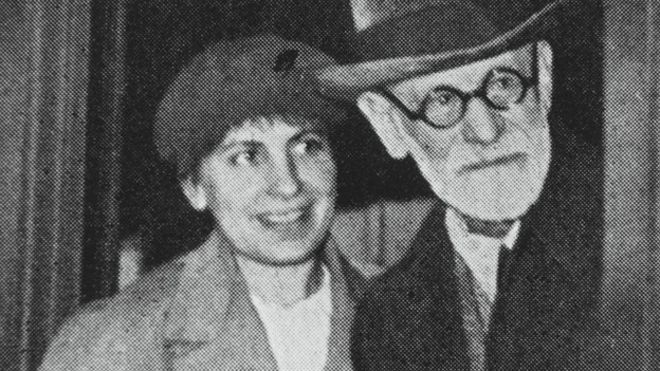



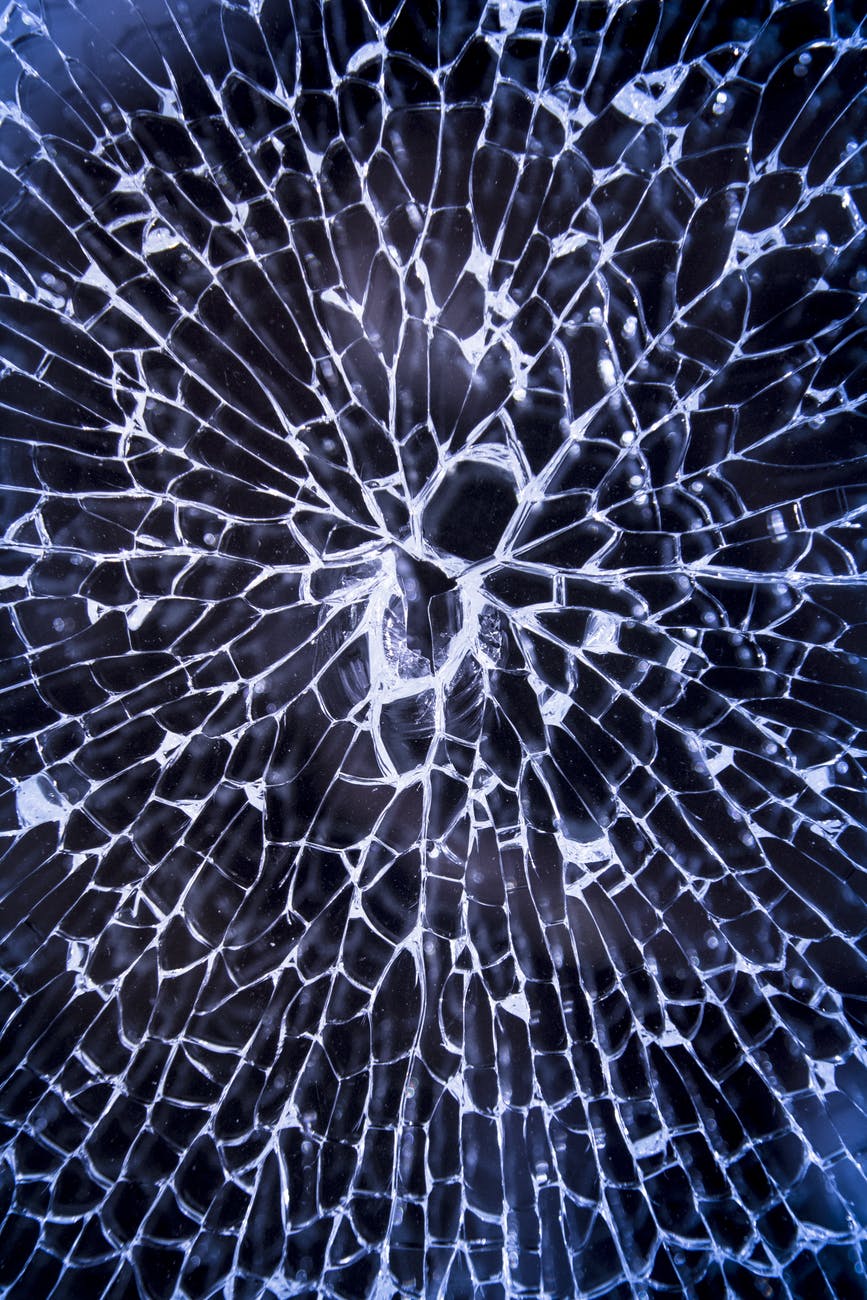
















 Infinite Ocean
You must be logged in to post a comment.