[NOTE: this is the beginning of a psychological horror story based on an audio film of the same name by my musician friend, Cat Corelli, something I wrote up an analysis for; you can learn more about that here. Before you begin reading, though, TRIGGER WARNING: as a horror story, this one has some graphic content of a violent and sexual nature; so if you’re one of my readers with C-PTSD or other forms of psychological trauma, you may want to skip this one. As for you braver souls, though, read on…]
Alice looked at herself in the mirror as she applied cherry-red lipstick to her lower lip. The face in the reflection was a painted beauty. She smiled.
Her flowing, wavy hair (dyed a she-devil red), her piercing brown eyes, her almost ghost-like skin–except for her tattoos, the pink blush on her cheeks, the dark blue eye shadow going from her eyelids up to her brown-pencilled eyebrows, and those aforementioned cherry lips–and the dark red and black striped dress that draped from just under her white shoulders; all of this in the mirror reflection gave her reassurance of a woman, a unified, coherent entity.
This was comforting, for everything on the other side, where she stood, her unseen self–if it even was a self–felt spastic, uncontrollable, broken in pieces, even merged with the surroundings. Where did she end, and where did everything else begin?
Only mirrors gave her assurance of being whole. Seeing a whole body, all together, in the reflection gave her peace. Looking away from it, she’d begin to feel as if in pieces. She’d have to look back at the reflection to remind herself that she was all in one piece. Still, she couldn’t just stare at her reflection forever. She had to walk away from the mirror if she was going to go to the bar and pick up a dude to take back here and screw…in more ways than one.
Away from the mirror, she always felt as if her body was either being torn limb from limb, like a victim in a Romero zombie flick, or already thus torn apart. Her mind was perpetually in a nightmare state, her dismembered parts floating in the ocean as if her murderer had thrown her naked body parts in the water.
In this hallucinatory state, she sometimes saw a penis and a castrated, hairy sack of balls floating by her arms and legs, as if the male genitalia were hers.
“Off with her head!” a familiarly regal woman’s voice shouted in Alice’s mind.
Her consciousness would shift up and down, lighter and darker, in oceanic waves. With those undulating movements, she’d see naked body parts other than her own mixed with hers. There were torsos, sometimes male, but usually female. The decapitated heads of young women were most familiar to her.
“Off with her head!” she heard again, off in the distance.
It sometimes seemed that those bobbing female heads were hers.
She’d call out their names. “Daisy, Lily,…” she’d sigh.
As the wave-like movements of her consciousness continued slowly vibrating up and down, she’d see the world through the eyes of each of those heads. Often, with her consciousness inhabiting one of the heads, she’d feel whole, in a unified body. She’d look down at herself and smile to see a body…for a while, at least.
Then she’d hear, “Off with her head!” again, and she’d leave that head and haunt another, like a ghost animating a body.
Indeed, she put the psychosis into metempsychosis.
After her wavy reverie, Alice looked back into the mirror.
Her made-up face was putana perfection.
“Oh, my God,” she said with a Lilith-like vocal fry. “You look like a slut.” She grinned at her image with almost serrated teeth. “Those are slut-lips.” She pursed them, then touched herself between her legs. “And those are my slit-lips.” She giggled and licked her lips.
She could hear music in her mind’s ear. It sounded almost like a harpsichord playing Baroque music…or was it a pair of acoustic guitars, with bluesy fingers bending strings? She wasn’t sure: the two musical styles shifted back and forth like those waves in her mind.
She chanted along with the rhythm of the music. “Everybody wants you, everybody needs you, everybody hates you, everybody bleeds you, everybody wants you, everybody needs you, everybody fucks you, everybody kills you.”
At the sound of those verbs, she looked away from the mirror, and the hallucinations resumed. She felt hands grabbing her. Her breasts and ass-cheeks were being squeezed ‘til it hurt. Fingers went up her pussy and ass…then the fingers felt like fists; she felt blood dripping from down there.
Then, the fists inside her felt like phalluses ramming in and out of her; it felt like repeated punches. More blood.
Those grabbing hands were all over her, seeming to be tearing her dress and underwear off. At first, it felt like a dozen hands; then it felt like only two. Now she felt as if naked, shaking before the mirror, her eyes squeezed shut. She moaned a mix of pain and sexual excitement.
She opened her eyes. The face of her father, on top of her and sweating like a pig. A creaking, shaking bed under both of them.
Now those two phalluses felt like knives. An ocean of blood.
She looked around and saw all those dismembered body parts floating in the waves of red.
“Daisy, Lily,…” she sighed with each phallic stab.
She looked up into the eyes of her smirking, fucking father.
She showed him her serrated grin. His smirk turned upside-down.
She bit him hard on the nose. His blood sprayed out in all directions. He screamed so loud, it pierced her eardrums.
The hallucination vanished. She looked at herself in the mirror and grinned.
That horror had given her inspiration: she knew what she had to do.
“Oh, my God,” she said again in that vocal fry. “You look like a slut.”
She picked up her purse, left the mirror, turned off the lights, and left her apartment. As she walked in the direction of the local bar, her high heels clanking on the sidewalk, she felt those waves all around her…and through her.
[NOTE: please read the second and third paragraphs from this post before continuing. Important–don’t skip reading them!]
I: Introduction/Freud
The insights of psychoanalysis have a lot to offer in cultivating an understanding of narcissism. In fact, Freud himself began the modern research into narcissism with his paper, “On Narcissism” (1914), in which he distinguished between the infantile self-love of narcissism (ego-libido/primary narcissism), on the one hand, and object love (i.e., love of other people–object-libido), on the other. In his view, when the transition between primary and secondary narcissism (when object-libido is withdrawn for a return to ego-libido) is fraught with problems, narcissism becomes pathological in adulthood.
My main concern here is how psychoanalytic ideas can help us understand how and why narcissistic family abuse happens. We need to examine not only how and why the narcissistic parent causes the abuse, but also how the parent develops pathologically narcissistic traits. We also need to examine how the sons and daughters react to parental narcissism, either caving into/joining in on the abuse, or rebelling against/being victimized by it.
Who are the perpetrators? Who are the victims? And who plays the combined role of victim and perpetrator?
The Oedipus complex, or the love/hate relationship the child has for his or her parents, can be exploited by a narcissistic parent; perhaps, for example, to manipulate the child’s love of the narcissist parent and hate of the other parent; that is, to make a scapegoat of the non-narcissistic parent. By Oedipally loving the narcissist parent, the child could be groomed into becoming a golden child.
Sigmund Freud, who wrote about narcissism.
Narcissistic parents will instil a cruel, over-judgemental superego into their children, a harsh inner critic that maximizes conflict between the children’s natural desires (from the id), their need for safety (from the ego) from parental abuse, and a demanding ego ideal that makes the children feel unworthy if they fail to measure up to it.
II: Ego Defence Mechanisms/Anna Freud
Defence mechanisms are used by both the abusers and the abused. Wearing a False Self to present a parent of virtue to the world, the abuser will rationalize his or her abusiveness to create the illusion of having good reasons for it. Maintaining that False Self also requires the abuser to project his vices onto his kids.
Narcissists can take projection a step further in their manipulation of their sons and daughters, and use projective identification on them. Here, parents not only project onto their kids, but also manipulate them into manifesting, in their own behaviour, what is being projected onto them. The projections can be of good or bad character traits.
When the projections are of the negative aspects of the narcissistic parent’s personality, the child projected onto becomes a scapegoat, or an identified patient. When the projections are of the parent’s idealized version of him- or herself, the son or daughter becomes a golden child.
Freud and his daughter, Anna, who elaborated greatly on the ego defence mechanisms.
Other common defence mechanisms used to maintain the narcissistic parent’s False Self include simple denial of the abuse (often in the form of gaslighting–projective identification is also a form of gaslighting). The parent may engage in reaction formation, a pretence of having a virtuous, opposite attitude to his real, ignoble attitude (e.g., claiming to love a son or daughter dearly, when really, the parent–apart from using the child to get narcissistic supply–would usually rather be rid of him or her).
Whatever is felt to be left of the narcissistic parent’s True Self, the inadequate self he or she loathes, it will be repressed so deeply into the unconscious that the narcissist ‘honestly’ doesn’t even know it’s there. Indeed, the narcissist often believes his or her lies, which isn’t to say that he or she is ‘mistaken’ in reporting the untruths (i.e., lying less), but rather that, in lying to himself as well as to the victims and flying monkeys, he’s lying more.
Many, if not all, of these ego defence mechanisms are used by the narcissistic parents’ flying monkeys and enablers, typically the golden child(ren), who will do anything not only to protect and preserve the undeservedly good reputation of the parents, but also to keep the scapegoat in his miserable place. For the only way this kind of dysfunctional family can survive is if its illusions are maintained and unchallenged. After all, the scapegoat is typically the empathic whistle-blower of the family.
The flying monkeys have other defence mechanisms not used by the narcissistic parent (unless one were to count the parental/environmental influences of the parent for his or her earlier life, of course). Anna Freud discovered a defence mechanism she called identification with the aggressor, (Anna Freud, pages 13-23). I find it easy to see a flying monkey sibling identifying with a narcissistic parental aggressor.
Melanie Klein, early object relations theorist, wrote about projective identification.
“Here, the mechanism of identification or introjection is combined with a second important mechanism. By impersonating the aggressor, assuming his attributes or imitating his aggression, the child transforms himself from the person threatened into the person who makes the threat.” (Anna Freud, page 17)
My older brothers and sister–having been subjected to not only the aggression of our narcissistic mother, but also to that of our bad-tempered, ultraconservative father–used that very same aggression on me, in the form of bombardments of verbal abuse, with the rationalization that they were trying to make me ‘straighten out and fly right.’ Actually, they were just bullying me, in imitation of our parents’ having bullied them when they were little. Growing up, I felt as if I were being raised by five abusive parents instead of just by two.
Victims of narcissistic parental abuse also have ego defence mechanisms: we must have them, for our battered egos are most in need of defence. We must deny, project, and rationalize all the faults our abusers impose on us, or else we’d go mad. We have other defence mechanisms, too–some good, some bad.
We may turn our pain and frustration into art, music, writing, etc. This rerouting of prohibited feelings into creative outlets is called sublimation. In much of the prose, poetry, and songwriting I’ve produced, the themes of bullying and emotional abuse are there, somewhere. I urge you, Dear Reader, to use your creativity in this way, to let out your pain. It is very therapeutic.
W.R.D. Fairbairn, who replaced Freud’s id, ego, and superego with his own object-relations-based, endopsychic structure (see below)
There are more dysfunctional defence mechanisms we victims have used, though. These include fantasy, in the form of dissociating, or maladaptive daydreaming, to escape our painful reality. I did this a lot as a kid. Intellectualization involves shutting off our feelings to examine our pain as a scientist or philosopher would investigate something; but we can only heal by feeling our pain. By processing it, we can get rid of it.
Regression is another defence mechanism victims of emotional abuse may engage in to lessen anxiety. We sufferers of C-PTSD often develop a rather silly communication style, redolent of childish behaviour: this regressing to an earlier, more carefree, childlike state can temporarily soothe our anxieties, though it won’t solve our problems.
Then there’s turning against oneself, where–in the context of narcissistic abuse–one may blame oneself for all the abuse one suffers, instead of putting the blame on the abuser, where it belongs. This may sound like a masochistic way to defend the ego from anxiety, but consider the alternative: a child or teenager confronting the horrifying reality that his narcissistic family doesn’t love him. Better to believe they love him, and are hurting him to ‘help’ him, than to know they mean only harm to him, and he has no financial means to escape and take care of himself.
Later on in life, though, when he is old enough to have those financial means, he still turns against himself by habit, because confronting the truth about his family is far too painful. Small wonder it usually takes until one is in one’s forties or fifties before one is finally forced to see that truth.
D.W. Winnicott, who first wrote of the False Self and True Self (though he didn’t apply the terms to narcissists).
This dysfunctional thinking is the result of bad internal objects (in the basic form of a severe superego–the inner critic) that have been introjected during early childhood. Melanie Klein paved the way for object relations theory, which explains how our early relationships with our primary caregivers (parents, older relatives and siblings, etc.) create a kind of mental blueprint for all our future relationships. If those early relationships create an atmosphere of kindness and love for us, we assume the rest of the world to be mostly kind. If those early influences are cruel, however…
These internal objects of our early caregivers reside in our heads like ghosts. WRD Fairbairn developed Klein’s object relations theory further; he even went as far as to replace S. Freud’s drive theory and personality structure (id/ego/superego) with a more relationally-based endopsychic structure, consisting of a Central Ego related to an Ideal Object, or anyone in the external world (this Central Ego roughly corresponds to Freud’s ego), a Libidinal Ego linked to an Exciting Object (rather like Freud’s id), and an Anti-libidinal Ego (originally, the Internal Saboteur, vaguely corresponding to the superego) and its Rejecting Object. The Libidinal/Anti-libidinal Ego/Object configurations are, to some extent at least, inevitable deviations from the Central Ego/Ideal Object configuration; for ideally, people should always have relationships with real people in the external world (hence, the ‘Ideal’ Object).
Instead, the more children are raised by non-empathic or even abusive parents, the more pronounced an influence will children’s Libidinal Ego/Exciting Object and Anti-libidinal Ego/Rejecting Object configurations have on their personalities. This leads to the defence mechanism of splitting people into absolute good and bad, rather than seeing people as they really are, a mixture of good and bad. These two dysfunctional Ego/Object configurations form part of the children’s internal, fantasy world of objects (like imaginary friends or enemies), cut off from the real world outside.
The Libidinal Ego relates to the Exciting Object in the form of such idealized people as celebrities, rock stars, sports heroes, or people in porn (these objects could also be alcohol, drugs, video games, etc., since such is the result of a failure in developing proper object relationships). The Anti-libidinal Ego relates with hostility to the Rejecting Object, which is in the form of anyone hated or feared. Needless to say, this splitting in the mind of people into those either idealized or loathed is neither realistic nor healthy, but emotionally abusive parents can drive their children to such pathology.
What is needed is neither an idealized parent nor an abusive one, of course, but rather a good enough parent, as DW Winnicott proposed. A good enough, holding environment will help a child to grow up healthy and happy, with a fully-functioning, True Self.
Heinz Kohut, who made an in-depth study of the nature and origins of narcissistic personality disorders.
It was Heinz Kohut, though, who really made a thorough examination of the causes of narcissistic personality disorders, as well as gave an elucidation of the personality structure of a narcissist. His writing on the subject (in his two books, The Analysis of the Self and The Restoration of the Self) is rather dry, as well as tortuously verbose and long-winded (in a manner far removed from the dryness, verbosity, and long-windedness of my own writing, I assure you, Dear Reader!).
The essence of Kohut’s message, in any case, was that insufficient empathy in parenting generally leads to the child’s infantile grandiosity never being properly transformed into the more mature, restrained narcissism of healthy people.
Children need essentially two things from their parents: someone to idealize, a parental imago (internalized object) in their inner personality structure as a kind of role model; and mirroring–that is, a parent to reflect back onto the child his feelings and experience of the world. In other words, kids need their parents to be heroes and validators.
When they fail to get this idealization and mirroring, Kohut says their narcissism won’t mature properly; childhood grandiosity must be let down and disappointed in bearable amounts, what’s called optimal frustration, because as minimal levels of the frustration that’s unavoidable in life, these least amounts are the best that parents can do.
Non-empathic parenting, which frustrates children in overwhelming amounts, causes their personalities to split in two ways, according to Kohut: a horizontal split results from repressing the grandiosity, so a False Self is shown to the world, while the narcissistic True Self is hidden from the world and from the narcissist himself; also, a vertical split in the personality of the narcissist comes from disavowing the narcissism. I believe this disavowal is sometimes achieved by projecting the grandiosity onto other people.
V: The Probable Origins of My Mother’s Pathologies
Bomb damage from the Blitzkrieg in London, during the early days of the WW2 bombing campaign. I wonder how close my mother, as a small child, was to this horror.
I believe this kind of two-way split is how my late mother kept a grip–however tenuous–on reality. Born in August, 1938, in London, she’d have been an infant during the Blitzkrieg. Even if she hadn’t been exposed directly to the Nazi bombings (that is, if she wasn’t in a bombed city or town at the time), she’d have been surrounded by stressed-out caregivers. Babies sense terror around them, even if they don’t know what’s happening.
This terror and strain, everywhere around her, would have been intolerably disorienting for such a tender child. Added to this, her father died several years after; he’d have been her idealized parent, and now he was gone. All she had left was a mother to mirror her feelings, to empathize with her.
She and her mother left England some time soon after World War II, to live in Canada: this, again, would have been seriously disruptive for her emotional development as a child of around seven to ten years of age. I speculate that her single, widowed mother was far too stressed taking care of her to do the needed mirroring.
So, let’s put all of these traumas together: an infancy surrounded by the terrors and stresses of the Second World War; the death of a beloved father, depriving her of her parental ideal; leaving her beloved England for a strange country she’d never identified with; and a mother who was–more than likely–too stressed and preoccupied with everyday troubles to give her a decent amount of empathic mirroring. With neither an idealizing parent nor a mirroring one (meaning she lacked both sides of the needed bipolar self, as Kohut called it), my mother would have had to resort to narcissism to keep from spiralling down into psychological fragmentation.
So her emotional abuse of not only me, but also my siblings and father–including all her gaslighting, triangulating, smear campaigns against my cousins and me, and her other manipulations–all these were her ‘normal,’ in terms of having relationships. War, fighting, emotional neglect, isolation, and abandonment were her childhood; they were also her parenting style, for good or ill.
Idealized and mirroring parents are essential if a child is to develop a healthy and cohesive Self, as Kohut argued. With neither of those, the disruptive moments that are inevitable in life will be too much for anyone to bear, especially a sensitive child. When those disruptive moments are as severe as those my late mother must have endured, the danger of a disintegration of the personality, its falling apart and lapsing into a psychotic break with reality, is so great that narcissistic pathology would seem a cure in comparison.
Jacques Lacan, who wrote about the Imaginary, Symbolic, and the Real (see chart below for links to explanations).
Now, we can sympathize with the sufferings of a child almost torn apart by trauma, and we can recognize that a resorting to pathological narcissism is an understandabledefence against fragmentation (as Otto Kernberg would say); but none of this gives narcissists any special right to manipulate their victims the way they do.
VI: My Own Personal Contributions, for What They’re Worth
Not everyone accepts the effectiveness of Kohut’s transference techniques of activating the idealized parental imago, of mirroring, twinship, and merging (fusion) transferences to bring about a cure, through transmuting internalization in the working-through process. But a cure for narcissism must be sought, and certainly Kohut’s insights can be used as a contribution to a cure.
Psychoanalysis alone won’t effect a cure to narcissism, of course. It does, however, offer a lot of helpful insights. For my part, as an admittedly untrained, rank amateur, I like to modify these ideas and add my own wherever I find it useful and fit to do so.
Intheseblogposts, I’ve offered my own suggestions, for survivors of narcissistic abuse, on how to heal. I’ve also devised my ownpersonalitystructural theories. I link the different aspects of the personality to different positions on the body of the ouroboros, which I see as symbolizing the dialectical relationship of opposites. The structuring and comparisons can be seen in the chart below, for the sake of clarity and simplification:
Ouroboros’s Biting Head (towards one extreme)
Length of Serpent’s Body (the median points of the circular continuum)
‘too much’ health <<<<<<<<<<<toward better health>>>>>>>toward worse health
As the chart shows, greater mental health is associated with a realistic assessment of the external world, as the middle column shows; with neither a world of dissociations and the split, internal objects of phantasy (to the right), nor a self-absorbed world of unrestrained, indulged grandiosity (to the left).
We need to be with real people, not the nightmare people in our heads. To free ourselves of the bad objects (thesis), though, we’ll need to replace them with good internal objects (antithesis), for only then will we begin to trust the world (synthesis) by having that realistic assessment of other people, who are a combination of good and bad.
In previous posts (links above, in the paragraph before the chart), I discussed how to do this sublation of the good and bad objects (good and bad people we meet in life, our conceptualizations of them, and how we relate to those conceptualizations in our unconscious).
The ouroboros. I use it as a symbol of the dialectical relationship between opposites: the bitten tail can be seen as the thesis; the biting head as the anti-thesis, or negation; and the length of the body can represent the synthesis, or sublation of contradictions to form a higher truth.
One extreme opposite can phase into another (biting head/bitten tail); hence, the ‘too healthy’ extreme of the excessive self-love of the narcissist is a defence against the extreme self-hate that comes from abusive or non-empathic parenting; without the narcissistic ego defence, that False Self and its attendant repression/disavowal/projection of the hated True Self, the narcissist could descend into fragmentation, a psychotic break with reality.
For these reasons, a path of moderation, symbolized by the length of the ouroboros’s body, is recommended for a healthy mental life, a life of neither excessive self-love (‘too much health’) or self-hate.
I believe the meditations I described inthesepostscan lead to a cohesive Self, rather like the Atman the Hindus wrote about (incidentally, Dear Reader, if you find that a discussion of mysticism seems out of place in a post on psychoanalysis, consider Wilfred Bion‘s concept of O–see also Avner Bergstein’s paper, “The Ineffable,” in Civitarese, pages 120-146). Then, my oceanicmeditation, if you will, can help the abuse survivor feel reconnected to the humanity he or she has felt isolated from. This reconnection can build a sense of calm, peace of mind, and empathy for others, what could be compared to a link of Atman with Brahman, the infinite oceannirvana of peace and love.
The oceanic oneness of peace and connection with everyone.
[NOTE: please read the second and third paragraphs from this post before continuing. Important–don’t skip reading them!]
One of the many ways the family kept me in control was to denigrate me as weak and cowardly. This, of course, is a common bullying tactic, to keep the victim from fighting back by making him or her believe that sticking up for him- or herself is a useless gesture.
What must be understood about bullies and emotional abusers, though, is that they are, in fact, the real cowards. I was put in a situation with a power imbalance in which my probably narcissistic mother used her golden children–my older brothers R. and F., and her #1 golden child, my older sister J.–as sticks with which to hit me. As the family scapegoat, or identified patient, I rarely, if ever, got sympathy from my parents against those three.
People get their strength and encouragement from other people’s support. That’s how they get the confidence they need to face the challenges of life. R., F., and J. got ample support from our mother, in exchange for having given her narcissistic supply; J. got by far the most support for having sucked up to Mom the most, since R. and F. did less ass-kissing…but those two still got much more, overall, than I got.
Mom was nice to me only in so far as I gave her that coveted supply, which I–tending much more towards bluntness and honesty–gave in limited amounts; but even the amount I gave was in larger proportion to the kindness I got back from her. I was to remain the scapegoat no matter how good I tried to be: recall her rejection (<<< Part VII) of my wish to make a visit to see J. and her terminally ill husband.
As I’ve explained elsewhere, Mom enjoyed stirring up division in the family: between my siblings and me; between our immediate family and our cousins, denigrating my youngest cousin G. in a manner eerily similar to the family image that had been cultivated for me. Almost ten years ago, I’d come to the painful realization that those four people I had a ‘relationship’ with (our father, the closest I’d had to a real friend in the family, was already dead) weren’t really a family, but instead were a clique, an exclusive social club…and my membership in that club was shaky, at best.
It’s easy to pick on a little kid, as my siblings did to me when they were teens, and later young adults, and when I, younger than R., F., and J. by eight, six, and five years respectively, was a little kid, and then a teen. It’s even easier to pick on such a person when your mother not only allows the bullying–fully aware that it’s happening–but also rationalizes it, and even encourages it, by smearing the victim behind his back.
What’s particularly slimy about all of this is that family is not supposed to treat you that way. Being angry with a family member for his frustrating faults is one thing; verbally abusing him for those exaggerated faults–as well as hurling insults at him, just for the sheer fun of hurting him–is totally different.
What must be emphasized is that the abusive golden children–under the undue influence of their ringleader, the narcissistic parent–aren’t bullying the scapegoat because of what’s wrong with the victim (however much they try to rationalize it that way), but because of what’s wrong with the victimizers themselves, who are projecting their personality problems onto the victim instead of dealing with what’s wrong inside themselves…a truly cowardly thing to do.
Take my brother R., for example. I’ve written before about the time, when I was a teen and he was about 22 or 23, he and I had a fight. He ranted on and on about how mad he was at our father for favouring J. and me, because we got higher marks at school than he did. He childishly imagined Dad loving us more than him for our academic performance, too. (Read in the passage–link at the top of this paragraph–about my speculation that our mother could have planted that absurd, invidious idea in his head back when he was a kid.)
What should be noted is that R.’s beef was with Dad, not with me. That cowardly brother of mine took his rage out on his kid brother instead of taking it up with our father (and, as I see it, our mother, too–i.e., my speculation from the preceding paragraph). F. and J. also had beefs of their own with our parents, but found it easier to take it all out on me, a kid at the time who was already suffering from bullies at school, than face our parents with their pain. Cowards, both of them.
And look at our mother’s cowardice. I’ve speculated that her disturbed personality was formed when she was a little girl in England during World War II. Added to that, her father died (major trauma!), and her life–her whole world–was disrupted by a move to Canada sometime in the mid-to-late 1940s, when she would have been around seven to ten years old. We can sympathize with her pain from what had happened, but that didn’t give her any special right to do what she did to me (scroll down to where I list her eight outrages against me–<<<Part VII: Conclusion). Her actions were a cowardly evasion from dealing with those childhood traumas.
My father always doubted her nonsensical–and as I’d eventually learn, mendacious–attributing of autism to me (something I found effectively discredited [<<<part 1] after two psychotherapists told me, back in the mid-90s, that they saw no autistic symptoms in me at all, then when I scored a mere 13 on the Autism Quotient test [^^^part 3]) years later; still, Dad never made an effective resistance to Mom’s nonsense. Well, he’d always been henpecked.
R., F., and J. never contradicted our mother in any significant way. Oh, how J. used to fawn over her! I, in direct contrast, did speak my mind to her on several occasions over the years…gee, could that have been why I was scapegoated?
Telling her what I thought of her (often in the form of lengthy emails), though I was scared when I did it, took more guts than R., F., and J. had combined. For I knew, instinctively, how evil our mother could be, especially just before she died: I knew she’d smear-campaign against me those last few months (parts 4 and 5 here), but I stood my ground. I went NO CONTACT with the family, and even gave up my portion of the inheritance from Mom, knowing full well that I was now on my own–even if I do say so myself, that’s real courage.
I have increasingly come to know that I am none of the things the family used to stain my name with. I feel more and more justified in attributing the dialecticalnegation of every vice they attributed to me…and that includes their slander of cowardice against me. I have the right to regard myself as the opposite of all their vicious epithets against me.
All those vices they threw on my head were really just projections of their own faults. I now feel free to reject them all as being no part of who I really am.
You, Dear Reader, can do the same with every bad name your abusers have sullied you with. They don’t deserve to be dignified with your allowing them to label you with faults that are far more likely theirs.
If you need help healing from your abusers’ wounding words and manipulations, maybethesepostsofmine, which include meditations/auto-hypnoses you can use, can help. In any case, given how much you’ve already endured in your struggles against your tormentors…and you’re still here!…you evidently have plenty of courage in the face of psychological abuse.
[NOTE: please read the second and third paragraphs from this post before continuing. Important–don’t skip reading them!]
We sufferers of C-PTSD often find ourselves overwhelmed with bad thoughts, thanks to our inner critic. It seems as though negativity is a permanent, static state to be in.
As hard as it is to believe for sufferers of complex trauma, though, neither good nor bad states exist permanently; good and bad flow back and forth between each other like the waves of the ocean. This is part of the reason I use ‘infinite ocean‘ as a metaphor for universal reality. The good moments are the crests, and the bad moments are the troughs; we must be patient in waiting for the troughs to rise into crests.
Recall Hamlet‘s line to Rosencrantz and Guildenstern: “there is nothing either good or bad, but thinking makes it so.” Only our thoughts cause this flow (of one opposite to the other) to ossify into rigid absolutes. Freed of that rigidity, we experience the flow of good to bad, to good to bad, to good, as a Unity of Action.
This Unity of Action is the unity of opposites, an idea found in philosophical traditions around the world, throughout history. It was part of Heraclitus‘s thought: “the path up and down are one and the same”; he also understood how these opposites flow into each other in a state of endless change, for “everything flows”, and “No man ever steps in the same river twice”. Dialectical monism is central to Taoist philosophy, particularly in the concept of yin and yang. Unity in duality is seen in the idealistHegeliandialectic, which Marx turned into a materialist version, and Lenin, Stalin, and Mao in turn all expanded on Marx.
My point in bringing up these various testimonies to the validity of a universal dialectic, many from independent sources, is to show that talk of a Unity of Action is not just some New Age sentimentality. When a great thinker such as Hegel affirms the truth of dialectical monism, we know it’s not something to be airily dismissed.
I like to use the ouroboros as a symbol of the dialectical relationships between opposites such as happiness and sadness. As I’ve discussedelsewhere, all opposites can be seen at the extreme ends of a continuum, rather than in rigid terms of black and white. This continuum can be coiled into a circle, with one extreme phasing into its opposite. The biting head and bitten tail of the ouroboros can represent those meeting extremes.
I’ve demonstrated how the ouroboros, representing the Unity of Action, is manifested in class struggle, in the development of capitalism, in the relationship between oneself and other people, and in the relationship between mental health and various forms of mental illness, in the form of a general theory of the personality.
Now, I’d like to show how we can use dialectical thinking to turn negative emotions and experiences into positive ones. When we’re seriously upset about some problem, it’s often hard to imagine a solution, especially if we’re emotionally dysregulating and making a catastrophe of the problem in our minds. Good and bad are imagined in terms of black and white, with an insuperable barrier between the problem and a solution.
However, when we see the problem and possible solution dialectically, in the form of the ouroboros, we can now imagine a path from the bitten tail of the problem, passing along the length of the serpent’s body towards greater and greater hope, all the way to the biting head of a solution.
Since, as I described elsewhere, one can compare the three parts of Hegel’s dialectic (which I, admittedly, am simplifying here, for the sake of brevity) to the tail (the “thesis,” or abstract), the head (the “antithesis,” or negation, a logical challenge to the original abstract idea), and the length of the serpent’s body (the “synthesis,” the concrete, or sublation, a resolving of the contradictions between the head and tail to form a higher truth…a new abstract tail to be negated and sublated again and again in endless cycles), we can see how dialectical thinking can help us turn negative thinking into positive.
When we have a problem, negative thought, or any reason to be depressed or anxious, we start with the “thesis,” or abstract. Next, we imagine the negation, which is the solution to our problem, or the happy state of mind we wish we were in. Since there is a unity of opposites, we know we have no reason to believe a solution to our problem is unreachable.
We must now work out the contradiction between the difficulty and the solution we wish we could find; this is the sublation we need to work out, that path along the circular serpent’s body towards the solution. How can we do this? We can start by asking what we could learn from the problem. We can always learn from past mistakes, or learn to avoid repeating past misfortunes. Second, we can acknowledge what we have to be grateful for; we can count our blessings, all those things and people (i.e., friends) we take for granted, but shouldn’t, at this moment of crisis.
I’ll now give an example of how to negate negativity, as I did with regards to my family. As I explained here, I started with my parents’ vices–my father’s bad temper, bigotry, parsimony, and closed-mindedness, as well as my mother’s lack of empathy, narcissism, and habitual gaslighting, triangulating, and smear campaigning–and I used them as the “thesis.” Since writing The Inner Critic blog post, I’ve added my siblings’ vices–their bullying and verbal abuse, as well as my sister J.‘s constant attempts to reform me into the brother she wants me to be–to the collective family “thesis,” or abstract.
Now, for the “antithesis,” or negation: in The Inner Critic, I wrote of meditating on and visualizing, in hypnotic trance, kind, loving parents who pick you up and cuddle with you. In the case of my parents, I imagine the dialectical opposites of those vices I mentioned above: I visualize a new father who is easy-going, tolerant, giving, and open-minded; I imagine a new mother who values lifting up her children’s self-esteem, as well as promoting family harmony; added to these, I meditate on a supportive, protective older brother (something my brothers, R. and F., never were), and a sister who wouldn’t change one character trait of mine, but rather considering my eccentricities as part of my charm. Instead of the old family sneering at me, I imagine the new family cheering for me. This alone, done with the right intensity and focus, makes me feel much better.
As for a “synthesis,” the concrete, or the Aufhebung, my repeated and intensive auto-hypnotic meditations on the negation should, over time, counterbalance all the negativity I suffered from my family over four decades of dealing with them. I note how the idealized family of my self-hypnosis represents who my old family should have been; also, my memories of the old family are no less ghosts in my mind, old bad object relations, than are the newly internalized objects of my idealized new family, who are there to heal me and eliminate my inner critic. Combine this visualization with my “Christopher Sly” meditation–a tossing aside of my past ghosts as having no more right to be considered reality than are the new family of my meditations–and I should balance out the negative past with my positive present, and thus have a median, realistic self-assessment.
Remember how suggestible the mind is during hypnosis, which is just a meditation in a relaxed, yet focused mental state. Note also that the mind doesn’tdistinguish between reality and imagination: that’s how we can get emotionally involved in a movie, which of course is pure fiction and illusion. So we can use this suggestibility to our advantage in curing ourselves of our C-PTSD.
As I’ve said before, we sufferers of narcissistic and emotional abuse tend to imagine a fragmented world where the shattered pieces can’t be put back together. To solve this problem, I see it as imperative that we all cultivate an outlook of seeing the underlying unity in all things. This means seeing a unity between oneself and others to end C-PTSD isolation and alienation, The Unity of Space.
It also means putting the past behind us, worrying less about the future, and focusing on NOW, The Unity of Time. Finally, we also need to stop seeing an insurmountable wall existing between our sorrows and the happiness we crave, but see instead how all opposites are dialectically unified, as symbolized by yin/yang and the ouroboros, The Unity of Action.
Such unifying replaces despair with hope, alienation with belonging, and anxiety and depression with joy in the present moment–a lasting cure for complex trauma.
[NOTE: please read the second and third paragraphs from this post before continuing. Important–don’t skip reading them!]
To stop myself from ruminating on my painful childhood, adolescence, and young adulthood–a bad habit I picked up, thanks to the emotional abusers I had to endure during those years–I recently found inspiration in Shakespeare. Yes, the immortal Bard wrote a not-so-well-known scene in one of his otherwise most popular comedies, a scene whose meaning I interpreted in a way that I now see (in the form of a meditation/self-hypnosis) as something that may help us forget the past, and focus on the present. Allow me to explain.
In my Analysis of The Taming of the Shrew, I argued that the Induction is the main story, not the Katherina (‘Kate’) and Petruchio story, which is just a play within a play, a further remove from the audience’s sense of reality than the Induction itself is (a full synopsis of the play can be read here, if you don’t have access to it or the time to read it).
In the Induction (<<<YouTube video of Scene i), a boorish, drunken tinker named Christopher Sly is tricked (<<<video of Scene ii) into thinking he’s a lord, after waking up from a fifteen-year coma (as his pranksters tell him), during which his memory of his whole life as a tinker has been only a dream. Lying in a luxurious bed, wearing the bedclothes of a rich man, and surrounded by people pretending to be his loving friends, servants, and wife (a boy dressed in women’s clothes), Sly is incredulous at first, but soon acquiesces to the whole thing, and then watches a farcical play of the Kate and Petruchio story.
As far as pranks go, this is a rather odd one. Why go to such lengths to flatter a drunken slob? Far from making Sly look foolish, the trick dignifies and ennobles him instead. What’s more, we never even see the prank brought to its conclusion. Sly nods off to sleep during the performance of the play (Act I, Scene i, lines 242-247), which is briefly halted to wake him up, then carries on till the end of the story; no more mention of Sly is ever made. We never see the pranksters reveal themselves as such, laughing at the fool for falling for the gag. It’s as if we, the audience, are also tricked into thinking the Kate and Petruchio story, rather than that of Sly, is the real one.
What comes later (Sly as a lord; the Kate and Petruchio story) comes off as real, and what came first (Sly’s life as a tinker; the Induction, often excluded from productions of the play, or movie and TV adaptations) is forgotten about and deemed irrelevant.
To relate the Induction to our lives, we can see Christopher Sly as representing us. We were originally treated with contempt as he was, and that contempt may have caused us to have a surly manner; after all, when we believe we’re unworthy, we often behave as unworthy people…not because we really are, but because we’ve been manipulated by our abusers to think of ourselves as unworthy. We must go from believing ourselves as base to thinking of ourselves as someone much better. Thus, we must trick ourselves.
As formerly emotionally abused children (or ex-boyfriends/girlfriends/spouses), we C-PTSD sufferers must trick ourselves into deeming as irrelevant the pain that came earlier in our lives, just as Sly is tricked into thinking his earlier life, as a contemptible slob, is just a dream (and as the audience watching Shakespeare’s play is tricked into thinking the play-within-a-play, rather than the Induction, is the real story).
We must imagine ourselves as having woken up from a nightmare (I’m assuming you, Dear Reader, have distanced yourself from your abusive family or ex, and gone NO CONTACT; if you haven’t, I urge you to do so; if you can’t do it yet, make it your ambition), and see our new life, our present life, as one of glorious new possibilities.
We must remember that our NOW is the only reality we have. Our memories are just ghosts haunting our minds, old object relations we need to eject from our consciousness (see theselinks for meditations on how to replace old, badinternalobjects with new, good ones). The past is no longer real for us, except in our ruminations. We need to stop that obsessive over-thinking…but how?
I’ve already described in otherposts how we can, in auto-hypnotic trance (a restful, focused state in which one is more suggestible), imagine our oneness with everything around us by getting our bodies so relaxed that we can feel ourselves vibrating all over. Those vibrations, in and around us, can be compared to a feeling like the waves of the ocean. In our meditative state, we imagine our bodies, our cohesive, non-fragmentedSelf–our Atman, if you will–as part of an infinite ocean, our surroundings, the whole universe–Brahman, as it were. This meditative state, our unity with everything, can cure us of our sense of isolation, provided we practice it, in sessions of substantial duration, every day over a lengthy period of time.
Added to this contemplation of The Unity of Space, as I call it, we can also contemplate what I call The Unity of Time, the eternal NOW. As we focus on those ‘waves’ passing through our vibrating bodies, which are part of the water of the infinite ocean of Brahman, we also focus on the present moment, doing our best never to let our minds wander and daydream of other things (if we let ourselves get distracted, we should gently but firmly bring our minds back to the present moment). This discipline will gradually take our minds off the past, to focus more on NOW. We must always keep our minds on those moving waves, for every second.
Another meditation we can do to say goodbye to the past is to lie in bed with our eyes closed, and after getting ourselves perfectly relaxed in the manner I described in previousposts (breathing in and out, deeply and slowly, focusing on all the parts of our bodies, from our toes up to our heads, until they’re vibrating with calm, counting down from ten, with our bodies getting more and more relaxed with each passing number), imagine waking up as Sly does, with loving family (the new, good one we’ve imagined, of course, not the original, abusive one) and friends all around our bed, teary-eyed with joy that we’ve revived from a ‘coma’.
We do not recognize these people, and are shocked to hear them say they are our family. They speak lovingly and respectfully to us, yet to be honoured in such a way feels alien to us, and we protest how odd they are behaving. Still, they insist that we are worthy of such love, and that we should cease this idle notion that we would “be infused with so foul a spirit” [Induction, Scene ii, line 15] as to deserve to be treated as we had been by our past abusers.
We feel dazed still, unable to believe what we’re hearing. We wonder, “do I dream? Or have I dream’d till now? / I do not sleep: I see, I hear, I speak; / I smell sweet savours, and I feel soft things.” [Induction, Scene ii, lines 67-69] We come to believe that we aren’t the person we thought we were before. We’re someone new, and we have a whole new life ahead of us!
With a bright smile on our face, we accept that this present moment is, indeed, our true life, and the painful past we’d experienced before was just a bad dream, something we can now brush aside and forget. We are the lord of our new, liberated life!
Now, the people in this meditation are not pulling a prank on us: they genuinely love and care for us. Though this is a meditation, we’ll do a dialectical flip, and imagine the present visualization to be reality, and our past to have been the illusion. Yes, we’ll be playing a benevolent prank on ourselves, tricking our minds into conceiving this present moment as our true reality.
And why not? The past is just ghosts and visions; NOW is the material reality before our eyes and all around us. By sustaining this meditative state for ourselves, as truly sly Christophers (or sly Christinas, if you’re female), for as long as we can, and doing this self-hypnosis regularly, every day (just after waking up, ideally, to get the best, most realistic effect), we can, over time, truly put the painful past behind us.
Imagine those loving faces around your bed, those people telling you that your painful past was all just a long, bad dream. You’ve just woken from a long coma of many years, and NOW is your real life, surrounded by people who love you. Flood your whole body with feelings of love, acceptance, and validation, what you’ve been cruelly denied for far too long. Don’t worry about visualizing accurate physical details; focus on the good feelings.
Since there’s a dialecticalunity of opposites, we can feel free to turn our bad situation into its good opposite, a negation of the thesis that was once our awful lives, and work through the contradictions of our bad past and our good present, then sublate them into the synthesis that will be the basis of our new lives.
I’m not talking about deluding yourself: I’m advocating a disciplining of your mind to focus on now and to stop obsessing about your past. When you’re no longer ‘tinkering’ with your painful memories, you’ll be lord (or lady) over your present life, you’ll be truly sly (that is, in your cunning but benevolent self-deceit), and the raging shrew inside you will be tamed. No, Christopher (or Christina), you aren’t a loser: you’re the master of your life.
In my analysis of the 1944 film adaptation of Gaslight, I discussed something I called ‘political gaslighting‘: in abusive interpersonal relationships, the abuser fabricates, denies, and distorts the truth to disorient the victim; I argued how the super-rich, as well as the politicians and the media who work for them, also do this lying and disorienting, but to the public. I’d like to expand on those ideas here.
We all know about how emotional abuse can happen in families, school, the workplace, and online; that’s psychological abuse on the ‘micro’ level. Now, let’s discuss it on the ‘macro’ level, how it exists on the geopolitical level, for this is, no doubt, a far greater problem.
Many parallels can be seen in the comparison of narcissistic abuse and class conflict. The fact that Donald Trump is as obvious a narcissist as he is a capitalist is the tip of the iceberg; and contrary to the cries of the pussy-hat wearing Russiagaters, it makes perfect sense, in a diabolical way, that he is the US president, for he embodies all that is crass and self-absorbed in a country laden with the alienation and contradictions inherent in capitalism.
To see all the parallels between narcissism and capitalism, though, we must look beneath the surface. The problem isn’t a simple matter of whether the ‘pussy grabber’ is president or “I’m with her”; nor is it a matter of the GOP or the Democrats being in control of the White House, for there’s a big club running things in the shadows, regardless of there being red or blue mixed in with the darkness.
The point is that Trump isn’t the only narcissist among the ruling class: they’re all narcissists, sociopaths, and/or psychopaths, in varying degrees of severity. If you’re pro-capitalist, but also a victim of narcissistic abuse, it may stick in your gut to hear me equate narcissists with people of an economic system you support. Still, reconsider your position: as you should know, one of the striking forms of narcissistic abuse is to control the victim’s finances; such economic control is, of course, the essence of capitalism, a minimizing of workers’ wages to maximize profit. If capitalism isn’t about the rich controlling who gets the money, what is capitalism?
People with Cluster B personality disorders naturally gravitate to high positions of political and financial power, because it takes an aggravated level of ruthlessness to want power badly enough to beat out the competition. This ruthlessness cancels out any moral scruples that give the rest of us pause when contemplating doing something crooked to rise up the echelons of power.
Let’s now go through those parallels. According to the DSM-5, these are the symptoms of narcissistic personality disorder (NPD–one has to have at least five of these symptoms to be diagnosed with it):
Grandiosity with expectations of superior treatment from other people
Fixated on fantasies of power, success, intelligence, attractiveness, etc.
Self-perception of being unique, superior, and associated with high-status people and institutions
Needing continual admiration from others
Sense of entitlement to special treatment and to obedience from others
Exploitative of others to achieve personal gain
Unwilling to empathize with the feelings, wishes, and needs of other people
Intensely envious of others, and the belief that others are equally envious of them
Pompous and arrogant demeanour
Now, how well does the average bourgeois conform to these nine NPD traits? Let’s examine them one by one, though I don’t present them below in the exact same order as listed above. (Before I do, though, bear in mind that I’m not saying every single politician or rich person out there has full-blown NPD; I’m just saying that, on average, they’ll have tendencies in the narcissistic direction to a considerably greater degree than members of the proletariat, for the capitalist mode of production just brings ego out of people.)
1. Grandiosity/superiority
Narcissists have an unjustified belief in their superiority over others; capitalists generally believe they’re above the proletariat, too. They claim that ‘gumption and hard work‘ put them at the top where they ‘belong’, rather than acknowledging that the advantages of being born as members of the bourgeoisie put them there. Trump’s grandfather, for example, made the family fortune, upon which the Donald and his father were able to build. The Donald once spoke of his father having lent him a million dollars, “a small loan”, to begin his ascent in the business world. Boo-hoo, Donny: watch my rubbing fingers play a plaintive violin solo, just for you.
On top of this, all too often, is a belief in racial superiority. Contrary to the delusions of the right-libertarians, fascism is in no way like socialism; actually, men like Hitler were inspired by the imperialist conquests of the US. Churchill was every bit a racist, in his own way, as Hitler. Accordingly, the West would have been content to let the Nazis invade and colonize the Soviet Union; it was only when Hitler’s ambitions threatened Western capitalist interests (i.e., Poland) that they finally began trying to stop him. Fascism is capitalism on steroids, so to speak; Nazis believed in a strong, centralized state, coupled with collectivism, within the context of class collaboration and protecting the nation against foreigners, not the communist goal of classlessness.
2. Association with superiority
Narcissists like to associate with ‘superior’ people; so do capitalists, hence the ruling class, which rarely allows anyone else into their ranks. This is why it’s so hard in the US to rise out of the working class and reach the middle class, or to rise from the middle to the upper classes; narcissistic capitalists cannot be superior if anyone can join them. This exclusivism, of course, is especially true of fascists, who can’t abide foreigners, Jews, and these days, Muslims or Latin Americans.
3. No Empathy
Narcissists show no empathy; neither do capitalists. Contrary to all that nonsense about ‘free market’ capitalism and free trade ‘lifting people out of poverty’ (which, at best, it does at a snail’s pace; compare that speed to the progress made in, say, the USSR, China, and Cuba…especially impressive when seen in light of having endured such obstacles as war and economic embargoes), capitalism only generates obscene wealth inequality, and imperialism robs the Third World of its resources, thus turning those countries into poor ones. Dwellers in rural areas have historically been forced by capitalists into the cities (where the cost of living is generally much higher) to become wage labourers just to survive, and their salaries only barely help them survive. Few pity them.
Added to this is the destructiveness of imperialist war. Little discussion is made in the corporate media about the seven countries bombed by the Obama administration in 2016, or the war in Yemen, in which the US and UK have been selling billions worth in weapons to Saudi Arabia to kill the already poor Yemenis, as well as deprive them of food and desperately-needed medical assistance. Far too few pity them.
The Libyan and Syrian refugees from the Western-backed wars in their besieged countries, rather than pitied, are oftenfeared by Americans and Europeans as ‘Muslim extremists’; while the White Helmets–a Western-backed (i.e., founded by a former UK military officer) group of movie-making propagandists aiding in the US’s regime-changeagenda and with genuinelinks to terroristgroups (I don’t buy Snopes’s ‘debunking’ of this charge, as the ‘fact-checking website’ is clearly in line with MSManti-Assad, anti-Russia propaganda)–are beingwelcomed into Canada and some European countries! Why are terrorist abettors being pitied?
I’ll give more examples of a lack of empathy from people working for the capitalist class, either directly or indirectly. Remember what Madeleine Albright said about killing 500,000 Iraqi children.
Now, my sister J. isn’t, of course, a member of the ruling class, but I have mentioned in previous posts of her narcissistic tendencies (including a lack of empathy, towards my cousins and me…and on one minor occasion [<<<scroll down to Part IX], even towards one of her sons), inherited from her status as the golden child of the family. I still remember her reaction to this video by Bruce Cockburn, when it had just come out, back in the mid-80s. She sneered in contempt at him as images of corrupt politicians went by, juxtaposed with images of the poor in the Third World (especially in Latin America), saying the singer “takes himself too seriously”; then, when he sang “…and they call it democracy”, she mocked his words. She was also fond of telling me–in her attempts to mold me into the brother she wanted me to be–that I am an “upper middle class young man” (this was back around 1990, when I was about 20-21). Yes, J., I’ll be a member of the petite bourgeoisie, just like you…not.
4. Exploitation
The kind of media manipulation we see coming from groups like the White Helmets, and on American media controlled mostly by six corporations (thanks to Bill Clinton’s Telecommunications Act of 1996), brings us to the next parallel with narcissism: exploitative treatment of the vulnerable via political gaslighting. American fear after 9/11 made it easy to manufacture consent for the endless wars in the Middle East. It’s so bad now that George W. Bush has been forgiven…merely because he isn’t Trump! Similarly, Obama was given one of the least deserved Nobel Peace Prizes ever…for not being Bush!
Similar emotional exploiting in the media went on over the years with the smear campaigns against Milošević and the Balkanizing of the former Yugoslavia, the demonizing of Gaddafi and the destruction of Libya, and the continuing threats against the Kims in North Korea, a country also bombed to hell in 1950-53 and therefore justifiably determined–with their own nukes–never to let that happen again. Everybody knows (or at least should know) about how Saddam was made into a scapegoat (once he was no longer useful to US interests), but how many Americans see the hypocrisy in criticizing Cuba’s human rights record while ignoring the goings-on in Guantanamo Bay?
This scapegoating and smear campaigning, a typical narc habit, is not limited to the post-Soviet era. The US government and its flying monkeys, the CIA, were manipulating the media throughout the Cold War years. The enabling Western media they controlled smeared the USSR, the Eastern Bloc, Mao’s China, and Vietnam as ‘cruel, totalitarian dictatorships’, while ignoring communistefforts to lift millions of people out of poverty, educatethem, and give them housing, fullemployment, and healthcare–a truly bizarre way to oppress people. Meanwhile, ever since the catastrophic dissolution of the Soviet Union, the Western 1% have been stripping us of our rights, one by one. As we can see, when it comes to tyranny, capitalists are as guilty of projection as narcissists are.
5. Fantasies of Power and Success
Now let’s consider the fantasies of power and success that narcissists and capitalists share. To cite just two contemporary examples, Elon Musk and Jeff Bezos have amassed obscene amounts of wealth (while the latter brutallyexploits his underpaid workers), and how do they plan to spend it? Spaceexploration! Colonizing Mars! Their wealth could feed the global poor, but they’re more interested in planets other than this one. This developing of space-age technology, instead of helping people, is clearly a masturbatory extension of their already inflated egos.
Capitalists certainly envy others, as narcissists do, for they envy the greater wealth and success of those higher up the echelons of the bourgeoisie. Recall how well this envy is dramatized in the name card scene in the film adaptation of American Psycho. Capitalism, like narcissism, is a vicious competition for face. Narcissists also like to project their envy onto others, imagining these others envy them. Capitalists also do this, imagining socialism is essentially a politics of envy.
We socialists ‘envy’ the rich, apparently, so we want to ‘steal’ from them (actually, they steal from us when they overwork and underpay us–recall how Bezos treats his employees) and kill them. They think communists hunger for power, when really we just hope to gain the power to end hunger, as Michael Parenti once said. We want to create a truly free society, not one that gives narcissist capitalists the ‘freedom’ (i.e., licence) to exploit the poor.
7. Craving Admiration
Narcissists crave continual admiration (in the form of narcissistic supply); so do capitalists. Why else would they so covet ever greater wealth? Consider how the Panama Papers and Paradise Papers revealed all the hoarded wealth in offshore bank accounts, free of taxation. Many members of the bourgeoisie have so much wealth, they don’t know what to do with it. Why hoard so much, except to pat themselves on the back and flash what they don’t hoard among their peers, to impress them? Yachts, jewels, private jets, mansions, chauffeurs: what other reason is there to buy such luxuries?
8. Entitlement
Narcissists have a sense of entitlement, and expect obedience from others; so do capitalists. Why else would they be so opposed to worker self-management, nations’ right to self-determination, social programs, public education, and universal healthcare? They feel entitled to enjoying privileges over the poor and conquered nations, eschewing any sense of obligation to spend an iota of their wealth to help others. They feel entitled to a government that serves and obeys them, not the people.
On a personal level, Hillary Clinton suffered intense narcissistic injury after being denied her coronation in November 2016. She expected the entire DNC to be her flying monkeys and back her, including Bernie Sanders, after shebankrolled them. Now, to save face, she pretends (withoutanyproof) that the Russians colluded with Trump to help him win, instead of taking responsibility for running a corrupt, losing campaign.
9. Pomposity and Arrogance
Pomposity and arrogance are as obvious in capitalists as they are in narcissists: Trump’s egotism just scratches the surface. Look elsewhere, in the arrogance of the American military-industrial complex, presuming the US to be the ‘policeman of the world‘, along with the notion of ‘American exceptionalism‘. Then there was the ‘Project for the New American Century‘. What makes the neocon US power elite believe they have the right to ‘own’ the entire 21st century…along with the rest of the world?
Capitalist pomposity isn’t limited to the US, of course. Look at England. Try reading a list of Churchill’s racist remarks without retching. After centuries of British imperialism, with their needless figurehead of a monarchy, it’s easy to see where the stereotype of the pompous Brit comes from. Then there’s the obvious racial arrogance of Nazi Germany and imperial Japan.
Who are the Villains, and Who are the Victims?
When we properly understand communism, having seen past all the CIA propaganda against it (the same CIA [with whom Bezos/WaPo has ties, BTW], recall, that’s propagandized and plotted against Iraq, Libya, Syria, Russia, and Iran), we know that leftists, desiring equality and liberation for everyone, are the opposite of narcissistic capitalists and fascists. Like the scapegoats of narcissistic abuse, socialist governments around the world have always been demonized and persecuted by the US and NATO.
While it is true that socialist governments have made bad mistakes over the years (indeed, a number of the links I’ve provided here give examples of those), what must be emphasized is that the validity of socialism shouldn’t be dependent on its perfection. The same goes for victims of a narcissist: their flaws don’t make it open season for a narcissist to victimize them. Now I’ll give a contemporary example of a capitalist smear campaign against a socialist government, which should give you a hint as to the real origins of the badreputation communism has had (e.g., the wildly exaggerated communist death count).
Nicolás Maduro‘s government is being economicallysabotaged by the Western-backed Venezuelan opposition in an attempt to replace it with a right-wing regime. Oil prices have been manipulated to hurt the economy; the US is funding their flying monkeys in the right-wing opposition, which is resorting to violence against the majority supporters of the Maduro government; and the enablers in the Western media deliberately misrepresent the food and economic crisis of the country by blaming all the economic problems on a socialist (actually, social democratic) government that ‘doesn’t work‘.
The same sabotage, scapegoating, threats, and smear campaigning have been used against Cuba, North Korea, and China, and was done against the USSR, the Eastern Bloc, and Vietnam. The capitalist narcissists want us to believe their lies that people in America are free, only capitalism works, and there are no alternatives; when a proper examination of how life was and is in the leftist countries will show not only that an alternative is possible, but that the capitalists feel threatened by that possibility.
The narcissistic capitalists engage in triangulation by making sure the Western public is exposed only to their version of what socialism is like (in such spurious publications as The Black Book of Communism, Mao: the Unknown Story, and those by Robert Conquest).
The superficial charm (another narcissist trait) of smiling Obama and Bill Clinton tricks us into thinking that ‘free market’ capitalism can have a loving, liberal face, when the DNC version of it isn’t substantively different from the GOP version. The same goes for charming Tony Blair, as against Theresa May or Margaret Thatcher.
Obama and Trump idealized the common people in the US by promising ‘change’ and ‘draining the swamp’, then devalued and discarded them when they continued bailing out Wall Street and the banks, and not only continuing the wars, but intensifying them. The capitalist’s victims, like those of the narcissist, are so broken inside that they’ve developed a volatility and belligerence, breeding infighting instead of the needed solidarity.
Conclusion
We need to establish boundaries against these capitalistic narcissists. This means removing their influence from our lives, and keeping their poison out–i.e., a kind of ‘going NO CONTACT’. This means revolution, establishing workers’ states that will not only reclaim the land and resources stolen by the bourgeoisie so we can provide for the people, but also to protect us when the narcissistic capitalists try to ‘hoover‘ us back under their influence with counter-revolutionary propaganda, sabotage of the progress we try to make without them, and thwarting their attempts to invade us with military coups.
As I said at the beginning of this essay, one of the aims of narcissistic abuse is to control the victim’s finances; capitalism is about the rich controlling who owns and uses the money, at the expense of the poor. Let’s take that control back, and reclaim our lives.
[NOTE: please read the second and third paragraphs from this post before continuing. Important–don’t skip reading them!]
All those negative voices inside your head, criticizing you, demeaning you, shaming you for every little mistake you’ve made–they are not you. They were put inside you by all the nasty people you’ve known in your life: your parents, siblings, neighbourhood and school bullies, coworkers, ex-boyfriends/girlfriends/spouses, and internet trolls.
Why did they do this? Did the mistakes you made really make you deserving of that much of a shaming? I doubt it, the great majority of the time, at least. Or were those attacks generally way out of proportion to whatever human flaws or foibles you actually manifested? I’ll bet that’s far more likely.
Here’s what those abusers were probably doing most, if not virtually all, of the time: they were projecting the hated parts of themselves onto you. They were force-feeding their negative energy into you, like the sadists in this movie forcing their victims to eat shit. You were made to introject their self-hate so they could function better without it. Shame on them for that.
Some narcissistic manipulators carry the projection a step further and engage in projective identification, in which they manipulate the victim into manifesting the very traits they’re projecting onto him or her. The victim then introjects those traits, unaware he or she is being tricked into it, and then behaves in the way the victimizers wanted him or her to behave.
An understanding of object relations theory will help to make projection and introjection intelligible to you, if you’re not familiar with how narcissistic abuse works. The first internal object discovered by psychoanalysis was the superego, an amalgam of one’s childhood influences in terms of ‘morality’ (parents, primary school teachers, religious authorities, etc.) and the way one ‘ought’ to be. When we measure up to the ego ideal, we feel pride; when we fail, we feel guilt or shame.
WRD Fairbairn devised his own endopsychic structure to replace Freud’s id, ego, and superego, as he felt Freud’s reliance on drives to be inadequate in describing human libido, which Fairbairn felt to be object-seeking (i.e., seeking other people for friendships and love) rather than mere pleasure-seeking (sex, smoking, drinking, drugs, etc.), the excessive pursuit of which he saw as a failure of object relationships.
Fairbairn elaborates: “…from the point of view of object-relationship psychology, explicit pleasure-seeking represents a deterioration of behaviour…Explicit pleasure-seeking has as its essential aim the relieving of the tension of libidinal need for the mere sake of relieving this tension. Such a process does, of course, occur commonly enough; but, since libidinal need is object-need, simple tension-relieving implies some failure of object-relationships.” (Fairbairn, p. 139-140) Enjoyment of things replaces love.
To get back to my point, Fairbairn replaced the superego with an approximate equivalent: what he called the Anti-libidinal Ego/Rejecting Object, which is a pair of personae like ghosts, haunting the mind; an ego opposed to the libidinal need for friends and loving relationships, paired with an internalized imago that hates and rejects everyone.
Fairbairn originally called the Anti-libidinal Ego the “Internal Saboteur”: see how close that sounds to the “inner critic“? That’s because the two concepts are in essence very similar, if not identical. We’re talking about a bad internal object, the image of a bad person haunting one’s mind like a ghost, shaming us and making us want to reject human company. It must be expelled.
Fairbairn said the personality splits three ways after we’ve been exposed to enough bad, non-empathic parenting or other bad childhood influences. Our original ego, Fairbairn’s Central Ego (roughly equivalent to Freud’s ego, and linked with an Ideal Object), just wants to have real relationships with people in the external world (Ideal Objects, because real people are the objects we should be having relationships with–this is healthy). Whenever this wish is frustrated, the child’s mind compensates by creating fake internalized ego/object configurations, Fairbairn’s Libidinal Ego (roughly equivalent to Freud’s id) and its Exciting Object (e.g., pop idols, porn stars, etc.), and the Anti-libidinal Ego/Rejecting Object (all the internalized people we don’t like) mentioned above.
Everybody has all three of these ego/object pairs that Fairbairn wrote of, but the worse the trauma of childhood emotional abuse and emotional neglect, the more pronounced the impact the two bad ego/object configurations will have on our lives. This also means that the inner critic will have a worse effect on us, especially if we have C-PTSD.
So these bad objects are like demons possessing us, like Pazuzu taking over Regan MacNeil‘s body in The Exorcist. (Fairbairn actually compared the bad objects to demons.) They must be cast out…but how?
Here’s a meditation/auto-hypnosis you can try. Sit or lie down in a comfortable position, away from any distractions. Close your eyes and breathe in and out slowly. As you do this deep breathing, begin to pay attention to what your body is doing, starting from your toes and feet, and moving up slowly to your lower and upper legs, then to your hip/thigh area. You should feel a buzzing, vibrating, relaxing feeling in all those contemplated parts of your body; imagine that relaxing vibration as water coming up to your hips, and now rising higher, relaxing your upper body. Contemplate your back, belly, chest, hands, and arms now vibrating with that relaxing ‘water’ all over them. Feel it reach your shoulders, neck, and head, relaxing you all over your face. Breathe in that ‘water’ as if you were a fish, and feel the relaxing vibrations all inside your body as well as outside.
Now that you’re relaxed all over, and still breathing deeply and slowly, in and out, count from ten to one, then zero, slowly with each breath; as, inhaling and exhaling, you reach each number in the countdown, feel your body get more and more relaxed. When you’ve reached zero, feel a maximum of peace, almost as if you’re about to fall sleep.
Now imagine each and every person who ever hurt you, one by one (briefly, of course, so it doesn’t trigger you out of your relaxation). As soon as you see their faces, imagine yourself as Father Merrin, saying “I cast you out, unclean spirit!…Be gone!” (Only, in this case, the exorcism is easy and effective, unlike in the movie.) Then, visualize each person being whisked up into the sky, far, far away from you, where you’ll never see or hear them again. Chant Merrin’s words in your mind over and over again, for each person who has emotionally abused you.
Once you’ve done all of them, imagine as vividly as you can what their opposites would be like: loving parents and siblings, true, loyal friends at school and in your childhood neighbourhood, good coworkers, good boyfriends/girlfriends/spouses, and good friends on the internet. Theseposts I wrote have more detailed meditations on good parents. Do all these meditations/self-hypnoses as often as possible, over and over again, for the best possible effect. Focus not so much on physical details in your visualizations as on the good feeling of removing the bad people and enjoying the love of the good people. I like to imagine the good people chanting my name and cheering me on, to encourage me, the chanting getting faster and faster, and louder and louder, till it reaches a climax of joy.
Other forms of therapy you can try to help you include writing about how those bad people hurt you and gave you that inner critic (I’vedonethatinmanyblogposts, and I can tell you, it helps). As I said at the beginning of this post, the inner critic is not you; you are not the shit they shoved in your mouth. If their pain was put into you, it can be removed from you. Using my meditations (and others you can find on YouTube), writing therapy, and the many other suggestions given by many others online, you can exorcise the inner critic demon, little by little over time, until it’s finally gone, and you are free to be who you really are, a good, loving, compassionate person.
As that good person, the real you, you can now contemplate your connection with all that is around you, all that the inner critic made you feel isolated from. Continuing in your meditation, imagine that relaxing ‘water’ no longer as merely around you and inside you, but imagine you are a part of that water, and that everything is that water, an infinite ocean in which you feel perfect peace and love. Sustain this feeling of peace–meditating on the gentle flow of waves going through you and around you, that peaceful vibration uniting you with everything–for as long as you can, staying present-minded, with your focus on the NOW. Again, do this meditation as often as you can fit it into your daily routine, to get the best effects. In time, you’ll find that inner critic demon not only exorcised, but also transformed into an angel, an inner friend.
[NOTE: please read the second and third paragraphs from this post before continuing. Important–don’t skip reading them!]
I am attempting here to help find a cure for the feeling of self-blame and alienation we get from society because of childhood traumas, including those that cause C-PTSD. My hope is that when we see our unity with healthy people–that is, our shared experiences of suffering and struggle with those of the healthy (they may experience such problems on a far lesser scale, but they experience them all the same)–we’ll feel less isolated, less ashamed of ourselves for our struggles, and more accepted. This can help our healing.
My attempt at finding this cure will involve the creation of a new theory of personality. When we see our own position in the context of this personality theory, and see our position thus in relation to the positions of everyone else, my hope is that we will not feel there’s such an insuperable barrier between us and all the ‘normal’ people out there. People suffering from PTSD and C-PTSD often feel hopelessly different from other people; I’m hoping in this post to contribute to a feeling of not seeming so separate.
Inpreviousposts, I’ve shown how the relative health and ill health of human psychology can be compared to all the different points along the body of the ouroboros, a unifying symbol I use to represent a circular continuum, with the polar extremes meeting where the coiled serpent’s head is seen biting its tail up in the top centre, and the length of its body representing all the intermediate points of the continuum.
Let’s imagine a large plus sign drawn over the ouroboros of the personality, with the vertical line crossing where the head bites the tail at the top (at 12:00), and crossing the middle of its body at the bottom (at 6:00); and with the horizontal line crossing the serpent’s body (at 3:00 and 9:00) where the first and last quarters of its body are above (towards the head and tail, respectively), and where the second and third quarters are below (towards the middle of its body, bisected by the vertical line).
Going clockwise from the head, we’d see the first quarter representing the highest levels of mental health (though at the neck and back of the head, one is a little ‘too healthy’, for in this area of stratospheric self-esteem, the potential of narcissism lies). The second quarter represents moderate mental health, the third moderately ill health, and the fourth severe ill mental health and neurosis, especially where we reach the bitten tail, where fragmentation, disintegration, and psychosis begin.
(In twoposts where I discussed how the ouroboros can symbolize political and economic ideologies, I characterized the third quarter as the left-libertarian ideal, the fourth–approaching the bitten tail–as a temporarily necessary authoritarian communism, the second quarter as the neoliberal/libertarian right, and the first as the authoritarian right, approaching the fascist biting head. In other words, political health moves in the opposite direction of individual mental health; for resorting to fascism is the misguided attempt of mentally ill people to cure themselves through destructive politics, moving–so to speak–from 11:00 to 1:00 on the clock of the ouroboros. We can’t cure our ills by projecting them onto hated racial or ethnic minorities; we must cure them by facing what’s wrong inside ourselves, as Weiss‘s Sadeadvised us.)
As I said above, up at the head/neck of the ouroboros (at 1:00) is where those people who are ‘a little too healthy’ reside. Here are those who, for example, were spoiled as children, and not punished enough; those whose infantile grandiosity wasn’t let down in bearable, phase-appropriate ways. At the mild end of the narcissistic spectrum, these ones tend to have a sense of entitlement, so when bad things happen to them, they tend to fly into rages. If they’re not problematic in that way, they’re more like Ferris Bueller, totally believing in themselves, yet also sometimes taking advantage of overly-doting parents, and in danger of going too far.
Just behind the neck in the first quarter are those in a more or less ideal state of mental health (at 2:00-3:00). Calm, confident, and easy-going, these types can deal with life’s problems with patience and level-headedness.
Downhill from there, moving clockwise along the length of the ouroboros’s body to the middle, we cross the second quarter (from 3:00-6:00); here’s where people are moderately healthy, with some emotional issues of a significant sort (like Ferris Bueller’s mopey sister), but their issues are generally manageable without therapy; this is because, while their parents were flawed in notable ways, they were also nonetheless good enough parents. The same assessment goes for the environment (the neighbourhood, school, etc.) that these moderately healthy people grew up in.
Everyone experiences every point of health or ill health on the body of the ouroboros, at one point or another of his or her life; where one’s general mental health lies depends on where one finds oneself predominantly lingering on the circular continuum.
In the third quarter, we find people of moderately ill mental health: here, as well as in the second quarter, we seem to find most of the world’s population, though I suspect that more and more people have been inhabiting this third quarter over the past thirty years, given the rise of neoliberal politics and their attendant alienation. Here, parents and the general environment are bad to grow up with, but it isn’t bad on the pathological, malignant level we find in the fourth quarter, approaching the bitten tail of the serpent.
The fourth quarter is the realm of trauma, where sufferers of a variety of psychological disturbances reside. These include sufferers of PTSD, C-PTSD, anxiety, and depression, from mild to severe forms of them (depending on how awful the father of Cameron, Ferris’s uptight friend, is, Cameron’s either in this quarter or in the third). I suspect sufferers of BPD are also around here (11:00–12:00), though I also suspect that people with Cluster B personality disorders are more at the biting head than at the bitten tail.
Remember that I’m doing a lot of simplifying here, and my generalizations shouldn’t make you ignore the wide variety in all the different disorders and reactions to trauma. I just want to place everyone on a continuum to suggest the relationships between all the differing groups, so we not only see where we belong among everyone else, but also so we see that we belong; there’s no wall separating the traumatized from the rest of the world. We needn’t feel as lonely as we all too often do.
Also, I’m concerned with mental health issues resulting from trauma and environmental factors, not with biological and hereditary factors, such as those causing autism, schizophrenia, etc., which are far too complex for me to put on my simple continuum.
Finally, remember that I’m no authority on psychology or psychiatry. I just dabble in psychoanalysis and write my amateur opinions here, which you should take with a generous grain of salt.
The bitten tail is where psychological fragmentation occurs, the fear of disintegration, and the need to dissociate to protect oneself. Repeated exposure to stress in early life results in disturbances in, or sensitization of, the HPA axis, causing such problems as depression, anxiety, or emotional dysregulation. In this last case, feelings, during wildly emotional episodes, can be confused with rational thought, leading–if left unchecked–to delusional thinking and psychosis.
We sufferers of C-PTSD can be vulnerable to the effects of emotional dysregulation, so we have to be careful not to let our feelings lead, or take precedence over, our ability to reason and think in the needed self-critical way. We can take hope, however, in the fact that we needn’t feel trapped in a life of insanity; for as Freud noted, psychopathological thinking is on a continuum with normal thinking. I agree with that, hence my use of the ouroboros as a symbol for a circular continuum on which all mental states can be placed.
With my ouroboros schema of the human personality, I wish to give hope to all of us sufferers of C-PTSD, PTSD, anxiety, depression, etc., that we aren’t so walled off from the rest of the world; that with effort, we can move along the length of the serpent’s body, counter-clockwise towards its head, to greater and greater mental health.
We must start by acknowledging where we are now, in our state of ill health. We must face our pain. We have to feel it if we’re going to heal it. We can start by writing about our everyday feelings, using adjectives that go from the general to the more and more specific. Then, in our writing, we can explore where those feelings came from, what traumas in our memories caused them.
Richard Grannon created this idea, ‘Emotional Literacy’, so I must give full credit to him. He can explain how to do this writing of your emotions far better than I can, so I suggest finding his videos on YouTube, as well as his ‘Silence the Inner Critic‘ course.
[While Grannon has the formal training in psychology that I lack (I merely read a lot of books on psychoanalysis, especially those of the object relations school, and learn whatever I can about narcissistic abuse), he also endorses neurolinguistic programming (NLP), a popular self-help idea from back in the 1970s and 1980s, but one now–at best–lacking in sufficient empirical evidence to give it scientific validation, and at worst, a discredited pseudoscience. I wouldn’t go so far as to say NLP is of 0% worth (I imagine one can take a few ideas, here and there, from it and mix them with other ideas); I would say, though, that NLP–as much as my own ideas–should be taken with a big dose of salt.]
Another thing you should do, if your harsh inner critic comes from a family of narcissists (as did mine), you’ll need to replace those bad object relations with good ones. The inner critic is formed from a harsh superego, an internalizedparentalimago, or image of your censuring Mom and/or Dad that lives in your unconscious mind as a ghost would haunt a house. That inner critic is NOT you: it’s like a virus that has infected you, a foreign entity, and it has to be removed. I compare mine to Pazuzu, the demon that entered Regan MacNeil‘s body in The Exorcist; it must be cast out.
I wrote up meditations/auto-hypnoses at the ends of these blogposts; you can use them to visualize new, loving, accepting, and supportive parents to replace your inner critic. Imagine all the good, admirable qualities such parents would have, and visualize your ‘new parents’ embodying and demonstrating those virtues. Add to this a visualization of your abusive parents/siblings being removed from your life (I’m assuming you’re currently at least physically removed from them, as I am; if you aren’t, I hope you can get away from them if they are as traumatizing as I found my family in Canada to be).
I imagine those five people I grew up with being whisked up into the sky, gone from my life forever. I know such an image may seem harsh to you, Dear Reader, but if you’ve had a family as oppressive as mine was, you’d understand why I do such a visualization. You could try visualizing your tormentors, be they family, ex-spouses, or ex-boyfriends or ex-girlfriends, being removed in a gentler way, if you so wish.
In those posts I mentioned two paragraphs above, as well as in other posts, I also related my ouroboros conception of the personality to the personality structures of Freud and Fairbairn, as well as to concepts from Melanie Klein, Jacques Lacan, and Heinz Kohut, to show that the ouroboros of the personality isn’t just some figment of my imagination; it’s grounded in well-established psychoanalytic concepts.
As I said above, where the serpent’s teeth are biting into the tail is where people with Cluster B personality disorders reside, including narcissists. As Kohut noted, these latter people are split between grandiosity (biting head) and toxic shame (bitten tail), as well as idealizing a parent (biting head) and feeling traumatically disappointed in, or having lost, a parent (bitten tail). Furthermore, as Otto Kernberg has observed, narcissism is a defence against fragmentation and BPD; it’s a maintaining of oneself at the head (12:00-1:00) to avoid sliding over to the bitten tail (11:00).
Kohut’s narcissistic transference was designed first to indulge, temporarily, the narcissistic patient’s grandiosity, then to recreate the optimal frustrations that should have occurred in childhood, the bringing down of infantile grandiosity and parental idealizing to tolerable, socially acceptable levels of narcissism. This, according to my design, is a move from the pathological biting head (12:00-1:00) to the serpent’s neck and upper body (2:00-3:00); still in the optimal first quarter, but not in ‘too much’ health.
That move from the ouroboros’s head to its neck/upper body is also reflected in Klein’s move from the paranoid-schizoid to depressive positions; the former indicating splitting (head biting tail) seen in its extreme form in BPD sufferers, with an inability to integrate the good and bad in people; and the latter position being a reconciling, an integration, of good and bad objects (i.e., loved and hated people as internalized in the unconscious), a healthy ambivalence.
As for us sufferers of complex trauma, though, a clockwise move from bitten tail to biting head (11:00-12:00), then to the neck (12:00-1:00), would be a harrowing of fragmentary Hell; As I said above, those who embrace fascism, projecting their personality problems onto others, seem to do this. A counter-clockwise movement from the fourth quarter to the third, then to the second, and finally to the first, is the wise direction to take.
So, to recap, the bitten tail area represents the inner critic, Freud’s shaming superego, the realm of trauma, disintegration, Klein’s paranoid-schizoid position, Fairbairn’s Anti-libidinal Ego/Rejecting Object (as described in previous posts–see above for links), Kohut’s toxic shame and fear of fragmentation, and Lacan’s traumatizing Real Order. The biting head area symbolizes Freud’s pleasure-seeking id, Fairbairn’s Libidinal Ego/Exciting Object, Winnicott‘s False Self, Kohut’s grandiose self, and Lacan’s narcissistic Imaginary Order, with its Ideal-ego gazing into its mirror reflection and seeing an illusory unified self, a defence against fragmentation, as Kernberg called it above. The length of the serpent’s body, from its healthy neck to a nearing of that hurting tail, is the realm of reality, Freud’s ego, Klein’s depressive position, reparation, and acceptance of ambivalence, Fairbairn’s Central Ego/Ideal Object, Winnicott’s True Self, Kohut’s optimal frustration and transmuting internalization leading to a cohesive Self, and Lacan’s Symbolic Order, where language and symbols connect us with the laws and customs of our community, thus linking us with other people and ending our feelings of isolation. (The mysteries of the entire circle of the ouroboros, I believe, can be related to Wilfred Bion‘s ineffable O.)
Going back to Lacan’s Symbolic Order, while looking askance at his postmodernist, structuralist over-obsession with language (i.e., take it with a grain of salt), I can see a limited validity in how he saw language as part of the therapeutic cure, since our shared symbols (i.e., signifiers) link us with society; so, improving our skills at communication with others will be crucial in healing ourselves. Part of our healing from C-PTSD, anxiety, and depression will come from learning how to verbalize how we are feeling, in as vivid language as we can muster, over and over again. So, to move counter-clockwise along the body of the ouroboros, from the tail up to that first quarter, just by the neck at about 2:00, we should write our pain away, as I have done in all myblogposts on my family.
Whatever you do, don’t conceive of your trauma, vs. mental health, as a dichotomy cutting you and other sufferers off from ‘normal’ people; that will only make you feel worse. Remember that you’re on a circular continuum with everyone else, and you can slide along that snake-skin in the direction of healing and inner peace…if you work at it.
And with the end of internal fragmentation, you can move on to ending feelings of social alienation. Feel your sadness phase dialectically into happiness, the Unity of Action. Be happy in having gone beyond the pairs of opposites.
Recall in the meditations/self-hypnoses I wrote of above (click on the links given), that you should imagine yourself as part of the water of an infinite ocean, your cohesive Self being–as it were–Atman connected to the Brahman of everyone and everything around you, the Unity of Space. Imagine those gentle, slow-moving waves as they undulate from your left, across where your body is (remember: you are the water at that spot), and to your right. You are at one with that water, connected with all life around you. Maintain your psychological state in that sense of peace for as long as you can, focused on the present moment, the eternal NOW, the Unity of Time, feel the vibrations of oneness within and without you, and feel yourself no longer lonely.
[NOTE: please read the second and third paragraphs from this post before continuing. Important–don’t skip reading them!]
Everyone has an inner critic to some extent, of course, but some of us–many of us–have much harsher inner critics than others. To know the difference between the milder and nastier kinds, we have to look at the family situation, at how our parents/primary caregivers/elder siblings were treating us when we were kids.
To keep things relatively simple, we’ll start with the use of Freudian terminology, which is generally well-known. Everyone starts with the id, “a squeezing, wrenching, grasping, scraping, clutching, covetous old sinner” (Dickens, page 2) that resides in our minds, with drives that seek out pleasure. It’s like a demanding, impulsive, selfish little brat haunting our brains.
(This id is like the biting head of the ouroboros, a serpent coiled in a circle biting its tail, which I use as a symbol for a circularcontinuum with the opposite extremes meeting at the head biting the tail. The ouroboros thus represents the dialectical relationship [i.e., unity] of opposites.)
It doesn’t take long for a little child to get acquainted with reality and learn he can’t always have what he wants. Thus, he develops an ego, and his id gets pushed down into the unconscious. We move from the serpent’s head along the length of its body, towards the middle, from the primary process to the secondary one.
As reality gets harsher and harsher, and ‘morality’ is imposed on the child by–all too often–angry, judgemental parents, the child develops a superego, an internalizedobject relation representing not only his parents, but ultimately all authority figures: teachers, religious leaders, police, politicians, etc. Now we move along the serpent’s body to its bitten tail.
The superego is associated with morality (the “ego ideal“), but if anything, the superego is pure evil, a devil inside us, for it tends to be outright sadistic in its censure of all our faults, our inevitable failure to measure up to that ego ideal. This is the inner critic, and my use of the image of the bitten tail of the ouroboros captures the pain we all feel from our cruel, biting superego.
I believe we can cross-fertilize many later psychoanalytic concepts with Freud’s three-part personality structure, using the three significant sections of the ouroboros–biting head, length of the body, and bitten tail. Inpreviousposts, I’ve shown how WRD Fairbairn‘s endopsychic structure replaces Freud’s by largely paralleling it: ego–Central Ego/Ideal Object–length of ouroboros’s body; id–Libidinal Ego/Exciting Object–biting head; and superego—Antilibidinal Ego/Rejecting Object–bitten tail.
Interestingly, Fairbairn originally called the “Antilibidinal Ego” the “Internal Saboteur,” which–as approximately corresponding to Freud’s superego–vividly captures how this part of our personalities is the inner critic, joined to a Rejecting Object (i.e., anyone we may imagine as hostile or otherwise repellant). As we are hateful to ourselves within, so are we adversarial without. What’s inside us is outside, too.
Similar post-Freudian parallels can be seen in Melanie Klein‘s paranoid-schizoid position, at the front lines of the conflict between Freud’s id and superego, where Fairbairn’s fantasied, internal Exciting and Rejecting Objects reside (as opposed to the Central Ego and its external Ideal Object), where the sadomasochistic relationship of the serpent’s head biting the tail is. Here is where splitting into absolute good and bad objects occurs, an unhealthy, black-and-white way to think about relationships. Klein’s far healthier depressive position, where objects (i.e., other people) are seen as both good and bad at the same time, along the length of the ouroboros’s body, restores us to the grey world of reality, Freud’s ego and Fairbairn’s focus on real, external object relationships, safely away from the inner critic.
Furthermore, Lacan‘s Imaginary Order, home to the mirror stage, is where the illusory Ideal-Ego is, at the biting head, where unfulfillable desire is, and also where Kohut‘s untamed grandiosity is (see here and scroll down to find more of Heinz Kohut’s ideas). Along the length of the ouroboros’s body, we find Lacan’s Symbolic Order, where the Ego-Ideal is in rapport with the Other, linked by language; this is also where Kohut’s restrained narcissism is, resulting from optimal frustrations and transmuting internalization, a healthy state. Finally, Lacan’s terrifying, impossible Real is where the superego is, and also Kohut’s toxic shame, the bitten tail, the inner critic, the realm of trauma.
The biting head is maximum, pathological egotism and selfishness, the quest for pleasure; the bitten tail is maximum pain, self-hatred, fragmentation, disintegration, and the inner critic; and the length of the ouroboros’s body is various median levels of health and illness, the front half the realm of the good enough parent and the resulting stable, coherent self, a kind of Atman, as it were, that can be linked with the Brahman of the rest of the world, and the hind half the realm of–towards the tail–increasingly bad parents, resulting in increasingly dysfunctional families and children.
So, how do we cure ourselves of the inner critic, that reservoir of bad inner objects we got from emotionally abusive parents and other family members? We need to replace them with good inner objects…but how?
We can start by establishing what we would consider to be ideal personality traits for one’s parents to have, the idealized parental imago of Kohut’s bipolar self. For my part, I consider such admirable traits to include patience (i.e., calmness in the face of stress), tolerance, generosity, kindness, and a wish to cultivate family harmony and good (but realistic) self-esteem.
You now can re-pattern your internalized parental imago, that harsh superego with its unattainable ego ideal, by taking all the awful things your biological parents said and did to you, and going along the length of the ouroboros, an Aufhebung, to find the dialectical opposites of those parental vices, as I described in the preceding paragraph.
Granted, no parents can ever even approach perfection, but what we’re doing here is inner child work; and children’s naïve nature is to regard their parents as godlike role models. We need to go back to those early years, to the roots of our traumas, face them bravely, and work through them.
You have to feel the pain to heal it. Write out, as vividly as you can, a description of all those awful things that happened to you as a child. Give nuanced descriptions of each and every cruelty done by every perpetrator: your parents, siblings, aunts, uncles, grandparents, school bullies, etc. This is how trauma is processed. I did this in all my posts on emotional abuse.
Turn these cruelties into their dialectical opposites (through sublation), and in hypnotic trance, meditate on these good traits, as vividly as you can imagine them.
Make sure you’re alone, without any distractions. Sit or lie down in a relaxed state, and close your eyes. Slowly take in a deep breath, hold it, smile, and let the breath out slowly; continue to inhale and exhale slowly and deeply as you focus your attention on your body, starting with your toes, then slowly moving up to your feet, your ankles, calves, shins, knees, and upper legs. Imagine this rising focus as if it were water rising from your feet slowly up to your waist; thus, as if your body were half-submerged in water, so is your focus on all of your lower body, at this point.
Continue bringing the focus up to your belly, back, and chest, as if that water were now rising up to your neck. Your fingers, hands, wrists, forearms, elbows, upper arms, and shoulders are now ‘wet’ with your mind’s focus on them. Your whole body, from the neck down, should be gently vibrating with soothing relaxation.
Now bring the ‘watery’ focus up to your head. Feel gentle tingles all over your head, forehead, eyes, ears, nose, cheeks, mouth, and chin. This is a special ‘water’, though, for you can breathe it like a fish! With that ‘water’ inside you, now your insides are as soothed as your outsides. You should feel relaxed all over now.
In this peaceful state (if your mind wanders, just gently bring it back to what you’ve been focusing on), slowly count down from ten to one while continuing to breathe in and out, slowly and deeply. As each number goes by, make yourself loosen up more and more, relaxing more and more, limper and limper; so by the time you reach one…then zero, you’re at a maximum state of limp relaxation.
Now, in this state of perfect calm, you’ll be more suggestible and receptive to hypnotic autosuggestion. Imagine those ideal parents, with all those virtues that are the opposite of the vices and faults of your biological parents. Imagine how those good parents would treat children, any children, then imagine yourself as the child they’re loving, caring for, and protecting.
Realize that such good parents, whose virtues you’d admire, idealize, and look up to as a child, would naturally love you and cherish you as their little boy or girl. Visualize them taking turns picking you (a child of three or four) up, holding you, grinning at you, cuddling you, and kissing you. Of course they love you! They’re your parents, your new, goodinternalized parents, and good parents by definition always love their kids, no matter what faults a child may have, no matter how frustrating a child may be sometimes.
In this state of hypnotic trance, in which you should feel quite good now, let that love wash all over you like the purifying waters of the Ganges, healing all your emotional wounds, freeing you from past pain. Indeed, as you’re washing all that pain away, remember you’re in that peaceful ‘water’ I mentioned above. Now, as we continue this thought experiment, imagine your new cohesive self, healed of its former, internal fragmentation, your ‘Atman’, if you will, combining with the surrounding water. Your ‘Atman’, your very body, is water, and is at one with the surrounding water. This is the Unity of Space that I’ve written about before.
No longer do you feel separate from the world: you’re one with the world, and if there’s good inside you (from your new idealized parent imago), there’s good out there, too. Feel vibrations of inner…and outer…peace, in and all over and around you. You can begin to trust the world around you. Be mindful of this new feeling of peace–NOW. Stay in that mindful state, experiencing this unity of self and other, for as long as you can sustain it. Feel gentle, slow-moving waves of the infinite ocean flowing through your body, soothing you, uniting you with the world in perfect peace.
When you’re ready to come out of trance, slowly count from one to five: as the numbers go by, wiggle your fingers and toes, take a deep breath in, stretch your spine and arms, open your eyes, and feel great for the rest of your day.
Do this meditation/autohypnosis every day, as many times as you can fit it into your daily schedule, to get maximum benefits. Over time, you’ll feel your inner critic transform into your inner friend.


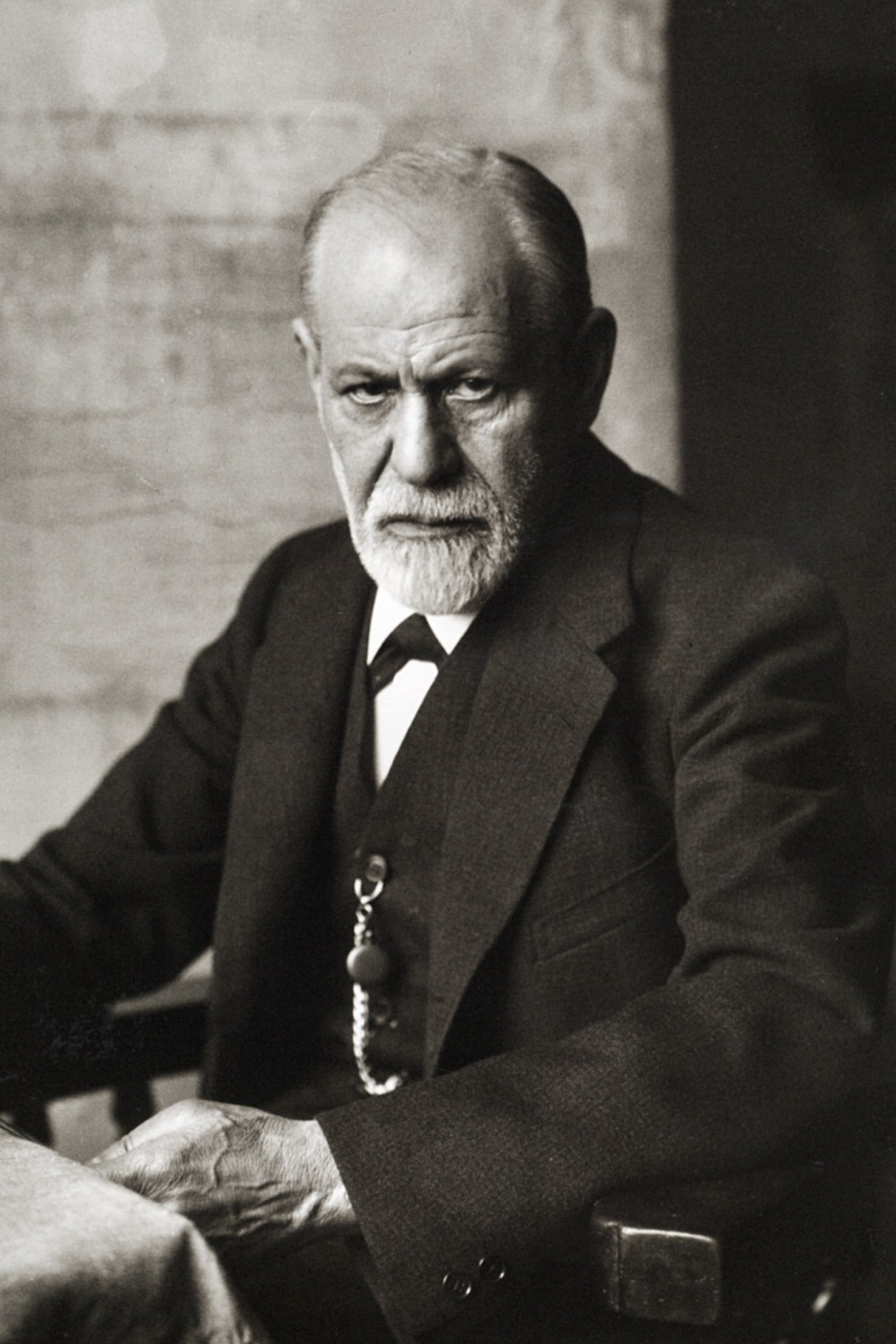
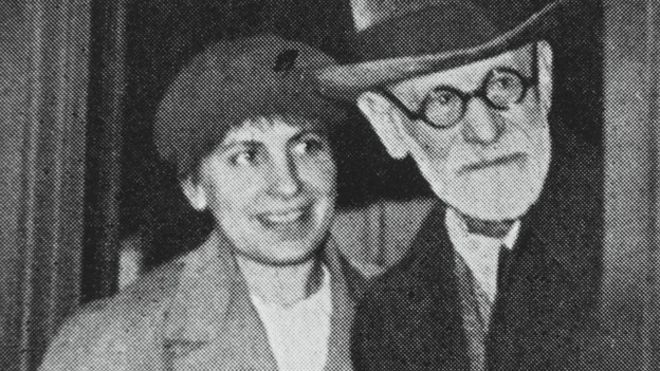
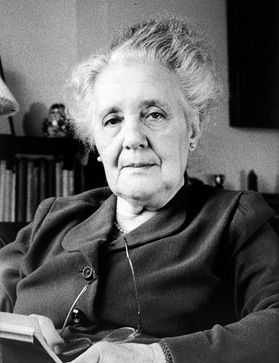
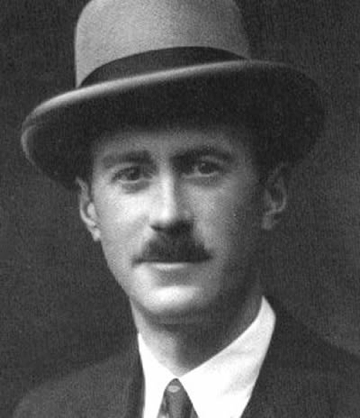
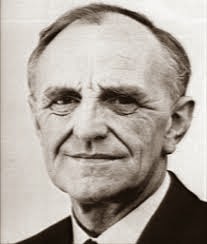
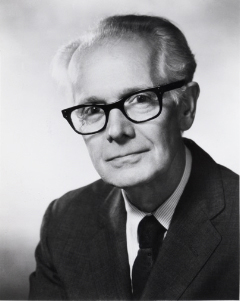

















 Infinite Ocean
You must be logged in to post a comment.