[NOTE: this is the eighth chapter (click here for the first, here for the second, here for the third, here for the fourth, here for the fifth, here for the sixth, and here for the seventh) of a psychological horror story based on an audio film of the same name by my musician friend, Cat Corelli, something I wrote up an analysis for; you can learn more about that here. Before you begin reading, though, TRIGGER WARNING: as a horror story, this one has some graphic content of a violent and sexual nature; so if you’re one of my readers with C-PTSD or other forms of psychological trauma, you may want to skip this one. As for you braver souls, though, read on…]
Lily’s head was submerged in the water now. She panicked, trying to swim up to the surface and bring her head above water…but now, there wasn’t even a surface.
The heavy rain above was no more: everywhere was just an underwater universe.
She held her breath for as long as she could.
Daisy? she wondered. Where are you? I need a mirror to look into.
Don’t be afraid, Daisy’s voice said in her mind. Just let go.
Just let go? Lily thought. Don’t be afraid? How can I? I need a mirror, to remind me I’m still here!
She saw dismembered body parts floating past her, including Daisy’s decapitated head, which stayed there for the moment. Blood from the cut neck was mixing with the water.
How can I not be afraid, Daisy? Lily wanted to scream out. I’m gonna die!
“You’re already dead, remember?” Daisy’s head said, the mouth opening and closing as if still attached to her body.
I don’t feel dead. This feels too real!
“That’s because you’re hanging on to the illusion of life,” the head said, bubbles flowing out of the mouth, the words as audible as if they were travelling through air.
A mirror! I need to see Alice’s face in the reflection!
“I told you,” the head said. “You aren’t Alice. You never were Alice. There is no Alice. There never was an Alice. She was a lie, an illusion. You are Lily, and you’re already dead. You must accept that. Let go of the physical world, and you’ll be free. You’ll be at peace. Now, breathe in the water. Don’t be afraid.”
I’d might as well breathe it in. I’m not getting out of here alive.
Lily breathed in the water, took it all the way through her nostrils and down into her lungs…but she didn’t pass out.
What the fuck? she wondered, her eyes and mouth widening.
A strange, vibrating feeling took over her body. It didn’t hurt, but she felt her body begin to merge with the water.
It began with the outer edges of her body: they seemed to be melting away and becoming one with the surrounding water!
Oh, my God! she thought. I’m disintegrating! I need a mirror!
You don’t need a mirror, Daisy’s voice said, for the head was gone, as were all the other floating body parts. Don’t be afraid. Just let go.
Lily’s leg came off, the one her father told her she didn’t have. It floated away in the direction of the other body parts. The further away it went, the more it melted and became one with the water.
Her other leg came off and floated away in the same way, as did her arms. Then her neck melted and became one with the water, severing her head from her torso. As they floated away, they too melted and became water.
Lily’s consciousness was still intact, but it was merging with the collective unconscious surrounding her. Visions of memories flashed before her eyes, images of Donald and Ray raping either her or other children while Wanda filmed the disgusting spectacle.
Don’t be afraid? Lily wondered. How can I not be afraid as I re-experience my trauma?
The only way you can heal it is to feel it, Daisy’s voice echoed in Lily’s mind’s ear. It’s OK. You’ll be OK. We have to get you through this purgatory before you can have peace.
Lily saw her mother watching videos on TV, videos of movies like Mulholland Drive, Pulp Fiction, The Shining, etc. Lily heard the voices of her father and uncle: “We’re the sons of God, mating with the daughters of men. Your sin brought about the Flood.”
She saw stacks of kiddie porn DVDs with their stage names–Danny and Roy Torrance, and Alice–on the labels. The names of the movies, typically tasteless parodies of literary or film classics, read, Great Flood of Come, Alice Through the Fucking Ass, Muff-hole and Drive, Pump Fucktion, Ride ‘Er, Cowboy, The Shagging, and Norman Frigman. Lily was thankful she saw only the names of the awful movies, and not any scenes in them.
The visions grew darker and darker, until she saw waves of black, then a spiral of black. She went down that dark spiral: it was like falling down a giant black anus…going down the rabbit hole.
Now, she saw only black. Infinite, indistinct black.
She was nothing.
She was no more.
…and just when she’d acquiesced to her disintegration, there was a tiny dot of white, a light that grew into a larger and larger white circle.
Invasion of the Body Snatchers is the name of the firsttwo of fourfilms based on Jack Finney‘s 1955 science fiction novel The Body Snatchers. Though the writers of the novel and the first film vehemently denied any allegory or political subtext surrounding the “pod people,” one finds it irresistible to read such meaning into the story; for however one may insist that the story was just meant as an entertaining thriller, there are subtle, if unconsciously given, meanings to be gleaned from it.
According to the Wikipedia article on the novel (sadly, without a source to verify it, so I have to take it on faith), a “pod person” tells a human that the latter’s race is no less parasitic than the former, what with man’s using up of resources, wiping out indigenous populations, and destroying ecosystems in order to survive. Assuming Wikipedia is accurately referencing the novel, is this not a clear political subtext?
Then, in the 1956 movie, Dr. Miles Bennell says, “In my practice, I’ve seen how people have allowed their humanity to drain away. Only it happened slowly instead of all at once. They didn’t seem to mind… All of us — a little bit — we harden our hearts, grow callous. Only when we have to fight to stay human do we realize how precious it is to us, how dear.” Such a line doesn’t seem necessary in a mere thriller without any sense of, at least some, social commentary.
“I saw my father’s wooden filing cabinet, his framed diplomas stacked on top of it, just as they’d been brought from his office. In that cabinet lay records of the colds, cut fingers, cancers, broken bones, mumps, diphtheria, births and deaths of a large part of Mill Valley for over two generations. Half the patients listed in those files were dead now, the wounds and tissue my father had treated only dust.”
“Why do you breathe, eat, sleep, make love, and reproduce your kind? Because it’s your function, your reason for being. There’s no other reason, and none needed.”
“If we believe that we are just animals, without immortal souls, we are already but one step removed from pod people.”
The 1956 film:
“It started — for me, it started — last Thursday, in response to an urgent message from my nurse, I hurried home from a medical convention I’d been attending. At first glance, everything looked the same. It wasn’t. Something evil had taken possession of the town.” –Dr. Miles Bennell (voiceover)
“Sick people who couldn’t wait to see me, then suddenly were perfectly all right. A boy who said his mother wasn’t his mother. A woman who said her uncle wasn’t her uncle.” –Bennell (voiceover)
“Keep your eyes a little wide and blank. Show no interest or excitement.” –Bennell
“Look, you fools, you’re in danger! Can’t you see?! They’re after you! They’re after all of us! Our wives, our children, everyone! THEY’RE HERE, ALREADY! YOU’RE NEXT!” –Bennell
“I want to love and be loved. I want your children. I don’t want a world without love or grief or beauty. I’d rather die.” –Becky Driscoll
“It’s like the first impression that’s stamped on a coin. It isn’t finished.” –Jack Belicec, describing a body he’s found.
“A strange neurosis, evidently contagious, an epidemic mass hysteria. In two weeks, it spread all over town.” –Dr. Kauffman
“You say it as if it were terrible. Believe me, it isn’t. You’ve been in love before. It didn’t last. It never does. Love. Desire. Ambition. Faith. Without them, life is so simple, believe me.” –Kauffman, as a pod man
…
Ambulance Driver: We had to dig him out from under the most peculiar things I ever saw.
Dr. Hill: What things?
Ambulance Driver: Well, I don’t know what they are, I never saw them before. They looked like great big seed pods.
Dr. Hill: Where was the truck coming from?
Ambulance Driver: Santa Mira.
The 1978 film:
Elizabeth: I have seen these flowers all over. They are growing like parasites on other plants. All of a sudden. Where are they coming from?
Nancy: Outer space?
Jack: What are you talking about? A space flower?
Nancy: Well, why not a space flower? Why do we always expect metal ships?
Jack: I’ve NEVER expected metal ships.
…
Elizabeth: I hate you.
Dr. Kibner (Leonard Nimoy), as a pod man: We don’t hate you – there’s no need for hate now. Or love.
Matthew: There are people who will fight you, David.
Elizabeth: Will stop you.
Dr. Kibner: In an hour you won’t want them to. Don’t be trapped by old concepts, Matthew, you’re evolving into a new life form.
…
“We came here from a dying world. We drift through the universe, from planet to planet, pushed on by the solar winds. We adapt and we survive. The function of life is survival.” –Kibner, as a pod man
“It’s like there’s some kind of a hallucinatory flu going around. People seem to get over it in a day or two. All I can do is treat the symptoms.” –Kibner
Now, as far as political interpretations go, liberals see the 1956 film as an allegory about the excesses of McCarthyism and conformity to American values during the Cold War. Continuing with the Cold War theme, conservatives see an allegory on Stalinism.
As for the 1978 film, which I’ll be focusing on the most, I’ll examine the story from my more decidedly left-wing stance, as such a position, to my knowledge, seems lacking in any interpretation of the films.
The anti-McCarthyist and anti-communist interpretations of the 1950s were fitting, what with the realities of the Cold War and the Red Scare. It is also fitting that the novel has a happy (if unconvincing) ending, and the 1956 film has a hopeful ending, with the defeat of McCarthyism, the rise of the radical 60s as a cure for the bland conformity of the 50s, and (from the capitalist class’s perspective) the substantial end of communism by the early 1990s.
The 1978 film, however, has not only a pessimistic but outright frightening ending, which I find fitting for the political allegory I propose: the metastasizing of neoliberalism, which substantively began around the time of the film’s release, and which has continued unabated to this day.
This idea of metastasizing–of growth, spreading (as of a disease) is important when we consider an important motif, developed the most in the 1978 movie: pods–plants–flowers…Just as seeds spread out over the land, and themselves grow into plants; just as a contagion spreads and infects more and more people–so do pods replace more and more humans with unfeeling automatons, comparable to Winnicott‘s False Self.
How can this idea of a contagion be related to our world, especially since the late 1970s? I normally find little inspiration in Richard Dawkins (i.e., his anti-Muslim attitude), but he had one good idea–how ideas spread in the form of memes.
One of the memes that started spreading from around the mid-twentieth century was the ‘philosophy‘ of Ayn Rand. Government involvement in the economy should be minimized, or at any rate only used in the service of capitalism. ‘Rational’ self-interest has a way of benefitting everyone. The individual will outweighs collective needs in importance. (The individual would never, ever subordinate the needs of the many, causing them to conform to the dictates of the individuals in the ruling class! No, no!)
Doctors and departments of health do all they can to stop the spread of contagions, and the Doctors Bennell of both films (Miles Bennell, played by Kevin McCarthy in the 1956 film; and Matthew Bennell, played by Donald Sutherland in the 1978 film) do all they can to resist the pods.
One of the ill effects of ‘small government’ right-libertarian policies is cuts to healthcare coverage, with a risk of thousands of poor people acquiescing to sickness and death annually. Single-payer healthcare is just something the rich don’t want to pay for.
As a health inspector doing a thankless job searching for health violations in a fancy restaurant, Matthew finds “a rat turd” in a pot; the owner of the restaurant insists it’s just a caper. Matthew suggests he eat the “caper,” which of course, he won’t.
As a capitalist, the owner hates Matthew, a man working for the government in the Department of Health in San Francisco; the restaurant employees, dependent on the restaurant’s survival and without a sense of class consciousness, also hate the health inspector, showing their hate by smashing the windshield of his car.
Those promoting health go against capitalism, forcing regulations on bosses, which limit their ability to make profits; those supporting capitalism, including workers without class-consciousness (i.e., workers who are asleep) tolerate the spread of germs…of pods…
Recall that the pods come from a dying alien world, adapting to Earth and taking over for the sake of their survival. This, an invasion, is akin to the capitalist form of imperialism: the tendency of the rate of profit to fall endangers the survival of the capitalist, and when markets dry up in his native country (the “dying world“), he must seek out new markets in other countries, steal their resources to enrich himself, and either take over or kill off the locals, as the pods do on Earth.
The pods “adapt and [they] survive”…as does capitalism: ‘Capital is not a fixed magnitude! Always remember this, and appreciate that there is a great deal of flexibility and fluidity in the system. The left opposition to capitalism has too often underestimated this. If capitalists cannot accumulate this way, then they will do it another way. If they cannot use science and technology to their own advantage, they will raid nature or give recipes to the working class. There are innumerable strategies open to them, and they have a record of sophistication in their use. Capitalism may be monstrous, but it is not a rigid monster. Oppositional movements ignore its capacity for adaptation, flexibility and fluidity at their peril. Capital is not a thing, but a process. It is continually in motion, even as it itself internalizes the regulative principle of “accumulation for the sake of accumulation, production for the sake of production.”’ –David Harvey, A Companion to Marx’s Capital, page 262
A well-known ill effect of capitalism is alienation, not just that of workers, but of society and of one’s species-essence. This alienation is vivid, even literal, in this story. People are made alien: alien to each other, and alien to themselves.
The pod replicas’ creation causes the disintegration of the original humans. On the other side of the coin, Miles and Matthew destroy the pods about to replicate them. As we can see, the feeling of alienation is mutual.
Little Jimmy Grimaldi, in the 1956 film, is crying because his mother isn’t really her; in the 1978 film, Elizabeth Driscoll (Brooke Adams) complains that her boyfriend (Art Hindle) is no longer himself. Characters constantly complain about imposters at the beginning of both movies…then many of the original complainers stop complaining, because they’ve become pods themselves who, like capitalists, deny any evil intent.
By a strange (dialectical?) irony, it’s plants in the 1978 film that destroy humanity, instead of vice versa, as in real life; or, more accurately, the invasion of alien imperialism poisons the environment, which in turn destroys humanity–like Monsanto, Agent Orange, or land mines; then there’s what Jair Bolsonaro wants to do to the Amazon rainforest…
So with this invasion, instead of people bonding together in love, they exist merely to survive–just like the ‘sleeping’ proletariat (i.e., those without class consciousness); and as those ‘woke’ proletarians who fight to end this scourge of imperialism are hunted down and destroyed, so are Miles and Becky Driscoll (Dana Wynter), or Matthew and Elizabeth. Furthermore, they are branded as crazy (as how left-leaning people may be labelled ‘nut-bars,’), extreme, or conspiracy theorists…how familiar. Paranoia about neoliberalism is as justified as it is about pod people.
Recall Kevin McCarthy, both as Miles and as the ‘running man’ in the 1978 movie, frantically yelling to all the drivers passing by, “They’re coming!” and “You’re next!” In the first film, drivers shout at him to “Get outta here!,” and call him “crazy,” “idiot,” and “drunk”; in the second, Matthew and Elizabeth lock their car doors. This is the average person’s response to such desperate warnings.
When the ‘running man’ is hit by a car and killed, pod people surround the body and stare at it with unfeeling faces, yet they’re satisfied that the threat to their ascending hegemony is removed. This is like the ruling class’s response to warnings about the growth of neoliberalism.
Outwardly as replicas of the humans whose bodies they’ve ‘snatched,’ the pods have all their memories, and can even mimic emotion on a superficial level, causing us often not to know for sure when the switch to pods has happened. This is the case with Nimoy’s character, Dr. David Kibner, who, a third to halfway into the movie, still shows some emotion, but has no sympathy for Matthew’s fears about the pods at all. As a celebrity pop-psychologist, pre-pod Kibner represents the capitalist tendency to exploit people’s emotional problems by selling them happiness in the form of self-help books, so the blurred line between him as human and as pod makes sense.
So many of the ‘left’ are pods, people who are publicly known as progressives, but who are actually, directly or indirectly, helping the neoliberal agenda. George Soros is one: he helped with the demise of the USSR, yet he pretends to be concerned with the excesses of contemporary capitalism. Slavoj Zižek critiques capitalism, but doesn’t offer any real solutions. I’ve written about how the Clintons, in ‘left-leaning’ guise, have caused enormous damage to the lives of ordinary people, as have Obama and Tony Blair. Justin Trudeau is doing this in Canada, though he’s seen as ‘progressive.’ Pods, all of them.
Neocons like Christopher Hitchens and Richard Dawkins have pretended to be progressives, too, in their opposition to religion; yet they were and are content to let imperialism in the Middle East carry on unabated. Pods, pods, and more pods.
The memes that people such as these have spread–“socialism doesn’t work,” “communism killed 100 million people,” “the freer the markets, the freer the people,” “TINA,” ‘only the state is the enemy of the people,’ etc.–continue to infect the entire world in a pandemic. No matter how loudly we yell to warn people about neoliberalism and growing fascism, we aren’t listened to…or we’re struck down and killed, like Kevin McCarthy’s frantic runner in the street, in the 1978 film.
Matthew, Elizabeth, and Nancy Bellicec (Veronica Cartwright) learn that they can fool the pods by hiding their emotions whenever they have to walk among them. This is like how crypto-communists have had to hide their sympathies about the Comintern…yet it seems left-leaning George Orwell turned into a pod when he helped the IRD compile a list of those people.
Becky, or Elizabeth, can hide her humanity for only so long before something shocks her–like a dog hit by a car, or a busker sleeping too close to his dog, causing a pod to merge the man’s head with the dog’s body.
Note how the pods don’t care if an animal is killed, or if a dog-man monster is created, symbolic of the bestial nature man is reduced to by neoliberalism. Similarly, the pods don’t bat an eye, or make that ugly shriek, if a pod is walking about naked outside…but they will react if a human is still among them, as chagrined Nancy learns.
I’ve argued elsewhere that–citing Shakespeare’s use of the word in Hamlet—naked can be used to mean ‘without any possessions or means.’ Pod-Elizabeth’s nakedness can thus be seen to represent those deprived of basic necessities by neoliberalism. Many of the deprived, like her, would rather rat out (or ‘squeal out’) those unlike them, as working-class supporters of fascism do, instead of banding together with other workers in solidarity against the ruling class. Neoliberal capitalists, like the pods, don’t care about the deprivation of the naked, such as those suffering in Yemen or Palestine.
The pods are spread by boat from San Francisco (or by truck from fictional Santa Mira in the 1956 movie) to the rest of the world, just as the contagion of neoliberalism spread from Austria to the US and UK, and then to the rest of the world.
And how do humans turn into pods? By falling asleep. What a powerful metaphor for how one’s liberty…one’s very humanity…dies. Only through endless vigilance–indefatigable class consciousness–can we prevent our dehumanization, our mutual alienation.
So, to recap, the contagion of the pods can be seen to represent the spread of capitalistimperialism, in its neoliberal form, through tax cuts to the rich, deregulation, and pro-capitalist/anti-socialist propaganda in the form of memes spread in a market-friendly, corporate media. We lose our humanity to wage slavery, with soulless False Selves that are alienated from each other.
We’ve allowed this to happen because we’ve lost our sense of awareness–we’ve fallen asleep. What had been a thriller with a happy ending–due to the tireless efforts of humanity to repel the pod people in Finney’s novel–grew into an increasingly pessimistic story in these two movies (even the 1956 film originally had a dark ending–that is, before the studio wanted the framing story with the psychiatrist [Dr. Hill, played by Whit Bissell] listening to Miles tell his story, to add a hopeful ending).
But such is the nature of a contagion: to cause a problem to be more and more desperate. Such has been the metastasizing of neoliberalism, to bring the problem of capitalist imperialism from a formidable struggle–in which at least there had been hope of victory–to one in which defeat seems almost a foregone conclusion.
In the 1978 movie, we go from a vigorous Department of Health, with human Elizabeth and Matthew aggressively trying to find out where the flowers and pods came from, to one with pod-Elizabeth and pod-Matthew sitting around lazily at their desks, doing nothing of importance. No one is interested in healing the sick, or stopping the spread of disease. The 1956 film would have ended with Miles shouting his hysterical warning to the drivers on the highway, and perhaps–after the film’s end–hit and killed by a car, as he is in the near-sequel 1978 movie…a dire prognosis for the world.
Can we, our bodies snatched by neoliberalism, find a way back to Finney’s ending?
[NOTE: this is the seventh chapter (click here for the first, here for the second, here for the third, here for the fourth, here for the fifth, and here for the sixth) of a psychological horror story based on an audio film of the same name by my musician friend, Cat Corelli, something I wrote up an analysis for; you can learn more about that here. Before you begin reading, though, TRIGGER WARNING: as a horror story, this one has some graphic content of a violent and sexual nature; so if you’re one of my readers with C-PTSD or other forms of psychological trauma, you may want to skip this one. As for you braver souls, though, read on…]
Alice woke up…or did she?
She found herself in the hotel room again. The radio was off.
I don’t remember turning off the radio last time, she thought.
She got up, saw herself in the mirror, and the waves of her ego’s uncertainty flattened–somewhat–when she saw her image in the reflection. She sighed in relief at it.
She turned on the radio. Agent Curtis and Inspector Trudeau were chatting…again, why on a radio program, instead of in a crime lab, or something?
“It seems to be a dead end, Agent,” Trudeau said.
“I wouldn’t be too sure about that,” Curtis said. “I’ve got a feeling the killer will show up again.”
“Dropping bodies,” Trudeau said.
Dropping bodies, she thought. Bodies, dropping down rabbit holes, dropping into seas of dismembered body parts, dropping into black, downward spirals…
“Still, we’ll get out of this dead end only if there is another killing,” Trudeau said.
“There will be,” Curtis said. “Killers always drop bodies. That’s what they do.”
“But what if the killer isn’t quite a killer?” Trudeau asked.
Yeah! she thought. Maybe I never killed anyone. Maybe the drugs made me hallucinate the whole thing.
“Interesting theory, Inspector,” Curtis said.
“Right,” Trudeau said. “Very strange world.”
“Whew,” she sighed. “I’m safe.”
“.ecilA, pu ekaW,” a familiar female voice said.
“What?” Alice said with a jolt going through her body. “Am I still dreaming?”
“.ecilA er’uoy kniht llits uoY”
“But I am, aren’t I?” Alice’s vision blurred, then faded. Her body began dropping into that black spiral again.
“.t’nera uoy ,oN”
As those black coils spun around her dropping body, she saw a hole in the left side, a kind of window looking into a mental hospital. She saw Daniel Torrance, strapped to a bed, receiving a sedative from a nurse. He was struggling to break free of his bonds. He was screaming.
“Stop it!” he screamed in his faux German accent. “Stop it!” His body switched back and forth between his and Goebbels’. “Please, stop it! Please!” Then he slumped down on the bed.
“The sedative doesn’t work that fast,” the nurse said to a psychiatrist standing next to her. “Could he have had a heart attack?”
“Could be,” the psychiatrist said. The hole in the side of the spiral closed up.
Alice smiled as she continued falling. Daddy, she thought. Daddy, you bastard, I’m through.
“.thgir lla, hguorht er’uoy ,hO”
Lily suddenly woke up, crying. She was lying on a raft with endless water all around her, as far as the eye could see…no land in sight. The waves moved in gentle rises and falls. A fog hovered over her, greying the sky everywhere. She was in her pyjamas, with a blanket over her.
“I’m sorry,” she sobbed. “I…”
“What is it, Lily?” a familiar female voice echoed from the depths of the fog.
“I thought sleep would do it,” Lily said. “To die, to sleep…would help me escape.”
“What’s wrong?” asked the voice.
“I don’t know who I am.”
“You’re Lily.”
“No, I’m not. I’m Alice. I’ll show you. It’s in my purse…wait, where is it?” She looked down at her body, recognizing that of a flat-chested girl instead of that of curvy Alice. “Why…why am I in Lily’s body?”
“Because you are Lily.”
“What about Alice?” Lily looked at herself in the water. She saw Lily’s face distorted in the moving waves.
“There was no Alice. There never was an Alice. She was just a role you played. A false self. You’d played that part for so many years, you forgot it was just a role. You thought you liked being a ‘slut’…to protect yourself from the pain. But you were always Lily.”
“I don’t understand.”
“Yes, you do, Lily. Deep, deep down inside. You’ve just repressed it for so long. But here’s the thing: you can’t keep the truth away, no matter how hard you try. All of your attempts to present yourself as a ‘metal chick’ and a ‘slut’ are just armour to keep the truth from you.”
“And what is this ‘truth’?”
“‘Alice’ is a role your parents and uncle forced you to play in the series of child pornography videos they were making and selling.”
Lily’s eyes and mouth widened. She shuddered.
“You mean, my…mom…made me do it, too? I don’t remember her at all.” She got dizzy.
“I know,” the Mystery Girl said. “Her betrayal of you was so painful, you had to blot all memory of her out of your mind. The only trace of her remaining was a likeness to the Queen of Hearts in Alice’s Adventures in Wonderland.”
Lily broke down and cried. “Oh, my God!”
“Your tormentors all played roles, too, in those awful movies,” the Mystery Girl said. “Your father sometimes dressed up in lederhosen with you in a dirndl, sometimes he wore a Nazi uniform while doing a bad imitation of a German accent, sometimes he dressed as a Protestant minister while blaming you for tempting him into sin. Your Uncle Ray sometimes wore a cowboy hat and did an even worse imitation of a southern accent; sometimes he wore blackface and pretended he was Morgan Freeman. It would have been laughable, had it not been so horrifying, what they did to all of us.”
“To all of us?” Lily sobbed. “You mean, you were a part of it?”
“Well, yes and no.”
“Who are you?”
“I’m Daisy, or I used to be Daisy, the girl you saved. I’m her spirit.”
“Wait; if I ‘saved’ you, why are you a ghost?”
“Well, you saved me and you didn’t.”
“What do you mean?”
“You saved me from being used in their porno films, but they murdered me. Still, you had me die a virgin rather than raped, so that’s saving me enough, as I see it.”
“Wait…it’s all coming back to me…”
A flurry of memories flashed by Lily’s eyes: Donald and Ray Terence (for those were their real names) making teenage Lily get tattoos, dye her hair a devil red, and wear ‘metal chick’ clothes to make her look ‘Satanic’ in the porn films; Donald and Ray becoming ‘born again Christians,’ but keeping their underage porn business alive, as Donald’s wife, Wanda, insisted on keeping the money rolling in from their pervert clients; the ‘born again Christians’ reconciling their would-be faith to their crimes by making scapegoats of Lily and the other boys and girls they raped as Wanda filmed it on her smartphone.
“I remember now,” Lily said with a waterfall of tears soaking her cheeks. “Mommy found you chatting with Bunny about Stan in a café. She said you looked like ‘actress material.’ I know because I was there. Because you and I were classmates at school, I wanted to warn you and stop her, but I couldn’t–they had that much power over me.
“I gave Uncle Roy–er, Ray an overdose of sleeping pills in his bourbon one night several years ago; I wrote a suicide note, imitating his handwriting (for I’d practiced writing in his hand many times on scrap paper, then hid the drafts, for I didn’t dare throw them out; Mommy watched everything going in and out of the house like a hawk).
“In my wish to save your innocence, I now decided to use the same fake suicide plan on Daddy…but Mom found all my drafts, and realized what I’d done and was planning.”
“Yes,” Daisy’s ghost said. “Wanda found all those scraps of paper, with imitations of Donald’s as well as Ray’s handwriting. Your mom and dad were so infuriated, they went wild with thoughtless rage, and got a murderous revenge on you.”
“They gave me a choice: let Daddy rape you on camera, or he’d kill both of us. I figured him raping you was like murder, as I’d died every time he and Uncle Ray raped me,…”
“You chose death for us, your mom shouted, “Off with their heads!”, and we were killed, our bodies dismembered, driven all the way from South Dakota to the Oregon and California coasts, then thrown into the ocean, with the body parts of a few other boy and girl victims.”
“Yes,” Lily sighed, noting a leak in her raft. It started to rain. “I can sense the whole thing now, as if I’d witnessed it in life…I’m in the spirit world with you, aren’t I?”
“Of course,” Daisy said. “You’ve been here the whole time, since your dream about going from your ‘apartment’ to the dance club. Here, in the dreamland of the collective unconscious, where ghosts have access to all the knowledge–however garbled it may be shown to us–of the world, including knowing what happened to us after we were killed.”
“No wonder everything I’ve seen is so fucked up,” Lily said. “It’s all been like a dream.”
“Yeah, and I have to comment frankly on your parents,” Daisy said. “Dumping our bodies in the Pacific Ocean was such a stupid thing to do. The police could easily trace the murders to your parents. In fact, Donald and Wanda are being arrested as we speak.”
“Daddy always was a moron,” Lily said. Her body began dropping slowly into the water. The rain was coming down harder. “So, I’m dead?”
“Yes, Lily. You have to face the facts. It’s time to let go. Let go of your ego, and your suffering will end.”
“I’m afraid.” She was up to her waist in water. The rain was coming down so heavily, there seemed to be more rain than air.
“Don’t be afraid, Lily. The pain will go away as soon as you fully let go of your desire to be alive. Let go, be one with everything, and you’ll finally have peace.”
Everything flows, like the rippling waves of a river.
[NOTE: please read the second and third paragraphs from this post before continuing. Important–don’t skip reading them!]
As I’ve written before here on this blog, in the middle of our healing journey we have a tendency to backslide when times are good (crests of the waves of life), and forget to be mindful in our need to keep on working on our self-care, writing therapy, meditations, etc. Then the bad times flow back, those troughs on life’s waves, and we’re unprepared.
Just as the bad times don’t last, neither do the good times. The good flow into the bad, then the bad into the good, like the waves of the ocean. We have to embrace change, as it exists everywhere, at all times.
Heraclitus, famous for saying, “Everything flows,” was one of many philosophers throughout history, across cultures, who recognized change as an inevitability, as well as the unifying shift from any one opposite to the other.
“Bad fortune is what good fortune leans on,/Good fortune is what bad fortune hides in,” said Lao Tzu in the Tao Te Ching (58). “Blessed are they that mourn: for they shall be comforted,” (Matthew 5:4) says Jesus in the Beatitudes. Fortune and misfortune flow back and forth into each other in a cyclical Unity of Action, as do health and ill health.
Opposites are unified, like yin and yang. The one flows into the other.
I discussed impermanence, and the crests of good luck flowing into the troughs of bad luck, in my analysis of Moby-Dick. As we try to heal our pain, we must guard against the sentimentality of thinking that there will ever be a flow from sadness to everlasting happiness. There is a never-ending dialectical swing back and forth between all things, including good and bad luck.
There’s also a dialectic between health and ill health. About a week before the publishing of this post, someone read this post of mine and, apparently misunderstanding my meaning when I wrote of being ‘a little too healthy,’ thought what I’d written made no sense. (Another reader stopped at about the third paragraph because she had no idea what I was talking about. I admit, that post was a little too abstract for its own good.)
The quotations around ‘too healthy’ were put there on purpose, for I never meant the idea to be taken at face value. By ‘too healthy,’ I meant the smug overconfidence, complacency, and sense of entitlement we may feel when things are going a little too conveniently for us.
True health is a proper balance of bliss and pain. We all have pain: even the healthiest of people do. Happiness isn’t the absence of pain; it’s having the emotional tools, if you will, to deal with pain. People who are ‘too healthy,’ that is, too comfortable, often aren’t emotionally prepared when the bad times come–then they slip into suffering.
“Misery!–happiness is to be found by its side! Happiness!–misery lurks beneath it!” (Tao Te Ching, 58)
So as all opposites are in some sense combined or intermixed, so are emotional health and ill health. The healthiest of people experience pain, sorrow, and unresolved frustrations. The mentally unhealthy also use their delusions to shield themselves from greater pain: this is not to say that using their delusions in this way is a good idea, of course, but just that their disconnect with reality is an attempt–however foolish–to protect themselves; it serves a psychological purpose, however dysfunctional it may be.
To use an example from fiction, Norman Bates deludes himself from the overwhelming, unbearable pain of confronting his murder of his mother, by imagining she’s still alive…even to the point of giving her half of his life, speaking for her, dressing up as her, having her personality in his mind. This delusion in no way cures him of his madness, of course–it only intensifies it in the long run; but the delusion does allow him, at least in the short term, to be able to function socially. In this way, we can see the admixture of ‘health’ (<<note the quotes, please) into ill health.
Sigmund Freud and his daughter, Anna, who both wrote about ego defence mechanisms.
We suffer pain because we imagine states of being to persist in more or less permanent forms. We need to be mindful, as the Buddhists are, of the one and only permanent state of being: change. Happiness and sorrow flow into each other like the waves of the ocean.
People indulge in porn, drinking, sexual promiscuity, and drugs as a way to experience a brief high of ‘happiness’ to stave off dealing with their real problem: sadness–loneliness. People gain “neurotic dividends,” as (if I remember correctly) Wayne W. Dyer called them in Your Erroneous Zones, by engaging in dysfunctional behaviour because that’s easier than coping with life. This is the ‘health’ in ill health, the ‘happiness’ in sadness.
I’d like to propose another idea for coping with sadness, an idea I got from Richard Grannon in his “Silence the Inner Critic” course: just make yourself feel good for absolutely no reason whatsoever. Do we need to have a reason for feeling good?
I know, I know: at first glance, this sounds like a silly idea. Hear me out, please.
Say the quote below to yourself regularly, regardless of your actual mood, and say it with vigorous body movements, to help you feel it–because you have to try to feel it as well as say it: “I am assuming control of my physical, mental, and emotional state…and I feel good! I feel good…because I should! I feel good because being in a good psychological state helps me to function better in life, to handle my difficulties and challenges better. Indeed, I feel good for absolutely no reason whatsoever. I feel good because, even though I could be going through the worst of calamities now, feeling good can help me pull out of the trough I’m in, and bring me up faster to a crest of good times. And if I do have reason to feel good now, well, that’s all the easier for me.”
Striving to go from a long face to a smile, from troughs of sadness to crests of happiness.
Again, I know what you’re thinking, Dear Reader: easier said than done. I sympathize with you, especially if you’re going through Hell right now, and I agree that it’s hard to do this if, say, you’re in hospital, sick as a dog, depressed, going through emotional flashbacks, crying because someone verbally abused you, etc. I’ve been in many bad situations when, had I heard such sunny advice, I’d want to tell the speaker to f— right off, too.
But consider the more habitual reaction to such troubles: seriously, will moping in hopelessness help you any better? Will escaping into drugs, drinking, or porn?
When I say, ‘feel good for no reason whatsoever,’ I’m not talking about deluding yourself into thinking that everything’s fine when it so obviously isn’t; I’m talking about how you choose to react to your troubles. A hopeful mindset will help you deal with those very real sorrows much better than a pessimistic one will, because you’ll be in a better emotional state to think–with clarity–of a solution to your problems.
Consider the philosophy of Epictetus: we cannot control what happens outside of us (including our bodily ailments), but we can control how we choose to feel about it (i.e., we must give up our attachment to material possessions, a good reputation, a reliance on fortunate events, etc.). I’m not saying that by affirming happy feelings, we’ll make all our sorrows magically go away, in the blink of an eye; I’m saying that we can learn to bear what we suffer better by focusing on what we can control–our feelings.
Epictetus.
As I’ve conceptualized this issue before: the problem is the thesis; the solution is the antithesis, or negation of the problem; and the long and winding road from the problem to the solution is the sublation, the resolution of the contradiction, the unity between the opposites of problem/solution that shows there’s no difficulty that’s utterly cut off from a way out of it.
We cannot solve our problems by getting upset. The best thing to do–to express my proposed solution in another way–is first to regather our forces (what I’d consider to be those good, encouraging internalized objects I wrote about having been put inside our minds through self-hypnosis), then to take a deep, relaxing breath, then to work out a rational solution to our problem (thesis/negation/sublation).
So, the waves go down into a trough (the problem, or thesis), then they rise (sublation) into a solution (the negation of the problem). Now, that sublated solution will dip into a new problem to be sublated again…and this will happen again and again, ad infinitum. These cycles can be compared to the rolling ocean’s waves, or to the cycle of eternity that is the ouroboros, as I’ve written about so many times before.
The point is that whatever is troubling you now–your current trough–is something that will flow upwards into a crest…of some kind or another. So even if this thought experiment (‘feel good for no reason whatsoever’) doesn’t work for you, at least remember that whatever your problem is, this, too, will pass. All troubles come and go, as do moments of joy. Watch those moving waves of fortune, be patient, endure, and in one form or another, the troughs will change back into crests…which in turn will become troughs, then crests, troughs, crests…
Fellow blogger, Mawr Gorshin has approached me with an idea to start a group blog or website of sorts or perhaps a Facebook support page for adult survivors of emotional neglect, narcissism and emotional abuse. We are unsure yet as to what form this would take. On my own blog I have posted many posts over the years on narcissism and emotional neglect. I had hoped at one time to have a website where the articles were not just embedded in chronological order but could be accessed from the home page but since I am only marginally web literate am not entirely sure how to go about this.
At this stage we would just like to call for expression of interest from others. Are there favourite posts that you have written about your experiences and recovery that you feel would help others? Would others out there have such…
[NOTE: please read the second and third paragraphs from this post before continuing. Important–don’t skip reading them!]
I’m shouting out to any bloggers out there who might be interested in creating a kind of collective website/blog page, to which we can all contribute articles on the subjects of narcissistic abuse, including topics on narcissistic parents/ex-boyfriends/ex-girlfriends/spouses, golden children, scapegoats/identified patients, complex PTSD, flying monkeys, triangulation, smear campaigns, and anything on helping survivors to heal from the pain. I got this idea from the creator of the Emerging from the Dark Night page.
I was wondering if she and I, as well as the writers on such pages as the Cynthia Bailey Rug,Narcissists, Sociopaths, and Flying Monkeys–Oh My!, Parenting Exposed, Dr. Perry, PhD, on MakeItUltra, the creator of Surviving to Thriving on YouTube, etc., would be interested in us all pooling our resources and presenting all our divergent perspectives on one page…not only for how it can help us get our own messages out to a wider audience, but also to help survivors have an easy-to-find resource where they can find lots of articles, videos, etc., of varying viewpoints, and find them all quickly.
Another possible idea is to have a shared Facebook page.
If any of you are interested, please let me know in the comments section here, or contact her at deborahallin@hotmail.com. Thanks.
[NOTE: this is the sixth chapter (click here for the first, here for the second, here for the third, here for the fourth, and here for the fifth) of a psychological horror story based on an audio film of the same name by my musician friend, Cat Corelli, something I wrote up an analysis for; you can learn more about that here. Before you begin reading, though, TRIGGER WARNING: as a horror story, this one has some graphic content of a violent and sexual nature; so if you’re one of my readers with C-PTSD or other forms of psychological trauma, you may want to skip this one. As for you braver souls, though, read on…]
[Second note: all excerpts of song lyrics quoted here are by Cat Corelli {with a few minor modifications of mine}. Click on the link above to my ‘Analysis of Slutlips’ to find links to the music and lyrics.]
“Off with her head!” was the next thing Alice heard ringing in her ears. Now she went up the rabbit hole, as it were, and it seemed she found herself in the hotel room again.
The radio was on. Hadn’t she turned it off? She couldn’t remember.
She felt those waves of an unsure ego all around her and going through her. She got up and saw herself in the mirror on the dresser drawer. Alice! That felt better.
She listened to the men talking on the radio. Inspector Trudeau was talking to a psychiatrist about the case.
“Hi, Inspector Trudeau?” the psychiatrist said, it seemed, on one end of the telephone, for she never heard the voice of the inspector.
How odd, Alice thought, hearing one side of a phone call on a radio broadcast. Am I high?
“I’ve read about his murder in the papers…Yes. that murder. Ray Terence…I’m his brother’s therapist. His name is Donald Terence…His is an odd case, indeed. Since his brother Ray got killed, he’s been hallucinating more and more…No, sir. We have it all under strict control…Yes, I will call you back later.”
I must have heard the names wrong, she thought. Surely the shrink said, ‘Daniel Torrance’ and ‘Roy Torrance.’ I’m still fucked up from last night’s partying. Have I been dreaming all this time? Surely the e I took in the bar has worn off by now.
She smiled at the thought of Roy being dead, and of her father having had what must have been a complete mental breakdown.
Good, she thought. Karma is finally fucking Daddy back.
She slumped down onto the floor, those mental waves of hers returned, and she went into another oceanic reverie.
The voice of Inspector Trudeau was now heard. “Fingerprints and saliva were found on the victim’s body,” he said. “We have a match on them: Lilian Alice Torrance committed the murder. We have our men searching for her right now, as we speak. We have a feeling that the killer will strike again.”
“Oh, fuck me!” she gasped. I can’t be Alice anymore, she thought. But I can’t be Lily, either. I can’t endure the memory of any more of those rapes. Who can I be, to be safe?
Daisy!
The current of the sea of Alice’s psyche brought Daisy’s head up to her. Her consciousness entered it.
Daisy, nineteen, was now in a noisy bar. People all around her were impatient to hear a band perform. One drunk young woman, Laura, was especially loud in her complaints.
“C’mon!” she shouted in slurred syllables. “Let’s hear some fuckin’ music!”
Laura kept shouting and staggering around near the stage. It was hurting Daisy’s ears.
“C’mon, Laura!” she said. “Shut your damn pie-hole!”
Finally, Laura was quiet, but not because of Daisy; because the band finally came onstage. Fronting the band was none other than…Alice.
Through Daisy’s eyes, Alice saw herself begin performing.
Relaxing now as the beat pounded away, Daisy mumbled to herself, “Santa’s in town. Bunny’s in the Un…” she hiccuped “…Underworld…Alice… in Wonderland…” she giggled, then looked around the bar. “Where’s Stan?”
The lyrics of each song flew by Daisy’s ears in a flurry:
“Yo! My name is Alice, and I remember everything…It’s all a tape recording…It’s all hidden in my head in a memory/Kinda creepy stuff there but yet it’s me/It’s me in this. It’s this debris…There is no band, but the monsters are real…It’s all beneath my skin, it’s tightening within…And the pines stood tall, to watch me fall…I own the night…And what I don’t own, I take…”
Daisy took a pill, then Alice–in Daisy’s consciousness–felt herself growing…to the size of a giant. In Daisy’s body, she got on the dance floor and danced in the crowd of the band’s worshippers. Her feet crushed the other dancers, who didn’t seem to notice their deaths.
The last song of the band’s set was one called “Churchpunk.”
As the pill kicked in, Daisy could hear church bells, as if in the distance. She wasn’t sure if it was a sound from the band’s synthesizer player, or if it was the drugs she’d taken. Alice, through Daisy’s ears, heard herself singing:
“Oh my fucking god!
And now he’s gonna drag this little girl into church
And blame it on her, blame it on her
‘cuz she’s the source of all original sin, yeah!
It’s all fucked up in your head, man
The top is the bottom in your head, man
What a religious fanatic!
Perverted tactic
A dickhead with no balls to admit
He’s the only one and motherfucking guilty. Shit!”
The drugs were enveloping Daisy like a thick fog. Through her ears, Alice could hear the voice of her father.
“Thou hast disobeyed thy father, Lily!” he shouted, in an absurdly melodramatic and fake imitation of King James Bible-era English, as he dragged her into the local church. “Great is thy sin and dark is thy evil trickery, for thou hast lured me into lechery and fled from Jesus! Therefore thou shouldst be punished and purified by fire and iron, and prayer. Here is my iron, Lily; with my iron rod, I shall spoil the child in a new way!” He unzipped his pants.
No matter how hard Alice tried, she couldn’t escape the terror of her memories.
Daisy collapsed on the floor, crushing everyone else in the bar. She lay there in a pool of collective blood. She took another pill, and shrank down to normal size.
She passed out.
When she opened her eyes, Daisy, now sixteen, was in a café with Bunny, one of her friends. Bunny had just finished chatting with someone on her cellphone, then after putting it away, she smiled at Daisy.
Daisy asked her, “So you’re like still with that other guy?”
“Nooo… You silly!” Bunny said. “He’s Stan’s friend.”
“Mmm…” Daisy hummed, with obvious admiration. “Stan’s sweet!”
Bunny laughed, then said, “Forget it, Daisy. He’s hanging out with that metal chick.”
“Oh, she looks creepy… She looks like Abaddon in Slipknot merch, all tattooed. Her name is Alice, isn’t it?”
“Yeah, yeah. She looks like a slut.” (These words stung Alice’s heart, and Daisy’s lack of empathy hurt even more.)
“Gross,” Daisy said with a sneer. “He’ll dump her.”
“You just have a thing for Stan,” Bunny said with a taunting smirk.
“No, no-no-no!” Daisy said with the exaggeration of reaction formation. Then she laughed when she saw how Bunny wasn’t buying any of her denials, and said, “OK, I do have a thing for him. But he’s not as cute as Cas.”
“Quit watching TV shows or you won’t be graduating this year.”
“But Cas is gorgeous!”
“He isn’t as hot as Dean!” Both of them laughed at that.
“We can’t go to the cabin this weekend,” Daisy said. “There’s this cop sneaking around. He’s been asking questions about that murder.”
“I fuckin’ hate cops!”
“Yeah. Cops are assholes.”
“Totes!” Bunny said with a grimace. “And creepy. I had a few near me once with roving hands when they were raiding a rave I was at five months ago. I’m sixteen, for fuck’s sake!”
The girls noticed a familiar face, one of their female classmates, approach their table with a frowning woman in her forties…the classmate’s mother, presumably.
Alice couldn’t bear it. Her head began spinning…
Alice felt that dark spiral twirling all around her. As she got more and more enveloped in the coiling black, she ruminated on the conversation.
They don’t understand, she thought. Daisy’s innocent. She was never sexually assaulted as I…Lily…was.
Alice was being pulled down into a whirlpool of reddish black. Submerged in it, she continued her rumination.
I cannot be Alice…I cannot be Lily…I cannot escape the rapes…I cannot escape being blamed for the rapes, for not resisting enough…but I couldn’t…I wasn’t physically strong enough…I was just a child…
I cannot be Daisy, either, because she’s too innocent, there’s no connection between us…I cannot be me…I cannot be anyone, and feel safe…Who can I be?…Who am I?
She looked down at herself. She had only one leg. The stump was pumping her blood out into the black water all around her. In her blood, she could see what looked like millions of dead fleas floating in it.
She looked closer. Those fleas all had the miniature heads of Daniel and Roy, pairs of them, cloned over and over again.
Those perverted vermin drifted away from her body…but still she felt no purification…no peace…no catharsis…
Then she heard a familiar voice: “…pu ekaw, ecilA, pu ekaW…”
[NOTE: this is the fifth chapter (click here for the first, here for the second, here for the third, and here for the fourth) of a psychological horror story based on an audio film of the same name by my musician friend, Cat Corelli, something I wrote up an analysis for; you can learn more about that here. Before you begin reading, though, TRIGGER WARNING: as a horror story, this one has some graphic content of a violent and sexual nature; so if you’re one of my readers with C-PTSD or other forms of psychological trauma, you may want to skip this one. As for you braver souls, though, read on…]
The next thing Alice (still in Lily’s consciousness and feeling herself having gone, so to speak, further and further down the rabbit hole) heard was an elegant piano waltz. The notes were punctuated with such crisp precision, one would think Glenn Gould had risen from the grave.
Still, there was an eerie sadness in the melody.
Lily opened her eyes and saw herself in the middle of a playground in that Austrian grassland, with the Alps not too far away. The skies were a cloudless blue. Her father was in lederhosen again. She, in the dirndl, was physically about nineteen years old, though in her cute pigtails and childlike manner, she psychologically seemed to be about six.
The piano player was a man in a cowboy hat, plaid collared shirt, and jeans. He seemed charming to her. She felt an urge to get up.
“Daddy, I wanna dance,” she said.
“Darling, sweetheart,” Danny said in his fake German accent. “You can’t be doing that.” He, back in the Nazi uniform, pushed her back onto her swing.
“But why, Daddy?”
“This dance requires both legs, darling.”
She looked down at herself, and saw only one leg. She began sobbing, then said, “But, who cares?”
“Well, people will be watching.”
“Tell them it’s OK,” she said, stopping her crying. “They have to understand it’s OK.”
“I can’t risk my reputation,” he said.
“Daddy, you’re a moron.”
He looked down at her with threatening eyes.
The piano man stopped playing, got up, and walked over to her and her father, who was now in lederhosen again.
“Hey, howdy, man,” the pianist said, in a southern accent so overdone it could only have been fake. “I’m Morgan.” He reached out his hand to shake her father’s.
“Howdy to you, Morgan,” her father said, shaking his hand and genuinely pleased to meet him. “Nice to meet you. I’m Dan. Daniel Torrance.”
“Nice to meet you, Danny Torrance. May I call you ‘Danny’? Like The Shining Danny?”
“What’s The Shining?” Torrance asked.
“Oh, forget it,” the would-be southerner said. “You don’t have it anyway.” He paused, looking down at Lily. “I want to ask you something, man.”
“Talk to me.”
“I’ve been playing that waltz for years. Kids always dance to it. Ha! My lil’ Jack and Jill over there…” he pointed to his twins, his ten-year-old son and daughter “…were dancing to it just now. Dancin’ ’til they done got dizzy, that’s how they danced.”
“Those two blondes?” Danny asked, eyeing the two kids lewdly.
“Yeah,” Morgan said. “Sweet kids. I love them, man.” He paused and looked at them with a similarly eerie lewdness, then back at Lily the same way. “Your lil’ girl didn’t dance. Why? All kids have fun dancing to my waltz.”
“Well…” Danny began.
“Tell me,” Morgan almost commanded.
“There’s a problem. She thinks she has only one leg.”
“Jesus Christ! How come?” Morgan looked down at Lily and ogled her two legs.
She also looked down at herself; she smiled to see both of them there again. Then she thought, Wait a minute: I have one leg if Daddy says I have only one?
“I don’t know, man,” Danny said. “I keep saying she’s wrong, but she won’t listen.”
“Strange world,” Morgan said. “Do you play the banjo by chance, Danny? You seem like the type who might.”
“Why would I play the banjo, of all the low-class instruments?” Danny said, offended. “It’s the kind of instrument a nigger would play. I’d be risking my reputation if I played that.” He was in his SS uniform again.
“Daddy, you’re a moron,” Lily said.
“One more word of lip from you, young lady, and you’ll wish you’d kept your mouth shut!” He scowled down at her with Goebbels’s face again. She recoiled, shaking.
“Well, I gotta say you know jack about niggers and banjos,” Morgan said, now a black man. “And you’d better change your attitudes, Danny. ‘Cause you don’t wanna mess with niggers in the South.”
“Says who?” Danny said, in lederhosen again and looking like himself.
“Says Morgan Freeman,” Morgan said, now looking like the actor, but still with the ridiculously fake southern accent. “But you don’t have The Shining thing anyways, so you won’t get it.”
Lily looked up at him, excited to see him looking like the movie star in the cowboy hat and jeans. “Oh! That’s coool! So you’re, like, Morgan Freeman from the movies?”
“Yeah, pretty girl,” ‘Freeman’ said, eyeing her lewdly again.
“So, maybe you can give me two legs so I can dance to your waltz…could you?” She pawed at her legs, to feel only one.
Her father, in the SS outfit again and looking like Goebbels, scowled at her, “Lily! You can’t be doing that! You’re supposed to have only one leg!”
“What is the problem with you, Danny?” ‘Freeman’ asked. “Why can’t you let your kid have both legs? I thought you said she only thought she had one leg. She really don’t!”
“Yeah! Please, Daddy!”
“Well,…” her father said, then leaned over to whisper in ‘Freeman’s’ ear, “Because if she has both, she’ll misuse them.”
“Oh, but how?” Morgan asked, white again, and smirking.
Her father whispered again, softer, “By spreading her legs before other men!”
Now both men smirked while looking at her…who had both legs again.
“So, why can’t I have both legs, Daddy?” she asked, feeling her leg shrink away yet again.
“Strange world, indeed,” Morgan said.
“I just can’t risk my reputation,” Danny said again.
Moron, she thought.
“Oh, that’s too bad,” Morgan said. Lily looked up at him. Now he looked like Donald Trump in that cowboy hat. “You know, if you weren’t his daughter, I’d probably be dating you.”
She cringed at the sound of those words.
“You know, maybe we could allow her to have both legs,” Danny said, smirking.
They all looked down at her, and indeed, she had both legs again.
The men grabbed her.
She had a dizzy spell. She felt herself falling down that rabbit hole. Further and further down. It was pitch black all around her.
Then, an ever-so-slight amount of light allowed her to get a sense of her surroundings.
She looked up at the sky. Now it was night. The sky was starless and black, for there was a new moon, and the pine trees were so tall all around her that they blocked out any possible starlight. The pines stood tall…then she did fall.
She shook as she felt Danny and Morgan on top of her, tearing off her dirndl.
They’re both beneath my skin, she thought as she felt them entering her.
As the men were panting and having her, she heard a familiar voice call out to her.
It hissed, “!yliL, yliL…yliL”
As the men shook and stabbed inside her, she looked around, trying to find the source of the voice.
“.doog od uoy fi emit erom eno em raeh lliw uoY”
Lily’s head swung left and right, following the voice as spectators would watch a tennis ball in play. The men’s sweat and saliva were dripping on her skin.
They’re both beneath my skin.
“.dab od uoy fi semit erom owt em raeh lliw uoY”
Am I doing bad now? Lily thought, since she felt no pain with the men inside her. Numbness was a protective shield, as she’d learned years ago.
The Mystery Girl ended with “.thgin dooG”
Lily lay there, catatonic on the grass, as the men zipped up their pants.
“As you can see,” Danny said, smiling, “she does have her uses.”
With her eyes closed, she felt a man’s foul beer breath by her face.
“Time to wake up, pretty girl,” that familiar, fake southern accent grunted in her left ear again.
She opened her eyes and saw Roy Torrance in the cowboy hat, standing next to Nazi Danny.
Martin Mathias (John Amplas) is a vampire…or is he? He lacks the fangs, using razor blades to cut the wounds from which he drinks the blood. Sunlight bothers his eyes a little, and neither crucifixes nor garlic have any effect on him.
Still, he insists that he needs to drink blood; he also maintains that he’s eighty-four years old, though he looks like a teen, or at the oldest, a man in his mid-to-late twenties (i.e., Amplas’s age at the time of shooting the film). Finally, his “cousin”?/great-uncle, Tateh Cuda (Lincoln Maazel), following the superstitions of the family, is as convinced…
Mocha Dick, the real-life whale that inspired Melville’s tale.
I) Introduction and Quotes
Moby-Dick; or, The Whale, is a novel by Herman Melville, published in 1851. The story is about Captain Ahab‘s mad quest for a huge albino whale, which bit off his leg in a previous attempt to kill it by his crew of harpooners. The story is narrated by a young man, the orphan Ishmael, the sole survivor of Ahab’s second attempt to kill the white whale.
Though the novel got a mixed reception on its original publication, its critical reputation grew over the 20th century, and it’s now considered the preeminent American novel, and one of the greatest works of literature of all time. Moby-Dick deals with such profound philosophical issues as epistemology and the nature of ultimate reality, evil, nature, etc., as symbolized by the whale and the ocean.
Here are some famous quotes:
Loomings (1)
“Call me Ishmael.”
“Yes, as every one knows, meditation and water are wedded for ever.”
“Why did the old Persians hold the sea holy? Why did the Greeks give it a separate deity, and own brother of Jove? Surely all this is not without meaning…we ourselves see in all rivers and oceans. It is the image of the ungraspable phantom of life; and this is the key to it all.”
The Spouter-Inn (3)
“Better sleep with a sober cannibal than a drunken Christian.”
The Sermon (9)
“…all the things God would have us do are hard for us to do…if we obey God, we must disobey ourselves; and it is in this disobeying ourselves, wherein the hardness of obeying God consists.” –Father Mapple
The Mast-Head (35)
“…lulled into such an opium-like listlessness of vacant, unconscious reverie is this absent-minded youth by the blending cadence of waves with thoughts, that at last he loses his identity; takes the mystic ocean at his feet for the visible image of that deep, blue, bottomless soul, pervading mankind and nature; and every strange, half-seen, gliding, beautiful thing that eludes him; every dimly-discovered, uprising fin of some undiscernible form, seems to him the embodiment of those elusive thoughts that only people the soul by continually flitting through it. In this enchanted mood, thy spirit ebbs away to whence it came; becomes diffused through time and space; like Cranmer‘s sprinkled pantheistic ashes, forming at last a part of every shore the round globe over.
“There is no life in thee, now, except that rocking life imparted by a gently rolling ship; by her, borrowed from the sea; by the sea, from the inscrutable tides of God. But while this sleep, this dream is on ye, move your foot or hand an inch; slip your hold at all; and your identity comes back in horror. Over Descartian vortices you hover. And perhaps, at mid-day, in the fairest weather, with one half-throttled shriek you drop through that transparent air into the summer sea, no more to rise for ever. Heed it well, ye Pantheists!”
The Quarter-Deck (36)
“All visible objects, man, are but as pasteboard masks. But in each event — in the living act, the undoubted deed — there, some unknown but still reasoning thing puts forth the mouldings of its features from behind the unreasoning mask. If man will strike, strike through the mask! How can the prisoner reach outside except by thrusting through the wall? To me, the white whale is that wall, shoved near to me. Sometimes I think there’s naught beyond. But ’tis enough. He tasks me; he heaps me; I see in him outrageous strength, with an inscrutable malice sinewing it. That inscrutable thing is chiefly what I hate; and be the white whale agent, or be the white whale principal, I will wreak that hate upon him. Talk not to me of blasphemy, man; I’d strike the sun if it insulted me. For could the sun do that, then could I do the other; since there is ever a sort of fair play herein, jealousy presiding over all creations. But not my master, man, is even that fair play. Who’s over me? Truth hath no confines.” –Ahab
“Aye, aye! It was that accursed white whale that razeed me; made a poor pegging lubber of me for ever and a day!” Then tossing both arms, with measureless imprecations he shouted out: “Aye, aye! and I’ll chase him round Good Hope, and round the Horn, and round the Norway Maelstrom, and round perdition’s flames before I give him up. And this is what ye have shipped for, men! to chase that white whale on both sides of land, and over all sides of earth, till he spouts black blood and rolls fin out.” –Ahab
Moby-Dick (41)
“All that most maddens and torments; all that stirs up the lees of things; all truth with malice in it; all that cracks the sinews and cakes the brain; all the subtle demonisms of life and thought; all evil, to crazy Ahab, were visibly personified, and made practically assailable in Moby-Dick.”
The Whiteness of the Whale (42)
“What the white whale was to Ahab, has been hinted; what, at times, he was to me, as yet remains unsaid.”
“Though in many natural objects, whiteness refiningly enhances beauty, as if imparting some special virtue of its own, as in marbles, japonicas, and pearls…with whatever is sweet, and honorable, and sublime, there yet lurks an elusive something in the innermost idea of this hue, which strikes more of panic to the soul than that redness which affrights in blood.”
“Is it that by its indefiniteness it shadows forth the heartless voids and immensities of the universe, and thus stabs us from behind with the thought of annihilation, when beholding the white depths of the milky way? Or is it, that as in essence whiteness is not so much a color as the visible absence of color; and at the same time the concrete of all colors; is it for these reasons that there is such a dumb blankness, full of meaning, in a wide landscape of snows — a colorless, all-color of atheism from which we shrink? And when we consider that other theory of the natural philosophers, that all other earthly hues — every stately or lovely emblazoning — the sweet tinges of sunset skies and woods; yea, and the gilded velvets of butterflies, and the butterfly cheeks of young girls; all these are but subtile deceits, not actually inherent in substances, but only laid on from without; so that all deified Nature absolutely paints like the harlot, whose allurements cover nothing but the charnel-house within; and when we proceed further, and consider that the mystical cosmetic which produces every one of her hues, the great principle of light, for ever remains white or colorless in itself, and if operating without medium upon matter, would touch all objects, even tulips and roses, with its own blank tinge — pondering all this, the palsied universe lies before us a leper; and like wilful travellers in Lapland, who refuse to wear colored and coloring glasses upon their eyes, so the wretched infidel gazes himself blind at the monumental white shroud that wraps all the prospect around him. And of all these things the Albino whale was the symbol. Wonder ye then at the fiery hunt?”
The Fossil Whale (104)
“To produce a mighty book, you must choose a mighty theme. No great and enduring volume can ever be written on the flea, though many there be who have tried it.”
Ahab and Starbuck in the Cabin (109)
“Let Ahab beware of Ahab.”
The Pacific (111)
“There is, one knows not what sweet mystery about this sea, whose gently awful stirrings seems to speak of some hidden soul beneath.”
The Chase–Third Day (135)
“Towards thee I roll, thou all-destroying but unconquering whale; to the last I grapple with thee; from hell’s heart I stab at thee; for hate’s sake I spit my last breath at thee. Sink all coffins and all hearses to one common pool! and since neither can be mine, let me then tow to pieces, while still chasing thee, though tied to thee, thou damned whale! Thus, I give up the spear!” –Ahab
Epilogue
“The drama’s done. Why then here does any one step forth? — Because one did survive the wreck.”
“On the second day, a sail drew near, nearer, and picked me up at last. It was the devious-cruising Rachel, that in her retracing search after her missing children, only found another orphan.”
II) Search for Truth
Ishmael’s extracts, supplied by a sub-sub-librarian.
There is a preoccupation with acquiring knowledge of everything in Ishmael’s narrative, as we can see from his discussing all matters pertaining to the whale (a pun on whole; and Moby Dick can be seen as a symbol of the more terrifying aspects of ultimate reality). Recall ‘Etymology,’ which gives a list of whale in various languages, including Hebrew, Greek, Latin, Anglo-Saxon (WHOEL), Danish (HVALT), Dutch (WAL), Swedish (HWAL), etc. Note also “Cetology,” chapter 32, as well as Ishmael’s many digressions into philosophical matters.
I believe this search for truth is his reason, in a symbolic sense, for tiring of the land and wanting to return to the sea; for the waves of the ocean represent that fluid reality of rises and dips (i.e., in fortune) that we all experience everywhere in life. Reality isn’t in the things in the water, like the whales that are caught: it’s in the water itself. The preoccupation with catching those things is what causes our suffering…as it does Ahab.
III) Ishmael and Queequeg: From Foes to Friends
Ishmael has to share a room, at the Spouter-Inn, with Queequeg, a Polynesian pagan harpooner. Their meeting at night, with Ishmael sleeping in Queequeg’s bed, is hostile at first, since the latter isn’t expecting a roommate.
Soon, the two become good friends (Chapter 10, ‘A Bosom Friend’), the two even sharing in each other’s form of worship; for Ishmael bows with Queequeg before the latter’s idol (Chapter 10–“A Bosom Friend”, pages 67-68), and Queequeg attends Father Mapple‘s church service with Ishmael (Chapter 7–“The Chapel,” page 52; though Queequeg leaves some time before the benediction–Chapter 10–“A Bosom Friend,” page 64).
Christian Ishmael and pagan Queequeg are opposites who, though clashing at first, soon learn not only to accept each other’s differences, but even participate in the opposite’s ways. Their relationship thus demonstrates the dialectical relationship between opposites, something Ahab can never learn to do with Moby Dick.
IV) Mapple’s Sermon
The Chapel
During Father Mapple’s sermon, which the preacher gives on a pulpit designed like a ship (for his sermons are his way of edifying his “shipmates,” his steering of the boat on the ocean of life, so to speak), he discusses the events written of in the Book of Jonah.
“Now the LORD had prepared a great fish to swallow up Jonah” (Jonah 1:17), for he didn’t want to obey God and preach to the sinful people of Nineveh. We tend to think of the “great fish” as a whale, though of course a whale–being a mammal–is no fish. Melville’s narrative, while acknowledging Linnaeus‘ reference to, among other distinctions, the whale’s “feminam mammis lactantem,” still insists that a whale is a fish (Chapter 32–“Cetology,” pages 139-140), linking Jonah’s story thematically with Moby Dick; for Ishmael calls upon “holy Jonah” as his authority on the matter.
Jonah’s “three days and three nights” of terror “in the belly of the fish” transform him from a rebellious sinner into an obedient servant of God, a dialectical shift from the hell of the bitten tail of the ouroboros to the heaven of its biting head. Transformative moments like these, like a harrowing of hell, make saints out of sinners. Ahab will never make that change, for he forever hates the white whale, even in death.
V) Melville’s Critique of Emerson
Ralph Waldo Emerson
When Father Mapple says that in obeying God, we must disobey ourselves, Melville is using the preacher as his mouthpiece to criticize the Transcendentalists, and Ralph Waldo Emerson in particular, with his essays “Self-Reliance” and “The Over-Soul.” In the former essay, Emerson wrote of the apparent divinity of the individual soul, which should be relied upon to the exclusion of accepting any advice from the all-too-conforming community.
The danger of such self-reliance is how it can lead to egotism, narcissism, and contempt for the rights and feelings of others. Ahab personifies self-reliance taken to such foolish extremes, for he ignores Starbuck’s warnings and criticisms, and gets his whole crew killed (save Ishmael) at the end.
Emerson’s “Over-Soul” gives a philosophical, quasi-mystical rationalization of this self-reliance, for this “self” is seen as divinely similar to Atman. Emerson had read translations of such Hindu texts as the Bhagavad-Gita; texts such as these include such doctrines as Atman being equal to Brahman, Emerson’s “Over-Soul,” the unifying soul in all life and in all things.
The problem with Emerson’s interpretation of these Hindu ideas is in how, addled by Western tradition’s preconceptions (i.e., Plato’s idealism, the good soul vs. the sinful flesh, etc.), he Christianizes the “self” (i.e., Atman, the individual soul), and imagines individuality to be all good. Such a sentimentalizing was never intended by the Hindus.
Because divinity in Eastern mysticism encompasses everything–or conversely, it’s described in terms of what it’s not (for to describe the divine in terms of what it is would qualify it, and thus limit it)–it mustn’t be thought of as merely ‘good.’ It has both alluring and terrifying aspects. Bion‘s mystical O, for example, is seen as having traumatic qualities. The divine is everything and nothing, both good and evil…and neither/nor.
But Emerson came from a Christian tradition that sees God as all-good; Western translations of Hindu texts often clumsily render Brahman, or the divine, as God, which is misleading; for God is a monotheistic concept, whereas concepts like Brahman are monistic. Not even ‘pantheism‘ really covers what something like Brahman is.
VI) Pantheism, the Ocean, and the Ouroboros
The ocean as a dark, frightening place.
When one thinks of pantheism, one often thinks of the peacefulness of walking about in the woods, or dwelling dreamily in places like Wordsworth‘s ‘Tinturn Abbey‘, feeling “a sense sublime/ Of something far more deeply interfused,/ Whose dwelling is the light of setting suns” (lines 95–97) and the immanence of “A motion and a spirit, that impels/ All thinking things, all objects of all thought,/ And rolls through all things” (lines 100–103).
Melville, on the other hand, uses the tempestuous ocean as his preferred image of nature to warn us of the danger of sentimentalizing pantheism (see ‘The Masthead’ quote above). I prefer the image of the ocean as a symbol of the dialectical monism that I subscribe to, for the rising and falling waves suggest our ongoing shifts between good and bad fortune.
When I wrote of how a “contemplation combining what I call the Three Unities (of Space, Time, and Action) will, with repeated practice over a long period of time, bring us closer and closer to that nirvana of no more pain, a putting of all the pieces back together,” I never meant that to be some kind of feel-good, New Age sentimentality. “Closer and closer” are the key words there: “no more pain” shouldn’t be misinterpreted as an absolute state.
Indeed, the smug excess of sentimentality is the biting head of the ouroboros, where one is “too healthy,” as I’ve written about elsewhere; this emotional state is one of narcissistic overconfidence, a False Self delusion that can lead, if one isn’t careful, to the madness of fragmentation. This is the danger Captain Ahab is throwing himself into, a danger of slipping past the serpent’s biting head to its bitten tail.
You see, the symbolism of the ouroboros as a unifying of opposites (the serpent’s head biting its tail) shows how we should properly understand ultimate reality: a marriage of heaven and hell, a union of knowledge and ignorance, a fusion of good and evil.
VII) Character Pairings: Unified Opposites
We see pairings of opposites throughout Moby-Dick. We’ve already seen the pairing of pagan Queequeg and Christian Ishmael; we’ve touched on the opposition of wise, cautious chief mate Starbuck vs. mad Captain Ahab; let’s now consider some others.
Other parings include retired Captains Peleg and Bildad, two Quakers who own the Pequod and sailed in it before giving the helm to Ahab. “Like Captain Peleg, Captain Bildad was a well-to-do, retired whaleman. But unlike Captain Peleg–who cared not a rush for what are called serious things, and indeed deemed those selfsame serious things the veriest of all trifles–Captain Bildad had not only been originally educated according to the strictest sect of Nantucket Quakerism, but all his subsequent ocean life, and the sight of many unclad, lovely island creatures, round the Horn–all that had not moved this native born Quaker one single jot, had not so much as altered one angle of his vest.” (Chapter 16–“The Ship,” page 87)
On the next page, “…old Bildad…seemed absorbed in reading from a ponderous volume.
“‘Bildad,’ cried Captain Peleg, ‘at it again, Bildad, eh? Ye have been studying those Scriptures, now, for the last thirty years, to my certain knowledge. How far ye got, Bildad?’
“As if long habituated to such profane talk from his old shipmate, Bildad, without noticing his present irreverence, quietly looked up, and seeing me, glanced again inquiringly towards Peleg. […]
“‘He’ll do,’ said Bildad, eyeing me [Ishmael], and then went on spelling away at his book in a mumbling tone quite audible.
“I thought him the queerest old Quaker I ever saw, especially as Peleg, his friend and old shipmate, seemed such a blusterer.” Yet, in spite of Bildad’s apparent Bible-perusing piety, as opposed to Peleg’s “irreverence” and “impenitent” nature, Bildad’s the “stingy” one, offering Ishmael an exceedingly small share of the ship’s profits (the 777th lay), as opposed to “generous” Peleg’s offer of the three hundredth lay (Ishmael has been hoping for the 275th lay). Here we see the mingling of opposites in Peleg and Bildad, the antitheses of pious parsimony and impious generosity. (pages 89-91)
Another pairing is of Stubb, the cheerful, laughing, happy-go-lucky second mate, as contrasted with Flask, the mean, grumpy, nasty third mate. For all of Stubb’s cheerfulness, though, he feels such a hostility to Fedallah, the Parsee who has an evil influence on Ahab, that Stubb imagines the Parsee “to be the devil in disguise,” with a tail he hides in his pocket; and he’d like to throw Fedallah overboard. (Chapter 73–“Stubb and Flask Kill a Right Whale; and Then Have a Talk Over Him”, pages 315-317) And for all of Flask’s surliness, and his own suspicion of the Parsee, he isn’t sure of Stubb’s equating of Fedallah with the devil.
In one way, grumpy Flask can be seen as the double of mad, scowling Ahab: “Flask…who somehow seemed to think that the great Leviathans had personally and hereditarily affronted him; and therefore it was a sort of point of honor with him, to destroy them whenever encountered” (Chapter 27–“Knights and Squires,” page 125); and Stubb–in his fear that “Fedallah wants to kidnap Captain Ahab”–can be Starbuck’s double. Yet in his wish to rip off Fedallah’s “tail,” Stubb’s rather like Ahab in his wish to get revenge on evil; for ripping off the Parsee’s “tail” is a symbolic castration, as is Ahab’s loss of his leg to Moby Dick. Again, characters with opposing personalities find their traits intermingling.
A pairing of particular importance is Ishmael vs. Ahab. Both men are seeking something, obsessively questing for the deepest knowledge. Ishmael demonstrates this in his near-encyclopaedic display of knowledge of all things cetacean. With Ahab, though, there’s only one whale he seeks.
VIII) Knowledge and Ignorance, Black and White
The whiteness of the whale.
A major theme of Moby-Dick is epistemology, or the philosophy of knowledge and how it is attained. Whales symbolize this knowledge that is sought, for knowledge, like whales, is elusive to its hunter; when you come at it, knowledge can hurt, as when whales smash up whalers’ boats.
The white whale is that ultimate knowledge: its whiteness is like the divine light of perfect knowledge…but that white light can also be terrifying (Chapter 42–“The Whiteness of the Whale”). Ahab is mad to want to confront such dangerous knowledge. Ishmael, in contrast, can adapt and change in his search for knowledge; he can flow and shift with the waves of the ocean. Ahab’s monomania keeps him as rigid and hard as Moby Dick’s powerful body; the captain projects his own evil onto the white whale.
We normally think of darkness and blackness as evil; consider the bigoted Spanish Sailor who taunts Daggoo, the African harpooner (Chapter 40–“Midnight, Forecastle,” page 178). These two are another pairing of opposites who are also alike in crucial ways, for while the Spanish Sailor calls Daggoo “devilish dark,” provoking a fight, consider the swarthiness of the average Spaniard compared to whites of North European descent. And when a flash of light in the dark is said by the Spanish Sailor to be “Daggoo showing his teeth,” we see a mixture of black and white in him, another mixing of opposites.
So as we can see, both black and white can be evil…and good. Both knowledge and ignorance can be evil, too…and sometimes ignorance is better–and safer–than knowledge; since some knowledge simply cannot be found or mastered. Ishmael can accept this reality. Ahab can not.
IX) Marine Masculinity and Narcissism
The sperm whale: a giant phallus in the ocean.
Yet another pairing is Moby Dick, or sperm whales in general, and the ocean. While Melville’s whales are overwhelmingly masculine (more on that below), la mer est la mère. Now, the feminine is conspicuously absent in this novel, or at the very least minimized, even for a story about men at sea. Even on land, all of the significant characters are male: apart from those already mentioned, there are Peter Coffin, owner of the Spouter-Inn, and Elijah, who prophesies the doom of the Pequod.
The sperm whales, whether male or female in reality, are all male by symbolic association. Though there’s no evidence earlier than the 1880s of dick being used as a slang word for penis, it had been used to mean man, fellow, for centuries. Moby Dick is a giant white phallus spouting water (symbolic ejaculation) swimming in Oceanus, a male god of the ocean. Consider also, as Camille Paglia did (Paglia, page 587), “that unaccountable cone,” “the grandissimus,” that is a sperm whale’s penis being lugged by three sailors (Chapter 95–“The Cassock”).
Moby Dick is the rigid thing Ahab wants for having bitten off his leg (a symbolic castration causing him narcissistic injury), whereas the ever-shifting, ever flowing ocean is a nirvana of no-thing-ness, of anatta (no self). Ahab’s peg leg is made of whale bone, his revenge on ‘castrating’ whales. Phallic harpoons stab into the phallic sperm whales, the piercing a kind of circumcising of them, and a rite of passage for novice Ishmael.
Lacan‘s phallus is a signifier, bringing us into the world of language, the Symbolic Order, uniting us with community through communication. Symbolically castrated Ahab is thus cut off from community, from an ability to communicate in a truly human way, in a way that connects with others and exchanges empathy, hence his solipsistic madness and his never heeding Starbuck’s warnings. Intact Ishmael, however, is so linguistically complete that he gives the words of whales in various languages (“Etymology,” page 9), and he quotes Linnaeus’ Latin in “Cetology,” page 139.
Ahab’s narcissism is apparent in his willingness to “strike the sun if it insulted” him. His egotism is the result of too much self-reliance, as Melville warns us all against. Recall “Narcissus, who because he could not grasp the tormenting, mild image he saw in the fountain, plunged into it and was drowned. It is the image of the ungraspable phantom of life; and this is the key to it all.” (Chapter 1–“Loomings,” page 23)
X) Zoroastrian Dualism, and the Deluge
Fire: Fedallah’s Sacredness, Ahab’s Hell of Desire and Suffering, which can be extinguished only by nirvana, a giving-up of his self.
Next, we must consider Fedallah, the Parsee. His influence over Ahab has been seen as Satanic, if you’ll recall what Stubb has to say about him in chapter 73. In this connection, it’s interesting to note Melville’s allusion to the beginning of chapter six in Genesis (fittingly, in a dialectical sense, at the end of Chapter 50–“Ahab’s Boat and Crew. Fedallah”).
Melville calls the sons of God (or sons of the gods, depending on the translation of b’nei ha-elohim) angels, who “consorted with the daughters of men,” which in turn led to the wickedness that caused Yahveh to bring about the Great Flood, which in the ancient, pre-scientific cosmology meant a bringing together of the previously separated waters of the heavenly firmament and the oceans below, a return to the formless Chaos of the beginning of Creation.
Melville also mentions devils having “indulged in mundane amours,” suggesting such a close relationship between Fedallah (a prophetic, heathen ‘son of the gods’) and Ahab (a wicked ‘daughter of men’–i.e., he’s been symbolically castrated), which will result in a deluge-like drowning of everyone (save Noah-like Ishmael) at the end of the novel.
Fedallah, as a Parsee, adheres to the Zoroastrian religion, which has a dualistic understanding of good vs. evil. The religion has an optimistic eschatology, believing Ahura Mazda (Ohrmazd), God and principle of light, goodness, wisdom, and order, will so thoroughly defeat the devil Angra Mainyu (Ahriman), the principle of darkness, evil, destruction, and chaos, that even sinners suffering in Hell will eventually be redeemed, liberated, and brought into heaven.
Such a consummate ‘happy ending’ to sacred history is the kind of thing Melville would have been suspicious of, as we’ve seen in his assessment of Emerson’s ‘self.’ Ahab, in his hopes of killing Moby Dick–the symbol of all that is evil in his world–is searching for that Zoroastrian happy ending, a thorough (Thoreau?) wiping out of all evil–and Fedallah is helping him do that.
So, is Fedallah an angel or a devil…the Hegelian thesis, or its negation? Or is Fedallah a fallen angel…the Hegelian synthesis? Again, we see the merging of opposites, as was the Great Flood a merging of water above and water below, a return to Chaos. And as a Zoroastrian, is Fedallah an agent of Ohrmazd, principle of order, or one of Ahriman, principle of chaos? Is he both principles at once?
Is the deluge-like killing of the crew an evil horror, or is it a purging of evil, like the temporary Hell of the Parsees? Is the infinite ocean of Brahman, the sea of primordial Chaos, a terrifying watery grave one may fall into because of one false step (as traumatized Pip experiences it to be when he jumps ship the second time; Chapter 93–“The Castaway,” pages 395-397; remember also “The Mast-Head” quote above), or is it the painful but necessary purging of the world, creating a purity like the sacred fire and water of the Zoroastrians (hence, Pip’s trauma is also his mystical experience)?
The Zoroastrians would dualistically separate good and evil; as Yahveh Elohim separated the waters above and below, as He separated the divine and human worlds later reunited by the union of the sons of God with the daughters of men. Emerson would keep good and evil so separate as to suggest evil doesn’t even exist in his holy Over-Soul and its immaculate Atman, the individual self. Melville was saying we cannot separate good and evil. The evil of the whales’ painful knowledge will always swim in divine Oceanus; the strongest of these evils–like Moby Dick–will never be defeated.
Noah-like (or rather, Deucalion-like) Ishmael, floating on the arc-like coffin built for Queequeg (comparable to the chest Deucalion and Pyrrha were in to protect themselves from Zeus’s deluge), understands the inseparability of good and evil, of life and death, of black and white, of ignorance and knowledge, or of any pair of opposites; and clinging to a wooden symbol of death, he is the only one of the crew who lives in the end.
XI) The End, But No Surcease of Suffering
Death: Ahab’s Gift to His Crew
“AND I ONLY AM ESCAPED ALONE TO TELL THEE.” (Epilogue)
This quote is from Job, chapter one, repeated in verses 15, 16, 17, and 19, spoken by messengers to Job, a good servant of God, all of them telling him misfortunes that have befallen him. The Book of Job‘s purpose is to reconcile how evil afflicting good people can exist in a world ruled by a good God. In other words, it’s a theodicy in allegory…as, in a way, Moby-Dick can be seen to be.
God, the receiver of blessings and praise, can be seen as the thesis, to which Satan (ha-satan, “the accuser,” or “the adversary”) can be seen as the antithesis, or negation, since Job’s Satan offers the counter-argument that Job would curse God if all his good fortunes were to be taken from him. Theodicy is an attempt at a synthesis, or sublation, of the opposing contradictions of good and evil.
As I’ve said above, only Ishmael survives because only he can figure out this sublation. He, after the death of his shipmates, is an orphan: alive, but floating on a coffin.
It is significant that Ahab dies being tied by his harpoon to Moby Dick, and being dragged out into the water with the whale. “Sink all coffins and all hearses to one common pool! and since neither can be mine, let me then tow to pieces, while still chasing thee, though tied to thee, thou damned whale! Thus, I give up the spear!” (Chapter 135–“The Chase–Third Day,” page 534) He dies because of his undyingattachment to the white whale.
One could describe Ahab’s madness in Buddhistic terms, namely, the Three Poisons of delusion/ignorance, attachment/craving, and aversion/hate. The hard, firm, strong body of Moby Dick–as opposed to the rolling, shifting, changing waves of the ocean–represents Ahab’s delusion of permanently existing things, and thus his ignorance of impermanence, or no-thing-ness.
His monomaniacal craving for the whale, to find and catch it to the exclusion of all other considerations, is of course not out of desire for, but out of hatred of Moby Dick. His wish to kill, to annihilate the white whale leads to his self-destruction because of his delusion of the separateness of self and other, and of the seeming absoluteness of being and non-being; he fails to see the interconnectedness of all things, including self and other.
And in trying to kill Moby Dick, his own evil projected onto the whale, he kills himself. The egotism of the narcissist is actually a ‘pasteboard mask’ hiding his secret self-hate. Though Narcissus, having fallen in love with his reflection in the water, fell in and drowned (“Loomings,” page 23); Ahab, hating the image of the white whale in the water, failed to see its face as a pasteboard mask of himself–thus he fell in and drowned, too.
Herman Melville, Moby-Dick, Penguin Popular Classics, London, first published 1851




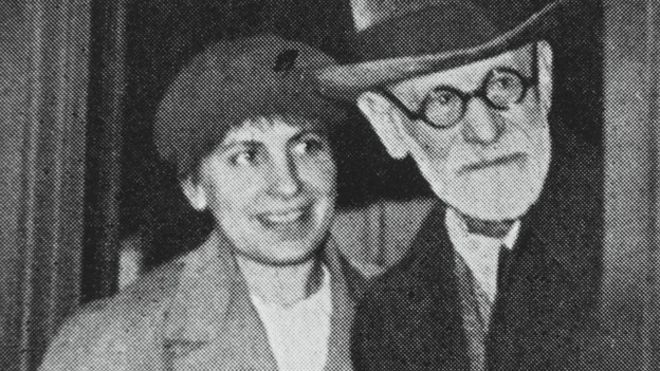



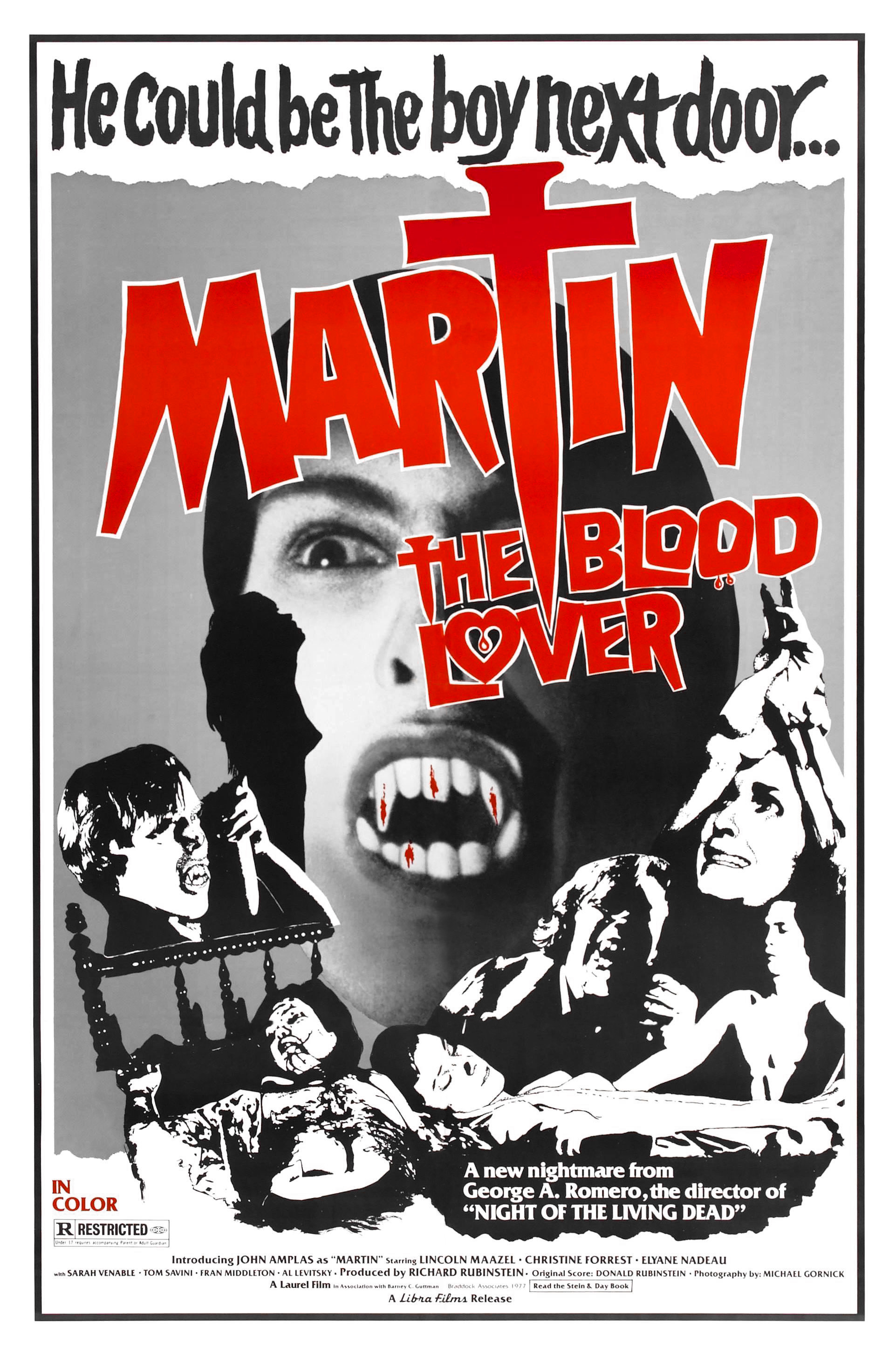
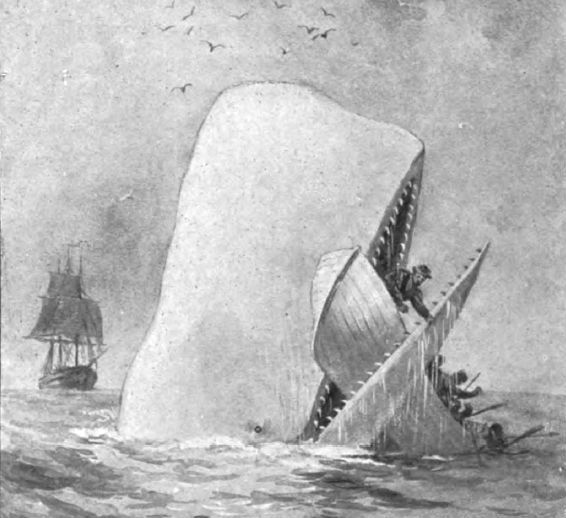

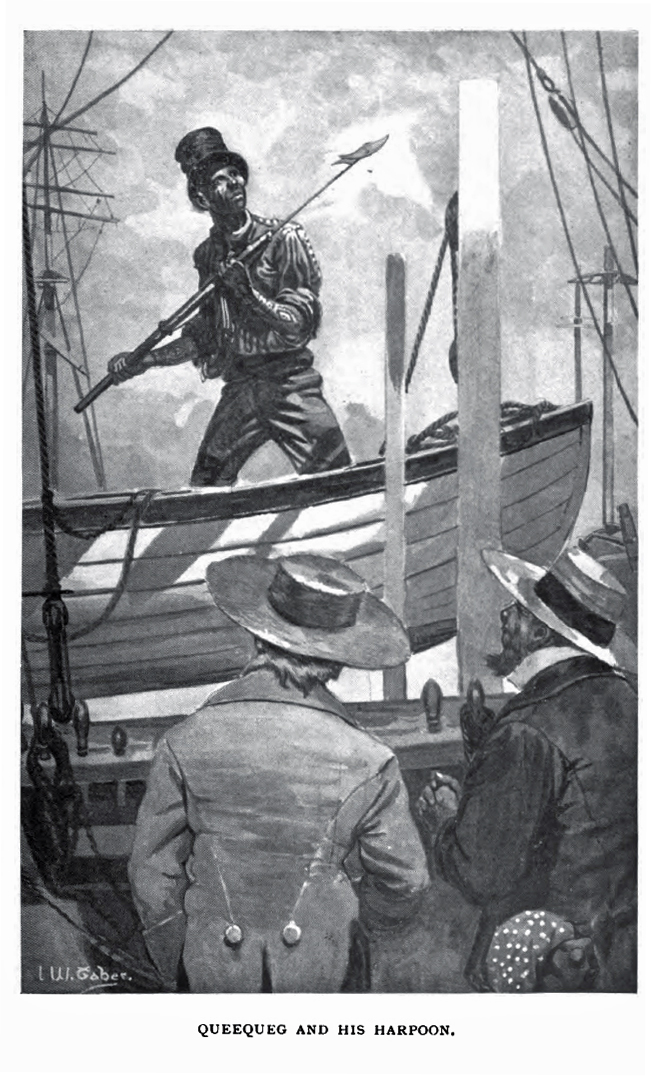

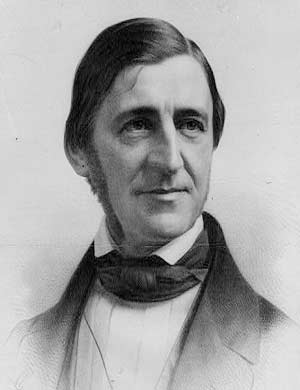
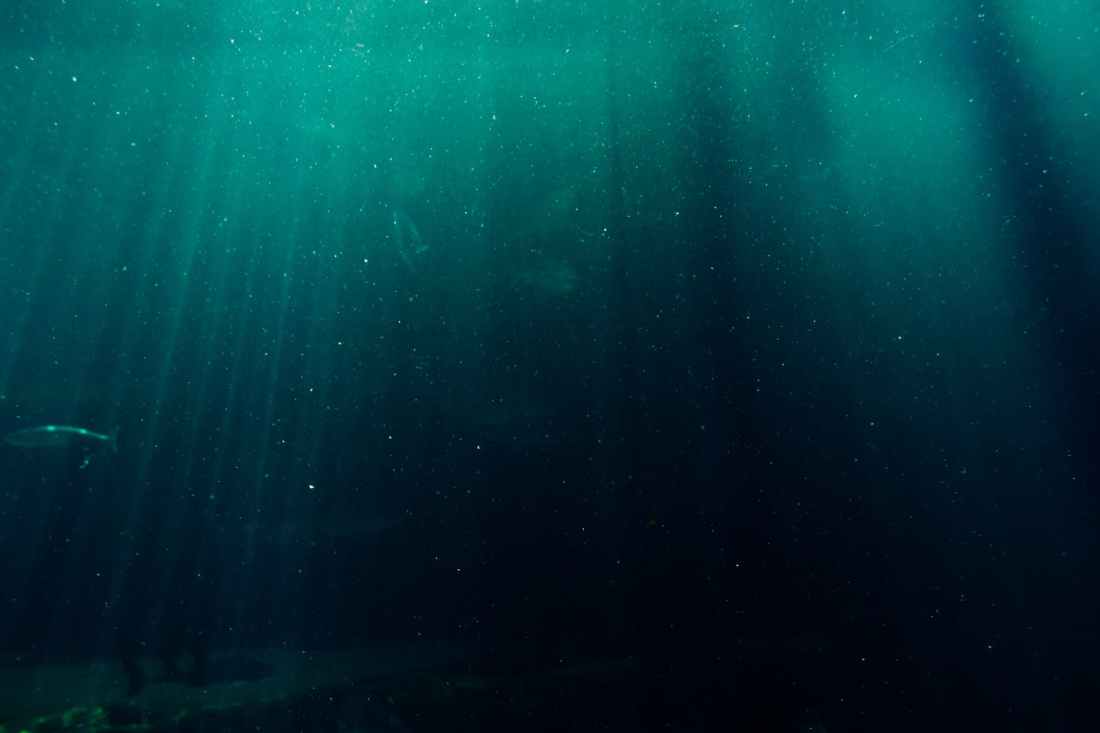

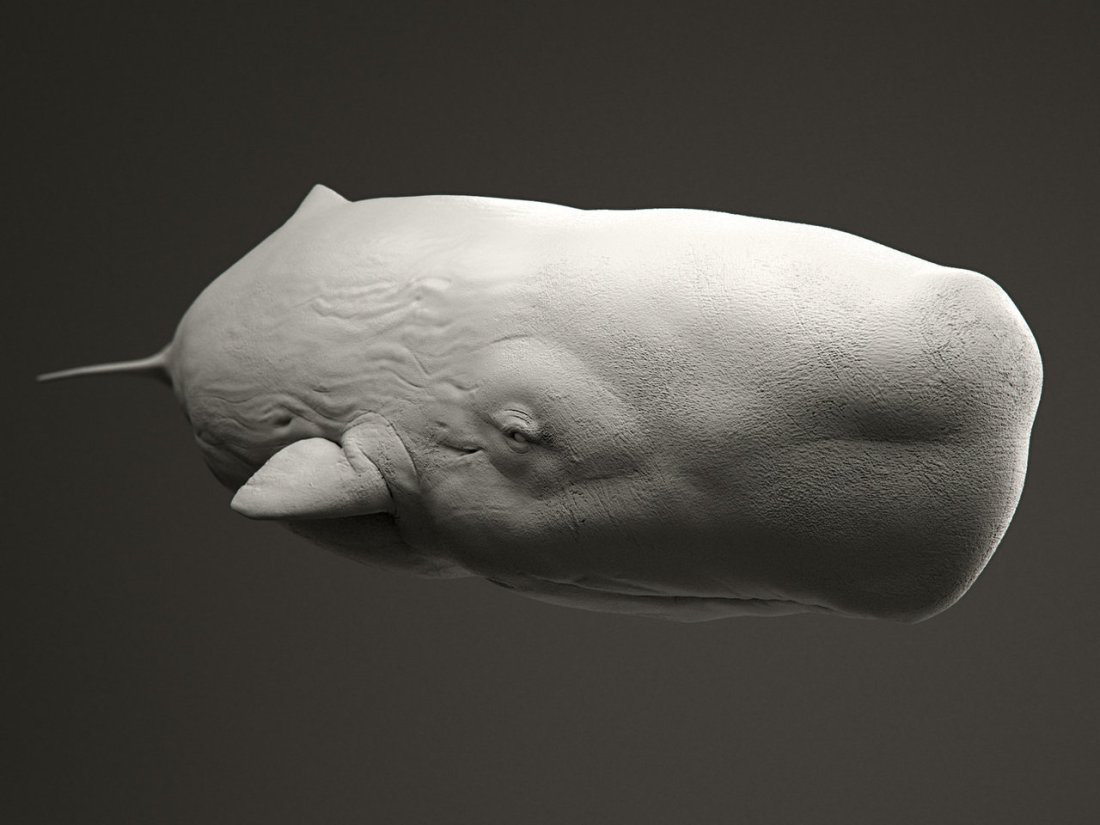
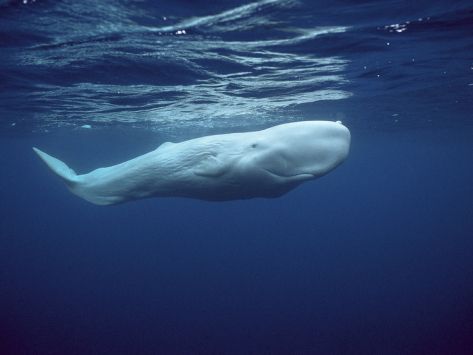

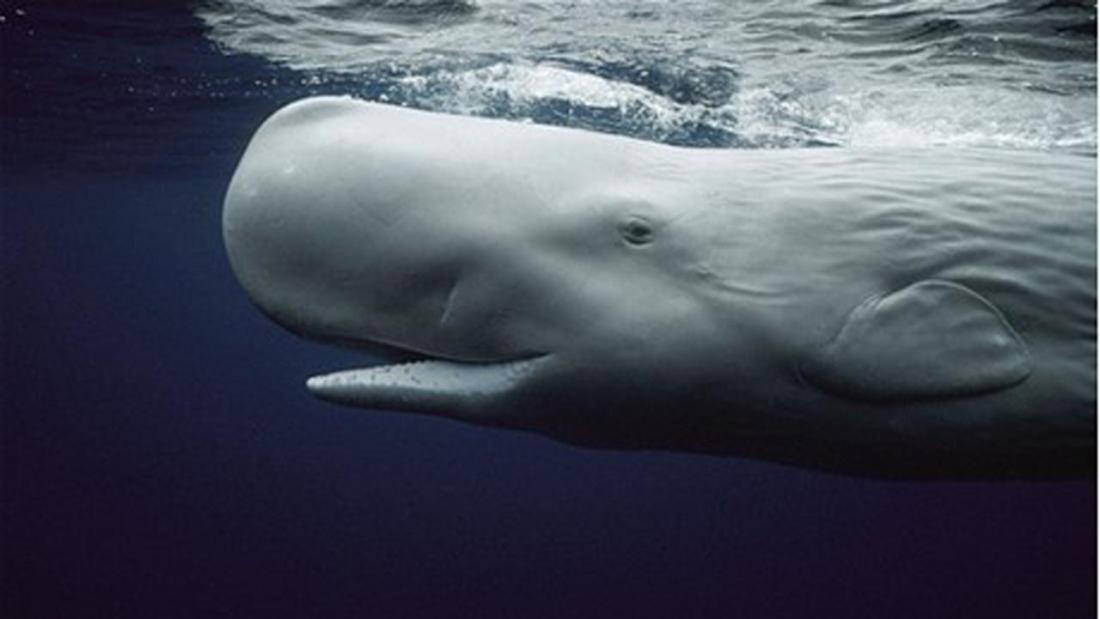
 Infinite Ocean
You must be logged in to post a comment.