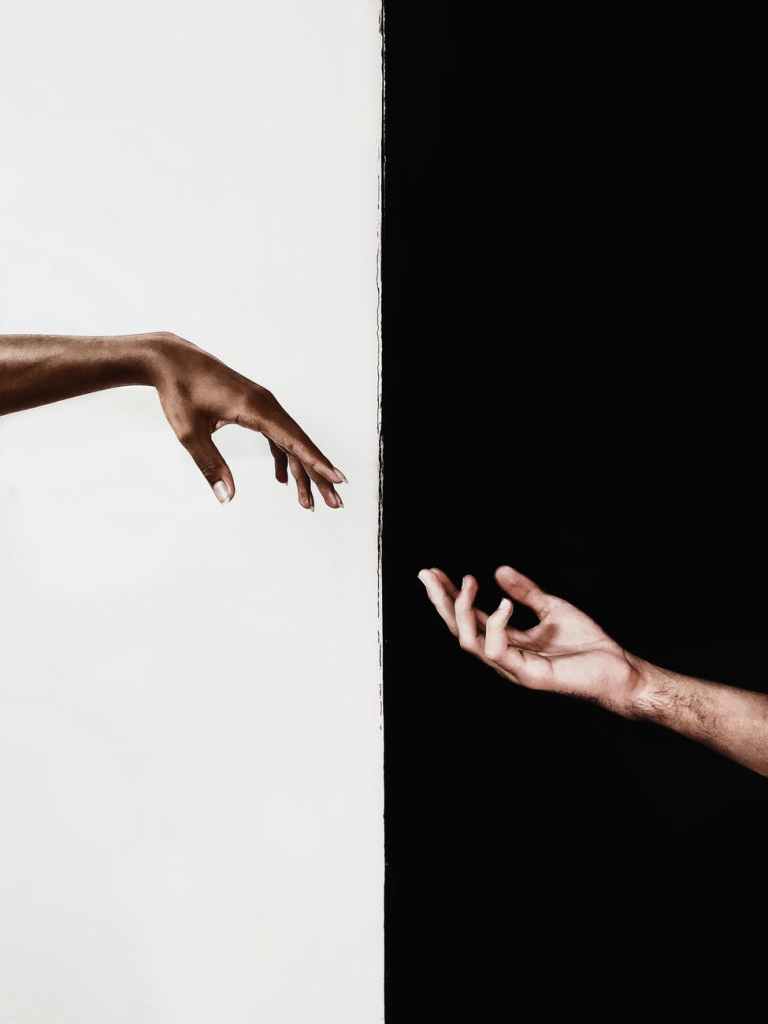
Sour Grapes

A number of years back, when I wrote this blog piece (scroll down to Part III–The Sins of State Socialism), it was at a time when I was only beginning to learn about socialism (at the age of fifty as of this post, I’ve been a late bloomer on the left). I considered myself an anarcho-communist at the time, and I knew very little about Stalin, Trotsky, Mao, etc., beyond what the usual imperialist propaganda tells us.

Accordingly, I made the naïve assumption, as given in Part III of the above-linked blog post, that the “somewhat more democratic nature” [barf] of Trotskyism and the Fourth International is preferable to Stalin and the Third International. I also naïvely assumed that Socialism in One Country is alien to the internationalist spirit of communism, and that Permanent Revolution is what socialists should be prioritizing.

It didn’t take me too long to see the error in my thinking. (As I’ve already pointed out a number of times in other posts, consider my more recent ones to be accurate reflections of my beliefs–not so much my older ones; I haven’t deleted or updated the erroneous older ideas because firstly, I sometimes like to look back and compare old ideas to new, to see how my thinking has changed over the years, and secondly, because I’m simply too lazy to bother revising all that old writing.)

Even with this change of heart, though, I chose to read The Revolution Betrayed in order to get a chance to see Trotsky’s side of the story. I recently finished reading it, and I must say that I am not impressed. I’ll give my reasons for this.

Crucial to understanding how wrongheaded is Trotsky’s perspective is to see how dated the arguments are. The book was published in 1937, and barely a decade later, one could see how justified Stalin’s decisions were…provided one doesn’t rely on such spurious sources as Robert Conquest and The Black Book of Communism.

If Trotsky had won the power struggle over Lenin’s succession in the late 1920s, and if he had applied his interpretation of permanent revolution–as opposed to fortifying the Soviet Union (socialism in one country)–the Nazi invasion, which occurred no later than the year after he was assassinated, would have been a success, and all that the communists had fought for would have been in vain. Recall also Lenin’s own words in “On the Slogan for a United States of Europe”: “Uneven economic and political development is an absolute law of capitalism. Hence, the victory of socialism is possible first in several or even in one capitalist country alone.” (Tucker, p. 203) Evidently, socialism in one country isn’t so anti-Marxist as it would seem.

Speaking of anti-Marxism, Trotsky, in spite of his pretensions as a socialist, was less interested in the good of socialism than he was in acquiring power for its own sake. The man was known for his stubbornness and arrogance (if not outright narcissism) and his opportunism (of which he hypocritically accuses the ‘present communist “leaders”‘ on page 232 of his book), having jumped ship and joined the Bolsheviks just before they took over the Russian government in October/November 1917. In contrast, Stalin–despite his undeserved reputation as a ‘power-hungry, genocidal maniac’–asked to resign from his position as General Secretary no less than four times.

Trotsky didn’t lose the power struggle to Stalin out of a lesser lust for power; he lost because he lost. He lost because the Russian people knew they needed to build up a strong defence for the nation, especially with the growing Nazi threat. The lack of successful communist revolutions outside the USSR at the time reinforced an understanding of that reality.

When reading through The Revolution Betrayed, I find it next to impossible to verify whether or not Trotsky’s sources are reliable (no footnotes). He’d been exiled from the USSR for about eight years, and so he wouldn’t have had first-hand access to any information on the goings-on of Soviet government, industry, agriculture, the status of women, etc. Yet he wrote as if he knew of all of these things in minute detail. How could he have known what he’d claimed so confidently to have known? Needless to say, he didn’t have the kind of access to information that we have in today’s online world.

Of course, he had his sympathizers and followers in the Soviet Union sending him his source material and statistics…but who were these people? The USSR was honeycombed with traitors in the 1930s, including pro-fascist ones who were working hard to pave the way for the Nazi invasion. The Holodomor hoax was being circulated at the time, Yagoda and Yezhov were up their mischief, all of which the bourgeois media blames on Stalin, among other schemes and forms of sabotage.

It’s been said many times, many ways, and by many people: Trotsky was a liar. His followers, those providing him with his dubious source material, were and are liars. This kind of propagandizing was picked up by such various anti-Soviet propagandists as Robert Conquest, Nikita Khrushchev (in his ‘secret speech‘), anarchists like Emma Goldman, George Orwell (recall his sympathetic portrayal of Snowball in Animal Farm), Noam Chomsky, etc. Despite having ‘leftist’ credentials, Trotskyism has been a darling of the political right for 80-90 years; capitalists have been able to use these anti-Soviet polemics to legitimize their critiques by saying, ‘See? Even leftists admit that Stalin was awful!’

So, what was Trotsky’s motive in writing smear campaign after smear campaign against the USSR? As I see it, sour grapes. When losing the succession to Stalin, a man he foolishly underestimated, egotistical Trotsky must have experienced narcissistic injury on a level comparable to Hillary’s humiliating loss to the Donald in 2016. And in a manner comparable to the DNC’s baseless Russiagate fabrications, Trotsky began inventing stories about the corrupt bureaucracy, oppression of the Russian people, and the subversion of Soviet democracy. Narcissists try to destroy what they envy by characterizing the good that they envy in someone as being rotten; this imagined rottenness, however, is just a projection coming from the narcissists themselves.

Stalin, with his many more years of experience as a Bolshevik, and therefore greater dedication to their cause, was the obvious choice over Trotsky. The Bolsheviks, moreover, believed in the peasants, as did Mao: Trotsky didn’t believe in them, thus alienating them from him. Stalin’s prioritizing of protecting the Soviet Union against future invasions (a fear keenly felt less than a decade after the Russian Civil War of 1918-1922), as against Trotsky’s quixotic dreams of revolution after revolution after revolution (which hadn’t succeeded in the 1920s), was simply common sense.

Had Trotsky been a socialist worth his salt, he’d have gracefully accepted defeat, wished Stalin the best of luck as the new leader and supported him in any and every way he could, and respected the people’s wish to focus on building socialism in the USSR and making people’s lives better, as over the exhausting efforts of perpetuating revolutions worldwide, with little interest in protecting their already successful one. In other words, Trotsky didn’t care about worker solidarity…he only cared about his wounded ego.

Trotsky characterized the Gulag as “concentration camps” on, for example, page 213 (twice); incidentally, the CIA itself acknowledged that the Gulag, from which 20-40% of prisoners were released in any given year, was nothing like the Nazi death camps. Trotsky also used Mussolini’s term “totalitarian” several times in his book (for example, on page 210) to describe Stalin’s government (which was much more democratic than is assumed). Such characterizations of the USSR reek of propaganda, yet millions of readers uncritically read Trotsky’s work, thinking they’re getting an accurate assessment of the 1930s Soviet Union.

Now, there are ways of frankly discussing the errors and problems of the time without advocating an overthrow of the Soviet government (as Trotsky does, for example, on pages 214-219; check out this quote from page 217–“the bureaucracy can be removed only by a revolutionary force…To prepare this and stand at the head of the masses in a favorable historic situation–that is the task of the Soviet section of the Fourth International.”)…but overthrow was what he wanted; that was the point. He didn’t want to advance socialism; he wanted power.

And what of spreading revolution beyond socialism in one country? Did that not happen from the end of World War II? The Eastern Bloc was established; four years later, Mao took China; ten years after that, there was the Cuban Revolution (and Che took his inspiration from Stalin, not from Trotsky), and the USSR was supporting Third World liberation movements all over the place. There’s your permanent revolution, Leon: it’s just a matter of waiting for the right time to come, as Lenin discussed in his paper, ‘The Symptoms of a Revolutionary Situation” (Tucker, pages 275-277)

Though Trotsky complained in his book about the problems in the Soviet Union of the 1930s (probably more imagined than real), since his assassination, we know of the glorious successes that Stalin achieved by the time of his death in 1953: the defeat of fascism (due mostly to his leadership), the transformation of Russia from a backward, agrarian society into an industrialized, nuclear-armed superpower, affordable housing for all, collectivized agriculture ending the famines, full employment, free healthcare and education, equal rights for women, and huge economic growth. I’ll bet you couldn’t have outdone Stalin, Leon, had you succeeded Lenin.

So, that’s my assessment of Trotsky. In sum, apart from his contributions to the Red Army’s defeat of the White Army during the Russian Civil War, there isn’t much to say in his favour. Anything good in his Marxist writings is–to my knowledge, for what that’s worth–excelled in the writings of his predecessors, Marx, Engels, and Lenin, so I suggest reading those instead, Dear Reader.

As for Trotskyists, I’d say they are, at best, inferior Marxists who may be well-intentioned, but who’d do better by reading more of the three authors I recommended above, as well as Stalin and Mao. At their worst, though, Trotskyists are dangerous, lying counterrevolutionaries. Contributors on Trot websites like the WSWS and Left Voice (who may or may not be actual Trotskyists) may sometimes write informative articles, provided they don’t add claptrap like, “…as Leon Trotsky once said,” “Join the Fourth International!”, or drone on about the ‘evils’ of “Stalinism.” Readers of Trot rags must be able to discern between fact and agitprop.

While I don’t like violence, I must acknowledge that the assassination of Trotsky was necessary. The USSR in 1940 was in a precarious position with the looming Nazi threat, and Trotsky’s polemics and lies were just adding to the danger against the Russian people. The dissolution of the Soviet Union in 1991 shows how real that danger was.

As Stalin himself once said, “What would happen if capital succeeded in smashing the Republic of Soviets? There would set in an era of the blackest reaction in all the capitalist and colonial countries, the working class and the oppressed peoples would be seized by the throat, the positions of international communism would be lost.”

As we know from the metastasizing of neoliberalism since the dissolution of the USSR, we can see how prophetic Stalin was being; and from this growing catastrophe, we can see how wrong Trotsky was to oppose Stalin. After all, neocons evolved from Trots; accordingly, “permanent revolution” has evolved into permanent war.

Beware of those who pretend to be leftists. Not all friends are comrades.

Leon Trotsky (translated by Max Eastman), The Revolution Betrayed, Dover Publications, New York, 1937

Robert C. Tucker, The Lenin Anthology, W.W. Norton and Company, New York, 1975

Analysis of “Midsommar”

Midsommar is a 2019 folk horror film written and directed by Ari Aster. It stars Florence Pugh, Jack Reynor, Vilhelm Blomgren, William Jackson Harper, and Will Poulter. It is considered one of the best horror films of 2019, with its unconventional way of disturbing and unsettling the audience.

Normally, a horror film thrives on the use of darkness to evoke the creepy mood. With this film, most of the horrors occur in broad daylight, as the film’s title suggests. Much of the film actually has a sad tone–unusual again for a film full of sunny skies–since the story is essentially about the slow but sure breakup of a boyfriend/girlfriend relationship.

The disturbing aspect of this breakup, though, is how it’s actually being manipulated and aggravated by a pagan cult. It’s equally obvious that Pelle (Blomgren) is drawing Dani Ardor (Pugh) away from Christian Hughes (Reynor) as it is that Maja (played by Isabelle Grill) is drawing Christian away from Dani; but I suspect the cult has been orchestrating this breakup to a far greater extent than is assumed by the average viewer of the film.

Here are some quotes:

[in Swedish] “This high my fire. No higher. No hotter!” –Siv

“He’s my good friend and I like him, but…Dani, do you feel held by him? Does he feel like home to you?” –Pelle, talking to Dani about Christian

“He draws, and we, the Elders, interpret. You see Yosh, Ruben is unclouded by normal cognition. It makes him open, for the source.” –Arne

“Ruben was – a product of inbreeding. All of our oracles are deliberate products of inbreeding.” –Arne

“I think I ate one of her pubic hairs.” –Christian, of Maja

[in Swedish] “I can feel it! I feel the baby!” –Maja, right after having sex with Christian

“Christian?” [snaps fingers twice] “Christian… Hi. Hello! There you are! Listen: You can’t speak. You can’t move.” [smiles] “All right?” [smiles] “Good.” –Ulla

**********

Siv: On this, the day of our deity of reciprocity, we gather to give special thanks to our treasured Sun. As an offering for our Father, we will today surrender nine *human* lives. As Hårga takes, so Hårga also gives. Thus, for every newblood sacrificed, we will dedicate one of our own. That is: four newbloods, four from Hårga, and one to be chosen by the Queen. Nine in all, to die, and be reborn, in the great Cycle.

Stev: The four newbloods, have already been supplied. As for our end, we have two already dedicated…And two who have volunteered. Ingemar and Ulf. [they step forward] You have brought outside offerings, thus volunteering your own bodies. You will today be joined in harmony with Everything. And to Pelle, who has brought new blood, and our new May Queen, you will today be honored for your unclouded intuition. And so, for our ninth offering. It is traditional that our fair Queen shall choose, between a preselected newblood, and a specially ordained Hårgan.

**********

The shifting of the seasons, from the dead of winter to the sunny skies of midsummer is important in terms of symbolism. It represents the dialectical relationship between opposites, one of unity in duality, as seen in the gradual transition from one opposite extreme to the other. We shift from the death and cold of winter to the renewed life and warmth of summer. As observed in my analysis of A Christmas Carol, we see here a case of ‘out with the old, in with the new’…only here, the seasons are reversed.

What should be noted here is that, just as there’s a shift from the winter’s death and cold to summer’s life and warmth, so is there a shift from the life and warmth…well, relatively speaking, of course…of Dani’s and Christian’s relationship, to the death and absolute cold of the relationship’s official end in summer–to say nothing of Christian’s winter life and midsummer death. Here again we see the unity of opposites.

Furthermore, as I mentioned above, most of the killing (and discovery of it) happens under sunny skies (except for the murder of Josh [Harper]); while the dark moments deal mostly with Dani’s fears or realizations of abandonment (her sister’s suicide/murder of their parents, more a tragic than horrific moment; Dani’s drug trip experience in the dark bathroom, with her hallucinating the sight of her dead sister in the mirror; her dream of her ‘friends’ driving out of the commune at night and leaving her there).

Her sister Terri suffers from bipolar disorder, the cycles of excitement and depression being symbolically paralleled here with the bright highs of summer and the black lows of winter; so it’s fitting to start with both the extreme cold and dark night of winter, along with the extreme depths of Terri’s worst depressive episode ever. In Terri’s scary email to Dani, she types, “everything’s black.”

Dani is already extremely vulnerable emotionally, her anxiety being such that Christian finds it hard to cope. She takes Ativan to soothe her anxieties, and she’s afraid that all her emotional baggage is pushing Christian away; whereas if he were a decent boyfriend, he’d be much more compassionate than he is.

Of course, Christian’s friends are hardly inspiring of compassion for Dani. Mark (Poulter), a particularly insensitive ass, bluntly tells Christian that he should dump her. Then, there’s Pelle…

Right from the film’s beginning, we see Pelle–the Swede who’s inviting the group to his commune’s midsummer celebrations, and who is the only one who’s happy, even excited, to have Dani tag along–sitting with Christian, Josh, and Mark, when they’re telling Christian he should break up with Dani. Pelle doesn’t say much about the souring relationship at the time (except mentioning the beautiful Swedish women Christian will meet in Hälsingland–i.e., Maja), but given what we know of his motives by the end of the movie, we now can see that it’s obvious his mind is turning already.

Knowing the pagan commune’s use of spells, I speculate that Pelle, right from the beginning, may have been using magic (i.e., the pictures he draws, including the one of Dani) not only to accelerate the couple’s breakup, but also even to drive Terri to the murder/suicide, orphaning Dani so he can ’empathize’ with her, bring her into the cult…and finally have her.

The worst of Dani’s fears of abandonment are realized when she learns that Terri has wiped out their entire family by flooding the house with carbon monoxide while their parents are sleeping. The premeditative nature of this killing, how Terri must have planned it, is almost like a human sacrifice (!). Dani is all alone in the world…except for her doing-the-bare-minimum boyfriend.

But with the onset of winter comes the birth of the sun god; that is, the sun is farthest away from the northern hemisphere, and it will be coming back, slowly but surely, until midsummer, when it’s at its closest. This slow return symbolizes the slow return of hope for Dani, who, though still traumatized, is little by little learning to put her life back together, if in the dubious form of joining a cult.

Christian’s aloofness isn’t helping, though. When he originally intends to go to Sweden with Pelle, Josh, and Mark, he hopes to blow off Dani and have fun in bed with beautiful Swedish girls. It’s only after seeing Dani sob (in an extended scene from the director’s cut, deleted from the theatrical release) that he reluctantly invites her along, lying that he’s meant her ‘last second invitation’ as a “romantic” surprise.

His inviting of Dani has made things awkward for the two of them, as well as for Mark and Josh (though Pelle, of course, is thrilled she’s coming). She can feel the annoyance of the former three men, who–apart from Josh’s work on his thesis–have been hoping for a buddy trip, chasing skirt. This awkwardness is indicative of the alienation in modern society, which will be sharply contrasted with the communal closeness felt among the pagan cult in Hårga…a closeness that will feel too close.

Indeed, part of the cult’s manipulation of its visitors will be a dividing of the four of them through triangulation, and this divisiveness is already beginning because of Pelle’s influence. We often see him drawing: for her birthday, he gives her a drawing of her wearing a wreath; I’m convinced that these drawings are spells, Pelle’s visualizations of such things as her as the next May Queen…which, indeed, is what she’s fated to become.

There’s a dialectical relationship between this growing alienation among the four visitors and the all-too-close bond Dani is developing with the cult, which actually is enmeshment. Similarly, the coming together of her and Pelle, the coming together of Christian and Maja, and the slow breakup of him and Dani, are also dialectically related–more unions of opposites.

To develop this theme further, it’s interesting how the visitor who has been traumatized by a murder/suicide in her family is the only one to be able to adapt to the death cult ways of the commune. The one who has viewed death with the greatest horror is also the one who becomes most accepting of it at the end. What’s more, it’s interesting how, of the four visitors, it’s Josh–the only African-American among a cast of people of European descent–who is by far the most passionate about learning about Scandinavian pagan traditions.

[NOTE: please don’t misinterpret my meaning here. I’m not trying to say that it’s somehow ‘odd’ or ‘out of place’ for a black person to be interested in European culture. Far from it! We should all, regardless of ‘race’ or colour, be encouraged to learn about cultures outside of those of our ethnic background. For indeed, many blacks have been famous for not only loving, but also excelling, at presenting various aspects of ‘white’ culture. A few examples, off the top of my head, include Jessye Norman in opera, Wynton Marsalis when interpreting Haydn, and Paul Robeson playing Othello and singing “I Dreamed I Saw Joe Hill Last Night.”]

My only point in speaking of Josh’s thesis in terms of the ethnic difference between him and Scandinavia is to give another example of this film’s theme of the unity of opposites: in terms of ethnic and cultural background, Josh, of the four visitors, is furthest away from Nordic tradition, yet he’s nearest to it in his emotional investment. It’s not about whether African-Americans ‘should or shouldn’t’ be interested in European culture (Why shouldn’t they be interested?); it’s that, technically speaking, he is passionate about it, making him, in this sense, more Nordic than Dani, Christian, and Mark could ever be; and in this we see a sameness in difference…as there should be a unity and harmony between all cultures, including those (actually or only seemingly) most dissimilar. I’m not prescribing what cultures one is ‘supposed’ to be interested in; I’m only exploring theme.

In contrast to Josh’s love of all things Scandinavian, white Christian, who also wants to do his thesis on the Hårga, is totally half-assed in his interest in the culture; worse, he is leeching off of Josh’s passion, justifiably angering him. In fact, Josh’s fascination goes so far as to have among his research books one involving the Nazi use of the Uthark (seen in an extended version of the scene of the car ride into Hälsingland)! Pelle claims that Josh carries the book around only to annoy him, but one would think that Josh himself would be annoyed to have it around. Once again, opposites attract.

Yet another example of the union of opposites is in Christian’s attitude towards Dani. He’s a bad boyfriend, to be sure, but not completely bad. He’s conflicted about her: part of him wants to end the relationship, but part of him wants to hang onto it. He expresses fears of regretting dumping her, and then not being able to get her back. He’s emotionally distant, yet tries…however clumsily…to be considerate. This ‘to be or not to be’ her boyfriend is thus another paradoxical unity of opposites.

Even when he is offered Maja for mating, he asks to watch the sex ritual instead of participate in it (in another deleted extension, that of his scene with Siv). And after he comes inside Maja, he runs out of the building naked, full of fear and remorse. He’d still be with Dani, yet not be with her.

When the visitors arrive in the Hårga community, pretty diegetic music is heard playing on flutes as they walk through a huge, yellow circular entrance designed like the sun. It’s a quaint, charming scene, and the people living here seem sweet. The charm is superficial, though, since we’ll see soon enough what will happen to Mark, Josh, and Christian, as well as to UK visitors, Simon and Connie.

One can debate whether or not ancient Norse pagans actually committed any or all of the shocking acts seen in the film (senicide, blood eagles, skinning of human flesh, and human sacrifices); but staying within the framework of the story of the film, we need to wonder about a community in the modern world doing things they know that no one outside would ever accept.

Such extreme acts, deemed understandable only in a pre-scientific world–where human sacrifice, rather than such things as modern agricultural practices, is believed to ward off bad luck and ensure good harvests–when combined with the pagan cult’s superficial charm, can only mean that the Hårga commune is collectively sociopathic and narcissistic. They fancy their ways to be superior to those of the modern scientific world; they arrogantly think they have the right and duty to manipulate and end human lives. Yet, on first meeting them, we find them so charming and sweet.

Again, we see here a meeting of opposites: so sweet, kind, and gentle, yet so cruel and merciless. This is a collectively narcissistic community. Membership (enmeshment, actually) has its privileges (e.g., being the May Queen, a kind of golden child), but being outside of the inner circle only brings death. Horrors happen under sunny skies.

Normally, when we think of sexual predation, we think of lecherous men prowling after pretty, nubile young women. Indeed, Mark–who’s such a jackass, he can’t even refrain from engaging in locker-room talk in Dani’s presence…so inept around women, and probably a virgin–is all eager about chasing Swedish women. But when one of the Hårga women (Inga, played by Julia Ragnarsson) shows an interest in him as a mate, he gets scared, not just because he’s such a dork, but because he can sense the predation.

Maja, of course, is especially predatory, what with the spells she uses on Christian (the runic charm she puts under his bed, and her pubic hair in his food), and the unsettling way her eyes are always on him. This sex role reversal is another union of opposites: men chase women, but women hunt after men. The hunter becomes the hunted.

Simon and Connie cannot hide their shock at the senicide, so when they say they want to leave immediately, not only is their murder necessary to silence them and protect the cult from the police; it’s also revenge for the narcissistic injury the cult feels after Simon and Connie make them lose face by his calling the senicide “fucked!”

Mark’s pissing on the ancestral tree, another loss of face for the cult, is more narcissistic injury requiring his death, as is Josh’s forbidden taking of photos of the cult’s holy book. The visitors have no respect for the commune’s traditions, so they must die.

That tense scene of the four visitors sitting together at the dinner table exemplifies another union of opposites, that of social alienation vs. enmeshment. Resentment builds between Dani and Christian when she says she can imagine him leaving without telling her (as Simon has done to Connie) because of a “miscommunication.” Mutual resentment builds between Christian and Josh over the former leeching off the latter’s thesis. Mark fears being murdered because of his pissing on the tree. All four feel alone, divided from each other…and yet they’re surrounded by a commune of people so together, they all share one will.

…and Dani, quite soon, will be part of that one will.

As part of his slow seduction of her, Pelle comforts Dani, after her shock at the senicide (which reminds her far too much of Terri’s murder/suicide–the death of their aged parents), by mentioning his own parents…who died in a fire (!). We must remember this fiery death in light of the sacrifice at the end of the film, a ritual murder Pelle fully, willingly participates in. He would tell her of his parents’ death to have her believe he empathizes with her, that he would hold her in a way Christian never will…yet Pelle is using her pain to lure her in; and as I speculated above, he may have used a spell to kill her family.

Pelle is the central villain of the movie. He has used his slick charm to engineer all the major events of the story. His plan from the beginning has been to break up Dani and Christian so he can have her, and so his sister Maja can have Christian. Maja has liked him ever since Pelle sent her a cellphone picture of him back when Pelle and the four were still in the States. The human sacrifice, killing Pelle’s “American friends,” was planned from the start, too. Pelle has the charm and sweetness Christian lacks, but Christian is the central victim, and Pelle is the central victimizer. Opposites, here of good and bad, are united again.

Dani’s aloneness–no family, an emotionally uncommitted boyfriend, and Josh and Mark, who resent her tagging along–makes her a perfect choice to join the pagan cult. She has no one else, but the people of Hårga are happy to have her. She dialectically shifts from being the social reject to being all lovingly accepted as May Queen–note the love-bombing she gets when she wins the Maypole dance. Note especially the passionate kiss Pelle gives her; having been drugged, she calls out “Mom?” when seeing a hallucination of her mother among the love-bombers, the only one who isn’t happy for her…but they are all her family now. She can leave behind her painful old world.

On many occasions, I’ve used the ouroboros as a symbol for the dialectical relationship between opposites: the serpent’s biting head and bitten tail represent the meeting, extreme opposites on a circular continuum that in turn is represented by the snake’s coiled body, where every intermediate point between the extremes is. Dani is shifting from the bitten tail of loneliness to the biting head of inclusion in the cult. Christian, on the other hand, has been slipping from the head of acceptance among his buddies, along the length of the serpent’s coiled body towards the tail as his friends are killed, to the bitten tail of being the new outcast, where Dani was, now that she has been crowned May Queen, and is loved by the cult, while he just stands by alone and watches.

Christian is the lonely, vulnerable one now. The cult doesn’t even want him to marry Maja: they just want his sperm to impregnate her. The combination of this fact with the cult’s accepting of Dani, the only survivor of the visitors being female (Ingemar was hoping to mate with Connie, but her sticking with Simon has sealed her fate.), makes me believe this cult must be matrilineal. Males are more expendable here than females (just as we know that in the patriarchal family, the sexes are reversed in this regard). Hence, seven out of the nine sacrificial victims are male; in fact, strictly speaking, the only ones burned alive are male (Christian, Ingemar, and Ulf), for the other victims (including Connie and the elderly woman who jumped from the cliff) were already killed long before.

This is an upside-down world (recall that upside-down shot during the car ride to Hälsingland), where sex roles are often reversed, moments of emotional dark occur during sunny brightness, and extreme opposites are intermingled. The only solution to social alienation that the movie offers is total enmeshment in a cult. This enmeshment is perfectly symbolized by Reuben, the deformed ‘oracle’ who is a result of inbreeding. A healthy society is a balance of closeness with independence: not too close, yet not so apart as to result in alienation. Dani is going from one extreme to the other.

As for Christian’s ‘moment of truth’ with Maja, we cannot afford to be so naïve to think that, just because he gets to enjoy her, that this means he’s really enjoying her. He has always been reluctant about it; part of him, even if just a small part, still wants to be with Dani. The only reason he has sex with Maja is that he’s being manipulated into it. Men’s greatest weakness by far is lust.

Drugged with aphrodisiacs and psychedelics that, frankly admitted by Ulla, will break down his defences, Christian enters the room where the fertility ritual is to take place. Maja is lying naked and beautiful in a bed of flowers, surrounded by naked older women who sing a hypnotic tune in B major, with two sets of three harmonies (which, if I’m hearing them correctly, are based on triads of I vi[a first inversion 6th chord] I, I II[major] I); an eerie instrumental variation of the tune is heard earlier in the film whenever Maja is working her love magic on Christian.

This scene perfectly exemplifies erotic horror, one of the best fusions of the sexy and the scary that I’ve ever encountered. Maja is so tempting, so exciting…and yet, so terrifying for those very reasons. (Now we can understand why Mark changes his mind about Inga, the Hårga girl he’s been so attracted to–the one intelligent thought he has anywhere in the film.) Maja is luring Christian into a trap. She takes the femme fatale to a whole new level. Omne animal triste post coitum. And this fusion of pleasure and terror is yet another union of opposites.

Such books as Frazer‘s Golden Bough, Graves‘s two-volume Greek Myths, and Hyam Maccoby‘s Sacred Executioner discuss ancient pagan rites of human sacrifice, later distorted into myths, which included orgiastic fertility rites. (I briefly discussed these in Part V of this post.) This is exactly what we’re seeing happening to Christian: he has a fuck, then he goes up in flames.

Now, we wouldn’t hesitate to describe as sexual assault a man giving a woman alcohol and drugs, then taking advantage of her while she’s wasted; but is that not exactly what’s being done to Christian? He has been thoroughly manipulated and drugged into having sex with Maja, and he has clearly demonstrated reluctance. During the sex, his agape eyes show no sign of pleasure: he’s all in a state of doped-up shock. Let’s dispense with the sexual double standards, look at what’s happened to him with an open mind, and take the following point seriously.

There should be no surprise that naked Christian runs out of the building disoriented and scared: what has happened to him can be seen as a kind of rape. It doesn’t matter that he orgasmed inside Maja; when women are raped, they sometimes orgasm–coming doesn’t make these women any less rape victims. The only reason we assume Christian ‘wanted it, so it isn’t rape’ (a particularly cruel thing to say to female rape victims just because they’re dressed provocatively) is because we stereotype men as lechers, and society assumes that sex is something only men do to other people, especially to women, instead of something done to them, especially when done by women to them.

When I say the above, I’m not trying to claim any kind of solidarity with woman-hating MRAs. I only bring this up, once again, to explore the theme of an upside-down world in which opposites are unified. Normally, we think of male sexual predation on women; here, the sexes are reversed.

Christian’s running outside, frontally nude and totally exposed to anyone looking, underscores his vulnerability. Ascendant Dani was emotionally vulnerable; falling Christian is now physically vulnerable (especially when he is drugged into mute paralysis). He has given up his usefulness to the cult in impregnating Maja. In the language of narcissism, he has gone from idealized to devalued…and he’ll soon be discarded.

At the end of Dani’s initiation as May Queen, the women accompanying her take her to a place within earshot of the sex rite. The empathic chanting of the women surrounding Maja and Christian make the rite especially audible to Dani. This must be deliberate. One of the women supposedly tries to dissuade Dani from going over and seeing what’s going on, but this ‘dissuasion’ is clearly reverse psychology: the women want her to see Christian ‘cheating’ on her; they let her walk over there.

Throughout the film, Maja’s moves on Christian have been public and therefore easily made known to Dani. Her suspicions have been growing the whole time; before she looks through the keyhole and sees her boyfriend fucking Maja, she’s already 99% certain that her suspicions have been correct. You can see it on her frowning face as she approaches the building.

After seeing the betrayal, she runs into the sleeping area, bawling in a jealous rage and feeling the triggering of her trauma of abandonment. The other women follow her. As Dani is bawling, the other women face her, and in the collective form of a symbolic mirror, they empathically reflect her bawling and pain back to her. This ritualistic empathizing, however, shouldn’t be mistaken with real empathy, or with Bion‘s psychotherapeutic notion of containment; the women aren’t properly soothing her. They are manipulating Dani, channeling her jealousy and pain, validating it so she’ll have a motive strong enough to betray Christian as a sacrificial victim, which of course she does.

Midsummer is the highest point at which the sun god rises, before his descent and death in fall and winter. Such gods as Balder were killed in midsummer, as Christian, Ingemar, and Ulf will be. Capital punishment has been deemed by many to be the secular equivalent of human sacrifice, and such ceremonial murder is also correlated with social hierarchy, a ladder that narcissists like to ascend. Christian is being executed for the crime of unfaithfulness (as Dani sees it). Being discarded by the cult, he is also the scapegoat, dressed in a bearskin, just as May Queen Dani is the golden child, adorned in a dress of flowers.

Dani has relived the trauma of Terri’s murder/suicide in viewing the ättestupa, and now she’ll have to relive it again by watching the burning building, with a front row seat, so to speak. (Ingemar’s and Ulf’s volunteering as sacrificial victims makes this into a kind of murder/suicide, too.) Her surname, Ardor, means ‘burning passion,’ which is appropriate, for watching the burning yellow building, shaped like the capital A of her surname, is like her looking in a mirror. It’s an agonizing passion for her to watch at first, but it’s ultimately cathartic–hence, her smile at the end.

The ’empathic’ wailing of Pelle, Maja, and all the others in the cult should now be seen for what it really is: not only is it fake, but also psychopathic. This commune is a case of group insanity. Narcissists are deficient in empathy, but they can fake it; what’s more, they kid themselves into thinking their empathy is real–hence, the cult’s wailing, meant to assuage their guilt.

So, what will become of Dani? Has she finally found the love and belonging she has so craved her whole life? It may seem so for now, but our feelings change with the seasons. Given time, that smile of hers will change into a frown, just as the sun, at its height, will wane as fall and winter come. It’s only a matter of time before she grows disillusioned with this death cult.

She has been idealized; she may, in time, be devalued and discarded, just as Christian has been. She, too, may slide from the ouroboros’ biting head (idealization), along the length of its coiled body (devaluing), down to its bitten tail (discarding). Four years ago, she and Christian were in love; that love faded away. She will mate with Pelle…the summer of their love may fade away into another winter of emotional distance.

After Pelle has fathered a few children by her, and she in her anxieties wants to get out of the cult, she won’t be able to…not alive, anyway. She is in a trap. She has exchanged alienation and loneliness with enmeshment. Pelle’s parents died in a fire…Christian has died in a fire…will Dani, too, die in a fire, one midsummer’s day…or midwinter’s night?

Projection and Gaslighting

[NOTE: please read the second and third paragraphs from this post before continuing. Important–don’t skip reading them!]

In this post, I’m not going to be talking about the kind of projection most people usually think about, which involves imagining that other people have one’s own good or bad personality traits. The kind of projection I’ll be discussing, what Melanie Klein called projective identification, is, however, just as commonly practiced between people; in fact, it’s the most primal form of pre-verbal communication and interaction between people, starting with the mother/infant relationship, as Wilfred Bion noted in his theory of container/contained.

Projective identification involves actually pushing out those personality traits, emotions, etc., and imposing them on other people, actually manipulating others into manifesting the behaviour associated with one’s own personality traits, emotions, etc. Emotional abusers, those who practice gaslighting, use projective identification to an especially great extent.

My late mother was never formally diagnosed with NPD, but as I’ve discussed in many blog posts, I have every reason to believe she had pathological levels of narcissistic traits, even to the point of malignant narcissism. As many narcissists do, she cleverly hid her disorder behind a mask of altruism, all the while bad-mouthing and triangulating anybody she either disliked, envied, or felt in some sense threatened by.

One way she kept her pathologies hidden and unknown to the world, even to us in the family, was by projecting her faults onto other people, in the Kleinian form I described above. She projected her narcissistic self-absorption onto me, calling it “autism,” from the old definition it had a century ago (i.e., Bleuler‘s notions of excessive social withdrawal, admiration of oneself, etc.). Since I was an impressionable child at the time, I naïvely and uncritically accepted the label, and found myself acting accordingly. My acceptance of it was a case of introjective identification.

This is what narcissists and emotional abusers do: as self-psychology originator Heinz Kohut pointed out in his book, The Analysis of the Self (pages 176-177 and footnote of page 185), narcissists vertically split off and disavow everything they hate about themselves (along with horizontal splitting, through repression), everything about them that reminds them of how flawed they are, and they find a suitable victim to project those faults onto. They use gaslighting and denial to trick the victim into believing he or she has the victimizers’ faults, and the victim so thoroughly believes he is the flawed one that he displays and manifests those very faults; thus, it’s a self-fulfilling prophecy.

My mother and her flying monkeys, my elder siblings, all projected their faults onto me from when I was too young to suspect their true motives. Their projections–in the form of my mother’s gaslighting and lies about me being “autistic,” and in my siblings’ almost daily insults, verbal abuse, bullying, and making fun of me–instilled in my pre-teen/adolescent mind that I was so flawed, I behaved in the very awkward, inappropriate ways associated with such flaws, thus ‘confirming’ their judgements of me.

But my awkwardness was based on false beliefs about myself, not on reality.

I’ll give a few examples of my family’s projections. My eldest brother, R., back when I was a teen and he was in his early/mid 20s, would sometimes hear me talking too loudly (a natural thing overexcited teens will do); and instead of just telling me to lower my voice–a reaction that a young man of his age should have been mature enough to give–he felt it was necessary on such occasions to say, “Can you be an ass quietly?” It never occurred to the egotist that he was the one being an ass.

On other occasions back then, he would call me a “wimp.” Recall how I explained in other posts–his young-adult meanness towards me was really based on his anger towards our dad (from back when he was a teen), on whom he was too much of a coward to release that anger. Any young adult jerk can take out his anger on a pre-teen/adolescent, designated as the family’s emotional punching bag. R. was projecting his own weakness onto me (in fact, when he as a teen was having his problems with Dad, he was so weak about it that he dropped out of school and ran away from home; whereas when I was a teen and being emotionally abused by up to five people, I was strong, stuck it out, and stayed home until finishing university, then I left home as a young adult); and he was gaslighting me into thinking I, a kid at the time, was the weakling.

My older sister, J., the family’s number one golden child (my two older brothers, R. and F., being somewhere in between golden and lost/invisible children), was fond of pointing out how “rude” I often am (which, to be fair to her, I must confess has more than some truth to it), though she had no qualms about being rude to me if she wanted to (the same goes for my mother, who also liked to complain about my rudeness). J. would, for example, be talking to me, and if I interrupted–which, granted, I shouldn’t have done–she’d snap “I’m talking!” at the top of her lungs. On another occasion, when I was 14 and too preoccupied with a high school bully to remember to thank her (about 19-20 years old at the time) for a ride to school, she–feeling narcissistic rage at the time, no doubt–screamed at me for being “ungrateful.” Wow, J., what graciousness you have.

Then, recall how in this post she barked at me to remember to say goodbye to our grandfather at our grandmother’s funeral about thirty years ago. She then rationalized her bitchiness by lecturing to me about how “rude” it is not to say goodbye to the funeral guests (my crime was daydreaming when all the goodbyes were being said: dissociation is a common C-PTSD trait, an escape from the pain). When I angrily tried to stick up for myself, she shouted four-letter words at me to silence me. What graciousness, J.! Again, she was projecting her personality problems onto me; and our mother’s biased defence of her attitude was just more gaslighting.

I’ve also mentioned elsewhere how my older brother F. used to harangue me about ‘not caring about anyone but myself,’ when it was his bullying of me, as well as that of R. and J., and Mom’s gaslighting of me with the autism lie (not to mention all the bullying I’d suffered at school as a kid), that had alienated me from society so much that it should have been no surprise at all that I grew so aloof from others and their needs. F.’s brute stupidity blinded him from the obvious consequences of his and others’ actions.

What’s more, I knew of several occasions when J. and Mom complained of him and his wife being ‘cheap,’ or in some other sense detached from the family (one example involved his family habitually arriving late at family get-togethers). Now, to be fair to F., this complaining was probably motivated, to at least a large extent, by J.’s and Mom’s narcissistic judging and competing to be the family member ‘most worthy of love and respect’; but given what I know of how mean F. is capable of being (if only to me), it’s far from impossible to believe that J.’s and Mom’s gripes had at least some substance. And if that’s true, surely to a fair extent, then his complaining of my ‘uncaring’ nature is partially projection, too.

All of them taking their little bites out of me over the years allowed them to shed hateful parts of themselves, or at least fool themselves into thinking they’d done so. This shedding, this projective identification, was a major factor helping them to build self-confidence (even if based on a narcissistic false self), raise families, and function in society in ways that it’s been much harder for me to do.

Research on the long-term deleterious psychological effects of bullying on its victims (developing social anxiety, depression, substance abuse, suicide ideation, etc.) shows that it is a serious problem in our society that must be addressed. Bullies and emotional abusers are stealing victims’ happiness, their self-esteem, and their very ability to live.

So, what can we do to repair ourselves? If you can’t afford a therapist, you could consider free online therapy. I recommend such forms of self-care as ASMR, EMDR therapy, meditation, self-compassion, and repeating lots and lots of affirmations to offset all the vicious lies your abusers made you believe about yourself.

Yes, lies. That’s what projective identification and gaslighting are all about. Everything nasty they said, or are saying, about you was and is only a reflection of themselves, not of you. They were and are telling you about their faults; when they say these faults are yours, they’re lying.

Now, there’s also no doubt that the abusers really believe the lies they tell you. This doesn’t mean they’re merely mistaken in their judgements: it means they’re lying to themselves as well as to you. Their false belief doesn’t mean they’re lying less (i.e., that they’re being delusional); it means they’re lying more, for recall that narcissists have a false self they want to present to the world.

My family fancied themselves as all confident, polite, considerate, and thoughtful of others. They loved to flatter themselves in this regard, in their private thoughts, if not always openly in public. (J., for example, once bragged to me of being a follower of “the religion of human relationships,” during the very same years she alienated me from her with an endless stream of condescending, snarky, know-it-all remarks.) In reality, my siblings were in an exclusive social club, jealously competing for our late mother’s love and approval while believing, uncritically, all of her denigrating comments about our cousins, our father, and–of course–me.

So what you must do, Dear Reader, is aggressively work to counteract all the brainwashing your abusers subjected you to. Take the time every day to remember every compliment you’ve heard other people give you, remind yourself of good, loving moments in your life (dig deep into your brain and search for those long-forgotten moments…find them!), and make lists of everything you’re good at. This, over time, can gradually boost your self-esteem.

Those good moments, those good words–for far too long trivialized and invalidated in your mind by your inner critic–must be revived. They not only have every right to all the attention that you’ve unfortunately given your negative thoughts and memories, all those mean things your abusers said and did to you…they have so much more of a right to that attention. The mean words you heard were lies, projections; if you believed all that nonsense, why not give it a try to believe the good words, regardless of whether you think they were valid, or if you think they seemed not to be?

We need to reprogram our brains to stop just uncritically accepting every negative opinion we hear (each one just a projection), getting emotionally invested in it, believing it, and using confirmation bias to find ‘proof’ of it in our everyday problems and mistakes, thus reinforcing the negativity. Instead we must take those nasty comments and say to ourselves, “That’s just his or her opinion. I don’t have to believe it.” Don’t be emotionally invested in it.

Instead (and this will be difficult, given all the abuse we’ve endured over the years), we must magnify the positive words we hear from others (embrace those good projections!), get emotionally invested in them (feel good about them!) so we can believe they’re true, then find proof in our daily successes of the truth of those compliments. We must do this healing work every day without fail, over and over again, so that eventually we can turn things around and finally start to like ourselves.

If thinking straight ‘happy thoughts’ seems too unrealistic to you at the moment (yes, abuse does weigh us down that much!), you can start with Kati Morton‘s “bridge statements,” which start with small but realistic compliments and slowly work your way up. You can combine that with starting your day with several diaphragmatic breaths and at least 10-15 minutes of meditating, among other suggestions I shared in this blog post. Remember that this is a long process that will achieve results only gradually. Breaking free from the past isn’t at all easy; but it isn’t impossible, either.

Whatever you do, don’t believe your abusers’ lies and projections. Those people are sellers of falsehoods. To put it crudely and bluntly, your abusers are full of shit; and if they’re full of shit about you, then you must be so much better of a person than they say you are.

Boots

Rich
people
step on us;

they
promise
no more wars,

yet
shower
bombs on the brown.

Oil,
sucked
out of the ground,

gluts
vampires,
whose victims

dry,
thirst,
give up the ghost.

Kings
trample
on the killed.

Gold,
wrested
from the earth,

glows,
shining
over the shadows.

Lords,
stomping
on the peasants;

haves,
squishing
boots on slaves.

Cash,
raising
from below

those
crushing
ants in the dirt.

A
voice,
one day, will rise

up
from
the wretched soil,

a
cry
for everyone,

‘No
boots
on the ground!’

Analysis of “Punch-Drunk Love”

Punch-Drunk Love is a 2002 romantic black comedy written and directed by Paul Thomas Anderson. It stars Adam Sandler, Philip Seymour Hoffman, and Emily Watson. It features the delightfully idiosyncratic music of Jon Brion and the bright, colourful, abstract visual sequences of artist Jeremy Blake. It is Mark Kermode‘s favourite Anderson film.

Barry Egan (Sandler, in an actually superb performance) is a lonely man with social anxiety and anger issues who becomes a victim of a phone sex extortion racket headed by Dean Trumbell (Hoffman); then he falls in love with Lena Leonard (Watson), who gives him a strength and courage he’s never had before, and he fights back against the extortionists.

Here are some quotes:

Barry: You’re a bad person. You have no right taking people’s confidence in your service. You understand me, sir? You’re sick!

Dean Trumbell: No no, SHUT UP! SHUT THE FUCK UP![Simultaneously]

Barry: You have no right to take people’s trust. [Simultaneously]

Dean TrumbellSHUT UP! Will You- SHUT UP! SHUT UP! SHUT, SHUT, SHUT, SHUT, SHUT UP! SHUT UP! Now! Are you threatening me, dick?!

Barry: Why don’t you–? You go fuck yourself!

**********

“I didn’t do anything. I’m a nice man. I mind my own business. So you tell me that’s that before I beat the Hell from you.” –Barry, to Dean

“I have so much strength inside of me. You have no idea. I have a love in my life. It makes me stronger than anything you can imagine. I would say “That’s that”, Mattress Man.” –Barry, to Dean

**********

Dean Trumbell: NOW GET THE FUCK OUT OF HERE, PERVERT!

Barry: DIDN’T I WARN YOU?!

Dean Trumbell: That’s that.

**********

“Lena. I’m so sorry. I’m so sorry I left you at the hospital. I called a phone-sex line… I called a phone-sex line before I met you, and four blond brothers came after me and they hurt you, and I’m sorry. Then I had to leave again because I wanted to make sure you never got hurt again. And, and I have a lot of puddings, and in six to eight weeks it can be redeemed. So if you could just give me that much time, I think I can get enough mileage to go with you wherever you go if you have to travel for your work. Because I don’t ever want to be anywhere without you. So could you just let me redeem the mileage?” –Barry

“So, here we go.” –Lena, to Barry [last line]

Barry owns a small business selling such novelty items as themed toilet plungers. At the beginning of the film, he’s all alone in his office talking on the telephone with someone working for Healthy Choice about a frequent flyer promotion; later that morning, we’ll see him talking with a client on the phone. (Remember landlines? This film uses phone calls as a recurring motif; it’s a symbol of social alienation, since people communicate this way, but they’re far away from each other–they’re connected, yet they aren’t.)

After his chat with the Healthy Choice guy, Barry steps outside, sees a dramatic car crash (the vehicle smashing and rolling over on the street), then another vehicle is driven to the sidewalk by his place of business, and a harmonium is dropped off there. He takes the instrument into his office, and from time to time we will see him play single-note melodies on it.

The harmonium, a pump organ, vaguely makes one think of a church organ. Since the nervous man’s playing of the instrument in his quiet solitude gives him some peace, we can see its having been given to him as an act of divine grace, which leads me to my next point.

We can see the arrival of Lena into his life, her deliberate leaving of her car with him by his place of business as an excuse to meet him, as also being an act of divine grace, for her love of him saves him from his social anxiety and loneliness, and gives him the strength to fight back against his persecutors. She is thus a kind of female Christ.

Among his persecutors are his seven bitchy sisters. They bully, insult, and emotionally abuse him at every opportunity they are given. When he can’t take it anymore and blows up, they pretend that his problems are exclusively his, and that they share no responsibility at all in provoking him.

I know from personal experience what Barry Egan is going through. An emotionally abusive family, typically headed by one or two parents with narcissistic or other Cluster B personality traits, tend to have golden children (Egan’s sisters, it would seem), invisible children, and scapegoats (Egan himself). The narcissistic parents either connive at or encourage the bullying of the scapegoat, using his or her faults as an excuse to justify the bullying.

The bullying can come in the form of mobbing or in slight digs at the victim, repeated over and over again. This is what Barry’s sisters do to him: swearing at him needlessly; mocking him for saying a perfectly normal word like “chat”; calling him “Gay Boy”; nagging him about and pressuring him into attending a birthday party of one of their sisters; and calling him a “fucking retard” when he finally blows up and breaks windows at the party.

Putting up with sibling bullies is like experiencing Chinese water torture. Each insult, each put-down, each criticism, every one bit of nagging all by itself can be endured; but put them all together, one after the other in rapid succession…drip, drip, drip…and one can’t help but go crazy sooner or later.

This kind of suffering is what Barry has had to endure from his non-empathic sisters; and when he reacts, they pretend to be surprised, when it should be obvious to them that their non-stop provocations are setting off an emotional ticking time bomb.

Barry knows he needs help. He asks Walter the dentist (a husband of one of his sisters, he’s played by Robert Smigel) if he knows any psychotherapists–that’s how desperate Barry is. That his sisters would know about his asking for psychiatric help, and about his breaking down and crying in front of the dentist–these are just more reasons for them to criticize him, instead of showing him some compassion.

He wants to escape. He learns of a promotion to gain thousands of frequent flyer miles if he buys enough pudding from Healthy Choice foods (This is a plot point inspired by David Phillips.). Flying in airplanes…flying in the sky…being in heaven…

This wish to be up in the sky, symbolic of heaven, dovetails with the ‘church’ harmonium and the entrance of Lena into his life. These three strands are full of Christian symbolism, that divine grace Barry has been craving, to have someone take him out of his world of suffering and give him peace and salvation. Lena’s love will give him the strength to go on living.

You see, it is she who approaches him, not the other way around, as is done with traditional sex roles. Thus she is a refreshing feminist change from the usual social requirement that the male always make the first moves.

Also, her approaching him, rather than vice versa, can be seen to symbolize divine grace in that she, as representative of Christ, is coming to him, who is representative of the sinner, rather than the repentant sinner searching for God. Similarly, the harmonium, symbolic of a church organ, is dropped off before him, as if it were a free gift. And the offer of frequent flyer miles, acquired through the buying of packages of cheap pudding, is rather like a free ticket to heaven.

Now, Barry is a sinner…of sorts. Besides his explosive temper tantrums, he has also made use of a phone sex service, though he doesn’t have any lustful thoughts at all as he chats with the lasciviously-tongued woman on the other end of the phone.

As of the phone-sex chat, he hasn’t yet dated and fallen in love with Lena, so he’s using the chat not for prurient purposes, but just to relieve his loneliness. As WRD Fairbairn pointed out, we all are object-seeking in our libido–not seeking of sex objects, not satisfying libido through pleasure-seeking (which Fairbairn considered a failure of object-relationships), but objects as in people with whom to have relationships, friendships, and love. No, just because Barry has called up a phone sex line, it doesn’t make him the “pervert” his four assailants and Dean Trumbell (Hoffman) call him.

Again, his chatting with Anna, the phone-sex girl, is another instance of his alienation, for he wishes to connect with someone (ostensibly in a sexual manner), but without seeing the person face to face; this represents the conflict between wanting to have object relationships and wanting to be separated from people. Hence, the film’s recurring telephone call motif.

Barry is terrified of meeting Lena and of the two of them getting to know each other, because his personality has been so split apart. Having a relationship with her would be what Fairbairn, in the endo-psychic structure he devised to replace Freud‘s id/ego/superego, called the Central Ego (Fairbairn’s replacement of Freud’s ego…Barry in the film) connected with the Ideal Object (Lena).

Instead, Barry’s Libidinal Ego (Fairbairn’s replacement of Freud’s id) tries to connect with the Exciting Object (Anna, the phone-sex girl), and his Anti-libidinal Ego (a bit like Freud’s superego) has to endure the Rejecting Object (his sisters, Dean, and Anna’s four thuggish brothers, who attack and rob Barry). Lena is his cure, his salvation, the one who will help him re-integrate his fragmented self.

Let’s consider her name. Lena has various meanings: “light,” “sunlight,” “moonlight,” “generous,” “kind,” “she who allures,” etc. It is interesting in this connection to remember Jeremy Blake’s video art sequences, with their colourful brightness, their images suggesting, if not explicitly evoking, sunlit horizons of dusk or dawn, starry moonlit nights, rainbows, etc. Lena is the light; she is the way, the truth, and the life, for Barry. Accordingly, Lena often appears surrounded in bright light, and she is typically associated in various ways with light.

Her surname Leonard means “lion’s strength.” She as a female Christ can be related to C.S. Lewis‘s Aslan, the Lion of Judah. She saves Barry and gives him his strength.

Now, when I say she saves him as a female Christ, I don’t mean that she saves him so much in the orthodox Christian sense of her ‘dying for Barry’s sins.’ (Only that scene in which the four brothers smash into Barry’s car, and she has blood dripping from her head–suggestive of Christ’s blood from the crown of thorns–associates her with the orthodox Christ.) I’d say that Lena is more of a Gnostic Christ, saving Barry by giving him gnosis, or a knowledge of his inner divine spark. With this enlightenment, he gains the strength to face his bullies.

He knows her by getting to know her during their dinner date. He knows her in the Biblical sense in her hotel room in Hawaii, their island paradise…the heaven he’s flown to on his first-ever airplane flight. And he knows her in Wilfred Bion‘s sense of gaining knowledge (K) through interpersonal communication, a soothing of his anxieties by her containing of them, etc. (Click here for more information on Bion’s and other psychoanalytical concepts.)

Recall this exchange of lines when they are on the bed in the hotel:

Barry: I’m lookin’ at your face and I just wanna smash it. I just wanna fuckin’ smash it with a sledgehammer and squeeze it. You’re so pretty.

Lena: I want to chew your face, and I want to scoop out your eyes and I want to eat them and chew them and suck on them.

[pause]

Barry: OK. This is funny. This is nice.

He expresses his love for her with, bizarrely, aggressive and violent language. She speaks of her love for him in a similarly graphic way, though not quite as extreme in its violence. This is her containing his inner rage, which he’s projected onto her, the way a baby might project its agitation onto its mother, who would then contain it and return it to the baby in a tolerable form. Lena is, through her capacity for reverie, playing the role of mother, soothing his rage and returning his feelings to him–he being in the role of infant–in a pacified form.

This kind of soothing and acceptance is what he has needed his whole life: not to be called a “fucking retard” for getting angry, but to have his rage contained, soothed, and forgiven, like Christ forgiving us for our sins. Accordingly, Barry confesses having busted up the restaurant bathroom, apologizes, and she accepts him all the same. He later apologizes for having left her in the hospital, and for his using the phone sex service, which has led to her injury.

He says “sorry” a lot in the film. He repents; she forgives.

Her loving him as he is, with all of his faults, gives him the self-love and strength he needs to face his troubles. He thus grows in Bion’s K, or in Christ’s gnosis…whichever metaphor you prefer.

Emily Watson is a British actress, and she makes no effort to hide her accent with an American one in her portrayal of Lena; so this means that Lena is an angel of the land of the Angles, another association of her with heaven. Her job involves her often going by airplane, so she flies in heaven like an angel.

Barry has seven sisters, their nastiness to him (indicative of such things as pride and anger) associating them with the seven deadly sins, as well as the seven days of the Creation, this being a creation not by the Biblical God, but by the Demiurge, whom the Gnostic Christians deemed evil for having created the physical world, which engenders sinful desires.

Barry’s other persecutors–those four blond young men who assault and steal from him–may not be his brothers, but they are brothers all the same, so with them we can extend the association, if only symbolically, of his bullying problems with his sisters. Barry shows no sexual interest with the phone sex girl, so the brothers’ calling him a “pervert” is a projection of their own sinfulness, of lust; thus we see here more of an association of sin with siblings, his and the four brothers.

Conflict and sin among siblings is a recurring theme throughout Genesis: between Cain and Abel; between Shem and Japheth, on the one side, and Ham, who shamed their father, Noah, on the other; between Esau and Jacob; Lot’s daughters, the sisters who got him drunk, then seduced him to get them pregnant; and Joseph’s envious brothers, who had him sold into slavery. Brothers and sisters are wicked in this film, where a sinful, fleshly, Demiurge-created, Old Testament-like world can be redeemed only through the light of gnosis, of spiritual knowledge.

Elsewhere, some people have made connections between Barry and Superman, though I find their linking of the two characters to be mostly tenuous, at best. A better link with a strongman would be between Barry and Popeye, if only through the use of the song, “He Needs Me,” originally sung by Shelley Duvall as Olive Oyl. Popeye needs her, just as he needs his spinach to be strong. Barry needs Lena, just as he needs to redeem his Healthy Choice products (with green on the cover designs, a colour better associated with spinach than with…Kryptonite?) to join her on airplane flights.

The only legitimate link I can find between this film and Superman is at the end, when Lena, dressed in red, stands behind seated Barry, always in that blue suit, and puts her arms around him, making herself into his ‘Superman cape.’ But even this moment must be seen in its proper context. Barry alone isn’t Superman; he is brave and strong only with her there. He needs her, as Popeye needs Olive Oyl. Furthermore, in that scene, Barry is playing the harmonium, as if playing a church hymn. He is Lena’s Church; her love for him is like Christ’s love for His Church.

Superman may need Lois Lane’s love, and he’d be heartbroken if she died, but he doesn’t need her to give him his powers. Lena, however, does give Barry his strength; this is why a comparison of her to a Gnostic Christ makes so much more sense. She, Lena the light, gives him the enlightenment, the gnosis, that he needs.

She gives him the punch he needs to face his abusers. Her love makes him drunk with joy; she is his sacramental wine, as it were, so his Church is a midway point between Gnosticism and Catholic orthodoxy. Her blood, on her head from that car collision, is his wine, pushing him, in his drunken love, to punch the first of the brothers, and beat and threaten the others.

She is the grace, with the harmonium and the frequent flyer miles (which he must redeem, as Christ redeems the faithful Christian believer), that comes to him, lifts him out of his despair, strengthens him, and saves him.

Analysis of “It’s a Wonderful Life”

It’s a Wonderful Life is a 1946 film directed by Frank Capra and starring James Stewart, Donna Reed, Lionel Barrymore, and Henry Travers. It’s traditionally watched on the TV by the whole family at Christmastime, even though only about one hour of the two-hour, fifteen-minute film takes place at that time of the year (it wasn’t even originally intended as a Christmas film), and Christmas is only peripherally depicted during that time.

It is one of the most loved films of all time, even though it was viewed with suspicion by the likes of the FBI, the House Un-American Activities Committee (HUAC), and Ayn Rand, who regarded it as subtle communist propaganda for its vilifying of Mr. Potter (Barrymore) as an example of the quintessential, greedy capitalist.

Though Capra had left-leaning scriptwriters like Dalton Trumbo and Clifford Odets write drafts (which weren’t used) for the screenplay, he was actually an anti-FDR conservative who was using It’s a Wonderful Life to appeal to people to strengthen their Christian faith. In Capra’s own words, he was trying “to combat a modern trend toward atheism.”

Here are some quotes:

Mary: What’d you wish, George?

George: Well, not just one wish. A whole hatful, Mary. I know what I’m gonna do tomorrow, and the next day, and the next year, and the year after that. I’m shakin’ the dust of this crummy little town off my feet and I’m gonna see the world. Italy, Greece, the Parthenon, the Colosseum. Then, I’m comin’ back here and go to college and see what they know… And then I’m gonna build things. I’m gonna build airfields, I’m gonna build skyscrapers a hundred stories high, I’m gonna build bridges a mile long…
*************

“What is it you want, Mary? What do you want? You want the moon? Just say the word and I’ll throw a lasso around it and pull it down. Hey. That’s a pretty good idea. I’ll give you the moon, Mary.” –George

*************

George: Mary… [picks up Mary’s robe, which is lying on the ground] Okay, I give up. Where are you?

Mary: Over here in the hydrangea bushes.

George: Here you are. Catch. [He is about to throw her the robe, but reconsiders mischeviously] Wait a minute. What am I doing? This is a very interesting situation! (This line was repeated by Jimmy in the 1940 film “No Time for Comedy”).

Mary: Please give me my robe.

George: Hmmm…A man doesn’t get in a situation like this every day.

Mary[Getting annoyed] I’d like to have my robe.

George: Not in Bedford Falls, anyway.

Mary[thrashing around in the bushes] Ouch!

George: Gesundheit. This requires a little thought here.

Mary: George Bailey! Give me my robe!

George: I’ve heard about things like this, but I’ve never thought I would be in one…..not in Bedford Falls anyway.

Mary: Shame on you. I’m going to tell your mother on you.

George: Oh, my mother’s way up the corner there.

Mary: I’ll call the police!

George: They’re way downtown. They’d be on my side, too.

Mary: Then I’m going to scream!

George: Maybe I could sell tickets.

**********

“Now, hold on, Mr. Potter. You’re right when you say my father was no business man. I know that. Why he ever started this cheap, penny-ante Building and Loan, I’ll never know. But neither you nor anybody else can say anything against his character, because his whole life was…Why, in the twenty-five years since he and Uncle Billy started this thing, he never once thought of himself. Isn’t that right, Uncle Billy? He didn’t save enough money to send Harry to school, let alone me. But he did help a few people get out of your slums, Mr. Potter. And what’s wrong with that? Why…Here, you’re all businessmen here. Doesn’t it make them better citizens? Doesn’t it make them better customers? You…you said…What’d you say just a minute ago?…They had to wait and save their money before they even ought to think of a decent home. Wait! Wait for what? Until their children grow up and leave them? Until they’re so old and broken-down that they…Do you know how long it takes a working man to save five thousand dollars? Just remember this, Mr. Potter, that this rabble you’re talking about…they do most of the working and paying and living and dying in this community. Well, is it too much to have them work and pay and live and die in a couple of decent rooms and a bath? Anyway, my father didn’t think so. People were human beings to him, but to you, a warped frustrated old man, they’re cattle. Well, in my book he died a much richer man than you’ll ever be!” –George

**************

Mr. Potter: George, I am an old man and most people hate me. But I don’t like them either, so that makes it all even. You know just as well as I do that I run practically everything in this town but the Bailey Building and Loan. You know, also, that for a number of years I’ve been trying to get control of it. Or kill it. But I haven’t been able to do it. You have been stopping me. In fact, you have beaten me, George, and as anyone in this county can tell you, that takes some doing. Now take during the depression, for instance. You and I were the only ones that kept our heads. You saved the Building and Loan, I saved all the rest.

George: Yes, well, most people say you stole all the rest.

Mr. Potter: The envious ones say that, George. The suckers.

**************

“Strange, isn’t it? Each man’s life touches so many other lives. When he isn’t around he leaves an awful hole, doesn’t he?” –Clarence Odbody

“You see, George, you’ve really had a wonderful life. Don’t you see what a mistake it would be to throw it away?” –Clarence

[Inscribed in a copy of Tom Sawyer] “Dear George, remember no man is a failure who has friends. Thanks for the wings, Love Clarence.”

**************

Zuzu[after a bell on the tree rings] Look, Daddy. Teacher says, every time a bell rings an angel gets his wings.

George: That’s right, that’s right. Attaboy, Clarence!

What the film is really about is how humble people often achieve things far more important than the pretensions with which the rich and powerful impress us. The film begins with the recruitment of a rather bumbling, slow-witted angel (Travers), Clarence Odbody, who must convince George Bailey (Stewart) not to kill himself by making him realize that his humble life, fraught with difficulties as it may have been, is still a life that has achieved terrific things and touched many hearts.

We will see that Clarence, as simple as he is, also achieves a great thing by saving George from his despair. Small people can, and often do, do big things: this is the real message of the movie. In contrast, the rich and powerful big shots often, if not typically, do very little good for the people. These are the Potters of the world, who do much more harm than good.

It’s these Potters that the right-wing ideologues want to defend from ‘vilification.’ What people like J. Edgar Hoover and Ayn Rand didn’t want to admit to is how easy it is to see capitalists like Potter as selfish and mean-spirited: all one has to do is see the effects of their selfishness and greed when they lobby to privatize healthcare, when they support imperialism in the Middle East, when landlords jack up the rent and make housing unaffordable, throwing people out on the streets, only then to put up spikes and criminalize feeding them. One doesn’t have to be a communist to see what’s wrong with the Potters of the world. But I digress…

Back to the movie. Ever since he was a boy, George Bailey has dreamed of doing great things: traveling the world, building things, etc. But he knows the danger of letting his small, humble, and boring, but beloved town of Bedford Falls be taken over by Potter, so he cannot leave and pursue his dreams…especially not when his father dies.

He has a close, affectionate relationship with his family and friends. As a boy in winter, he saves his younger brother, Harry, from drowning in a lake, losing the hearing in his left ear in the process. George is always losing things of his own so he can give to others.

I’m impressed with the kindness and gentleness of his father, who never yells when his sons act inappropriately or wish to do so. (I wish my own, Potter-like father could have been more like George’s.) When the boy gets mad at mean old Potter, his dad deals with his anger in all patience; years later, when Harry is about to go to a party, their dad firmly tells him not to have any gin…but in a gentle voice.

In spite of the Baileys’ harmonious household, though, there’s the stereotyping of the black housemaid, Annie (Lillian Randolph), as a “mammie” (recall, in this connection, the racial stereotyping of Sam in Casablanca). Paul Robeson would hardly have approved, so it becomes harder and harder to link this film with communism. This all goes double for George twice wishing he had a million dollars, then saying, “Hot dog!

Much of the right-wing ire against this movie is centred around Mr. Potter as a banker; yet the Bailey Building and Loan is also a kind of financial institution, a kind of bank. The contrast isn’t between capitalism and communism–it’s between big, but unethical business and small, but ethical business.

Real communist sympathy would have been represented with a crushing of Potter’s banking empire, a symbolic revolution; but he isn’t even charged with theft of the Baileys’ $8,000 after George’s dim-witted Uncle Billy (Thomas Mitchell) foolishly leaves the money wrapped in Potter’s newspaper. This theft is an unresolved injustice that somehow escaped the notice of the strictly moralistic Production Code, the members of which always insisted on showing good prevailing over evil in cinema, to edify the audience.

No threat to the existing capitalist order is even implied in this movie. The closest that the Bailey Building and Loan comes to being anything like socialism–in providing cheap homes for people like Mr. Martini (William Edmunds) and his family in Bailey Park, so these poor people don’t have to live in Potter’s slums–is, if anything, that compromise between socialism and capitalism known as social democracy…and recall that Capra didn’t even like FDR’s New Deal.

So the right-wing opposition to this film should be seen not in the light of the film itself, but in the light of the attitude of the right-wingers themselves. No form of capitalism is capitalistic enough for them; the ‘free market’ is never ‘free’ enough for them. So any act of generosity from the Building and Loan is deemed ‘communist’ in their tunnel vision.

Many attempts, typically disingenuous ones, have been made by capitalists to present a ‘kinder, gentler’ version of their economic system. One can debate the merits or demerits of their efforts (such as Ocasio-Cortez‘s Green New Deal, or Elizabeth Warren‘s attempts to create a ‘more ethical’ form of capitalism), but the point is that they’re still working within a capitalist framework. Private property remains intact in their systems; commodities are produced to make a profit; capital is still accumulated. All of these things are preserved in It’s a Wonderful Life. The Building and Loan isn’t even remotely socialist, so when right-wingers complain about the film’s ‘communist propaganda,’ they are being dishonest.

The whole point of the film, rather, is to see value in humble things, and to enjoy oneself even in humbling situations. At the high school graduation dance, two Othello and Iago-like boys–the former annoyed that Mary (Reed) would rather talk with George than listen to his endless prating–play a prank on Mary and George while they’re dancing the Charleston: the boys open a crack in the dance floor to expose the swimming pool underneath. When the two dancers fall in the water, instead of getting upset, they just laugh and continue dancing in the water. Their unbreakable high spirits inspire all the others, even ‘Othello’ and ‘Iago,’ to jump in the pool, too.

As George and Mary are walking home in their neighbourhood, they pass by a dilapidated old house. They make wishes and throw rocks, the breaking of windows supposedly making their wishes come true. Mary loves the house, in spite of (or perhaps because of) its terrible state of disrepair. She’d love to live in the house with a family and fix it up. (In fact, this is what she’s wished for: to marry George and raise a family in that house, which of course is a wish come true).

This love of what is low and modest, a wish to redeem it and make it into something good, is a Christian message: “But God has chosen the foolish things of the world to confound the wise; and God has chosen the weak things of the world to confound the things which are mighty” (1 Corinthians 1:27).

While it is true that communists also wish to raise up what is base and humble, it was never Capra’s intention to spread socialist ideas, for the reasons I mentioned above. Recall that anti-communists complain about the “totalitarian” tendencies of the Soviet Union, not what it did to help the poor, because the capitalist is notorious for not caring about the poor.

Mr. Potter’s greed and meanness can be seen in Christian, and not so much anti-capitalist, terms, too. Recall what it says in 1 Timothy 6:10, “the love of money is the root of all evil.” Also, “It is easier for a camel to go through the eye of a needle, than for a rich man to enter into the kingdom of God.” (Mark 10:25)

So, the battling between George and Potter, from Capra’s religious and conservative point of view, is not a battle between socialism and capitalism, but between the materialist atheist and the Christian who cares about his community. In his despair, George prays, even though he hasn’t normally been a religious man. The ultimate answer to his prayer, in the form of Clarence, gives George the faith in God that Capra was hoping to inspire in people.

That people like J. Edgar Hoover and Ayn Rand (she who considered selfishness to be a virtue [OK, she called it “rational egoism,” but let’s be honest, that expression was always just a euphemism for rationalized selfishness], and who was an atheist), were opposed to this film–when its perceived communism was actually altruism–is an indication of how strong the link actually is between capitalism and selfishness. Recall in this connection a quote on capitalism that is often attributed to John Maynard Keynes.

Still, Capra’s film isn’t trying to make the capitalist seem evil and selfish. Consider Sam Wainwright (Frank Albertson), the fellow who always says, “Hee-haw!” He’s a well-loved character throughout the film, and he becomes a successful businessman. His success is envied by George, who wants to leave his dead-end Building and Loan (even if not to join Sam’s company “on the ground floor”), but Sam is in no way portrayed as an evil capitalist.

The right-wing critics of the film, being of the Gordon Gekko type, just don’t like seeing greed and selfishness, as personified in Potter, portrayed in a truthful manner. While many Christians are of the right-wing sort that defend the depredations of the “free market” and of imperialism, including the Israeli oppression of the Palestinians, other Christians are of the genuinely altruistic sort that recognize the evil of greed (see the Bible quotes above), the Church having included it among the seven deadly sins.

When a bank run almost ruins the Building and Loan, which happens right at the beginning of George’s and Mary’s honeymoon, the couple is forced to sacrifice their money to prevent their customers from going over to Potter in desperation and get only 50 cents on the dollar. George saves his bank at the end of the working day with only $2 left. Once again, the humble triumph, and proud Potter loses.

Instead of going on a beautiful vacation for their honeymoon, George and Mary have it in their crummy, leaking house during a heavy rainfall. Cabbie Ernie (Frank Faylen) and Police Officer Bert (Ward Bond) do their best to make the newlyweds’ dinner as sweet and romantic as possible, even singing a kind of serenade by the window, out in the rain. Again, modest resources are used to make the honeymoon the best it can be.

When World War II breaks out, it’s George’s younger brother Harry who wins the glory by saving the lives of men on a troop transport by shooting down kamikaze planes; but the contributions of George, Mary, and their mothers, as humble and unenviable as they are, still matter. Potter tempts George with a nice, high-paying job, which would grant him his dream of traveling in Europe, etc., but he quickly comes to his senses and won’t betray the Building and Loan.

When Christmas is approaching, and George loses the $8,000, he has to grovel before bitter old Potter, who–noting George’s life insurance–says he’s worth more dead than alive. Thus begins his suicide ideation. By focusing on his problems rather than his successes (i.e., all the friends he’s made by helping them), George takes his frustrations out on the very people whose happiness he should be most concerned with…his family. Later, he’s at the bridge, ready to jump, and Clarence saves him from suicide by, ironically, faking a suicide attempt of his own. By being saved by George, Clarence saves George.

Then, Clarence has George see a world in which George has never existed. Bert and Ernie don’t know him. Bedford Falls, taken over by Potter, is now “Pottersville,” a sin city littered with strip joints, bars, etc. (In this transformation of the town, we see not only how small people can do great things, that is, we feel the absence of those humble people and their achievements, but we also see the rotten fruits of the greed of rich big shots like Potter. So much for “rational self-interest.”)

Alienation permeates the town. Nick (Sheldon Leonard), the bartender/owner of the pub that was originally his boss Martini’s, is mean not only to George and Clarence, but also to former druggist Mr. Gower (H.B. Warner), a panhandler now, since George as a boy never stopped him from accidentally putting poison in a prescription. Finally, George’s own mother doesn’t recognize him, and Mary, a spinster at the local library, faints when he calls her his wife.

At the end of the ordeal, he sees the value in his life, and wants to live again. In spite of all his misfortunes, he’s thrilled to see “Pottersville” changed back to Bedford Falls. He doesn’t care that he’s going to jail: he just wants to see his family again.

And the movie ends not with an uprising against Potter and his business empire (which, by the way, would have been soooooooooo gratifying!), but with all of George’s friends and neighbours donating money to compensate for the $8,000 that Potter could easily have given back.

This isn’t a socialist ending: it’s an outpouring of charity. In fact, it’s an example of liberal thinking, that is, as liberalism was understood to be back in the mid-1940s. It’s a case of Christian, family values.

It isn’t communism; it’s just a kinder, gentler conservatism.

The irony in all these right-wingers’ attempts to smear the movie as socialist is that they have managed only to smear themselves. Only a Potter would see Potter as slandered.

Bringing Us All Together

The ego, understood as a separate, isolated entity that develops apart from others, is an illusion. The human personality is constructed only through its relationships with other people. These relationships can be of the two-way kind, that is, a narcissistic, dyadic relationship in which two people mirror each other (Jacques Lacan‘s other with a lower-case o); or they can be a communal sort (Lacan’s Other), involving many people who interact and share, but also respect each other’s autonomy.

Everyone who is healthy goes from the dyadic, one-on-one relationship (i.e., parent/child) to the communal sort, with varying levels of success, depending on how well one can get over the traumatic transition from the child’s primary narcissism (ego love) to object love, or love of other people. Those who fail to get over this trauma are in danger of developing secondary narcissism (the pathological kind that upsets so many of us), or they suffer a psychotic break with reality, a fragmenting of the personality. These failures, in their mild to severe forms, are part of the basis of social alienation.

In previous posts, I have written about the problem of social alienation, in its socioeconomic and psychological forms. I have also written about how the development of the personality is based on its relations with other people, and that there is a dialectical relationship between self and other.

I have compared the healthy and unhealthy relationships between self and other (or Other), as well as the traumatic, fragmentary state of alienation, to different points on a circular continuum that I symbolize with the ouroboros. The biting head and bitten tail of the serpent represent the meeting extreme opposites on the circular continuum, while the coiled length of the snake’s body represents all the intermediate points on the continuum, the moderate tints and shades of grey between black and white.

The unhealthy relationship between self and other, placed at the biting head of the serpent, is of the Oedipal, dyadic, one-on-one sort commonly seen between parent and child, who look lovingly into each other’s eyes as if no one else existed. Their looking and smiling at each other is like a mirror reflection, for both of them are narcissistic extensions of each other. This is Lacan‘s Imaginary, a world of literal and metaphoric mirrors, respectively the mirror stage and the dyadic parent/child mirroring.

The healthy self/other relationship is that of the individual with society in general, where the individual acknowledges, recognizes, and respects the individuality and autonomy of every other person he or she encounters. Here, the Other is not a mere extension of one’s narcissistic self. This healthier area is represented all along the coiled length of the body of the ouroboros; the healthier the relationships, the closer one comes to the head (without reaching the narcissistic biting teeth), while the more dysfunctional they are, the closer one comes to the bitten tail. The whole length of the serpent’s body, preferably towards the head, of course, is Lacan’s Symbolic register, the realm of language, culture, and society.

The most dysfunctional realm, the traumatic one, is at the bitten tail, where reality is too painful to bear, and one attempts to escape the pain through a psychotic break from reality and enter a world of fantasy. This is the undifferentiated world of Lacan’s notion of the Real, a state of being that cannot be processed because it cannot be symbolized or put into words; there are no differential relations in the Real, as there are in the Symbolic. The healthy escape from this traumatic state is through talk therapy, a putting of trauma into words, a moving from the bitten tail along the length of the serpent’s body towards its head.

Note how this traumatic realm is right next to the narcissistic, dyadic realm, where the serpent’s head bites its tail; this is where, originally, parent and child mirrored each other, a kind of Oedipal Garden of Eden, if you will, as I’ve described that mental state elsewhere. My point in describing all of this, metaphorically in terms of places on the ouroboros’ body, is that there is a point where happiness, pleasure, and ‘good health’ go too far. Sometimes, happiness is too happy, and fulfilled is too fulfilled. It’s Spenser‘s bower of bliss.

To be truly happy, one has to allow oneself to be at least a little unhappy. Happiness and sadness must be allowed to coexist, to be brought together, to flow into each other like the waves of the ocean; if we don’t allow this unity, this intermingling of opposites, they will come together in another way, typically one for which we aren’t prepared; for one way or the other, the serpent’s head is always biting its tail.

The excess of pleasure that one gets in the dyadic, narcissistic relationship comes from enjoying the self-other dialectic in the form that Heinz Kohut described as the grandiose self mirrored by the idealized parental imago, which is the original, Oedipal parent/child relationship, but whose idealized aspect can also be transferred onto a lover, a spouse, a therapist, or even a political demagogue. One wishes to see, mirrored in the other, an idealized version of oneself.

Needless to say, it isn’t healthy to use another person to reflect one’s grandiosity onto oneself, to use another as an extension of oneself, as narcissists do in order to defend themselves against the fragmentation that is so dangerously close to the narcissistic state. This perilous proximity is symbolized where the snake’s head (narcissistic, illusory paradise) bites its tail (Sartre‘s hell of other people, whose critical glances and remarks imprison one’s self-concept in a never-ending need for external validation and approval).

The ego is formed through illusory mirror reflections, literal ones or metaphorical ones as described above. One strives to be the ideal-I one sees in the reflection, an ideal that one loves and hates at the same time, precisely because it’s an unattainable ideal. Through all of this striving, though, one forgets that the ideal isn’t a real representation of oneself–it’s an illusion.

Similarly, the idealizing of the metaphorical mirror reflection–that of, say, the parent a child smiles at and who mirrors the smiles back at him or her–the idealization of this parent, or the objet petit a (as manifested in the lover, spouse, therapist, political demagogue, movie, sports, or pop star, or the pornographic model) who is a transference of the originally, Oedipally-desired parent, is also an illusion, a projection of the ego’s narcissism.

When both poles of Kohut’s conception of the child’s self–the grandiose self and idealized parental imago as described above, these two poles that say, “I am great, and I need you, O perfect Mom and Dad, to validate my greatness”–break down because the parents and general social environment fail to empathize with the child’s needs, he or she is at that dangerous area of fragmentation, symbolized by the bitten tail. The child either builds a narcissistic False Self to be protected from psychological disintegration, or the person falls apart emotionally.

Children need their parents’ love and empathy to help them grow and thrive in the social world, but they need to have their narcissistic sense of omnipotence let down and frustrated in tolerable amounts, too. This gradual, bearable letting down is symbolized by a sliding down from the Edenic head of the ouroboros to the upper middle of its coiled body. Traumatic, extreme disappointments will make the child slide in the other direction, from biting head to bitten tail.

A crucial part of this tolerable frustration of the wish to fulfill the dyadic, Oedipal parent/child relationship is what Lacan called the nom, or Non! du père, that is, the demand of the other parent for the child to end his or her fantasy of eternally having the Oedipally-desired parent all to him- or herself. This frustration, if dealt with well, brings the child out of the dyadic, narcissistic, one-on-one relationship and into the larger social world of interacting with many people, who aren’t seen as mere extensions of the self, but who are recognized as independent entities in their own right. This is a shift from the unhealthy to the healthy self-other dialectic.

My point in describing all of this, if my overbearingly academic choice of words isn’t giving you too much of a headache, Dear Reader, is that we must promote as much societal togetherness as we can. This may be a point so obvious as not to need making, but the purpose of the psychoanalytic concepts used in this post (click here for a fuller explanation of them) is to explain the psychological mechanisms that can shed light on how relationships go sour, how people revert to narcissism, become alienated, or lapse into psychosis instead of resolving their conflicts.

The narcissistic, dyadic relationship leads to envy and jealousy if a third party interferes with the duo; if not resolved properly (i.e., if the Name of the Father, in its literal or metaphorical senses, isn’t accepted by the child), we can have, at worst, the kind of scenario depicted in Psycho when Norman poisons his mother and her lover (a symbolic father). To avoid facing his guilt over the matricide, Norman has his internal object of his mother take over half, if not all, of his personality. He never escapes the one-on-one, parent/child relationship; she may be physically dead, but she lives on in his mind.

Part of the building up of a healthy personality in a child is encouraging his or her wish to seek out knowledge (Wilfred Bion‘s K) in the social context of interacting with people, or in making links (hence, Bion’s K, L, and H-links, standing for Knowledge, Love, and Hate–K being the most important link). Attacks on linking are a major problem to be resolved, for the resulting -K, a stubborn refusal to grow in knowledge through connecting with other people, when taken to extremes, leads to psychosis, as does Lacan’s notion of foreclosure, a refusal to let the non/Non! du père take one out of the dyadic relationship and into society.

Bion states that a thought is an emotional experience, something a baby doesn’t yet have the thinking apparatus (alpha function) for processing, so its mother must do its thinking for it, until it has built up its own thinking apparatus and can thus do its own thinking. Thoughts, understood as emotional experiences, start off as external stimuli (beta elements) that assail the consciousness; if they can’t be processed and used for thought (beta elements transformed, by alpha function, into alpha elements), they are ejected.

A baby ejects these overwhelming beta elements, and its mother receives and contains them for it; as a container of her baby’s agitated response (the contained) to the rejected beta elements, the mother soothes her baby through her capacity for reverie. Her comforting communication with the baby is a sending back of those elements, now alpha elements that are tolerable for the baby to receive.

This sending back and forth of beta and alpha elements between baby and mother is done through projective identification, which goes beyond projection‘s mere imagining of one’s own traits to be in another person, but involves actually pushing those traits and elements that are inside oneself onto the other, making him or her manifest them in reality.

Not only do babies and their primary caregivers engage in projective identification‘s trading back and forth of psychic energy, but so do patients (especially psychotic ones) and their therapists, respectively in the roles of baby and mother; for psychotics, as Bion observed, lose their grip on reality by rejecting beta elements to such an extreme extent, such an extreme level of -K, that they lose their ability to process external information properly. Their ejection of beta elements creates a beta screen that blocks off reality.

It’s this blocking off of the external, social world that is the source of mental ill health, willful ignorance (-K), and social alienation. A bringing together–union, integration–is the solution.

The blocking off is a characteristic of splitting into absolute good and bad objects, what Melanie Klein called the paranoid-schizoid position (PS). The integrating tendency, and bringing together of the good and bad aspects of an object, is characteristic of the depressive position (D). One tends throughout life to waver back and forth between splitting and integration, or as Bion notated it, PS<->D.

Since everything is interconnected, whether we like it or not, this means that whatever goes on without goes on within, too, in one way or another. So if we split external objects and reject the bad parts, we split their internalized equivalents, too, and eject these split-off bad parts. Hence, the attacks on linking, -K, and ejection of beta elements, leading to the erection of a beta screen.

The social isolation resulting from this splitting results in the kind of psychosis seen in Pink in The Wall, the wall he builds around himself being essentially a giant beta screen.

The beta screen that refuses to let in any new experiences, knowledge, or social connections, and the fragmentation that results from the ejected, split-off parts of the self, results, in turn, in the creation of bizarre objects, which are hallucinatory projections of those split-off parts. What we look at or listen to seems to be watching and hearing us, too. This is another example of the psychotic break with reality that is caused by the breakdown of society.

A shifting back and forth between PS and D is inevitable, to an extent. The unity of everything will always be qualified by duality, hence dialectical monism, yin and yang. One must nonetheless strive to minimize PS, which is situated where the serpent’s head bites its tail, and try to maximize D, along the coiled middle of the body of the ouroboros.

As selfish as desire is, even it is oriented towards objects, or other people. WRD Fairbairn replaced Freud‘s drive theory with an object-seeking libido, or a desire to have relationships with other people, as over mere pleasure-seeking. Lacan said that desire is of the Other, a desire to be recognized by the Other, a desire for what (one thinks) the Other desires. So again, even in selfish desire, we exist in relation to others.

We never exist in isolation, as isolated as we may want to be from others. If we reject others, as Fairbairn‘s Anti-libidinal Ego reacts to the Rejecting Object (Fairbairn‘s replacement and approximation of Freud’s superego), we’ll still fantasize about imaginary, internalized people, as the Libidinal Ego does with the Exciting Object (approximating Freud’s id). We need to get out of this splitting mindset, and get back into the real world, engaging the Central Ego with the Ideal Object (approximating Freud’s ego), since being in real relationships with real people is the ideal of mental health.

We must allow the flow of energy in and out of ourselves, to grow in K, to contain beta elements and turn them into alphas. We must tear down the walls, or beta screens. We must replace narcissistic, dyadic, mirrored relationships with social ones. We must regard the ego as a drop in an infinite ocean of humanity, not a separate, walled-off entity.

The Long Road to Healing from C-PTSD

[NOTE: please read the second and third paragraphs from this post before continuing. Important–don’t skip reading them!]

We sufferers of complex post-traumatic stress disorder have to remind ourselves that there is no quick path to recovery. We mustn’t see sickness and health in terms of black and white, but rather as a long progression with a lot of dark to light grey in between.

In fact, impatience in healing can lead to an even worse feeling of emotional sickness. Impatience leads to frustration, which in turn leads to self-blame, meaning the inner critic makes us feel worse for not improving. In failing to recognize the dialectical relationship between illness and health, as between all opposites (which I, in a number of blog posts, have symbolized with the biting head and bitten tail of the ouroboros), we make ourselves sicker.

We know intellectually, of course, that we must be patient as we tread that long, grey path from the darkness to the gradually brighter light, but our emotions won’t accept this reality easily. What can we do to comfort ourselves in the meantime?

Reality isn't so black and white.
Reality isn’t so black and white.

Apart from the usual forms of self-care that I and others have recommended (psychotherapy, art therapy, writing, hypnosis, ASMR, etc.), we should consider such things as a daily routine to start off our day in as positive a way as possible. Michele Lee Nieves recommends starting off the day with these five things:

  1. Do 2-3 diaphragmatic breaths
  2. Trace your meridians (look into kinesiology)
  3. Meditate for at least about 10-15 minutes every day
  4. Read things you find uplifting, and
  5. Write in a journal for a brief time (less than 5 minutes)

Why does one tend not to stick to such a routine? Is it laziness? Poor motivation? More likely, it’s because one’s self-esteem is so low that one doesn’t consider oneself worth the effort to do the healing work.

The road to wellness is NOT a straightforward one.

Of her five recommendations, I tend towards doing only the first two, to be honest (I suppose that means my own self-esteem is that limited). My application of #5 seems to be my blogging, to some extent. Instead of doing #4, I’ve begun the habit of using what Kati Morton calls “bridge statements,” which are the next thing I want to discuss.

As we know, attempts to recover by switching immediately from black to white don’t work. The same can be said about positive affirmations. If one is feeling down about one’s looks, intelligence, and talents, for example, merely saying, “I’m super beautiful and smart, and I’m amazingly good at (subject),” over and over again, won’t lift one out of the depths of one’s low self-esteem, it should go without saying.

Here is where “bridge statements” come in, which occupy that grey area of moderately comforting words between the cruel, black self-reproaches and the too-good-to-be-true white words. So, instead of replacing the usual negative self-talk (“I’m fat, stupid, ugly, and talentless.”) with its felt-to-be implausible extreme opposite, we find an in-between self-description (“I’m actually not as fat, stupid, ugly, and talentless as I’ve been led to believe.”), which balances kindness with believability.

A bridge from the darker to the lighter.

Over time, the belief in this kinder, yet realistic, self-assessment can encourage one to improve one’s looks and abilities. Then, one can move further along the bridge, away from the black side, and closer to the white side. Here, at about the middle of the bridge, one can say, “Hey, I’m actually OK-looking. I may not be a beauty queen, but I’ve lost some weight, make-up really does make me look rather pretty, my passion learning about (subject) has proven that I’m actually pretty smart, and I’m growing my talents in this field.”

Later, one goes even further along the bridge, about three quarters of the way across, say, and one reaches the light-grey area. Now, one can say, “Wow, I’ve lost even more weight! I’m still a little big around the butt, but a shapely figure is within reach. I’ve learned a lot about (subject), and in a fairly short time, too, considering how difficult it is to learn. I’m actually a lot smarter and more talented than I used to believe! Why did I ever believe those lies my emotional abusers told me?”

Now, do we ever get all the way to the other side, the absolute white side of immaculate self-love? To be frank, I have my doubts. Even if we neutralize the abusive words our bullies said to us by 100%, the reality is that there will always be new critics, new trolls, new unreasonable nay-sayers, and new narcissistic bullies out there. In fact, wanting too much of the white, the biting head of the ouroboros, leads to the black, the serpent’s bitten tail.

Photo by Craig Adderley on Pexels.com

But to that sobering reality, I say…so what? Who needs to be perfectly happy? When I wrote in previous posts of coming “closer and closer to that nirvana of no more pain,” and of achieving “a lasting cure for complex trauma,” I wasn’t talking about a state of literally perfect happiness (even if it may have sounded that way). I meant that happiness is a process, a moving ever closer towards the white.

“Closer and closer to…no more pain” is nirvana enough for me.

Analysis of “Eraserhead”

Eraserhead is a 1977 experimental body horror film written, produced, and directed by David Lynch. It stars Jack Nance as Henry Spencer, the otherwise titular character (due to a surreal dream sequence in which his decapitated head is taken to a pencil factory and made into erasers).

Filmed in black and white, the film presents a bleak, lonely cityscape expressive of extreme social alienation and violent, disturbing unconscious phantasy. It has been preserved in the National Film Registry by the United States Library of Congress as “culturally, historically, or aesthetically significant.”

Here are some quotes:

Mrs. X: It’s Henry isn’t it? Mary tells me you’re a very nice fellow. What do you do?

Henry: Oh, I’m on vacation.

Mrs. X: What did you do?
***************

Mr. X: I thought I heard a stranger. We’ve got chicken tonight. Strangest damn things. They’re man-made. Little damn things, smaller than my fist – but they’re new!…… I’m Bill.

Henry: Hello. I’m Henry.

Mrs. X: Henry’s at Lappell’s factory.

***************

Mr. X: Well Henry, what do you know?

Henry: Oh, I don’t know much of anything.

***************

Mrs. X: Henry, may I speak to you a minute? Over here. Did you and Mary have sexual intercourse?

Henry[stammering] Why?

Mrs. X: Did you?

Henry: Why are you asking me this question?

Mrs. X: I have a very good reason, and now I want you to tell me.

Henry: I’m, I’m very… I love Mary!

Mrs. X: Henry, I asked you if you and Mary had sexual intercourse!

Henry: Well, I don’t… I don’t think that’s any of your business!

Mrs. X: Henry!

Henry: I’m sorry.

Mrs. X: You’re in very bad trouble if you won’t cooperate… [nuzzling at his neck]

Henry: Well, I… Mary!

Mary X: [grabbing her away] Mother! [sobs]

Mrs. X: Answer me!

Henry: I’m too nervous.

Mrs. X: There’s a baby. It’s at the hospital.

Mary X: Mom!

Mrs. X: And you’re the father.

Henry: Well that’s impossible! It’s only been…

Mary X: Mother, they’re still not sure it is a baby!

***************

Mary X[to the crying baby] Shut up! [Baby continues to cry] I can’t take it anymore! I’m going home!

Henry: What are you talking about?

Mary X: All I need is a decent night’s sleep!

Henry: Why don’t you just stay home…

Mary X: I’ll do what I want! And you better take good care of things while I’m gone!

***************

[the Baby is going into violent convulsions and has broken out in spots] “Oh, you are sick!” –Henry

“In Heaven, everything is fine.
In Heaven, everything is fine.
You’ve got your good things, and I’ve got mine.
In Heaven, everything is fine.
You’ve got your good things, and you’ve got mine.
In Heaven, everything…is fine.” –The Lady in the Radiator, singing

The film begins with the Man in the Planet moving levers, Henry’s head floating in space with his mouth wide open, and a large, snake-like spermatozoon coming out of his mouth.

This seems to be a dream, or fantasy, of his. Henry doesn’t want to be the father of a baby, and so he imagines the Man in the Planet to be a kind of sky-father god impregnating his girlfriend Mary X, making her like one of those pretty maidens that Zeus ravished and impregnated in Greek myth.

We note that the Man in the Planet has a deformed face, just as the Lady in the Radiator and the baby are deformed. Unattractiveness in general is a recurring theme in the movie, reinforcing the sense of alienation.

Henry is unattractive in how absurdly geeky he looks, with that hair and those clothes (with the pens in the pocket, and the too-short pants), to say nothing of his awkward pouting. The X family are unattractive in how odd their manner is, always making Henry feel uncomfortable. Even the Beautiful Girl Across the Hall is unattractive in how society would disapprove of her promiscuity.

Lynch’s own fear of fatherhood is apparently what inspired the story (other influences being Kafka‘s Metamorphosis and Gogol‘s short story, “The Nose“), for his daughter Jennifer had been born with “severely clubbed feet.” Hence, the deformed baby with the snake-like head, no limbs, and no skin covering its internal organs.

The fear of fatherhood is extended in the film through Henry’s own conflicted feelings about sex. Part of him wants the Beautiful Girl Across the Hall, though her ‘whorishness’–as he seems to sense it–repels him. His coitophobia is demonstrated in his reaction to Mary X’s mother bluntly asking him if he’s had sexual intercourse with her daughter: he retorts that it’s none of her business. Her kissing him embarrasses and agitates him all the more.

Since so much of this film is surreal, it isn’t always easy to distinguish fantasy from reality. So, as with my analysis of mother!, I’ll be assuming that the more bizarre and hallucinatory moments are figments of Henry’s imagination.

Such fantastic moments, apart from the obvious ones, would include Mary’s mother nuzzling on his neck (a narcissistic projection of his own sexual disgust and desires onto her), the bleeding, small “man-made” (!) chicken on his plate (symbolic of his hated baby), and the baby itself, whose hallucinated (as I see them) deformities make it easier for him to rationalize killing it at the end of the movie.

His real reason for hating his baby–however repressed that hate may be–is his Laius complex, a father’s desire to commit filicide out of a fear that his child will grow up to supplant him one day, as evinced in his dream of being decapitated, the baby’s snake-head appearing from the cut in his neck to replace his head.

In Greek myth, Laius wanted baby Oedipus exposed out of fear of the fulfillment of the prophesy that he’d grow up to kill and replace Laius and marry Iocaste. Uranus, disgusted with the ugly children he had by Gaea (the twelve Titans, the three Cyclopes, and three Hecatoncheires), imprisoned the youngest of them in Tartarus. Cronus would rise up against his father and castrate him. Cronus himself was afraid one of his children, the Olympians, would one day supplant him, so he ate them. Zeus, in turn, feared his unborn child, by then-pregnant Metis, would one day supplant him, so he ate her and the baby!

The Man in the Planet (these two could be seen to represent, respectively, Uranus and Gaea–i.e., he is inside her in an act of copulation), moving the phallic levers and causing the spermatozoon to emerge from Henry’s mouth, is thus a figment of Henry’s imagination, a key role in his fantasy that he isn’t the true father of his deformed baby. He is thus projecting his hatred of his baby onto the Man in the Planet, who could also be seen as representing Henry’s hated father.

Henry fears that the baby will supplant him in an act of revenge by the Man in the Planet (an internal object of Henry’s father–recall the close proximity of the planet to Henry’s floating head, and their overlapping, in the opening dream-sequence), whom Henry–in his unconscious phantasy–imagines to be the father he himself supplanted.

In that opening surreal dream sequence, we see Henry’s unconscious mind let loose. We see his head floating in space, so close to that planet, a barren, lifeless spherical rock. The planet suggests the desolation of his inner mental life. Thus, the Man in the Planet, whose deformed face symbolizes an abusive nature, allied with those phallic levers he manipulates, is an internal object residing in Henry’s mind like a ghost haunting a house.

Hard rock suggests death, and pools of water suggest the primordial soup out of which life emerges; so when we see the spermatozoon drop into the liquid, this suggests conception.

Henry walks home alone, carrying a bag of groceries in a bleak, desolate cityscape of essentially lifeless industrialization. We see hills of dirt by a building; he has to pass them to get to where his apartment building is. In fact, his apartment also has piles of dirt and lifeless vegetation in it.

He works in “Lappell’s factory,” but he’s on vacation: that he isn’t going anywhere special, or doing anything interesting, tells us two things about him: his salary must be too low for him to afford going on a trip somewhere, and/or he’s too dead emotionally even to be able to enjoy himself on such a trip, so why go anywhere?

In all of the above observations–filicide fantasies, bleak industrial landscapes bereft of plant life, and a lonely life without human bonding–we see a theme of death over life. Given the increasing urgency in today’s world to resolve the climate change crisis, we can see Eraserhead as prophetic.

David Lynch called this his “most spiritual film,” an odd statement to make about a wish to commit infanticide. In exploring this “spiritual” interpretation, we can see a kind of perverse, morbid, and dark version of the Christ myth: the Man in the Planet is God the Father, the deformed baby is the Christ Child (and Christ, like the baby, must die for us to live), Henry is Joseph (since he’d rather not be the biological father), and aptly-named Mary X is the Virgin Mary, her surname suggesting the Cross, or X as in Xmas.

After learning from the Beautiful Girl Across the Hall that Mary’s family has invited him over for dinner, Henry goes into his apartment, takes off his socks, and lays them on his radiator to heat them. He seems to fetishize this radiator, for he stares at it often. It gives him heat in a cold world, though it’s an artificial, electric heat. He has no use for the natural warmth of human companionship. The Lady in the Radiator, as deformed as she is, seems to be Henry’s ideal of beauty. At least she has a pleasant, if odd-looking, grin.

He takes out a photo of Mary, torn in two, from his dresser drawer; it’s torn at the neck, suggesting a wish to decapitate her, more of his preference of death over life. Recall his later dream of being decapitated, the baby’s snake-head emerging from the cut in his neck, a symbol of the baby supplanting him. His fears of being destroyed are projected onto other people: better that they die than he.

The awkward conversations he has with the X family underscore the ubiquity of alienation in this film. He denies the possibility that he’s the baby’s father, preferring the fantasy of a virgin birth and a Uranus for the real father. Still, he must marry Mary.

Having moved in with Henry, she tries to feed the baby, which won’t eat anything. It is the most revulsive baby…conceivable–with its snake-like head, lack of limbs, and what seems a bandage instead of swaddling clothes. Her mother says the baby is just prematurely born, and as I mentioned above, I suspect its deformity is just a hallucination that Henry–in his obvious psychotic tendencies–is having to make it easier for him to kill the child one day. When Mary says one can’t be sure if it even is a baby, Henry could be imagining her saying that, too.

Cuteness in children has been recognized as a factor inspiring parental affection, making caregivers want to love a child, thus motivating them to care for it as best they can. This spermatozoon-child, however, inspires loathing and revulsion, not just in its appearance, but also in its unwillingness to cooperate during feeding, and in its irritating bawling.

Because the parent/child relationship here isn’t the normal, healthy kind (the occasional smiling at it from the parents, especially from Henry, should be seen as reaction formation), we don’t see what Wilfred Bion would have called the soothing containment of the baby’s agitated reaction to external stimuli.

Instead of using maternal reverie to soothe her baby, Mary engages in the negative version of the container/contained relationship (Bion, pages 95-99), shouting at the bawling baby to “Shut up!” (Click here for a full explanation of Bion‘s and other psychoanalytic concepts that I use throughout this analysis.) Instead of being soothed, the baby experiences aggravated agitation, turning it into a nameless dread.

Here we can see the foundation of so much of the alienation of society: if one can’t feel empathy for a baby (which, outside of Henry’s hallucinatory perception of it, probably isn’t half as repellant or deformed as he, and we, imagine it to be), for whom can we feel empathy?

Mary leaves the apartment in frustration, and Henry is left to take care of the baby alone. At first, he plays the role of the dutiful father, doing his best to attend to the baby’s needs. But his sudden discovery of sores on its skin, and its difficulty breathing, suggest that he has imagined the sickness, as a wish-fulfillment.

Bion explained that people learn from experience through a social connection with people, what he called the K-link, K standing for Knowledge. But in this film, no one really wants to connect with anyone else in a meaningful way, so just as there is the negative container/contained relationship, so is there one of -K, the avoidance of, and refusal to gain, Knowledge: recall Henry saying, “I don’t know much of anything,” to Mary’s father.

Attacks on linking are seen in Henry’s and Mary’s revulsion towards the baby, or, to use Bion’s terminology, ‘parents -L baby’ (i.e., they don’t Love it), or even, ‘parents H baby,’ that is, they Hate it (Bion, pages 42-43). The baby’s growing sickness thus reflects how it can sense this lack of parental love, so it cannot thrive and grow in K. Instead, the baby can only self-destruct in states of -K, -L, and H, because it has been born into a world of extreme alienation.

Henry’s dream/fantasy about the Lady in the Radiator reveals his true, if unconscious, feelings about the baby. He sees her shuffling from right to left on a stage, grinning that weird grin and seeming pretty in spite of her deformed cheeks, with their bulbous, sideburn-like protrusions.

As she shuffles from side to side, we see spermatozoa fall on the floor of the stage. She steps on a couple of them, squishing and destroying them. See seems to be telling Henry that she condones his future killing of his baby.

Since I consider the Man in the Planet to symbolize Uranus, as well as to be Henry’s father as an internal object, I see the Lady in the Radiator, in spite of her deformity, to symbolize both Aphrodite and to be Henry’s objet petit a, the unfulfillable object of his desire, rooted in possible Oedipal feelings his father has frustrated.

Consider the phallic association, if not the shape, of the spermatozoa. They fall on the stage as if from the sky, like the severed genitals of Uranus, which fell into the sea and foamed up, Aphrodite then emerging from the foam. Just as the baby’s relationship with the Man in the Planet, Henry, and Mary X can be seen as a perverse variation on the Christ myth, so can the Lady in the Radiator’s relationship with the Man in the Planet and the spermatozoa–which I believe came from him (in Henry’s unconscious phantasy)–be seen as a morbid variation on Aphrodite’s birth.

Henry’s disgust with his baby is further demonstrated when he wakes in the middle of the night next to Mary (whom we never see again), and finds spermatozoa between him and her. They droop like flaccid penises, and he throws them against the wall; they splatter on impact, a symbolic castration, just like the Lady in the Radiator’s stepping on them.

Note how Cronus supplanted Uranus by castrating him, then Cronus was afraid of being supplanted himself (Freud noted how Zeus supplanted Cronus by castrating him, too–Freud, page 469; Robert Graves found, in John Tzetzes, a source that confirms how castration was part of Zeus’ usurping of Cronus).

So in Henry’s hallucinated fantasies, we can find the unconscious root of his fear of being supplanted by a son: his own taboo wish to eradicate his father. The ugliness of the deformity of the Man in the Planet seems to represent Henry’s father’s brutal, bullying, authoritarian nature; whether or not Henry has had Oedipal feelings for his mother may be a moot point, but I suspect at least that when he was a little boy, his father caught him enjoying a guilty pleasure like masturbating, and he brutally beat little Henry for it. Hence, his extremely uptight attitude towards sex.

While we don’t know for sure if Henry’s objet petit a (the Lady in the Radiator) is based on an Oedipally-desired mother, we can see that his wish to fulfill his sexual desires (in his lovemaking fantasy with the Beautiful Girl Next Door) is something he feels his father will punish him for (recall that brief flash we see of the Man in the Planet, eyeing him maliciously, just before we see Henry’s head popping off, his baby’s snake-head then emerging from the cut in the neck).

I’ll acknowledge Henry’s desire to have the Beautiful Girl Next Door, and I believe she really offers herself to him when saying she’s locked herself out of her apartment; but I insist that he’s fantasizing about being in bed with her, both of them sinking in that hot tub, if you will, of life-creating primordial soup (pardon the mixed metaphors). I believe he’s rebuffed her sexual advances, while fantasizing (if not hallucinating) having sex with her; it’s the only way he could resolve his conflict between wanting sex and being afraid of it. Similarly, he can’t quite face his revulsion towards his baby, so he projects that disgust onto her when he imagines her look of horror at the sight of the baby as they’re having sex in his fantasy.

His lovemaking fantasy with her culminates in another vision/dream of the Lady in the Radiator, who sings, “In heaven, everything is fine…” three times, then, “You’ve got your good things, and I’ve got mine.” She repeats this verse, but ends it with, “You’ve got your good things, and you’ve got mine.” (My emphasis.)

“Heaven” can be interpreted as Henry’s procurement (however fleeting) of his objet petit a: he has come to possess her “good things” (i.e., her genitals) as well as his own “good things” (i.e., there’s the sexual union of both people’s genitals).

Now, in capitalist heaven, “You’ve got your good things…” (your private property) “…and I’ve got mine” (my property). Then, “You’ve got your good things, and you’ve got mine” (You, the capitalist, have taken my good things, through wage slavery/theft, mergers and acquisitions, and/or imperialist conquest.). Since alienation is such an important theme in this movie, Marx’s conception of it shouldn’t be overlooked. (I’ll later resume a discussion of capitalism as a factor in the film’s sense of bleak social estrangement.)

Henry, in his dream, comes on the stage and stands before the Lady in the Radiator, who holds out her hands invitingly to him. He looks at her awkwardly and fearfully, wanting to claim his objet petit a, but afraid of the consequences–this is, the cruel look on the face of the Man in the Planet, symbol of Uranus (who is heaven, incidentally), and of Henry’s father. He touches her hands, and there’s a bright flash of light, along with a typhoon of white noise. This black-and-white film is the black-and-white thinking of splitting; since she is his objet petit a, his idealization, we momentarily see all white…and hear all ‘white.’

Henry retreats behind a black curtain when a leafless tree stuck in a rock emerges from the backstage curtains. This tree and rock symbolize a giant phallus and testicles. Henry is terrified, for this lifeless tree represents the father’s punitive castration, as does his head’s popping off of his shoulders, to be replaced by his baby’s bawling snake-head.

If Henry’s decapitation and supplanting by his snake-headed baby is a symbolic castration of the Cronus-vs-Uranus, or Zeus-vs-Cronus type, then phallic-headed Henry’s frizzy hair, standing up on end to indicate his eternal state of horror, is his symbolic pubic hair.

His head falls into a lake of blood, and then falls from the sky, just like those penile spermatozoa that land on the stage and are stepped on by the Lady in the Radiator, and just like the severed genitals of Uranus, god of heaven, that landed in the sea. Henry fears the humiliation of being emasculated by his child, just as he has feared being castrated (literally or symbolically) by his father as punishment for having sexual feelings.

It’s significant that, in his dream, Henry sees a boy (symbolic of his baby) picking up his phallus-head and taking it to a pencil factory, where an employee named Paul frantically buzzes to alert his boss of the arrival. The boss, who shouts at Paul, is a transference of Henry’s intimidating, bullying father; he even calls the boy with Henry’s head, “Sonny,” suggesting a symbolic link with Henry’s fantasied notion that his baby is actually the son of the Man in the Planet, Henry’s symbolic father.

Here, we see how the traumas of family translate into the conflicts inherent in capitalism. Bosses are as authoritarian and bullying as fathers and governments can be. Bits of Henry’s head are shaved into erasers to be attached to pencils, then sold by the boss for a profit. This is how capitalism cuts off a bit of the worker every day, castrating him symbolically, making him less and less of an existing thing.

And here is where we can come to a fuller understanding of the meaning of the film’s title. An eraser removes words, drawn lines, etc., either erroneous or deemed to be so (it removes information); in the process, bits of eraser are eliminated, too.

Since Henry is the “Eraserhead,” we can now understand what such a concept means, that is, in terms of Bion’s notion of -K, the adamant rejection of Knowledge through links with other people. Henry’s alienation is so severe that he’d rather ‘erase’ knowledge through human interaction than absorb it. As I’ve discussed in other analyses, when this rejection of external stimuli is taken to extremes, it can lead to psychosis, hence Henry’s bizarre, surreal, hallucinatory visions.

His brain’s ‘erasures’ of ejected, unwanted external stimuli, what Bion called beta elements, have accumulated over time, building up a beta screen (symbolized by the brick wall just outside the window of his apartment, the one above the radiator), which rejects all access to new Knowledge (-K) for Henry’s inner mental life. These ‘erasures’ are also split-off parts of himself that are projected outward and become hallucinatory phenomena that Bion called bizarre objects. This was Bion’s explanation of the origin of psychosis (and incidentally, I’m not the only one linking bizarre objects with David Lynch’s movies).

Henry’s unconscious hostility to his father, a hostility displaced onto his baby, forms the basis for the Lacanian explanation of the origin of psychosis, too: foreclosure. In not wanting to give up the dyadic mother/son Oedipal relationship (here transferred to Henry’s imaginary relationship with his objet petit a, the Lady in the Radiator), he is rejecting the nom/Non! du père, which would introduce him to society. Hence, Henry’s alienation drives him mad.

Symbolic castration is the lack, or manque, that originates desire, which Lacan says is of the Other, or the people of the world, to be recognized by them, and to desire what one thinks they desire. But Henry is afraid of his desires, and he wants only the dyadic, lower-case other (the objet petit a of his fantasied relationship with the Lady in the Radiator, who isn’t even a real person). So his inability to relate to others leads to his madness.

He wakes up, and remains in his apartment for most of the remaining time, at one point hearing his baby laugh, as if at his inadequacies, and at another point seeing two people fighting outside another of his windows; this is the kind of hostility and unpleasantness that makes him want to reject the world. Sometimes, he wants to reach out, though. On two occasions, he hopes to connect with the Beautiful Girl Across the Hall: the first time, she isn’t at home; the second time, he sees her with another man, one almost as ugly (though not deformed) as the Man in the Planet, and so he can be seen as another substitute for Henry’s hated father.

That this trio of people in the hall can symbolize the Oedipal relationship is also seen in how she is a manifestation of his Oedipally-based objet petit a, who looks back at him scornfully, and she sees–in his hallucinatory projection–the baby snake-head on his shoulders, symbolizing his feeling of having been reduced to an infant that cannot be the phallus for Mother (symbolized by the Beautiful Girl Across the Hall; by ‘phallus,’ I’m referring to it in the Lacanian sense of being a signifier of lack, not the literal male genital organ).

Crushed, Henry retreats back into his apartment. The Beautiful Girl Across the Hall’s scornful look at him was probably because–his hallucinated lovemaking with her notwithstanding–he actually rebuffed her advances before. Still, he feels humiliated, symbolically castrated…and so he looks in hatred at his baby.

He gets some scissors and approaches the baby. I believe he’s hallucinating the bandage wrapped around the baby’s body: imagining the bandage makes it easier for him to cut it open, when he’s really cutting a long incision along the naked baby’s belly and chest, hence, we see its internal organs.

Some of those internal organs are black; those dark organs, taken as a whole, have the shape of that “man-made” chicken that Henry stabbed into at the dinner table with the X family. This is why I say that chicken represents a baby; for I suspect that Henry was already fearing he’d impregnated Mary at the time he’d learned of the invitation–hence his awkward meeting of the family. All it takes is the sex act, one time, to get him nervous.

Anyway, Henry takes those scissors and stabs his baby. He recoils in horror at what he’s done; there’s no way he’ll escape the consequences of his filicide…except in hallucinatory fantasy. The electric lights flicker on and off, suggesting he’s descending into darkness. The baby’s neck elongates, and its head grows to a gigantic size; both of these sights symbolize Henry’s fear of the baby growing up, coming of age, and taking revenge on him, to supplant him, like castrating Cronus dethroning Uranus, only to be dethroned himself by Zeus.

In the narcissistic imagination of the sufferer of the Laius complex, there can be only one man in the family: neither Henry’s father, nor his son, may exist with him. In reality, of course, the baby won’t do anything to harm Henry, but he’ll be socially shamed and arrested for murder. In his psychotic state, though, reality doesn’t matter. Only a fantasy world will protect him, so he indulges in it.

He imagines the giant snake-head to have transformed into the planet, one side of which then bursts apart. The phallic levers of the Man in the Planet emit sparks; they seem damaged, for he struggles with them (this symbolizes castration, and therefore the thwarting of Henry’s oppressive Uranus-like father).

Henry watches this symbolic thwarting with a look of amazement, his head surrounded by a billowing cloud of those eraser shavings we saw in the pencil factory, those which were made from his head. As I mentioned above, the shavings represent split-off portions of his ego, projected outwards and now made into bizarre objects. He is at the height of his psychosis in -K, in an arrested state of the paranoid-schizoid position, for there can be no reparation with the bad father; his paranoid fear of a reprisal from his father internal object will ensure no repairing of his damaged internal world.

His only escape from this fear and pain is an escape into fantasy, where, having finally defeated his father, he can enjoy the love of his objet petit a, the Lady in the Radiator, without fear of paternal punishment. The bright light and white noise return, she appears, and they embrace. On his face, we finally see a look of peace of mind.

Henry has finally found love…in a hallucinatory world of fantasy.

Another Poem about Trauma, Written by a Friend

I have another poem, an improvised one about the writer’s experience of trauma and the painful memories associated with it. Translated from Dutch and written by my friend, Gerda Hovius, it’s called “Be Mindful of the Superego”:

I can be so anxious about grief. 
A mess of feelings that throw me back into old pain and shame. 
I can sometimes feel sad and that is a natural feeling, 
as a child I was always alone with my sadness 
and was rejected and reviled for it.
So what did I do, keeping the grief in out of fear,
until it floods and then that feeling came back 
of not being good enough that nobody cares about me, 
that I have to do everything alone. 
Now after 41 years I know that if I am sad and that voice comes
up, that is the inner criticism 
the superego that has formed in my small developing child’s
brain, and then I can name it, 
emotions are of course nothing that need to be feared, 
I may cry that is not wrong,
a natural process of the body, 
there is no shame in sorrow.

And now, my analysis of her writing.

Trauma, grief, and anxiety sure do make up “a mess of feelings,” a mess that’s hard to process and clean up. We sufferers of childhood trauma by definition tend to find ourselves alone with our sadness, “rejected and reviled” whenever we try to give voice to our pain. What else can we do, but cope by “keeping the grief in out of fear”?

We cannot keep the pain inside forever, though, or else “it floods.” We have to let it out somehow, and that’s why I encourage everybody out there to write something like this, and I’ll read it, publish it, and analyze it to help you process those feelings as best I can. We all have those feelings when we think we aren’t good enough, and that nobody cares for us, so in these posts, I’ll try to help mitigate those bad feelings for you. You don’t have to feel you must do everything alone.

What makes us still feel these bad feelings, even years after getting away from our abusers? Our inner critic, that harsh superego that is an amalgam of all those internal objects of our abusive caregivers from our early years. When we can “name it,” that is, find the right words to express our trauma, we won’t need to be so afraid of those feelings.

As Gerda says, “there is no shame in sorrow.” What you write doesn’t have to be of Shakespearean, high literary quality. Just let out your feelings in writing, and if you like, I’ll share it here and give you validation by interpreting your meaning. Peace and love! 🙂