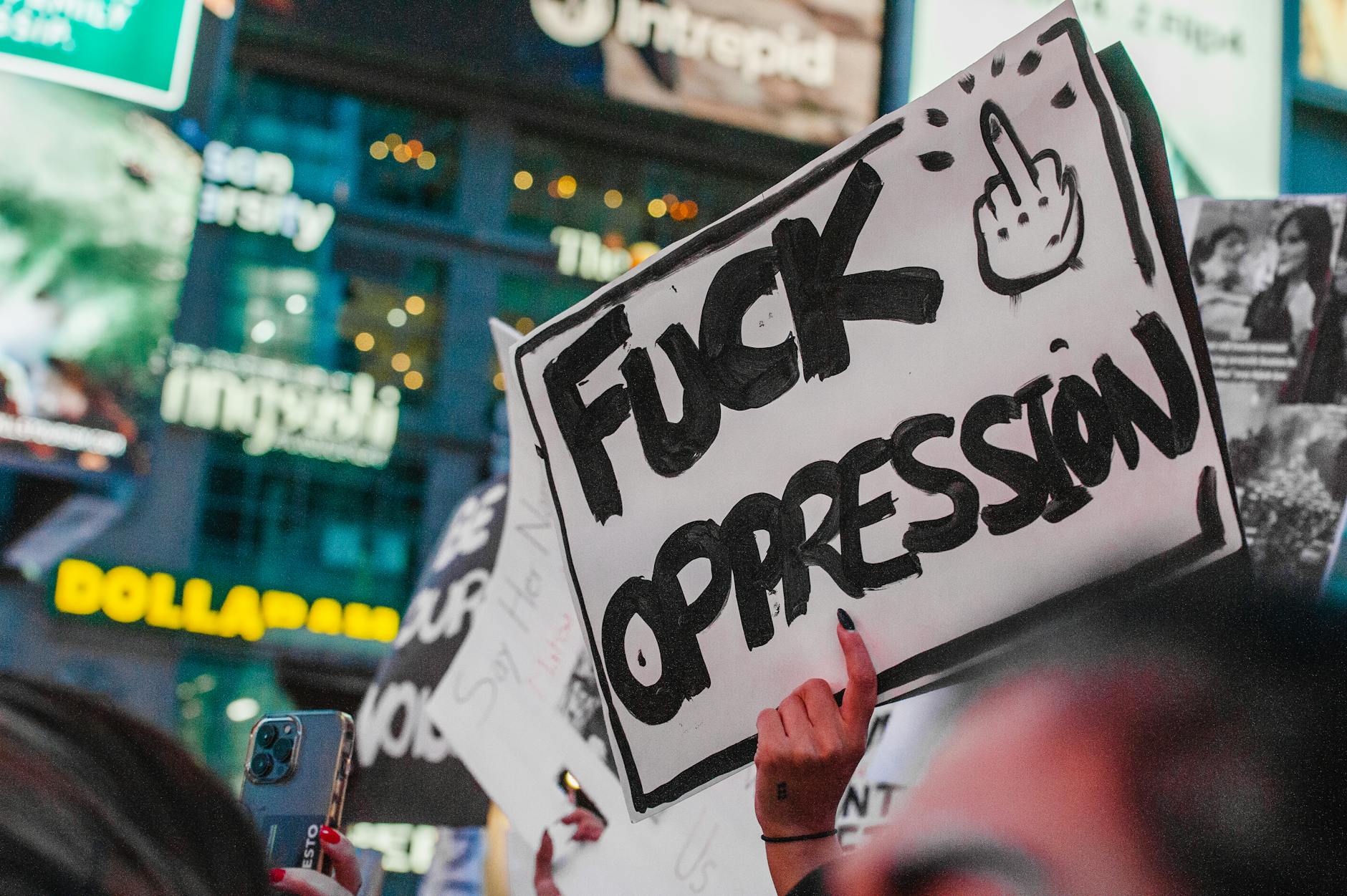
Holding up signs, and
chanting ‘No Kings,’ is
useless. Words will do
n
o
t
h
i
n
g.
Only deeds will ever be useful.
Your signs’ wood, used as bats
to smash the heads of kings, is
s
o
m
e
t
h
i
n
g.
Holding up signs, and
chanting ‘No Kings,’ is
useless. Words will do
n
o
t
h
i
n
g.
Only deeds will ever be useful.
Your signs’ wood, used as bats
to smash the heads of kings, is
s
o
m
e
t
h
i
n
g.
The Party is a 1968 comedy directed by Blake Edwards, written by him, and Tom and Frank Waldman. It stars Peter Sellers, with Claudine Longet, Gavin MacLeod, J. Edward McKinley, Fay McKenzie, James Lanphier, Steve Franken, Denny Miller, and Herb Ellis.
The film is a loosely structured farce, made up of a series of set pieces for Sellers to do improvisational comedy around. His character in the film is inspired by an Indian he played in The Millionairess (1960) and the bumbling Inspector Clouseau of the Pink Panther movies. While The Party is considered a classic comedic film, there is the problem of Sellers, a white British actor, wearing brownface and doing a caricature of an Indian stereotype…a buffoonish one, at that. I’ll address this issue more fully later.
Here is a link to quotes from the film, and here are links to the full movie.
It begins with an example of metacinema: we see what we originally think is the actual film, but it ends up being a film set in which Hrundi V. Bakshi (Sellers) is playing a bugler in a war between Indians and the British. The film they’re making is called Son of Gunga Din, which is an interesting title when one considers the poem, “Gunga Din,” by Rudyard Kipling.
What essentially needs to be known about Kipling’s poem, as far as its relevance to The Party is concerned, is that Gunga Din is an Indian water-carrier for the British; he is often treated abusively by the British soldiers for not bringing water to them fast enough. Nonetheless, when Gunga Din bravely tends to the wounded British soldiers on the battlefield, saves the life of the soldier narrating the poem, and is shot and killed there, the narrator regrets his abuse of Gunga Din and admits, at the end of the poem, that Gunga Din was the better man.
This far more respectful attitude of a white man for an Indian is, of course, in great contrast to Kipling’s later imperialist poem, “The White Man’s Burden,” which characterizes the colonialized natives as “Half devil and half child.” Similarly, Blake Edwards’s adaptation of Breakfast at Tiffany’s is far less apologetic than The Party is in its racist, cartoonish depiction of a Japanese man, Mr. Yunioshi, played by Mickey Rooney in yellowface.
I suspect that the ‘son of Gunga Din’ is not only far less servile to the British, but outright revolutionary in attitude. The filmmakers have hired Bakshi straight out of India to act in their movie, and his role is prominent: I’m guessing that he is the son of Gunga Din. If so, I see an intriguing parallel of Bakshi’s spastic messing up of the movie, one already about revolutionary resistance against whitey, and his later bumbling antics at the party of Hollywood A-listers he’s been accidentally invited to. Perhaps the best way for the Third World to overthrow Western imperialism is to be clumsy and accidentally ‘crash’ the party.
The point is that this opening scene–with the Indians fighting against British imperial rule (we see what are presumably members of a Scottish regiment, in their kilts and their playing of the bagpipes)–sets the thematic tone for the rest of the film, which can be seen as allegorical of the Third World resisting the plunder of the First World by screwing everything up in it.
Since Hollywood, as a crucial part of the Western media, has always been, in one form or another, a mouthpiece of Western capitalist propaganda (however ‘left-leaning’ and liberal that may be), then Bakshi’s bungling and screwing up of everything on the set (playing the bugle non-stop, long after he’s supposed to be shot and dead; attempting to stab a Sikh guard [presumably one of several Sikh collaborators with the British] while visibly wearing an underwater watch [the film being set in the late 19th century, when such watches didn’t exist]; and accidentally blowing up a fort before it’s filmed) can be seen as representative of Third World resistance, however unconscious, against such propagandistic narratives.
The luckless filming of Son of Gunga Din is one of three focal points in The Party. The other two are Bakshi’s accidental invite to the A-lister party, leading up to all of his buffoonery and screwing things up there; and finally, the bringing of the painted-up baby elephant–a symbol of India, as Bakshi calls it–to the party, which causes the lady of the house, Alice Clutterbuck (McKenzie) to go into hysterics, and which leads to the entire house being filled with soap bubbles, since Bakshi–offended at the hippie slogans painted on the elephant–wants them all washed off.
The odd thing about The Party is how it is paradoxically both racist and anti-racist, almost at the same time. True, it is awful to see a white man in brownface affecting an Indian accent and making use of all the typical Indian stereotypes (playing the sitar during the opening credits, for example); we can leave it up to Indian viewers of the film, as well as those of Indian descent, to decide if they want to forgive Sellers et al for presenting these stereotypes and making fun of Indian culture and–from the biased Western point of view, at least–idiosyncrasies.
Not to excuse the film for these great faults, but there are other things going on in The Party that clearly criticize racism, directly or indirectly. For one thing, while Bakshi is a buffoon for about the first hour and fourteen minutes of the film, by the time he’s changed into the red outfit and he hears Michèle Monet (Longet) crying alone in a bedroom at the party, he goes in and consoles her, demonstrating what a kind man he really is. At this moment, Bakshi finally starts to be properly humanized: he’s no longer just a stock comic Indian stereotype, but a nuanced character with some complexity. He continues to be so largely through the rest of the film. Again, this change doesn’t fully redeem the film, but for what it’s worth, it’s a lot better than what was done with Yunioshi.
Bakshi’s kindness to Michèle, which includes defending her right not to have to leave the party with the lecherous movie producer, CS Divot (MacLeod), demonstrates that he has qualities that more than compensate for his clumsiness and social awkwardness. In fact, he has good qualities that render his quirks insignificant. He has the only qualities of a human being that really matter–he has a good heart. You’re a better man than we are, son of Gunga Din.
As for Bakshi’s messing up of everything at the party–which includes getting mud on his shoe, losing it in the water he tries to wash the mud off with, laughing awkwardly at conversations he’s not a part of, shooting a dart from a toy gun at the forehead of Western movie star “Wyoming Bill” Kelso (Miller), dropping bird feed (“Birdie Num-Num”) on the floor, fiddling with a panel of electronics and disrupting the party further, getting caviar on his hand, then shaking the hands of others, thus spreading the caviar odor, catapulting his roast chicken at a woman’s tiara during dinner, setting off the sprinklers in the backyard, breaking the toilet and unrolling all the toilet paper after desperately needing to pee, and falling into the swimming pool–it should be emphasized that the A-list guests deserve to have their party ruined, given their snobbery.
Among these snobbish guests are some of the richest, most powerful and influential people in the Hollywood film industry: stars and starlets, producers, and studio heads like the host of the party, General Fred R Clutterbuck (McKinley), husband of Alice, among others. Also invited are a congressman (played by Thomas W Quire) and his wife, Rosalind (played by Marge Champion). This last one is particularly icy and snobbish to Bakshi when she butts in line ahead of him to get to the washroom.
This combination of Hollywood royalty and American politicians, as well as the fact that they’re all white, reinforces how they–in sharp contrast to Bakshi–are all part of the ruling class. In this sense, the party almost sounds like the political party in power. They look like a group of people in desperate need of a bumbling fool to intrude and be a shock to the system.
Bakshi’s disruptions of the established order even seem to have a subversive effect on the staff, intentional or not. After refusing an alcoholic drink from a waiter, Levinson (Franken), Bakshi walks off while Levinson helps himself to the rejected drink. He’ll continue his drunken devotion to Bacchus throughout the rest of the movie. Later, as the party is clearly falling apart and soap suds are everywhere, the maid (played by Francis Davis) stars dancing erotically to the song “The Party.” Even the jazz musicians, at one point in the middle of the film, sneak off to a room and pass around a joint. Instead of doing their alienating work, the staff are joining in on the fun.
The point here is that there’s a connection to be made between the staff, who represent the proletariat of the First World (including blacks like the dancing maid), and Bakshi, who represents the Third World proletariat. They should all join together and overthrow the bourgeoisie, in a revolution symbolized by the mayhem Bakshi instigates at the party. I hope that in these examples I have shown that The Party has antiracist elements as well as the unfortunate racist ones.
To be sure, the antiestablishment ethos of this film, as well as so many others of the late 1960s and much of the 1970s, never meant to carry their subversiveness to a…Soviet…extreme [!]. After all, the makers of such films are, like the Hollywood snobs of the party, just bourgeois liberals themselves, not Marxists. Still, these left-leaning types were of a sort at the time when ‘left-leaning’ actually meant something, as opposed to the liberals of the 21st century, who are unapologetically embracing such reactionary right-wing politics as the “free market,” jingoist Russophobia, and Zionism. I thus feel free to interpret this liberal film in as Marxist a way as I please.
It’s fitting that, just when Bakshi is beginning to shed his stock comic Indian stereotypes and showing his compassionate, humanized side, he’s switched from that fashion faux pas of a suit into the…red…outfit [!]. Similarly, we can hear in Michèle’s otherwise saccharine song, “Nothing to Lose,” a subtle allusion to the conclusion of a classic revolutionary text. We have “so much to gain”…even the world.
Now, while some of the staff are going along with the subversion described above, others represent the typical bootlicking class collaborators, like Harry (Lanphier), the headwaiter. He is frequently angry with drunken Levinson and his resulting incompetence, resulting in turn with Harry strangling Levinson. If Levinson’s drinking on the job is his form of rebellion against his alienating work, then Harry’s comic strangling of him represents a fascist bullying of the proletariat. In the end, when Clutterbuck learns from Divot that Bakshi is the one who blew up the fort on the movie set, he–meaning to strangle Bakshi in revenge–accidentally strangles Harry instead.
Allegorically speaking, the falling apart of the party represents the self-destruction of capitalism and imperialism, partly brought about by a Third World uprising (as personified by Bakshi). Clutterbuck, who represents the ruling class, accidentally strangles Harry (the class collaborating middle class, who fancies himself higher than that, as seen in an embarrassing scene in a room in his underwear, admiring his would-be muscles before a mirror) because when capitalism finally comes crashing down, it will crush its own in the imperial core, even in its attempts to crush those in the global south (i.e., Clutterbuck’s attempt to strangle Bakshi).
As for Bakshi’s defending of Michèle from not only Divot’s sexual advances but also his bullying demands that she leave with him, his gallantry goes against the stereotype of the patriarchal Indian male. He doesn’t see women as a man’s property, unlike Divot, who at the beginning of the movie is seen snapping his fingers at a sunbathing bikini blonde, signaling her to go in a camper with him to satisfy him sexually, something she isn’t all that keen on doing.
Bakshi’s offence at the sight of the baby elephant with hippie slogans painted all over its body (“The world is flat,” “Socrates eats hemlock,” and “Run naked”) is in itself worthy of comment. Recall that he says the elephant is a symbol of India; he considers it humiliating to have the animal presented thus publicly, so he wants the kids who painted it up to wash the paint all off. The writers of the screenplay must have seen the dramatic irony of a white man in brownface saying such things. Sellers, of course, needed to wash all the brown off, too, to stop humiliating Indians.
But again, while wearing that brownface, he says a very Indian-affirming line to Divot while defending Michèle’s right to stay at the party: “In India we don’t think who we are; we know who we are.” I’m reminded of the Hindu notion of the identity of Atman with Brahman. If we know of this unity, whether we’re Indian or not, that indeed, everyone and everything are all one, we’ll be liberated from samsara. Having seen The Party, Indira Gandhi loved that line. If one watched this film with one’s head tilted a certain way, one could see the brownface and Indian stereotypes as a kind of meta-cinematic comment on racism in Hollywood movies.
Towards the end of the film, we see not only Bakshi and Michèle dancing together, but also a white man dancing with that maid. The sexiness of the latter couple’s dance moves implies a tolerance and even a celebration of interracial romances. Such an attitude is also implied when Bakshi drives Michèle home, and that they’ll surely get together again in the near future, leading to possible dates. For a film with the problematic use of brownface and Indian stereotypes, the implied romantic interest here between an Indian man and a white woman is extraordinarily antiracist given the film’s release in 1968, when there still would have been a lot more raised conservative eyebrows at the idea than there would be today.
In the end, a film about an Indian blowing up a movie prop and messing things up at a party shouldn’t be seen as a racist portrayal of a swarthy buffoon (though using an actual Indian actor to play the buffoon, in spite of Sellers’s comic talents and box-office draw, would have been much better for the film). Instead, allegorically speaking, an Indian encroaching on the world of the American ruling class and screwing everything up for them, intentionally or not, seems like karma in action. After all, how often have Western imperialists–British, American, etc.–intentionally encroached on Third World countries like India and screwed things up for them?
And ultimately, the goal of the destruction of the old order isn’t destruction for its own sake, but its replacement with a much better way of doing things. This is what we see in the growing relationship between Bakshi and Michèle. Their initial loneliness and alienation has been replaced with love and togetherness, representative of that new way of doing things–one of sexual and racial equality, and loving human companionship.
A
red
flame
should
be let
out.
Do not
keep
it all
bottled
up inside.
Smash the
glass, free
the flame,
and drink
cocktails
when the
time for
festivities
has arrived.
Kirk was a jerk.
He had a wee face
and a smaller mind,
eyes not seeing,
an inability to use a
nose to smell out the
stink that came
from a
tongue so toxic,
lips too slick, &
a chin too high.
His neck
got the shot he wanted, a bullet line not from the left, but the right.
Be wary
of what you
pray for, Bible-
thumping dummies.
There
is far
greater terror
in the
days
since
Sept.
11th,
such
as all
they’d
drop
from
bombers,
or
who
the
helicopters
dropped
onto the
Andes.
I: Introduction
MASH: A Novel about Three Army Doctors was written by Richard Hooker (with the help of WC Heinz) and published in 1968. It was adapted into the 1970 feature film by Robert Altman (with a screenplay by Ring Lardner, Jr.), which starred Donald Sutherland, Elliott Gould, and Tom Skerritt, with Robert Duvall, Sally Kellerman, René Auberjonois, Roger Bowen, Fred Williamson, and Gary Burghoff.
From these came the long-running hit TV series (1972-1983) whose original cast included Alan Alda, Wayne Rogers, McLean Stevenson, Larry Linville, Loretta Swit, William Christopher (except for the pilot episode, which had George Morgan as Father Mulcahy), Timothy Brown, and Burghoff. Both the film and TV series use the story’s setting, a US Mobile Army Surgical Hospital in the Korean War, as an allegory for the Vietnam War.
Neither Hooker nor Altman liked the TV series, feeling it took the story in the opposite direction of its original purpose. In contrast to the liberal, anti-war stance of the series, with its tendency to advocate progressive causes (e.g., opposition to discrimination against blacks, tolerance of gays, equality of the sexes), Hooker was politically conservative. In fact, the novel uses a number of racial slurs (particularly against Asians, as opposed to Alda’s Hawkeye calling out US troops for referring to Koreans as “gooks”; only bigotry against blacks is judged by Hawkeye as wrong), and its protagonists tend to refer to women as “broads.” In the film, the MASH unit’s dentist wants to commit suicide because a moment of erectile dysfunction has made him worry he’s become a “fairy.”
Here‘s a link to a PDF of the novel, a link to an audiobook of it, and a link to quotes from the film.
II: Political Background
As for the contrast between the liberal TV series and the conservative/apolitical novel and film, though, I’d place these contrasting stances at the centre-left and right of a continuum. For as noble as it may be to talk about ending war, as is often wished for on the TV show (as opposed to the novel’s doctors’ indifference to the issue, and instead just wanting to finish their time in the army and return home), the real left-wing stance, the one that is truly to be contrasted with the general stance of the entire MASH franchise, is that the US Army should never have meddled in Korea in the first place, as was the case with Vietnam, too, the aforementioned allegory of the story.
Conventional wisdom would have us believe that, during the Cold War, the capitalist ‘free world’ had to contain and stop the spread of communism, therefore both North Korea and North Vietnam had to be stopped by American military intervention. Actually, as had been revealed years later, the Gulf of Tonkin incident that was used to justify greater American involvement in Vietnam was a lie. Similarly, the conventional narrative that a North Korean invasion of South Korea, which would involve Soviet and Maoist Chinese involvement, started the war was also based on dishonest accounts from hawks like MacArthur, as is related in IF Stone‘s Hidden History of the Korean War, 1950-1951. These wars were just exercises in, and excuses for, US imperialism.
It is further assumed that South Korea is the free, liberal democracy, and that North Korea is the brutal, totalitarian dictatorship. Actually, South Korea has been occupied by the US ever since just after the end of WWII, hardly giving the people a breather after the Japanese occupation of the land, with its exploitation of Korean ‘comfort women.’ US troops soon would also use Korean women as prostitutes to satisfy the men’s lust.
As for the ‘totalitarian DPRK,’ while it’s surely difficult living there because of Western economic sanctions placed on the country, living in a place that provides (or at least strives to provide…sanctions notwithstanding) free or affordable housing, healthcare, education, and other basic needs is far better than living in a country of cutthroat capitalism, the kind that causes the poverty dramatized in films like Parasite. People in the West might also want to reconsider how ‘free’ they are in a world drowning in neoliberal capitalism.
So when we contrast the TV series of MASH, on the one side, against the novel and film, what we’re really dealing with is a culture war of liberal vs conservative, not left vs right. Everyone knows that conservatives are on the right, of course. Liberals, though, are properly understood to be swaying whichever way the political wind happens to be blowing at the time. During the decade that the TV series was on the air, that political wind blew in a relatively leftward direction. Anyone with eyes to see and ears to hear should be able to understand which direction liberals have been blowing under leaders like Clinton, Obama, Biden, Tony Blair, Justin Trudeau, etc.
Seen in a broader political context, conservatism vs liberalism is just moderate-to-extreme right-wing infighting. This context will help us understand the MASH franchise as a whole.
III: Foreword, Chapters One and Two
After a brief foreword–in which Hooker explains how the paradoxical combination of stress from overwork and nothing-to-do boredom, from living and working in a MASH unit during the Korean War, made some of the staff into insubordinate, scruffy, badly-behaved alcoholics (i.e., the Swampmen)–the book goes into a description of Corporal “Radar” O’Reilly (Burghoff), and where he is from–Ottumwa, Iowa. He’s called “Radar” because he has ESP: he can “receive messages and monitor conversations far beyond the usual range of human hearing.”
Radar, sitting at a poker game in the Painless Polish Poker and Dental Clinic of the 4077th MASH, can hear the commanding officer of the unit, Lt. Col. Henry Blake (Bowen; Stevenson), shouting into his phone in his office that he needs two surgeons. In the film, Radar demonstrates his ESP by saying Blake’s words just as Blake is saying them, standing outside, by a chopper with wounded.
The two doctors that the 4077th will get are Captains Benjamin Franklin Pierce, or “Hawkeye” (Sutherland; Alda), and Augustus Bedford Forrest, or “Duke” (Skerritt). Hawkeye got his nickname from his father, who read The Last of the Mohicans; he’s from Crabapple Cove, Maine. Duke is from Georgia; the character never appears in the TV series, though in a season 3 episode, when asked what happened to “that surgeon you had from Georgia”, the answer given is, “He got sent stateside!”
From the physical description given Hawkeye in the novel, Sutherland looked a lot more like him than Alda. He and Duke steal a jeep and drink a bottle of alcohol on their way from Transient Officers’ Quarters at the 325th Evacuation Hospital in Yong-Dong-Po to the 4077th. Both men are married and with kids; but that won’t stop them from fooling around.
They come into Ouijongbu, where they drive past The Famous Club Service Whorehouse, which has contributed much to the venereal disease problem faced by the US Army Medical Corps. An American flag is seeing flying from its central edifice. Such signs as these, in combination with the irreverent attitude of Hawkeye, Duke, and the other Swampmen to be introduced later, illustrate the imperialist encroachments on Korea.
Hawkeye’s plan on arriving at the 4077th is for him and Duke to work so hard as surgeons that they outclass the other talent there. They’ll thus be able to get away with their insubordination and other acts of naughtiness.
Arriving at the 4077th, Hawkeye and Duke go into the mess hall and meet Blake, who already thinks they’re “a pair of weirdos.” He tells them they’ll be living with Major Hobson in his tent; Blake would have Radar told of the order, but Radar’s already there to take them, thanks to his ESP.
The film takes Hobson and merges him with Frank Burns (Duvall; Linville), who is a captain in the novel, but because of this merging, becomes a major in the film and TV series. Hobson’s/Burns’s praying for everybody is comical and annoying to the non-religious Hawkeye and Duke, who insist that Blake get him out of their tent; the two also insist that Blake get a chest surgeon. This will result in the arrival of Captain “Trapper” John McIntyre (Gould; Rogers).
IV: Chapter Three
McIntyre is from Winchester High Medical School, in Boston. His face is hiding inside a parka hood when he meets everybody, and at first he seems aloof, laconic, and introverted. Hawkeye finds him familiar, though.
It’s when Hawkeye offers McIntyre a martini that he finally comes out of his shell, happily accepting the martini but insisting on olives for his, Hawkeye’s, and Duke’s drinks. He has a bottle of olives in his parka pocket, so all three can have one.
Hawkeye is still trying to remember where he’s seen McIntyre before. One day, the latter picks up a football that’s just landed at his feet. He throws a perfect pass to Hawkeye, who’s now racking his brain trying to remember who McIntyre is. Finally, he realizes that McIntyre is “Trapper” John, an old football player from the Boston/Maine area.
He got his nickname after being caught fooling around with a woman in the ladies’ room at the Boston and Maine train. She said to the conductor, who found her with McIntyre, “He trapped me!”
It’s interesting how, when Hawkeye finally remembers, he says, “Jesus to Jesus and eight hands around, Duke!” Trapper is replacing a major who prays to Jesus. Trapper, in Chapter Seven, will dress up as Jesus in a scheme to raise money to help a Korean houseboy, Ho-Jon (played by Kim Atwood in the film, and by Patrick Adiarte on the TV show), go to the US to study in a university there. There’s a lot of Christian imagery in the novel and film, though it’s usually presented in an irreverent way. Chaplin Father Mulcahy (Auberjonois; Christopher) is well-liked, but derogatorily nicknamed “Dago Red” for his mixed Irish-Italian descent and his red hair.
V: Chapter Four
In this chapter, we learn that the tent that Hawkeye, Duke, and Trapper are sleeping in will be called The Swamp, hence the three are known as the Swampmen. A sign, in big capital letters saying THE SWAMP, is painted in red on the door of the tent.
It’s called The Swamp in part because the tent resembles “the kind of haunt one might come across in a bog”…in other words, the place is a mess. It’s also the centre of social activity in the 4077th, where the three doctors do their boozing.
When one combines the Dionysian messiness of The Swamp with the sloppiness of the three doctors–that is, their often being unshaved and without the short haircuts one would expect of not just army men, but men of pre-Beatles Western society–we see in their sloppy appearance, as well as in the (often mean) pranks they pull on others and their general contempt for authority, a personification of the kind of mess the US army left Korea in by the end of the war.
A certain group of people are mostly marginalized in the novel, film, and TV series–the Koreans, played mostly by Japanese-American and Chinese-American actors. (The situation with Ho-Jon, to be dealt with below, is one of the few exceptions to the rule of marginalization.) As I said above, racial slurs against Asians are used a number of times in the novel, including by our presumably sympathetic Swampmen. As I’ve also mentioned, Ho-Jon is one of many Korean houseboys, there to do menial chores for the American army hospital staff–in other words, their servants. Finally, I’ve mentioned the reality of Korean prostitution for American GIs, something acknowledged in the novel, but never judged.
This marginalization and racism should form the backdrop of what is the biggest issue of the Korean War, but one rarely given scrutiny in the West: how the US military bombed and destroyed pretty much everything in North Korea. 20% of the total population was killed. The US made a messy swamp, if you will, of North Korea. This reality might help Westerners to understand why the DPRK now has nuclear weapons–not to attack other nations, but to defend themselves. The collective trauma the surviving North Koreans suffered from those bombings meant they were determined never to let it happen again.
Audiences are charmed and amused by the Swampmen’s wisecracking, pranks, and general defiance of US military authority. While I am in principle sympathetic to such defiance, one must take into consideration the fact that one shouldn’t just defy authority for its own sake; one should instead look into the evils caused by that authority and direct one’s defiance against it with an aim to stop those evils.
The Swampmen in the novel and film aren’t interested in directing their defiance with such aims. They just want their fun and games (golf, football, drinking, poker, chasing women, etc.) to be uninterrupted by the officious military. Unlike the more progressively-minded Hawkeye and Trapper of the TV show, the novel’s and film’s Swampmen are just self-absorbed hedonists. As such, they fit in well, ironically, with the US empire’s depredations in East Asia.
One example of a victim of the Swampmen’s depredations is a Protestant chaplain named Shaking Sammy. In Chapter Four, we learn that this chaplain has a bad habit of writing overly optimistic letters to the families of wounded soldiers without inquiring into whether or not these soldiers’ wounds could have resulted in lethalities. Shaking Sammy will tell the soldiers’ families that all is well, and the soldiers will be home soon, for example…yet the soldiers in question could be dead, thus cruelly getting the families’ hopes up, only to be crushed when the truth is known to them.
He’s been warned repeatedly not to send such misguidedly optimistic messages, yet he still does it. Furious with Shaking Sammy, Duke and Hawkeye have him see them use their .45s to shoot all four tires of his jeep. Justice has been done, it seems.
Soon after dealing with a particularly difficult patient who, it seems at first, isn’t going to live, yet with the help of Father Mulcahy’s “remarkably effective Cross Action,” the doctors are able to save the wounded soldier after all. Hawkeye and Duke, very drunk, decide to show their gratitude to Mulcahy for his prayers.
They do so in the form of what Hawkeye calls “a human sacrifice”, and for their sacrificial victim, they choose Shaking Sammy, imagining in their total inebriation that Mulcahy will appreciate this ‘gift.’ Tying Sammy to a cross and surrounding him with a pile of hay and assorted inflammable junk on the ground, Hawkeye, Duke, and Trapper are lying on mattresses by him. Duke has a Molotov cocktail in his hand, and it looks as if Sammy’s about to be immolated.
Indeed, the contents of a gasoline can are poured on the debris surrounding Sammy as well as on him. Mulcahy watches the scene in horror, hoping to stop the Swampmen. Duke lights the Molotov cocktail and throws it at Sammy, who screams. It turns out, though, that it wasn’t gasoline that’s been poured on him and his “funeral pyre.” The Molotov just sizzles and goes out.
So no, they didn’t kill Sammy, but they gave him one hell of a scare. This is an example of how mean and excessive the Swampmen’s pranks can be. Another example, from the film, is the famous dropping of the shower tent, exposing the nakedness of the beautiful but disliked head nurse before the entire camp, publicly humiliating her.
The Swampmen know they can get away with this kind of scurrilous behaviour because of their skill as surgeons, and because of how needed they are when the wounded come into the 4077th, as will be the case soon after the prank pulled on Shaking Sammy. Three companies of Canadians will be coming in, flooding the 4077th with casualties, as Hawkeye is aware. The surgeons can’t operate while under arrest.
Tying Sammy to a cross and making him into a “human sacrifice,” a chaplain made into a kind of lamb of God to take away the sin of the world, is an example of the novel’s use of Christian imagery to ridicule religion. As I said above, the Swampmen stick their tongues out at authority, including the authority of the Church, not to right any wrongs inflicted by the powers-that-be, but simply to be enfants terribles for the sheer fun of it. However ill-conceived the optimism may be of Sammy’s letters, he has been cruelly and unusually punished for them.
VI: Chapter Five
Captain Walter Koskiusko Waldowski (played by John Schuck) is the dentist of the 4077th. He’s known as “The Painless Pole” because of his amazing skill at doing dentistry without it hurting his patients. His dental clinic is also where poker games are played, so he is the most popular man in the outfit. Apart from poker and dentistry, his greatest hobby is women.
He’s well-endowed, too…so much so that whenever he takes a shower, other men stop by to see his equipment with awe and admiration. I suspect he’s bipolar, though, since according to the novel, he suffers monthly bouts of depression, each one lasting anywhere from twenty-four hours to about three days. On one particular occasion, he tells the Swampmen he wants to commit suicide because of one moment of impotence.
Hence the song, “Suicide Is Painless,” as the MASH theme music, heard in instrumental form on the TV show, and for the film, with a lyric by Mike Altman, the then 14-year-old son of Robert Altman (music by Johnny Mandel). The song is sung twice in the film, first by “The Mash” (John and Tom Bahler, Ron Hicklin, and Ian Freebairn-Smith) during the opening credits, then by Ken Prymus (playing Private Seidman) during the scene of Painless’s suicide attempt.
Duke and Hawkeye suggest that Painless use a “black capsule” to kill himself with. The Swampmen et al have no intention, of course, of letting Painless kill himself; their plan instead is to cure him of his suicide ideation by, ironically, indulging him in it. This plan, along with their helping Ho-Jon to go to an American university, is one of the few genuinely charitable acts of the Swampmen in the novel or film, which in turn makes them even remotely likable.
They plan to put amytal, a barbiturate derivative with sedative-hypnotic properties, into Painless’s “black capsule.” They figure he’ll take it after getting him drunk, then when he wakes up, he’ll be OK.
On the night of the supposed suicide, everyone will have a party for Painless in his dental clinic/poker hangout. The party is called “The Last Supper”; in the film, there’s even a shot of all the men seated at a pair of long tables as a parody of Leonardo da Vinci’s painting.
Painless is more or less at the centre, where Christ is in the painting. So this scene is another example of MASH using Christian imagery and concepts irreverently. Christ, after His Agony in the Garden of Gethsemane, accepted His impending death on the Cross; Painless is about to die (or so he thinks). Christ was raised from the dead; Painless will rise from…well…a death-like state, anyway.
The irony here is that Painless’s salvation will come by a suicide attempt, the ultimate loss of faith, whereas we are saved by Christ through faith. In wanting to save one’s life, one will lose it; but in losing one’s life for Christ, one saves it (Luke 9:24). His yoke is easy, and His burden is light (Matthew 11:30). Suicide is painless. ‘Tis a consummation/Devoutly to be wished (Hamlet, Act III, Scene i). Fittingly, Mike Altman’s lyric quotes “to be or not to be.”
Suicide is painless because, of course, life is painful. Part of the ostensible purpose of religion is to provide solace for that pain. One ‘loses’ one’s life, for the sake of Christ, or to attain nirvana, to achieve painlessness…hence the Painless Pole is a kind of Christ figure, if comically so.
Koreans were historically Buddhist and/or Confucian, and such thinking is still quite influential there today, but it has waned somewhat in the modern world, with today’s influence of secular thinking and Christianity. We’ll learn that Ho-Jon is Christian, and with his trip to the US to study there, he’ll be further inculcated with such Western ideas.
The point is that Western imperialism’s encroachment on Korea has its cultural as well as military aspects, so the Christian imagery in MASH is apt, even if presented irreverently. The irreverence is just part of the theme of defiance of authority for its own sake: it never rights wrongs. As long as liberals can enjoy imperialist privileges in the countries the West occupies, they’ll give the finger to authority all they like, and it won’t make a real difference to the occupied.
Anyway, to get back to Painless, in the novel, while he’s sedated from the amytal in the black capsule, a blue ribbon has been tied to his cock (implying the return of his sexual prowess), he’s been hooked to a harness and dropped from a helicopter (Is this to imply that he’s supposed to believe that he died, harrowed heaven, then had a resurrection back on Earth?); all of this has apparently ended his depression and suicide ideation. As for the film, during his sedation, the gorgeous nurse, Lt. “Dish” Schneider (played by Jo Ann Pflug in the film and by Karen Philipp on the TV series), has been asked by Hawkeye to sleep with Painless and thus allay his fear that he’s becoming a “fairy.” She does so, and his depression is cured.
VII: Chapter Six
This chapter deals essentially with Frank Burns (Duvall; Linville), a captain before the film and TV series promoted him to major. Hawkeye hates him more than anyone else. Burns will never admit his faults as a surgeon, blaming any problems or deaths on someone else, or they’re held to be acts of God. He also has a $35,000 home and two cars back in the States; he has no formal training in surgery, having learned from his father.
On one occasion, a patient in Burns’s care dies after a rather simple hospital staff worker, Private Lorenzo Boone (played by Bud Cort) tries to use a non-functioning suction machine on the patient. Burns claims Boone killed the patient. Not being very bright, Boone assumes Burns’s opinion, as a doctor, is of infallible authority, and he is overwhelmed with guilt and weeps over the death.
Duke sees this exchange, and he hits Burns. In the film, it’s Trapper who sees it and hits him; in the novel, Trapper hits him on a later occasion.
Burns will develop a mutual admiration for and romantic interest in the new Chief Nurse, Major Margaret Houlihan (Kellerman; Swit). While in the book and the film, Burns will be kicked out of the 4077th and sent stateside after he physically attacks Hawkeye for taunting him about his (in the novel, only rumoured) sexual relationship with her, in the TV series, both Burns and Houlihan will stay at the MASH and personify the hated army authoritarianism that the Swampmen rebel against. But again, it’s a self-absorbed, American antagonism between the two sides that has little, if anything, to do with leaving the Koreans alone.
VIII: Chapter Seven
This is the chapter in which the Swampmen raise money to help their Korean houseboy, Ho-Jon, go to the US to study in university there. As I said above, this is one of their few charitable acts in the novel. Even with this one, though, there are some qualifying factors to consider.
As I’ve tried to argue from the beginning, the Americans shouldn’t have been in Korea in the first place. A few scruffy American doctors sticking their tongues out at military authoritarians does nothing to compensate for the damage caused to the Koreans by occupying, bombing, prostituting, and forcing capitalism on them.
If the Koreans had wanted to pursue socialism after the end of the Japanese occupation, then that was their prerogative. Imposing starvation sanctions on the DPRK, and then claiming disingenuously that their problems are all because ‘socialism doesn’t work,’ has been a tried-and-true tactic that Western imperialism had used on a number of occasions, including Cuba and Venezuela. If ‘socialism doesn’t work,’ then just let the countries attempting to build it fail on their own, and after a few months, they should be running back crying to the capitalist West for salvation. Instead, consider what Cuba, burdened with an economic embargo from the 1960s, has been able to achieve.
Ho-Jon would be properly described as an Asian Uncle Tom. He thinks his Swampmen masters are “the three greatest people in the world.” Sure, the three doctors are good to him: they allow him to spend time with them in The Swamp when he isn’t shining their shoes, doing their laundry, etc.; they help him with his English. All of this can be seen as simple rewards for the boy’s loyalty to them. Accordingly, they like him as much as he likes them.
Ho-Jon still has to fight in the war, though, despite the attempts of Blake and the Swampmen to intercede with the Korean government…he’s seventeen at the time, and he gets wounded, with a mortar fragment in his chest. He thus returns to the 4077th to be operated on by Hawkeye and Trapper.
After the surgery and Ho-Jon is getting better, the Swampmen are debating which college would be the best one for him to study in. After briefly considering Dartmouth and Georgia (the latter being a place where the KKK won’t take kindly to an Asian being there), the Swampmen agree on Androscoggin College. Hawkeye writes to the dean, who replies, saying Ho-Jon will need a thousand dollars a year. To raise the money, which will probably add up to five or six thousand, including travel and expenses other than the aforementioned tuition, the Swampmen decide to have Trapper, as hairy as he is, dress up like Jesus, and sell photos of ‘Him.’
Mulcahy doesn’t like the idea of religion for money, but the Swampmen know “there are a lot of screwballs in the army” who will buy the photos for laughs and souvenirs, and there doesn’t seem to be any other way to raise money for Ho-Jon. Once again, MASH uses Christianity irreverently, and we see in it more of Western culture imposed on Korea.
By “more of Western culture impose on Korea,” I mean that Trapper’s clowning around in a Jesus outfit in South Korea and making money from the photos is a symbolic presentation of Christian missionary work and capitalism nosing their way around Asia to spread their influence among the locals. Ho-Jon is already a Christian–that is, he’s been indoctrinated with Western values and ethics–and he’s about to be educated in an American university. The Swampmen are content to work to raise money to send their friend there and be further indoctrinated. Consider in this connection how much money the American government has given to South Korea to keep the country under its spell.
IX: Chapters Eight and Nine
A soldier whose father is a US Congressman has been wounded, and the Congressman wants Trapper to fly to Japan with an assistant doctor, Hawkeye, and do emergency surgery on the boy. The doctors’ major motivation in going to Japan, though, is to play golf there. They even bring their golf clubs with them.
When they get there, Hawkeye reconnects with an old friend, “Me Lay” Marston, who is an anesthesiologist and helps a Japanese doctor run a pediatric hospital that doubles as a whorehouse. In fact, the place unabashedly calls itself “Dr. Yamamoto’s Finest Kind Pediatric Hospital and Whorehouse,” or FKPH&W, for short. This openness shouldn’t be all that surprising, for of course, the US military has been known for frequenting such places in East Asia, as I’ve mentioned above.
When the doctors are going to the operating area, an army nurse tries to stop them. During the operation, a colonel shows his disapproval of their barging in to the place. Neither of these people deter the doctors, obviously. Examples of their usual defiance of military authority can be seen in the film. Again, though, this defiance of authority is just about two men who want to get the surgery out of the way as soon as possible so they can play as much golf as they can get in. They don’t want to wait around for the right people to arrive so they can be authorized to operate. They’re not even dressed as doctors: they’re all scruffy and have their golf clubs with them. Military authority isn’t an oppression to be overthrown–it’s just an inconvenience.
Later, while Trapper and Hawkeye are playing golf, some women caddies there get the impression that Trapper is Jesus when Hawkeye says the Lord’s name in vain after Trapper has hit a good shot. Hawkeye still has some old Jesus photos of Trapper on him, so he gives them to the “bimboes…[who] are on a real Christian kick.”
Though it looks as if Trapper and Hawkeye are planning to get laid, and they even hope to hang out in FKPH&W, speaking of which place, Me Lay wants the two doctors to take care of a half-white, half-Japanese baby, the result of an American john and a careless prostitute there. The doctors deal with the baby’s medical problems and talk Me Lay into adopting the orphan.
That officious colonel, who doesn’t approve of the Swampmen’s dealings with the baby, is blackmailed with photos of himself in bed with a prostitute, so the doctors won’t get in trouble. After all of these adventures, though, the doctors must rush back to the 4077th to deal with a huge, seemingly endless deluge of wounded, which is what Chapter Nine is all about.
X: Chapter Ten
This chapter starts with a description of Captain “Ugly John” Black (played by Carl Gottlieb in the film, and by John Orchard in the TV series), the 4077th’s anesthesiologist, how important he is to the hospital, and how his work is never done. He’s called Ugly John in the novel as an ironic joke: he’s actually “the handsomest man in the outfit.” He also hates everyone in the Commonwealth Division: Brits, Canadians, Australians, New Zealanders, etc.
Later on in the chapter, a new doctor arrives who is christened by Trapper with the nickname of “Jeeter.” He shares some martinis with the Swampmen, and as he’s getting tipsier and tipsier with each drink, Jeeter reveals how horny he is for the women there. He gets advice from Hawkeye on how he can get his hands on a nurse; while Hawkeye offers a few suggestions, he’s not sure which one is the best, so Trapper suggests that Jeeter announce his availability to all the nurses in the mess hall.
By now so drunk that he’s staggering, Jeeter goes to the mess hall with the help of the Swampmen, and standing at the doorway, he announces his availability in the crudest and most aggressive terms possible, shocking everyone there. Trapper can’t resist inspiring him to say he’ll start by screwing “Hot Lips” Houlihan.
Now, “Hot Lips” has been Major Houlihan’s official nickname, much to her chagrin, ever since her sexual relationship with Frank Burns. Trapper is the one who has christened her with the nickname, though in the film, it’s inspired by her telling Burns to “kiss [her] hot lips,” not knowing that a microphone has been surreptitiously placed by her in her tent where she and Burns have been making love.
Another surgeon, Roger the Dodger, arrives at the 4077th, and he’s inspired to shout out “Hot Lips Houlihan,” which will provoke her all the more.
In the novel, she races into Col. Blake’s tent, fresh from the showers and wildly irate. There’s no reference to a prank involving the shower tent dropping and exposing her nakedness to the whole 4077th, as in the movie, but it’s easy to see how the filmmakers took the idea of the prank as implied in the novel.
When she goes into Blake’s tent, the ends of her hair are still wet, and the strap of her shower cap is hanging from an end of her towel. She obviously ran out of the shower tent before she was finished in there, because the Swampmen, “those beasts, those THINGS,” have upset her so severely. She threatens she’ll resign her commission if Blake won’t do anything about them.
Blake couldn’t care less if she does. He never properly disciplines any of the Swampmen. As she says, the 4077th “isn’t a hospital…It’s an insane asylum,” and Blake is to blame for not using his authority to stop men like McIntyre from calling her “Hot Lips.”
This incident, especially as it’s represented in the film, underlines another unsavoury aspect of the original MASH that makes nonsense of the more progressive aspects of the TV series: its sexist attitude towards women. Houlihan may be a major, but she’s given no respect. In the TV series, especially the later seasons, much is made of her as a spokeswoman for sexual equality in the army.
Not so in the novel or film, where women are called “broads,” chased by the men for sex, objectified and exposed as described above, had orders barked at them by the Swampmen to do such things as cook for them, etc. All of this fits in line with the imperialist project of trying to control the entire Korean Peninsula, as well as Japan, where in both US-controlled places, there is prostitution provided for the GIs. A huge part of world domination is in controlling its women, as of the 2020s, just under 50% of the global population.
I never found the film’s shower scene with Houlihan amusing. It always came across to me as a mean, humiliating, demeaning prank devised by the immature Swampmen, all just to find out whether or not she’s a natural blonde. I’ve said it before, and I’ll say it again: as charmless as army authoritarianism may be, cheap pranks like these are not the way to deal with it; they’re often not even funny.
Houlihan will try to get Blake in trouble by informing General Hammond (played by G. Wood) of how out of control the staff of the 4077th are. Ultimately, nothing will be done about it. Indeed, the general goes so far as to say, “Screw her.”
XI: Chapter Eleven
Blake has been sent to Japan for temporary duty at the Tokyo Army Hospital. He’s been replaced by Col. Horace DeLong for the three weeks that Blake is gone. DeLong, another regular army guy, will be quite dismayed with the erratic behaviour of the scruffy Swampmen, though he will come to respect Hawkeye for his skills as a surgeon.
Bored during a spell of no wounded, and suffering in the heat, the Swampmen get some amusement by pretending they’ve gone insane. They speak of mermaids as if they were real, and they tell DeLong that when they catch a mermaid, they’ll “screw the ass off her.” They figure that if they can convince DeLong that they’re nuts, they’ll be sent to some psychiatrists in Seoul for a while, then get sent back to the 4077th in time for when more wounded come.
To add to the craziness about mermaids, Hawkeye says he’ll agree to DeLong’s plan–to have the Swampmen go to the 325th Evac for psychiatric observation–if he can get “a shot at the epileptic whore,” an idea inspired by a psychiatrist Hawkeye once knew who had a female epileptic patient; she’d go crazy every time her husband tried to have sex with her. Hawkeye hopes to find such a prostitute in Seoul during the Swampmen’s rest and ‘therapy.’
They go to the 325th Evac, meet a psychiatrist named Maj. Haskell, and do their crazy routine with him. They act as though Hawkeye is the worst case. When Haskell meets Hawkeye, the latter makes a number of incoherent remarks to seem crazy.
The Swampmen also find a place where they can get at the “epileptic whore”–Mrs. Lee’s, whose brothel’s girls are “velly clean.” They visit the place, but don’t end up trying the prostitute with “hysterical convulsion[s].”
XII: Chapter Twelve
Hawkeye gets the idea to have the 4077th set up a football team. He considers certain men in the unit, including one named Vollmer, to be a centre, then Jeeter as a second string halfback, among others, all of whom have had football playing experience, according to Hawkeye. Their new team can play against that of the 325th Evac, a team coached by General Hammond.
Since Hammond’s team is really good, Hawkeye knows someone who can be a ringer to ensure that the 4077th can beat the 325th Evac: Captain Oliver Wendell Jones–“Spearchucker,” (Williams; Timothy Brown in the TV series) an excellent football player who’s become a neurosurgeon. When Duke hears the man’s name, he (correctly) assumes that Jones is black, flaring up Duke’s racial prejudice.
Hawkeye gives Duke a slight chiding for calling Jones a “nigra,” and when Duke meets Jones and taunts him a bit, Jones puts him properly in his place. This is the first time in Hooker’s novel that someone is called out for using racial slurs or otherwise demonstrating racial bigotry. Since the novel was published in 1968, it is safe to assume that, because of the Civil Rights movement, conservative Hooker knew he couldn’t get away with racism against blacks the way he could racism against Asians at the time. Still, calling Jones “Spearchucker,” a nickname he accepts because he “used to throw the javelin,” is plenty racist as it is.
The Swampmen go to Blake to make a twin request that is really one: they need a neurosurgeon, Jones specifically, and they need him also for the 4077th’s new football team. Blake remembers that Hammond coaches the 325th Evac team, and that Hammond’s sense of how to coach a football team is years out of date; Blake also knows that with Jones playing for the 4077th, they can beat Hammond’s team and make a lot of money. After all, people bet on these football games, and so a profit can be made on them.
When Blake agrees to set up the new 4077th football team, insisting that he be their coach, Hawkeye is pleased and tells the other Swampmen, “Henry believes in free enterprise, too.” Note here the combination of capitalism with the liberal concession of having a black man on the football team. Of course, the far more progressive stance of the TV series includes far greater respect for blacks…the dealing with “Spearchucker” early on notwithstanding.
The character had been written out of the TV series by the end of season one because it had been understood that there were no black surgeons in MASH units during the Korean War, and so the sitcom’s creator was concerned, apparently, with maintaining historical accuracy (about something most people probably wouldn’t have known, anyway; and actually, there had been several black surgeons at the time). Hmm: a TV series–one that ran for just over a decade about a war that had lasted for only a little over three years, that was meant as an allegory about the Vietnam War, and which had men in the early 1950s with shaggy 1970s hair instead of short, army haircuts–fired a black actor because of concern about historical accuracy? Speaking of racism…
Then again, continuing to call a black man “Spearchucker” over and over again would have been problematic in itself for a TV show that was to be more politically progressive, anyway. In all of this, we can see how the contrast between the show, the film, and the novel is not a conservative/liberal dichotomy, but rather a continuum between the two supposedly opposing political stances.
XIII: Chapter Thirteen
When the players of the new 4077th football team are practicing, they’re awful, but not hopeless. When the game happens, it turns out that Hammond has a few pro footballers of his own for his team, so the 4077th will have to find ways around such obstacles…including cheating. One of the pros, for example, is surreptitiously given a sedative during a pileup in order to incapacitate him.
One way to think about this football game is to allegorize it as a war, except that instead of it being a war between the capitalist West and the ‘dirty commie’ North Koreans and Chinese, it’s a war between the scruffy anti-authoritarians and the military authority, as personified by Hammond’s team. Such an interpretation seems fitting, since throughout the novel and the film, we get very little of the actual Korean War, apart from all the wounded needing surgery.
This war-allegory ties in with what I’ve been saying on and off throughout this analysis: there’s very little concern with the actual war and the damage that was done to the Koreans at the hands of US imperialism. All the MASH staff care about is themselves. They deal with the horrors of war not by demanding a stop to it or by making fun of anti-communist hysteria (as happens from time to time in the TV series), but instead by indulging in pleasure: boozing, sex, golf, and now, football. They oppose the military not because of its imperialism, but because it gets in the way of their fun.
The football players are profiteering from bets on the game, just as there are profiteers in war. The team opposing that of the 4077th are called, significantly, “the enemy” in the novel. The game is a war, a comically self-absorbed one between Americans and Americans, with the Koreans so marginalized this time that they’re not even present.
One of the major reasons for divergences from the film and the novel (and even Lardner’s script, for that matter) is Altman’s encouragement of his actors to improvise, to allow more creative freedom for them and to have more spontaneous interactions between them, adding more realism. One result of this indulgence in MASH is, during the football game, Schuck as Painless saying, “Alright, bud, your fucking head is coming right off,” making this the first time in a mainstream Hollywood movie that that word was ever said…and allowed.
Another example of the 4077th team cheating is when Radar uses his ESP to listen in on the upcoming plays Hammond’s team is planning. They also use a trick involving Vollmer hiding the football and walking it over to the enemy’s side while everyone else is kept busy and distracted. As a result, the 4077th wins the game 28-24, and they make a huge profit.
This blatant disregard for the rules, as well as the contempt shown for authority, can be seen to represent the real political stance, if there even is one, of the Swampmen–they’re anarchists. Yet their penchant for making profits makes them a most dubious kind of anarchist…’anarcho’-capitalists! I told you this novel/film was far from left-wing or progressive.
XIV: Chapters Fourteen and Fifteen, and Conclusion
The days of the deployment of Hawkeye and Duke in South Korea are numbered, so between now and when they get sent home, Blake is having them teach two new doctors how to do “meatball surgery,” which is a set of surgical short-cuts, since saving the lives of the wounded is the priority, and not daintiness, which can be left to the doctors in, say, Tokyo.
In the final chapter, Hawkeye and Duke finally leave the 4077th and go back to the States. They do a lot of drinking on the way, and they engage in a lot of their usual naughtiness, including at one point shirking certain medical duties by pretending to be chaplains. Finally at home, they rejoin their wives and kids in Maine and Georgia.
In the TV series, though, of course, Hawkeye (as well as Frank Burns) have not gone home, and Hawkeye (played by the ever-so-charismatic Alan Alda) is a bachelor. The show truly was an allegory of the Vietnam War, the last years of which overlapped with the film and the first few seasons of the series. As a result, the TV show, with its eleven seasons, ended up turning a three-year-war into an eleven-year quagmire, if you will, in ironic imitation, it seems, of Nam.
The more progressive liberal stance of the TV show, as I said above, should be seen as on a continuum with the more conservative vision of Hooker and Altman, since the one progressive stance of consequence–that the US army should never have been in Korea in the first place–is never even considered, not in the novel, the film, or the TV show.
I: Introduction
When you’re a leftist, one of the painful things you have to deal with is reconciling your political beliefs with the fact that many of the famous people out there whom you like and/or admire for their music, films, acting, writing, art, etc. often, if not usually, have either political stances you find abhorrent, or who have done despicable things in their personal lives. One simple, straightforward thing that one can say in these situations is, “I like their music/movies/acting/writing/art, not their politics…nor do I condone any personal misconduct of theirs.”
Sometimes this is easier to say that at other times.
I love Frank Zappa’s music, for example, yet other than his opposition to the American religious right, I don’t particularly care for his, as I’d describe them, libertarian-centrist views. He was dismissive of socialism and hung out with Vaclav Havel just after the ‘liberation’ of Czechoslovakia. I’m not comfortable with that, but it won’t make me stop listening to his music.
I enjoy listening to Led Zeppelin and David Bowie, but his and Jimmy Page‘s screwing of underage groupies like Lori Maddox will never sit well with me, and any references to rockers drooling over underage girls in their lyrics make me uncomfortable, to put it mildly. This can be especially difficult for me if the song has a great musical groove, but questionable lyrics, as with “My Sharona,” or “Sick Again.” To enjoy such songs, I have to have a deaf ear to the words. Talk about your cognitive dissonance!
Similarly, I can admire the genius of Stanley Kubrick and his perfectionistic vision that made The Shining the great film that it was, yet I’m also deeply saddened to know how that very perfectionism drove him to be so abusive to Shelley Duvall and to drive Scatman Crothers to tears, with retake after retake. Kubrick proved you can be a genius and an asshole at the same time.
Then there’s the admirable acting talent of Kevin Spacey, uncomfortably coupled with his aggressive sexual predation on, for example, a boy as young as Anthony Rapp, a year younger than he was as of the release of Adventures in Babysitting, when you can see how young he was then.
I also like some of the writing of Camilo José Cela, and while, to be fair to him, he would eventually become critical of Francoist Spain (how could he not have been, having written novels including such controversial content as matricide, mother-son incest, etc., which surely would have incurred the government’s disapproval?), it’s saddening to know that he’d ever supported Franco’s fascism at all (as he did during the Spanish Civil War, and then became a censor for Franco in 1943).
Similarly, there’s Salvador Dali, whose art I admire, but who also showed some sympathy for Franco and Hitler, getting him duly drummed out of the Surrealist movement for it. All of this sort of thing makes me most uncomfortable.
II: Ozzy
Recently, though, I’ve had to come to grips with another person much of whose music I’ve loved, yet also who had not only awful politics…right up to his death, but who also did some really horrible things in his life.
When Ozzy Osbourne died at the age of 76 a week or so before the publication of this article, I did what I typically do on Facebook whenever someone famous in the arts dies, someone who impacted my life in some significant way: I did a little tribute in the form of sharing a series of YouTube videos, in Ozzy’s case, old Black Sabbath songs, one from each album from the eponymous debut to Sabotage, then one from Blizzard of Ozz and the title track from Diary of a Madman. I also shared a few Ozzy memes and obituaries.
Now, as I was doing this, it occurred to me that Ozzy, being a rich bourgeois, in all likelihood had at least a number of reactionary attitudes, none of which I’d specifically known at the time, but which surely existed. We also know, of course, that he wasn’t exactly a vegetarian…if you know what I mean. Again, as before, I reconciled myself to these vices in the usual way: my liking of his music has never been, in any way, an endorsement of his politics or a condoning of his moral faults.
Then, I started learning about these faults, and my opinion of Ozzy accordingly began to sink. He claimed he didn’t know that the bat whose head he’d bitten off at a concert was a living one, a claim I find odd. Of course, there were also the doves.
And the animal abuse didn’t end there.
When his alcohol and drug abuse were at their worst, back in the early 1980s, he shot and killed his seventeen pet cats. He confessed to this later, remorseful and realizing he needed to do something about his substance abuse; there were, however, other incidents, including other abused animals thrown up from the audience at concerts during the Diary of a Madman tour, as well as his shooting up a henhouse full of chickens.
Then, there was his almost strangling to death of his wife, Sharon.
Now, as awful as all of these incidents were, we could perhaps forgive him on account of how his extreme substance abuse had addled his brain. There is, however, something else about him that the haze of booze and drugs do not account for in any way, shape, or form…his aggressive Zionism.
He and Sharon (née Levy) opposed a BBC documentary just months before his death, being among 200 public figures signing a highly publicized letter calling for an inquiry into the documentary on the Gaza genocide. The letter accused the broadcaster of “systemic bias against Israel” because of the film’s use of a child narrator with family links to Hamas. If anything, though, the BBC, as is the case with all mainstream media, has a pro-Israel bias. From time to time, there are liberal concessions showing sympathy for the plight of the Palestinians, but during the extremities of the ongoing genocide, even liberal supporters of the b.s. ‘two-state solution’ have no choice but to admit the truth occasionally. Such occasional concessions are not “systemic bias against Israel.”
Elsewhere, Sharon voiced opposition to a Coachella concert that featured pro-Palestinian Irish hip hop band Kneecap. Ozzy and Sharon have supported doing live shows in Israel, going against BDS. (Ozzy has also supported, in its war against Russia, the Ukrainian side, a side that is known to have Nazis in their army and government; in this connection, Ozzy also admitted to having admired Hitler–Nazism, or Zionism? It doesn’t matter when it comes to bourgeois support of fascism.)
Such support of Zionism is especially disturbing at a time when an Israeli-caused genocide is occurring, with tens of thousands of innocent Palestinian civilians, many of them women and children, brutally murdered, displaced, children made amputees and orphans, and now, starved to death. This is not to be trivialized on account of Ozzy being one of our favourite rock stars. If you like a lot of his music, as I do, you can only feel the most grating of cognitive dissonance.
Now, I find it reasonable to assume that most, if not all, of Ozzy’s Zionism was Sharon’s influence, her being half-Jewish, and with Jewish Zionism being thickly linked with Jewish identity…hence, all the unfortunate confusion of anti-Zionism with antisemitism. (One should never forget that many of the most passionate anti-Zionists are Jews, and many of the most passionate Zionists are non-Jews.)
I find it hard to believe that Ozzy, a man whose brain was so fried by drugs and alcohol over the years, could have had any coherent set of political beliefs. He certainly claimed to be apolitical (translation: liberal). Still, his going along with Sharon does not excuse him; he may have been a druggie and a drunk, but he was also an adult, and therefore responsible for his choices.
Now, for those leftists who like neither Black Sabbath’s music, nor the music of Ozzy’s solo career, they’re free to hate him from head to toe as much as they like. For those of us who do like his music, though, and who wanted to eulogize him when he died, learning these awful things about him is painful, even heartbreaking. What can I say? The devil has the best tunes. Ozzy truly was the Prince of Darkness, in more ways than one.
Apart from his distinctive voice (including the expanding of his vocal range through the acquiring of mixed and head voice by the time Black Sabbath recorded Sabbath Bloody Sabbath), he didn’t contribute all that much to the music. Super-riff-man Tony Iommi created most of the music, as did guitar ace Randy Rhoads during Ozzy’s early solo years, those that I liked. Geezer Butler essentially wrote Sabbath’s lyrics, not Ozzy; as for his early solo career, bassist Bob Daisley wrote the lyrics. Ozzy’s musical contributions, therefore, tended to be just arranging a vocal melody, which was often just a doubling of the guitar riff (e.g., “NIB,” “Iron Man,” “Electric Funeral,” and “After Forever”).
As for his ‘crazy man’ stage persona, a lot of that was outright clownish, especially in the 1980s. Still, I’ll always enjoy all that music he sang that I grew up with as a teen. It’s just so saddening that all this other baggage, personal and political, has to be associated with him.
III: China
Well, so much for the fallen idols of Western pop culture. If it’s fair to judge the faults of a rock star for helping the Zionists out, though, it’s also fair to judge the faults of a supposedly socialist country for, in its own way, also helping Zionism.
Now, before I go into that, I want to start by pointing out that I’m not acting out of an ulterior Western imperialist motive. As a resident of Taiwan, I couldn’t be more opposed to the attempted American provocations of China to fight a war over this island in order “to liberate” it the way Russia was provoked into war with Ukraine. I don’t want to see the Communist Party of China overthrown; I want to see it purged of its dominance by its right-wing faction, the allowing of private business owners and bourgeois elements into the CPC under Jiang Zemin in the 2000s.
It’s one thing to allow the market back into China, under Deng Xiaoping in the 1980s, in order to build the productive forces and bring the country out of its former Third World status as the ‘sick man of Asia’ and make it into the truly impressive economic state it is in now, a rival of the US. It’s another thing entirely, once that transformation has been fully achieved, to maintain this economic way of doing things indefinitely, with extreme income inequality and the existence of a huge number of billionaires…in a socialist country? Any socialist worth his salt knows that billionaires shouldn’t exist at all, yet many Marxist-Leninists are still willing to give China a free pass.
I’m perfectly aware of the good that the Chinese government has done over the years: lifting millions of Chinese out of extreme poverty, punishing corrupt Chinese businessmen (which has included the death penalty), using much of the amassed wealth for the benefit of all Chinese (including the high-speed rail system), etc. That’s all fine and commendable, but it’s also supposed to be standard in a socialist state.
I’m also aware of the argument that, despite the bringing back of capitalism into China, it’s still legitimate socialism because the government controls the capitalists, and not vice versa, as is the case with the US. But with actual capitalists in the CPC over the past twenty years, and their resulting influence on party policy, I find it hard to believe that the government has all that much control over the country’s capitalists, with their billionaires.
China is supposed to be in an early stage of socialism, during which time capitalism is not yet fully defeated…or so the rationalization goes. Yet the CPC has been in control of the country since 1949–surely the ‘early’ stage has passed by as of now! Backward, agrarian Russia had its state capitalist NEP in the 1920s, and had gone past that by the 1930s, when Stalin came to power and pursued the achievement of socialism with the aggressiveness that we all know he pursued it with. What is slowing China down so much, when its material conditions are so much better than Russia’s were at the time?
Now, when China enables capitalism, particularly in our contemporary world, it will also, to at least some extent, enable imperialism and settler-colonialism, since in our world of late-stage capitalism, such enabling is inevitable. The enabling may not be on the scale of that of the Anglo/American/NATO empire (it’s easy not to be that bad!), but it’s bad enough, especially when a live-streamed genocide in Gaza has been going on since October of 2023.
Yes, China has had a healthy business relationship with Israel, particularly over the past two decades. This is all in spite of the CPC’s critical rhetoric against Israel’s brutal occupation and ongoing massacres of Palestinians. Note that Bernie Sanders and AOC are also critical of Israel…yet they continue to support Zionism’s ‘right to defend itself,’ which, interpreted correctly, means Israel is free to keep killing. Judge these ‘critics’ not by their words, but by their actions.
This healthy business relationship that China has with Israel helps the latter to make the money and have the electronics and machinery to function better, therefore facilitating the Zionist entity’s ongoing oppression of the Palestinians. In 2023, China’s exports to Israel reached $11.2 billion, and imports from China reached a record high of $13.53 billion in 2024. Key exports include electrical equipment, machinery, vehicles, and chemicals.
Israel has also recently managed to make a lot of money through exports to China. In 2023, Israel’s exports to China totaled $3.44 billion. In 2024, Israeli exports to China amounted to $2.81 billion. China is Israel’s second-largest trading partner. None of this reflects a sincere attitude of Chinese solidarity with the Palestinians.
When a state gets enmeshed with global capitalism, it tends to think first in terms of dollars and cents (or in China’s case, renminbi), and in terms of socialist principles second. China under Mao had firm solidarity with the Palestinians; ever since the reforms of Deng and Jiang, though, that solidarity has been, to put it gently, dwindling. China’s critical rhetoric against Israel seems to be more about saving face as the contemporary embodiment of socialism; amassing more and more wealth has been the priority.
Perhaps the worst, and most egregious, example of China’s colluding with Israel for money has been the sending of Chinese construction workers to Palestine to build homes for Israeli settlers! Private Chinese firms have invested, directly or indirectly, in Israeli settlements or companies operating with them. Yes, China has been helping Israel to colonize Palestine! Shame on China!
All of those leftists out there who, on the one hand, self-righteously condemn this or that rock star for this or that transgression, yet on the other hand sing the praises of ‘socialist’ China need to do a similar soul-searching and humbling of themselves as I’ve had to do about Ozzy. For as bad as Ozzy’s and Sharon’s support of Israel undoubtedly is, the support of a country, which is supposed to be socialist, for Zionism is much, much worse.
IV: Conclusion
It is saddening, truly heartbreaking, to learn that someone or something you once thought of as great was actually, in many ways, quite awful. You have come upon fallen idols. The cognitive dissonance in both loving and hating the idol simultaneously is stinging.
Something we Marxist-Leninists do is engage in dialectical thinking, which involves confronting contradictions. One sees opposing aspects in people and things: artists like Ozzy, Page, Bowie, Kubrick, Spacey, Cela, and Dali made great music, films, writing, and art that we love; they also did some pretty dreadful things, including having despicable politics. The same applies to the governments of countries that have done objectively both good and bad things.
Analogous to dialectics is something discussed in Kleinian psychoanalysis, namely, the paranoid-schizoid position and the depressive position. In the former position, one splits the good and bad sides of an object apart and, never attempting a reconciliation, projects and discards the object, originally, a baby’s mother when she frustrates it by not, for example, breastfeeding it. In the latter position, one goes through the painful process of integrating the good and the bad, reconciling the one with the other, as for example when a baby comes to terms with a mother who sometimes satisfies and, at other times, frustrates a baby.
Can we do such integrating with our idols’ good and bad aspects? Hmm…
S
o
l
i
d
a
r
i
t
y
is the ice pick
that we need
to break up all
our alienation.
C
o
m
m
u
n
i
t
y
must stab into
the icy hearts
of those who’d
isolate all of us.
break
them all into
pieces, fragment
those who’d divide
or deport those they don’t like.
Make an iceberg of them that titanic
capitalism and imperialism may crash into.
There have been times when–showing support to Luigi Mangione and his shooting of Brian Thompson, the CEO of UnitedHealthcare, net worth of about $43 million, whose company got rich off of denying health insurance claims to those who desperately need the money–I have been scolded online for promoting “vigilante violence.”
A couple of things should be taken into consideration before scolding me in this way. First of all, Marxists like me see Luigi, who actually has right-leaning political views, as a symbol of the kind of revolutionary uprising that is so urgently needed in a world of growing wealth inequality, endless wars, genocides, environmental destruction, and fascist authoritarianism.
In posting memes on Facebook about how Luigi had done nothing wrong and should be freed, and that we need more Luigis right now, I was not advocating vigilantes randomly shooting anyone in a wild rage, or pulling a Charles Bronson on street thugs. I’m talking about using Luigi’s example to galvanize the people to take back our world from the greedy oligarchs.
Standing up to those oligarchs does not mean following phonies like Bernie Sanders or AOC, who are just Zionist sheepdogs that lure progressives into voting Democrat. I’m talking about building a mass workers’ movement to fight for the rights of the poor, to educate, agitate, and organize, and to rise up and take over our governments by force–to smash the capitalist/imperialist system and build socialism.
The second, and far more important, issue here is this: how are we to confront violence? Which forms of violence are to be condoned, and which are to be condemned? For I can assure you, Dear Reader, that many forms of violence in the world are being condoned, not just by the rich and powerful, but also by their useful idiots among the masses (i.e., the MAGA crowd on the right, and the liberal supporters of Biden et al). Such thoughtless support of a most violent political and economic status quo is why the uprising I’m advocating is so necessary.
Whenever people criticize me for showing solidarity with Luigi, people who are “pretty sure” that supporting “vigilante violence” is “not cool,” I find these people, affectionately known as “normies” or “shitlibs,” curiously silent about pretty much all other forms of violence that exist on a much greater scale and appear far more often than just some angry young man with a backpack and a pistol with “delay, deny, depose” etched on the cartridge cases used during the shooting. These smug people don’t seem at all to care about the reality of structural violence.
Social structures and institutions that harm us by preventing us from having our basic needs or rights met are forms of structural violence. Family violence, oppression from sexism or racism (e.g. hate crimes), police and state violence, and war are all forms of structural violence.
Health insurance companies–which profit off of the suffering of the ill who are denied the money they need to pay their expensive medical bills (and those without such health insurance have died by the tens of thousands each year)–are committing structural violence. When people’s lives are in any way being threatened, including this way, it’s natural to want to fight back. When people like me are advocating the emergence of more Luigis, we’re simply hoping for more of that fighting back against systemic oppression. It isn’t bloodlust–it’s self-defence.
The fascist Trump government’s nabbing of ‘illegal’ immigrants, ‘terrorists,’ ‘gang members,’ and ‘antisemites,’ to incarcerate them in CECOT, which is–let’s face it–a concentration camp: this is another case of structural violence. How are we going to free people like Kilmar Albrego Garcia without the use of physical force? Vote blue, no matter who? Use black magic?
Now, let’s move on to some more extreme forms of structural violence–those involving war and ethnic cleansing. It shouldn’t be necessary to point out by now that the global response to the Gaza genocide has been–to say the least–woefully inadequate, and to say the most, outright complicity.
Such complicity, it needs to be said, but again, shouldn’t, is not the sole responsibility of the Trump administration. The ongoing current phase of the Gaza nightmare was first enabled by the Biden administration, and American politicians of all political stripes have, to varying degrees, supported Israel’s bloody actions. The only Democratic exception, to my knowledge, is Rashida Tlaib, a Palestinian American, significantly.
Rationalizing of the continuing extermination of the Palestinians is based on the ‘need’ to wipe out Hamas, which of course has been branded a terrorist organization. The whole reason Hamas exists, though, is as resistance to Israel’s brutal occupation of Gaza and the West Bank. If you don’t like Hamas, end the occupation. It’s as simple as that…though the Zionists will never comply, of course.
The UN acknowledged, decades ago, that armed resistance against an occupying power is legitimate. This includes Hamas ‘terrorism.’ Recall in this connection that Nelson Mandela, in his armed resistance to the South African apartheid system (which engaged in plenty of armed violence of their own), used to be labelled a terrorist by right-wingers like Reagan and Thatcher. Since Israel, properly understood, is a racist, apartheid, settler-colonial ethnostate, the labelling of Hamas’s armed resistance as ‘terrorism’ should be regarded as equally cringe.
As is often said, Zionism’s violence against the Palestinians didn’t start just after October 7th, 2023. It started officially in 1948 with the establishment of the Jewish state, resulting in the killing and displacement of about 750,000 Palestinians. Since then, Israel’s very existence has made the Palestinians’ lives a living hell…insofar as they’ve even continued living.
Gazans are caged in what’s been called an open-air concentration camp. Their access to electricity and water has been severely restricted, and IDF incursions into their impoverished neighborhoods terrorize them. UN resolutions frequently condemn Israel’s actions, but the resolutions are blocked by the US. Again, what are the Palestinians supposed to do about any of this? Wag their fingers at the IDF and say, “naughty, naughty”?
As far as Western politicians’ reactions to this oppression is concerned, even the ‘left-leaning’ liberals are sure to repeat that hackneyed line, “Israel has a right to exist.” Such voices include those of Sanders and AOC, in spite of the lip service they pay to Palestinians’ rights. And no, as a settler-colonial state bent on the ethnic cleansing of the Palestinians, Israel does not have the right to exist. Palestinians are the ones with the right to exist! To say that the Zionist state has a right to exist is equivalent to saying that Nazi Germany has that right.
The notion of a “two-state solution” sounds on the surface like a reasonable compromise between giving Israelis and Palestinians what they want. Look deeper into the issue, though, and you’ll realize that the “two-state” solution is really a mask for the continued enabling of Zionism.
Israel, just like the US, Canada, Australia, New Zealand, etc., is a settler-colonial state forcibly imposed on the indigenous peoples who were there first and who were–and are–the people who have the right to the land. Settler-colonialism is a cancer that grows and kills more and more of the indigenous population. We can see that in, for example, the genocide and decimation of the Native American population, and we can see it in Israeli settlers’ stealing of more and more of Palestinian land, and in the IDF ethnic cleansing going on since October 7th.
You don’t cure a cancer by just allowing it to exist in one small part of someone’s body, for it is the nature of a cancer to grow. You have to remove the cancer completely: that means, to use my metaphor, that Israel must not exist. Similarly, the US, Canada, Australia, New Zealand, etc., in their current forms, must not exist, either. The land must be given back to the indigenous people, while negotiations should be made between, on the one side, the aboriginals, and on the other side, the whites and all others who have come to live in each of these countries, negotiations to coexist peacefully and enjoy full equal civil rights, preferably, as I envision it, in federations of socialist communities.
Similarly, in the case of Israel, I see no problem with Jewish communities living in Palestine. A large Jewish community should be allowed to live in a fully-restored state of Palestine, enjoying full equal civil rights with the Muslims and Christians living there…equal, not superior, civil rights. These would be Palestinian Jews, not Israeli ones–that’s the difference. The problem with Zionism is its hegemony and imperialism, not its Jewishness…which leads me to bring up another important issue.
A lot of people, in their zeal over condemning the horrors going on in Gaza, are confused about the true source of the evil of Zionism. Many like to repeat old antisemitic slanders about the Jews ‘controlling world politics’ and ‘ruling the world from Israel.’ THIS IS NONSENSE. It’s also Nazi b.s., and it gives political ammunition to Zionists like those in the Trump administration, who in their efforts to maintain the status quo are silencing pro-Palestinian opposition to Israel. It’s part of the problem, not part of the solution, and it’s got to stop.
Israel does not control the US and Western empire: it’s the other way around. European and American Christian Zionists wanted the creation of the Jewish state to ensure they’d have a foothold in the Middle East, an extremely important geo-political/strategic region. Remember all that oil in the area! While, to be sure, some Jews are Zionists, so are many non-Jews, and many Jews are outspokenly anti-Zionist–here are some famous examples.
Biden, an example of a particularly contemptible Christian Zionist, has said the quiet part out loud about the true relationship between the US and Israel. Israel is there to protect American interests in the region; without Israel, the US would have to invent one, or else send the navy into the area. No, there is no magical Jewish mojo controlling the Earth: the ‘chosen ones’ are not the people of the Devil. Let’s drop the superstition, grow up, and follow the money if we’re to discover the root of all evil.
Now, as for the violence of the Hamas attack on October 7th, a few things need to be understood. First of all, the severity of the attack was wildly exaggerated for propagandistic purposes in the Israeli media. Sensationalistic stories about rapes, violence against children and babies, etc., have turned out to be outright lies. The same is true of Hamas’s treatment of Israeli hostages, which was far more humane than has ever been the case of the Israeli treatment of Palestinian hostages…and recall that in that open-air concentration camp that is Gaza, every single resident can be legitimately called a hostage.
Furthermore, the Israelis themselves have admitted that many of the Israelis killed on October 7th were killed by Israeli forces themselves–they call it the “Hannibal Directive.” But ultimately, the current genocide isn’t about defeating Hamas: Hamas is just an excuse for the genocide.
Protests and demands for a ‘ceasefire’ are nowhere near good enough: we saw how meaningless that ceasefire was when Trump came to power. And it isn’t a war between the IDF and Hamas: a war implies two sides hitting each other; the average Palestinian isn’t armed, whereas the IDF is armed to the teeth with the most advanced weaponry, and they’re slaughtering the Gazans indiscriminately. The IDF isn’t fighting terrorism–they are the terrorists.
Zionism as a whole must be defeated with the use of military force. I don’t like war, but there is no choice here. The Houthis in Yemen are doing the heroic work of trying to thwart Israel, and of course the Trump administration is bombing Yemen in an attempt to thwart them.
Allied to American fascism is so-called social democracy, which as Stalin once said, is “objectively the moderate wing of fascism.” Zionism, as we’ve seen, is a form of fascism, and liberals like Sanders and AOC, being the careerists that they are, cynically pander to Zionism, in spite of their paying lip service to supporting the Palestinian cause, criticizing Netanyahu, or saying they’d stop the sending of weapons to Israel. Left-leaning liberals like Sanders and AOC, who won’t even acknowledge the genocide, are the social democrats of today’s increasingly right-wing world. They’d rather affirm Israel’s “right to exist” and to “fight terrorism” than save Palestinian lives.
When we are all up against not only such extreme forms of oppression as the Americans’ healthcare-for-profit system, political parties that don’t represent the needs of working-class people, fascistic deportations, Trump’s tax cuts for the rich and taxes for the poor in the form of tariffs, etc, but also liberals who give false hope of “fighting the oligarchy” and then smash those hopes by sheep-dogging the people into voting for the next corporate whore in the Democratic Party, it should not be too difficult to understand why some, out of desperation, might resort to violence.
So much of a game is made out of liberal politics in identifying this or that particular politician, or this or that political party, as the source of everyone’s ills, instead of identifying the actual cause, which is the entire system. Sanders would rather blame the plight of the Palestinians on Netanyahu than on Zionism as a whole. Similarly, the Democrats would rather blame current American woes on Trump and Musk than identify capitalism and imperialism as the problem.
They do this blaming of specific people, who are mere symptoms of the sickness, rather than correctly diagnosing the whole sickness, because these liberals benefit from the class privileges that the system gives them. For this reason, liberals will never help the working class.
This is why fighting the system, and not ‘voting harder,’ is the only viable solution. Yes, literally fighting it. I don’t mean running around in the streets and acting like a maniac with a gun. Luigi is just a symbol for what I’m talking about. People in the West, not just in the US, need to build a huge working class movement that is in no way compromised by the mainstream political parties. They need to get fully organized, and when a revolutionary situation arises, they need to seize power of the state by force.
I’ve said it before, and I’ll say it again: I don’t like violence, in my heart (I guess it’s the residual liberal in me), but it isn’t a matter of liking violence–we simply have no other choice. The ruling class will never allow us to legislate them out of their wealth, and no peaceful protests are going to stop the Zionist killing machine. The Red Army forcibly stopped the Nazis: a similar show of force is the only thing that will free Palestine.
The liberation of Palestine is intimately linked with the liberation of all of humanity, especially those in the Third World and the global proletariat, because these issues are all linked up with imperialism, which is the highest stage of capitalism. They’re all different facets of the same struggle, because the enemy is preoccupied with the accumulation of capital in all the corners of the Earth. There’s oil in them-there Palestinian hills.
Able-bodied young people are going to have to do this fight: go to the gym, lift weights, get weapons training, learn guerrilla tactics, etc. (Recall how much of this battle-preparedness the fascists already have!) The rest of us can be involved in organizing, planning, theory, agitation, spreading the word, etc.
The odd American or two may get snarky with me and say, because I’m advocating this kind of struggle from the comfort of my living room on the other side of the world, that I should go over to his country and fight with him. Well, apart from the fact that I’m neither able-bodied nor young (I have muscular atrophy in my legs), I’m also neither American nor a voter (I haven’t even voted in a Canadian election since around the early 1990s!), so I’m in no way responsible for the mess voters (not just in the US, but also in any bourgeois democracy) have made by contributing to and validating such a bogus, corrupt system. I therefore have every right to complain about the creation of a mess I had nothing to do with: I consider George Carlin to be my authority on this matter.
Different people have different talents and aptitudes, and all of us are helping in our own way, as long as we’re not voting for any of the corrupt, Zionist, mainstream parties that make promises they’ll never keep.
Remember that revolution is not a dinner party, and political power grows out of the barrel of a gun. Ultimately, though, violence…as self-defence against the ruling class…is not just violence for its own sake. After smashing the bourgeois/imperialist system, the goal is to build socialism. This means improving the quality of life for everyone: providing and guaranteeing universal healthcare and education, ensuring our basic needs are all met, and liberating us from oppression.
If
he’s
up, he
will come
down. This is
so
if
he
be
on
a
throne of gold.
He will fall
off, for
soon
an
ax
will
bring
him down,
the low coming
up
to
be
the
new
top.
They’ll keep
him down,
the low
ever
up.
You must be logged in to post a comment.