The Psychoanalysis of Capital

In order to overcome the hegemony of the capitalist, we must cultivate an understanding of his inner mental state. I believe that psychoanalysis can help us gain insight into the mind of not only the bourgeoisie, but also all of us who are in their thrall.

I discussed much of this already in such posts as The Self/Other Dialectic, The Narcissism of Capital, and The Psychoanalysis of Narcissistic Parental Abuse; if you read those posts, this one will be easier to follow. Here, I will reorganize and add to those three posts’ ideas by directly following the course of history of psychoanalytic developments, starting with Freud (dwelling only a little on him, though, since he was wrong much more often than he was right, and since his theories are of little help in promoting socialism, for which he had little more than criticism), and ending with Lacan (again, briefly dwelling on him, since his obscurantism and verbosity are of little help to anyone, especially the working class).

Of Freud’s ideas, the superego is probably the most useful, if not the only useful one; for in the superego, we find the cruel, unforgiving inner critic, an internalized object representing our parents, teachers, religious leaders, and other authority figures who berate us and chide us for failing to measure up to the unattainable ego ideal.

The shame that we feel from our failures, be they moral, financial, or career ones, drives us to over-compensate by an appeal to shame’s dialectical opposite: pride. If that pride can’t be felt through success and having power over others, which is the goal of the capitalist, it can be felt through ego defence mechanisms (fully systematized by Freud’s daughter, Anna). If these mechanisms won’t give the capitalist pride, he can at least use them to fend off feelings of shame, often by simply shaming others.
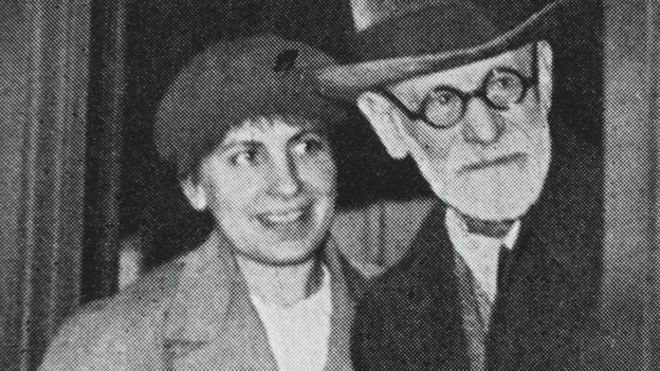
Freud and his daughter, Anna, who both elaborated on defence mechanisms.

Feelings of moral pride can be felt by the capitalist in the form of reaction formation: he won’t admit that his preferred economic system results in unaccountable private tyranny, including prison slave labour in the US; instead, he’ll prate about how capitalism promotes ‘freedom‘ (i.e., the deregulation that frees Big Business to overwork and underpay labourers, and to accumulate more and more wealth for himself, at everyone else’s expense), contrasting this ‘freedom‘ with the spurious history of ‘tyrannical’ socialist states.

The capitalist often takes pride in his identification with authority figures. The fascist–a hyper-capitalist, really–narcissistically identifies with leaders like Hitler and his in-group, a regime propped up by Big Business; as I’ve said many times before, associating the Nazis (just because of their name, ‘National Socialist’) with the left is sheer idiocy. As we can see, Anna Freud’s notion of identification with the aggressor can be seen as one of many capitalist defence mechanisms.

The capitalist may engage in fantasy, using, for example, his religious beliefs to give him a false sense of moral pride. He may imagine that all his sins have been washed away by the blood of Christ, and that his rigid faith in a fundamentalist interpretation of Christianity (as opposed to those ‘wishy-washy liberal,’ or–egad!–Marxian interpretations, like liberation theology) makes his ‘moral’ position all the more justified.

The fantasy of this Christian faith could be Catholic or conservative Protestant, whose work ethic, clearly in the service of capitalism, results in a financial success strongly implying God’s favour and reward with grace. Thus, instead of helping “one of the least of these my brethren,” he can rationalize his abandoning of the poor by saying their ‘failure’ in life comes from a slothful loss of faith, and thus proves their non-elect status.

The capitalist can further rationalize his class status by giving to charity, which, apart from giving him a sweet tax break, also gives him an illusory cleaning of his conscience. Oh, he gave a little money to the poor…what a kind philanthropist! Never mind that the scraps given to charity do little of substance to pull the starving millions in the Third World out of poverty.

The capitalist routinely engages in denial about how his pet economic system leads to terrible wealth inequality, political corruption, and imperialist war. He claims that “taxation is theft” (i.e., taxing the bourgeoisie to give financial aid to the poor), but denies that overworking and underpaying labourers (which includes paying less than the minimum wage) is actual theft. Similarly, he blames political corruption and war on the state, ignoring the bourgeoisie’s role in maintaining the state apparatus.

Part of this denial expresses itself in displacement, as we could see in the above paragraph, by shifting the blame for the world’s woes from capitalism–the rightful blaming of which would cause him unbearable cognitive dissonance–onto the state alone. He could, however, displace the blame onto other scapegoats: immigrants, Jews, Muslims, Freemasons, or anyone else seen as opposing his interests, or those of Church orthodoxy.

Another part of this blame-shifting is expressed in projection, a pushing out of inner guilt onto other people, other organizations, or other political institutions. The capitalist is responsible for the millions who die every year (especially children under five) of malnutrition and starvation, when the entire world could be fed, provided we disregard the profit motive and spread the food around properly while keeping it fresh; yet the capitalist blames communism for ‘creating‘ famines in the Ukraine, China, and Cambodia, without properly researching the history behind those problems, or examining how Bolshevism largely ended Russian famines.

The capitalist projects his hunger for power onto communists by falsely equating them with fascism, an ideology not only far closer to capitalism than it could ever be to the left, but also a menace defeated far more by Stalin‘s Red Army than it was by the Western Allies, who joined in the fight only at the last minute, and sacrificed far fewer lives. Communists, on the other hand, want the power to end hunger.

The fundamentalist Christian capitalist will project his hunger for global domination onto any group (not just the communists) who deny that his world vision is exclusively the correct one. A large part of the motive for European countries to colonize the world in previous centuries was to make the whole world Christian, by force if necessary. They also wanted to dominate the global market. Therefore, losing such dominance, both religious and economic, is most upsetting to them.

Groups like the Jews, Freemasons, and the Illuminati denied the ‘exclusive truth’ of the Church, whose black-and-white worldview considers such an inclusive position to be anti-Christian, therefore Satanic. It isn’t a far leap to go from these ‘Satanic’ beliefs to a paranoid fear that these groups wish to spread this ‘Satanism’ worldwide. The secrecy of the Freemasons, coupled with the spread of secularism over the past two hundred years, makes it easy for the paranoid fundamentalist Christian conspiracy theorist to project his own wish for global domination onto these ‘Devil worshippers.’ Ditto for the imagined leftist global dominance.

This projection is coupled with the defence mechanism of splitting into absolute good (i.e., fundamentalist Christians and ‘free market’ capitalists) and absolute evil (i.e., ‘Devil worshippers’ and socialists). With their black vs. white worldview, people with right-wing thinking can’t deal with ambiguity, or the possibility of a grey area in between.

Melanie Klein, who wrote much about splitting.

This dichotomous thinking is psychologically, unconsciously rooted, according to Melanie Klein, in the baby’s relationship with its mother, when she is perceived only as a part-object, namely, the breast. When it gives milk, it’s the “good breast“; when it doesn’t, it’s the “bad breast.” This part-object is perceived to be an extension of the baby.

Later, the baby comes to realize the breast is part of a complete human being, separate from the baby–a whole object, its mother. When she satisfies the baby’s needs and desires, she’s the “good mother”; when she frustrates the baby, she’s the “bad mother.” The same applies to its father in his good and bad aspects.

The baby’s irritation with the “bad mother” causes it to use splitting as a defence mechanism, resulting in the paranoid-schizoid position. The baby’s hostility makes it want to harm its mother in unconscious phantasy. Later, if the baby doesn’t see its mother for a lengthy time, it wonders if its hostility has either killed its mother or provoked a vengeful attitude in her. Now, it’s in the depressive position, longing for reparation with her, and soon seeing the “good” and “bad mother” merged into one person.

These two positions aren’t experienced only in infancy. They reappear again and again throughout life; we feel a swinging back and forth between the two, like a pendulum, all the way to our deaths, but instead of feeling them only for our parents, we can feel them for anybody or any organization of people we encounter in life.

The paranoid-schizoid position, or splitting as a defence mechanism, is like the confrontation of the thesis with its negation, where the ouroboros bites its tail on a circular continuum at which extreme opposites meet. The depressive position, where one learns to appreciate ambivalence, is the sublation of the dialectical contradictions, the circular middle of the serpent’s body, every intermediate point on the continuum, between the extreme opposites. This middle area is where contradictions are reconciled.

With their dualistic theology, fundamentalist Christians can’t grasp any reality other than where the serpent’s teeth are biting into its tail: God vs. Satan. Consequently, any belief system other than their own is seen as being of the Devil: “But though we, or an angel from heaven, preach any other gospel unto you than that which we have preached unto you, let him be accursed.” (Galatians 1:8) Furthermore, any capitalism (Keynesian, social democratic, New Democrat-oriented) other than that of the “free market” variety is really just a variation, it would seem, of socialism! You’re with us, or you’re the enemy.

We Marxists, on the other hand, aren’t so black and white in our thinking as the average Christian fundamentalist or neoliberal capitalist. For, as opposed to capitalism as we are, we nonetheless acknowledge its place in our materialist conception of history. The bourgeois French Revolution, for example, was a necessary development away from feudalism, though its results were far from our communist ideal.

Similarly, Lenin’s NEP was an acknowledgement of the need for a temporary “state capitalism” to resolve the problems of the USSR in the 1920s. Yugoslavia’s Titoism was also a market socialism. China‘s and Vietnam‘s bringing back of the market, albeit in a heavily state regulated form, is yet another example of the socialist’s ambivalent attitude towards capitalism; and while I have my doubts about the validity of the extent to which this attempted reconciliation of the market with Marxism-Leninism has gone, we must nonetheless acknowledge that many Marxist-Leninists are capable of such ambivalence about what we’re ideologically opposed to.

Capitalists, on the other hand, don’t have the same level of ambivalence towards socialism. While such social democratic systems as the Nordic Model have adapted their market economies to accommodate the needs of workers, and have free education and healthcare, they are nonetheless forms of capitalism, they have retained the class character of society, and they plunder the Third World as rapaciously, if not so much in a military sense, as the more overtly capitalist countries. Their concessions to the poor are meant to stave off communist revolution, not to encourage it.
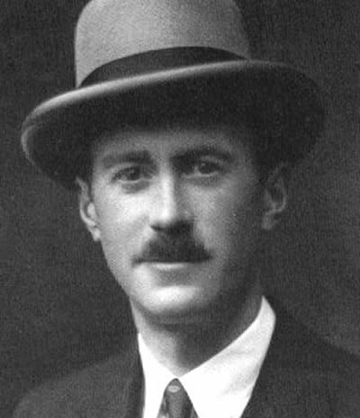
WRD Fairbairn, who replaced Freud’s drive-oriented id/ego/superego personality structure with an object-seeking one.

WRD Fairbairn made a more systematic study of splitting. He replaced Freud’s id/ego/superego personality structure with one in which libido is object-directed, not drive-directed. For Fairbairn, Freud’s ego became the Central Ego, linked to an Ideal Object, since having relationships with real people is the ideal for mental health. (Here, ‘object‘ = other people.)

Inevitably, though, and in varying degrees, depending on the severity of our parents’ lack of empathy for us, we feel portions of our Central Ego/Ideal Object break off and split into a Libidinal Ego, which is linked to an Exciting Object (approximately paralleling Freud’s id), and an Anti-libidinal Ego, linked to a Rejecting Object (vaguely corresponding to Freud’s superego).

With the Libidinal Ego/Exciting Object configuration, we find ourselves replacing relationships with friends and family, with mere pleasure-seeking (drugs, sex, money, etc.). The Anti-libidinal Ego/Rejecting Object configuration causes us to be nasty, alienating, and rejecting of other people. The viciousness and rudeness in today’s world seems an epidemic.

Herein we can see a link with capitalist alienation. The lack of kindness and empathy in the early family situation inhibits the development of proper human relationships, the Central Ego and its Ideal Object, which are replaced by internal ego/object relations that are divorced from reality.

Fairbairn pointed out that explicit pleasure-seeking indicates a failure of object-relationships, since for him, the libido is aimed at relationships with people, not things like money [Fairbairn: “…from the point of view of object-relationship psychology, explicit pleasure-seeking represents a deterioration of behaviour…Explicit pleasure-seeking has as its essential aim the relieving of the tension of libidinal need for the mere sake of relieving this tension. Such a process does, of course, occur commonly enough; but, since libidinal need is object-need, simple tension-relieving implies some failure of object-relationships.” (p. 139-140)].

I’ve written in other posts about characters in fiction and film whose social alienation results, on the individual level, in either miserliness or violence…on the social level, we find it ballooning into extreme income inequality and imperialism.
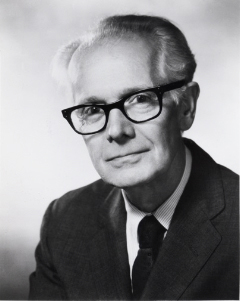
Heinz Kohut, who investigated and treated narcissism.

The lack of empathic parenting can also lead to pathological levels of narcissism as a defence against fragmentation. Heinz Kohut did a systematic study of narcissistic personality disorders, as well as how to treat them with empathy in the idealizing and mirror transferences. Treatment of narcissism is important for socialists, as this pathology attracts its sufferers to positions of corrupting power.

The lack of empathic parents to look up to as idealizing role models, coupled with a lack of empathic mirroring of a child’s own narcissism, causes the child to fail to develop mature, restrained narcissism, which is supposed to be let down in bearable, gradual steps. Instead, narcissism balloons into a bloated, unhealthy state, and the afflicted individual looks for others to idealize, such as political demagogues with similar narcissistic tendencies. A narcissist identifying with another of his ilk will feel narcissistic injury and rage if his idealized leader is criticized.

I’ve been subjected to such rage whenever my readers come across passages in which I point out Trump’s narcissism, a point so obvious it hardly seems controversial. Added to the narcissistic identification with, and idealization of, Trump, is the black-and-white thinking of splitting. And the Trump supporters aren’t the only ones who have that problem: he’s God-appointed (absurdly) to his supporters; and to the liberals who oppose him, he’s the Devil incarnate (also an absurd position–his faults are of the standard bourgeois type), and Hillary is idealized instead (even more absurdly).

Again, we communists have a more nuanced, ambivalent take on Trump. Yes, he’s awful, but we can give credit where credit is due: he opposes war with Russia, which should be a no-brainer for liberals. His pulling American troops out of Syria (and maybe Afghanistan) is something we see as in itself a good thing, though I question his motives for doing so (boosting his popularity, saving government revenue by having other countries–and mercenaries–do the fighting for the US…in other words, the wars are not ending!…while having kept military spending needlessly bloated [does he mean it when he calls this spending ‘crazy‘?] instead of using that money to help the American poor).

Liberals refuse to acknowledge him doing anything right for the same narcissistic reasons that Trump conservatives refuse to admit he’s ever done anything wrong. Thus, pussy-hat-wearing liberals support equally narcissistic Hillary Clinton, whom they idealize instead. It’s all splitting, and identifying with him or with his antithesis.

So, as I’ve said, the cure to all of this alienating and splitting is to cultivate more empathy in the family situation, and in our interpersonal relationships in general. That will mean focusing on what unifies us over what divides us.

Such unifying thinking is perfectly harmonious with Marxist thought, as dialectical materialism is all about reconciling contradictions. Part of reconciling the contradiction between rich and poor will involve reconciling psychological splitting, replacing the black-and-white mentality, or us vs. them thinking, with WE thinking, replacing alienation with solidarity.
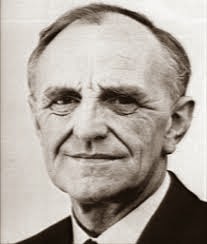
D.W. Winnicott.

I believe an understanding of object relations theory can help us in this regard, for Klein, Fairbairn, and DW Winnicott–among the other theorists in this psychoanalytic school–demonstrated how our relationships with others are based on our original relationships with our early caregivers. Whatever is going wrong in our current relationships is probably based, at least to a large extent, on our faulty relationships with our parents; for the faults in those early experiences create a kind of blueprint for what ensues.

Authoritarian parents, especially religious ones, tend to cause us to choose authoritarian leaders and forms of religion, as well as authoritarian economic systems like the boss vs. wage slave hierarchical relationship in capitalism. This latter relationship causes one to have what Erich Fromm called the “having” (as opposed to “being”) way of living.

This “having” mentality causes one to base one’s happiness on how much stuff one owns, gaining narcissistic supply (and thus, a False Self, too) from conspicuous consumption; whereas a “being” way of life focuses more on how to be happy by being one’s own True Self, with a happiness coming from enjoying object relationships (family, friends, community, etc.). Togetherness with others is how we all were meant to be, not living just to help a boss make profits.

We’ll go from capitalist materialism (via dialectical materialism) to this state of community life by, as I’ve argued elsewhere, going beyond the pairs of opposites, noting the unity between self and other, and putting all the pieces together by realizing how everything flows from one dialectical opposite to the other.

Erich Fromm.

On the ‘having mode of existence,’ in Fromm’s own words: “[The] dead, sterile aspect of gold is shown in the myth of King Midas. He was so avaricious that his wish was granted that everything he touched became gold. Eventually, he had to die precisely because one cannot live from gold. In this myth is a clear vision of the sterility of gold, and it is by no means the highest value…” (Fromm, p. 61)

And, Fromm on the ‘being mode of existence’: “There is more: this being-in-the-world, this giving-oneself-to-the-world, this self-transformation in the act of life, is only possible when man loses his greediness and stinginess and abandons his self as an isolated, fixed ego that stands opposed to the world. Only when man abandons this self, when he can empty himself (to use the language of mystics), only then can he fill himself entirely. For he must be empty of his egotistical self in order to become full of what comes to him from the world.” (Fromm, p. 65)

Furthermore: “Joy, energy, happiness, all this depends on the degree to which we are related, to which we are concerned, and that is to say, to which we are in touch with the reality of our feelings, with the reality of other people, and not to experience them as abstractions that we can look at like the commodities at the market. Secondly, in this process of being related, we experience ourselves as entities, as I, who is related to the world. I become one with the world in my relatedness to the world, but I also experience myself as a self, as an individuality, as something unique, because in this process of relatedness, I am at the same time the subject of this activity, of this process, of relating myself. I am I, and I am the other person, but I am I too. I become one with the object of my concern, but in this process, I experience myself also as a subject.” (Fromm, pages 66-67)

Finally: “In this state of experience, the separation of subject from object disappears, they become unified by the bond of human active relatedness to the object.” (Fromm, p. 67)

To raise children in this healthier way needn’t require anything even approaching ‘perfect’ parenting–after all, what is ‘perfect parenting‘ anyway? All that’s needed is what Winnicott called good enough parenting, to help infants make the transition from the paranoid-schizoid position, one also where the baby makes no distinction between self and other, to the capacity for concern, as Winnicott called it, where the baby recognizes both good and bad in its parents (and, by extension, both good and bad in all people), as well as acknowledging the parents (and, by extension, all other people) as not an extension of itself (realizing ‘me’ vs. ‘not-me’).

We paradoxically recognize our togetherness, yet also our individual integrity, so that we’re united enough to feel mutual empathy, yet also distinct enough from each other to realize we don’t have the right to exploit others, out of a misguided belief that others are extensions of ourselves.

So, by fixing the psychological splits, alienation, and fragmentation in ourselves, we can begin to fix what’s broken in society. By not narcissistically identifying with an idealized, but illusory and self-alienating, mirror (as Lacan observed), and replacing these false images (including idealized self-images projected onto demagogues) with the communal symbols of language (i.e., real, meaningful communication), we can cultivate mutual love.

…and from love, we can create a revolutionary situation, toppling the narcissists and psychopaths at the top of the social and economic hierarchy, and thus create a community of equals. As Che Guevara once said, ““The true revolutionary is guided by a great feeling of love. It is impossible to think of a genuine revolutionary lacking this quality.”

Erich Fromm, The Essential Fromm: Life Between Having and Being, Continuum, New York, 1995

Analysis of ‘In the Court of the Crimson King’

In the Court of the Crimson King: an Observation by King Crimson is a 1969 progressive rock album by King Crimson, the band’s debut. Its dark, lugubrious, and portentous sound, combining woodwinds and the Moody Blues symphonic sound of the Mellotron with rock, helped define the art rock genre that would soon be represented by such bands as Yes, Genesis (the Peter Gabriel/Steve Hackett era), Jethro Tull, ELP (whose L was Greg Lake, King Crimson’s original bassist/singer), Gentle Giant, and Van der Graaf Generator.

Pete Townshend endorsed the album, calling it “an uncanny masterpiece,” and while it initially got a mixed critical response, it was commercially successful (making an unusually good ranking, for a King Crimson album, on the charts), and it’s now considered a classic.

Here is a link to all the lyrics.

The cover, a painting by Barry Godber (1946–1970), shows a closeup of a terrified face, reminding me of Edvard Munch‘s The Scream. The inside cover, a dominant blue to contrast the dominant pink of the outer cover, shows a face with an evil grin to contrast with the outer face.

The album was released in October 1969, when opposition to the Vietnam War was at its height. I’ve always thought, mistakenly, that “King Crimson,” coined by lyricist/light-show man Peter Sinfield, was meant as a synonym for the Devil; apparently, a ‘crimson king‘ is historically understood to mean a ruler mired in blood, one governing during a period of great civil unrest and war. Somehow, though, the Devil metaphor doesn’t seem too far off the mark. Certainly, US imperialism was, and is now even more so, a devilish crimson king for our time.

The first song on the album, “21st Century Schizoid Man,” is prophetic to us now, from its title alone. “Schizoid” should be understood to mean the fragmented character of the modern personality. We’re all split, not in the schizophrenic or split personality senses, but in the sense of dividing the inner representations of our objects (e.g., other people in relation to oneself, the subject) into absolute good and bad–friends and foes, rather than the actual mixes of good and bad in each of us and them.

This dichotomous attitude, taken to an extreme, has led us to all of these horrible wars–the Vietnam War of the time of the album’s release, and all the wars we’ve had in this schizoid 21st century. The psychological fragmentation of modern man is symbolized in these lyrics–disjointed, standalone images of violence: “Cat’s foot, iron claw…Blood rack, barbed wire…Death seed, blind man’s greed.”

Neurosurgeons scream for more/At paranoia’s poison door.” I suspect, given the song’s focus on “paranoia” and being “schizoid,” that neurosurgeons is meant more metaphorically than literally. This seems especially plausible, since Freud shifted from neuropathology (via a study of neurosis) to psychoanalysis. Hence, for neurosurgeons, read psychiatrists, who have often forsaken their duty to their patients for the sake of profit. Also, there has been all that psychiatric complicity during the ‘War on Terror.’

“Politicians’ funeral pyre/Innocents raped with napalm fire” is an obvious reference to the Vietnam War, though of course the use of napalm can equally apply to any modern war from WWII till Nam, and a number of wars fought since this album was made.

The fast middle section of the song, mostly a change from 4/4 to 6/8, is called “Mirrors.” Given how Lacan‘s mirror gives us a falsely unified sense of self, to the point of alienating oneself from the reflected image, the title of this frantic, dissonant (i.e., Ian McDonald‘s alto sax solo) section–and with its awkward time changes during the fast-picked, alternating 4/16 to 6/16 “down-up” guitar part, doubled by the sax, towards the section’s end–reflects that spastic alienation from oneself, as “I Talk to the Wind” (the following track) reflects alienation from other people (more on that later).

The last verse demonstrates the root cause, the “Death seed,” of all this madness, killing, and suffering: “blind man’s greed,” also known as capitalism. The blindness of these greedy men comes from the capitalist’s denial that his economic system is responsible for the woes of the world–typically blaming the problem on the state, while proposing a ‘free market‘ solution instead…as if we haven’t had enough deregulation and tax cuts for the rich as it is. “Poets starve” because the profit motive has no use for art unless it can make money, thus cheapening art and turning poetry into the titillating superficiality of performers like Nicki Minaj.

Imperialist war makes “children bleed”: consider what happened to Phan Thị Kim Phúc, or what’s happening to Yemeni children now, to see my point. The super-rich have so much money, they don’t know what to do with it; so on the one hand, they avoid paying taxes by putting their money into offshore bank accounts, and on the other, their addiction to money drives them to cause more wars for the sake of profits for Lockheed Martin, Raytheon, Boeing, et al. Hence, “Nothing he’s got he really needs.”

Because of all these horrors, the song’s chaotic, dissonant ending shouldn’t surprise anyone: ever-increasing neoliberal, capitalist imperialism will inevitably lead to barbarism. Small wonder guitarist/bandleader Robert Fripp once introduced the song in a 1969 concert, dedicating it to Spiro T. Agnew. Here’s a live version of the song, done by the Cross/Fripp/Wetton/Bruford lineup of 1973, which I really like. 

The very title of the second track implies social alienation. “My words are all carried away,” and not listened to. Capitalism brought the madness expressed in the first song because it also brought the alienation described in this song. While I prefer a more uptempo version sung by Judy Dyble, the sadder, slower version on the album seems more thematically appropriate.

Where has “the late man” been? He’s “been here” and “there” and “in between.” He hasn’t been with “the straight man”: he was late. He didn’t care enough about his commitment to meet the straight man to arrive on time. Alienation causes this apathy.

It also causes one to be “on the outside, looking inside,” seeing “confusion…[and] disillusion.” Those who alienate us “don’t possess,” “don’t impress,” “can’t instruct…or conduct” us…they just “upset” us and waste our time.

Epitaph,” with its “March for No Reason,” evokes such things as the Vietnam War, the Cold War, and the nuclear arms race. “Tomorrow and Tomorrow” is an allusion to Macbeth, and to that crimson king’s famous speech, upon learning of the death of his queen, when he speaks of the meaninglessness of life, and our day-after-day misery.

The lyrics of “Epitaph” put our present-day troubles into historical context. The words of the writers of scripture have little meaning for us today, for the wall of their etched words “is cracking at the seams.” “The instruments of death” are historic and modern ones, and the sunlight is our knowledge of such Vietnam War atrocities as the My Lai Massacre.

We’re “torn apart with nightmares and with dreams,” for the latter are rarely fulfilled, while the former all too often come true. Media “silence drowns the screams,” for we know of far too few of the atrocities of war, especially the wars of our schizoid 21st century.

We feel “confusion…as [we] crawl a cracked and broken path” paved by the lies of those who fraudulently got the US into the Vietnam War…and now the conflicts in Iraq, Syria, Libya, and “I fear tomorrow” Iran, China, and Russia.

Part of what makes this album great, sadly, is that it’s even more relevant today than it was when it was released. We’re in a new Cold War with Russia, with NATO troops along the Russian border (and in the Arctic), ready to fight. The trade war with China could escalate, especially with tensions in the South China Sea. If we can prevent these problems from getting worse, “we can all sit back and laugh, but I fear tomorrow I’ll be crying.”

Fate has “iron gates,” for it seems to have an implacable will. “The seeds of time were sown” between those gates, “and watered by the deeds of those who know”–Lake’s voice seems ironic with that last word–“and who are known.” Those in authority, the ruling classes, have dominated history and our collective fate; we know them all too well. What they know–how to manipulate us, keep us divided, and make us kill each other–“is a deadly friend” without ethical rules. Our fate “is in the hands of fools,” especially today, when MAD is being disregarded in the temptation to use nukes.

The song’s ending is one of the most emotively powerful ones, if not the most powerful, of the whole album, with Lake’s expressive voice, “Crying,” and backed by Ian McDonald’s weeping Mellotron string section tapes, as well as the kettledrum rolls by drummer Michael Giles.

[As a side note, I’d like to mention that these three songs each have their own ‘new versions’ on Side One of King Crimson’s second album, In the Wake of Poseidon. Fripp wanted to rework the first album his way, with “Pictures of a City” paralleling “Schizoid Man,” “Cadence and Cascade” paralleling “I Talk to the Wind,” and “In the Wake of Poseidon” paralleling “Epitaph.” In fact, on Side Two, towards the end of “The Devil’s Triangle” (adapted by Fripp and Ian McDonald from “Mars, the Bringer of War,” from Holst’s The Planets), a little bit of the “ah…ah-ah-ah…ah-ah-ah” singing from “The Court of the Crimson King” can be heard in the background.]

Now, let’s come to Side Two.

Moonchild” begins with “The Dream,” which is the section with Lake’s singing. She is “dancing in the shallows of a river,” “dreaming in the shadows of a willow,” “gathering the flowers in a garden,” and “playing hide and seek with the ghosts of dawn.” Throughout the darkness of the gloomy night, her frolicking and “waiting for a smile from a sun child” represents our long-held hope for peace and a better world. The long instrumental improvised section, however–with its almost Bartókian night music, seemingly going on for hours in a sad minor key until McDonald’s vibraphone switches to a major key, bringing on a happy daybreak of hope–is fittingly titled “The Illusion.”

The Court of the Crimson King” includes “The Return of the Fire Witch” and “The Dance of the Puppets.” A witch casts spells, mesmerizing and transforming those under her spells; fire is desire, craving, attachment, greed, hate, and delusion. Since the Fire Witch is in the court of the crimson king, her spells keep the fire of our desires aflame, and distract us from his evildoing, keeping us ignorant of it. Similarly, the puppets’ dance keeps us mesmerized and distracted, so we’ll ignore the bloodshed, carnage, and oppression the crimson king is responsible for.

The other songs of the album have dealt with the wars, as well as the suffering, greed, alienation, fear, and misguided hope we all feel; this last song deals with the bread and circuses, the entertainment and titillation used by the bloodthirsty ones in power to keep us at bay.

“The rusted chains of prison moons/Are shattered by the sun.” The prison of dark night, of lunacy, no longer keeps us in chains when we see the sunlight of truth. “I walk a road, horizons change”: I explore what’s out there in the freedom of my thoughts, and my whole perspective changes because of this sunny enlightenment. “The tournament’s begun”: the powers-that-be are ready to contest my freedom by attempting to put me back to sleep, back in the “rusted chains” of my former lunacy, a mental illness that comes from being denied the truth. 

To lure me back into hypnotized compliance, the “purple piper plays his tune/The choir softly sing/Three lullabies in an ancient tongue…” The three lullabies seem to represent the Trinity of the authoritarian Church, tricking me into thinking all these wars are for the glory of Christ (e.g., as against Muslims, etc.).

A king’s court is full of servile flatterers, and the contemporary equivalent–the media as part of the superstructure of the ruling class–is no improvement. All this lulling, hypnotizing music of the piper, the choir, and the orchestra symbolizes the deceitful narrative we get in the mainstream media, a problem every bit as real back in the days of the Cold War–with Operation Mockingbird–as it is today, with similar mind games going on to make one wonder if Operation Mockingbird ever really ended.

“The keeper of the city keys,” who controls who can enter and leave, and thus controls us in general, “put shutters on the dreams,” preventing us from realizing them. The “pilgrim” wishes to go on a far-off journey to a far better, holier place than our corrupt city, and “I wait outside” his home, thinking of how I can help him escape, but my “insufficient schemes” can’t get us out of town.

The “black queen” of Thanatos, the death drive that inspires war and lulls us into joining her with her “chants” and ringing “cracked brass bells,” more mesmerizing music to fan the flames of desire and hate, “To summon back the Fire Witch.” We take pleasure in satisfying our desires and in causing death.

The ruling class seems to do good in one place–that is, it “plants an evergreen/Whilst trampling on a flower,” or doing evil elsewhere. Distracted by all this, “I chase” empty pleasure, “the wind” (which I aimlessly talk to, knowing it won’t hear, much less satisfy my yearnings). In Shakespeare’s day, a juggler was a “trickster, deceiver, fraud” (Crystal and Crystal, page 248); lifting his hand, the juggler makes the mesmerizing, “orchestra begin/As slowly turns the grinding wheel” of the empire of bloodshed.

“The Return of the Fire Witch” section has a pretty flute solo by McDonald. We’re lulled in the bower of bliss of our desires, not noticing the death and destruction elsewhere in the world.

The “mornings [, when] widows cry,” are “grey” because the Moonchild’s illusory hope for a sunny morning never came true: the widows’ husbands came home from Vietnam (and the other wars of recent memory) in bodybags. “The wise men [who] share a joke” are the academics of today who are full of witty, clever observations, but are cut off from the common people because they’re all in ivory towers. 

I read the newspaper propaganda, the “divining signs,” because I want to be reassured in my prejudices of what’s going on in the world, “to satisfy the hoax,” and not face the truth. This propaganda is part of what the “jester” does as he “gently pulls the strings/And smiles as the puppets dance”–all part of the ruling class’s control of the media, the minds of the public, and therefore the political direction of the world, pushing us further and further towards even more bloodshed, inequality, and despair.

“The Dance of the Puppets” section, like the “Fire Witch” one, has a sweet melody played by multi-instrumentalist McDonald; again, we’re tricked into thinking all is well, so we never hear the screams of the suffering.

The dissonance heard coming towards the end of the song (including Giles’s magnificently precise and fast drum licks) suggests the pain and sorrow hidden behind the pleasant melodies of the “Fire Witch” and “Puppets” sections. In fact, the song ends almost as chaotically and abruptly as “21st Century Schizoid Man,” fittingly bringing the whole album full circle, and reminding us of the horrors that are hidden, because the crimson king uses silence to drown the screams. 

Analysis of ‘Viridiana’

Viridiana is a 1961 Spanish-Mexican film by Luis Buñuel, loosely based on the novel Halma by Benito Pérez Galdós, and starring Silvia Pinal in the title role, as well as Fernando Rey, Margarita Lozano, and Francisco Rabal. As usual, Buñuel criticizes the Church and bourgeois society in this film. It is about a novice soon to take her vows as a nun, but who finds it increasingly difficult–due to external pressure, or internal?–to reconcile herself with the moral ideals of the Church.

Viridiana was the co-winner of the Palme d’Or at the 1961 Cannes Film Festival.

Here are a few quotes in English translation:

Viridiana: I know my own weakness, and whatever I do will be humble. But, however little it is, I want to do it alone.

Jorge: I always knew that you and I were going to end up playing cards together!

Verdiana was the name of a generous, charitable saint who secluded herself for 34 years to focus on her faith. The Viridiana of this film is similarly, if not so extremely, reclusive, but just as generous and charitable. Her name comes from a word meaning ‘green’: I think of an old meaning of green, from back in Shakespeare’s time, meaning ‘youthful, inexperienced, immature’; but also, ‘fresh, recent, new’ (Crystal and Crystal, page 205), strongly implying ‘pure.’ There is, indeed, a strong sense that this novice embodies all of these definitions, in more ways than one.

She also happens to be a beautiful young blonde, most desirable to men; her choice to become a nun seems to be, at least in part, motivated by a fear of sexually predatory men. Her virgin purity makes her all the more attractive to her uncle, Don Jaime (Rey), who finds that she reminds him of his late bride, who died before he could even consummate their marriage.

His preoccupation with her beauty and purity reminds me of Heinrich Heine‘s poem:

Du bist wie eine Blume,
So hold und schön und rein;
Ich schau’ dich an, und Wehmut
Schleicht mir ins Herz hinein.

Mir ist, als ob ich die Hände
Aufs Haupt dir legen sollt’,
Betend, dass Gott dich erhalte
So rein und schön und hold.
You are like a flower,
So lovely, fair and pure;
I gaze at you and wistful
Melancholy slips into my heart.

It’s as though I ought to place
My hands upon your head
And pray God to ever keep you
So pure, fair, and lovely.

This notion of extreme purity leads to an exploration of the themes of modesty, humility, and every other point on the circular continuum I symbolize with the ouroboros, including the dialectical opposites of pride (the serpent’s biting head) vs. shame (the bitten tail). Viridiana is so particular about her maidenly modesty, it’s a source of narcissistic pride for her. Thus, even the mere suggestion of male physical closeness feels like a violation to her.

This excessive modesty comes from her stern Catholic upbringing, once again Buñuel’s satirical target. She has no interest in visiting her Uncle Jaime, whom she’s met only once; but she’s pressured into visiting him by her mother superior. She’d rather stay secluded and cloistered, suggesting she regards the Church as more of a family than her biological one. I suspect she had an unhappy family upbringing, driving her to the Church for a replacement.

The Virgin Mary seems to be an idealized parental imago for Viridiana, the perfect mother who represents an ego ideal to which she aspires. We get a sense of this when she prays the Angelus with the homeless people. Mary is “full of grace” (κεχαριτωμένη), which the Catholic Church interprets as a kind of purity existing from birth, the Immaculate Conception. Viridiana would thus want to identify with Mary, for narcissistic reasons.

Any man even making a pass at her threatens this purity she so covets, causing her narcissistic injury. Viridiana, I suspect, has transferred her feelings of maternal love to Mary, just as Don Jaime, admiring Viridiana’s beauty and purity, transfers his love of his deceased bride onto her, especially since the two women look so alike. Indeed, transference is a major theme in this Freudo-Marxist film.

Normally, one thinks of transference in the psychoanalytical setting; the patient transfers the feelings of a powerful emotional bond, especially one from childhood, onto the therapist. Viridiana has made this kind of transference onto Mary, her ‘therapist.’ Similarly, Viridiana has become, however unwittingly, Jaime’s ‘therapist.’ They are using their transferences in an attempt to heal, though these attempts ultimately fail.

On the first night of Viridiana’s visit, we see her in her bedroom, taking off black stockings to reveal her delicious legs; Buñuel’s lustful camera does a closeup on them, another example of his irreverence towards Church authority. She unpacks a large wooden crucifix and a crown of thorns. She’s so devoted to her faith, she’d rather sleep on the hard floor, as Jaime’s servant, Ramona, notes.

Now, Ramona is an interesting character to compare and contrast with Viridiana. Jaime’s servant is dutiful, bashful, and modest, but also lacking in the novice’s religious pretensions. This is another of Buñuel’s jabs at the Church. And who, I’m curious, is the father of Ramona’s naughty, nosy daughter Rita? Jaime has been kind enough to take mother and daughter in: is the girl an illegitimate child, as Jaime’s son, Jorge, is? Again, we see Buñuel’s alternative morality to the hypocritical one of the Church.

I suspect that Ramona has a secret love for Jaime, an Oedipal feeling, perhaps, transferred from her father onto her master, but a feeling she’s too shy to express openly. In any case, after he hangs himself and she meets Jorge, she transfers her love from father to handsome son…and feels that love more overtly, this time.

The morning of the second day of Viridiana’s visit, she goes to a servant milking a cow. She tries pulling on one of the cow’s teats; but they are long, even phallic in length. She can’t bring herself to handle them, as doing so, it seems, far too much resembles masturbating a man to orgasm (i.e., the squirting out of the milk). Her pious modesty is so extreme, she cannot do anything even vaguely redolent of sexuality.

Then, naughty Rita agitates her by saying she saw her in her nightgown the night before, having sneaked a peek from a nearby terrace. Viridiana blenches at even having been spied on by a pre-teen girl.

That night, Jaime has been fetishizing the bridal clothes of his deceased wife; he puts his too-large foot into one of her high heels (symbolic intercourse wish-fulfillment), then stands before a mirror while almost trying on her girdle. Apart from the erotic overtones of these actions, we sense his pathetic yearning for his lost love, his unfulfillable wish to be at one with her.

Then he sees Viridiana sleepwalking in that white nightgown, with her pretty bare feet and lower legs exposed. She is doubly vulnerable before him, in a relative state of undress, and unaware of it. The thought of his predatory eyes on her will terrify her when he tells her what he’s seen the next morning.

During her sleepwalking, she’s also psychologically naked and vulnerable, for her unconscious is let loose, expressing her hidden desires, if only symbolically. Kneeling at his fireplace, she empties a basket of yarn and needles into the fire, representing an unconscious wish to be rid of clothing, the antithesis of a nun’s modesty. She has a bad habit, it seems.

Then she gathers ashes in the basket and takes them to his bedroom, then sprinkles them on his bed; the ashes, we learn the next day, are a symbol of penitence…and death. What has she to repent of…secret, repressed sexual desires? Death associated with his bed suggests once again the marriage of the life (e.g., sex) and death drives.

The next day, Don Jaime, so captivated by Viridiana’s beauty, her purity (So hold und schön und rein), and of course her resemblance to her deceased aunt, asks her to dress up in her bridal gown, another shocking thing to do, in Viridiana’s view. The deceased bride, having worn white to the wedding, was in all probability a virgin (especially given the conservative mores of the time); but Viridiana–though complying–still feels uncomfortable doing it, as she feels like a sex object.

She of course is being objectified and ogled by her uncle, who has Ramona drug Viridiana’s coffee. Ramona, wholly devoted to her master, will do whatever he wants her to do, even as wicked a thing as helping him take advantage of his unconscious niece! Why? I suspect because Ramona secretly wishes Jaime desired her in the same way…also, allowing Viridiana to be deflowered–and thus, shamed–would serve Ramona because of sexual jealousy. Hence, she doesn’t mind telling Viridiana of Jaime’s shameful wish to marry his niece. Still, he’s a good man, in Ramona’s mind.

Viridiana is already uneasy enough knowing her uncle is the father of an illegitimate child (Jorge), for such is her lofty moral ideal. Her purity is part of what makes her so attractive to him; she looks so sexy in that virginal white dress…and she knows exactly how he feels about her.

Being in that dress with him at night is, of course, a reenacting of his wedding night with her aunt, when she died of a heart attack before he could consummate the marriage. This lonely, reclusive man has yearned to have that night given back to him, and now he can have it back through Viridiana.

Even before Ramona has given her the drugged coffee, Viridiana can sense her uncle’s lust; wearing that bridal gown strongly implies a soon-t0-be-lost virginity, which is anathema, horrifying to her. By helping Jaime satisfy his desire, though, Ramona can satisfy hers vicariously through Viridiana. Meanwhile, little Rita is frightened by a bull she claims entered her bedroom; the animal represents a sexually predatory male…is this an omen of what’s to come between Jaime and Viridiana?

While sexual assault (of anyone, woman, man, or child) is of course never defensible, especially to a communist like Buñuel, Viridiana’s predicament can be seen unconsciously, symbolically as a wish-fulfillment in that it desecrates the Catholic ideal of sexual purity in a woman. Destroying this impossible ideal by demonstrating its unattainability can liberate women sexually, by making them give up on it. Indeed, Viridiana will be so liberated at the end of the film.

Note that Jaime never carries out his plan to deflower her. While she’s unconscious, and Mozart‘s Requiem Mass is playing (symbolizing a fusion of the libido and death drive), he kisses her on the lips, unbuttons her top to reveal her creamy cleavage, then kisses her there (and naughty Rita spies on them); but moral scruple makes him come to his senses, and he stops. He mustn’t stain such divine purity.

So hold und schön und rein.

The next morning, when he tells her he took advantage of her while she was out cold, even when he later insists he never actually penetrated her, she can’t be certain of which statement is the truth, and which the lie–has he, or has he not raped her? So she, “for mere suspicion in that kind, will do as if for surety,” and imagine the worst. But how can she be unsure of what’s happened? Surely she knows that she will feel vaginal soreness, pain from a ruptured hymen, that there will be blood, if he’s had her.

He lies about having intercourse with her while she slept (later admitting he’s lied) so she’ll think her ‘stained’ body will make her unworthy of being a nun, then she’ll have nowhere else to go but to live with him. She’s afraid of male sexual predation to a far greater degree than the average woman, religiously devoted or not—why?

I don’t think we’re supposed to believe she was sexually abused at an earlier period of her life (though she, in all likelihood, has endured men’s leers and groping hands on many occasions throughout her life); for if she was raped, given the strict Catholic morality of her world, she surely would have already considered herself too ‘unclean’ to be a nun.

Now, for her, the meaning of sexual assault is expanded to mean “that whosoever looketh on a woman to lust after her hath committed adultery with her already in his heart.” (Matthew 5:28) Furthermore, given the way rape victims tend to be slut-shamed, especially in Viridiana’s prudish world, she will feel as guilty, however unjustifiably, of having ‘tempted’ her attackers as they are of attacking her.

So her fears about whatever Don Jaime has done while she’s been unconscious are not based on a fear of possibly having been penetrated, nor do they seem to be a kind of PTSD reliving of what may have happened to her sometime before the beginning of this film. His having touched her, kissed her, and partially undressed her are rape enough. 

And how far did he undress her? She has no idea. We know he only unbuttoned her top: he saw her cleavage, but not her whole breasts. Still, how does she know he didn’t undress her further? Does he know what her whole naked body looks like? Did he fondle her nakedness? Taste it? How many of her anatomical secrets does he know of?

Even the few of those secrets that Don Jaime knows would be enough to make any woman cringe, because they have been divulged without consent (consider the complaints against lecherous Bill Cosby to see my point). But for a woman as proud of keeping her secrets hidden as Viridiana is, her uncle’s–however slight–‘breaking and entering,’ as it were, is all the more outrageous and unbearable.

She feels the shame, but don’t forget that he does, too. After all, he’s the sinner, not she…and no one is more aware of his exclusive guilt than he is. He’s so tearfully desperate to get her forgiveness that, when he doesn’t get it, he hangs himself.

What we must remember is that he doesn’t merely lust after her–he’s fallen in love with her (which is not to excuse him for his scurrilous scheming), out of her resemblance, in her looks, her walk, her voice, in every way, to his beloved late bride. He’s transferred that deep passion onto Viridiana.

Buñuel has been said to have valued sex over love: this seems to be a vulgar, bourgeois interpretation of his frank depiction of sexuality in his films, and it’s utter nonsense. Buñuel uses sex to enhance love, to free it from the bourgeois chains of Church morality.

Another theme in this film is that of solitude. Viridiana prefers being cut off from the larger society: if not hidden from it in the convent, then in the outbuilding section of late Jaime’s estate, which he’s left to her and Jorge. Her religious solitude, as I’ve said above, echoes that of the saint who shares her name; but is this solitude out of spiritual conviction, or social alienation?

Jaime’s solitude is certainly out of alienation, for he, as a bourgeois, rentier capitalist, is inevitably affected by the estrangement that capitalism causes. He has some goodness, though, as all the characters in Viridiana are each a mix of good and bad. For example, Jaime has taken in Ramona and Rita, and he even saves a bee from drowning.

His illegitimate son, Jorge, has a sexual interest in Viridiana that bothers both her and his jealous, live-in girlfriend, Lucia, who soon leaves him; but he isn’t the type to rape a woman. The worst he does is to walk into Viridiana’s bedroom without her permission. He kisses Ramona on the lips only because he knows, from the longing in her eyes, that she is aching for his kiss.

Still yearning to be a good Christian even though she feels unworthy of being a nun, Viridiana takes in a group of beggars to live in the outbuilding part of the house. As pitiable as these wretches are, though, they’re far from virtuous; they make one of them, a bald fellow without his upper front teeth, into a pariah because his varicose veins seem to them to be a symptom of leprosy.

Out in the field with Viridiana, they pray the Angelus with her while Jorge’s hired workers are renovating the house and surrounding area; in other words, the first group is engaging in faith, while the second group is actually working. Here is another example of Buñuel taking a jab at the Church, which values grace through faith over good works. She and the beggars are praying a useless prayer to her idol, Mary, while Jorge’s men are making themselves useful–working, because il faut cultiver notre jardin.

One of the beggars, El Cojo (‘the lame one,’ played by José Manuel Martin), fancies himself a faithful Catholic and not only helps Viridiana in leading the Angelus prayer, but also paints a portrait of the Madonna; still, he’s a bad, even violent fellow, for he threatens the ‘leper,’ and later Jorge, with a knife, and even tries to rape Viridiana toward the end of the film. Again, Buñuel demonstrates the emptiness of faith as against good works.

When she, Jorge, Ramona, and Rita leave the house on business (the servants have also left, out of disgust with the beggars), the beggars decide to go in the house and have a party. They’ll clean up after, and no one will be the wiser…or so they imagine.

This party symbolizes a proletarian seizing of the means of production…though it’s a poorly planned ‘revolution,’ more like anarchist Catalonia, or the Ukrainian Free Territory under Makhno, than anything like the Bolshevik takeover of Russia. Accordingly, their ‘insurrection’ doesn’t last.

During their dinner, they take a group photo at the long table. Buñuel deliberately has the actors pose in a manner parodying Leonardo DaVinci’s Last Supper, with the blind Don Amalio (played by José Calvo) in the middle, in Christ’s place. When Enedina (played by Lola Gaos) takes the photo, her lifting up of her dress is the ‘flash!’

After that, the ‘leper’ puts on a record of Händel‘s Hallelujah Chorus, and he dresses up in some of Jaime’s bride’s clothing, repeating the suicide’s cross-dressing, though in a comical, rather than pathetic, way.  His dancing around to the music is more of Buñuel making fun of religious piety. He tosses to the floor the feathers of a dove, symbolic of the Holy Spirit, he found earlier.

Furthermore, this juxtaposition of these would-be lumpenproletariat revolutionaries with Christian music and iconography represents how the infantile disorder of ‘left’ communism is as unrealistic as is Viridiana’s idealization of Marian Catholicism. Just as there is no way to be a morally perfect woman, there is also no way to have a perfect communist revolution, all in one fell swoop. The beggars have no vanguard to educate and organize them, so their ‘revolution’ is practically still-born.

And so, because these people are, in varying degrees, degenerates, their party degenerates, too. A man takes Enedina behind the sofa and has her. An older beggar, Manuel, who has a penchant for gossip, tells Don Amalio about the screwing around, but he won’t lead the jealous blind man over to the sofa to beat the man for taking his woman; so Don Amalio smashes his cane on the dinner table, destroying the dishes.

As we can see, their ‘revolution’ is a bit too Makhnovist for comfort. Jorge, Viridiana, Ramona, and Rita return early to find out what’s been happening. El Cojo and the “leper” subdue Jorge while Ramona goes off in the car to get the police; this leaves Viridiana to the mercy of El Cojo’s lust. She fights the good fight to get him off of her.

All her efforts to be a good Christian, to show charity and compassion to the beggars and to give them moral instruction, have been for naught. Jorge, however, promises money to the “leper” if he’ll beat El Cojo on the head with a small shovel to stop him from raping her. Though El Cojo is stopped, she, overwhelmed with trauma, faints…just as she was unconscious when Jaime–almost–had her.

Note how, only when unconscious, will she allow any man to touch her. This shows how, only in her unconscious mind, will she allow herself any expression of sexuality. The conscious wish to be an imitator of Christ, of Mary, is clearly a reaction formation against her deepest, most repressed desires, expressed when she was sleepwalking.

The wish to lead a life of chastity rubs against its dialectical opposite, the secret wish to be sexual. Jorge, in contrast, is neither extreme: he accepts the ephemeral nature of sexual relationships, and is none too upset when Lucia leaves him. At the same time, he doesn’t force sex on anyone, unlike El Cojo, the ‘good Catholic.’

Viridiana’s trauma from the attempted rape has, for what it’s worth, one good side effect: she’s been liberated from her attachment to an impossible moral ideal–perfect chastity. As painful as this has been for her, at least she can now get off her high horse and join humanity…and become truly humble, not affectedly so.

She looks at herself in a small mirror, Lacan‘s mirror, as a tear runs down her cheek. That nun she’s seen in the reflection was an illusion, not the real her, but an idealization that has alienated her from herself. Her ability to be ‘pure’ cannot be eternal and unchanging. She must accept this painful truth.

She joins Jorge and Ramona in the main part of the house. He’s pleasantly surprised to see Viridiana at the door. Since Ramona is already his lover, Viridiana’s involvement is implying a ménage à trois, surely to the chagrin of the Francoist censors, but this ending was allowed nonetheless. Instead of listening to pompous religious music, the three would rather hear some fun popular music, Ashley Beaumont’s Shimmy Doll

Their sitting at table together to play cards suggests an equality the beggars couldn’t attain: that of male and female, of master and servant. Jorge’s moderate ‘socialism,’ if you will, is rather like Dengism; one incrementally moves from capitalism to communism, as Xi Jinping‘s government is doing. His sexuality is similarly neither prudish nor overly licentious. No idealistic rushes to extremes here, but rather a cautious creeping ahead.

Jorge doesn’t like the degenerate beggars any more than the other workers in his home. He considers Viridiana’s charitable duties to them pointless; he does, however, tolerate them for a while…until they commit their crimes on him and her. He also takes compassion on a dog, Canelo, and he offers money to the “leper” to stop lustful El Cojo. Though Jorge, representing industrial capitalism, is the bourgeois owner of the house given to him by his father, he’s clearly more generous than the average capitalist.

So, Jorge’s morality is a comfortable middle ground between Viridiana’s Catholic idealism and the reckless anarchism of the beggars. It’s like a Marxist sublation of the Christian thesis of an unattainable moral perfection, and its Makhnovist negation. This is the alternative morality Buñuel is proposing, and it’s a refreshing alternative to all the rubbish we’ve had thrown in our faces for so long.

Analysis of ‘L’Age d’Or’

L’Age d’Or is an hour-long French surrealist film made in 1930 by Luis Buñuel and written by him and Salvador Dalí. Since Buñuel had a falling out with right-wing leaning Dalí, his collaborator on Un Chien Andalou, leftist Buñuel was now free to finish this new movie by attacking the bourgeoisie and the Church as much as he liked.

The movie’s title, “The Golden Age,” is surely ironic given his attitude towards capitalism, then in a great state of crisis with the Great Depression, as well as with the rise of fascism in Italy, Germany, and his native Spain, where clashes between right-wing tradition and the left were soon to reach a boiling point.

Though not as famous as Un Chien Andalou, L’Age d’Or is nonetheless considered another landmark in surrealist cinema, and because of Buñuel’s liberation from the fascist-tending Dalí, this film perhaps deserves even more attention.

Here’s an interesting quote from the film, in English translation: “I have waited for a long time for him. What joy to have our children murdered!” –young girl, to her lover

As with Un Chien Andalou, L’Age d’Or is a set of vignettes that seem unrelated; if seen, however, as a series of free associations and dreams put up on the silver screen, one can play the role of psychoanalyst and link the apparently random visuals to show a coherent chain of themes, revealing the meaningful world of the unconscious.

The film begins with a kind of short documentary on scorpions. These vicious, phallic, predatory arachnids–which attack with lightning speed, are unsociable, and prefer hiding in darkness to being seen in the light of day–set the tone of this film, with its themes of quick, impulsive violence and sudden deaths. Therefore, it shouldn’t be dismissed as an unintelligible opening to the film.

“Several hours later,” we see a beggar-soldier up high on the rocks of an inlet, watching some archbishops chanting among the rocks. (An instrumental rendition of Mozart‘s Ave Verum Corpus is playing; knowing Buñuel, the inclusion of this music, significantly excluding the Latin text, is ironic.) The man goes back to his hideout to tell his fellow beggar-soldiers that the Majorcans have arrived, so their leader (played by Max Ernst) tells them to get up and go fight them. Part of the scherzo of Beethoven’s Fifth Symphony is played during this scene; scherzo in Italian means, ‘joke,’ suggesting the pitiful condition of these beggar-soldiers.

Here we see a representation of the revolutionary proletariat, starving and weakened, yet ready to fight the bourgeoisie and Church authoritarianism. The archbishops are on the rocks, for the Church was built on a rock.

“And I say also unto thee, That thou art Peter [Πέτρος], and upon this rock [πέτρα] I will build my church; and the gates of hell shall not prevail against it.” (Matthew 16:18)

The hardness of the inlet rocks suggest the stony rigidity of Church dogma, as opposed to the mystical peace of the sea, as I’ve described it elsewhere. Indeed, it’s easy for many to go from the heavenly bliss of having been ‘touched by God’ to the hell of being forced to obey the dictates of religious authority…a dialectical shift from freedom to slavery.

This preoccupation with Peter, the Rock and the first Pope, is a statement on the establishment of the papacy, the head of the authoritarian hierarchy of the Church that Buñuel so despised. Hence the use of rocks and rocky ground as motifs in the film, as well as any variation on them and their hardness–mud (a mixture of water with loam, silt, or clay–tiny, granular rocks), dirt (tiny rocks and sand), statues of marble (limestone), brick buildings reduced to rubble, even the hard, rocky background of the warring scorpions. The clergy and bourgeois are our stinging human scorpions.

A fleet of boats carrying bourgeois arrives on the inlet, the people aboard disembark, and they go up and down the rocky hill (symbolically rising and descending a hierarchy) to meet with the chanting archbishops, who are now a group of skeletons. When Nietzsche’s message in Thus Spoke Zarathustra and The Gay Science has reached the ears of the ruling class, they carry on with their ceremonies as if God were still alive. After all, such religious authority is still politically useful.

As the bourgeois are about to begin their ceremony, they suddenly hear a woman’s scream of pleasure. They look over and see her and a man making love in the mud. They go over and separate the two lovers.

The two are fully clothed at the time, so what’s the problem? Oh, yes, we always forget: public expressions of affection aren’t to be encouraged in polite, bourgeois society, especially during a religious ceremony.

Since the man and woman aren’t married, their lovemaking is tantamount to adultery. The repeated frustrating of their attempts to be together reminds one of the myth of those fated adulterers, Tristan and Isolde: indeed, both when they’re separated, then reunited about twenty to thirty minutes later in the film, we hear Wagner‘s Liebestod

This urge to be together in love, a union constantly being thwarted in the film, represents capitalist alienation. Since Church hierarchy helps the ruling class keep the people in their place, it’s appropriate in this film to see the symbolism of the rocky Church juxtaposed with symbolism of the people’s plight.

The ceremony involves a huge brick as a symbol to commemorate the Church’s rule–that brick, a rectangular rock, essentially–a man-made rigidity. The removal of the young woman from the man’s arms is followed by a scene of her at home; then we see a toilet, we hear a flushing, then slimy mud slobbering on the ground, suggestive of diarrhea flushed away, just as his love has been flushed down the toilet by a prudish Church, an ecclesiastical excrement that projects its own filthiness onto others.

The movie narrates the establishment of the rock of the Church of “imperial Rome,” once a pagan dominion, now a Christian one. We communists know what to think about the imperial world, past and present.

The present-day Rome of the movie shows us a number of odd but explicable visuals. A man walking out of a café brushes dirt off his suit jacket: as with the two muddy lovers, capitalist society and Church morality makes all ordinary people feel soiled and unclean.

“Sometimes, on Sunday,” we see the demolition of a few houses on a street. Families’ homes reduced to rubble, to a mess of rock: this is what Peter the Rock does to families and communities with his repressive religious authority, backed by the bourgeoisie. 

Recall Marx’s words: “On what foundation is the present family, the bourgeois family, based? On capital, on private gain. In its completely developed form, this family exists only among the bourgeoisie. But this state of things finds its complement in the practical absence of the family among proletarians, and in public prostitution…Do you charge us with wanting to stop the exploitation of children by their parents? To this crime we plead guilty.” (Marx, page 52)

A man walks on a sidewalk, kicking a violin, then smashing it under his shoe; the profit motive commodifies, cheapens, and ultimately destroys art.

Elsewhere, in a park we see a statue of a man wearing a crucifix, holding a large book (presumably the Bible), and oddly, he has a long, flat, almost rectangular block of stone balancing on his head (reminding us a bit of the rectangular clay cube we saw during the religious ceremony). A man is passing by the statue with an almost identical rock balanced on his head. The rock of the Church rules over idealized religious figures, so naturally that rock will rule over the average man, too.

On the streets of Rome, we see the man being escorted by two agents. Separated from his love, he has already demonstrated an angry, aggressive, even violent disposition (kicking a small dog, stepping on an insect). This viciousness is what we all too often resort to when we’ve been denied love. Class antagonism makes scorpions of all of us.

WRD Fairbairn described this splitting of the personality with his replacement of Freud‘s id/ego/superego structure–a structure of pleasure-seeking drives,–with an object-seeking endopsychic structure. Fairbairn’s approximate equivalent to the id is  the Libidinal Ego, linked to an Exciting Object. In the film, we see this configuration whenever the escorted man stops at the sight of advertisements of such things as silk stockings, etc., which remind him of his lover.

Fairbairn replaced Freud’s ego with the Central Ego and Ideal Object: these are respectively represented in the film by the man and his beloved whenever they are together, for they represent an ideal relationship between two people in the real world. 

Fairbairn replaced the superego with something only vaguely similar, the Anti-libidinal Ego (originally, the Internal Saboteur) and its Rejecting Object. This configuration is the internalized part of us that hates and rejects others. We see this aspect of the man whenever he’s violent to others.

Lavinia Gomez, in An Introduction to Object Relations, explains that the “anti-libidinal ego is the split-off ego fragment that is bonded with the rejecting object. We can think of it as the ‘anti-wanting I’, the aspect of the self that is contemptuous of neediness. Rejection gives rise to unbearable anger, split off from the central self or ego [corresponding roughly to Freud’s ego, as explained above] and disowned by it. Fairbairn originally termed this element the ‘internal saboteur’, indicating that in despising rather than acknowledging our neediness, we ensure that we neither seek nor get what we want. The anti-libidinal ego/rejecting object configuration is the cynical, angry self which is too dangerously hostile for us to acknowledge. When it emerges from repression we may experience it as chaotic rage or hatred, sometimes with persecutory guilt.” (Gomez, p. 63-64)

For Fairbairn, a healthy libido seeks objects (i.e., people other than oneself, the subject), rather than seeking mere pleasure (as Freud had maintained); pleasure-seeking becomes a main pursuit only when there’s been a failure in object relationships. In Psychoanalytic Studies of the Personality, Fairbairn elaborates: “…from the point of view of object-relationship psychology, explicit pleasure-seeking represents a deterioration of behaviour…Explicit pleasure-seeking has as its essential aim the relieving of the tension of libidinal need for the mere sake of relieving this tension. Such a process does, of course, occur commonly enough; but, since libidinal need is object-need, simple tension-relieving implies some failure of object-relationships.” (Fairbairn, p. 139-140)

When one cannot enjoy loving relationships with others (i.e., the Central Ego/Ideal Object configuration), one resorts either to mere pleasure-seeking (drugs, alcohol, prostitutes, pornography), a province of the Libidinal Ego/Exciting Object; or one becomes hostile, rejecting, and adversarial, the domain of the Anti-libidinal Ego/Rejecting Object.

Back to the movie. As the man is escorted down the street, he is confronted with, and momentarily mesmerized by, a number of advertisements: apart from their reminding him of his girl, they also represent our being manipulated by the allures of commodity fetishism and the media, a tried-and-true tactic used by the ruling classes to hypnotize us, and make us forget about taking our world back for our own rightful use.

Erich Fromm once said in To Have Or to Be, “The puzzling question why contemporary human beings love to buy and to consume, and yet are so little attached to what they buy, finds its most significant answer in the marketing character phenomenon. The marketing characters’ lack of attachment also makes them indifferent to things. What matters is perhaps the prestige or the comfort that things give, but things per se have no substance. They are utterly expendable, along with friends or lovers, who are expendable, too, since no deeper tie exists to any of them.” (Fromm, page 34)

Back to the film. In the young woman’s home, she and her mother are planning a large party that evening. Some more incongruous, but explicable (in terms of Freudo-Marxism), things are seen. One of them is a cow on the young woman’s bed, which she shoos away. Apart from the cruel commodification of farm animals (especially in today’s world), we can see in the cow a representation of the Third World proletariat, always seen as animals from the bourgeois and First World perspective. We try to ignore their plight, and put them out of our sight…thus, out of mind. 

Other such odd scenes include, during the party, a large horse-drawn wagon going across a large room filled with guests in tuxedos and evening gowns. Later, a maid screams leaving a fire in the kitchen. The guests show no interest in either of these strange occurrences, which represent how the ruling class refuses to acknowledge the very existence, therefore also the suffering (for existence is suffering, according to the Buddhists), of workers and peasants. The girl’s father has flies on his face: the bourgeois pretend to be above us, but underneath it all, they are filthier than we could ever be.

Back on the streets, the man manages to get rid of the two men escorting him by showing them a document proving he’s a member of ‘the international goodwill society.’ We see a memory of his, when he has been assigned a mission from this society to protect the men, women, and children of his ‘Fatherland.’ He speaks of his mission to the two agents in a visibly insincere tone, as if making fun of the mission; this suggests that this is his False Self, a socially acceptable front he puts on so he can mix in capitalist society…however unwilling he is to do it.

The insincerity of his commitment to this mission is evident (as it will be again, later) when he hails a taxi near a blind man, leaves the agents, and just before getting into the cab, kicks the blind man. Here we see a fusion of Freud’s moralistic superego, which inspires hypocrisy, with the antisocial nastiness of Fairbairn’s Anti-libidinal Ego/Rejecting Object configuration.

The man arrives at the party in a clean, new suit, and he’s delighted to see his love there. The Anti-libidinal Ego in him, however, causes him to be rude to some of the other guests, him brusquely shooing them away or grudgingly tolerating them, as he does her mother, for a while. The ruling classes reject the poor, and they often reject each other, so bad is capitalist alienation in our society.

This alienation extends even to family relationships (recall the quote above, from The Communist Manifesto). Outside the house, we see an armed man and his son, a little boy. At first, they seem affectionate, but then a small prank by the boy provokes his scorpion father to shoot him, to sting him with the phallic rifle. Similarly, back inside the house, one would expect the amorous man to want to get the good graces of the mother of the woman he loves; but a mere spilling of wine on his clothes, from a glass the kind old lady gets for him, provokes his Anti-libidinal Ego to slap her. The scorpion in him strikes again!

Finally, he and the girl go outside to have some time alone together (for they are as antisocial as the scorpions), to get away from all the other pesky guests, who go elsewhere outside to hear an orchestra perform the Liebestod…appropriate music for the two lovers.

Their lovemaking includes sucking on each other’s fingers, which are symbolic of genitalia. Indeed, this scene is like a non-pornographic version of the sixty-nine position. This mutual introjection/projection of digits also suggests their wish to be at one with each other, physically and spiritually. In other words, their desire for each other is much deeper than mere lust. 

Yet again, our twentieth century Tristan and Isolde are frustrated in their efforts to be together when a man comes over and tells ‘Tristan’ he has a telephone call. Annoyed, he leaves her to receive the call. 

Meanwhile, she–her Central Ego being deprived of its Ideal Object–begins fellating the phallic toes of a nearby statue, her Libidinal Ego getting off on an Exciting Object. When we lose human relationships, we’re reduced to using things, including things that have an idealized human form, like the statue, or like objectified pornographic models, who today are photoshopped so consummately, we see no bodily imperfections.

‘Tristan’ is in Anti-libidinal Ego mode again, the dialectical opposite of his lover, and on the phone, he’s being barked at by the Rejecting Object, the man from ‘the international goodwill society.’ He’s angry with ‘Tristan’ for his dereliction of duty, for having neglected his mission to protect the people.

When the angry caller, the minister of the interior and head of “the international goodwill society,” is complaining about the deaths of the people, we see an army of people rushing in to a city area and causing the death and destruction. Should we connect this violence with the beggar-soldiers towards the beginning of the film, those weakened men who go off to fight the arriving Majorcan bourgeois? Is this violence, from which ‘Tristan’ was supposed to defend the people, actually a proletarian revolution? Were ‘the people’ actually bourgeois?

As a surrealist film, L’Age d’Or can be considered more dreams projected onto the silver screen, as Un Chien Andalou and The Discreet Charm of the Bourgeoisie were. Thus, it can be seen as Freudian wish-fulfillment for Buñuel; and so this violence, which so upsets the bourgeois telephone caller, can represent the insurrection of a strengthened working class, led by a revolutionary vanguard of the kind that defeated the Nazis, rather than the weakened beggar-soldiers from earlier, men who seem more like the anarchists of Catalonia, who weren’t strong enough to fight off Franco’s fascism.

‘Tristan’ no longer wishes to listen to the caller. He yanks the telephone cord off the wall, and so leaves without letting the caller finish the conversation. The screen is black and void for a few seconds, we hear a gunshot; then we see the caller’s shoes on the floor, then his dead body (after having shot himself in the head)…on the ceiling.

As with Hitler’s suicide, this is how those at the top die: never wishing to come down to the level of the people, they destroy themselves, for all they are is a black void of nothingness without the backing of the masses.

‘Tristan’ returns to ‘Isolde,’ and we hear more of the Liebestod. They hold each other, and we can see their love is more than merely physical. Though they’re as bourgeois as all the others at the party, they feel stifled by the capitalist system, too. They don’t want to have to keep maintaining the system; they just want to be together. He shows uncharacteristic tenderness to her, asking if she’s cold; for the moment, he isn’t a scorpion.

They’re now, if only momentarily, in a mentally healthy state. Their Central Egos are enjoying each other’s Ideal Objects, a proper relation with the external world, rather than the unhealthy, inner phantasy world of splitting, the world of the Libidinal Ego/Exciting Object configuration, or that of the Anti-libidinal Ego/Rejecting Object.

Though Fairbairn’s reworking of Freud’s id/ego/superego structure wouldn’t come until about twenty years after L’Age d’Or was made, we can still see how Fairbairn’s theories can explain the actions, thoughts, and feelings of the man and woman.

When she speaks of the joy of having murdered their children, and when we see blood all over his face, as he says, “Mon amour,” we can interpret the ‘murdered children’ and blood as their ridding of, and projection of, their bad internal objects, those ‘children’ they created in their minds, which caused the lovers to replace each other with Exciting Objects to suck on the toes of, or Rejecting Objects to do violence to.

The conductor of the Liebestod gets a headache and has to stop the performance (understandable: he’s been playing the interminable, syrupy chromaticism of Wagner). Holding his head in agony, he walks out of the performing area, leaves the audience, and finds the garden where the lovers are.

The girl sees the aching old man and feels compassion for him; but this is a misguided pity, for it’s directed at someone she doesn’t know, making her abandon her lover, who should have all of her attention at the moment. Fromm had some relevant points about this kind of situation:

“In this situation there is one other thing we do: we are sentimental. Sentimentality is feeling under the condition of complete detachment...You have feelings, but you do not refer really, concretely to something that is the reality. You are sentimental. Your feelings overflow. They appear somewhere…They are stimulation words, which make you weep, which make you howl, which make you do anything, and yet it is a performance in which the feeling is not really related to something with which you are concerned, but which is an empty thing.” (Fromm, page 31)

The young man, overcome with jealousy at seeing his lover go over to the conductor and kiss him, is furious. He gets up and hits his head on an overhanging flowerpot, making him hold his head in pain as the conductor is. We hear drums playing a military beat in triple time, suggestive of wartime aggression, and expressive of his anger. He leaves the garden, goes into the house and into a bedroom on an upper floor. He grabs random things and throws them out the window: a burning fir tree, a bishop, a plow, the bishop’s staff, a giraffe statue, and pillow feathers.

This splitting of the lovers symbolizes the split in the personality when the search for healthy object relations is frustrated. The Central Ego/Ideal Object (‘Tristan’ and ‘Isolde’) configuration gives way to, on the one side, the Libidinal Ego (‘Isolde’) and the Exciting Object (the conductor), and on the other side, the Anti-libidinal Ego (‘Tristan’) and the Rejecting Object (everything he throws out the window, largely phallic symbols–a rejection of his erotic desire to be with her–and symbols of the Church that Buñuel hated so much).

Finally, the last vignette of the film takes us from Rome to Paris, on the last of the 12o Days of Sodom (of which Sade‘s novel, by the way, took place in the Black Forest). We’ve encountered the oppositions between the Libidinal and Anti-libidinal Egos, and between the life (e.g. sex) and death drives (as explored in my two previous Buñuel analyses); now we see these oppositions dialectically fused in the sexual sadism of the four libertines, as graphically depicted in Sade’s most notorious novel.

The duc de Blangis walks out of the Château de Silling (Selliny, as given in the film’s subtitles) on a snowy, wintery day at the end of February. Oddly, his long dark hair and beard, white-robed attire, and ‘pious’ manner make him look like Christ, the dialectical opposite of the sadist of the novel. This is obviously another of Buñuel’s attacks on the hypocrisy and abuses of the Church.

One of the eight female victims of the libertines also emerges from the castle, with blood on her chest (in Sade’s novel, there are eight girls and eight boys as victims, as well as the libertines’ four daughters, who are also sexually abused). Blangis goes back to her, seeming to comfort her (representing the outside display of the Church’s love for its flock), then takes her back inside the castle, the Hell of her torments. We hear her scream (representing the inside, hidden reality of historical Church abuses, including the largely unpunished sexual abuse).

Blangis comes back outside, but now he’s beardless. His beard was a mask of virtue; with it removed, his wickedness is revealed–he has a frown of shame on his face. The loss of his hair also reminds one of Samson‘s lost source of strength; knowledge of the Church’s crimes weakens it. All this time, we’ve heard the banging of military drums, suggestive of war and death…an appropriate juxtaposition with a corrupt Church.

The film ends with the sight of scalps of hair hanging on a cross, blasphemously transforming it into a phallus with symbolic pubic hair. The Church is a stinging, phallic scorpion. The jaunty, merry music heard during this display adds to its absurdity.

Just as Martin Luther advised us to laugh at the devil, Buñuel advises us to laugh at the absurdity of the demonic Church; for there is nothing that makes the Church so angry as when we attack it to its face, and tell it that through dialectical materialism, we are more than a match for it.

How are we more than a match for Church and capitalist authoritarianism? Those scalps, hanging on the cross and blowing in the wind, seem to be those of six of the victims. As the loss of Blangis’s beard suggests a loss of his power, the accumulation of scalp hair, that of his victims, suggests the rise of the oppressed, Hegel’s master-slave dialectic, but in materialist form. We suffer, we rise, then we conquer. The scorpions that stung before will now be stung. The bourgeois will lie dead on the ceiling of their arrogance.

Self-Soothing

[NOTE: please read the second and third paragraphs from this post before continuing. Important–don’t skip reading them!]

Healing from narcissistic abuse, as we know, is far from being a simple, straightforward process of going upwards to a peak of emotional peace. The way up is no straight, diagonal line; it’s rather a jagged, irregular climb, full of ups and downs, great moments of progress as well as setbacks.

When the moments of progress come, it’s easy to lapse back into a state of smug complacence, forgetting about the need to be always mindful of keeping up the work of self-care. Then a setback or frustration comes, without warning, of course, and we find ourselves feeling awful again.

This is why the regular practice of self-soothing is so important, even when…especially when…we’re having good moments. Those feelings of trauma that trigger us are typically hidden deep in the unconscious mind, the residue of old, painful childhood memories we’d rather forget, for obvious reasons.

The problem is that we can’t afford to forget and ignore them, because however hidden they may be, however unseen, they’re still there. The only way to heal this pain is to feel it. We have to bring it out of its hiding place, not pretend it isn’t there just because we don’t immediately see it.

If we’re going to self-soothe, we first need to acknowledge our inner pain.

What I’m saying here may seem a contradiction of what I wrote in this >> post, inspired by the Induction at the beginning of The Taming of the Shrew; but what I wrote then should be put in its proper context. That post was meant only to offset our tendency to ruminate and brood excessively over our pain; it wasn’t meant to be used in isolation against other strategies for healing. The ‘Christopher Sly strategy,’ rather, can complement ideas such as this one I’m writing about here: when we think too much of our past, imagine it as a nightmare we’ve woken up from; when we try to ignore our past pain too much, self-soothe.

We need to make lists of all those painful experiences that trigger us and make us emotionally dysregulate; then we must visualize ourselves as children, being soothed by the kind words of those parents we should have had when we were kids.

In previous posts, I’ve written meditations/auto-hypnoses on how we can replace the bad internal objects that came from our abusive parents/families/ex-partners with new, good internalized objects of the kind of parents we should have had. We now can use these good parental imagos to soothe us when we’re anxious.

What will they say to soothe us? Well, we need to go back to those painful moments in the past, confront the situations vividly, then meditate on what our good, internalized parents/guides…whoever they would be for you…would say to us, to comfort us. It’s pretty obvious that they would say more or less the opposite of whatever our abusers said.

Think of those kind words you so deeply need to hear.

Try to imagine what you needed someone to say to you at the time. First, relax yourself as you would to get your mind in the right state for auto-hypnosis, so your mind will be the most receptive to hypnotic suggestion. (In the links I gave above, I described, step by step, how to get your whole body relaxed enough to be in a suggestible state.)

When you’re perfectly relaxed and feeling good, imagine your soothers facing you and looking at you lovingly. These people actually empathize with you, and will say comforting words to you to ease your anxiety and pain.

Here are some examples of what I imagine my good internal objects saying to me in my visualizations:

“Mawr, you aren’t anywhere near as clumsy as those awful people said you are. Everybody gets clumsy once in a while. That’s part of being human. Maybe you get clumsy a little more often than most people, but not all that much more often. It’s just that when you do, you beat yourself on the head about it. You shouldn’t be so hard on yourself. Learn to forgive yourself.

“You are not a loser. You’re special. You’re beautiful, inside and out. You are none of those awful things that family said to you when you were a child. You’re strong, resilient, mature, and responsible. You’re also talented and gifted. Don’t ever let anyone tell you otherwise.

“You don’t have ‘a bad attitude.’ They had a bad attitude towards you. The way they dealt with your maladaptive daydreaming was a perfect example of their bad attitude, for instead of getting you to stop doing it, their shaming of you only made you do more of it…

They have the problem, not you. Consider the source.

“…All those quirks and foibles of yours? Not at all something they should have been yelling and screaming at you about. You did not deserve to be cursed at for slamming doors, eating all the cereal, accidentally hurting the dog, or being slow to wash the dishes. There are ways to express frustration without behaving like a maniac.

“You are not abnormal. Your behaviour as a child, as problematic as it was sometimes, was actually a normal reaction to a dysfunctional family environment. Your actions were perfectly understandable, given what they were putting you through.

“You weren’t half as badly behaved as they made you out to be. Actually, you were the best-behaved of the family. You didn’t drop out of school and run away from home (my older brother, R.); you didn’t get drunk, drive your parents’ car and crash it into a telephone pole (my older brother, F.); you, as a teen, didn’t have parties, drinking beer and smoking pot, while your parents were away on vacation, nor did you get mixed up–however briefly, as a pre-teen–in shoplifting (F. and my older sister, J.); and you didn’t bring a partner (to your parents’) home for sex (J.).

“The only time you ever did anything that, from the family’s point of view, could be deemed seriously bad was when you refused to call your mother when she was on her deathbed…and even that was understandable, given how much she’d been provoking you, for thirteen years prior to her death.

“A family that subjects a child/teen/young adult to bullying, gaslighting, and other forms of emotional abuse has no claim to moral authority over you, no matter how much they may present themselves publicly as ‘good,’ ‘loving,’ and ‘upstanding.’ The surviving members of your family should get off their high horse, because bullies never have the moral high ground.

“Remember, Mawr, that unlike them, we are here for you whenever you need us. We love you, and we’ll always take care of you. Our collective spirit, as your internal guidance system, is right here inside you; just call on us, remember us, whenever you feel yourself to be in a troublesome situation.

“We know your true worth; they never did, because they never listened to you…but we always will.”

You, Dear Reader, will naturally want to tailor your choice of soothing words to your own, individual needs. I imagine you’ll use some of my words above, though, given how much the tactics and words of abusers have in common.

Along with the soothing words of your good internalized objects, there are other ways you can self-soothe. I recommend meditation: you don’t have to have this…or that, or any set of religious beliefs. The benefits of meditation for quietening the mind are well-known. As I’ve stated in previous posts, I’m fond of meditating on being at one with a cosmic unity I symbolize with an infinite ocean, what the Hindus call Brahman (though I personally am neither a Hindu nor an adherent to any religion). 

Once fully relaxed in the manner I’ve described in the links indicated above, your body vibrating in calm from your head to your toes, you should imagine those vibrations as oceanic waves, rising and falling, passing from one side of your body, flowing through you, and passing out the other side. Imagine your body as merged with, as one with, the universal ocean all around you, what I call the Unity of Space.

The mystical, unifying ocean.

I find those rolling waves to be delightfully soothing. It’s a nice feeling to feel connected with everything around you, no longer isolated and alone. Try to stay in the present moment as you meditate on your oneness with the mystical ocean. The Unity of Time, as I like to call it, isn’t only the eternal NOW, but also the cyclical eternity symbolized by the ouroboros.

That cyclical rhythm of eternity can be felt in the rising and falling waves, the crests of which represent our good times, and the troughs representing the bad. This cyclical movement back and forth, from one opposite to the other, up into crests…then down into troughs…then up into crests again, is what I call the Unity of Action, our reminder that neither good nor bad times last forever, a comforting meditation that we can practice regularly to soothe ourselves whenever we’re upset. 

Consider the Source

[NOTE: please read the second and third paragraphs from this post before continuing. Important–don’t skip reading them!]

One of the strange ironies of my life is how the person who caused me the worst psychological damage in terms of subjecting me to an ongoing, lifetime campaign of emotional abuse–namely, my mother–also occasionally gave me invaluable advice.

You see, as awful as she was a mother in general, it would be wrong to say she was awful in an absolute sense. As I’ve argued before, no abuser can afford to be so 24/7, for the victim would quickly wise up, get sick of the abuse, and get out of the relationship. The genuine evil of traumatic bonding is in the abuser giving a cunning mixture of ‘love’ and viciousness.

As I’ve also argued elsewhere, there is a dialectical relationship between opposites, whereby one opposite has a paradoxical way of intensifying the other: I show this relationship through the symbolism of the ouroboros, for me representing a circular continuum where one extreme (the serpent’s biting head) meets its opposite extreme (the bitten tail), and every intermediate point between the extreme opposites lies along the coiled body of the serpent.

AdobeStock_164300164_Preview
The ouroboros.

Such a relationship is also manifested in the abuser’s occasional moments of kindness, as was the case with my probably narcissistic late mother. If my elder brothers R. and F., my elder sister J., and I gave our mother the narcissistic supply she craved, she would be nice to us; if we failed to give that supply, or dared refuse it to her, she’d give us hell.

A fault of mine (in the context of the dynamics of this family, it could only be deemed a fault) is my tendency to place truth before tact. But even I gave Mom what she wanted sometimes, and she would ‘reward’ me accordingly.

I’ll give a few examples of when I got these ‘rewards.’ Once during a class in high school, I’d been made fun of in front of my laughing classmates, and I complained to Mom about it. She said, “Consider the source,” with a disapproving look meant for the kid who’d mocked me.

She was getting narcissistic supply from being the bearer of good advice, as she had on another occasion when I was working at McDonald’s in my early twenties. The staff and I went out on a group activity involving swimming and other water sports. I, having no interest in such activities, but wanting to be sociable with them on some level at least, chose to be the oddball that I was and bring my acoustic guitar to play. (Since I was terrible at the job and not well-liked as a person there, I wanted them to see that I at least had some ability at something.)

person playing brown guitar
If your playing is OK, why would your abuser hate it…unless he envied you? His envy needn’t make you doubt your own abilities, however great or small they may actually be.

One nasty fellow among the staff decided that my strumming and finger-picking was  ludicrous to see and hear, so he talked about this scene in Animal House. I continued playing: he imagined I was too stupid to understand his implied threat; actually, he was too stupid to understand my implied defiance of that threat.

Nonetheless, I felt hurt by his meanness, and when I went home, I told my mom about it. She immediately replied by saying he was envious of my musical ability. I felt better instantly, this being one of the minority of times Mom actually said something that made me feel good about myself. Again, I’d been told by my mother to consider the source.

Now, as good as she was to say this to me those two times, consideration should have also been given to her as a source, that is, on the majority of times when her words were anything but a comfort to my sorrows.

Her pointing out his envy of my musical abilities, I believe, was also an indirect indication of her own envy, gladly projected onto him. I’ve discussed her envy, as a manifestation of her narcissism, in this post, in which I also point out that this envy should not be seen as me tooting my own horn about my abilities (which are actually quite minor in the realm of music), but rather her envy of any ability at all in others.

portrait angry closeup black and white
Your abuser’s disparaging attitude is a reflection of himself, NOT of you.

Furthermore, I have to consider her as a source when contemplating all the awful things she did to me: 1) lying that I have autism, which she, significantly, described using the language of narcissism; 2) indulging R., F., and J.’s bullying of me throughout my childhood, adolescence, and young adulthood; 3) her explosive anger at me, generally over trifles; 4) continuing the autism lie by fabricating a ‘diagnosis’ of Asperger Syndrome (AS); 5) being selective about when it was ‘OK’ for me to fly from Taiwan to Canada to visit the family…and when it wasn’t OK; 6) bad-mouthing my cousins and claiming one of them might have AS, implying that she’d been bad-mouthing me to R., F., and J. my whole life; 7) refusing to help my other cousin S., when he’d manifested signs of mental instability (implying, as with the AS b.s., that the mentally ill have a vice to be despised–they’re not afflicted people to show compassion for); and 8) telling me a string of seven lies about S. and his mother, the summer before Mom died of cancer, to stir up more rancour between members of the family she was supposed to have ‘loved’ so much.

Indeed, what kind of a mother stirs up so much bad feeling, needless bad feeling, in her own family? Does a loving mother work so tirelessly to divide family members, isolate individual members, and lie so indulgently? Do those occasional words of comfort described above come anywhere close to compensating?

Significantly, the AS lie came up during the early 2000s, when I, having already lived in Taiwan for about seven years, was setting up roots here (i.e., she’d be losing control over me). I doubt that Mom’s timing was a mere coincidence. As the identified patient, the scapegoat, of the family, I’d been set up to lose (so they wouldn’t have to feel like losers themselves); but as a successful English teacher here, about to marry a local girl and get a permanent resident certificate, I didn’t lose. That’s why Mom had to make me believe I have AS, so I could continue ‘to be a loser’ for the rest of my life!

I’m reminded of a scene from an episode from that old TV series, WKRP in Cincinnati, when the DJ, Dr. Johnny Fever, learns that Lillian Carlson–the mean, domineering, and (safe-to-assume) narcissistic mother of General Manager Arthur Carlson–doesn’t want her son’s radio station to make profits (so she can get a tax break). The DJ is shocked at the businesswoman’s reptilian attitude. How would her son feel to know that this is what she was hoping for his career?

My parents owned and managed a pancake house restaurant, Smitty’s, back in the 1980s, and both of them had the same capitalist mentality as Lillian, this mentality being something I’ve linked with narcissism. Along with the tendency to exploit workers is the capitalist’s tendency to alienate people, something my parents excelled at, inside and outside the family. I’ve elsewhere gone into not only how psychoanalysis can give insights into the nature of narcissism (especially parents with the disorder), but also into what I speculate to be the origins of my late mother’s pathology.

An important thing to remember is that you, as an individual, are not some isolated, static, and self-generating entity (narcissistic abusers, in their wish to blame the victim, like to have you believe your problems are self-generated, as opposed to having come from them). You are the accumulation of psychic vibes you’ve gotten from others, just as other people are accumulations of vibes from each other (and partly from you, too, of course). This exchange of vibes comes not only from projection, introjection, and identification, but also from projective identification, a concept devised by Melanie Klein and developed by Wilfred Bion (i.e., his notion of ‘container’ and ‘contained’).

person tossing it s eyeglasses
What the abuser ‘sees’ in his victims is just something internal…and unacceptable…that he throws out, in an attempt to be rid of what he hates to see in himself.

All those despicable traits your abusers have dumped on you are just a projection of their own problems, something they’ve manipulated you into believing is yours, so they can kid themselves into thinking they’ve rid themselves of those problems. Now, you can rid yourself of problems that weren’t yours to begin with, for we victims of emotional abuse have the right to rid ourselves of the impurities put into our minds, those bad internalized objects that should never have been put into us.

Always consider the source.

Putting All the Pieces Together

[NOTE: please read the second and third paragraphs from this post before continuing. Important–don’t skip reading them!]

We sufferers of C-PTSD have been psychologically shattered into pieces. We’re broken inside, we’re broken off from the outside world, and we’re broken off from our relationships with other people because our bad internal objects have torn us up.

Our sense of time is fractured, too. We dwell too much on the past, or worry too much about the future. If a problem occurs in the present, we make a catastrophe out of it, imagining this present hell to be a permanent state of affairs, and thinking it can never cyclically flow out of the present bad and into a future good. The waves of our fortunes seem in a permanent trough, never moving up into a crest.

Finally, our sense of how things happen, act, or move is broken into pieces. We imagine difficulties and their solutions to be separated and impossible to be relinked. Solutions thus seem unattainable.

The whole world seems to be like shattered glass to us. Everywhere, we see, hear, feel, and imagine lives of fragmentation. There’s the shattered glass of our personalities, and of our relations with others, those of our immediate, interpersonal relationships, and those on the geopolitical scale especially, blinding us to the idea of an infinite ocean of a Brahman-like unity of all of humanity.

abstract break broken broken glass
Our psyches, our relationships, our sense of time and of the dynamics of life, are all broken, like shattered glass.

There’s the shattered glass of time, fixating us on either the past (rumination), the present (ignoring, and failing to learn from, history), or the future (worrying/anxiety), and making us ignore the cyclical nature of time, the eternal NOW.

And there’s the shattered glass of all phenomena around us, making us see disjointed activity everywhere instead of the circular continuum (symbolized by the ouroboros) that unifies all action.

Abusive parents and bad early influences cause this fragmentation and psychological disintegration in us, firing up hostility in us and numbing our empathy. The paradox of relationships is in how, by denying children proper boundaries, they grow up to be especially insular; yet if they’d had their boundaries respected, they’d grow up feeling much more connected with, and more trusting of, other people. The symbolism of the ouroboros, where one opposite (the biting head) meets the other (the bitten tail) can explain the dialectical meaning behind how paradoxes exist as extremes meeting on a circular continuum; that is how seemingly irreconcilable opposites can be unified.

So, how can we put all the pieces back together?

AdobeStock_164300164_Preview
The ouroboros, which I use as a symbol of the dialectical relationship between opposites, a circular continuum. The head and tail represent the thesis and its negation, and the length of its body represents the sublation, every intermediate point on the continuum between the meeting extremes.

In previous posts, I’ve written up meditations on how we can repair our inner psychological fragmentation by replacing our bad internal objects (i.e., the imagos of such people as our abusive parents, which haunt our minds as ghosts would a house) with imagined good objects, meditated on while in the more suggestible state of auto-hypnotic trance. This healing will result in a cohesive self (like Atman, in a way) comparable to Kohut‘s ideas of a healthy personality.

Once that cohesive self is reasonably well-established, we can find it easier to heal our ability to have relationships with others, to end our sense of alienation. As things are inside, so are they outside, and vice versa, as we understand from the effects of introjection, projection, and projective and introjective identification, which all create our internal objects, be they good or bad. We are all one, whether we know it or not.

This leads to my ‘oceanic meditation,’ if you will. We meditate on the idea that ourselves, our very bodies, are part of the waters of an infinite ocean, like Brahman, in a way–interconnected with everyone and everything around us. The rising and falling waves represent our rising and falling fortunes: as we sense them rise and fall, over and over again, we begin to realize that our problems are never permanent.

abstract background beach color
The infinite ocean that is the universe.

As we meditate on these undulating, universal waves that we are a part of, we practice mindfulness, focusing on the eternal NOW; this can discipline our minds to stop dissociating, ruminating on past pain, and worrying about futures that usually aren’t half as frightening as they seem.

I would like now to put all of these meditations I’ve written about together in a large, auto-hypnotic session, going into detail about meditations that I gave only sketchy descriptions of before. It’ll read like a narration. Find somewhere quiet and comfortable to sit or lie down, without anyone or anything to distract or bother you. As you sit or lie there, close your eyes and relax.

Take long, slow, deep breaths, and forget about all your troubles for the moment. As you continue slowly and deeply inhaling and exhaling, take notice of what your body is doing, starting with your toes, heels, and ankles; then, move up to your calves and shins.

Imagine this awareness of your body to be like rising water, as if you were standing in a small room filling up with water. This ‘water of bodily awareness,’ so to speak, continues rising up to your knees, then to your upper legs, thighs, and waist. Your awareness of your lower half should vibrate with relaxation.

calm daylight evening grass
The value of meditation.

The ‘water’ continues rising to your stomach, chest, hands, wrists, forearms, elbows, upper arms, and shoulders. Then to your neck: you now should feel a relaxing, vibrating awareness of your whole body from the neck down. Finally, the ‘water’ covers your face and head…but you can breathe it as if you had gills, so you can feel the vibes inside now.

You’re now vibrating all over in peace and perfect comfort.

Still slowly and deeply inhaling and exhaling, count slowly from ten to one, then zero: with each passing number, allow yourself to get more and more relaxed; so when you reach zero, you’re in a state of maximum relaxation. In this state of auto-hypnotic trance, you’ll be most responsive to the following suggestions. (Remember: any time you get distracted, gently and firmly bring yourself back into concentrating on the visualization below; with time and repeated practice, your concentration will improve.)

Now, imagine yourself waking up from a coma, as Christopher Sly was duped into thinking he was in the Induction to The Taming of the Shrew. Your loving, good family (that is, your imaginary new family of good internal objects, who will replace the abusive family of your past) are all around your hospital bed, thrilled to see you revive!

two woman kissing on bed
Imagine waking up with those who love you nearby (instead of waking up feeling alone).

(The narration that follows below is how I do this meditation for myself: if you, Dear Reader, choose to do it, you will naturally change the details as they’re appropriate for you.)

I’m surprised and a bit agitated to see four strangers at my bedside: an older man and woman to the left, and a younger man and woman to the right. The older man calms me, saying, “It’s OK, it’s OK. You’re going to be OK.” (He’s like Bruce Wayne’s father in Batman Begins.) Still agitated, I try to get up, but he gently stops me, saying, “It’s fine. Don’t be afraid.”

The older woman, overjoyed and teary-eyed, calls for the doctor. The younger woman says, “Welcome back, Mawr!” The younger man says, “You had quite a fall, didn’t you, bud?”

“And why do we fall, Mawr?” the older man asks, making me look back over at him in pleasant surprise, for I vaguely remember being asked that question before. “So we can learn to pick ourselves up.” I remember that kind advice from sometime in the past…but from where?

“I don’t understand,” I say. “Who are all of you?”

Their eyes and mouths open. “We’re your family, Mawr,” the older woman says, her face a mix of surprise and slight hurt. “I’m your mother. Don’t you remember us?”

“I’m your father,” the older man says, then gestures to the younger man and woman. “They’re your older brother and sister.”

“That can’t be,” I say. “My parents died years ago. They were mean and abusive, not kind like you. I have two older brothers–bullies, the both of them. My sister–not her–“I gesture to the younger woman “–was also a bully, always trying to make me into someone other than myself, someone she wanted me to be.”

“You must have hit your head hard when you had your accident,” says my ‘brother’. “You must have amnesia.”

close up photography of person s eye
What a shock such words would be…but a pleasant one, all the same, for they come from such kind people.

“Accident?” I say, trying to rise, but ‘Dad’ stops me gently. “Amnesia? That’s nonsense. I have a lifetime of memories of being raised in a house of five people: a bad-tempered, bigoted father; a narcissistic mother who manipulated me into thinking I’m autistic, self-absorbed, ‘retarded,’ and self-centred; and who stirred up division and hate between my bullying siblings and me. This went on for years and years.”

“That sounds like a bad dream you had,” my ‘sister’ says.

“It’s too long a series of memories to have been a dream,” I say.

“Yeah, it was a long, long dream,” she says. “You’ve been out of it for a long time.”

“I don’t understand.”

“Mawr,” ‘Mom’ says, “you’ve been in a coma for the past five years.”

My jaw drops. My eyes bug out.

“It doesn’t matter, though,” says ‘Mom’. “You’re back now, and we’re here for you. That ‘family’ you were talking about was just a bad dream. None of that was real. We are your real family. Now is your reality, not that ‘past’ you were dreaming about. We are here for you, we love you, and we’re going to help you.”

woman carrying baby boy wearing white tank top infront of white curtain inside the room
The mother we wish we had: not a ‘perfect’ mom, but a much better one.

“A ‘bad-tempered, bigoted father’ is not who our dad is, Mawr,” my ‘sister’ says, gesturing to ‘Dad’.

“I can’t say I never get angry, because being angry is part of being human,” ‘Dad’ says…and his kindness and gentleness are making me really want to believe he’s my real dad. “But as I’ve always tried to teach you guys, getting angry is no solution to life’s problems. Instead, when life gets tough, collect yourself, take a deep breath, and work out a rational solution to your problems.”

I want him to be my real dad soooooooo badly.

“Remember,” he continues, “the problem is the thesis, the solution is the antithesis, or negation of the problem–and remember that there’s a unity linking all opposites together, so always know that there’s a solution…of some kind or other…for every problem. You work out the contradiction between the problem and the solution with the sublation of them. The solution may not be what you thought it would be; you may not completely like the solution you get; but a solution is always attainable with enough persistence and determination.”

“Well said,” ‘Mom’ says…and I’m really wanting to believe she is my mom.

“As for bigotry,” ‘Dad’ goes on, “know that bigotry, a bad temper, and closed-mindedness are the way of fools. But tolerance, an easy-going nature, treating people fairly, and open-mindedness are the beginning of wisdom.”

This man is the negation, the antithesis, the opposite of my dad.

light sunset people water
Our fathers should share wisdom, not ignorance and mean-spiritedness, with us.

‘Mom’ is next to speak. “I want you to know that I would never try to make you believe you’re less than you really are, and I’d never willingly set you or your brother and sister against each other. I’ve always done the best I could to raise you three up, to encourage you, to help you build self-confidence, and to promote harmony in this family. I don’t always do a good job of that, I grant you…”

“You’ve done a very good job, Mom,” my ‘sister’ says.

“Thank you,” Mom says…and I’m getting vague feelings these people really are my family–the amnesia is wearing off. “Now, I don’t want your brother Hector, or your sister, Shawna, to feel jealous over the attention I’m giving you, Mawr…”

“You go ahead,” Hector says. “You’ve propped Shawna and me up many times over the years. He needs it now.” Shawna nods in agreement.

Mom gives them an appreciative smile, and continues. “I want you to know, Mawr, that whatever the ‘mother’ of your bad dream said to you, you are none of those things. You are special. You’re beautiful inside and out. You can expand your blog readership. You can write a book that sells. You just have to believe in yourself. We believe in you; why can’t you?” The other three nod in agreement with her.

“If you don’t believe in yourself, you won’t have a life,” Dad says.

“I’d never bully you, Mawr,” Hector says. “I protected you from bullies when we were kids. I confess that when we were kids, Shawna and I bullied you a couple of times…”

“…and I nipped that in the bud, fast,” Mom says.

“I’m glad you did, Mom,” Shawna says.

“Yes,” Hector says. “We’re all better off as friends than as enemies.”

man standing beside his wife teaching their child how to ride bicycle
Family should be friends, not the enemies they way too often are.

“And I’d never try to make you into someone other than who you really are,” Shawna says to me. “Don’t you change one thing about yourself. There are a few things I wish you’d do differently, but that’s normal in any relationship. Never change who you are.”

“You love me as I am?” I ask, her nodding. “Even my eccentricities?”

“They’re part of your charm,” Shawna says with a grin.

Why couldn’t J. be like that with me?

“As I said, Mawr, you are none of those awful things your ‘mother’ said you were,” Mom says. “You’re kind, you’re compassionate, thoughtful, giving, and empathetic; and you’re a whistleblower when you see bad things going on. I’d never call you ‘autistic’, or ‘self-absorbed’, ‘self-centred’, or ‘retarded’. You’re bright, you’re smart, you’re intelligent. You have an amazing ability to learn a wide variety of subjects in detail, in a relatively short period of time. You’re knowledgeable, you’re a walking encyclopedia! You composed a symphony–I’m so proud of you!”

[My purpose, Dear Reader, in imagining receiving these compliments is not to indulge in egotism; rather, it’s meant to offset the years of insults, verbal abuse, emotional neglect, and gaslighting I endured from those five in the house where I grew up. That emotional abuse was the thesis; these imagined compliments are the dialectical negation of the abuse, as are all these loving words the new family is saying in this visualization/narration; a sublation of these opposing conceptions of me will give me a realistic sense of my actual strengths and weaknesses. In your meditations, Dear Reader, I suggest you do a sublation of the verbal abuse you suffered, a contrasting meditation on the words of kindness you wished you’d heard–and should have heard–instead.]

achievement confident free freedom
We need to give ourselves constant affirmations of our worth…in order to counterbalance all the verbal abuse we suffered.

“You’re creative,” Mom continues, “you’re imaginative–your imagination is limitless! You’re an original thinker. You can use your knowledge and intelligence to create something beautiful, something that’s fire, something magical. All you have to do is put in the work…and you have been putting in the work! Just keep on trying and don’t give up, and eventually you’ll get there. You can do it…”

Now she, Dad, Hector, and Shawna are chanting, “You can do it,” over and over while clapping their hands. The chanting grows louder, faster, and more enthusiastic. I feel flooded with the feeling of their love and support, all through my body. I’m tingling with happiness.

The chant changes to, “Go, Mawr, go! Go, Mawr, go!…”, over and over, louder and faster as before, with the rhythmic clapping. Finally, the chant changes to just, “Mawr! Mawr! Mawr!…,” still louder and faster, ’til the crescendo ends with a “Yay! You can do it!” with applause and hugs from each of them in turn.

Suddenly, in my explosion of joy, I feel a breakthrough in my consciousness: these people really are my family! I remember myself as a child of three or four being held up by Dad when he was a younger man. We’re in a park. He holds me up in the air with a loving smile, then he brings me down to hug me. I say, “Daddy!”

Next, I remember Mom picking me up over her head in the same way, grinning lovingly, then bringing me down to her face for a kiss, a rubbing of our noses together while staring lovingly into each other’s eyes, then as we cuddle, I say, “Mommy!”

woman in gray sweater carrying toddler in white button up shirt
Good internal objects to replace the bad ones.

Then I have a memory of being in that park with Hector and Shawna; we’re all around the ages of three to six. He and I walk up to each other, kiss and laugh. Then Shawna and I kiss and laugh, and I fall on my bum in the grass. We laugh louder.

A family of friends: what a wonderful thought!

I remember walking to the park, still as a child of three or four, with these new, good parents behind me. I look up to the left and see Dad; then I look to the right and see Mom. Looking down at me and smiling, they encourage me to go ahead and not to be afraid, for they are right there behind me, supporting me and caring for me.

[This encouragement “to go ahead…not to be afraid,” symbolizes an encouragement for me to do whatever I need to do in my life now, as it can for whatever you need to do.]

I now feel the spiritual presence of these new, good internal objects buzzing pleasurably in my mind and all over my body, an encouragement that everything is going to be OK.

As for the old, bad internal objects of the five I grew up with? I combine images from two movies: The Exorcist and Superman; specifically, Father Merrin expelling (successfully, in this case) the evil spirit of the bad objects, and those bad objects (the five I grew up with, as well as any other bullies who added to my inner critic) in the glass rhombus General Zod, Non, and Ursa were in when sent by Jor-el to the Phantom Zone.

I visualize Merrin shouting, “I cast you out, unclean spirit!” (For that’s what the bad objects–the inner critic–are, Pazuzu, the demon to be exorcized.) The glass rhombus holding all those bad people flies up to the clouds, twirling as they scream inside it. “Be gone!” Merrin shouts. Now the twirling rhombus has flown through the clouds and disappears into space, shrinking as it goes further and further away, among the stars.

moon and stars
Banish the demons of the inner critic out into space.

The people of the bad dream, the bad objects of my past, are gone, never to return. I’ve exorcized the inner critic demon; I’ve replaced the bad internal objects with good ones, who vibrate and glow inside me, guiding me, supporting me, and giving me love and encouragement.

With my inner fragmentation healed, I now have a cohesive self, my Atman. With a healed inside, I can feel encouraged to heal my relationships with those around me, to feel at one with them, a union of Atman with Brahman.

Remember, at the beginning of this auto-hypnosis/meditation/visualization, how we imagined being covered from head to toe with water in a small room; even inhaling the water as if we were fish? Now, let’s imagine our bodies are some of that water, at least that part of the water where our bodies have been standing. Now, the surrounding water flows through us in waves, for we are that water. There’s no more ego boundary (symbolized by our bodies) separating us from our surroundings.

There’s no more small room, either: there’s only the infinite ocean, the dialectical waves of the wave-particle duality that is all the matter in the universe, and we are all at one with it.

abstract aqua blue clean
Unity in duality. Ocean waves. A putting of all the pieces back together.

As we imagine those waves passing through us and around us (the Unity of Space, as I call it), going up and down in dialectic undulations of all the contradictions in life to be sublated (the Unity of Action), we continue breathing in and out, slowly and deeply, focusing on the present, the Eternal Now (the Unity of Time), and counting to forty with each inhalation and exhalation.

A contemplation combining what I call the Three Unities (of Space, Time, and Action) will, with repeated practice over a long period of time, bring us closer and closer to that nirvana of no more pain, a putting of all the pieces back together.

The Psychoanalysis of Narcissistic Parental Abuse

[NOTE: please read the second and third paragraphs from this post before continuing. Important–don’t skip reading them!]

I: Introduction/Freud

The insights of psychoanalysis have a lot to offer in cultivating an understanding of narcissism. In fact, Freud himself began the modern research into narcissism with his paper, “On Narcissism” (1914), in which he distinguished between the infantile self-love of narcissism (ego-libido/primary narcissism), on the one hand, and object love (i.e., love of other people–object-libido), on the other. In his view, when the transition between primary and secondary narcissism (when object-libido is withdrawn for a return to ego-libido) is fraught with problems, narcissism becomes pathological in adulthood.

My main concern here is how psychoanalytic ideas can help us understand how and why narcissistic family abuse happens. We need to examine not only how and why the narcissistic parent causes the abuse, but also how the parent develops pathologically narcissistic traits. We also need to examine how the sons and daughters react to parental narcissism, either caving into/joining in on the abuse, or rebelling against/being victimized by it.

Who are the perpetrators? Who are the victims? And who plays the combined role of victim and perpetrator?

The Oedipus complex, or the love/hate relationship the child has for his or her parents, can be exploited by a narcissistic parent; perhaps, for example, to manipulate the child’s love of the narcissist parent and hate of the other parent; that is, to make a scapegoat of the non-narcissistic parent. By Oedipally loving the narcissist parent, the child could be groomed into becoming a golden child.

sigmund-freud-1153858_1920
Sigmund Freud, who wrote about narcissism.

Narcissistic parents will instil a cruel, over-judgemental superego into their children, a harsh inner critic that maximizes conflict between the children’s natural desires (from the id), their need for safety (from the ego) from parental abuse, and a demanding ego ideal that makes the children feel unworthy if they fail to measure up to it.

II: Ego Defence Mechanisms/Anna Freud

Defence mechanisms are used by both the abusers and the abused. Wearing a False Self to present a parent of virtue to the world, the abuser will rationalize his or her abusiveness to create the illusion of having good reasons for it. Maintaining that False Self also requires the abuser to project his vices onto his kids.

Narcissists can take projection a step further in their manipulation of their sons and daughters, and use projective identification on them. Here, parents not only project onto their kids, but also manipulate them into manifesting, in their own behaviour, what is being projected onto them. The projections can be of good or bad character traits.

When the projections are of the negative aspects of the narcissistic parent’s personality, the child projected onto becomes a scapegoat, or an identified patient. When the projections are of the parent’s idealized version of him- or herself, the son or daughter becomes a golden child.

AVT_Anna-Freud_2796
Freud and his daughter, Anna, who elaborated greatly on the ego defence mechanisms.

Other common defence mechanisms used to maintain the narcissistic parent’s False Self include simple denial of the abuse (often in the form of gaslighting–projective identification is also a form of gaslighting). The parent may engage in reaction formation, a pretence of having a virtuous, opposite attitude to his real, ignoble attitude (e.g., claiming to love a son or daughter dearly, when really, the parent–apart from using the child to get narcissistic supply–would usually rather be rid of him or her).

Whatever is felt to be left of the narcissistic parent’s True Self, the inadequate self he or she loathes, it will be repressed so deeply into the unconscious that the narcissist ‘honestly’ doesn’t even know it’s there. Indeed, the narcissist often believes his or her lies, which isn’t to say that he or she is ‘mistaken’ in reporting the untruths (i.e., lying less), but rather that, in lying to himself as well as to the victims and flying monkeys, he’s lying more.

Many, if not all, of these ego defence mechanisms are used by the narcissistic parents’ flying monkeys and enablers, typically the golden child(ren), who will do anything not only to protect and preserve the undeservedly good reputation of the parents, but also to keep the scapegoat in his miserable place. For the only way this kind of dysfunctional family can survive is if its illusions are maintained and unchallenged. After all, the scapegoat is typically the empathic whistle-blower of the family.

The flying monkeys have other defence mechanisms not used by the narcissistic parent (unless one were to count the parental/environmental influences of the parent for his or her earlier life, of course). Anna Freud discovered a defence mechanism she called identification with the aggressor, (Anna Freud, pages 13-23). I find it easy to see a flying monkey sibling identifying with a narcissistic parental aggressor.

1_GS9zzNl4kvmRGZLs8WnUfw
Melanie Klein, early object relations theorist, wrote about projective identification.

“Here, the mechanism of identification or introjection is combined with a second important mechanism. By impersonating the aggressor, assuming his attributes or imitating his aggression, the child transforms himself from the person threatened into the person who makes the threat.” (Anna Freud, page 17)

My older brothers and sister–having been subjected to not only the aggression of our narcissistic mother, but also to that of our bad-tempered, ultraconservative father–used that very same aggression on me, in the form of bombardments of verbal abuse, with the rationalization that they were trying to make me ‘straighten out and fly right.’ Actually, they were just bullying me, in imitation of our parents’ having bullied them when they were little. Growing up, I felt as if I were being raised by five abusive parents instead of just by two.

Victims of narcissistic parental abuse also have ego defence mechanisms: we must have them, for our battered egos are most in need of defence. We must deny, project, and rationalize all the faults our abusers impose on us, or else we’d go mad. We have other defence mechanisms, too–some good, some bad.

We may turn our pain and frustration into art, music, writing, etc. This rerouting of prohibited feelings into creative outlets is called sublimation. In much of the prose, poetry, and songwriting I’ve produced, the themes of bullying and emotional abuse are there, somewhere. I urge you, Dear Reader, to use your creativity in this way, to let out your pain. It is very therapeutic.

image_0
W.R.D. Fairbairn, who replaced Freud’s id, ego, and superego with his own object-relations-based, endopsychic structure (see below)

There are more dysfunctional defence mechanisms we victims have used, though. These include fantasy, in the form of dissociating, or maladaptive daydreaming, to escape our painful reality. I did this a lot as a kid. Intellectualization involves shutting off our feelings to examine our pain as a scientist or philosopher would investigate something; but we can only heal by feeling our pain. By processing it, we can get rid of it.

Regression is another defence mechanism victims of emotional abuse may engage in to lessen anxiety. We sufferers of C-PTSD often develop a rather silly communication style, redolent of childish behaviour: this regressing to an earlier, more carefree, childlike state can temporarily soothe our anxieties, though it won’t solve our problems.

Then there’s turning against oneself, where–in the context of narcissistic abuse–one may blame oneself for all the abuse one suffers, instead of putting the blame on the abuser, where it belongs. This may sound like a masochistic way to defend the ego from anxiety, but consider the alternative: a child or teenager confronting the horrifying reality that his narcissistic family doesn’t love him. Better to believe they love him, and are hurting him to ‘help’ him, than to know they mean only harm to him, and he has no financial means to escape and take care of himself.

Later on in life, though, when he is old enough to have those financial means, he still turns against himself by habit, because confronting the truth about his family is far too painful. Small wonder it usually takes until one is in one’s forties or fifties before one is finally forced to see that truth.

winnicottt
D.W. Winnicott, who first wrote of the False Self and True Self (though he didn’t apply the terms to narcissists).

III: Object Relations Theory/Klein/Fairbairn/Winnicott

This dysfunctional thinking is the result of bad internal objects (in the basic form of a severe superego–the inner critic) that have been introjected during early childhood. Melanie Klein paved the way for object relations theory, which explains how our early relationships with our primary caregivers (parents, older relatives and siblings, etc.) create a kind of mental blueprint for all our future relationships. If those early relationships create an atmosphere of kindness and love for us, we assume the rest of the world to be mostly kind. If those early influences are cruel, however…

These internal objects of our early caregivers reside in our heads like ghosts. WRD Fairbairn developed Klein’s object relations theory further; he even went as far as to replace S. Freud’s drive theory and personality structure (id/ego/superego) with a more relationally-based endopsychic structure, consisting of a Central Ego related to an Ideal Object, or anyone in the external world (this Central Ego roughly corresponds to Freud’s ego), a Libidinal Ego linked to an Exciting Object (rather like Freud’s id), and an Anti-libidinal Ego (originally, the Internal Saboteur, vaguely corresponding to the superego) and its Rejecting Object. The Libidinal/Anti-libidinal Ego/Object configurations are, to some extent at least, inevitable deviations from the Central Ego/Ideal Object configuration; for ideally, people should always have relationships with real people in the external world (hence, the ‘Ideal’ Object).

Instead, the more children are raised by non-empathic or even abusive parents, the more pronounced an influence will children’s Libidinal Ego/Exciting Object and Anti-libidinal Ego/Rejecting Object configurations have on their personalities. This leads to the defence mechanism of splitting people into absolute good and bad, rather than seeing people as they really are, a mixture of good and bad. These two dysfunctional Ego/Object configurations form part of the children’s internal, fantasy world of objects (like imaginary friends or enemies), cut off from the real world outside.

The Libidinal Ego relates to the Exciting Object in the form of such idealized people as celebrities, rock stars, sports heroes, or people in porn (these objects could also be alcohol, drugs, video games, etc., since such is the result of a failure in developing proper object relationships). The Anti-libidinal Ego relates with hostility to the Rejecting Object, which is in the form of anyone hated or feared. Needless to say, this splitting in the mind of people into those either idealized or loathed is neither realistic nor healthy, but emotionally abusive parents can drive their children to such pathology.

What is needed is neither an idealized parent nor an abusive one, of course, but rather a good enough parent, as DW Winnicott proposed. A good enough, holding environment will help a child to grow up healthy and happy, with a fully-functioning, True Self.

IV: Heinz Kohut/Self Psychology

heinz_kohut_2
Heinz Kohut, who made an in-depth study of the nature and origins of narcissistic personality disorders.

It was Heinz Kohut, though, who really made a thorough examination of the causes of narcissistic personality disorders, as well as gave an elucidation of the personality structure of a narcissist. His writing on the subject (in his two books, The Analysis of the Self and The Restoration of the Self) is rather dry, as well as tortuously verbose and long-winded (in a manner far removed from the dryness, verbosity, and long-windedness of my own writing, I assure you, Dear Reader!).

The essence of Kohut’s message, in any case, was that insufficient empathy in parenting generally leads to the child’s infantile grandiosity never being properly transformed into the more mature, restrained narcissism of healthy people.

Children need essentially two things from their parents: someone to idealize, a parental imago (internalized object) in their inner personality structure as a kind of role model; and mirroring–that is, a parent to reflect back onto the child his feelings and experience of the world. In other words, kids need their parents to be heroes and validators.

When they fail to get this idealization and mirroring, Kohut says their narcissism won’t mature properly; childhood grandiosity must be let down and disappointed in bearable amounts, what’s called optimal frustration, because as minimal levels of the frustration that’s unavoidable in life, these least amounts are the best that parents can do.

Non-empathic parenting, which frustrates children in overwhelming amounts, causes their personalities to split in two ways, according to Kohut: a horizontal split results from repressing the grandiosity, so a False Self is shown to the world, while the narcissistic True Self is hidden from the world and from the narcissist himself; also, a vertical split in the personality of the narcissist comes from disavowing the narcissism. I believe this disavowal is sometimes achieved by projecting the grandiosity onto other people.

V: The Probable Origins of My Mother’s Pathologies

Blitz in London -- Greenwich fire station, WW2
Bomb damage from the Blitzkrieg in London, during the early days of the WW2 bombing campaign. I wonder how close my mother, as a small child, was to this horror.

I believe this kind of two-way split is how my late mother kept a grip–however tenuous–on reality. Born in August, 1938, in London, she’d have been an infant during the Blitzkrieg. Even if she hadn’t been exposed directly to the Nazi bombings (that is, if she wasn’t in a bombed city or town at the time), she’d have been surrounded by stressed-out caregivers. Babies sense terror around them, even if they don’t know what’s happening.

This terror and strain, everywhere around her, would have been intolerably disorienting for such a tender child. Added to this, her father died several years after; he’d have been her idealized parent, and now he was gone. All she had left was a mother to mirror her feelings, to empathize with her.

She and her mother left England some time soon after World War II, to live in Canada: this, again, would have been seriously disruptive for her emotional development as a child of around seven to ten years of age. I speculate that her single, widowed mother was far too stressed taking care of her to do the needed mirroring.

So, let’s put all of these traumas together: an infancy surrounded by the terrors and stresses of the Second World War; the death of a beloved father, depriving her of her parental ideal; leaving her beloved England for a strange country she’d never identified with; and a mother who was–more than likely–too stressed and preoccupied with everyday troubles to give her a decent amount of empathic mirroring. With neither an idealizing parent nor a mirroring one (meaning she lacked both sides of the needed bipolar self, as Kohut called it), my mother would have had to resort to narcissism to keep from spiralling down into psychological fragmentation.

So her emotional abuse of not only me, but also my siblings and father–including all her gaslighting, triangulating, smear campaigns against my cousins and me, and her other manipulations–all these were her ‘normal,’ in terms of having relationships. War, fighting, emotional neglect, isolation, and abandonment were her childhood; they were also her parenting style, for good or ill.

Idealized and mirroring parents are essential if a child is to develop a healthy and cohesive Self, as Kohut argued. With neither of those, the disruptive moments that are inevitable in life will be too much for anyone to bear, especially a sensitive child. When those disruptive moments are as severe as those my late mother must have endured, the danger of a disintegration of the personality, its falling apart and lapsing into a psychotic break with reality, is so great that narcissistic pathology would seem a cure in comparison.

cbzxp31cwkj3bokbrne0
Jacques Lacan, who wrote about the Imaginary, Symbolic, and the Real (see chart below for links to explanations).

Now, we can sympathize with the sufferings of a child almost torn apart by trauma, and we can recognize that a resorting to pathological narcissism is an understandable defence against fragmentation (as Otto Kernberg would say); but none of this gives narcissists any special right to manipulate their victims the way they do.

VI: My Own Personal Contributions, for What They’re Worth

Not everyone accepts the effectiveness of Kohut’s transference techniques of activating the idealized parental imago, of mirroring, twinship, and merging (fusion) transferences to bring about a cure, through transmuting internalization in the working-through process. But a cure for narcissism must be sought, and certainly Kohut’s insights can be used as a contribution to a cure.

Psychoanalysis alone won’t effect a cure to narcissism, of course. It does, however, offer a lot of helpful insights. For my part, as an admittedly untrained, rank amateur, I like to modify these ideas and add my own wherever I find it useful and fit to do so.

In these blog posts, I’ve offered my own suggestions, for survivors of narcissistic abuse, on how to heal. I’ve also devised my own personality structural theories. I link the different aspects of the personality to different positions on the body of the ouroboros, which I see as symbolizing the dialectical relationship of opposites. The structuring and comparisons can be seen in the chart below, for the sake of clarity and simplification:

Ouroboros’s Biting Head (towards one extreme) Length of Serpent’s Body (the median points of the circular continuum) Bitten Tail (towards the other extreme)
unrestrained id (pleasure principle) ego (reality principle) harsh superego (ego ideal)
Libidinal Ego/Exciting Object Central Ego/Ideal Object Anti-libidinal Ego/Rejecting Object
primary/secondary narcissism transmuting internalization/optimal frustration trauma/danger of fragmentation
Imaginary Order/mirror stage Symbolic Order Real Order
infantile omnipotence depressive position/reparation paranoid-schizoid position

‘too much’ health <<<<<<<<<<<toward better health>>>>>>>toward worse health

As the chart shows, greater mental health is associated with a realistic assessment of the external world, as the middle column shows; with neither a world of dissociations and the split, internal objects of phantasy (to the right), nor a self-absorbed world of unrestrained, indulged grandiosity (to the left).

We need to be with real people, not the nightmare people in our heads. To free ourselves of the bad objects (thesis), though, we’ll need to replace them with good internal objects (antithesis), for only then will we begin to trust the world (synthesis) by having that realistic assessment of other people, who are a combination of good and bad.

In previous posts (links above, in the paragraph before the chart), I discussed how to do this sublation of the good and bad objects (good and bad people we meet in life, our conceptualizations of them, and how we relate to those conceptualizations in our unconscious).

AdobeStock_164300164_Preview
The ouroboros. I use it as a symbol of the dialectical relationship between opposites: the bitten tail can be seen as the thesis; the biting head as the anti-thesis, or negation; and the length of the body can represent the synthesis, or sublation of contradictions to form a higher truth.

One extreme opposite can phase into another (biting head/bitten tail); hence, the ‘too healthy’ extreme of the excessive self-love of the narcissist is a defence against the extreme self-hate that comes from abusive or non-empathic parenting; without the narcissistic ego defence, that False Self and its attendant repression/disavowal/projection of the hated True Self, the narcissist could descend into fragmentation, a psychotic break with reality.

For these reasons, a path of moderation, symbolized by the length of the ouroboros’s body, is recommended for a healthy mental life, a life of neither excessive self-love (‘too much health’) or self-hate.

I believe the meditations I described in these posts can lead to a cohesive Self, rather like the Atman the Hindus wrote about (incidentally, Dear Reader, if you find that a discussion of mysticism seems out of place in a post on psychoanalysis, consider Wilfred Bion‘s concept of O–see also Avner Bergstein’s paper, “The Ineffable,” in Civitarese, pages 120-146). Then, my oceanic meditation, if you will, can help the abuse survivor feel reconnected to the humanity he or she has felt isolated from. This reconnection can build a sense of calm, peace of mind, and empathy for others, what could be compared to a link of Atman with Brahman, the infinite ocean nirvana of peace and love.

sea nature sky sunset
The oceanic oneness of peace and connection with everyone.

Vigilance in Healing from Emotional Abuse

calm daylight evening grass
Photo by Pixabay on Pexels.com

[NOTE: please read the second and third paragraphs from this post before continuing. Important–don’t skip reading them!]

In our healing journey, trying to recover from C-PTSD as a result of narcissistic, emotional abuse, we may make some progress, but then backslide into our old ways. That is, we at first are growing calmer, more at peace, and more patient in dealing with life’s irritations; then, pleased with our progress, we get complacent and lazy, skipping our planned meditations and other forms of self-care. Finally, those inevitable, difficult situations arise again, and we react in our former, emotionally dysregulated way…then the shaming inner critic comes back!

What can we do? We want to get back on track, we have to get back on track, but discouragement daunts us, and tempts us to give up.

We must remember that progress in healing is neither a steady ascent to a clearly visible mountain peak, nor is it a case of jumping out of a black square of complex trauma and into a white square of blissful mental health. We, of course, know this on an intellectual level, but emotionally speaking, this sobering truth is easy to forget.

Instead, we should regard our healing process as being more like the waves of the ocean: up, down, up, down, up…Instead of absolute black and white, we should see light reflected on the crests of the waves, and shadow on the troughs. Finally, the progress of our healing state is always in motion, like those waves; it isn’t a permanent, static state of either permanent neurosis or everlasting health.

Again, we know these truths in our brains, but our hearts forget, especially when we’re upset.

AdobeStock_3227654_Preview

We must remember the dialectical nature of all of reality, that all opposites, all contradictions, phase in and out of each other in a wave-like unity. Such yin and yang-like opposites include the dialectic of illness and health. We encounter the problem, the thesis of C-PTSD and all of its attendant symptoms; we visualize the negation of our trauma, which is the peace and happiness we crave; then we work out the sublation of the contradiction of illness and health, the long and winding road to wellness.

This sublation, however, isn’t the end of the story, for it becomes a new thesis to be negated and sublated, and that new sublation gets negated and sublated, again and again, in endless cycles. We’re talking about an ongoing process, not a one-way trek to a clearly defined, permanent destination of ideal emotional health.

I’ve used the ouroboros as a symbol for this dialectical, cyclical process. It can be applied to any pair of contradictions: political ones between the rich and poor, as well as philosophical issues between the self and other, and psychological issues of complex trauma vs. healing.

The serpent’s bitten tail is the thesis, our original proposition. The biting head is the negation of that thesis, and the length of the serpent’s body, representing a continuum coiled into a circle, is the sublation, a working-through, or resolving, of the contradiction of the thesis and negation, where the serpent’s head bites its tail.

One more thing should be noted before we move on to my proposed solution to the problem of backsliding. On the body of the ouroboros, where the bitten tail of trauma meets the biting head of health, there is a constant, if slow (to the point of being almost imperceptible), sliding in the clockwise direction from health to ill health. This is the backsliding we must be constantly aware of, which leads me to my discussion of the solution to our problem–vigilance, alertness, awareness…mindfulness.

photo of golden gautama buddha
Photo by Suraphat Nuea-on on Pexels.com

I’m no Buddhist, but Right Mindfulness–part of the Buddha’s Noble Eightfold Path from Samsara to Nirvana, the cessation of suffering–is worthy of discussion here. In my discussion of meditations in previous posts, I’ve covered another part of the Eightfold Path, Right Concentration (or Meditation). Dr. Kristin Neff‘s writing on self-compassion incorporates elements of Buddhism that are useful for survivors of emotional abuse, including recognizing the universality of suffering, as well as mindfulness.

[Now, by ‘mindfulness,’ I don’t necessarily mean the idea of mindfully focusing, in a non-judgemental way, on such things as the traumatic moments in life, which–though effective for some–can be counterproductive or even harmful to other victims of trauma, such as those with C-PTSD. I just mean that we should never forget the goal of carrying on with the healing work until we are, by any reasonable measure, finished with it. At the same time, ‘vigilance’ doesn’t mean never taking needed rests from the therapy, either.]

Recall in previous posts how I wrote up meditations/self-hypnoses on cultivating positive inner objects, an imagined new family, residing in your mind like friendly spirits, to replace the bad family you were originally stuck with. I also described meditations you can do on exorcizing the demon inner critic, and on how to focus on the present as your real life, putting away your painful past, and rejecting it as irrelevant to your NOW.

We must practice being mindful of these new, good imagos, and mindful of the rejection of bad imagos. We must get in the habit of constantly reminding ourselves of this needed replacement of the bad with the good. If we don’t, the bad internal objects will return.

Get into the habit, at any and every free moment you have during the day, of reviving those good feelings in your mind (i.e., the feelings you got from meditating on the good internal objects I mentioned above and in those meditations I described in previous posts [links above]).

With my imagined new family, I hear–in my mind’s ear–Father’s soothing words, “It’s OK, you’re going to be OK, don’t be afraid.” Also, I’ll replay in my mind a ‘video,’ if you will, of Mother looking at me with kind eyes and a loving smile, saying, “We’re right here with you. Don’t worry. We love you, and we’re going to help you.” These two weren’t my biological parents, of course, but I consider these two new parents to be more real than the original two could have ever been, because they are what all real parents should be.

affection baby baby girl beautiful
Photo by J carter on Pexels.com

So, to sum up, in addition to your usual therapy–regular meditations and auto-hypnoses on replacing bad inner objects with good ones, replacing bad self-talk with kind self-talk, doing all your inner child work, your therapeutic writing and other forms of self-care–always be mindful of your goal, replacing the inner critic with an inner friend.

Find brief but effective ways to remind yourself of what your healthy thoughts need to be (“It’s OK, don’t be afraid, we [your new, inner parental system] are right here with you, right behind you all the way,” etc.). Exercise this mindfulness especially when you’re about to face a stressful situation (driving, dealing with difficult people at work, etc.).

Remember: don’t let yourself slide clockwise along the body of the ouroboros from the head of health back to the tail of trauma. That clockwise tendency is ever-present, and you must work against it by using mindfulness.

If you’ll indulge me in another metaphor: when a train is racing towards a cliff where the bridge to the other side is out, just sitting at your seat is madness; you must race in the opposite direction to the back and jump out.

Finally, don’t worry about finding ‘perfect’ or ‘ideal’ emotional health. What is ‘perfect,’ after all? Wherever you are on the body of the ouroboros, health and ill health are all relative, anyway. What matters is that you’re making significant progress towards better and better health, and maintaining that progress through mindfulness.

AdobeStock_164300164_Preview

Putting the Painful Past Behind Us

[NOTE: please read the second and third paragraphs from this post before continuing. Important–don’t skip reading them!]

To stop myself from ruminating on my painful childhood, adolescence, and young adulthood–a bad habit I picked up, thanks to the emotional abusers I had to endure during those years–I recently found inspiration in Shakespeare. Yes, the immortal Bard wrote a not-so-well-known scene in one of his otherwise most popular comedies, a scene whose meaning I interpreted in a way that I now see (in the form of a meditation/self-hypnosis) as something that may help us forget the past, and focus on the present. Allow me to explain.

In my Analysis of The Taming of the Shrew, I argued that the Induction is the main story, not the Katherina (‘Kate’) and Petruchio story, which is just a play within a play, a further remove from the audience’s sense of reality than the Induction itself is (a full synopsis of the play can be read here, if you don’t have access to it or the time to read it).

In the Induction (<<<YouTube video of Scene i), a boorish, drunken tinker named Christopher Sly is tricked (<<<video of Scene ii) into thinking he’s a lord, after waking up from a fifteen-year coma (as his pranksters tell him), during which his memory of his whole life as a tinker has been only a dream. Lying in a luxurious bed, wearing the bedclothes of a rich man, and surrounded by people pretending to be his loving friends, servants, and wife (a boy dressed in women’s clothes), Sly is incredulous at first, but soon acquiesces to the whole thing, and then watches a farcical play of the Kate and Petruchio story.

As far as pranks go, this is a rather odd one. Why go to such lengths to flatter a drunken slob? Far from making Sly look foolish, the trick dignifies and ennobles him instead. What’s more, we never even see the prank brought to its conclusion. Sly nods off to sleep during the performance of the play (Act I, Scene i, lines 242-247), which is briefly halted to wake him up, then carries on till the end of the story; no more mention of Sly is ever made. We never see the pranksters reveal themselves as such, laughing at the fool for falling for the gag. It’s as if we, the audience, are also tricked into thinking the Kate and Petruchio story, rather than that of Sly, is the real one.

What comes later (Sly as a lord; the Kate and Petruchio story) comes off as real, and what came first (Sly’s life as a tinker; the Induction, often excluded from productions of the play, or movie and TV adaptations) is forgotten about and deemed irrelevant.

To relate the Induction to our lives, we can see Christopher Sly as representing us. We were originally treated with contempt as he was, and that contempt may have caused us to have a surly manner; after all, when we believe we’re unworthy, we often behave as unworthy people…not because we really are, but because we’ve been manipulated by our abusers to think of ourselves as unworthy. We must go from believing ourselves as base to thinking of ourselves as someone much better. Thus, we must trick ourselves.

As formerly emotionally abused children (or ex-boyfriends/girlfriends/spouses), we C-PTSD sufferers must trick ourselves into deeming as irrelevant the pain that came earlier in our lives, just as Sly is tricked into thinking his earlier life, as a contemptible slob, is just a dream (and as the audience watching Shakespeare’s play is tricked into thinking the play-within-a-play, rather than the Induction, is the real story).

We must imagine ourselves as having woken up from a nightmare (I’m assuming you, Dear Reader, have distanced yourself from your abusive family or ex, and gone NO CONTACT; if you haven’t, I urge you to do so; if you can’t do it yet, make it your ambition), and see our new life, our present life, as one of glorious new possibilities.

We must remember that our NOW is the only reality we have. Our memories are just ghosts haunting our minds, old object relations we need to eject from our consciousness (see these links for meditations on how to replace old, bad internal objects with new, good ones). The past is no longer real for us, except in our ruminations. We need to stop that obsessive over-thinking…but how?

I’ve already described in other posts how we can, in auto-hypnotic trance (a restful, focused state in which one is more suggestible), imagine our oneness with everything around us by getting our bodies so relaxed that we can feel ourselves vibrating all over. Those vibrations, in and around us, can be compared to a feeling like the waves of the ocean. In our meditative state, we imagine our bodies, our cohesive, non-fragmented Self–our Atman, if you will–as part of an infinite ocean, our surroundings, the whole universe–Brahman, as it were. This meditative state, our unity with everything, can cure us of our sense of isolation, provided we practice it, in sessions of substantial duration, every day over a lengthy period of time.

Added to this contemplation of The Unity of Space, as I call it, we can also contemplate what I call The Unity of Time, the eternal NOW. As we focus on those ‘waves’ passing through our vibrating bodies, which are part of the water of the infinite ocean of Brahman, we also focus on the present moment, doing our best never to let our minds wander and daydream of other things (if we let ourselves get distracted, we should gently but firmly bring our minds back to the present moment). This discipline will gradually take our minds off the past, to focus more on NOW. We must always keep our minds on those moving waves, for every second.

Another meditation we can do to say goodbye to the past is to lie in bed with our eyes closed, and after getting ourselves perfectly relaxed in the manner I described in previous posts (breathing in and out, deeply and slowly, focusing on all the parts of our bodies, from our toes up to our heads, until they’re vibrating with calm, counting down from ten, with our bodies getting more and more relaxed with each passing number), imagine waking up as Sly does, with loving family (the new, good one we’ve imagined, of course, not the original, abusive one) and friends all around our bed, teary-eyed with joy that we’ve revived from a ‘coma’.

adult affection bed closeness
Photo by Pixabay on Pexels.com

We do not recognize these people, and are shocked to hear them say they are our family. They speak lovingly and respectfully to us, yet to be honoured in such a way feels alien to us, and we protest how odd they are behaving. Still, they insist that we are worthy of such love, and that we should cease this idle notion that we would “be infused with so foul a spirit” [Induction, Scene ii, line 15] as to deserve to be treated as we had been by our past abusers.

We feel dazed still, unable to believe what we’re hearing. We wonder, “do I dream? Or have I dream’d till now? / I do not sleep: I see, I hear, I speak; / I smell sweet savours, and I feel soft things.” [Induction, Scene ii, lines 67-69] We come to believe that we aren’t the person we thought we were before. We’re someone new, and we have a whole new life ahead of us!

With a bright smile on our face, we accept that this present moment is, indeed, our true life, and the painful past we’d experienced before was just a bad dream, something we can now brush aside and forget. We are the lord of our new, liberated life!

Now, the people in this meditation are not pulling a prank on us: they genuinely love and care for us. Though this is a meditation, we’ll do a dialectical flip, and imagine the present visualization to be reality, and our past to have been the illusion. Yes, we’ll be playing a benevolent prank on ourselves, tricking our minds into conceiving this present moment as our true reality.

And why not? The past is just ghosts and visions; NOW is the material reality before our eyes and all around us. By sustaining this meditative state for ourselves, as truly sly Christophers (or sly Christinas, if you’re female), for as long as we can, and doing this self-hypnosis regularly, every day (just after waking up, ideally, to get the best, most realistic effect), we can, over time, truly put the painful past behind us.

Imagine those loving faces around your bed, those people telling you that your painful past was all just a long, bad dream. You’ve just woken from a long coma of many years, and NOW is your real life, surrounded by people who love you. Flood your whole body with feelings of love, acceptance, and validation, what you’ve been cruelly denied for far too long. Don’t worry about visualizing accurate physical details; focus on the good feelings.

Since there’s a dialectical unity of opposites, we can feel free to turn our bad situation into its good opposite, a negation of the thesis that was once our awful lives, and work through the contradictions of our bad past and our good present, then sublate them into the synthesis that will be the basis of our new lives.

I’m not talking about deluding yourself: I’m advocating a disciplining of your mind to focus on now and to stop obsessing about your past. When you’re no longer ‘tinkering’ with your painful memories, you’ll be lord (or lady) over your present life, you’ll be truly sly (that is, in your cunning but benevolent self-deceit), and the raging shrew inside you will be tamed. No, Christopher (or Christina), you aren’t a loser: you’re the master of your life.