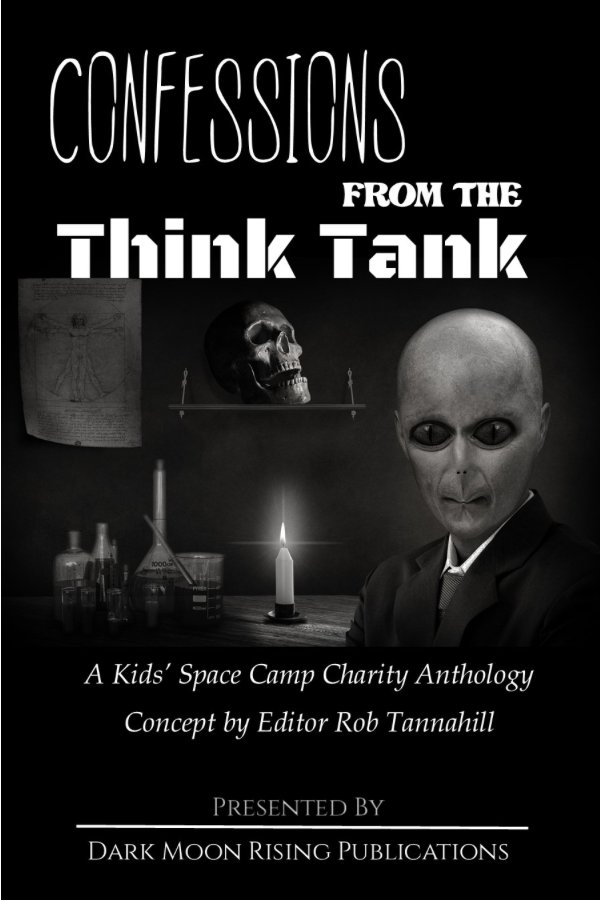
Part One of the Weird Wide Web Easter Episodes is Here!

I mentioned a little while ago that I had a short story, ‘The Rite of Spring’ (based on the Stravinsky ballet, of course), included in an Easter podcast on the Weird Wide Web. Well, a reading of it is now available to be heard on Spotify and Amazon Music. It’s here on YouTube, too; subscribe to the channel if you want to check out lots of great stories.

Other great writers whose work can be heard in this first part are Dawn DeBraal, Nora D. Peevy, C. Charles Knight, and J.C. Macek III. Please, go check out this and subsequent podcasts on the Weird Wide Web. You’ll have a blast! 🙂

The Tanah–Beginnings, Chapter Seven

[The following is the eighth of many posts–here is the first, here is the second, here is the third, here is the fourth, here is the fifth, here is the sixth, and here is the seventh–about a fictitious discovery of ancient manuscripts of a religious text of narratives and magic spells. Its purpose for my readers and me is to provide a cosmology and mythography on which I am basing much, if not most, of my fiction–short stories and novels. If anyone is interested in reading this fiction, he or she can use these blog posts as references to explain the nature of the magic and universe in my fiction.]

The ten precepts were indeed relaxed in the land of Spirus–too relaxed, in the opinion of a man named Lorenzos. He was a soldier in Spirus’ army, and he had a wife, Maryas, and two sons, Reynholdos and Ottos. The boys were born several years after their mother and father left Spirus to settle in the land of Canudos, which was north of Spirus.

Lorenzos left Spirus out of distaste for the country’s moral laxity, as he saw it. He was troubled by a need to have the highest ethical standards possible, without reaching the excesses of Puritos. In search of answers, Lorenzos meditated diligently. One day, he had a vision.

He saw a large serpent biting its own tail. Underneath was a sign that read:

THIS IS THE WAY THE WORLD GOES

Then Lorenzos’ eyes followed the body of the serpent from its tail to its head. When the vision disappeared, he had an answer to his problem.

The Ten Errors would be interpreted no less severely than this: we journey to the serpent’s brain and eyes, but avoid its nose and teeth. This means that reason and vision are the ideal, but indulgence in appetite, sensual pleasure, and violence causes self-destruction. Thus, Mad Thinking is lustful, violent thinking; Being Dazed by Images is indulgence in spectacles of lewdness; Scurrilous Language is obscene language, but harsh words are necessary to correct a child’s wayward behaviour; and family harmony is maintained by strict loyalty to one’s parents.

Spirus would never accept the severity of Lorenzos’ interpretation, and his vision of the serpent inspired another idea: those who migrate grow stronger. That is, one leaves the old way of life to start a new one elsewhere, like passing beyond the serpent’s bitten tail to its biting head, passing from weakness to strength. Therefore, he and Maryas went to Canudos, and had their sons there, also.

Lorenzos applied his philosophy with especial strictness on Reynholdos, since he was the first-born son. Reynholdos, though, thought of his father as if he were a mad dog from all his fierceness; indeed, Reynholdos imagined himself almost sacrificed for his father’s philosophy. Still, he never complained, nor was he embittered. He admired his father’s ideals and vision so much that he carried on the same philosophy with his own children, not altering an article of it. Lorenzos had had the revelation of the serpent; Reynholdos had had none. Who was he to amend his father’s wisdom?

Believing Canudos to be the land in which his father’s wisdom would flourish, Reynholdos would stay there, teaching his father’s philosophy to all; and he married a woman, Lizas, who had migrated to Canudos from Angulos with her mother. He and Lizas had three children: two sons, Reynholdos II, and Gionos; and Catyas, a daughter. They were very happy together for nine years.

Then Reynholdos begot another son by Lizas.

His name was Nitramius. Lizas chose the name, for it means “alien.” Indeed, this is how she saw her new son, for she had not wanted any more children after her daughter, Catyas. Reynholdos was indifferently happy about a new son, for in his mind, the more children he had, the happier a father he was. Lizas, however, was irritated at having to suffer through nine months of discomfort, all to have a child she’d never wanted. Nitramius’ siblings were born the one close after the other, in yearly succession; but Nitramius himself came five years after Catyas.

Though Lizas was annoyed with this new son, she looked into the eyes of the newborn babe and felt a mother’s love. Thus she loved and hated him. Out of these conflicting feelings came an unnatural urge to dominate the boy. Having worked as a nurse for many years, she was acquainted with matters of illness (her mind was also haunted by these matters). Seeing mildly erratic behaviour in the boy, and ignoring his prodigious intelligence, she told the family that Nitramius was feeble-minded. His siblings, naturally jealous of the attention he was getting, eagerly believed their mother, and hated the boy all the more.

They were relentlessly cruel to the boy, and his mother indulged them, for she wanted Nitramius to be timid. He thought of his family, and most of the people of Canudos, as mad dogs, for the neighbours of his family were no less cruel when they saw his family’s cruelty.

Nitramius ws artistic and intellectual, but his family ridiculed his ideas, calling them childish fantasies. Though they despised him, he refused to despise himself. As a young man, he once bought himself a beautiful, long, black silk jacket. It was expensive, though, and his family was angry with him for buying what he could not afford. Creditors came after him, and his brothers beat him for his extravagance. They threw him in a ditch, and left him for dead.

Instead of returning home, Nitramius tended to his injuries himself, and when he was well enough to move about, he used what money he had to find transportation out of Canudos. His travels took him to the land of Nawaitos, to the east of Canudos. In Nawaitos, he became a teacher, and quickly paid off his creditors.

Though at first Nitramius had difficulty adapting to his new home, he soon found himself able to feel as though he was one of the locals, despite how obviously different he looked as a foreigner. He met a girl there, they fell in love, and got married. They would not have children, though, for Nitramius was afraid that he would be as bestial to them as his own family had been to him. He saw the evil in his family, and he wanted the line to end.

The notion of his family flourishing in a great nation was agreeable to him, though, and his reputation as a teacher, philosopher, and singer grew as well. When seen in his black silk jacket, he was always approached with questions. With a new family, a new country, and a new-found respect, he could fashion his identity anew. If his family thought he was dead, he could consider them dead, too.

With a new identity came a new name. Tiring of the feelings of loneliness and isolation he got from being called “Nitramius,” now he would call himself “Rawmios,” meaning “on a high hill.”

The memories of his cruel family–his distant father, his lying mother, and his violent siblings–still gave him pain, though; and when he wished to start artistic projects–music, plays, poetry–he had few resources. Still, Rawmios used these shortcomings to gain the sympathy of the people of Nawaitos and beyond; for he would use his example to show how others who suffer can escape and thrive. Thus, in helping others, he helped himself.

Commentary

The ouroboros, perhaps borrowed from the Midgard Serpent of Norse myth, is used here as a symbol of the dialectical relationship between all opposites. It’s expressed here so perfectly: one extreme, as it were, biting the other, and every point in between is part of a continuum coiled in a circle. Such is eternity, and the yin/yang-like relationship of all duality. Neither Lorenzos nor Reynholdos Sr. could see that symbolism, though Rawmios would.

People do get stronger from migrating. Lorenzos and Rawmios did. Lorenzos’ weakness was in thinking he could be severe and avoid violence, but he didn’t avoid it…nor did his son or grandsons. Reynholdos Sr. couldn’t see the harm in his father’s thinking. Rawmios could; he wisely left family and country, and he thrived.

His father’s error was seeing no error in parents. Rawmios could see parental error, and thus he shunned parenthood. The error of seeing faultlessness is an example of the relationship between opposites in the ouroboros–truth in paradox.

Rawmios’ wearing of a long, black, silk jacket suggests the possibility of a mythical ancestor of a myth as also expressed in the Biblical story of Joseph and his ‘coat of many colours.’ Below is another poem presented with visual cues to reinforce meaning.

People who stay
in their country, like grass,
with the wind sway together.
They grow very little
and move even less. But the…one

who won’t lay
himself down–like an ass
that leaves slack its short tether
and idly will whittle
away its few years–but will…………….run

far away
from his nation, its crass
souls, and familiar weather
–his patience grows brittle–
will elsewhere shine, bright as the………………………sun.

My Short Story, ‘The Rite of Spring,’ on the Weird Wide Web Easter Podcast

On April 19th, an Easter podcast on the Weird Wide Web will feature, with the work of a number of other talented writers, a short story I wrote called ‘The Rite of Spring.’ My story was inspired, of course, by the ballet of the same name by Igor Stravinsky, for which I wrote up an analysis a few years ago.

My story follows the synopsis as used in the ballet. The story follows scenes of pagan Russia in the early spring, when a girl is required to dance herself to death in a rite of human sacrifice to propitiate the gods and ensure a good harvest in the coming fall. The story of the ballet is represented here in this performance, which uses Nijinsky‘s original choreography from the 1913 premiere, as well as the closest approximation possible to the original costume design.

Other writers who will be heard on this podcast are J.C. Macek III, Erin Banks, Dawn DeBraal, J.L. Lane, C. Charles Knight, Mark Mackey, Nora B. Peevy, and Rob Tannahill. I understand that the podcast will be on or around April 19th; I don’t know the exact time of the podcast, but if you’re interested, you can check this link, where more accurate info should be posted when everything is all settled and sure. It’ll be on Spotify, YouTube, Libsyn, and Amazon Music.

I hope you’ll all be there to hear some great writing! 🙂

The Tanah–Beginnings, Chapter Six

[The following is the seventh of many posts–here is the first, here is the second, here is the third, here is the fourth, here is the fifth, and here is the sixth–about a fictitious discovery of ancient manuscripts of a religious text of narratives and magic spells. Its purpose for my readers and me is to provide a cosmology and mythography on which I am basing much, if not most, of my fiction–short stories and novels. If anyone is interested in reading this fiction, he or she can use these blog posts as references to explain the nature of the magic and universe in my fiction.]

Medias, having devised the Ten Errors, was the first to comment on their meaning. These were his interpretations:

Mad Thinking is any kind of thinking that denies the fundamental unity of all things. By seeing only one side, we are blind to the other, and thus we sever things in half, denying unity. Seeing only one side of things leads to extremes, and extremes must be avoided. Mad thinking leads to, and is strengthened by, the next error.

Being dazed by images means being lulled or enticed by anything pleasing to the eyes, so much as that one ignores what is ugly or unpleasant and becomes attached to what is beautiful or pleasing. This, again, denies the middling unity of all things, divides everything into halves–pleasant and unpleasant–and fixating on the pleasant leads to hateful extremes. Impatience with the unpleasant leads to, and is strengthened by, the next error.

Scurrilous language is the use of words to be violent and hurtful to others. Communication’s unity ranges from this hateful extreme to its opposite–flattery. Moderate speech–praising and kind words when one deserves to hear them, and angry or critical ones when they are controlled–maintains unity. The scurrilous language of angry clients often leads to (as does that of angry employers) the next error.

All work and no rest is self-evidently extreme, denying the unity of all behaviour between this vice and its opposite, idleness. The need to work is a given reality; therefore, the need to avoid excessive work must be understood. The strain of too much work often leads to the next vice.

Family fighting denies the unity of proper family communication, whose unity ranges from this hateful extreme to its opposite, blind compliance. The differing individualism of people inevitably leads to family disagreements, but they must be settled in mutually satisfactory ways to maintain unity, and this precludes harsh words and contemptuous attitudes. Family fighting can build up a fury in some people that leads to the next error.

Murder denies the unity of all life, by trying to remove some of it. It is also self-evidently extreme. The contempt for life seen in murder can also arise in unhappy marriages, when contempt for one’s spouse leads to the next vice, which also sometimes causes murder.

Adultery denies the unity of the marriage bed, by climbing into someone else’s sheets. The other extreme, absolute immunity from temptation to adultery, is impossible in any husband or wife. The tendency to look at other men or women lewdly will happen, but touching them lewdly is a hateful extreme. This contempt for what belongs to others leads to, and is intensified by, the next vice.

Theft denies the unity that must be maintained between honestly making money and obtaining things with the use of it. Theft also comes from the addiction to pleasure caused by being dazed by images; furthermore, theft is self-evidently extreme. The dishonesty inherent in this vice leads to, and is strengthened by, the next error.

Lying denies the unity that must be maintained between having healthy relationships with others and obtaining what one wants by speaking truth. Lying often leads to, and is intensified by, the final error.

Greed is self-evidently extreme want, and it denies the unity between those who have much and those who have little. Being dazed by images often leads to this vice.

For many years, Medias and his family lived by these principles harmoniously. Another family settled in Nodos, and Medias’ youngest son, Puritos, befriended them. The young man was impressed with the virtue he saw in this family, who disagreed with the leniency they saw in Medias’ precepts. Puritos also started to disagree with Medias, thought their family tried to reason out the dispute amicably.

One day, Puritos went by Medias’ private hut, an erection much like a short tower in which the old man spent his hours of rest. Puritos could hear his father breathing heavily and belching in there. As Puritos listened, he remembered his mother complaining of how lonely she was in bed at night, since Medias often spent late nights in this small tower instead of lying beside her. Puritos also remembered the high moral standards of the father of the family who were their neighbours. Remembering Medias’ lenient ethics, Puritos began to suspect his father of lewdness.

Noticing that the door to the hut was locked, Puritos used all his strength to force it open. He saw his father naked and drunk. On a table inside was a bottle of wine, a goblet, and paintings of naked women. Puritos turned his head away in shock the second he unwittingly saw his father’s upraised phallus. The hut was already in a weakened condition, and the force with which Puritos opened the door caused the little tower to crumble to the ground, revealing Madias’ shame to his whole family.

Puritos’ brothers found a blanket with which to cover their father’s nakedness, and they put it on him carefully, not looking at his body. Medias hid the paintings from his family in time not to prove Puritos right in his accusations of his father. Therefore, the outrage of Puritos’ contempt for his father’s privacy was seen to outweigh the shame of Medias’ sin. Puritos was disowned by the family, but he was more than content to leave them, disgusted with his father’s lewdness and moral hypocrisy.

Puritos, his family, and the neighbours left Nodos forever (for the neighbours believed him), and they all journeyed further inland. They settled in the land of Spirus. There Puritos studied engineering and architecture in a local academy, and during this time he made amendments to the Ten Errors. He made their application much stricter, expanding the second Error to include being dazed by lewd pictures, and restricting the resting time of the fourth Error. The fifth Error would define family harmony as including loving, honest, and ethical parents, and meek, obedient children. The seventh Error would include gazing lasciviously at those other than one’s spouse as adultery; and the ninth Error would not excuse parents from lying to their children.

Puritos justified his changes by instructing his family and followers (for he was rapidly gaining fame as a philosopher in Spirus) that in our unified world, there is a Cycle of Decay, which at its extreme destroys all, replacing it with a new, fresh, pure beginning. If we are to survive, we must fight against this decay by being better than moderately good: hence his strict alterations of the Ten Errors.

Though his changes improved on Medias’ design somewhat, Puritos became too severe with them. He harshly punished his children whenever they were even slightly guilty of any of the Ten Errors; the Errors were also adopted as the supreme law of the land of Spirus, and criminals were similarly disciplined.

To have a symbol of the nation’s new ethical philosophy, Puritos had a tower built that would reach, and even surpass, the clouds; it would be the tallest building in the world, and if anyone, anywhere, tried to make a taller structure, an extension would be added to Puritos’ tower to ensure that it would always be the tallest building.

He started work on the tower immediately, and funds came from the government, which inordinately taxed the wealthy (in their opinion); for such taxation was part of a strict avoidance of the tenth Error, to avert greed. Merchants all over Spirus furiously opposed the building of this tower; to them, it was a waste of money that would be better used to keep the local economy healthy, in creating new jobs for Sprius’ population. Neither Puritos nor the government that backed him listened to the merchants: it was as though both sides spoke different languages, and neither could understand each other.

Puritos and his builders had been making a very impressive structure at first. The tower was almost touching the clouds, and the foundation was sturdy enough. Then word came of another tower being built in Vestis, to be taller than that of Puritos. Not to be bested, he had his workers accelerate their efforts, not at all concerned that their lack of rest was the fourth Error to be avoided. In their hurried work, their construction became increasingly careless, and finally Drofurb, Crim of the rock of the earth, caused the upper structure to collapse, damaging the lower tower and ultimately making the whole building fall to the ground. Puritos, his workers, and hundreds of people in the nearby area–including his family–were killed.

To worsen matters, the waste of money did cause harm to the local economy, as the merchants had predicted. From then on, the application of avoiding the Ten Errors would not be so strict, and offenders were shown more leniency.

Commentary

In this tale we yet again see what must be a branch from a common ancestor myth from which sprang such Biblical elements as the Decalogue, Ham’s seeing Noah’s naked drunkenness, and even a bit of the Tower of Babel (“it was as though both sides spoke different languages, and neither could understand the other” as the tower was built).

As for the meaning of the tale, we learn from it that moral laxity is a weak structure, soon to fall and bring shame to everyone. Excessive moral rigour, however, is also doomed to failure, as it is a product of overweening pride.

The higher the hubris, the harder the fall. Both Medias and Puritos were correct, each in his own way, about how to avoid the Ten Errors. A middle way between extremes is the best way, but a Cycle of Decay causes that middle way to move upwards, in opposition to the decline. One must, therefore, take care not to ascend on too steep a path, or else one may be blinded by the clouds, and not see the cliff one is about to fall off of.

The following is yet another concrete poem, this clumsy English rendering being the best possible one to present as much of the original’s multi-faceted meaning as can be shown.

When
ethics are
conceived with
little thought,
they’re like ramshackle huts:
they’re so ill-wrought

that when………
tempted, we blow on them like gales,
and we make ruins of men’s………..
long travails…………………………

When
pride
would
make
of
right
and
wrong
a
tower
reaching
too
high,

>>>>>>>>>>>>>>>>>>>>>>>>>>>>>>>>>>>>>>>>>>>>time,
>>>>>>>>>>>>>>>>>>>>>>>>>>>>>>>>>>>>>>stress,
>>>>>>>>>>>>>>>>>>>>>>>>>>>>>>>>>and
>>>>>>>>>>>>>>>>>>>>>>>>>>>>strain
>>>>>>>>>>>>>>>>>>>>>>>>will
>>>>>>>>>>>>>>>>>>topple
>>>>>>>>>>>>>it;
>>>>>>>hubris
>>>>>will
>>>fall,
>and
die.

The Tanah–Beginnings, Chapter Five

[The following is the sixth of many posts–here is the first, here is the second, here is the third, here is the fourth, and here is the fifth–about a fictitious discovery of ancient manuscripts of a religious text of narratives and magic spells. Its purpose for my readers and me is to provide a cosmology and mythography on which I am basing much, if not most, of my fiction–short stories and novels. If anyone is interested in reading this fiction, he or she can use these blog posts as references to explain the nature of the magic and universe in my fiction.]

When Queen Vita, her son, Prince Invidios, and his brothers and sisters arrived in their boat on the shores of the port city of Logos in the land of Nodos, they saw a most astonishing thing. It was night-time, and many members of the population of the city were seen to be walking in their sleep. The banished former queen and her sons and daughters came closer to the local inhabitants of the town, and her family could hear the Logosians talking in their sleep, too.

The sleepwalkers were reasoning amongst themselves, why they should have the right to things they had been denied by their king, a most repressive ruler named Despotes. The foreign family felt a strong urge to meet this king and his family, since they were used to the company of royalty. Invidios had a second reason for wanting to meet King Despotes: having been exiled by a similarly tyrannical ruler, King Patros, he wanted to kill the Logosian king, and rule in his stead.

The exiled royals slept in a humble inn for the night, having difficulty adjusting to such meagre accommodations. In the morning, the innkeeper gave them directions to the king’s palace. On their way there, they spoke to some of the Logosians and learned why their king was so severe: an oracle predicted his murder “by one in his own land” (by this, it was interpreted to mean, murdered by one of his own people). The severe laws were meant to protect the king.

Vita and her family also learned that the people of this city had a special talent for reasoning: the king himself was born in Logos, and was considered peerless in his gift for philosophical argumentation (or sophistry, as many of the people of Nodos would prefer to say). All of the people of the land of Nodos were famed for their roving curiosity and searching thirst for knowledge. Vita’s family were most impressed with these Nodosian traits.

When they reached the palace, her family were warmly welcomed, for it was obvious to all, from the elegance of their clothing, that they were also royalty. King Despotes showed an uncharacteristic openness to Invidios and his family, for the king assumed that no foreigner was destined to kill him. A sumptuous feast was prepared for all the nobles, local and foreign, that night; Vita, Invidios, and their family enjoyed the first meal of the sort they had been accustomed to since their banishment from Vestis. As he enjoyed his food and wine, and gave dissembling smiles to the king in their conversations at the great dinner table, Invidios busily planned out the murder of Despotes in his mind, for killing had become easy for him.

On the way to the palace earlier that day, Invidios had met a local apothecary and bought a potent poison. During the carousing after dinner, he put drops of the poison into the wine glasses of all the royal family when their backs were turned. By the next morning, when it was discovered by all that the king and his heirs were dead, Invidios and his brothers staged a coup. Its success came from Invidios’ ability to justify his regicide in a rousing oration. He told the people of Nodos that, under his rule, they were now all free of the tyranny of the dead king!

Invidios, as the new king of Nodos, quickly began to replace the harsh old decrees with newer, lenient ones. He easily won the love of the people for this, and their new-found freedoms caused their sleepwalking to end. King Invidios wanted a world combining the license of the rule of his father, Agnos, with the cultural sophistication of Vestis. The Nodosians, with their love of wisdom and yearning for new freedoms, would eagerly embrace this blend of ideas.

The sexes were equal, father-kin was replaced with mother-kin, and multiple lovers were available to all. Being naked in public was permitted, and in such a hot climate as Nodos was in summer, many–particularly the young and physically attractive–enjoyed this freedom. The surviving nobles of Nodos lay with Invidios’ sisters, and their children grew gigantically tall and proud.

King Invidios enjoyed his new power, but not its burdens, for scores of people came to him complaining of various injustices they’d experienced. It was incumbent on the king to be the judge of numerous trials, and he grew weary of it. Becoming increasingly indolent, he decreed that a crime would no longer be deemed so if good reasons could be given for committing it. He called this principle “going beyond good and evil.” This would reduce his burdens, but corrupt his entire country. (It was during this time, six years since he’d become king of Nodos, that Vita died. She was given a lavish funeral.)

Among the offences first to be made legal by justifying argument were these: relieving oneself in public places, on the grass and roads (public toilets were insufficient, and making enough for all of Nodos would cause a rise in taxes); and starting fires, including burning trees and grass (for warmth during the bitterly cold winters).

From this absurd reasoning, justification for worse vices ensued: greed was commended if it drove commerce and improved the economy; lying was permitted, for Invidios was dishonest in showing friendship to Despotes, and for a Nodosian to lie was to honour his king and saviour from tyranny; adultery was permitted, for Invidios gave everyone sexual freedom the very day he became king; murder was permitted if the victim gravely offended his killer, or if the killing was motivated by envy (besides, to kill was to emulate Invidios’ killing of Despotes, and this act would thus honour the new king); stealing was allowed, if one was too poor to feed one’s family without doing so (besides, Invidios stole Despotes’ crown); employers were allowed never to give their workers a day of rest, for continuous business would improve the economy; sons and daughters were permitted to be unfilial to their parents, and vice versa, if they had been mistreated; scurrilous language was allowed if one had been sufficiently offended or wronged; being hypnotized by images was considered good, because it is aesthetically pleasing, especially after much hard work; finally, the beliefs of the mad were tolerated on the grounds that they were “alternative perspectives.”

The result of these new freedoms was, of course, social chaos. The streets and parks reeked of excrement; forest fires were rampant; property was destroyed or stolen; honesty was rare, in business or among marriages; the blood of the murdered flooded the land; family discord was common; workers felt like slaves; speech was rarely civil; greed was deemed good; and madmen were the new philosophers.

One Nodosian, named Medias, lived with his wife and their three sons, each of whom had his own wife and family. They lived on a high hill, away from the fetid filth and fiery wildness of passion of all the other Nodosians. This family of farmers was a wise one. They lived quietly, humbly and peacefully–happily isolated from the wickedness of their compatriots.

One night, Medias dreamt of a huge wave of water submerging all of Nodos. He knew this was a portentous dream from Priff, the water Crim, for in Medias’ wisdom, he knew of a Reason higher than that of King Invidios, a Reason that reacts to excess with opposing excess. He said to his family, “The flood will clean away the foul filth of our corrupt nation; it will quench Crim Nevil’s fire and wash away the blood of Nodos’ victims. It will also kill all the wicked. So that we, too, are not killed, we must build a boat large enough to hold all of us and our animals.”

“Should we not warn the rest of the people?” asked his wife.

“They will not listen,” Medias said. “They err as unconsciously as they did when they walked in their sleep under Despotes’ rule. The first king was too rigid; this king is too lax. We need a ruler who follows a middle path.”

When the Nodosians saw Medias and his family building their boat high on the hill, far from the water, they thought him mad. Still, his madness was tolerated as an alternative wisdom…and it was.

A huge tidal wave approached the port of Logos, and the people with all their reasoning ability could not save themselves, for in their licentiousness they wandered all their days in oblivion, as if still sleepwalking. They were the first to be submerged, and the rest of Nodos followed quickly after. Medias and his family had finished making the boat just in time, and they and their animals were all safe inside it when the water had reached the top of the hill.

As the boat floated on the water, Medias and his family looked out the windows to see the drowned men and women of Nodos, many of whose bodies moved under the water as if they were on the land, walking in their sleep. They even saw the bodies of King Invidios, his sisters, and their huge sons and daughters.

After several weeks, the water receded, and the boat lay conveniently close to the hill where their farm was. Even more fortunate for them was how their farm was never touched with the water. Medias thanked Priff in his prayers. As for the rest of Nodos, all the excrement and blood were washed away, the fires were quenched, and the wickedness of the land was gone. Now the family could start anew.

Medias started with some new moral precepts, neither lax nor severe. These ten things were to be avoided:

THE TEN ERRORS

  1. Mad thinking
  2. Being dazed by images
  3. Scurrilous language
  4. All work and no rest
  5. Family fighting
  6. Murder
  7. Adultery
  8. Theft
  9. Lying
  10. Greed

These were written down and remembered throughout the generations, their meaning and interpretation extensively commented on.

Commentary

The many absurdities in this story, as well as its obvious derivations (a mix of flood myth with Moses-like moral code), show it to be allegory, not history. Is the land of Nod–Nodos–a land of nodding off to sleep or of wandering–the fusion being sleepwalking? Do such a land’s people err without knowing what they do? Is this not the essence of a wicked society?

Its kings are wicked: indeed, all leaders are so when they are too severe or too permissive. The wicked often have reasons for what they do, but these reasons do not excuse them for their wrongs. With the excesses of a tyrant come a clamour for reform, for freedom. When the freedoms from the new ruler cause chaos, decadence, putrefaction, and the fires of unruly passion, purifying waters must wash the filth away. Only rule in moderation will be a lasting rule.

Note the shifts from extreme reason to extreme unreason. This is yet another manifestation of those waves that go from one extreme to the other, a recurring theme throughout the Tanah.

Below is yet another of those concrete poems, translated and rendered as best as we scholars could to approximate the desired visual effect while retaining the meaning as accurately as possible.

Heads
of state must not grip tightly
their
poor
people; or
they’ll nightly
voice……..their
hatred…………in
their…………..dreams,
and…………………march
on………………………..kings
in……………………………killing
teams.

Heads
of state must not hold lightly
laws
and
morals; or
else, nightly,
thoughts….that
should………remain
in…………………dreams
will……………………..crawl
and prey with……..brute extremes.

Heads
of state
must ponder rightly
middle…….rule;……….so
men………………can………….nightly
lie…………………….in………………..bed
with…………………pleasant………….dreams,
and………walk
with……………thoughts
that………………………have
calm………………………themes.

My Short Story, ‘The Tunnel,’ in the ‘Beauty in Darkness’ Anthology

I have a short story called ‘The Tunnel’ in a new collection of short stories, poetry, and art, called The Beauty in Darkness: The Literary Tribute to TS Woolard, from Dark Moon Rising Publications. It is now available on Amazon (Kindle–$4.19, and Paperback–$25.99), as well as on Godless. Here is a video ad for it.

Other great writers in this anthology are: Edward Ahern, Alison Armstrong, Jesse Batista, Andrew Bell, William Bove, Pixie Bruner, Dawn Colclasure, Linda M. Crate, Candice Louisa Daquin, Quinn Rowan Dex, Ursula Dirks, Murray Eiland, Zary Fekete, Thomas Folske, Michael Fowler, Lindsey Goddard, Norbert Góra, Gerri R. Grey, Rowan Green, Megan Guilliams, D.M Harring, Kasey Hill, Toshiya Kamei, Katherine Kerestman, Shahbaz Khayambashi, Ian Klink, Taylor Kovach, J.L. Lane, Paul Lonardo, LindaAnn LoSchiavo, J.C. Maçek III, Brianna Malotke, Xtina Marie, Summer Mason, Cyndi Mays, Rick McQuiston, DW Milton, Shane Morin, Jason Morton, Bobbie Murphy, Michael Noe, Scarlet Norton-Duperre, Sergio Palumbo, Rick Powell, Shanna Renee, John Reti, KB Richards, M. Brandon Robbins, Neil Sanzari, Zachary Schneller, ReNait Suka, Michael Errol Swaim, Rob Tannahill, Tim Tolbert, Cass Wilson, and Amanda Worthington.

My story, ‘The Tunnel,’ is about a woman who is lured by a butterfly into a tunnel at a park on a rainy day. She feels drugged: is it something like the date rape drug, or is something supernatural going on (the basis of the supernatural elements can be explored in my blog posts on The Tanah)? In the darkness of this flooded tunnel, she in her disoriented state has to confront traumas from her younger years: will this confrontation kill her, or will it save her?

Please check out this collection of great literature and art. You’ll love it! 🙂

Factories

Once,
these
things
pulled
people
from the
commons.
Instead of breezes to breathe, men sucked the smoke
into their lungs, and bosses have become our kings.
Foul filth has replaced fresh air; as it is all puffed out,
through our sooty nostrils, so is it exhaled, all clouds

of black
to infect our
helpless sky.
These
cages,
owned
not by us,
the makers
of our goods,
keep us inside, where we are all paid prisoners’ wages.
Gone are the days when we could roam outside to see
soft blue above, with clouds of white instead of black.
Now, grey concrete has replaced the grassy greenery.

O, horror! Smoke
is floating, spreading
everywhere! Not in
our skies alone,
but also in
each
place
beyond
our land.
Countries
far from us,
contaminated
with this foul sickness, are making men and women
slave away in factories, breathing the noxious fumes.
Often, the doors are locked, so if a fire rages within,
the workers die a flaming doom, for bosses’ profits.

The ailing skies are
never blue, they’re only black
and grey. It’s always night above,
and never day. The air is poison!
These puffing pyramids of
power,
tombs
which
should
be for the
rich, not for
the working man,
will make a cemetery of the Earth. Afar, they look like mushroom clouds.
The world is dying. Greed is making graves. The green of cash supplants
the green of plants. The rule of gold has long replaced the golden rule.
End the reign of fire and stench! Mr. President, tear down these walls!