I'm merging the variety of topics I've blogged about--which include literary and film analyses, anarchism, socialism, libertarian-leaning Marxism, narcissistic abuse, and psychoanalysis--into a coherent philosophy centred on dialectical materialism, dialectical monism, and object relations theory. Now, one dialectical opposition is that between the erotic and the ascetic, so accordingly, my writing encompasses the sexual as well as the philosophical; the former can be found in my publications on the Literotica website, as well as my self-published (erotic) horror writing on Amazon.
(The following is an excerpt from my upcoming horror novel, ‘Sweet’.)
Determined to stop that psychotic Connie from killing, cooking, and eating their baby, Larry rode into town within twenty minutes, frantically racing on his bicycle as fast as he could.
As he rode down Main Street towards downtown, he saw City Hall and the police station coming closer on his left. Upset from how the authorities were giving him no help at all, he turned his eyes away and looked to his right, where he saw a Mac’s Milk store.
Exhausted from both his lack of sleep and his incessant riding, he knew he needed another coffee. He rode over, parked and locked his bike, then went in.
All this caffeine is really bad for me, he thought, but I just can’t stay awake without it.
He bought a hot coffee and got two creams, a sugar packet, and a stir stick. He took them over to a table by the window, sat, and mixed the cream and sugar in.
He took a small sip, but found it uncomfortably hot; so he decided to get up and look around while his coffee cooled a bit. He went to the magazine stand across from his table and noticed an issue of Psychology Today. He picked it up and began flipping through the pages.
He found an article on psychiatric drugs and their relevance in therapy. Interested, he began reading. Out of the corner of his eye, he noticed the automatic door to the store opening, and a person with long, black hair coming in. Not bothering to see the person’s face, he kept reading, then reached over to take another sip of his coffee. Still too hot.
He went back to reading the article, standing by the magazine stand. He heard someone pass behind him slowly, but never looked away from his magazine. After reading a little more, he took the magazine with him back to his table.
He read some more, snorting with disgust at the author’s recommendation of certain psychiatric drugs, ones Larry felt were especially bad for patients in terms of side effects. He took another sip of his coffee: it wasn’t so hot now, so he began drinking it faster as he continued reading.
A few minutes later, he’d finished drinking his coffee, wincing at its oddly bitter taste. He also finished reading the article, sneering at the author’s advocacy of the use of other psychiatric drugs.
When am I going to find a psychiatrist who advocates natural settings for patients, instead of chemicals? he wondered. Am I the only one?
He put the magazine back on the stand, then left the store. He unlocked his bike, got on, and started riding, continuing toward Connie’s house, where he was ready to risk everything and get their baby daughter from her.
It was a dark night, with clouds covering the stars and cutting across the quarter moon. Only the street lights gave any substantial visibility. He rode on.
He crossed the road and passed the elementary school. Unless I can save you, Candy, you’ll never see one of those, he thought. I must hurry and get to Connie’s house.
Now he’d got to that park, with all its tall trees and their foliage blocking what little light was coming from the moon. The street lights weren’t working around the park, so it was practically pitch black.
And it was here that Larry started feeling dizzy, light-headed, and unable to concentrate. What little he could see was blurry, and he felt a quickly growing lethargy taking him over.
He fell off his bike. Landing on the park grass, he didn’t hurt himself, but he hadn’t the strength to get back on his bike. He clumsily tried to get up, stumbling and staggering. He felt like a drunken man, though he’d had not a drop of liquor that night.
“Larry,” a voice whispered.
He was too disoriented to figure out where it was coming from, but he was pretty sure whose voice it was.
“Larry, I’m over here,” the voice, female, whispered again.
Thinking it had come from behind, he swung around, then fell on the grass. He could feel his consciousness fading away, but he fought as best he could to stay awake. Remembering when Connie had tried to bury him alive eight months before, this was the scariest sleepiness ever.
He clumsily got up and tried to focus on anything visible in the darkness. He could see nothing, but he couldn’t be any surer than he was of who was with him.
“Didn’t see me in the Mac’s Milk store, did you, Larry?” she said softly, her voice seeming to rotate in all directions around him. “I was counting on that when I dropped the pill in your coffee.”
“Connie…you…crazy…bitch,” he slurred, trying desperately to stay standing. “You haven’t…eaten…our daughter yet, have you?”
“No, no,” Connie said. “She’s at the house, the babysitter taking care of her. I’ll make sure the babysitter is gone when we’re there, though. Don’t want her to see what I’m gonna do to you and Candy.”
“Don’t…hurt…the baby.”
“Why don’t you just let yourself lose consciousness,” Connie said, apparently walking in circles around him, for her voice seemed to continue moving that way around his head. “You’ll be knocked out in a minute anyway, no matter how hard you try to resist.”
He kept trying to stay awake, building anger and fear to give himself adrenaline to counteract her drugs. He was standing and moving with the clumsiness of a man who’d had over a dozen glasses of whiskey.
“Oh, well,” she said, tapping something in her hands that was obscured in the darkness. “You’ll have to be knocked out in a more literal way.”
He then felt a wooden stick crack against the back left corner of his head. He fell on the grass, and everything went black…
************
Larry woke up, tied to a table in a room in Connie’s dimly-lit basement. The fibres of the ropes binding him were digging into his bloody wrists and ankles as he struggled futilely to break free.
Connie was standing to his right, looking down on him and holding little Candy in her arms. Connie grinned as she watched him blink his eyes to focus better.
“See, Larry?” she said, bringing the baby up close to him. “This is our baby Candy. Candy, look down at Daddy.” She held Candy so she could see Larry, who tried to hide his fear and despair with a loving smile.
“Connie,” he said with a raspy voice. “Or should I call you Wilma Sweeney?”
“Oh, so you’ve done a little research on my past, eh?” she asked, walking away with Candy and placing her on a table by Larry’s feet. Then she picked up a butcher’s knife.
“No!” he screamed, and began crying. “Don’t hurt her!”
Connie put her finger to her lips to tell him to be quiet. Candy began crying, and Connie calmed her with caresses on her belly, gently shushing her.
“I guess that farmer dug you out of the hole I put you in,” she said, grinning down at Candy and swinging the knife in the air in a chopping motion. “Lucky you.”
He strained his neck so he could see Candy on the table. The baby smiled and giggled innocently as Connie tickled her belly and smiled lovingly down at her. “Please, Connie,” he begged. “Don’t.”
“I will, Larry. You won’t stop me. Just accept it. Then I’ll kill you; but this time, I’ll make sure you’re dead.”
“How?” he sobbed.
“I’ll eat your flesh after I eat hers. That way, the whole family will be together, in my belly.” She gestured with her arm, about to bring the knife down on Candy.
“No!”
(If you liked what you just read, please sign up for my newsletter. A link to it is at the side of this page.)
It’s great to talk about anarchism with people who already agree with us, but how about persuading all those people out there who don’t agree? With all the government and corporate corruption, which is spreading like an infection all over the world in various forms, causing so much disaffection among the people, there seems, paradoxically, no better a time than now to convert as many people as possible to the anarchist cause…and not just to agree, but to take action.
So how do we do that?
I don’t have anywhere close to all the answers to that question, but I’d like to suggest a number of ideas we can use.
1. Appeal to the workers. A no-brainer, of course. Still, I’ve noticed some ‘anarchists’ on the Facebook discussion groups who seem more interested in ‘theory’ and politically correct orthodoxy than in dealing with this all-too-obvious concept.
In George Orwell’s dystopian novel Nineteen Eighty-Four, Winston Smith says, “If there is hope…it lies in the proles.” (George Orwell, Nineteen Eighty-Four, New York: Penguin Group, 1981, p. 61) The proletarians have the sheer numbers to overpower the elites. They need to “become conscious of their own strength.” (ibid.) The rich and powerful know how to control them, with distractions: “films, football, beer…filled up the horizon of their minds.” (ibid., p. 63) You can get the people all worked up about nonsense like that, but how is it “…they could never shout like that about anything that mattered?” (ibid., p. 62)
Unionism has been flagging recently, in no small part due to corrupt union bosses. We need a resurgence in legitimate syndicalism. If we can swell up the membership of the IWW (to my understanding, a much better organization), that would help in a big way. We need to pluck up the workers’ courage (especially in Asian countries, where there’s far less unionism of any kind), and get them to strike more, including in the offices. We all must remember that the ultimate goal is to seize control of the means of production, not just put pressure on bosses, and certainly not suck up to the State, even if the government is left-wing. The workers must become the bosses.
2. Avoid divisiveness. Anarchism is about equality for everyone, without exception. No one gets preferential treatment of any kind. It’s contrary to the principles of anarchism to say that one sex should have privileges over the other, or that certain racial or ethnic groups should have entitlements over others, or that there should be any special treatment based on age, sexual preference (of consenting adults), religion, or physical or mental disability. (The examples I’ve given are not meant to be exhaustive, so please forgive any oversights here.)
Not only is such favouritism obviously unfair (regardless of whether rationalized by supposed superiority, which no anarchist believes in; or by a bogus compensating for past grievances, for the establishment of total political and economic equality for all should be sufficient to redress wrongs), but it will cause resentment and division in the anarchist community.
A lot of people seem to think ‘avoid divisiveness’ is a cleverly-worded excuse to tolerate or even encourage such unacceptable nonsense as ‘manarchy’ or ‘anarcho-capitalism’. Though some supporters of that rubbish use those kind of honeyed words, I’m not doing anything of the sort here. I assure the reader that I am not one of those slick-talking phoneys. I understand that anarchy means no ‘archy’ or any kind: no patriarchy (or theoretically possible ‘archies’, like matriarchy, for that matter), no capitalist exploitation, no hierarchies of boss/employee, nor of any based on race, ethnicity, religion, creed, or sexual orientation.
That said, we must eliminate our enemies or rivals through reasoned argument and persuasion, getting them to give up their irrational attachment to capitalism, sexism, racism, or any other form of bigotry. Hostility, personal attacks, four-letter words, and name-calling will be counter-productive, as it will harden their hearts against us, and make our job more difficult. We want to convert them to our cause, not strengthen and ossify their resolution against us.
The mainstream media are masters in manipulating public opinion and stirring up divisiveness to distract us from the more pressing matters in the world. The Zimmerman trial, for example, deftly swayed people’s attention from the trial of Bradley Manning , whose conviction was the elite’s retaliation against him for exposing their war crimes in the Iraq War, etc. I don’t like verdicts that are biased in favour of whites over blacks any more than any other anarchist; but we’ll do a better job of helping the black community by focusing on bringing down the whole system, government and corporate, that hurts African Americans, than we will by letting the media get the masses mad at each other. The elite is the enemy; they conquer us by dividing us.
Similarly, the media used the gay marriage issue to distract millions of people from noticing the passing of the Monsanto Protection Act several months ago. Again, I want gays to have the freedom to love their partners in every way straights do, as does every other reasonable person, but we mustn’t let the media distract us and polarize us. Gay rights will be best protected after–not before–the anarchist revolution finally happens, when we won’t need a government to give gays, or anyone else, permission to marry.
One other thing: don’t feed the internet trolls on anarchist Facebook pages, etc., when they say bigoted things. A lot of them work for the governments and corporations to undermine us and the work we do. We mustn’t let them bait us, as I’ve seen them do many times online. They thrive on our indignation and anger. Ignore them, delete their posts/comments, and ban them from our discussion groups.
3. Plan the revolution. We must learn from the mistakes of anarchists in the past, and also plan how best to prevent the misfortunes that befell the revolutionaries of the Paris Commune, the Free Territory of Ukraine, and anarchist Catalonia.
The points I wish to make here are by no means exhaustive, and for many readers, this will be little more than review of what they’ve already read many times before; but it isn’t enough merely to know of these cautions–we must always be mindful of them. May my repetition thus be a helpful push in that mindful direction.
Plentiful food and supplies must always be available, to satisfy the needs of all when the revolution disrupts normal daily business for an extended time, as Kropotkin discussed in The Conquest of Bread. (Peter Kropotkin, The Conquest of Bread, New York: Dover Publications, 2011, pp. 61-95)
The revolution must be global in reach, and it must be permanent, until worldwide anarchy is attained. The anarchist Catalonians and Ukrainians were defeated in large part because they didn’t go far beyond their domains. Also, their attempts to associate with Bolsheviks, Stalinists, and other state socialists led to their downfall. Compromise with their left-wing rivals, paradoxically, led to more divisiveness, and to their defeat.
Seize not only the means of production and the government buildings, but seize the banks, too. The Paris Commune didn’t do that.
Get the police on our side. If we can somehow convince them that the authority they’re loyal to is illegitimate, we can get at least some of them on our side, and reduce their ability to brutalize us when we protest.
OK, these are just a few thoughts of mine. I’ll understand if you don’t agree with some of what I say, but in any case, I hope this can help in the fight against capitalism, the State, and all forms of inequality. Peace and love, comrades.
(If you liked what you just read, please sign up for my newsletter; a link to it is at the side of this page.)
Act One: In the Prologue to Act One, the Chorus tells of two families in Verona, Italy, who have hated and fought with each other for many years. The son of one family and the daughter of the other fall in love and kill themselves. Their suicide ends the families’ fighting, and their story is “the two hours’ traffic of our stage.” The Chorus then begs the patience of the audience for any imperfections in his synopsis of the play, promises that the actors will fill in any details he’s left out, and leaves. (See my ‘Analysis of R&J’, first quote.)
On the streets of Verona, servants of the Capulet family discuss their hatred of the Montague family. They meet servants of the Montagues: a Capulet servant bites his thumb at the Montagues to provoke them. Tybalt, a Capulet, comes, as does Benvolio, a Montague. Benvolio tries to stop a potential fight, reminding everyone that the prince has expressly forbidden any more fighting on Verona streets. Benvolio says he only wants to keep the peace. Tybalt says he hates peace, hell, all Montagues, and Benvolio.
The two families begin a violent brawl right there on the street. Even Old Capulet and Old Montague call for their swords so they can join the fighting; Lady Montague forbids her husband to fight. Finally, Prince Escalus and his men arrive, stopping the fighting. The prince threatens death to the next ones to start another brawl.
After everyone leaves, Benvolio speaks with Old Montague and his wife about their son, Romeo. Though glad that he wasn’t involved in the brawl, they worry about him, for he is always sad. They see him coming, and Benvolio goes to talk to his cousin, to see if he can find out what’s troubling him.
After Romeo expresses his annoyance, in a plethora of paradoxes (see my ‘Analysis of R&J’, second quote), at the recent fighting, he tells Benvolio of his unrequited love for a beautiful girl named Rosaline. She will live a chaste life, so Romeo has no hope of having her.
Meanwhile, in the Capulets’ house, Old Capulet is with Paris, a count, discussing a big party he will have in his house that night. Paris hopes to marry Capulet’s daughter Juliet. Capulet invites Paris to the party and encourages him to speak with Juliet, but reminds him that she is still very young, not even 14 years old. It remains to be seen if she’ll like Paris.
Capulet tells a servant to go about Verona and invite everyone other than the Montagues to his party. He gives the servant a list of the names of those invited. Unfortunately, the servant can’t read. He leaves the house and walks about the streets, confused.
Not knowing Romeo and Benvolio are Montagues, the servant goes up to them and asks if they can read out the names for him. Romeo reads while the servant memorizes. When Romeo comes to Rosaline’s name, he is intrigued, asking about the party. The servant says it’s being held at the Capulets’ house, and as long as they aren’t Montagues, they’re welcome to attend. The servant leaves.
Romeo wants to go there to see Rosaline. Benvolio promises Romeo will see other beautiful girls who’ll make him forget all about her.
Back in the Capulets’ house, Lady Capulet has the Nurse fetch Juliet. After the Nurse jokes about amusing memories of Juliet as an infant, Lady Capulet asks if Juliet thinks she can love Paris. Both Lady Capulet and the Nurse speak glowingly of the count, but Juliet will have to see if she will like him or not.
That night, Romeo, Benvolio, their witty friend Mercutio (kinsman to the prince), and other friends go down the streets toward the Capulets’ house, merrily chatting. Romeo stops, having premonitions about the night because of a dream he’s had. Mercutio insists that dreams are idle nonsense. Romeo insists they can presage the truth.
Then Mercutio says Queen Mab has been in Romeo’s dreams. Mercutio describes her as a tiny fairy that could sit on one’s fingertip. She rides a tiny chariot and goes into men’s noses, reaching their brains as they sleep. In their dreams, she makes their wishes come true. Again, Mercutio insists that dreams are idle nonsense.
Benvolio insists that they hurry on to the Capulets’, for they’ll soon be late and miss supper. As Romeo goes, he prophesies this night will be a fateful one, ultimately leading to his destruction. Nonetheless, he charges ahead, embracing his fate, whatever it may be.
Wearing masks, the boys successfully get in the house and look around. Looking for Rosaline, Romeo sees Juliet instead, and instantly falls in love with her, saying he “ne’er saw true beauty till this night.”
Tybalt recognizes Romeo, and calls for a servant to fetch his sword, for he wants to fight Romeo right there. Old Capulet asks Tybalt why he’s so angry, and he says Romeo has come to spoil their party. Capulet tells his hot-headed nephew to be patient and endure Romeo. Tybalt says he won’t endure him; Capulet, now angry, tells him he will. Tybalt grudgingly endures Romeo, but secretly promises to have his revenge later.
Romeo, meanwhile, takes Juliet by the hand and compares it to a holy shrine; and though his own hand has profaned hers, his lips are two pilgrims, who will atone for the sin with a kiss. She, now as in love with him as he is with her, accepts his kisses.
Later, Romeo learns from the Nurse that she, to his dismay, is a Capulet. As he is leaving the house, Juliet has the Nurse go up to Tybalt and find out who Romeo is. The Nurse tells Juliet what Tybalt knows: that Romeo is a Montague. (See my ‘Analysis of R&J’, third quote.)
Act Two: The Chorus recites another narrative sonnet, about Romeo no longer being in love with Rosaline, but this time being in love with a girl who returns his love.
As Romeo’s friends return home, he goes back to the Capulets’ house, jumping over the orchard walls. Mercutio taunts him, thinking he’s still in love with Rosaline.
In the orchard, Romeo sees a light from one of the windows (see my ‘Analysis of R&J’, fourth quote). Juliet emerges: thinking she’s alone, she declares her love for Romeo (quotes five and six). Romeo is delighted to hear of her love for him. He reveals himself, surprising her. They declare their love for each other, then make plans to get married. As dawn approaches and Juliet is being nagged by the Nurse to come to bed, the young lovers say good bye and Romeo leaves (see the sixth quote).
He goes to the humble abode (‘cell’) of Friar Laurence, who’s been contemplating all the medicinal properties of herbs. Romeo tells the friar he no longer loves Rosaline, but the Capulet Juliet instead. Laurence chides him for his inconstancy in love, but agrees to marry him to Juliet, hoping to end the family feud.
The next day, on the streets of Verona, Romeo meets with Benvolio and Mercutio, who wonder why he didn’t go home with them the night before. The Nurse comes to speak with Romeo, but Mercutio taunts and angers her first. She reluctantly agrees to have Juliet meet with him in Friar Laurence’s cell to be married.
The Nurse goes back to the Capulets’ house, where Juliet is impatiently waiting for an answer from Romeo. Still reluctant to help Juliet in marrying him, the Nurse delays giving her his answer, using her aches and fatigue as excuses. Finally, after Juliet gets angry, the Nurse says that if Juliet is free to go to Friar Laurence’s cell that day, he’ll marry her to Romeo.
She goes there, and she and Romeo get married. Friar Laurence, however, advises them to love moderately.
Act Three: On the streets of Verona during that very hot afternoon, Benvolio worries about getting into a fight with Tybalt, who’s challenged Romeo. Mercutio would welcome a fight with Tybalt, who arrives with other Capulets.
They ask about the whereabouts of Romeo, who then arrives. Tybalt calls him a villain, but Romeo, now secretly his kinsman, won’t fight him. Angrier, Tybalt attacks Romeo, who still won’t fight back.
Furious about Romeo’s “vile submission”, Mercutio fights Tybalt in Romeo’s stead. Romeo wants to stop the fight and comes between them, but Tybalt mortally wounds Mercutio, who, dying, curses both families (quote eight). He’s taken away, and he dies offstage.
Enraged, Romeo wants to avenge his friend’s death. He fights Tybalt, killing him. He flees before the prince and his men can arrest him. When the two families and the prince learn of what’s happened, Lady Capulet complains that Romeo must die for killing Tybalt; Old Montague reasons that, in killing Tybalt, Romeo merely did what the prince would have done anyway, as punishment for killing Mercutio, the prince’s kinsman. Therefore, instead of using the death penalty to punish Romeo, the prince banishes him from Verona, threatening death if he ever returns.
Not knowing what’s happened, Juliet is at home in her room, thinking loving thoughts about Romeo. The Nurse enters, telling her that Romeo killed Tybalt. Juliet is torn between her loyalty to her husband, requiring her loving words, and her loyalty to her cousin, requiring her curses on Romeo.
Romeo is hiding in Friar Laurence’s cell, preferring death to banishment, since there is no life outside of Verona, without Juliet. The Nurse visits, telling Romeo of Juliet’s tears over Tybalt’s murder. Guilt-laden Romeo wants to kill himself; the friar chides him for his “womanish” tears. Then Friar Laurence reminds Romeo of how lucky he is: he killed Tybalt, instead of vice versa; Prince Escalus could have had Romeo executed, but he’s had Romeo banished instead.
Next, the friar devises a plan to help Romeo and Juliet. Romeo will go to Mantua. Friar Laurence will plead for the prince’s forgiveness for Romeo, and in time, Romeo will be allowed to return and be reunited with Juliet. This gives Romeo hope. Romeo will go to Juliet’s bedroom, lie with her that night and comfort her before he has to leave the next day.
In the Capulets’ house, the sadness of the family makes it a bad time for Paris to woo Juliet. Nonetheless, Old Capulet wants Paris to marry his daughter.
That night, in Juliet’s bed, she and Romeo have made love, and dawn is coming: Romeo must leave. Juliet doesn’t want to admit that morning has come, and insists that it’s still night. But he must go. The Nurse comes in and tells them Lady Capulet is coming. Romeo leaves, going down from her window into the orchard: Juliet has a premonition she’ll look down on him again one day, but he’ll be dead.
Her mother comes in, and after speaking of having someone hunt down Romeo in Mantua and kill him, she mentions Old Capulet’s plan for Paris to marry Juliet. Juliet refuses to marry him, and when Old Capulet hears of her disobedience, he angrily threatens to disown her.
A tearful Juliet asks for words of comfort from her mother and the Nurse, neither of whom give her any. Instead, the Nurse says she should forget Romeo and marry Paris. After the Nurse leaves, Juliet no longer regards her as a friend or confidante. She goes to Friar Laurence’s cell.
Act Four: At the friar’s cell, he and Paris discuss Paris’s marriage plans with Juliet. When Juliet arrives, she and the friar find a private place to speak after Paris leaves.
Desperate to prevent this wedding, Juliet wants to die. Friar Laurence has another idea to prevent it: if she would drink a medicine of his creation, it would make her seem dead in every way–no breath, no heartbeat, no movement from her body–but she’d really be fast asleep for 42 hours. Her funeral would be held, and she’d be buried in the family tomb.
Romeo would receive letters from the friar, explaining the plan. Romeo would sneak back into Verona and to the tomb, get reviving Juliet, and escape with her to Mantua. She eagerly takes the vial of medicine.
Back at home, Juliet apologizes to her father and agrees to marry Paris. After saying goodnight to her mother and the Nurse, Juliet is alone in her bedroom, holding the vial and fearing any possibility that the plan may not work. Fearing marriage with Paris even more, she drinks the drug.
The next morning, with musicians and servants getting the wedding party ready, the Nurse goes to wake up Juliet, but finds her apparently dead. She hysterically calls for Juliet’s parents, who rush to see her and mourn with the Nurse. The wedding party has now become a funeral.
Act Five: On a street in Mantua, Romeo speaks of a dream he’s had of Juliet finding him dead, then of him reviving and being an emperor.
Balthasar, a servant to Romeo who knows nothing of Friar Laurence’s plan, tells him Juliet has died. A mourning Romeo is determined to go back to Verona, to kill himself in her tomb so they’ll be together in death.
He finds a poor apothecary, and wants to buy poison from him. The apothecary reluctantly takes Romeo’s money and gives him a powerful poison.
In Friar Laurence’s cell, Friar John comes to see him, after trying to deliver Laurence’s letters to Romeo in Mantua. Laurence asks John if he received any letters from Romeo. Friar John tells Laurence that he wasn’t able to get to Mantua, for he was detained in the house of a sick man believed to have an “infectious pestilence”. He hasn’t given Romeo Laurence’s letters. Friar Laurence must now hurry to the Capulets’ tomb.
That night, at the tomb, Paris goes to pay his last respects to Juliet. Romeo and Balthasar also arrive. Romeo tells Balthasar to leave; Balthasar does, but he hides nearby, worrying about Romeo. Romeo comes to the tomb and confronts Paris, who assumes Romeo wants to do shame to the bodies. They fight, and Romeo mortally wounds Paris. Dying, Paris asks to be lain near Juliet. Respecting his wish, Romeo brings his body near where Juliet lies.
During the fight, a page has called the watch, so a mob of people will soon come.
In the tomb, Romeo sees the bodies of Juliet and Tybalt. He repents killing Tybalt, then looks on Juliet, amazed that, even though dead, she hasn’t lost any of her beauty. He imagines personified Death is in love with her, and keeps her beautiful to be His lover. Sobbing Romeo hugs and kisses her one last time, then drinks the poison, which kills him within seconds.
Friar Laurence arrives and sees dead Romeo, while Juliet is reviving. The friar tells her the sad news and, saying he’ll make her a nun, begs her to leave with him, for a mob of people can be heard approaching the tomb. Too afraid to be found there, the friar runs off.
Juliet notes that Romeo’s drunk poison, but left none for her. She hopes to taste some on his lips; she kisses him, and feeling his lips’ warmth, knows he’s only just died. This adds to her heartbreak.
Hearing the mob coming nearer and nearer, she knows she must act quickly if she is to die with him. She takes his “happy dagger” and stabs herself, falling dead on his body.
The mob arrives, along with Capulet, Lady Capulet, the prince, and Old Montague, who says that Lady Montague has died of grief because of Romeo’s banishment. The friar also returns, explaining how Romeo and Juliet were secretly in love, and that he married them.
Once all has been revealed, the prince rebukes Old Montague and Old Capulet for the “scourge” caused by their hate; and because the prince has been too lenient with them, he himself has lost two kinsmen, Paris and Mercutio (quote nine). The families repent of their hate, and the two grieving fathers promise to have monuments built in honour of each other’s child.
(If you liked what you just read, please subscribe to my newsletter; a link to it can be found at the side of this page.)
Romeo and Juliet, Shakespeare’s first great tragedy (his very first being Titus Andronicus), was probably written around the early to mid-1590s. Its plot was based on an Italian tale, translated into verse as The Tragical History of Romeus and Juliet by Arthur Brooke in 1562. Shakespeare expanded the plot by developing supporting characters, particularly Mercutio and Paris.
The archetypal young lovers have the bad luck of being born into two powerful families, the Montagues and the Capulets, who have hated and fought with each other for as long as can be remembered. Romeo’s and Juliet’s love for each other is as passionate as their families’ hatred for each other is virulent. Fate seems to conspire against the lovers. Romeo is banished from Verona for killing Juliet’s cousin Tybalt, who’s killed Romeo’s friend, Mercutio. (The latter victim is kinsman to Paris and the Prince of Verona, who’s tried unsuccessfully to stop all the fighting.) The lovers’ misfortune continues with Juliet’s seeming suicide–misinterpreted as actual by Romeo, who poisons himself in her tomb–and her actual suicide on seeing his body. With the lovers’ deaths at the end of the play, Old Montague and Old Capulet finally end their hatred. The tragedy seems to be heaven’s only way of stopping the feud.
The play is set mostly in Verona, Italy, and briefly in Mantua. Here are some famous quotes:
Two households, both alike in dignity,/In fair Verona where we lay our scene,/From ancient grudge break to new mutiny,/Where civil blood makes civil hands unclean./From forth the fatal loins of these two foes,/A pair of star-cross’d lovers take their life;/Whose misadventur’d piteous overthrows/Doth with their death bury their parents’ strife./The fearful passage of their death-mark’d love,/And the continuance of their parents’ rage,/Which, but their children’s end, nought could remove,/Is now the two hours’ traffic of our stage;… (Chorus, Prologue, lines 1-12)
Why then, O brawlinglove! O lovinghate!/O any thing, of nothing first create!/O heavylightness! Seriousvanity!/Mis-shapenchaos of well-seemingforms! (Romeo, I, i, lines 174-177)
My only love sprung from my only hate!/Too early seen unknown, and known too late! (Juliet, I, v, 136-137)
But soft! what light through yonder window breaks?/It is the east, and Juliet is the sun! (Romeo, II, ii, lines 2-3)
O Romeo, Romeo, wherefore art thou Romeo? (Juliet, II, ii, line 33)
What’s in a name? That which we call a rose,/By any other name would smell as sweet. (Juliet, II, ii, lines 43-44)
Good-night, good-night! Parting is such sweet sorrow/That I shall say good-night till it be morrow. (Juliet, II, ii, lines 185-186)
A plague o’ both your houses! (Mercutio, III, i, line 103)
All are punish’d! (Prince, V, iii, line 294)
Apart from the theme of fate, the most important themes of this play are those of dualism and duality. The words in boldface in the above quotes give some of the many references to dualism, or opposites that either complement or do battle with each other, or duality, groups of two.
Significantly, the very first word of the play is ‘Two’, and the Chorus’ opening sonnet in the Prologue to Act One is riddled with references to ‘two, ‘both’, ‘pair’, and juxtaposed opposites, as well the doubled ‘civil’ in line four. This emphatic reference to duality and dualism clearly establishes these central themes, right at the beginning of the play. (Incidentally, there are two narrative sonnets that the Chorus recites; the second one, in the Prologue beginning Act Two, is usually omitted in productions of the play.)
Other examples of duality are, of course, the boy and girl who are in love, but from two families that hate. Indeed, this is as much a hate story as it is a love story, the hate giving paradoxical intensity to the love.
Two other opposites, given shortly after the Chorus’ first narrative sonnet, are Benvolio (literally, ‘good will’), who is Romeo’s well-meaning, peace-loving cousin and friend; and Tybalt (the ‘prince’ or ‘king of cats’: I wonder, is his name, its spelling at least, a pun on ‘tyrant’?), Juliet’s fierce, belligerent cousin. The cousins’ opposition is again highlighted in the opening fight scene, further establishing the dualism theme at the beginning of the play.
Other opposites are Friar Laurence, Romeo’s ‘surrogate father’, as it were, and the Nurse, Juliet’s ‘surrogate mother’, since their actual parents seem to show little interest in their lives. The friar would have Romeo and Juliet married, for he sees in their union an end to the families’ fighting; whereas the nurse is reluctant to match the lovers throughout the play, fearing the ill consequences of their most unlikely match-making.
Of especial importance to the play’s symbolism is the opposition of night and day, of light and dark. Interestingly, most of the wooing and love-making is at night, and most of the fighting in the day; this suggests a yin and yang-like intermingling of opposites. The perfect mingling of opposites is in all of the many references to stars throughout the play, for stars are lights in darkness. To a lesser extent, this mix of light and dark is also seen in the references to the moon.
The intermingling of opposites is also apparent in the many paradoxes heard in the play, such as the plethora Romeo gushes out in front of Benvolio when we first see them together (some of those paradoxes were seen in the second quote above). Other paradoxes come from Juliet, when she reacts to Romeo’s killing of Tybalt: ‘Beautiful tyrant! fiend angelical!/Dove-feather’d raven! wolfish-ravening lamb!’ Indeed, she goes back and forth between cursing and praising Romeo in that scene.
The first two acts of the play are mostly happy, and could almost even be part of a comedy; the remainder is essentially sad and tragic–more dualism. At the beginning of this ‘sad half’, we have two killings, the accidental one of Mercutio and the deliberate murder of Tybalt. The play also deals with two marriages: the planned marriage of Paris and Juliet, and her real marriage with Romeo. Juliet commits suicide two times, a fake suicide with Friar Laurence’s drugs, then her real suicide by stabbing herself with Romeo’s dagger.
As for duality, groups of two, there are two friars, Laurence, and Friar John, who was unsuccessful in delivering Laurence’s letters to Romeo in Mantua. Indeed, there are two cities that the play is set in: Verona and Mantua. Romeo has two romantic interests, Rosaline and Juliet. There are two Capulet parties, the actual one in which Romeo meets Juliet, and the planned party for her marriage to Paris. There are two drugs: Juliet’s, from Friar Laurence, fakes death; Romeo’s, from the Apothecary, causes real death.
This is another excerpt from my upcoming horror novel, ‘Sweet’. The narrator here is a reporter who has been hearing Larry’s story about the insane mother of his baby.
I just sat there, appalled at the story I’d heard Larry tell me. I turned off my mp3 player and sat at my chair on the porch of his cottage with him, my jaw dropped and my eyes agape. We were both silent for several minutes. Holding Candy, his and Connie’s baby daughter, on his lap, he never broke the silence during that time, for, I imagine, he knew I’d felt the depth of the horror that he’d just shared with me.
I’ve been an investigative reporter for several years, and already I thought I’d heard it all–murders, government or corporate corruption, violent crimes of passion–but his story was just too much for me.
My husband, Jim, and I have a beautiful two-year-old son; we adore him, we dote on him, we’d do anything to make his life the happiest one possible. When I was pregnant with him, and I felt him growing slowly in my womb, all I could feel was love and joyful expectation for the little one who was coming soon. I’d bristle with excitement every time I felt him move inside me. The miracle of life was something–and still is something–that’s never ceased to surprise me with delight.
With such a mother’s understanding, I now think of Connie–or Wilma Sweeney, rather, since that’s her real name–and I find myself totally incapable of understanding how she could have regarded babies, especially her own, as food. How could a mother have such unnatural feelings for her own flesh and blood? If I were to entertain such monstrous thoughts about my son, I’d feel more than nauseated: I’d feel sick all over, my body would ache, I’d get dizzy and lightheaded, and I’d probably fall down.
How could Connie have done what she did, what she’d planned to do with little Candy, that beautiful baby girl of hers and Larry’s? Sure, Connie was horribly abused as a child: unloved by her own mother and repeatedly raped by her stepfather for years. Her near starvation during her snow-in in that cabin in BC surely brought her to the edge. But were all of those ordeals enough to make her want to practice cannibalism regularly, on her own babies? I can’t believe that, nor can even Larry, and he’s dealt with lots of psychotics before.
Connie claimed that her cannibalistic urges could have been genetically influenced. Apart from her mother saying she’d wanted to eat Connie as a baby, she said that whenever she, as a child, had cut her finger, or some other body part, her mother would suck the wounds and drink the blood. If little Connie’s skin had peeled off, her mom would eat it eagerly. Was her madness hereditary? Of did seeing her mother eat flesh and drink blood make cannibalism seem acceptable to Connie when she was little?
All I can think is that if I’d gone through Connie’s childhood traumas, instead of carrying on those terrible traditions with my own kids, I’d be determined to do the opposite of what she’d done: I’d be the most loving mother I can possibly be, I’d hug and kiss my boy, I’d be patient when he’s difficult, and I’d intervene as soon as I saw any evidence of sexual predation on him. And if I would do such things, could do such things even after suffering as badly as Connie–or Wilma–had, I still cannot see how she could have done what she’d done.
Finally, the silence ended. “So, anyway, that’s the story,” Larry said, now holding sleeping little Candy more peacefully in his lap. Obviously, relating those horrors to me had been cathartic for him; I could see it on his face. “Do you have any more questions?”
“Only the obvious one,” I said, turning on the mp3 player again. “With all your psychiatric knowledge, and with a knowledge of her life story, can you give me at least a theory as to how Connie could have done what she did? How could a mother want to eat her own–and your–baby?”
He paused, then sighed. “I don’t know. I still don’t know. What I do know is this: Candy will never be like her mother. I, as her father, will make sure of that.”
I turned off the mp3 player. He reached over on the table beside his chair to get his wine glass, but he knocked it over, spilling the red wine and breaking the glass.
“Oh, shit,” he said, spastically reacting and cutting his finger on a piece of broken glass. “Oww!” His fidgeting woke Candy up, and she began crying there on his lap. He sucked on his finger a moment, then put his hand on Candy’s head, the cut finger a millimetre from her mouth, as he looked for a nearby cloth that he could use to wipe up the spilt wine.
As he was preoccupied with looking, he hadn’t noticed what I had: blood was coming out of that cut, mixed with a drop of red wine on the finger. Candy’s tongue touched the swirled red. She was tasting it, and smiling.
(If you liked what you just read, please subscribe to my newsletter; a link to it is at the side of this page.)
I am an anarchist: recently, I’ve come under the influence of the anarcho-communist ideas of Peter Kropotkin. I consider the State and capitalism to be the two great evils of society, and greed is the worst of the deadly sins.
A truly good society, and a good world, would be made up of federations of freely associating communities that rule themselves. Thus no one would have power over others. No hierarchies or power systems would exist: in other words, there would be no boss/employee, royalty/peasant, bourgeois/proletarian, or leader/follower relationships. Businesses would be collectively owned. As far as religion is concerned, though all religions would be tolerated, there would be no coerced belief in a monotheistic God who would rule over us or judge us. No gods, no masters.
With the end of capitalism would also come the end of the wage system and of money: a gift economy would replace it. With the end of private property would also come the end of a need to pay rent to landlords. A society of competition would be replaced by one of cooperation and mutual aid.
By eliminating money and its seductive power over mankind, there’d be little incentive to start wars, since war is essentially a racket anyway (http://en.wikipedia.org/wiki/War_is_a_Racket), a plundering of foreign lands for oil, etc., to fill the pockets of the rich with money. With the end of hostilities against foreigners would come the end of racism, or at least a drastic reduction of xenophobic feeling. Indeed, with the end of all hierarchies, fully realized in every conceivable way, one could quite possibly see the gradual withering away of patriarchy, since the political and monetary basis of male domination (the State and capitalism) would be annihilated. But even if some inequalities were to linger, I’m confident that eliminating them would become much easier without the divisive propaganda of the media, which is controlled by the State and the corporations.
Instead of monotheistic religion, perhaps people might find pantheistic mysticism more appealing, its monism more catering to an egalitarian mindset. Still, conventional religions would be tolerated, as long as they don’t try to impose themselves on those who don’t share their beliefs. Atheism and agnosticism would also be fully respected. People’s beliefs would be no one’s business but their own.
The evils of capitalism and government continue to exist because their minions have learned clever techniques to keep the people in line. Unhealthy food and time-wasting online nonsense saps the people of their energy and sense of purpose in life. Charismatic leaders lull the masses into submission, making them love and hate whomever Big Brother wants them to love or hate. The media selectively presents world events in a way to make the people believe what it is required of them to believe. Heroes are vilified, and scoundrels are celebrated.
And when the people rebel? Militarized police, those bullies with their bullets and batons, thrash the masses. Innocent people are incarcerated for the smallest of misdemeanours, or for habits, such as the recreational use of marijuana, that shouldn’t even be deemed crimes. It’s all a depressing spectacle to see on the news.
For these reasons, I see no hope in any future government or in any reform of capitalism. Those two villains have been lovers throughout history: they’ll never be separated. State socialism is no answer–the failure of the Soviet Union, as well as that of the European State-generated social programs, many of which have crumbled in the present economic crisis, proves that Bolshevism, in whatever guise it comes, moderate or extreme, is a fool’s idol. But neither is so-called ‘anarchist capitalism’ an acceptable alternative. Its supporters imagine a cleaning up of corruption in the free market, but under such a contradictory way of doing things, I predict the speedy build-up of a plutocracy, a government to protect the nouveaux riches and their coveted privileges.
No, one can’t have the one power structure without the other: capitalism and the State are like conjoined twins, sharing one avaricious heart. If one wants the one to stay alive, the other must live, too. If one truly wants one of them to die, one must accept the death of the other.
These beliefs of mine come from years and years of watching one corrupt government after another, on both the Left and the Right, as well as everywhere in between on the ideological continuum. I’ve never seen a government, or a corporation, or a church, sufficiently without fault that I could wholeheartedly stand behind it.
Anarchist communism, brought about by the trade unions seizing control of the means of production, is the only answer. May a repeat of the 1936 Spanish Revolution come, and soon; and may it not be crushed by the forces of Fascism, as it so tragically was in the Spanish Civil War. Let us unite, comrades, and free ourselves. As Marx and Engels said years ago, ‘You have nothing to lose but your chains. You have a world to win. WORKERS OF THE WORLD, UNITE!’
(If you liked what you read, please subscribe to my newsletter. A link to it is at the side of this page.)
Act One: Theseus, the Duke of Athens, having recently captured Hippolyta, the Queen of the Amazons, plans to marry her. Egeus complains to the duke that his daughter, Hermia, refuses to obey him and marry Demetrius. Instead, she loves Lysander, who fights for his right to marry her. Lysander tells everyone Demetrius used to love Helena, who still “dotes” on him.
Hermia and Helena
The Athenian law punishes those who disobey their fathers with the death penalty, and Egeus wishes to use this law to intimidate Hermia into marrying Demetrius; still, she boldly refuses. The duke must uphold the law, but offers her a third choice: if she won’t marry Demetrius, instead of suffering death, she can devote herself to the chaste worship of the goddess Diana, and abjure the society of men. She has until Theseus’ wedding day to decide. Theseus, Egeus, and Demetrius then leave the room, and Lysander and Hermia are alone.
Hermia, Lysander, Demetrius, Egeus, and Theseus quarrelling.
Lysander comforts her (see first quote from my ‘Analysis of MND’ post), and tells her his plan to take her out of Athens and away from its cruel law. They’ll go through the nearby forest and stay at his aunt’s home. Then they’ll be married. This gives Hermia hope.
When Helena joins them and tells them of her dejection from Demetrius’ preference of Hermia over her, they tell her of their plan to leave, Demetrius then having only Helena to love. Lysander and Hermia leave, and Helena is alone, complaining in a monologue of her loss of Demetrius’ love (see second quote from ‘Analysis of MND’). Finally, she foolishly decides to tell Demetrius about her friends’ plan to flee to the woods, hoping this will win Demetrius’ favour.
Peter Quince, having chosen the myth of Pyramus and Thisbe to have his ‘actors’ perform in a play before the duke, gives each actor his role. Nick Bottom, every director’s nightmare, is to play Pyramus, lover of Thisbe; but Bottom wants to play every role. Francis Flute, a boy, is to play Thisbe, but he doesn’t want to play a girl because he’s starting to grow a beard. Bottom wants to play Thisbe, but Quince insists he’s to be only Pyramus.
Snug is to play a lion, but he wants to see his ‘lines’ quickly because he’s ‘slow of study’; Quince assures him he only needs to improvise roaring–this reassures Snug. Bottom offers to play the lion, and boasts of his ability to roar; Quince says he’ll frighten away the ladies, so Bottom offers to roar softly. Still, Quince insists Bottom is only to be Pyramus, and tells everyone to meet in the nearby forest that night to rehearse, because he doesn’t want the Athenians to watch how the play is being put together.
Act Two: In the forest that night, a fairy chats with Puck, and Puck tells her of the pranks he likes to play on people.
There is trouble in fairyland. Oberon, the fairy king, is angry with Titania, his queen, because she, not even willing to share a bed with him, refuses to give him an Indian changeling boy for his page. She says that the boy’s mother honoured Titania while the mother was alive, and out of friendship with the mother, Titania wants to have the child, and should have him. She and her fairy retinue leave Oberon.
Oberon and Titania quarrel over the Indian boy.
Wanting revenge for this ‘injury’, Oberon commands Puck, his fairy servant, to go off and find a special flower that one of Cupid’s arrows was shot into. The arrow filled the flower with a potion, called ‘love in idleness’. When the ‘love juice’ of this flower is poured onto the eyelids of anyone sleeping, he or she, when waking, will fall in love with the first person…or animal…or thing…he or she sees. Puck flies away to find the flower.
Puck finds the magical flower.
Oberon plans to put the love juice on Titania’s eyelids as she sleeps that night, making her fall in love with something ‘vile’ to humiliate her. While she’s thus distracted, he’ll get the Indian boy.
While Oberon is waiting for Puck to return, he sees Demetrius walking through the forest, chased by Helena. Invisible to them, Oberon listens to what they say to each other.
Though Demetrius insists that he neither will nor can love her, Helena says she loves him all the same. He warns her of the dangers a maid may encounter in a forest at night, when Demetrius has no inclination to protect her. He continues to try outrunning her in his search for Hermia, and Helena complains of how men are supposed to pursue women, not vice versa.
Oberon, taking pity on her, tells Puck–when he returns with the flower–to put some of the love juice on the eyelids of a sleeping Athenian man who is disdainful of a woman’s love. Oberon tells Puck, who’s never seen Demetrius before, he’ll know the man by the Athenian clothes he’s wearing. So Puck takes some of the flower and searches for the Athenian, while Oberon takes the rest of the flower and finds Titania, whose fairies are singing her to sleep.
When she’s asleep, Oberon pours the love juice on her eyelids and chants a magical poem to make her fall in love with a hideous monster. He tells her to “wake when some vile thing is near”, and leaves her.
Oberon puts the love juice on Titania’s eyelids.
Meanwhile, Lysander and Hermia are wandering elsewhere in the forest, and they are tired and lost. They decide to sleep, Lysander’s hopes of getting close to Hermia disappointed when she, out of maidenly modesty, tells him to sleep further off. He does, and when Puck sees them asleep, he assumes that Lysander, in Athenian clothes and sleeping apart from the girl (presumably out of disdain for her), is the man Oberon wants Puck to use the love juice on. Puck pours it on Lysander’s eyelids and leaves them.
Soon after, Demetrius and Helena walk by that area, Demetrius still scorning her. He leaves her alone, and she looks at her reflection in a pond. Her reflection distorted by the ripples in the water, she sadly concludes, “I’m as ugly as a bear.” Then she sees Lysander sleeping, and worries that he could be dead. She wakes him, and he falls in love with her. Shocked at this sudden change in him, she assumes he is making fun of her. She leaves the area in tears, him pursuing her, and Hermia is left alone there. Later, she wakes from a terrible dream, and, frightened, wonders where Lysander went. She then goes to look for him.
Act Three: The ‘rude mechanicals’ arrive in another area of the forest and begin rehearsing their play. Bottom points out that the lion may frighten the ladies, so they decide they will tell the audience the lion is really Snug.
Quince then mentions ‘two hard things’: they need a wall on the stage to separate Pyramus and Thisbe; and they need the moonlight to shine on them on the stage, but they doubt that there will be a window to let the moonlight in. They decide that Snout will portray, as it were, the wall, holding his fingers in such a way as to indicate a chink through which the lovers may speak. Robin Starveling, holding a lantern, will represent the man in the moon.
As they rehearse, misspoken lines abound: instead of ‘odorous savours sweet’, we have ‘odious’ savours; the lovers won’t meet at ‘Ninus’ Tomb’ but at ‘Ninny’s Tomb’.
Bottom walks away momentarily. Puck has been watching all of the rehearsing, and he’s much amused by the actors’ lack of talent. He uses magic on Bottom, changing his head into that of a donkey. When Bottom returns to say his next words of love to Thisbe, all the other actors run away from him in terror at his ‘monstrous’ transformation.
Puck gives Bottom a donkey’s head.
Bottom, not yet knowing what’s happened to him, pretends not to be afraid at what he thinks is a prank, and he sings a song, waking Titania. She falls in love with him and takes him with her to be waited on by her fairies.
Titania in love with ass-headed Bottom
Meanwhile, Oberon is angry with Puck for putting the love juice on the eyes of the wrong man. Later, Hermia finds Demetrius and demands to know where Lysander is; she suspects Demetrius may have harmed Lysander. When Demetrius insists he neither hurt Lysander nor knows where he is, Hermia leaves Demetrius, and he falls asleep.
Now Oberon puts the love juice on his eyelids, while Puck finds Helena and uses his magic to bring her near sleeping Demetrius. Lysander, still in love with Helena, follows her, and Puck, amused, observes the young lovers’ folly (see ‘Analysis of MND’, third quote).
Lysander, weeping, pleads with Helena that men who love in jest don’t weep as they woo. Helena retorts that his jest increases in cunning, and chides him for forgetting his true love, Hermia. Lysander says he was foolish to love Hermia, and that Demetrius loves her, but not Helena. This wakes Demetrius, who immediately calls Helena, “goddess, nymph, perfect, divine!” Now Helena thinks both men are making fun of her. Lysander and Demetrius start to show hostility to each other as rivals for Helena.
Then Hermia appears, happy to have finally found Lysander. When she asks him why he left her, he bluntly tells her he hates her and now loves Helena. Hermia can’t believe this, while Helena imagines all three of them are in ‘confederacy’ against her. She chides Hermia for it, saying it’s unladylike, while Hermia says it’s Helena who scorns her. The fighting between the four of them continues, with insults directed at Hermia’s shortness. Lysander and Demetrius leave the girls to fight elsewhere.
Oberon blames all this trouble on Puck, who explains that Oberon told him he would know the man by his Athenian clothing, so it was an honest mistake. Still, Puck doesn’t mind the mistake–to him, causing mischief for the four Athenian lovers is all good fun.
Hermia, Helena, Lysander, and Demetrius fighting; Oberon and Puck watch.
Oberon then orders Puck to use his magic to separate Lysander and Demetrius so they won’t hurt each other. Soon, when all four lovers fall asleep, Puck is to use the love herb on Lysander’s eyes, correcting them so he’ll love Hermia again. When everyone wakes in the morning, all the night’s folly will seem a dream. Puck must hurry, for morning is coming soon. Oberon will go to Titania and get the Indian boy. Then he’ll release her from her love of ass-headed Bottom, “and all things shall be peace.”
Chanting, “Up and down, up and down,” Puck leads Lysander and Demetrius away from each other by imitating their voices, fooling each man into thinking he’s chasing the other. They soon grow weary of the chase, and fall asleep. The girls also grow weary and fall asleep. Puck squeezes the love juice on Lysander’s eyelids, and chants a magical poem to ensure that he’s in love with Hermia again. “Jack shall have Jill/Naught shall go ill.”
Act Four: Titania is in bed with ass-headed Bottom. He asks for her fairy attendants, Peaseblossom, Cobweb, and Mustardseed, to scratch him. Itchy, he feels “marvellous hairy about the face,” and needs a barber. When Titania asks him what he wants to eat, he asks for hay, though she offers to have one of her fairies fetch him nuts. They decide to sleep, and Titania tells her fairies to leave them. Holding Bottom in her arms, she says, “O, how I love thee! how I dote on thee!” They sleep.
Oberon and Puck watch Titania and Bottom.
Oberon and Puck watch, and the fairy king begins to pity his queen for her foolish ‘dotage’. Now that he has the Indian boy, which she quickly gave him, he will “undo this hateful imperfection of her eyes.” He also orders Puck to change Bottom back to normal. Then all will think “this night’s accidents but as the fierce vexation of a dream.” First, Oberon chants a magical poem to change Titania’s judgment back to normal.
She wakes up and tells Oberon, “Methought I was enamoured of an ass.” Indicating Bottom, Oberon says, “There lies your love.” Shocked to see Bottom’s ass head, she asks how all of this happened. Oberon says now that he and Titania are reconciled, they’ll go to Duke Theseus’ house tomorrow midnight, “and bless it to all fair prosperity.” There, all the lovers will be happily married at the same time. Puck changes Bottom back to normal, saying, “Now when thou wak’st with thine own fool’s eyes peep.”
The next morning, Theseus, Hippolyta, Egeus, and their attendants, hunting, come by the forest. They find the four young lovers sleeping there. They wake. Theseus asks what happened. Lysander confesses that he eloped with Hermia to escape the Athenian law. Egeus demands that the law be enforced, but Demetrius says–though he doesn’t know by what power–his love for Hermia “melted as the snow.” He now loves Helena again. Theseus overrules Egeus’ will, and they will all be married together in Athens.
Bottom, with his human head again, wakes up, and is amazed at his dream of having an ass’s head. He says only a fool would tell people of such a dream, but he’ll tell everyone anyway. He’ll have Peter Quince write a ballad of it, called “Bottom’s Dream”, and Bottom plans to sing it towards the end of their play. He leaves the forest to find the other actors.
Back in Athens, the other ‘mechanicals’ are worried about what happened to Bottom. Not knowing where he is, they conclude the play can’t be performed. Snug tells them the Duke is coming from the temple. If their play had gone forward, they’d have been all made men. They are all disconsolate; then Bottom suddenly appears, and everyone quickly cheers up. He tells them to hurry and get ready to perform, for he says, “our play is preferr’d.”
Act Five: Theseus and Hippolyta talk of love in his palace. (See the fourth quote in my post ‘Analysis of MND’.) Philostrate, master of revels, presents Theseus with a paper showing all the plays to be considered for the evening’s entertainment. After rejecting several proposed plays, Theseus chooses “A tedious brief scene of young Pyramus and his love Thisby: very tragical mirth.” Fascinated with these paradoxes, he asks Philostrate about the play. Philostrate insists it’s unfit, but Theseus insists on hearing the play. Philostrate reluctantly leaves to tell the ‘mechanicals’ to get ready to perform.
The play begins with all three married couples as the audience, and with Peter Quince as the Prologue: “If we offend, it is with our good will.” As he continues speaking, it is obvious to Theseus, Lysander, and Hippolyta how inept Quince is. He continues, introducing Bottom as Pyramus, Flute (in drag) as Thisbe, Snout as the Wall that separates the lovers (his hand shaped like a chink through which they can whisper to each other), Robin Starveling (with his lantern, dog, and bush) as Moonshine, and Snug as the Lion.
Quince gives a brief synopsis of the play: Pyramus would be with his lady Thisbe, but a wall separates the two lovers, and they can communicate only through a small hole in the wall; they agree to meet at Ninus’ Tomb; Thisbe arrives there first, but a Lion appears, and chases her; she gets away to safety, but only after a piece of her clothing is bitten and torn off, it being stained with the blood of a recent kill of the Lion’s. Pyramus arrives, and sees the bloody piece of Thisbe’s clothing; he assumes she’s dead, and kills himself. She returns, sees him dead, takes his sword, and kills herself, too. Then Quince tells the audience his actors will now act out the story. He leaves.
Snout presents himself as the wall, holding his hand out to represent the hole. Bottom as Pyramus enters, reciting some ludicrous poetry about the night: “O night, O night, alack, alack, alack,…And thou, O wall, O sweet, O lovely wall,…Show me thy chink, to blink through with mine eyne.” Wall holds up his fingers, so Pyramus can look for Thisbe. Pyramus thanks Wall, and looks, but sees no Thisbe. Disappointed, Pyramus says, “O wicked wall,” and curses Wall. Theseus thinks the wall, being able to speak, should curse back; but Bottom comes out of character and tells the duke that Thisbe will be coming out now.
Francis Flute, in women’s clothes, enters as an absurd-looking Thisbe, hoping to speak with Pyramus. They speak to each other briefly, and try to kiss through Wall’s chink, but obviously cannot. Pyramus asks her if she’ll meet him at “Ninny’s Tomb”. She says she will, and they leave. Wall, having finished his part, says good-bye to the audience, and leaves also.
The ‘rude mechanicals’ perform ‘Pyramus and Thisby’.
Theseus, Demetrius, and Hippolyta comment on how ridiculous the play is. Snug and Robin Starveling enter as, respectively, Lion and Moonshine. Lion reassures the ladies, “whose gentle hearts do fear,” that he is really Snug the joiner. Robin Starveling tells the audience his lantern represents the moon, and that he is the Man in the Moon. Thisby appears, but Lion, roaring, scares her. She runs away, and Lion tears her clothing. Thorougly entertained by this unintended comedy, Demetrius, Theseus, and Hippolyta respectively shout out their compliments to the actors: “Well roar’d lion”; “Well run, Thisby”; “Well shone, Moon.”
Pyramus enters, thanking the Moon for its light. He sees the piece of Thisbe’s clothing, “stain’d with blood”, and assumes she’s dead. He takes out his sword and stabs himself. He dies a slow and melodramatic death. Moonshine leaves, and Thisbe re-enters. She asks, “Asleep, love? What, dead, my dove?” She takes his sword, and says, “Come trusty sword; Come, blade, my breast imbrue.” She stabs herself, and dies. Theseus and Demetrius note that Moonshine, Lion, and Wall will have to bury the dead.
Bottom gets up and asks the audience if they’d like to see the Epilogue, or hear a Bergamask dance. Theseus says no to the Epilogue, but will have the Bergamask. The actors dance.
Then Theseus tells all the lovers, it’s “almost fairy time”, and so they must all go to bed. They all leave, and the fairies enter, saying magic poems to bless the newly-weds, and singing and dancing. They all then leave, except Puck, who addresses the audience. (See the fifth and last quote from my ‘Analysis of MND’.) He wishes a “good night unto you all.”
The fairies confer blessings on the newlyweds.
(If you liked what you just read, please subscribe to my newsletter; a link to it is at the side of the page.)
A Midsummer Night’s Dream is a comedy William Shakespeare is believed to have written around the mid-1590s. It is not known what Shakespeare’s independent source was, if there was any, for the main plot: it seems to have been his own original idea. The story of Pyramus and Thisbe, however, comes from Ovid’s Metamorphoses, and the characters Theseus and Hippolyta are from Greek Myth.
The story revolves around the actions of three groups of characters. In Athens, Theseus (the Duke of the city), who has just captured Hippolyta, the Queen of the Amazons, plans to marry her. Meanwhile, Lysander and Hermia, two young lovers, wish to escape from Athens and its laws, which Hermia’s father (Egeus) wants to use to force her to marry Demetrius. Demetrius used to love Helena, who still loves him.
The second group of characters is a group of would-be actors, including writer/director Peter Quince, Nick Bottom, Francis Flute, Snout, Snug, and Robin Starveling. They want to put on a play (the story being Pyramus and Thisbe) before the duke and his bride as part of their wedding celebration.
In the forest outside Athens, there is trouble in the fairy kingdom. Oberon, the fairy king, wants an Indian changeling boy from Titania, Oberon’s queen, who refuses to give up the boy. Oberon therefore tells Puck, his fairy servant, to fetch a magic flower with a kind of potion, or love-juice, inside it–he will put this love-juice on Titania’s eyelids as she sleeps, making her fall in love with whoever, or whatever, she sees upon waking, and during her foolishly amorous state Oberon will get the Indian boy.
Much of the humour of the play comes from the interactions between these three groups of characters. The play is set in ancient Athens during the day, and in a nearby forest at night. Here are some famous quotes:
Ay me! for aught that I could ever read/Could ever hear by tale or history,/The course of true love never did run smooth. –Lysander, to Hermia
Love looks not with the eyes, but with the mind,/And therefore is wing’d Cupid painted blind. –Helena
Lord, what fools these mortals be! –Puck
The lunatic, the lover, and the poet,/Are of imagination all compact*. –Theseus
*composed, made up
If we shadows have offended,/Think but this, and all is mended,/That you have but slumber’d here/While these visions did appear./And this weak and idle theme,/No more yielding than a dream;/Gentles, do not reprehend;/If you pardon, we will mend. –Puck
The central theme of this play is the foolishness of being in love, as most of the above quotes imply. “Dote”, which used to mean “foolishly love”, is said many times in the play.
Demetrius foolishly abandons his true love, Helena, for Hermia, who will never love him. Helena foolishly continues to love Demetrius even after he’s proven himself untrue, and has scorned her many times to her face. Lysander’s and Hermia’s foolish love puts her in danger of the Athenian death penalty, then exposes them to the dangers of a forest at night, with its fairy magic. The love potion in the flower makes Lysander foolishly love Helena; and while it’s also used to correct Demetrius in making him love Helena again, the absurdity of both men loving Helena, so suddenly, underscores the idea of love’s capacity to make fools of us.
The supreme example of this absurdity, though, is Titania’s being in love with Bottom, when he has his ass’s head! Finally, the foolishness of Pyramus’ and Thisbe’s love, so emphatically displayed by the incompetent production and acting of Bottom and the other “rude mechanicals”, is seen in Pyramus’ suicide, him mistakenly assuming Thisbe is dead, followed by Thisbe’s own suicide. (A tragic example of this kind of misunderstanding between two young lovers would soon be seen again in Romeo and Juliet, which Shakespeare may have been working on at the time.)
(If you liked what you just read, please sign up for my newsletter; a link to it can be found at the side of this page.)
The following is another excerpt from my upcoming horror novel, ‘Sweet’. This scene comes immediately after the other excerpt from ‘Sweet’ that I posted two nights ago.
Larry woke up in a hot, confined space, pitch black. He bumped his head, arms, and feet against what felt like wood. He could barely move his limbs more than a a few centimetres; his head no more than a few millimetres. Bits of dirt fell on his face and hands. He spat out the dirt that had fallen on his mouth, then agitatedly reached for a pen light in his pants pocket. His sore back rubbed abrasively against a flat wooden surface.
In such a small space, it was hard to get his hand in and out of the pocket, but he managed. He switched it on with a trembling hand and tried to make out where he was: he had been put in some kind of small, rectangular box, his legs bent uncomfortably so he’d fit. His body was forcibly curled into a tight fetal position; and there were thin slits between the boards of wood that the box was made of, with dirt falling through the slits and onto his body.
He’d been buried alive!
He gasped, then screamed and shuffled in the box, but more dirt fell on his face, silencing him. Not wanting any more dirt to fall on him, he just sat still, and started to sob in despair.
Connie, you crazy bitch, he thought; What have you done to me?
Already, the air was getting thin.
Suddenly, he thought he heard faint digging sounds, which grew louder. Was somebody digging him out?
Soon, he heard the sound of a shovel knocking against the wood and causing more dirt to slip through the cracks and onto his face. No matter: someone was saving his life!
Is it Connie? he wondered; Did she only briefly bury me alive to scare me away? No, that’s ridiculous: she murdered her own son; murdering me would have been all the easier for her conscience, assuming she even has one.
When pretty much all the dirt was dug off, a hand started pulling on the wood to rip it off. Larry tried to kick and punch the wood, but still he could barely move at all. He pushed up with his hands and feet, and with the help of his unknown helper, finally the top board was ripped off.
Larry saw a hoary man, in his sixties, it seemed. The man reached down to help Larry up.
Larry came out of the box, shaking and with trauma beaming from his agape eyes. He spastically walked a few steps toward the old man’s nearby truck.
“You OK?” the old man asked. “Stupid question, I know, but I don’t know what else to say.”
“I-I’m better than a few m-minutes ago, anyway,” Larry stammered. “Thank you.”
“I’m amazed I had the strength to dig you outta there,” the old man said. Then he put out his hand to shake Larry’s. “I’m Joe, Joe Hill.”
“Larry Goodman,” Larry said, not able to tell if his hand was shaking from shaking Joe’s, or from his continued state of shock. “And I am more pleased to meet you…than anyone else ever has been…and ever will be, I can confidently say.”
“Yeah, that was a close call, all right,” Joe said. “I got here right after that woman drove away, down that road.” Joe pointed in the direction he’d seen her car go.
“Connie.”
“You know her.”
“Of course,” Larry said, finally beginning to calm down. We had a…disagreement about what our baby’s future sh-should be like.”
“She’s your wife?”
“No, a one-night stand…gone psychotically wrong.”
“I can see that,” Joe said. “How old’s your baby?”
“Not born yet. Connie’s about a month pregnant, and she has plans…for that baby, plans she knows…I won’t ever accept.”
“What plans?”
Larry looked Joe hard in the face, took a deep breath, and said, “She wants to wait…till the baby’s about…a month or two old, I suppose.” He leaned closer to Joe. “Then she’ll kill it, cook it, and eat it.”
“Jesus Christ, what a sick bitch.”
‘I’ve gotta stop her. Look, I hate to impose on you after all you’ve done, but can you please drive me to Toronto, to the police?”
“I can drive you there tomorrow,” Joe said. “Right now, I can barely stand, I’m so exhausted.”
“Same here. I understand.”
“Let’s come up to my house, and you can sleep there for the night. I have a spare bedroom with your name on it. You hungry?”
“No, she fed me well at her house earlier tonight. Normal food, of course,” Larry said as they got into the truck. “She drugged my wine, though, then took me here.”
Joe put his key in the ignition switch. “This may take a while,” Joe said as he started the ignition. “This beat-up old truck takes forever…” The truck started immediately. “Well, thank you! Goddamn piece of shit. Why couldn’t you start this quickly before? I could’ve gotten Larry out sooner.”
“Truck’s seen better days, eh?”
“Everything on my damn farm has seen better days. I don’t even have a decently functioning cell-phone or computer.” They started going back to his house.
Larry checked his own phone, for he was eager to call the police. “Oh, dammit. My phone’s battery just ran out. I’ll have to inform the police tomorrow.”
“Let’s just go up to my house and get a good night’s sleep, OK?” Joe said.
“OK, but after what just happened, I’m not sure if I will sleep at all tonight, or any night.”
***************
Larry saw black all around him. He was hot, and cramped in, barely able to move more than fidgeting. Dirt was falling on his face. He spat the dirt out, found the air getting thinner and thinner, his life slowly leaving him…
“Unh!” he gasped, waking up with a jerk. He looked around his dark surroundings nervously: under him, a soft, comfy bed; to his left, white curtains around a large window that let in just a little moonlight; in front, across from the foot of the bed was a mirror over a dresser drawer, allowing him to see the shadow of a reflection of himself; and to his right, a closet with folding doors. Immediately to the right of the head of the bed was a bedside table with an old Mickey Mouse telephone on it. A clock radio was beside the phone: it was about 4:25 am.
Larry remembered: old farmer Joe’s spare bedroom. Larry let out a big sigh of relief, let his head drop down on the pillow, and tried to relax. After an hour or so of fidgeting fearfully, he fell asleep.
(If you liked what you just read, please subscribe to my newsletter; a link to it is at the side of this page.)
John and Kay were walking together in a park in Hamilton, Ontario, one night. They were in their mid-twenties, and in love…or at least she thought she was in love with him.
It was a beautiful night in May, around 9:30 or so, and a gentle breeze caressed their bodies as they, arm in arm, slowly approached a playground. They sat side by side on the swings.
Behind them was a forest, shadowy as death, though they ignored it. They didn’t even notice rustling noises back there, the sound of feet quickly shuffling in the grass and bushes.
“I have good news, Kay,” John said softly.
“What’s that?” she asked.
“I got a promotion at the office,” he said. “I’m in management now, and I’m getting a big raise.”
“That’s great!” she said, grinning and kissing him on the lips.
“No more eating in cheap restaurants together. We’ll be dining in style. Also, I have something here.”
“Oh?” She was feeling a mix of delighted anticipation and worry: if this was an engagement ring, it would thrill her, but also pressure her into a level of commitment she wasn’t sure she was ready for.
There was more rustling of the leaves that the couple ignored, rustling that was coming closer and closer to them.
John fumbled through his jacket. “Where is it? Where the hell did I…?” he said angrily. “I didn’t drop it, did I? Oh, dammit, this is ruining what I…fuck!”
Uneasy with another of his frequent fits of temper, she said, “Oh, don’t worry, we’ll find it. Let’s not spoil the mood.”
“Finding it in this fuckin’ darkness? Not likely.”
“Oh, come on.”
Suddenly, a hand scratched John’s face, giving him a glowing yellow scar, three golden jagged lines on his right cheek.
Kay shrieked, looking over at his attacker. A woman with glowing golden eyes and shiny yellow skin was grinning malicious glee as she and Kay watched John screaming in pain.
“Join the commune, or die!” the bestial woman said in a growling vocal fry.
Kay, screaming, had no idea what her boyfriend’s attacker meant by that, though he instinctively did. He would never want to be a part of such rampaging chaos, and his body rejected the yellow substance that had entered his body through the scratch wound and informed his instincts of his attacker’s revolutionary mission. Therefore, death was his only choice.
And what an excruciating death it was.
His skin began melting off his body, revealing his whole eyeballs, his teeth, and the muscle fibres underneath where his skin had been. His hair fell out, his ears and nose shrivelled up, and soon his muscle fibres were melting off, revealing his skeleton. All he could do was scream, until his vocal chords had melted away.
Even his bones flaked, crumpled, and became as ashes, blown away by the breeze; and all that was left of him was his evaporating blood, mixed with the oozing yellow of the substance his killer had put into his now-annihilated body. His clothes and shoes just lay on the grass in a clump, soaked in the pool of yellow.
Had his attacker noticed any skills of value to her cause, she would have put her hand on his head and absorbed them before he melted away; but there were no such useful abilities. She now set her fiery eyes on Kay.
“Y-you’re one o-of those ‘Berserkers’ I heard about o-on the TV, aren’t you?” Kay said in almost unintelligible sobs.
“Join the commune, or die,” the Berserker repeated.
Kay ran towards a baseball diamond, screaming hysterically. At first the Berserker, knowing she could easily catch up to Kay in no time, just stood for a moment and, amused, watched the girl run in terror. Then she went after Kay like a lightning bolt.
Still running towards the baseball diamond, Kay got to home plate. The berserker was right behind her, though she didn’t want to scratch her just yet. She had Kay cornered, with a backstop behind her. The Berserker made Kay back up into it, then she stopped advancing, toying with Kay, to give her a seeming chance to run away and escape.
Kay, shaking and sobbing with fear, stood there at first, confused and not knowing what to do. She tried running to the left, but the Berserker stopped her; then she tried going to the right, and was stopped again.
Now the Berserker, grinning and slowly approaching, made Kay back further into the backstop. Kay just trembled helplessly.
“No, no!” she sobbed.
The Berserker got closer.
“No, please, no!”
Her attacker continued closing in on her, step by gradual step.
“What do you want?”
“Join the commune, or die!” the Berserker hissed.
“What are you–?!” Kay screamed. “Help me!”
Suddenly, the Berserker’s long fingernails scratched Kay’s face in a long, yellow slash. She fell to the ground, shaking, groaning and writhing in unendurable pain.
But she wasn’t melting.
She was turning yellow, glowing more and more. She looked up at her attacker with the same fiery, golden eyes.
Kay now understood. She knew what had to be done.
Kay the Berserker stood up and smiled at her liberator, who grinned back at her.
“Thank you,” she grunted with the Berserker vocal fry.
The two ran out of the park together, in search of more prey.
(If you liked what you just read, please subscribe to my newsletter; a link to it is at the side of this page.)

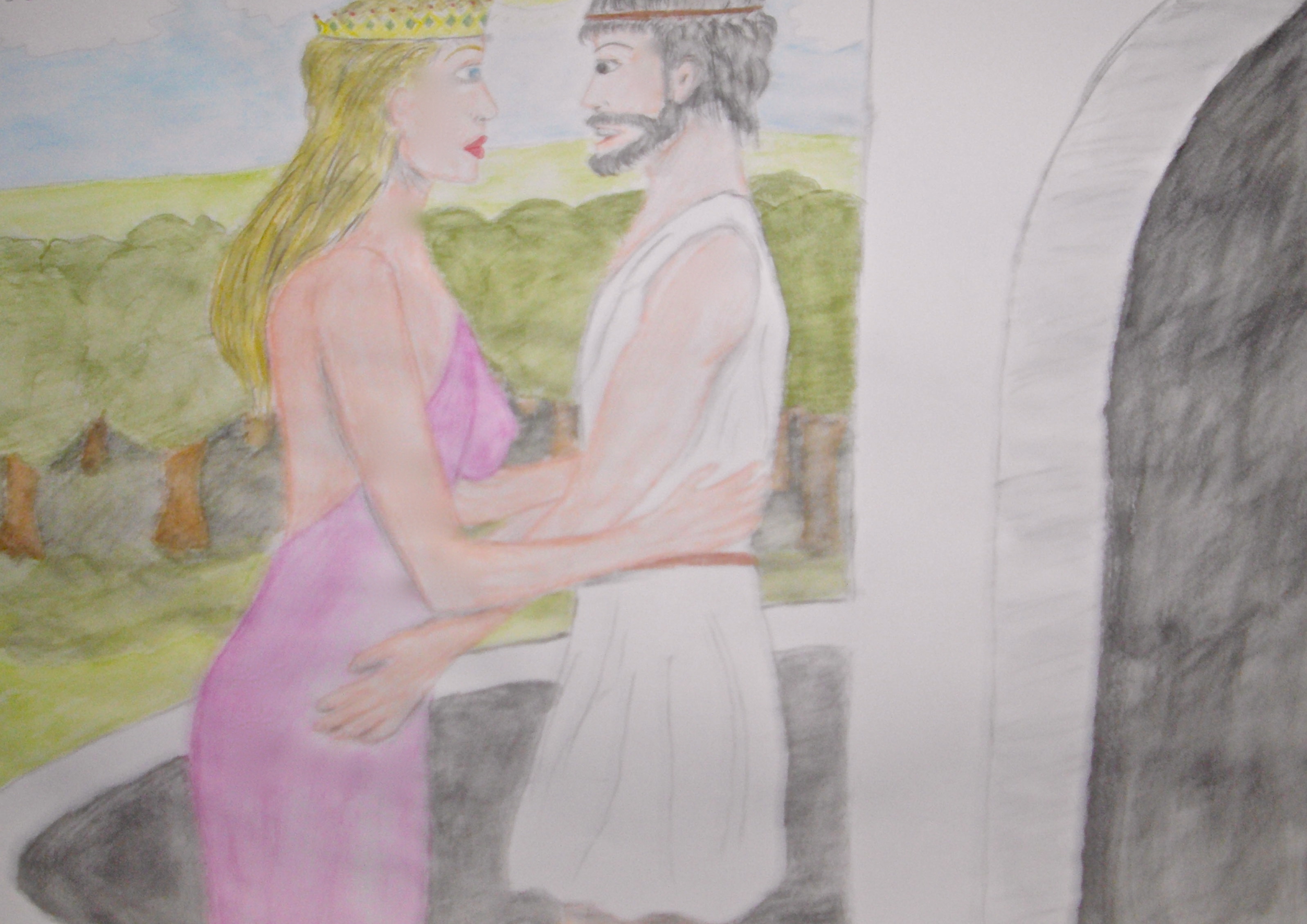
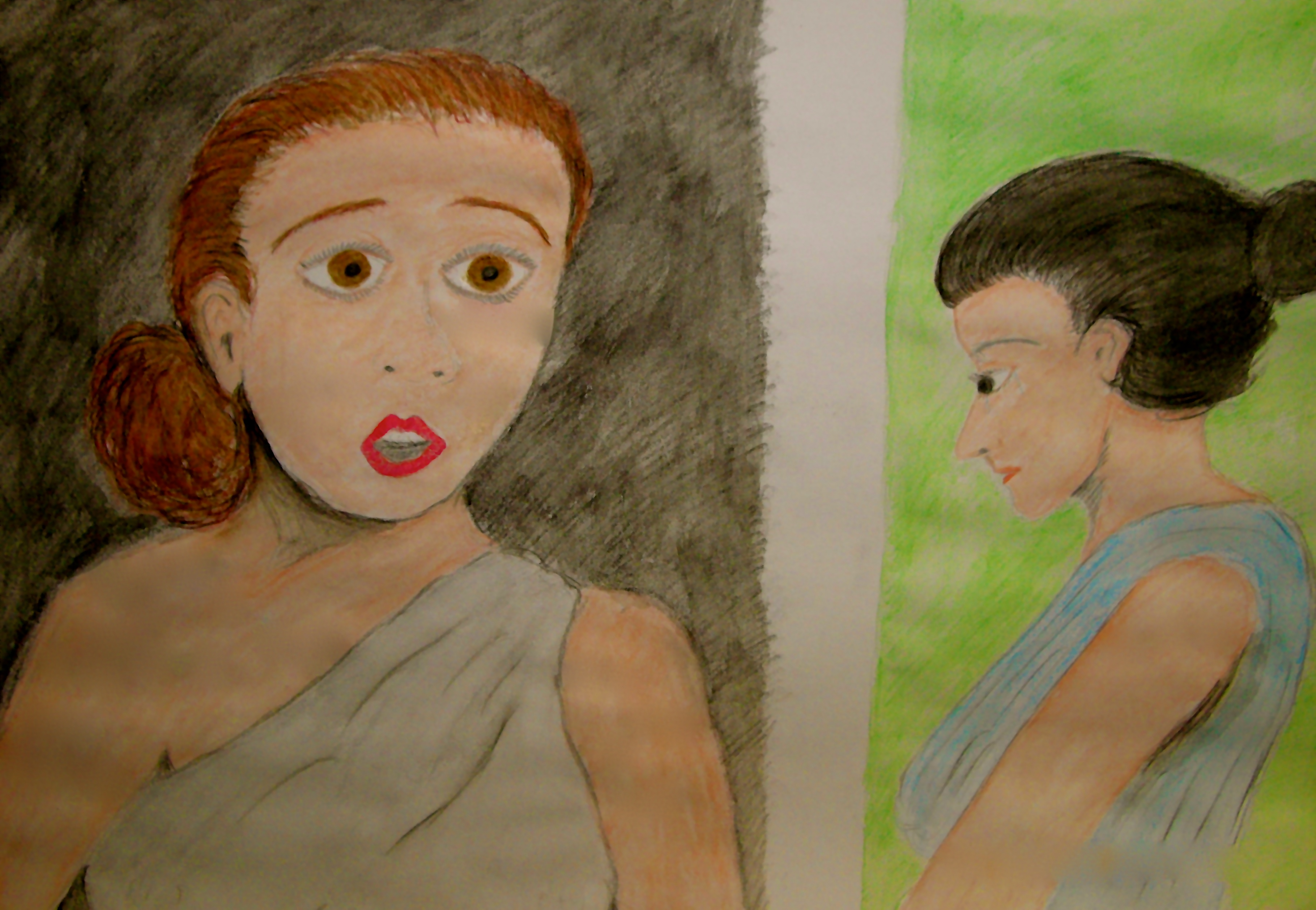
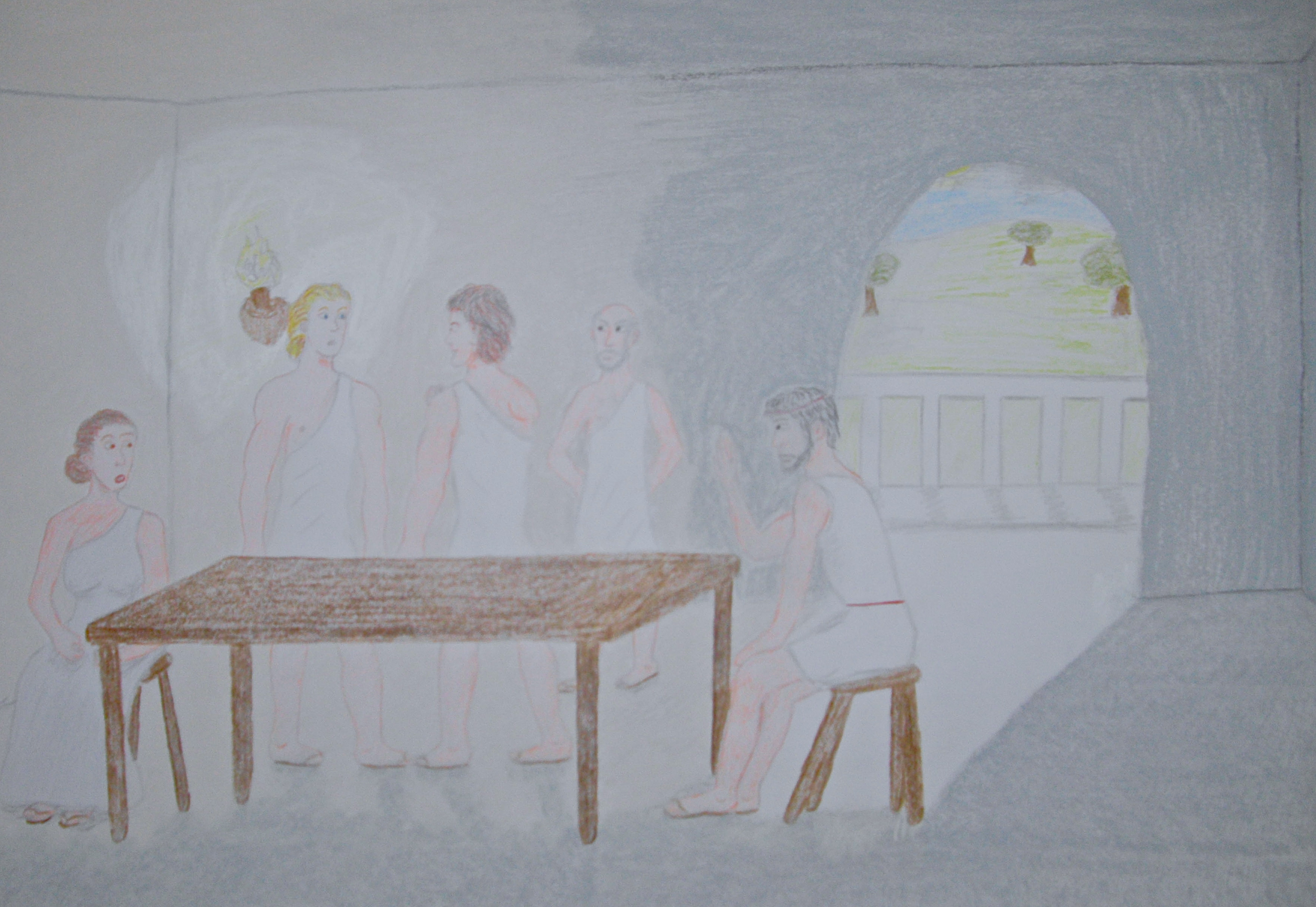

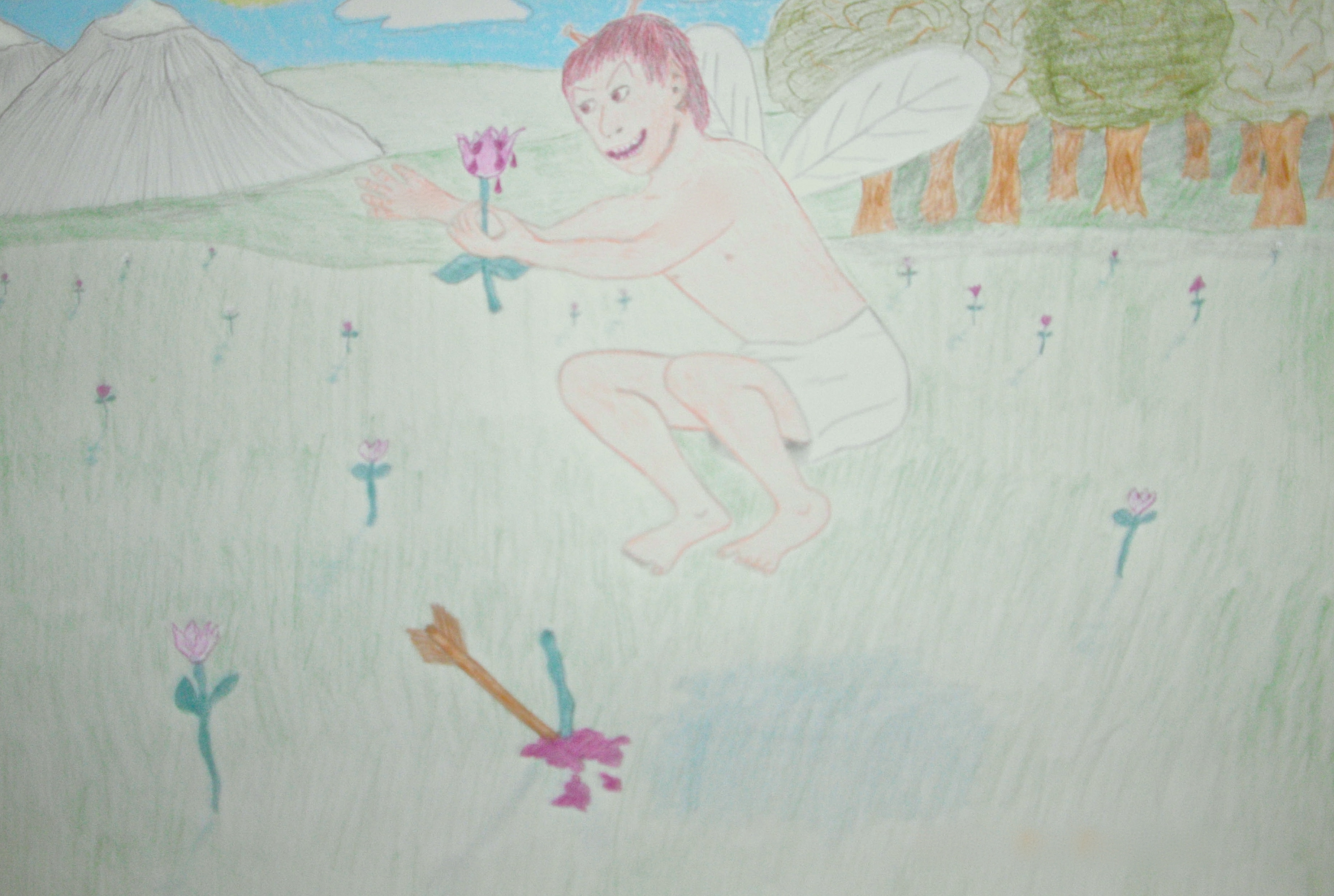
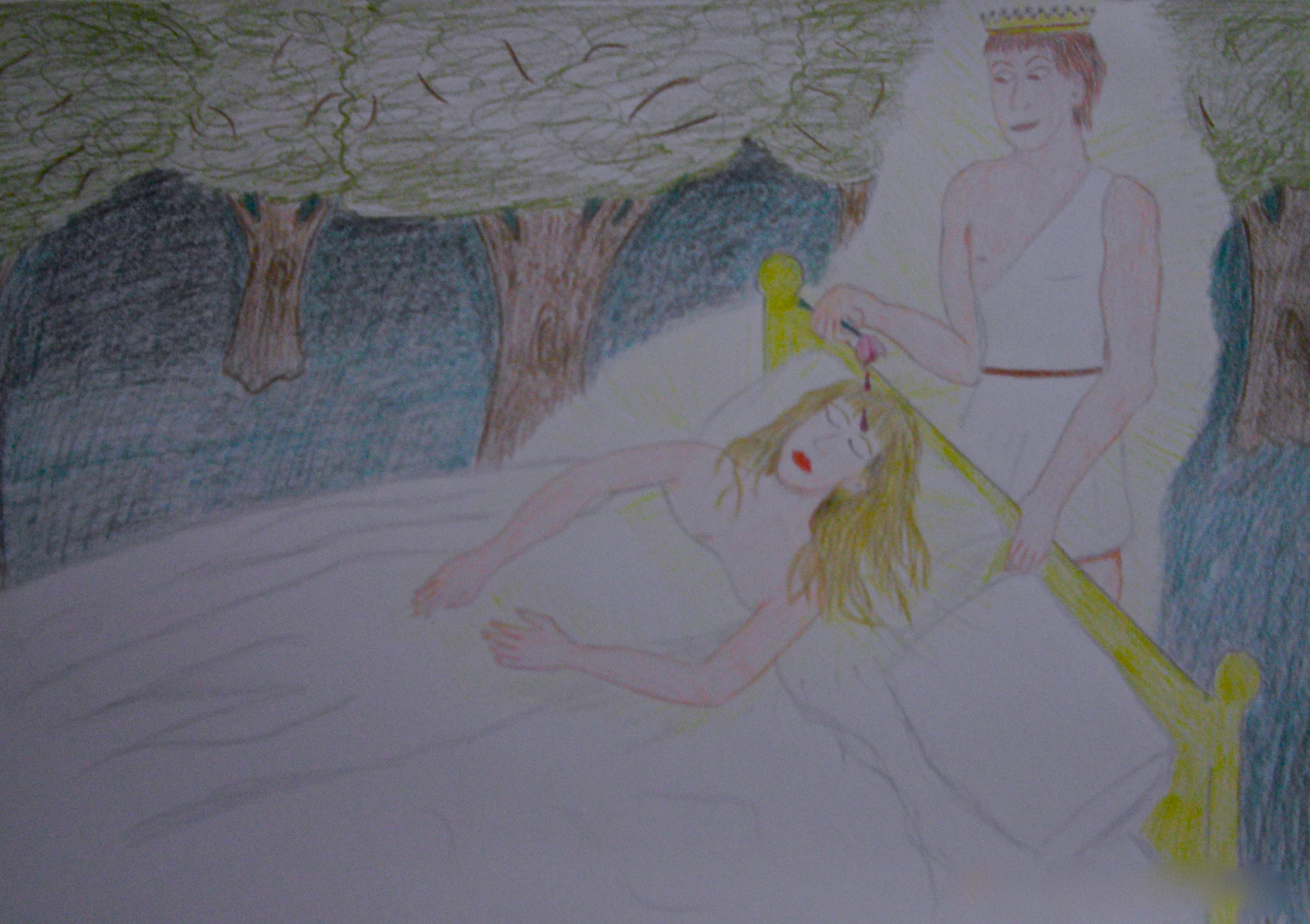
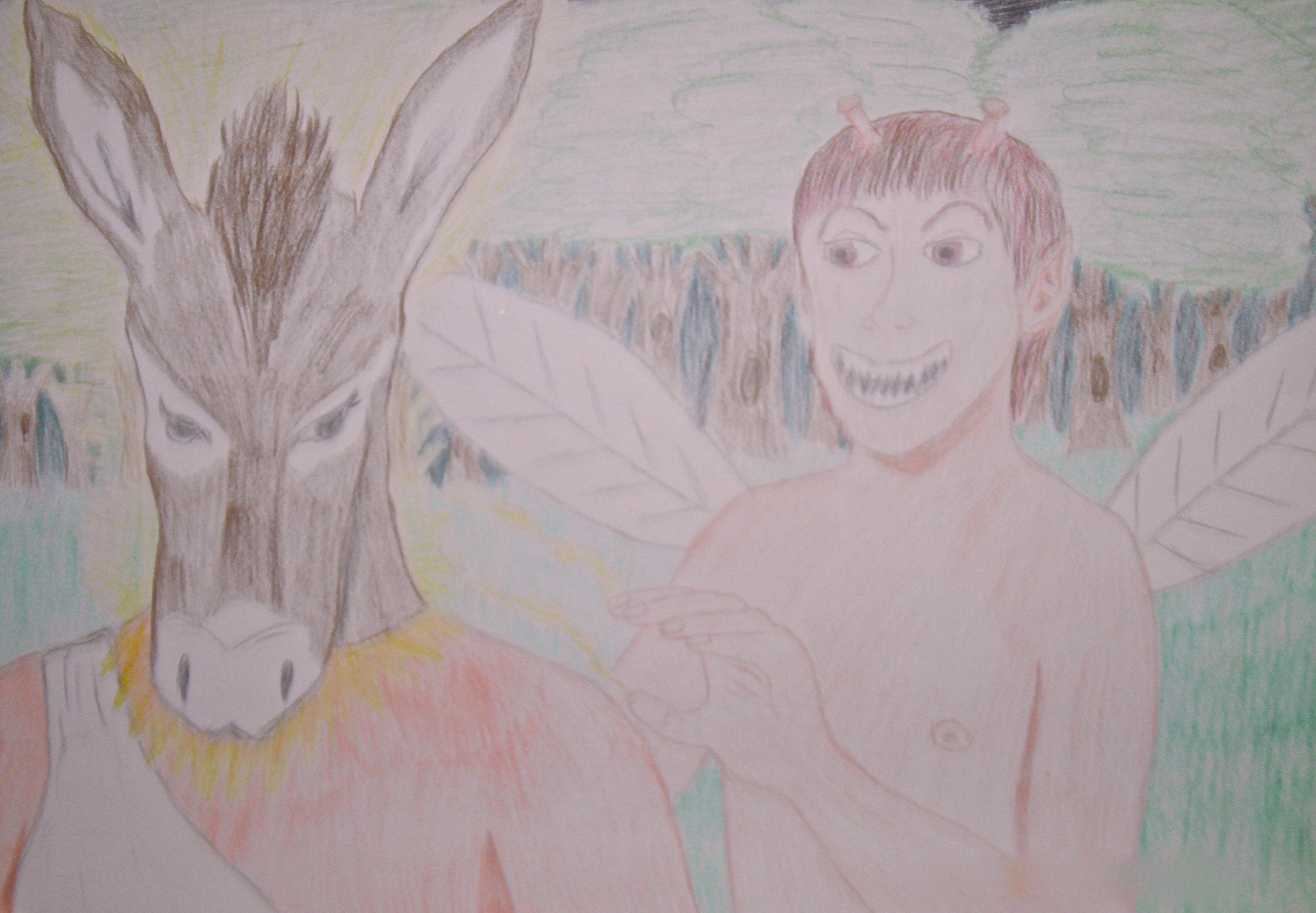
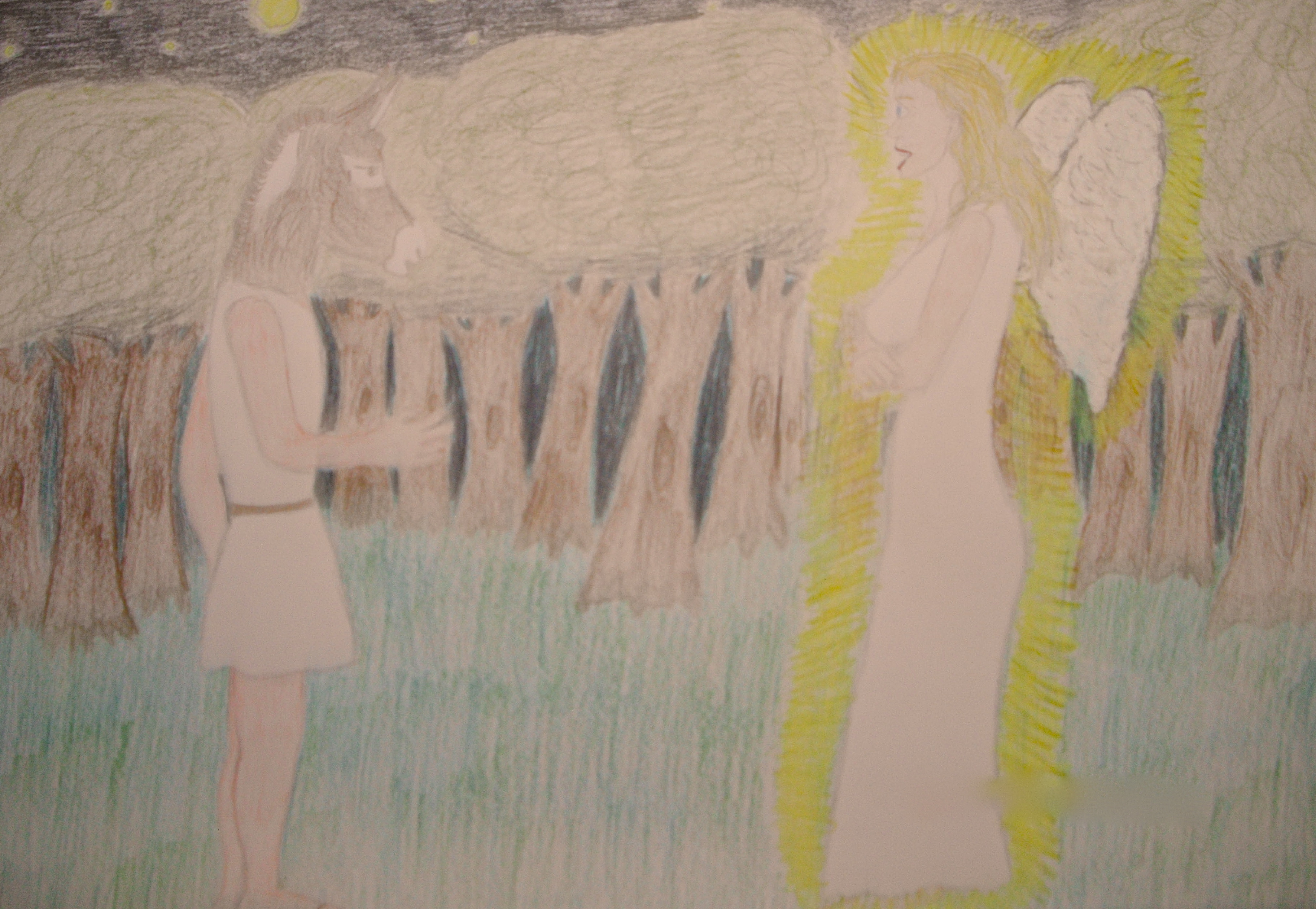
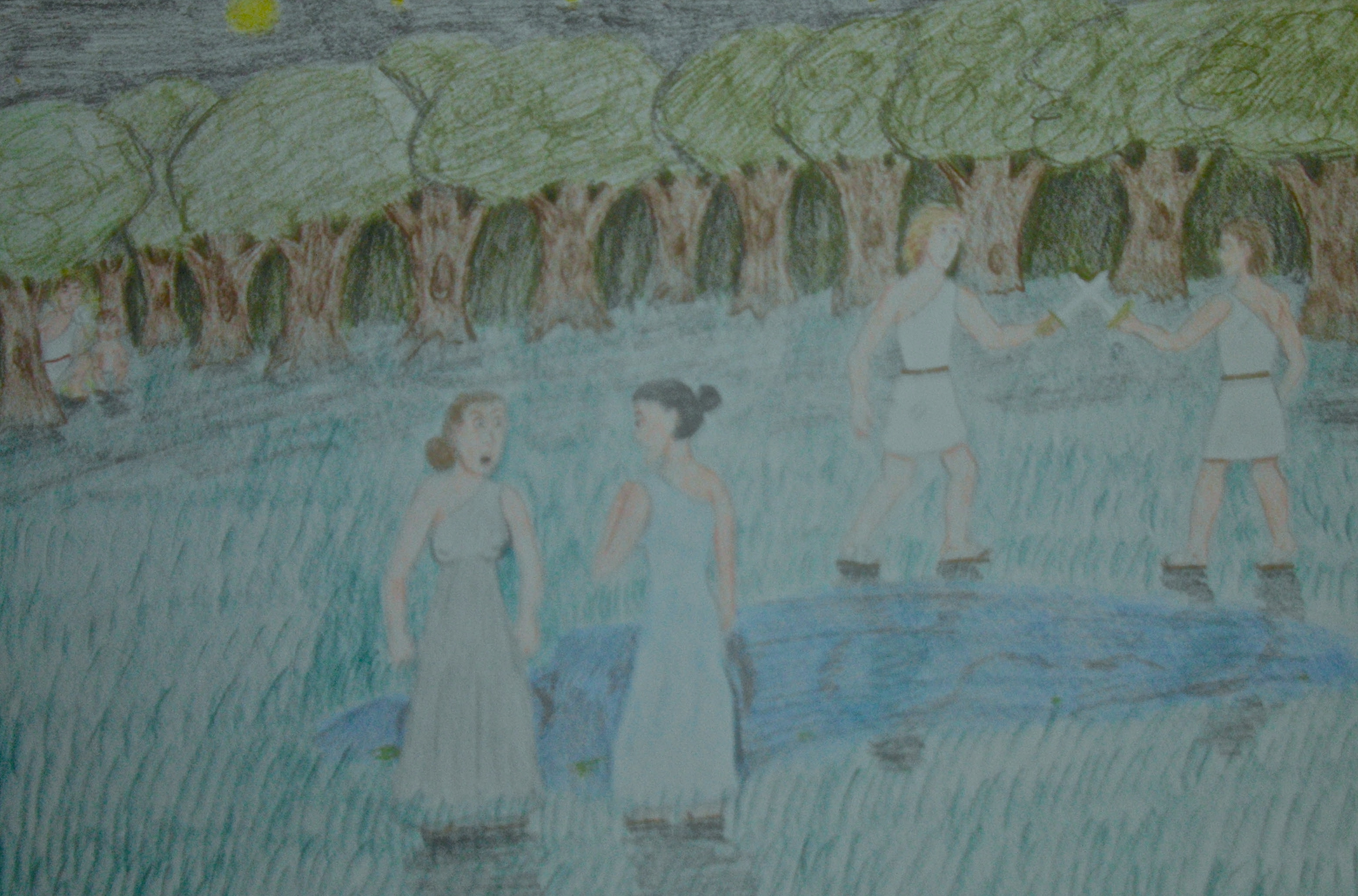

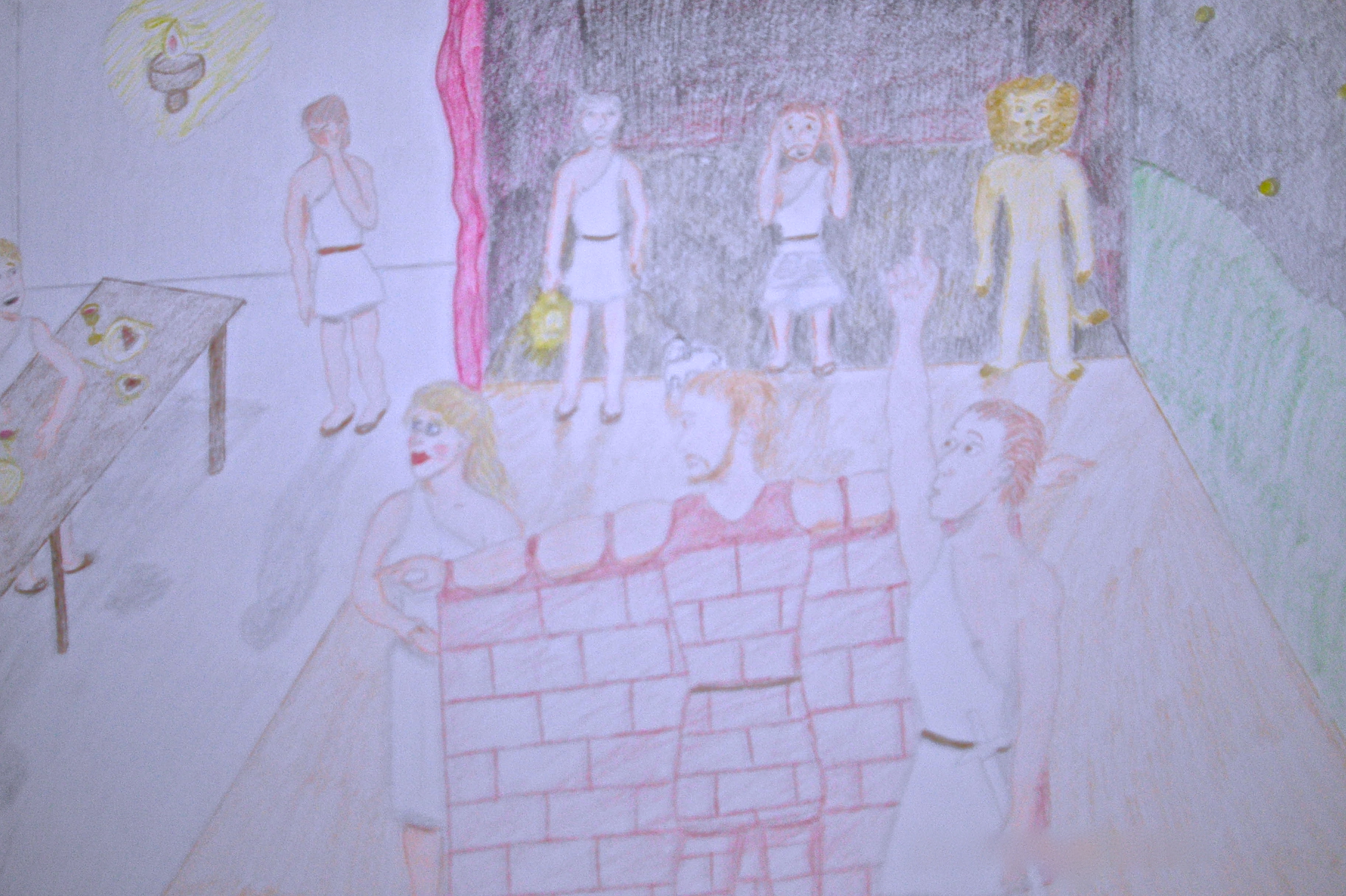
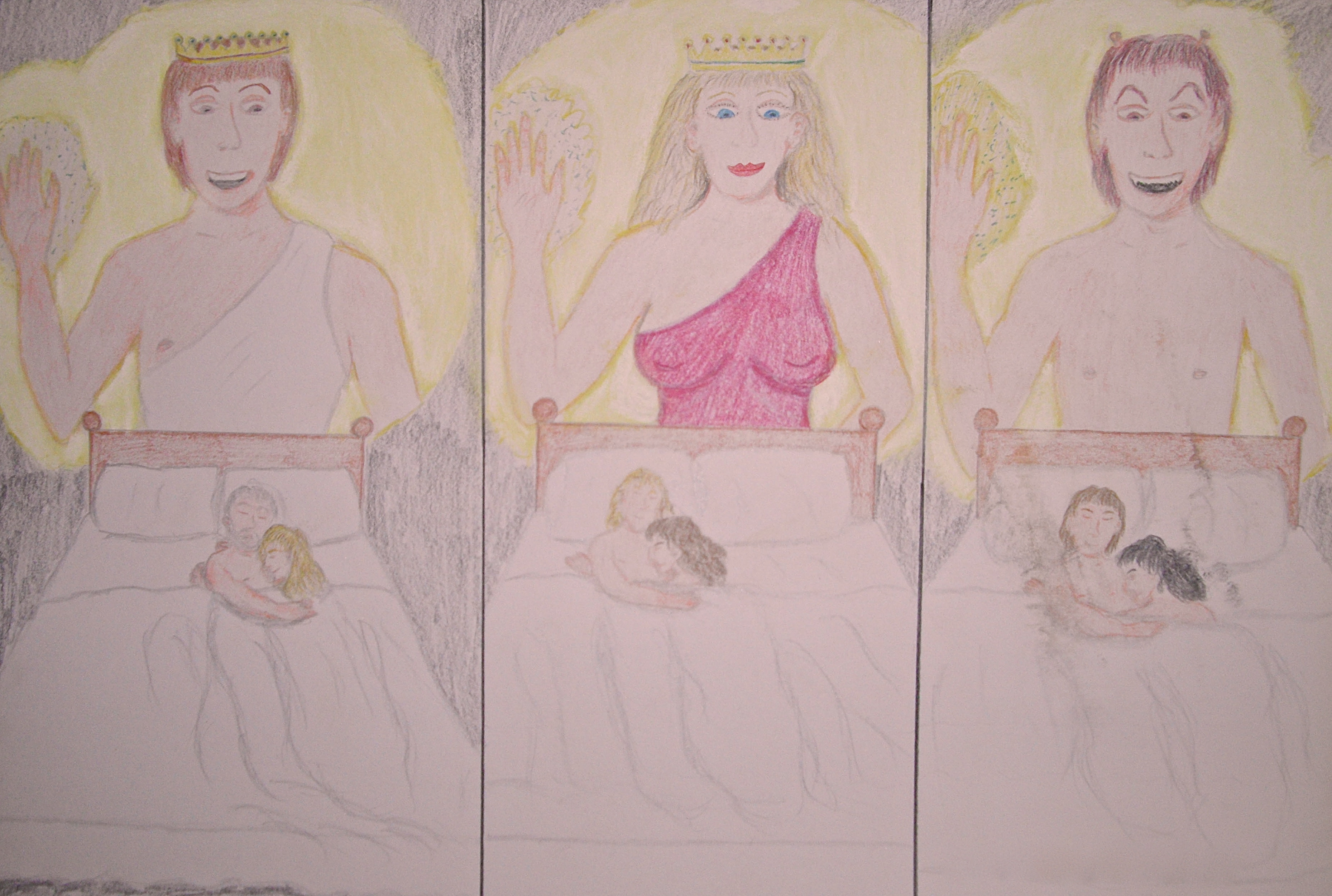
 Infinite Ocean
You must be logged in to post a comment.