Lake of Fire

To see
a child
inside
a school
engulfed in
a lake of fire, left in the flames, to burn there and die

should
push you
to rush
in and save
her from the rising sea of flames. Such a hero would be
the image of basic human decency. Better I burn than you.

But we
live in a
world
in which the inferno and imps are up here, raising the flames
with them as they emerge, allowing no aid, doing nothing to stop it.
They’d have us all on fire rather than deluged with compassion.

I don’t
believe
in a hell below, but if I am wrong, the wrong who are making our
hell up here should be dropped in that lake of fire down there, to
be tormented day and night for ever and ever, as they are doing
to all of those in Gaza. The Holy Land is most unholy these days.

Analysis of ‘American Beauty’

American Beauty is a 1999 satirical black comedy film directed by Sam Mendes in his feature film directorial debut. Written by Alan Ball, the film stars Kevin Spacey, Mena Suvari, and Annette Bening, with Thora Birch, Wes Bentley, Chris Cooper, and Allison Janney.

The film received widespread critical and popular acclaim, grossing over $350 million worldwide and winning five Oscars, including Best Picture, Best Director, Best Actor for Spacey, Best Original Screenplay, and Best Cinematography. It was also nominated for and won many other awards and honours, mainly for directing, writing, and acting.

Retrospective appraisals of American Beauty, however, have not been as positive. Its themes have seemed trivial since 9/11 and the Great Recession of 2007-2009. Allegations of sexual misconduct against Spacey have not helped the film’s reputation, either, especially given their disturbing parallel to the lecherous, teen-obsessed character he plays in the movie.

Here is a link to quotes from the film, and here is a link to its script.

I find it interesting to do an analysis of a film praised before the 21st century, and one whose praise has dwindled since the beginning of the 21st century, because I find the change in values between these times so well encapsulated in this change of attitude toward the film.

What were considered deep themes in the movie–rebellion against the psychological imprisonment imposed by social conformity in the American middle class, finding beauty where it’s least expected, living a more meaningful life, etc.–now seem fairly trivial and superficial. What seems to have brought about our change in attitude toward these themes, our depreciation of their worth, is our change in attitude toward the liberal mindset.

It takes someone like the people in this suburban middle-class neighbourhood to see depth in these themes, whereas someone raised in poverty, or in the Third World (oppressed by Western imperialism), would regard them as little more than First World problems. We the audience are meant to sympathize with Lester Burnham (Spacey), the beginning of whose lecherous, predatory attraction to underage Angela Hayes (Suvari) is the inciting incident in the story that propels his character arc from psychological imprisonment to liberation and finally to redemption, when he finally stops his predation on her, just before mounting her, on learning she’s not the sex goddess he thought she was, but just a virgin.

It took such world-shattering events as 9/11 (with its resulting perpetual war, curtailing of civil liberties, mass surveillance, etc.) and the global financial crisis of the late 2000s to make us realize how hollow and superficial the bourgeois liberal values of this film are. The idea that one can take such a flip, light-hearted attitude towards Lester’s creepy designs on a girl, when he seems to go to heaven after being shot…the sight of which gets an awed reaction from Ricky Fitts (Bentley).

The movie begins by acknowledging Lester’s creepiness through his daughter, Jane (Birch), complaining to Ricky about it, and even seeming to consent to have her boyfriend kill her dad. What immediately follows is a shot of a tree-lined street, bird’s-eye-view, in the American suburbs. A voice-over of Lester saying this is his neighbourhood, and that he knows he’ll be dead within a year, suggests it’s his spirit looking down from heaven and remembering that last year of his life. Lester–a pun on lecher?–is in heaven–forgiven so easily? And who is his killer? Is it Ricky, or someone else?

Next, the film establishes Lester’s dull, pathetic life as of the beginning of that last year, when he-as-angel imagines he’s “dead already.” He’s in a psychological prison, symbolized first by the shower door he’s seen behind, where he masturbates–the best time of his miserable day–and second by the image of columns of data on his computer screen at work resembling jail bars, with his face reflected on it among the columns, making it look as if he were incarcerated in his office at his miserable job as a media executive.

It’s significant that, when we’re introduced to his wife, Carolyn (Bening), she is seen cutting one of many red roses (American Beauties) she’s been growing on the fences around their house. Red rose petals are a recurring motif in the film, associated with Angela’s sexuality and therefore Lester’s sexual resurrection. His neurotic, control-freak wife has been sapping him of his energy for years, or so he imagines. Her clipping of the roses is therefore symbolically apt.

After we see her with the roses and chatting with one of the Burnhams’ two next-door neighbours (Jim and Jim are a gay couple played by Scott Bakula and Sam Robards), there’s a scene with Jane in her bedroom at her computer. She’s wearing a sweater with a motif of red roses, and being a typically insecure teenager, she’s looking into getting breast enhancement.

That the rose motif ties Angela in with not only Lester’s wife but also his daughter–with all of the sexual overtones either discussed above or implied and understood–should tell us all we need to know about Lester’s filthy mind. His being trapped in the capitalist world should be enough for us to sympathize with him, but his idea of how to escape that trap–lusting after a girl his daughter’s age (implying unconscious feelings he may have about Jane, in that red-rose sweater and wanting to have larger breasts!), smoking Ricky’s weed, and replacing his media executive job with a much lower-paying one and with far fewer responsibilities–causes our sympathy to wither away.

His obsession with an underage girl, combined with his defiant attitude at work towards his “efficiency expert” boss, Brad Dupree (played by Barry Del Sherman), who’d have Lester justify why he shouldn’t be fired, makes me describe American Beauty as a cross between Lolita and Office Space. In this combination we see the psychological conflict of the liberal mindset (link above): the superego makes moral demands for progressive social change and freedom from capitalist exploitation (Office Space), while the id wants satisfaction of base, morally objectionable desires (Lolita).

When Brad tells Lester about the “need to cut corners” in the business to “free up cash,” since profits are more important than workers’ needs, of course, Lester reminds Brad of when the company’s editorial director, Craig, used company money–$50,000–to pay for the sexual services of a prostitute. This upper-level man gets to enjoy that and have his reputation protected from scandal, while lower-level workers like Lester have to fight to save their jobs.

When Brad says, “It’s just business,” we might be reminded of a famous line in another movie about capitalist and political corruption–The Godfather. Of course, Lester considers his need to write out a report justifying his job to be “kinda fascist,” as he says to Carolyn when they’re driving home; and then, almost immediately after, they notice they have new next-door neighbours moving in, on the opposite side of the Burnham house to the Jims. This new family are the Fittses, whose father, Col. Frank Fitts (Cooper), as we’ll eventually learn, is “kinda fascist,” too.

We learn that the family who’d lived there before and moved out were mad at Carolyn for having cut down a sycamore that both their and the Burnhams’ property shared. Her cutting down of the sycamore reminds us of her cutting the rosa American beauties. Just as those flowers are superficially beautiful, but are susceptible to the fungi diseases mildew, rust, and black spot (symbolic of the superficial enjoyment of luxuries and material pleasures associated with capitalism, which mask the evils of imperialism and poverty–recall in this connection the song “American Woman,” by the Guess Who, and sung by Lester in his car later on in the film as he’s smoking a joint), so is the chopped-down sycamore symbolic of the pain of being in love.

Romeo visited a sycamore grove when he was sad, lovelorn, and wishing to be alone in his rumination. Desdemona, fearful of her increasingly jealous husband, Othello, sang “a song of willow,” which began, “The poor soul sat sighing by a sycamore tree…” (Act IV, Scene iii) ‘The Willow Song’ is about someone in love who dies of a broken heart when the love object proves untrue. Sycamore can also be a pun on “sick amore,” or “sick in love”…or in the case of Lester’s taboo infatuation, a “sick love.”

So in this cut-down sycamore, we see more of the Lolita-oriented symbolism, a variation on those clipped red flowers, a killing of Lester’s sexual energy by his psychologically castrating wife. Small wonder he masturbates so much, and as Angela will later observe, he and Carolyn haven’t had sex in a long time. Incidentally, Angela’s last name is Hayes, rather like Dolores Haze in Lolita.

Note also how, on the one hand, Lester is obsessed with Angela, Jane’s friend, but on the other, he has barely spoken to his daughter in months, as she herself complains to him at dinner. His infatuation with her friend could be interpreted as an unconscious displacement of incestuous feelings for Jane (recall the rose motif on her sweater).

Consider how, if you watch the film carefully, Jane wears less and less makeup as the story progresses, while Angela remains fully made up throughout. The implication is that Jane’s desirability is being transferred, displaced, from her to Angela. And when Lester sees Angela for the first time, during the cheerleader dance routine to the music in the high school gym (‘On Broadway’), both she and Jane are in the same uniform, dressed identically, and heavily made up. All of this just makes Lester’s desires all the creepier.

So instead of directing his energies towards doing something about the exploitative capitalist system (as Milton symbolically does by burning down the Initech building, his place of work where he’s mistreated so badly as to work for no paycheck, in Office Space), Lester lets those energies of his be distracted by and redirected towards the immature grafitication of his libido. Such is the typical liberal mindset. Tom Hanks’s Charlie Wilson is similarly hedonistic in a movie that glorifies using the mujahideen to weaken the Soviet Union, ultimately leading to the Taliban.

Because of this liberal acquiescence towards not just the gratification of desire, but also to self-absorption and to the bland and the conformist (instead of rising up in solidarity with one’s fellow workers to overturn the system), we shouldn’t be surprised to see the Burnhams’ new next-door neighbours as having a head of the house with fascist tendencies. Recall that even the Jims, the gay couple on the other side of the Burnhams’ house, are also fully enmeshed in bland bourgeois conformism, the kind that would tolerate, if grudgingly, such fascist tendencies.

Note what Stalin once said back in the 1920s: “Fascism is the bourgeoisie’s fighting organisation that relies on the active support of Social-Democracy. Social-Democracy is objectively the moderate wing of fascism. There is no ground for assuming that the fighting organisation of the bourgeoisie can achieve decisive successes in battles, or in governing the country, without the active support of Social-Democracy. There is just as little ground for thinking that Social-Democracy can achieve decisive successes in battles, or in governing the country, without the active support of the fighting organisation of the bourgeoisie. These organisations do not negate, but supplement each other. They are not antipodes, they are twins. Fascism is an informal political bloc of these two chief organisations; a bloc, which arose in the circumstances of the post-war crisis of imperialism, and which is intended for combating the proletarian revolution. The bourgeoisie cannot retain power without such a bloc. It would therefore be a mistake to think that ‘pacifism’ signifies the liquidation of fascism. In the present situation, ‘pacifism’ is the strengthening of fascism with its moderate, Social-Democratic wing pushed into the forefront.”

American liberalism, especially ever since the dissolution of the Soviet Union and the age of the Clintons, is to the right of social democracy, making it even closer to fascism. We thus shouldn’t be surprised at the contemporary liberal embrace of Ukrainian fascists, as well as liberals’ enabling of the Zionist ethnic cleansing of the Palestinians.

To get back to Lester’s watching of the cheerleader dance in the school gym, we must keep in mind that, from his point of view, Angela is too far away from him to be seen in any detail and therefore to become the object of so sudden and intense an infatuation with her. In that uniform and all made up, she hardly looks any different from his daughter, apart from Angela’s blonde hair and Jane’s brown hair. It’s thus easy to see how he can go from unconsciously lusting after Jane to consciously lusting after Angela.

Since it’s his own daughter he so incestuously and shamefully wants, that is, his own flesh and blood, this lust is symbolically narcissistic, as is his habitual masturbation. This ‘having sex with oneself’ is in turn symbolic of his narcissistic self-absorption and solipsism, which brings us back to my point about the liberal mindset: one is too egoistic to care about the problems of the rest of the world in a meaningful way, thus enabling fascism to creep into our world.

So underneath the surface of physical beauty and the desire to have it, and other sources of superficial happiness, is a moral decay. Hence, the name of the movie, referring to a flower of surface beauty, but with root rot.

Examples of this superficial beauty or happiness hiding a deeper ugliness or unhappiness include Carolyn’s embrace of toxic positivity: first, she–being a real estate agent–chants the affirmation, “I will sell this house today,” then after all the work she’s put into cleaning the house and trying to sell it, failing to do so with client after client, she bawls like a baby at her failure.

Another example is Angela’s physical beauty masking her ugly, narcissistic personality. She constantly bad-mouths Ricky as a “mental-boy” and others whom she imagines to be envying her for her ‘success’ as a model, shouting “Cunt!” at one of them. She isn’t even the sexually experienced hottie she presents herself to be.

There are also instances of ugliness or misery that…could be seen…as masking beauty or happiness, or at least they are presented in the film as such or as possibly so. Col. Fitts’ homophobia is an ugliness that masks what is finally revealed at the end of the film: his suppressed homosexual feelings that he hides through reaction formation. If he’d stop hating himself for those feelings and be honest about hem, he might see a beauty in himself and find true happiness.

Ricky has a reputation for being mentally ill, since his father, the colonel, has had him put in psychiatric hospitals, and also because Ricky has an odd habit of filming things he thinks are beautiful, but which most people would never deem as such–a dead bird, a plastic bag drifting in the wind (Ball’s apparent inspiration to write American Beauty), and a homeless woman frozen to death. Actually, to get to know him, he’s one of the most laid-back guys ever.

So there’s a recurring theme of people or things not being what they seem. In fact, as time went on, people came to realize that this movie isn’t what it seemed: not so deep, not even really finding beauty in the unexpected.

As I’ve been trying to argue here, the acts of rebellion–against bosses, against a domineering wife, against appropriate expressions of sexuality (either those genuinely appropriate or merely deemed so)–aren’t the edifying ones they’re presented as. Finally, the sentimentalized ending, portraying a redeemed, angelic Lester looking over his neighbourhood from heaven, right after his getting a bullet in his head and all the other awful things I’ll discuss below, seems terribly inappropriate.

And yet these inappropriate and trivial themes make sense in a film that, intentionally or not, allegorizes liberal self-absorption as paving the way for fascist violence. Since we’ve seen these things happen in real life in the decades since the release of American Beauty, perhaps these trivialities aren’t so inappropriate after all.

When Lester first sees Angela in that cheerleader dance–what, as I said above, was too far away to be seen in any significant detail, and thus was just any teen girl as a variation on Jane–he’s seeing, as a displacement of Jane and therefore of his own flesh and blood, a metaphorical mirror of himself, a Lacanian ideal-I. His drive later on to exercise, lift weights, and smoke Ricky’s pot (to be cool), to be desirable to Angela, is part of his drive to live up to the ideal-I, for desire is the desire of the Other, for recognition by the Other, to be desired by the Other.

Just as Angela is a mirror reflection of Lester’s narcissistic ideals, so is Ricky, Lester’s “hero” for quitting his catering job so insouciantly so he and Lester can smoke pot outside the building where a party is being held for Carolyn and other real estate agents like “King” Buddy Kane (played by Peter Gallagher and who incidentally is her mirror reflection of her narcissistic ideals, her ideal-I). It therefore shouldn’t be surprising that Lester, in imitation of his teen hero, should quit his job so insouciantly, too.

The point is that with Angela and Ricky as Lester’s two teen ideals, the metaphorical mirrors in whom he sees himself whenever he’s with either of them, he is, at heart, an overgrown teenager whose interactions with those two have reawakened his repressed immaturity. That’s what he means at the beginning of the movie when he says he’s “lost something,” but “it’s never too late to get it back.”

This immaturity of his shows itself not just in his predation on Angela, but also in his masturbating and fantasizing about her, his pot-smoking, his quitting of his media job to replace it with the low-paying, low-responsibility fry cook job, and in his impulsive buying of the 1970 Pontiac Firebird. And just as he’s planning on cheating on his wife with his feminine ideal-I, so is his wife going to cheat on him with her masculine ideal-I, the “King” of real estate.

To shift away from Lacanian to Jungian psychology, in Lester’s designs on Angela, he is symbolically connecting with his anima; in Carolyn’s desire to be with Buddy “the King,” she is connecting with her animus. Now, while normally such a connection, symbolic or not, with a repressed side of one’s psyche is a positive development in one’s mental health, Mr. and Mrs. Burnham’s narcissistic, self-absorbed motives vitiate the hopes of such improvements.

Lester sees himself in Angela and Ricky, and likes what he sees. Col. Fitts also sees himself (as we learn by the end of the film) in the two Jims at his front door when they introduce themselves to him and welcome him to the neighbourhood…but he does not like what he sees. He’s disgusted to realize that by ‘partners,’ the Jims do not mean ‘business partners,’ but partners in the bedroom. Lester’s lust and teen hero worship reflect his narcissism and immaturity; the colonel’s homophobia reflects his self-hate and shame.

The Jims’ welcome gift to the Fittses includes flowers, what are a motivic link to the rosa American beauty and the chopped-down sycamore tree. They’re an expression of love to be rejected.

Angela is Lester’s Jungian anima, Buddy is Carolyn’s Jungian animus. The Jims, and by extension what the colonel sees, however incorrectly, in Lester and in his son are his Jungian Shadow, the ego-dystonic part of himself (his suppressed homosexuality) that he’ll never accept…even up to when he kiss’d Lester ere he kill’d him.

Now, Ricky is Lester’s Shadow, but a Shadow the man eagerly integrates. One thing to remember in all of this is how Ricky goes from doing unwanted filming of Jane, initially upsetting her, to being her boyfriend. Ricky’s being Lester’s Shadow is thus all the more insightful…and disturbing…given what I said above about Lester’s desiring Angela as a displacement of his repressed incestuous feelings for his daughter.

In stark contrast to Lester’s nagging, domineering wife is the colonel’s timid, almost catatonic wife, Barbara (Janney). A housewife whose spotless house seems unbearably filthy and messy to her neurotic eyes, she seems to have mental problems rooted in, apart from the miseries of housekeeping and a borderline fascist husband, a near-nonexistent sex life. One imagines his copulating with her to conceive Ricky to have been nothing other than painful.

Ricky goes home one night to see his mom and dad in the living room watching TV. We should not be surprised to see her watching This is the Army, a movie only her husband would be interested in watching. Seeing military men on the screen, the colonel is looking in a metaphorical mirror, seeing his ideal-I as a macho he-man rather than the ‘Jim’ that he secretly is.

It’s significant that we see a shot of Ronald Reagan back in his acting days. As we know, it was Reagan who, with Thatcher in the 1980s, helped bring today’s neoliberalism into full force, with all that nonsense about ‘small government’ (translation: bust unions and cut taxes for the rich, but build up a large deficit, in no small part due to military spending) and the “free market.”

This shift to the right in the decades since then–with increased income inequality, the killing of welfare, the allowing of mergers and acquisitions in the American media so that now six corporations control 90% of it and therefore determine most of Americans’ access to information, and the economic instability since the Great Recession (to say nothing of the endless wars since 9/11)–has helped create the conditions that have resulted in the fascist leanings of the Trump administration, the use of Neo-Nazis in Ukraine to provoke a needless, avoidable war with Russia, and the Gaza genocide. Col. Fitts’s enjoyment of an army film with Reagan in it is, thus, most apt.

To get at the colonel’s own fascist leanings, something that can be found in a lot of people in the armies of many countries, we need only see the scene in the film when Ricky has taken Jane into his house and shown her his dad’s plate, on the back of which is a Nazi swastika in the centre. The colonel would easily see the putting of pink triangles on gay men as a good thing.

To return to Lester and Ricky smoking pot outside the building where the real estate party is happening, it’s interesting how Lester picks, of all subjects to be talking about with Ricky, the scene in Re-Animator when Dr. Carl Hill (played by David Gale), a decapitated, reanimated corpse, performs forced cunnilingus on Megan Halsey (played by Barbara Crampton)…or as Lester so crudely puts it, “the head goes down on that babe”. When we consider the age difference between the lecherous old doctor and pretty young Megan, it’s easy to see how Lester would identify with the doctor. Being “dead already,” Lester is something of a reanimated corpse himself.

When Lester later wants to buy more pot from Ricky, he’ll use “Re-Animator” as a code word for the pot so the colonel, in earshot, won’t know what the movie is meant to represent. Still, “Re-Animator” is an apt way to describe a substance Lester is using to bring himself back to life with, to bring back his lost youth and coolness.

During this scene, when the colonel has been washing his car by the road in front of his house, and he has seen Lester jogging with the Jims, he suspects that Lester is of similar sexual inclinations with them, and he is therefore a little uncomfortable with Lester going up to Ricky’s room to get “Re-Animator.” The colonel is seeing his own secret sexuality in everyone except himself.

Before that scene, the night when Lester and Carolyn have come home from the real estate party (and he’s still enjoying his buzz), Jane and Angela are there, the latter enjoying the narcissistic supply she’s getting from his sexual interest in her and wanting to encourage it. This is one of those moments when women have legitimate suspicions about the motives of a male writer (Ball) characterizing a pretty teenage girl returning the sexual curiosity of a man old enough to be her father, one she hardly knows, one with few charms of his own for her to be interested in.

Such a mutual sexual interest is utterly implausible. It’s a mere male sex fantasy, and a creepy one, at that.

As inappropriate as such a movie premise is, though, I find it fitting that Lester’s lustful motivation to work out over the rest of the year and to smoke pot is entangled with the colonel’s growing suspicions that his son is having a homosexual relationship with Lester, however incorrect they may be, leading ultimately to the colonel killing Lester. I see an allegory here of liberal self-absorption and pleasure-seeking leading to fascist violence, which wouldn’t have happened if that liberal energy had instead been used to fight for social justice.

We should consider, in this connection, the implications of Lester driving around in his car while smoking a joint and singing along with “American Woman.” From the lines he’s quoting in the scene, one would think he’d be reconsidering his creepy attraction to one underage American female in particular, but of course, he isn’t.

Other lines from the song that are not heard in this scene, but ones far more pertinent to the meaning of the song lyric, involve not needing the “war machines” or “ghetto scenes” of the US. The writer of the lyric and singer of the Guess Who, Burton Cummings, has denied that the song is political; but knowing the words quoted above, I’d say he’s just sheepishly trying to avoid offending his potential American audience and thus lower sales of the music.

In any case, it’s significant that Lester neither quotes the unmistakably political passage nor takes to heart the other parts of the song, those about the dangerously seductive allure of the US and what it stands for–politically, economically, and culturally. Such obliviousness, while singing along stoned, is key to understanding not just what’s wrong with the America that the film is satirizing, but also what’s wrong with the film itself.

In this scene, Lester personifies the liberal who indulges in pleasure (for his id) while paying lip service to an acknowledgement of the issues of injustice in the world (for his superego), by singing along to the song while stoned.

Later on, after Carolyn has dealt with her own sexual frustration by sleeping with Buddy in a hotel, he tells her about another way she can release her stress: by going to a firing range downtown and shooting a gun. Nothing, apart from sex, will make her feel more powerful, he promises her.

Later on, she’ll go there and fire a gun, finding it to be just as fulfilling as Buddy promised it would be. The gun is a phallic symbol, the firing of it obviously symbolic of orgasm. She feels so powerful shooting it, as opposed to the powerlessness of being in an unhappy, loveless marriage to an immature, irresponsible husband who is now forcing her to be the main breadwinner of the family. In her toxic positivity, she’d have no one rain on her parade, but he does so all the time.

This phallic symbolism is in turn symbolic of giving her a kind of power traditionally given only to men–hence, her fulfillment in firing the gun. If this interpretation seems offensively phallocentric to you, Dear Reader, then consider this aspect of the movie to be yet another of its many faults, as with the misogyny of Carolyn’s ‘bitchiness’ and the sympathetic portrayal of a lecherous ephebophiliac.

Yet another fault of American Beauty is the scene when Ricky, walking home with Jane, tells her about his having filmed a homeless woman who froze to death. Jane rightly notes how incomprehensible it’d be to film such an awful thing, but Ricky thinks “it was amazing.”

Ricky claims that the “amazing” thing about seeing the homeless woman’s dead, suffering face, its “beauty” is that “God is looking right at you. And if you’re careful, you can look right back.” Perhaps Ricky really is a psycho after all. Or maybe this is just the privileged bourgeois liberal mindset that doesn’t have to worry about freezing to death from having no home. Such people can afford to see “beauty” in the suffering of the poor.

Later, after taking her home and showing her his dad’s Nazi plate–again, with an attitude of mere curiosity, not moral repugnance–he shows her “the most beautiful thing [he’s] ever filmed”…that stupid image of the white plastic bag floating about in the wind, this insignificant image that Ball thought was so profound.

Ricky imagines that this meaningless bag, drifting in the air, is a sign that there’s “this entire life behind things…an incredibly benevolent force…” telling us there’s “no reason to be afraid. Ever.” Well, when you live in an upper-middle-class suburban neighbourhood, far away and safe from the horrors of Third World poverty, Zionist oppression, and other forms of the kind of imperialist violence that would soon lead to 9/11, you might believe in such a sentimentalized kind of divinity…even if your dad beats you from time to time.

It’s easy to see “so much beauty in the world…[that you] can’t take it…” if you don’t ever have to worry about freezing to death when homeless. Recall that even when his dad disowns him and kicks him out of the house for supposedly being gay, Ricky has no fears of homelessness; he’s even confident enough to take Jane with him, because he can simply sell dope to make ends meet.

This sentimentalized “God” that Ricky talks about is a variation on Carolyn’s toxic positivity, which is also represented in her cornball choices for music to listen to at dinner, much to the annoyance of Lester and Jane. Carolyn will play this phony upbeat music while complaining and bullying the two of them…hence, toxic positivity, as when Ricky sees “beauty” in a homeless corpse or a man with a bullet in his head.

In her bedroom, and after a family fight, Jane looks out her window and sees Ricky filming her again. Instead of feeling uncomfortable about it, she removes her shirt and bra for him. Since he is, as I mentioned above, Lester’s Shadow, and she is as underage as Angela, we can see how indirectly creepy her indulgence of Lester’s incestuous lust is–seen through Ricky’s camera.

And what happens immediately after? Ricky’s father barges into his bedroom and hits him, furious that Ricky sneaked into the room with the Nazi plate. Once again, we have a scene that allegorically juxtaposes overindulgence in physical pleasure with a fascist kind of repression. Though the filmmakers probably never intended this, we see in this scene how indulgent liberalism, contrary to popular belief, is often quite close–next door, even–to fascism.

After Lester, at his fast-food job by the drive-thru window, has caught Carolyn with Buddy in her Mercedes together and has put two and two together about them, she has to deal with her now-disintegrating marriage. Driving home on that rainy night, at the climax of the film, she is listening to a motivational tape telling her she’s “only a victim if [she chooses] to be a victim.” She also has her pistol for the firing range, a Glock 19, in one hand. Toxic positivity, in a nutshell.

Meanwhile, the colonel has become convinced that Ricky is having a sexual relationship with Lester, having seen the two together in the latter’s garage, the two of them positioned in a way that seems, from the colonel’s incomplete perspective, that Ricky is performing fellatio on Lester (actually, Ricky is bent over rolling a joint by Lester’s legs, while Lester is leaning back in a bowl chair).

This is the night that Lester is to be killed. Who will do it? Ricky, as suggested at the film’s beginning? Carolyn, with her Glock? Or the homophobic colonel? The answer is far from surprising; it’s disappointingly predictable…another plot weakness.

Jane and Angela are in the Burnhams’ house, arguing over whether or not Angela should let Lester have her. Jane not only objects to Angela screwing her dad (an indirect, displaced screwing of Jane, as I’ve described above), but also her talking about Jane’s presumably by-now-sexual relationship with Ricky (Lester’s Shadow, once again implying an indirect sexual relationship between father and daughter). It’s as though Jane can intuit her father’s unconscious desires for her, and also senses that his otherwise surface emotional distance from her is an unconscious reaction formation against those desires.

What’s striking here is how there are several sexual relationships going on, or appearing to be going on, or about to be going on, with varying levels of approval or disapproval. Ricky’s seeming gay relationship with Lester is looked on with horror by the colonel; Carolyn’s adultery with Buddy is accepted by Lester, since his relationship with her is “just for show”; Jane’s relationship with Ricky is regarded bawdily by Angela, who also rejects him as unfit for her, him being such a “psycho” and a “freak”; and Lester’s would-be sexual liaison-to-be with Angela is treated semi-sympathetically in the film, when this is the one that should be condemned the most, by far.

We’re about to see two families fragment into pieces over sexual relationships, real or imagined, actual or potential. Both mothers are going to end up alone: Barbara will lose Ricky from having been disowned by the colonel, who surely will be charged with Lester’s murder soon after this night ends, and therefore she’ll lose him, too; Carolyn will lose her husband and Jane, who’s going to run away with Ricky, since I doubt she’ll grieve much over her pig of a father, and Ricky probably won’t stick around long enough to learn that his dad is Lester’s killer. Carolyn can console herself with Buddy…to an extent.

And Lester, the selfish root cause of so much of this mayhem, gets to look down as an angel from heaven on the neighbourhood, full of “gratitude for every single moment of [his] stupid little life.” Toxic positivity, once again.

When Lester makes his move on Angela–who feels hurt and vulnerable after Ricky has called her “ordinary”–he’s taking advantage of her vulnerability…well, to take advantage of her. He’s being the consummate creep, a total sexual predator on a minor, and what does it take to get him to snap out of it and behave like a decent human being?

Just as he’s getting her out of her clothes, she tells him this is her first time to have sex.

She is no longer the sex goddess he’s imagined her to be. She’s just a child…like his daughter.

He now realizes, on at least some level, that he has repressed his incestuous feelings for Jane, and his repression has returned in the unrecognizable, displaced form of Angela. His guilt and shame have finally surfaced, and he cannot go through with having sex with her.

Does this sudden repentance redeem him, though? Of course not! He should have expelled from his mind the thought of having Angela from the very beginning, no less so than that of having his daughter. We all have dark desires in our private thoughts, even the best of us do; but the better among us will never act on those desires, not even entertain the idea of acting on them. That’s the difference between the Lesters and the decent people of the world.

What’s worse is that we now know that Spacey in real life acted on his dark desires, for example, getting drunk at a party back in 1986, and aggressively coming on to Anthony Rapp, then 14 when Spacey was 27. Since then, he’d been recognized as one of the most celebrated actors of recent times, just as Lester is portrayed sympathetically in the film, rather than condemned. Only since the #MeToo movement has Spacey been forced to take responsibility for his many gropings and sexual advances, just as American Beauty has been reassessed, its critical reputation having sunk. It’s sad when an actor of Spacey’s obvious, enormous talent is discovered to be someone to be looked down on rather than up to.

What should be considered a real low point in the film is how only at the end does Lester realize what he was doing was wrong, and instead of feeling and demonstrating a due amount of shame and remorse, he acts as though he’s on the cusp of nirvana, or to use a Catholic metaphor, he’s received sanctifying grace! Instead of feeing a great need to atone and earn forgiveness, he’s grateful for his “stupid little life.” That bullet in his brain is hardly a punishment, since as Ricky observes in amazement and near-religious awe, Lester’s facial expression shows bliss and peace of mind.

Just before the colonel, who feels shame for sexual feelings he needn’t blush at, pulls the trigger to kill Lester, the man who should be feeling shame for his inappropriate lust is looking lovingly at an old photo of himself, Carolyn, and Jane as a little girl. He feels great, as he’s told Angela, when he should be weeping at that photo and whispering “Sorry” to Jane, since his lust for Angela was redirected from his unconscious incestuous feelings for Jane.

Two families have been torn apart by lust and violence, and the movie has a liberal ‘feel good’ ending. This is what I mean by toxic positivity: just trivialize human suffering and imagine that some kind, gentle, and genial God is watching over everybody and judging nobody, not even judging those who surely deserve it.

Liberal self-absorption and overindulgence in pleasure, rather than rising up against our exploitative economic system, is what ultimately leads to fascism–just see what’s happened between the 2000s and 2025. The Burnhams and Fittses living next door to each other is apt. That American Beauty was celebrated before 9/11, then negatively reassessed after 9/11 and the Great Recession, is also apt, since the traumas caused by those two cataclysmic events have woken us out of our liberal torpor.

In a way, though, American Beauty is a most fitting satire of our contemporary lives, since the film embodies so many vices that ought to be satirized. We just have to refrain from sympathizing with Lester, for if we do sympathize with him, then the satire’s on us.

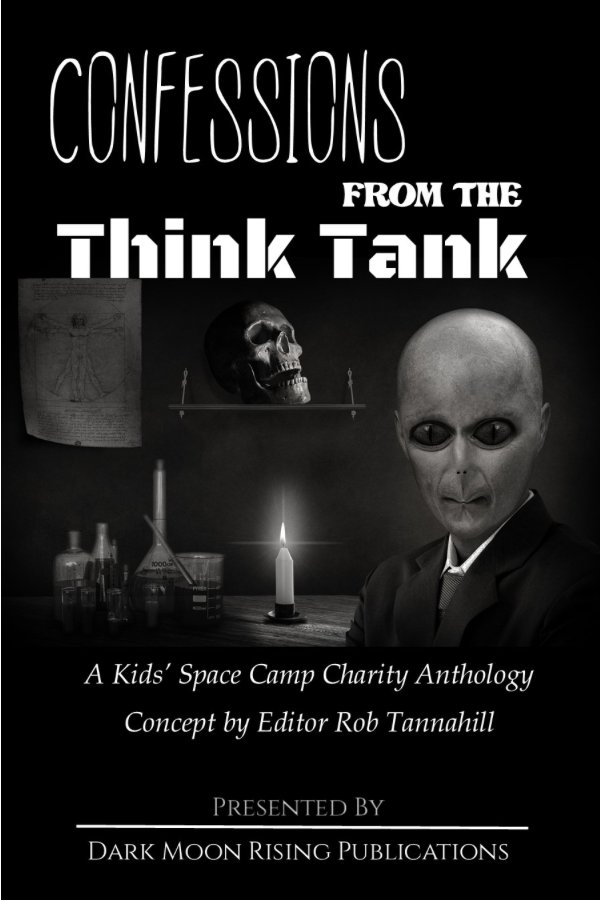
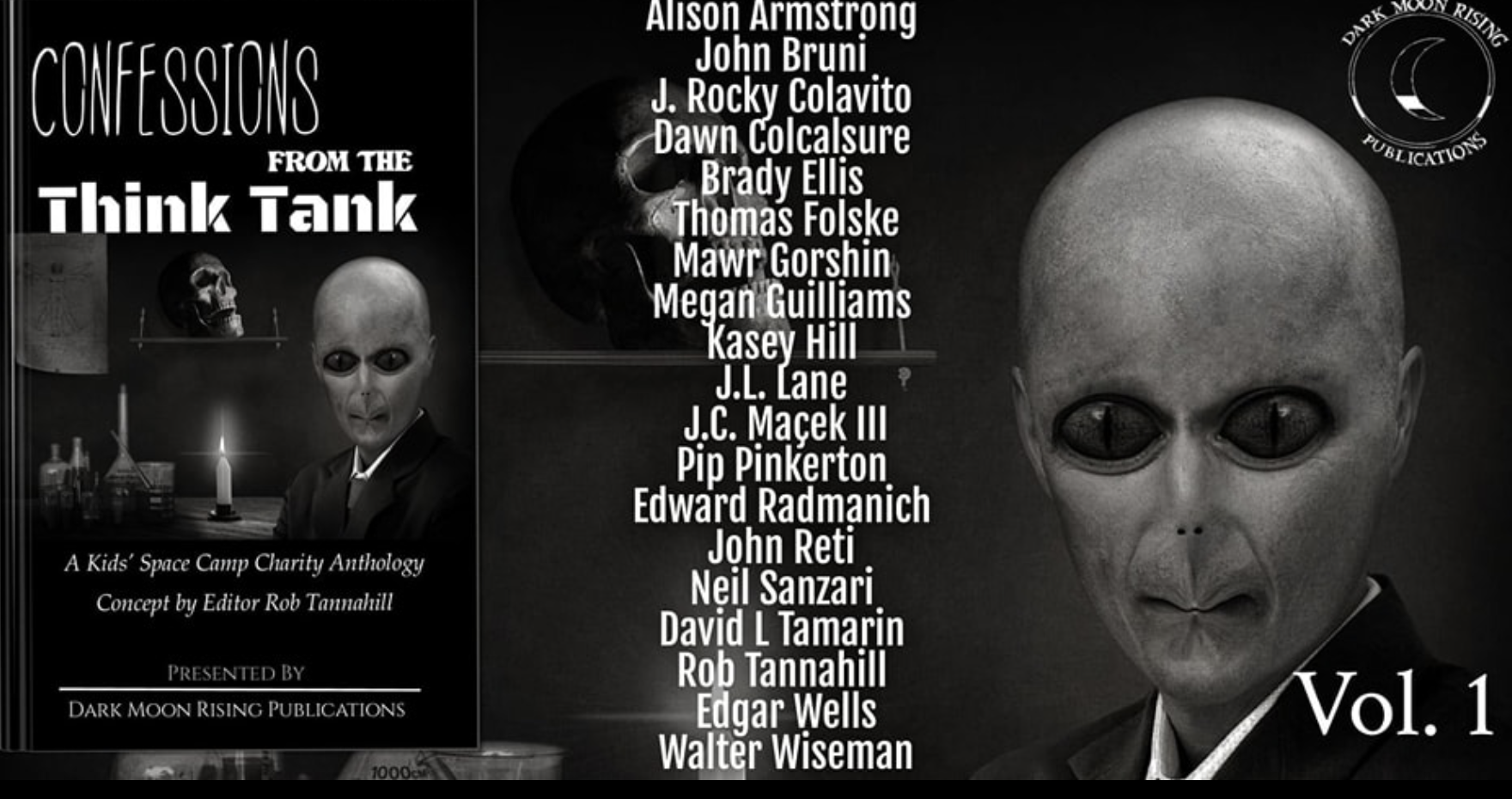
‘Confessions from the Think Tank’ is Published!

I have three written works published in Confessions from the Think Tank, a Kids’ Space Camp Charity Anthology (originally A MUFON Charity Anthology)–two short stories, “The Portal,” and “Neville,” and an essay originally published here on my blog, When Tech is Dreck. The book is a Dark Moon Rising publication, and it is published on Amazon in e-book and paperback, Barnes and Noble e-book, and here in e-book format.

Here’s what “The Portal” is about: a woman high on LSD stumbles into a portal that takes her to an alien world with human collaborators who are helping the aliens colonize the Earth and steal its resources. She’s come back through the portal to Earth to warn her friends about what she’s seen. But is it real? Has she really seen these sights, or is it just part of her drug trip? Is there really something out there to worry about, or is she just going insane, as her friends think she is? Read it to find out!

“Neville” is another alien conspiracy involving stealing from the Earth, though it’s food this time, and the story is a bit of a parody on the Noah’s ark myth. And again, the characters do a lot of drugs. My essay, “When Tech is Dreck,” is about the potential dangers of modern technology. If you read it and doubt the veracity of any of my arguments, my blog post (link above) has lots of links to back up my arguments.

Other great writers in this conspiracy-oriented anthology include Alison Armstrong, John Bruni, J. Rocky Colavito, Dawn Colcalsure, Brady Ellis, Thomas Folske, Megan Guilliams, Kasey Hill, J.L. Lane, J.C. Maçek III, Pip Pinkerton, Edward Radmanich, John Reti, Neil Sanzari, David L Tamarin, Rob Tannahill, Edgar Wells, and Walter Wiseman.

Go out and get yourself a copy of this amazing book. You’ll love it! 🙂

The Tanah–Beginnings, Chapter Ten

[The following is the eleventh of many posts–here is the first, here is the second, here is the third, here is the fourth, here is the fifth, here is the sixth, here is the seventh, here is the eighth, here is the ninth, and here is the tenth–about a fictitious discovery of ancient manuscripts of a religious text of narratives and magic spells. Its purpose for my readers and me is to provide a cosmology and mythography on which I am basing much, if not most, of my fiction–short stories and novels. If anyone is interested in reading this fiction, he or she can use these blog posts as references to explain the nature of the magic and universe in my fiction.]

Indeed, Rawmios fully proved that even though his family had spoken so ill of him, and had made all expectation of him seem small, he took that smallness and made big accomplishments with it. This doing much with little would be an important theme for him, and for his teachings.

He was gaining fame as a teacher, but he knew he needed to improve how he presented his ideas, for his listeners either couldn’t understand the more abstract notions, or they found his method of presentation dull. Rawmios needed to use all of his resources and talents to reach out to his followers.

He decided that presenting his ideas in song, art, or dramatic forms would better convey, in symbols, his more abstract and abstruse ideas. He had some success with this: singing and playing lute-like instruments; drawing pictures; and performing one-man plays to narrate, in parable form, his ethics. He was still, however, very limited with this, so he found more resources.

He was fortunate enough to be living at a time when many amazing new inventions were available and affordable, so he bought some of them. He didn’t, however, know how to use them very well. There was a device in everyone’s home, connected through a network with this device in every other home around the known world. On this device, one could record images and sounds and publish them on the network so everyone would know what one recorded. Rawmios would use this device to record songs, art, and dramas.

He could also record several separate performances, and through editing put them together so as to seem like one big performance. Thus he could record himself singing, playing lute-like instruments, hand drums, and pipes–all for one song–and with all the recordings put together, it would seem like the performance of a large band instead of many performances by one man.

Similarly, he could put several drawings one after another in the form of a slideshow, so they could tell a story. Finally, through the use of costuming, make-up, and editing of recordings of several dramatic performances, he could do dramas with multiple characters, all played by him.

One may ask why he didn’t simply get other actors or musicians to perform with him. The reason is that few people living in Lumios, or anywhere in Nawaitos, were committed to a life in the arts. The local people were practical, devoted to work that made large sums of money to support their families. Much of the work, in fact, was in making the very inventions Rawmios used to make colleagues in performance unnecessary.

Because Rawmios’ work was in teaching, philosophy, and the arts, he made less money, which made the production of quality recordings difficult. His relative inexperience with recording predictably made producing quality work an elusive thing, too. When he published his recordings, people praised his creativity and originality, but criticized the poor quality. This was something he would have to improve on, in time.

These criticisms reminded Rawmios of the fourth time he left the city of his family in Canudos, and of the man who told him he needed to focus on his art in order to improve. This he would have to do, to improve the quality of those recordings.

Some critics, though pointing out the poor recording quality, made something of a virtue out of it, in that here we had a man who could do much with so few means. Other people recorded music, art, and drama with far more resources but with far less originality. Many people made lavish productions with derivative ideas.

Rawmios used this perspective as the basis of a lesson to teach in relation to the Three Unities and the Ouroboros. He said, “Our focus determines the quality of our work. If we focus on the clever manipulation of devices, but not on artistic originality, we know how our work will be in the end. If we focus on our art, but not on the proper use of the devices, we know how our work will be in the end. We must not focus too much on the one and not enough on the other. Devices used in excess become the biting serpent’s head; art used negligently becomes the serpent’s bitten tail–the one bites, and destroys the other. The same is true of art as the serpent’s head and devices as the serpent’s tail.”

Rawmios continued working on recording songs, art slideshows, and dramas. While he worked harder to improve their technical quality (and some aspects did improve), still there were significant flaws. Ultimately, he decided not to dilute his work by diversifying so much; instead, he would focus on recording the songs and improving their sound quality. In time, he would learn how to improve the quality of recorded images, and then resume doing slideshows and dramas.

He saw this, too, as a lesson to be taught to his followers, and he related this idea of focus to the Three Unities, and to the Ouroboros. He said, “Our focus determines the quality of our work. The capacity of our focus is limited. If we stretch that focus out over many things, each thing has little focus, and therefore little mastery. If we focus on few things, each thing has much focus, and therefore much potential for mastery. Trying to master a diversity of things is like the biting serpent’s head; the many things one tries to master simultaneously are like the serpent’s bitten tail–the one bites, and destroys, the other. Pride causes this excess; humility will curb the excess. Mastery of a few things avoids the biting and the bitten. Mastery of many things can only be done slowly and patiently, after mastering the few things first.”

Commentary

There is much to be praised in the one who can achieve much after being maligned as incapable. In this we see the oppressed, bitten tail of the Ouroboros shifting over to the masterful biting head. Still more is there to be praised in the one who achieves much with few resources. In the right circumstances, those limitations can drive one to use diligence and ingenuity to compensate for them, thus making hard work with limitations oppressive at first, yet at last emerging triumphant–here we see again the shift from bitten tail to biting head, from wretch to master.

The one with many resources, however, may get too complacent with his work, especially if he has been praised to excess. This comfort may cause him to work with less thought given to quality, and his work will suffer–the biting head hurts its own tail. Similarly, if we try to master many things, this is too much mastery, and our work suffers–the biting head wounds its own tail.

Now, one more thing needs to be addressed about this chapter: the baffling appearance of advanced technology in the ancient world. Our scholarly team has no way to account for its mysterious and bizarre presence here. While there are some who believe that ancient civilizations had advanced technology that has since been lost, there is no archaeological evidence of any kind, anywhere, to substantiate such fanciful claims.

Yet, here we are, with an apparent ability to “record” sounds and visuals, not by jotting the ideas down on paper: zavedzka, in the ancient texts, means capturing visual and/or auditory moments or events and keeping them to be experienced again and again. What devices Rawmios had to enable him to do this, we team of scholars have no idea.

Similarly, the arranging of these “recorded” visual events in the form of a “slideshow” (kolnika, an array of images appearing in close succession), images that, like the “recorded” sounds, can be “edited” (volsnay), or altered to improve their visual or auditory quality. Finally, there is a “network” (tibilsk) that connects all of these things to be experienced by people in homes all over the known world…an ancient internet? Again, it’s just too bizarre to be believed.

Still, these ancient texts insist on the existence of such technology. What was the true nature of these invented devices? How could they have been created back then? Why are there no traces of them now? Again, that joking comment of one of our scholarly team, with regard to the linguistic anomalies in the text, comes back to haunt us with regard to this technology…aliens?

Here’s another of the text’s concrete poems.

A
house
of
gold

that
topples…….
easily……………….

is……………………..built
by…………………………………men…………………………………of mediocrity

BUT

Those
who
can
build
a
lasting
edifice
from
straw
are
truly
men
of
genius.

Analysis of ‘Breakfast at Tiffany’s’

Breakfast at Tiffany’s is a 1958 novella by Truman Capote. It was adapted into a film by Blake Edwards in 1961, starring Audrey Hepburn and George Peppard, with Patricia Neal, Martin Balsam, Buddy Ebsen, and Mickey Rooney. The film differs from the novella in many significant ways, as will be discussed below.

The novella is so short, not even a hundred pages, to go by the edition I have, that ‘novella’ seems to describe a story too long for BAT, and ‘short story’ is too short for it. Since, as is the case with my copy, the story is often published with three short stories–“House of Flowers,” “A Diamond Guitar,” and “A Christmas Memory“–I’ll make a number of references to these stories whenever they share comparable or contrasting themes with BAT.

The novella is as short as it is, but the film is almost two hours long, suggesting a much longer story. Neal’s character, Mrs. Emily Eustache “2E” Failenson, is nowhere to be found in Capote’s story.

The unnamed narrator of the novella is named Paul Varjak (Peppard) in the film. He and Holly Golightly (Hepburn) develop a love relationship that is absent in Capote’s story (in fact, true to the writer’s own sexuality, the unnamed narrator–it is implied–is gay, therefore making his story at least somewhat autobiographical, since the narrator is as much a writer as Capote was).

The regrettably racist caricature of a Japanese, in the klutzy Mr. Yunioshi–played by Rooney in yellowface–isn’t in Capote’s story, either, though Yunioshi is referred to with a racial slur–a “Jap”–by Joe Bell, a bartender near the beginning of the story.

The film ends with a typical Hollywood rom-com cliché, with Varjak getting the girl and kissing her in the rain; while in Capote’s story, there is a far more ambiguous and uncertain ending, with Holly leaving the narrator and going off, out of New York City and into the world.

As for the casting of Holly for the film adaptation, Capote was hoping for Marilyn Monroe to play the part, and he was angry that the part ended up going to Hepburn (though he came to like her performance, all the same). Given that Holly is a romantic dreamer of a girl, chasing wealthy men, I find Capote’s preference of Monroe to play her strange and ironic, when Monroe, having married Arthur Miller at one point, demonstrated left-wing sympathies that may have contributed to her having been murdered, as opposed to the official suicide story of her death. The only thing Monroe had in common with Holly was the blonde hair (well, bleach-blonde, in Monroe’s case), and so brunette Hepburn had blonde streaks added to her hair.

The opening scene in the novella is nowhere to be found in the film, which during the credits shows Holly window-shopping outside a Tiffany’s store. We come to understand that Holly loves being in Tiffany’s because the luxury jewelry store is the only place where she can feel a sense of safety, peace, and calm in her turbulent world. She imagines that nothing bad can ever happen there.

She denies that she likes Tiffany’s for the jewelry (Capote, page 35). While it may not literally be the jewelry that she likes so much about the store, surely it’s the sense of a luxurious life that Tiffany’s represents that gives her that safe, serene feeling.

Holly is a socialite who, as a kind of “American geisha,” dates wealthy men and accepts cash gifts from them; she also aspires to marry such a man. If it isn’t about the wealth that makes Tiffany’s so appealing to her, then why is it that store, of all stores, that gives her that feeling of peace and security?

Material abundance, of the sort that a luxury jewelry store can easily represent, can give one a great and obvious sense of security, of safety and therefore of calm, peace, and serenity, that nothing bad can happen. Thus, Tiffany’s is a capitalist paradise. After all, money isn’t everything, but having one’s basic material needs taken care of certainly gives a sense of peace of mind, so material abundance ensures that peace of mind all the more.

Why does Holly want to “wake up one fine morning and have breakfast at Tiffany’s” (page 35)? Why breakfast at Tiffany’s, which at the time sold only jewelry, and not food (the Blue Box Café first opened in 2017)? Consider the origin of the word ‘breakfast’–a breaking of a fast. So it’s the ending of a period of going without food.

The implication here, symbolically understood, is that one is going from rags to riches, from fasting or starving to abundance, all in one fell swoop. Such has always been Holly’s ambition: to go from her humble beginnings as Lulamae Barnes, married in her teens to a veterinarian named Doc Golightly (Ebsen) in Texas, to her now glamorous life in New York City, renamed Holly Golightly and chasing rich men to subsidize her now high-maintenance lifestyle, and thence, she hopes, to marriage and solid security with such a rich man, who would be Tiffany’s personified.

What we have here is a traditional woman’s version of the American Dream: social mobility through marrying up. The story takes place before the Sexual Revolution, and so women were still chained to the fetters of traditional sex roles, meaning they had to get their access to wealth through successful men…if they were young, pretty, and desirable enough…which Holly assuredly is, at the age of about eighteen or nineteen.

Beyond this dream of chasing wealth, though, is the pursuit of what Lacan would have called an ultimately unfulfillable desire. Tiffany’s symbolizes a nirvana one can never attain, though Holly will never stop trying, romantic dreamer that she is. She can never settle for an ordinary life, and that’s why she leaves New York City and the unnamed narrator for the unknown at the end of Capote’s novella. She may not have married José Ybarra-Jaeger (José da Silva Pereira in the film, played by José Luis de Vilallonga), the rich Brazilian diplomat, but she does go to Brazil in search of a similar dream.

This endless seeking out of more and more to satisfy a desire that can never be satisfied, is not only the essence of what drives Holly to do what she does (symbolically, what Lacan would have called jouissance), but also her unfulfillable desire can be paralleled to capitalism’s endless pursuit of profit (i.e., the Marxist notion of surplus value and Lacan’s plus-de-jouir, or “surplus enjoyment”). Hence, Tiffany’s can be seen as a capitalist paradise.

It is common for people to dream about striking it rich rather than doing the hard work of fighting for workers’ rights and reducing income inequality. Hence, even in today’s world of the obscenely wealthy few vs the impoverished many, we still have all this simping for billionaires going on. Holly can be seen to represent such people, on at least some level.

We can contrast her lifestyle among the affluent in New York City with the uniformly poor in “House of Flowers,” set in Third World Haiti, “A Diamond Guitar,” set in the austerity of an American prison, and “A Christmas Memory,” about a family so poor that the narrator, when a boy and close to his older female cousin, had to save up every penny they could get over the year to pay for the ingredients they needed to make Christmas fruitcakes (page 144). While Holly dreams of the security that comes from wealth, so many others just struggle to survive.

Capote’s novella begins with bar owner Joe Bell telling the narrator about photos of a black man holding a wooden sculpture of a woman’s head, and the woman looks exactly like Holly. Yunioshi is the one who found the wooden head while traveling in Africa, and he informed Bell of it.

It seems that Holly’s been to Africa some time since the end of the narrator’s story about her. Bell imagines she’s “got to be rich to go mucking around in Africa.” (page 8) In this incident, we see again the contrast between being a girl from the First World Who aspires to wealth, and people in poverty with much more humble dreams, as those in Capote’s aforementioned three stories.

The story about her in Africa causes the narrator to recall his story about her from years before, back in the 1940s. Though she had dreams of wealth, she lived in a modest brownstone apartment building in Manhattan’s Upper East Side. Yunioshi, in an apartment on the top floor, complains about Holly ringing his bell and waking him up to open the door for her.

This scene corresponds with the beginning of the film after the opening credits, though as I said above, the novella doesn’t portray Yunioshi as a spastic racist Asian stereotype, bumping into things, and having buck teeth sticking out of his face. Blake Edwards films are full of slapstick, but it’s sad that he stooped to this low for cheap laughs. In all fairness to Rooney, though, when he realized how offensive his performance was, he expressed the deepest remorse and publicly apologized to Asian communities. Edwards was similarly contrite.

Anyway, the narrator has seen her for the first time during this altercation with Yunioshi (page 11). He describes her as having “an almost breakfast-cereal air of health” (page 12). In this context, we note that a man who’s just “pick[ed] up the check” for her, one of those male pursuers of hers who pay for things for her in the hopes of getting…something…back from her. This picking up the check is the so-to-speak breakfast–the end of her poverty–that she hopes will one day lead to Tiffany’s.

From then on, she isn’t ringing Yunioshi’s bell, but the narrator’s, and they haven’t met yet (page 13). He learns more about her nonetheless, such as her cat (which is never named) and her playing the guitar, something she sometimes does sitting out on the fire escape as her hair dries (page 15). We’re reminded of the scene in the film when Hepburn is there, strumming and singing “Moon River,” with music by Henry Mancini.

When the narrator finally does meet her, it’s out by his window. Coming into his room, she explains that she’s trying to get away from another suitor. She notes the narrator’s resemblance to her brother, Fred, and so, feeling a brother transference, she wants to call him Fred. Note how she doesn’t go by her real name (Lulamae), she doesn’t call the narrator by his real name (which we never learn in the novella, and as I mentioned above, is given as Paul Varjak in the film), and the cat is never given a name (except “Cat” in the film).

At the end of the film, Holly contemplates their no-name status when justifying to Varjak why nobody belongs to anybody, and saying that she doesn’t know who she is. Namelessness, thus, represents social alienation, between people and in one’s own species-essence.

Linked with this alienation from within and without is how OJ Berman (Balsam) characterizes Holly: “She is a phony,” and “She isn’t a phony because she’s a real phony.” (page 27) Berman is a Hollywood talent agent who has groomed Holly in the hopes of making her into a movie star. She believes all the nonsense she says about herself, and his grooming of her, which has included French lessons to help her get rid of her original hillbilly accent from Texas, has been part of the process of creating her phony personality as a café society girl. (page 29)

To get back to her meeting of the narrator, he tells her he’s a writer. He also tells her that it is Thursday, which reminds her that she has to go to Sing Sing and meet a mafia man incarcerated there named Salvatore “Sally” Tomato. She’ll get the “weather report” from him: a coded message to transmit information about such criminal activities as the narcotics smuggling that she’ll get entangled in and arrested for towards the end of the story. She’ll give that “weather report” to Sally’s lawyer, Oliver O’Shaughnessy, every week.

As I’ve pointed out in many other posts, I regard mafia men in movies and fiction as representative of capitalists in general, since as a Marxist I regard capitalism’s accumulation of surplus value to be a theft of the value that workers put into the production of commodities; therefore, capitalism in general is criminal activity, whether legalized or not.

Holly’s regular involvement with Sally, therefore, is part of her own simping for the rich, which in turn is part of her dream of finding that peace and security that comes from wealth, as represented by Tiffany’s. The chaotic and troubling world from which she wishes to escape into a capitalist paradise is the capitalist hell of poverty, which she naturally fears. One is reminded of what Belle says to Scrooge in A Christmas Carol as an explanation for his own pursuit of wealth: she says to him, “You fear the world so much” (Dickens, page 50).

To get back to OJ Berman and whatnot, he first appears at one of Holly’s many parties, in which she hobnobs with rich and socially important people like him. In the film, you can spot a couple of Asians in the background, extras with no dialogue: they seem to be there as if to say, ‘Look, the filmmakers are not saying that all Asians are like Yunioshi.’ The inclusion of these two non-caricatured Asians hardly compensates for Rooney’s performance, though.

One presumably wealthy man that Holly shows interest in is Rusty Trawler. He’s thrice divorced, but he’ll end up marrying someone else (page 66). Rusty also seems to be a Nazi sympathizer, for according to a set of clippings from gossip columns about Holly and Rusty, “he attended rallies in Yorkville“, he’d “sent her a cable offering to marry her if Hitler didn’t” (recall that the narrator’s reminiscences about her take place during WWII, when her brother Fred is serving in the army), and Winchell always referred to [Rusty] as a Nazi (page 33).

Yes, Holly, in her pursuit of that capitalist paradise of peace, symbolized by Tiffany’s, is even willing to marry a fascist if he has money. Supporters of capitalism are willing to lean that far right, if need be.

Her wish to marry money runs deeper than mere gold-digging, though. The transactional relationship between men and women as a result of sex roles (he gives her money in exchange for at least the hope of sex) is, of course, profoundly alienating, exacerbated by modern capitalism. She opts for this transactional relationship with men (while also having something of a bisexual attraction to women, using the word “dyke” in a non-derogatory sense, and hinting at this sexuality in the stripper scene in the film) because, as I mentioned above, deep down, she cannot relate to people in a deep, meaningful way.

Her platonic friendship with the narrator, therefore, is an ideal escape from the usual ‘I give you something, so you give me something back’ trap between men and women, because recall, it is strongly implied, if you’re paying attention as you read, that the narrator is gay. Holly observes that if a man likes neither baseball nor horses, “he don’t like girls.” (page 34) The narrator likes neither; he’s even tried riding a horse with her in the park (pages 77-78), and he loses control of his mare and falls off. Also, when saying she’ll never rat out Sally Tomato in exchange for the cops dropping the charges against her in her connection with him, she addresses the narrator as “Maude,” slang at the time for a gay man or a male prostitute (page 91).

He has no sexual interest in her, a girl whom, recall, Capote wanted Marilyn Monroe to play, therefore Holly’s something of a sex goddess. He is, nonetheless, fascinated with her in the way a gay man might be with a beautiful woman or a talented female singer like Judy Garland, that is, adoring her for aesthetic reasons rather than sexual ones.

To get back to Rusty, when the narrator has learned that he’s married for the fifth time, according to a newspaper (page 66), he assumes that Holly is the bride, and he’s most unhappy to have learned of this. Later, he realizes that it isn’t Holly whom Rusty has married, but Mag Wildwood, a fellow socialite, friend and sometimes roommate of Holly’s, and a model with a stutter (page 67). He goes “limp with relief” to have learned of this.

On a Monday in October 1943, he is with Holly in Joe Bell’s bar drinking Manhattans (pages 47-48). Then, after lunch in a cafeteria in the park, they avoid the zoo, since Holly can’t stand to see anything in a cage; oddly, for Christmas she’ll buy him a beautiful bird cage and make him promise never to put a living thing in it. (page 53) She sees herself as a free bird.

On that Monday in October, they pass a Woolworth’s, and she wants him to go in with her and steal something (page 49). He goes in reluctantly, and she eyes some Halloween masks. The two of them put on masks and walk out of the store wearing them. After they’ve run off for a few blocks (they’ll wear the masks all the way home), she tells him how she used to steal things when she had to or wanted to, and she still does it every now and then. The scene is replicated in the movie.

That a young woman who attracts wealthy men in the hopes of one day marrying one, and who feels peace of mind only in a luxury jewelry store, would engage in shoplifting from time to time makes perfect sense to me. She embodies the self-centered materialism of capitalism; capitalists accumulate their wealth by stealing the fruits of workers’ labour.

In the film, the shoplifting scene comes right after a scene with the two in Tiffany’s, then in the public library. Note the contrast between the private property of the jewelry store and the 5 and 10 store where they steal the masks. Sandwiched in between in a place for the public, one she significantly doesn’t know about. As a lover of all things connected with capitalism, Holly is fully aware of those places that are private property, but she’s a bit of a fish out of water in public places.

Eventually, that dull, unromantic life she’s tried to run away from tries to find her and get her back. Such a life is personified in Doc Golightly (Ebsen), who’s been snooping around near the brownstone building and getting the narrator’s attention (pages 57-58). This is after the narrator has had a falling-out with her, over a slur he’s made about her way of getting money from men (page 56).

Doc is a personification of the cage she never wants to be trapped in. His appearance and the falling-out between her and the narrator sandwich her bird cage gift that he puts in front of her door: then she rejects it as much as he has, having put it “on a sidewalk ashcan waiting for the garbage collector.” (page 56), then it’s taken back by him into his room. She’ll reject Doc the cage again when he tries to take her back with him to Texas.

Oddly, her revulsion against animals in cages is disregarded by the moviemakers when we see a shot most deliberately taken of a bird in a cage in Holly’s apartment, early on in the film, during that party scene. We see Balsam as Berman looking at the bird. Is Holly supposed to be enigmatically contradicting herself here? Or is it a wish-fulfillment on the filmmakers’ part to put Holly in a cage, as we see when she decides to stay with Varjak at the end of the movie?

When the narrator first meets Doc, he imagines that the man, being so much older than Holly, is her father rather than her husband (page 59). Doc married her when she was just going on fourteen, making her the stepmother of kids he’s had from a previous marriage, kids older than she was! (page 60) Doc claims she had no reason to be unhappily married to him, as his daughters did all the housework and she didn’t have to lift a finger (pages 60-61).

As a horse doctor, he presumably has been able to provide a decent life for her. But the point is that, beyond how cringe we today would find such a marriage to a girl so young, Holly is a romantic who wants to rise up above the mediocre and the ordinary, to the heights that capitalism promises (but rarely delivers) and to those pleasures that jouissance wants (and never fully delivers). Hence, she left him, and despite his pleas for her to come back, she never will.

Still, when Madame Sapphia Spanella, another tenant in the brownstone, sees Holly and Doc embracing, she assumes he is another of Holly’s johns and is morally appalled. Holly thought she’d see her brother Fred before being surprised by Doc (page 64). Later, after Rusty’s married Mag, Holly learns of Fred’s having been killed in action, and she smashes everything in her apartment in a rage of grief. Spanella is as horrified now to know of this tantrum as she was scandalized before with her and Doc. As it turns out, not everyone in the past of otherwise self-centred Holly is contemptuously tossed aside. Elsewhere, now that Rusty is unavailable, she now has a new rich man: the Brazilian diplomat, José.

After Fred’s death and the arrival of José into her life, Holly is changed in many ways. She’s nowhere near as sociable as she once was, José has replaced Mag as her roommate, she generally never mentions Fred anymore, and she no longer calls the narrator “Fred” (page 71). The only times she ever leaves her apartment are on Thursdays to see Sally in Sing Sing.

Because she imagines she’ll soon marry José, she’s developed a “keen sudden un-Holly-like enthusiasm for homemaking,” thus making her buy a number of things that it doesn’t seem quite like her to buy. She’s bought two Gothic ‘easy’ chairs from the William Randolph Hearst estate, and given his tendency to have flirted with fascism around this time, though, perhaps this purchase in particular isn’t all that un-Holly-like (page 71). She’s also trying to learn Portuguese so she’ll be comfortable living in Rio when her husband-to-be takes her there (page 72).

Now, since Holly is taken to having rich men pay her way, whether they be husbands or not, it is apposite to point out that in the movie, Varjak also has someone paying his way. This is the wealthy Emily Eustache “2E” Failenson (Neal), his “decorator.” The inclusion of this character has a way of equalizing things between the sexes; it’s as if the filmmakers, in spite of preferring to put Holly in the ‘cage’ of a relationship with Varjak, don’t wish to leave the receiving of cash in exchange for sex to be stereotypically the exclusive domain of ‘gold digging women.’

After the fiasco with the horses, the narrator finds “photographs of Holly…front-paged by the late edition of the Journal-American and by the early editions of both the Daily News and the Daily Mirror.” (page 79) She’s been arrested in a narcotics bust connected with Sally Tomato (page 80).

The narrator imagines it must be Spanella who is to blame, given how she always complains to the authorities about Holly in a way we see Yunioshi do in the film (Yunioshi is also the one in the film who gets the cops on Holly for the drugs).

Joe Bell, who also likes Holly, wants the narrator to call her rich friends to help her out (page 83). The narrator tries Rusty and Mag, who turn on Holly, not wanting their names at all to be associated with her. Calling Doc in Texas is out of the question–Holly would never want that. Then the narrator tries Berman, who says she’ll be out on bail (pages 84-85).

When the narrator goes to find her in her apartment, though, she isn’t there. He does find a man in her home–José’s cousin, who has a message from José for her (pages 85-86). He wants to break off the marriage plans, because, like Rusty and Mag, José doesn’t want his name, family, and reputation to be stained by association with a girl mixed up with drugs. The narrator finds Holly in a hospital room, where she’s been since the arrest. There he reads her José’s letter (pages 87-88).

Now, she’s heartbroken to know that José has dumped her, that he’s just another “rat like Rusty” (page 88), but she’s not going to let that stop her from going to Brazil anyway. The narrator tries in all futility to stop her from jumping bail, for she won’t “waste a perfectly fine ticket” (page 90), and she won’t testify against Sally Tomato, even though she admits that she is “rotten to the core” (page 91).

I’m not interested in the sentimentalized, rom-com Hollywood ending of the film, so I’ll stick with the novella’s ending. Holly really does leave New York and the gay narrator, and she even gets rid of the cat, putting it outside the car taking her to the airport and telling the cat to “f___ off!” when it won’t leave her. (page 95)

Some may think of Holly favourably as a feminist free spirit for leaving the narrator, as opposed to her choosing to stay in her ‘cage’ in a patriarchal relationship with straight Varjak. But when we read the ending of Capote’s version, in which she isn’t freeing herself from a relationship with a gay friend–who has no wish to dominate her as a husband might–and where she doesn’t want to take responsibility for her involvement in a mafia racket or even for her cat, we realize that the narrator is right when he says to her, “You are a bitch.” (page 95)

She tosses the cat aside because of her fear of commitment, her wish never to be chained to anyone or anything, not caring at all about who or what she’s hurting as a result of abandoning them–Doc, the cat, or her friend the narrator. She is just that self-centred, on an endless quest to satisfy her insatiable thirst for jouissance, that surplus-value plus-de-jouir that connects her desires with capitalism, hence her trip to Rio when she’s lost her José.

Still, the narrator will find the abandoned cat and take care of it (page 97). He gets a postcard from her, saying she’s been to Buenos Aires, liking it there far more than Brazil. She’s “joined at the hip with duhvine Señor. Love? Think so.” He’s married and with “7 brats,” though (page 97). In other words, she’ll use him for his money, for as long as the relationship lasts. Then, as we learned from the beginning of the novella, she’ll pursue her elusive jouissance somewhere in Africa. The narrator just hopes that Holly, like the cat that in many ways is a double of her, has found a place where she truly belongs (page 98).

As I said above, the three stories in my edition of the book that fallow BAT“House of Flowers,” A Diamond Guitar,” and “A Christmas Memory”–all share certain themes with the main story, and I think they’re all worth mentioning before I end this analysis. These themes include: platonic relationships and/or friendships with implied homosexual elements, the breaking-away and ending of said friendships with the aim of attaining personal freedom, and whether or not marriage is a kind of prison.

In the first of these three stories, set in Port-au-Prince, Haiti, Ottilie is a beautiful, strong-willed prostitute, parallel to Holly as an “American geisha.” But where Holly hopes to marry a rich man and experience the capitalist paradise of peace and freedom from the “mean reds,” a paradise symbolized by Tiffany’s, Ottllie’s marriage to the aptly-named Royal Bonaparte, a marriage in the Third World, a harsh contrast to the opulence of New York City, it is a nightmare in which she is tyrannized by her new grandmother-in-law, the also aptly-named Old Bonaparte…a witch. Her new home is the cage Ottilie is trapped in, “like a house of flowers” (page 109).

In such historically impoverished countries as India and China, it was common for women to be treated like abject slaves by their mothers-in-law, since in a patrilineal society, a married woman leaves the family of her flesh and blood to live with her husband’s family, who don’t regard her as their own flesh and blood. So, the contrast between the First World and the Third World is apparent in regard to a woman’s marriage: one as, on the one hand, at least a dream of marrying up into Tiffany’s heaven, vs on the other hand, marrying into patriarchal hell.

In “A Diamond Guitar,” it’s been said that Mr. Schaeffer is parallel to Holly for being, like her, a dreamer; but I must disagree and say that he corresponds to the narrator of BAT, and that it’s Tico Feo who corresponds to Holly, and for several reasons. Tico Feo is a young man with blond hair (like Holly, young and blonde); the boy tells a lot of lies (as Holly is a “phony”), he plays the guitar, as she does, and like her, he eventually frees himself from the Alabama prison he and Schaeffer are stuck in (and just as Holly jumps bail and leaves the narrator in NYC, so does Tico Feo abandon Schaeffer in the prison).

Schaeffer’s and Tico Feo’s relationship isn’t at all physical, but “they were as lovers” (page 130), just as Holly and the narrator of BAT have a platonic relationship, but he is so fascinated with her as almost to be in love with her. The narrator in BAT expresses himself artistically as a writer; Schaeffer does so by carving dolls.

In “A Christmas Memory,” there’s another platonic male-to-female relationship, but this time in the form of a boy and his much elder cousin. Both characters are unnamed, though she calls him “Buddy,” and he, the narrator, calls her simply “my friend.” This kind of naming and non-naming is similar to how the unnamed narrator of BAT is addressed as “Fred” by Holly (recall, not her real name, either), implying a transference of her brother-to-sister relationship with the real Fred that parallels the familial relationship of cousins “Buddy” and his “friend.”

So we can see a number of parallel themes and motifs in all these stories, including also Capote’s autobiographical elements in at least three of the four stories, through the implied homosexuality in the narrator of BAT, the platonic homosexuality of Schaeffer’s and Tico Feo’s relationship, and how “Buddy,” the boy in “A Christmas Memory,” dramatizes much of Capote’s childhood. We see the superiority of platonic relationships over transactional, sexual ones, and we also see the yearning to escape from one’s cages–literal ones, metaphorical ones, and ones made of flowers.

Truman Capote, Breakfast at Tiffany’s, London, Penguin Essentials, 1961

The Tanah–Beginnings, Chapter Nine

[The following is the tenth of many posts–here is the first, here is the second, here is the third, here is the fourth, here is the fifth, here is the sixth, here is the seventh, here is the eighth, and here is the ninth–about a fictitious discovery of ancient manuscripts of a religious text of narratives and magic spells. Its purpose for my readers and me is to provide a cosmology and mythography on which I am basing much, if not most, of my fiction–short stories and novels. If anyone is interested in reading this fiction, he or she can use these blog posts as references to explain the nature of the magic and universe in my fiction.]

Rawmios, now forty years old, went to the city of Lumios wearing his black silk coat. There he found five followers, eager to hear his teachings. They were two men of the ages of thirty-four and thirty-two, a woman aged thirty-five, a boy aged fourteen, and a girl aged thirteen.

They went to a park and sat on a small hill there. Standing at the top of the hill, Rawmios began teaching.

“The whole universe, and everyone and everything in it, is like a huge ocean extending everywhere,” he began. “We are all drops of water in that endless ocean, all united. Our fortunes are like the waves, ever rising and falling. When they rise, we must beware of the coming troughs; when they fall, we must be patient, waiting for the coming crests. Sometimes the crests and troughs come quickly, sometimes slowly, but they will come.

“We drops of water are not separate from each other: we’re all as one. Our joys and sorrows are all as one, too, but we forget that. Remembering our togetherness makes us selfless; forgetting makes us selfish.

“No time is more important than now, for now is the only temporal reality. We must use now in the best way possible.

“These Three Unities, of space, time, and action, rule the world. If we live by their laws, we will be happy. If we forget them, we will be sorrowful. Remembering how all of us–man, animal, and plant–are one, and that our joys and sorrows are one, will teach us to be kind, giving, caring, and thoughtful to each other. Forgetting our oneness will make us cruel, greedy, selfish, and uncaring.

“Caring and kindness beget happiness; selfishness and cruelty beget suffering. Remembering to use now wisely brings the most out of us; forgetting to use now, by brooding over the past and worrying about the future, brings the least out of us. Remembering that good actions from us send out waves of good that will return good to us; forgetting this, and sending out ripples of evil in our sinful actions, brings those evil ripples back to us.

“Remembering that good fortunes will pass away teaches us to be prepared for difficulty, thus reducing its pain; forgetting this makes the pain sharper. Remembering that ill fortune will end teaches us to be patient, thus reducing our pain; forgetting this makes the pain more stinging.

“Do not just learn my teachings,” Rawmios concluded. “Remember them.”

The youngest of his five followers, the girl Zilas, asked him, “How can I rid myself of the pain my mother gives me? She calls me ‘ugly’ and ‘plain.’ She says I must marry the first man who asks me, for few will ever ask me.”

To this Rawmios said, “Her words are lies. Do not believe them. You are not an ugly girl. If your mother does not stop lying to you, you must leave her as soon as you can take care of yourself, but no sooner.”

Next, the boy, Dolnyeros, spoke: “What you say is wise, but new and different from what I was taught. My father told me never to trust any teachings other than what I have learned.”

Rawmios said, “His words are lies. Do not believe them. Wisdom’s details always change in time, though the basic truths stay the same. What I teach is the same wisdom as before, only I use new words. Do not honour your father’s bigotry.”

Next, the woman Yatacas said, “I have a younger brother who shows no love or caring in my family. I get angry with him and chide him for this, but he still doesn’t change.”

Rawmios said, “Probably your anger and chiding are what make him show no love. One cannot even make a show of love; it must be real, from the heart.”

Then the younger man, Noigos, spoke to Rawmios. “I, too, have a younger brother who frustrates me. He shows no concern for the needs of others. I get angry and push him to do better, but he won’t heed me.”

The teacher said, “Again, your anger and pushing are probably what make him withdraw. Maybe he shows no concern, but still has concern. It is better to have goodness than merely to show it.”

Finally, the man Dolhonyeros, the oldest of the five followers, spoke: “My father was disappointed with my capacities, and spoke cruelly to me for years. He has seen improvements in me since then, and he is now loving to me. Still, I have this rage inside me, and I shout cruelly at my stepson whenever he disappoints me. I know I should not, but I cannot stop it.”

Rawmios said, “Your anger should be directed at your father, not your stepson.”

“But I must honour my father,” the man insisted.

Rawmios explained, “The five of you remind me so much of my own family. I see their folly reflected back at me through your troubles. The Fifth Error is family fighting, not confessing the faults of our parents. Mothers and fathers are not gods; they are frail human beings, susceptible to the same weaknesses as everyone else. To see these faults in our parents–when the faults are evident–is not to dishonour our parents. Far more dishonourable it is to deceive ourselves about their strengths or weaknesses than it is to acknowledge them. Admit that your father’s excesses were wrong, admit that your own excesses against your stepson are wrong, and you can begin to tame your rage against both of them.”

Rawmios continued with his teachings to all five of them: “Families can be a bright beacon of light for us, or they can be a void of darkness. If our families are the former, teachers like me are not needed. If our families are the latter, they are a sickness to be cured of, and to be avoided. It is no sin to guard oneself against an infection. By avoiding a wicked family, or husband, or wife, one isn’t fighting them: one is protecting oneself. Therefore, this avoidance is no error.”

Dolnyeros spoke again, “What you say is wise, but I fear you are introducing new gods, false gods, to us.”

“I am introducing no gods at all,” the teacher answered. “Nor am I denying any of the old gods. I am not interested in speculating about any god or gods. You may hear my words and still follow your religion, or no religion, if you wish.”

Soon after, the five followers spread the word about the man in the black silk coat, and about his teachings. Many more people now followed the man, and learned from him. He became a voice of inspiration to thousands.

Commentary

Rawmios’ five followers uncannily resemble the five members of his family. Their bitter words mirror the abuse he suffered from his family. He learned that his family’s teachings were lies, and now his teachers, as it were, have become his learners.

This is the way of the world: the Unity of Action shows us the close, dialectical relationship between all the pairs of opposites–teacher and student, good and evil, wisdom and folly. This relationship can be seen in the symbol of the serpent biting its tail, or in the symbol of the undulating water of the ocean, with its crests and troughs.

The crests and troughs image also reflects the Hindu and Buddhist idea of karma, or as it says in the Bible, that we reap what we sow. All of this is part of the Unity of Action.

Here is yet another poem reflecting this teaching, given again in a visual, concrete poem form.

………self……………………….the past
The………..and………souls,……………and
……………………other…………………………..future,

………all good………………….teachers
and……………..and…….even…………….and
………………………..evil,…………………………..learners

…………contraries………………………..the surfaces:
aren’t……………….but………….under……………………look
……………………………..unified……………………………………inside,

……..black………………………………and you
so……………and……….have grey,……………and…..are we.
……………………..white…………………………………..I

The crests………………………………move–they
………………and…………..of waves………………..are not
…………………… troughs………………………………………..rigid.

……………………before……………………nothing,
What’s called………….and…………is……………..for now
…………………………………….after……………………………….is all.

……summer,………………………………..night,
In………………prepare………………..at…………wait for
……………………………..for winter;…………………………..the day.

Analysis of ‘Sleuth’

Sleuth is a 1972 mystery film directed by Joseph L Mankiewicz, with a script by Anthony Shaffer, based on his 1970 Tony Award-winning play. The film stars Laurence Olivier and Michael Caine, both of whom got Oscar nominations. Mankiewicz’s final film, Sleuth received overwhelmingly positive reviews, with an Oscar nomination for Best Director, too, as well as one for Best Original Score.

Here is a link to quotes from the film, a link to the script, and links to the full movie (in case any of them are pulled from YouTube).

Hints to what the dominant themes of the film are–theatricality, deception, mind games–are already given during the opening credits…provided one already knows better. Fictional actors’ names are listed, meant for roles that do not exist onscreen. These include ‘Alec Cawthorne’ as Inspector Doppler, who is actually played by a disguised Michael Caine; also, ‘John Matthews’ as Detective Sergeant Tarrant, ‘Eve Channing’ as Marguerite Wyke, and ‘Teddy Martin’ as Police Constable Higgs, all characters only referred to by Andrew Wyke (Olivier) and Milo Tindle (Caine), the only two people ever seen throughout the film. The reason for this deception was that the production team wanted to reveal as little as possible to the audience to maximize the element of surprise.

Another hint of the theme of deception at the end of the opening credits (as well as at the end of the film) is the framing of the visuals in a theatre stage with curtains. It’s hardly necessary to show such a framing in the cinema–as opposed to a stage production of Sleuth–unless the very idea is to stress that what we’re seeing isn’t real.

The film begins with Tindle driving into Wyke’s country manor house, a vast area of property indicating how obviously wealthy Wyke, a bestselling writer of crime fiction, is. That Wyke considers the enjoyment of his genre of writing to be “the normal recreation of noble minds” is a further association of him with the aristocracy, something against which middle-class Tindle, who “[doesn’t] know very much about noble minds,” will be sharply contrasted.

As Tindle is walking about outside trying to find Wyke, he can hear the latter reciting his prose aloud into a tape recorder. Wyke is among hedgerows designed like a labyrinth, and Tindle cannot locate the voice until Wyke moves some hedge, which has been like a wall separating the two men.

When they meet, introduce themselves, and shake hands, Wyke welcomes Tindle to “Cloak Manor,” the name of his home and yet another early indication of the film’s theme of subterfuge.

Wyke notes how “all detectives were titled,” as is the sleuth of his novels, Lord Merridew. His sleuth, far cleverer than the comparatively dimwitted and frequently baffled police detectives of his novels, represents an idealized version of his egotistical, elitist self. This is so in spite of Wyke’s claim that we are living in a “classless society,” a bizarre assertion to be made in capitalist England, when not even any of the socialist states of the twentieth century, for all of their accomplishments, ever achieved classlessness, let alone the giving-up of money or the withering-away of the state.

Snobbish Wyke would never allow his fiction to be adapted for television, which for him is “no recreation for noble minds.” Wyke leads Tindle inside, where he is now to be acquainted with Wyke’s many automata, including a sailor named Jolly Jack Tar, who laughs at Wyke’s jokes. These automata, or fake people, once again reinforce the themes of theatricality and deception.

Finally, Wyke gets to the point of why he’s invited Tindle to his home. He knows that Tindle has been having a sexual relationship with his wife, Marguerite, for some time, and so he, in all bluntness, asks about Tindle’s wish to marry her.

Normally, a man would be furious to learn that his wife has made him a cuckold, especially a man as narcissistic as Wyke obviously is. Nonetheless, he pretends not to be angry, and instead acts as though Tindle’s affair with her is an excellent opportunity for Wyke to get rid of her by having Tindle take her off his hands. Then, Wyke can be free to live with his mistress, a girl named Téa.

Wyke needs first to know of Tindle’s family background. Tindle’s answer indicates humble beginnings: his mother was a farmer’s daughter from Hereford, and his father was an Italian watchmaker who immigrated to England in the 1930s and anglicized his original name, Tindolini.

Now, just as Wyke has disingenuously claimed that ours is a “classless society,” so does he claim that, in response to learning of Tindle’s (lapsed) Catholic background, “we’re all liberals here,” and that Wyke has no prejudice against Catholics, lapsed or not. Here, “Catholic” can be seen as a metonym for ‘Italian,’ an ethnicity against which Wyke is decidedly prejudiced, as he’ll soon demonstrate.

Changing the family name from Tindolini to Tindle was meant to make the family become English, something Wyke doesn’t seem to think is possible. The fact that Tindle’s father went broke from being nothing more than a watchmaker reinforces the class divide between him and Wyke, but it must be emphasized that none of this divide makes Tindle in any way a proletarian, and it’s important to understand this fact to make sense of the class analysis of this film.

Tindle owns two hairdressing salons, one in South Kensington called Casa Tindolini, and another in Brighton. Therefore, Tindle is petite bourgeois, as contrasted with Wyke as a member of the gentry. So the nature of the class conflict as allegorized in Sleuth is not between capitalist and worker, but between big capitalist and little capitalist; and as Marx once observed, “One capitalist always strikes down many others.” (Marx, p. 929)

The film’s liberal bias is to have us see Tindle as the poor underdog, and therefore to have us sympathize with him. If we’re paying attention, though, by the time we get to the end of the movie, we’ll realize that Tindle is every bit as cruel in his humiliating games as Wyke is. It’s the nature of the bourgeoisie, petite or haute, to step either on those below them (Wyke), or to step on those above them in their ascendancy to the top, as Tindle is attempting to do in either cuckolding Wyke, getting money for Wyke’s jewels, or playing games of revenge on him.

Now, I mentioned earlier that Wyke pretends not to mind Tindle’s sleeping with Marguerite, but sooner or later we have to see Wyke’s narcissistic injury come out. He makes a few crude references to her copulating with Tindle, offending him and making him want to leave the house in a huff. Wyke manages to deescalate the situation by pretending to reminisce about the woman he used to love, remembering how “intolerably tiresome” she is now, and asking if Tindle can “afford to take her off [Wyke’s] hands”.

As a mere petit bourgeois, of course Tindle cannot afford the luxurious life that Marguerite has been accustomed to as Wyke’s wife. Tindle will have to help Wyke defraud the insurance company that has covered the jewelry Wyke bought for her. Wyke will recoup his losses from the insurance claim, and Tindle will get enough of a cut to subsidize her now-high-maintenance lifestyle.

Note how Marguerite’s very existence is coupled with all the expensive things to be bought to ensure that she’ll stay with Tindle and not go running back to Wyke for support. This is because she is a much an object to Wyke (and to Tindle, as Wyke imagines) as the expensive things are objects to her. In capitalism, people are as commodified as things are.

This brings us back to my point about the liberal bias of this film, which makes us see Tindle as the poor underdog, when, though nowhere near as wealthy as Wyke is, he’s as much a capitalist as Wyke is. Marguerite is Wyke’s property, and Tindle is appropriating that property for himself, as part of his ambitious upward mobility.

The actual underdogs of Sleuth are so marginalized that we never see them onscreen. They’re only referred to in Wyke’s and Tindle’s conversations: the women (Marguerite, Téa, Joyce, Wyke’s maid, his secretary) and the servants (Wyke’s gardener, etc.). They’re invisible because they hardly matter. The sexual objectifying of Wyke’s two women, in fact, is so complete that their very names sound like puns on drinks–tea, or thé in French, and margarita.

Wyke wants Tindle, disguised, to ‘break in’ and ‘steal’ the jewels, all as deception to defraud the insurance company. Though Tindle has his worries about the crime going wrong and him being charged, Wyke will reassure him that they can pull it off safely.

The two enter a room with a pool table and play a brief game of billiards as the topic of Wyke’s sexual relationship with Téa is broached. Note the sexual symbolism of the men’s handling of phallic pool cues, knocking balls into yonic holes, as Wyke insists upon his his sexual prowess…at his age, in about his mid-sixties, to go by Olivier’s age as of 1972. Such bragging is, of course, reaction formation and denial of Wyke’s actual impotence, as revealed by the end of the film, rather like how his professed liberal lack of bigotry is reaction formation and denial, as well as his supposedly not being infuriated at having been cuckolded by Tindle.

Since we’re dealing here with a young man and another old enough to be the father of the first, the two having possession, in one sense or another, of the wife of the second man, we can see in them transferences of both the Oedipus and Laius complexes. Both men, as we learn later on in the film, would be rid of the other, if not actually, then in their games’ representation of actuality, to be free to have Mama-Marguerite. Wyke may not love her anymore, but she still ‘represents’ him (i.e., she is his ‘property’), as he’ll tell Tindle with his pistol pointed at the terrified man’s clown-wig-covered head.

The reason so much of Wyke’s wealth is put into jewelry, by the advice of his accountant, is to avoid being “virtually castrated by taxation.” Having Tindle fake the grand larceny of Wyke’s wife’s jewels in order to collect the insurance money is thus one capitalist helping another to cheat the ‘socialist’ taxman in his attempt at Wyke’s “emasculation.” Wyke is thus protecting his family jewels [!].

Marguerite and the servants are all away for the weekend, during which the entire film is set, so now is the perfect opportunity for Tindle to do the fake break-in and theft. Tindle’s worries about the criminality of the act are trivialized by Wyke, who notes how “all good moneymaking schemes in England have to be [criminal] these days,” a trenchant comment on capitalism. After Wyke reassures Tindle of the safety of the scam, as well as promising him that his cut will be 70,000 pounds, in cash, tax-free, Tindle agrees to do it.

Part of the reason for the disguise, which will be a clown costume (part of Wyke’s secret plan to humiliate Tindle), is to have him wear large shoes to hide his actual footprints. Tindle follows Wyke, who leads him down–with a further demonstration of his racism by ‘slanting’ his eyes with his fingers and imitating an Asian accent–to a room holding a number of disguises, including of course the clown outfit.

As they go down there, Wyke tells Tindle of how, before television, people used to amuse themselves with “treasure hunts, charades, games of infinite variety.” Just as the modern media lies to us with its corporate agenda, so did these games deceive, as Wyke’s and Tindle’s especially will, we’ll soon see. Take whichever form it will, the capitalist class tries to deceive us, engages in make-believe, manipulates us, just as Wyke does to Tindle, then later, vice-versa.

They rummage through Wyke’s old dressing-up basket, trying out a number of disguises before deciding on the clown one. Instead of “an old pair of sneakers and a sock,” Wyke insists on the disguise having a “sense of style,” some “amateur aristocratic quirkiness,” which once again links the ruling class with the film’s theme of theatricality and deception.

All costumed up, Tindle goes outside to get a ladder to put up on a wall leading up to a second-storey window for him to break into. Since he’s about to steal Wyke’s jewels (symbolic, on one level, of emasculating him–nicking his family jewels and cuckolding him), Tindle is also, as it were, climbing the social ladder, going from middle class to upper class, as he hopes.

This going up the ladder is difficult for him, as he’s “not very good at heights,” and he hopes that Wyke will hold the ladder steady for him. This is comparable to how difficult-to-well-nigh-impossible it is to move up from class to class, in spite of such fantasies as “the American dream.” Of course, Wyke won’t help Tindle, because this fake burglary must be simulated sufficiently to approximate reality so as to satisfy the police. Wyke also won’t help Tindle because it’s only natural that the upper class won’t help the middle class rise.

As Tindle is clumsily trying to go up the ladder in those big, awkward clown shoes, Wyke is inside pretending to be a female servant hearing Tindle’s noises outside. Wyke is speaking in a falsetto woman’s voice: this is one of a number of examples of Wyke pretending to be someone else, often imitating other accents. It’s part of the film’s theme of theatricality, fakery, and pretense.

Once Tindle is inside again, he must vandalize the place in a search for jewels whose location he pretends not to know about. When he finds the safe and blows it open with explosives, he discovers a red ruby necklace. Wyke never wanted to see it around Marguerite’s neck, feeling it made her “look like a blood sacrifice.” Again, the association of jewels with balls makes his aversion to the blood red colour symbolic of castration anxiety.

Tindle, on the other hand, wishes his father could see the rubies, for the poor old man never knew what success was. Wyke, as Tindle’s father transference, thus is part of a family romance, Tindle’s wealthy dream-father, as opposed to his broke real one.

Now that the jewels are pocketed, the explosion is meant to wake Wyke up, and a struggle between the two is to ensue. Tindle has to leave a wound of some kind on Wyke to convince the police. Since it would be rather difficult to hit Wyke hard enough without hitting him too hard, he suggests having Tindle tie him up; then he imitates the cleaning woman’s voice, imagining her to have found him all tied up and working on one of his stories. More of his theatricality and pretense.

Just before Wyke throws in the first plot twist and has Tindle understand that the whole fake jewelry burglary has just been the former setting the latter up to be shot and killed with the burglary as a pretext, Wyke does a number of things to foreshadow this twist. First, with the pistol in his hand, Wyke fires at a jug in Tindle’s hand, frightening and enraging him. Then, he makes “a bad Italian joke” about it being “open season all year round for…seducers and wife stealers,” as well as deliberately claiming that Italy, not England, is Tindle’s “country of origin.” In connection with Wyke’s elitist bigotry against even other Europeans, note that his surname is a pun on white.

While his intention to kill Tindle is as much theatricality and deception as is the fake burglary, or even the intention of defrauding the insurance company, his hatred of Tindle is real. It’s bad enough for Wyke that he’s being cuckolded, his wife and ‘property’ stolen from him–the narcissistic rage he feels from that alone is unbearable; but that the other man, of all men, is even just half a “wop” or “dago” (the same way being only part-Jew is tantamount to being a full-Jew to a Nazi) is enough to require a tit-for-tat humiliation. Sleuth being an allegory of class antagonisms, we see in Wyke vs Tindle how capitalism, even between haut and petit bourgeois, is all about abasing the competition to glorify oneself.

This is why Tindle must be ‘killed’ while fully dressed in his clown costume, right after he’s tearfully begged Wyke not to kill him. Tindle must be brought down because, as a mere petit bourgeois “half-dago,” he’s “a jumped-up pantry boy who doesn’t know his place” (a line loosely quoted, by the way, in The Smiths‘ song, “This Charming Man”). Just before shooting clowned-up Tindle in the back of the head, Wyke says, “Farewell, Punchinello,” a reference to Pulcinella, a clownish character from commedia dell’arte, and its English descendant, Punch.

The scheme to kill Tindle with legal impunity from the apparent attempted burglary is, as I’ve said, all just one of Wyke’s many games of humiliation, not at all real, more theatricality and deception. The firing of a blank from his phallic gun suggests Wyke’s impotence, his own private feelings of humiliation projected onto Tindle.

After the game is over, and Tindle, having come to from fainting and having gone home, we see Wyke at home alone, gratified from the narcissistic supply he’s got from humiliating Tindle and listening to old recordings of Cole Porter songs like “You Do Something to Me” and “Anything Goes.” In the former song, “that voodoo that you do so well” reminds us of the deceptive ‘magic’ of Wyke’s games. His old-fashioned taste in music reinforces the sense of the Generation Gap between him and Tindle.

This gap between crusty old conservatives and young liberals is emphasized in the lyric to “Anything Goes.” The breaking of the old Victorian taboo of “a glimpse of stocking,” as well as the switch from “better words” to “four-letter words” (as had only about a half-decade before Sleuth‘s release been allowed in films, and before that, “the end of the Chatterly ban”), reflects a social rift that distracts us from the ongoing rift between capitalist and worker.

“Detective Inspector Doppler” arrives at Wyke’s home, saying he’s there to investigate “the disappearance of a Mr. Milo Tindle.” Now, to those who’ve never seen the film or the play, Doppler is a third character just introduced to the story, played by “Alec Cawthorne” and not by Caine disguised in a clever makeup job to make him look like a middle-aged man, almost Wyke’s age. The theatricality and deception are as much for us, the audience, as they are for Wyke. Tindle’s disguise is so complete, it even includes his use of a rhotic accent.

As “Doppler” does his investigation, he gives off the impression that not only is Wyke genuinely guilty of having killed Tindle (we haven’t yet seen Tindle as himself since the firing of the pistol, so for all we first-time viewers know, that was a real bullet fired), but Wyke has also carelessly left out circumstantial evidence for “Doppler” to find. Actually, Wyke’s denials to “Doppler” of being guilty of murder are real, for Tindle sneaked into the house to plant the incriminating evidence (blood on the bannisters, Tindle’s clothes “all screwed up on the floor of a wardrobe”) while Wyke was out of the house for the day.

In playing this game on Wyke, Tindle isn’t just getting revenge for himself; he’s also avenging the sullied reputation of police detectives, who are routinely looked down on in Wyke’s fiction as “baffled” and not particularly intelligent. It is always the noble, titled Lord Merridew who, as the brilliant sleuth, solves the case.

Wyke here is demonstrating his elitism once again, with Merridew representing the gentry, and those “baffled” police inspectors representing the common masses, as Tindle is thought of as representing. What must be remembered, though, is that just as Tindle is a member of the petite bourgeoisie and is therefore no less a capitalist than Wyke, the police, of whatever modest means they may be, represent and defend the interests of the capitalist class. So Tindle’s humbling of Wyke through the clever detective work of “Doppler” is not the working class one-upping the bourgeoisie, but rather a capitalist doing this to a fellow capitalist.

Of course, in spite of Wyke’s looking down on common cops, just as with his denial of prejudice or Othello-like jealousy, he denies that condescension by claiming that “Merridew would have been proud of [Doppler]” for being so diligent in his tireless attempts to contact Tindle by phone. Now, Tindle knows this compliment to be fake, but in keeping with the theatricality and deception going on with both men, “Doppler” says the compliment is “praise indeed, Sir,” and claims to enjoy Wyke’s fiction.

Wyke enjoys the narcissistic supply he gets from hearing that “Doppler” reads his work, but his ego trip is short-lived when he isn’t allowed to finish naming his favourite of all of his books, The Case of the Crucified Communist (the title of which sounds like a capitalist’s wish-fulfillment), before “Doppler” resumes talking about the Tindle case.

As the evidence against Wyke seems to be mounting, he and “Doppler” go outside to where the dirt has been freshly dug, implying that this is where Wyke has buried Tindle’s body. Wyke tries to maintain his innocence by saying his gardener has been “aching for an opportunity to slander his employer.” In this quote, we see not only an example of class conflict, but also one of the marginalization of a worker, one only spoken of, not ever seen.

“Doppler,” on the other hand, defends gardeners and has nothing but praise for how perceptive he finds them to be. Note here how Tindle, in taking the side of gardeners, is again associating himself with the poor, downtrodden working class, as liberals are wont to do; though as a bourgeois himself, Tindle is no more a worker than Wyke is.

Finally, the pressure rises on Wyke until the circumstantial evidence against him seems so strong that “Doppler” makes to arrest him. Wyke is now feeling a stress and fear comparable to Tindle’s when he thought he was about to die. Then, “Doppler,” behind Wyke, pulls off his face makeup, wig, etc., to reveal Tindle underneath it all.

Now, the first-time viewer sees that not only was the fake burglary artifice, but so was Tindle’s death and the very existence of Doppler, a veritable doppelgänger for Tindle. Wyke is now as enraged as Tindle was to discover his fears were all for nothing.

Tindle is not yet satisfied in his lust for revenge, though. He’s got more tricks in store for Wyke, including the next game, immediately to be played on the old man.

He insists, though, that this game he’s about to play on Wyke is not pretend. He claims that he’s actually murdered Téa and planted four pieces of evidence about the house that will incriminate Wyke, and that the police will show up in a matter of minutes, find the evidence, which is all hiding in plain view, and charge Wyke with the murder.

To agitate Wyke all the more, Tindle claims he has had sex with her, her willing to it, before strangling her to death with one of the four pieces of evidence. Wyke has been assuming that Tindle is having him on (as he should), until he phones Téa’s home, getting her roommate, Joyce, to answer the call and tearfully confirm that Téa has, indeed, been murdered.

Now that Wyke is convinced the murder is real, he frantically goes about searching for the four objects: a stocking, a shoe, a false eyelash, and a bracelet. After finding and disposing of the four things, Tindle reveals that no cops have arrived as he’s led Wyke to believe. It turns out that Têa and Joyce were happy to help Tindle get even with Wyke, for Wyke has often played games of humiliation on them, too. Wyke personifies the ruling class that humiliates the marginalized with phony set-ups, targeting marginalized people like women.

Téa, for example, is so marginalized that it takes quite some time, since knowing of her ‘murder,’ for Wyke to express any pity for her, a callousness that Tindle notes. Women like her, Marguerite, and Joyce are never seen and never heard…silenced, in effect. They are represented only in the words the two men use to refer to them.

Similarly, people of colour are marginalized in the presentation of this story, even to the point of them being marginalized, as Tindle imagines they must be (and probably correctly so, given Wyke’s obvious racism), in Wyke’s novels. Tindle assumes that blacks don’t “play much of a part in the books [Wyke] write[s]…Except for the odd, eyeball-rolling darkie, to take his place alongside the swarthy Yid, the oily Levantine, and others.” The point is that Shaffer’s marginalizing of workers, women, and people of colour by not presenting any of them physically on the stage or screen is to indicate how slightly they have been regarded in real life.

To get back to the ending, where Wyke realizes that the danger of the cops finding the four pieces of evidence is all faked, Tindle hits him with one final bit of humiliation…and this time, it’s all too real. He tells Wyke that Téa, having actually met Tindle in the house while Wyke was away, has told Tindle that Wyke is impotent and hasn’t done it with her for over a year.

This narcissistic injury is too much for Wyke to bear. He cannot risk Tindle circulating this tidbit of gossip, not even just to Marguerite. Now the pistol must have only real bullets. Tindle’s murder cannot be faked this time. The firing of a real bullet into him is symbolic of Wyke’s phallus working properly.

Tindle insists, though, that since he’s told the police about the faked burglary story after Wyke’s faked shooting of him, and…maybe…the police will stop by the house, Wyke won’t be able to use the burglary story to justify shooting Tindle. Since Tindle’s been lying the whole time, Wyke nonetheless figures he doesn’t need to believe him this time, so as Tindle is walking toward the front door with Marguerite’s fur coat (a further theft from Wyke), he gets shot in the back.

Shortly afterwards, the police do show up, as promised, by the front door. Wyke is truly screwed now, and just as Tindle’s fake murder has turned real, so is the fake danger of Wyke being arrested now real. As Tindle is dying, he activates all the automata in the room, particularly Jolly Jack Tar, notable for his hearty guffaw as demonstrated a number of times throughout the film, and now laughing with Tindle at Wyke.

If only that gun could have been, with a blank, as impotent as Wyke’s biological gun is. then he could tell the cops, “it was just a bloody game.”

The movie ends with a shot of the theatre and a quick drop of the curtains, giving off a Brechtian alienation effect to remind us that Sleuth is just a bloody play. It’s as unreal as any of the games Wyke and Tindle have played on each other.

The emphasis on the unreality of the story is to suggest that who Wyke and Tindle represent–gentry vs petite bourgeoisie, conservative vs liberal, or the opposing mainstream political parties representing these two factions, whichever–are more play-acting in their vying for power than they are really competing. We always focus on these two groups, while ignoring the politically marginalized people represented by their absence on the screen or stage.

The political tap-dance the two groups do is a distraction from the people we should be concerned about–workers like the gardener, cleaning lady, and secretary; women like Marguerite, Téa, and Joyce; and people of colour like blacks, Levantines, or in any case anyone not of Anglo-Saxon stock, like Jews…or Italians, for that matter.

We see these two mainstream groups battling it out in debates on TV, keeping the spectrum of the otherwise lively debates strictly circumscribed, so as to ensure that certain touchy issues–like poverty, income inequality, endless war, student debt, homelessness, genocide, government surveillance, etc.–are kept out of the debates, since their inclusion might threaten the capitalist/imperialist structure that the ruling class wants kept intact.

Accordingly, the two sides’ debates are all just theatre, all fakery and deception, all “just a bloody game,” like the ones Wyke and Tindle play on each other. For if the debates were real, they’d actually be relevant to the common people. And we can’t have that, can we?